
Season 1 · Episode 651
Special Report: Dear Upstairs Neighbors (2026)
About this episode
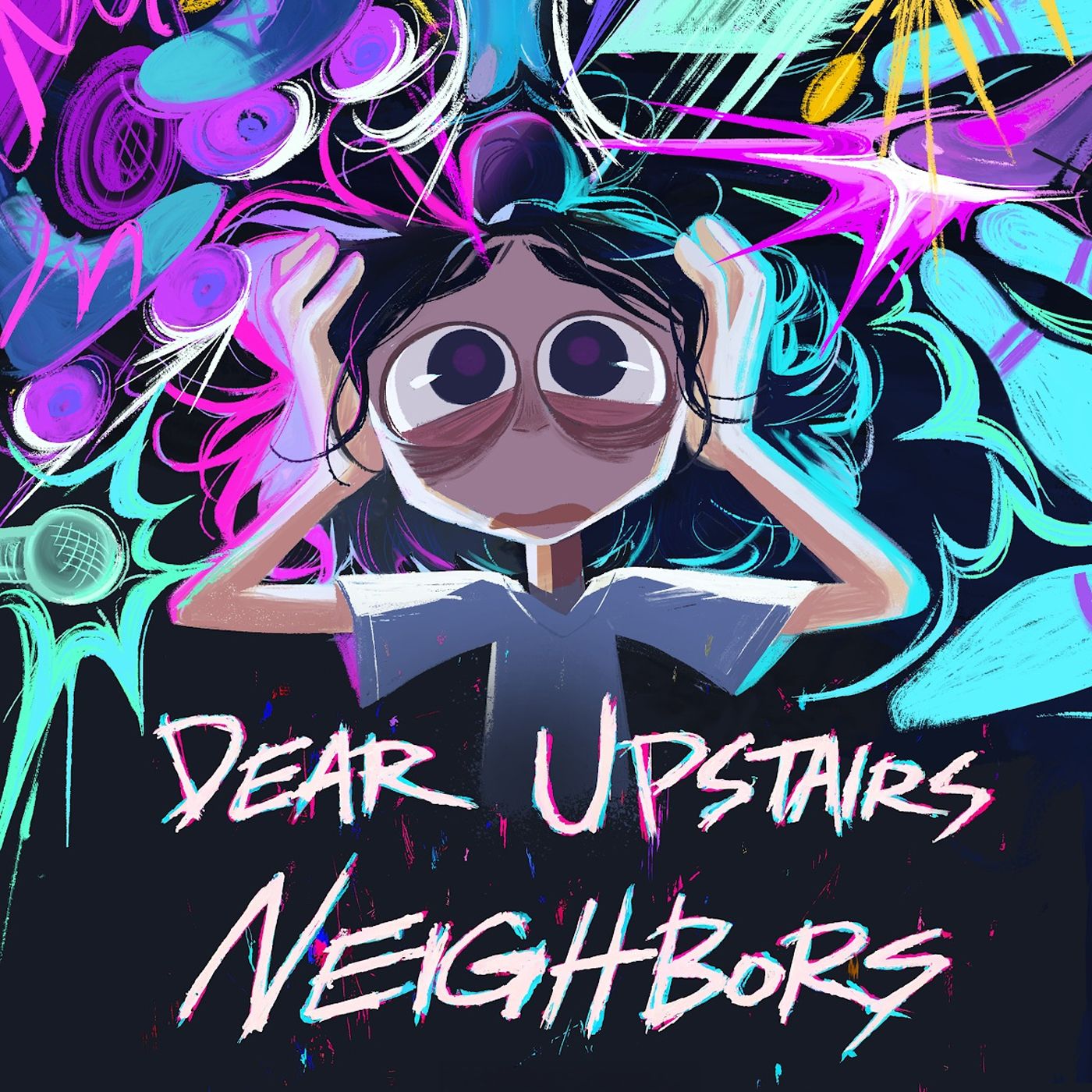
The conversation dives into her work on the acclaimed animated short Dear Upstairs Neighbors, exploring its painterly visual style, frantic creative energy, and the year-and-a-half process of transforming storyboards into a finished film. Along the way, Affleck discusses her love of Adobe Premiere, the unique relationship between editor and director, her unexpected stint editing The Brain That Wouldn't Die, and the challenge of finding the perfect comedic and emotional beats.
She also reflects on the film's sold-out premiere at Tribeca, the painstaking craft behind every minute of animation, and her upcoming directorial project, Nurture. It's a fascinating look at storytelling from the perspective of the person who helps every film find its rhythm, voice, and soul.
Transcript
Automatically generated, so expect the odd misheard name.
H oh, he is, folks, it's show tied. People say good money to see this movie. When they go out to a theater. They want cold sodas, hot popcorn, and no monsters. In the Protection Booth, everyone pretend podcasting isn't boring, don it off?
Hm hmm. So much, Hey, folks, will do a special episode of the Projection Booth. I'm your host, Mike White. On this episode, I'm talking with editor Sarah A. Fleck all about the new film Deer Upstairs Neighbor.
But we definitely talk about a lot more than that. Deer Upstairs Neighbor. It's a short film played over at the Tribeca Film Festival this year, great little short. Had a great time talking about that, but yeah, also talking about animation overall. Ms Affleck is a lot of fun and I hope you enjoyed this interview.
Can you tell me a little bit how you got involved in entertainment. I've always loved telling stories and been a massive fan of movies since I was just a little kid, and I started taking that to the next level of my twenties and thirties and I kind of got involved in animation and live action, and I originally cut my edits real teeth in reality television. I think we all start in reality and then made my way into live action television and animated feature films after that have been just a awesome have had an awesome career in it so far for the last fifteen years. When it comes to editing and animation, how does that work? Because I would think they would only animate what they need and nothing else.
When it comes to editorial, I think that there's just a lot of nuance that comes to animation and live action. They're very different styles. How you approach a story, how you approach the cut, and with regards to like live action, what you shoot on set is primarily kind of what you get. It kind of informs a lot of the direction. I mean, of course, visual efects can change a lot of that, but with animation you literally start from the ground up.
A lot of my cuts early on inform how the animation and how the story plays out in a very more fluid and functional way. Like you know, my storyboard cuts can inform how an animator proceeds to you know, edit out beats in the scene and how they kind of keyframe certain like elements, and it's a very minutia driven style of editing. It's very much dependent on like your commitment to the story, but also your own creative imagination because the world literally is your oyster in animation, that's just a really beautiful part of how these films come together. Do you have a preference as far as live action versus animation? I personally have come to love animation more than live action.
I definitely will say it depends on the style that you're editing. There are a lot more emotional scenes that editing and live action can really have a better effect on, at least with an animation. I just find that it's so much more satisfying to see shots and a sequence come to life. The way that I speak to a director and visualize their vision in terms of the movie they had in their head and the movie that I have in my head, and how we come together with that, I think is just it's so much more satisfying to me personally. I think back to hyomi Azaki and his editors and how they visualize a lot of the Studio Ghibli films, and that emotional texture that comes through, which is something that I've only ever seen possible in animation.
Editing you did do a live action and that I'm very curious about because I'm a big fan of the Brain That Wouldn't Die. Can you tell me about that project. I've been big friends with a lot of those guys for a while, and it just so happened that I was in between movies at the time at Laika, and it was like between Kubo and Missing Link and the director Derek. He reached out to me and just asked me. And I'm a huge sinophile.
I love old movies, and to be honest, I didn't realize that they had any kind of push to make that movie, and I instantly signed up. I was like, I think I started originally as just an assembly editor, just cutting together to get things in a workable state, and then Derek asked me to be the lead to get Hurt. I was like, yeah, oh yeah, I just love the I fell in love with the film too hard at that point. I think you also have a special thanks credit for special effects? Is that right.
I first started my career in a kind of visual effects house. I've done a lot of comping, a lot of visual effects work throughout my career, a lot of television pilots, a lot of music videos, a lot of just I ran the gamut when I first started in this industry, just taking whatever came to me, and I really tried to flex not just my technological unders standing of the film industry, but just also try to grow my own creative voice, because I think that informs how you edit later in life or how you create later in your career. And so, Yeah, I worked a lot of visual effects growing up in this industry and it was super fun. Yeah, I think I did even did something for the series The Librarians. Oh yeah, Dean Devlin.
I worked two seasons of that, which was super fun. When it comes to editing, what's your tool of choice, what do you like to work on. I think every software has like its own like intricacies that you have to deal with. I am a huge fan of Adobe Premiere. I think that I've caught on Avid Da Vinci Premiere and many other things, and I've just found that Adobe is just not a picky eater.
It accepts any media you want, It starts working right away, you never have to leave the software. Now they've introduced a lot of quality a life features where it'll trans in the background. You have Adobe Productions where you can have the bin locking kind of avid setup that used to be, and then there's many other really awesome features as far as effects and things like that. But I've just found it to be the most accessible software ecosystem to create anything. Let's talk a little bit about dear upstairs neighbors.
How did that project come to you? Marcia and Connie and I we all worked together at Pixar years ago, and we just knew of each other. Connie was working on the boards for her short film at the time, and I was working on my own short film, and so we just encouraged one another, just talk to one another. And then once we all left Pixar in around twenty twenty four, Marcia and me and Captain Touch and she just had mentioned to me to have lunch with Connie one day, and then the both of them basically were like, Yeah, this project is becoming a thing and we'd like to see if you would be interested in being involved. And I am always jumping at the chance to push the medium forward in some way or to you know, do something exciting and new, and so the way they described it and the visuals that Connie was describing to me was just I just jumped at it.
I was like, I can't wait to see how this turns out because it just seems so cool. It is cool. I love the animation style. It looks just so good. Oh thank you.
Yeah. I think the way she described it was very inspired by the paintings of her father, and as beautiful as that sounds, it just seeing it in reality was so much more exciting to me because I was just like, Wow, I was just taken back. Even by watching it the other day, the sequence at the end where the fire and brimstone and the speakers are coming down from the ceiling, and it's just like some of the stuff we pulled off. I was like, how did we do that? If we do that, yeah, it's just so bright and colorful, a move so fast too.
It just really gives you that inside of the brain look. It really does. When that's very much intentional on all of our parts. We really wanted to echo this very common experience that I think a lot of creatives have is externally. You're working really hard on a project, but your neighbors just won't shut.
Up, and what is going on in your head perhaps during that time, and how do we start soft and then amp that up to eleven and something about the animation industry and the medium of two D animation and CG animation that just like is so attractive to me. It's like you can really create and visualize things in such a special way. When a movie is what six plus minutes long, how long does it take to actually put that all together. We started on the process about a year and a half ago, probably longer for Connie because she's been drawn these boards and how the script and things, and lived with this for probably a lot longer. But when I came on to assemble the initial cut and the initial storyboards, it was about a year and a half ago.
And that's very standard for animation. We try to aim for about thirty frames a week, I think something like that a minute of animation or so. But the amount of work that goes into that minute of animation and the iterative process that artists have to go through to get to those characters and to get to those movements, it takes so long. And I think that's actually probably one of my one of the things that most people just misunderstand about editorial as a wholes I think from concept to archiving of the project, I spent a very large portion of my life for just six and a half minutes. But it's because I loved the story and I loved seeing it come to life and it becomes this really beautiful experience.
I know how arduous animation can be. So that it was quote unquote only a year and a half, it's pretty good. I've known friends who have been working on short films or feature films for even longer. When I was on Pixar's Elemental, we used to joke with the director and edit that Pete started that film and lived with it through three presidencies. It's a long time.
The one thing I've heard from other editors is that relationship with your director is something like a marriage, And I'm curious, how do you approach like when you work with other directors. It's something that like a lot of people, they don't often get a peek into it. Is that you know it's a very intimate space, like a director invites you into their world and you invite them kind of into your fox hole. You know you're you're sitting there. Sometimes you know producer is there and other key creatives, but for predominantly, you know editorials the first in the last out and we are there with the director every step of the way, and so you kind of, you know, you get a jacket, you know, made, and you both become this like duo, this dynamic duo of creation, and you also look out for one another.
I feel a lot of the ideas that a director has, but I also filter a lot of those ideas in a non judgmental way, and I try to present an edit booth that looks at it from the perspective. You know, we both hate the blank page, but we want to see something on it, So what can we put on it? Together? And no idea is bad, but at the same time, like what serves the story, you know. And sometimes editorial can be like a nice gut checked to a director, and sometimes a director is going to ultimately lead and filter their vision for what they want.
But together we have to come up with a visual language that in a cinematic language. And especially when you're working with a new working creative relationship, that's really such a part of creating together and collaborating is that you create that language together. That shorthand and Connie is a very intent director. She's very minutia driven, she's very visually driven and she knows what she wants. And I think that was so fun because you know, once you establish that kind of creative voice, you really can start building the foundations of a really great short film or a great film in general.
What was the premiere like at Tribeca? Oh my god, it was so exciting. I got to be honest with you. We sold out our screenings and to see what be up there introducing our short film and just to see all the people's reactions to it as it was showing on screen. We got just a really beautiful reception and applause and the laughs just were great validation for all of the comedic beats that we were like struggling with and edit, We're like wondering, is an audience going to read this one?
Is this gonna come across in a way that seems genuine and authentic and relatable, because that's filmmaking. You want to suspend that disbelief so that you're not just looking at a short film, you're looking at a moment in time. And just that reception was so beautiful, and got tons of pictures with people and just meeting the team again and it's like coming back to summer camp is just like meeting up with all your old friends, and so it was just such a lovely experience. I just loved it. What happens to the film?
Now? Where is it go to? There's a lot of conferences and other kind of festivals, runs, a lot of how the life of a film after it's done is really untold Connie and Marcia, and a lot of how Google what they want to do with that is really up to them, And I think that's an awesome portion of like how we contribute back to our industry is just by showcasing this film and the life of the film industry in general. Just kind of going from there. We have a few other places that it's supposed to screen at.
It will probably be online at some point, which I'll be excited about because I think it's you want that validation and that recognition from the industry, but then you also want that tangible feedback from the people. And how about you, what's next for you. I'm currently directing my next short film. It's a short film called Nurture, and I'm really excited about it. We've been working through boards and things like that, and then who knows that process in and of itself takes many years.
I started it at Pixar that was like four years ago now, and you just work through it as as often as you can because animation is expensive. It's very expensive, but it's also like it takes a while to figure out the direction you want to take something. So yeah, I'm really excited about that. And where's the best place for people to keep up with you in your work? You can find me at words you watch on Instagram, threads, blue Sky.
I'm pretty ubiquitous. Words you watch across all social media platforms. Sarah, thank you so much for your time. This was so great talking with you. Thank you so much.
It was lovely talking to you girl. What should do it? Down there? It's in alone? If nut while aldis, we're at a book cute, give me the music play.
I can see your body swing wonder love belone me. You don't even know me. I have loved you, Oh my darling, not three times on the seating. You I saw the pie. If the answer is no, oh my sweet list, not three times means.
You meet me in the hall way. I saw the pipe. Means you ain't gonna shore. If you have outshong window tonight, pulling the string with no DEA's attention to my hall. Read how many times I saw you with my silence, I adore you.
Only and matter? He said, that wall between us you ap oh my darling, nine three times on the ceiling. If you want me. I saw the pack. He's The answer is no, Oh, my sweetness, means you meet.
Me in alcohol. Song. The pipe means you ain't. Gonna show. Worr how many times I saw you, how in my silence I adored him all in my dreams, that the wall between us come apart, Oh my.
Darl not three on the ceiling. If you want. My song, it's The answer is no. Seen This. Means you meet me in.
The hall, my son. The pattern means you ain't on the show, Oh my live, not three times on the ceiling. If you want My song, it's the answers
More from The Projection Booth



Similar episodes across the network
Matched by shared keywords.
-
Mama’s Family, Golden Girls and It's Always Sunny | 90s TV Babies
1 shared keyword: whoopi goldberg
-
35 - Colin Goudie - Editor of Monsters and Rogue One
1 shared keyword: adobe premiere