
Season 1 · Episode 650
Special Report: Gregg Allman: The Music of My Soul (2026)
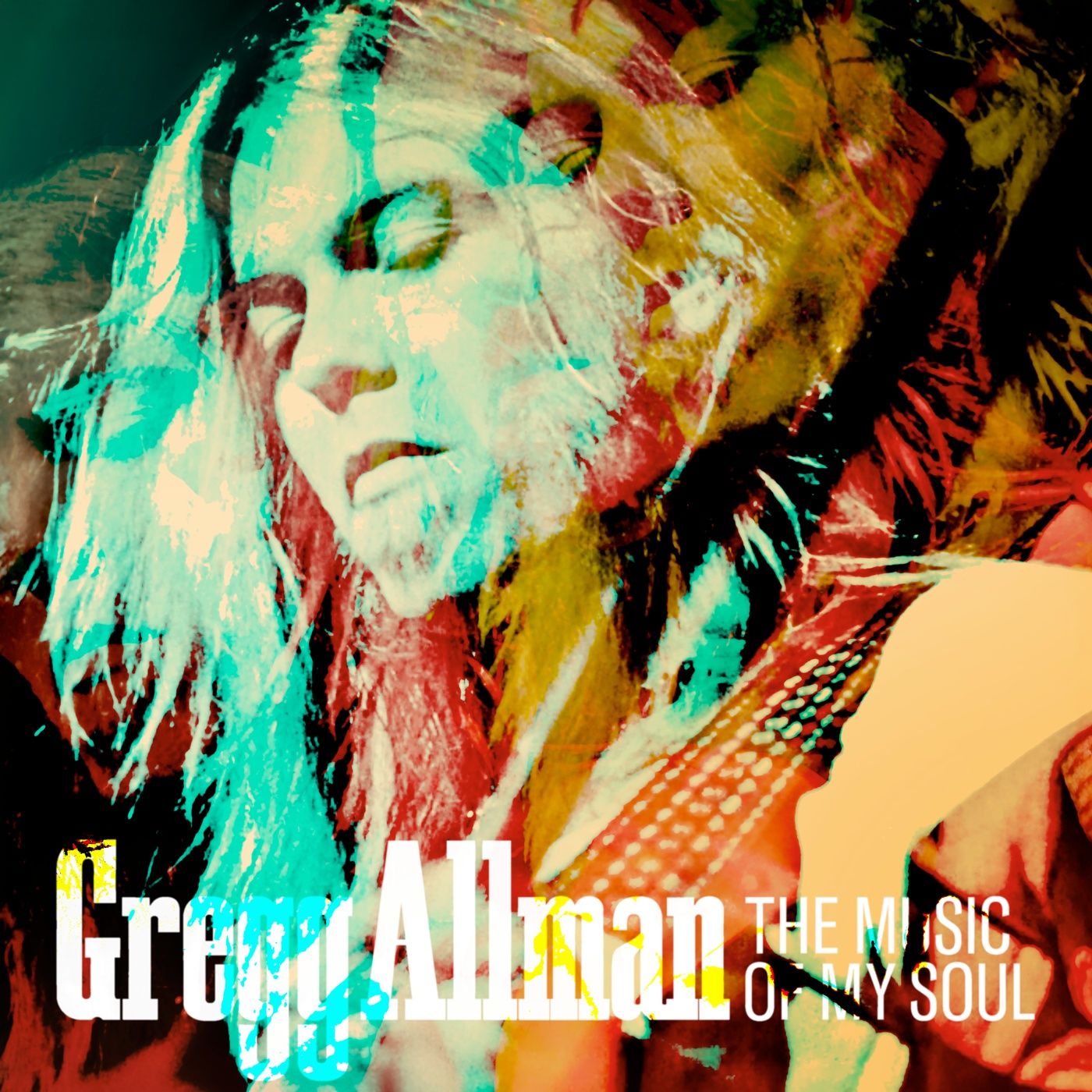

About this episode
Mike talks with director James Keach — whose previous documentary Glen Campbell: I'll Be Me earned an Oscar nomination — and producer Michael Lehman, Allman's longtime manager, about the making of an honest film about a complicated man. They discuss the archival footage, the band's quietly radical racial politics, and the personal losses — Duane's death, the addiction years, the very public marriage to Cher — that gave the music its weight.
Gregg Allman: The Music of My Soul opens in theaters June 17, 2026.
Transcript
Automatically generated, so expect the odd misheard name.
Oh he is, folks, it's showtime. People pay good money to see this movie. When they go out to a theater. They want cold sodas, hot popcorn, and no monsters in the protection booth. Everyone pretend podcasting isn't boring.
Got it off. I've got to run to keep from He's. The lead singer in the Great Almond Brothers band, mister Greg Almand. The biggest group in the country is the Allman Brother's band, the best rock and roller band in America. All of us musicians, we've never heard anything like that before.
He's one of those people you can describe by simply sayings name Greg Oleman, and all of a sudden, I mean, I couldn't make him move, and. I met there own my brother. I saw Heppy. My brother passed away, and they started raining money. They loved each.
Other, and she wondered that we kept the band together. I had mad at him for dying, and mad at life, angry God for taking him. He never know how much you're leaning on. Somebody had died, Little catchman, though, seems like a lot of tragic and bad things are happening to you, guys, A lot of good. Thanks heaving for midnight.
He did love sex, drugs, rock and roll, but it was a piece of a much bigger puzzle. Couldn't live with each other and they couldn't live without each other either. Performing was a safe place home. He was in pain. He got a growing drug addiction.
He was not happy with that Arson, the wild man. That wasn't who he was. Willie, Did you all right? Willie? I'm not all right.
Never told your story. I might as well. What song would you want to play of yours? If we had to play one? The next one?
Hey, folks, welcome to a special episode of the Projection Booth. I'm your host, Mike White. On this episode, I am talking about Greg Allman the Music of My Soul. As you can tell from that title, it is a documentary about Greg Allman. And it was directed by James Keach, the brother of Stacy Keach, also the and who gave us the incredible motorcycle cop scene from Vacation.
And it was produced by Michael Lehman, who is Almand's former manager. Had a great time talking with mister Keach and mister Lehman, and I hope you have a great time listening to it. Thank you so much. Michael, I'm going to start with you, how long ago did you meet Greg Allman and what were the circumstances around that. I met Greg in two thousand and four.
He was looking for new representation and someone referred him to me as a possible client, and Greg interviewed five or six people and we met. I went to the show that evening and then we followed up afterwards, and we had an instant connection. Both passionate about music, and I was very passionate about helping artists at that time, not just on the surface level but a deep level. I think he understood that and that started our journey. And Greg was living in Savannah at the time.
I was up in North outside of New York City, and we made an agreement of how we would meet on the road and how I would also come down to Savannah and brainstorm and plan out the next part of his career. And it turned out to be a fourteen year run that we had together. So I was very fortunate. When did you get involved with the music business, because this is obviously not your first rodeo. I got involved in college.
Actually it goes even before that, and James may or may not even know about the tie in. But Don Kirshner lived in New Jersey, not far from where I grew up, and I was friendly with his son, and as a kid used to have play dates over there, and I was exposed to a little bit of the music business. And when I went off to college in Saint Louis, I got involved with the concert committee and radio station, and then started running the concert committee and became something of what my love for music to into a passion to get involved in the career of artists and help others. So I've been involved really since the early eighties as a college student and then late eighties as a professional. How long after that did you meet Reverend Run?
I met Rev in I think the early nineties, late eighties, early nineties. I also got referred to run DMC and Rev Run and started representing them. We have over thirty five years together. James. When it comes to the different films that you've done over the years, what kind of material attracts you?
Great stories, great characters, yea. And how did you get involved with this Almon documentary? Michael can tell you that better than I can, since he's the one that started it. So what happened was is Again. I was very very close to Greg.
He got under my skin in a big way from early on and then certainly when he became sick and was in need of a liver transplant and then liver cancer. I had never really lived that journey with a client at that point in time, especially a client that I was so attached to because of the kind person that he was as well as the incredible music that he made, And shortly after his passing, I wanted to allow the world to really not only know who he was professionally as an artist, but to learn about the Greg that I knew, this kind, sweet Southern gentleman that was wounded and damaged, but that loved people and loved humanity and and you know, people loved seeing him on a stage, but I knew they would love him if they were able to learn about who he was as a person.
And after he passed, I realized that that was a story that I was telling When people would reach out or wanted stories. It wasn't so much about the music, it was about the person. And probably within a year or so, I decided I wanted to share that story and create a documentary and started interviewing a bunch of directors, and fortunately James was one of the directors that I that I met, and when I met him, almost instantly, I realized that he was going to be the one, not only because of his role on Vacation that we all love but I'm kidding, but because of he was a younger brother to Stacy, and he James has this kind way about him and this warmness to him that I just gravitated towards. And when he was sharing the entry point and how he was initially thinking about telling the story, it was it was so apparent.
There wasn't even a conversation to have in my mind as to, oh, how do I weigh the difference? It is, I really want to go straight forward with James and Jeans. How did you decide that you wanted to purchase material? My girlfriend at the time, who's now my wife, had said, Michael called and I said, I just got a call about doing a project about the Greg Almon Almond Brothers. And she said, oh, you have to do this.
You got to do that. I got to got me through hight They're my favorite band. You've got to do it. I said, no, Nancy, I'm not sure you have to do it, I said, okay, So I started doing research on it, and she was right. I had to do it because I love the music, but I.
Didn't know the story. When I started discovering the story, I thought, you know, all great drama has conflict. Well, this guy had nothing but conflict for so many years, and it was a great story to be told, and it had to be told carefully. And one of the things I was most concerned about was is that I was going to be able to have autonomy and to be able to tell the story without somebody saying it has to be this way or it has to be that way. And Michael, first of all, you sure shared me that, but not only that, he kept his word and so but it was a collaboration.
It wasn't like I never liked to think that this is the James Keach Film Festival. I'm making this film. It's an honor to be asked to do somebody's life. You know, whether it's John Cashland, Ronstad or David it didn't matter. You're responsible for their legacy and you're responsible for telling the truth in a way that they too would be proud of it.
And so Michael checked all the boxes for me in terms of being a producer. And he's a good man. I've learned to become very good friends with him. But that's it. I could see why Greg liked him so much.
He also gets the job done, you know, when it needs to get done. But what it also attracted me to the story. It was not just the brother thing. My brother was. You know, Greg came from the South and I come from a little town in South Texas and there was black people on one side and white people on another, and Mexicans on another side of the tracks the highway going through town, and we couldn't have dinner together, but we could sure as hell play football together.
And it really bothered me. And when I discovered this about Greg and he was a part of it in one of the first integrated bands, and that he would leave restaurants when people who would not let Jamo sit with him, and that his best friend was black, And I said, this is a guy who I admire. I could admire him, And so that's another reason to make this story. Why do you want to tell stories of people that you respect and that you admire no matter And and yes Greg was flawed, but we're all flawed, and and at the end of the day he had tremendous redemption and and but he also fell very, very very far. And the irony, of course is falling is that the night he the highest accolade you can get in the Rock and roll Hall of Fame, he's getting his statue, and that's the low point in his life.
And there's real irony. And then he looks back at that and he goes, oh my god, how could I look at the person I've become? And it should have been a totally different experience and ift it up and I'm not going to keep going this way. And he had the courage to face his demons. After fourteen rehems, he didn't do it again.
And as Michael will tell you, he got off alcohol and got sober, and he kicked Carolyn, alcohol, tobacco, everything else. And he paid the price. He did pay the price. For doing all that stuff. But at the end of the day, he was accepting of the price that he had to pay, and he redeem himself.
It's a fantastic story now, and that's just the story. Now, let's get to the music. The music's unbelievable. It's unto himself. It's he's one of a kind.
He's incredible, incredible musicians. Through the paramoun we have a fantastic musical journey. So you know, the movie itself is a fantastic musical journey with this story interwoven. How is it approaching the story of a man's life? You have to kick those moments though so carefully because obviously you've got two hours to fit a lifetime's worth of material into.
Do you just start making your wishless as far as that, or do you work with Michael as far as like these are the points that we probably should hit or what does that journey for you? Like the one thing that Michael would talk about southern gentleman. He's kind, he loved his family, he was flawed, he you know, And I could go to those places and so I had permission to just go for it. And Michael also had access to some of the great interviews, like Keith Wortmann did an interview back to making and that was gold and it had never been seen before. So when I saw that, it was like, I could use this as an anchor.
I could anchor some of the movie to this and telling stories like this, you got to look into your own soul and see how you identify with this person. And I completely identify with Greg and his struggle with addiction because I went through the period forty years ago with cocaine. You know, it was in Hollywood, and my brother did too. My brother in fact, was put in jail for six months in England. You know, everybody was doing cocine.
He got caught with it. I by that point had stopped it, but I knew what it was like to get off of this shit and what it was like to and being around people that didn't make it. I had friends Doug Kenny, guys did did John Belushet, Guys that didn't make it out, you know, And so that was an important part of the story to tell, too, very important to me, and I think it was important to Greg. And I was so touched when we discovered the line when he says, if I could save one person from the hell that I've been through, this will all have been worth it. And I went, Okay.
So Greg is actually speaking above and beyond his music. He's not saying, Hey, I'm a great singer. I wish you'd listen to my song. I wish you'd listened to my new album. He's not talking about that.
He's talking about if I can save one person from the shit that I've been through. And then he would say, drugs and alcohol, that's all a lie, that's all a lie. So this whole mythology that in order to become a big rock star you need to have drugs, alcohol, sex and all this. Yeah, sex is important, but the drugs and the alcohol are not. You know, that's not what makes you a great singer.
And I think at the end of the day he discovered that he was had even a better voice without all that stuff. But it had to take him a lifetime of trying to deal with the trauma of his use to get through that. So anyway, I was a little longer my answer, but I hope it was clear. Do you at some point make your wish list of who all you want to talk to? Michael helped me with that.
He said, say, Michael James, you need to talk to him, all right. And but guys like Robert Hilbert were friends of mine who I knew was a music critic. I'd worked with him on Johnny Cash and over the years, and I knew Jackson Brown and but Michael had a relationship with obviously all the guys in the band, and Bert Holman and Sean Lynskey and Michael said, you got to meet him, and you got to meet him and you got to meet So it's like peeling an onion. You meet them and you start saying, Okay, what about this? And what about that?
You read books and you go and that they're kind of trigger points. You start with trigger points. Greg gets busted to a Scooter Herring for drugs? What's that story about? And how did it break up the band?
You get and it's going to rush them on. Don't if you know that movie, But it's the same movie being told from six different points of view, and so everybody has a different point of view about the way Greg handled drugs and the way Greg handle this marriage, and and so you keep asking the same questions and somewhere in there, after two or three times of hearing the same thing, there comes the truth. And there's one person that says something a little different and it's not quite the So it's just terms of crafting a documentary. You got to dig deep, and you can't make it your opinion. You can't if you want him to be a hero and he's not.
You got to make it the anti hero. You got to do it. And that's the careful dance you got to do, especially with complex characters like Greg, who wasn't a perfect person. Of course, I don't know anybody who. I seem to remember that you also did a documentary about Glenn Campbell, so this is also returning to the well as far as another musician who had his own foibles too.
Had you done a music documentary before Glenn Campbell? I did a movie called Walk the Line. I produced Walk the Line and I wrote the original story. But John Cash was a friend and that was the first music film. That I did.
And after that, Fella and Julian Raymond came to me and said, hey, I'm producing Glenn Campbell's album, but you want to do another music film And I said, I don't know. I just did this Walk the Line thing. I don't know. And he said he's got Alzheimer's, and of course when I heard he has got Alzheimer's, I went, no, I don't want to do it. And then I met Glenn Campbell and I fell in love with him.
And he says, it's only six shows. James so only got to do six shows, and it was it turned out, I said, finally, I said, after I fell in love with Glenn, I'll do it. There was one hundred and seventy one shows on the road with a guy was Alzheimer's. I didn't, of course, didn't film all of my film about thirty of them. But it was my first experience in doing a deep documentary and I loved it.
I loved it because I got to discover so much about them and about myself. Greg teaches me about myself on my way of handling things, and I hope he does to the audience too. That's my wish, Michael. How long did this documentary take from inception to us talking now. Rainstorming about it?
Started in twenty eighteen, twenty nineteen. James and I probably met each other five years ago or so and started We spent James and I spent a tremendous amount of time together when we started exchanging ideas and then material and then sharing materials. So it's been it's been a journey. It has absolutely been a journey. But as James said on a prior interview, we probably had about one hundred plus hours of material that we had to distill down to what's now ninety six minutes, and we kept it really really tight.
It's powerful and tight, and so there's a lot. It really took that long. Could it have been made in six months a shorter period of time, yes, but do the job that we did and give it its proper due and check and double check and to make sure that we were going down the right path. Just took this amount of time. But what we're left with, thankfully, is a beautiful, compelling story about Greg that is just that, and Greg actually being able to tell the most of the story and not having a ton of talking heads, but actually having Greg because of these twenty fourteen interview with Keith Whartman that was done around the back to making show, and a twenty eleven or twelve interview that was done with HarperCollins, and then one that was done with Scott Goldman of the Grammy Committee and the Museum that allowed us to really give Greg the runway to share his story.
How does it make you feel watching these old interviews with him and revisiting your friend. I gotta tell you, I'm in a lot of pain, beautiful pain. He and I were really really close and every time I've seen it, and James has seen me tear up, and others have seen me tear up as I've been watching it, as we've been working on it. New York the other day was wonderful, our world premiere and the film was so well received, and I was extremely happy the last few days. Doing a lot of work to ensure that we have a successful role out with media is bringing up a lot of feelings again, all warm, beautiful ones, but it's made me feel really raw inside and feel a lot of pain.
I loved the man very very much, and so yeah, it's painful, but it's a celebration and that's how I feel. You said it went overwhell, but I want to hear more about the audience reaction to this. So I saw at the premiere in New York. There were a lot of Wellman Brothers fans there that I've known over the years. There were a lot of industry executives from the publishing side to label side to promoters.
There were grandparents with parents and grandchildren and men, women and everything in between. And I was standing. I didn't sit for the premiere. I stood near the exit and near the bathrooms, and as people were coming back and forth going to the bathroom or at the end of the evening leave, the overwhelming response was, Oh, my goodness, you guys have created an incredible piece of work that tells the story. And I saw a lot of tears in people's eyes.
I met a guy that was professing his love for Greg and named his daughter Melissa, and he was there with his daughter and his wife, and people were lined up outside the venue almost two hours before the screening, so it was like a concert. And honestly, after this rollout, that's the goal is that we hope to be able to take it out to rock calls and performing arts centers where you can actually play it with a loud sound system. And because you experience the music, you experience the story. And I think we have struck a great chord that people are going to really feel moved by the stock. James, can you tell me a little bit about the post process and especially working with your editor.
And she's my second wife, that's how much time I've spent with her my current wife. Say it's okay, It's okay. Alexander Koma Seric. We live in the same room for years and It's very respectful because she always knows that I'm the director, and yet she'll try and then she'll come up with something, and I'll come up with something or and and the editing process you have to really trust each other's instincts. And and I trust her a lot, and she trusts.
Me, and and and she knows the kind of films that I want. I'm I love may I've made and and so she emotionally, I think, goes to the same place. She knows the emotional journey that I want to take. I want to I want to tell stories of characters with a great emotional arc. It's not just factoids.
I'm not interested in that. I'm interested in the emotional journey of a character and how they grow and how then how that informs their music, their talent. And it gets really complicated when you find a great piece of material and somebody says that will cost you one hundred thousand dollars for that piece of material, and there you go, oh, sorry, we can't use that because there is a budget constraints of everything. So the juggling match it's hard. It's hard because you've got to find things that you can get for the right price to tell the right story.
So that's actually where I was able to help because of the many relationships that we had with labels and publishers and societies, and again, we were always good people to them, and so in return, when we needed to ask for a favorable rate because there was an important piece of footage that we wanted to utilize or some important music, we were able to go and thankfully they reciprocated. So that's why you see so much incredible material in this versus many other docs where you don't get to dive so deep and have so many different pieces of archival material, is because we were good guys and in return they paid back the same way. I know that editing is a war of attrition, and I'm curious, were there anythings that just right towards the end, You're like, no, I really want to keep that, but I have to cut it at the last bet What were your darlings that you had to kill?
The only thing that I wanted to keep and that I was held back on. I wanted the songs, every one of them, to be longer, because you have to pay for a certain amount of length of certain songs. Basically that's what happened. And thankfully, again as we're saying, because the relationship with labels and publishers, that we could go and I think the darlings were There was some incredible film Wore East footage, incredible live pieces of footage, and even the Dan Rather interview which was compelling and we wanted to utilize, and so many of the images that are rare and very expensive that we just wanted and needed. A music doc in both James and my mind become valuable because you get to actually see and hear a lot of music versus just someone telling a story.
So we needed to find those pieces and we knew where they were, and then it was just the combination of James saying, hey, Michael, can you push a little bit with this person or that person? And thankfully, because both James is a great guy and I always try to consider and think that I'm a very very fair person, we were able to go and they remembered that because they wanted access and we gave them access, so in return, when we wanted to use it for the doc, they were there to share with us. James, I know the movie hasn't even come out yet, but do you already have your next project in mind. No, I don't not yet. I have some films that narrative film that we're doing Miramax would and Linda Ronstadt.
Then we're developing it with Selena Gomez. To play here. But hopefully Michael and I will find another great project to work on together because he's a good partner and. Looking for that great story. Looking for the one that can next.
I think this one does. And Michael, what's next for you? Aside from hoping to find a really good project to work on with James, We're going to work this doc for a period of time for sure. We are also contemplating what comes next with this, whether it's a biopic or a limited series or something, because there's definitely it's just such great material. We have a lot of Archibal releases.
There's over one hundred and fifty recordings that we have live recordings from all the way going back to the eighties to the current. There's box sets that we're working on that are in development. There is working with with the kids and with Galadriel de Niece. There's there's so many projects that have not been uncovered yet, so we have we have a lot ahead of us, and and and just expanding the audience face. We want that casual fan too to become more interested.
We want our kids generation and our grandchildren's generation. So this this we hope this music carries on for another two hundred years. That would be Michael, Michael James, thank you so much for your time today. Guys, that was so great talking with you. Thank you, Mike.
Brad. I've got one more silver gallon, but I'm not let kids man. I don't met him kids the midname. That all. The closing.
And the road goes on forever. I've got one more silver dallars, but I look not on medal kits mind not lot medim cats mid named. The cool ban. Mo carring school man also be shared, and I'm not more more Simanalon. I'm mom of Pitchman, a moment of kids for midnight, So I'm Pitchman a hissing her.
We found its. History bags back Just
More from The Projection Booth



Similar episodes across the network
Matched by shared keywords.
-
Jackass: Best and Last (2026) — "Welcome to the first day of our final film."
1 shared keyword: documentary
-
Melania (2026) — "Here we go again."
1 shared keyword: documentary
-
An Unknown Compelling Force (2021) — "I think these theories are weird."
1 shared keyword: documentary