
Season 1 · Episode 756
Special Report: Digital Kitchen's Titles for Smoke and Spider-Noir
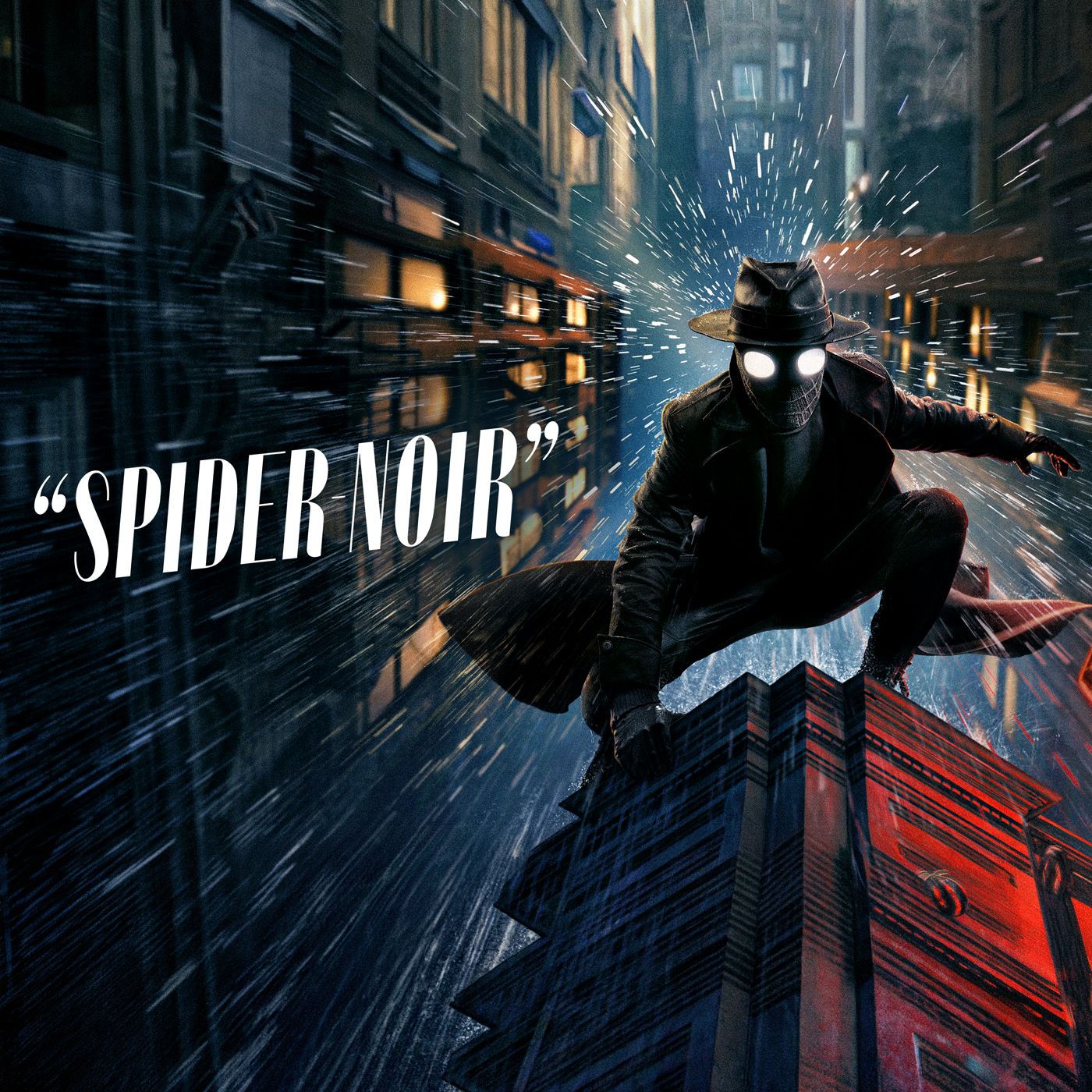
About this episode
They dig into Smoke's objects-as-characters concept, physically burning items in reverse to stand in for Taron Egerton's and Jurnee Smollett's characters, and the different approval chains between a Marvel/Sony/Amazon property and an Apple show built around a pre-selected Thom Yorke needle-drop.
Nicoll and Julien also trace their paths into title design, from Digital Kitchen's early work on Six Feet Under to AJ's start in sports graphics, plus war stories from Yellowjackets, Dead Like Me, and a font fight that got Nicoll pulled off a project.
Transcript
Automatically generated, so expect the odd misheard name.
Hold your ears folks it's showtime people pay good money to see this movie when they go out to a theater they want cold sodas hot popcorn and no monsters in the projection booth. Everyone pretend podcasting isn't boring turn it off. Welcome to The Projection Booth. I'm your host, Mike White. On this episode, I sit down with Mason and AJ of Digital Kitchen, the title design team behind the opening sequences for Apple TV Plus' Smoke and Amazon Prime Video's Spider Noir, to talk about how a title sequence actually gets made, from mood boards to burning objects on camera.
Both shows have finished their runs, and both title sequences went on to earn Digital Kitchen Emmy nominations this year. I had a great time talking with Mason and AJ, and I hope you have a great time listening. Enjoy. So I have never talked with anybody that's done titles before, so I'm super curious to get kind of the down low on how you guys work. Yeah, I could give you like a brief for at least Spider Noir is, I guess you could say a little bit more traditional in terms of how we typically come in.
Usually there's a bunch of a bunch. usually three companies that will come in and pitch. And then the pitches, sometimes we get as little as, I guess the smallest peek into the show might be like a log line, but typically it's a script. And if we're lucky, we get to see a pilot. So for Spider Noir, I think it was episode one and two that we got to see. And then we get to spend a bit of time, sometimes we'll chat, with the showrunner and they'll just leave it completely up to us but they'll talk about themes or things they might want to get from the title sometimes it might be a little bit more prescriptive in terms of oh I was imagining something like this and then there's a time limit usually determined by credits but not always so Spider Noir is 90-ish seconds and I forget how many credits that is but once you get into the 20s sometimes 30s you gotta have At least 90 seconds because of regulations, guild, timings, actors all need to be the same amount of time.
That's how we come in. Like, well, they'll pitch. And then if we get the job, like with Spider Noir, there was one board. They were like, this is it. There was very little or none of all kind of mixing and matching.
Or sometimes you get mixing and matching. They like a couple different ideas and we do like a combo. And how did you guys come to this? What's your background before titles or have titles always been kind of your thing? I came in through just basic design.
I was doing like digital design and graphic design. This was a long time ago. And when I joined, the first motion place was Digital Kitchen. This was in Seattle in 1998. So.
Motion design was happening, but there was just a handful of companies across the U S even across the world that were doing it, but came in, there was like agency work happening. And then within a year after I joined, I think we, we pitched the sixth day. I don't know if you remember that it's a Schwarzenegger cloning film. I think that was the first, we might've been doing some smaller stuff. I think that was the first title we did a digital kitchen.
Wasn't known. We weren't doing film titles. Um, But then right around that same time, we pitched Six Feet Under. So then after that, opened the doors for us to do much more. But I didn't, I fell into it.
I wasn't really necessarily interested in it. I always liked titles and had some of my favorites, but was interested in just kind of other aspects of design and live action. So that was how I fell into it. And AJ, how about yourself? What's your background?
I was doing a Ford. DK. I was doing sports graphics, sports networks graphics, and sports, sorry, and network rebrands. And then I was also doing a bunch of experiential kind of work on the side, projection art. And I really liked what Digital Kitchen was doing at the time, where they were working with the Cosmopolitan.
And I really wanted to get into that space. So that's how I ended up at Digital Kitchen. And then I also knew the reputation based on So my favorite title sequences, which were like True Blood and Dexter, and I knew that I also wanted to do that. So I started doing more experiential work when I joined DK, and then it quickly shifted to, hey, do you want to pitch on this? And I was like, sure.
And that's how I evolved into getting more and more title stuff, but also doing the experiential kind of abstract stuff as well. As an outsider, I seem to remember there was a big commotion around the title sequence for Seventh. that seemed to really light a lot of people's brains on fire. Of course, before that, there have been masterful title sequences. Of course, I think of people like Saul Bass and some of the work that he was doing. But I'm curious, Mason, you mentioned there were a lot of titles that you liked.
What were some of those things that really caught your eye when you were coming up? Seven was like 95. And when I joined, there's a couple titles I remember. There's Trainspotting. It was done by this British collective named Tomato.
Very simple, but like Tomato's work, I had been following their work at the same time. And then speaking of David Fincher, P. Scott Mackler was a kind of type designer who really early on was getting into 3D. And he's most known for doing the font for Fight Club. But before that, he had done the title for the game, which is only on I think it's one of the special editions.
I've definitely seen it before, but I haven't been able to find it since. But it uses the Super 8 footage that starts the game. But then P. Scott Mackle did this really amazing thing where he built a paragraph at the bottom of all the type. And it slowly built on over that whole kind of Super 8 sequence showing Michael Douglas as a kid and his father.
So those were the ones that I remember because it was right around the time I joined Digital Kitchen. Of course, I was familiar with Seven. titles were trying new things and branching out so those are the two that i definitely remember from that time and looking towards those films as inspiration since i was already following those artists. How do you guys operate as far as do you start with the sketch or do you do some sort of previs how what's your method when you start to do this or do you just start literally spitballing stuff and just okay spider noir what does that bring to mind. Yeah it's definitely a bit of Both of that, like sometimes sketch, sometimes a lot of scraps. We pull for Spider Noir early on.
We knew we wanted to stay within that time period. The show is like 30, 1931, maybe 32. But it's an alternate reality, but it sticks pretty close to what New York in that time. That's just after the Roaring Twenties. And there's this like transition into the Great Depression period.
So it's this mix of the opulence within the shanty towns. So we wanted to make sure that not only what Oren, who's the showrunner, was really inspired by, what we were pulling from, we knew whatever we were going to present would be something that felt like it could have been made back then. Not to get too in the weeds with techniques of rear projection or anything like that, but we wanted to make sure that we didn't want to present something that in animation or even just visually... would take the audience out of that time period. If sometimes we don't know if the title is going to be the first thing, or if there'll be a cold open and it comes in between, but either way, we wanted to make sure that you stayed within that era.
So yeah, there was like, I know AJ had found some really cool, were they Russian experiment films? AJ went down that road. I went down like this illustrative road that, wasn't you know that was like too far out in left field out in left field for the show may not necessarily too wacky but i think for the show itself so then like there was that hand-drawn approach there was like the photography approach there was like aj found like this really cool experimental russian films like hybrid animal keeping hearts alive outside of the animals is that what it was it was really crazy stuff yeah it was a bit more horror in terms of the the title, but we were pretty excited about that one as well. Sounds like that footage of the dog with the two heads.
I think that was a Russian experiment as well. I think it might've been something similar to that. Yeah. AJ had came up with an idea I did too. And then a couple other designers.
So we're all coming at it from different media in terms of what we're excited about. And then we come together and we're like, okay, this is working. This is, feeling like maybe too far outside of that zone, that sweet spot of like noir and time period and references. And then we start to build frames and those frames are put together multitude of ways. Sometimes it is just drawing the things afford one approach that felt a little bit more graphic novel.
And then other things are using photographic or filmed pieces like Rachel, who's on our team. She'll do a lot of like actually storytelling. setting things up and shooting it and then doing like combinations and like cutting things up so that whatever we present to them looks as close to what we promise we'll deliver in the end. They don't have to take a leap in terms of like just something that a storyboard, they're like, oh, it's rough, but we're come in with like polished frames for the sequence. Yeah. I was wondering how far you take it.
And because of course there's the whole cost loss benefit kind of thing, as far as do we render this sucker and use our computer time that way? Or do we go in with a whole bunch of slides? Is it a PowerPoint or is it something more? It's yeah, it's a bunch of slides, but we've also been doing more. They're boredomatics because for us, music is always really important and we don't know going in, unless they tell us like, oh, what are you guys thinking from music?
So we'll like to come in with actual taking some of the boards we produced and just doing kind of slideshow for tone over music. We sometimes do actual motion tests, but not necessarily for pitch. Every once in a while there will be. But being people, you know, people will compete against. Sometimes it just starts to get crazier and crazier in terms of what people will build just to be able to convey the idea.
But the baseline is always enough frames to tell the story, but those frames are always pretty dialed in in terms of that aesthetic, in terms of what we intend the final piece to look like. AJ, what's your methodology as far as your inspiration for things? I think Mason hit it. I tend to go down the making the boards. I do a lot of scrap searching just for different photography and combining it.
Sometimes I jump into 3D just to get without going full render, just to get a base of something, and then I'll paint over it. So at least it gives me a sense of perspective, or gives me something to work from. And then I, because I have an editorial background as well, I love to put together those board-o-matics that Mason was talking about, where you just put your boards in some stylish way against music, you find a good track. We didn't do that for Spider-Noir, actually, but we have done it for other projects, and that really helps sell our idea, especially if they haven't come to us with a track in mind. When I could see how you could easily fall into the trap of going way too literal with something like Spider Noir, where you're just like, okay, eight legs, what are we going to do?
But I like that you are approaching things like the multiple frames that could be part of a spider web or just having the literal spider at some times. But just, I really appreciated what you're doing. And especially, like you said, bringing in the noir-ish elements and that almost like Dr. Mabuse type of feel to how this opening goes. Some of it is pretty much on the nose and I think other stuff.
When that board was picked, there was definitely a decent amount of research on our end in the pitch, knowing that Oren the showrunner has this love of classic noirs and he knows his shit when it comes to those. I mean, a lot of the show, there's a lot of scenes that he kind of builds off of some of those classics. So we wanted to get familiar. not to say that everybody had to watch 10, but obviously getting familiar with the time period. But then the inspiration, when we knew the board that was done by our designer, Arik, he was pulling in other references, which was great. Some of the surreal photographers from that time period.
And then he started dipping in. We started to go a little bit neo-noir. I've always loved the opening for the film Seconds, Frankenheimer's Seconds. And because it had that paranoia with the SnorriCam, but also coming out of Saul Bass's titles, which were just not very Saul Bass-y, was another big influence. So there was a lot of stuff that we were trying to build off of what ARC had already established.
We know that there is this kind of glass that could also be a web, and it's also reflections playing off of a lot of the early surrealist photography references. But then can we go a little further and picking some of that neo-noir stuff from Seconds. We actually had a clip of that in our presentation showing that kind of frenetic anxiety vibe, and that helped convey they knew, okay, we get where you're coming from. It's this point of view from Ben Reilly, Nick Cage character, as he sees the city, but he's also transforming into the spider. So there was a lot of that kind of getting pulled back into the idea.
And how is it when you say, or... do you try to not use the actors very much? Or do you have like a, okay, we can get an actor in for X amount of percent of this title sequence. Cause I know some, some title sequences, you never see anybody. And in this one, you actually do see some of the people that are actually in this show, which is fantastic. I think we rarely put the title of the actors in it.
And sometimes I think these days, a lot of showrunners are, are on that same wavelength of, I think there's definitely interesting ways we've done it in the past, but I wouldn't say it's our kind of first thought when it comes to capturing it. Unless this one was great because just looking through Noir, we were like, there's a lot of interesting ways we can capture the main talent without just your kind of standard, okay, send us a bunch of their clips and we'll figure out a way. So There was that aspect, especially for this one from the very beginning. But I think, I know, AJ, your idea, you were capturing some of the talent in interesting, but using more multiple exposures, pulling from Man Ray photography, but also that original kind of experimental film approach.
So this one, I think looking back at some of the times we've done the last year, might've been the only one where we did go in with that idea of, okay, we're totally excited about showing actors because that era happened. didn't shy away from it, but I think we could do it in some really cool ways without just a head turn or just a straight up portrait. This one specifically, which I don't think we generally do get access. We get access to like all of their dailies or whatever we want. We had, we could wait through hours and hours of dailies to find the shot that we wanted and then kind of request that. And we took some of those shots and then ended up pulling the actor from the shots and rotoing them out.
So it didn't feel For me, at least, it was important that it didn't feel like we just took a clip from a show. So if we were going to use the clip from the show, we were going to take the actor out and put them in a new environment and make every frame bespoke to the title sequence. How long does it take to come up with the idea, do the pitch, get the green light, and then how long does it take to actually execute this after you're done? I was thinking back to more of the linear broadcast days. It felt like everything... fell into a six-week schedule.
Not from the concepting of the board, but once the board was picked. But these days, with the streaming, since streaming now, it's much more flexible, both good and bad, in terms of how much time we have. Because we usually, unless there's certain constraints, we prefer there's a very defined time. Because then you have everybody's attention, you can really get through it. For this one, We delivered at the end of last year, and I think it was like in the middle of the summer, AJ and I were going and pitching to them.
I think it was around August where they were like, okay, we're going with you guys and we like this idea. So then I think it was August, September, October-ish, we started to work on it. But there was a bit of, it wasn't consistent until you get later in the schedule. It's a little bit of figuring things out. There's a lot of time spent on the whole sequence.
I think this was like one of the, we don't do this all the time where we actually to a team put boarded out much like we had done the original boards, but it was like 30 or 40 frames of the whole sequence. And then started to figure out, okay, let's shoot these elements. We're going to have to pull from 3d these ones. Like AJ mentioned, can we get all the dailies from Nick cage, looking at camera really close so we can do the whole eyeball thing. But it must have been like three-ish months.
I don't know, AJ, if you remember. I feel like the pitch, to get to the pitch was maybe two weeks. And that's what I want to say, just to get to the first round of boards. Two weeks is a pretty good number in terms of us coming just within Digital Kitchen to come up with the core ideas to pitch to the showrunner. Yeah, sometimes there'll be ones that are more aggressive than other times.
But this one, because we knew the show was going to get a lot of attention. We were also all hands on deck in terms of we wanted to make sure that those kind of four ideas that we were presenting to them, hopefully that they liked all of them. At least I think just as important as the idea that they knew we understood the show and understood like what would be a great title to introduce and also hopefully not disrupt where they were going. Think at the root of this one was more of an editorial approach so that's where we started off is literally putting all of our boards together and that's what you're asking and from an editorial program and then starting to break it out and going into some of the shots being 3d some of them needed to be shot custom, some of them needed to be found on the dailies, and then going into After Effects in the very end.
Once everything is there, then going to After Effects, so taking out of editorial to After Effects. But this one specifically was a very editorial process. Yeah, a lot of mixed media approach, as we like to call it. A little bit of everything. Did you have to do a color version of the titles as well?
Because I've only seen the black and white version. No. We were actually kind of excited to do a whole different version, but I don't know if it would have been color. It might have been... We threw around a lot of ideas.
At the end of the day, they were like, you know, we're just going to show the color one, right? Cool. But no, we never built. There was talk of, can we just do some of the graphics in color? And then toying with the idea of Still black and white, but you start to feel a little bit of cyan in the shadows or something like that.
But no, it was just the one black and white version. We're talking about having the actors or not having the actors. When it comes to something like Smoke, there are no actors, as far as I remember seeing in the opening of that, very much more abstract. And I'm curious, where does that one come from, Mason? Is that just the idea of the fire and all that?
Do you just start brainstorming those things? We had pitched to Dennis Lehane, who had done Blackbird, which was like two years before, which was another Taron Egerton series. So I got a little taste of, oh, I see Dennis Lehane doesn't... If you have a great idea with actors, he'll definitely probably be into it. But he's not one who is hedging and figuring out, oh, no, I really should show actors.
So When we went in, similar, I think there was four ideas. And I'm trying to remember, there was one idea that dealt with identity, but it never showed the actors. We were never going to request, can we get time with Taryn? Not that we'd be able to, but is there any outtakes from Taryn that we can include? But very similar, there was like, oh, it was this idea of masking identity.
And then the idea that Dennis Lane really liked. Like you mentioned, there was no The characters are the objects. The objects all connect to different characters or different points in the plot. It was the stand-in. It ended up being like unraveling those objects as they unburn, but they all had some meaning to either Taron or Journey So Met or the lead kind of arsonist.
So those were almost the stand-in for the characters. Were you able to see more of that show to be able to start to get the inspiration for that? I kind of like Spider Noir. They had cut together a bunch of episodes. So after the pitch, when we got to see one and two, much like AJ mentioned, not only did they just offer up, yeah, we can get you dailies of any of these scenes if you want another angle that maybe wasn't used.
They had a bunch of the episodes. And same with Smoke. So we were able to go through, not only read all the scripts and then get a list from Dennis of, like, I think these objects are key. And then there was other objects we pulled in just watching the show and saying, oh, there's a VHS that doesn't appear until episode six, I think, or seven, that connects to Journey Smollett's character that has some interest. There's definitely points that you start to recognize these objects and then see how that connects to once you watch episode four, you're like, oh, okay, I get now why that notebook's in there or there's something else that popped in there.
There was a whole list. And then we just went through burning them. So we found out that some objects just didn't look that cool when they were burned. And then other ones looked amazing, so we were trying not to show those as much. You start to just fetishize over the way things start to unburn when you're watching it.
So it was just a kind of balancing act to make sure we still kept the kind of core group of objects, especially ones that Dennis liked or ones that we had liked, just because they burn really cool. So you're actually physically burning all of this stuff? Yep. Rachel, who is the art director and cinematographer, had done a couple... smaller scale tests so we could get a sense before we were on set of like how these things burned because we didn't want to waste time in the controlled environment that had proper fire extinguishers and ventilation because we knew some of these things would just go a little crazy when you burn them. And then not only how well do they burn but how well do they burn backwards.
Yeah that was the interesting thing we always knew based off that original idea that it was going to be backwards we were trying to limit the amount of fire because we were really, some of the early examples we saw was like time-lapse of things burning. So the fire ends up just disappearing anyways. We started to investigate some ridiculous, oh, can we get a big industrial oven and then do time-lapse so that you don't actually see the fire? So that was in a combination with, as you start to see things in reverse, there's definitely interests that start to skew towards other objects. And also just, How we can start to piece together the same object from different shots in composition so that just it does something in the burn that's interesting that might not really happen in real time as we shot it.
Yeah, there's a lot of those considerations once we start to get into editorial that you're like, huh, some works better. Some of it's like, let's try something else here. Find the right combination. I wasn't there on set, but did you guys have playback to watch things in reverse? Yeah, we did it on a couple items, but we didn't do it on as much as we probably should.
You know, it's kind of that thing as you're rushing through, you're like, oh, this will be great. But there was a couple key items, and I can't remember which ones those were, but yeah, we did flip a couple of them just to make sure. I imagine that fonts in that case really have to be chosen very carefully, but I'm sure you're choosing fonts carefully for whatever you're doing. I'm sure that's got to be a major part of your job. Yeah, I'm definitely... the one who probably obsesses the most off of font choice.
Even with Spider Noir, we went through less when it comes to the credits because the credits on Smoke, because they're bigger, we had actually played with them being a lot bigger. And it is a simple sans serif font, but even when you get into a sans serif font, there's a lot of kind of considerations and back and forth. That one, it was tricky because of what I mentioned earlier. Not only is there time considerations for actors versus director's, but also size. So the original boards for Smoke really played with weird variation of scale of different names.
And you can't really do that. So we were doing that on the animations in between, but we had to find, okay, this will work at this size all the way through. And then Spider Noir, because there's a lot of credits and we didn't necessarily want them to overpower, the font that's used for the names becomes something there's a bunch of different kind of go-to fonts we like to use. It also fits the time period. But then the logo design, which we were excited that you don't always know.
With Smoke, they had three or four different logos when it came to what's shown out of home. Spider Noir, the one that we designed, was the one that's used throughout. So we knew there was a lot more scrutiny being placed on that. So we went through a ton. Everything that, ones that felt more comic book-y, ones that were just different types of noir.
There was ones that were more of a modern mix of neo-noir and noir. So yeah, some of that stuff will take a while. When you are working on a title sequence, I imagine you are probably locked in when it comes to the pitching process, getting that deck together, the original thing. After that, are you working on more than one credit sequence at a time, or are you just one project per time? There's definitely overlap with some of our projects, for sure.
And we work on other stuff as well. I think luckily on those two, I don't know if there was any overlap, but yeah, there's just recently we've been working on a project where there are overlaps. So we split up the work. Some of the artists double dip across the projects. But for this one, I think we had our teams were isolated on these specific projects.
We had our instances while we're in mid production and another title comes in and we're like, oh, we got to do this because it's a really cool project. So we end up pitching on that project too. Yeah, because our team is small. It gets dangerous if there's three or four projects going on at once. But I think we, yeah, Smoke, there was no overlap.
There was another title, I think, that we were finishing, AJ, when we started Spider Noir. There was like another one that was working at the same time. But like some of the folks, our staff folks get then bounced between them. So someone like Peter is working a lot on both. So we just have to try to balance it.
And so we end up just not doing as many titles as we probably want to, just for that fact. Have you guys been nominated for Emmys before, or is this the first time? I was lucky enough to be nominated back in 2000, and then also in 2020 for Godfather of Harlem. So Peter and I, Peter who worked on both Smoke, we both won for Godfather of Harlem. But this is, AJ, your first one, right?
This is my first title nomination, yeah. I worked on that documentary a while ago. In 2000, what was that for, Mason? Was that Six Feet Under or something else? I wish.
No, it was funny. That year, the team for Six Feet Under, and then I was on for Mind of a Married Man, which I don't know if you remember that Mike Binder show. So it was the small team who were on Mind of a Married Man and then Six Feet Under. And we were both there. And everyone knew Six Feet Under was going to win that one.
Now, are you guys hands-on keyboards when it comes to After Effects? Or do you have another team that's doing that? I'm on hands-on. I'm hands-on. I edit on After Effects, which AJ gives me shit for.
So, uh, but then, so I like to edit as well. I didn't edit, do anything on these two, but then like I'll something like smoke or spider noir, I'll end up doing either crude comps or light a lot of the typography kind of exploration and logo work. But yeah, I'd usually in Photoshop and after effects. I'm Photoshop after effects. And I usually approach a lot of stuff from premiere.
So I will for, Spider, specifically, since that was so editorial-driven, Spoke was as well. But that one involved finding a great scratch track that we could cut to and then combining all the boards together. So I get pretty hands-on for all the projects I'm in, in terms of editing, designing. I don't know if I did too much design on Spider Noir, but definitely editing and some animation tests. So when you're talking about doing Roto of Nick Cage, you're actually doing it yourself?
We did some of it ourselves, but we also worked with some outside partners. Roto, specifically detailed Roto. And so Mason should be working in Premiere when he's actually working in After Effects? I should be. And one thing in Premiere, Godfather of Harlem, I did all in After Effects.
You used the tools that you're familiar with, right? That's right, yeah. I got all the key commands, even though Both AJ and other people were like, dude, you could just remap those key commands to Premiere. It would save you a bunch of time. But, yeah.
How many revisions do you get when you present a finalized, in quotes, title sequence to a company? Sometimes a lot. But sometimes... Spider Noir, I have pretty fond memories of it going pretty smooth. Right?
AJ, I don't think there was really a lot of back and forth. Especially because we had detailed out The whole sequence in these Photoshop frames. I think it's just the layers of approval. Cause you have the show runners that want to approve it. And then you have the studio that then wants to approve it.
So it's point you get the studio notes versus the showrunner notes. But I think the whole time in terms of notes, there was just like little tiny sections that we reworked, but most of it and not rework reworked for the better, honestly. But most of it was pretty straightforward. But I don't think there was a set. Number of notes.
It was just rounds. As we were working on other parts of the sequence, the notes would come in on this section. So it was just all coming together and being shaped. There's definitely layers. Because you've got Showrunner, then you have Amazon, then you have Sony.
And I think there was also a separate Marvel pass. So there's a lot of folks who need to check it out. Where something like Smoke... Dennis Lehane having worked with Apple before, and then the two producers that we had worked with him, it was like pretty easy. I think that that one too, we kept, we didn't really do anything as detailed as Spider-Noir.
So there was a lot of unknown. How is this going to really come together? But that one, Apple too will weigh in, but they had already been working with Dennis and, on knowing that Tom York, that song was going to be at the beginning. So it wasn't like it was starting from ground or without any knowledge of like, how's this going to feel? What's the tone going to be?
Well, it's going to be a real advantage to have the song before you start the edit process. Oh yeah. Huge. Even before we pitched, we knew they were like, okay, by the way, it's going to be this Tom York song. Great.
Yeah. Like AJ mentioned with Spider Noir, they had, I think it's in episode one, the character Kat has this, she does dream a little dream of me where it starts in that kind of big band style, but then it gets more modernized further. So they're like, this is the idea. We want something that has a bit of that throwback, but that is modernized. So it was a more open-ended, but then AJ was able to pull out a lot of different reference.
And then we worked with them going back and forth. And then they worked with Kirby and, who is the artist who ended up doing the final piece that we did. AJ, what are you working on these days? We just wrapped up another title and then now working on an experiential project out of Newport, Rhode Island. So we're working on a house museum in Newport, so revamping their whole guest experience.
So that is very not... We are doing some title sequence related stuff in the experience because there's a lot of mixed media. throughout the experience. But that's what I'm working on. I was occupying a lot of time right now. And Mason, how about yourself?
What are you working on? Similar. There's an experience project for Warner Brothers that we have done with them in the past. So it's a lot of these huge pieces. It's part of this hotel that they have in the Middle East.
So we're doing a whole extension to that. As well as Yellow Jacket's final season. We do the update to that title, which I guess most people might not notice it updates because the shots are so fast, but we ended up spending a decent amount of time. It's usually 70 shots that we replace and we're, we run them all through this like analog patch Bay process through an old CRT and shoot it off the screen. So it's not as quick as if we were doing it all digitally.
So those are the, the main things. I love the title sequence for yellow jackets. It looks so good. And you also worked on dead like me. Oh, funny.
Yeah, that was, I got pulled off of that project because I got in a fight with the studio head over the font. We shot the whole thing. It was very low five to shot on super 16 when dressing up different digital kitchen people in the grim Reaper. But I got so into the title and the logo and I had this whole Pablo Faro style. hand-drawn tall type and then it just got into this yelling match about no you got to use this spooky font and i got pulled off the project even though i was still on it i couldn't talk to the studio head anymore. I'm sorry to end on a low note like that but this has been so great talking with you guys thank you so.
Much no thank you for having us on yeah. Like i said i never talked with anybody who had done titles so this was fascinating for me thank you so much for entertaining all of my stupid questions Oh, no. No, they're great. And obviously you have a pretty deep knowledge in all the stuff that we pulled from, especially for Spider Noir. So it's cool that you were able to watch it and maybe make some of those connections.
One thing we didn't know when we were pitching was the whole Lady from Shanghai scene that they had done for the finale. We didn't know they were referencing that. And I only... Someone had told me, oh, you got to watch this bonkers because I didn't even know about it. And I'm like, oh, Orson Welles did this.
So it was like great happenstance when stuff like that worked out. Like we had played with that idea of just the fractured glass and all of the kind of repetition in the original boards. And so it was this kind of cool kismet when we're like, oh, you're actually ending with this great homage to the lady from Shanghai. Colors fading from the photograph. I could tell the story, but still you wouldn't know the half.
This love was brought to life from shards of glass. When you kiss me, there's a shifting in the sepia tone. Can't escape the madness, baby. Madness is a runaway, but something pulls me back into it. Lately, I've been staring at a broken mirror.
Needing someone to call my own. Hey. Thank you.
More from The Projection Booth



Similar episodes across the network
Matched by shared keywords.
-
Father Malone's Weekly Roundup - Captain America: Brave New World, Yellowjackets (Season 3)
1 shared keyword: yellowjackets