
About this episode
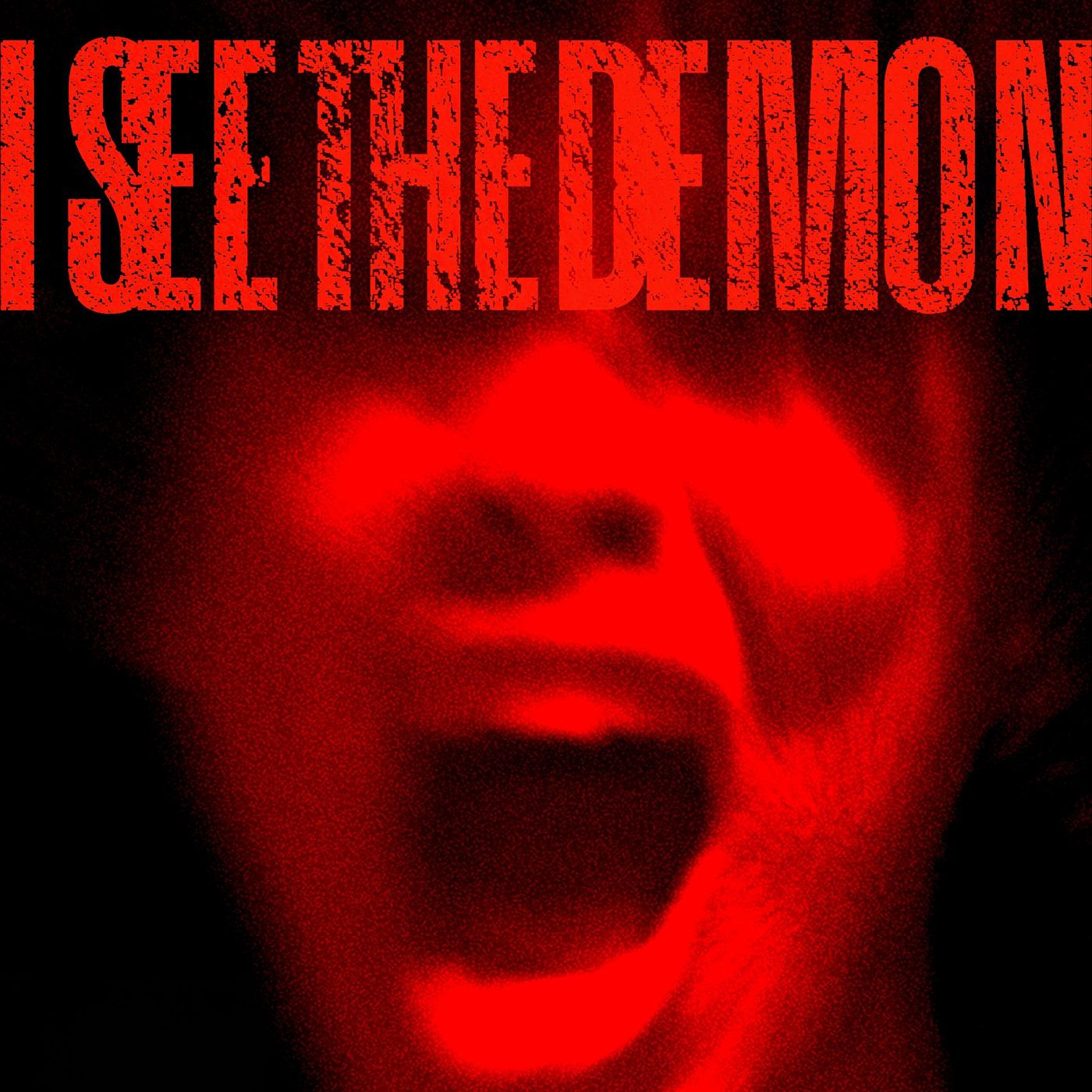
This is a Special Report on a new voice and a festival film. First-time feature director Jacob Lees Johnson joins Mike White to talk about the movie that premiered at Cinequest in San Jose, then played Grimmfest in the UK and FilmQuest in Utah. It stars Jon Heder and Alex Zollicoffer, and it is now on VOD.
Lees Johnson explains where the sci-fi ideas came from, why the relationships are the real heart of the film, and how a first AD's blunt note sent the script back for a rewrite. He talks about shooting in ten days in a real house in Provo, cutting the film himself in Premiere, and living with one round of early test screenings. He also names the folk horror he wants to make next, and a dream take on the Sleepy Hollow legend.
Follow Lees Johnson on Instagram at @sir_lees.
The Projection Booth is part of the Weirding Way Media podcast network. Explore more of our shows at http://weirdingwaymedia.com.
Transcript
Automatically generated, so expect the odd misheard name.
Hold your ears folks it's showtime people pay good money to see this movie when they go out to a theater they want cold sodas hot popcorn and no monsters in the projection. Booth everyone pretend podcasting isn't boring. Turn it off turn it off. Hi, this. Is Ellis McIntyre.
If you leave your name and number, I'll call you back. Um, did we have any plans tonight? What's up, girlfriend? Hi. How are you?
I'm good, how are you? So good to see you. Hi. Guys, how long has it been since we've all been in the room together like this? Two.
I just get a breather. Right? Where did you come from? Did you guys see that thing that was up in the sky? What thing?
Let's do a toast. A toast? Yeah, okay. To the end of the world. Happy birthday to you.
It's going to sound crazy. I can't really remember anything about my dad. That's strange. We don't know what we're going to wake up to, like what the world is going to be like. Happy birthday dear Lucy.
Are you okay, Lucy? What's gotten into you? Happy birthday to you. Everything's fine. Hey folks, welcome to a special episode of The Projection Booth.
I'm your host, Mike White. On this episode, I am talking with Jacob Lees-Johnson, all about his new film, I See the Demon. This was a very disarming film. It went a lot of directions that I wasn't necessarily expecting. Hopefully, folks also enjoy this one as much as I did.
Thank you so much for listening, and I hope you enjoy this interview. I want to know a little bit about you and your history as being a filmmaker. So this is my first feature. I've made a bunch of different things, smaller things and experimental things. I've been working as, you know, doing commercials and working on crews and such.
This was my first opportunity to have, you know, what is for me a large budget. It's still a very small budget compared to things, but it was my first chance to really hop into the director's chair with enough resources to get this job done. But yeah, so I live in Salt Lake, and I was happy to shoot in Utah. We have a great film commission here that supported this a lot. So I don't know.
Anything else you want to know about me, specifically? Well, you've done a lot of shorts over the years, too. Can you tell me what those are you usually like? Yeah, so I've done a few shorts over the years. I recently started getting into horror.
My first were kind of more dramatic drama sorts of pieces and some documentary fiction hybrids, things like that. And I think I bring that into this film because yes, it's a horror film, but it's also a drama. It's got a strong character through line, a lot of nuance to the character dynamics and performances. And that was very rewarding to work with the actors on that. I think that was, for me, That's what draws me into a film is how well I either relate or believe the characters.
Can you talk a little bit about The Thief from 2019? The Thief. So The Thief was that documentary fiction hybrid. Technically is a feature length movie, but it was just, you know, like a literal zero budget movie. So I say that this is my I See the Demon is my first feature. because that also never saw the light of day, really.
It was a doc fiction hybrid about millennials kind of navigating the world and kind of being faced with the world's problems and not knowing how to deal with them was sort of the main theme of that film. And so, yeah, we shot that quite a while ago, and I definitely learned a lot on it. But ultimately it ended up being the sort of thing where I just went and made a movie and I didn't really understand the, how to get a movie out in front of the people takes more than just making the film. And so by the end of it, I had made some kind of decisions about like, okay, well, I'm going to use this quote because, or these pieces of media from different sources. that ended up complicating it too much to where we couldn't actually really release it.
So that was The Thief. It was a good experience. I'm glad I made it. I still really like it. More of a learning experience.
It's almost more of like a student film, even though I wasn't a student anymore, but that's more of a vibe of it. Yeah, totally understand. Yeah, your own personal film school. Well, where did the idea for I See the Demon come from? So the sci-fi elements, which I won't disclose too much because there's a bit of spoilery stuff in there, but the sci-fi elements had been bouncing around in my head for quite a while.
But the relationship dynamics, which I think is more like the heart of the film, that came from a number of experiences in my life where I felt like I saw people either in my life, relationships that I had, or watching other people's relationships where it turned out that someone that you thought you knew was doing things that were actually very different from what you thought, from who you thought they were, like behaving in ways that were unsettling or not very good or things like that. And the unsettling nature of that breach of trust was really potent for me. And so I thought it would make for a good horror film and a good exploration of trust and also your own blind spots, whether or not you are really seeing things clearly, because maybe you're the one who's mistaken or maybe you're the one who's been believing something that isn't true.
So that was kind of the genesis of it. And tell me about your co-writers on it. So my co-writers were Davey Morrison and Martha Douzette, who are both excellent writers. Davey and I were kind of more closely collaborating throughout the initial phases of writing it. And then Martha came on later to do, she just did a pass on it, but it was super helpful because she brought in a different perspective.
And a lot of Martha's work, a lot of the things that she brought to it stayed in the final. the final version. So yeah, they're both excellent writers, and I still collaborate with them as much as I can today. And how about your crew? Where did you find all your folks for your crew? So luckily, a lot of them were people that I've known for a long time from film school and then in working relationships after film school.
Honestly, our co-producer slash first aid josh contour he should be he honestly should get a co-writing credit because he read the script and was like he has this way of doing things he was like jacob this isn't ready this isn't good enough and so i was like oh josh mad because we got it we're set to shoot so soon and you're telling me it's not ready but he was right so we went back and that was kind of when we brought martha on and tweaked the script and made it better so Yeah, great crews in Utah. Utah's a great place to make a movie. I'm a major advocate for filming in Utah. We have a decent incentive and great locations, great crew, great cast, too. Absolutely.
Yeah, your cast is phenomenal. Yeah, and pretty much everybody with the exception of Lucy, our lead protagonist, Alexis, and John, John Heater, is. Are either Utah-based or have a strong connection to Utah. I guess John has a connection to Utah too. So anyway, super, super great talent that really melded very, very well.
Any talked about locations. I mean, so much of this takes place in a house. Is that a real, that's a real house rather than a set? Yeah, we did not have the budget to build a set. Would have been nice if we could.
But we had, yeah, we just rented out a house in Provo, actually, at It was crazy. It was a madhouse. We were just cramped in there for... We only had 10 days to shoot, which is super short, but we were all inside all the time. It was a bit maddening.
It's all a blur to me now. I hardly remember anything from it other than the feeling. I remember what it felt like. Well, yeah, just to be kind of trapped in that one space for so much of the film. I mean, you really do a good job of exploring all of the different areas and really kind of this... coordination of where everybody has to be at what time.
Yeah it was and that was again talking about our crew that was Josh well it was two people well three well really it was you know Josh R.A.D. who was like a master organizer we would not have gotten the film made in any way we wouldn't have even gotten the film started without him but also the design because there's elements of the film without giving away too much where the what happens inside the house has to be really specific and, um, things change, but they change in really specific ways. And so my production designer, Ashley cook was instrumental in keeping that all organized and straight and also making it look good. And then it was really fun to explore that in the cinematography as well.
And like the different look for the, for how we wanted things to feel at different times in the film. So, um, And even all the way to the color grade. One thing I really like about this movie was just how much every aspect of filmmaking goes into telling the story. Obviously the cast, the performances, and the writing, but really the look of the film, the production design, the cinematography, the sound, the music, even the color grade tells the story. So that was fun and rewarding to do.
And with a story like this, of course, the editing has to be just locked. Exactly. That was a lot of fun too. I think editing is probably where I feel the best because it's like the last phase of writing and I love to sit there and just like and navigate all the footage and see what you can turn it into and how you make meaning from just one cut to the next. It's a lot of fun.
Did you edit this yourself? I did. Wow, that's great. What did you cut on? Premiere so i know everybody's mostly moved to resolve but i'm still on premiere.
Hey if it works for you it works so did you do any sort of testing with people to see how this. We did a couple of test screenings very early on there were like no visual effects and no no no sound it was pretty rough people got it so they understood it and they had an emotional reaction so that was a really good sign and then we didn't really have we didn't really have like budget really to do more and to make changes based off of anything else. So we kind of had to do, that was our one set of test screenings. And then we had to just kind of say, okay, this is what it's going to be because we can't really afford to like break it up anymore and change, make any big changes. Cause that would have affected the music and the sound and all that sort of stuff.
So, so once, once, once we got into music, sound and visual effects, it was kind of like, this is the movie and it has to stay what it is. Cause we, You know, we're not a big studio picture, so we can't go in and break open again. That would have stretched us too much. But luckily, I think it works, and I think we didn't need that. When did you first get to see this with an audience?
So we did a cast and crew and friends screening a couple summers ago, and that was really rewarding. The first, when we premiered at CineQuest, that was like our world premiere, which was a film festival in San Jose. in March of 2025. That was when it was first released to like a totally neutral audience that we hadn't, that I didn't know anybody in the audience. So that was the first like real, I guess, unbiased audience. And that was really special because there were people who had really strong reactions.
Um, and that was a blast. It was, it was, the festival moments are obviously so great and so wonderful to be able to experience things with an audience, and then be able to talk to them afterwards. So I'm glad we got to do that with this film. That's great. Where else has it played?
It played in a couple of different festivals. Notably, we played in the UK, a festival called Grimfest, and then FilmQuest, which is here in Utah. It's a really up-and-coming horror film festival. It's been up-and-coming for a long time. It's definitely one to keep on your radar.
Very cool. And now what's happening with the film? So it's streaming. It's on video on demand today. Today is its first day of release.
It'll be available to rent or buy. And so this is kind of its home now. So on Amazon or Apple or wherever. And how about you? Do you have your next project already in the works?
I have. I've written a few scripts. Right now it's just about finding the right budget level. So nothing is A few ideas, but nothing is an active pre-production. Hopefully, the goal is to shoot something else in 2027, and I have a few different ideas for what that could be.
So no sci-fi epics out in space of starships crashing into each other? Probably not yet. Hopefully someday, though. What genres do you typically like to work in? I mean, you said this was your first horror film.
Well, I've always kind of been drawn to the feeling of horror films. So I do want to keep doing that. I mean, I would love to. I love folk horror, actually. I would love to do.
I have a folk horror in mind that I would love to do. And eventually, I think a dream would be to do The Legend of Sleepy Hollow, but in a more folk horror sort of vibe, as opposed to like the Tim Burton one, which was more. Kind of almost action-y. But anyway. But I also really like to do small character studies and street-level urban drama-type stuff, like run-and-gun guerrilla things.
So I hope that even if I am able to do stuff with huge budgets, that I can still find the time to squeeze in very small, very intimate sort of things. Is there a good place for people to keep up with you online? Probably just my Instagram at this point. I'm not a super social media guy, but that's probably where I'll be. the most uh that's where i'll announce everything. So you should probably say what that is oh yeah so.
My instagram which is at sir lee's s-i-r underscore l-e-e-s. Very cool well jacob thank you so much for your time today this was wonderful talking with you i really enjoyed the film. In the river I'd balance all the rock to see. Losing little fishes under the water To appear he does not follow me He follows. Me I see a demon in the branches.
He's reading from my. Eulogy Once in a while he sends me a glance He's high up in that cherry tree Cherry. Tree follows me I see a demon in my. Lover as he lies right next to me. Fingers and eyes and teeth.
All twitching in this gas of reverie, reverie, cherry tree. I see a demon in the mirror The. Only thing my eye could see. In that deep, thick darkness glimmer, the demon lies. His face with me, faces me.
Where do we jury tree? Follow me. The cherry tree Follows me.
Similar episodes across the network
Matched by shared keywords.
-
Men
2 shared keywords: folk horror, horror
-
The Fly
2 shared keywords: horror, science fiction
-
Kulture Meltdown: In the Mouth of Madness (1994) — "Do you read Sutter Cane?"
1 shared keyword: horror