
Season 1 · Episode 626
Special Report: Julie Wyman on The Tallest Dwarf (2025)

About this episode
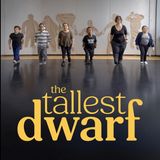
When filmmaker and UC Davis professor Julie Forrest Wyman set out to make The Tallest Dwarf, she discovered she has hypochondroplasia dwarfism herself — and that hers is the last of a body type she has inherited. The film charts her quest to find her place within the little people community at a moment when dwarf identity is poised to radically change, exploring everything from the legacy of exploitation to the thorny ethics of pharmaceutical interventions promising to make little people taller.
Visually striking, humorous, and touching, The Tallest Dwarf invites audiences to rethink identity, disability, and what it means to belong in a world that wants to change who you are.
Transcript
Automatically generated, so expect the odd misheard name.
Oh it's you, Dad. People say good money to see this movie. When they go out to a theater, they want clothed, sodas, hot popcorn, and no monsters. In the Protection Booth, everyone pretend podcasting isn't boring. Cut it off.
So Dad, who and our family had short. Arms and legs? That Lilah was like that, then there's my mother. Do you think there have been dwarfs in the past, Not that I'm. Aware of, but we have a tendency in that direction.
People like us get described as disproportionate, even though we have lovely proportions. What does it mean to liberate your body? I guess that's what I'm trying to figure out. Hey, folks, welcome to a special episode of The Projection Booth. I'm your host Mike White.
On this episode, I am talking with director and star Julie Wyman. She is at the center of the documentary The Tallest Dwarf. The film is a great movie all about self discovery, identity. Ms. Wyman makes great personal documentaries and this time she is part of the mix.
Had a great time to talk with her, and I hope you have a great time listening. Thank you so much. Before we even talk about your latest documentary. I'm so curious how you decided to become a documentarian. I you've decided to make some of these films that you've done.
I actually felt really called into being a filmmaker by the experience of having a body that didn't fit. I sort of refer to this in the film. I was like bullied as a kid, and I was both too short and too fat, but also not like clearly in a category of dwarfism. I just sort of had a body that didn't fit and was odd and got I took some flak for that, and I think that experience of being on the outside, being kind of set apart, stayed with me and motivated me wanting to when I got older. When I was in college, I was doing theater productions just because I need a role like that.
I'm creative. I like working with the people and making things. And then I was studying anthropology and feminism and thinking about culture and the way that our very narrow range of ideas of beauty is part of what shaped my experience and shaped the way people saw me, and I wanted to do something about that. I wanted to intervene in that down that, because if the movies in Billboard that present that narrow form of beauty were how we learn what beautiful is, then those same places the movie screen could be a place to tift that, to change that, and to bring different bodies and stories and experiences that we don't see. That's what I wanted to do, you know, And that was when I was fresh out of college.
I kind of decided I wanted to make films that challenged and gave us the possibility of seeing beauty that was way beyond this narrow range of this narrow prescription of you know, mainstream media gives us. So, yeah, I just all the films that I've made in you know, about thirty years of work have been in different ways about body image. A lot about body image, but also sometimes about people in different ways who are kind of going against the brain, pushing out against stereotypes and limitations imposed on them that are not necessarily real. It's one thing to do a film like A Boy Named Sue or Strong, where you're talking about bodies in those but with this one with the tallest wharf, you're putting yourself front and center.
I mean, there's no real room between you and the lens and a lot of this film. How was that and how did that decision come about to be like, this is going to be my story Now. I have this realization after I finished my film Strong, that I wanted to Yeah, I was kind of being a ventriloquist and trying to get at some experiences i'd had through or I related to Cheryl, Let's put it that way, the main participant in Strong, and I was realizing at the end of that there is this experience in story I've had but I've never brought to the screen. And I think good time. Now, Like a lot of people do their personal work when they're in college or crowd school.
They make their dad art, you know, then get it out of their system. But I kind of felt really squeamish about that earlier on. I didn't want to do that. It felt self indulgent. And so it was until making several films that it kept coming back to me that there was something I wanted to explore about my own body.
That I was like, Okay, am I mature enough? Now, maybe it's time I have to do this. And I started The Tallest Dwarf as a personal exploration. I thought I was making maybe an experimental short about me and my dad, and I thought that's what it would be, just a much smaller scope of a piece. But as soon as I really started trying to find out what kind of dwarfism I had, what is the world of little people and dwarfism all about?
It opened up hugely into a whole community, whole history that was way bigger than my personal story, glories and experiences. And so for a long time I then was like, well, maybe I'll be in this film, but just in a very minor way. There's so many more important people and stories here, and that's what I want to focus on. But through the editing process and the filmmaking process, I really had to come back to I need should be in this film to have a reason to be in the little people community. Otherwise, if I'm not the kind of guide and my personal question doesn't bring us in, where's just doing voyeurism the way that all the reality shows do.
And I'm not saying there's no value to the reality shows or to there's plenty of projects out there that have really interesting little people characters. There's a lot that have very harmful representations too. But I knew. I discovered as I started putting things together that without that personal quest and question, there wasn't a reason and a new way of looking. So it had to kind of come through my story so that I reclaimed or re or yet basically came to terms with the fact that I had stuff I had filmed with me and it had to become central to the film and the editing process.
I had a lot of squeamishness and a lot of coming to terms with that, and also trying to find the right balance between my stories and other people's stories, and how to utilize and tell my story without making it the main the only story, like I'm really trying to do justice to the bigger community story and in some individuals stories that you see. Using art and having that as a way of people negotiating with themselves, like the whole tracing of the bodies and the cutting out of the bodies, or these scenes that people are writing and then performing. Where did those ideas come from? The first thought I had walking into LPA and thinking of can I make a film? What kind of film would there be with this group that I'm trying to join, was like, well, I can only do this if it's in collaboration with the people here.
I have to find the people here who want to make a film with me, not sort of like I have to get people to let me watch their lives, even though I did some of that too. It was really more like I kind of knew it needed to feel collaborative and over time, like film compresses, you know, many years I found my place by connecting to artists, you know, and not only people that are little people who I have some kind of physical similarities to, but also that I have this passion for making images and telling stories. So once I had connected to the Dwarf Artist Coalition, which is like a group within Little People of America, and started making friends with a lot of artists, it felt like the right direction was to ask a group of people to tell our stories together and from there.
Actually, the pandemic is part of this story because, you know, we planned to do this workshop process that you see in the film in twenty twenty. We had to put it on hold for two years, and during that time, Sofia the kind of other lead of that workshop, and I really spent time thinking about what do we want to do? How can we make these short films with this group, and what kind of exercises can we use to really explore and hold how we look literally, how we look, how we look at ourselves, how we move, what it feels like to be together, and what kind of stories from our history, our culture's broad history do we want to to tell. So those exercises of like looking at those historic paintings and coming up with stories and characters on in them, or telling our medical stories and thinking about what kind of film where we want to see out of this?
What is our common ground here? Don Ak came through Sophia and my collaboration of what do we want to do together? After I had arrived at a point of like, okay, I have a group of friends now and co artists who are interested in thinking about little people identity and visibility and doing it a different way. How did you make those inroads with all of these people that would eventually become your contributors and your partners in this. I've been making films for a while and there's always a relationship building process with my documentaries where there's the early talks where I share with whoever I'm filming with.
But I think this film m gee and ask them if they like to participate and be part of it, and usually it's me doing all the kind of creation and ideas, but bringing a crew and like I said before, like watching parts of their life in this and I did some of that with the tallest dwarf too. What I started encountering making this film also was that was I right near the beginning, I was like up against like, this is a group of people for whom cameras are really loaded and who get their pictures taken without their consent all the time, like on the street. And I realized that my asks to film were receiving some pushback because for rightly so, because there's the very appropriate question of like how are you going to portray us?
And what is do I trust you? And so the way we got to the workshop was me also realizing I needed a space of consensual filming, like rather than focus most of the film on, you know, filming people at their doctor's appointments or other moments that some a doctor's appointment and different conferences, but rather than be in addition to that, I want into space where everyone knew there would be a camera, where we're going to have a process and part of its purpose is to be filmed and witnessed. And so in choosing the people that were part of that workshop, that was part of the ask and the conversation and what I explored with each person. You know, this is what I'd like to do, you know, explore our history and our you know, do all the exercises I mentioned to you, and we want to document all of our conversations that happen in this room.
And here's here's why. You know, this is why I think watching what we do is important. And I mean I think the other part of it was finding crew, like finding a cinematographer and sound crew and producers that really got how important it was for this to be led by and for little people, and you know, me as one of those little people, but also the other people in the room, like you hear me say early on, you know, we're not here to perform for the cameras. They're here to witness us. In fact, maybe the camera's doing the same thing, but the crew's mindset is very different, including mine as a director.
It's like, it's not about getting the shot we need and making sure that people do what we want them to do. It's even which happens in documentaries even you know that you're like, oh, okay, there's a lot of shaping and manipulation that happens in all observational documentaries as much as it feels like it might be a fly on the wall, but it was really more about taking the lead of the people, the performers, the little people in the room, making it an accessible space for us, for each person, and then having a policy where it was honoring, like, hey, we can take breaks that can't you can say no to the camera if something's happening that you're not wanting to have filmed, and kind of making it a space that the people on camera had some say and how the filming was happening.
I imagine it was a little, i don't want to say challenging, but a little different mindset for your crew as well, to think even about camera placement and making sure that you're not looking down on people. You know, you're not setting up like what would be a normal shot. So it must have been a little bit of a mind shift for them too. It definitely was, and it was there were some physicult challenges because that you know, the primary crew that cinematographers sound record us our average height and yes, so they're at an eye level naturally that's above the group of little people, And so knee pods were used. Like there's a lot of being on the floor for the cinematographer and or using her equipment in way that could easily like she had to practice and learn like how do I make this my eye level?
What's you know my chest like or lower? You know, like mic wave level, And same thing for the boom operator. That there's you know, there's just a different physicality and what was so amazing and I think you see it in the film a little, but it was so much more extensive in reality that workshop time was that we kind of built that world of the space to fit our bodies, meaning you know you sort of see people sitting using stools as a table or using a chair as a table. You know, we kind of created and used the space as we as it fit our bodies. We did a lot of sitting on the floor because little people we like to sit on the floor, like it's actually pretty comfortable.
A lot of times these chairs are so uncomfortable. So the camera the crew also kind of adapted to that and learned how to come in and be in our space and create a new viewpoint and listening point. What has been the release of the film, like, where has it shown and what's been the response. Well, it premiered in March last year at south By Southwest. That was really exciting bringing the film to such a you know, a big important festival.
And just side note, our amazing composers, the Octopus Project, live in Austin, so they were a big part of those screenings and bringing in the local music community that they're part of. But I think more broadly so since then, I've shown in at many festivals. We're getting ready to broadcast the film later this spring on Independent Lands and with that there was a whole series of in person community screenings happening around the country. That's yet to come, but the response has been really wonderful, and I think so kind of emotional and close range like for the audiences. I think that's been the most exciting thing is being with in the room while people are watching it and responding to the film and seeing how most of the audiences we've had don't know anything about little people community and you know, one hundred percent relate to the stories about family.
There's a lot of stories about parents and children in the film, Me and my dad, but also other people, you know, having a kid, being a parent, relating to your parents, where there's often a difference. A lot of little people have average type parents. The response has been quite like I would say, like emotional and maybe uplifted is how it seems like people feel when they see the film. So I've had lots of conversations, both with the whole audience and with individual people about the meaningfulness of that A story about being in between and not quite fitting right. That's my story, but a lot of people feel that way for lots of kinds of reasons.
You know, belong to a community but aren't on the borderlands or borderlines of that community, not quite sure if they fit, if they can claim their place, or they might. There's that experience of not belonging is pretty widespread. A lot of the responses people have had has been about how it's really meaningful and how they haven't seen necessarily that represented the kind of awkwardness, but also the meaning of connecting when you feel outside and that you've really not belonged yet. Is there a good place for people to keep up with the movie and where it's going to be showing yet. Yes, you can follow us on social media both Instagram and Facebook.
Our tag is the tallest dwarf film all one word, the tallest dwarf film. So those are the best places to see, you know. That's where we'll always announce upcoming screenings and events. You can also find out more about the film on Women Makemovies WMM dot com. That's my distributor, and then Independent Lens is our broadcaster, but they will have lots of info coming up within probably a month or so.
Would list the broadcast dayed in April, and all the different ways you can watch it because it will be streaming on YouTube once it's broadcast on the PBS channel, and then through their app. I'll be free streaming for free for a while and then behind there, you know, through their streamer for quite a long time. So anyway, I'd love you to come see it. If you're listening to this and haven't been able to come to a festival screening, follow us. Miss Wimon.
Thank you so much for your time. This has been so nice. Yeah, it's been great. Thank you so much for watching the film carefully and like your questions are so so on target of what I want the film to be about. Thank You than Sud the factor
More from The Projection Booth



Similar episodes across the network
Matched by shared keywords.
-
43 - Jon Spira - Director of Elstree 1976 and Hollywood Bulldogs
2 shared keywords: community, documentary
-
Jackass: Best and Last (2026) — "Welcome to the first day of our final film."
1 shared keyword: documentary
-
Episode 26: I'm Chevy Chase and You're Not (2025)
1 shared keyword: community