
Season 1 · Episode 625
Special Report: Christine La Monte on Viva Verdi! (2025)

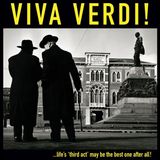
About this episode
For more information visit: https://www.lamonteproductions.com/
Transcript
Automatically generated, so expect the odd misheard name.
Old You is both. Its show die. People say good money to see this movie. When they go out to a theater, they want cold sodas, hot popcorn, and no monsters. In the Protection Booth.
Everyone pretend podcasting isn't boring off, turn. It soft softly here for am allspersal, stooping the sweet It was a scram night. It's all round und round Suddenly swarming. Is never never swayings still a pression of swet chne my. So high a time serving h.
Enough aunt desire, then suddenly sound. At her waisson says sweet sweet sea. Hey, folks, welcome to a special episode of The Projection Booth. I'm your host, Mike White. On this episode, I am talking with producer Christine Lamont all about well two of her films, the twenty twenty four film Viva ver Day, as well as the twenty twenty five film Eyeway Ways Turn Dot Yes.
Opera is back in a big way, and these are some great documentaries that you really need to check out. Viva Verde. Wow, it knocked my socks off. You will probably hear me gushing in this interview and with good reason. Thanks so much for listening, and I hope you enjoy.
I want to know a little bit more about you before we start talking about Viva Verity. How did you get into the business. I think that it really started from the spectacle of mass because that whole thing, with all of your senses are involved, from the sense to site, your audio, and the actually the smell of things, the incense that's there too, So I think that whole thing being immersed in a whole different world. I think that's where it started. And then I remember going to my grandmother's for Sunday brunch or lunch, and I would beg anyone to take me to the movies and then I would beg them to see it again to what one with me?
Because I love those worlds. I love the colors. I was curious about so many things, and this was these were new worlds that I was being introduced to, and I was maybe only seven or eight at the time. And that's where I also fell in love with opera, with my mother, my grandmother making sauce and heavy Mario Lonzen and Caruso playing these red vinyl albums of Theirs and Verdi and Puccini especially, So that's kind of where I fell in love with Opra, and I think that it just happened. I think if you follow your passion.
I've always been around music, and I worked at the Jazz Workshop Paul's Mall and Boston, and if you knew about that, was like the premiere jazz club in America at the time, And so I think that started. He had two little small theaters that we used to put these great films in. That was another way that it starts. And also when I was in college, I did enjoying very many things, but there was an International Film Club and every Friday night they would show two films, and whether it was Wild Strawberries or Tokyo Story or Black orpheus my favorite film. All of these films were exciting to me, and I knew that I would love to be involved in those creative worlds of you know, being involved, and I always loved behind the scenes.
So it just was a natural fit for me. I think. I think before you got into producing things, you went most in marketing. Yes, I did, yes, And I think that's obviously I fell into when I was at Boston at Zach Theaters working there. After the Jazz Workshop Palls Mall, I was hired to do that be the director of publicity and promotions for Zach Theaters was eighty three theater chain, and that was really fun, and the studios would come and we would do these I love promotions, so we would do tennis courts and all the great promotions in the streets.
And I think one of them was the Brinks Job. Universal's the Brinks Job. We did a big premiere there and after that they asked me if I would be interested in going to New York to be the East Coast field drop. So it was the East field drop there, and of course moving to New York was exciting and what I always wanted to do, so it was perfect and that I did that for a while and that was so much fun to do promotions and publicity. And I would travel to Boston, Philadelphia and Washington, so I got to know the press there and got to travel with a lot of producers and directors.
So I always felt that I was learning at the feet of the masters and the things that you can't really read in books, right, like Casaverita, you can't read in books those things. So I was very lucky to be with them and able to ask questions. We'd be in limos going from one place to another, and I'd say, what did you think about this? And how did you manage that? If that question wasn't asked, I would ask it.
So I was lucky to have those lessons too, So that was an inspiration for me. I was the field drop and then I was a director of publicity at Universal and then I moved to New Zealand with my husband and I went to Disney first and I was the field the director of publicity and promotions there and that's when Michael and Jeffrey Katzenberg took over and they just were building a New York office. Was one person there. So I built that office and hired people and after three years there, which was great because they had all these wonderful films from Touchstone and the regular Disney films that I loved animation. Learned a lot about animation, and as I said, I was really drawn to the directors and public and the directors and public and producers, which is always exciting to me, always interesting.
What was your creativity and what was your process of getting these to the screen. And I was also talking about that to the press when I was promoting those films, So I learned a lot, and then I moved to New Zealand and helped launch New Zealand three TV New Zealand three, so that was kind of an interesting strategic move. Then when I got back, I was about to start my own PR company. It was my birth day, I remember, and I had all this great stationery and I was about to launch it. And Charlie Glenn called me from Orion and he said, we want you to come on board and head up our marketing and publicity here And I said, I just read up my stationery for my own PR company.
Said tear it up. I said, okay, So I tore it up and started it Oryan And those were really favorite days working with Arthur Krim and the people that were that team that were there. We were a very small little team, especially after working at Universal and Disney, or maybe seven or eight of us that were really leading the charge here, but we worked really hard and smart and strong, and we had done really great films. I mean, we had Dances in Silence and those were back to back Oscar sweeps that was prettym It's just having a strategic mind. I think having a studio background really is kind of like being in the Army, and they you know, you really know exactly know how to go about being strategic and precise and not make any mistakes if possible.
So it was always it's a good lesson, it's a good a good learning learning post for sure. How did you make that switch into actually producing things? I started to do went to Rogerson Cowan and I was head of the film division there for about five and a half years. And when I finished with that, and I did a lot of things. I brought on books, I brought on theater, I brought on a lot of things to add to the motion picture division.
And I love performing arts. So I had an opportunity to do one small film that was called Dandelining Dharma, so I really kind of got my chops on that. That was great, and we won an audience award upon springs, so that was really a fantastic you know, reward or confirmation that this is working and you should continue in that. So that was great. Then I love theater, and dear friend of mine, Gary Goldstein, who had been writing really wonderful plays in books, and he said, you want to do this with me?
And I said, yeah, it sounds great. And that was three grooms in a bride and that was wonderful. We had three extended runs. It was about these two great gay guys whose best friends man and a woman were getting married and they said, we want to get married too. But this was a long time ago.
It was like two thousand and four maybe, and so it was new and exciting and we had a great run and DiSalvo started it and it was just great fun. I love the challenge of Okay, how do we make this happen with this very little budget, and how do we get this out there. I've always liked that. It's a little bit of manifesting. You really have to think and dig deep and ask questions and you come up with something and you make it happen.
It's the best you can. I think that was part of it. And then I segued into the small film that I did, that one that I won at Pump Springs, and then from that Evane Russo, who I had worked with at Rogers and Cowan on a film that she did Naturally Native. She said she called me I was leaving in Rome at the time of my husband twenty twelve, and she said she's a meditator Buddhist Romney R and go cute. And she said, listen, they told me to call you because you need to be involved in this film.
And I said, okay. I didn't ask them who they were. I just said what else did they say? And they said, this is the deal. It's in Milan, it's Costaveriti, the home that lady built, and it's an older generation of Italians.
And I said, you know, sign me up. You don't mean to say anything else. I love this idea, everything about that is appealing to me. And I had been studying Italian and living in Rome with my husband, so to continue that journey in Italy, to live and work in Italy was always a dream of mine. So I said, wow, this sounds great.
So we were back in America, my husband and I and Evonna and I flew the next May twenty thirteen. We flew to Milan and got permission von stage. She was still working. She stayed that a week. I was there for about three weeks, got permission, did some footage, and we created a little bit of a real and a development reel, and did an Indiegogo campaign, raised more money, went back another time, and then went back a third time.
So in between all of that, we were able to find the five featured guests that we followed in the film. But there were so many wonderful stories, Mike. You could imagine these great people that were living there, that were larger than life and had stories of victories and losses and loves and passion and all over the world, because they had played it all and performed it all over the world, and all the great opera houses. And my husband and I happened to be great opera fans, so we had gone to many of those houses, many of those great opera houses. So it was so exciting to see things that I love kind of come alive in their stories, right.
So that was beautiful, and so we put together this real race of our money, as I said, went back a couple of times and had some great editors that we found. Federico Conforti, wonderful editor Italian living in La and Diariana Cordelli also an Italian living here. So we brought them on and they added their elegance and their beauty, and especially feder Rico, he was able. He used to cut to music. So one of his films all that jazz or I think that's just a short film.
It's wonderful, and it was cut to music, so he had he really understood that, and they both knew the nuances of Italy, an Italian and body language. You know when Angelo Lo Feroso goes, you know, he does this amazing little sprout right over this beautiful sound Aria and then he goes, that's all I've got. So they were able to capture those in. Evon and I both have a great sense of humor, but a lot especially Evonn's got a great kirky sense of humor, and you could see that throughout the film. And we went through a lot though, with raising funds and with the pandemic, and we were at one point we were editing in Parma, in la and in New York.
Avon was in New York. I was here and our first editor, Federico Roelli, was wonderful. He started in Parma editing with us the first string out and that was great. And that's when I sent one of my friends introduced me to Nick Pike, all Academy members, and we were at a luncheon one day and Ellen Rich, who's now an EP in our film, said Nick, I think Christine's got a great project. You might like, because you know, they talked about these, especially music documentaries or music films.
So Dick said, send me something. So I sent him a little bit of a trailer and these eleven minutes that Evan and I had put together, and he really responded to it. He loved it, and a couple really, a couple of days later, it wasn't very long afterwards, he had written the song and sent it to me and I said, oh, this is this is like it's been inspired and divine inspiration. So I sent it to Yvon and I said, this sounds pretty great Evan. She said, oh yeah, this definitely is exactly what she had in mind as well.
So we hired Nick and that really helped move along our vision. You know, every once in a while with a documentary, you've got to go back in and say, what do we start with? What was our vision? What was our intention? And so that helped us to kind of solidify our direction, and it really everything that that song represents is right.
The Sweet Dreams of Joy was what we were working on and dealing with and recording every day when we were taping these wonderful stories that they were telling us, these dreams that they had still that they could enjoy at Casaverity, but dreams that they had before We would do being music therapy and you could see them thinking and mouthing the words to these songs that they remembered. I imagine you were at a little bit of an advantage doing a documentary about performers. So there's probably not a lot of hesitation from these people because they're used to being on stage. That's so right. They weren't loved being on stage, and they loved being in front of the camera and tiner stories.
They were authentic stories and you could hear their authentic voice come through. They were filled with so much reverie and so much passion and wistfulness in a way, and so happy to be able to tell us about it and show us their reviews and show us their albums. It was delightful. It was like being in a movie. Actually, it was like watching this.
As you said, they were actors on a stage and in Claudio Johnbi who's bigger than like baritone, he was. He was an actor. He passed away in August last August, and we fell in love with him that he was an actor on stage and in movies and obviously what you bring to opera is a big part of that. Being a you know, an emotional performer helps with your work on stage as well, what you're singing, your opera, your arias. For sure.
How did you kind of determine the five people that you followed the most? We were following a few other ones as well. There was a really wonderful Beppe de Tomasi. He was a conductor, an opera conductor actually, and when let's see, it was for The Godfather three and Coppola came to Italy and he said, I want the best conductor of opera in Italy, and they said this Bepe de Tomasi. So we had wonderful, wonderful recordings with Bebe and he had everyone like all other residents.
They all had little altars de Verdi in the room because they were so grateful to Verdy for saving them, and a lot of them didn't have pensions, you know, in the forties, thirties and forties, and so they were there very happily and appreciative. And in Bepe's little altar there was Coppola. There was a Verdi, Coppola and Andy Garcia and it's such fun with that, and so he told us all these great stories and we have wonderful footage that we haven't used yet. I think we're still very ripe for a TV program actually with more footage and interviewing more residents that are there and some of the young students that are there as well. As there's such rich stories that are so hopeful and inspirational and full of life and love and passion because they share these intergenerational younger and older generations love music.
That's what they bond with. They talk about it all the time. If they're not playing it, they're talking about it or teaching it or learning it. So there's you just love to be around there. Like honestly, when we go there, it's like we don't want to leave.
We want to sleep here at night. We want to stay here. Where are our applications and we can fill them out and come and stay here when we're ready. It must feel like you just got your batteries recharge every time you go there. It's true, It's very true.
That's a nice way of putting it, because there's such energy. I mean, opera and music is great energy. In fact, that's what a lot of Claudio Jombat teaches. Is that energy work, you know, coming from deep inside your diaphragm and coming out. And that's actually what Chittose was talking about too when she was doing her exercises and coming from a deep place.
I think it's sacred work. I think music really moves things, and Verity obviously knew about that. You know, there's a verity Ah. Do you know about the Verity ah? No, So most operas were written in four hurts, and he wrote all of his operas in four thirty two, which is the universal sound.
So the amen and the ah are that sound that mesa hurt, and so that's what he wrote in It's very it's a very uplifting. That's very beautiful music. I think Bucci's is beautiful too, but and his isn't four forty, but Verdies is even sweeter or it's it touches a place inside of me anyway. Well, that's the thing that I just so loved about this documentary is just how you see the passion and it feels like it rubs off Like as I'm watching this documentary, I'm being uplifted. And it's it's not every documentary that can just make your heart sore.
Ah, that's so nice to hear. We felt that way too. When the movie goes on and every one of our speediings, I can't leave. I want to watch it again because I think I feel that way too. I really get moved by their stories.
I laugh, I cry, I feel. You know, it's so beautiful too. Milan is beautiful. The home very spared no expense in creating that. It's still really as beautiful as it was before.
And there's just that energy that you feel. You get a flip, as you said, you get uplifted by this this wave of good feelings. And especially when Jombie's teaching the young students and they're creating their own energy right, their own sound, and they're off by a lot, and he lets them do it, and then they all laugh and enjoy. They adore him, you know, they just love the lessons that he's giving them, which are life lessons too. You know, you have to try things, you have to show up, you have to be there, and that was his gift to give as well, these life lessons these young music students learned.
They came from all over the world to do this, to study with him, including Massimiliano who was in Germany, and who said that was my whole dream was to work with Claudio Jumbie and to learn from him. And he said, I know you can't learn this in books. It's only here and with in Claudia was a really wonderful teacher. I loved watching him teach. It's so beautiful because he gives you instruction and any applause and then you know, celebrates you.
It's so great. You talked about the pandemic. How did that affect the production? As I said, you know, we had to stop everything and then we were but we were able to put together a string. You know, we did a paper cut and then we did a string out of all these special scenes and sequences and we were able to get a rough cut.
So it worked well in a way. And we learned to work on zoom and framio, which was wonderful. And you know, it was a great process. I love editing and I actually became a much better cook because of editing, because you could be very brave and bold, and Vonn and Frederico we all said, let's try let's try this, let's let's try going this way, let's put this over here. We took our time because we had time to do that right.
Otherwise sometimes you're in a hurry to get to a festival or for whatever reason. But we were able to really move things around, have different cuts, and it affected my life as well as I said it was. It was a good thing. You know. You just have to take those challenges and make the best of them that you can, and I think we did.
We use the time really well, and we were together and we're holding hand. Avan and I were held our hands from day one on this all the way through, and it's really paid off. I think to be persistent and to be relentless, and to be passionate and embracing and just go with the flow of what's happening the best you can, right and say yes and do what you can. So we said all these great, great stories that we could have followed, but you know, we went back a couple years later. Some of them ended up on the fourth floor, which was the floor where there's assisted more assisted living and Alzheimer patients were there, and by did Tamasi ended up there.
So we couldn't continue. When you start interviewing people when they're ninety one eighty eight, I know things happened, so you have to learn how to pivot a little bit. But we had so many great stories to follow, and we had the blessings and the love of their family as well, who gave us great archival and that were part of what we were doing. We always invited them to come and be apart and well watch this, and you know, we gained their trust right away. For me, I always think that Italians are part of my family because I grew up in such a big family and it was always like twenty two of us at Sunday lunch at my grandmother's.
My mother had seven brothers and there were two other sisters that she had, so big families, a lot of cousins. So when I need to tell I always think I must be related to them. I just feel know comfortable, and so being with them, I just fell in love with all of them was so easy. I speak some Italian that I was able to make them laugh, and they were able to make me laugh. They were so much fun.
So I think gaining their trust and you know, we only wanted to respect Unity's legacy and his contribution to the world and his music and in this beautiful home and his humanitarianism is for me he was a humanitarian before anything. He really was so generous and kind and such a great man, very humble. You know, he didn't want this to open until after his death, so he didn't want people to write about it or talk about, you know, what a great man he was, and he was really incredible there. He's one of my heroes for sure. I love those little animated sequences with him in there.
Oh I'm glad you did. Yeah, we went back and forth on that. I love animation, and in fact, Yvonne has directed sid animation. You know she's she's into animation as well. And I grew up with animation and I at Disney.
It's one of my favorite things. I love animators there. They have a great sense of humor. They're always hiding little little symbols of little things in there, and I just I just love texture. Also in documentaries, when the graphics, we had a graphic artist that did some of those movements.
And I also love the shift in music. I love when all of a sudden it's Brazilian music and you're dancing in your seat and then it goes to another another rhythm, another feel, another sound, another shift, and I like that. I like that in any kind of music, any kind of any kind of film, documentary, or or just a narrative. So there are really a lot of things that I appreciate as a filmmaker that we did, that we brought that was kind of interesting, a little different, And you know, these are stories that we were more observing this world, these lives and reporting back to the world. This is how this segment of this population lives in Italy, in this one particular incredible house that already built.
How beautiful is this and what a blueprint it can be for the rest of the world. And that we always thought that if A and I said this really could be a blueprint, maybe we could help make a difference and make an impact on third act of life so important. And a lot of people have been calling us about this, or we're licensing the film to retirement homes and music schools and upper houses. It's really having its touching a place right now. There's a lot of boomers anyway.
But also our world needs light and love and beauty and music. And while to all music is what our film is all about. When is the first time you see this with an audience and what was your response to that? Okay. The first time that we saw with a real d was in Woodstock.
That's when we premiered our film. That was a great audience. I mean, Mira Bausing did such an amazing job. It's really a kind of a music, music centric, if you will, festival, and there's all these artists that live there, musicians, and so we had a great audience and they went they went wild for it. They loved it.
It was beautiful and the same in Santa Barbara, very similar audience, more a little more opera oriented, more, a little bit more sophisticated, a little older audience maybe, and they had to put it encore screening on because the audience response was intense and immense that I know, exacgely, we're so happy. Was that of course, So to then do Q and A's where people rush up in our crying and say, this really moved my life, It really touched me. When how can the rest of my family see it? I want my parents to see it, I want my grandmother to see it. So that is very encouraging when you spend thirteen years was making a film.
When you have a reaction like that, you really feel that you you know, you may have been on the right road and taking the time to be exact and perfecting. And Evanna and I were, you know, we we just said it's not ready until it's ready. And we didn't feel that until several iterations later. And I know people were saying, when it's the film going to be done, and it's not cooked yet. But when it was done, we looked at each other we said, that's it, that's the film.
So I was really really happy to have a good partner and a film that brought great joy to my heart. Music. I remember being at studios working on some you know, some Westerns or you know, crying movies, and you have to see them thousands of times over and over, and you know, it's it was fine. But with this, it was such a joy to watch. And my husband was really happy because instead of guns and other things happening in my room my studio, there was all this beautiful Verity music coming out.
Then Nick, who created great music score wise as well. I think to go toe to toe with Verity is a very daunting thing, and Nick's music was just seamless and beautiful. Really, I love what he did for us. I was really happy that I was able to bring him in and that our friend Ellen introduced us in that he is a part of our journey. The song that he wrote for you specifically, this is now nominated for an Academy Award.
Correct, that's right, and how wonderful to do that. The music branch embraced such diversity because it's from K pop to techno music to our beautiful Aria and I think we're maybe one of the first Arias ever nominated. How wonderful that is to be represented like that and to be embraced. I know it would be great. I think it's good for audiences to stretch a little bit and hear different things and see different lives, different worlds, different cultures.
It helps change your mind about things. And you know, if you weren't thinking about your grandparents, even if they're not in a retirement home, even if they're at home with you or in their own home, to you know, be a little bit more appreciative of what they have to offer. You know, they've lived through a lot and they are masters of whatever, and so it's good. I think it's a good thing. I know the awards ceremony has changed over the years, but is there going to be performances of the songs, do you know, And I don't know if you're at liberty to talk about.
That right now. It's not totally settled on what's playing. You know, we hope that all of them would be certainly, you know, they're all five beautiful, incredible different films, difference, I sound, very diverse, so we would hope that they'd all be represented. They were all nominated, you know, we hope that they would all be shown. I don't think decided yet, so we'll see.
I was hoping you could maybe name drop who might be performing that. We hope that Anne Maria Martinez, who recorded it for our film. She's a great met soprano and she's incredible. She's from Puerto Rico, and really she was the voice on Mozart in the Jungle as well, so she has a great following that's very young following from that series as well as a huge opera following. She plays all over.
She's a wonderful human being too. I just adore her. She's kind and loving and wonderful, very intelligent, very eloquent and when she speaks, and her performance is stunny and I've seen her perform many times at the Eli Opera, and we're hoping that that's it. So as you are working on Via fa Verdi, you're also working on the turn Dot film as well. Ioway, waste turn Dot.
It's right, that just happened. What happened sometimes, and you just have to be prepared, because you know, I started on as I said Vi Viverdi thirteen years ago, and and what happened. These concentric circles like that happen in life. So I was leaving to Roere with my husband and I met a Maxine Derevenko. He was twenty one year old student film student and his mother was a friend of mine, and she said, I have a filmmaker's son.
I would love it if you would look at his film and see tell me what you think. And so I said sure. So I looked at his film and it was really so brilliant, so artistic, and I said, you know, your son is really really talented. So I met with him and I helped form it a little bit, and he got into some festivals, won some awards. And so when I was twenty thirteen up in Milan, we needed a cameraman and I said, Maxine, you've got to come and be our cameraman.
He said, okay, he came up then and then Federico wrote, Deli, I hired him to be a PA, but he happened to be also a great cameraman. So the two of them were our cameramen. And when we started doing that, even the development, all you could see very and a lot of that footage is in the final film. You could see very sensitive because these young Italian men and women are very learned, especially in the arts, so they can they really understand philosophy, they can sing an the aria, and they just have an eye because they've been trained, they've been you know, they've been educated in the arts. So both of them added so much to this.
And then and then Ivan brought on yasag Laskis, who worked with Robert Altman and he does amazing work, so he did a lot of those really close in interviews, beautiful, very beautiful cinematography. He comes from Poland, from the Public School of Cinematography, which is you know, known for its incredible breath and beauty. Yeah, so he brought his great skills to Maxim and Federicos. So what happened is after this, after working on the Veverdi. Maxine worked in Rome at the Room Opera House, being the head film and video person, so we did a lot of the interviews with the conductors and the directors of the operas.
So he knew that Awayway was coming. And this was just a few years ago, maybe ten years after we worked together. We were very close. He's like family with me, and so he is said, you know, this is really resonates for me. And he met Iwey away and he talked to him because Maxim's father is Russian and he left Russia when he was he was a Russian ballet Bolshoy ballet dancer and he fell in love with an Italian woman, and when you're at that statue, you're not supposed to marry outside of Russian women, so he had to leave the country.
So Maxine really kind of understood the question of freedom of the arts and expression. He kind of grew up with that. So he and I Way we had great conversations. I Waiwa. It was also his father was a poet and exiled and i Waiwe was with him as a young boy exiled and there was nothing there where they went in Siberia, and so to him does beauty of art, and it was such an important statement, that is for everyone, you know, and he represented He really took that on himself.
He represents every man. So I thought, wow, this is going to be really special and different. So Maxine called me after they filmed a couple of days, the Realm Opera House was shut down because of the pandemic, and that was the first time it had happened in the one hundred and twenty five year history of the Opera House, through wars, through all kinds of things. So Maxine didn't know whether they were going to continue, what was going to happen. But they went back in twenty twenty two in March, and they had Oaksana Livniv who was Ukraine conductor woman conductor, the first time they've had that at the Roma Opra House, so a lot of firsts here.
So he went back and they only had nine performances, nine days of performances, which is unusual, and that was it. And that's Iwayway's first and last foray into the arts of opera. That's it. So yeah. So although they did film that, you could see that on Rise six if you have that capability.
So Maxine got these great intimate interviews. They understood each other, Maxine and Iwaiwei and Iwewa was very generous and kind and forthcoming with him. So these great interviews and to see Iweyway talking to his other artists, to see how they collaborate their conversations was such a special thing. So he called me when he was starting to do interviews in New York and he said, I need I need you on board. I said, don't ask twice.
I love this idea. So Marta Zacharone, who's executive producer, producer and my co producer, we formed a company co production company between Italy and US and so we decided, you know, we're going to do this together. And it was my first co production and I learned a lot. It was a very interesting process because there's no treaty in America for US Italian co productions. We did these interviews here and in a few other places in Belgium, and then we hired an editor who was terrific that Nextine had worked with.
He did a lot of music videos, so he understood editing the music again, it's what's so important in these documentaries. So we did that and we came to a few different cuts in you know, Martin and I gave some notes, and then we talked to Andy Cohen, who was also a Wayway's executive producer in some of his movies, and I said, Andy, have got this great project, and he said me in. So he became an executive producer, brought some great funds so we could continue on. And then he brought Julian Lennon, an activist, right, so he came on as an executive producer, and actually Andy came out as a producer, and then Julian as executive producer, and then I brought my friend Marcy Pollier on as executive producer.
We're all kind of active as we understood what was going on because I Weighwey, you know, is expressive and his philosophy is through his art. So we understood what was happening. But we were we were so knocked out and so happy with what he was doing. This beautiful, beautiful opera that he performed, These sets that he designed, and these costumes and the projections that he did that these that gat kind of a modern twist of things, and that incorporated thoughts on immigration and the war and COVID all kinds of things. So we were really thrilled about that.
So it went pretty fun. We had a very robust festival run. You know, we were in Copenhagen at cph Docs and Toronto at Hot Dogs, all these great, great reactions, and again, Mike, it was something where they had to do encore screenings because they people insisted that they see this movie and people have been talking about it, so that was That's always a good sign. And I love doing the q and as when people come up and say, we are hungry for these types of movies, this type of fair that's unusual and sophisticated and is about something and challenges are thinking. And so I felt that with both these films, that both these operas, these Verity and Puccini operas, that were, you know, all of a sudden reaching different audiences that they've never reached before.
Younger audiences, different audiences, film going audiences. Yeah, that's amazing. I mean, especially here in twenty twenty six, that opera is still just such a vital force in so many people's lives. I know, Mike, you must have seen the Olympic ceremonies, right, oh, yes, yeah, right, when it was such a beautiful thing for Andrea Botelli to do nessum dorma, which is our you know, our ending aria. That Michael Fabiano is so amazing when he sings that, and to see Verdi on that floor, also that Olympic floor with Rossini, and it was very exciting for us.
I think upper's having another moment, not that it went away, but things ebb and flow, and there's cycles of music and movements. So I'm very happy that that opera is being more accepted and listened to and appreciated and respected. It's a beautiful art. So what's next for you? I have another Italian documentary and it's actually with Frederica Rodelli, the other cameraman that I had on the va Verdi right, So he's doing a beautiful it's impost production.
It's called Children of the River Phillie de Fiume and it's about the po River, the law longest sacred river in Italy. It's about three men who live along the banks of that in search of different things. One's an ex priest who's there, one is an alcoholic who's recovering in there, and just a man that is sensitive and serious and believes in UFOs and other things, and they look at the river as a sacred as a mother, almost symbolic, and so it's very philosophical. It's slow to to them up and so there's less verbiage, less dialogue, a lot of beautiful scenes, and it's really artistic. It's an artistic approach.
It's philosophical in many ways. It's good. Do you have an idea when it's going to be out. We have a rough cut. I just need a little bit more time now to get through March and then we jump back in and finish it.
And then I also have my husband's book, Just as Deferred, that was at Warner Brothers. That's back to me Lee a feature, a feature narrative film. So yeah, make a little shift there and to narrative to where that goes. It's a great book. It's sold really well and Putnam had it, so we'll see what happens with that.
But I'm open. This has been a really wonderful time to be able to bring all my experience at the studios and even theater helps everything that you learn along the way, to be able to contribute and make a difference in being all of that to these both these films It's been really rewarding for me and a very joyful experience on both films. To be working with Buccini and Verdi at this stage of my life, it is very very feel very blessed, very grateful, lucky. As a film fan and moreover just a human being. Thank you so much for these two films because they really just add so much to the world.
That's so nice, Mike, I appreciate it. Thank you, Lama, thank you so much for your time tonight. I really appreciate this. I really had a lovely time, like thank you anytime, soft. Softly from all this person slowly stir in the sweet muss from night It's fall rondand round.
Suddenly swar I never. Never spread of joy. Resting impression of her was swet. To jo nice, It's nice, so high times a living high enough you are desire real. Then suddenly sound.
Unto the wide some iss insane listen to. So sweet is a sweet see to be


