
About this episode
Transcript
Automatically generated, so expect the odd misheard name.
Old you is boat It's show Die. People say good money to see this movie. When they go out to a theater. They want cloth, sodas, hot popcorn, and no monsters in the protection booths. Everyone pretend podcasting isn't boring.
Cut it off. Let's call we gotta school. The mornings two and eight North Meadows high schools have their school year cut short due to a tornado eighteen years later. Is that class we'll return home and finish high school? Yikes?
Can you please just ignore two weeks? Then we're done, you graduate and we all go back to our normal lives. No drama. You cannot do this play. You have to.
It's the roles, no drinking and plata. Okay, let me get one of you with to be. Everything has to be exactly the way it was in two thousand and eight. Oh, who is this? Same classes?
Same sports? Ok we can give this graduating class and a fresh started deserves. Baby, Why would I do killing at a cracker barrel? I love that place. You're one of the dumbest people I ever Next, I've changed people.
Never change. If you don't these final exams, you're gonna have to do the semester all over again, cool life. I'm already at my house today. My parents just died. Everyone's going to be there.
Oh my god. The house is totally to ourselves and we're going to rage classic. In high school, I was sort of like some of them a bitch. I was rude and selfish, and I can remember at least two specific times that I called somebody fat ass. Hey, folks, welcome to a special episode of The Projection Booth.
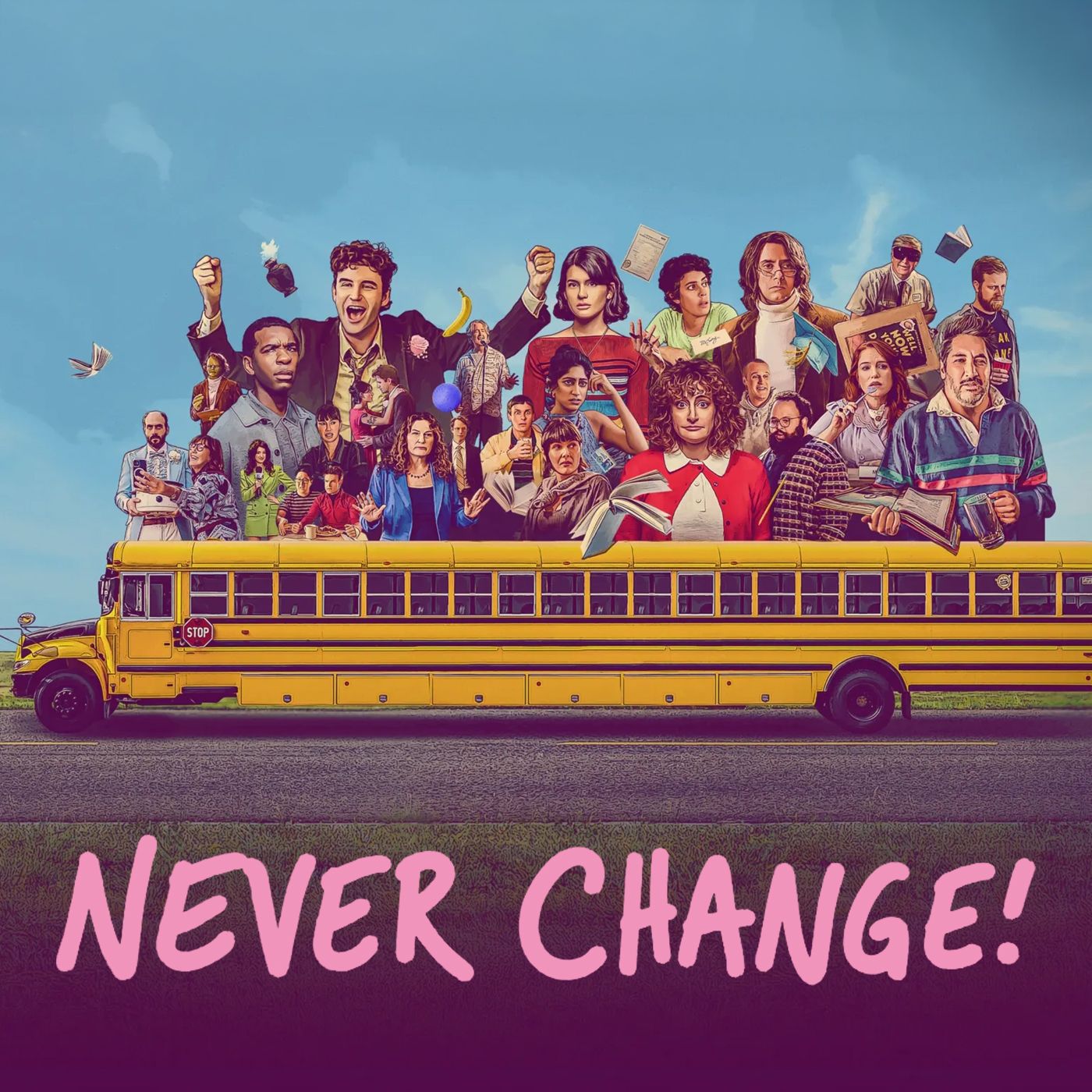
I'm your host Mike White. On this episode, I'm talking with editor Wit Conway all about the new film Never Change. I believe it just. Dropped on Hulu like the day before I'm recording this, so I had a great time talking with mister Conway. Hope you have a great time watching Never Change and have a great time listening to this interview.
Thanks so much. Before we even start to talk about this latest project, I would love to tell a little bit more about you. You've done a little bit of a lot of stuff, and I'm so curious. Can you tell me how you even got your start and show business. Yes, I grew up in Chicago, and after college I landed back.
I got a degree in film television production from Indiana University. But After college, I was back in Chicago doing production stuff postwork, mostly advertising, which is in Chicago, and I fell into Second City and iow comedy schools over there, so doing performing and writing and stuff. And then at night and on the weekends, I was asking all my comedy friends to say, like, hey, I've got equipment and I know production skills, and I was like dipping the toe into trying to learn about filmmaking through filmmaking and through making stuff with friends. And this is in like I graduated college in two thousand and six, so you know, in the advent of sort of a camera that's now affordable, that looks good, and Premiere Pro being suddenly you know, workable on a laptop.
You know, I was spending my days at these post production facilities and where avids were, you know, thirty grand to be able to edit something and then suddenly you're able to do it at home. Obviously final cut was there, but I don't know why. In college I sort of never got into it. And then I spent about ten years doing that, working in advertising and production and in Chicago was working at these places where like you just did everything. It was that time of like, hey, we've got a client.
Someone's got to go out. They've got to talk to the client. They've got to book the you know, the locations, they've got to hire the crew. They've got to go shoot, you know, with camera that's it's only going to be six to eight people maybe on on set, so you're sort of doing everything and then we would bring that footage back and then edit it, color correct it, do the motion graphics. So I sort of got this very well rounded start of being introduced to everything.
And when I got out of school, I had seen a couple of people and you know, obviously like feature films were my they were my dream north Star, but I knew that I was not ready to like jump in. And I saw three or four friends make feature films and they it literally killed them to the point where they stopped doing it. And I was like, well, I'm not doing that. But I can work with my friends and make short films and try things out and go, hey, I've never shot anything handheld, Okay, what's that look like. Now I'm going to do this whole short just working on a tripod and I'm not ever going to put my hands on the camera.
And then, you know, just sort of like trying things out over very very short, small projects over many years. I moved to New York in twenty fifteen and learned that like most people don't do that, most people don't try and take more sort of responsibilities on There's much much more specialization. And so when I got to New York, I was just available for a lot of jobs and a lot of things, and for some people I became you know, when I started working for some people, I was a jack of all trades guy, and I could do the whole pipeline. For some people, I was just an editor or just a DP or just a director, and that led to just getting into I also, you know, used my connections in Chicago comedy to come to the New York comedy scene, and everybody that I was working with in Chicago sort of said, hey, hey, wits here.
He's come to New York if you need anybody. And I got in with a bunch of people basically there in this movie, and the director, Marty Scausbow and I met through those connections and then we started working with each other and we cut three seasons of TV together for Joe Parra Talks with You. So I was editing there the first season of that led to me meeting someone and getting an opportunity to go to SNL and edit at SNL. And simultaneously I was dpeing stuff and I met a producer at the Late Show with Stephen Colbert and he hired me to start dpeing stuff at Colbert. So it was like spending my weekdays over at Colbert doing field shoots with with Jake Plunkett and then going to SNL on Friday and spending the weekend at SNL Friday and Saturday.
And then I was also directing stuff, and I got an opportunity to direct. Jimmy Kimmel saw short that I made through a friend of ours and he invited me out to direct at his show, and that was sort of the entre into into directing. But you know, to your point about doing everything, that was sort of my goal from the get go is if I learn everything, all of these skills, then at least if I don't have someone to do this aspect, I could probably do it. I could probably stumble my way through it, and especially with YouTube now that everything is available education wise, but it really did help me work, you know, it helped me keep working and helped me allow myself to say yes to as many people and work with as many people as possible, which you know, the more relationships you have, the more people you can connect with.
And you know the other side of that being like I try to be as warm and jovial and hard working as I possibly can so that I can get hired again, because I do think part of I worked with a great, great director at when I was producer director at Last Week Tonight. He directed the show's over there directs the shows over Their Name's Paul Penlino. He says, it's all about the good hang. If you're not a good hang, you're not going to be around. It was a really this well rounded education that I feel like now I do feel strong in all those and I can talk about all of the different disciplines with any department head that I get to hire.
Production design and like sort of art is the one thing that I feel like I never had enough resources to really put towards that, and that's when I'm so excited to, like, you know, build a set or do anything with any large practical fabricated stuff. Though those are always the really fun things because that's the stuff that I feel like I never got to experience as a sort of jack of ball trades guy. So it helped me correct an image I have in my head, which is editing at Saturday Night Live, because I picture more like broadcast news where you're in the control booth and you've got the switches, camera one, camera three. What is actual editing on Saturday Night Live? Like?
So, I was a part of the film pre tape department, so all the sketches that get shot, which is, you know, it's a really extremely educational, intense, fun job to get. There is a sort of a cadre of editors that they keep at thirty Rock. As they start shooting stuff, they roll the footage right over to thirty Rock and the editors start working on it. So when they're doing their pre tapes, the editors are sort of working as stuff comes out of the camera. It goes from wherever set they are in New York City over to thirty Rock, and then the editors are you know, the assistant editors, and the editors are organizing all that footage, managing that footage, handing stuff off to an editor.
There's usually three editors to a piece, with one point editor and then two sort of assistant editors, and you start on Friday. Those pre tape all the pre tapes are shot on Friday, the day before SML, and that's for a couple of reasons. So one, the scripts aren't chosen till Wednesday night. Then they need one full day really sort of thirty six hours to do all the pre tape prep work, which all the pre producing and what new locations, wardrobe, costume, animals, whatever they need to source within twenty four hours. And SML has an incredible rolodex of people and also people that they you know, they already have these crews on hold.
And then so they do all that pre production on Thursday, and then on Friday everything starts shooting, and on Friday the editors also start, so they start organizing stuff as it comes out of the camera, and then you work overnight until about four or five in the morning. Usually, then they get you a hotel across the street, you go sleep for a couple hours, and then you come back and you work with the So that's all without the director. The director is still on set essentially, so you're sort of managing the footage and then doing the assembly and then at about nine to ten in the morning, you go back in. The director comes in and you work with the director at about ten to one ish twelve to one, depending on you know, I haven't been there in a bunch of years, but this is what it was when I was there.
Then you one, the writers come in and the producers start coming in, and then that's that's the main thing thrush of the editors during that day. As an assistant editor, you're sort of sitting in the room watching and listening, building sound effects and doing the whole sound design pass because there's really no time for the sound mix to happen. The sound mix has to happen when it's locked, and it doesn't, you know, it gets locked and then unlocked because it goes to dress rehearsal and then comes back and has changes after dress rehearsal. So you make edits after nine thirty pm on Saturday night, and that means you have to make edits and you have to make visual effects changes, you have to make color changes, and so there it becomes this very very shrinking window and then you back time to what time your sketch is airing, so you know it's not eleven thirty five, it's done, It's okay.
Now we're going till twelve oh seven because that's when it has to go on TV, and so that's the main thrush of it. And you work really, really furiously and hard, and there are really intense points. Then there are sort of lulls in the day, like getting it off to go to dress. Everything sort of calms down and you can go have dinner and stuff and then and then it airs on TV that night and you watch it, go out and play and however it airs. It is thrilling to see that sort of thirty six hours of work on TV right there.
So it is really really exciting work. And it's also the best film school that I've ever experienced. That's the best people in New York working in that department and for those crews, and I learned the most there. I learned the most because I'm truly the best editors that I've ever been around are in that department, and they work so fast and they work that I learn everything about sound design from them because I came in knowing like I should be sound designing, not nearly to the level that they do, because they have to make it like a final pass on their first months. If you can't handle the stress and if you can't handle the pace, then you don't last very long.
And that's probably better. It's not for everybody, that's for sure. It's not a place where you can just sit back. You know, there is a speed and an urgency at which you have to operate less yeah, you won't be back the next week. Iinitly sounds like you've been in the comedy world for a long damn time, and I'm curious have you edited any other type of things or worked on other type of things, because I imagine there's got to be a different style when you edit comedy.
Versus the narrative. I would say, yeah, of course, I think in terms of like different than comedy, I would almost just say, like, what is the goal of the piece. I've done plenty of like corporate doc work. I used to do pharmaceutical interviews in Chicago, you know, like working and making trade show sizzle reels and stuff like that. So I've done all of that work.
And I think for me, as an editor especially, it's what's the goal of the piece? And then how are we communicating that in terms of like comedy or drama. I really think and I believe like comedy taken seriously is when it's the most funny. I laughed the hardest at the characters who are not being funny. They are the way they are to me, it's like taking the world seriously.
I wouldn't say it's narratively different. I've cut some more dramatic short films that maybe I've been asked to help out with or you know, but they've not really taken off the way. I feel like some of my comedic stuff as more of just because a dramatic short is really hard to stand out unless it's got some two people talking on an emotional arc is really nice and sweet. But for short content and short short narrative, you would definitely want to make something happen. I think.
I think comedies generally, even if they're sort of slapstick and silly, they sort of have more of that. So I and I think also just being a part of the world of what you put out, as you know, I think people ask you for what you've already done. Hey, you did that thing, Can you do that again? For me? So I think that more than anything which is which is honestly the biggest lesson to learn.
You know, if you start putting stuff out, people are going to see that and go When they react and respond, they're going to say, great, I want more of that. They are not necessarily going to say what else can you do? Or what else would you like to be doing? So, you know, something to keep in mind. I think, like I've and talk to a bunch of people throughout my career, they're like, I'm stuck in this corner.
When I was young, that was reality. It was don't go into reality. If you go in, you'll never you'll never get out. And I had a couple of friends that like they fell in because they needed a job or whatever reason, and then they spent like five or six years and we're like, I gotta get out of here. It's toxic.
So yeah, I don't really, I don't think I you know, I'll take never changes is a good example. Like we treat the characters in the world and the silliness of the world though it's as if it's serious. We really don't try and parse out when it's being irreverent and silly and when it's being serious, because I don't think we want to indicate that we want to make people believe that the world is existing in front of them sort of everything seriously. So obviously you probably had more than thirty six hours to work on Never Change. But when were you brought into the project?
Was still in the writing phase? Was it already shooting? Where were you at? So Marty Scasbow the director, and John Renlll the writer and star, and Marty was the story writer as well on it. So they'd been working on the project for about five years.
And Marty and I are very good friends. Like I said earlier, we cut a season, we cut three seasons of Joe Para Talks with You, an adult swim show together, and so you know, we've spent years and years in the editing room already, and he is the director and the editor of all of that whole series. And then also have Never Changed. So we just have a really good rapport and way of working. He really trusts me, obviously, and so I'd been talking to him about this project for a bunch of years because I was his friend and we were I was watching him go through the pitching process and they pitched it as a TV show.
It didn't go. That was right before the strike, so it was sort of like nothing was happening. And then after the strike, they took it back out as a movie and Hulu green lit it, and then it took you know, I think even then it took almost a year and a half to like make all the deals and have everything happen and then get in the production slot at American High which was where it was shot up in Syracuse. There's a production company that has a high school that they use for filming movies and they have a deal with Hulu to do that. So it was sort of a lot of things that had to happen to like get it on the schedule.
And I was talking to Marty through the whole thing, just because we're good buddies, and we're also sort of like, okay, what's you know, if this doesn't happen, what else are we working on? And what are you working on? And we keep each other a little bit accountable in that way, which is nice to have a buddy to do that with. And then when the movie actually started to happen and he's like prepping for going to do prep and be in Syracuse to shoot, I'm tasked with figuring out how the post is going to work and sort of giving him my best. You know, he trusts me a lot.
In season three, Joe Para, we didn't want to go to a post house. We just found an apartment and I built us a server, and you know, we built out an apartment as if it was our space because we knew we were going to be there for almost a year. We wanted a really comfortable place. So in the same vein, it's figuring out all of the the who are the vendors and the places that we're keeping our footage ad and who are our post vendors going to be in terms of mix and color and v effects and all that is done through our post supervising team and the producers. And then as soon as they started shooting, I started cutting is on for a couple of weeks before the production and then production the union rules that you know, you start the day that like, you can't start for some reason before that, and so I started the day of production, and then I went throughout the whole production working and Marty and I had talked like our timeline was very short.
You said more than thirty six hours. We did have more than thirty six hours, but it wasn't much more. This was shot September to October, end of October last year, so the last day of production was like right around Halloween and then it's on TV next week, which is a very very very fast turn for a full feature shelf. So we we knew we had to go very fast, and going very fast meant I had to work really fast in the prep to, you know, while I was alone, to just put everything up on its feet. And so a week after production wrapped, I had a full cut of the movie that was two hours and forty five minutes, and it was sort of everything that every scene and every even bit in every scene like an attempt.
Okay, you guys improvised this on the day. I thought this was funny. I'm gonna include this in the scene just to see, Okay, we're gonna chop half of this out, you know, we we sort of know that. But what is going to tickle Marty and John as they watch it for the first time, even though those first watches for directors and writers are awful of getting over all of the production problems and that they see in every single frame, that all the compromises that you have to make, and then So then Marty and I worked through November and December, and the director's cut was like the end the you know, just at Christmas time, so really really short time. I think it was about six or seven weeks for them.
And then we worked until the end of February to locke and then did score, BFCS, sound design and color between March April May and now and here we are, Oh, is. It working with a director who's also an editor. Oh, it's awesome. That's the other thing I think, Like I'm also a director. We can think about things and there's plenty of disagreements.
There's plenty of And then John was also in the room with us, the writer and star, so we all are sitting in a room. At first, we actually we started remote. It took you know, Marty was remote just to go through all that footage. Takes about a month to rego through everything and sort of choose his versions of things, because while he is the director, he, like you said, he's also the editor, so he also wants cracks at things that I might have not done in the way that he was dreaming it or the way that they had planned it, just because you know, and you have grand ambitions to sort of talk regularly, and then production happens and things run behind, and you just you start to like lose that time between post and production.
I think at least on something that's this ambitious, this and this short sort of turnaround, and then working with him as an editor is we're very very verse to it because we did, like I said, those three seasons of TV together and that was a lot, a lot, a lot of time. So I think that was you know, eleven episodes in the first season and fourteen episodes in the second, and then another ten and the third that we really three and a half four years of working together. We generally just like, make what are we doing today? Who's doing what? Who's gonna work?
Are we gonna work separately? Are we going to work together? You know? Are there things that I need to get ahead on because we're sort of looking down at a great roll before next Friday, We've got to tackle this whole section. So maybe what you jump ahead and do that, and then I'm gonna work with John because writer, director and other editor they can make decisions that are like, Okay, what do we think is the funniest take here?
And then I'm sort of advancing stuff. So it's a big sort of just a circular look at what you need to do and how much time you need to do it. How are you able to stay organized with all these moving pieces. We stay organized with our assistant editor, Christy Fariso, who is also an SNL editor. She's still at USNL.
I left, you know, in twenty twenty, but she's been there since then. We met there and then she and I stole that organization and I use that we cut on premiere, so I organized through through premiere. We sort of Christy and I discuss how we want to organize the project at the very beginning, and then she is actually in charge of that, so she takes all the dailies and then cuts everything and organizes it. And then when I get it, it's really just the scene material, and that's organized by scene. We do these things called line by lines, which is basically we take every scene and we cut every performance of a single line and we sort of combine them all so that we can use our time later instead of, hey, we need all the whats from this response.
I just want to see all the whats, like all fifteen of these instead of okay, great, I need to go cut all those together. We do that on the front end, and it takes Christy a really long time. I think it took her three full months to do the whole movie, but it saves so much time on the back end that we've really learned that, Like it's an essential part of how we like to work, because you're then, you know, you're up against a Locke later in February, and you're scrambling to go, oh, we've got to swap this, and we want to swap this, or you're just watching something and it just feels wrong. Suddenly I've watched this one hundred times and it's not making me laugh anymore, which is a nervous and dangerous impulse to indulge.
But those line by lines really help us, and so she is really the first line of defense in terms of organization there. And then for me, as I added, it's daily revisions of the sequence and duplication in that way and naming like that, because we're constantly we are going, shit, no, we got that cut, We did that thing, and it was in this cut, and that was two weeks ago, and now we have to refer back to something. So that does happen a lot where you're sort of calling back to want to find something that you made before, and then like sound design, sound effects, all that stuff. I work in Adobe After Effects to like make previs visual effects for our visual effects artists, and I love doing that. We time everything out in our edit and together, so sort of not spending the dollars that we would with like maybe a previz artist.
We do that together Marty and I and then we finalize the timing and the blocking of how we want things to look, and then we ship that off to our our visual effects artists, Dylan and so all that is just it's honestly just, it's like mostly diligence. It's mostly saying if I don't stay organized, I will be so mad at myself because you're just you're up against being like how do I need to find this thing? And I can't find it and that's unacceptable late in the game. As soon as you do that and it burns you, you will you remember to stay organized. I think with a picture that is this slight, are you able to do any sort of previews or get any sort of feedback from audiences just to.
Make those final adjustments. Yeah, we it was so fast this timeline that we didn't really have time for a public preview. I think we would have all really welcomed it. There was a couple moments that I think we wish we had two or three more weeks. We would have really loved to iron out.
And I love the movie and I love to where it got, but ultimately there are moments that just got cut out. Maybe for the duration. That helps the duration. It's not a long movie, but like people always say, faster, funnier and stuff. We did have one screening that we got to show sort of Friends and Family, and that happened, and we still had about a month of work left.
I was just talking to one of the actors actually a couple of minutes ago, and we were both at the premiere and he was at the Friends and Family screening, and he was saying, oh my god, since that screening, everything looks and sounds so great, and sure, you see that is the It's the hard part of that, because you're not if you're still in the rough cut. There are just these pieces of the movie that don't feel right, and you know they're going to feel right, but there's an incredible graphic intro section that our guy Dylan did. I did the temp version of that, and it's solid, but it's not me spending two or three full weeks on just that sequence, and so it's a little bit rough around the edges, and so things feel just a little maybe less exciting.
And the music all changed after we locked, so it's asking people to suspend that disbelief. And then while it was an informative screening, I think ultimately it did help solidify for us. Okay in the room, we just need to go with what we think is the funniest and try and make sure that we feel like we're servicing every storyline appropriately. Already, moments before you were at that premiere where you're just like, ah, should I change that? No?
No, Actually, I was really surprised, and like pleasantly surprised. There's one moment that I don't like that that I don't know if you you know, if you remember it. But my voice is in it, my name is in it, So I say high, I'm Witt Conway in the movie. And we were in the mix a couple of weeks ago, and I was like, guys, like, if we could change this, like I would be okay with that, and so it's more of like a cringe of like the audience isn't gonna know who I am. But John was really laughing at that, like, no, people are gonna look your name up and then they're gonna laugh because they're gonna like he edited the movie like sort of a confusing joke.
So that was really the only one. I was like, Yeah, I was anticipating with a little bit of anxiety, going like I don't know if this is going to play, but that moment plays really well, and so my name is sort of a footnote at in terms of where that moment comes up. And I actually I saw that I was reading a review yesterday and saw that that was called out specif of like this is how schools are now. That was really the only one. Yeah, it was so fun after so many months of seeing it with three people or four people in a room, to see it with four hundred and fifty people laughing was so satisfying.
Do you already have your next gig lined up? I've been writing some stuff and I'm trying to take something out to pitch to write, and I've got a movie that I am that I am trying to pitch a movie that I wrote and then a pilot that I wrote. So I am trying to do that thing of you know. Even at the premiere party, I was asked I was talking to one of the producers. He goes, what do you have next?
I said, I'm trying to do the thing not of keeping people guessing, and show people a script I wrote. And that's something that you know, I've written for years and years and years, and I have put my own writing aside to work with other people that I admire for a really long time. So it's time now for me to trust myself and trust that I've got something to say and a way to say it. And so I'm excited about that aspect. So try and go take something out and then find some money, find someone who believes in it, and direct something.
Is there a good. Place for people to keep up with you online? My Instagram handle is Whitney Christopher, which is mostly a social justice account and then partially never change account, and I do post what I'm working on there, but mostly it's me angry about what is happening in the world right now. And then my website is wit Conway dot com. If people can see what I've worked on there, and hopefully I'll have something to talk about here in the next couple months.
Yeah, what's the line. If you're not angry, you're not paying attention. That's exactly Mike. Mister Conway, thank you so much for your time. This is so great talking with you.
Thank you so much, Mike. I really appreciate it, and I hope everybody enjoys the movie Never Change. It'll be on Hulu on June seventeenth. We found your words. When you talk, you two care a lot.
We've fin a peanut butter and yelling that you get on your road, but never eat. We spilled be and bottles and when. We played your graduation. Party we had falling comrades. We just rebuilt the team.
Our friends are rich and we love him because it makes us look. Welcome to shit. I still got a stock kick going with a crack in the fucking three man. We were your favorite quotes. I'm the first person to know about these guys had pulled Ben.
We dance to use to me by Bill Winners and a trunk and stilper until my hearing celt and go on the fuck home and kick us out. We make mistakes, we love, we hate him. We're not angry any more though, UD still still love you like a fluck hated sauce, and we're still your heroes.
More from The Projection Booth



Similar episodes across the network
Matched by shared keywords.
-
BONUS SUMMER RERUN: Scarecrow and Mrs. King with Eugenie Ross-Leming | TV Show Creator Interview
1 shared keyword: second city
-
20 - Gavin Rothery - Director of Archive (2020). VFX on Moon (2009)
1 shared keyword: post-production
-
2018 Kulturecast Wrap-Up
1 shared keyword: hulu