
Season 1 · Episode 667
Special Report: Zodiactually: The Real Story of a Fake Serial Killer
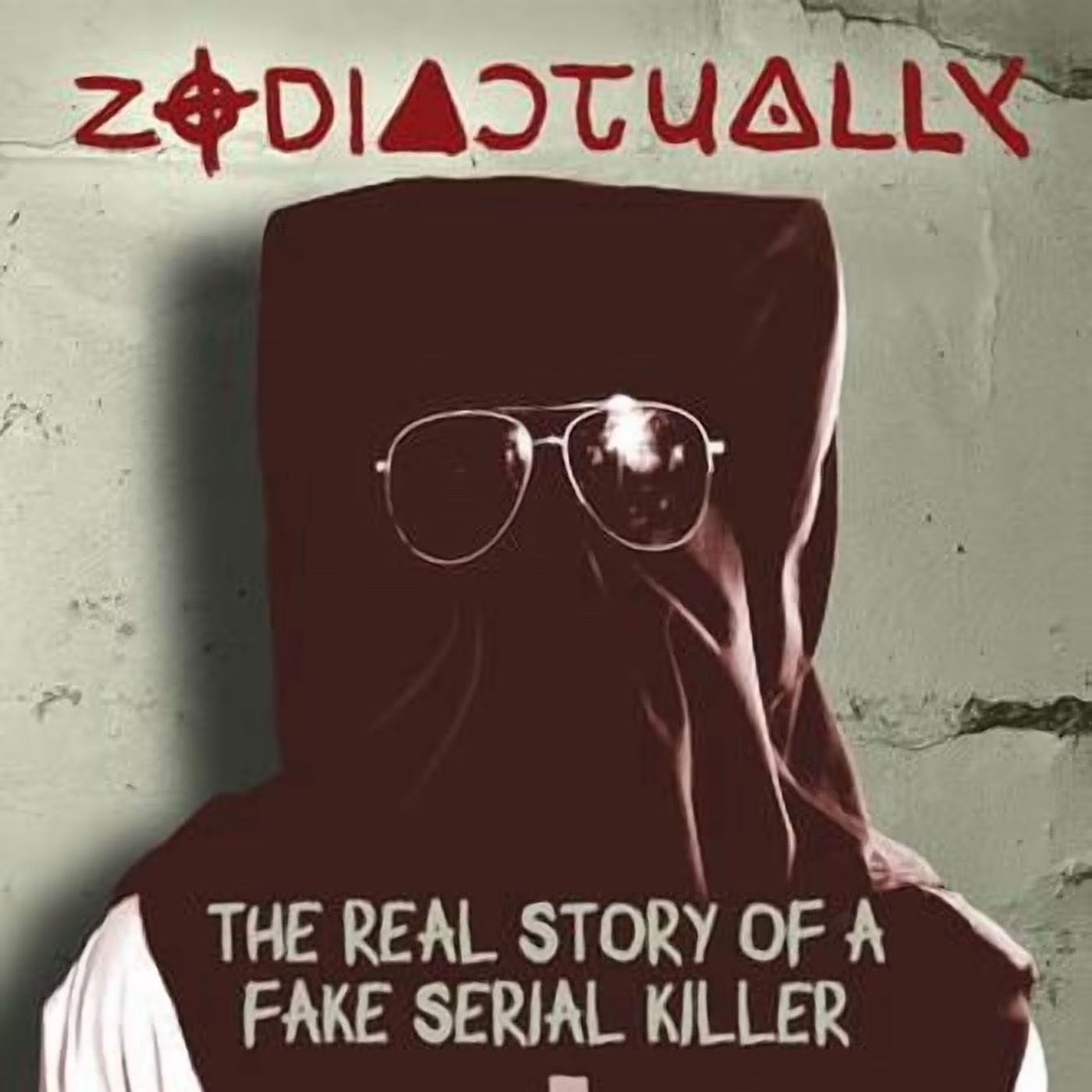
About this episode
Find more at https://feralhouse.com/zodiactually/
Transcript
Automatically generated, so expect the odd misheard name.
Oh he is, folks. It's show tied. People say good money to see this movie. When they go out to a theater. They are clothed, sodas, hot popcorn, and no monsters.
In the projection booths. Everyone pretend podcasting isn't boring. Cut it off. Hey, folks, welcome to a special episode of The Projection Booth. I'm your host, Mike White.
On this episode, I am talking with Eddie McNamara all about his new book, Zodi actually the real story of a fake serial killer. It is a bombshell and I had a great time reading this book, having never read about the Zodiac before, really only knowing things from Fincher's movie and maybe a talk I attended a few years ago. And you'll hear a little bit more about that in this episode. Yeah, I related a lot of stuff to Fincher's film because it's my point of reference. Hopefully that's not too annoying.
But maybe you're like me, maybe you just know Zodiac from the movie. So well, Hopefully you will enjoy this interview because I definitely had a great time talk with mister McNamara. Pick up Zodia actually from Faral House today. Before we start talking, about Zodia. Actually, I really want to know a little bit more about you.
Can you tell me kind of your history and how you became a writer. I'm from Brooklyn, born and raised. I went to college. I studied English, worked in advertising for a year. I couldn't stand it, So I became a cop because I was, you know, in my parents' couch and I needed a job with like benefits and you know, retirement.
So I did that, and I did that for seven years. I was a nine to eleven first responder and kind of a last responder too. I was down there for nine months doing recoveries, and in two thousand and seven I was able to retire with a lot of duty pension because of you know, because of nine to eleven and I PTSD and like kind of agoraphobia, and I of sort of I don't drive anymore. So like a lot happened there, and I had before I was starty. I had to like remake my life.
So I cooked in school. I gave a bunch of cooking. I ended up put some magazine gigs, wrote a cookbook. Realized I like writing better than cooking, and I got obsessed with the Zodiac case during Covid I wrote a great book from Jared Kuebec, and I just thought I wanted to look into it. And I figured with my background, I would look at the polite reports and the FBI reports and the cool this is not add up.
And then I was I've been researching now for I guess like five years, three years old. I wrote the book and I do with Farrel House Christina is great and here we are. Were you interested in the Zodiac before that time? Or it just picked us up with that book. I loved the movie.
I loved the Fincher film, and I was aware of the case from like America Wanted and from sort of like eighties trash TV during like the State having Panic years. I was aware of it, but I wasn't particularly interested. I didn't do any kind of deep dive into it. I like Koebec as a writer, and I was reading a book about Pattie Hurst, the one called Airis. I was reading that, and then I read Collbec's book about Zodiac, and I decided that, you know, San Francisco in the late sixties early seventies seemed like the wildest place, and I want our research as much as possible, and your home during COVID, so you have a lot of time, and I'm waiting up at four in the morning, so I'm doing from like four to nine, like just researching this stuff.
Then, yeah, I really got fully invested in because it just I think the thing that really bothered me was in the FBI files the only person mentioned as a Zodiac write letter writer was Dave Toski, who is Mark Bruffalo's character in the movie. And I couldn't understand why so many Zodiac books out there. The people who wrote the book didn't seem to mention that in the book, so I it made me sort of doubt the true crime community's veracity. So I then decided that would do it myself. How many books do you think I've been written about the Zodiac Killer?
I think one hundred and fifty. Definitely over one hundred too many, way too many. There's probably farther worthwhile. I'm not going to mention any names because I don't want to bring anybody down, but I happen to see you maybe there's more than one of these guys, but definitely like the guy that you think of when you when I say the phrase, my dad is the Zodiac Killer. Yes.
I saw him speak once and I was like, yeah, all right, maybe I buy this, maybe I don't. And then I saw him speak again, maybe two years later, and it was like, oh yeah. And also the Black Dahia. Killers the block gud Yeah, and that's he has a good case for the Black Dahlia. I read that book years ago, The Black Dahlia Avenger.
It's actually a very compelling book. But the problem was the second book, and it's like, my dad's also a Zodiac and there's another new Black Dahlia guy trying to link the bl like Dahlia and the Zodiac as the same person, and it's, you know, it's really silly. And the guy, you know, he's coming across very grifty. And I think people can see that already. There's something very distasteful about a lot of these true crime things.
But with some of these Zodiac books, it's people just want to solve a puzzle and bring their solution to the world and hin the blame on a nineteen sixties Bay Area eccentric who never had a parking ticket, And I really like, I feel bad for the people, Like if I'm going to look at somebody for a suspect. They're going to be someone who killed someone or who was involved in violence, or who was involved in similar crimes in the area. At the same time, a lot of these other people, like their suspects, weren't even in the state of California. They don't know where they were in another country. They could have been in, you know, Italy or Vietnam or you know, another state or you know.
So it's I don't know, it just doesn't you know. I think a lot of them are self published because I don't understand who who, what some other stuff that I did. They even begin to wade through all of the information and try to take that week from the check and try to figure out what are the facts and what are the fictions. For me, it's what are the things I can unsee in order to well. I know the narrative very well, the Robert gray Smith David Fincher narrative.
I know that very well. And it's it's you know, it's it's a lot of it's factual, a lot of it is based on fact, a lot of it is fictionalized version of the fact. But it's you know, it's you know, it's it's it goes in the right direction, and I looked out at I was looking at similar crimes in the areas at the same time, and really, I think what I was most concerned about was what did the original investigators think and what did the first cold case investigators think? And when I looked into that, it turns out that for the first two murders, the Vallejo investigators and the Solano County investigators didn't believe those were Zodiac at all. They believe they know who did it, and was two members of a local drug who had murdered someone else and were on death row for a sceptic crime.
And they also killed another guy I named Matthew Burrell, and they didn't get prosecuted for that. They were on death row, and it seemed like they, you know, they did the pragmatic thing and didn't do another trial. So this these detectivem He've been trying to see this throughout the seventies, eighties, nineties, two thousands, and the Zodiac community wasn't listening to that. You know, these guys had done media appearances, they had they had been on TV saying that the first two murders were not even Fincher himself is in a book with the cold case detectives, and they're saying that we're pretty satisfied that we know who did the first two murders and it's not Zodiac, and then interesses. I'm very interested in those two guys because they're psychopaths and he knew how they had killed someone.
They let the person run out of the car and then shot them five times in the back. It so happens that the first woman girl killed in the X supposed the Zodiac series is Betty Lou Jensen, and she, as she was running from a car, was also shot five times in the back. So Fincher doesn't cover the murders in his movie, and I think that's because he was convinced by the original investigators that those are not Zodiac, and they may be an inspirations for what Benchure believes inspirations for Zodiac. You're saying it took you three years to just go through or was it even longer to go through all of this stuff and just start piecing all this together. I was onto it fairly early, maybe six months into being very interested in this.
I was like, oh, this is not ending up. And I think a lot of it was I was just looking at similar cases and who was involved in those cases. And I were looking through the Zodiac reports and looking to see the names of people, and I would look those people up on Facebook. I would look them up on classmates dot Com. I would look up and shoot some of them a message.
You know, people who are in the paper are people. And I was getting court transcripts also of the guys that the original detectives thought did it. So I got their trial trial transcripts, and I started cold calling people and sending emails to people who testified at their trial, and some of them spoke to me. And there are things like with the first murders, a white Impalla was a car associated with the scene. I found out from the girlfriend of the person who supposedly confessed and the police law did it that her parents stroke she was sixteen.
Her parents drove a white and Pala. He had access to it. The murder weapon was a twenty two pistol. He was convicted of five armed robberies with the twenty two pistols. This is information that is not in any of the other Zodiac books because it's either they didn't do the research or they did the research found it and found it inconvenient for the flowing narrative of the one Zodiac who commits the canonical murders as well as writes all the letters.
And that's to me, that's prosperous. Why do you think we're still talking about this all these years later? Because he got away and because he was media saving he you know, the letters to they taunted the police, you know, and then if you think about for the past fifty five year years, it's become a trope, the mastermind serial killer who taunts the police and plays cat and mouse with them. And that's the narrative we got throughout the seventies with Tosky, the San Francisco Haniston Inspector and Zodiac, whereas this cat and mouse game between the two. And he was the inspiration for Steve McQueen's Bullet and he was the inspiration for Clint Eastwood's Dirty Harry.
And he's played by Mark Ruffalo in the film, and the film is very kind to him because he was also Robert Grasmith's main source of information. You know, he was an excellent investigator outside of Zodiac. He was a fantastic investigator. He was He probably got one hundred Murray convictions to his work. You know, he was an excellent investigator.
Go with Zodiac. He worked on it for nine years and really got nowhere with it and made some strange decision investigative decisions that allowed him to be on this case for nine years. Do I remember reading quickly that he wrote some of the letters? He did? Yes, he In the FBI file it says that he wrote three his department.
This Afacisco police department cleared him of writing the letters, but that's a police internal investigation is not unbiased. And he admitted to writing letters to Amistade Malpin about he was featured in Mulkin's column and he wrote fan letters supposedly from college women and young women talking about how you know they want more of him in the in the column and the weekenk inspector to Howsky is great. So he confessed to that part. But he was. Demoted, taken off Zodiac, taken out of homicide, and sent to the pawn shop detail, which is a punishment assignment.
He's basically matching pawn tickets to stolen items and his two bosses and how you know something really happened was his two bosses were also demoted and transferred out, so they had of homicide and the head of intelligence. If he was truly not guilty of writing Zodiac letters, those two would have never been punished that way. And his chief went outside his own department and asked the FBI to examine each letter from when Toski got on the case, so that's starting with the October thirteenth, nineteen sixty nine letter through the April twenty fourth, nineteen seventy eight letter that he was accused of writing. To ask and the chief asked the FBI, are these from the same person? And this was in June.
He was investiating in April. This was in June that the chief is asking the FBI this and the FBI said it's They said it was inconclusive, but it is possible that the comparison wrote the letters. And just for original Zodiac letters not pertaining to the San Francisco crime. There is the three part cipher about the Laval murder, and there's the debut of Zodiac, which is August fourth, nineteen sixty nine, when he first names himself. And the FBI was convinced that those letters are all written by the same person.
If has that in their files as well. But when asked to look at when San Francisco gets in involved, until there's a fake letter, the seventy eight letter, So they say any conclusive because I think there were a few photo copies included, which means they couldn't make a full decision on it. But they said any conclusive, but maybe in the same person, so they didn't say, like, your guy didn't do it. It's they You can read that however you want, but I think everybody in the Zodia publishing community has read it differently than may. They've all read it.
You'll say that, Okay, everything's cool and he didn't do anything. Move on. Did they ever become a federal case and you talk about the FBI having records and stuff, were they investigating as well or was it just a local matter. It was a local matter. The FBI didn't investigate that they assisted because they had print come back.
Then it wasn't electronic or computerized fingerprints, So the FBI would have physical copies of criminal st fingerprints, and people who served in the military they would have their fingerprints and their sort of enlistment cards, so they'd have a handrunning sample and a fingerprint sample. So the FBI served as they kept records of the case, and they served as they would do an assist for the local crops. But what was the FBI could have been involved in the investigation. Early in the investigation, the FBI approached the three newspapers, the Vallejo Times Herald, the San Francisco Chronicle, and the San Francis School Examiner, and they asked the newspaper to press charges in an extortion case because the letters, according to the FBI at the time, he is saying that if you don't print the letter, he's going to go on a kill randburage.
So they said that they could make an extortion case out of it, and the Buejo Times Herald said, yes, absolutely, we will cooperate with you on the extortion case. The two San Francisco papers did not cooperate, and interestingly, the Vallejo paper never got another letter from the and the rest of the communications went through the San Francisco papers only. So, yeah, the FBI was thwarted from being on the investigation by the San Francisco papers refusal to cooperate. Now, is that kind of representing the gray Smith character? The Jake Gillen Hall character.
No, he was a cartoonist. He had very little involvement with the newspaper or any of the diner making or frankly, the people in the movie. He didn't actually know Paul Avery Averycent. He met him like twice. So there's a throughout the film there's this relationship between you know, Robert Downey and Jake Jonenhall, and they're like a buddy team in the movie, but they didn't really have any relationship in real life.
Yeah, but Jake Jalen Hall isn't the Chronicle, so yeah, it's Jake. Sorry. Ron gray Smith is at the Chronicle, and he had Tosky helping him. He met Towsky in seventy seven. He had Tosky helping him get information about the case.
And he was the first person before these records were made was not these records were made public. He saw the information first, and he wrote the you know, the first well thought of book based on at least partially on the police files with the nineteen eighty six books. So yeah, sorry, I should probably say I know that David Fincher's movie is not a documentary Miami Stretch of the imagination, and I'm Sorry, I'm just relating real life people to the movie just because that's what's most familiar with me. Yeah. Absolutely, you have a picture in your head.
I don't know what Robert Graysmith looks like in real life, but I know what Jake Jill all looks like. Now, I don't know who Arthur Lee Allen looks like in real life, but I love John Carroll Lynch and his performance in that movie is stunning. But now I can't see him as anything else. Every time I see him in something, I'm like, it's Lee Allen. Man, there he is, It.
Goes Lee Allen again. Luckily, I just picture him either as being in bed with Marge Gunderson from Fargo or burning to death in that Volcano movie with Tommy Lee Jones. Oh yeah, I'm stuck on that interview scene of you know, with the Withowski and Molane's the Zodiac Watch and you know that's a great scene in the Fenture film and that's Yeah, I hate to say it, but he's the podcast forever Lee Allen. In my mind, what was the real guy like when it comes to him, What was Arthur Lee Allen like in real life? He was a very intelligent guy.
He you know, and he had sort of eccentric interests. He was in the Navy for ten years. He was court martials. He had gun on base. He was a child molester.
He was a convicted child moluster and he was fired from a number of jobs. He was a school teacher and he aspired from a teaching job for molesting, for touching children. He was fired from a job at a gas station for leering at being drunk at work and leering at children. So he he lived in his mother's basement. He was a smart guy.
He was a really good athlete. He was a diver and he was like a great diver and swimmer. And you know, his life went off the rails and he turns into this and you know, he went to prison. He was convicted of child molization and he has this sort of sad life where he is this alcoholic that lives in the basement and you know, is a child molester. So in my mind, at least partially, I believe Arthur Lee Allen liked the attention of being a zodiac and he liked being thought of the killer that was smarter than the police.
And if he's going to be locked up, it would seem a lot better for him to be associated with Zodiac than to be what he really was, a jilbd molester in prison. And so the Zodiac ca fiction a little bit of work in his favor. I think he may have leaned into it a little bit. But he the watch he had he was a diver, and that was a diving watch, the watch with the same symbol. His brother had one too, They both got it Christmas sixty seven from their mother.
It was a fairly common watched amongst divers at the time, in the late sixties and seventies. But yeah, that is true, he did have the Zodiac watch, but that's not necessarily evidence. It's a wild coincidence, but yet not a good amount of money stretch. Oh yeah, yeah, I know what they do to child molestors in prison, and I imagine Meeking Zodiac would have a much more bigger cachet. Yeah, I think it afforded them maybe I don't want to say respect, but fear or something something more so than what he was I think.
And he abused like a five year old boy or something like that. You know, it's just lousy. And yes, he improved his reputation with the zodiac connections. Eddie. You're doing this job where you're taking away the mystique.
There was no brad Burning in the feminist movement. The relationship of Bogliosi and Manson is questionable here in your intro and everything, and then you're just pissing all over all these theories of the zodiac. You're taking away all the fun man. From the kid who's like the first one to be like wrestling is scripted. And I feel terrible about it sometimes.
And I've gotten emails from people who have been long time researchers and they're like, basically, like, I read your book. The research was fantastic, but you ruined everything. And I don't know how to feel about that, because I'm like, I'm happy that this person enjoyed the read, but I don't know if they enjoyed it. They I guess they liked the work, and they looked at some newspaper dot com articles and they looked at some of the things that we're researching, and they were like, Okay, you're right about this, but you basically ruined the whole thing. And there were people who posted on you know, chat boards, and they were like longtime posters on them, and they're not enthusiastic so much since the book march A few people anyway, not all, not everyone.
A lot of people choose to ignore it or you know, disparage me. But some people I had spoken to are like, yeah, we'll posting about this anymore. This is you know, I think you now at least three quarters of it, you know. And I was like, you know, that's that's if I could do. If I could do I could do twenty five percent, I'd be happy people are responding to it.
But like the kid who said there's no she's thinking sounded class and you know the next day you're like Dennis the Easter Bunner, Real that is the tieth And I think I've got some of those conversations going, which you know, I don't. I don't like relish that. Like I feel like I did take something away from people. You know. I was devastated to learn that the Iron Chicic and Hat saw Jim Duggan like smoked weed together.
When I was a kid, I thought they were like bitter rivals. And you know they arrested in New Jersey for you were in the car together, and you know when as a kid and it was it was devastating. So I feel like I'm doing that with true crime to true crime, the true crime industrial complex. Like you know, they had Zoniac, that was their guy. This was such a great story that made sense, and you know, he was the you know, the genius code killer, the master mark.
I'm just like, yeah, it's cops already know that two other people did this, and there was a there was a stereo cab Robert who killed someone else in Presidio Heights. And it's if you look at you know, you take away the mystique. You know, Darlene Ferren, the victim on the fourth of July, she had a stalker and a very dangerous guy who had broken into her house, threatened to rape her, who bragged at a strip club about killing her, who had abused his wife and had a roost raining order. And this is the real suspect. This is not a mystery man.
This is not And the cops looked at him for maybe a week and then they went on strike and then never looked at him again. And it's just, you know, it's a series of fumbles throughout this book. But I came across a lot of Solano County, Napa County murder that especially women at the time that they were trying to brush under the rug. Another suspec Garlean's murder was a police officer she was dating, named Chuck Lindsay. And in nineteen seventy two, Chuck Lindsay his girlfriend shot herself when he was three fifty seven in the stomach, killing herself at his house just feet away from her children in the other room, which is an unlikely scenario, and you know, so there's no justice for her.
The strip club that was that the skuy Seorge Waters Darlene Stalker was bragging about killing Garleene, the manager of that strip club. She was shot in the back of the head, and the police initially tried to say it was a suicide, and it was forensically and physically impossible for that to be the case. Shooting yourself in the stomach doesn't seem like the way that you'd want to go. No, And it's it's incredibly rare for a woman to shoot herself with a high caliber weapon as a suicide, especially when her kids are just like mere feet away. And this guy was the Solano County Sheriff's Department.
Evidence officer. He was in charge of fingerprints and crime scene photos. And apparently his roommate told Robert Graysmith that he had photos of Darlene Ferron crime scene photos or you know, of Darlene Ferron in his kitchen on the wall. And he's a pretty bad guy. I had spoken to some people who knew him, and he was, you know, not great.
I heard some you know, like off the record, and not a lot of pretty lousy things. And so there's two very dangerous men in Darlene Sharing's life, and neither of them is a mysterious code killer, and neither of them is her ex husband, who the Polleys didn't even bother talking to. Now this is July fourth of sixty nine. The first person you should talk to with the husband, anyone she's having an affair with. And then the ex husband and the ex husband they didn't speak to until February of nineteen seventy.
And that's only because a psychic was on television and mentioned his name, so they were sort of forced into action to speak to this this ex husman to who ticked a lot of zodiac boxes. But I think the other two suspects are far better suspects, but it's negligent not to look into this man and they don't talk to him toil sanity. The psychic is that the Brian Cox character. Oh No, Brian Cox was Melvin Bellai, an attorney. He was like the Yeah, he was with the Fleet Belly.
He was like the number two attorney in the country at the time and a fraudulent caller who may have been calling from a mental institution asked to go on at the Jim Dunbar Show and the Zodiacs claiming that did zodiac would go on the Jim Dunbar Show. And Brian Cox plays Melvine Bellai. Who was he was? He was a lawyer for a lot of famous people. I think he Jack He was Jack Ruby's attorney.
He was like pretty much he did it for pretty much any kind of like celebrity case at the time. He was like, I guess the Johnny cockman of his era. And yeah, he also like another you know a lot of people in this case milked it for publicity. Is doty at connection and yeah, that's that's Unfortunately. The psychic was someone in Chicago.
I think that Darlene's family. It was like an Italian born psych that Darlene's family had hired to help when the investigation was going nowhere, and they brought the psychic run up and tops shouldn't bother looking at him until this happened. So yeah, I mean, it's really it's brutal when you look at I mean, this is not glamorous. Fincher's not going to make a movie about this. The cops doing their job, you know, going on strike and then not investigating their suspect anymore, or one of the suspects actually being a cop in that case, you know that they didn't even release records on that.
That's Graysmith how to find that out from Voejo police in the seventies. The Voelo police have released a bunch of their dirty act belite reports, but there's nothing about this Chuck Lindsay. They looked at and he was a suspect in I believe August of the nine. So in early suspect you mentioned the term code killer, and obviously that's one of the biggest things for me when I think about Zodiac as the code. How quickly did they solve that cipher?
The first moment I believe was solved within a week. The three parts cipher and it was it was two school teachers from Salinas, California, a husband and wife, and they were just a code and they weren't professional code crackers. But I believe the Naval Intelligence or the NSAS and the FBI signed off on their their solution that they had gotten knowing right. And for one of the other codes, it took until twenty twenty, and it was you know, a team of mathematicians and computer scientists and yeah, site for experts, and it took them, Yeah, it took you know, fifty three years to solve that one. And yeah, or fifty years it took took along to them to solve that one.
And there's there's still two that are on unsolved. There's you know, there's thirteen letter thirteen that's unsolved, but likely it's too small and spoke to be solved. I saw a video from David Orange, who is who is an expert who saw the code in twenty twenty that Lizzy three forty and he was I think he came up with two hundred and forty thousand names of fit or some absurd number of names that fit into that into that code. You know a lot of people have over the years claimed that they solved that one, and it's you know, it's hard to verify. And when an actual expert who cracked an actual zodiac code that was thought to be uncrackable says, it's, you know, there's probably not enough there.
I'll go to his opinion on that. Yeah. Has anybody just gone to the source and asked Ted Cruz if it was him? I mean, I wish he was harassed more about it. That would be nice.
It would be nice if he just even called him every day and you know he started to walk up in the middle of the night Berg. I love the Zodiact, but unfortunately, I think I think people dropped that one. It was a good bit. I really liked it. Yeah, I think our president accused his that of being involved in the Kennedy assassination during the campaign, and then Cruise dropped out the next day, not that I don't think, is that you?
But Finnie, what was the. Most surprising thing that you found during all this research? Because this fund like it sounds like you were just doing bombshell after bombshell. People were saying that they are losing their breath reading the book or screamed out loud reading the book. The most shocking thing to me was Dave Toski, which is again Mark Ruffalo's character in the I can show that throughout the seventies he was planting stories in the San Francisco news papers about crimes that never committed, that he was the ero of responding to or crimes that were committed.
And then he was sending in letters to a columnist named Guy Wright or the paper itself, and under a name, you know, under assumed names of the villians who and if you look at Pope's city registered, they did not exist in San Francisco in the years supposedly wrote these letters to the Chronicle and the Examiner praising Toski. So there's all these wild letters that's like, you know, it's it's like there's a story about how like an Iranian general's stun was murdered, which never happened, by the way, in San Francisco or in the United States, crime that never happened. And then there's a story on Christmas Eve from a girl named Angel thanking Tosky for telling her about how her sister and her sister's boyfriend were arrested in his crime.
It's this ridiculous story that obviously isn't true because he's a homicide. Why is he going to a hotel and doing this? And then a barrage of letters come into the paper like we need more men like Toski in the city of Liberals and psychonaciousts, we have Toski, and like the letters are just it's then there's another one about a Vietnamese immigrant who had helped hotel staff detain a killer. And the letters are very tone deaf because they're not about the hero of the story being the Vietnamese immigrant. They're about Dave Tosky's going to nominate this guy for sit through the Year.
And it's all these letters about how awesome Tosky is. And so he's pulling this bit throughout the seventies. So in you know, in the in the film, the character is very you know, he's embarrassed to be dirty Harry, and he doesn't like when the newspapers are scooping stories about Zodiac and Riverside. And in real life he brings the circus the Riverside, he brings his buddy Sherwood Morral, the question document expert, and he unbelievably and but he did this in real life. There was an etching on a desk, and he matches the etching on a desk to the felt pen letters written by Zodiac, so another you know, it's just absurdity after absurdity after absurdity, and you know, it wouldn't be the same type of thriller Aspincher's film, which you know, I love Fincher's film, but there's a movie there about, you know, the the Adventures of Dave Tosky in the seventies, and it's just it's it's hard to believe.
And I had to keep verifying it. And then I spoke to reporters who worked back then and other cops that work back then, and off the record they you know, and often I guess, obviously I can't use off the record things in my book, but off the record they're brutal. So like that after San Francisco, Copple wrote the letters and so all letters like it's there, there's no may have, could have, may have done three Oh they think the use then in for a penny or for a pound kind of with a lot of the letters, and yeah, it's it's you know, it's it's wholly different than what's presented in finterest film, which is a two second scene basically about internal affairs. Talks to him and then they transfer him out about the letter when Mopin accused him.
Now, what do you say to yourself? Okay, now is the time that I can start to write this because obviously you're doing all this research. When is that moment where you actually can do that? And then also follow up, when is the moment where you say, Okay, this is it. I've packed everything into this book.
I really can't go any further than this because I imagine you could probably talk about this and study this is just like all of the other Zodiac enthusiasts. Yes, absolutely, I am as obsessed as anyone else. And if the premise of the movie was obsession, I am guilty of that. I was researching this for years and a friend of mine, Mike Louis, he does a thing called House of no in Brooklyn, k and Ow, and it's monthly lectures and it's generally on spooky or esoteric topics, and I had spoken to him about my zodiac research. I had just written a novel and we were talking about that, but my zodiac research.
At the book release party, and he was like, you know, come down and nik of a forty five minute talk about the zodiac, and I did, and people were really into it. So I thought I had something there. And you know, I had written three books prior to this, shoe fiction, one short of story collection, one crime novel, and one cookbook. I had never done true primary nonfiction before. But I realized I had something when I presented it for an audience and they were like, tell me more.
You know. It took maybe two years to write it, I think, and I wish I could update it every day. I think. I think I find out one crazy thing per week that you know, nothing that changes any of the premise, and it's things that I'll lead back up what I found. But I do.
I find out something wild every week, And since the book has come out, people have contact could be and it bolsters my position. So if there's a second edition of this, I can bolster a lot of my positions with some really interesting information. But it's nothing that refutes where I was going. It just makes it make a little more sense. Obviously, it's you're not writing the end in March twenty twenty six, and then the book comes out the next day you're writing that, probably a lot earlier, and then there's all of the process of everything the Frail House has to do.
But in the months since you've written the end, have you been able to divorce yourself enough to think about what that next project is? Hope? So I haven't been able to divorce myself fully. I still have one foot in the react and I am still emailing with sources people I had spoke to teen people who were teenagers back then, people who knew the victims, people who knew the suspects. I'm still in contact with some of those people.
I don't I haven't, you know, since since I finished the book, I haven' found anything earth shattering. I think this will lead to my next project. I think I I think I found the real Seri killer in the in the research of a fake serial killer. I think the person who committed the first two Zodiac murders may be responsible for four murders and two attempted murders. And he was sort of a celebrity inmate in the eighties.
He was on the Heraldo Rivera show. He's a really interesting character. I have a ton of information about him in this book, but I wonder if I can expand that into something and you know, and the other thing is if I was thinking about true crime, a case that bothers me and I really would like to know more about, and I could see myself getting reobsessed with because I was obsessed with, as sreenaitor is the West Memphis three case during the Satanic Yeah, during the Satanic Panic. You know three metal head kids, you know, one of them on depth row for supposedly murdering three young boys in a sacutic ritual murder. You know, it's just it's the trial was a farce, and you know they eventually had to take an Alfred plea where they pled guilty in order to come off of death row and be free.
But you know, one of them works with the Innocents Project now and one of them is he does the retreats and you know a lot of meditation and Western esotericism, and they're they're interesting human beings and I would really like to know who got away with that. I've got my own theories about that one after watching those documentaries. Holy cow, those documentaries are wild. And I had in the early two thousan do you know that Dad John Mark Byers the long haired dad. I had that corresponded with him quite a bit in the in the early He since passed and car accident, but I had corresponded with him quite a bit, and he came around to being a supporter of the West Memphis Three.
Initially he thought they did it, and you know, he was a troubled guy. He had stuck and sisters and what's a nice way to say this, but when he did very flamboy stunts for the camera, he was given some cash, but he was able to buy it. He was able to buy some substances with that. So he learned pretty quickly that the more outrageous he was, and the more sort of over the top he was, the more likely he was going to be able to afford what he was looking for to numb his paint. And yeah, really interesting guy.
But he did come around to supporting the three boys who were in prison at the time, and I don't think he lived to see them get out. I think he died maybe twenty ten and they got twenty eleven or something like that. Yes, it's gotta be a little bit of a relief to some of these families when you were able to say, listen, your loved one was probably not killed by a mysterious serial killer who we still can't solve this crime. I wish the police would come out and say that I wish, you know, I wish. I mean, they've known.
I believe Solano County has known since nineteen seventy. Solano County and ballet Hoe have probably known since seventy. They had a confession, they had numerous witnesses. They had someone who was part of the criminal gang, an outlaw biker who was the drug supplier to this gang, who gave up the shooter. And this made the paper, but on page like eighteen, and you know, it made the paper two times.
I think in the Yeah, it was maybe in it was Volejo Times Herald and maybe in the Venetia Herald. And that's not the story because at the time it's seventy, Zodiac is in full swing and it's Zodiac versus Tsky. So the story of a local drug gang and a kid who may have snitched on them, it's ben't very appealing. But again, like the original detectives, like you know, John Lynch and George Power, they were going on these tabloid TV shows in the eighties, so you know, Haraldo and whatnot, and you know, all these shows, and they were saying that the first two were not Zodiac. So they've tried and people are a lot closer to that that you know, job have tried to do it, a lot closer than I have.
I'm I'm a civilian on the other side of the country. They've tried to get this information out there, and it just seems that people are unwilling to accept it. It's not that they're uninterested, they're unwilling to accept it, but to look past it, to keep the story a lot because it's the foundation of thediac. Because if you take that away, you take away the letters were something about only Zodiac and the police knew. You know, the killer and the police are only Once you know this, and you take that away, the myth starts crumbling right away from the very beginning.
And the Valeo chief was skeptical of the July thirty first three parts differ right away. He said, you know this missions in the newspaper. He wasn't convinced of it, and you know, and then they're officers and this is in one grace last book called Shooting Zodiac. There's tons of information about this that the layhealth detectives were getting a lot of information from the drug world about who really did the Lake Herman Road murders, and it was Dave mcgrass m agris, who was a local drug dealer who was on death row for a different murder, and he could be the main character in the Saint but unfortunately the investigation didn't go that way. They you know, I think the DA had said that there's no the gun was thrown in the bay while when they were on trial for the other murder, when the twenty two was storing in the bay, so he didn't want to prosecute them without it.
And it was already a hassle to get these guys on death row in the first place. It was a very long trial, the very difficult trial. And you know, this guy completely heard himself, this character. So it's I don't think that the AA wanted to go through all that again in seventies, so he just allowed justice to be the fact that in nineteen seventy they believe California is still had a dead palpy and maybe that's how he slept at night. Eddie.
Where's the best place for people to keep up with you in your work. Probably Instagram, Eddie Maci NYC, or I post on Instagram. I have a website atdiemacnemara dot com, but like I don't really know how to update it that much, Like I don't so probably yeah, like on social probably Instagram or Facebook or something like that. Anie McNamara, thank you so much for your time. I really appreciate this.
This was so much fun talk with you. Awesome. Thank you for having me. This is fantastic. Da
More from The Projection Booth



Similar episodes across the network
Matched by shared keywords.
-
Inside Scoop with Patrick Hinds: Golden Girls, True Crime, and TV Magic
1 shared keyword: true crime
-
Campfire Stories with true crime writer James Renner: Porchlight Project, The Great Forgetting, Lisa Pruett
1 shared keyword: true crime
-
Reel Talk: Unsolved Murder of Bob Crane
1 shared keyword: true crime