
Season 1 · Episode 637
Special Report: Sonny Atkins on undertone (2025)
About this episode
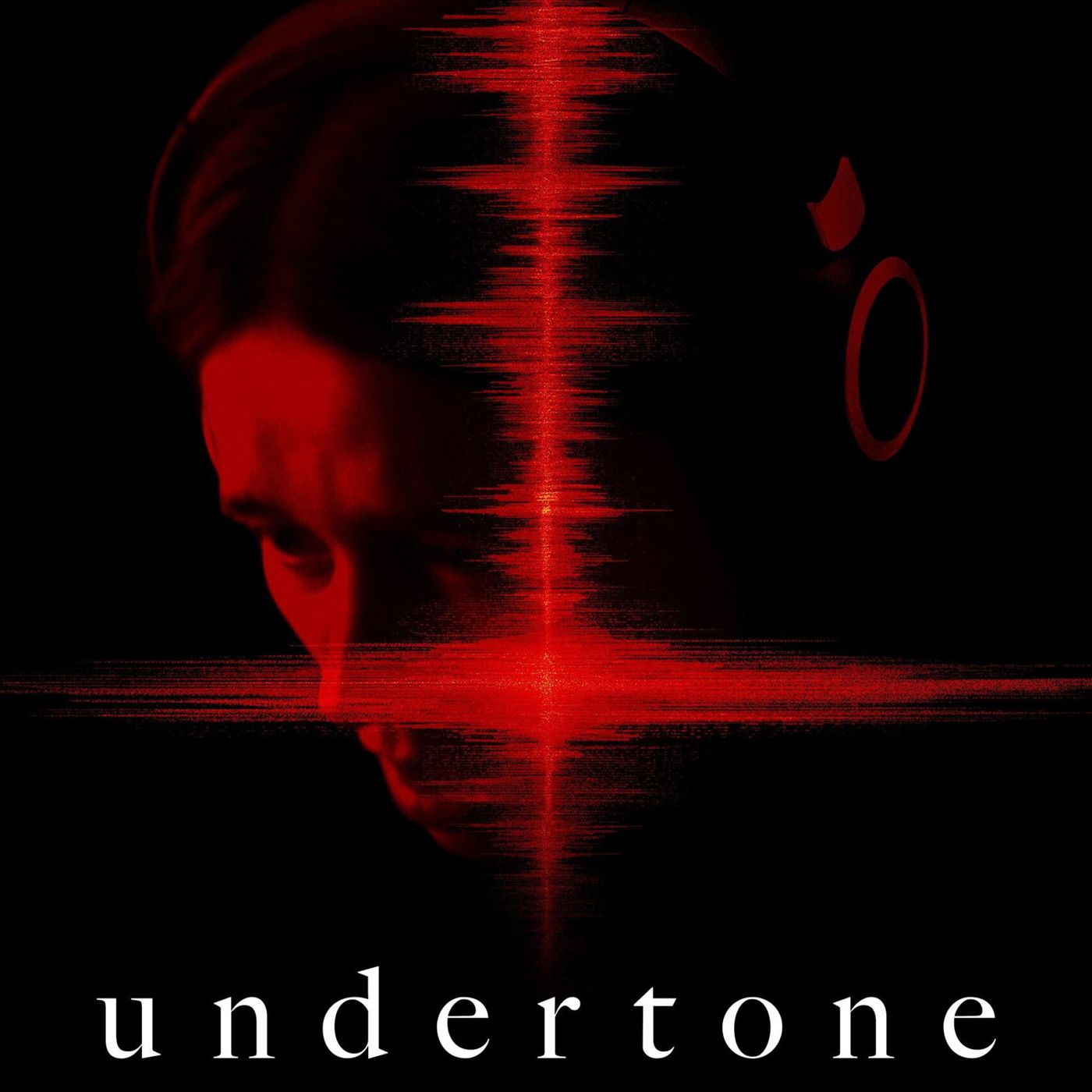
Mike talks with editor Sonny Atkins about shaping a horror film built around sound, the discipline required to cut a story told almost entirely in audio, and what it means to edit your first feature.
Learn more about Sonny at https://www.slatkins.com/
Transcript
Automatically generated, so expect the odd misheard name.
So what are we talking about this episode? You're gonna love this. I got something juicy for you. Oh, do tell. Let's wait until we start recording because I want to get your authentic reactions to this.
Can't wait? Okay. Oh, by the way, there's like new intro and outro music. I'm going to use it for this episode. Is that that's cool?
You are here? No, I'll just hear it in the edit. I'm gonna play it anyway. Okay, I'm ready to start recording when you are. Oh, ye is bot, it's show time.
People pay good money to see this movie. When they go out to a theater. They want cold sodas, hot popcorn, and no monsters in the projection booths. Everyone pretend podcasting isn't boring. People love hearing the sound of their own voice, especially on a podcast.
Welcome to the Undertone Podcast, where we talk about all things creepy. I'm your in house skeptic Evie Babbage, and I'm joined by my believer co host Justin Menoel. You're in a love this. I got something JUICEE do tell? Ten sterious audio recordings from an anonymous email.
Let's keep an open mind, Evy let me. Yes, it's a demonic possession. Okay, easy, easy, all right. We've heard weird stuff before. This feels different.
You believe that. I'd like to say, good Mary. Wonderf it's a warning. There's only one way to find out. We should stop listening on.
What were you thinking? You shouldn't have listened to all of them. It's what she wants. Hey, folks, welcome to a special episode of The Projection Booth. I'm your host, Mike White.
On this episode, I am talking with Sonny Atkins. He is the editor of the new film Undertone. Yes, it is about a paranormal podcast, and we watch as there are some audio files that get sent to the podcasters and what is on them. It's kind of like ring, but with audio hits a little close to home, if you know what I mean. Seeing these podcasters record, but at least they get good audience feedback.
They actually have live calls that come in at three am wherever they're recording. I think one person's in England, the other one maybe Toronto. That would kind of make sense because this is a Canadian film. I had a great time talking with Sonny. I hope you have a great time listening to it, enjoyed the episode.
Tell me a little bit more about you and how you got interested in show business. Yeah, we're going back a while. I read my first short when I was nineteen, and it was terrible, as most people's first films are. I was at McGill University in Montreal, studying to be a psychologist and realized very quickly that that wasn't what I wanted to do. And as a banned and I was doing stand up and I was doing everything to not go to school.
And I took some time off and came home and I wrote a script. I'd written some stuff before it. I had a friend with a camera and we tried to make it and that was the start. And it's my joke. It's off color, but it's like Heroin.
It gets it sinks its teeth into you and it's oh my god, that you're chasing that eye for the rest of your life. But yeah, and then I transferred. I went to film school in Toronto. I went to it's TMU now, but it was Ryerson when I was there. Yeah, and the rest is history.
I came into editing backwards, like I do. Have more credits as a writer and a director and producing stuff. But after COVID, I moved back to Toronto from Vancouver. Unsuccessful try to move to the West coast, but yeah, a friend of mine recommended me to work at a post house as an assistant, and I ended up apprenticing at a place called Rooster Post Production in Toronto for a couple of years and learned everything I know there and then got really lucky with Undertmp. Tell me how you got involved with Undertone?
Did you know the filmmaker before you got into this? I had never met ian Ian was introduced to me by Dan Slater, who's one of the producers on the film, and I've been working with Ben for over ten years. When I was in school. We did a very low budget feature together in Toronto and we've been great friends for a decade. I just left my old gig and I was freelancing and doing some commercial stuff and he picked me up one day in his car and said, hey, you want to edit this movie and he gave me a shot, as he's done several times before in our careers.
But no, ian Ian was introduced to me through him and a couple other people on the crew as well, like Graham Beasley, or DP and Mercedes who's our production designer, and I've worked with them in different capacities, but Ian was new and. Where was the project at when you got on board? Had it even started shooting yet? No, the script was done, Ian had finished, They were getting ready to go into production, and I think they had all the money lined up and everything already, and maybe two months three months before they started. I was told about it and then yeah, I was working a different gig when the footage was coming in, so I was like, wasn't really cutting as we were going, But yeah, it was fifteen days in February of last year.
Obviously, if this is your first time working on a feature, I'm curious, like, what's your approach because obviously you've edited before, but it's a little bit different of a style. I did our assembly edit, our really early edit backwards. Most editors I know start with an over long thing when they hunk together every scene, and I did an assembly like that. But when we did, like the cut that I presented to Ian the first time, I think it was sixty two minutes, like I cut everything out and I'm so used to doing that in the commercial worlds, which is you've got thirty seconds or fifteen seconds to tell a story. Your instincts get developed towards that sort of airing on the side of okay, hack that out, how efficient can we be?
Luckily Ian and the guys didn't fire me and kill me on the spot when they saw it, which was great, and it was a really cool exercise, and we discovered that we we did really have a skeleton that really worked. And then the process of the next twelve weeks together was adding flesh back on to this skeleton that we knew worked and we were excited about. I don't know if I'd do that again. I've learned some lessons, not that it was bad or anything, but I think it worked, particularly for this film because so much of it was audio, and I think the initial really shortcut that I had i'd stripped away a lot, a lot of talking, and I think we saw that it needed it. But it did tell us like, hey, there's story spying here that really works.
Yeah, there is so much to do with audio with this film, in particular, I'm curious what's your relationship like with the audio recordist or how much are you involved in that process. In the recording? Not much, We had a really great record as to a bunch of us have been working with for a while. Dane Kelly it was awesome and did a bunch of pre mixing. I'm sure you've seen the film now, but the recordings, the audio recordings of the couple that we're listening to, Dane did almost all it.
Like when I started cutting, those were pretty much done, and he did a lot of that himself, which is awesome. I come from a music like I'm a musician, a drummer, and the guy I apprenticed under was total audiophile. I think I had a lot of that going for me in terms of how involved I was. I did temp and built out a lot of soundscapes and stuff like that as we were cutting, but I'd say maybe ten percent of that made it into the fun film. A lot of it was just rough that the the incredible mixers and Folly artists and all those guys polished to a fine gin.
This movie could have been a disaster since so much of it is us the audience watching one person pretty much just listening to audio. But you keep the pace up so well and you keep it so interesting, And what's your kind of approach to all right, there's this recording going on and this conversation going on, but yet I need to keep the visuals, like really popping one of. The things that we discovered early on. And I come from a bit of a comedy background, so I found that comedy and scares operate in the same way. There's a punchline, there's a setup, there's the tension between those two things, and drawing that out as long as possible is the goal.
We lean into that free yard. We know that there are some takes where we don't cut for a long time and where we've got you at the edge of your seat waiting for the next thing that you're going to hear, which is an interesting psychological thing I'd never encountered before, and editing because the scares, most of the scares in the movie aren't things that jump out at you. We've got one or two of those visual scares, but a lot of the time it's like, how can we keep you at the edge of your seat, shallow breathing, waiting for the next thing that you're going to hear? And we realized it was good to keep it simple and not super busy in the cutting. That was the thing that we were all afraid of was We had a bunch of different setups for coverage of almost all of our scenes, especially the stuff at the table where EV's listening.
I think I had nine different angles of that, and we didn't want it to be too cutty, because you're like, what the hell am I watching? What am I supposed to take from all this? We found it helped ground the audience and not being patient, but it kept their attention where we wanted it, which was, hey, this is a we know it's a very plain frame of Nina who whose face is just you can't take your eyes off of her face. She's incredible, But you're waiting there for the next thing you're going to hear. The very smart thing of those slight camera movements and taking in negative space where is something going to show up or is something not going to show up?
I can't take credit for that. That's Ian's genius. There was stuff that I was even making the mistake early on where I was cutting out of that stuff too fast, and it wasn't until we got a chance to sit down and work together the first couple of weeks of the EDEA where he's like no, no, no, The whole language of the movie is in these really long pans too, because and we found I help, audiences are jiving with it, because yeah, it does make you wonder what's what's coming and sometimes we don't give you an answer, and it seems to have worked for some people, which is great. And you have that I would call it punctuation some of the scenes where it's just black, as far as I could tell in the theater, it was just black with the audio.
Yeah, it comes back to a drumming thing. Dan Slater, a producer, were both musicians, and he was involved in the cutting of the film. That was me and him and Ian and other producer Cody in my living room, like sitting right over my shoulder, and we could communicate weirdly in drum rudiments where I'd show him stuff and he go, it's got to be like a paradidol or that's got to be and immediately what he was talking about. And so much of editing is rhythm, and I think that those little cuts to black, like once we established that that's part of the language of the film, we were like it gave us kind of permission to use it. A couple of times and I think it works.
You've got those audio transitions under there. Sometimes it's completely silent. That was a big thing with me in two Is he wrote the word silence comes up a lot in his screenplay and no. I was like, oh, I could never be nothing. But his whole thing was like, no, you there's no way for I don't want to I don't want to hear anything.
And that was cool, like learning that and unlocking that piece of the film voice, what are you actually cutting on? I cut this in premiere. It's mystery standard in the commercial worlds at least where I learned, and I'm fast with it. And it's just ask any editor, whatever tool they use most efficiently and easily is the one they're keen on using, And what. Are the challenges of going from more short form with commercials into a full feature film?
Just like trust, trusting your instincts. I think that, Yeah, Imposters was a big thing too, But I think when you when I settled into it, was realizing that you can still think of things in units of thirty seconds of story and that sort of just stack on top of each other and build on top each on top of each other. If yeah, if I can hold your attention for thirty seconds, and then another thirty seconds, and then another thirty seconds, and I realized that that's what I was doing is and you can you learn to zoom out on a macro level and feel the film in a different way, feel the piece. But I had none of that knowledge going in, and it was a lot of is the learning process for me for sure? How are you keeping everything straight?
Do you have some sort of like folder system as far as where you keep your scenes or how you're breaking stuff down. Premiere has this really amazing tool called Productions, and it's a way to keep it. Essentially breaks up your project file into a dozens as many project files as you want, so it's not all of the media and all of the metadata is living in one giant, bloated, feature film sized project that you're inevitably going to get that little yellow or sorry rainbow ring of death while you're chugging along and trying to export something whatever. It splits it all up. So I did that.
Every day of daily was its own project to every select sequence. I kept it all as separate as possible, and it's great because it references the other things without having to open all of them at the very end, when we're handing everything over to be finished. I'm still working on this really lean project. I know you said that you're editing this with Ian and Dan, and I'm curious as far as when you get more eyes on it, when do you get more feedback on things? Because I imagine living with a project and being that intimate with it, you get a little crazy.
Yeah, you go a little nuts, and you don't know if the things that you're concoct in the room are working. Because it might work for the four of you, but that doesn't always translate. We did a couple of test screenings, I want to say, last spring before we premiered at Fantasia. We did the filmmaker screening where we invited a bunch of our industry friends to come and have a look at it and get some notes from them. And then we did another where we invited a bunch of friends and family, lay people, people who don't know how the sausage is made and to give us some notes as well.
And those were hugely helpful. We unlocked so much of the movie from some of that feedback. I mean, just they're taking diligent notes and measuring the room and where the tensions are and all that. Yeah, exactly. We had these little questionnaires.
Was there anything that you don't understand? Were there are moments that you were genuinely scared? Were there moments where it was clear we were trying to be scary and we weren't. And we were asking I think a lot of the right questions. We just want to to make the best film we could with what we had.
There were big chunks of the film that were added because of some of those notes, Like we got a note about strengthening the character between ev our lead and her comatose mother, which is difficult because they don't speak to each other and can't speak to each other. And I recalled this thing that my mother had. My mom lost her mom many many years ago to cancer and had saved a voicemail from her deceased mom for fifteen years and it would listen to it and when she was down or when she wanted to feel connected to her, and she was the last recording she had of her voice. And I mentioned that to Ian and Dan and Cody, and they were like, Oh, we can do that, we can use audio. We can just have this woman record and we used my mom.
I called my mom and I got her on I recorded her and used her as temp for a little bit, and it's you've seen the film. It's a big part of the film store so that. When it plays into the whole audio angle. Too, exactly. Yeah, and how audio works as a tool for memory and a tool for seeing outside of yourself.
That kind of it feels a lot like this movie was such a series of challenges. It's basically one location, but many locations inside the one location. So much of this is one actress, two actresses, really, but so much is just the one actress. And then yeah, even when it comes to what is she hearing? And I love the effect of putting on the headphones and blocking out all the other sound when the clock disappears, yeah, it's And then it's is she hearing that?
Is it on the tape or is it outside of the headphones? Living with headphones on all the time, as I'm sure you probably do too, Did I really hear that? Or was that on the recording? It was challenging, but we Nina is fantastic, and I think Carrie carries the film on her shoulders and we all love her and can't wait for the world to learn who she is. And the crew are amazing, and it's all again people we've been working with and had relationships with for a long time.
We've all been making these lean films and scrappy films for a long time. We've gotten I think, pretty good at it. And the set was this totally buoyant, joyous place, and we were convinced it was haunted, but by a very benevolent ghost. When was the first time you got to see this with an audience? Was that Fantasia?
It was Fantasia, Yeah, which was awesome, incredible experience. They were so kind to us and Fantasia is an awesome festival, and it felt really good finally to be in the room and know that the scares were And then and then A twenty four came on board and we got a chance to go back into the edit and make a couple changes, and we premiered again in Sundance, And seeing it again in Sundance with a midnight crowd was really really special. And then I feel like I've seen it a few different times and now I joke with the guys that, like, I don't never want to see it again. I've seen it five hundred times, and then seeing it at the Canadian premiere a couple of weeks ago with the Dolby Atmost mix for the first time.
I had never experienced the Atmost mix, and that was really special to see just the level of care and love and expertise that the guys who mixed that film brought to the table. It's unbelievable. Handing your film off for finishing always feels like a really special baton handing process. You do it so frequently commercials because your turnarounds are so fast, and you build these relationships with the colorists and the color assistance and the mixers and everyone on the other side. And I took a lot of pride in giving them what I thought was a good sort of rebuff draft of hey, this is what we're imagining with the sound, and then they perfected it.
Were you able to put the day job aside while you're editing this or are you doing two jobs at the same time. Luckily, no day job. I had left my commercial post about a year before we started the movie, and I was freelancing with varying levels of success. This movie came at the perfect time for a lot of us, but yeah, I no, I was able to for at least three or four months. It was full time.
What have you done since then? We're getting ready. I can't say much, but the team it looks like the band's getting back together and were doing another film I think within the next few months. So lots of prep on that, and I direct whenever I can. So I wrote and directs a little short over the summer that we're hoping has a nice little festival run and right when I can, got lots of irons in the firing.
Do you have any web presence where people keep up with you in your work? Yeah, I have a website that's in dire need of a renovation, but it's slatkins dot com. And I have an Instagram that I don't use very often. Not even gonna plug it, but yeah, other than the website, I'm like an elder millennial and I try to stay off the internet as much as I can. Yeah, Sonny, thank you so much for your time.
This has been great. Oh, thank you man, I really appreciate it. Thanks for watching them. Bob Bob Black. Have you any wool yes, sir, yes, sir, three bags folk, one for my master and one for my Dame, one for the little boy who lives down the lane.
Bob Bob black sheep. Have you any wool? Yes, sir, Yes, sir. Three bags, fol bob a white sheep. Have you any wool?
Yes, sir, yes, sir. Three bags full, One for my Master and one for my Dame, one for the little girl who lives down the lane. Bob a white sheep. Have you any wool? Yes, sir, Yes, sir.
Three bags, fol
More from The Projection Booth



Similar episodes across the network
Matched by shared keywords.
-
Kulture Meltdown: Primetime (2026) — "You see how this looks, right?"
1 shared keyword: a24
-
Backrooms (2026) & Scary Movie (2026) — "I like it in here. For the first time in a long time, I feel like I'm..."
1 shared keyword: a24
-
The Witch (2015) — "Wouldst thou like the taste of butter? A pretty dress? Wouldst thou like to live deliciously?"
1 shared keyword: a24