
Season 1 · Episode 638
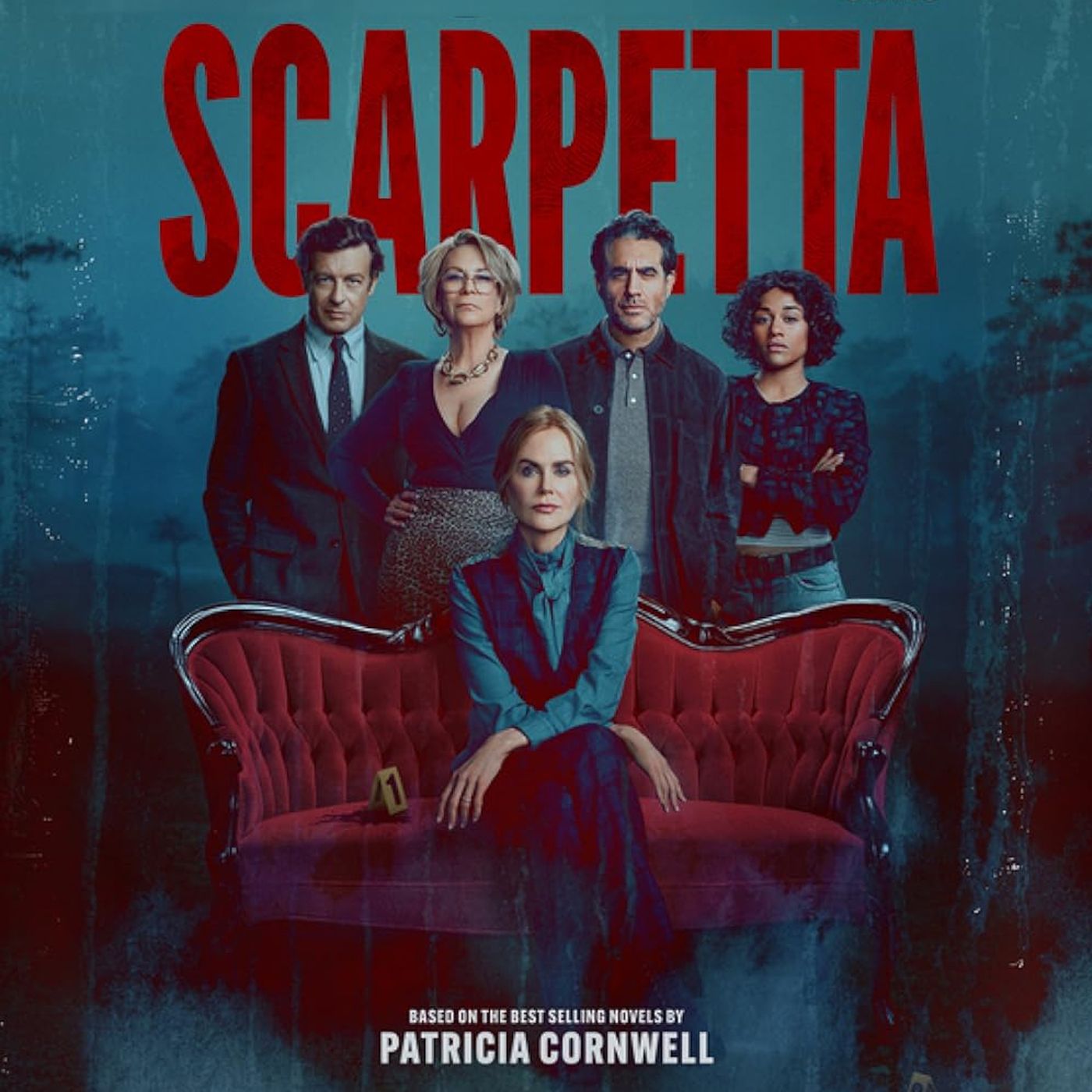
Special Report: Bryan Parker on Scarpetta (2026)
About this episode
Follow Bryan on Instagram at https://www.instagram.com/bryanvanbryan
Transcript
Automatically generated, so expect the odd misheard name.
Oh he is boot. It's show tied. People say good money to see this movie. When they go out to a theater. They want clothed sodas, a pop popcorn, and no monsters in the protection booth.
Everyone pretend podcasting isn't boring. Got it off? I dtr k Scarpetta, do solemnly swear I will faithfully and impartially discharge all of the duties incumbent upon me as Chief Medical Examiner to the best of my ability. Second time to charm, Good luck, doctor Scarpetta. I came back to this job because I didn't like the way I left things last time around.
I'm doctor Scarpetta. It's a fifth victim in two and a half months. Second chance is pretty hard to resist, right. Is it a second chance? Or am I just looking to mess myself up again?
It's all over the news. What our lady of the train tracks, that's what they're calling her. Two women with the same headwinds we're looking for here as a serial killer. This case and my first one. There are too many commonalities for them not to be connected.
That's a barrel of monkeys I would not want popping open. Oh, that's stare. If it's the same person and we got a run and let a look back. It's just not like him. What happened with that case?
It made you so afraid for it to come back into question. Where is this coming from? No secrets between us, not any. Hey, folks, welcome to a special episode of The Projection Booth. I'm your host Mike White.
On this episode, I'm talking with Brian Parker. He is the sound supervisor of the TV show Scarpetta, which is currently playing over on Amazon Prime. Scarpetta, of course, is based on the book series of the same name by Patricia Cornwell. Had a great time talking with mister Parker, and I hope you have a great time listening to it. Thanks so much.
I would love to know a little bit more about how you got interested in sound. I have pretty much always worked in sound and more For another of my first job, when I was fourteen was at an auditorium theater running sound of lights for all kinds of different performances, tap dance recitals and plays and church services when some folks were still building their church. That was when of those kids. I guess like I had a paper oute before that. But there's something that's really interesting to me about working in a supporting role for someone's artistic vision, like keeping your eye really focused on your departments and advising the best you can about the broader goals, whether those are like storytelling goals for like I pure art.
Something really interesting to me about that, like helping guide one aspect of this bigger important thing really well. And I've done that in show capacity, like I said at an auditorium, I've done that for visual artists. Like where the community that came up in when I was like in like college and post college was very punk and very di why and there were a lot of ours who had like big ideas that need a little bit of help punneling those ideas into something more practical and figuring out how to achieve an aspect of what they want to do artistically. I've helped people make records. I've recorded albums for people and mix some whatever.
I've helped people design visual art that they wan't spin on a motor and helped design the gearing and mechanics that I've helped people realize their visions for things by helping weld things together. To me, there's something really interesting about that. Okay, this is your department, taking into account everything you can about this department inside this broader art justic vision. And that's been a big through line for me and found itself, like said, from the very very stars, has been something that has always interested me because it's it sits right behind the visuals of a thing, and it can imply things or can shape feeling about things without presenting facts all the time, and that's super fascinating to me still still is.
I've talked with a lot of sound people lately, and I'm curious as far as I will know how to best put this, maybe like the hierarchy of roles, because I know there's adr people, there's sound engineers. There's just so many different types of rules because you've worn a lot of hats over the years, and I'm curious, like, how have you worked yourself up through those ranks? As far as I can tell, there are two ways to move forward in your career if you want to. I don't think that there's a linear pursuit. I don't think there's a linear hierarchy from like eye budget features down to low budget television.
That's not in line with with my goals of what I wanted to do with my work. You will not catch me working on a Star Wars movie. That's not a path I'm pursuing, but in service of being able to work on something that either has enough budget or enough time or both to really steep yourself in what the story wants and spend a lot of time between your first read of the script and shipping fun deliverables to know that you've exhausted all the possibilities, or you've chased every idea that you had and saw what was going to work better or what was going to work more in service of the broader story. And we tried that and it was good for these reasons, but ultimately didn't serve a story as well in these reasons, and like crossing off a list and know confidently that like our department folled its weight, like are what we did with the story, and in concert with the other artists, of course, we presented the best version of this story to our audience that we could have.
So anyway, in pursuit of if that's the goal, not there there's a huge budget, but if that thing right there is the goal, I think there's two ways to get there. I think you can either work as a as an apprentice for a supporting editor, on someone else's staff, someone else's team, or you can work on really small films. Placed a lot of bets on filmmakers that you believe in a lot and grow with their clients. And I've mostly chosen the latter. I've worked on some other folks crews some, but that's been like twenty percent on my career ten For the most part, I have tried to I've tried to supervise my own shows for as long as that's been an option for me.
I came up like I worked works in indie film and then in reality for a long time. Because I moved to Los Angeles in two thousand and seven, I can move just in time for all huge writers' strike, So the way to actually make a living there for a while was in Laura, but in non union reality. So I worked on Survivor and American Audiators and wipe Out for a while, and then shift, I change companies and worked on American Idol in the Voice and Stuff you Think you Can Pants and those those things for a long time. That's where I got fast, and that's where I learned to cut sound really really very fast. Read the way forms have a sense of what was going to work.
I hear what was wrong with an edit in my head and come up with with what I knew was gonna fix it, or at least my best guess is what was gonna be the best for us to fix it pretty quickly while I'm reaching for it. And that served me very very well moving into narrative and more creative kinds of work, because I can move around the screen and pro tools very quickly, and the tools are never in the way. I'm just here like extential, so I can apply the speed to try things really really fast and decide and hear them fully completed and decide whether that's what I want to do with a scene or not, or move on something new that's been a big asset, How do I get it? I started working in that world where you have to do if you're cutting dialogue, you're also going to cut spend an hour and a half putting tweet birds and stage escapes onto establishing shots on whatever on reality, cram af through discovery and get it legal kind of workflow.
So start off to do everything there, and then shifting out of that world is where I started to really take on a supervising standard role, or I had a more direct line to clients and a little less like just get everything onto the tracks correctly for the mixer. The mixer has the clients. You stay in the basement, don't talk a big shift there. Moving into the narrative world, I'm attending spotting sessions and bridging scripts like months ahead of time, and helping make decisions about again what kind of weight my department can pull to make sure that we're all moving the start of the same direction together. It's much more of a supervisor's role in the in film and in the Mcprestige TV space, because the mixer is pretty much the most part rixos really only touched on the days are also of mixing.
Though I love editing, I do it a tongue for this podcast, and I've always found that the best edits are the ones that people don't notice, and I imagine that it's similar to you as far as the best sound effects, the best sound design is probably the ones that you would never pick up on. Is that kind of the case for you as well. My two projects right now, powermounts each other really well. Where on Scarpetta, I think that we have a little bit more room to design some things that somebody could maybe right off in their head as like music or just the general mood, but definitely have a texture, have a really additive texture to a lot of the transitions the scarp out of one of the hoghlines of the nineteen eighty eight and so I use a lot of log tape and build a lot of textures with some of the thematic elements of our show, and then just crush them to analog tape to make these other textures that we use as transitions in and out as a designing textras for like flashbacks and stuff in episode two and then six and the whole cold open one, there's a lot of gritty like rotating, rhythmic kind of things.
Both are made from tape machines, and I think those grab attention. I think those do stick out your ear as like an element that I hope grabs your attention. Whereas letting the other show on the pit if we do everything right, yeah, people would it would just fly it right past, and they would think it just happened to quote in camera unquote that way, because it is it's a totally different vibe. Like I said, those interesting counterbalance than my two shows now, and it is supposed to play so natural stick as where we go for accuracy all the way we get as far as ticket on that show. So it's a different thing.
You said that you use pro tools. Is that pretty much your tool of choice or are you now more supervising other people that are using pro tools. I use proto every day, all day, every day. I'm a little bit too young two, or rather a little bit too new to this game to be in the generation that has a supervisor in like the sense of a zoom out, step back sound supervisor who direct other people to use the tools. So it's the generation that came before me that that does have those people who sort of like act as a director of photography while like have camera operators, like they like have ideas, ask people to pursue that ideas, let them know which of them are working, which of them are not, what to take further, and what to abandon, steer the whole thing coming up the way that I did through lower budget andies.
I've always had hands on then. I still, yeah, I every day the. Way that you're talking about, like welding and getting gears to mesh and all that I was just like, this guy's really DIY. That is true. Yeah, I used to tour with bands in fifteen passenger vans, run in front of house for totally packed already cap rooms, one hunter cap room, very small venues all across the country.
And yeah, I tend to want to get my hands story. I have mixed a few projects that I didn't supervise myself, and some people love it. This definitely some people's strength and the moneys are good at times. But for me, like I don't really feel like I'm doing the work unless I know why we made all the changes from the beginnings. And now I'm really only satisfied when I know the motivation behind all the choices that have led us to this current moment, and let that whole stack of choices inform the next choices we're going to make, whether we stay the course or whether we deviate for a specific reason.
The context of the broader story we're telling and the broader reason why we're telling it in this way remain on my mind all the time, and I would have trouble if I I would have trouble if I were doing it regularly without that level of context. Yeah, I was curious about who you call collaborate with, Like on a show like Scarpetta, who you collaborate with and what that collaboration is like. It can be a little difference between the TV workflow and the film workflow. On Scarpeta, I had a really good relationship with our producer post oriented producer over name Nascian. We had done a handful of films together before, and so there's some trust fair and once I was on the team, then we had a couple of meetings with the picture editors, and I just want to let them know how open I am to what their needs are.
Along the way, before we get the picture lock, I was cleaning up certain dialogue scenes that they were having a really hard time with and noisy environments or cars or whatever. Cleaning up those scenes and doing a prelimera next time. That was so that before it goes on network, so that I was going to get a cleaner version to give notes on than there really rumbly car scene. And also supplied them a bunch of specific sound effects of the pictures didn't have in their general libraries to put in nice temp some of that what say through to the final as well. And then we did an early design pass of the first episode just to like establish the palette and make sure that our sound aesthetic was inligned with the visuals, which I think it really is.
I think they just really love picture editor. I've just gettled all. I'm really well with that kind of brain usually, and I want to let them know early that I'm on our side, because I think that there is a perception that the sound people are off on islanding kind of stagi and they just want to shoot a bunch of adr for fun or company just com to love to occupy people's time. I think that perception still exists, although I don't I don't particularly think it's that accurate. Anyway, I want to let let the whole post team know that I'm a resource.
I'm here. I want to lock in and tell the story together, and I will. It's not a problem for me to clean up a dialogue scene over a weekend or designs and custom and phone that we can get out of the tracks early and get everybody used to early, ear least here early to move the conversation up instead of waiting for a lock cut. I'm curious who are some of the filmmakers that you really enjoy working with. I have done several projects with Molly Elfman.
I would ask your listeners to check out our film Next Exit from twenty twenty one. It was very, very personal. My first read of that script was maybe a year before years of change, before they started shooting, and my first read it was just like, we're taking this all the way. We're going to do everything, We're gonna maximize on this project. We're going to take this all the way.
With her. I had previously done The Party Is Just Beginning, which she was a producer on that. The director was Karen Gillan, and hand full of shorts, and I always just had a good dialogue around those shorts, and I always just like just had a like a really respectful conversation about our goals, what my role was, what I didn't need to worry about, always feel listened to, I couldn't. I just feel like we're familiar with each other's tastes and abilities. And there's a lot of drust in both directions.
Because I've done a handful of movies with Renee from from Scarpetta, Newness The Grudge in twenty twenty one, in twenty, which dropped right before the pandemic. I think just I think was under watched. I think I fell off the ritar a little bit too soon. And on the film side, I've done several films with Drake Durmis, who did together before I met him. He did Like Crazy, that's what he's best known for.
I think with him, I did Newness, Zo and endings and beginnings, and we have a good relationship in that we frustrate each other, but in the same direction, like toward a good film. Yeah, but a few samples. I have a Rebert Terry Murphy who's uh coyp on the pit. We've done a handful of television series together, and I've come to come to really appreciate the way that we each work. I know what she's gonna want, what she don't want to spend her time on.
She's very, very organized and does not want to shoot a lot of ADR that she doesn't need to, and so I'll come prepared with here are all the dialogue fixes for all the adr Maybe just get her sign off on those one by one and save a lot of time and say booking because sometimes just a hassle to get it and a. Ditch, and as an audience member, ad R is always that's the time where we're talking about the invisibility of sound editing. That's where it usually sticks out so much. To my ear. I would say that you have You've only noticed the ADR matches that didn't act that well, and there might be a lot in there that flew past.
I would say that probably nobody hates bad eighty R more than I do. I would way rather queue and shoot eight lines for an actor that we're going to take the time and get just right, then shoot thirty lines of maybes and have it turn out that the one we really really needed was the second to last one, and everyone was getting impatient by that point, so we rush it and so we don't have a great, just right read for the most important line. That's something you learned very quickly in indie film where resources are thin. Anyway, we talked about. How there's different approaches, like with Scarpetta and The Pit, but I'm curious, overall, is there a different approach for you when it comes to how you're going to approach something as a television show overall versus movies, shorts.
Et cetera. There is It's a little bit hard to quantify, but on a television series, you get such a tight feedback loop. There's such a strong reinforcement of what the client wants for this project, and so you're doing it right, you're really giving the client most of what they want by like episode three or four, sometimes episode like sad. But if you're really paying your attention not to say you can't deviate from the established aesthetic and the show, because you certainly can. You should be prepared for that eventuality.
You shuld have some other options ready to go in case it comes up. But on a film you might. You might spend a long time getting the sound of a film just right with the director, and then when you're done, it might be three years, four years before you see them again, and the next movie might have a totally different esthetic, right, so you have to restart a lot of those conversations about what they're going to prioritize. Oh, in this whole sequence, you cut the dog's pause on the wood floor and the nail's going to be tap, and you cut the junking of the dog collar coming down the stairs. But I really just wanted it to be about the toll was taken on the do I really only wanted to hear the dog panting like, oh, I don't really the dog's mouth mostly close.
Okay, yeah, let me cut that right now. So that's not a great example actually because hard do extrapolate from the specific thing. But do you take away by point that like that, if we had established the dog is a character in episode one or something, I will probably not waste my time cutting the tumplicated rhythm between the dogs, the paths of their paws and then into the click of their nails. If I knew we were gonna dump all that and cut the breath and you're focused on on the like that dog right there I go. So that really, that stronger feedback loop does make you work in a different way.
Or you're like, you're you're already hearing like from the last playback, you're hearing in your head what the post producers interpretation of what the show runner wants and direct words from the show runner the last all this thing came up for the last two episodes, So you're you're already steering the work toward their prefer says before they hear it, and that dynamic right there, it's I would be really hard to replicate inside the film world. But the minute of the film world is you have enough time between seeing the scripts and the mix that you get to build so much more custom stuff. You get to make recordings of so much more of the important elements important in the film that you can usually prep yourself on the movie side for anything they're going along to steer on the mixtage or hopefully in a sound effects review before you get to the next stage.
So what's some of the differences in terms of my approach. I shoot for a level of detail where the goal for any scene, does this scene feel believable and complete? Right? If I mostly believe it, but it feels a little bit incomplete, then it needs more. If it feels complete, but the thing is this sticking out I don't believe it for this reasons too big, then it needs some trimming.
That feeling of like breastplay, cross your arms, get your hands off of the keyboard and mouse, zoom out. Watch as a viewer and not as an editor and other bruisers like I do I believe it? Wait, stop right there, I stopped believing it. Not like looking for a reason to have your hands on my mouse and the keyboard. Look, I'm looking for changes to make and way zoomed in on a small scale.
But like, back up, do I believe this yet? No, that that's the same for me between TV movies. What it's good that you can divorce yourself from the hands on the keyboard thing, because I imagined it's going to be tough for you to watch movies or watch television shows and now focus in on the audio. It can be. Fortunately, like your brain does assign different levels of zoom to different physical locations in your life, in the same way that it's important not to do it.
I don't keep a television in our bedroom because like that's a place for sleeping. It's like you train your brain to get to sleep more quickly if you don't have other distractions. In a similar way, I think that I've brained myself to enjoy us as a whole or shows as a whole when I'm on the couch for the most part. Now and then there will be something I'm like, wait, wait, wait, wait, wait, listen to that. Wait that was really effective?
Like that, why did that moment work? Back up? Oh oh, they're setting up this density this way, but they take it away by this point, as when it comes back it's more jar or whatever it is. But if something that's done really, really well, and that usually is the combination of them performances and the set and the sound, but if it all comes together in a certain way, and I want to understand the way that sound was a component, and I'll back up and listen to it again. But that's not every day, Like I definitely there are shows that I definitely enjoy and just view as a viewer.
I'll watch an episode of Ghosts and it's just like great writing and solid performances all the way through, where I don't need it to be a technical exercise. Is there a gold standard for you as far as like, oh I love this movie, this is the one where I wish I could have done something like this, or you're just like so impressed by somebody else's work. Is there a gold standard? I have favorites, and there are aspects that jump out to me in a lot of different kinds of work. I think that most sound designers that I know wish that they had made some of the sounds in Annihilation.
No, I don't know that the folks who made that movie, but that was definitely like like a jaw drop wide open. Wha they took it all the way? How did they get there? We was that the director's idea or did you have to talk to somebody into that? How did you get there?
That's definitely but the moment, I guess last longer in the moment. But that's an example. It might be reaching a little bit too far back to compare it to a modern aesthetic or the Martin pools that we use. But the conversation a couple of seventy four to me is is the some of the most thoughtful use of the role that sound can possibly play in a film. I love the way the Dune movies sound.
Just to reach for a really recent example, you can feel the sound department pulling at least as much weight as every other department not that movie in every scene. I guess the short answer is no, there isn't a gold standard, but there are a lot of very precious silver out there. As somebody who tunes in to sound a lot as well. There are a few sound effects that really bother me because I just hear them time it again, or they just don't work. If you had a magic wand is there a particular sound effect that you would just love to get rid of from the face of the earth from now on.
I really don't need to hear the will On scream. Certainly. I intend this with all the disrespect that it sounds like that's standboy hackshit. To me. It removes me from a picture.
I really don't need it. I think it's a waste star One's time and mostly done for a gag on the mix stage. Was it disrespectful to the audience My opinion, it's really flee Before I had a strict for years. Maybe I like drew a line in the fan like you seven years ago, I was like, we're not doing tonight as or heartbeats anymore. Find another way.
I was like, we're just not doing it. And then I started doing this medical show with some very specific like flat line moments, and we don't really do it very much. Harpe's book twice it's like it's particularly relevant and story forward, and I was like, Okay, I guess the firm rule isn't as firm, but the context needs to be just right. But also if the client wants some of our client wants something, there's there's a literal record scratch in scarpetitter. When you get to listen to the sound for scarpetta, when you get to as I mentioned, you're seeing it with picture in sound, like as soon as you see it, how many people touch that sound before you get to actually hear it, because obviously there's the person on set who's recording, but like, how many other people does it go through until you hear it?
I mean, by the time I hear an offline cut of like a fine or an offline mix of a fine cut or or maybe a lock cut. Yeah, yeah, like before you start doing your magic. The boom operator has a paraadphones and then the onset mixer refferen tonicser is listening to it. They might be cycling through boom and lobs to look to listen for problems, but they're probably usually listening to the line mix itself, so they're working there. We've between two booms or like trying five balance between love and boom to get as many of the words understandable as possible.
So that's two people. Whoever sinks the dailies here's it. The AE logs the footage, they hear it, and then a picture editor has listened to well assembling they're cut, so then the director of that episode comes in for the director's cut, and then the show runner, and during the showrunners cut, the post producer is probably there. At least we're gonna leave out the composer for now. So eight people have heard it for I've heard it, adding a couple more EPs for larger productions.
Eight to ten people have heard it before I get an episode. It was curious how rough that audio is when it happens to finally come to your desk. Yeah, the technologies are only there. I think that the ships Super Salmon even has some noise suppression built into among their microphones. So the technology is no longer vervitally expensive.
Definitely, every modern field a quartering effort. The device, the recorder on set, every model one of those have a plug and you can buy to applying the instroduction. Hopefully they're only applying it to the line mix for the purposes of cutting, like making the picture cut for the purposes of getting a thing understandable for the show runner and the studio, the network. If they're applying the instroduction to the individual ISOs, which are supposed to stay raw, then we have a major or problem. But ask me if I've ever seen it before.
Have you ever seen that before? Oh? Wow, Yeah, I have seen that before. Thank you for asking. Yeah, I've seen I've I've run into a few times where someone thought that it was it would be best practice to remove noise early on, and I was troublesome.
That's that's a troublesome decision. The thing is that a lot of production stumics just don't actually realize that we that a unless we're under extenuating circumstances. We don't use their line mix. You don't use the mix that they're mixing on set at all. We're going through the ISOs and we're rebuilding the mix from the ISOs because we could do so much more with the individual trucks.
Now we can align microphones to each other to get the best signs from those ratio. It's get to get like boom and law aligned sample actor to each other so that they're if lave and boom or face cohere in there interf're constructively all the time, whereas it the noise the sometimes construction of sometimes destructive, and so it'll boost the voice more than the noise. So we get we get better dictional noise ratio out that way, and that only really works working from the raw track. If you were to you're to try and do that with the artifacts baked in from noise production, like baked thing with that another option that would be a mess, that'll be a huge headache for us. And then of course the picture editors can buy all the same plug in and from most part can buy all the same plug ins a wee can and some pictures will take that too far.
Some of them will apply like a taste full no inseroduction just to to press a little bit. Some some well say, oh man, here's recording a roublee car and just just torque it. Just just turn the knob all the way up and end up with some swirly boxy dialogue that you can have so much noise remove from it so heavy handily. Thats a lot of clarity too, and they're like, oh, maybe I should take some more noise off. Ah.
But the process of noise version is not a one button or a one knob than if you're doing it right, you're you're moving fairly slowly, removing only what needs to be removed, and listening carefully for every every consonant that it might ruin and backing off what you hear of the artifacts. It's it's very powerful stuff, but it's not it's not a button click. In my world of podcasting, AI has been a very unwelcome addition to the mix. How is that affecting you? We do not use any We don't use any generative a on on my shows.
There is a machine learning algorithm in a couple of the noise reduction plugins that seeks to take a signal and split it into its dialogue and reverb and noise components, so you have control over those. That has proved to be a very good approach for starting with the actual signal, the actual performance, and nothing is synthesized about it, but it does a good job of separating as controlling better. It's only a little bit of handholding because it'll it'll carry ours some breaths as noise and just to be terrible, just to oddly enough, you still have to listen. As far as I'm aware of, I'm more of some of the tools that exist, like Adobe Enhanced Dialogue Sounds are really resynthesized. To me, I think that you're losing the lob and the tail end of some the shape of the pitch in delicate performances and obviously like eleven Labs like we don't move, you don't touch that at all.
That is not worth the headache that it would cause. Brian, is there a good place for people to keep up with you and your work online? I'm on Brian van Bryan on Instagram and on threads, and on threads I've been posting like when an episode of Mine drops or sometimes watching it all set in episode of Scarpetta one of seven. My two favorite sounds are I'll just type up what I was most happy with the results that I like the best from that Partectlary episode, and people seem to like that. The specifics of it, I think make people think about the sound more.
Which sportlong goal Brian vamber I used to I was restoring a van I had, like a nineteen sixty nine Dodge Van, and I was like, Oh, I'll be Brian van Bryan and I'll be funny and it'll just be a van account that got busy with work and started getting rusty and sold it. I was hoping, you're going to post your favorite custom vans on there. The best murals, the best window configurations. I mean like a like a tombstone bubble mirror. Love it.
But yeah, there's more microphones and dog content now. Thank you so much for your time. This was great. Talking with you makes take good care. There is.
A house in New Orleans the call Divide It a rule a million Poor. Gotta hallo with the ball. She's a honor. BA game. Name now.
Holly, no. Again, its. Honey satisfa. It's why. It's all the dol Oh brother dear children, not to do load said.
Misery in a house, said the bells. It all okay, God a ball dame back BA
More from The Projection Booth



Similar episodes across the network
Matched by shared keywords.
-
Halloween (2018)
2 shared keywords: david gordon green, jamie lee curtis
-
Rings of Power S2E4 Recap: "Eldest"
1 shared keyword: prime video
-
Rings of Power S2E3 Recap: "The Eagle and the Sceptre"
1 shared keyword: prime video