
Season 1 · Episode 810
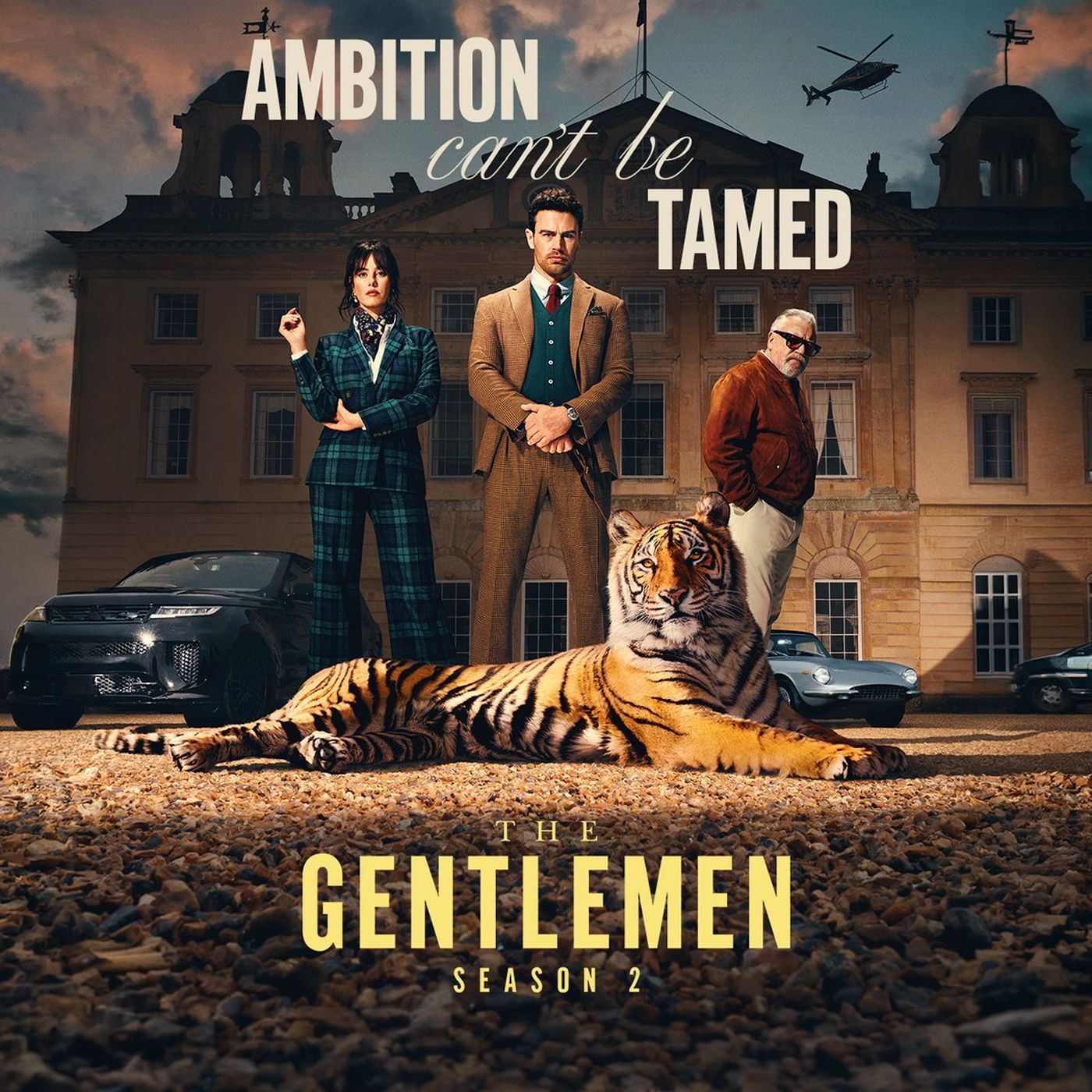
Special Report: Stephen Murphy on The Gentlemen
About this episode
Murphy came up through a makeup course, a stint on the miniatures crew of Stuart Gordon's Space Truckers (1996) and a first black-and-white photography class that changed his plans. He worked his way up the old-school camera ladder, and he explains why a practical-effects mindset still shapes how he solves problems on set.
Then the work. He describes shooting episodes 3, 4, 5 and 8 of The Gentlemen in blocks with director Eran Creevy, fifteen days an episode, bonded over a shared love of Tony Scott. He recalls a week taking over for Robbie Ryan on Yorgos Lanthimos's The Favourite (2018), and the tricky line between rom-com and slasher on Heart Eyes (2025) with Josh Ruben. Mike also brings up Primate (2026) and Vera.
How does a cinematographer get a director to say what a movie should look like? Murphy's answer starts with listening.
Visit Stephen Murphy's website, stephen-murphy.com, to see his work.
The Projection Booth is part of the Weirding Way Media podcast network. Explore more of our shows at http://weirdingwaymedia.com.
Transcript
Automatically generated, so expect the odd misheard name.
Hold your ears, folks. It's showtime. People pay good money to see this movie. When they go out to a theater, they want cold sodas, hot popcorn, and no monsters in the projection booth. Everyone pretend podcasting isn't boring.
Turn it off. Turn it off! 400 years ago, this estate spread out as far as the eye could see. I wanted to walk back. I know what you're up to.
I'm being lured in the hope that I might support your efforts to decriminalize marijuana. Nobody knows the business better than we do. The Duke is evolving. What if he's evolving into something volatile? We need him.
And he fucking needs us. You are destined to rule. Forge your own path. Move away from Bobby Glass. It's about having our cake and eating it.
No. Fucking no. What's the matter? Cat got your bollocks? Can I remind you of your position in the hierarchy?
I'm a captain. I'm used to giving orders. You have my attention. Be careful, Eddie. If you want to be careful with you, be careful, Susan.
Don't you fucking talk to me like that! I feel an erection coming on. That's the appropriate response, sir. This journey seems to be coming at quite a cost. It all feels just within reach.
We're a creature reared in the zoo. You certainly become accomplished at hunting in the jungle. There's no need to panic. We're still aristocrats. Good grief.
Hey folks, welcome to The Projection Booth. I'm your host, Mike White. Today I am sitting down with cinematographer Stephen Murphy, BSCISC. Stephen's path into the camera department ran through special effects and makeup training before he found his real calling behind the lens. His credits include Space Truckers, Three Seasons of the Gentleman, and Josh Rubin's Heart Eyes.
You can see more of his work over at stephen-murphy.com. Had a great time talking with him, and I hope you have a great time listening. Enjoy. How did you get involved in filmmaking? How did I get involved in filmmaking?
Well, when I was a kid, I was really into comic books and model making and all sorts of nerdy stuff. I still am. And, you know, my dad took me to Star Wars for the first time in the theaters. That kind of blew my mind. And so shortly thereafter, my dad managed to pick up a magazine that was published in the UK called The Marvel UK, which was like a... photo magazine filled with the story of Star Wars, but it also talked about all the movies that influenced Star Wars, like the Flash Gordon serials and pirate movies and stuff like that.
And it had a big section in the back of it that showed you the filmmaking process from the production, the concept art, and particularly the ILM stuff, building models and things like that. And that blew my mind. That sort of turned me on to other movies and other sci-fi movies. There's a whole section about sci-fi robots, Forbidden Planet and stuff like that. And it also sort of made a connection in my young mind between the idea that you could do something like make models or draw pictures and have that be your job.
So that was kind of the beginning of the process. From a very early age, I was really into that. But as I got a little bit older and I was in school and I was still drawing stuff and making models and goofing around with my friends, doing lots of nerdy stuff, I began to see other books and TV shows about filmmaking in the 80s because of the success of Star Wars and Close Encounters. There was a lot of really cool specials on TV about how they made the movies, how they did the special effects, stuff like that. But there was a really great show called Movie Magic that used to be on.
And it would kind of talk through, you know, one week would be about prosthetics, one week would be about miniatures, one week would be about special effects and stuff like that. So I kind of got really interested in the special makeup effects, prosthetics. I loved monsters. I loved robots. I loved, you know, that. character creation.
And I managed to find my way onto a course in college that was a two-year course studying makeup for film, which was 90% straight makeup and 10% prosthetics and model making. But because of Being on that course, I met a whole bunch of people. So though I started working in the industry at quite a young age, I got to work very briefly in the miniatures team for Stuart Gordon's Space Truckers, which was filming in Ireland at the time, and met a whole bunch of people there, which led to more work doing prosthetics and model making and mold making. And While I was doing that course, one of the things we had to do was learn black and white 35mm photography and basic photography and basic developing and printing.
And that was my first time picking up a camera and taking photographs. And that blew my mind. I was really amazed at what photography and lighting could do to the things that I had sculpted or built or made. So by the time I got to leave college, I had decided I was going to become a cinematographer. And I started working in the camera department as a trainee, or we would call it a trainee in the UK or Ireland, but you guys would call it a camera PA.
And I just slowly worked my way up the ladder, the old school ladder, and learned my trade that way. That's remarkable. I mean, especially to go from being such a fan of makeup effects to picking up a camera and becoming a dp or cinematographer that that's for me a leap but i know that it has to be very important for you to even know how to shoot those kind of. Things it's also kind of an interesting maybe mind change because you're sort of going from a very you know you're going into like a very alpha male department or it certainly was at the time when i joined it in the late 90s and I think when I was in college, I was the only guy in a class of 20. So I'm going from that position to going into the camera team where it's the exact opposite.
There might be one female camera assistant for every 20 guys. So it was kind of an interesting mind switch for me. But it also was an interesting background for me to bring to cinematography because there's sort of a problem-solving aspect mindset in in physical effects and special effects in terms of how you perceive a problem and then how you might solve the problem which is a little non-linear in its thinking especially when you're doing you know you know the 80s 90s kind of effects where everything had to be real and you couldn't really rely on cg um and that problem solving ethos is something that still sticks with me and i think really helps me. Well i'm so curious about some of those early gigs that you had and of course i would love to hear more about space truckers i freaking love that movie but you know what were some of your favorite things to do because i'm sure each job that you've had has been a little adventure unto itself.
Yeah absolutely i mean when you start off the film industry is so you know kind of amazing in that it's not like any other job that's I didn't come from a family that was into the business. So I had no connections in the industry. So I'd never been on a film set. I didn't, you know, in my head, a job was something that, you know, you went to an office and at nine o'clock and you came home at five o'clock and all that kind of stuff, you know? Um, so when you go out on your first couple of film sets, it, from the outside is chaos.
It's, you know, loads of people scrambling around, all very focused, you know, and you sort of can't help but feel like you're in the way. But then you start kind of getting comfortable with where you are on the set and what your, you know, role is and how you function and work within that sort of team. And you begin to see, you know, how things are working and understand the language of you know, being on a film set and, you know, telling stories. um so it's all fun you know it's all you know uh it's all the early experiences are fun even if they're hard work you know but you're doing things like getting up at four or five o'clock in the morning to go shoot a sunrise at the top of a mountain in the pissing rain.
It's, you know, it's fun, even though you're soaking wet and it's really early and you're really tired, but you know, it's, it's a very different sort of lifestyle to someone who has a more traditional nine to five job. So all that kind of stuff is amazing. Then when you start getting into, you know, like the nitty gritty of stuff, and you start working on bigger projects, you're learning all the 16mm cameras when you start, then you're learning all the 35mm cameras, then the VistaVision stuff comes along, and it's all new experiences that are usually pretty good. For me, cinematography, and I feel bad explaining cinematography to you since you've been doing this so many years, but it's such an alchemical process of mechanical and kind of the magic of light and just trying to transform what you see through that viewfinder, you know, into an image that just is going to be striking for somebody who's watching it.
I mean, I've seen your work on things like, you know, Vera. I love the look of Vera, you know, even, you know, things like primate, you know, where you're dealing again, kind of going back to makeup and special effects and those kinds of things. But everything has its own distinct look. And it's got to be very interesting for you to even try to come up with that process. How am I going to make this look the way that this particular thing needs to look?
Yeah, it's, I mean, it's the part of the job that's really interesting, right? You're not, you're never doing the same thing twice. The mechanics might be similar from job to job. You know, you're putting the lights outside the windows or you're putting the camera on, Steadicam or whatever it is. But how you're using all those elements and pieces is totally different job to job.
You know, you're working with different people each time. They're all bringing something different to the job. You know, so the sort of, you know, the secrets in the sauce are always, you know, slightly different. The ingredients are always slightly different and the end result is always slightly different. And that's what makes it interesting.
And the good thing about being a cinematographer is I don't necessarily need to commit to one genre or one type of project. I can, I could do commercials if I wanted to, and then I could do a movie or a TV show, or I could do rom-coms or I could do horror movies. So you can, you could be on something one for three months. That's, you know, super funny comedy. And then you could spend three, four months doing something that's super serious drama.
And They both have their pros and cons, and that's the great thing about it. It's not the same job for a year. It's not the same job for two or three years. There's a huge variety in this. How is it for you working with, you mentioned music videos, how is it for you working with U2 on A Beautiful Day music video?
And that was great. The funny, that's the thing I was more interested in working with was it was, um, I was working with, uh, Harris Savides, the cinematographer who, you know, when I worked with those guys and, and Phil Schoenu, the director, and I'm a huge fan of state of grace, the movie that he directed. And I was a huge fan of, uh, Harris Savides work. So, so that was the exciting thing for me working in the YouTube videos. So, And you mentioned, you know, each one is a little bit of an adventure.
You're working with different people. Are you really working with different people? Do you have directors that are like, oh, I need Stephen on this particular project? A mix. So I have a bunch of directors that ask for me a lot.
The schedules don't always sync up, so I can't always say yes to all of them at the same time. But I try and vary it so that I'm working with the ones that I really love, you know, that I know I can work with again and enjoy being around them, enjoy working with them and mix that up with working with new people. So, uh, and then in addition to that, your teams are different, you know, as much as I would love to take the same, you know, camera operators and focus followers and gaffers with me on every job because I travel all over the world and work all over the world. It's a, you know, it's a totally different experience every time. The crew you use in the U.S. for one job is going to be different from the crew you use in Italy for the next job.
And the kind of cultural differences are really interesting and the way they work is slightly different. But that slight difference is the interesting part of it. How do you and the director communicate the vision from one person to the other? Because I'm sure you have something in your head, they have something in their head. How do you get that across and kind of come to a common understanding?
So for me, it sort of starts with listening a lot. You meet them. If it's a new director, a new collaboration, you're meeting with them to see if you click. It's kind of a two-way interview. They're interviewing me.
I'm interviewing them. I'm kind of trying to figure out, do I want to spend, you know, three, four, five months with this person, you know, doing long days? Are we going to have fun together? Or is it going to be stressful? But in terms of what they're trying to do, usually when they meet you for the first time, that's kind of the beginning of that conversation for them about what the movie should visually feel like.
And they're sort of articulating it for the first time. So most directors don't go, hey, it's exactly this. Most directors can't tell you that. And that's okay. So usually what you're doing is you're trying to tease that information out and they might have a very strong preference for you you know, particular aspect of the visuals, like maybe camera movement or how dark it should be or how bright it should be or something like that.
But a lot of the time it's a, it's a series of conversations. It's not one conversation that instantly unlocks the secret sauce to the movie. It's, you know, I think it's this, I think it's this mixed with a bit of this. And then you put your, your ideas in and, you know, the designer is putting their ideas in and, you're looking at locations and that's going to inform what's happening. You know, you start casting the movie and then that informs it as well.
So it's a kind of a constantly involving conversation. But for me, a lot of it's listening and then trying to figure out, you know, trying to get in sync with their taste, you know, as much as possible. And then to some degree, they're getting in sync with my taste too, because they're, They're casting me in the way they cast an actor. They're casting the designer in the same way. I'm going to give them a different flavor than a different cinematographer.
So you sort of listen a lot, but also trust that they've seen your stuff and they like what you've done before and they want your ideas and they want the you of it. How was it working on The Gentleman where I think you worked... four episodes and they were all with the same director. So are you shooting this almost like a long movie? Yeah. Um, the way a lot of the TV shows schedule nowadays is in what we call shooting blocks or blocks.
Um, and so we'll come in and we know that we're going to do, you know, three episodes or four episodes and it's kind of scheduled just like a movie. Um, and then other directors are doing, you know, other directors, they're not necessarily always consecutive episodes or not, but in our case for the gentleman, I think we did three, four, five and eight. So you spend a period of time prepping that and then you're off to the races and you start shooting. And when you start shooting, then the next team begin prepping whatever their episodes are. So they're in the office prepping away while we're out on location shooting or in the studio shooting.
It's a really, it's quite a nice process to work with. I was very fortunate in that I was working with a director called Iran Grevy, who the two was just going on really well. You know, it was one of those meetings where when we first met, we clicked over a lot of the same, you know, similar tastes. And it was just going on really well. That show is remarkable.
I mean, it does feel like I am watching a very extended film. I kind of like that just because it all feels of a piece and it really feels like each chapter is telling me something new. But I love how fast it moves and I love all the on-screen visuals that are going on. It just has such an interesting look to it. Were you familiar with that before you got onto it or did they have a lookbook for you to be like, okay, this is what we're going for?
They didn't have a lookbook, no. I'd seen season one and And I'd seen Iran's other work. And when I spoke to Iran, you know, he talked about this sort of the moments of season months that he sort of thought was successful or the most successful. And we talked about other influences. You know, we have a shared love of Tony Scott movies.
So we've talked about that and a bunch of other movies. We both love movies from the 80s and 90s, you know, with similar ages. So we grew up loving the same stuff. And even if you're not going to directly reference those or, you know, you're not necessarily trying to imitate anything. but it's the sort of shared influences, a shared sort of taste influenced the, you know, the visuals and the influence, the end result. So we sort of, you know, you talk about stuff and then, like I said, as you start the prep process and you start looking at the actual locations, then you can kind of dial things in.
And Iran is very, you know, clued in about the show. He did season one as well. So he's, you know, he's able to kind of say, okay that's not quite the show or you know oh this would be great because of xyz and then i can dial into that as well and sort of filter it through my taste. What were some of the biggest challenges of making the gentleman a lot of the challenges of the gentleman are kind of connected to speed that we have to work at you know the like modern sort of tv production you know tv has always. Been you know a very fast sort of machine um but you know sort of the netflix and the amazon and the apple you know streamers sort of shows in the last couple years they work at a simmer pace they you've got 15 days to shoot an episode but the ambition is huge you know the you're doing you know, the same sort of stuff as you do in a movie, a big movie.
You know, you've got multiple locations. Some of them are international. You know, you've got a lot of cast coming in. There's a lot of speaking parts. There's a lot of big sort of dialogue scenes and there's a lot of big sets to license shoes and a lot of amazing looking costumes and stuff like that as well.
That takes time to get them dressed and things. So, you know, we're all sort of up against the speed of us. And we're all aiming for maximum quality at the same time. So that's usually the challenge, the biggest challenge on a show like this. Well, kind of speaking about amazing sets and costumes, how was it working with Yorgos Lathimos on The Favourite?
He was great. I just took over for a week on that movie. You know, the cinematographer, Robbie Ryan, had to step away for a week for personal reasons. So I came in and took over early in the show. I mean, that was amazing.
He's got a very... sort of particular way of seeing the world and it was great working with somebody who had such a clear idea of how he wanted to you know make his movie you've. Been doing a lot of horror lately i know you did a little additional photography on hokum i mentioned primate hard eyes how was it working on hard eyes and coming up with that very distinct look that you had for that one it. Was really good fun hard eyes was with josh rubin directing he's a lovely guy he's you know He's really creative. He's super collaborative. Hard Eyes was actually really tricky because it's a really, you know, the genre sort of bending it, the blend of the rom-com and the horror.
It's a really tricky, fine line to sort of ride. So, you know, we worked really hard on that. We knew very clearly what we wanted the horror stuff to look like. But trying to dial in on the rom-com stuff, you know, it took a bit of experimentation and a bit of time. Thankfully, we got it right.
It was a tricky but fun challenge. What are you working on next? Right now, I am in Morocco shooting some episodes with a round of the third season of The Gentleman. We've literally just finished our second day. Wow.
Didn't the second season just come out? Yeah. I think there was a big gap between season one and season two. I think a two-year gap maybe. And I think they're keen to shorten that for season two and season three.
That's fantastic. Is there a good place for people to keep up with you and your work online? Probably, although I don't, you know, post very often. I'm on Instagram. My Instagram name is Stephen Murphy BSC.
So Stephen with a PH. But my website is stephen-murphy.com. And that's where most of my, you know, work would be. So you can certainly see my stuff there. Fantastic.
Well, Stephen, thank you so much for your time. This was wonderful talking with you. Thank you.
Similar episodes across the network
Matched by shared keywords.
-
Bulbbul (2020)
2 shared keywords: horror, netflix
-
The Perfection
2 shared keywords: horror, netflix
-
Kulture Meltdown: In the Mouth of Madness (1994) — "Do you read Sutter Cane?"
1 shared keyword: horror