
Season 1 · Episode 653
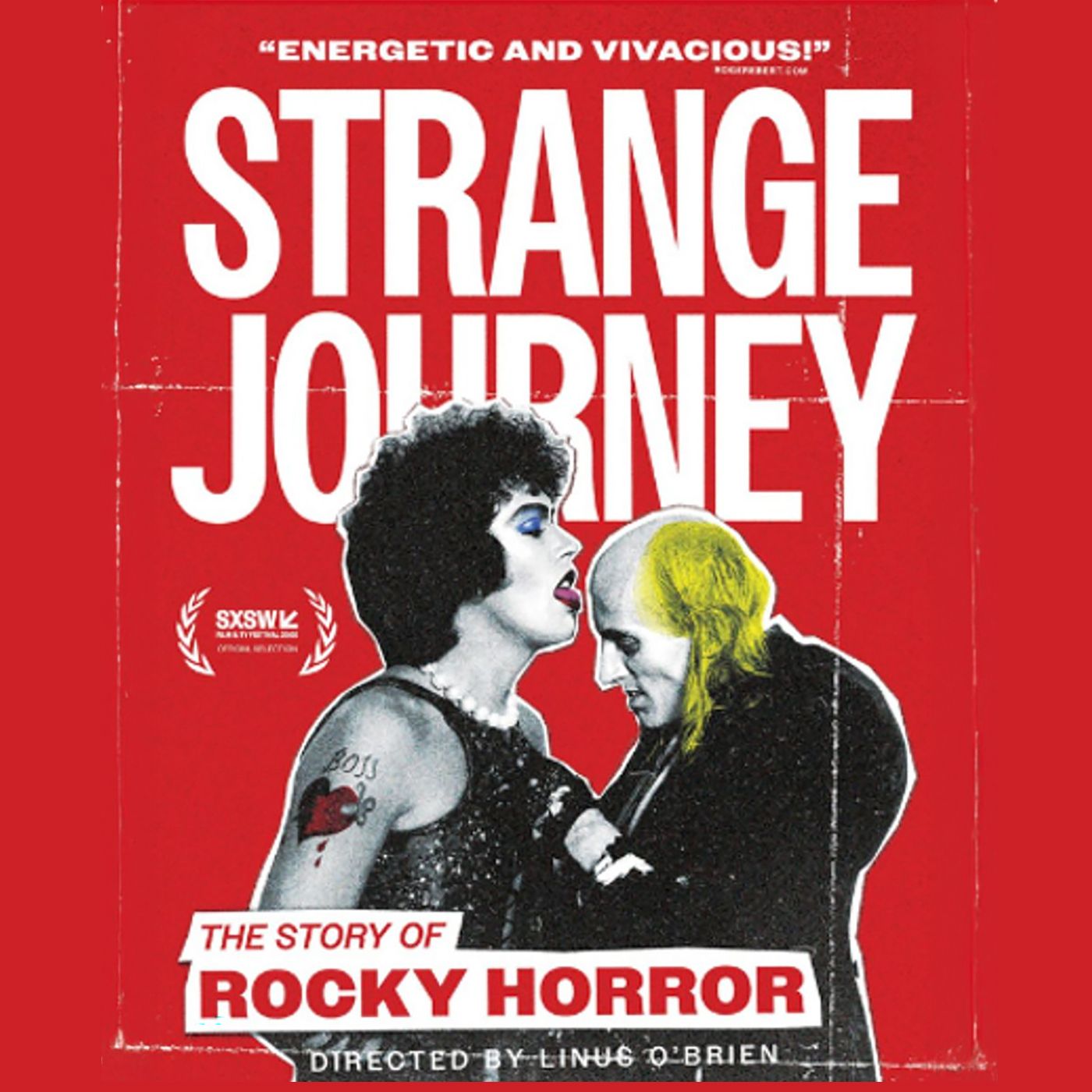
Special Report: Strange Journey: The Story of Rocky Horror (2025)
About this episode
Linus talks about growing up in the house Rocky built — guitar songs in the kitchen, shadow casts at the Beacon Theater, and a father who always expressed himself through music. He discusses the editorial partnership with editor Avner Shiloah, the structural decision to let the songs carry the film, and why celebrities like Jack Black and Trixie Mattel were included only when they had something specific to say. He also teases the case for a Shock Treatment documentary and his next project, Almost Normal, on neurodivergence and its impact on society.
Strange Journey is now available on digital platforms and Blu-ray.
Transcript
Automatically generated, so expect the odd misheard name.
Old Ye, he's boat It's show die. People say, good money to see this movie. When they go out to a theater, they want cold sodas, pop popcorn in no monsters in the protection booth. Everyone pretend podcasting isn't boring. Got at as.
In nineteen sixty four, I got on a boat to England. England was monochromatic until nineteen sixty seven, and suddenly England became technicolor. I got into Jesus Christ Superstar and the director was Jim Sharman. I said to Jim that I'm writing a little musical myself. I said, I hope it's not really, And of course it's the anywhere that ended up with a cuttle.
We opened and it was a phenomenal success. We created immersive theater. People were rushing to get in and see it. This was something alive. We were allowed to look a movie.
We just worked up asses off. There was something about not having money and added to the edginess of it. And then the movie flopped. It just didn't make any sense. Term Diggan suggest said why don't we run the film at midnight?
I said, how is it doing? I said, what's interesting? It's the same fifty people. Every week. This crowd is lining up for a film about transfest nights, every theater works place becomes something like a nightclub.
There was energy in the air. It was a trip. People were throwing rice and it was like we were in a wedding party. We're spreading to the other theaters and other servings. It's steamerable.
Rocky allowed you that freedom to live out your dreams. This was like a pop book book of rock and roll and sex and drugs and the power of that. I think the movie's about saying yes to life and to everything. Touch to be considered the major cult movie of all time. It's not a movie, it's a way of life.
Hey, folks, will can do a special episode of the Projection Booth. I'm your host, Mike White. On this episode, I am talking with Linus O'Brien. He is the director of the new documentary Strange Journey, The Story of Rocky Horror. I believe that I talked about this documentary at the end of an episode when I had seen it.
I love this documentary. I think it's freaking fantastic. I've been a Rocky Horror fan gosh since the mid to late eighties, so this one really touched me. I would highly recommend that everybody track it down check it out, whether you're a Rocky fan or not. It will definitely help shed some light as to why it is as popular still all these years later.
Had a great time talking with mister O'Brien. I hope you have a great time listening to it. Thanks so much, enjoy the interview. So obviously I want to talk to you about Strange Journey because it is probably one of the best documentaries I've seen in a long damn time. But I'm so curious, what was it like growing up as an O'Brien.
What was your experience like growing up in the house that Rocky built. People will ask me that a lot night, and sometimes I suspect that they think that that the odds that they might think is something like it was living like in the Adams family or the Monsters or something, and it wasn't like that at all. It was I think the thing that is maybe unusual about it is that, you know, my dad would sing a lot of songs around the house all day long and would always pull out the guitar and express how he's feeling through music. So that was always a real treat and something I've really grown to love over the years, and so I think that makes it probably a bit different from most households, but other than that, it was fairly traditional.
It's always been nice that how he expresses himself through music, and that was true in our daily lives. I love that you use that in documentary, to have him with a guitar throughout so much of it. It was very important for me to include that because I would like people to get a glimpse into what it would be like to spend an afternoon with him playing the guitar and singing, and so we did capture a little bit of that, and very nice to be able to fly Richard Hartley out, the musical arranger and director of Rocky, because I think they hadn't gone through the songs in probably fifty years since they put them together for the original production at the Royal Court Theater upstairs, and so every song that you see in there was just my dad picking up the guitar and singing.
We never went back for second takes or asked them to do it again. They just picked it up and got right into them. So we are very very happy to include those in the documentary because people are responding to them exactly as I hope they would tell me. About the genesis of the documentary was this kind of always we have to do this one of these days kind of project or when did the idea come to you? I was putting together a clip package along with my brother because my dad wanted to us to make a little short video about the movies and TV appearances that he'd had over the years.
And then when I came across the clip firm I'm Going Home on YouTube, the comments went on for pages and pages, and each one was like more heartfelt and poignant than the last. A soldier playing I'm Going Home while he was stationed in Iraq, a daughter playing it at her mother's funeral, and you could feel the deep love and appreciation that Rocky has for so many people around the world. More than just a fun night out or a fun midnight screening, which it obviously is. They somehow feel more connected to each other and to themselves through Rocky. So I really wanted to highlight that and so hopefully that they could see themselves up on the screen, even if they weren't a direct participant in the documentary.
That was always the goal. I imagine that it was pretty easy for you to get access to a lot of these folks since they had this relationship with your father. Yeah, and I grew up, you know, with a lot of them. I mean, Pat and Nell were always around in my childhood years. And Susan says she remembers me coming to the set as a very small boy, So I think, yeah, having that connection to my dad and to Rocky and to all the cast and crew made things very easy.
I absolutely love the structure of the film, and especially the way that you kind of lead into the songs, and the songs just drive so much of this film, and you bring in things, the song dips out and then it comes back in this triumphal moment. It just I just appreciate that so much, and I'm so curious when you came. Up with that idea. It's a credit to not only myself to a degree, but really to my creative partners in the whole process. That producers Adam Gibbs and Garrett Price, and then my creative partner, Avna Schlohe, who have known for twenty years.
We've been friends for many years and have a real shared love of film, and he's a consummate editor. He edited The Dissident and Yacht Rock and Woodstock ninety nine. Working with him in the editing process was a dream come true because we have a real shorthand. I think we edited the film in ten weeks or something, which is very fast, and it was nice because sometimes it was just the loudest voice in the room wins, and there will be no ego in that. In fact, if anything, you'd go, oh God, if havn it's feeling so passionate about this particular moment, Let's.
Roll with it. And likewise, having the meat of the story of Rocky from when my Dad got fired and Jesus Christ Superstar until the present day, having that be the backbone of the documentary made it easy in a way because then you just have to figure out where all the other little parts fit into it. And then knowing that, you want to really focus on music as well, because I think it's probably one of the ten greatest musicals of all time. Obviously I'm biased, but there's an argument to be made for that that it's right up there with the Sound of Music and West Side Story and Wizard of Oz people always ask me, well, why do people keep coming back to it? You don't get bored of listening to your favorite album, and so now you get to listen to your favorite album, and you get to see it up on screen, and you get to enjoy your favorite album with all your friends and around you.
I think that's one of the lasting legacies of it. And so to be able to highlight that were and my dad's music was very important to me and to us. Don't tell me that everything was peachy Keen. You had no challenges making this documentary. Where's the fun in that?
Financial challenges? You know, we could film, we could fund a few trips to New Zealand, but then we needed money to go to London, and then we needed money to go to New York, and then we needed money to market it, and then it was Yeah, financially, it was a real challenge, and a lot of that challenge was due to the times we live in. I think if this had been we'd made them documentary five years ago, we wouldn't have had these challenge But every time, and I think this is true from making the documentary and I think life in general, whenever you wish that something would happen, and it didn't happen. Nine times out of ten, maybe even ten times out of ten, something better comes along that you didn't expect, and so that thing you wanted to have happened almost stood in the way of these other things happening.
And I think if you approach life like that, and you sometimes embrace setbacks and failures, but knowing there's something better around the corner, that's the right way to be throughout a creative process and the right way to try and live your life, your personal life. It was like locations in London. We kept wanting locations to interview subjects and didn't happen, and eventually we settled on the I forget the name of the theater, it's in Portobello, It'll come to me, and then we had a great location in that locations interview subjects sometimes money, yeah, he just never like we lost audio recording on one day for half an hour, and other great things came out of that of having to repeat it.
So yeah, there's nothing super specific. It was really just more this kind of general positive creative attitude that would come when obstacles were put in your way. I think sometimes I think that you should embrace limitations, You should embrace constraints, because then you get more creative as a result. I think sometimes and you see it with big budget Hollywood movies when they have too much money and too much time, then it often is detrimental to the piece, at least I find anyway. And how was it for you going back through all of this.
You were four years old when the movie came. How is it for you digging through the past and re examining all these things as not necessarily that's the subject of the film, but the creator of it at this time. One of my favorite moments in the documentary is when I asked my dad about when's the first time that he saw it with an audience, like a midnight type audience, midnight screening, and then he talks about seeing it at Long Island at a convention that they had there. Then they had a Q and A and then afterwards they had a screening and they had the cast, the shadow cast from the performers who perform in front of the screen. They're called the shadow cast perform in front of the movie.
And Dory Hartley was the main Frankenfurt impersonator at the H Street playhouse, and he talks about her sitting on the stage during the I'm Going Home moment and a spotlight was on her and her silhouette was the same size as Frankenfurter, and the audience started singing the refrains. And to hear that story so eloquently, and then to find the archival footage from that convention and then be able to intercut those moments along with the score from Joshuay who did the score for our film, It's just it's a beautiful moment. It shows how you have live audience and theater and cinema coming together in a way that my dad had never seen before, and in a way that it elevates everything. You're almost like creating art instantly, but through all these mediums and with audience participation, it creates really special moments and it becomes more even though you know they're having a lot of fun performing like the shadow cast members, to hear him talk about it in a way that really elevates the whole experience was really special for me.
And so I just love watching that clip and I love watching it with an audience because it really exemplifies what Rocky Horror has become when it pertains to the midnight screenings. When was the first time you saw the movie with the midnight audience. I honestly can't remember. One big memory of it is going to the tenth anniversary at the Beacon Theater in New York and that was completely wild because that was like peak midnight screening time, probably around eight eighty three or something maybe, And yeah, that was a wild evening you had. And so.
Seeing and hearing everything at that screening has always stuck in my mind. One thing I really appreciate about the documentary as well, sorry to just call you up and. Give you compliments like please come on, bring me. You've got the celebrities that are in here, but I don't mind it at all. They're not so full of themselves.
They seem like they are all genuine fans. Tricksy Mattel and Jack Black, who are the celebrities in a One of the things about documentaries like this, you just don't want it to be an endless list of compliments, right, You're not. That's frustrating in a way. It's almost becomes draining after a while. So to have them talk specifically about why they love it and how they came to see it.
That's more interesting than just talking about how good it is. Linking their personal stories to the history and the legacy of Rocky was what I wanted to hear. I'd say within the documentary gets boring. Outside of the documentary, I welcome compliments all day long, so that feel good. I absolutely love the scene where you visit the statue of your dad and have your dad there.
That must have been something for him to be in front of this statue of himself. The whole thing is strange. The mere fact that it exists is strange. It's been there for I think probably twenty years now. I think that statue and it's amazing.
It was created by the people at WETA who did a Lord of the Rings and everything is just an amazing statue in and of itself. But to have it stand right where my dad used to cut hair when he was a barber, and right next to the Embassy Theater where he used to go and watch the science fiction double features, it seems to make a perfect sense and hopefully is inspiring to other people who take the things that they love and the things that they're interested in and creating something new out of the things that they love. It's a nice place to visit and great having included in the film. You definitely ride that line between the movie itself and the fandom in a great way, and I think you just hit that right balance where it could just be here's all the fans, but I think we've seen that before.
To get these inside stories from the folks that were actually on the ground making this happen was such a treat for me. Yeah, you want both perspectives. You want to hear the cast members and what their experience was like, but you also have to see what it's become and how important is to everyone. So just giving everything else it's right time and placement in the film and giving it enough weight so that everyone feels like they've they've got what they wanted to hear, and you give them things that they didn't know about. That's the real trick.
So to have it appeal to true Rocky fans and to people who don't know much about Rocky, that's the real treat. When I get people who come up to me and say, oh, I didn't know much about Rocky and I've really illuminated the extent of it of the fandom and then to have true Rocky fans also embrace it. Yeah, it's been amazing to please both sets of people, and that's really the ultimate goal of any movie that tackles a subject like this. When and Where were you premiere? We had our premiere at south By Southwest last year in March, and in fact we had it at the Paramount Theater, which was great because that was along with the Waverley in New York, those were the two places where the Midnight screening started.
So when we showed a Paramount Theater and we showed the Paramot Theater come up in the documentary, obviously it got a tremendous cheer, as it should because we're right showing it at the birthplace of the midnight screening. So that was a real treat. I always thought we knew that we'd show it at festivals, and so I knew we'd see it with the audiences there, but we weren't sure whether we would outside of that. And so it's been released into theaters twice, first by ourselves in September across the United States and in England, and then also we were Magenta Light Studios. Weezy Melonson picked up the documentary for them, and then they put it back into theaters in a couple a month ago, so I've got to see it with the audiences plenty of times, and I never expected to have it be so emotional for people.
A lot of laughing, a lot of cheering, and then some tears at the end as well when it gets quite poignant. So yeah, it's been such a wonderful experience to see it with the audiences. And another thing that came out of it, which I also didn't expect, is that you have seventy five year old shadow cast members from the seventies meeting teenage shadow cast members who've only been in it for a year, meeting each other and share very similar stories. When Lilius Pirot met the shadow cast members from Austin in Texas at south By Southwest, it was so cool because here are the shadow cast members meeting one of the original shadow cast members and sharing a lot of very similar and lovely stories together.
That's the thing. I don't know if you could have made this documentary even we talked about five years ago, but maybe ten years ago, you couldn't be as honest, I think with a lot of the information that you cover in the documentary. I don't think that people were ready for that at the time. I was just look at this weird movie, not about look at how this movie helped change people's lives. In some ways, Rocky Horror seems maybe more relevant today than it was when it first started, which is again really shocking that something has any kind of longevity like this.
I mean, it's the longest running theatrical release in the history of cinema, which again is such a strange thing, you know, and I think second Place is like forty nine years less than Rocky. And there's even during the pandemic, there was a theater owner at the Clinton Street Theater in Portland who would go on Friday nights and screen Rocky for an empty house because he felt like that needed to happen to be able to highlight the deep appreciation and the longevity of Rocky. Yeah, it was everything. So are you planning on a shock treatment documentary next? Listen?
If someone wants to give me one point four millions to make it, I'll direct it and I'll make it. It's funny because when people first ask me about that, you know, I think it is a little tongue in cheek to a degree, and then I started thinking about it a bit more thoughtfully, and then what people don't realize about shock treatment is that my dad foreshadowed the advent of reality TV and online therapy and influencer culture, like forty years before it became a thing. So he was incredibly prescient when it came to like looking at American society and what it's become, way before anyone had any idea about this. So I think if I was going to do a short treatment documentary would really half of it would be on the making of shock treatment, but the other half would be the extent to which it foreshadowed American culture becoming.
And he did it all with some amazing songs too. Those songs get in your head, they don't leave. What's interesting about that as well is that my dad wrote a direct sequel to Rocky called Rocky Horror Shows His Heels Because shock treatment is essentially the further Adventures of Brad and Janet and all. I would say the majority of, not all, of the songs from Rocky Horror Shows His Heels actually made it their way into shock treatment. So yeah, the songs are very strong and some people prefer it to Rocky.
I'm not sure I'm in that camp, but I really do love the songs as well. Look at the song that Jessica Harper, who plays Janet sing. She sings when Farley Flavors is trying to turn her into an influencer and a performer. There's an interesting territory to explore there. But again, maybe there's a way to crowdfund it.
If people wanted that much, maybe there's a way to crowdfund it, and maybe we could explore it. But well, time will tell you. Put it up on Kickstarter, I will give you my money. All right. That's lovely, Thanks Mike.
Your dad has so much music that I don't think is necessarily available to the world. I've always wanted to hear his musical about Tarzan Tz. I remember growing up hearing about it and seeing some photos from it. I'd be interested to know what the songs are like. I think I've got a book where he put at least from the first twenty years of his career, where he put all his songs together.
So maybe the tz songs are in there as well. But I should ask him the next time I speak to him. Actually, so, what's next for you. I'm actually working on a documentary about neurodivergence. It's called Almost Normal, really exploring how neurodivergin people have shifted society and moved society along the way that maybe neurotypical people haven't.
And not to categorize one or good or bad, it's just it's not really a question about should we cure neuro divergence, but shall we just hopefully want and hope for neurodiversity and hopefully understanding each other's traits will lead to a better version of humanity. Maybe is there a good place on line for people to keep up with you in the documentary? I think it's a rocky horror documentary on Instagram that's a good place to go. And then my Instagram is Linus dot org O'Brien where there's a lot of rockie stuff going on there as well. We have a Facebook group as well.
Those are the main two places to hear about what's going on. We're hopefully going to be doing a documentary road show tour in the fall as well, with some live q and a's and stuff. Maybe people can find out more about it through those two social media outlets. If you ever come to Detroit. Let me know I would love to see this on the big screen because just seeing it in my living room gave me chills.
Great. Hopefully we can all share that experience. So I love Detroit. I'm be a huge fan of techno. I was part of the Midwest rave scene from ninety two to ninety four and we'd spend our weekends in Chicago, Detroit, Cincinnati, either DJing or watching other DJs make and play techno.
It's been a huge love of my life and I try to go back to Movement the festival at the end of May as much as I can because Detroit is the birthplace of techno. So yeah, I love Detroit. Mister O'Brien, thank you so much for your time. This has been so great talking with you. Lovely to chat to you too, Mike.
Michael Renny was sill today the year it stood still, but he told us where we stand and Flash Gordon was there and Silver owned where Claude Rains was the invisorable man. Then something was wrong for they yan Killcom. They got called in a seal jam. Then at demy Pace it came. From out of space and this is how the message drain.
Science Speiction, Double Future, Doc Dorra Lit Bill, Creature, m Droid's Fighting, Bradin. And Francists or map at double feature matusire. I new Leo g Caro was over Avara Winter Ranch, A lot took to the hills, and I really got hot when I saw Janet Scott fight a trip that that's fits poisons and kills. Dana Andrews said Prunes gave him the rooms and. Passing them news lots of skills.
But when worlds climbed, said George palt his pride, I'm gonna give you some table boot thrillers, slid up. Some spit true, Doctor and. The Creature, See and Royd's fight, Grand and France Stalls, Steve. Corban gram lock up. After Night Dotture.
Cher Ship. I want it. To the Night to Dove Feature, bitch a Show, biopy. To the Late Night double Feacher pitch a show in the back Row Up to the Late Night Double Feature Big Picture Show
More from The Projection Booth



Similar episodes across the network
Matched by shared keywords.
-
Murder by Natural Causes (1979)
1 shared keyword: barry bostwick
-
Episode 19: Nothing But Trouble (1991)
1 shared keyword: cult film
-
Episode 9: Fletch (1985)
1 shared keyword: cult film