
Season 1 · Episode 654
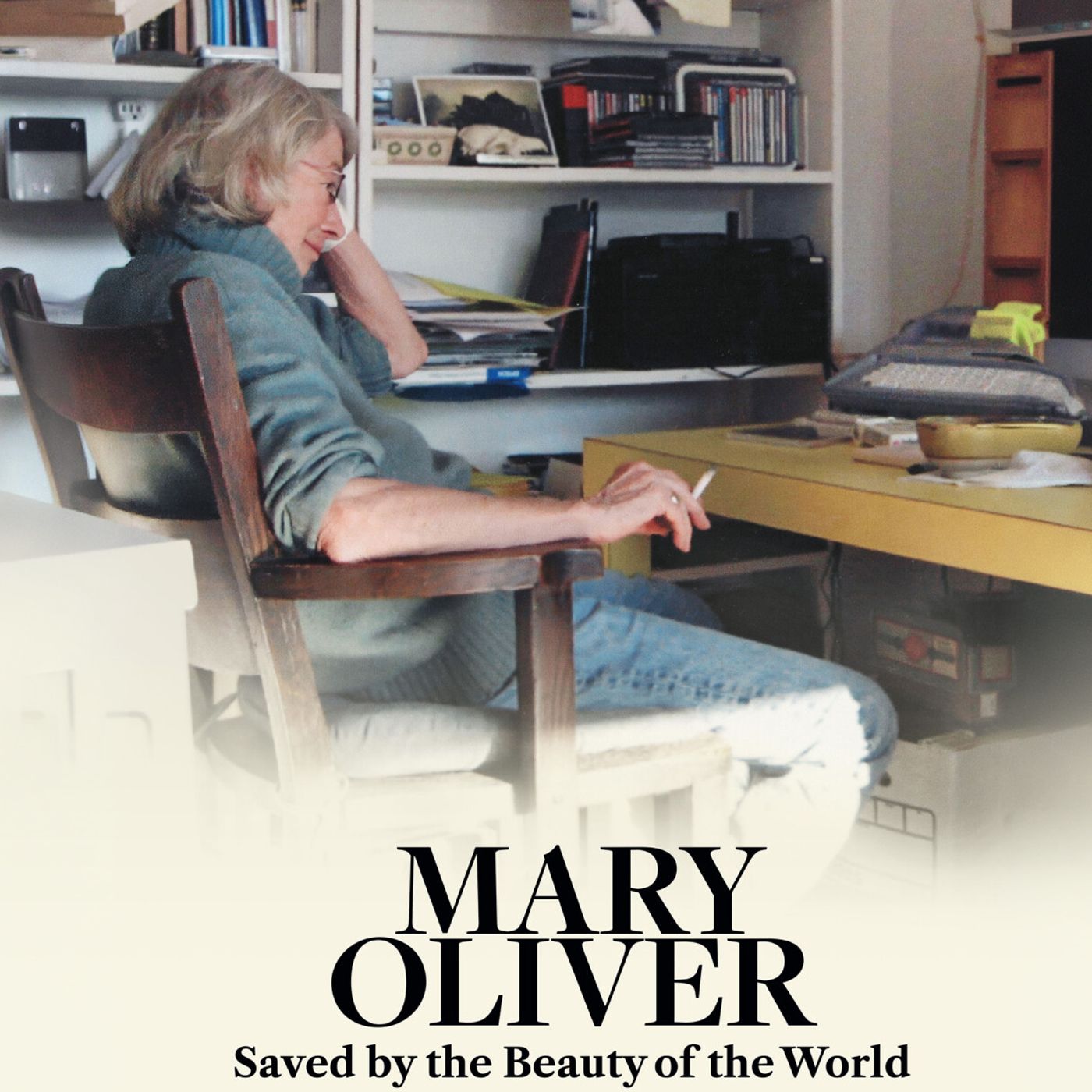
Special Report: Mary Oliver: Saved by the Beauty of the World (2025)
About this episode
Mike talks with Waters about the making of Mary Oliver: Saved by the Beauty of the World (2026) — her path into documentary filmmaking through the school of Barbara Kopple, the subjects that have chosen her over the years, the creative problem-solving demanded by a subject who rarely allowed herself to be filmed, and what it felt like to introduce the film to a sold-out crowd of 1,100 at the Missouri Theatre during its world premiere at True/False. Waters also reflects on her parallel career as an experimental filmmaker and educator at VCU School of the Arts, and the pleasures of a good pie shake.
Mary Oliver: Saved by the Beauty of the World opens theatrically July 3, 2026, and airs on PBS American Masters on August 25, 2026. Find Sasha Waters online at pieshake.com and on Instagram @pieshakepictures.
Transcript
Automatically generated, so expect the odd misheard name.
Old. He is both it show died. People say good money to see this movie. When they go out to a theater, they want cold sodas, pop popcorn, and no monsters in the protection booth. Everyone pretend podcasting isn't boring.
When you say you felt different, how did different feel to you? Not belonging? I very much wished not to be noticed and to be left alone. She was our most famous poet for a long time, and yet completely elusive. I think she was always a big mystic's radical.
It was shocked. I was a girl in Ohio and I wanted to write poems I heard of. She was an independent woman who wrote the poetry she wanted to write. Who loved who she wanted to love. Molly was this charismatic, stylish, sophisticated in person.
We did not have much income. We had love and work and play. Mary's career with what this couple was about. The Winners of the nineteen eighty four Pulitzer Prizes were announced today. Mary Oliver won the National Book Award for Poetry.
You could not contain her any more than you could contain the season. I could sit for two hours and look at the clouds and be very silent. Everybody thinks Mary was this little earth mother, and. That certainly wasn't the life that she led. That was one of my frustrations with Mary's poems.
She was just presenting herself in the light. What is the storm? One of the things about traumatic experiences is that you have to go in earnestly to look at it. Mary spent some time feeling a little unworn. You can hear the truck coming down the road.
You know it was and that way. Mary is also a good cautionary tale. Children forget. They don't know why they have nightmares all the time. And then you started this new book.
What can I say that I have not said before? Mary was very clear that it wasn't going to define her. I got saved by poetry and I got saved by the beauty of the world. Hey, folks, welcome to a special episode of the Projection Booth. I'm your host Mike White.
On this episode, I am talking with Sasha Waters Freyer all about her new documentary, Mary Oliver Saved by the Beauty of the World. It is a documentary about the poet Mary Oliver, her influence and influences, her life, and the lives of those around her. I had a wonderful time talking with Sasha. I hope that you have just even action of the fun that I had talking with her by listening to this interview, please enjoy. Can you kind of tell me how you got involved in filmmaking.
It was a really long time ago, so I studied photography as an undergrad. I was really influenced by a photographer named Gary winnigrand the late eighties when I was in college. I later went on to make a documentary about him. But I found after a few years of doing photography that I was also interested in writing and stories and storytelling, so it was naturally gravitated toward documentary film. The first filmmaker who I ever worked for is a brilliant, amazing documentarian named Barbara Kopple.
I met her when I was waiting tables, right after she had finished the movie American Dream, which went on to win the Oscar. I think it's a ninety one film, and it won in ninety two. But I went on to work for her. What's interesting is that I came to film through documentary, but I actually picked up a sixteen millimeter camera and started making more experimental personal films, and so now, even though I've made a few documentaries, I think of myself more as an artist who stumbled into documentary. Then I do a documentary filmmaker.
So I straddle these different worlds of personal, avant garde film that might screen in a gallery or a film festival, and then documentary that's a little more mainstream and a little more intended for a broad audience. What were some of your early films. Like, I made an environmental film that I started in the late nineties. It actually started as my graduate student thesis film and then it went on from there. It was broadcast on public television in two thousand and three, and it was a sort of an activist social justice environmental film called Raising Appalachi was the first documentary, her feature documentary about mountain top removal mining.
And this is at a time, I think in the early two thousands where it was before the big al Gore invironmental film came out, So this environmental documentary was still emergent. It was on national public television on this great series called Independent Lens, so there was some amount of attention to it. But I also found that I think activist documentary has really changed a lot since that time, because I think the amount of time it takes to make a film is so long, and issues develop, and our news cycle happened so quickly now that I'm glad I made it when I did. But I make different kinds of films now, even though I really admire activist documentary or cinema veritay or direct cinema documentary where it's just all about being immersed in the story as it's unfolding in the moment.
I think I was drawn to documentary by those kinds of films, But the kind of films I make are much more nowadays and have been for a long time, much more archivally and research based. Tell me about your choosing of subjects, or do your subjects kind to choose you. In the case of the documentary that I made before Mary Oliver, which was now already completed a years ago in twenty eighteen, that was a film about a photographer and in Gary Winnigrad, and he was someone who, like I mentioned, was a really big influence on me as a young photographer when I was in college studying photography, but who I'd forgotten about until around twenty thirteen. There was this renewed attention to his work because he had a brand new retrospective at San Francisco Museum at Modern Or he traveled to New York, it travel to Washington, d C.
There was new posthumous work that was included in these shows. And if I was reminded of just how significant he was, not only to me personally, but just as an hardest in the late twentieth century, how influential he was, and he was finally getting this renewed attention. And so I thought to myself, Gosh, I wish someone would make a film about him, or why isn't there a film about him? I want to learn more. And because there wasn't, I had the opportunity to reach out to his estate and his gallery and get to make that film.
And so I think sometimes it is this question of wanting to spend more time with someone who I admire and just research their life, their ideas, their work. And that's really a big impetus for me. And we ever spent time researching something for it to just never come to fruition. I spent a lot of time researching films that have come to fruition. I mean, one of the ways that the Mary Oliver film started was I had been in development on a film about this wonderful San Francisco based twentieth century San Francisco based sculptor and public artists named Bruce Asabwa, someone who again was neglected in some ways, neglected outside of the Bay Area in her lifetime, who has now become more ascendant through her gallery representation in New York, through big retrospectives that are happening.
She's been deceased now for over a decade, there had been a new book about her, a little renewed attention and her life story and also her work was fascinating to me. She was a great artist, but she also was a mom. She had six kids, and she had our moment in the Bay Area. She was in some shows in New York, but again was neglected by the critical establishment. So I was really interested in her story and we worked for a long time on developing that film.
It fell through for various reasons, and maybe someday it will come back. I would love to make that Ruth A Sawa film. I would love for somebody else to make the Ruth Sawa film, but sure because that film fell through, then opened up this opportunity to work with American masters instead of on RUTHA Sau on the Mary Oliver Project. How familiar with Mary Oliver were you before you started the project. I was very familiar with her work.
I'm a big am of poetry. Some of my short experimental films we can consciously and explicitly engage with poetry, either in their titles, like I have a film that's titled after a line from an Emily Dickinson palm, or sometimes I'll use text in my films drawn from poetry. So I'm thinking about that relationship between poetry, which I just love to read, and the visual And so I knew Mary Oliver's work and was really galvanized by the opportunity to think about the work and her life story and consider how to visualize it, which was a challenge. I'm curious how you decided to approach this film, because you could have come at it with so many different angles. First, I'll say we wanted to focus our interviews first and foremost on people who knew Mary personally, so her biographer, her friends of many years like John Waters or Maria Shriver, Younger poets who she influenced, like David Kaplaner or Frek Gasper, and then there were other people who were influenced by her or could comment on her work.
Committee didn't know her personally. That was important to get the spirit of those personal stories, that are they make a person come to life who's no longer with us. Then of course the poems themselves, but also having access to her personal archives. Her archive is now in the Library of Congress, but I was able to go through between thirty and forty boxes before they were sent to the Library of Congress, So that was her fan mail boxes and boxes of her correspondence with friends, with publishers, with magazine editors who were her photo albums, her notebooks. She wasn't really a diary keeper, but she did have notebooks that had notes and lists of birds, her calendars with her appointments written in them.
That kind of thing is always important to have some sort of like visual texture for any visually driven documentary. But I've also just gave us some insight into her day to day life. So I think going through that even in advance, going through her archives, even in advance of the interviews, doing that kind of research helped us to focus on what kinds of things we wanted to talk to people about. Speaking of archives, when it comes to the foot each of her, was she in the public eye very much? No, there is very little footage of her in the film.
It's not like there's all this other footage out there and we just decided not. To use it. There's just she really did not like to be recorded. Often she would give readings and she would allow them to record audio homely, but it was just for so for city arts and lectures in San Francisco, for example, she read there four times and they recorded audio, but they were never allowed to. Release it or put it on their website.
We got permission from them and also from her estate so we could use it in the film. And that's how that worked in terms of getting access to the archival material, but really very little video, and so we're so lucky and grateful than what video does exist we were able to preserve and use some in the film. For me, filmmaking is so about solving problems, and that seems like a problem that could have that was probably in lesser hands, would have been intermountable. I want to make a documentary about a person who's not on camera very much, so how do you decide to go around that. One thing we did was, once we realized we actually really had some wonderful material with her voice, we centered her voice and so you see a lot of photographs of her or the environment that she lived in.
I went to Provincetown six or seven times to film, so there's a lot of footage from Province down. I went to Ohio, where she spent her early years, and filmed a lot there. So this sense of her voice driving the story, not so much in this again like not so much in a diaristic way, because we don't have her diaries, but anytime we have her telling stories with interviews or when she would give a reading. After reading and let's say forty five minutes of poetry, there might be thirty minutes of Q and A with an audience. So there was a lot to draw from there, and so that you hear her voice really throughout the film, and that was so crucial to letting us into this sense of who Mary is and inviting we Ultimately, a couple of people in the film talk about how Mary's poetry Mary invites you to be her through the poem, to see the world through her eyes and not, so we wanted the film to do as well.
But the film wants you to think about yourself as if you get to live Mary's life and you're inspired to maybe live a little more like Mary after you've seen the film. What are some of the other challenges that he had to solve. The biggest one actually has to do with audio and video, which is that in twenty ten, she did this interview with Maria Shriver where she, for the first time publicly reveals that she's a survivor of childhood abuse. And this interview appeared in print in Home magazine, so we knew about it. Who's public it's critical to her story.
She tells the story when she's seventy five years old for the first time publicly. It really think she tells it because she knows it might help people to hear this, right, because she does understand her She has all these fans by this time in her life, and she's revealing something so personal. So we knew it was important to the story, but we just didn't know how we would tell it because it's a print interview and it's a transcript. But then we start to think, okay, well, so it's a transcript. It must exist somewhere, even though it's from twenty ten.
So we just launched this month's long campaign of trying to get Harppo, which is Oprah Winfrey's media production, trying to get Harpo to find the archive, trying to see if someone at Maria Shriver's a media company has a copy of it. We just could not find this audio, and we were getting pretty desperate because again, we thought it would be so weird if we had an actor read as Mary for this one moment in the film, when throughout the rest of the film it's her real voice. So we were just we didn't know what to do. And then when I did the interview with Maria Shriver at the end, as we were wrapping, I said to her, listen, I am just desperate to find his audio. Do you have any ideas?
And she said, oh, it wasn't just audio, it was video. The guy who took the photographs for the magazine spread, he took video of the whole interview. She was like, I Ben, he. Still has it. Don't say that it's fifteen years old.
And then my friend who was shooting it's a friend of mine from college who was our Eli, cinematographer. He goes, oh, I bet that guy has the footage. I was like, don't do not get my hopes up, and he did, and it was like it was literally like a documentary miracle. I still don't know what we would have done, but that footage is really critical to the film. It's like this beautiful conversation between Mary and Maria that's very moving when you read it on the page, but it's not like having the video, so that was really important.
I know this kind of came out of the ashes of another project, but when did you start this one in earnest I. Think we first I started talking about it in late twenty twenty two, and then with the idea that I would go off, meaning we meeting me and American Masters Michael Canter, the executive producer, and we talked right away about applying for a grant from the National and Dowment for the Humanities. Then they're a major funder of this kind of documentary, really crucial and critical, and we hope they survive and keep on funding films like this. But in order to write a grant like that, it's a huge amount of work. A lot of research has to happen in advance.
So I spent the first half of twenty twenty three doing that writing and research. We submitted the grant, so it's it's like you're doing a lot of work, but then there's these kind of downtimes where you're just waiting. So we submitted the grant in summer of twenty twenty three and then didn't find out that we had gotten it until early twenty twenty four, and then fully went into production after that. It's a long process, but just to hear twenty twenty four, we're talking in twenty twenty, it's like you did a lot of work in those that period of time. Yeah, then it became pretty compressed, and in some ways I wish now I had a longer schedule.
We fully went into production in September twenty twenty four. We finished the film in the winter of twenty twenty five, so I wish we had more time, but I had a co editor and Matt. If I didn't have a co editor, the movie would not be done even by now. It was critical. She was so important.
We just had so much luck and so many wonderful collaborators, the animation team, Roe Pro, the DPS, my main DP here in Richmond, who was a former student of mine, the archive producers, the composers who came on almost last minute, really because I had just made total hash of the music and it was a mess, and they saved the film. So we just got really lucky. It was a team effort, as filmmaking always is. Now are you teaching at the same time while are you doing this? So I teach at VCU School the Arts Virginia Commonwealth University in Richmond.
I did have some time off during I'm trying to think during the spring of twenty twenty four, I was able to reduce my teaching and take time off from it because that also would have just been impossible. But I was teaching throughout fall of twenty twenty four and then this past spring, so that was a challenge but also fun because I love to show my students work in progress. And of course when you do something like that, like I've done things where I've done like a test screening with students and I'm they're professors, so they might not want to tell me to my face. Boy I fell asleep during this part or I was totally compute. But so cards are the thing where I have them give written feedback, so it's anonymous, and so I find that really helpful and I hope it's fun for them as well.
That's amazing. You've got your own built in test audience. Yes, exactly. And they're young, right, so they can give me that perspective that you might not get from executive producers. Was that how you handled this one as well?
Have them take a look at it? Well, yeah, for sure. I showed this film to myself. I'm trying to remember. It was definitely last Ball.
I was teaching an advanced documentary class and I showed them the rough cut, the news long. It was a long rough cut, so when they gave me feedback, it was really helpful. When did you get to see this with a proper audience? Oh? So that was at the premiere at the True Falls Film Festival, And that was really special because I had never been to True Falls.
I had heard about it for a million years. I used to live in Iowa, which is only a couple of hours away, but I'd never been. People rave about this festival with all good reasons. It's an incredible festivals, such a great community, incredible screening venues. We were screening on opening.
Night at the Missouri Theater and my composer said to me, Oh my god, you're at the Missouri and I was like, oh, is that good. I have no idea. I didn't know how big it was anything. My flight was delayed and so when I got there, I didn't have time to go to the hotel before my screaming. I was on a van.
They pick you up because Columbia is two hours from Saint Louis, where the airport is. I was in a van with a bunch of filmmakers and I had my luggage and they were like, Okay, we're just going to drop some shop with the theater because she's got to go and to introduce her film. And we're pulling out that. I'm like, oh my god, we fire out those people to it on the street. And the other filmmakers in the van just looked at me and they were like, that's the line to get into your movie.
And I walked in and it was full, so that was like wow. And we were there with two of our executive producers, my co editor Megan Claire, one of the composing team, and it was really a very special night. I was over the Moon. I couldn't believe. We'd made it.
Then, did you do like a festival circo out after that? Yes? I did. I didn't get to travel to every festival I would have liked to have gone to, in part because I was teaching doing kind of West Coast travel was really a challenge for me. But I had gone to a lot of festivals.
I went to Martha's Vineyard. I was just in Province Town last weekend. So yes, it's been great, and I'm going to New York for the opening of the IFC next weekend. I'll be traveling with it. I'll be screening in Washington, DC at the National Gallery at the Wexner Center.
These are all coming up in the fall, but so I'll continue to travel with it. Did I read that it's going to be on American Masters on PBS. It will be on American Masters in August. So our festival, our theatrical run is pretty short. It starts July third.
It opens in New York, Miami, and Provincetown on July third for week long runs. Hopefully they'll get extended, and then it goes out after that. The broadcast is on August twenty. All important is PBS too. A documentary filmmaker like.
Yourself, we couldn't do it without PBS. We couldn't do it without the anyhe it's so important. It's one of the few venues for films like this. Sure, HBO and Netflix show biographical films, but they're different PBS it just has a different kind of mandate. They might Merrill is really popular and has a particular kind of built in audience, but they also show films a film like Gary Winnegren.
Gary Winnigrd is not Mary Oliver like he's a somewhat esoteric artist, like photographers know who he is. But that film was on American Masters and that was huge. Millions of people literally saw it because of that, And I think people also forget Netflix and HBO are glossy and glamorous, but not everybody has the right PDS is literally everywhere in America, and so I think that's important too. Just finding an audience who might not have Netflix, who turns on their TV and is able to encounter the story of an artist or all other kinds of wonderful content that's on PBS that they might not otherwise see. I think it's really critical and I hope we continue to support it in this country.
How many things are you working on at the same time, How many different plates are you spinning. One of the things I'm going to do this summer is work on two really short films, three or four minute films that I've shot because I shoot a lot in myself on sixteen milimeter, but that I haven't even had time to think about. So like when I'm really when I'm really in it on a long film, I can't work on anything else before we go into production. There are these sort of ups and downs where I might be doing a lot of research and writing and fundraising, and then I'm kind of sitting around and waiting to see if we're going into production or wing we're going into production, that might be a time where I can work on something else or work on something smaller.
So certainly, if I'm working on a feature and I'm in production or post production, there's nothing else. But if short films, I might work on something and then set it aside and work on something else. There might be two or three things happening at once. Do you know what your next big project is going to be? It is hard to say right now, because I really am thinking about the short films for now.
When they take three five years to complete, you don't want a rush in. You really want to know that you're committing to something that you can see through to the end. We talked about where people can see the Mary Oliver film, but where can people see your short films? Oh? You know what they're on my Most of them are on my website, which is pieshake dot com.
Would you say pie shake, Yeah, pie shake, p. I E shak E. It's all one word. That's my production company name, which it's been that for a long time. H pie Shake.
In case you didn't know, it's a very popular Is it a dessert? I don't know what it is, but it's a slice of pie, ideally fruit pie, but the compie works well to and a scuba vanilla ice cream thrown into a blender. They serve at at a place called Hamburg and Number two in Iowa City, where I lived for a dozen years. And so I named my film company pie Shake because I love for good pie shake. I've never heard of a pie shake before, but now it's something that I must say.
They're really good. Wow. Yeah, Thank you so much for your time. To beat. This was so nice talking with you.
Yeah, this was great. Daddy wanted me to leave it Indiana, Indianna in the cot shaity know you really don't need it, leave the fame for the road. I remember when I was leaving, I was only six years old, or how my heart was beating about al ready to exclude one shot Honey collected all of the dust inside the rusted souls. If you get around, because you can't control the heart that beat some good the bone. Come on now, come back aameleon, give it up.
You've got your life to attend. Two butter cock. You'ren' tain't in the top that is told through the teeth of the backs of the million dans meets you. Little do they know Mississippi will kill you. Let's you stand too close, my dear, take it on the wise and a long long way for the war has been a long time coming.
Yes, a long long world is gonna come. Stand at the end of the story in the food of a padron. One shot honey collected all the dust inside the rusted soul that you should get her ride because you can't control the heart that beats under the bone. Come on, my comeback comeleon, give it up. You've got your life to attend to put a cab.
You're entertaining the talk that is told through the teeth of the mouths of the millions dying to meet you. Do they know
More from The Projection Booth



Similar episodes across the network
Matched by shared keywords.
-
Ep 146 | Don Bies — Inside the Lucasfilm Archives (R2-D2 Operator)
1 shared keyword: archive
-
126 - Inside the BFI National Archives - Film on Film Festival - Special Episode
1 shared keyword: archive
-
20 - Gavin Rothery - Director of Archive (2020). VFX on Moon (2009)
1 shared keyword: archive