
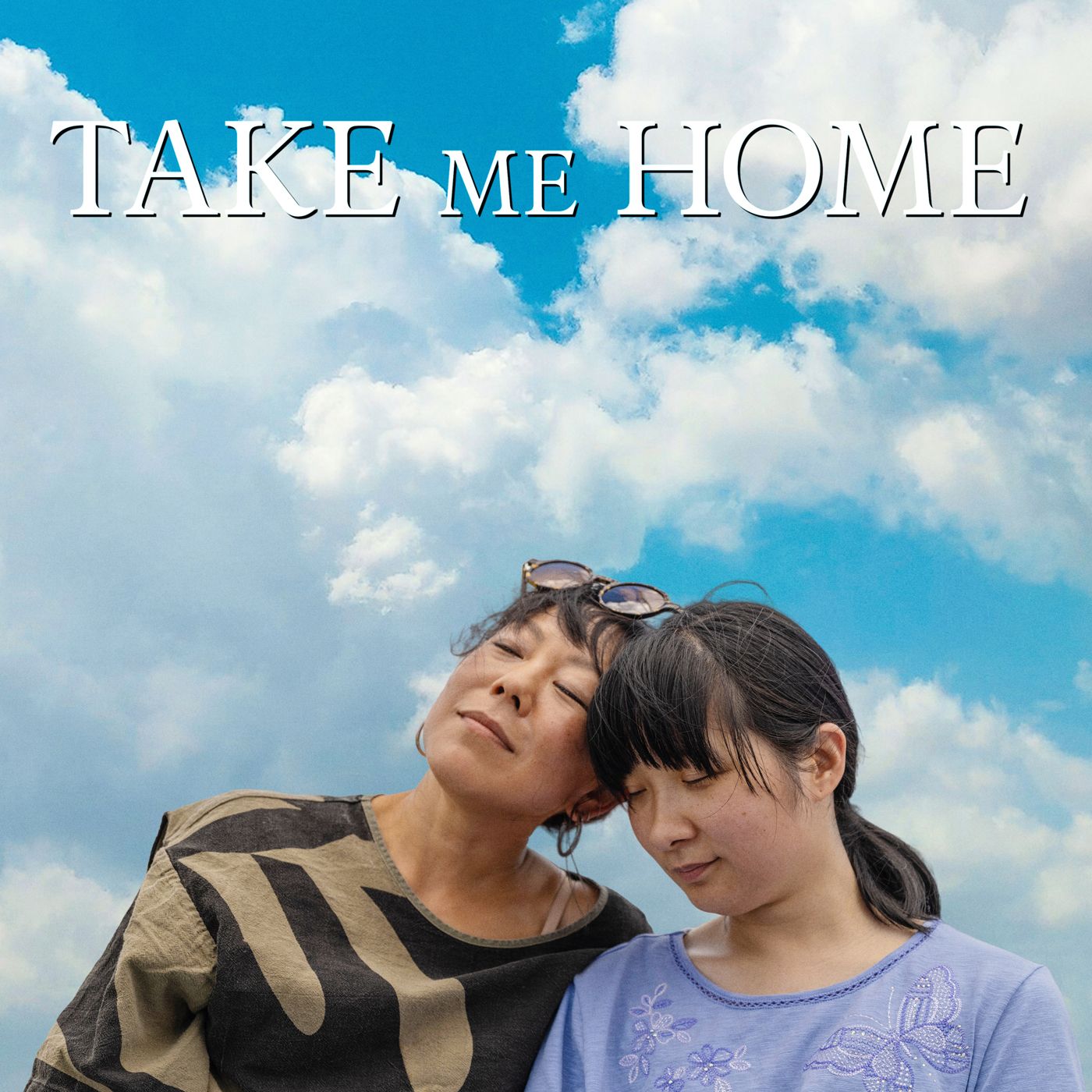
About this episode
Sargent traces her path from modern dance and experimental theater to a Mike Figgis-mentored short shot days before she met her biological mother in Korea. She explains how the Take Me Home short went from diary entry to Sundance and the White House, why structured improv gave Anna ownership of every line, and how Emily (Ali Ahn) and parents Bob (Victor Slezak) and Joan (Marceline Hugot) grew beyond the real family. Plus: Anna kicking her sister out of press junkets, and a Long Duk Dong pitch born mid-interview.
Learn more at takemehomefilm.com and follow @take_me_home_film and @annasargentofficial.
Transcript
Automatically generated, so expect the odd misheard name.
Hold your ears, folks. It's showtime. People pay good money to see this movie. When they go out to a theater, they want cold sodas, hot popcorn, and no monsters in the projection booth. Everyone pretend podcasting isn't boring.
Turn it off. We got to wave to the people on the boat. Hi! I want to live through Elm. Yeah, me too.
What am I going to do today, Bob? We're doing it. Watch your privates. My what? You know what I mean.
God is good. God is great. Let us thank him for this food. This was a different world, Anna. You'd be spectacular.
You know, sometimes... it's better to just forget stuff. I'm not gonna. I'm not gonna forget stuff. I want back to normal. No, it's too hard.
It's futile. Oh, Hannah. I'm smelly? Yes. Smell me.
Now you smell you. Wow. Definitely worse. Tell me the year again. June.
June. This one? Yeah. You're going to have to do these things by yourself soon. Everything's changing.
Change can be cool, all right? My dad's changing wheels. There is one thing you can do if someone is unable to care for someone. She wouldn't understand what's happening. Why don't you leave us alone?
I'm not in need of this. I'm not in need of you! You know what? I'm warning. Anna?
We can dream about the Caribbean, Anna. Cool. Welcome to The Projection Booth. I'm your host, Mike White. My guest today is director Liz Sargent, whose feature, Take Me Home, grew out of a Sundance-selected short and stars her own sister, Anna Sargent, as a disabled woman navigating her family's aging caregivers, told entirely from Anna's point of view rather than the people around her.
Take Me Home opens in New York on September 23rd, before expanding to Los Angeles and beyond. Visit willa.org for more information and to find out where the movie is playing near you. I had a great time talking with Liz, and I hope you have a great time listening. Enjoy. How did you get involved in show business?
What made you want to be a director? You know what? I studied modern dance and did experimental theater in New York. And in high school, I loved theater, but I was a really bad actor, so I couldn't get into that. So filmmaking, I never thought of, but I was doing this esoteric work in downtown Manhattan, and I was growing older and thinking about my family and having these bigger sort of existential crises about what the future held for all of us.
And I realized that the stories I wanted to tell were like very intimate and human and that the form I needed to tell them in the only way I could really tell them was in the film. And you just said, okay, I'm going to buy a camera. Let's go. Or was there a little bit more to it? Yeah.
I wish it was that easy. You know what? I had no idea how to get into film. So I, what actually happened is, I met my now husband who is a filmmaker and I was trying to make dance films or something. And we started just, he was trying to teach me about film and figure out like where my voice was to support me.
And actually one of our early dates was that we went to see tree of life and we stayed up all night talking about it. And we went to see it three times in one week and couldn't stop talking about it. And it, blew my mind because in a way I grew up in the Midwest and grew up on John Hughes movies and like Uncle Buck. And listen, I love those movies still, but Malick was just captured something in me that was just incredible and changed me. That was the entry.
And he just saw me as someone who could create, who could, was like creative and could find solutions, and I feel like filmmaking is a problem-solving job, actually. So he let me be an art director, and then I was a production manager for an indie low-budget film that was like 10 locations, like a dead deer, kids, a car crash, and I was like the only person in the production office, and I just almost died. and had nightmares about it for months afterwards, but somehow survived. And that's the sickness of filmmaking is that somehow you go through the most horrific experience and you come out and you want more and you think you can do it again. That was my entrance, actually. You know what?
The other thing is that I didn't come from money. I didn't have a lot of resources. And so the first thing I was always trying to figure out what short film or what I would make that I would use all my favors and all my resources with probably only a couple thousand dollars I could even pull together on the waitress's salary in New York. But my husband sent me this random email for a competition by Ritz-Carlton and Hearst for a two-hander in a hotel anywhere in the world. And it happened to be at the same time that I had just made contact with my biological mother.
And I was looking to media and I felt such anxiety. And all I could see in media were these cheesy, emotional, resolved relationships where people suddenly feel whole. And I just felt total anxiety and had no idea how. what to say to this woman who I was in her body would be the first person I would ever meet who would be the same as me. And so I took all of that emotion and tension and wrote a two-hander. And somehow I won this competition and I got to shoot it in the Ritz-Carlton in Hong Kong.
Mike Figgis was my mentor. RSA Hong Kong was my production team. And then Immediately after doing that film, I went to Korea and met my biological mother for the first time and then went into the edit. And so I think something about that is it is a bit of a time capsule of that moment and that experience. And it was written through so many words and letters that I wrote with my mother and experiences that I had.
And I think I just realized that There was something, the way I wanted to work was a bit of a sort of meta cathartic process that becomes a time capsule. That's how I got into film. It was a very wild, intense experience, but I feel like I just throw myself into life and I try to learn as fast as I can. How similar was that meeting with your mom to the movie that you had just made? It was obviously very different, but I think there was like the emotions and the tension that were captured existed there.
The movie that I made was it was only for a two hander in a hotel room. So the premise was this American woman meets her biological mother for the first time without a translator in the room. And what would they and what would it feel like in this moment? And so I think that tension did exist when I met my mother, of course. The irony is like my husband has a photo of my mother and I standing across from each other, just like in awkward tension, in silhouette against a window, which is the exact image that we have from the film.
I think in some ways it's very similar. What do we remember? The details. Of an experience or just like the emotions of it. So in that way, it's the same.
From what I understand, take me home was a short before it became a feature. Can you talk about where the idea for the short came from and then how it metamorphosed into a feature film? The short film came out of the feeling of. Fear. For the future for my sister who is disabled and my parents who were aging out of caregiving for her and this question of how i could be a creative person like where my responsibilities were to my family and where my own dreams live and so the short film just captured that little transition moment of being unsure of what the future held.
And also it was an experiment and an understanding in the writing process of capturing my sister's voice as a protagonist and not mine. I think there's so many stories out there, especially in mainstream, that don't actually center the disabled character. They're so often about the sibling burden or the sibling love story or the parental burden. And to me in this situation, the person getting screwed the most is Anna, is my sister. And so I really wanted to capture her voice.
And part of making that short was trying to figure out how to give her ownership of her performance. Because I also feel so much that kids and many people with cognitive disabilities in films, are not great actors because of the way that we make film. You can tell that they don't have ownership over their performance. You can tell that they're parrots or they're directed just physically. And what I wanted to do was make sure that Anna felt like really like grounded and every word that came out of her mouth felt like she owned it and was clear.
And so it was amazing because that film was an experiment and, in a diary entry and somehow it premiered at Sundance, which blew my mind, and then went on to 50 film festivals afterwards and was used at the White House to celebrate the 25th anniversary of the Olmstead Act. And I had no idea that it would resonate like that, that people would be so just mesmerized by Anna and that this experience that felt so lonely was so universal. And so I just felt like to me, it was obvious there was an audience. Cause there's no reason for this little film to do so well. And I pushed it to be a feature and it was surprising that it was still so hard to get backers for a film because it's still a small film, but I knew, I know that there's a huge audience.
There's 130 million caregivers in this country. Caregiving is something that we will all be lucky enough to experience. And it's just something that we don't really talk about. It's a quiet audience, but it's there. And there's a history of disabled disability films making a lot of money.
So I knew and pushed forward, but the, I was lucky because the people who got on board really got it. And there were no questions. They always knew that like Anna would be the star and they always knew there was an audience that And so in that sense, it became easy for the film to grow into itself. I love that you're actually working with your sister and that it's not just some actor who is trying to portray that, that there is that realness to it. And you can feel that in every frame.
If a different actor was to play that character, I would have changed the entire script. The script is written for her character. and her as a dimensional human being in the language that I know she speaks. And yeah, her whole character is within that. But also because I think I went to school for modern dance, and the kind of modern dance that I did, I was always interested in people's bodies, their real bodies and their real potential in their body and creating movement that felt organic to them. I never wanted someone to imitate or And so I feel like that's what I'm trying to do within the film.
So even though these actors are playing a version of me and my parents, they brought a lot to the characters and they shifted and changed. And Anna also did that within each scene. We did everything on a structured improv and it was always just, does she feel honest? Does she feel real? We gave her a sense of what the scene and the objectives were.
And then it just built and unfolded and became its own thing. And so in a way, it's a lot of trust in the actors and the humans. And I think if they feel honest in this day of AI, people are going to love them because we are actually craving humanity and interactions, right? And real conversations. I know you can't necessarily speak for your sister, but you've been around her so much.
And I'm curious, what was her reaction to seeing herself on screen for the short and then seeing the feature. Anna loves herself. She is very confident and she's actually a distraction in the room because she loves herself. And she's laughing at parts where she's better, like actually a lot of conflict. She's just so excited that the character is fighting for things or whatever.
So she's, I think she's mesmerized by her own performance. What's awesome is to see her. We went to Sundance. We're like doing press together. She's on the stage.
She's talking in the microphone. And she is so confident. And she just, you can tell she owns, she knows she owns the room. And we felt that on set too. In press, she kicks me out all the time.
It's like, I have to fight to be in the room. Literally, there's clips where she's like, oh, tell her to leave. And then I try to manipulate it. And I'm like, talking to the reporter, I'm like, can you tell her that maybe I could be helpful in this situation? And then Anna will whisper to them and be like, she won't.
Tell her to leave. It's like, she doesn't need me. And that's what's awesome. She doesn't need me. If there's enough people around her to help her in whatever way, like, Yeah, she's totally confident.
It's awesome. Well, speaking of seeing this with an audience, when is the first time you get to see the feature film with an audience? We did Sundance. We did Berlin. We did Tribeca.
So it's been incredible to see that range of audiences and to see that there's an entry point for so many people. And then we have our theatrical September 23rd in New York. And then we go to LA and across the country. We're just going to slowly roll out. So yeah, we just did a preview screening in Florida at Bonnet Springs where the end of the film is shot.
And people drove out like an hour, two hours to see it. And some people just saw the flyer and they saw it and they were like, I just read a little bit about it. And I was like, I have to go see that. And so I'm really excited to see new people that I don't even know have this experience and share this very, very personal story and how it resonates true to them. It's a very eerie and powerful experience.
I love that you're using your own personal experiences to fuel all of these creative ventures. Are you ever going to run out of things to talk about, though? I always say I'm going to do some really silly rom-com, you know, once I'm like totally healed. But no, I think I just feed on these stories because it's my way of processing the world. I think I'm realizing that a lot of my stories, I don't want to create a villain.
It's so much about the systems in the world around us or misunderstandings that are the conflict that are actually happening. And so I I don't know. I'm always going to process things from the inside out, even if I'm also writing a script for someone, someone's life story. And there's a lot of sensational things that happened to him, but I'm always going to start from the human perspective and from love and injustice to that character. I wish I would love to just make some slapstick comedy about Truly, I would love that.
I think I love those movies. I need those movies. The new John Hughes. I would love to do that. I would.
Maybe you could treat the Asian characters a little bit better, though. It'll be the same movie from the Asian characters' perspective, right? Oh, that's brilliant. Yes, there you go. Long duck dong.
Oh my gosh, that's so good. That really is good. I can't wait to come back. I'm going to make sure I tell you first when that gets screenlit. You have your next project already in mind, apart from the Long Duck Dong story?
Listen, I'm not kidding. I'm going to pitch that. I do. The next thing I want to unravel is sort of the adoptee reunion experience. I feel like that hasn't been done justice.
I think it's a really complicated identity story, and it's not just about this dramatic reunion. But I want it to fall into a slow burn thriller because I think there's also that tension that exists within the search and the identity things of what it uncovers about you of nature and nurture. And so I'm excited to dive into that. Yeah. And then Long Duck Dong.
Wouldn't it be amazing to just flip-flop between things like that? It's like a Soderbergh thing. One for the studio, one for me kind of thing. You're my new manager. The whole thing with adoption, yeah, that's fascinating.
I've got some friends that I grew up with who were adopted. And one of them was having so many health issues and then had to go on that quest to find her birth mother to see what her medical history was. Because it's, yeah, it's a mystery. She had no idea what... anything at all about her birth mother. So it was quite an ordeal to find that information.
So yeah, a mystery around that. It's definitely very appropriate. Adopting narratives are used all the time, right? And caregiving and disability narratives as well. They're such sensational plot points, but I feel when they're done really well, there's so much more depth and complexity within them.
So investing in that kind of storytelling is when we know that it's already going to work narratively seems obvious to me. Yeah. And having it from Anna's perspective, rather than it just being, yeah, the hero sister, the hero mother, the hero father, it was so refreshing and so touching. And it just was such an emotional film. That's why I was asking about seeing this with an audience.
Cause I imagine they're laughing one minute and they're in tears the next. Yeah, it's awesome that we could get that range. And I credit that to Anna and her incredible sense of timing, comedic timing that she also proves like when she's on the stage and interacting with people. It means a lot to me to be able to share that emotional roller coaster and to also have captured the love and not make it a poverty disability porn, right? So that was like the biggest challenge, just keeping it really grounded in humanity the entire time.
Yeah, I don't know what the experience is. I'm very, the filmmaking process is hard. So I'm very disconnected with it sometimes, just trying to get through the mass of the work. But it means the most to me to have real conversations like this. And it's the only way I can get through this machine.
And the only way that it's my compass through making things. So it's like, I don't know how I'll make Long Dok Dong the movie. There's got to be like something deeper and more righteous about it, which I guess is doing it from his perspective and the Asian American community behind it. Otherwise, this can be a very soulless experience. very performative and i feel like i'm just trying to hold on to my own humanity through it too yeah. And i know it can't be easy because i'm sure there's a lot of oh no cut this corner and oh you should change this and all of the the people that have better ideas than you do about your own story.
But also then the people who love it so much who get it and bring themselves into it even the props master who brought in things from her own home or or the executive producers who fight to shape and give you money and space to have the certain kind of support that you know is going to inform the entire process. I've met some of the greatest people of my life through this and some of the worst, but it's nice to know I've got a better sense of what that looks like. Liz, is there a good place for people to keep up with you and the film? Probably Instagram or TakeMeHomeFilm with a bunch of underscores and TakeMeHomeFilm.com. But I would say what you should do is follow Anna Sargent Official because there are some really great, great outtakes and moments from this big journey.
And Anna's the best. All I want to do is have people fall in love with Anna. She's just really is my favorite person in the world. And she's really developed so many fans, which is the most awesome experience for me. Liz, thank you so much for your time.
This was so nice talking with you. Thank you. You too. You feel really good and grounded and real. Thank you for having me.
Take a look over me I'm a morning every man They don't tell me nothing So I find out all I can There's a fire that's been burning Right outside my door I can't see but I feel it I'd help to keep me warm So why, I don't mind No, why, I don't mind It seems so long I've been waiting Still don't know what for There's no point in escaping I don't worry anymore I can come out to find you I don't like to go outside They can turn off my feelings Like they're turning off the light No, I, I don't want to. He's a tough man. No, I, I don't mind Oh, I, I don't. Mind No. Cause I don't.
Remember Tell me, tell me I don't remember.


