
About this episode
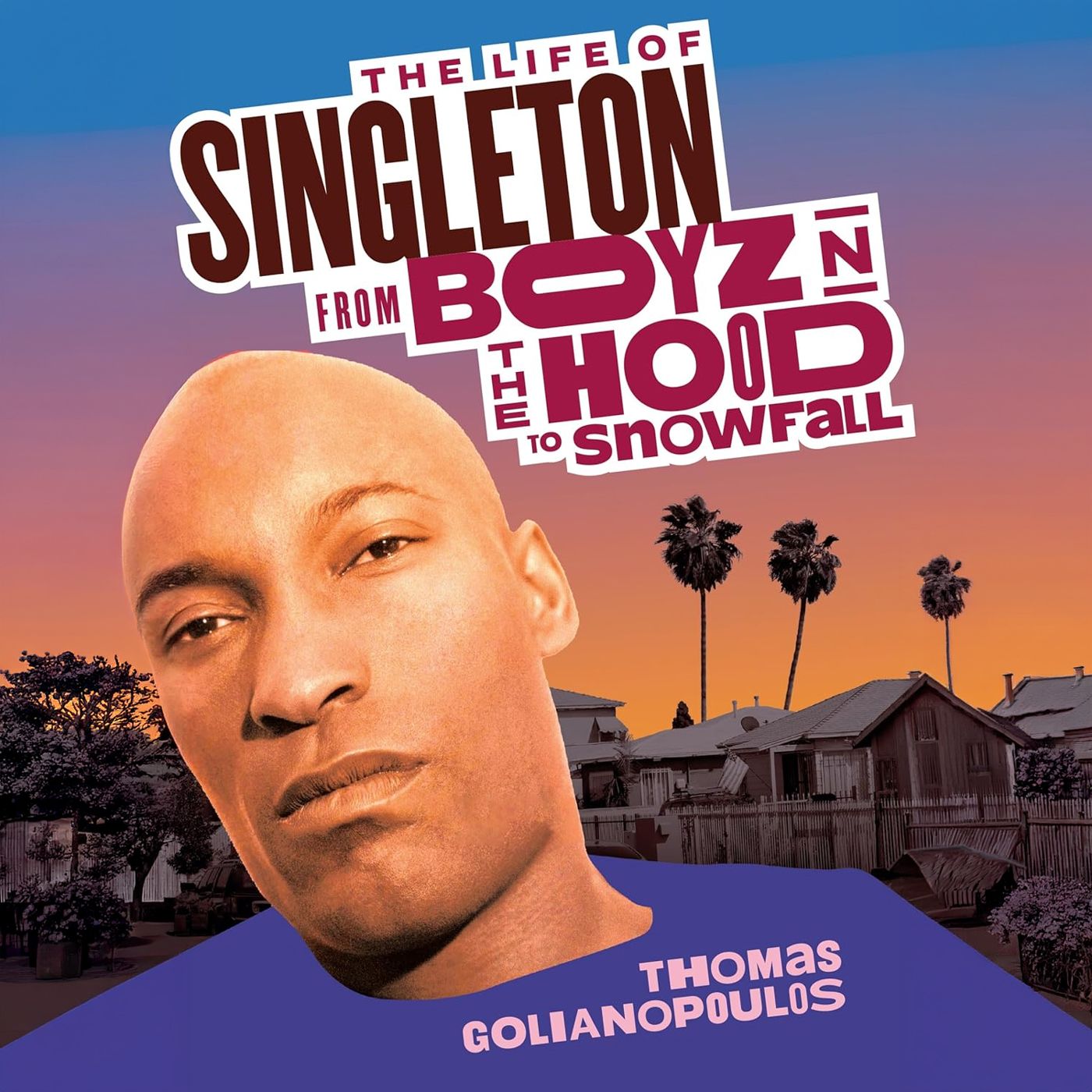
The Life of Singleton: From Boyz N the Hood to Snowfall by journalist Thomas Golianopoulos draws on nearly 400 original interviews to document Singleton's full arc — his years as a driven film student at USC, his rapid ascent in Hollywood, his complicated personal life, and his final years. Published by Andscape Books in 2025, the biography traces how Singleton's commitment to putting authentic Black stories on screen shaped an industry and inspired generations of filmmakers. Mike talks with Golianopoulos about his four years reporting the book and the life of Hollywood's first self-proclaimed hip-hop director.
Transcript
Automatically generated, so expect the odd misheard name.
Oh is, folks, it's showtime. People say good money to see this movie. When they go out to a theater. They want clothed, soda, popcorn in no monsters. In the Projection Booth, everyone pretend podcasting isn't boring.
Got it off? Hey, folks, Welcome to a special episode of The Projection Booth. I'm your host, Mike White. On this episode, I am talking with author Thomas Scuoleonoplis all about his new book, The Life of Singleton From Boys in the Hood to Snowfall. From the title, you can probably guess that this is a biography of John Singleton, the director who left us far too early.
Had a very interesting career, started off super strong with Boys in the Hood and made a bunch of other films that some people love, some people didn't really like. I remember really liking Rosewood. Had a great time with that one. Had a great time talking with mister Golianopolis, and I hope you enjoy this interview. Definitely pick up The Life of Singleton at a bookstore near you.
What's your journey when it comes to being a writer. I initially wanted to be a teacher, and then I did one day of student teaching, and I realized that it was not for me. I went straight to my college advisor at NYU, and I immediately told him to turn my education major into a minor and turn my journalism minor into a major. Doing so knowing that I was going to it was going to make me stay in college for another six to twelve months, but I did not care. So from there it was just the typical path, writing for the school paper, taking a lot of journalism classes.
I had one or two that really stood out. There was a sports journalism class that I enjoyed tremendously. I loved the whole reporting process was always my favorite part of the gig. And from there it's just the normal career path. Internship, the senior year of college, fifty year of college, and then from there just freelancing.
And I got my first job less than a year after graduation. I got a job at The Source magazine, which was the Bible of hip hop, the most influential rap magazine of all time. I was there for a few years, and you know what they say, it's unless it's like your dream job, you got a jet after two years, and that's what I did, and I went freelancing, and that was about twenty years ago. Writing ever since. What kind of stuff do you like to write about?
Mostly it's always changed. At the beginning, it was funny, like my first like feature article I wrote for The Source, which is again it's a hip hop magazine, but it was the hip of the magazine of hip hop music, culture and politics. And like the first feature article I wrote was like about Cuba, Like in two thousand and two, there was like rumors about was it going to reopen or not? And for some reason they assigned that to me. But I'm always pretty pretty diverse.
I started mostly with rap rap stories, like rap features, and after a few years I wanted to branch out. I started doing a little more sports. When I first quit The Source and I went freelance, I wrote for a few men's magazines and writing about Hollywood. Writing about the arts sports always was like huge for me, and it eventually turned into doing more deeply reported pieces where I worked on like true crime stories. I always enjoyed doing diverse stuff, probably to the detriment of my career.
Maybe we've been better if I was had a beat, if I was hyper focused on one area, if I was like the guy writing about I don't know, Atlanta rap or the guy who wrote about the sabermetrics in baseball I don't know. But I couldn't really focus on one thing. That's what wade the book difficult because it was like, man, this is like the only thing I'm doing for three years, four years. But I always I was always a generalist, like I would be working on over ten years ago. I had three different features at the same time, and one was like a wrestling story.
One was a story about an actor who like basically that was Ron Luster, the guy from Varsity Blues Billy Bob, who like lost four hundred pounds and he says it killed his career. And I was doing like a like a basketball story. So I was like juggling like three totally different stories at the same time. But I have a lot of interests, So what is your history? Was John Siggleton?
When was the first time you saw one of his films? The first time I saw one of his films, obviously, was Boys in the Hood. I was actually in Greece that summer and I missed it in theaters and I saw it either in pay per view or on Blockbuster Video. I can't remember. I was like twelve when it came out, and ice Cube was my favorite rapper like at that time, like ice Cube and Q Tip, I'm a trip cold Quest.
So as soon as I saw the trailer and I saw ice Cube in it, I like my twelve year old mine was like, I need to see this movie. So I followed Singleton through his entire career. I definitely I love Boys in the Hood and I because he was so young, and it made me kind of rude for him, like I wanted his other movies to do Well, to do to be to be good and do well. I interviewed him, it was like I was mentioned before, like when I left the Source and I went freelance, I was like one of my first big features when I went freelance was I pitched an oral history of Boys in the Hood to King Magazine, which is was a men's magazine that I wrote for and eventually worked for, and it was a fifteen year university so that I would put it at two thousand and six.
And it was funny because I remember pitching it like the first week of the new year, starting one of those like starting the year strong things, and I pitched that and I worked on that. It's funny. It's like the NCAA tournaments starting soon. And I remember working on that like in like March April two thousand and six, and I interviewed basically like everybody from the cast save for Fishburne and Angela Bassett, and I spoke to Singleton. He was the last interview of the for the piece.
It was pretty funny, like we were like holding it just for him, and he calls me up on my landline, which will tell you how long ago this was not even hello. Like the first thing he says is, man, my publicist told me I had to do this and I should do this. I'm sick of talking about boys in the hood of fifteen years deep. Now I've made like X amount of movies. I'm a veteran.
I got twenty minutes, let's go, and we ended up speaking for over an hour. At the end of the call, he gave me his email address. He was like, hit me up when you need like a quote or whatever, and I did so over the couple the next couple of years, like three or four times. I think two or three times he answered back. I never met him, but interviewed him a few times, and I was definitely a fan of his work.
So what brought about this book other than obviously the anniversary is happening. You've got an affection for this film. But what made you say, listen, I am going to stop freelancing for a while and just dedicate all my time to this. During the summer of twenty twenty, I had written going back even further. In two thousand and seven a King I had written a feature article, an investigative piece on Lloyd Avery two who is the Blood who Shoots Ricky?
And it germinated from the Singleton interview for the fifteen year aniversary of Boys, where I asked him at the end of our conversation, what's the one thing you want people to take away from your movie? And he was like that they're young black men who were in that movie who are no longer with us. And he mentioned Tedji Goldberger. I believe his name is Duchi, the one who had the Pacifire. He was killed in I think ninety five.
I believe, like in like street racing stuff in Los Angeles. Then he mentioned Lloyd Avery too, and he goes, Lloyd Avery was a good guy, good kid, and he just got caught up in gang stuff and he got killed in Pelican Bay by a cell may and it was shady, and I remember looking at that line and being like, Okay, I think there's definitely more here. And I researched it and turned out he got killed by he was a born He became a born young Christian in prison, and they prison Pelican b Bea officials stuck him with a Satan worshiper as his punk mate, and the guy ended up the Saint Worshiper killed Lloyd Avery. And I wrote this investigative piece in two thousand and seven, but two thousand and seven it was in print and we were confined by the space.
It was like thirty five hundred words and we had to like sacrifice like art to get it up to thirty five hundred. It was funny. And then during COVID, my editor at the time, my editor from two thousand and seven, he was working on an online publication at the time, and he was like, hey, man, like that story doesn't really exist online anymore, Like why don't you go back and re report it? So I went back and I reported re reported the story, and again this is twenty twenty like I have. My son was less than a year old.
My daughter, luckily enough, was in a daycare that was still open at the time or pre k i should say. And I basically it was a project that would typically take me like two months. It took me like six months because I just did not have as much time to work on it. Anyway, I went back in and I re reported a lot of it, and I found out some more stuff and published the story I think in twenty twenty one. But like towards the end of my reporting, I was talking to someone who obviously there's a lot of overlap because John put him in the movie.
Like they were friends from Los Angeles. They have mutual friends and they became friends. Now speaking to one of those new mutual friends and they go, they tell me, if you're doing a reporting like this on Lloyd, like it would be well if you did a book on John. And I thought about it, and then I went back and I looked at his filmography as i'm dB, and it was like, oh wow, I already I reported the boys in the Hood thing, and that is an incredible story in itself. Around like twenty ten or so, I did a story on Tupac's acting career for Vibe, where I spoke to a lot of his co stars from Poetic Justice, it was I spoke to Singleton again for that story, and then I was like, oh, a Higher Learning, Like, okay, that's interesting.
And then wait, why does he go do Rosewood after Higher Learning? Oh? And he leaves Columbia and he goes to Warner Brothers. What was the story behind that? And then Rosewood bombs even though it's a great film, and he goes into a shaft, and oh, I remember I was.
I was in college at the time, and I remember the gossip pages, the battles between Singleton and Scott Ruden, the rumors that Singleton was quote unquote entertaining extras in his trailer, the back and forth between rudin not having a predominantly white crew, which was did not sit well with Singleton. And again I went through all his movies. I was like, Yo, every single movie, there's something interesting happening behind the scenes, let alone what's happening the finished product. So then I thought about it and I pitched it to my agent. My agent was like, that's a great idea, let's write up a proposal.
But oh, wait, wait, wait, your first time author, so your proposal has to be like love story short. I spent like three months in interviewed like twenty five people just for a proposal, because it was basically like your first time author, you need to show that you can't do this even though I've been writing. I had been writing almost twenty years at that point and done features on Boys of the Hood and Poetic, so I spent I spent a lot of time doing that, and then we got about thirty No's dead. We paused for a little bit, and six months later, after a similar book became a big hit, I was told to repitch it and we did, and we got two yeses, and I went with one of the two yeses that I thought was the better offer.
And that was like the summer of twenty twenty two from getting the idea. I remember specifically it was like the week between Christmas and New Year, because I remember being like, yo, I'm interviewing, like why am I being someone on like December twenty eighth or whatever, And then it was like seventeen months eighteen months before I got the actual deal. So I started working on it like full time, like in June twenty twenty two, which hearing that like my heart sunk a little bit because I'm like, oh my god, that was like four years ago, even though I remember it like it was yesterday. A lot of people remember Boys in the Hood, a lot of people remember Poetic Justice and Rosewood. But as his career went along, there are some blank spots for me.
Even as a film fan, I'm like, oh, yeah, I don't even remember that he did this diving into all that stuff. That's a huge amount of work trying to do research on all of these films in this guy's life. It was, but I loved it. I enjoy writing more than I did in the beginning of my career, and even like when I was just freelancing full time and it was like, all right, if you don't write, you're not going to eat. But I enjoy writing more now than I used to because it comes easier.
I feel like I'm better at it than it was a few years ago. It would be bad if I wasn't. But I really love the reporting stuff, the research and the reporting like hand in hand, like I spent in retrospective. If I do another book again, which I hope to do soon, I'll set up a different kind of research calendar. Next time, I need to do three months where I'm just doing research or four months when I'm just doing research and not interviewing, Whereas this time, I had set an unrealistic timeline for myself when it came to delivering a first draft.
So I gave myself, I think, like two months of like full time research, and I was like, all right, I'm gonna start interviewing people. So like in August and September and October of twenty twenty two, I'm like sending out twenty five interview requests a day, doing kind of like four interviews a day. And this is like pre rev pre automated transcription, So I'm transcribing those damn interviews by myself and researching at the same time, like going through newspapers dot com and like looking up everything in there, looking up every mention of rosewund and the Orlando Sentinel, say, from like nineteen ninety four until ninety eight or whatever, and doing the same thing with too Fast with the Miami Herald, just try to get any little nugget from like a gossip column.
Oh, Singleton was seen dining with some honey at three o'clock at the three am at the Della. No, just anything like that, Like I really really enjoy that. And another thing which other authors have mentioned is just like going on eBay and like ordering every single magazine that you can find, because I grew up reading those things. It was a trip. Like getting the for me was like the press run around point of justice, because you had a lot of those magazines.
From the summer ninety three, there was a Premiere magazine which was which was a vital asset. There was an article Esquire that summer. I think it was Hillary Clinton on the cover of it anyway, but it was just I love magazine. So it was such an excuse. Like even like when I was going into the thing with his relationship with Tyra Banks, like looking for every single Tyra Banks interview from ninety six, and it's, oh, there's like a one page in GQ, and I think, like Tom Hanks was Primonial Paul thirteen or whatever, so that would place it at what like ninety five, I think.
So I love the research part. So it's daunting, but I found it a lot of fun, Like you could if I didn't have that ridiculous turnaround time that I said, for myself, I can see how people get lost in. I got lost in the reporting towards the end of the of the book, where it was like I have to like hand in I guess like a third draft or a final draft, and I'm like still interviewing people like the day before, and it was like you have to stop, you have to stop. It's never enough. But I love that the research and the reporting.
It's it's fun for me. Was there a particular thing that you found that was just like the best source or like the biggest vein when it came to so much of this book as far as the research. I found the court documents on the murder of his friend from That's how I start the book, and it's informs Ricky's death and Boys in the Hood influenced in inspired I guess him writing that scene. It wasn't hard to find or anything, but just being able to have the actual documents and seeing what happened and being able to recreate that. And it was funny because I didn't start with chapter one, like for some reason I started with my draft.
I started with like the Rosewood chapters or it was like the period between higher learning and Rosewood. I think I started for some reason. I started my reporting with that stuff because one of my first sources, like big sources, it was a guy who worked with his production company at that time. So it was like, all right, let me just go off on what he's telling me and I'll talk to this person. He told me about this person, that person, this person, And it led me to that mid nineties period.
So I was like pretty scared about I'm writing the book now for a few months and I'm like, oh my god, how am I going to start the book. I looked into it and I found that stuff, and I felt like, all right, this makes this is how I should start the book. And I went to be able to do that without the documents that police report and all that stuff about his friend's murder. And how about interviews? Who is the most valuable person the interview for you?
There's twenty thirty people who were like the most valuable interviews. I spoke to some of his adult children. I spoke to some of the women who had kids with him, some of his usc people, some of his people who are friends with him, like throughout his entire life adult life. So I can't really narrow down to one person, the one that stands out to me when it's like a left field like I love. Like I grew up writing features, doing like profile work and all that, and I hated when the profiles had three secondaries and it was always like one family member, like one teammate or like collaborator if we were talking about artists and one business person.
And so that was like my thing when I was like writing profiles, I always wanted to get I call them like left field secondaries. And like my left field secondary in this book was I spoke to this rabbi who got in touch with Singleton, like at it during a tough time in his life, and I have I devoted like kind of like it's a quarter of a chapter to their relationship and to what was going on at the time. And that's something that I was like very happy about, like that I found that and I felt like it, added he answered, I feel like it like they came in contact with each other, like after Singleton got into a car accident that resulted in the death of a woman he was in charge. There was no like blood alcohol, there's no alcohol drugs in the system.
But it was tragic nonetheless, and he felt horrible about it, and he got in contact with someone recommended. Someone gave him a book that this rabbi had written, and they started. They were friends for the next like ten years or so. That was one of those leftfield secondaries that I thought was added some flavor to the book. Really, what was the most surprising thing that you found during your research?
Everybody knows that Boys in the Hood is his life story. Obviously he changed certain things about it, like what led him to living with his parents, to his dad, and like the friend group and all that. But I was surprised at how much his personal life like informed like all his other movies, like with Poetic Justice, like he took a road trip up to up to the Bay Area to film like a rap music video and it's funny, like I'm saying this now, and I'm like, did I put that in the book? I was like, I think I didn't devote as much time to that as I should have, if I even did. But like something like that and somethinghow learning, like the black students were kind of like they mirrored like his crew from USC Like they wore trench coats and like backwards baseball caps, and they the parties that they had.
They were like shot for shot, like he tried to recreate like the parties that he had in his friend's dorm room at SC And then something like Baby Boy, which going into this book, I had no idea how closely it mirrored some certain aspects of his personal life. Like obviously it wasn't like the same thing, but baby Boy was something that was almost like a palate cleanser for him coming off of Shaft, and he wanted to make it intensely admit it intensely personal and true kind of to himself. But a lot of the inter family dynamics in that movie were similar to his personal life. All his best work, I feel, was stuff that I don't say happened to him or whatever, but it's where he can put himself into it.
He wrote a few scripts that never got made, and those two kind of were in that vein, and it was better than like the work that was you know, like for higher stuff like I actually like too Fast, but Shaft, I thought was I did not enjoy that production obviously, but yeah, like his best work was the stuff that he was like invested in personally, and that was he was informed by personally I know he. Opened up a lot of doors to a lot of filmmakers. I remember, like the Hughes Brothers following fast on his heels. But what kind of struggles did he go through when it came to trying to get gigs in Hollywood? His struggles came after he was established.
He came in as the golden boy. He came in at a perfect time, Like it was pretty fratuitous how it happened that Columbia was going through this turmoil and they needed product badly, and he had connections, and he got the movie made and they left him alone. It was a whole five million dollar movie that was shooting in South Central and they left him alone. Whereas later on it became a problem, Like he had this saying where it was like if he was white, he would have had more jobs, like and he got unfairly sort I'm looking for Brandish as being like troublesome or difficult, And it was because he had opinions, and it was because he wasn't shy about sharing those opinions, and it was because he believed he knew best.
And this like every single film, like every filmmaker is difficult, Like one somebody I spoke to was like James Cameron's difficult, David Fincher's difficult, Oliver Stones difficult, Like even guys who aren't those at that status are difficult and they still get gigs. There are a few directors who crossed strays, like I forgot who said this. They were like, yo, Mick g like makes flop after flop and he still gets one hundred million dollars to do what he wants to do. I forgot if that made it into the book or not, but that was something that one of Singleton's friends told me. Yeah.
And then there was this time in the late two thousands when he didn't make a movie for a long time after Four Brothers, And that's another thing, like going into the book where I was just like, why didn't he make Why did it take six years for him like to follow up Four Brothers? Like it was incredibly profitable. It wasn't like a great movie, but made a lot of money and that's like fifty one percent of the battle, really, and why did it take him so long? And you gotta look at what was going on in the industry at that time, like they were it was the move towards ip and sequels, and they were people basically telling him, like we wanted we're going to do black movies like only like Tyler Perry style, like where it's like a three million dollar budget and you do one take and it's like a twenty one day shoot.
And so it became more difficult for him as he went on. It's funny, you'd think like in the beginning, like it would be more difficult, but it was the opposite in his case. Yeah, you would think like by that time he would have paid his dues and been able to get those jobs. Yeah, his movies were incredible, Like the only movie that wasn't profitable was Rosewood. Even the movies like it was diminishing returns on those three Columbia movies from Boys to Poetic to ire Learning still make money.
You know, Shaft for all of its production, Turmoil made money too fast, same thing Four Brothers. Like I spoke to Lorenzo debona Ventro, who's the producer in that film, and he said how Brad Gray told him like that was Paramount's most profitable movie of two thousand and five dollar for dollar. And so his movies made money, but he didn't get the kind of jobs that he thought he should have gone that he probably didn't warrant based on his track record and resume. What were the most challenging parts of this assignment other than actually getting somebody to say yes to you. The book isn't sponsored by the estate, and there are certain people know the name of his parents who you know, wouldn't talk to me and totally understand that.
I know, it's ridiculous that I like, almost arrogant that I would even asked, but as a journalist, that's kind of what you do. But working around that was difficult because there are obviously people well like he had he was very close, especially with his mom, And there are people obviously who wanted to talk to me and I if without her involvement, they had no interests because they knew how close he was with her. So it made me like work double hard, Like I wouldn't have had to interview as many people as I did if I had the approval of the estate, but I didn't, and so that made things difficult. It was always like like a dance, do I talk to this person? Do I reach out to this person because they're probably not gonna talk to me.
So it was like it added another layer of difficulty to the reporting. But that's to totally understandable, and I totally understand why they wouldn't want to speak with me. But I still think I wrote a really good book. And if you're a fan of John Singleton's work, or if you were one of the thousands of people who had weird interactions with him, like he was very out going in public. There are so many people who when I talked about getting lost in the reporting, like there are so many people who I could have reached out to that I didn't just because I just didn't have time.
But and there's so many people who are like, oh, yeah, I've talked to John one time at this place, So I talked here over there. He was very social and he everybody knew him. So this one guy I spoke to you for the piece was like called him like basically the mayor of Los Angeles, Like he could get anywhere he wanted, any any time, and bouncers would like open the velvet rope for him, like he could get it anywhere. Like it wasn't in the book just because it just didn't fit really, but like he scammed his way into the Titanic premiere. He just showed up with Chancelanna, who was one of the writers on Shaft, and it was like, we don't have a ticket.
What do you mean. It's ah, don't worry, don't worry. And he just talked to somebody and he got into the Titanic premiere in like December ninety seven. And it's funny, like you go on the get on Getty Images and you could see the. What's been the reception of the book.
So far, The people who've read it really like it. I wish more people would read it. The people close to him or I spoke to for the book, like who were primary sources, Like people who were close to John and spoke to me knowing that the estate wasn't involved. They hit me up afterwards and were like, you nailed it. You perfectly captured it, warts and all.
That's what John would have liked. He was very adamant about showing real life on camera. And I'm not speaking for someone who I just had a few phone conversations with, but people who were close to him said he would have That's what he would have wanted for a book, Like he was. I think like there he joked about like writing his memoirs one day and it was like, I'm too young, and that's super tragic when you think of it. But reception has been good, and I just want more people to read it because I think I think the people who read it really like it.
So there you go. I really enjoyed the hell out of it. So it was so thorough without being boring and still keeping it very interesting and keeping like you said, the warts and all, like he's not a hero, he's not a villain, he's just a man, and just yeah, reading about his life was just fascinating. That was like the one thing that was like in my mind the entire time was I don't know if it's actual word or term, but like readability, Like I wanted people to tear through it. It's three hundred and eighty pages, but it's like something you can read in a week and just not to get like too nerdy writer, Like I was very cognizant of where I ended certain chapters, where I ended sections inside of a chapter, like to keep you wanting to read more.
Where it's if you're like reading on the subway like I do, or on the train, you're like, oh, I need to finish this chapter before my spot before I stop, or if you're like reading in bed like other people, it's oh man, I just came to the end of the chapter, but I want to see what happens next. Let me keep reading. That was something that I purposefully, I feel like every writer does well. I was just super into it, Like how like even like down to the wording, just not leave it on a cliffhanger like dunth and Thne, but just to make you want to turn the page when you finish, either that section or that chapter. So what's next for you?
I would like to write more books. But the thing I like more than writing books is getting a paycheck every two weeks. So right now I have a full time gig. I'm the sports editor at Complex. I've been doing that since I like Labor Day of last year, so it's been like since then.
I enjoy it a lot. But in the future, I definitely want to write more books. I don't know if I want to do. I definitely I want to do like another biography, just because I feel like, I think this is a good book, but I feel like there's certain things that I've learned that I can do better next time. In all three stages.
I guess the research, the reporting, and the writing. At four, I should say the promotion, which is almost as important, if not more. But it was funny because like I started the job right when the promotion should have started, and I wasn't able to do as much as I should have or was able to. But anyway, yeah, I definitely want to write another book. And I it's funny.
My office is next to a bookstore in Manhattan, and I go in there like once every two weeks, and I just you just look around at like the nonfiction, Like I like I'm in a book club, so like I read all my fiction book club like once a month, but like otherwise I'm like reading more nonfiction. I know that's like kind of a stereotype of like middle aged guy getting into like his nonfiction. Like my next book is a book on the eighty seven stock market crash. So I love just like going through the book ailes and checking out like what's popping, what's interesting, like just trying to get inspiration, Like I have a few ideas obviously biographies, and but it's just I don't know. I do know that there are certain things I add that I did in this book that won do again if I don't know if I would want to do something again, I don't have the approval of the estate, not just because of quality, like even though obviously if I at the same time, that goes into the whole like authorized unauthorized thing where if it's authorized, it's going to be sanitized most likely, But just the stress put on me it was not pleasant and it wasn't like that external forces.
It was internal. It was it was like, why am I doing this like without someone's approval or but then at again, it's a public figure and public figures like their lives are public. Yeah, there's certain things that again, like it's mostly that mostly to do it again and improve. It's like I'm really into even though I'm like middle aged, I'm like, I'm really into I honestly not looking backwards, but just trying to get better at certain things. And like this job is very There's so many things that I hadn't done before, and I feel like it's good for my brain to try different things.
And I'm just really into that I do weird things. If I go for a run for forty minutes, I'll try to like remember like every song I listened to during my run and then like when I get back home, I'll try to chop down the names of the songs that I listened to without just like throw up an minimonic device or something. So I'm into, like I hope that don't sound weirder. I'm into like kind of improving like a machine almost, And not to say I'm trying not to use AI, but that's the thing that comes to mind. I feel like I want to get better and learn more and in writing books because I love books.
When I started my career, it was like all about magazines. And I love magazines obviously, but like magazines are dead, and I felt like I spent so many, so many years like trying to perfect something like the long form feature. I guess what it was called. You'd always like just read every single magazine, every great writer, and you can think of magazine writer. And now it's I kind of just want to get better at writing books.
It's because I enjoy it a lot, even though it's a lot of work and the payoff isn't great. Mister Gulianopolis, I had such a great time talking with you. Thank you so much for your time today. No, thank you man, I appreciate the time. I appreciate you being into the book and for your support for sure.
Woke up quick at about noon, just thought that I had to be in comptence soon. I gotta get drunk before the day begins, before my mother starts bitching about my friends about to go and damn near with blind young niggas at the path throwing up gang signs. Ran in the house and grabbed my cliff with the mac tin on the side of my hip, bail downside and pointed my weapon, just says I thought the fools kept stepping, jumped in the pot, hit the juice on my ride. I got front back inside to side. Then I let the Alpine play play mumping new shit buying w A.
It was gangster gangs at the top of the list. Then I played my old shit. It went something like this. Cruising down the street in my sixth foll jocking the bitches, slapping the horse, went to the park to get the scoop knuckleheads out there, cole shooting some hoo a car on something who can had to be a fresh alchem roller k G. He rolled down this window and he started to say it's all about making that gt me because the boys in the hood are always hard to come talking the trash.
Will boil your car, knowing nothing in life but to be legit. Don't pull me, boy, becausein said ship out of things in the place to give me the face you say, my man j D is on free base. The boy j D was a friend of mine til I caught him in my car trying to steal an aline. Take him up the street to call a truce to sell him. Mother fucker pulls out a deuced D.
You don't really know. I had a loaded twelve gauge one sep the dead La Times front page. Because the boys in the hood are always hard to come talking that trash. We'll pull your car, knowing nothing in life but to be legit. Don't poke me, boy, because iron said ship boyd as hell and I want to get illed.
So I went to a spot with my homeboy's chill. The fellows out there making that a dollar. I pulled up in my six folk dollar the breeding winter forty, and I start drinking and from the eighth ball my breath starts ticking. Let me get my girl to rock that body before I left. By here the birth party went to her how to get her out of the past.
Dumb hole says something that made me mad. She said something that I couldn't believe. So I grabbed a stupid bitch by nappy ass. We started talking. Ship wasn't you know, reached back like a pump, slapped the hole.
My father jumped up and he started to shout. So I threw a white across and knock his old last sound. Because the boys in the hood are always hard. You come talking that trash, will boil your car. Knowing nothing in life but to be legit.
Don't quote me boy, because Iron said, shit, I'm rolling any hard now under controls and wrapped the sixth phone around the telephone poem. I looked at my car and I said, old brother, I throw it in the gutter and go buy another walk in home. And I see the g ride. Now Cat is driving klo on the side as they buzzing on you. They got bulled over undercomber cop in a dark green nover.
Cat got be for resistant the rest. It's like a pig in the head for ripping his gas. Now Jan's got for doing the crime. For the fence on the board. He'll do sometime because the boys in the hood are always hard.
You come talking that trash will boil your car, knowing nothing in life, but to be legit, don't pull me boy. Because Iron said ship ship, I wouldn't to get them out, but there was no beam. The fellows go on the ride in the county jail. Two days later, in Minsible court, Kilo g on trial. Colt cut off for structing up the court, said the judge on a six years sentence.
My man didn't. But Bella came over the turning men. Kelo Jan looked up and gave the grin, yelled I'm fired. Then came Subie. The FNS came in with a submachine.
Uki only shot the bits but didn't hurt her. Both up the state for a tempted murder. And because the boys in the hood are always hard, you come talking of trash will for your car, knowing nothing in life but to be legit, don't quote me, boy. Kazin said ship, Yeah, I kicked it at last he was out the last, the fast
More from The Projection Booth



Similar episodes across the network
Matched by shared keywords.
-
Truck Turner
1 shared keyword: black cinema