
About this episode
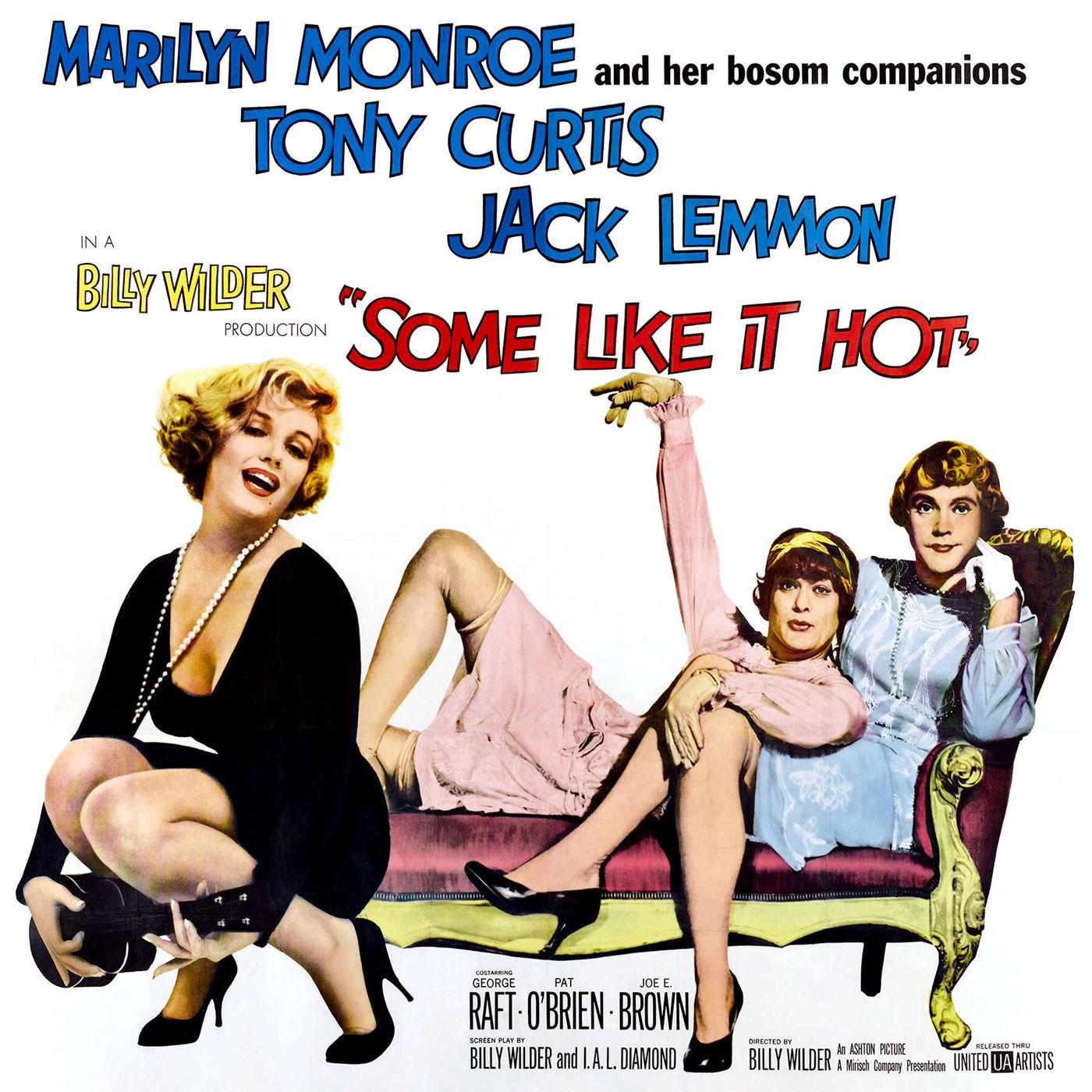
Chicago, 1929. Musicians Joe (Tony Curtis) and Jerry (Jack Lemmon) are barely scraping by when they stumble onto the St. Valentine's Day Massacre, witnessing Spats Colombo (George Raft) and his mob gun down a rival gang. With the killers on their tail, the two desperate musicians disguise themselves as women and join Sweet Sue's Society Syncopators, an all-girl band heading to Miami. Aboard the train they meet Sugar Kane Kowalczyk (Marilyn Monroe), a ukulele-playing singer with a weakness for saxophonists and a dream of marrying a millionaire.
Mike also talks with scholar Noah Isenberg — author of the Los Angeles Times bestseller We'll Always Have Casablanca and currently completing a cultural history of Some Like It Hot for Norton — about the film's origins, its enduring legacy, and what it still has to say.
Transcript
Automatically generated, so expect the odd misheard name.
The Projection Booth podcast is sponsored by Scarecrow Video. Try out scarecrows Rank by mail service. Choose from over one hundred and fifty thousand films and get Blu rays, four k's and DVDs delivered directly to your door. Visit scarecrow dot com today. Oh j is, folks, It's showtime.
People say good money to see this movie. When they go out to a theater. They want cold. Sodas, pop popcorn, and no monsters in the Projection Booth. Everyone for ten podcasting isn't boring.
Put it off? Not since Scarface so much action, not since the Marx Brothers so much comedy, not since the Seven Year Inch, so much Marilyn. The best picture this year will also be the funniest. Good Night Sugar, Good night honey. There's one thing sure, boy, never met girl like this before.
You've never laughed more at sex or a picture about it. You stay here as long as you like. Jack may have beaten Tony to the sugar, but not prolong. You're not giving yourself a chant. Don't fight it, lamb.
Welcome to the Projection Booth time your host Mike White joined me once again. Is mister Keith Gordon. Hello. Also joining us is Miss Heidi honeycut Hello. How Many Month continues with a look at Billy Wilder's nineteen fifty nine classic Some Like It Hot.
The film stars Jack Lemon and Tony Curtis as a pair of musicians who witnessed the Saint Valentine's Stay massacre and go on the lamb as women in an all girl band, where they meet Sugar Kualzik played by Marilyn Monroe. We will be spoiling this film as we talk about it, so if you don't want anything ruined about this sixty seven year old film, please turn off the podcast and come back after you've seen that. You will not regret it at all. So, Keith, when was the first time you saw Some Like It Hot? And what did you think first time?
I thought I was a kid. I think my parents showed it to me, and I think we watched it like on TV, so it was probably some terribly cut up I'm old enough that seeing a movie on TV meant commercials every ten minutes, themes taken out, you know, just awful looking print. But I thought it was hysterically funny. Of course, didn't get a lot of the subtlety that was probably ten twelve years old. It was more of the tittering it guys dressed up as women than it was getting any of the deeper stuff.
Then I saw it again later my teen years when I became a rabid film fan, and I got more of it, and I can look, it's one of those any great film every time you see it, new things, different things. And rewatching it for this there's a bunch of stuff. I thought, either I don't remember that, or that's even more interesting than I remember it, because you remember all the broad comedy. But it's wow, there's a lot of other things in this movie too. I don't know how it's played.
My six or seventh time with it, and it rose every time. And Hidi, how about yourself? I too was a child when I saw some like It hot for the first time, and I think it was also on television, and I don't know if my parents were there. My parents were not big movie people, so I did a lot of television watching by myself as a child because that's how I was raised with the television, and I always loved the movie. I always thought it was really funny.
This would have been around the time that shows like for all the young people who don't know what these shows are, shows like Three's Company and Bosom Buddies were on, and these were shows that were late seventies, early eighties and just starting to flirt with the idea of maybe there are gay people who are alive and do normal things, and wouldn't that be crazy? Or people might have sex outside of average. And so I saw this movie, which is obviously a much older film than that, like twenty years old or thirty years older than that, when I was watching these other shows, and it resonated with me that these were almost some of the same themes that you would see in nineteen eighty one, nineteen eighty two, that people would be watching in nineteen fifty nine.
And I thought that was silly and fun. And I love the movie. I've always been a Maryland fan. I love Marilyn Monroe. I think she's a brilliant actress, I really do.
And I think she's a fantastic comedian. And this film really lets her not only do that really sad, poignant thing that she can do really well in other films, but also do her comedy, which she does fantastic. So I love it for that. Yeah, I'm right there with you, guys. I think I also saw this on television for the first time.
And Heidi, I'm glad you really that you brought up Three's Company. But some Buddies, I would throw soap into that mix as well. Where Billy Crystal was I think one of the early open the gay characters. I seem to remember him going and drag a few times, but that didn't really fit with his character. Memory starts like he was just a gay man, not necessarily a transvestite or transsexual.
And yeah, Bosom Buddies was a huge deal for me. I didn't realize just how short lived that show was. I think it was only two seasons, but it felt like it was such a major part of television for so long. One thing I do remember about Bosom Buddies and Three's Company is it honestly, it always seemed a little pervy to me, like it always it was always I had that sort of nineteen eighties, that kind of porky sensibility where people are always like trying to watch each other naked or things that today would get you banned from Twitter just because it's you can't you cannot do these things, but back then it was considered comedy to look up a woman's skirt or things like that. Has a little bit of that in it.
It's a little more sophisticated than that, but there's definitely a hint of that in some like it hot as well. Oh yeah, one hundred percent. Anytime a man gets to go into the sanctorium of the woman's locker room, the woman's changing room, all of the women on the train or in the hotel rooms, it's like their eyes just bulge out of their head. So this movie, I did not know until I started doing my research that this was actually made twice before that. There were a nineteen thirty five version called Fanfare Damn Moore, which was directed by Richard Potier and starred Fernande Gravy and Julianne corrett I knew.
I didn't recognize Gravy, but corret I knew from Rules of the Game and The Grand Illusion. He's fantastic in that, and both of those he's really good in this one as well. There's a really nice restored print of it with subtitles out there. I would recommend that people check it out. No subtitles for the I think it was fifty one version fan Farende Lib so I wasn't able to watch with subs that one.
Both of those movies. It's interesting because there's not It's very similar to Bosom Buddies in that they are going and drag because of economic reasons. There's no threat of death. It isn't until Wilder and Diamond come in that they add in the whole mob element. And then it's interesting that since then remakes of this always have the danger, like there is a real need for them to dress up and drag and hide out someplace.
So very interesting twists that they gave this to the nineteen fifty nine version. And I gotta say, I mean you said, Marilyn Monroe is great. She is Tony Curtis and Jack Lemon. This was probably some of the early Jack Lemon that I saw when I was growing up as a kid. I'm sure that they were showing like the odd couple and stuff, but this one, oh my god, he is for me, He's.
The star of the show. Like I love Tony Curtis, I love Manri Lenonroe, but for me, the Jack Lemon thread is the thread that I always go back to. I just love his role, and I love how he embraces the drag, and I love that when they're talking about going in drag, it's like, ohh or Jerry and Joe, so we'll be Geraldine and Josephine. But then when he introduces himself, he goes, well, here we are. Are you two from the Pollypop agency?
Yes, we're even your girls brand new. This is our manager, mister Beanston. Are you doom? I'm sweet Suit. My name is Joseph.
I'm Daphney. He's already picked out a name. Who knows how long he's picked out that name for it. It so reminds me of Bosom Buddies, where it's that hole when they introduce each other. There's that same chemistry between those two main actors and Bosom Buddies as well, but the way they stick it to each other where they're Buffy and Hildegard is.
I still remember that scene. I just rewatched the pilot the other day, which is odd because they've replaced all the music so it's not Billy Joel. I rewatched it too, and I was like, oh my god, thank god they replaced it, because it's not nearly as good as the Billy Joel, I think. But yeah, I. Don't believe I've seen you two around here before.
No, no, you haven't. We just got in from Canada. Yes, two Canadian girls in the big city, just like Margaret Trudeau. Oh Heaven's me. I have been so rude.
I haven't introduced us. This is my sister Hilda Guardact and this. Is my sister Buffy. You look like a Buffy. I never thought so.
We are. But yeah, I just love that relationship. And I love the relationship between Lemon and Curtis because they basically become this comedy team throughout this whole movie, and you would never think Lemon and Curtis are a comedy team. I'm surprised they didn't do. I know they were in other movies together, but I'm surprised it didn't just start making a whole series of films because the chemistry that these guys have is great.
And when you think about the fact that it was this close to being Curtis and Frank Sinatra. And what a disaster that would have been. It was such a weird thing that that was who I guess it was the money people, not really so much wilder, but that Wilder was willing to go along with it, where the first idea was Frank Sinatra and it just without Lemon as a comic hub. Sinatra, I never thought it was a great actor, and certainly I never thought it was a great comic actor. And it just wow, that would have been a different movie.
Yeah, ring a ding Ding, I can. Really see this. I think it would have been a very different film. Frank Sinatra has his own charm, of course, but I don't know if it would have worked as well, but it definitely would have been I would definitely watch that movie too, when we put it that way. Talking of the mob edition and the danger that they're adding to it, these mobs are fantastic.
Having George Raft kind of later in his career coming back as Spats and his group of goons, Mike Mazerki we've talked, Yeah, he's always great. And then the real star of the show for me is Harry Wilson. Harry Wilson steals the show. Every line he has gets a huge guffall out of me. And just that voice and that face, it's just perfect.
Every time he comes in and says anything, where. Were you guys? You Harry Wilson is one of those actors that you you see him pop up throughout the years in so many other films, and usually he's playing a henchman of some kind, but sometimes he'll get another role, but he's just one of those. He's like a Maserki dead. He is the perfect henchman, and he's always henchman, Henchman number four.
And then the Secret with the thing at the end with Neemiah Pursof, which which was a sequence I'd really forgotten but as the kind of Little Napoleon. Which are seeing it again, it is like it's like something out of a David Lynch movie. That is the weirdest and in a great way weirdest sequence. This guy with this curiate and like what the whole thing. Is so bizarre and wonderful, and like it again subverts it takes all the cliches, but it also subverts it.
And it's the thing that you realize about Wilder and Diamond is that they how reallyant they were at taking a lot of tropes and cliches and things that go back to Shakespeare or whatever, but then also making them very specific and very odd and very unique to the film. There have been eight trillion man hiding in drag or men characters. But this it's everything is specific, it's not and it's never just oh, this is funny, because it's people dressing up as something that isn't what they usually are, or mobs. George Draft is allowed to be really scary, which is great. If you didn't buy him, I don't think the movie would work as well.
They actually create in this very very silly movie in a way, they create a real danger. And I love that they didn't push George Raft to come off as goofy or funny, or George Draft doing a parody of George Draft. Because to me, what makes the movie work so well is it feels really motivated. It's completely silly, but it also there is really a danger, and that makes then the whole everything that happens actually feels motivated, as opposed to some movie. So we'll just have them dress.
Up the difference between the previous films and some like it Hot. What makes someone like a Hot better in many ways as a story is that element of they are desperate, right, They're desperate for their lives. It's not just we're short on rent money or whatever, or we're opportunistic. It's literally, we're running for our lives, so if we get caught, there's a lot more at stake than just getting kicked out of the hotel or whatever. But I think it all.
He also served to placate the audience as to why would men ever willingly dress up like women unless they absolutely had to. Oh, okay, so we'll forgive them for going in drag, so we can still like these characters even though it's super gay. But I think it worked. It worked both for both both purposes. Going back to Raft, I love that he is so menacing, and yet he is also making fun of his own character.
The way that he yells. At the one guy like where'd you get that cheap trick when he's flipping the coin, and I'm like, from you, sir, for you and I think it was scarface right, or the way that he channels Jimmy Cagney at one point when he picks up a grapefruit and he's going to smash it in somebody's face. I'm just like, oh, that's great, And I love how for Also for this and for the previous episode we did about the Good Fairy. I watched one, two, three, and that's got James Cagney also doing the grapefruit gag in there too, so parroting himself so wild there was just so tuned into Hollywood tropes and everything that he could easily make these references from one movie to the other. Just even making this a remake of these other two films, I think he pulls some things from the German version, specifically, especially around the moroccas that we have later on in the film, which is probably the smartest thing I've ever seen in a movie, using these moroccas to give room for laughter, because every single line Lemon has in that scene kills.
The character dynamics of between the two guys is very much similar throughout the previous two films too, Like I feel like that really carried over also, like they took the good parts of their and there's the taller guy and the shorter guy, and they have this sort of very specific dynamic between the two of them that worked really well, and then they did it again in the German version because it worked well, and then Billy Wilder did it again. I want to also say, Edward g Robinson. They bring him into this too at the end, right, And yes, a a as like a call to like gangster films, and yeah, I just thought that was funny. What's great, and it's something I think Wilder has done in other films, but this one particularly is that he can do that stuff, but he's very smart about where it feels like winking at the audience in what way with Raff Again, I feel, yeah, he's in on the joke in the metaway, and yes he's there's the guy flipping the coin in but Raft never plays it as a joke.
It never becomes Leslie Nielsen an airplane, it never becomes I'm doing a goof on being a gangster. So he manages to carry the weight the fyl needs of motivating a whole story. And still it's very funny. But what's funny is Wilder the filmmaker winking, not the actor winking. And I think where the film picks to have the actors feel on the joke, and where the feel film has the actors be very real in their world and it's the film that's laughing.
Is really an interesting thing through the movie because I feel like Wilder and Diamond were really very specific about who knows their funny when in this movie, and I think it's really a big part of why it works so well. You know what, characters like Joey Brown always knows that he's funny and we it lets us love him, and it lets us love the relationship with him and Jack Lemmon, and it lets us go in some way he loves them to be together at the end of the movie even fifty nine, And I just feel like that's something that I felt like this time watching it. How much thought went into the actors' performances and where they're where they are very real within an upsurve situation, and where they're not.
And it seems like, yeah, if you deviated from that, you'd lose stuff all through the movie. And it felt much more deliberate. I hadn't just can you watch a movie for one of these things? You watch it much more closely, And that was one of the many details I went, Wow, Diamond, And while we were clearly seen by scene thinking about. Who is in on the joke, you know, I was keeping the audience in on the joke.
Even with things like some of the I don't know if they're necessarily double on tundras or if they just plays on words like at one point one of them is looking at Marilyn Monroe and basically they're about to say oh shit, but they just go oh sugar instead. Or the way that she's talking about how if she got caught with that flash should be out on her ukulele and using ukulele as this stand in for her ass, and even the way that they shoot her, and one of the very first shots that we have is of her ass just walking down that platform, and just the way these guys are boggling and knock. At that because she moves. That's just like jello on springs. Let's have some sort of dumpin motor or something.
I tell you, it's a whole different sex. Arlen dak Lemon's walking and he's getting not used to the skirt and the heels and he's oh, it's so drafty and you're like, oh, you mean airs going all around? You know what? What would be your vagina if you had one? Yeah?
I just it's just the they don't say it, but eventually you take the next step to where they're going. Well, and there's also a lot of like sexual word play that again I caught it, only more this time. The whole thing about getting the sweet end of the lollipop or the fluffy end of the lollipop, and I what, but the third or fourth time that is used as a metaphor, I'm like, wow, Okay, this is really it's very sexual imagery. I mean, especially the fluffy end of the lollipop. It's amazing how dense the writing is and how dense that that stuff is and all the how everything is so lear.
The other thing that really struck me this time is that every character just about at some point is lying about who they are and partaking from the very opening of the movie where the mobsters are pretending to be funeral home people, that it's not just our two guys that they've created, and it's part of wild there's wonderful comic cynicism. I think in a way is that it's not, oh, these two guys are doing this goofy thing. It's that in our world, everybody's always pretending to be something. Even sugar lies right to the oil billionaire. And so I w you.
I went to the Sheboygan School of Music or whatever. And her claimed that she was part of the faster thing and that she Yeah, everybody is misrepresenting themselves. And what's great in the film is that we don't dislike them for it, but watching the movie again, it is that's where wild theer's cynicism. Miss I thought of the movie, Oh, it's a sweet, funny movie, and seeing it's, yeah, it's sweet and funny, but it also there's a lot of people lying and a lot of relationships built on dishonesty, and it's sweet and funny until you stop and really start thinking about it, going, wait a minute, is that? And the only honest character of the whole movie seems to be Joey Bratt, who's out of his mind and completely I am who I am and oh you're a man, Okay, I don't care.
And but he's the only one who never pretends to be something else. It's almost like that last line. Even when I first saw when as a child, I always thought it meant he actually knew the whole time that he wasn't fooled and he doesn't care. He really doesn't care whether this person is a man or a woman. He really likes them, So I always took that that's why he's not surprised at the end there, which.
Is again so ahead of its time. Most filmmakers in that era would have felt a need to make Joey Brown have this reaction of oh my god. And what makes it so. Ahead of the whole film, also ahead of its time, is at the end of the day, jereman, I don't care, and you honestly believe he doesn't care, and you honestly believe it's great. You're a man, I still marry What a thing for a nineteen fifty nine movie.
How cool is that? And that's where the whole movie's been very cynical, and everybody's lying and everybody and everybody and I were sitting there going, is it really okay that Merlin Rowe and Torny Kurr is running up together when the whole thing is predicated alive and it's like this, the relationship with Jack Lebt is like, yeah, great, you guys actually are Yeah. It seems like he's falling in love with it. He feels special and loved and he's getting this great attention and security right Like, he'll love that life. Why would you marry a man even after her reveals that he's a man?
To Joey Brown, it's just you can look at either character. You can look at Joey Brown who's just like super happy and just putting along in his boat where you can look at Jack Lemon just that kind of double take, and then. I swear there's a little okay. I'm already going along. With this because it's like he you talk about the cynicism when he talks about, oh, I'll reveal to him after we get married that I'm a man, and then he'll have to pay me alimony for the rest of my life.
I'm just like, Wow, that is very cynical. And I don't think if he goes through with it that he would reveal or that he would get a divorce. He would. I think he's okay with this. He really feels like he's embracing the feminine.
It's so interesting. You've got like the parallel of Tony Curtis riding that bike, going to the yacht wearing his ear rings and forgetting his ear rings until right at the last minute. And then it's the high heels the giveaway. Jack Lemon never takes off those damn high heels. At the end, He's running around.
Great job, Jack Lemon, running in high heels, running around, pushing that wheelchair and running without it. I'm just like okay, you the one thing you forgot to do was take off those high heels. It feels like that would have been the first thing I would do. It feels like the first thing if I was coming home wearing high heels, I'd be kicking those bad boys off and then taking off the bra Their chemistry is so good. And that whole, the wise cracking one who gets the other one in trouble, the whole will put this money out a dog.
Trust me. He's some mutter, which of course brings to mind the whole Seinfeld thing of His mother is a mutter, his father is a mutter. I'm telling you it's a luck but last night exactly, this must loves the Slough clublines. His father was a mutter. His mother was a mundy.
His mother was I just say, come on, let's go, because I'm goanna call my book and dang, don't tell anybody. I love that. He just keeps getting him in trouble. But it really it's Jack Lemon who's the character of him. He comes up with the whole.
That's okay, we'll just go and drag when it comes to needing that job, because they are desperate. This is even before they get the whole mob thing. He's just so desperate for a warm coat in Chicago, which we all know is fucking freezing cold. The seaside result, which of course they used the Hotel Coronado down in Santa Barbara, California, which is nowhere near Chicago. I don't know how long it would take to that train ride would take back then, maybe like it's a five day journey or something.
I think they're saying it's in Florida for this. I think as I was watching the other two films, I was trying to picture, like how the setting of the resort changes things, or does it. So we've about the Alps in the German one, and then it's the French Riviera right in the French version, and we can talk about the other versions if we want to go there. But and in this version it's it's the seaside in Florida, and so you get scenes of people in bathing suits or versus people with a mountain in the background or changes the nature of the backdrop of the story, which I liked and found very cool. The whole thing of having go in swimsuits and I love when Sugar is this Oh you're so flat chested, everything just hangs wrong off of me.
This is my tits are just so big that everything just gets caught on them. Well, yeah, you're talking about how everybody is pretending to be something else, even Sugar like her. She changed her last name, like she says what her real last name is, it's the Polish last name, but then it's I know she's going by something else. And then yeah, to your point, Keith too, as far as pretending to be the funeral guys at the beginning, and then later on when the mob gets together, they are all pretending to be opera fans. Well, Spat's Colombo.
If I have a sowing. Hello Kappa that brings you down a Florida. Oh, I heard you. Opera lovers are having a little rally, so I thought i'd better be around in case anybody decided. To sing big joke?
Son? Still, where were you at three o'clock on Saint Valentine's Day? Me? I was at Rigoletto? What's his first name?
Where's he live? That's up for you? In Ramus? Where'd they play it in the garage on Clark Street? Clark Street?
Never heard of it? Boys? Do you know anything about any garage or any witnesses us we wastos ermies. And yet that mobster at the end that you already mentioned, yes, does very much feel like a Lynch character. And I would not be surprised that if Lynch took this, because it's Gordon Cole.
Right, we know Gordon Cole got his name from Sunset Boulevard, but Gordon Cole's hearing aid that feels like it's right from this little Polian guy who his physical actions when he's raising up his hands and everything, I swear that they're making him Mussolini reference. He just really seems to be embodying Mussolini. They're very well, maybe right, it still would have been very fresh in everybody's memories. Oh yeah, I agree, MUSLINI definitely came to mind. And I don't think that's an accident.
And how funny is it the anachronistic thing of Tony Curtis doing a Carrie Grant impersonation. Oh my god, it's just so funny, it's so brilliant. It's it's so funny that they let him do that. But that I think was great about Billy Wilders. I think he let people run with ideas.
That's if it seemed like it was working, it would he'd let it happen right where it wasn't super controlling, it seems. And I know Tony Curtis came up with that on his own. That wasn't a Billy Wilder suggestion. And it's just ooh, what if I did a Kerry Grant like And it's it always reminds me of that episode of Gilligan's Island. Did you ever see that episode where there's a beauty pageant?
Oh no, it's mary Everybody thinks Mary Anne is dying, so all the men pretend to be courting her to build her up and make her feel better. And the Professor adopts basically the same carry Grant accent that Tony Curtis is using. Mary Anne. Mary Anne, Mary Anne, just a minnie. I've got a few more, Mary Anne.
I want you to put these into a bus. I say, you've been down to the Corral too, Garral. Why, my dear, you do have a. Sense of humor. I can't help but think of one when I think of the other, and it's it's just such a way, a good way of making fun of Carrie Grant and his ridiculous, charming handsomeness of Carry Grant and that ridiculous accent that somehow worked so well and was charming and attractive anyway, even though yes, it's very silly.
Tony Curris is a genius for thinking of that that's so funny, and the fact that somebody would fall for the fact that Marilyn or her character Sugar is not going to see through that accent. She's just going to hear it and go, oh, that reminds me of Carry Grant. How fantastic. I think Carry Grant was still not even Carry Grant at this time. You're still Archibald Leitch in nineteen twenty nine when this is set.
Also the genius of setting this in nineteen twenty nine as opposed to nineteen fifty nine, you can do the whole Oh things were different back then, or yeah, they could have gotten away with this, And also just bringing in the mob stuff and making it such a famous incident with the Saint Valentine's Day massacre, or. The idea that you have all these costumes right, like it's actually a costume drama, and so the drag is another set of costumes in the costume drama. As opposed to standing out very badly in a contemporary setting. When you talk about Wilder, it's so easy to think of him as being very contemporary because so many of his themes feel like they're still with us today. It doesn't feel like you're watching something from another time.
They just feel like they are with us right now. So you watch this and you're just like, Okay, I'm not surprised about how sophisticated this comedy is. This isn't one of those things where you're looking at something sixty years old and being like, Wow, I can't get imagine they got away with that, or I don't imagine that they knew what they were talking about. It's yeah, everything seems very much on purpose. But the one thing I am shocked by that they did get away with were some of those outfits that Marilyn is wearing as the three.
You see her nipples in the yacht scene where she's they're making out, you can sue yes, and she looks fantastic. She looks amazing, and. The super low cut back of the dress and when she's running at the end where you see her butt, there's some of the most naked clothes. It's funny. There was just an article in the New York Times about this new trend of naked dresses, and there's a lot of controversy about this new thing, and I think it's not that new.
This movie, she is barely clothed, And I also think the twenties thing maybe helped a lot than that too, because they're trying to make her look like, in quotes, a flapper, which of course she didn't really look at all, but it justified a certain kind of bangley dress that barely covers her body at all, and it's sexy. She looks amazing, And I think if you get it in nineteen fifty nine, they probably would have gotten a lot more pushback on the way she was dressed. The way she was, I don't think it would have been as sheer. I don't think they would have done it. No, my god, the dress that she wears at the end when she's singing I'm Through with Love, there's just barely anything covering those nipples.
And when she's running down the dock after them after she gets off the bicycle, I'm like, wow, she is, She's moving. I see a lot of movement under that dress. Marilyn herself is obviously she's Marilyn Monroe. She's charismatic, she's on the same level as like Elvis Presley. Everybody knows her she is, but it's so easy for the mainstream, average movie watcher to dismiss her as just she's almost not a real person.
She's almost like a like a like a painting. She's a symbol. But she very much was a real person who who The reason her performances were so nuanced and fun is because she was. She was personally a mess and had men problems, and so I really always felt like when she has that phone call scene where Tony Curtis is like, oh I had to go marry the other girl or whatever, and her character's crestfallen, it's it feels like such a real moment, and you feel so bad for her, and you realize the whole movie has just been men trying to trick her into sex, that they don't give a shit about her as a person, that she's just this really beautiful woman who keeps getting manipulated. And she tells these stories about a saxophone Clayia on this until this happens.
Then the next one comes in and he does the same thing, and you just feel like this poor woman has been so abused and used emotionally and here's happening again by the hero of story is doing it to her, and I can't help but get angry sort of on behalf of her character when that happens. I know it's supposed to be a happy ending, but is it really a happy ending? Is that really a happy ending? Because he lied? And how are they what's the next what's the conversation look like when they get off the boat?
You know what I mean? That's what I want to know, is I want to know what that conversation is like. So you oh, so you're broke too, okay, and oh you lied to me? And well, and I definitely felt that this time around too, that that's where the cynicism is and other than the Joey Brown and even there it is going to be a reckoning but it won't matter with that. But I had the same feeling about Wilder's definitely pretty cynical about love, and yeah, I have the feeling that his I guess you could say, oh, they'll just end up together anyway, because now Tony Cutters had that one moment and saying you're really you're.
Wilder definitely has a real question marks about men and women and love and and he always has in his film there's always this thing of yeah, even a happy ending in any of his movies. He is sort of kind of happy until you look at all below the surface. And that's part of what's wonderful about the movies, most Hollywood comedies, certainly of its era, happy ending, we were really supposed to feel like this is just great. And I think Wilder is always working on more levels. He's always working on happy with an asterisk?
And are we happy if we're not honest with each other? Are we happy if we're living lives of pretenses? Are we? And it really struck me this time how much there was underneath the surface and what you were just talking about in terms of Marilyn's character and how tragic she is and how sad and how real again that performance is and that modulation of all this goofy silliness and then yeah, there's a couple of scenes with her where she's just heartbreaking and there's nothing funny about it, and then he'll go right back to being funny as a filmmaker. But he allows these moments where if you as an audience stop, you go, whoa, this is awful.
And that's I think what part of what makes us a great film. Like watching a little bit of the French film, it's really fun, but it's just not other layers. Nobody's pretending to be a whole other. They are pretending to be a woman at times, but when they're interacting with the women as ment, they're actually being themselves pretty much right, like they're not really lying. And the film just doesn't feel like this is about more than it is.
The Friends from This Field is like, this is about being a silly little movie about these guys rusting, whereas with Wilder, he's turned it into this movie that's you can take it on the surface, but you can go way under if you want and look very deeply into relationships, honesty, sexuality, who we are, who we pretend to be, what we're supposed to be. There's a lot in this movie, and seeing it again, I was reminded how much is in this movie and you don't have to go there if you don't want. And that's what's brilliant about him is he can make a film like this is just entertainment but I think he does it throughout his whole career. He makes a lot of movies that, you know, whether it's Sunset Boulevard or Dublin Deputy, or there's like a surface level and then there's a second level and then and you can go down as peep as you want.
And he's actually thinking and storytelling on really dark, deep levels, even in the lightest moments. What a weird director, too, Like I'm trying to think of a bad Billy Wilder movie, like a movie not that this, oh it's not my favorite, but it's actually bad. I can't think of one. And like, how many directors, even the good ones, have a movie that that had their entire filmography is actually good or above good. That's so weird, Maybe Robert Wise, I can't, I'm not.
I don't know, but like everything from Last Weekend and so varied too, right, Maybe maybe Vincent Minelli had a varied career too, but he seems to be the only one who was consistently good older. For me, doesn't get enough credit of being such a great visual stylist. You think of Sunta Boulevard is so visually striking. You look at Double Indemnity, we talked about that on this show. It's so visually striking, even things like all of the people at the typewriters and the office stuff in the apartment.
It is so well done. When I was in film school, we had to take apart the whole, like one scene from The Godfather, and I chose the murder of Salazzo at the Italian restaurant. That scene is brilliantly directed by Coppola. But then you look at something like the murder the Saint Valentine's Day murder and how those shots are put together and the way that shadow is being used, and I know he's probably playing off of a little bit of Hawks, and I think he had worked with Hawks or New Hawks. I see that as being so visually striking, and so much of this movie is visually striking, even when it's like simple stuff like Jack Lemonon maril Le Monroe laying in the same carriage and you've got those shadows going and just the framing of them.
It all looks so beautifully done. I love the way that they use feet and shoes to introduce characters. When you have a character named Spats and that becomes his trademark when he walks out of the car and you see those spats. But then we introduce our characters with their high heels. We introduce Sugar with her high heels.
We had so much stuff on the elevator where the elevator doors will open. I love too Wilder and Diamond in the way that they will bring up a joke and they'll keep playing with it throughout the whole thing. Like the whole thing of type O as the blood type like that makes probably what four appearances in this movie, and they use it in different ways and every single time, so smart. One thing I noticed visually this time, and it's a subtle little thing, but it seemed suddenly very intentional to me, And it's not a it's not a showy thing, but is how much he always frames everything with Tony Curtis and Jack Colb is a two shot, whereas often Marilyn Monroe is in a single, often in a lot of other people are off.
It's not like he doesn't use singles in the film. It's not like it's all, but those two guys are almost always shot as a team. And it's a sub a little thing. But I realized that in the movie. It's oh Wow, very rarely are they in a scene together that it isn't a two shot, which is an interesting thing about like establishing a yes, these people are part of each other, like they're two abs of the same coin, and it's not something you'd ever.
It's not showy, it's not like something you think about. But by about the twenty fifth scene where it's oh, it's again, we're just polding a two shot of the two of them. Everybody else is a single ever, I thought, oh, yeah, he's again thinking he's playing that five dimensional chess where it's not something the audience is supposed to notice. I haven't noticed it until I'm like staring at it now, going how do you shoot this? And going oh, yeah, he made a choice that these guys are always part of it.
And I think it's because they are two halves of the same whole. They're a team, and it's just interesting to realize, Yeah, he's there's everything's very deliberate. He's very good in this movie. A movie like Double Admnity or Sense of Boulevard, you're very aware of the filmmaking, You're very aware of, Oh this is very everything's thought out. But this movie has this kind of loose, relaxed, improvisational almost feel, and yet you realize it's not at all in terms of the visual grammar, and in terms of everything still is very has a reason, Like every shot has a reason.
It's done the way it's done. And I always think that's really interesting. And you see a great director hide a little bit what they're doing, but when you look close, you go, oh, it's still there. They're still making very specific choices, they're just not calling attention to them for this, for this particular movie. And yeah, the whole thing with Marilyn's Romanson.
You could be very cynical and say they're shooting her in a single just because she was struggling with things. There's all of these stories about how rough it was working with Monroe and yeah, he worked with her before and didn't really want to work with her again, but then finally embraced it. There's a TV show that I watched from the UK called I think it's called Urban Myths, and it's mostly oh, the story of this is like drunk history, but not quite. And there was an episode second season, first episode marily Monroe and Billy Wilder, It's me Sugar and whole episode twenty four minute long episode is all around one shot in some like It Hot where she knocks on the door or where she says it's me sugar and she can't get the line out, which is ironic because I heard about the part where she's looking for the bourbon bottle and that they had to keept like shooting that, and it was like, why didn't they just adr her?
But I don't know, but yeah, just all of these things. There was one commentary that I listened to where and every single time the guy could make a reference to marily Monroe and her real life, he would do it, and to the point where it's just, wow, this movie about Jack lemon and Tony Curtis is really about Marilyn Monroe. It was an interesting read, but it was just also kind of like it felt almost like they were putting such a spotlight on her that she was burning up in the light. I guess she really did have a tough time on that movie. But I think that's where so much of the nuance sad performance comes from, right, it's her.
She was actually really having a really shitty day and then she had to act that scene, and so that's thing. It came out and it was good. And oh and I love the stories about her acting coach Josberg being on. I guess she was paranoid about not making not having a good performance, and so she brought her acting coaches on the set and instead of listening to the director or she would listen to what they thought of their performance. And I guess that really pissed Billy Wilder off quite a bit, as I imagine it would, but the fact that she was so concerned about her performance, and so she sounds incredibly nervous, so we put it that way.
She sounds like a very nervous person who didn't feel didn't have good days a lot of the time. And that was the thing that Yeah, listening to some of the interviews with Lemon and Tony Curtis and what sounds like she just could even get out of her trailer a lot because she was so scared of having to go out there and do the scene. That it wasn't the problem wasn't even doing the scene, it was just even getting her onto the set. But what I was also struck by, and yes, there people can think it, but I felt like there was a lot of empathy. I felt like with certainly both Lemon and Curtis, it was like, yeah, she was having a hard time, but not and she was driving me crazy.
There was a lot of sense of she was somebody that was in pain and was struggling. It wasn't like she was being an asshole or being mean. And I do think there's a real difference in probably anywhere in life, but certainly I've experienced it working on films. There are people who are suffering and are really having a hard time, and it's very different than somebody's abusive or somebody who you know. And it sounds like she was never anything but sweet and wonderful to everybody else.
She was just really struggling, and so I think there was a willingness to work with that and put up with that because she was doing brilliant work and she was just in an awful, painful place. And I felt like the affection that people bore her felt very real when they were talking about her struggles. It didn't feel like internally they were rolling their eyes going oh god, yeah I hate her. You felt like they loved her and they just but sometimes there's nothing you can do except just try to be supportive. And be patient.
But it never came off that she wanted to be problematic. It was that she really had deep, deep struggles, and I think it's why she I think you were you can do it, Heidi, and I think it's true. It's like part of her brilliance was that she had all this stuff in her and it's part of what she was allowed to be seeing on screen. She maybe struggled to but when she finally did let it out, she's very and there's a lot there. Even in their silly scene, there's a lot of heartbreaking stuff that's going on, and I think it makes they talked about originally as characters as do Mitzy gainor and you picture somebody who again didn't have that depth, and I just think it would have been a whole different movie and nowhere near the kind of wonderfully layered movie that it is.
Yeah. No, I think it would have been way more of a straight comedy with Mitzy gaynor would there wouldn't have been that depth. Obviously, that makes sense. There is a depth to it that's so hard to quantify in any real way. It's just something you feel when you watch her on the screen.
And I think it's what made her a start. I think so many people she's a fantastically beautiful woman, and straight women love her. They love to watch her. I love to watch her. We want to straight men love her, and gay men love her, and every it's like she's she appeals to everybody in a way, even though she's so over the top and beautiful and charismatic and that everybody's still still felt it and related.
And I think that's what made her a star, really, And I don't know if she was like that in real life. I don't know if you met her in real life, if that's something that came off Maybe it did, I don't know, or if that was something that she was just really good at projecting when she was on the screen. But it worked so well that I can't imagine Mitzy Gainer in that role now that Marilyn did it. No way, no way, No offense to Mitsy Gayner. But she's got that innocence, that hurt child kind of thing that comes through her very telling speech where she talks about how stupid she is and she keeps tapping her brain, you know nothing up here kind of thing, and then she'll give us a musical number like especially the number at the end where you just feel the hurt coming through her.
She's just been dumped by the millionaire and really feels awful about everything. Her singing is enough to make Tony Curtis, who has been such a dog through so much of this movie, change his heart. He actually is the most dynamic character in this that he has this change of heart. He's like the saxophone player that will pick up. A woman whenever he needs you.
You get a little bit of that when he's going through He and Lemon are in that place where it's all of the talent booking and all of the secretaries know who he is and definitely have had a time or two with him, and that I love this kind of turn about when you get the horny bell hop who's just hitting on him constantly and you're like, okay, get a taste of your own medicine here, doll. What's the line that Jacubine says where he's complaining about getting hit on or I just got pinched. I'm not even pretty and I got pinched. He can't believe how men act like it's and it's not even I'm not even pretty, Like what are the pretty women deal with. One thing with Marilyn that I'd be very curious if any of this was added to the script.
I don't know if if Diamond and Wilder ever may changes around somebody the thing you brought up about for saying I'm not smart, I'm not smart, which is so heartbreaking, And there's on the Criterion version of this something there's a radio interview that Marylyn did with Dave Garaway sometime after this movie, and every time he says you're very smart, She's like, I'm not smart. I'm not smart. It's like almost right out of the movie, except it's not funny. And you realize that was obviously a thing for her, that she on some level wanted to be taken very seriously as an artist, but was almost afraid that people would realize that she was so smart, because clearly she was. She was doing very interesting and complicated stuff.
You don't go to those places without having a lot of naive native intelligence. But yet she was really seemed almost threatened by the idea that somebody who thinks she was smart, And I just I wondered if any of that part of the character came out of something that was her and not just something they had happened to write written beforehand. I wonder if early drafts add that, because clearly, for her it was a thing of both wanting to be taken seriously but almost being terrified of what would happen if people did realize how deep she was. The character of Sugar is almost like a cartoon version of Marilyn It's it's the same trajectory, it's the same pain, the same beautiful woman. She's just not a movie star in this story.
I heard on one's commentary is that Joey Brown is only on screen for six minutes total. Oh really, I don't know if that's true, because it feels like more. But he brings such amazing energy to the role. I wonder if Jim Carrey is going to play Joey Brown like the biopic now, because he said to look a lot like him. Oh God, yeah, yeah.
Joey Brown's rubber face. I remember him in a movie called Fireman, Save My Child. I think it was he was so good in that. He just brings this expressiveness to it and his whole thing of mama, And I'm just like, how old is your mother? If you're just this beholden to your mother, and I talked to with Mama, and she we're gonna wear her dress.
We're not built the same way. I love that ending. I know I'm jumping away ahead, but that ending. Just the quick responses that he gives, and how they have the rhythm, the rhythm of that scene. Will adopt.
I forgive you all of that stuff going. Back, have it altered? Yeah, yes, it's so great. And then nobody's perfect. One of the best lines of a movie ending ever.
I think I called mam. She was so happy, she cried, I should have our wedding gown this white lace. Yeah that's good. I can't get married in your mother's dress. But she and I we are not built the same way, So we canna have an alder.
Yeah, I know you don't. I'm good at level with you. We can't get married at all? Why not? Well, in the first place, I'm not a natural.
Quick doesn't matter. I smoke. I smoke all the time. I don't care. I have a terrible past.
For three years now, I've been living with a saxophone player. I forgive you. I can never have children. We can adopt something, But you don't understand. I'm good.
I'm a man, well, Nobody's Perfect. And the Indian remake, Oh yes, keeps that lie at the end, which seems really funny, really out of place, because right before it there's like an extended Shaw Brothers style like fight scene, but like bad version of the Shaw Brothers fight scene with all the special fight and the fight scene goes on and on. All of a sudden, there's a fight scene with people punching each other and karate chopping each other and jumping around, and it comes out of nowhere, to be honest, and then they cut straight to the end romance Nobody's Perfect, and I was like, what the hell did I just watch? This is something else. I love that that movie embraced the far so much that they actually had the whole we're running from one room to the other hallway shot thing that's like classic Scooby Doo for me, And whenever I talk about like French farce, I always think of that particular thing of running from room to room.
And they get there with this with the chase at the end, but again there's a lot more danger to it. It feels. I know, those those Indian gangsters were not to be messed around with, but just that you've got all of the stuff happening, like when they bring all of the stuff with Spats back into this film, and I love the way that that's introduced with the Tompak mirror and that's how Lemon finds out about it. It's so smart. Yeah, I really like out all of that place and that they're a witness to a second murder.
We are under the table when the bake pop's open, and I love the the did we see it all the time now with gangsters where it's just this they are gangsters, but also they're people. The whole thing of don't ruin that cake. I wanted to take my son a piece. I love those little things that they put in here. Now.
The end is really funny, and the cake scene is really cool, and the fact that they do witness the second murder is hilarious. And then pop out from under the table. I'm like, guys, stay there, this is not the time. Yeah, And just everybody else at the in the room standing or sitting around, and then you've got all the dead gangsters at the one table, and then the fact that. There's all this other stuff going on at the hotel.
There's just been a massive shooting, and everything's going on as usual as no cops coming in and out, there's no and then they're they're wheeling out the body of one of the gangsters, and then Lemon and Curtis jump out from underneath, and that gets a scream from somebody, not that there's a dead body of somebody who's just shot being wheeled through, but the two guys are under it, which again I don't think was some mistake. I think it was the game. There was some that he was much more playing with, what are people freaked out by? There's all The other thing I noticed is again the little weird detail things like even the signs in windows are really funny, like when the street scenes I wrote down, there's.
A couple of the like in the background there's a thing saying money to buy everything or something, and stuff that you just can Again, there was clearly such detail work going on. Everywhere you look. I mean there's the obvious ones like the Mozzarella funeral paller, but but if you watch those early scenes and everywhere there's like just somebody was thinking about and I assume it was Wilder or the directions he gave his art department. Everything is giving you Froze frame it you could find something funny or odd or weird or not quite real life and not supposed to be real life in the frame, which I love that funeral parlor. I don't think that's Paul Freese as the mister Mozzarella the funerals on her.
Definitely his voice. Yeah, that was great to hear him. And I'm curious what you guys think as far as Tony Curtis's voice whenever he does the Geraldine. Yeah, it's Paul Freeze. I mean it's very recognizable.
Curtis claims it was a mix of Paul Freese and himself. Wait wait, Paul Freese did Geraldine's voice. Oh yeah, well you're kidding me. Oh yeah, no, it's actually credited. I think in places I've never heard that before life.
I've never heard of that either. Yeah. No, the high pitched voice. Yeah, oh thought, yeah that one. Yeah that's Paul.
That's Paul Freeze. Now, Tony Curtis says it's Paul Freeze mixed with me in the pix, the youth comb of both. I hear Paul. It's one of the actually one of the only things that bugs me in the whole movie is I hear Paul Freeze like basically almost the whole time. It doesn't.
The rhythms are much more Paul Freeze to me than they are Tony Curtis. I would I'd be curious how much of Tony Curtis's was actually mixed in. Also, at that time, sound mixing was nowhere near or is sophisticated. So the idea that they blended the two voices is, yeah, they might have grabbed a line here and there that was Tony Curtis. But that's insane.
I mean, I feel like I should have known that, and I had no idea. I just assumed that was Tony Curtis. Wasn't that Tony's voice was just not just didn't wasn't good. Didn't work, Yeah, he said in an interview, he said, I he said he just couldn't do the falsetto really well. He said, it just wouldn't.
It didn't come out right. And he says, so they had to, we had to come up with something, and then they got this. He said, they got this great voice actor. I don't remember his name, but they got this great guy and then he did a lot of it and they took some of mine and they mixed that in, and you could see he was a little defensive about it. But I actually admired the fact that he didn't.
He did acknowledge it. He did acknowledge that he couldn't get the falsetto to work quite right. I don't know. For whatever reason, I think I recognized Paul Freeze because he was also a voice in every cartoon when I was a kid. Yes, I had gotten to know his voice really well.
And the mansion. Yeah, when Hinge's creak in doorless chambers and strange and frightening sounds echo through the halls, whenever candlelights flicker, where the air is deathly still, that is the time when ghosts are present, practicing their terror with ghoulish delight. It's one of the only things that the film's always bugs me from when I was a little kid, because, oh, that's not twenty Curtis. That's that guy I hear all the time. And then as a grown up it goes, oh, that's all Freeze because the rhythms are just slightly different.
I'm never gonna be able to unhear that now, Like no, but it's good I should if it Paul Freeze deserves the credit, you know, Like, I'm really glad I found out, and all the listeners just found out. Probably in all the stuff. That I was listening to and reading about, I did not read that. But yeah, I'm seeing a story right now all about it. So I'm just like, oh, okay, great, that's that's wild.
I just did not know that I. Heard his voice for the Funeral Parlor Director, because yeah, it's very we did all the so many ranking and Bess specials and Rocky and Bullwinkle and yeah, I grew up with him in my ear as well. So just okay, I did not hear that for Josephine. That is wild. And it's so funny because Curtis.
I knew Curtis more from when I was growing up and it was older Tony Curtis, and I honestly thought for so long that he was gay just because of like the I think it was probably the hair piece, the very obvious hair piece he would wear, and he was just very fae sometimes. Yeah. But in there was like the controversial line and Spartacus and stuff all about the snails. Do you eat oysters? When I have the Master?
Do you eat snails. No, Master, do you consider the eating of oysters to be modeled and the eating of snails to be immodel? No, Master, of course not. It is all a matter of taste, yes, Master, And taste is not the same as appetite. Therefore not a question of models.
And I was like, Oh, that's funny playing on his homosexuality or bisexuality. But he looks great, Josephine. It definitely is better in the looks department, But I think that makes it even funnier, just with the way that Daphne embraces the femininity, And because I love the whole scene, the cutting back and forth on the yacht where Marilyn is trying to help out the millionaire. He's just got that problem, he can't get it up anymore, that they're dealing with inability to gain an erection, and just really playing with that, and then cross cutting with that with Joey Brown and Jack Lemon tangoing till dawn, blindfolding the orchestra and just going back and forth the way one dips one and then one dips the other.
The music in this movie is so smart too, and that you hear the strains of that mambo coming up in other parts to kind of like remind you of that having an all girl orchestra where it's like they're all saying by the sea and things like that. I'm just like, this is really really smart, the way that the music helps really cubmit what the story's doing. I love the fact that all the versions are a musical, which is good. So the music is better, and so I like the music in the French version. I thought it was good.
But I'm more of a fan of the nineteen thirties than I am of Germany in the nineteen fifties, let me put it that way. And I found the music in the German version a little more dull, a little more restrained, and then the music in the Indian version is off the wall. I'm not sure that I understand that what happened in that film, but it's very exciting music. And Something Like a Hot has the most produced, played crafted music I think of all of them. Of course, why don't we go ahead and take a break, and we'll be back with an interview with Noah Eisenberg, who's got a new book about someone Like a Hot coming out in twenty twenty six, And we'll be back with that right after these brief messages, looking for some things superior to streaming a place with more than five times the selection available on all of the other streaming services combined.
Check out Scarecrow Videos Rent by mail service. It select from an unparalleled collection of over one hundred and fifty thousand films and get blu rays, four k's and DVDs delivered directly to your door. Get in on it now at scarecrow dot com and rediscover the wonders of physical media. No Eisenberg, I am so happy to have you back on the show. I know last time we talked, you mentioned that you're writing a book about some like a Hat, and I'm so curious.
Let's talk a little bit about that. Tell me why this film, of all films to write about. Oh, I have long been a fan of the great Billy Wilder. I edited an introduced a collection of his early journalistic writings that gave us a pandemic project. They did this with the translator Shelley Fish, and already that time I was commissioned to do this project.
I'm wrapping this one up and then I'll do a short interpretive biography of Wilder. So I as my better half calls this phase of my life. She says, these are my Wilder years, So I'm enjoying my wilder years. And some like It Hot. There are other Wilder movies that I love as well.
I'll be the first to point to Double Indemnity, or Sunset Boulevard, or even one two three, which is a really caustic comedy that I think is not known quite or appreciated quite as much as some of Wilder's other work. And we could go on and on from there, but some like It Hot just had a certain appeal for me, and I'll try to explain as best as possible why. For starters, I think that this is a film that brings us back to Wilder's early days. It's Chicago nineteen twenty nine, Berlin where he came of age by Marl Berlin. Interwar, Berlin was frequently known as Chicago on the Spray, so I think that this was a chance for Wilder to tap into some of his youthful reflexes and what he experienced during the jazz age as a young man in Berlin, attending Kind who was traveling with the Paul Whiteman Orchestra.
The broughtm of Berlin, the first place he'd spent his earlier years in Vienna. Prior to that a few years in Krakau with his family. He was born in the Sticks born today formerly Polish now I believe Ukrainian town, but anyway, at that time Polish town of of Ssucha. And so this was a chance to allow me as a I'm a film scholar, and that's I guess the way that I would if I had to id myself. That's what I do.
I'm a film a storing film scholar. But I really began in German studies and I began studying specifically that storied period between the Wars the Bayma Republic. And so this was a great opportunity to revisit some of that material and to then turn it on a reappraisal of the film itself. I among the different things that I've done in the past several years when working on this project is also to spend a good amount of time with Is Diamonds unpublished memoirs Il Diamond. While this collaborator they'd worked a couple of years prior on Love in the Afternoon, this was their second collaboration a collaboration that would extend another oh decade and a half all the way up to Buddy Buddy in the early eighties.
But Is diamonded a fascinating figure as well, and so I really felt that I want to give him his due, and so I spent a lot of time not terribly far from where you are. I guess it's all relative. But in Madison, Wisconsin, the wonderful Center for a Theater and Film Research, they have a copy of his Diamonds memoir, which I really encourage folks to read, and in preparation for the book, also interviewed Is Diamonds saw on the TV and screenwriter named Paul Diamond, and I've been in touch with him periodically over the years. Be so great that for that memoir to be published, it needs work. It's it's still a diamond in the rough, no pun intended, but I guess that works wild.
He's a big personality, no doubt. He was known for his gift of gab and his ability to offer a quip at pretty much any moment in time, and in fact, Diamond even writes about this in his memoirs. He says, a different writer and someone who's able to offer those quick get room. Diamond, who was much more of a sedentary figure. He would sit at the typewriter and bang at the keys, and Billy would pace in the room that they occupied on the Goldwing lot and really drove a number of his other collaborators to distraction, famously Raymond Chandler, but I think also the Bracket years when they ran their course.
I think Brackett, who did his best to keep up with Wilder's pace. It was hard. In the end. Diamond was a great match for him in that regard, and he was much more describe, so to speak. And another thing that was very, very important to Wilder, and this is true on someone like at Hot.
It's true of the full decade plus second half collaboration. Am I doing the math right? Yeah? Yeah, more or less decade and a half collaboration between Wilder and Diamond, and that was that. On the set, Diamond, again the sedentary one in the relationship, would sit there almost a way that is formally known as a script clerk and then later script more grandiose term script supervisor would do on set.
In the case of my other great hero or somebody at least who occupied many years of my life Edgar Gie olmerts his wife Shirley, who would serve that basically that same purpose, and in many respects this was a marriage. And I'm not talking about Shirley and Edgar. I'm talking about billion and Is Diamond, and so a big chunk of the of the book also talks about the happiest marriage in Hollywood, which is the marriage between Wilder and his Diamond. In addition, it gave me the chance to focus on the kind of sexual and social mores that are brought to bear in that film. I'm a cisgender straight guy, and so I want to be very very respectful and tread lightly and handle as gingerly as possible some of these occasionally explosive topics.
But I really I think that wilderre and Diamond handled the question of cross dressing in a very comedic vein, which is eminently appropriate for the two people involved. But I do think and my predecessor the person has really written the gold standard, I think, in terms of Wilder biographies. At Sickof, He's very good at also correcting the record, so to speak, and making it clear that the film really was radical and radical and speaking two way to a queer audience at that time, Queer before Quier was even the du jour anyway, so I wanted to focus on that. And this again brings me back to the buy My years and to Billy's experience in Berlin of the nineteen twenties, when he himself was in his twenties, there was a wonderful drag performer by the name of by Barbette.
And Barbette was the person that Billy brought in to train Tony Curtis and Jack Lemon the art of drag performance. But I felt there was incumbent upon me also to tell, just as I attempt to do with his Diamond, give him his due, and tell a fuller story about his biography, his professional career trajectory is his life in general. I do the same with Barbette, who was born Bender Klyde Broadway, born in Texas in a town called Trickham. That's the way it's pronounced. It's fittingly named tab for somebody who was a great disguise artist, just as Jack Lemon and Tony Curtis are in the movie.
And so I wanted to follow Barbette's career, and with Barbette, I need in terms of this moment where we're still I think struggling over which pronouns to use and how to use them, And with Barbette, when I'm talking about her, I'll use the she heer pronouns. And when I'm talking about vander Klight Broadway was the name given name of birth I you see him, but there is definitely some slippage, and there's plenty of slippage and slupidity in the movie, so I feel like it's true or form. But in the book, I chronicle also Barbette's career trajectory from a circus performer and trapeze artist to one of the great drag performers in Europe, somebody who casts his or in some cases when in full dress, her spell on a number of writers and intellectuals of the period, including John Cacteau, and even there's a scene in sang Du poet Blood of the Poet with Barbett and Barbette was really a groundbreaking figure the New Yorker in the late sixties, there was a writer by the name of Francis Stigmer, and there's a wonderful you can access the profile and there are a number of choice citations from Cocteau, among others, but Barbett casts his and when performing her spell on a really large swath of the Europeans, performing in Paris, in Berlin, in Amsterdam, in London.
And so I devote a section of the book to Barbette, also to Josephine Baker, who was enormously influential and one of the things that when I was working on the Casablanca book, I remember talking with Oh God, I could got to a lot of interviews for that, but this was with Andrea Assimon where he talked with me about what he called the structural absence in that movie. And he didn't mean to be overly theoretical or academic, but what he meant is that the Jews are all over the screen but nowhere in the picture, because there's so many Jews who are cast is on both sides of the camera. Actually, but I go into great detail in that book, but in this particular case, with respect to some like it Hot, the question of blackness is a real structure, structural absence.
There. There's not a black figure in the movie, but it's really it's hot. Jazz is directly comes directly from black jazz musicians and performers like Josephine Baker, who I think enormously influential in Billy Wilder's day, And whether or not he saw her performing in Berlin is unclear. It's not necessarily important, but he'd write on a black dance troupe performing in and I don't know whether it's the Chocolate Kitties or whether it was somebody else, but performing in Berlin in a piece that he wrote in the mid nineteen twenties that was simply called schrotze Girls black girls. And this is not a derogatory term.
It's simply the German term for black. When Yiddish, you'll hear sometimes that the term might be used disparagingly schwrotzey. In this case, it's just simply black coast. Given that the book came out in the wake of all of these just from George Floyd to other hideous murders, and in the days of Black Lives Matter and the raging protests and all that, my translator and I, after long heated conversations, we ultimately decided to keep that from the collection that we published at that time in twenty twenty one. I go into great detail, however, in the some like It Hot in talking about that piece and what that meant for Wilder.
So that was all very windy occupational hazard of the academic. But what I'm trying to say is that the focus tunneling in on Barbette to a certain degree, as well on Josephine Baker and other jazz performers. This gives me a chance to really take the context in which some Like It Hot is cast and take it much more seriously, not just simply forming the backdrop, not simply giving Wilder and Diamond cover as to an impetus as to why Tony Curtis and Jack Lemon would ever dream of dressing up in women's clothing q que the Satan Valentine's State massacre, though, if you're hearing for your life and that the mob might be chasing after you, that'll do it beyond that, really focusing on the period the Tori twenties, the Roaring twenties and Hot Jest.
I didn't do as many interviews for this book as I did for Casablanca, where We'll always have Casa Blanca, but the interviews that I did, I think we I mentioned that I spoke with his Diamond's son Paul Diamond, just talking about his father and the relationships that he had with Billy. I also got one of the very very last surviving cast members, one of the Society Syncopators, a woman who at that time was known as Gloria Tennis. Today she is known as Tracy Moss, and I spoke to her from her home in Palm Desert. We talked about the work that she did with the Syncopators. She was a trained jazz harpist and as I learned, and there's a piece that corroborates this from the period when they're filming in Coronado, and in fact it's a statement by Jack Lemon, the roughly half of the Syncopators were all jazz musicians at Jack Lemon credits one of them for teaching him how to simulate playing the bass.
He spoke with one of the baby that can't give you the name of that psycopaedor at this moment, but she helped anyway. In the conversation with Gloria, known at the time as Gloria Tennis, I also got to flesh out some of that aspect of being a jazz musician at the time, a female jazzman, which was not all uncommon. There were a number of touring bands. In fact, there's a scholarly study a book called Some Liked It Hot, which is all about female bands of the period. Draw it on that, and then I spoke with a couple of jazz critics and interviewed them.
I interviewed Gary Giddens, who's just magnificent on jazz, and we spoke about Paul Whiteman about the kind of this, the question of cultural appropriation. These white his name implies a little bit too much on the nose, but these orchestras taking Duke Gellington's traditioners, then showing an other big band masters who were black and not white, and taking that on the road. So whether it was Benny Goodman or whether it was Paul Whiteman or others. And we had a really good conversation about that. I wanted to handle that issue as well, with respect and read the complexity I think that it deserves.
And that was a good conversation with Ben Ratliffe. I spoke with him. He really helped me help guide mes En. Ratlift's a jazz critic for The Yorker magazine. We happen to share the same agent and I was lucky enough to get to him and have the conversation that we have.
But other than that, it's really it's not a I guess, as as full time writers might recall it, it's not a very reported book. It's not I do that. I think some two dozen or so maybe more interviews for the Casablanca book, you're really just a handful. I'm really drawing on other otherwise on extant source and somecases unpublished sources, is the case, for instance, of his Diamonds memoirs, and just try and dig deeper and deeper. And so it is tricky when you're dealing with these beloved movies.
And I love that's then the subtitle of the Casa Blanca book is Hollywood's most beloved movie. A little bit of publicity there, the work of a publicist. But when dealing with these beloved movies, of course, there's been so much inkspilled on them. So I'm used to this. When I first was a graduate student at Berkeley in the nineteen nineties and decided to write a dissertation and chose to write an addition to writing on film, and a chapter devoted to the nineteen twenty films of Golum, which had been this was the third iteration of the gold.
But I also wrote out France Kostka, and oh my god, has inc been spelled in Kofka unwalkedrough Benumin. He was a very important philosopher, critic, and tons of ink had been spoiln him. So I'm used to that. In this case, what I thought, what I would do is, and this was true of the Casablanca book to a large extent, was really to recognize and give due acknowledgment to those who came before me, but then try to put it into my own and give it my own kind of accent, my own flavor, maybe drawing to that on me to be over the little rebucket, but maybe drawing a little bit on the famously accented Billy Wilder taking his lead. So that's really what the book is about.
It ends, and that's the piece that I'm really the chapter that I'm wrapping up right now, just splashing out some sections of it before turning in the entire manuscript. And that's on the Broadway show, which is now touring and has been playing in major cities recently, I think Houston, Fayetteville, Arkansas, and I got some really interesting responses on that, and I saw it here when it was on Broadway at the Schubert back in twenty twenty three. There were previous in twenty twenty two. Opened in late twenty twenty th December. I happened to be there the night that one of the producers, none other than Mariah Carey, is there, which was fun, and have her come out and talk to the audience afterwards a bit which was as you can imagine, lots of fanfare, big surprise.
And then I went back again with my then fourteen year old who's a performer who's at the LaGuardia High School for the Performing Arts here in New York City, as well as with my wife just to see it one more time. But I focused there on the This is a topic that comes up in the past Black book as well the AFHA life enduring impact of what I would like to call the Great American sex comedy, so in that chapter's second comedy for the ages, and how it speaks, and how it's been modernized, of course by the great talents that we're involved and adapting it to the stage. In this latest iteration, of course, I go back to sugar from the nineteen seventies. Another adaptation, I go back to the very short lived and ill fated television pilot that they did, so I spend some time in some instances for the television pilot.
There's a Farsi adaptation, there's a Hindi adaptation. I go into some of these as well. For some people it'll be really nothing more than a curio and whatever, trying to be as through as I can. But in some cases, as in the stage play, the Broadway show and now traveling a show, I think it's got a lot to say to us today, especially when we refract some like it hot through a twenty first century lens and thinking about it some of the things that I think Wilder and Diamond were intimating. The latest iteration really brings to the twenty first century, and I'll see if I can render that a bit more clearly.
But in the final script note, when just after Joey Brown utters the arguably one of the famous final lines in motion picture history, Nobody's Perfect, there's a script note that says audiences may not be ready, essentially for what might occur at this scene. Essentially, this is a it's played for laughs, no doubt, but no very concrete way. It's kind of a meditation on gay marriage. A good half century before we have been talking about gay marriage, so the Broadway revival takes that much much more seriously. And it's also it's a mixed cast, which I think is fascinating.
And I think, look were while they're free to do he might have done that at the time. I don't know the kind of commercial and industrial constraints that he faced, and I don't mean to let him off the hook necessarily, but while there are in his other films, I think, for instance, of Double Indemnity, you do have, of course black characters, but they're playing the usual characters that they're consigned to. So for in this case of Blu Dublin W we've got the guys who are cleaning up at the office, and you've got the man who's I can't remember the name because Fred McMurray refers to him uses his direct address, but the guy who's gonna wash his car as a means of covering the for the murder that mcburry's about to commit, making sure that he's accounted for right at home and not actually out there committing the murder with Barbara Stanley.
I know, and I know this from while there's own writings and various comments that boy did he give for lots of interviews over the multi decade, over his multi decade career, but he was very, very taken with black culture. Again, the great talents who are involved, from the choreographer to those who adapted the who wrote the book, Matthew Lopez and oh Adriana Hicks. I think it is to Mark Shaman and Scott Whitman, who post the music and provide the lyrics respectively. They collaborate the lyrics, and Shayman wrote the music through the whole, the producers and so forth. I think they do justice to the film.
You're always going to have these sort of the impulse, the invidious comparison between that beloved movie and what's done with it. And in fact there's a I managed to get a grade. This is. Not an interview was actually in this case, it was an email exchange with Stan Brooks. I actually interviewed him for the for the Cost of blackbos Standbrooks is a writer producer who went to AFI in early nineteen eighties, and he gives me an anecdote from around nineteen eighty when he was there and Wilder came as he'd done before.
He came with Diamond before as well. Anyway, he's there on his own and somebody asks him about remakes, and Wilder says, there's so many movies that for all sorts of reasons turn out to be really just bad awful. He said, remake those, he said, leave the class to so he wasn't exactly and look the I think it's this Stephen Bogart Jet Humphrey Bogart's son, who said about if they're this is a not remaking but colorizing when there was the colorizing phase colorizing cosa blog, he says, you may as well put arms on the venus de Milo. I think Wilder felt similarly about about this. But at the same time, I really think it's a respectful and a loving tribute to the original.
And so anyway, that's now you get a sense of where my head is, because I'm just finishing up those last sections, but the book tries to cover it all. I deal with the principal cast members. So in a chapter that for now at least is called Menajatois, which is about obviously Marilyn Monroe, Tony Curtis, and Jack Lemon. I deal with all the supporting players, and as I mentioned to you, the interview with Gloria Tennis now Tracy Moss, but Glory Tennis as she was known there, the jazz harpist who has a very minor role in the syncopateis but she she's thankfully there there. She's immortalized in the photographs that were taken production stills, so I'm able to include that.
You see her on screen a few times, very very briefly. She says good night to Jack Lemon when they're on the Pullman train. That's all she says good night, and then she got there's a string of inaudible words that she makes when Tony Curtis discovers ohh women, sort of the tribute to the March Brothers when they're all in the upper berth on the Pullman train, and she says something going there drinking Manhattan's out of those little Dixie cups and she says something, but it's it's inaudible. I've listened to I've gone back and forth. But anyway, in that section and the second onund supporting players, I even deal with the most minor of characters, the waiter at Mozzarella's and at the speakeasy, the Randy porter at the seminole, Ritz who likes them, bait in sassy, all that.
I just try my best without I don't want to belabor it. That could be that would be boring, and that that would be that that's an important dictum of why himself that one should adhere to, which is never be boring. So I try, I gotta and we'll see. I'll be working with my editor and others on that. But by the idea is to to to render it with with the do complexity, but also with the levity that the movie is.
It just it moves. It's such a rapid clip and there is so much buoyancy and levity to it. The last thing I want to do is give you some ponderous academic musings on this movie. So that's that's that's something I try consciously, self consciously to avoid. But I do want to talk about some of these characters who are on the margins, and so I do that, while of course also talking about from George Raft to Joey Brown to George E.
Stone who plays tooth Pick Charlie Denia Maya Persoff, who plays Little Bonaparte to Billy Gray, who actually was best known for comedy club that he ran on North Fairfax and who according to an LA Times piece that I found just not only hilarious but also useful. Canter's delicates in just up the street from the old some to comedy Box or something along those lines, Belie Gray's Comedy Box something like that. He's been forever immortalized in a sandwich, open face chop livers. It's named after the club, which is great anyway, just digging up some of those those details that I think, are you know, they're they're salty there. There's some fun discoveries there as well.
So that's that's the spirit of the chapter that deals with all the supporting players. And then and then of course there's a chapter that deals with the whole production and mirrors company and and sort of the move towards towards the independent outfits that were beginning to take take on greater importance in the wake of the studio breakup and that sort of thing. So what did you find out during your research about Robert Thorne and Michael Logan. I can't find very much about. Them almost nothing.
There's very Michael Logan, I think there's the and I don't know whether, by the way, that was a pseudonym, because there's nothing Durin. There's something at Thurin he was. I guess Turin would have been the way that it was proounce of the time, but Thurin obret as it would have been rid of for Robert. He came to Hollywood, and he apparently was constantly getting in touch with Wilder about wanting him to take on this this the the what initially was fan Fare Darmour and then fanfarend Libe in both cases fanfares of love and and he unfortunately he died in a tragic accident before it and even went into production. So much on Robert Thurin and Low.
I just I don't know. My hunch at this point, Mike, is that it was probably a pseudonym that was not at all uncommon. People would use the pseudonym if they were otherwise occupied doing something that was whether they were journalists or whether they were who knows what journalists. In the case of Wilder' making that transition, he didn't write under pseudonym. The spelling of his course was different than bil Ie until he realized, coming to the once he arrived on these shores that that tends to be a more feminine use of the name, so he americanized it with the why.
But he was born Samuel Wilder anyway. It was his mom liked to call him Billy, apparently named after the touring show of a buffalo bill that she purportedly saw here not very far from RMB seated a Madison Square garden when she was visiting a wealthy uncle. Staying with a wealthy uncle on Madison Avenue. Anyway, I just going back. Sorry to Michael Logan.
I don't know, I tried. I even't tried. Look, I due diligence. I do a lot of work at the Deutsche kima Tik in Berlin. In fact, I've had to Berlin next Wednesday, and I did my own work, and even had a graduate student who was there trying to dig up more one summer, a doctoral student.
She offered to spend some time there because I was unsatisfied with my own research, as I did over a few days, and she would happened to be there for the summers, and the work that she did you got. I got some really interesting stuff on the original Victor Victoria, and if I'm not mistaken, I think so that was I know Schutzel who did that, but I think Turin had a hand. If I'm not mistaken, I know that Kurt Hoffmann did. He who directed the nineteen fifty one the van Farren de Libe, the West German production that to which Wilder and Diamond secured the rights and that ultimately adapted yes to a certain degree. They claimed it was that they didn't even really use the bones of that one, but they were exaggerating.
There's more to it than just that they're both thankfully they didn't. There were aspects of that production, for instance, jazz performers playing for a crowd in blackface. They weren't going to touch that good on them. There are other aspects as well that aren't coming immediately. That one, in particular is, I guess today the kids would say, is cringey aspect that he didn't.
He and Diamond didn't touch with the perobial ten football. But they did all quite a bit. There's, for instance, there's the sort of the shepherdess of her sheep as while they're referred to the woman who traveled with the tiller Girls in Vienna, a piece of he work, which I think is also very much a sort of the initial germ for some like It Hot. But there's also in Fanfares of Love Vanfarin de Libe in the Kurt Hofmann, the nineteen fifty one West German production, there's also a sort of Sweet Sue, a precursor of Sweet Sue. And then there are other ideas as well.
So yeah, I always want to give credit where credit is due, and I've seen that film a few times. It's it's no some like it hot, but it's not bad either. It's playful and German Germany, especially at that time, in the immediate wake of the horrors of the Second World we're not exactly known for comedy. I think it was Robin Way who was interviewed by the Germans ones and add the chutzpa to say, says that why do you seek that there's not so much comedy? You said you killed all the best comics?
Is what is what? Robin where said that dark gallows humor. But anyway, it's not yet, not a great movie. I'm very offend. But it did look for Hey credit for planting the seed.
And again I do think that even earlier, when Wilder hadn't yet followed the Paul Whiteman Orchestra to Berlin. In June of twenty six, while you're still working as a CUB reporter in Vienna, he covered the tour of the Tiller Girls. And the Tiller Girls I think are just again in terms of that the sort of jazz age crazes, these traveling all girl dance troops were enormously influential and really all the rage, so to speak, and so many writers and critics and intellectuals actually Sigcree crack Hour, to give you a very famous example, wrote about the Tiller Girls. He wrote this piece called this Ornamental Mass, the Mass Ornament, in which he talks about the sort of the kick row of the Tiller Girls, and anyway, I think that that's one of the early germs for some like it hot as well.
That comes directly from Billy Young, Billy b I L L I E. Then Billy Wilder never let a good story stand in the way of truth, and I think Tony Curtis embellishes a little bit when it comes to his what was that like sorting through that? I tell you good training for this assignment was writing the Edgar Omer biography, filmmaker at the Margins that you know as lutieyes Near said of Olmer, he was the great greatest liar in the history of motion pictures, or something along those lines. And she wasn't wrong. He really stretched the truth just in the most audacious of ways.
I think it was bet On Tabagia that said, this is an interesting paradox here, contradictory aspect of it was that it was actually it was the most outlandish of lies that he told actually turned out to be true speically enough. And it's the white lies that were often just yeah they were. There was mendacity through and through and wild There definitely was. What is it when the man of shot, liberty, valance, once the fact becomes legend, put the legends something. I hope I'm paraphrasing that reasonably well enough.
Wild there was such a great and in fact, one of the early profiles I did of him for the Los Angeles Review of Books years ago, twenty eleven, I think I talk about his hit when trying to summarize sort of his career, I talk about it as a recconnteur cinema. He was just a storyteller through and through. He was a writer through and through. And that's really as he told a reporter. He told a reporter from Playboy in nineteen sixty, I think it was eighty percent of any movie is the writing.
He saw himself to the bitter end as a writer, and in fact, his wonderful wife, Audrey Wilder, immortalized that on his tombstone. I'm a writer, but nobody's perfect. His wettest tombstone says he was a storyteller to the end. And look, he would, I think, be the first to admit, if it's going to get a better laugh, he'll stretch the truth as far as one one can reach. So I didn't see my role.
I didn't see it asn't coming upon me to come somehow set the record straight. That would just be again, it'd be so dull, and it would be so pedantic. It would be such a the work of the academic who needs to There's a great German term for the the best of us, so the one who knows better, and we would call it I guess I know it all in English, but anyway best of us are. That's not the way I want to approach it. So if there's a great quote from an interview that he gives in Playboy magazine in nineteen sixty, I'm going to use it.
And if that quote that he did the same basic story that he gives, if he in talking with Joseph McBride, who wrote a really solid biography of a biography I reviewed in the Nation when it came out, and I think is really great, very useful. I don't need to like pull my punches here, but I still I think, as I said, I think of the piece too at Sikops onside that boulevard is still by far. I think it's just it's great. And I'll tell you one of the reasons it's biography is so fabulous then and now is how eminently readable. It's just it's so entertaining, it's true to its subject, and not to look.
I don't want to throw poort Joseph McBride. He's a fantastic film his story and one of the greatest film stories of the generation. But it's more of a scholarly study. And the book came out at Columba University. Gos was for a trade press for Hyperion is what came out in paper.
But anyway, very different audience in mind when writing. And so if in an interview from the nineteen seventies, when he's making Front page with his diamond, if he tells the same story to Joseph McBride, who was then also a reporter, critic, writer, and it's better, I'll use that. But if it's in the nineteen sixties. But I just so, I guess I gave myself a little bit of lassitude, a little bit of poetic license, and I take very seriously. I guess the term fair least I interpret it the way I want interpret it creative nonfiction, which is not to say that I'm like inventing stuff that would be reckless.
I think any irresponsible. So I don't. I definitely don't want to go on that path. But if there's a great story and he's told it, and it's in print or non record or even in some of the unpublished stuff that I managed to go, I'll use it. Oh I'm shameless.
And by the way, I think that's very true to the spirit of Wilder too. He was all about one of the wonderful pieces that he wrote as a twenty something. It's called the Art of Little Ruses, about how mendacity will and that ought to be taught in school is a school subject. I don't know that go that far, but I do think there is something. And so many other whether it's Oscar Wilde or Mark Twain or others, have talked about how we need to to lie, cheat and steal and then and then incorporate it in a creative manner in our into the craft of writing.
And so I'm I'm simpot to go with that. I again, I don't I don't want to be reckless and irresponsible and just making shit up, so to speak. But if I get a good quote, oh I I'll use it. I have no qualms with that. I know dates change.
You're still writing about to send this off to the editor. Do you have a date in mind when people can start looking for this? Oh boy, the sooner the better. It will be out within the year, I think from the I made it clear to my edit it's not going to be an April Fool's joke. But I'm submitting it, which finally I'm hitting a deadline because I had to keep on postponing, postponing, and then I most recently said I'm going to get it to the end.
Of April and tow I'm like, you know what, I'm getting it to you on April first. We're going to snap into action here. So I think, look, this is my guestimate, but I've now this is not my first rodeo, and nor is it my first lap around the block with Norton. He's a great publisher, and I feel very humbled and delighted that I'm able to do another book with them. They're a great publisher, and my editor, Matt Wyltt, is just superb.
They don't come any better. I think probably a year is definitely an outer I don't think it will be out in twenty twenty six. That would be very very fast, unless they decide they're just going to really want to get that thing into the hands of readers. I think my best guest for now, I think is probably going to be early winter of twenty seven. The Casamblanca book came out in February, and there was a little bit of a gimmick attached to that too, so that we could do of course, the annual Valentine's Day screenings of of Casablanca do some pedal some books that way.
I think it's great to have it come out in winter, and this will not I'm not the only voice in the chorus here, because it will give a couple of different seasons in which to to really push it. So we'll see. I wish I had more more. Look, I wish I'd turned the damn thing in a year or two, had a few things get in the way. But anyway, I would say within a year is definitely a decent guesstimate.
For now, do you have a title? And again, I know this could change. Now I'd love to give you a title, and I can't. Now. I don't mean to be cagy about this, but that will always have Casablanca.
The story of that title is worth telling. And this is a guess, a little bit of my dodge here, because I'm not going to give you a title. I'm that I'm going to stand firm. But the title will always have Casablanca came from a young a twenty something who was early on in his career. Sam.
I can't remember, Mitchell. I want to say, could never see the movie, knew the lines from the movie. The line just indelibly marked in our collective unconscious or so, and referred to. So whether it's shocked or will always afferis now I will always. So anyway, I'm not going to give you a title because who knows.
It could be enough, It could be someone in the mailroom comes up with the title. That's especially with trade presses. This is one of the many many distinctions between trade versus academic or university presses. You and this is true about also writing. For writing journalism, you don't the author does not have really much of a say when it comes to titling, and so they'll title it as they see fit, and I hope I'll like it.
I'm sure I will. I liked what they did, and I think as my working tell that what I will tell you, I'm not going to tell you. Be careful here with with some like it Hot, But with Casablanca, I was using the name of the stage play that was sold to Warner Brothers and then adopted by the Epstein, Twins and Company, which was Everybody Comes to Ricks. So that was my working title, and it didn't stick, and I think it's probably fine. I think that became a title I used for one of the chapters, but that's fine.
No, thank you so much for your time. It is always great talking with you. Great talking with you. I really appreciate it. Thank you.
This is AH. I will let my editored agent know we're doing early publicity media blitz here. I want to you lovely, just you your money house with you. Love Love. We are back and we were talking about some like It Hot and Heidi.
Before we took the break, you were talking about the different versions of this, and I definitely want to talk about those a little bit more. You were talking about the Indian version, and I love thank you Keith for telling us about Paul Freese voiceover stuff. I love that the voices they're not even trying in the Indian version. It's just these are women's voices. And of course like the whole thing in Indian films where the people the songs that they're playing are not sung by the actors, no matter what you're watching, so that just plays into it even more.
And having these like duete scenes where the voice sounds the same. To me, and the music's really energetic and it's fun and it's silly, but it's one person's voice singing whoever actually sung the song, But then there's eight people singing in the shot, and so her voice sounds like like everybody's voice sounds exactly the same, which is absolutely ridiculous. And I don't know why they didn't just have multiple people singing. So even if they're supposed to sound like women, great, but like women, don't all sound the same. It's just very it's just very odd choice.
But maybe it's supposed to be silly and ridiculous. Maybe they did that for comedy purposes, because it is very funny. They didn't try to make us think they were singing at all. I don't know if it was in the German version, but for sure in the French version. The whole idea of we are flexible musicians, we will play anything in any time, and this whole idea of the uncomfortable.
Thing of them oh yes, yeah yes. And it's some not very well translated subtitles there too, but they do that they wear grass skirts, and I think they make mention of that in another one of these, maybe it's. The I think the German one. They yeah, they do it. They do it in the French one for sure, and then I think they also do it to a lesser extent in the German version, but they do do it, and they pretend to be Russian and they can't quite keep up with how fast the music is to be Cuban, and again they have they have some issues.
I did kind of like that the idea that they presented these characters is they'll pretend to be anyone. They don't care. This is just what they do. I thought that that was fun, and that's something that we missed out on in Some Like It Hot, because we don't get that. We get there willing to be women, but there's also that element of we're also hiding who we are from the mob, whereas the other guys it's more like, oh, I can be anyone as long as I complete music.
They are just desperate for a gig, and I'm okay with them not doing that in Some Like An Hot, because already we're at like two hours solid, but it's two hours set and we'd drags. For me, this movie just moves and is so well done. For me, the sign of a really good film is I should be bored, but I'm not. I love that. That's the best.
Did you guys have a chance to see the pilot for the TV version? I didn't watch the whole thing, but seems like they took the mob story just one step further, and that the whole show was basically going to be about their relationship with the Mob while they're dressed like women in a band. And I like the Tina Louise casting. I think that's really good. She's honestly, there's not a lot of people who have the chrism of Marilyn Monroe, but she comes pretty close as far as people go, and so I like her and I love that, But it's basically just another version of the same story.
She's what's her name in it, Candy? Her name is Candy. Yeah, it's a weird thing for me. So the audience listening at home. So it's very funny because Lemon and Curtis actually reprise their roles.
It's basically, Okay, we are going to get plastic surgery so that we can be on the lamb and not have to worry about this, not have to dress up as women. So they so they show up at the beginning, they have a. Doctor and the doctor's assistant and they go under the knife. When they have the bandages remove their victim oone and Dick Patterson, then they get sent under cover. Spatz had a twin brother, even though he doesn't look anything like Spats whatsoever.
It's SuDS Colombo instead of Spats about Anthony Caruso playing that, And so they send them under cover and then eventually the doctor's assistant comes in and says, oh, those two musicians they had their faces change. Here's the new faces and they're already back in drag. It's basically a redo of the movie. And You're just like, why did they get plastic surgery? They just ruined everything And it takes a long time.
To recover from plastic surgery. I love how in TV and movies like this. A week later they're unwrapping the bandages and they look like another parton. I'm like, no, you would be. Their face would be the size of a balloon for three months.
And it get Mike Mazurki reprising his role Jack Albertson as the doctor. That's pretty good, Like you said, Tina Louise is Candy Collins, who is not Sugar, but she's somebody else though. She fills that role. And I'm so curious because yeah, once they get rid of studs, they go, oh, he there were triplets. There's also stripes Colombo And I'm like, is that what they're going to do if this was a TV show, Are they just from week to week going to be on the lamb from different Columbo brothers.
It didn't feel like they were really thinking this through. No, And I feel like that's why I didn't get picked up is because they the people the executive had the same conversation we're having right now, which is just's not sure where this is going to go. And obviously there's going to be the love triangle light with Candy and the gangster, and but how long can you ride that out in a show? Probably with a lot of ideas, they're just not designed to be done forever. In some ways, it's amazing that the movie does it for two hours and never feels like, oh, we've got the And that's because I think it's brilliant, you know.
But I think trying to do the joke of being in this drag this guy, I just feel like it starts to become like we got it. And I think that's the problem with a lot of TV, certainly from that era, is that it's it's like it was great. It's a great thing, but it's what's great about it, which when you watch the movies you know this is going to end. You know it's going to resolve itself, and that's part of what the fun is is how is this going to work itself out? Whereas it felt like, oh, the whole point is it can never resolve itself because then the show's over.
Then you get Gilligan's Island and you're like, oh my god, what now you know what's going to happen next that that's going to prevent them from leaving the island, and that also had Tina Luise, but that I didn't I didn't do that on purpose, but this was This was also a time period when lots of successful feature films, often dramas films, were being made into TV series because of their success, right, like you have Keat to the Night. I'm like, oh, and the Odd Couple, Right, they did that with Odd Couple, and they would always not be able to afford the real actors or the Alien Nation even did that up into the late eighties, whereas, we really want to do a version of this movie as a TV show, but without the people who were in it, So we'll cast replacements for them and we'll see how it goes.
And it's always it always felt like a weird thing to me to turn these movies into series when they're finite stories. One of the most interesting ones for me is actually something that Keith was involved in, which is Fargo. How they tried twice. They did one where it was Kathy Bates as Marge and or Marg and just really tried to pick up on what was going on in Fargo in the movie, and then to have the whole Noah Holly thing where it's I'm going to make a lot of references to these other Coen Brothers properties, not just Fargo. There's going to be references to any Coen Brothers you can think of, and it's going to be its own thing, and each season is going to be its own story, and some of them tied together.
I think there are ties from every season to the other seasons. So smart and so well done, I. Find out way more satisfying than just an endless sitcom version of a drama that goes on and on and on, like the finite story thing, and that's something that I think has been each season devoted to a story that's like not a new phenomenon, but I want to say new ish in the grand scheme of television. Oh yeah, it's in terms of us TV serializing a story that was when I was growing up that didn't exist. Yeah, where you get these it's okay, we know what the show has a certain tone and it's for a certain audience, and so it's I'm doing like a one hour and then it's done.
We'll do a whole season and then it's done and that story is concluded. And the True Detective that's another version of that. I think that is just a really clever way to satisfy a longer story without never having an You never have an ending, like I can't imagine where the ending of the sun, like a hot TV show, how would that end? You're going to all of a sudden, out of the blue one of the episodes ends the story. That's weird, right, Yeah.
I think they worked better with some of the times known as character comics, like I think The Odd Couple actually worked okay as a series because that film wasn't based on a cliffhanger or the dramatic thing of answering her question. It was just based on this funny relationship with these two characters. So that I think TV could do pretty well because it's just about these two people and what they're like. So you can keep exploring that well the second it's about a dramatic question. You can only drag it out so long before it just gets stupid.
I wonder how many they actually did, but like they did Flamingo Road right, they did. I mean there's probably hundreds, probably hundreds of these shows that some of them probably went nowhere. Some were on for many seasons. Yeah, Mash, I think. But again it made itself something new, it for its time.
I think it all really changed the TV after a cable came in and you were doing front to get a smaller That's what really happened was that cable can happen, and then it was like, oh, we only need ten million people or five million people watch this. We don't need fifty million people. And so you could do stories that were more challenging. You could do stories that were more serialized. You could say to people, yeah, if you miss a week, you're going to be in trouble.
You couldn't afford to do that when it was three networks because if you realize the story, people missed it. And also with cable, they would rerun things a million nive with network TD. It was on once, so they couldn't afford to do a story where like, oh, usually miss an episode, you're lost. So that really was a huge change that allowed a different kind of storytelling in American TV. It's been your bit of been doing it for forever, but in America, where you had at these enormous audiences, there was no room town story that you had to keep up with.
But Mash, I actually think arguably is as good or better than the film, and I think because it was one of the first ones where they said we're not going to do Mash the movie. We're going to take Mash the movie and create something new that fits this medium, that works in this world, and that I think again was not a TV it was not a TV way of thinking. And I think that was really like Larry Gelbart and some really some brave smart people going, yeah, we're not going to just do Mash, We're gonna jump off from Mash. And that allowed that show, I think, to be really quite brilliant. And it's funny we watched the movie not that long ago and I thought, it's aged, this is not as good a film as I thought it was when I was seventeen.
The stuff with. Sally Kellerman really is very uncomfortable. There, really cruel. It's really cruel, it's really sexist. It's really and it doesn't feel like, oh, that's the point.
It feels like no. This movie in some ways is as awful as the people it's making fun of, and there was a lack of humanity in that that I was really struck by, and reseeing it a few years ago, I was like, WHOA, I don't really know if I like this, Whereas with the TV show, I felt they managed to really make everybody human. Even the bad characters are quote in mash we feel for they're just they're dried, they're doing their best in their. Own sad way, Frank Burns doesn't have a lot of redeeming characteristics. But then once they bring in Charles Winchester, there is such a humanity to him when you find out about his sister who's got the stutter.
I mean the finale with the band that he's teaching mozart Iwo that rips the heart out of you. My brain is doing this thing where I can't stop it, where I'm thinking of TV series like films that would be that never became TV series, but that I want them to, but they would be terrible. It would be a terrible idea, like Dinner at eight the series, or like Apocalypse Now the series. It's like the half hour's sitcom version of Apocalypse Now. God, that would be fucking awful.
But I'm so sad they didn't do that, so they can't go on YouTube and watch it because I want to watch it and make fun of it. A brilliant spoof series, the same way that the documentary Now was a great spoof of all the documentaries who grew up loving? I think doing a show that is what would the series have been of these things? If you got the right people to do it, it could really. That would actually be something entertaining that Saturday Night Live could do.
Is what if Hey, Savil, are you listening? Because no, no, they don't listen. They just read off of c cards. So we had Fanfare of Love in thirty five. We had fan Fair Dilibe in fifty.
One, We had some le like a Hot in fifty nine, and then we jumped to five years later in parton my pronunciation fistic Gibi Massala, which was a Turkish film which was a black and white film just like some like it, how these other previous films. Then we jump up to seventy and we have another Turkish version six years later, just called fistic Geebee, and that one I'm curious because it's only one hour and eleven minutes long, but man oh man, they jump into the drag within literally five minutes. Like the opening scene is the murder and then the drag comes like that. It is wild how quick it comes. And then another five years after that is The Runaways, the Indian film that we were talking about earlier, where again, because it's an Indian film, you have to have these things like thirty five years ago, our fathers were friends type of thing, like we've talked about this on episodes before, and then we like, I wonder what our sons are up to, and then it's like you go to the suns.
Also color, just like fistic Gibee in seventy Not a really good idea to have the color unless you can do a better makeup job, because these guys five o'clock shadows are like third building the cast, I think, But otherwise I was okay with it. It is strange to see just with all of these remakes that happened after and I say remakes very much on purpose, because it feels very much like the two early films from the thirties and the fifties fifty one were very much kind of like it felt like the fifty one was a remake of the thirty five, But Some Get Hot doesn't feel like a remake. It feels like a new adaptation. But then you see the exact same things happening in those other three films. And they all have the mob story, and the mob story that.
You've got the guy in the bathtub who is wearing the wig, but then he stands up and he's got his full mail clothes on. It's wild to see just how much Some Like It Hot informed these other three films. I guess it's that old formula of Hey, it was really successful in X country, let's do another version in X country. US is a notorious for doing that, right. But I love that it feels a little little budget.
I love that you have these sort of I'm not an expert on Indian cinema or but what I would call these Bollywood style dance sequences and songs, this very specific style of music and dance and it's just such a but it's also a trip like it's also an oddly made film, and it's very colorful. It's very very much a film of the seventies. There's a seventies esthetic that is impossible to ignore. But also it's India in the seventies, which is a very different aesthetic from let's say, a Western country in the seventies in cinema. So it felt like a very exotic and silly experience for me.
But I did enjoy it. I just don't know if I understood some of the choices, and I'm not sure I need to understand no. No I in the earlier versions were musicals as well in a sense, but this one is a musical version in a different way, which is great. And yeah, I'm like, okay, this kind of makes sense. And like you were saying, Keith, the whole idea of men dressing up as a woman for entertainment, one of the biggest best picture winners of me growing up was TUTSI, this is such a thing that we do in movies, this whole idea.
Of Shakespeare did it all the time, because, let's face a gender and sexuality in who we are is one of those really prime questions, and it's always been fluid and complicated and rich, and you see it in ancient Greek plays. You see it, and it's something that dramatists have always wanted to explore because it's so central to who we are and the gap between who we're told. You're a man and that's what being a man is, and you're a woman and that's just what being a woman is. And of course the reality has always been more complicated and more fluid and who we're attracted to, what we want to look like. It's one of those am interesting things about human beings, and yet societies always try to narrow it down and go, here's the rules, and about something where there are no rules and can't be any rules.
And so I think you see it all through history that people want to find ways to explore that. And I think there's a reason that drag in quotes goes back as long as there's been culture. One of the reasons that Shakespeare used male actors often as female characters is because women were not allowed to be at that level of acting. Like women could be in smaller theaters, they could be strippers, they could be prostitutes, but when it came to like actual acting, that was considered a good job that was reserved for men. Otherwise, I totally agree with you.
I think that it's it's something that has been explored a lot in Shakespeare, and he does have a lot of stories about men dressing like women and pretending to be women, and lots of it's very much a lot of his comedies. Honestly remind me of three these Companies episodes, to be honest. The other thing I want to say is I think that the reason we're coming upon this time where people are actually saying things like you just said, which is actually it is more fluid than that. Actually it is a little more nuanced and it's not so black and white, is because we're finally at a place where women have attained pretty much what I would call equality with men, Like I feel, Hey, I'm on a podcast right now with two guys, and I feel like they're equal to me.
That's like my gauge of of how sex symboism is affecting my life. So like I would say, at this moment, it's affecting my life zero. That may change tomorrow. But I think when you have a society that's very rigid with gender and sexuality. It's usually because there's a hierarchy with men at the top, and you have to protect that and be when men.
The whole reason it's funny to begin with men dressing like women is because it's shameful for a man to try to pretend to be a woman, because women are lesser than men, and that's why it pisses That's why people are homophobic, or it pisses people off so much when men do it, or it really pisses people off when men when there are trans women, because people in the mentality is why would you They don't they can't articulate it because it's still ingrained. But inside of them, what's really happening is like, why would you purposefully lower yourself and degrade yourself by becoming a woman. And there's a little bit less hate for women who transition to be men, absolutely because it's actually seen as hey, getting you're getting up at the world.
But I feel like we're at a place where that where at a fluctuating point where it's not like it was. Things are changing. Gender and sexuality are coming into this more equal world where we can say things like hey, we don't know, and you might get a man like you saying, hey, it's fluid, or we don't know, or you might get a woman on a podcast talking about things as an equal with men. So I think that's all fucking fantastic. But I think in the past there definitely has been.
But we're seeing the backlash about that right now in America. We're seeing Look, I think, to get political for a minute, but I think that all through human history, all the rules, racism, sexism, whatever, religion, it's all the large function of that is to keep power in the hands of certain people. I mean, everything that we deal with and struggle with socially is all because there's a certain group going we want a structure stuff, so that I mean, what happened to Christianity. You go from like Jesus saying take care of the poor and then take care and to like this kind of way now just using it to justify cruelty and humendous hierarchy. And I think all societies are based on hierarchies because it's all somebody wanting to go and by the way, I get all the money, I get all the power.
Usually usually it's been men through. History historically, but that may not always be the case. And sadly, I didn't mean to interrupt you, but Sally, it might always be that someone is at the top because you've been enjoy hierarchy. But go on, sorry, I didn't mean to do. You know, you're absolute right.
I think it's a really good point. I think it's a human trait that we are both drawn to and hate hierarchy. And it's one of the struggles because on some of you need some sort of hierarchy or you have complete anarchy. But the second you have a hot hierarchy, you also have a socially unfair and containing and constraining system because it means people who don't fit neatly are going to always be out. You have white people coming in and taking over big chunks of the world, and then suddenly if you're not white, even if you were there way before anybody else, you're now on the out because somebody else has constructed the system so that you were you are now the lesser.
And the problem is that the ways that's going to be a human struggle. But I feel like when you deal with and you see it in ourt and literally is people questioning what are those rules, and I think something like some like it hot. That's what it's That's what's about those stories is it's doing in a really fun way. But it's still saying, yeah, we all live by these rules. Do they make any sense?
Are they based in anything? Do they do anybody any good? What harm are they doing? And I feel like that's what's so wonderful about art is it can do it very blowdly, or it can do it very subversively and quietly. But I feel like it's end of the function of art is to go, wait a minute, we all accept this?
Is that a good thing? What you just said really made me think for a second about the movie and how the two different relationships are presented. The straight relationship where you've got the man and the woman. She's very feminine and when he's a man, he's very masculine, is based on lies. He's still having problems with his erection, so that which that's true, yes.
But it's based on like lies and he's he basically manipulationship. And then you have this other relationship, which is very unusual, and it's two men. One is dressed like a woman. But aside from being dressed like a woman. He's just being himself with this man that he met, and they're genuinely enjoying each other's company and having good and that's the healthy relationship.
I think that's a really interesting commentary that Billy Wilder. Made, and you think about that thirty five version. And we've talked about this on the show before last month, we talked about I saw the TV Glow and the Wild Boys. So definitely all these trans narratives and the whole idea of the overclass can imitate the underclass and it's seen as funny, whereas with the underclass impersonates the overclass, then it's a threat. So women dressing up as men, ooh, that's that's really how dare you?
Kind of thing. But like these musicians in the first one, they go on blackface and there I think there's two or three guys in blackface amongst real black people. Yeah, and I. Couldn't help but think, and I don't want to be that white bitch, but I couldn't help but think, like, how did that black guy feel when he was like there's there's yeah, I'm in the background play. I am black and I'm a real musician and I'm playing and then there's this white guy in black face who is the star of the show was making fun of me.
Oh yeah, it was definitely uncomfortable and weird and and but I think you're absolutely right Mike about Yeah, it's who's allowed to joke about what is again part of the same. It's all the again, all part of the rules that get established by the people at the top. So that's those become the rules, and then and then people challenge them and then there's a backlash. But the art class is always trying to break down the rules, and the ruling class that he's trying to keep them. And I think forever.
Probably there will be that that that battle between the artists and philosophers and going, wait a minute, these rules don't really work, and the people who benefit them go, oh, yes they do, shut up or will kill you. Yes, And its art, whit art is so important and look, look how we should be running the world. We are like, how smart we are? We figured it out. It is really interesting because I'm thinking about what brag is on TV these days, and of course since two thousand and nine it's mostly been RuPaul's drag Race and all the various incarnations of that, and the most controversial seasons or people that have been on the show over the last few years have been women who are going in in female drag, because drag is you're not impersonating a woman, You're impersonating this strange blow up of a woman.
You're bigger, it's a cartoon. Yeah, it's s. Dolly Parton in real life is a drag queen basically, and I think she knows she's drag queen. The women who are going in drag. Also there was a trans woman who was going in drag.
There's also one of the strangest things was there was a straight man who is going in drag and that became like this big lightning rod. It was like, okay, but yeah, it's so interesting to see. And then even how that has changed, and even how the TV show has changed over the years, just even with gendered language, because it used to be may the best woman win, and now it is may the best drag queen win. It is not we are impersonating women, We are drag queens. Yes, it's almost like it's it's like a people are a canvas and they're their own canvas and they're creating the art on themselves.
That's how I see it, because you're right, it's not impersonating women. It's it's something. It's it's like the way that I see these crazy fashion shows like IF Fashion Week or whatever. Sometimes you see sometimes this totally normal clothes. Sometimes it's this is just an art installation.
This is not meant for people to be wearing this. It's like somebody's an artist and the models are their canvas. And what's the ready to wear version going to look like? Maybe it might have a similar color or panel or something, but it's not the crash can dress with the meat skirt. I love all this political stuff.
To me, it's what's underneath so much of art and why we do we do and what? But do either of you guys know about the original story, because there's these two guys credited with the story on the French route. But as much as they could find out about them ones an American ones a German. I couldn't find anything either. Did somehow some company in France hire an American and a German to write a story for a French movie or did they write a short story somewhere that was like I was, I couldn't.
It made no sense to me. Did someone write the original short story or something, or have the idea and then the other guy actually wrote the script. I don't know. I couldn't figure it out either. Yeah, I kept thinking, oh, this was probably based on a book or a stage play, but yeah, I couldn't find anything about those early days.
Yeah, there's Robert Thorn and Michael Logan. Michael Logan and it looks like Robert Thorn might be German and then Michael Logan seems to be American and it's but it was a French movie, and it was like, so, yeah, someone out there write in and tell us what was the deal, what's the story? And then since it's a French film, they break things into so they were they got the scenario credit, Poujol got the dialogue credit, and then Max Brona and Pierre Prevere got the Dick coupoge credit. So yeah, I think it was Thorin and Logan that came up with the idea. But yeah, what is the story of those guys?
I would really like to know. Is they're the ones that are also credited on on someth like a hot there, they're credited everywhere for this story, but it's like why and how and what? What was it? Was it? Was it a sipinary originally or was it a short story or anyway?
Just I was hoping one of you would know. I was like going, I tried to look him up and I couldn't couldn't find it. Yeah, No, I couldn't find anything either, no matter what I looked into. Even finding stuff about the TV show was difficult for a little while. I did finally come across I think there's a book about the fiftieth anniversary that was released and that talks about the TV show a little bit, but not very much, And that was tough to find for a long time, apparently.
Yeah, it wasn't easily available for a long time. It was just thing that was in the studio lone right right. Now, it's out on YouTube, so everybody can see it if they want to. All right, let's go ahead and take another break, and we'll be back with the trailer for next week's show right after these brief messages. A boxer, a fighter, a kangaroo.
Meet Matilda, America's first kangaroo. Here all and look who's in his corner. Elliot Goo, Roy Clark, Perry Guardino, clybo Bell, Karen Carlson and Robert Mitchumus Parkers, Yo Bock Matilda, Debbie and Pat Boone singing out Matilda. What a knockout rated ju. That's right.
We'll be back next week with the look at the Boxing Kangaroo film Matilda. Until then, I want to thank my co host Heidi and Keith. So Keith, what have you been up. To, sir oh? Watching the end of the world, reading the news and going why did I just read that?
No? Really, just I'm right now trying to be as happy as I can at a time where I think things are scary and frightening, and trying to do in my little way is what I can do to maybe fight back. That's my biggest thing. That I'm a little writing, a little this, a little that, but mostly looking around me going wow, it's not where I thought things would would be twenty years ago. So that's.
Try and enjoy each day in spite of where things are. For the audience at home, let me compliment your Make America rake again four seasons Landscaping t shirt very nice. Four Seasons Landscaping is my zoom background most places, so. Yeah, nice. I also think a really good one would be make America Great Again, but gr ate for a Parmesan cheese company.
Yeah, yeah, yeah. I am currently working in film acquisitions and distribution for a studio Dome, and I'm in charge of the brand new horror streaming service bloodstreamtv dot com, which is great and I'm very excited about that and we'll see where that goes. But I'm also spending a lot of time writing liner notes and doing commentaries for releases of various films, some very obscure and some less obscure, but always films that I really love. So I'm very excited to be doing that. It only took me twenty five years to get to a point where my hobby of liking and writing about film turned into a career.
So if you can hold out for twenty five years, you might get a job. So I just want everyone to have faith and to stick it out, because I know there's a lot of people out there who are like I love writing about movies, but it pays one hundred dollars per review and not I can't live on twenty five years. It's all you got to wait, and it'll happen. Okay, yeah, yeah, you're very yeah, so yate and jobs. Yeah all right.
I don't know if I can count my cashiers to cinema at time, or if it's just the fifteen years of doing the Projection Booth, but maybe one day I will get there. Well, thank you so much folks for being on the show. Thanks to everybody for listening. Do you want to support physical media and get great movies in the mail, head over to scarecrow dot com and try Scarecrow Videos incredible rent by mail service, the largest publicly accessible collection in the world. You'll find films there entirely unavailable elsewhere.
Get what you want, when you want it without the scrolling, and of course they have some like it hot. If you want to hear more of me shooting off my mouth, check out some of the other shows that I work on. They are all available at Waitingwaymedia dot com. Thanks especially to our Patreon community. If you want to join the community, visit patreon dot com slash Projection Booth.
Every donation we get helps the Projection Booth take over the world. We want to fly? Are you going to do. Qualify? Are you going to.
You're gonna be so strive. Are you going to. Just get yourself on day? Are you going to. See you to side?
Some like it at, some swept whim that heat is on. Some few don't eat and. Decide that they can't go on. Some like it at. But you can tell how hot till you try.
Some like it had some letters not that eat till me life. The girl is at your side? Are you going to a bride? Are you going to the motion? Fly?
Are you going to. I'm going possess fly? Until you do? What sen you do? Decide or not?
Some fly its past and sweat when the heat is on. Some people don't beat. Him, decide that they can go on. Some like it happen. You can't tell how hard till you fly so like it's not so pleased, so good, he's so frid.
Say you to this. You are really? Something like it up and some st Some of people this suf and they can god. Some like it a fun. You can't tell how until you try something like it.
So let's love that until with. Some like it hot, some like it up, some like it hot, some like it hard, some like it hot, some like. It hap, some like it happen, some like it had H.
More from The Projection Booth



Similar episodes across the network
Matched by shared keywords.
-
Good Luck, Have Fun, Don't Die - Kulture Meltdown
1 shared keyword: comedy
-
Justine Nelson - Unsung Cinema
1 shared keyword: comedy
-
Jackass: Best and Last (2026) — "Welcome to the first day of our final film."
1 shared keyword: comedy