
About this episode
Transcript
Automatically generated, so expect the odd misheard name.
Hold your ears, folks. It's showtime. People pay good money to see this movie. When they go out to a theater, they want cold sodas, hot popcorn, and no monsters in the projection booth. Everyone pretend podcasting isn't boring.
Turn it off. The Nuclear Waste Policy Act, which I'm signing today, provides the long overdue assurance that we now have a safe and effective solution to the nuclear waste problem. Stay behind me. We heard they had drilled a borehole out there. When we found out what it.
Was for, it wasn't a good feeling. So we started fighting it. Does anybody in the Department of Energy care about people? We knew that contamination was a part of why people would die. We gather to cry out for an end to this mess.
We gather to confess our own complicity. The scientific criteria dictate that the site must contain the waste for 10,000 years. They have only been on the North American continent for 500 years. We plan to remain on our lands for at least the next 10,000 years, and we need them to be destroyed. Hey folks, welcome to a special episode of The Projection Booth.
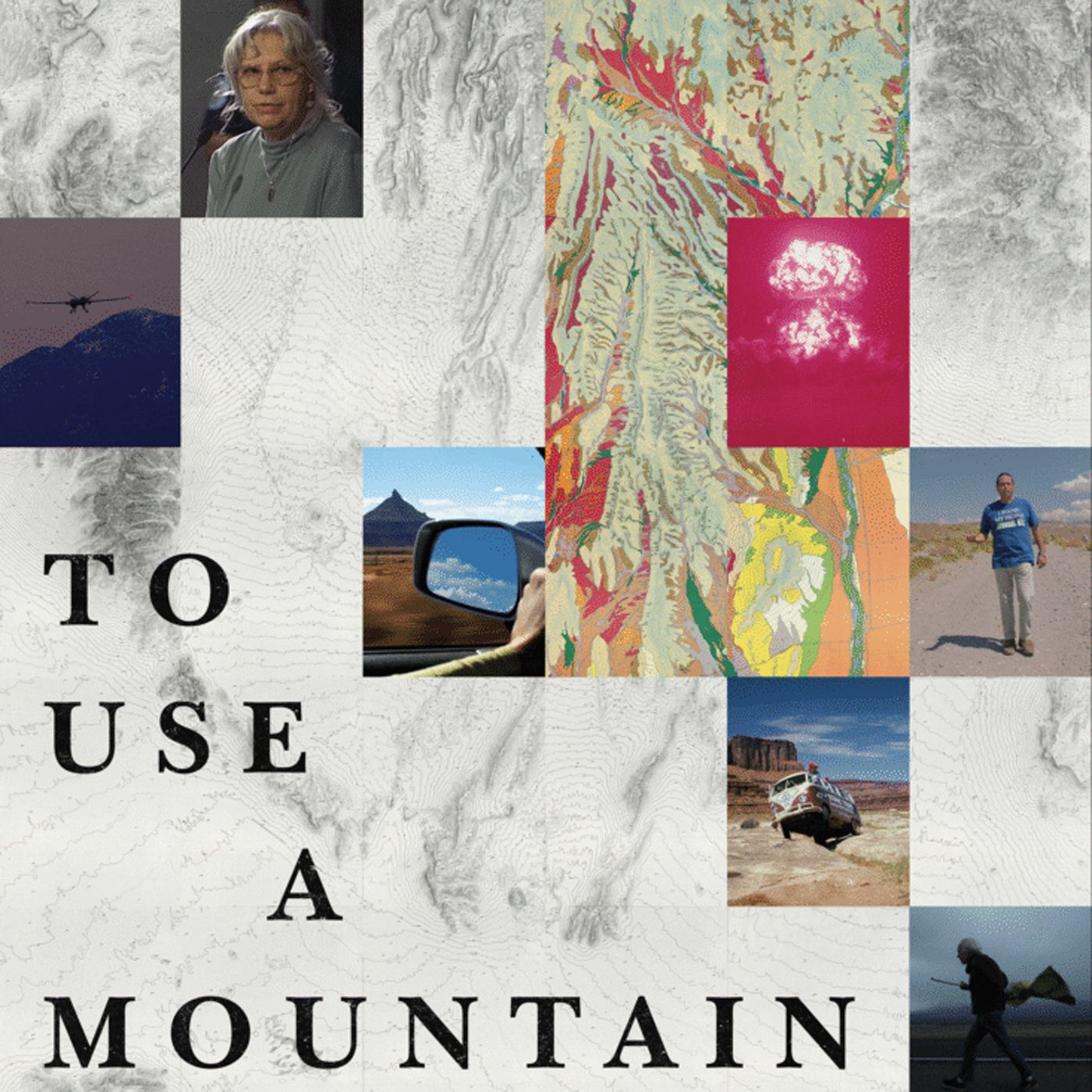
I'm your host, Mike White. On this episode, I am talking to Casey Carter. He is the director of the new documentary, To Use a Mountain. Had a wonderful time talking with Casey. I hope you have a great time listening to it.
Enjoy the interview. So Casey, tell me a little bit about you. How did you get involved in making films? Started with making photographs. Ever since I was a teenager growing up in East Tennessee, I got really interested in photography and would photograph my friends and photograph the landscape and slowly grew this interest in portraiture and landscape.
And also the industrial landscape. And those kind of early and primary interests in photography really came back around and to use mountain for sure thematically. But I also, I went to undergrad for photography. I wound up studying physics as well. I did photography and physics double major, but I love photography.
I continued to photograph. And then I went to school for architecture, hoping to unify this right and left brain photography, physics. Juxtaposition. And then it wasn't for another few years that eventually I came around to trying to make a film. When I did start making films, it was really coming from this kind of intimacy with the camera and this photographic impulse.
And photographic visual language. And I tried to make a film and failed because I didn't really know how to do it, but I learned a lot in the process. And then made a few short films and just got really... So, I mean, from the moment I began the process of trying to make a film, I was immediately enthralled with kind of every facet of the filmmaking process. And yeah, and eventually that led to To Use a Mountain, which is the first feature film that took many years.
But there were a few short films that came before it and many photographs before that. What was that impetus to go from photography to film, to moving images? I always kind of had an interest in. But I was dedicated to photography and, yeah, so absorbed in what photography can do and just becoming a better and more nuanced photographer that I never felt pulled to make a film. During that period of my life.
But I always thought it would be cool. It's very closely related endeavors. And, yeah, at one point I had the opportunity to a friend of mine basically said, hey, do you want to try to make a film? And I said, you know what? I've always wanted to try to make a film.
Let's try it. We made a valiant effort, but there was a lot of kind of technicalities to learn to make that transition from photography to filmmaking. Eventually, I picked those up. It felt like a very natural but slow progression. Normally, when they say somebody's a triple threat, they mean writer, director, actor, not.
Photographer, physicist, architect. Yeah, but it kind of works for To Use a Mountain, right? Absolutely, yeah. Where did you hear the story of To Use a Mountain? How did that capture your interest?
When I was in graduate school for architecture, I was doing some research on the Yucca Mountain, which is the site in the film that's ultimately selected and then abandoned. And if you do any digging. Into this issue of nuclear waste, you'll immediately find plenty of writing about yucca mountain but getting to the deeper like a backstory of the process and the other places that were also considered i didn't have any awareness of that i was just researching at the mountain and i and in the process of doing so i came across first this this big report that was produced by the department of energy on yucca mountain but then also other reports written in exactly the same fashion on the other candidate sites and these things are like 400, 500 pages long, just chock full of maps and diagrams and statistics and analytical text.
And eventually they became the backbone of the film. But it was that encounter with those documents that planted the seed in my mind to. Even think about this as a film, as this question of. Wanting to know more about this grand national project to try and solve a problem that never should have been created in the first place. but also this feeling, this idea of what does it feel like to confront this possibility of being designated sufficiently disposable by your government, by your fellow citizens in one way or another? And what does it feel like to be reduced to a map and reduced to statistics and reduced to a kind of totally technical text upon which some sort of evaluation would be made?
In those reports, They're so extensive, yet they contain no human story. So the idea for the film was to find those human stories. Showing the depth or breadth of those reports, and there's a moment, I know I'm telling you what you already know, but there's a moment up front in the film where you animate through there and show us how many pages are in one of these reports. It's breathtaking. And I think your photography background really lends itself, like you're saying, to being so visual.
And so for you to be able to encapsulate, this is what we're talking about. This is the kind of cut and dry, like you said, the charts, the maps, the this, the that. And yeah, no humanity whatsoever was a really smart thing to do. Yeah, thank you. Part of the process of making the film for me and especially because I was editing the film.
I was shooting it and editing it, and every single moment of the film has a visual idea. There's kind of no filler. Everything has a visual intent, and that goes equally for the presentation of these excerpts from these reports, and the way that the maps are brought to life, and the way that the depth of those reports is conveyed to the quality of light in a room, and the sense of kind of expression and gesture that is more associated with portraiture, but that you see coming out in the interviews and these encounters with individuals in these communities. And then, of course, just a real meditation on the landscape in each of these places as well. How long after you were looking into the Yucca Mountains stuff did you decide this needs to be a movie and I'm going to be the one to make it?
Probably, I guess it was four or five years. Yeah. Initially, because at the time that I that I first had the idea and I was first uncovering these materials, I hadn't made a film yet. And so it was an idea in the back of my mind for like a big sort of photographic survey maybe. But then fast forward a few years after I made a few short films and I was really jazzed on filmmaking and documentary filmmaking.
And I thought maybe now is the time. This idea had just been sitting. In my mind. I'd been wanting to act on it for years and Eventually, there was an opportunity to take a few weeks and go on a road trip to four of the six sites in the film. and basically discover is there a film to be made here or not and very quickly i discovered absolutely there's a film here to be made and it needs to be made and it took the next six years of my life to do. It i was wondering if you actually shot anything in that initial trip or was that just a fact-finding mission.
The majority of the material came later, but some of the most vivid moments in the film came from the first trip. For example, the moment in Utah where Sonny Onger is holding the uranium rock and talking about, we used to use this for war paint and all I got to do is lick my fingers and I'll have poison in me. That was a very spontaneous moment from that very first trip. And was it just you as the crew or did you have somebody else with you? Oh yeah, I had colleagues and friends.
My producer, Colleen Cassingham, was a big part of the effort. My friend and colleague, Peter Halquist, who's not a filmmaker, doesn't do film production, but he was a good friend. He's an artist and designer who I went to graduate school with and an outdoor enthusiast. So he accompanied me on several of these trips and recorded sound. While I filmed.
And then, yeah, several. other friends, Bradley Marshall, Lydia Cornett. If you look in the credits, there are a handful of people who have sound recording credits, and those are all folks who joined me at various points in time at different shoots as either a kind of crew of two or sometimes three. With a project like this, I imagine that you could probably still be filming today had you not said, I need to stop. When was that moment for you when you said, I think I'm okay? From the beginning, I had this idea that the film would have the structure that it has, which is just to go from site to site and to move from the site, which was eliminated first to ultimately the site that was selected.
And that within each one of those, within each one of those places and within each section of the film, its own story and character would unfold. So, and then there was the idea of, okay, I got to find like an immersive story in each of these places and like something that's really emblematic and helps connect with this place, but also like, undertake a very serious journalistic effort to dig into the issue and the history as well so it was yeah i mean it was a slow process it was like really it came down to having a few ideas in my mind from the earliest days that i was never able to realize until like the final year and once i was able to realize those ideas it was like okay i've done what i set out to do like For sure, you can make a whole film about each one of these places.
And some of these places you can make multiple films about. It's like there's so much history there and so much complexity. But I knew that the film would be bounded in a certain way and that it would be this journey through these six places. And as long as I could build the story and get deep enough within the moment of time that we have within each of these places, then the film would be fulfilled or the idea of the film would be fulfilled so. I'm sure you're not walking into each one of these places being like oh cool brand new place i know nothing about how are you doing your research before you even get there where are you finding all of your information.
In many different places and in some cases that kind of was the initial approach because i did somewhat spontaneously decide to embark on this first trip of course i already knew a lot about the The issue in the history from the research that I've previously done, most people don't have any idea. These reports exist. I have poured through them. But that's from one point of view. I didn't have any relationships on the ground.
I didn't have much of a real tangible understanding of these places. But getting there and just being honest and transparent with people about what it is that you're there for and the questions that you want to ask and the history that you want to explore. In most cases, people were. Very welcoming and it didn't take long before I started to build kind of very meaningful relationships and friendships, which then grew over the duration of six years of making the film and returning to these places and sharing stories from place to place as well. Yeah.
That's fantastic. And I was hoping that I was going to hear that, that you got to make a lot of friends along the way, as they say. Oh yeah, absolutely. It feels like such a massive project to take on for one person and a few other folks here and there with the sound recordists and everything. But just, I'm just agog at the level of research that you did and the amount of shooting that you did.
It just feels like this could have eaten your entire life. But it kind of did in some ways, but it, It was an inspiring process and it was an invigorating process. I got to travel to these beautiful places across the country that I never would have been to otherwise and learn and have such special conversations with people that under no other circumstances would reveal themselves and just have the opportunity to connect with people about things which are really important but aren't discussed every day. And so it was enough to keep me going and keep me motivated and keep me inspired. And yeah, it definitely was a huge part of my life for six years to kind of keep the drive alive, but also just to continue to be curious and to continue to learn in the process and fold all of that back into the film.
What was the most surprising thing you learned while you were out there? Fossils everywhere. And a lot of those fossils are radioactive. because of the rich uranium deposits in that region. And over time, through this process of fossilization, when the bone matter gets, over thousands and thousands of years, gets replaced with the minerals from the surrounding rock, in many cases, depending on where the stone is, the uranium settles into the bones. So you have a lot of dinosaur bones out there, even in museums, that have to be painted with special coatings like lead-based coatings, in order to diminish the potential radiation that would be coming off of them.
So just this idea of radioactive dinosaur bones, that was a surprising thing to learn. Yeah, walk into the Field Museum with a Geiger counter. But there's so much more in terms of the nuclear history, the social and political history, that just goes so deep. But that was like a surprising factoid, radioactive dinosaur bones, yeah. Were you editing this while you were making it, or did you save everything to the end?
I was editing while I was making it, yeah. Both because it was a way to understand the material and learn certain things about it and about what it can produce within the context of a film, and to begin the process of understanding the visual language of the film from the very beginning. Not only was I editing material that I was shooting, but I was also working with my collaborator, Magdalena Orellana, who did the majority of the animations. So we knew from the beginning that we wanted to bring pieces of these documents to life. And so from the.
Very earliest days of the film, we were on and off just working on experiments with animating bits and pieces of those documents. And that was like a very slow and incremental iterative process. kind of experimental process up until the final year when we got much more focused. But up until that point, it was a slow process of saying, okay, what can we do with the maps? What can we do with the text? And what can we do with this texture?
Just try to figure out what is the world, the visual world of these things. And with independent documentary filmmaking, a big part of the process is also doing the grand writing, like trying to figure out how you're moving the project forward and articulating the project at various stages of development. So editing is a big part of that process as well. Editing small samples, editing 30-minute segments, editing a rough cut. So the entire arc of producing the film, there was also an iterative editing process that was happening side by side.
Where can people see the movie? If they're in New York, they can come out tomorrow night for the theatrical premiere at DCTV Firehouse Cinema. It's going to be playing daily from Friday night, August 21st until the following Thursday, August 27th. And then after that, we're going to expand to regional theaters. And in early 2027, we'll be releasing the film digitally.
They need to. Follow me on Instagram at tuseamountain, at tuseamountain. And check out the website, www.tuseamountain.com. And keep an eye out for updates. for when the film will be playing in their community. Casey, thank you so much for your time.
This was wonderful talking with you. Thank you, Mike. Well, I'm getting tired working hard every day. Working every day. and not getting much paid. I got a big guy, he can count on me as a person.
When the needle starts a-clickin', it's where I'm gonna dig Money, money, honey, the kind you for Money, money, honey, rock and roll Drink it in, paint it up like hay Have a rockin' good time. And throw it all away. Well, I can see me now in my long Cadillac When I find that big uranium rock Money, money, honey, the kind you fold Money, money, honey, rock and roll Break it in, fill it up like hay Have a rockin' good time and throw it all away Yes, that's me in my long Cadillac Heading down the road and I ain't coming back Ain't no red light gonna make me stop When I find that. Big uranium rock Money. Money, honey, the kind you throw Money, money, honey, rock and roll Drink it in, bail it up like hay Have a rockin' good time and throw it all away


