

About this episode
Transcript
Automatically generated, so expect the odd misheard name.
Hold your ears, folks. It's showtime. People pay good money to see this movie. When they go out to a theater, they want cold sodas, hot popcorn and no monsters in the projection booth. Everyone pretend podcasting isn't boring.
Turn it off. Hey! What are you doing with the baby? If you buy number 7, I'm telling you, it'll be black and white! Why don't you have a dad?
I don't know. Do you like Uncle. Pat and Auntie Sarah? I like them. Do you want to go to.
Australia with them? I want to go home. Aren't you afraid that dad will kick you out? But we can do. It once mommy gets the money.
Mommy loves you. Where's Tian? Brother. Did mommy say anything to you? I don't know.
I know, I know. What am I doing with grandpa and mommy? I didn't say anything. Are you stupid? Isn't that good?
You guys fight all day long. You won't fight when you move out. No. Come on, fight. Fight?
What? Mom said, of course, don't hang up on the kids. Mom, I don't care. I'm a boy. Tian, you're not going anywhere.
Of course you're all liars! Liars! I hate you all! Tian, hide here, okay? I'll come find you when they're gone.
Don't act so fast. Of course, I'm always so confused. I'll give you money to change your clothes. It's not because of you. Why is it because of me?
It's not because of you. You took care of a little kid like this. You're so mean. What did I do for her? I did nothing for her.
I'm her dad. I gave birth to her. You took care of her. I took care of your bird all day. Dad.
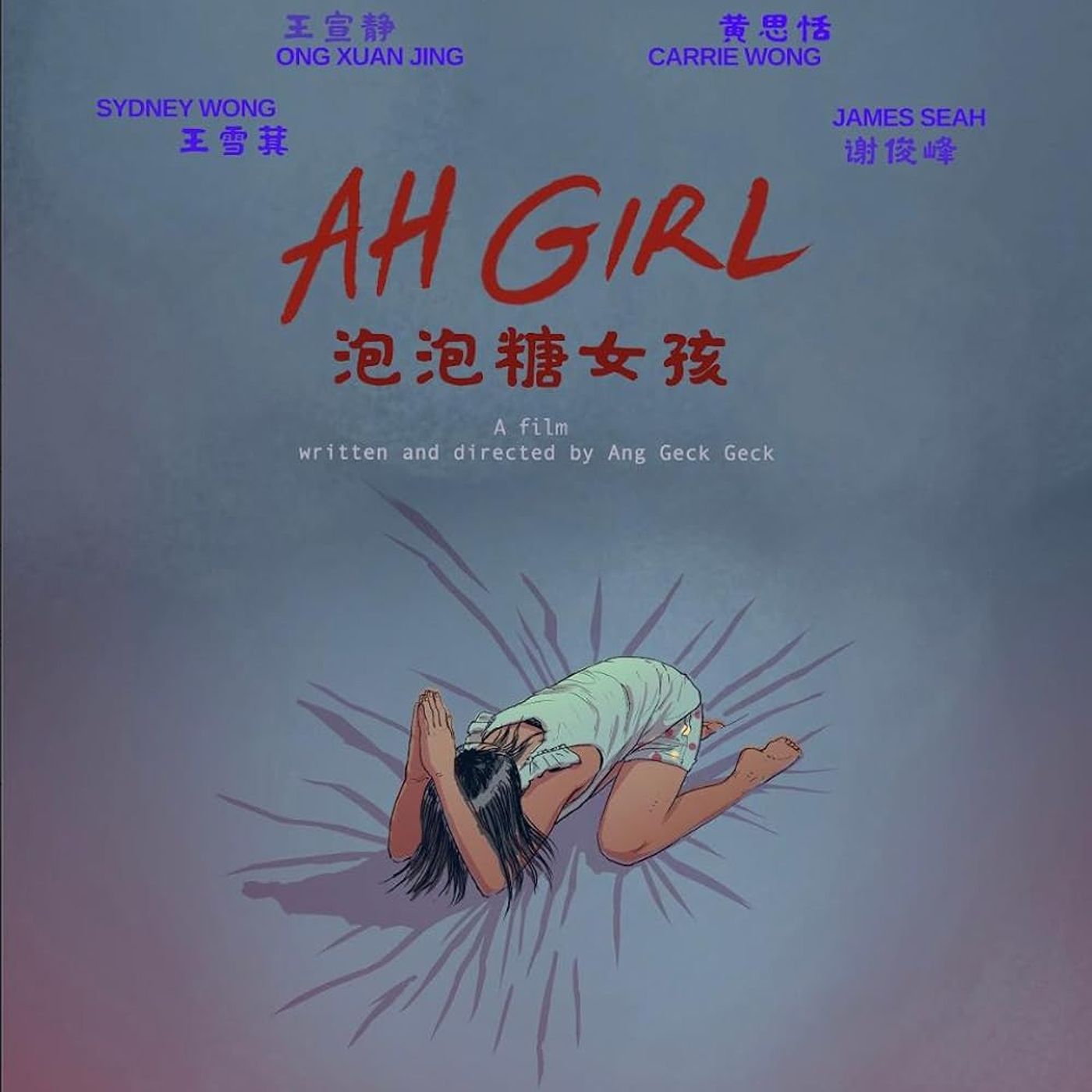
Ah-Chien. Are you going to be with Mommy, Dad, or me? Hey folks, welcome to a special episode of The Projection Booth. On this episode, I'm talking with Angekek Priscilla all about her new film, Ah Girl. This is her feature debut and it is making the rounds at different festivals.
Had a great time talking about this and watching the film. I hope you have a good time listening to the interview. Thanks so much. How did you get involved in the filmmaking business? It's actually an accident.
I would say film chose me instead of I chose film. I think it's a calling because I didn't expect myself to be a filmmaker, to be honest. I wanted to pursue painting because I always loved art, but I didn't know what major I wanted to do in university. And then in the end, I eliminate all the choices that I have because I feel like it's not realistic. A lot of stuff you can actually learn from YouTube.
So only filmmaking stood out to me because... I feel like it's so broad. There's so many things you can learn from. In the end, yeah. So I studied filmmaking in NTU School of Art Design Media.
Yeah, in Singapore, basically. And I have no prior background when I was in university. And most of my peers, they came from, call that like, they have a diploma in filmmaking already. So I'm like really the slower student in class. Somehow, I don't know, my professor all like really love my story.
And then they always say, oh, I have a lot of potential. My first short film actually won the Best Singaporean Short Film Award. And it was a surprise for me. And I realized that Film can help a lot of people. It's a powerful tool.
And then I can use it to express myself in the best way possible. So I continue and pursue it. And I decide that I want to use film to make people feel less alone. Where did the idea for Our Girl come from? So it's based on my personal story.
I wrote Our Girl about 12 years ago. It's more than 10 years ago, actually. There's always a part of me that, you know, after I made my first short film, Broken Crayon, I wanted to do a feature. But then I know I wasn't ready. I need to work on my craft first before I do a feature because it takes a lot of commitment and responsibility to make a feature.
So I was really set, like I know what feature I want to do. And then a girl has always been in like my deepest part of my heart because It's a story that I want to tell, but I don't know who I'm writing for. What am I writing for? I just know that it's so deep inside me. There's so many things I wanted to say.
And so I wrote it. I just write it. And it's a long journey for me because I was supposed to make this film in 2019, but I ended up, it took me 24, is it 24? Yeah, 2024 to finally make the film. So during that process, it's actually a long process because when 2019, I was also working with this producer, but then he faced some financial issues with the company.
After waiting for him for two years, he told me that he has to drop my project. So I was in, I went into a dark hole for a while before I recover and I decided that I should continue work on my screen to make it better. And I think I tried all the producers in Singapore and they all rejected my film because they think the film, the story is too simple for them. And they asked me, what makes your film so special? It's just another devolved story.
So it was also very hard because it's a very character-driven film. They couldn't really visualize what's so special about this film. And I totally understand. So during that period, I continued to work on my craft. I continued to do more deeper research.
I went to see a psychiatry to do more case study and try to see what other inspiration or idea I can put inside my script so that I can, as I said, I can also help more people in that way. I wanted to find meaning in my life. So that journey was really interesting because I ended up getting counselled myself. So one psychologist said, why don't you go and get yourself counselled? Because they think that I need one after knowing that it's my personal story.
They say it will be good for me. But then during that period of time, like, you know, if you go for counselling, it means there's something wrong with you. So it's like a taboo. Yeah. It's a very Asian thing.
Yeah. But I told myself, okay, I'm just doing it for research purposes. I'm Just go and try and see how it goes. And sometimes it's really very full for me. It's a very fruitful journey because I grow together with the script at the same time.
I realized that I was going through quite a lot of childhood trauma and I didn't realize that until I went to see a counselor. And then the script grew from a dark script to something very hopeful. So down the road, even though the script has transform and change but it was still very difficult to find a producer for my script and I think only two years ago I finally found Charlene my producer I told her if you're not coming in to help me then I most likely have to let this go because I have spent enough years trying to make this film work and then she read the script she really liked it and she knows that if If she doesn't help me, I'm going to give up the screen. And she thinks it's a pity. So she helped me.
And then a miracle happened. I got funding from the government and then I managed to make this film. It's very, very strange. So what I see is time is so important. If I make this film in 2019, things will be different because my sensibility and my maturity will be very different from now, two years ago.
Yeah, so I felt like, you know, everything happened for a reason. Time is very interesting. And then I feel like, you know, somehow, I don't know whether I believe this, this is my calling. Like, I didn't expect myself to be a filmmaker. I didn't expect that the film will actually be made because I had tried for a very long time.
And when I say I tried, I'm quite a not-give-up kind of person. So when I was about to give up, then the world kind of said, no, no, the university, no, you cannot. I will help you. So I just feel like this experience is very... I don't have a lack of better word, but I just feel very grateful to be here, like even talking to you and sharing this with you.
I loved the movie and I... I think so much of it comes down to, yes, the story, but also your main actress. And I'm curious where you found her and how it was working with her. I've been working with Chuen for all my films and my commercial. And I really love working with kids.
I know a lot of directors, they've been screaming and saying, no, I don't want to work with kids. Kids are always so difficult. But for me, it's the opposite. I feel like an angel whenever I work with kids. I'm so patient with kids.
But with adults, I'm just, I don't have that with adults. I just don't have that. So, how I find the two kids? I have a different way of working. So, I actually was very hands-on with the casting, till all the way to the final selection.
So, I was in the casting room and then I was observing all the kids. And I think we cast like more than, I think we have hundreds, but I lost count how many kids we cast, but it's by hundreds. So, this one kid, Ah Tian, acting as the younger sister, She came in and it's like, wow, you're so in love with her. The first moment, it's like she has this charm that nobody has. So she came in and I was like, wow, she's so funny.
And I couldn't stop laughing when I look at her. And at that time, she was only three years old. Yeah, only three. It's so amazing. So in my intuition, right, that you can't, you know, you want her as the younger sister.
Then for Casting Our Girl, it took a longer journey and longer time because that role is very important because the film is very character-driven. So I was very careful in my selection process. And in the end, I shortlist 13 kids, including Ah Tian, 13 kids. And then we did a workshop together. And the workshop, we go everything by the theme of play.
So. We learn everything by playing, having fun. Because my intention of doing a workshop is that if we want the kid to be able to perform or express themselves the best on set, they must have a very safe and fun and cozy environment. So that was my very pure intention when working with kids. So when that comes first, everything will go well.
And then working with a group of kids, It's also very good for all of them because they learn from one another very fast, from one another. And instead of having face-to-face, like one-to-one with me, it's better to have them in a group. So from there, then I slowly eliminate the kids that I feel like it's not very suitable. And then I did a lot of observation work while doing fun activity with them. And we also was looking out for the two siblings that work best because they must have some form of chemistry.
And to me, I think that was a very first stage. And then slowly after we eliminate the rest and come down to the final two, they spend another three months together, one-to-one with me. And then we go out. like without their parents because I want them to trust me without their parents and the parents can trust me as well to handle their kids. So that there's a mutual trust built within us. So that is a very, very basic thing as a director working with children.
How old is the girl? Our girl, back then she was only six. So when we start shooting, she's seven. And How I choose the kids also, I observe them and I start to learn about them, like their personality. And I find the one that is closer to the other personality in the script so that she doesn't need to really perform.
She's just being herself. And now, of course, there will be some differences. And then, because for me, I believe in collaboration. So even she's a child, I can take, you know, some part of her, like her quirks or certain nuances that I feel like is interesting and then I inject into my script so there's like a balance you don't really force her to be someone that she isn't and we kind of like work together as a collaborator. Just the little moments like when she takes that bowl of chips and puts it on her head and is pretending to be Miss Singapore I love that moment it's so innocent and so cute.
Yeah yeah so That one was very interesting because we had fun activities doing catwalk before the shoot and she actually couldn't really do it. So it took her some time to actually learn how to walk. It's really very funny and you don't have to tell her much. You just say, because we do fun activities like copycat. So basically we do something then you just follow and then So she sing, so I give her some video to watch.
And then she watch, and then I say, oh, now your job is to copy her. And then she start, you know, walking. And she's just very natural. Because like, she's having fun while doing that. You know, she remember we have fun whenever we're doing copycat activity in the workshop.
So to her, it's just like, she's just doing something that is so, so fun on set. Yeah. I. know that filmmaking can be fun, but it can also be a struggle. And I'm curious, what was the toughest part of making Our Girl? To be honest, every part of my process of making Our Girl, it's always tough.
It has never been easy because, I don't know, it's just really difficult making this film from pre-production to post-production because we don't have a lot of budget to make this film. So when you don't have the budget, then... you don't really have a lot of choices. You just have to work within your limitation and your resources. But instead of looking back at all the challenges that I faced, I always look forward and say, I'm very grateful that I finished this. So I don't have one very specific challenges that I can share with you.
I can just tell you, I have so many in my list. I don't want to look back at all. I want to look forward and say that I'm grateful. This film is me. How is it looking at the film and seeing yourself reflected back at yourself?
Because I spent 10 years writing this script. So sometimes when I'm on set, I don't even feel anything anymore. So I have this script continuity guy who sits beside me. Sometimes I feel like I can't feel anything. Because some of the scenes are so...
It has been in my head, been written so many times. And also, these are some of the memories that I have when I was a kid. Because this is a very personal story. I couldn't really feel much anymore on set. So I always ask him, Oh, what do you think?
Do you feel anything? So there were times that I feel like I struggle with having emotion for certain scene. Yeah. So it becomes something very logical for me. And looking at this film, also like I, it is not for me, but like a lot of people ask, oh, have your parents actually seen the film?
Because this is also like a letter for my parents, right? Because some of the scene were written in a way that it's like, what if? they have done or made certain choices back then. Because like when I was younger, I felt like my parents never really take me seriously. And there were times like I want to tell them something, but they were just like, no, not. I don't have that space to actually express myself to them or tell them what I actually feel because I shouldn't actually feel a lot.
I look at the film and I wonder in my head, oh, how would my parents react to this film when they see it? I'm not going to take their comment or whatever negatively, but I'm just like, okay, this is something that I always wanted to tell them. And then I finally did it. And also like, I feel like this film is also telling parents that you should always take your children more seriously because they actually feel a lot. Asian parents usually don't let the kids to have that space to let them express themselves.
They will always say, oh, if they are noisy, they always shut them out. And I think it's not very healthy. So they start to keep everything within, inside them. Yeah. And then when they go to school or whatever, they just think that if they say anything, there's something wrong with them.
So they don't really able to express freely. So that's why young people, they don't really ask a lot of questions. If you realize that, we are always more reserved. Yeah, because of how we are in Asian family. Yeah, I really thought of that when the mother was critiquing the girl about the, what, she get 96% on the test?
And she's like, why not 100? Yeah, there's always more. When did you first get to see this with an audience? I did two test screen before I decided to lock my film. So that was like my very first time.
But that, But the audience are being picked by me because I invite those people who are important to me. They are mostly my friends or they are film critics, but they are people that I work together. And then they give me some comments so that I can improve on the editing. If you don't consider that the first, then it's Rotterdam Film Festival because it's my world premiere. That was the first time that actually I screened my film with... large group of audience and it's fantastic because I hear a man crying very loudly in the cinema and it's really very funny and then after that he will break into laughter like he'll cry and then break into laughter so I was so surprised because I didn't see that happening I was just like very worried at the very beginning because this is a very Singapore film I thought like people may not understand my film but I ended up Like they do.
I mean, the, the audience from Rotterdam, they do understand my field and I felt very happy. Yeah. Oh, that's fantastic. Yeah. And I think you do a really smart thing too, of setting this in a particular time and that radio broadcast that reminds people about Singapore and the whole thing about the bubble gum.
I thought was fantastic. Because when I was young, Singapore banned bubblegum. And I was a kid, even as a kid, I was like, why don't ban bubblegum? What did bubblegum do to Singapore? And then I couldn't understand why.
So that's why I decided, oh, I should bring this into my film. Because until now, we still don't have bubblegum. It's still banned. So if you want bubblegum, you have to go to Malaysia to buy. That's the closest country that you can get.
Illegal bubblegum. So where has the film played? We've been to quite a number of festivals. First one was Rotterdam, and then Shanghai, Udine. Where else?
And Munich. There are a few other festivals. Hong Kong as well, Malaysia, and then now Toronto. What's next for you? Do you have another script in mind?
I was planning to do a trilogy for Agar, but I'm while waiting for the real Agar in the film. Shin Sing to grow up. I'm working on the next project. I'm writing this horror psychological film. And this film is actually an extension of my first short film, Broken Crayon.
And yeah, I'm very excited because I always love horror. And I think I'm ready to do a horror film. Have you noticed the film playing differently to different audiences? Because it is so invested in being a Singapore film, does it play well in other countries? Yes, surprisingly, very well in other countries as well.
I think because the theme is quite universal. It's about what children need and how they want to be heard and treated seriously, right? So I think when we're younger, the adults are always not taking us very seriously. I think this is something that a lot of people can relate. Because I remember when I was in Hong Kong, And then there are a few others who actually wrote to me.
They said that they really liked the film and they can see themselves like Ah Tian or Ah Girl because they grew up in a broken family. Yeah, so they have the same experience as what the character has went through. So I remember this girl from Hong Kong, she came to me and she was crying. And I was like shocked because I don't know what to do. So I ended up giving her a hug.
Yeah, because there's no other words I can say. And because I actually don't know her, she's a stranger to me. She just came to me and she said she can relate. And then she started crying. So I hugged her.
And then, and after that, I asked her, be strong, like a girl, not her. And then she walked away. So I felt, I felt, I feel like when she cried, somehow inside her, she's been healed a little bit already because That's where she's able to understand that she's not alone facing this before. And me, myself, has also the same experience, maybe some same experience as her. So I felt that this very film brings people together in a strange way.
And I felt like this is what the universe wants me to do. And I'm very grateful that I can do this for people. Are you out online? Do you have a social media presence? Yes, I have a...
I mean, our girl, we have a social media. It's called Our Girl Film. And I have my own social media as well. My Instagram handle is Angik. I'm very grateful to you.
Thank you so much. Xiexie. Xiexie. For the interview. Thank you.
Xiexie. Bye-bye. It's Ray George London. Bye. Bye.
The moonlight is blue The wind is blowing The girl leaning on the window The moonlight is shining brightly Oh, my God. Oh, yeah. Like a light soaked in dew A pretty girl is crying Looking at the twinkling starlight from far away If I am easy to see, I am full soon.


