
Season 1 · Episode 681
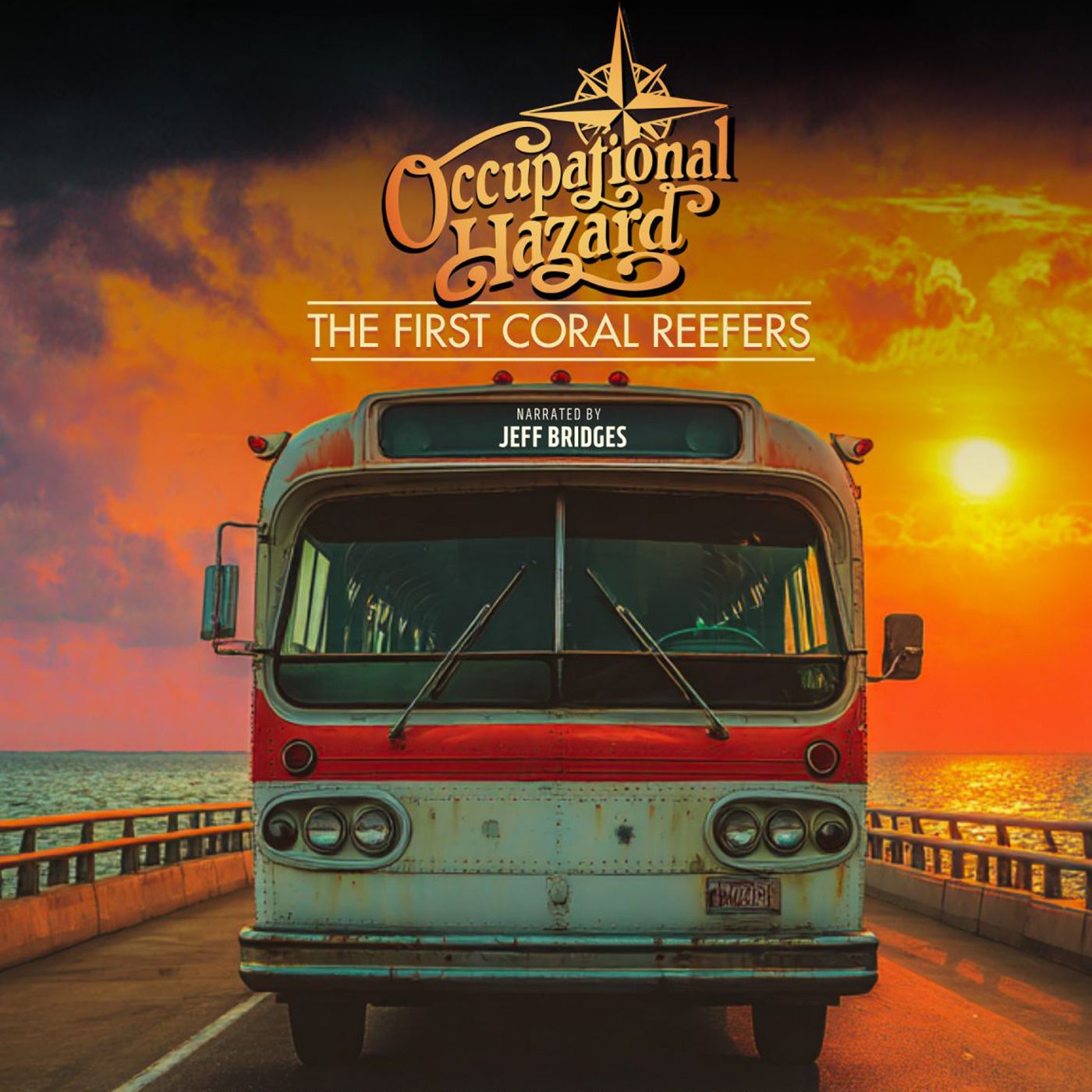
Special Report: Occupational Hazard - The First Coral Reefers (2026)

About this episode
They talk about the trust the surviving Reefers placed in them, editor Richard Lowe (Muscle Shoals) and archival producer Adam Lawrence sorting through decades of footage, the Key West and Santa Barbara premieres — the latter a nearly two-hundred-seat sellout — and what it was like watching Jimmy Buffett's own sisters sit in the audience for an early screening. They also get into Key West itself as a magnet for outsized characters, name-checking longtime local artist David Wegman along the way.
Narrated by Jeff Bridges, Occupational Hazard: The First Coral Reefers opens in theaters nationwide September 5th — Jimmy Buffett Day — through the end of October, before heading to digital. Showtimes and city listings are at occupationalhazardfilm.com.
Transcript
Automatically generated, so expect the odd misheard name.
Hold your ears, folks. It's showtime. People pay good money to see this movie. When they go out to a theater, they want cold sodas, hot popcorn and no monsters in the projection booth. Everyone pretend podcasting isn't boring.
Turn it off. Roll it. Jimmy Buffett and the Coral Reaper Band. This is a song that the whole Coral Reaper Band wrote. If you ever get the chance to go to Dallas.
The Coral Reaper Band took this music and gave it to the world in a way that nobody else could. Yeah, I'm leaving this town as. Soon as I can. Jimmy was the captain of the ship. We followed his lead, which went to oblivion many evenings.
We had more liquor on our rider than Led Zeppelin and the Rolling Stones. There was lots of parties and drugs and girls backstage. Jimmy Buffett was a force of nature. Honey, why don't we get drunk and scream? But it didn't start out that way.
In the beginning, it was an imaginary band. Every popular Marvin Garne is with us. All the way. The band name came from the coral reef here in Key West, and reefer was marijuana back then. Yeah.
There was a rawness to that band. But it also became this thing that's iconic. Good evening, this is the beginning of the cocktail hour. It was a party every day, and it was all kinds of everything. Is anybody here giving a shit about going to work next week?
Truly back then, I mean, if you weren't there, it didn't happen. Mopping up the band's drunkenness, that was 90% of the job. Hey folks, welcome to a special episode of The Projection Booth. I'm your host, Mike White. On this episode, I am talking with director John H.
Cunningham and producer Ted E. Haynes about their new movie, Occupational Hazard, The First Coral Reefers. It's a story about the coral reefers, who are not, as I thought they might be, and Environmental Protection Group. No, they're Jimmy Buffett's backup band. Find out more at occupationalhazardfilm.com.
Thanks so much for listening, and I hope you enjoy this interview. John and Ted, thank you so much for joining me today. Hey, Mike. Nice to meet you. I have to tell you right off the bat, I really enjoyed the film.
I thought it was great. I'm not that familiar with Jimmy Buffett or his music, and this was a great introduction. That's exactly what we hope for. It's easy to please the fans. It's more of a challenge or at least a reward to introduce people to the story that they may not know, and they come away interested.
So that's wonderful. Thank you. Well, I want to know a little bit more about you, gentlemen, and what is your background? John, let's start with you. I'm from the D.C.
Area. I moved to Key West in 78 when I was 18, lived down here for a few years, and moved back up there to finish college at the University of Maryland. But I spent a career doing commercial real estate development and focusing the last 20 years or 25 years on, uh, life science laboratory, you know, development. Um, so very much had, I was, I was on the side of creating things and making things happen and leading teams to, to make those things happen. Um, same time I was writing a book series.
So I've written 15 books, 12 of which are in a series. And, um, then actually made a couple of short films in the, mid to late teens, which is where I met Ted, you know, through film festivals here in Key West. But just kind of always enjoyed the creative process. And, you know, this was kind of a natural next step. And Ted, how about yourself?
I know you've been involved in filmmaking for a while. I come from a long line of storytellers. And my joke is my mom called us liars. I don't know where the line blurs there, but I have been writing and telling stories almost all my life. And I wanted to see what it would be like to move into the film side of things and started writing scripts, and no one wanted to make those, so I learned how to produce and all of those other things and made a lot of really bad movies.
They just continually, progressively, as I learned more, they got better and kind of had my school of hard knocks film school. Well, you've made some fascinating stuff. I just was reading about the cult documentary, and I really can't wait to watch that. That one's been a little bit of a labor of love, uh, actual personal story. It's the subject is my uncle.
Uh, so yeah, that one's, that one's been a fun one, but it's, it's been a slow burn because it's, is a passion project, which means it's the thing that happens between everything else. And how did this one come together? How did occupational hazard come together? Yeah. So as John mentioned, we had met at the Key West film festival. and had become friends, uh, you know, shared a love of a lot of similar things.
And John was, I live in Tampa, St. Pete area. And John was in for a writer's conference. I said, Hey, let's, let's get together and have dinner. Uh, Roger who's in the film, uh, also is in the area.
So we invited him and John pitched the idea of, Hey, what if we did just a little short documentary about Roger as you know, the first coral reefer. And it, things escalated very, very quickly. Yeah, within a month, we had six interviews done and another two months, 18 interviews done. And it was like, okay. The film evolved every time we met somebody new because it's kind of like doing research, right?
I mean, with a documentary, you don't even know what the storyline is going to be initially until you really, one interview leads you more information and it just keeps growing and then you have everything. And then you create this storyline sequence with the arc that you've discovered. So you're a victim of your own success by getting all of these interviews. Pretty much. I don't imagine it took you a long time to say, maybe not a short, maybe a feature.
Yeah. I think that in his first six interviews, we were, all right, this isn't a short anymore. I'm glad that everybody was so keen to say yes, because it, it, must have made things hopefully a little bit easier by having people that really wanted to participate in something like this. It was incredible to me. John had some personal relationships with some of our cast in the form of Coral Reifers.
It was amazing to me, to a person, how excited everyone was to share this story. And not just for, I want to highlight me. I want to put myself back out into the limelight. but because they felt so passionate about that time period, about what they accomplished together and about how they felt about Jimmy Buffett. So it was just incredible to watch everyone be so passionate and trusting to us to be stewards of that story. Yeah.
In fact, they didn't want to talk about themselves. We try to pull information about themselves and it always came back to the group as a family, their experiences together, the things that they had done and what led to the next thing. So, I mean, that, that was special, you know, unto itself. I mean, it sounds like a paradise. I mean, was there any problems at all?
I mean, there couldn't be right. Nothing's perfect. There's always little bumps in the road, but yeah, no, nothing insurmountable. What is it about Key West? I mean, are you guys on like some sort of like lead lines?
Is there like a hub of energy? Because it just feels like every story I hear about Key West is, how these creative people all kind of either start there, go there. It just feels like such a mystical place. It really is a fascinating place. And, you know, one friend that I have here and Ted's got to know him as well as a guy named David Wegman.
He's a, he's a well-known artist, but he's just a fascinating human being. I think he's 82 now. And this is a guy who, you know, he came here in 1971 from Indiana and, taught himself to paint, and built his own sailboat. He didn't know how to sail a boat, sailed around the world for eight years, became friends with Buffett. And now Kenny Chesney just had a chapter about him in his number one New York Times bestselling book.
Kenny has him on one of his new songs on his new album. They did a video together. And this guy, you'd look at him and you'd think, wow, okay, he's an interesting character. And he is, but he's a wonderful human being. So there's a lot of folks here like that.
I mean, it's always been sort of an artist community, whether it was writers and musicians and filmmakers and dreamers. And just, you know, it definitely has that vibe. And, you know, I think the motto in Key West is one human family, which means everybody should get along and treat each other well, which during political seasons isn't always the case. But you do have... a freedom here. I mean, I see people, you'll have billionaires hanging out with waiters, you know, and everybody's dressed in cash and nobody's wearing anything on their sleeve.
And it's just, it's that kind of place, which it makes a sort of a level playing field that it's inspirational. And when Buffett came here to bring it back to the film in the early 70s, There was no tourism. The Navy had just pulled out. The houses weren't restored. You know, it was a very different vibe.
And it was kind of the perfect place for him at that time. He failed in Nashville. He left his first wife. You know, he came here to lick his wounds and discovered a place that just really permeated his soul and became his muse for, you know, writing amazing songs for the next, you know, long period of time. And that set the foundation really for his for his success.
And it was all from the heart. Ted, as a producer, John doesn't think that there were any problems, but I imagine as a producer, you have to keep them away from all those problems. What were some of the things that you had to deal with on this project? I would argue any problems that we had, it was more timeframe related. It was urgency or it was restriction or travel or things like that.
Logistical things. Certainly, when you're dealing with industries and empires, there can be conflicts and those things don't always align. But I mean, honestly, we were really fortuitous in the way that things lined up with us. When did you guys actually shoot these interviews and put this whole thing together? We shot the first interview in October of 24.
The last interview was April 5th of 25th. we were then interviewing editors and, you know, we, I was passionate about this guy, Richard Lowe, who is an award-winning editor. He did Muscle Shoals. If you ever saw that film, great film. And, um, you know, he was, we had to wait for him for a month or maybe a month and a half. He was finishing another project.
Um, that let us catch our breath. And then from there, you know, we got a great archival producer that we met through another wonderful producer, um, Christine O'Malley, you know, she's a very successful producer, but our archival producer, Adam Lawrence, he did an amazing job, you know, digging up everything. I mean, there's 600 archives in this film, then pulling all the little pieces together. But so, you know, production I thought was super smooth. I mean, Ted found a great team.
We were fortunate to get a cinematographer that, oddly enough, he and I went to the same college just a very long time apart. But Troy had gone to Nashville and he had become just one of the premier music video producers and cinematographers and has worked with Zach Brown and everybody under the sun that the L Langley video that just had 10 million views in a couple of weeks. You know, he he produced and shot that. So we were fortunate that he just fell in love with the project and the team. And he made he made shooting the film feel simple.
When did you guys get to actually see this with an audience for the first time? Because I imagine they went nuts. The Coral Reef Band was playing here in town. I live here most of the year, and we had a number of friends. We wanted to show it to all of our friends who had provided archives, who owned facilities like Louie's Backyard or the Chart Room or places like that where we did filming.
We had a number of our cast members here. So we had about, I think, 50 people or so in the Tropic Theater. And, you know, it was a little nerve-wracking, right? So we did, you know, the first show and we had, you know, Jimmy Buffett's sisters were here, etc. So it was like, it was a real serious audience.
You know, and then we did a Q & A afterwards and Roger Barlow was here and he was also our composer. He did all the original music in the film. It was very well received and, you know, but it's your friends, right? So it's kind of like, ah, you know, are they going to really tell us that? Like, so maybe, maybe the next would have been when we did the, our premiere at the Santa Barbara film festival.
And that was, yeah, that was, that was the first real audience where we didn't know anybody. When we premiered at that film festival packed house, which was incredible because that was not a small theater. I think we were close to 200 seats packed house, everybody responding to the, the moments that we want them to respond to. So, I mean, I don't know. I blacked out for most of the film.
But at the end, you know, when we're doing the Q & A and having people come up to us and say things like, I'm not a Jimmy Buffett fan. I'm here because my dad liked Jimmy Buffett. But I'm going to go listen to the music now. This was really great. Like those moments that we, we know the Parrotheads want to see this, but should be able to share these stories and that music that people just might not be familiar with.
Amazing. What is the best place for people to keep up with the movie and find out where it's playing? So our website is occupationalhazardfilm.com and we list all of the, we just actually just announced it yesterday. We're the first, your first phase of films are going to be, and we've got, I think about 25, 30 on there. We've got twice as many.
We're about to put back on there and announce also. So yeah, so we're going to be doing the theatrical run from, September 5th through the end of October, and then we will go digital after that for everybody who can't see it in the theater. Well, I hope there's a physical release in the future because I know my father-in-law is definitely going to want one. Okay. It looks like you have a good collection behind you there, so I won't.
Well, John and Ted, thank you so much for your time, guys. This was great talking with you. Thank you very much, Mike. Pleasure meeting you. I really appreciate it.
I really do appreciate The fact you're sitting here Your voice sounds so wonderful But your face don't look too clear. So barmaid, bring a pitcher Another round of brew. Honey, why don't. We get drunk and screwed? Why don't we get drunk and screwed?
I just bought a waterbed, it's built up for me and you. They say you. Honey, I don't think that's true So why don't we get drunk. And screwed Picket coral reefers, here we. Go Why don't we get drunk and speak?
I just bought a waterbed and it's filled up. Why don't we get. Drunk and screw it now, baby? I said, why don't we get drunk and screw it now?
More from The Projection Booth



Similar episodes across the network
Matched by shared keywords.
-
Casting Jeff Bridges, Anne Hathaway, Keira Knightly and more | Marcia Ross, part 2
1 shared keyword: jeff bridges
-
Episode 10: The Last Unicorn (1982)
1 shared keyword: jeff bridges
-
Haunted Florida
1 shared keyword: florida