
Season 3 · Episode 3
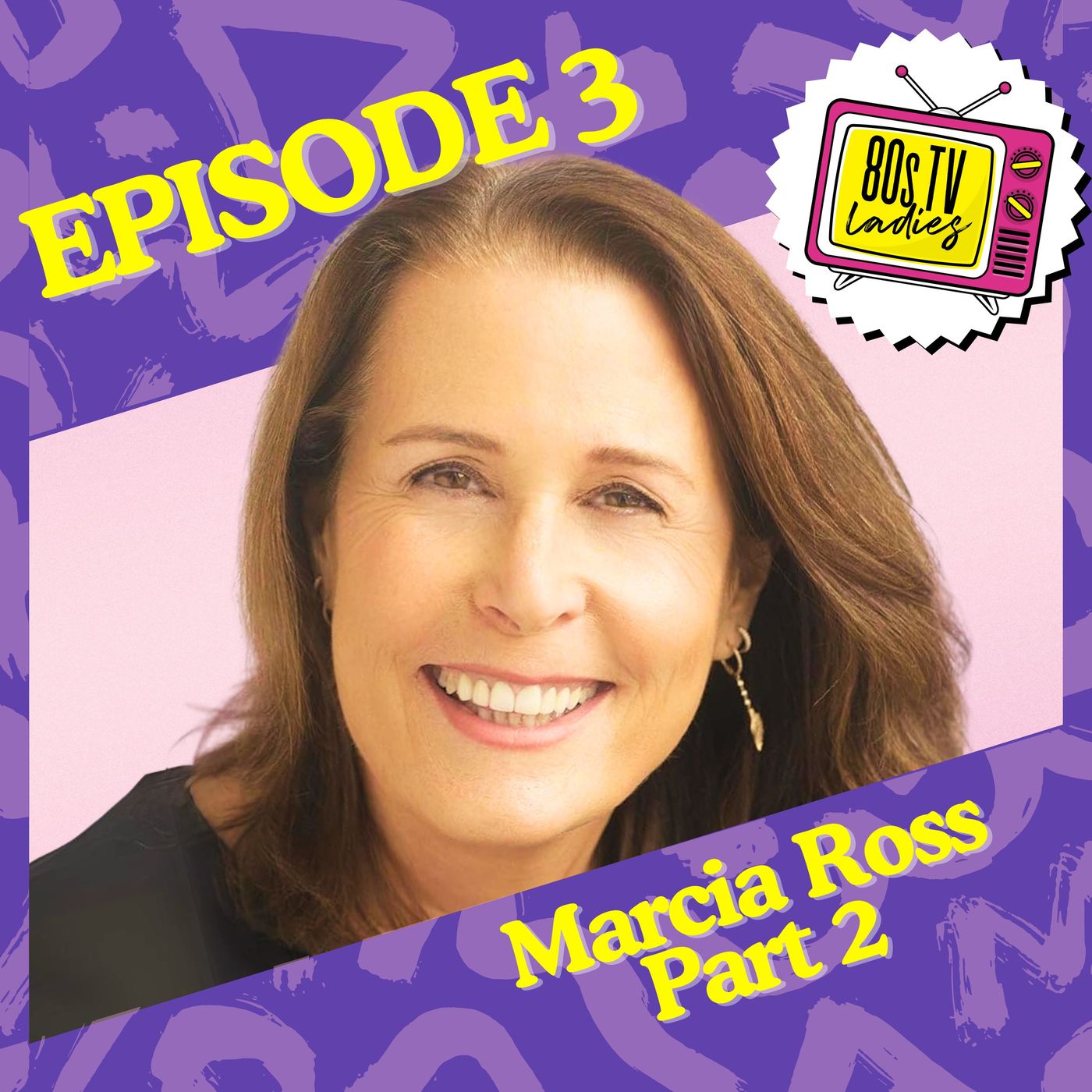
Casting Jeff Bridges, Anne Hathaway, Keira Knightly and more | Marcia Ross, part 2
About this episode
In Part Two of our conversation with Casting Director Marcia Ross, Susan and Sharon discuss the changing business of Hollywood, favorite finds, shrinking budgets, and going from in-person auditions -- to auditioning on tape -- to just clicking on a link…
Casting Director Marcia Ross has been instrumental in putting together amazing ensembles for classic films and TV shows since 1983. Susan and Sharon sit down this week with Ms. Ross to go behind the scenes and discover exactly how today’s “unknown” turns into tomorrow’s “big discovery” -- and who makes it happen. Among the young actors Marcia is credited with discovering: Anne Hathaway, Heath Ledger, Paul Rudd, Rachel McAdams, Jennifer Garner and Amy Poehler.
THE CONVERSATION
- To cast the pilot of Models Inc. , they auditioned “one thousand women” -- including Carrie Anne Moss!
- Angelina Jolie didn’t get cast -- because she “didn’t have the right look” according to Aaron Spelling.
- 8TL's own producer Melissa Roth worked on Models Inc, too -- as a camera assistant!
- Casting Princess Diaries: Anne Hathaway was perfect because “you had to believe she could be both things. (a real person and a princess)”
- Chris Pine in Princess Diaries 2: “He read for me and I was like, “Can you come back this afternoon?” He was an unknown, but within a day he had the part.
- The challenge of casting sequels -- how are you gonna get everyone back?
- BURNING BRIDGES: How do you tell your star Jeff Bridges that the actress he wants you to cast… just isn’t right?
- Romy and Michelle’s High School Reunion -- Lisa Kudrow and Mira Sorvino got the lead roles … but SNL's Will Ferrel and Chris Kattan ended up on the cutting room floor.
- “It’s a hard business. And it’s hard to have longevity because people always want the next new thing.”
AUDIO-OGRAPHY
Find out more about Marcia Ross and Jeff Kaufman’s documentary film work at FloatingWorldPictures.com.
To see Nasrin, go to NasrinFilm.com
Watch the Terrence McNally documentary Every Act of Life on YouTube, Amazon, or Apple.
or search on Roku.
Need some 80s TV Ladies merch?!? Check out our GRAND OPENING SALE.
CONNECT
Visit 80sTVLadies.com for transcripts and more.
Sign up for the 80s TV Ladies mailing list.
Check out Instagram/80sTVLadies.
Support us and get ad-free episodes on PATREON.
Find more cool podcasts at our host sight, Weirding Way Media.
BREAKING NEWS
We just won Best TV & Film podcast at the People’s Choice Podcast Awards!
Thank you to all who voted and to all our listeners and guests.
VOTE
Registration deadlines are coming up! Register or Check your US Election Registration at Vote.org
Happy 100th Birthday to President Jimmy Carter! Get Susan’s new play about Carter's White House in 1979: Confidence (and the Speech) at Broadway Licensing.
Visit 80sTVLadies.com for more info.
Listen to 80s TV Ladies at YouTube. Subscribe and help us grow.
Don’t miss out. Sign up for the 80s TV Ladies mailing list!
Help us make more episodes and get ad-free episodes, video interviews, and exclusive content on PATREON.
Transcript
Automatically generated, so expect the odd misheard name.
Weirdy, Weird Medio, Eadies, Leasy and so Pretty Babies Through the City, The money Man World. Hello, dear listeners, Welcome to Eighties TV Ladies. We look back at female driven television shows from the nineteen eighties and celebrate the people who made them. Here are your hosts, Sharon Johnson and Susan Lambert had them. Thank you so much for joining us at Eighties TV Ladies for this amazing interview with Marcia Ross.
You're really gonna love the second half of our in depth interview. And it's so special to have her here in person in our little studio. I'm so excited to have our first casting director on our show. Welcome back, Thank you so much. So particular reason why at that time you weren't involved in the episodic casting and just casting for the pilot.
Sure, because at that time, the movie for television business was a very big business. It was a really big business, and we worked a lot in movies for television that's where we mostly made our living. And then maybe we'd do one, possibly two pilots every year. So we didn't want to do episodes because that's very time consuming and you can't well in those days. You can't do a lot of other things if you're casting episodes, and so Judith never really wanted to do them because she felt like we didn't really need to do them for financial purposes, and this was just something we missed in the contract.
So you know, we did it, Judah and I did it, and it was challenging, but I'm glad I did it. Was that the only time you were doing the episodic casting, or didn't you later on? Well, when I was at Warner Brothers, I was overseeing other people casting episodic when I went in my own business. That's an interesting thing because when I left Disney, you know, the business that changed outside. Really it changed so much from when I went into Disney.
There was not a lot of big feature films going on, not enough that every casting director could have enough films. I mean, you've got like the best, most incredible, talented casting directors in the business, and they all do pilots, they do television stuff. I mean a lot of their movies are on TV. They're not enough big features anymore to support the casting directors where you'd get so much money to cast a feature the way there used to be. So really, all the great cast directors do everything now they all do They all do everything, maybe not all episodic, but they all do television because they do Netflix and they do Amazon and you know, HBO and stuff like that.
So you had that, and then you had this independent world, which I thought I would be very interested in because you know, I could do something interesting and different. But the independent world was also I don't mean independent casting, I mean small independent films that became like, oh, he's months trying to attach leads to things so that you could get financing. I mean it was exhausting and I don't really like letting people down. That was something and so after a while I just didn't really want to do it anymore because you try to get them people they didn't have money. They needed to get money, they needed the names.
It was very hard to attach people. If you couldn't make an offer, then it's heart You don't want to disappoint people. So I actually did a couple series. I did a Rob Schneider show at CBS, Rob you know, with the Latin Family, and then I did of Kingston Profits for ABC. Because I did the pilot and I stayed on.
Yeah, and then did you do just the pilot or at least the first season for Models inc. Oh I forgot about that, Yes, okay, I did. So there was an executive that I worked with at Warners who'd left and he'd gone to work for Aaron to be as head of I Guess production, and he asked me to cast that show. Judith and I actually many years ago, had done a pilot for Aaron Spelling called masa ra in the Brain Peter Billingsley, you know he's a producer now, or maybe his brother when the Christmas story person I don't hear a brother was an actor. I can't remember, but any was called Maserati in the Brain Lynn Lauren was running.
I don't remember meeting Aaron at that time, but Larry asked me to do the show. I didn't think I was going to do the episodes. I hadn't planned on it. But I also I love the guys that were my producers. They were just wonderful, fantastic people.
And it was one of their birthdays, I remember, and they really wanted to stay, and I said, okay, it's your birthday, I'll stay, you know, So I did. As first, I did a whole bunch of the first episodes. Yeah, so I did that show. I was thinking about it because I saw that you wanted to talk about that, I spink. I saw like a thousand girls for that show.
I was going to say, that is a cast of very amazing women. Carrie, Anne Moss. Harry Moss. Well, yeah, you know, and it's really interesting because I read so many women, and I also knew if you watch Aaron shows, he liked a certain kind of actress. So I was trying to put together a cast of people that were believable as models, but believable as actors and also believable as people Aaron would like.
That was the challenge. So this is a story I love to tell. So Aaron was the nicest person. Aaron had this huge office over by the museum on Wiltshire, the oh okay kind of museum, And he had this office with this very big office, and he had this desk there, and then there's this big round couch was I think probably leather or something, a big, big couch, and the room was like filled with people. When you come it was just Aaron and Aaron, this person and Tony Sepalvia and there might have been like eight people or more sitting in there and the producers of the show.
You'd walk in, you know, it was such a for actors, intimidating, but Aaron was so polite and he had this butler guy, and every day, you know, you go in and there was a certain time and he would bring you like, what would you like to drink? And they'd serve cookies. It was really something, and he was so lovely to all the actors. But I read Angelina Jolie and I just felt, oh, she's the star. So I called her back, but before she came in, because I just remember it so vividly.
I remember I had this chair, you know, and what I used to do is like at the end of the session, I get the chair and I face them and talk to them about, you know, the people they'd seen. So I sat in the chair and I said, like, I'm going to bring somebody in, and Aaron, here's the thing. I know that she's not probably the type of actress that you're looking for the show, but I would be remiss if I did not bring her in because I just think that this girl has really something. So I bring her in and she reads and of course she's fabulous, and she leaves and closed the door, and of course they loved her. Says, well, you're right, Mark, she's a star, but she's not right for the show.
So that's my Angelina Jolie's story. But Carrie Anne Moss, who's wonderful actress, you know, you see, that's a surprise, like you can't know when you do a show like that, which person, particularly because Carrie on at that time, she wasn't quite as modelly looking as all the others. So we did some air and makeup tests and stuff, and we cast her and yet she became like the breakthrough person. Yeah, well, so why was Angelina and Jolina right? Because she didn't look like a SoCal you know.
She wasn't she wasn't a particular kind of look. Yeah, she's exotic looking, which is of course a lot of her appeal. But for this show, she exuded more than it could be sustained in a situation television. I mean, she's a movie star and she was supposed to be one. Yeah, you know, she's so compelling, she's so incredible.
You know, you meet her in a room and she just knew and she was young, she was probably like nineteen at the time. Now, so Linda Gray sort of headed up that cat. Yes. Now, when you're casting something like that, do you like go Okay, once we lock in Linda Gray, then we fill it out. Yeah, she'd worked with her and I think before, so yeah, that's what we did.
I had to cast everything. Else, yeah, know our own Melissa worked on Models, Inc. What did you do? I did? It was a very young camera assistant.
Oh wow, Yes, it was my first Junion show. Frank and Chuck were the guys. That's it, Charles, the two, Frank South, Frank Sauth. Yes, the producers. Yeah, they were the nicest people.
Yes, yes, I had a great time on that show. It was very lucky, Yeah, very lucky. After I left Warner Brothers, I was on my own business for you know, a year and a half. So that was one of the things I cast in that year. And if I did another show too.
It did this pibly called Robins Hood's. Oh yeah, I don't think it ever went to series, but I did the pilot also for that. But somebody interesting is in that one? Okay, except that if I did it, but it would have been the reason I would know that because it must have had somebody. I was a fan of It was a lovely group of people.
It was I was very proud. That says something. I remember having all the pictures up on my wall, some of them like David Goldsmith and you know what's Kylie or whatever it was from Australia. Kylie. Yeah, I mean in Ukes Garcel Bouve.
I did cuss. Yes, it was like the second or third episode in my Cascarcel. I remember looking at all the pictures. I think I have a photo at home of my wall with all the pictures on my wall. I had an office up a spelling It was just like to me, what I love?
All new people that you'd never seen before. It was so exciting. Yeah, I came down to visit you. Yeah, and it was really it was really lovely the DP and it was a lovely set to visit. We just had so much fun.
I later learned we were really good crew. We were a feature film crew working on television. Yeah, I mean it's the show looked great. It did when I was hired. It was nine episodes and then they just kept adding and adding, but it did not go on too long.
Yeah, and all those people I don't know, Cassidy got married and left the business. That wasn't surprising. Yeah, and then I think David Goldsmith got out of the business. I don't remember all of them, but our hands done incredibly well. Yeah yeah, and she was great to work with.
Yeah, she's a lovely woman, whip smart. Yeah. Canadian, Yeah, those Canadians. Man, You're credited with discovering or at least introducing a lot of young talent, Yes, right, like clueless who were your favorite finds? Oh wow, Well when you say it that way, really it's only because I actually cast them in something that brought them to attention.
Because honestly, like usually they had like an agent or a manager and maybe one small credit. So I mean, honestly, yes, was I there advocating for them? And it's a big word in casting. The casting director is going to be your best friend. I mean, if you if a casting director likes you, even if you get this, they don't forget you.
But all these people had people who found them somewhere, who were agents and managers. But the casting director is the person that really like advocates for them and puts them in front. So I think think you know, I had met Paul right I was doing a television movie when I was in my own business, Connie Selica was the lead. I think, gosh, Connie Selka, you know, it's mow. And I had this part of a young guy who worked at this newspaper or I guess she was some sort of investigative journalist.
It's a long time ago. I can't even believe I can remember this, but I ended up reading tons of people, all these young guys, and Paul was where I met Paul. Also, it's where I met Brecon. And what was interesting too was that when I went to meet Amy Heckerling to interview for the job, I put together this presentation for these roles. Alicia was already attached.
I did not cast her if she came with that because she had been attached at Fox, because it was at Fox, and then Scott Ruden kind of took it over to Paramount and cut the budget and a lot of other things. So I had met all these young guys. I mean I brought in. The person that tested with Brecon was Jeremy Renner. That tested with Donald was Terrence Howard.
There was a lot of people, and Paul went through a huge casting process. It was a big process for him, but he's a real trooper boy, and he is such a major talent. He's really talented. Of course the Athledger of people talk about that. Anne Hathaway, I think one of my favorite, though, I mean obviously Anne, which is a funny story.
I was mentioning for the Princess Do Yeah, which is funny. I had seen Anne because my friend mother of the Potter, who is a very old cast, she's retired. She was an old casting friend of mine who casts Running to the Steel. She had cast this pilot for Fox, and she said, we cast this girl. She hadn't met her.
She came from New York. They'd seen her on tape. Next time you go to New York, Marsha and do some generals, you should meet her. A man. Anne must have been like sixteen fifteen at the time.
She was young. And I did it general with her in New York, and then I just when the movie happened. She had actually done the pilot. The show lasted two or three episodes, but I didn't forget her, and I just thought, this girl, there's something. And we were trying to get her in and trying to get her in, and her manager didn't want to going on tape, and finally she was coming through la and on her way to do another film that she'd booked.
I got her in to read for Gary, and then we screen tested her and I put together this whole book of pictures of her dressed up dressed down, because the thing I knew about Ann was that she could be real, but you could turn her into Audrey Hepburner or you know, this beautiful princess, because that was the key to casting the role. You had to believe that they could be both. You know. It's interesting because Mandy Moore had also tested for that part, and I just I don't know how I knew that she had like the singing career, but I was a big advocate for like, let's just find a role for Mandy Moore. Let's find a role for Mandy Moore.
We should have her in the movie. I loved working with Gary Marshall. Gary Marshall also was a person who knew actors. He knew when they walked in whether they could do it or not. He liked them.
He did not torture you and say more, more, more, I want to see more. He didn't do that. If the person was great, he knew it and he saw it and he said, okay, let's put a pin in that one, you know, and let's see what we can do. But really, the Chris Pine story in The Princess tyres too. So we were casting that role and we had some people lined up to a test.
I don't know that I felt that we really really had it. You know, we had a couple of good choices. One I think could have done it, but I wasn't one hundred percent there with it. And Roe Diamond, who was a wonderful agent, calls me one day and she says, I have this client. His name is Chris Pine.
We grew up in La His father was the actor Robert Pine. You know, he's been doing theater. He did an episode of something, but he's he's going to go back to New York. You know, he wants to go back to New York and go do more theater and some other things. But would you just see him because he had you know, she wanted him to have the audition.
I said sure. He read for me. I mean it was like, okay, can you cut I'm back for Gary this afternoon. So he did, and then we screen tested him with Anne. You know, and I remember I remember with Nina Jacobs sitting there with him, sitting with Nina and the other executives in the screening room watching Chris Pine with Anne and the screen test.
Oh a little rubber red for a little bread. You know, there was something and even though he really didn't have done anything at that point except one episode in some theater. And I really appreciate working for these people at that time because they said yes. Many people would not have said yes. They would have said go out and find a name, but they didn't.
They said yes. I was very fortunate. And so when you do sequels, are you like on board contractually no, or it's just because so yeah, let's do it again. Well, I guess you were at Disney like. Yeah, I mean like I worked, I didn't work on the Enchanted sequel.
How do you approach the casting for a sequel? Do you approach it differently or you like, I got to bring somebody new I got. Well, no, it's that's script dependent. I mean mostly how your progres sql is that if the last movie's been so successful that you're making a sequel, then the options that you have on people that were pre negotiated when they made their first deal. That's a problem because everybody wants more money and doesn't want to do it for the options.
So that really becomes how do you get everybody back if the person like has become very successful as a result of the film. So the options in the contract aren't casting stone in so far as if we're going to do another and then you have to do it kind of. Well yes and no. I mean I don't know what's happening now there, but what it used to be. You know, if you had no real credits and you were a first timer, then you would do the picture and then you would do two options.
Sometimes because they thought down the road there'd be a sqel or they wanted to have some person, you know, for future casting, so they would pre negotiate then when the people had no credits, you know, and before success. So it became, you. Know, difference between Anne Hathaway before Princess Diary, that's right, and Anne Hathaway, yeah, after. Pride, and so you have to work those things out. Same thing with Julie Andrews.
Well, I don't think we had options with Julie Andrews. So that's the other thing. When you have certain people who were in the one, but you didn't take options. And this is true with all sequels. Okay, all sequels, it's not just this movie all of a sudden, Now you really want those people to come back because you need them for the sequel.
And now it's like, well, oh, it's starting from ground one with the negotiations. That's crazy. So speaking of Julie Andrews, that was a huge get. It felt like, yeah, she's and the nicest person, the nicest. Person, and so when you're like, you know what would be great?
You know it wo'd be great in this role. Well you have a list, you know, it's not too many people on the list. No, because you got to play the court. We were very lucky. I mean that's you got to hand it to Gary.
I'm sure you know Gary could pick up the phone and call I mean, you know, Gary Marshall had a lot of relationships. He was delightful. I was on set for Princess Diaries because we did a lot of a lot on that for digital because it was a young people's game. But it was super fun to work on that movie because everyone was so nice. That's Gary.
Yeah, Gary sets the tone. Yeah, he was really lovely, as was Anne Hathawayne. Yes, she's still lovely. Yeah, as was Julie Andrece. But I really we didn't do a lot with Julie Andrees.
Julie Andrews was very nice and very approachable. This has been amazing. Who would you call in anytime you had a chance. Oh, I mean well, I mean Nne, Richard McAdams, Chris, Paul Rodd, I'd work with other Jeff Bridges. Oh my god, I love Jeff Bridges.
It's like the greatest thing. When I got to cast Jeff Bridges. Oh, it was like a dream come true. Nice. Oh my, unbelievably nice person.
It's so nice. Nice to hear we all love Jeff Bridges. He's amazing. I was so. I did this movie called Stickett about high school gymnasticists, and Jeff Bridges was the big star lead of the thing.
And I mean I've had a crush on Jeff Bridges for years. I just love Jeff Bridges. He's a wonderful actor and just can do anything and just incredible. So Jeff asked me to read somebody he knew up in Santa Barbara where he was living. I think she might have worked at the gym something, you know, dead me for a small part, and of course, of course Jeff not a problem.
So she went on tape and I saw it, and you know, she wasn't an actress, but I did, of course, so he wanted to know how she did. And I had to tell him. And it's hard because you like you're going to tell the star. Well sorry, but I said, Jeff, I'm sorry, but really it's just not really very good. He said, Okay, no, I understand it.
Do I still have the part? And I said, I said, Jeff, I have waited my entire casting career to have a movie that is with Jeff Bridges, So yeah, you still have the part. And then I went to the set and there he was, fortunately an old friend mine, John Kirby was working on the film with the girls, like working on coaching them in between to help out with the director so she could do other things. And he's standing there and I'm like, I'm so nervous, like I go barely go up. I said, John, could you just introduce me, you know?
And it was so incredible to meet him, and I subsequently spent some time with him when we did Tron and we were in London together because I was working on another film with the same director. But he again, I mean, some of these people are really nice, and he's one of them. That's so great to hear. That's our favorite. Indeed, all right, real quick, Romea Michell's High School Union.
No, yes, because that came out of nowhere, it felt like at the time, and those actress were. Well that that was a play that had been done here. Robin wrote a play. We did a table reading of it, and Lisa Caudreaux was in the play. Engineine Groffolo was the other role.
But at the time we were going to make it into a film, it was like Lisa had just started friends, so at least she had some spin for them. But there was concern that we loved Jeanine, but just two people that really no one knows. And then we did cast Jeine in another role because we loved Jeanine and we wanted her to be in the movie. And then there was this thing about Cassie. The other part was really hard to do.
I mean, we got a lot of passes and then we got to Mira Sorvino and I guess at that time, I'm not making the story up because it has been told before. But she was dating Quentin Tarantino at the time and he liked the script. So she was doing another film in New York, and I actually flew to New York with the director and the producer to meet with Mira because the studio wanted me to go, and she then agreed to do the film, which was great because I think that really made the difference. But some of my really favorite stories there was I'd gone to London like every eighteen months, and I'd go to the theater every night, and I meet a lot of actors, you know, And one of the people I met was Allan Coming.
I met him in London and I just loved him, and then I saw him in a couple of movies and he was so different. And so when he got to LA I said, listen, I'm going to give you the script because I've got this project coming up. And I think that because I need an actor for the part he played that could do a lot of different things and be believable, and he had that range, and that's how Alan Coming. And then we had the cowboy part at the end, and we still hadn't cast it, and then I got this tape and it was justin Threau. It was The Cowboy, but he had done you know, nobody knew.
The other thing is they had just been on Saturday Night. But you know, Will Farrell and Chris Catan they were cast in the movie too. They were waiters at that They're not in the movie because it was but they were waiters at the high school resunion. Yeah, oh my god, that's amazing. So did you do the Chris Catan movie at Disney?
No? I did not. Okay, I work on that. Yeah, I did not. It was actually kind of fun.
That song stuck in my head for a long time. I did not. I worked on it as an executive, okay, because when you're an executive, you're not picking and choosing, you know, And so I took the thing about as an executive. You know, they're all my kids, and frankly, I just had to find something about everything that I liked that made me care. You know, I love this director, I love this producer, Will.
The script's great, well this, but you know something, and I just sare They're all my kids and I gotta love them all. And I feel I was very responsible for the work that we needed to do and do it. Well. I got to tell you, I think I lucked out in being at Disney Theatrical at the time that I was, because it was a lot of amazing movies coming off what may not have been the best Disney time. It then hit this stride from Six Sense to Pirates.
Yeah. I worked on all those films. Yeah, amazing, amazing. It was probably shortly after that they stopped doing so many movies and they were going. To more of this franchise.
Yeah. I was in a lot of meetings about the franchise model that was col. Because they also did and they started buying these companies to get that. You know. The story with Johnny Depp was really, to Dick's credit, Jerry really wanted to do a movie with Johnny and he just we were trying to get him to commit, and so Dick sat down with him because you know, Jerry was, by the way, fantastic producer.
I'm sure you worked with Jerry, you know, talk about knowing how to promote your own movie, I mean, or how to cast your movie. Jerry was amazing and great taste in actors. So Johnny went up to meet with Dick. This idea of doing a movie based on the ride had been sort of floating around for some time, and Dick said, well, how would you feel about this movie too, And that's how he ended up in that movie. And then I remember being on the set of in Wonderland because I went to actually visit Anne.
You talked about going on sets. I went to see Anne and Johnny was there, and I remember chatting with him because I had just seen, like on Hollywood Boulevard, all these people now in front of ground and it's. Like Jack Sparrow, yeah, yeah. And I said, any, I said, have you ever gone out there, like maybe in your costume it got up to one of these people, because it's all these people dressed up as him. It was crazy.
I'll tell you one last cassing story. So break time. We'll be back soon. Welcome back. If you don't want to listen to those ads anymore, go on over to patreon dot com slash eighties TV ladies and you can get a mad free.
Let's continue with our conversation. We worked on Enchanted for many years. There were many many incarnations of Enchanted with different directors before it finally got made, you know, with Amy and I had seen Kieran Knightley on a Robin Hood Store. It's television movie I think on ABC or something, I don't know, And right away you could tell we were trying to make a version of it at this point and we wanted a screen tester, and her parents were like, she's was just like fifteen or sixteen, and no, we're not going to do options. So that went away.
But when we started casting Pirates and Rono Crusts, who cast the film, who did a fantastic job, I said, just look at this movie. You can never know lest we have to watch everything. It doesn't mean I really cast her, but at least i'd seen her in something and could tell right then like we should keep this person in mind for things. So when it got to the point where they were actually thinking about actually testing her, and Jerry liked her and Garth Tubinsky liked her, you know, at least I could say to my bosses at the time, yeah, like, I know she is. I think she's great too, Like I would take credit for that.
But what I could do was stand behind the decision and support them because I knew that the person was good to that. And did you keep a list or just sort of a mental list in terms of people that you saw, just kept it. All in your head, lots of it. Yeah. Yeah, that's very impressive.
Okay, so let's talk about people you loved in the eighties. I mean, can we just talk about Gsmart? We can all day long. I saw gen Smart like probably in like I Got eighty one, I don't know, very early on. I saw Jeane Smart in uh my Last Summer at Bluefish Cove, which is a play that she did.
Say out here premiered out here. Yes, and Jean was in that play at the Fountain, right yeah, or the Odyssey Okay, I don't remember what theater. Jean was in that play, and then of course she was there. But you know at that show that she does, you know where she's the Las Vegas Comunians. Oh my god, jan just it's like brilliant and it's so wonderful to have seen the arc of her career, Like you know, it's she's brilliant as she always was, but you know, just watching it, it's incredible.
What about Scarecrow Missus King where we started it in our podcast with Kate Jackson and Bruce box Lightning. Oh I know, well, yeah, Bruce box lightner. He was the first tron. Actually, yes, he was right. You know, we pass him a little cameo when we did the second shrot and Bruce was on the set.
Yeah. No, I mean Kate Jackson. I mean, now these where are these people? You know? Yeah?
Yeah, I think Kate was great. She had a huge career. Yeah. I think it's hard to have a career as an actress. I think it's very hard.
I think it's very by the way, I think it's hard for anybody to have a career. I mean, to be a working actor and to be able to support yourself as an actor. There's so much rejection before you even have success. It's very difficult for people. I mean, I always tried as a casting director to have a very warm environment in my casting office.
You know, I'd go out to the love out of Gare. How many people were sitting out there. I'd walk out there and say, Hi, I'm Marshall Ross. Nice to meet you, I think, and every person got that. And I would look at their resume and I would try to find something before we launched into the audition, and I would always try to be kind because it's such a hard business and you know, somebody's coming in.
They're reading for like a two line part right or one line you know, Hey, hey, you know that's all they're reading for, you know, and they've got this audition and is there one audition for the week or of the day, and they you know, they've dressed up and they put on makeup with the you know, they're showing up and they're in your office and they're waiting with all these people and they see, you know, twenty other guys with the same side or whatever. You just want to make people feel like, even if they don't get the part, that their time was valuable too. I just believed in that it's just a really hard profession and it's hard to have longevity because people always want the next new thing. Yeah.
You mentioned a little bit earlier about the changes in the business of casting since you started. I wonder if you could expand upon that a little bit. Sure, Well, when I first started, you saw actors in la and the agents had to come to your office and read the script. So you didn't even send out the scripts to the agent. No, no, no, you didn't.
They had to come. I mean, unless you know, I guess William Morris or something happened, but you know there was William Morris and icem that's it, right. So people had to come pick up sides. And then the agents they would make an appointment and they would come to the office and they'd pitch their client, you know whatever. Then Gary marsh who invented Breakdown Services, his mother was the agent, Nora Sanders, and Gary would come and read the script.
He came up with the idea of Breakdown Services because he would go to the A offices on behalf of his mother. But he built that business. We didn't even have a computer. We didn't have a word processor, you know, everything was hand and typewriter. And then if you were casting for something really big, and you'd go to New York when you were working on a film because you needed to see the actors.
I went to New York a lot in those days because I needed to put people on tape, you know, for Brewsters Millions and for Crossroads Crossroads, because the actors were in my Rainy's Black Bottom, Charles Dutton and Joe Seneca, who I cast in that film, I saw them in the play. So I went to New York for those things, and then my producers would come in, you know, so you'd go. But then what started to happen is everybody goes on tape. Now when you're a casting director, you're not just watching auditions from LA. When I did Kings and Prophets, I would read actors during the day, and then I was looking at audition tapes from India and Israel and England and Australia and New Zealand and Ireland and New York and Chicago and you know, anywhere there was an actor that spoke English.
So now you're inundated with tremendous You know, when I look back at my earlier notebooks, like a clueless notebook compared to like the notebooks at the end, you know when I was casting, I mean they're like four times the size. Wow, because there's just so many more actors and you can discover all kinds of people in other countries. Also, that's an expectation that you didn't miss that. And then of course everything's posted online and now everybody can get break down and everybody could put stuff, send you tapes, and everybody has your email address. So all of a sudden, in addition to making a request of an ancient I'll say well what about these people that I didn't you didn't asked for, so now they're submitting all and you're getting all the input for casting directors can be overwhelming.
Yeah, I mean it makes sense because you can access things so much easier. And it's both beneficial because it's beneficial to the person that's not living in La or New York. Yes, but it is challenging because it means so many more people are vying for the same. Part, right, and or you don't go you know, I mean I'm. Seeing person any you don't see in.
Person or like all the little parts. I remember I was working on a film called September Gun with the Robert Preston, Jeffrey Lewis, Christopher Lloyd, Patty Duke, Aston Don Taylor who was the actor when Father of the Bride, but he was the director. And I remember I had to go to Arizona, to some little down in Arizona and see all these local actors so that Don could do there when I did, you know, Lone Wolf McQuaid, the Chuck Narris move and I went to El Paso. But you went to these towns, little places and you found actors, you know, Now you just hire a local casting director. They just put the people on tape.
You watch them in your office and then every by the way, there's another thing because everything's on tape and everything's input it now into these systems, everybody's watching them at every level. It's not just going to your boss, this executive and that executive. So many people, especially in television, you know, all it takes is like one person not to like something out of like eight people watching it because they all have access to it. Now it makes it hard for casting directors. My husband Richie said, the casting is way more people involved.
Oh yeah, and it used to be for smaller roles, because we know a lot of actors, you know, and they'd be like, he'd be like, oh, you know who would be great for this, Andrew vis Miller. And then you'd go, hey, casting director is Andrew how about Andre Even's Miller? And now he's like, because it has to go through so many chains. I kind of say that anymore. Because I always thought, well, you know, we've hired a wonderful director.
Why does that person just have what they want? I mean, yes, they're believe me. I worked with plenty of producers and directors in feature films, they got who they wanted. There was never like, yeah, okay, everybody looked, but there was never like you can have that person. So there is always that, but I think it's more on like TV these days, just so many people have access and everybody's looking and you know, they just have so many everybody's got, you know, their fingerprints on everything, you know, and it's all deferring up.
It's you know, it's a very political thing. I feel for actors. Yeah, it's hard to do anything by committee, and I get the impulse on some level, but at the end of the day, I don't know how productive it truly is. You're hiring these people to make decisions about all sorts of things casting and all sorts of other things, and maybe they should be more trusted to do it that way. Well.
I mean, I think with casting directors and their director, some producers, people have long relationships and I think there is a great deal of trust. But in the end, particularly in television, you have to get approvals and so it's you know, you can have the greatest person, but sometimes everybody can't agree. You have to settle on somebody that everyone can agree upon, unless it's a very powerful director. You know, then of course, you know, not a big deal. But if you're somebody that's not you know, the big, big big, you know, then you have to play by their rules, so you can't always get your first choice.
But it's hard. And then as time went on, people didn't even want to come to casting sessions anymore because they didn't want to say no to people. It's hard to meet people in a casting session and then like not pick them, you know. So it's easier to watch everything on tape, which you know, actors like to act for people. Yeah, and so more and more casting sessions themselves are done by tape as opposed to having actors come in.
Yeah, because because of COVID. Yeah, well but now that COVID is kind of people are starting to go back, but not so much because you know what, people get used to things. Everybody got used to watching everything on zoom or being sent to tape and not having to like organize their schedule on going to a casting session when they didn't have time. You know, they're too busy on the set to you know, right, are there too many other things? Writers, room, this thing, that thing.
You know, there's too much you know, going on. So it's just easier to send them all a tape and have them look at it. I mean, yeah, it's not even a tape. It's just send them a link. It's a link.
Everything's a link. It starts a link. Yeah, I mean, it's just easier, you know. So it used to be a tape something. I mean you had to edit the thing with the scenes, believe me.
You know, you'd have to make a demo thing on an actor and you'd have to like cut a splice and make the tape. Its crazy and trying to get the you know, in my office at Disney, when I was in the Frank Wells Billy, we had this tape room, you know because right because it's being there for a long time, I inherit from the previous people, you know, before I got there, and you know, it was an incredible library of stuff. And then after a while we didn't need it anymore because everything's online. Yeah, so oh yeah, all right, So where can people find out more about Marcia Ross if they want to? Nowhere?
She's like, I don't want anybody. No, you know what you can find out about our films. We have a website, Floating Floating World, pictures dot com. You can go to Nazarene dot com. Our films, Every act of Terrence mcnallely, Ever, Active Life, The State of Marriage, Father Joseph, The Savoy King.
You know, you can find them all and all of them. And I really am so proud of this. I am very proud in the pivot of my career that all of our films have distribution. All of our films are available on multiple platforms. You know, you can see all of them if you wish to.
That's fantastic and I'm very proud of that. And for apparently for the rest of your life, you can see a lot of things like has because you know, I'll leave. It's the one thing that has really really amazed me because and you all know this because you work in the business. You know, you work on stuff and then it's over, and it's like you can't get too attached because frankly, it's just a thing you did and then all of a sudden someone would come into my office. You know, different ages, children, adults, certain people go, oh my god, The Princess Diaries, Robbie and Michelle, ten things I hate about you clueless like these films.
Whenever I think, well, my work doesn't mean anything to anybody at any time. It never will again. Somebody says to me those movies as if like, yeah, I watched them and I showed them to my kid, or those were my movies when I was in high school. I mean, it's really it really surprises me every single time. I mean, I'm very flattered, I'm very honored, but it totally surprises me.
I think that we have discovered, in doing a looking back at it aties television, how meaningful those shows are to people, like they're meaning They're meaningful because they watched them with their mom, or they watched them with their daughter and they gave them joy. Alma. You know. I think I think those are the things that we are looking for now a lot. Now.
It's like, yeah, I think the rom com is making a comeback for after a long pause because it's nice. Well it's nice to have something to watch with your kids. Yeah, you know, and that speaks to you. I mean I watch, you know, with my daughter, I watched tons of things, you know, thank god, I you know, because she was of the age, so we watched a lot of the Disney Channel, a lot of stuff on the channel that I might not have actually watched. And therefore, when we wanted to make, you know, the Lizzie McGuire movie or what does everybody think about Miley Cyrus or this one or that one, I was like, oh, yeah, I watch all that with my daughter.
Yes, she got to meet all of these people, Brothers, Debbie, Levada, Miley Side, Selina Goes, she met all of them when she was growing up. And at Disney was it like, hey, come on, let's use our Let's use our people that we've brought up. It was encouraged. You couldn't do always. You know, Dick I remember, I don't know what was it with Dick or somebody I don't remember.
I mean it was Dick because he wanted to make the Lizzie McGuire movie and everybody's like a Lizzie McGuire movie, you know, And he's like, and he asked me what I thought. I said, yeah, my daughter loves that show, you know, I mean, and all her friends watched that show. That movie was successful. It was you know, we did a couple of movies besides the Miley Concert movie. We did a couple of movies with Miley, and those were successful.
Too. Yeah, and that was the time when they made movies that didn't have to be made for you know, two hundred million dollars and they could they could be made for you know, not as much and then make a good amount, but not everything right. Like it was. But they were they were doubles. They were solid doubles.
Yeah, doubles, right, not home runs. But you know, now, well, that's what they're doing for the streamer. I mean, all this I don't really know anymore what's actually being made for the theater, you know, you know well, I mean, I mean, I guess Marvel well that they do a lot of Marvel television, but you know, a lot of it's just being made for the streamer. But I have to say, having watched Ten Things I Hate About You, they're not made with the same kind of care. And I think it has to do with I mean, I have a theory that it has to do with the physicality.
Like it's like, because everything can be seechy, everything can just be done a little bit quicker and a little bit faster. Ten Things I Hate About You is very well shot, very well directed, a lovely script. And they shot on location. I went there believe it, and I took my daughter. We went into the high school in Tacoma and we were there the day that he legend was doing the bit where he's singing.
The steps out, you know, in the. Stadium, you know, and we watched that it was all done at the school. Yeah, and there was something very like it's just really every shot is interesting in that movie. And and you're you're sort of like, I haven't seen something like maybe BookSmart was the last thing I saw that was made with where it felt like every shot mattered, you know, and I think I don't see that in all the streaming content. Now, some of it I'm sure is great.
Well, it us budgetary concerns too, you know, I mean budget you know, you know, needing to produce so much content in such a short time. You know, with the finances what they are, it's just people don't want to spend that kind of money. And also, you know, just we didn't make these movies for a lot of money relative to what I mean. Clueless was made for very low money. But you know, even ten things with some of these movies, they were not made for a lot of money.
But that budget is not what people would do anymore. Because it's either like something really big or something very tiny, but something in between where you cannot guarantee we'll make it back in a theater. You just don't have it. Yeah, And the other thing I think that I've been feeling is we've been looking back at these television shows that like Scarecrow and Missus King. I mean, they just had a fortieth anniversary reunion where people came from literally all over the world to come to this thing.
But because there's so much TV in particular, it's so fragmented, you don't have that commonality of what everybody is watching. Oh listen, I was at a birthday dinner on Friday night with pretty much, I mean a couple of agents and three working gas in directors and two retired gas in directors. Which I always have is that everys or so, what are you watching? What are you watching? You know?
And the disparity about what people are watching, like this group's on BritBox and this I like all these like British mystery things, or I like you know, or I want you know, everybody's watching different things nobody's like or you know. I have that too. I mean, you know, I try to still you know we watch TV. During COVID, I got much more back into watching TV, you know, in the evenings, but like I did when I was growing up. But you know, you'll watch like one or well, there's a couple of things that happen.
You'll watch one episode or two and he's like, I don't really like it, so you don't watch any more of it, or you get really hooked on something like the Bear and then like in three nights, you've watched all ten episodes and then you're really depressed because it's over. What am I going to do now? But then it's over, Yeah, and it's it is nice to have choice, I'm not saying. But the downside of that is we don't have the commonality of what everybody is. Well you should look, you have what they just call like appointment TV because like if you did it, remember we're growing up.
I'm probably older than both of you. But when we were growing up, and you know, it was on at this time, this hour, on this night, and if you missed it, that was it. Maybe there was a rerun in the summer, but that was the only shot you ever had, you know, to watch it. Now you can watch everything and also The other thing was water cooler television, where you'd come into work on whatever day of the next day and everybody's like, did you see that? And everybody talking, We said Disney, you know, of course that was the way it was with movies.
You know, every Monday, when you go into weekend read, everybody's talking about what movie they saw that weekend. Now, I mean nobody goes to Harley has to go to a movie theater. They watch it on TV. Yeah. Yeah, So, as I said, they are upsides and downsides to everything, and it is nice to have choice, but I do miss having the common language of whatever is out there in the culture to watch and listen to, because everybody's in different places, whether they're watching things from the past or whether they're watching current things or catching up on something.
Oh you've only watched the first two episodes of this show. I'm on episode ten. We can't talk about it. You know, though, you know, sometimes like if I don't know where I was, was a hotel somewhere, You know, when you're going through the channels and you're like Skyking is om or you know, raw Hide or you know some of these shows you know that I watched growing up. I mean, like I was a little I mean, like as the sixties, you know, the late fifties.
I mean the first television show I was ever allowed to watch was The Flintstones and it was on Friday nights at seven thirties, So I was allowed to stay up till eight o'clock on Friday nights time to watch the Flintstones. But then I watched a lot more television as I grew up. But like you know Andy Griffiths Show, and I mean, you know, the all these shows that I watched, you know, as a little kid, all through high school. You can find them everywhere. Now, yes, you can find almost everything, but not everything we have discovered.
Yes, as we look at the I think the sort of seventies eighties is a little bit of a dip in streaming in that some things are totally available, but some things aren't. What do you want to see that you haven't been able to find? The nine to five television show Oh God, I remember that. Yeah, Rita moreno I, produced by Jane Fonda for the first two seasons, looks amazing. We've only been able to track down like what one and a half episodes on like in parts on YouTube.
Wow, which is weird. Well, even Moonlighting has only just become available for streaming because of music rights primarily, they had to deal with all of that before they could make it available. Yeah, we watched it. We watched the pilot recently. It was so strange to see it again after all.
These strange, isn't it? Yeah? Weirdly, in some ways, it held it better than I thought it was going to. We got to talk with Glenn Gordon Karen. That's probably a fascinating casting story because I mean, trying to cast Bruce Willis, I mean that was really hard.
He was saying that I'm had to bring him in eleven times to the network. And the network because I kept saying no, and he was like, there's nobody else to do it. They were going to cancel the show because they were like, we can't find this guy. Bill Murray's not going to do it. No one else can do it.
See that's it. But then then then I think he was like, I think they just said to make me go away. Well yeah, right, And a lot of credit to him, you know that he fought for this actor, you know, because he believed in them, and he was right. Yeah, but you know that's the you know, that's the problem. You know the you know these people, you know, these people write the check, they pay for stuff, and therefore, you know, they have a lot of opinions about what they think is their networking should be on their network, and you have to deal with that.
Yeah. Yeah, Well this has been so much fun. You can talk forever. Trust I am so thrilled. But Jeff, you put us together, you gave us so much great stuff, and it's it's been really fun that kind of it was.
Nice to meet everybody here. I thought it would be fun. In today's audio. You can find out more about Marsha Ross and Jeff Kaufman's past and upcoming documentary projects at Floatingworld Pictures dot com. Go to Nazarinfilm dot com to find out how to watch Nazarn and to watch Every Act of Life about Terence McNally.
Go to roku dot com and it'll send you to various places as Roku does. Thank you so much for joining us at eightiestv Ladies for this amazing interview with Marsha Ross. It's been such a treat and delight to have someone in studio Sharon. That's been really special. Today and I just want to shout out to all our Patreon supporters and thank you all for being so supportive of us and helping us make this show.
If you want to help support us, go to patreon dot com slash eightiestv Ladies. As always, we hope Eighties TV Ladies brings you joy and laughter and lots of fabulous new and old shows to watch, all of which will lead us forward toward being amazing ladies of the twenty first century. Hands pretty into the city, damping. Pull the money a man Had



Similar episodes across the network
Matched by shared keywords.
-
The Princess Diaries
2 shared keywords: anne hathaway, julie andrews
-
Special Report: Occupational Hazard - The First Coral Reefers (2026)
1 shared keyword: jeff bridges
-
Special Report: Ryan Kendrick on Carousel (2026)
1 shared keyword: chris pine