
Season 1 · Episode 620
Special Report: Ryan Kendrick on Carousel (2026)
About this episode
Watch the trailer at https://www.youtube.com/watch?v=EFJmY__SC8I
Transcript
Automatically generated, so expect the odd misheard name.
Oh gee is folks, it's showtime. People say good money to see this movie. When they go out to a theater, they are cold sodas popcorn in No monsters in the Projection. Booths, everyone pretend podcasting isn't boring. Got off?
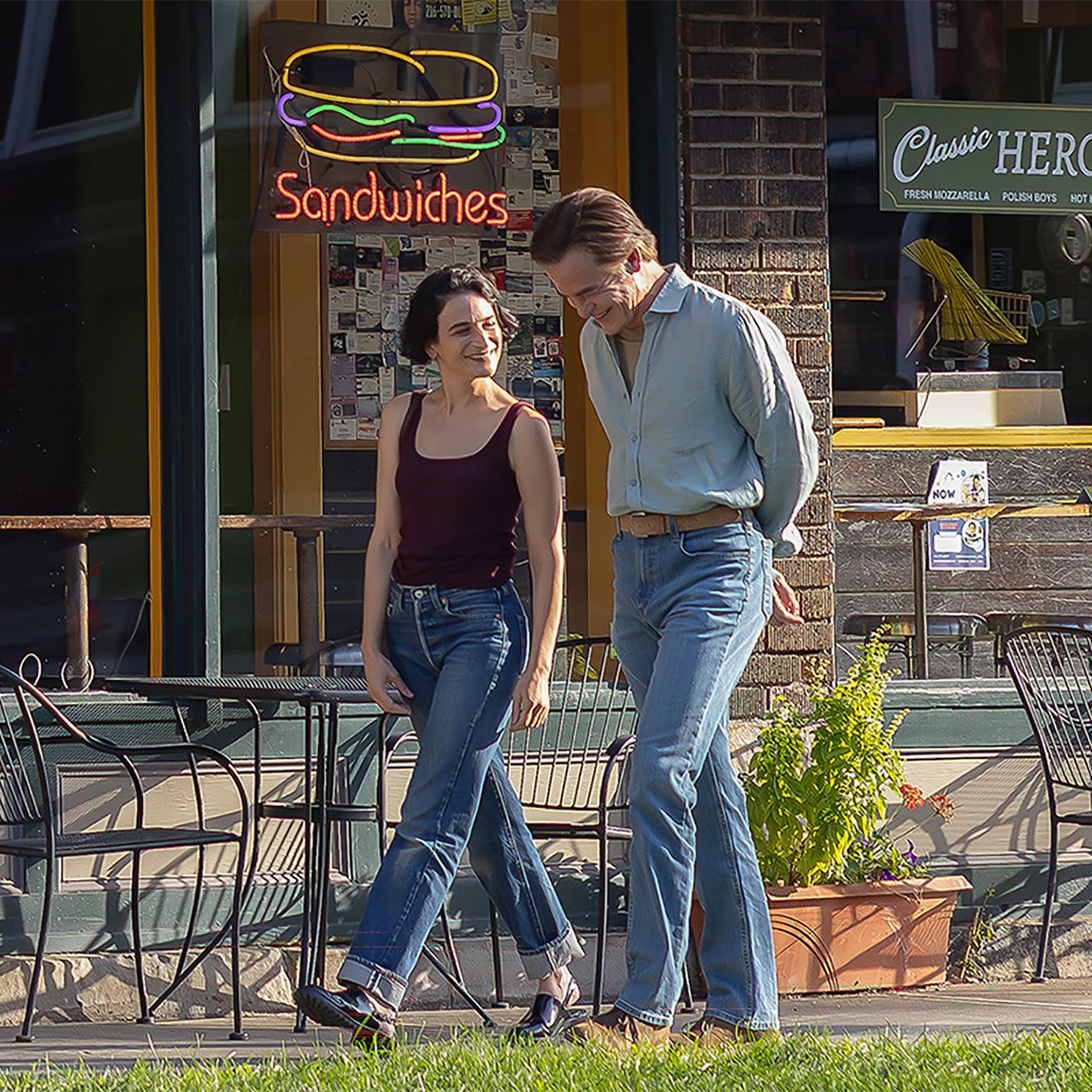
Hey, folks, Welcome to a special episode of The Projection Booth. I'm your host Mike White. On this episode, I'm talking with Ryan Kendrick. He is the editor of the new film from Rachel Lambert called Carousel. Now that has nothing to do with being sent to your death when you're thirty years old.
It is a new film that stars Chris Pine, Katie Sigal, and Jenny Slat, recently premiere at Sundance and should hopefully be coming to a neighborhood near you pretty soon. Keep an eye out, and in the meantime, I hope you enjoyed this interview. Before I talk about Carousel, I'm curious how did you get your start in editing and filmmaking. I originally went to school to be an audio engineer, and in school for audio engineer class, we had a sound design class and we ripped all the sound out of a scene from the TV show Alias, and we built the sound from scratch. It for like five six minutes of this TV show, And when we were doing that, I was like, Oh, I want to do this.
I don't want to record bands and stuff anymore. So then I looked at my school to see what the video department was, and it was. In the basement of the dorm and it had a VHS to VHS console. I had a Media one hundred computer and Final Cut Pro one on a Mac. So I got a key from my professor to the lead department and basically started teaching myself Final Cut on that computer that was in there.
And then when I graduated, I went to the Edit Center in New York, which quite a few people have gone to, but it's like a six week film editing course because I didn't know how to edit at all, really, and then I've been doing it ever since, really with many other different things because I live in Nashville, so I didn't have a ton to edit, so a lot of stuff I had to shoot myself for a long time. But did you end up doing like a lot of music videos or shorts out there? Yes, a lot of music videos. I've done, probably close to one hundred of them, which is a lot. And then I also was a videographer for bands on tour and stuff, So some.
Of that stuff I cut and some I didn't. When I started doing it, it was sort of when YouTube was just kind of starting, So I was cutting like little mini docks of like people in the studio or people on the road and stuff like that. But you know, the YouTube wasn't very big then, so it'd be like five hundred people would watch it if they even knew where to find it. Basically pretty much documentary work right there. But you know, the film we're talking about today is a narrative.
How was that transition to go from dock to narrative? In my Edit Center class, half the course was narrative and half the course was documentary. I had been trained in both, but narrative was always hard to get my hands on. So we would make little short films and stuff that I would cut together, and we would do forty eight hour film festival and all those kinds of things. I really transitioned into doing narrative when we won a four to eight hour film festival and we turned that idea into a feature film.
That was really the first time that I ever did anything that long or that extensive, which was basically shooting on the weekends, cutting the scenes we had during the week and it took us a year to make it because we had no money. I don't remember what the final budget was, but it was very small. With the gigs that you've had recently, are you just kind of now known in the industry and people say, I want Ryan Kendrick to do this, or do you still have to like hitch yourself, Like how does that go to get a gig? Well, for film stuff, you definitely still have to pitch yourself a lot and a lot. It's mostly connections.
This film Carousel with Rachel is like, this is our fourth film we've done together, and I've done a couple other ones with people who I've just been like introduced, who are like through connections and stuff. But again it's like narrative isn't my main job either, Like I'm a partner at a post house and we do I mean, our main. Work is commercials. A lot of my connections and a lot of the stuff that I do has absolutely nothing to do with the film side of it. The film side of it is just like the flexing a different sort of muscle.
That is basically it's basically impossible to get the same sort of like artistic fulfillment from anything else other than maybe if. It was like a feature documentary or something. It's just such a huge amount of work to juggle and keep in your mind and mold and shape. You know. It's just a very big thing.
But to go back to the question you were just saying, or that you just asked me, a lot of directors have their editor that they like, or they've met or that has come up with them through the rank. So it. Does become quite hard to sort of find new people to work with unless you start with people who are just starting out. Because it's such a. Unique relationship and it's very I mean me and Rachel have been friends now.
For like fourteen years or something. It's just a very close, close kinship that we share, and I mean it's hard for me to just come into with someone else and be like, hey, I can be this person for you. You know, So with knowing her for so long and having worked on these multiple projects together, what kind of prep do you do when she's like, Hey, I've got this new thing, harocel I want you to, you know, come on board of course, and edit this like, do you guys just speak in shorthand now? As far as what she needs or what her thoughts are. I don't know that I would ever use the term shorthand for Rachel.
But yes, this Carousel came about because our last film sometimes I think about Dying was at Sundance, but it took a year after we wrapped it for it to premiere. So she wrote a whole script in that year, which was Carousel. So she gave us. That script basically when we went to Sundance for the other film. Generally, what happens is she just kind of gets our initial reactions and everything.
Carousel in particular, since it was an earlier draft, she had to do revisions with producers and stuff. She would talk to me about the revisions that were getting made to the script to make sure that it would essentially tie in with the edit, or that we weren't stripping things away that would be problematic when we got there. All of that, you're just like, you do like that. A couple of conversations like that, and then a lot of it's like you gotta just hear about the production of all this stuff. But when it actually gets to like right now, actors are locked in location, everything's this.
Her and the DP. Dustin will usually just will. Get like a three four hour phone call and I'll listen to them talk through the entire scripts, what they're thinking, what. They're doing, blah blah blah. And I'll have like some notes that I've pre.
Written down, but usually I just sit back and draw and just listen to them talk to it and sort of like absorb all of that information, which was something that we had started doing dying. We did that where we just went through the whole script and it just put us all on the same page basically, where when stuff would come in, we didn't have to have lengthy conversations at the end of the night. Or because Rachel doesn't generally watch Daili's she sort of expects me to watch them and let her know if there's anything wrong or anything going on. But she's pretty well attuned into what she's seeing, so there's not a huge reason to be like, well, let's get on the phone for two hours and let me explain everything that's happening.
We're already kind of going, so. You're there throughout this entire process. If not before, which is wild, and then being able to see those dailies. Are you already starting to put together scenes as things are starting to collesce? Yeah, I mean I had an assembly of the film done three days after they rapped, so I was cutting the film the entire time that they were shooting, which was a bit tricky because they shot on film, so I was three or four days behind them, which generally I'm not.
Usually you're only like a day behind or something because they're like uploading proxies and stuff. Which was another thing that was like she had to kind of be relying on me because she's like, well, I mean we're like it's four days later, that location's gone, so we can't do anything about it really, you know. Wow. So by the time you're seeing stuff, if you're like, oh, you missed a shot or I would like a shot of this, like you're pretty much done. Interestingly, on this, we did have one thing that we went back and reshot because that house they had the whole shoot, and so when something came in and we had cut it together, we talked about it and we went through and then they went back and reshot.
When they had Jenny again, like a week later, but for the most part that was like. It was pretty much not possible unless it was like that specific location. And how are you keeping crack of everything? Like, oh, I you know this scene is good or I'm missing a little slug here and I need to get back to this, Like how do you keep everything straight? You know, obviously you can't do it all in your head.
No, I mean having a good assistant helps in terms of just like the technical tracking of it. I mean we had a very large spreadsheet that sort of tracked everything and where it was coming from, well out on one day, blah blah blah, all that other stuff. In terms of remembering where stuff is. I do kind of balance it a lot in my head, which I think is why I'm very drawn to this job and also very exhausted by the end of it, because you do sort of fill your ram with a lot of information constantly. A lot of it is just really good prep work, which we've sort of dialed in over the years from doing so many commercials and so many jobs and so much stuff coming in that we sort of just have this process for how we organize the footage and how we know where everything is and how we're able to communicate.
It's not necessarily that complicated, but it is just a very good strong base to begin with. Some of it I cribbed because I did one season as as an assistant at SNL and the way that they prep all the shorts is really great because they just have to be very fast, and so some of their process I've sort of like interwoven into mind to be able to just sort of like know. Where all of this stuff is. Well. And obviously you're not still cutting on Final Cut brow number one.
What have you. Graduated to these days? Where do you used to cut? Yeah? So I was in the Math Exodus from Final Cut and I went to Premiere and I've been on Premiere pretty much.
Exclusively since then. I think I've used Avid maybe a couple of times, and we use Resolve like in some of our workflow stuff, but I've never like fully used it. It's been just Premiere like for years now. It seems like maybe a decade. I mean, I can't remember when the Mass Exodus was, but it was quite a while ago.
Do you use that to help kind of figure out where things are as well? Like the don't they use like projects for that? So we use yeah, we use productions, and you know productions. It's a great organizational tool. I think the thing that makes it so useful as like collaboration really because of it's I hate saying this, but it just has a lot of these similarities to like how aviod is in terms of like bin usage, and these projects are now like these bins, and people are locking and unlocking them, and people you can.
Go in and out of them, you know. My organizational method basically it went from everything is inside this one very large project to breaking all of my folders and substructures into individual projects now that are like inside. Of the production. They're out there shooting, You're getting the footage a few days later. You're always a few days late because of the transfer.
How much after they wrap their filming are you looking at your first cut. Like the full film first cut, your first pretty major rough cut three days after I had an assembly that I had honed a lot of stuff, and then I think I was watching my first. Cut like a week after wrap. Basically, Yeah, which I honestly didn't have a choice on this one. It just sort of had to be that way because of the schedule.
Yes, it is incredibly fast. I will say this. Rachel and Dustin do not shoot a lot of takes, so that is incredibly helpful. And it was show on film, so they couldn't just let the camera run, so that helped. And you know, this is the first film where I've had an actual assistant on it, so.
I was afforded the. Time to essentially sit and watch Daily's like on my sofa, like on a screen while she was doing a lot of the prep work. And that did alleviate a lot of I don't know, I don't like to say why, Like prepping stuff is like useless time you find so many cool nuggets when you're like looking for stuff. But it did give you a good jump start to doing it. But I think, usually.
What do they say, I probably I think an editor's cut you usually. Get eight weeks, maybe at least I think you get to do eight weeks. And I think on this, miner's cut was at five, so it was like three three weeks early. And then usually the director's cut is at like fourteen or something, and we were, you know, at god knows eleven or something. I don't know, it just it just moved at a rate net speed.
Once you have your first cut. What happens then do you then show it to the filmmakers or how does that go? I have discovered that. The last two films I've done, they did not watch the first cut that I did. I'm trying to remember on this one.
I think we watched about five minutes of it and then Rachel said stop, and then she just would watch them as we would go through working and working and working it, which is pretty similar to how the last one went to, which was just I find it kind of curious to not watch it because it sort of cuts you off at your knees a little bit in terms of conversation pertaining to things towards the end or the middle, or things cascading and the reason why decisions are made. You don't really see scope of it. But I do think that Rachel probably would have watched it if we weren't in such an enormous hurry. I mean, she was very anxious to start talking about stuff and start working through stuff. They did the last day of shoot in.
Nashville, So she came in the next day and I actually told her to leave for a week and come back because she was saying stuff and asking me questions and I was like, I'm still like three or four days behind, and I even't seen everything, so I just don't have answers to some of your questions, which makes me useless to you because now you're just dictating stuff. And she doesn't really want me to just like dictate and be a button, but she wants me to have opinions. And I was like, I'm not gonna have opinions about this stuff, and I may not unless you leave for like four days and come back. And she did, and then she came back refreshed. Why the rush on this one?
Did you guys have a release date in mind or the first we'll cut off? Yeah, just you know you have to hit it by a certain time. And then you start back. You basically just go, well, if we get in, here's what like, here's the day that you have to turn it in. Here's how long it takes to mix, here's how long it takes to color, here's how long it does this.
And then you start looking at the counter, You're like, oh, well, I guess we just have to do it on this set. I guess it has to be done by this day. How close to what people saw at Sundance is what you came up with with that first cut. Oh, I mean, it's like an hour shorter than what. Yeah, the first cut that.
We sent to producers was two hours long, right at two hours, and our final Sundance cut is like one thirty nine I think. So it's changed substantially, which is funny because the last film was not like that. Some of it was that the script was much shorter, and so we were very weary leaving stuff on the cutting room floor. But on this one we always knew it was long. The first trip that Rachel sent me was like one hundred and thirty five pages or something, and she had an e weebin page backstory history on all the characters in the town and everything.
So there was a lot of material that we knew existence that we knew it was going to have to come down with. The first thing I did, the assembly I did, was basically. Like, here's everything, and here's. A bunch of ideas that may be good or bad, and you can reject them wholly if you want, or we can say this one's good. We could go down this path, but it had to have been two hours and twenty minutes span.
It was definitely too long. There's no way anyone would to watch that. When you were editing, because I remember speaking with Moni Hellman, and he was an editor before he was a director, and he would always talk about maintaining the performances, and he cut around the performances rather than the action. So these films also had a little different rhythm. I'm curious as far as, like you know, you're saying, she doesn't shoot a lot of takes, how are you finding like this is the best performance, and how are you trying to maintain those really good performances as we go through this, because you've got some top match actors in this one.
It's funny you say that because my mantra on this was like what would Thelma do? Because she just does not care about continuity at all. I did a lot of rereadings, like a lot of the older like merch books and stuff. I really did exist on the like. The most important thing is the emotional aspect of it, and a lot of times you can track back some of that, like physical space or continuity.
If you really feel like it's taking you out, then it's something you have to work on. But I think, especially with this film, there's not a lot of cross shooting either with multiple people in it, so that helps a lot for you to be able to to sort of get that emotional type. The same is true for Daisy on the last film, as it is for Chris on this one. When you've done some of these huge tent pole films, a huge. Part of your skill in art is the control of your body and aware of pow.
It's always moving in the repetition of those things. You're just not running into those problems as much, right, which is just giving you the opportunity to do whatever you want with the emotions of it. And I think some people like to dictate where they want these things to go. In this edit room of particular. We were very like, let the actors bring us to places, and let's follow them to where they're at, and let's see where they're going, because that's where we want to be.
We don't want to push them into you know, And so I did. I honestly, I didn't run into a lot of dead ends sometimes in scenes where you're just like, oh, man, I cut myself right into it because I was following these hands. And you know, the last film I did, there is a food scene, man, and it's like food scenes are so hard because it's a very obvious fork up cut up. In hand, not in hand, you know. And there just wasn't a lot of this, And some of it is the way that Dustin shoots the film.
He shoots singles a lot, so you know, you don't run into a lot of issues with it. With this accelerated timeline. Was there a chance to have an audience screening so you kind of see how things are playing. There was one that I wasn't at, and it was like two days before lock picture basically, so it wasn't entirely helpful. We actually have around ten people that me and Rachel send screeners to that we get notes up on everything we've done from basically the same ten people.
Well, mostly because we know their proclivities towards certain things. We know that they have a broad sense of stuff that they like. It's not very niche. And some of them are people who just don't work in the business at all, which is always good because you. Just need brand.
That's the thing with the screeners. It's so hard, man. It's like you just even if you do a screening room, it's like you get forty people and it's like twenty directors, ten editors, producer. It's like you're still getting you know, other people's art, wanting to be thrust upon it. And you really just want like my friends who watch it, who are just like we're friends because of our kids and stuff, you know, and it's like they don't care.
They're like they just want a movie to be good or not. They don't really care about They don't have any idea how to tell me how to make anything better too, which is also nice. You just want to hear, oh, this is too Oh I got bored, or this was really. Cool or blah blah blah blah. You know, you don't really want to be told sort of what today.
You just want to hear about what is wrong. And that's another big reason. The people that we. Have too, they're very good about just here's all the things that I saw. Do you like to watch in movies with an audience or are you just kind of done with it at that point?
I would have loved to have watched this foreign out screening with a group of people in a movie theater. I do love that for some reason, it's much more nerve wracking when it's done and you can't change anything. And the breakneck pace of this one too, I think it is may really hard because I just I hadn't seen the DCP, I hadn't seen the printed I hadn't seen anything. So yes, I do like I love seeing like, you know, things that people laugh at that I didn't know that was funny or any sort of response that anyone has. I mean, I do, I do love it.
Rachel does not watch it. She did not stood outside and I thought about doing it, but I faced the music and I said, like the entire time just hoping that there were no But the thing that's crazy is you're just watching it being like, god, I hope there's no mistakes in the thing. I hope that we didn't do this. You know, that's so much of it when you do it, like when you watch it basically with an audience immediately after you're done, but dying it was like it was done for like a year, so I was like, this is great. I just went in and we were like, just let it wash over me.
It was wonderful. Did you have any mortifying moments when you finally did get to see it with an audience or were you like okay, if this played. No, I think it mostly played. I didn't have any mortifying moments. Now, I mean you shouldn't watch it.
I mean we finished mix like I don't know, fifteen days before it screened. So it's really just too soon because you just still have notes, which I'm sure no one noticed them. That's the thing. No one cares. I care, but you're watching it.
That I really just needed like two more and three more months separation than I would have just been like, oh yeah, great, Yeah. I was wondering if you ever get like I don't want to say sick of something, but just too close to something you need to like step away for a little bit, and that obviously you didn't have any time for something like that. Here, the way that I put it is, it's not so much like it's definitely not like getting sick of it. It's when you were on a film. Especially because the pre production of this lasted.
For like, I don't know, two and a half three years. It really feels like the closing of a stage of your life kind of, and there is a bit of a mourning sense to it that makes it feel really hard to watch it because it is sort of like giving it up. I'm definitely not sick of it. I remember with Dying, we. Cut it during and so we were in quarantine and neither one of us could do other stuff outside of our houses.
We were cutting in my living room and we were mailing off swabs to get tested and stuff. And so when it ended, it was like an end of a phase, right, just the end of this period of your life. And I'm still in the period of carousel kind of you know. Do you have something else that you're working on now, or do you have to take a break between projects. I mean, obviously you've got the post House, but I mean as far as like another big production.
Like this, I have to take a break. I don't have anything particularly lined up. I've read like three or four scripts, but you know, who knows when those will fire up. The tricky thing is now I have to perk myself up and try to get another movie, which is a very hard thing to do when you've just gotten off of it, because you're just like so exhausted and you're just like, man, I'm just gonna put my head down and do my daily work and just do that work and read scripts and kind of chill. But I mean no, I don't have anything particularly.
It's one of the things that sometimes a script could show up tomorrow and then I could be on it in like two months. You know, you just kind of never know. It's pretty wild. Well, mister Kendrick, thank you so much for your time. This is great talking with you.
Thank you. You clamber and look because I know what will not helping hands for him. That's some painted glue. With red eyes. Most are swallowing.
The dragon dies and sous on tracks. The hands that strap you to its back. You turn around and look behind. The smiling eyes won't help you down. The chiny hands, the chiny feet, such little hawks.
To miss a be. Road chest talks and mirrored rooms don't took a thousand. Yes, staring back through. Stinging tunes, remembering loutspun house drill, the paint box tunes and wildlings. Then what schools you start to swoop?
Oh, painted violent lyric the starling horse that waits for you, its modes and words said, colors car. In beside your head. That ons just work. It's moto where sun coming still inside your head. The moms stacks were inside chuck chumps to stick rounded about that?
Yeah, a second chump stood stick and you. Put in a crown. Inside. Jack Chumps stood stick, rounded about by. Suda Hun stood stack and you was in love.
Well, can't rust It, can't read it.
More from The Projection Booth



Similar episodes across the network
Matched by shared keywords.
-
Casting Jeff Bridges, Anne Hathaway, Keira Knightly and more | Marcia Ross, part 2
1 shared keyword: chris pine
-
Smart House
1 shared keyword: katey sagal