
Season 1 · Episode 619
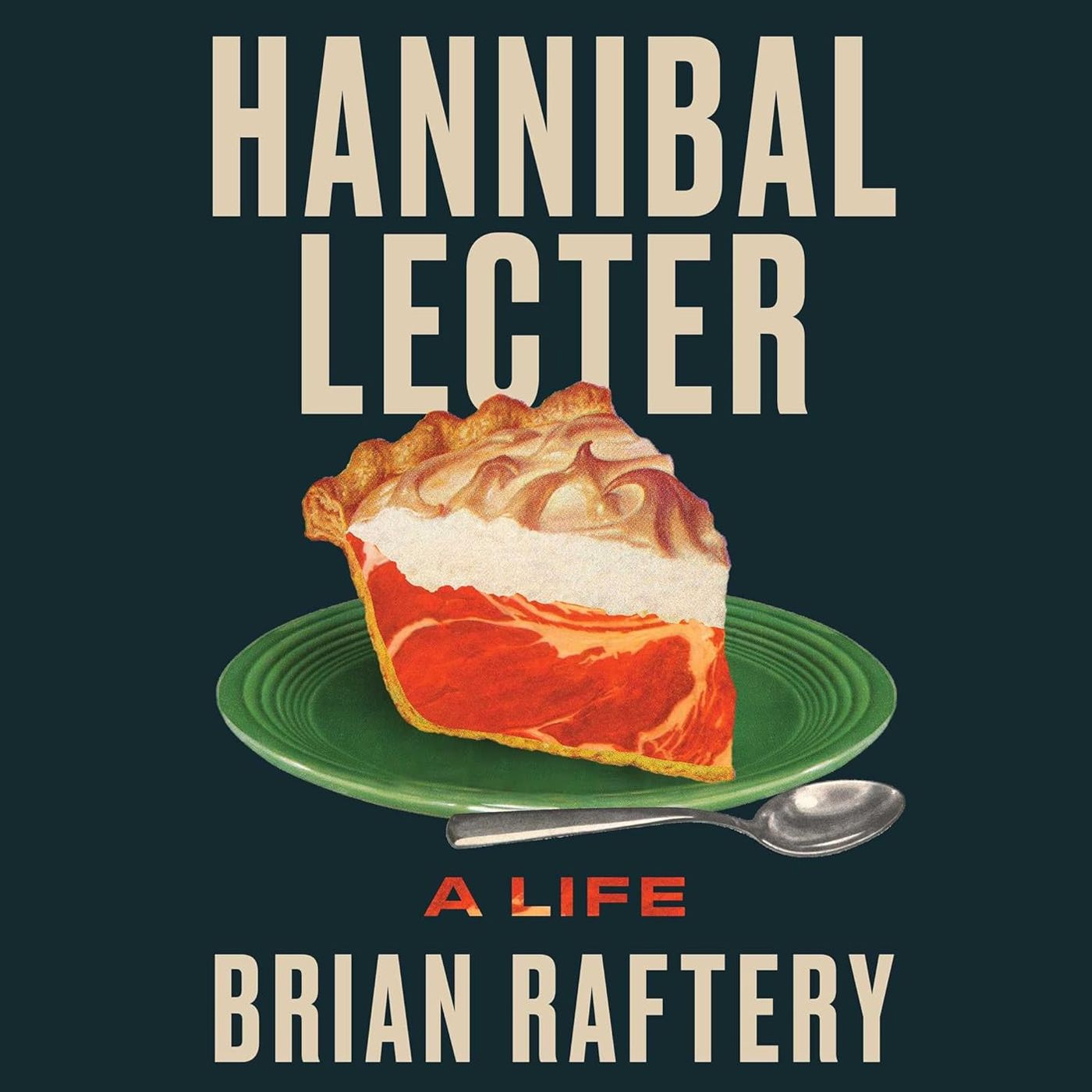
Special Report: Brian Raftery on Hannibal Lector - A Life
About this episode
Buy the book now at https://amzn.to/4qMuNzB
Transcript
Automatically generated, so expect the odd misheard name.
Oh he is, folks, it's show die. People say good money to see this movie. When they go out to a theater, they are closed. Soda, popcorn in, No monsters in the projection booth. Everyone pretend podcasting isn't boring.
Got it off? Hey, folks, Welcome to a special episode of the Projection Mooth. I'm your host Mike White. On this episode, I'm talking with author Brian Rafferty about his new book, Hannibal Lecter A Life. It is a biography of sorts of Hannibal Lecter, his conception, his interpretations by the what four main actors that have played him over the years, all of those different interpretations, and how they've been brought to the screen, what they were like in book form.
Really great book. I listened to the audio version of it, which mister Rafferty narrates, and he did a great job with that. Whether you're reading it or listening to it, I highly recommend Hannibal Lecter A Life. Check it out. And I hope you enjoyed this interview.
Where are you based out of Are you in la? Are you no? I've just outside of Detroit. Okay that's right, Yeah, cool, cool, that's awesome. Congrats on doing it for so long.
It's great. Well, thanks, I appreciate it. Yeah, you're a little bit of a podcaster yourself. You know, I had a phase I dipped it. I did a couple of shows, dipped out.
I'll hopefully do some more. I that Ringer Era. That contract kind of wound down, and I'm not sure whether they're still doing narrative shows. But those were really fun to do it. It's funny.
I had this goofy Robert Redford poster here. I always think of it when I see it. I just saw on your thing. There's a CIA logo up there as part of Three Days of the Condor, and I aways think of it when I had to zoom with Oliver Stone for those podcasts, because halfway through I was like, wait a minute, does he think that maybe I should have kept that out of you. I always forget to move Redford over before I start this anyway, But thank you.
I hope theel did some more of the Yeah, how did. You get involved in entertainment and writing about it and podcasting about it? It's something I always wanted to do, even when I didn't know I wanted to do it. My parents were both journalists. They both worked at the Philadelphia Inquirs and my mom was a huge movie fan and they were both very big readers.
So I grew up in a house where multiple newspapers arrived every day, magazines, and then my mom had a lot of film guides, like she had like a New York you know, there's a book called The New York Times at the Movies that came out in the late seventies, and it's just a collection. I actually have a copy of it here. It's just like a holiday coffee table book. They put out with a bunch of New York Times movie reviews, starting I mean probably in the thirties or forties and going up to like Star Wars, and I used to just read that all. I mean, look at that.
Look at the print ads I'd read. I remember, I get so scared. I would skip the ad that had Jaws because I was always had a big picture of the shark. So I'd always go from like some Judy Golland movie to the jazz singer. I would always I would always skip Jaws.
I always knew that page. But I love movies. I watched this Glen Ebert, I watched a bunch of movies with my mom when I was younger, and I think just being in a house where you could read about you could read movie reviews, you could read Rolling Stone profiles of directors or filmmakers. At a certain point, movies and music and television and two degree comic books were just things that I wanted to read about all the time. So that's kind of how this all started in a weird way.
I definitely remember, in like fifth grade, I was giving entertainment news updates in the class for some daily think, which is like the nerdiest thing. I cannot believe I did that, but I just I always loved this stuff. I loved I loved how movies were made. I loved movie reviews. I'm not a critic, but I love watching and reading movie reviews and so and reading.
And because I read movie reviews so frequently, that's kind of how I discovered the Sounds of Lampson first time. Tell me a little bit about your previous book, nineteen ninety nine The Best Movie Year. Ever, how did you decide that? Was it just because that was like the year for you, like as as far as your age, like that just hit or is that something that you saw in retrospect, and you're just like, well, gosh that I can't believe all those things just came out all in the same year. I was in it as it was happening.
In nineteen nine nine, I moved, I graduated college, and I got my first job, which was an internship at Entertainment Weekly, which became my first job, my proper job later. So I spent that summer just absolutely movie drunk, because for the first time in my life I was going from like rural Pennsylvania to New York City, so I could go all these screenings, you know, I could go interview filmmakers. So I was very I was on a really big movie high that year. But also in the office of Entertainment Weekly, where all these people were much smarter and more experienced, there was a genuine sense that this was a really good movie year, to the point where Entertainment Weekly ran cover story on how good nineteen nine nine have been for movies before the year was over, before even like Magnolia had come out.
I mean, it was just something was changing, and so I always knew that year was interesting. I always wanted to write about that year in general. This is because there's so much stuff that went on in the culture, which whether it was Team Pop or you know, the Y two K hysteria. And what I could do was when I wrote, when I decided to dive into that book, I thought, Okay, I can interview all these filmmakers I interviewed, like David Fincher and Steven Stodeberg and Sofia Coppla, and I can interview all these actors and we can talk about how these movies were made and they're very important movies to these filmmakers. So that I got all on the talk.
But what I really wanted to do was also look at sort of where the world was at that point and where filmmaking and the film culture was at that point, and I think, yes, I love the movies of that year. Would would I? You know, It's funny last year I did a whole run of like nineteen seventy five movies. I did a year once where I watched nothing but a bunch of like nineteen sixty nine, nineteen thirty nine movies. And I'll say, sometimes I look at the title of my book and being think, huh, best movie year ever?
I don't know, nineteen seventy five was pretty good. I think thirty nine was pretty good. But what I think what that year did was it took all these great movies from the past, whether it was The Graduate or The Wizard of Oz or seventies conspiracy thrillers and kind of spun them into the future in a way. Like all these filmmakers, all these great movies from ninety nine, whether it was Spike Club or The Matrix or Office Space or Election of the Blood of Witch Project, they were all extremely innovative for their time, but they were also building on film history. And also, you know, ninety nine is like it's all these classes of filmmakers collide.
It's Stanley Kuprick and George Lucas make their first directive films in more than a decade for both of them, Brad Bird, Sophia Coppola, they all make their first movies, and at the same time you have like this kind of emerging upper middle class of filmmakers like David Fincher and Sodaberg and David o'russell who were given a lot of free reign in that period. So for me, it was, yes, I do love these movies. They're fun to talk about. Who doesn't want to write about the making a fight club or office space or the matrix. But I also felt like that period for Hollywood and or the country and for popular culture was kind of a fascinating time to look back on.
Yeah, as a film snob, I am not supposed to like Entertainment Weekly, but I will tell you it was my bible for years and years and years, and just like would pour over every issue, read it cover to cover, just absolutely loved it. It was just such a thrill every time and new issue would come. Out mine too, And it was I actually found something I wrote for my college newspaper in the mid nineties where it was like I'd read a little mini biography for our website and I'd forgotten about this till a year or so ago. I wrote that, like, my dream was to one day write an article, one article for Entertainment Weekly. I loved it Entertainment Weekly.
So to be able to go there work there for four years, I mean, it was a remarkable place to be. It just felt like I'm just I was describing this as someone else. There's a scene in The Simpsons where Bart heads into the offices of Mad Magazine and he opened the door and like Alfred Newman's there and there's sound effects going off, and that to me was like when I went through the doors of Entertainment Weekly, I was like, Oh my gosh, there's all these incredibly smart, very cool, very opinionated film and music and TV and book experts, and I was like, I could not believe I got to kin walk among them. So, yeah, I'm very fond of with It was the best job I ever had. I still talk to someone that I worked with there basically almost every day for almost twenty five years plus now at this point.
Yeah, it was a good time. It was a really fun time to be young and obsessed with pop culture and living in New York City and working in Entertainment Weekly. What's your day job. These days or do you have onethers? Is just writing, It's just I'm freelance now.
I do copywriting. I'm sort of in between things right now because I was doing these Ringer podcasts for the last couple of years, so I was doing one or two Ringer podcasts while working on this book on the hand of Electric book, So I haven't been able to kind of write that many freelance articles or really reach out more so I'm I'm jumping back into freelance writing in a big way, so which has been fun, and hopefully I'll start figuring out the book in this couple weeks that I want to do. Tell me about hand Ab Elector of Life. What even brought you to this project? Well, I always love The Sounds of the Lambs and I have a very I have a long running, strange relationship with this movie in that I first heard about it when I was in eight I still remember this.
When I was in eighth grade, I was singing in the back of my Spanish class. I was not a good, stupid surprisingly, but I would bring I would bring in Mad magazine or comic books or Premiere. I would bring in movie magazines and kind of read them in the back of class. And I was reading Rolling Stone and I read Peter Traver's review of The Siles of the Lambs, which was a rave. It was very detailed, and I normally never read reviews that detailed until I saw the movie.
But I started reading this and I was like, wait, what is this. I mean, I'd heard of the book, but I was only fourteen or fifteen. I was not reading it, and I was like, wait a minute, so there's a horror movie about a cannibal and serial killers and it's really good. I was just so used to that point to either, you know, Slashers, which I loved, but were never you know, they were never they were never written about in Rolling Stone magazine for like two thousand words or whatever, or you know. I was used to kind of like really ridiculous TV movie the week serial killer films.
So when I read that review, I was like, oh my, my gosh, I've got to see The Sounds of the Land, which I absolutely did not because I was terrified of it. I did not see in the theater. I did not see it unil it came out on VHS maybe ninety two, ninety three, and from the minute I saw it, I was really kind of obsessed with it. It became, you know, it was The Sounds of the Lambs was the first movie I ever listened to a commentary track for, like I found it was the first movie I ever watched on laser disc. I think I actually copied.
I worked at a video store in the nineties, which was the greatest job a Snipemano tain weekly. A video store job of the nineties is the greatest job of all time. So I went. I stayed one night and I transferred our laser disc copy of The Sounds of the Lambs to VHS like so I have it on wide screen, and then I transferred. Then I copied it, I think again with the commentary track.
I had two copies of it. So I was always fascinated by this movie. I can't say I fully grasped what was grasped, what was so great about it At the age of fifteen or sixteen, It's just like a cool, scary, dark movie. But in the last thirty plus years, I've rewatched it every couple of years, and to me, the Sounds of Lambs is a very It's just the ultimate renewable resource of a movie. Every time I watch it, I catch something new, and so I always want to write a book about it.
I thought about that in early twenty twenty. The pandemic kind of slowed things down, and then my editor and my agent we all just started having these separate conversations about this again. And my editor at Simon and Schuster, who's a really smart guy, said, why are you making this just about the Sounds of the Lambs? What about Hannibal Lecter I mean, this character has been in all these different films. The TV show is obviously huge, the books are still best sellers.
So we decided together we kind of came with this idea of let's look at Hannibal Lector from a couple of directions. One is how is he created? How are these books written? And how are these movies made? Really getting into the granular of how these things came together.
Who was Tom Harris, this creator who no one really knows. I mean, Tom Harris is like one of the most successful literary recklesses of all time. But also looking at the idea of Hannibal Elector, despite being a vicious top killing man ere has kind of become like this beloved anti hero and how does that tie into how we feel about serial killers of popular culture in the last thirty plus years. So there was a lot of stuff to dig into, and it was for me the idea what made it really fun was the actual kind of granular, like I said, like, how is this movie made? Going back into the researching of Tom Harris, going into the publishing industry, the TV industry, and the movie industry.
That was really really fun to research and learn about. But also trying to figure out this bigger picture of how much of the prime based popular culture that I've consumed in the last thirty five plus years is a result of Sounce the Lambs and why why do we kind of feel a weird attraction to serial killers in popular culture when in real life they're repulsive, you know. So it was kind of mixing together a lot of on screen on the page and real world elements that was really interesting to me or made a scene compelling to me. I mean, you're setting yourself up for such disappointment when it comes to having to write about Tom Harris, like, oh, let me write about JD. Salleng personal life or Tom Pinsion and what he's up to these days.
I mean, it must have been such a struggle for you to just find all these quotes and try to gather all this information, and then are you trying to track down people that he knew and could talk to them as well? Reporting on Tom Harris for this book was the most frustrating and the most exciting aspect of it, because we all knew we were never going to get in the talk. So Tom Harris has given three interviews formal on the record interviews since nineteen seventy five. That's not a lot to work with. And one was in nineteen seventy five and two or in twenty nineteen, and there's not a whole lot, like, there's not a whole lot in there.
So I knew I would have very little primary resources to work with, which is kind of fun, I mean, because it means that I'm learning as I work on this. So that's the fun part of doing this kind of research. I lucked out in a couple of ways. One is that the interviews that he did give were pretty substantive. I mean, we're pretty substantial.
He gave Q and as he did a long public access interview in twenty ninety, so there was stuff where I can at least hear his voice and get hisact, exact quotes in his exact recollections on particular events or how we create certain things. I also looked out in that even though a lot of his former peers and collaborators have sadly passed away, and some of them passed away while I was working on the book, you know, there are people that he came in touch with. One of his former book editors, two of the female of FBI agents that he met with while researching the Clorie Starling character. I also looked out in that Jonathan Denny, who directed the Sounds of the Lambs. Even though Tom Harris really kept a very very safe distance from Hollywood, he clearly really liked Jonathan Demi.
He clearly really liked Ed Saxson, who was Jonathan Demi's producing partner. So Jonathan Demi's archives at the University of Michigan there are factses and letters from Harris which I don't think anyone's ever really seen in the last thirty forty years. They're not super long. Some of them are honestly just cartoons or restaurant recommendations. But there was just enough in there to feel as though I got a little bit of an idea, you know, any a little bit of an idea of who he was.
And for a project like this, anything I could find was useful, Even if I cut some stuff, I wanted every scrap, and ultimately I got. I found out a lot about Tom Harris. But what I think kind of worked in the end is that I had to be very careful. I don't want to compare Tom Harris to Hannibal Lector for all kinds of litigious reasons, but you don't. But they are somewhat similar.
I mean, they're both these very incredibly smart, globe trotting guys with kind of highly refined tastes who disappear for long, long periods and who are never fully known even by some many people who know them. So that was kind of interesting. I mean, how much of Hanniballector's autobiography of Tom Harris, I imagine maybe in some small ways. I don't think, you know, I don't want to accuse Tom Harris to be in Cannibal, but I do think there are some really interesting similarities. And just to be able to learn more about someone who's written, you know, huge best sellers but also arguably two or three of the best popular novels of the last one hundred years was really fun.
Everything I learned, every little scrap was still rewarding. How do you approach a project like this? Do you just start making a list of like, here's all the people I need to talk to or try to talk to. You know, obviously you've got the actual ephemera of the books, the movies, those kind of things, but just how how do you decide like this is where I'm going to dive in and at what point. I mean for a project like this, and the way I approached most projects is I first figure out what the structure is going to be, which is which in this case was fairly easy because it's going to start with Tom Harris, and it's going to go through his career, and it's going to go through all these major projects, whether it's the Manhunter film, the Hannibal TV series, it's going to go all through them in chronological order.
Basically you can't really jump around. And then what I did was I just made a huge list of everyone from each of these projects that was a priority to me who was still with us, and then I just was lucky enough that I got a lot of them. I spoke with Michael Mann, I spoke with Brian Cox, I spoke with Ted Tally, who wrote the Sounds of Lamb screenplay. I spoke with Ed Saxon. There were certain actors I got, and I knew there was maybe some people that I probably wasn't going to get.
I knew I was gonna get Tom Harris. I knew I wasn't gonna get Hopkins, frankly, because he was working on his own memoir. I didn't get Jodie Foster, which surprised me, and which was a year of frustrating year and a half of frustrating emails that went nowhere. But whatever I mean, I found. I found easily over one hundred and fifty interviews with her, and I could pull from that.
But the real fun for me is finding people that I'd never heard of that are part of this story and actually tracking them down. One of my favorite interviews, maybe my favorite interview the whole of the whole project, was in Tom Harris's Lecter novels. There's a woman named a Thiene of Arunas who was thanked in the back pages. Tom Harris does not thank a lot of people in his books, so I was like, well, who is a Theene of Runas? And then I found her name in effects from Tom Harris to Jonathan Demi as an FBI agent he spoke with to help develop the Chree Starling character.
So I was like, I had to find this person at least see if she'll talk to me. As it turns out, she knew Harris very well, stayed in touch with and became friends with him all through the eighties. And nineties and me into the even two thousands, and she was wonderful. I spoke to her for two hours. She sent me a lot of her material from Harris.
She had great stories. So someone like that, who is someone I hadn't even heard of before I started this project, became an invaluable source. And she's great. And I think she's working on her own memoir, which I'm hoping she published, because she has so many great FBI stories that I couldn't fit into the book. So it's just a matter of like you know, at a certain point, you just have a giant Google doc or of names, and then it becomes a whiteboard of the names that you're still trying to get.
And I think for this book, I did something I think I only did like forty or fifty interviews for this book. I think the nine nine book I did sound like one hundred and thirty. This almost different because, as I said, unfortunately a lot of people had passed away. You know, I was talking to Roger Corman's assistant a couple of weeks before he passed away because he's in the Silence of the Lands and I wanted to talk to him about that, and he was, you know, one of Denny's early mentors. So there was a company I really wanted to speak with that speak to who Unfortunately we're not with us anymore.
But you know, that's the beauty of archive research. And you can go through commentary tracks and old newspaper stories and magazine articles that aren't online and you just you know, that's another thing you do early on is you go on eBay and you buy every magazine story from the nineties about Jodie Foster, Anthony Hopkins's. Ninety percent of them are not going to be online, and they're going to have really great stuff you can't find elsewhere. And even if they don't have great stuff, you want them anyway so you can read them and you won't be wondering six months later, was there something in that story I should track down? You know?
And speaking of archives, you mentioned the archive at U of M for DEMI did you come out here, Dan Arbor? It was a blast. I spent five days. They gave me access to about twelve or thirteen boxes of sounds to Lambs material. For people who don't know, I mean that university has orson Wells papers, Robert Altmans, Johnson, I mean, it's a fantastic film library there, and the people there were amazing.
I got the sense of the boxes had not been fully processed yet or only lightly processed, and there was so much amazing stuff. I mean, you just you come in on a Wednesday more and pick up a box and then you know, like twenty percent of it's just stuff you don't need. But then, like I said, there's a fax from Tom Harris, or there's you know, there's a bunch of contact sheets. I think Demi had a photographer on the set of Styles the Lambs almost every day, which is wild, and they're really great photos and they never been published. Y're just you know, it's just behind the scenes.
And the head of elector in Clodie Starlin. And then I also found, you know, the most fun stuff was you know, one of the things I found was this thick xerox was this very thick facts that was basically a transcript of Anthony Hopkins appearing on an on a Los Angeles morning radio show. After Salds The Lambs came out, and it's kind of like a zoo Creuse show where these guys are like just like we love had to be like are you still great, And I'm reading it and at one point, like this woman calls in and she's like, could you say my name as Hanniballecter. I was like, oh my gosh, like this, you know that that audio is gone forever probably you know, It's like I would not have found that had a publicist not had a transcript ordered to that radio interview.
So stuff like that is so much fun, and it's one of those things where you I almost wish that you're working on this with a partner because you just wanted to turn them and say like, oh my god, I can't I found this. So my poor editor, who's incredibly kind, I was always emailing him like the most like I'm like, oh my god, I just found this dispaction blah and blah blah blah. He's like, great, Okay, how's the book coming? Just like I don't need to update him with every granular aspect of it. But the research is so much fun, and for anyone such as yourself or other movie fans.
I remember when I came back and my friend was like, well, how is it or how is your research trip? And I was like I want everyone I know who loves a movie to have the opportunity to walk into a room where they say, hey, you know that one movie you've been obsessed with for decades, here's thirteen boxes to tell you everything you wanted to know. I mean, it was such as a as a real hardcore movie nerd and lover since birth. Basically, it was a fucking blast. It was so much fun.
Were you ever tempted to say, you know what, I changed my mind, I'm just going to focus on Silence at the Lamps again. No, because but I always knew at a certain point that that's the making of Sounds of the and the reception to it and its legacy was going to be the middle of the book. But I also knew that, you know, in the last ten years, especially Manhunter has become such a crucial movie for young movie fans. And I knew the Hannibal the TV show has a remarkably large and loyal fan base. So I knew that I could not, I couldn't ignore all these great Hannibal lecture stories.
And I also knew, you know, frankly Hannibalising, which is a book in a movie that did not do well, the story behind that, to me is just as interesting as some of the stories behind these. I mean, I'm interested in things that don't work, you know, I'm interested in Brett Ragner's Red Dragon remake and what was going on in the set there where Brett Ratner, you know, takes over this giant franchise. I mean, all the sort of maybe like the lesser ranked lecture stories were equally as interesting to me. What was the most surprising thing you found while you're doing your research on this one? Was just sort of a big picture thing which was part of the book, is looking at this idea of true crime and how we've always had it with us, but also but why in the nineties, after Sounds the Lambs, did we have this kind of serial killer as pop culture explosion which I was aware of, I lived through it.
I mean, I remember when Spin magazine and other great magazine I love that got the right for you know. I remember in the mid nineties they put Charles Manson on the cover. I remember watching movies like California and Natural Born Killers and seven in copycat like opening weekends. I don't think i'd really kind of put together a how how quickly Sounds the Lambs influenced kind of big screen serial kill culture. But also as I was researching true crime and actual crimes throughout America in the last fifty sixty years and going through newspaper archives just to fact check something here or there, just the sheer number of unsolved murders that are just on page two or page three that had never become big cases.
It's heartbreaking. I mean you kind of look at if you pick up any newspaper from the seventies in America, just scan a couple pages, You're going to see a lot of violence, and a lot of it's murdered. That's as clearly it was never solved, never became, you know, something a national scandal, and that's really really heartbreaking and honestly kind of scary at times, not that I'm naive about how much violence goes on, so that was kind of There were definitely days where I would wake up and I would have at like five o'clock to start working, and I'd open up my laptop and there was like some sterial killer newspaper story for the night for four and I was just like, oh, God, like I do not want to stuff on my date with Is.
But you know that said, there were also really fun things meaning the archives. One of my favorite things was on the next to last day, maybe last day, I was going through these boxes and there was a box just just marks publicity, which I kind of stayed till the end because I was like, well, it's a bunch of articles, you know, if I can't make it through, i'll leave this one on read. And I opened it and lo and behold. Inside burying the back of this box was a tiny white envelope that said best Director. And I was like, what the hell is this?
But I opened it up and indeed, it's Jonathan Demi's It's the announcement of Jonathan Demi's Best Director Oscar, which is cool to see, like and I think his Academy Award tickets in there. And then out of that ovel follows this other small envelope that's that's really a little piece of stationary. I open it up like it's on stationary, personal stationary, and it says, dear Jonathan for one's the best picture of the year, actually one, congratulations Steven Spielberg. And I was like, oh my gosh, Like this has been sitting in the back of a box for thirty plus years. You know, maybe someone's seen it, but it was kind of yellowed and folly it really even it had been clearly important to him and he put it away wanted to make sure he's preserved.
But it was just kind of in this floating between this, you know, these boxes of these folders, so stuff like that. You know, after you've spent two or three hours finding nothing and wondering if you're going crazy, to find something like that is always like it just keeps you going. And it's again, the research is the fun for all of these things. I don't love writing. The researching is great.
Well, what's interesting with the project like this? You've been around since Red Dragon came out. I imagine you being a movie nerd like me, you're probably watching the Oscars in ninety one, seeing that whole weep, you know, and you've been around through the release of all of these other projects. Must be a little bit of a trip down memory lane for you as well. It is, yeah, I mean, and it's funny you mentioned the Oscars because one aspect is that I could not wait to report on was the Oscar ceremony in nineteen ninety two for the movies that nineteen eighty one, because I loved and still love to this day.
I love Billy Crystal as an Oscar host. I get how corny some of those songs are. I get how small sty they are. I do not care at all. I would rather have Billy Crystal singing ridiculous song parodies for ten to fifteen minutes that have to watch Ryan Mendeld earnestly hand out of cinematography.
I mean, no offense to Ryan Roles. I don't know why I picked ten, but like, you know what I mean, Like I love those. So I was like, oh my gosh, I have to talk to Billy Crystal about coming out as Hannibal Lecter. He was the one person I never heard back from his publicist, and I was so bummed out to talk to him. But I also knew that I wanted to talk to Bruce Valanche, who famously wrote all these Oscar shows, and he was delightful.
I mean, he has very clear memory of working on that ceremony. So stuff like that where I think another writer might might say the nineteen ninety two Oscars with Billy Crystal doing Hannibal elector why is that part of this book? To me? That's an opening scene, Like that's something that's like, I'm like, no to me, because I love that and it is a trip down memory lane that that is a very important part of how of showing how this movie plugged into popular culture. And as you can probably guess, I only needed to watch maybe fourteen minutes total of that ceremony.
Did I watch all three and a half hours of it on YouTube with commercials? Probably yes, I will say yes, I will confess to that. So I love that kind of stuff, And yeah, I mean, I don't really want to traffic in nostalgia too much, but I obviously when I've written about history or done podcasts about film history, most of the time the films I'm writing about are talking about overlap with my lifetime in some way. I'm just trying to kind of give them a bigger context for them, or kind of find a narrative for them that I didn't realize at the time maybe people well didn't realize. So this was certainly the kind of thing where I was like, well, I know these movies pretty well, I know these books really well.
What don't I know? What have I not learned about this character? And all these great films and books? So that's the fun for me. You know, well, it's very.
Nice for me as a reader to either be reminded or really kind of get the backstory for a lot of these things, like all the rights and all of the bergamole around Dino d Laurentis and who owns the characters versus this, versus that, Oh my god, that whole thing. It's like, I'm surprised you didn't do a whole book about the Clarice TV series. Clarice couldn't be in the Hannibal TV show because her rights are different than his rights. The legal battle over Hannibal Lecter in the nineties and two thousands is so complicated and so protracted that I eventually just cut almost all I reference it. But I sort of felt as though if I get into the weeds on which company own this, I was like, I don't know if people you and I care.
I think a lot of people would just kind of zone out. But it's fascinating to me. What really The part that I do go into that I love about kind of an elector as a piece of IP is the fact that Deel de Laurentis was his you know, shepherd and caretaker for many years, and I loved Deal Delarentis, and that was another fun rabbit hole was for people who don't know who he was. I think most of your listeners know he was, but he was this very famously. He was very famously famous Italian film producer for decades and decades, and he worked on everything from like high Art to like King Kong remakes.
But at won't you know. Manhunter came about partly because in the eighties dinal dela Reentis wanted to build this new kind of Hollywood in North Carolina. He built this giant studio which I would love to go back in time to see. And he did it partly because of the tax like it was not very labor friendly, i'd say, in terms of union and stuff like that. And so that's probably why Manhunter was shot partly in North Carolina, like on a sound stage.
And I loved you know, and his you know, his up and down with Lecter, you know, his disappoin then of a Red Dragon, his fights with Michael Man. You know, he didn't want anything to do with the sounds of the Lambs movie, so he kind of gave up the rights for a little bit of money, which seems like a bad idea. But actually, once the movie got so big, Dina still owned the character, so he got so much money off Hannibal. I mean the Hannibal two thousand and one movie and the TV show I'm sure was which came on, you know, years later, was very good for the deal to rent this company. I mean, he wound up with it.
But he is a fascinating character, just a guy with you know, like with a cigar in his mouth, like old school Hollywood legend. So I wanted to keep him. I just couldn't get into the suits and countersuits and countersuits of all the Hannibal lecture ownership because I think people would have and it's confusing. I mean, this article is from the time where a lawyer is even being quoted as saying, this is a very confusing IP case. And I was like, if it's confusing for a lawyer, I'm not gonna understand it.
Neither of the readers. I think I. Didn't realize that until I was listening to you narrate your book. Didn't realize that Hannibal made more money than Silence of the Lambs. That's crazy to me.
Yeah, And I mean obviously ten years later it's just I guess a little bit for inflation. But no, I mean Hannibal, the two thousand and one film was this huge boughtbuster. I mean, it was covered and it was also covered. You were probably I'm sure you were definitely online the same time as I was. You know, it was covered online at the peak of that kind of any cool news dark horizons, like people snapping photos from Italy and leaking them online.
It was kind of like they it was one of those first movies where they kind of had to figure out how to manage the online press because everyone, all of a sudden, there's all these photos of Anthony Hopkins's lectu because that's how big the movie. I mean, it was super anticipated the whole nineties. You know, if you read any article about Jodie Foster or Hannibal, or if you read any article in the nineties about Jodi Foster, Jonathan Demi or Anthony Hopkins, no matter what movie they're promoting or what they're talking about, the Sounds of the Lambs sequel is a question they get and they keep talking about it, like we wanted to happen, we want to happen. And it was a huge demand and you know, MGM, which I think ultimately got part of the rights.
They saw this as like a James Bond franchise. They saw this as like a real viable, kind of we can knock out as many these movies as we want. It didn't turn out that way. They did try to do that. I mean, various studios worked on the lecture films and kind of overdid it.
But that movie was a total blockbuster, you know. And one thing I didn't realize un till the very end of writing the book, when I was doing some I went back and did some extra research, was Donald Trump and Millennia went to the premiere of Hannibal in New York City and Donald Trump apparently couldn't watch the scene where Raelioto gets his brain ze. And I'm sorry to spill the movie for anyone listening. It's a twenty five years old, so it's it had a huge pop cultural impact at the time, and I don't know how it's viewed now. I mean, have you watched that movie recently or what did you think of that movie?
I probably was there opening weekend. I remember being really disappointed, and it just has gotten in my memory. It just gets worse every time I think about it, revisiting it with your book, I was just like, yeah, no, And I remember with the Book of Hannibal that my wife threw it across the room when she was done with that. She was so disgusted by that ending. And I remember reading that and being like, Okay, I can see why she threw it across the room.
And then yeah, the ending of the movie kind of having to change that just to make it a little bit more palatable. Sorry for all the food references, but it just it didn't do it. Her response was not an uncommon response. I mean, Hannibal the book. You know what's so fascinating you' talk about Entertainment Weekly.
I remember this in nineteen ninety nine, in you know, I was still in college, I think still at school. Wadey Graduate Entertainment Weekly put Hanniblectro on the cover because the book had just been announced, and that's how big it was. And what's really interesting about that year is the two of the biggest pop cultural releases of nineteen nine nine are Hannibal the Novel and The Phantom Menace, and they're both like these long awaited like the return of these bad guys. We all love, and both Hannibal the novel and The Phantom Menace the movie are things I wanted to love so badly, and then every five years I will go back and be like, let me give it ano those show like I'm looking. I don't maybe you know what that is because you're a fan too, Like I don't know what drives this compulsion among fans, including myself, when something doesn't work, to just want to will it into a better existence.
And I will say there's a lot of things about Phantom Menace now that I legitimately think are really great, and people who are much junger than the love it without any kind of qualms. But Hannibal the novel, I reread it twice while working on this book, and both times I'm like, there's so much good stuff here. When does it start going, Wow, this is actually better than I Oh, yeah, I forgot about this, you know. It's like and it is that ending, and it's the first hundred pages and the last fifty pages are just kind of kabash. The whole thing's stuff in between this will work ething, But yeah, having Hannibal basically drug and kind of coherse and seduce Chlorice Starling In nineteen ninety nine, it was vulgar and kind of gross.
In twenty twenty six, it's like truly offensive, it's shockingly offensive. I just can't believe it's been thirty five years since Silence of the Lands. That's crazy to me. And it is wild how long that movie has stayed in the culture. I took my one of my kids to go see Anaconda a few weeks ago, which, you know whatever, I and Nott love, but God bless everyone involved.
And the just sounds of the Lands joke, and they don't even say the name of the movie, they just make a lotion in the basket joke. And then and then last year and Naked Gun. There's like a Hannibal Electer joke out of nowhere, and I was like, and I was in a crowd with like teenagers, me and my family, but she was like, do an these kids, I mean, know who this is? And then it got a laugh. So somehow Hannibal Elector is still recognizable even if he haven't you know, even if his best work on the big screen at least as many many decades behind.
Oh yeah, that's right. The guy comes out of the when the backs into the jail wall and all the prisoners come out, and there's a guy with the yeah, very Garland Green from con Air. But yes, Hannim elect. Yeah, and my know heaw of Elector is because they've watched Synne Live. They love starent Live.
And there's a couple of parodies after Trump was talking about lect So he for a character who is, especially in his early books early films, barely exists and who takes these long, long breaks from the culture, he's still weirdly everywhere. I mean, it's kind of it's kind of a remarkable run. He's had a good run for someone who's supposedly late. Great and of elector. So ironic that we're speaking today because I saw a cartoon this morning on Instagram where it was scientists trying to resurrect or to bring fictional characters into reality because Donald Trump wanted to have dinner with Hannibal Lecter.
They've done a lot for each other brand wise, I'm not entirely sure for the best, but it's you know, I don't I don't know. I'm at a loss to explain some of that, that relationship, but you know, look, I mean, they're it's not surprising to me that Trump embraced Lector because there's there are certain similarities in terms of their love of high end items, their kind of love of very emotive mash music. But also, you know, the the key line about Lecter in the early books is one of the characters says, don't forget I'm paraphrasing, but one of the characters is, don't forget what Hannib Elector loves. He loves chaos. And that's kind of also.
I think I think even Trump supporters, and I'm not one of them, would say the same thing about Trump that he he can he can really take advantage and weaponize chaos in a way that almost no other figure, fictitious or real, in my lifetime has been able to manage. So yeah, they're they're you know, and they both had look hadiblect The Silence of Lambs, and and Trump's book The Art of the Deal, we're on the bestseller list. At the same time, they're kind of contemporary. It's in a weird way. Now, there's there's a lot of parallels between those.
I mean, these are big cultural figures. They were they were inevitably going to overlap at some point. So what big cultural icon are going to take on next. I don't know. I've been gene.
It's funny. I've been trying to think of a follow up, and I keep thinking, is there a character who has a long lifespan who is well known, but that's so well known that he or sheet or they have been written about the death And it's kind of hard. I mean, you know, someone said James Bond, and I said, I love James Bond, but I just feel like I don't know what there is to know, and also what's left to know about I don't know what there is to find out about James Bond at this point. Also that's you know, how many books is that? How many films is that?
You know? Darth Vader is another name someone suggested, but I sort of feel like we know too much about Darth Vader now at this point. So I'm trying to think of a character that could be given kind of a fictitious biography. But it has to be someone who you can say more about them than just who they are. It has to be about the cultural industry, what they kind of represent, why they're still out There's some other story that makes it compelling, because just you know, hey, so and so was creating blah blah blah, bah blah blah blah, and they made this and that isn't you know.
I don't want to do like a wiki like kind of biography. So I'm, I'm it's a tough one. It's tough. I may have one or two ideas, but I haven't quite landed on one yet. And I would not be surprised if hannihballector crossed over into comic books.
But I mean, I love the musical based on Silent to the Lambs. That's always a treat to listen to. There's a Silence of Lamb's stage play coming to London this year, so there's been a bunch of different adaptations and parodies. There's, of course, the Silence of the Hams, which I think is a Don Delwize early nineties movie. I've been asked about a surprisely number of times and I was like, I was like, I'm like, the person asking must have also worked at a video store in the nineties.
Yeah, I mean, and I also think this character will come back in some way, And I'm and you know, whether that's on screen, whether Tom Harris has one last Lecter novel. I mean, Hannibal Rising came out in two thousand and the end of two thousand and six, so it's like twenty years since there's been a Lector book, you know. The last two lecture books were kind of announced as surprises just a few months heads up. So it's possible Tom Harris is still alive. He's in his eighties.
He might have one more lecture book out there. I'd be really curious what he thinks of that character now and how he feels about his own handling of that character, you know, because I think I get the sense he was very conflicted by the success of the Sounds of the lamp As film. That's how it happens so rarely to authors. And for a character to kind of blow up bigger than you ever created that you kind of can't manage him anymore, it must be a very unique and sometimes frustrating situation. I love that you kind of track his relationship with Silence of the Lambs as far as is he going to watch the movie?
Is he not going to watch the movie? Did he accidentally see too much? Did he see the trail? Is that that whole through line of the book is fantastic. Yeah, it's still unclear to me.
He's given differing accounts of whether he watched the movie after it came out. It's still not fully clear where what actually happened. But I mean there's still a myth that he's never seen the Sounds of Lambs. You'll see that on like various trivia sites, and it's like that guy'stow the stunts you're kidding by. Now he's seen it.
Brian, I would love to talk with you again sometime because this was so much fun. Oh, totally, this is great. I would love to Yeah, let me know anytime. You won't talk any specific movie. It has been awesome.
Man, I really appreciate it. So this is very cool. Well, I appreciate you, and I appreciate your book. It was so much fun to listen to and I'm going to recommend it to a bunch of people. Also, you helped me at trivia the other night.
They were talking about a Welsh born actor who played presidents twice in the nineties and whatever reason, I just ran across that part where you're talking about how Anthony Hopkins is Welsh. So I was like, Okay, Nixon, I can't remember the other one John Quincy Adams, but got it for you, So thank you so much. Anything that boosts visibility of Nixon, which is one of my favorite, over the top Oliver Stone movies, I'm happy and I'm happy to help anyone on their trivia nights. So if Richard Burton had lived longer, he would have played He would have been the welshborn actor who had like ten Presidents of the nineties. He would have taken any role, I think by the last twenty years of his career.
After talking about Exorcist two again recently, yes, I agree with you. I want to tell you I saw The Devil and John Borman at Beyond Fest out here and it's fantastic. Actually, I might body. I kind of want to send a copy of the book to David Kittridge, only because I sense he's interested in movie history the same way I am. But boy, what a great movie.
And I've been telling some of my a lot of friends, including my former some of my former EW colleagues, like this is such an e W friendly movie, Like this is the kind of the documentary we wanted. So yeah, it's a great film. I hope I hope it gets distributed soon because I've been talking. I want to see it again. And you know, I hope whoever distributes it does it as a double feature with the Heretic.
I think with extras too. I think that'd be awesome. People would really like that. Yeah, make an event of it. Everyone I know who's seen it loved it.
I don't know a single person who SAWID and was mid on it, so it's it's got really good potential movie fans are going to love it. Well. Thank you so much, sir. I really appreciate this. You got it, and stay in touch.
You have my email or you can get to it. It's just my name, first name, last name of a Gmail. Please stay in touch. I love that. Remember not penman I saw on the table.
I hate it when no one was batching. Now I open my mouth and that pens here again. Their security is right the watching. I'll use it to pick the lock and you to lay both of these caps. Though it's not holloween, I can contact a plan.
I'll aska from this person by wearing a man. Locally in to this officer's face. He's your office sheet said, he's graded with Mesqu're all in it to say Jesus where brazy aware compaible. This CP is already dead. It's me.
And this is my t hospital. These arrested is shaking. He's not gonna make it. Somebody get me an ask her for best porny ses. I just watch I went definitely.
I think it's out of the way of the medics arrived. What's already dead and what's barely alive? You're already sucked ware available. Cop is already dead. Yo.
See, I'm wearing a space on my head. It's me. What do I say to a person who just lost his face? I bet your helmes a cop as anighorst PM. I tell him he's fine and looks ok at that blood.
We think he's up there? The hell in this room, I'm giving you now goodbye and ticket. You won't believe this pool fire a shot in his steam. I'm responsing that I've left the building at last time. This help is already dead.
To see, John, I'm wearing this space in my head. It's indeed
More from The Projection Booth



Similar episodes across the network
Matched by shared keywords.
-
Murder Under Glass
1 shared keyword: jonathan demme
-
Citizens Band
1 shared keyword: jonathan demme
-
Legend (1985)
1 shared keyword: ridley scott