
About this episode
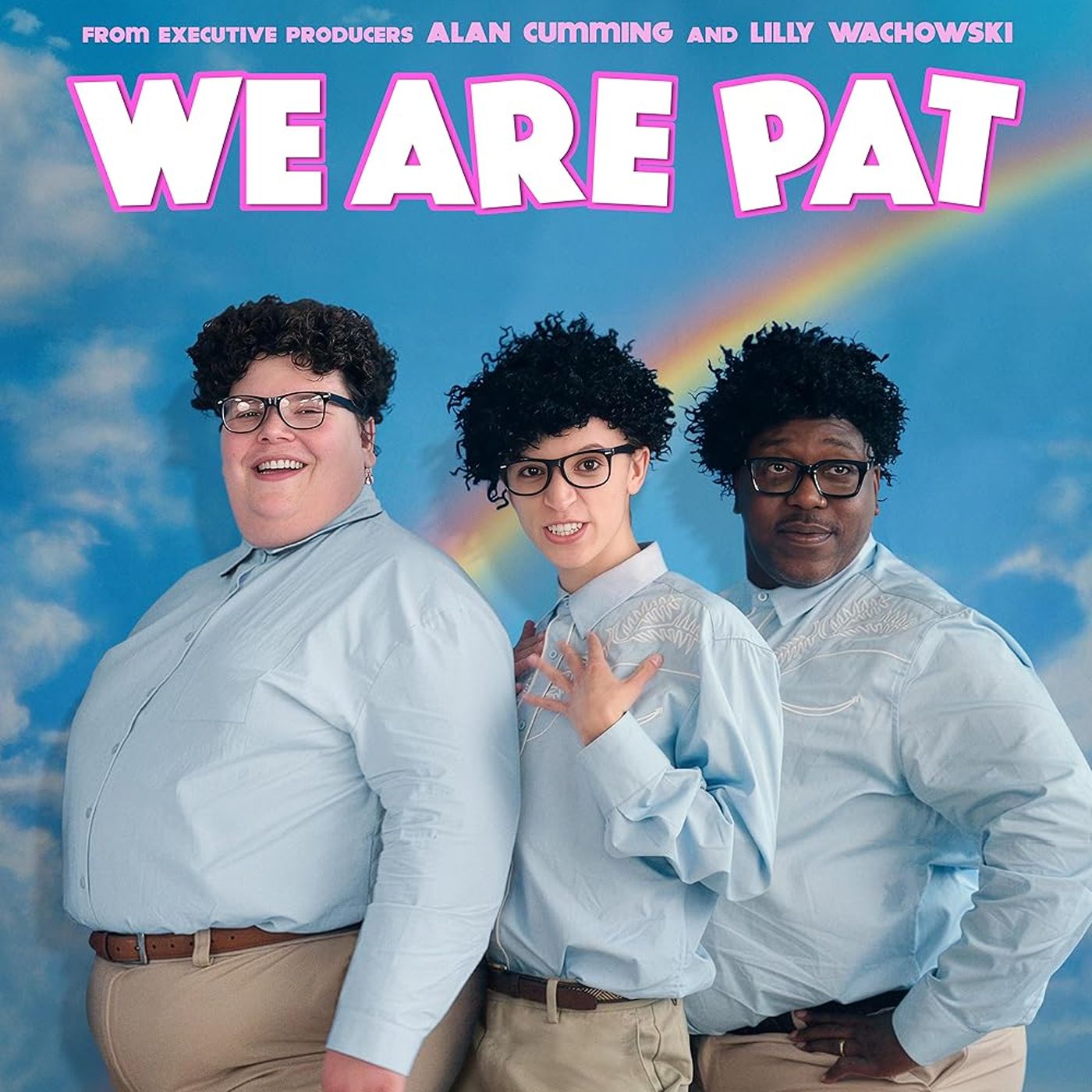
Mike talks with director Ro Haber about We Are Pat, their feature documentary that premiered at the Tribeca Film Festival, where it earned a Special Jury Mention for Best New Documentary Director. The film follows a cohort of trans and non-binary comedians as they reimagine and rewrite the original Pat sketches, using camp and humor to reclaim a character whose popularity once hinged on making others uncomfortable. Julia Sweeney (Pat herself) joins the conversation, along with contributors including Molly Kearney, Murray Hill, Nori Reed, and Sabrina Wu.
Haber and Mike dig into how comedy functions as both a tool of oppression and a radical force for change, and wrestle with the harder questions the film poses: how does art age, and can narratives that once mocked us be genuinely reclaimed? We Are Pat is now streaming on Prime Video and available to rent or buy on Fandango at Home. Follow the film on Instagram at @wearepatdoc.
Transcript
Automatically generated, so expect the odd misheard name.
Oh is it show die? People say good money to see this movie. When they go out to a theater, they want cold sodas, hot popcorn, and no monsters in the protection booth. Everyone pretend podcasting isn't boring. Got it off.
I think if I had told my ten year old self that thirty years later I'd been making a movie about Pat, I wouldn't have believed it. That's really good, but well, here I am surrounded by Pats. My obsession with Pat began in the early nineties on SNL. Pat was nerdy, chunky, wore a Western shirt, and was indecipherable as a man or a woman. Pat.
Did you hear about our Halloween party? Oh? Yeah, the guys are bringing liquor and the women will be bringing or durs, So you'll be bringing pep don'ts mall? And everyone was always trying to find out Pat's gender. That was the sketch, the whole sketch, and it lasted for over four years on Saturday Night Live and through one major motion picture, a draft of which was even written by Quentin Tarantino.
My middle school friend and I used to watch It's Pat the movie over and over and over again. It was hilarious. I love to stroke your pussy cat. I know Maty likes it too. I'm flopped.
Pat was left to rot in the annals of history, but not for me. Pat lingered somewhere in the back of my mind, dormant until twenty years an agender journey later, when I was out one night with friends, I went home and rewatched It's Pat in the movie. I still left my ass off, but this time I saw something totally different. I saw me. Hey, folks, welcome to a special episode of the Projection Booth.
I'm your host, Mike White. On this episode, I'm talking with Rowan Haber. They are the director of the twenty twenty five documentary We Are Pat. Do you remember Pat? Remember that character from SNL kind of Questionable?
Remember the movie with a screenplay pass by Quentin Tarantino. Yeah, we're talking about that, and we're talking about Roe's amazing documentary. And yeah, I had a great time with this film. I had a great time talking with Roe, and I hope you enjoyed this interview. Can you tell me kind of how you got your start.
I went to NYU for film school quite some time ago, and immediately after film school I just started making documentaries because it was sort of like an easy way, like barrier of entry. Kind of it's not easy, but it was, you know, you can just get started, you can grab a camera, you can go make a film. So I met a very good friend of mine, Lauren Chaffey, who is now a big doc producer, and we made our first series called New Deep South, which is about queer life in Mississippi, and that was kind of like, really how I got started in the doc space, So pretty traditional beginning, but then have continued to do documentary and narrative work and commercial work since then. When it comes to documentaries, how do you choose your subjects?
Or do your subjects choose you? They definitely choose me. I definitely. Pat was not something that I had on my mind to make a film about. But in order to make a good doc you kind of have to have a It's you know, it's like having like a thesis statement in an essay.
You just have to have sort of like a sticky question that you feel like you can actually unpack and explore, like in a meaningful way. And I felt like Pat was a really good entry point in to like a lot of larger questions, like sort of philosophical questions about art, about how our ages, about gender, about like historical contexts. So it felt like be a lot there. You remember that moment when you said to yourself, Okay, I do need to make this documentary, There was enough to kind of tip those scales for you. I was at a dinner, I think in the film, I don't say it quite as specifically, but I was at a sundance dinner.
I was at this like funny steakhouse in Burbank, and we're all joking about nineties movies that should never be remade, and suddenly like Pat popped into my mind and I was like, I want to remake its Pat. So then I went home and rewatched It's Pat the movie with like my middle school best friend who I had originally watched Pat with. And I honestly think it was in the rewatching of It's Pat in the movie that I felt, yeah, like that a documentary has to be made on this, because It's Pat in the movie is so it's kind of like so screwball and so wild and so good in certain ways that I just felt like Julia was so prescient about these conversations about gender that we were going to be having. It's just that she didn't really know that that's what she was getting at.
So I kind of felt like, yeah, like when you find a piece of art in a way that is weirdly ahead of its time, you know, despite being kind of also behind in certain ways, Like it's just it's a unique piece, you know, And I felt in that moment that there was a lot to explore. I can tell me a little bit about your process as far as deciding who you're going to talk to, or making a list maybe of who you want to talk to, and just like setting up the logistics of this, because it seems like this was a massive project. I knew that I wanted to talk to Julie, so she was sort of number one, But early on I also knew that I wanted to speak with sort of cultural figures and comments, so I started with people that I knew.
Joey Solloway was a sort of early interview because I knew Joey. James Tom was early on my list because I've known James for a long time. I pre interviewed Lyndon Crawford, who is not in the film so much but was like a really formative in the way that I thought about the film. So I just kind of at first reached out to people that I was familiar with, and then honestly with the comics. It was really fun because how I found them was that I just went to a whole bunch of comedy shows.
So I was in New York and like, there's a show called Tea for Tea, which is just a trans comedy show, and I went there and was like kind of was scouting who I thought was funny. And after that, those were the comics that I hit up to discuss the film. How did you approach Julia Sweeney yourself? I reached out, like I think I just sent her like a cold email, because I think on her website there was like a contact me thing, so and then the second she didn't get back to me, and then I knew someone who was like in the same book club as she was, so I was like, oh this is I was like, I'll go through the book club, but that person wasn't really comfortable like approaching her, so then we just sort of went the traditional route and went through her reps and then that's how she responded.
Feels like this is a real kind of reckoning for her as well, just like how this character I created, how do they play now? How was it conceived? You know, just even some of that was like a reaction to all the boys have characters, but I don't have a character. Juliae and I like to joke that this was like the most expensive couple years of therapy that's ever existed, you know, so for both of us, because I think it's for her, it was sort of like unpacking this character that has kind of come to represent her legacy, at least in the comedy space. And for me it was just about, yeah, like a childhood obsession that sort of became indicative of a lot of other things that I was thinking about in my life.
Did your opinions and perceptions change as you were making this? I think one of the big takeaways in the film that I think is so meaningful was just kind of like, you know, how Julia was influenced to make pat because of the way that her the sort of gender pressure that she experienced from her mom, And that was like, that was definitely a piece of information that I was not I didn't go in expecting that, you know, I definitely expecting, like, oh, we get all this fun Pat lore, you know, but the fact that Pat in a way, like you know, the fixation with gender around Pat, I think also came from like a gendered oppression that she was facing. And then the whole thing about like the SNL writer's room being so male dominated and kind of her just trying to like get this character on that weirdly like couldn't even be female because that wasn't even going to work in that space.
So I think those were those were definitely some interesting two bits of information that I wasn't expecting when I came in. But in terms of my my affinity for Pat didn't really change. Maybe it grew, you know, kind of came in like having an affinity for Pat and came out with like a more nuanced perspective on that, but still loving that. I have to admit that I was never a big Pat fan when I was watching the show, just because of the drooling and hand thing just creep me the fuck out. It wasn't the gender.
And yeah, obviously I'm not nearly as enlightened as you know, I'm more enlightened now than I wanted all those years ago when I was watching about it was just the hand thing, and I'm so glad that you actually addressed that in the film. Yeah, I mean that's something that I actually wish we had time to go into more. And that's you know, if I had more time, I would have loved to because I think, yeah, like I think, look, the nineties were a different time. We were not talking about neurodivergence and and that and disability in the same way, which is I'm not saying that we're we've become very enlightened on it now, but I think we have more language around that. So I think, you know, Pat is not only like sort of patten Away was like Julia just trying to do weird, right, And what does weird mean.
Weird means like gender nonconforming, weird means, neurodivergent, Weird means you know, like being chunky, Weird means you know, like all of these different things. So I think she just sort of put together these ideas of what undesirable meant. And so a piece of that was this like neurodivergent piece, you know, and we also talk about size ism, you know, in the film. It's like, so I think she was just sort of playing in those waters. And that's not to excuse her, but I do think that, like I don't know, like when I look back on all the sketches that were on SNL at the time, they were all really offensive, you know, and pretty much all of them.
Like I had to, like, NBC is taking down a lot of the original Pat sketches, probably because they were offensive. So I had to go on the way back machine to like pull the full episodes of SNL, you know, down from the Internet. And as I was like looking for just the Pat sketches, I would watch the other sketches. And so there was a sketch that came before the Pat sketches that literally was called stock Talk, and it was like like male stalkers like exchanging tips about how to stock women. And I was like, this is so much more offensive than the PAT sketches, you know what I mean.
We're not even talking about race, like I mean, it's just like they're all offensive. So it's like it is it was important for me to unlock, you know, to discuss like the pieces of Pat that made Pat problematic, and I think, like I said, I feel like we could have gone into that even more. But yes, it's definitely like the nerd diversion piece is like a big part of pat that that I think we would reconsider if we were making Fat. Now. I see you in the documentary a lot.
I mean, not just as a talking hand, but like participating with group discussions and stuff. Can you tell me about your crew, Like how many people are there shooting and recording all this? I don't know how many people? I think it really It definitely varied, like we had a smaller crew for sort of just the interview parts, and then a larger crew obviously for the for the recreations because we had to like make the sets and you know, that was like a sort of bigger couple days on the stage. But generally I would say, you know, maybe like a twelve person crew or something like for interviews and stuff, still a bit of a crew because we you know, we have to set up the backdrops and light it and you know all that.
But we had, honestly, we had such a great crew, and we tried to get I think naturally, I just tend to work with like a lot of like queer people and people of color and women, and I always hire female dps and you know, it's that was no different like for this set, and it was a really special set. How long did it take you to actually put this together? The entire process sort of from idiation to like premiering was about five years. Wow. And the reason that it sort of took that long really I think a because I started during the pandemic, so that was kind of like a rough time for production anyway.
But be it was really the financing, Like financing was what takes the longest to put together, I think, or at least it did for us. So the filming was not it's that that didn't take like a particularly long time because we were you know, it was like a lot of interviews and then there was some verite but mostly and a lot of ar chibal. So it's really the filming I think probably was over like two years maybe or something. And the edit, of course, you know, took like about a year. So, well, what were you able to accomplish during the pandemic?
We shot the initial sizzle during the pandemic, so we shot sort of like a sizzle reel that we used to then go get funding. We shot a lot of the initial interviews, we shot some of the people dressing up as Pat and like running around stuff like the beach, you know, people dressing him his Pat and running around the beach, running through the streets of la Which is actually really funny because when we recently like dropped our trailer, someone commented in the comments action they were like, you know, a couple years ago, I saw like a whole bunch of Pats running around the streets, and I was like, yeah, that was us. That was definitely us, Like it was not anyone else. So you know, it's we did. We did kind of quite a bit during the pandemic, but then we went into sort of like principal photography more like, you know, past the pandemic.
And obviously so much work on documentaries is done during that post process, during the editing phase. Can you tell me a little bit about how that was and who you worked with for that? Yeah, definitely. So I was really lucky to work with like two incredible editors. Our main editor is Hannah Buck, who does a lot of she does a lot of pop culture docs.
She works with Penny Lane, who is another documentary director who does comedy. She's like Hail Satan and she's very funny. So Hannah is kind of like a structure queen. You know, she's very very good at structure, which was important for this because we're putting together a lot of elements. Hannah is based in Australia, so we would work remotely, which was you know, interesting in itself.
With her, we really worked on dialing in kind of the form of the film and how we were gonna put together the elements of like you know, interviews, writers room, the sketches, archival. You know, there was just a lot to put together. And then our finishing editor was Alex Bose, who is based in la and he's just so wonderful, has so much heart, has like an amazing aesthetic eye, and so with him we really we did some a little bit of restructuring, and then we also really dialed in, i would say, the aesthetics with them. They were both amazing. Did you work with folks to get feedback on things and kind of help shape it that last little bit.
Yeah, we did do a couple of feedback screenings with some like trusted friends, and that was really helpful because originally, like in one of the earlier screens, we had the full sketches in and we just felt like it was running too long based on the feedback that we got, so then we we cut them up, so it's you know, yeah, we definitely took me back into consideration. I was also curious about you yourself as you're going through this whole process, like what were some of the more surprising things that you found while you're doing your research and putting this together. One funny bit of trivia that I think is like interesting is that in Its Pat the movie, like the band that plays is Ween, which is, you know, a band that I really liked when I was a kid.
That's actually how I found Pat was that I really was obsessed with Ween and then so I saw It's Pat the movie because it was like Ween is in this movie, and then I became obsessed with Pat. But the band that was originally supposed to play was Nirvana. Wow. Yeah, And because Julia had met Nirvana because Kurt Cobain actually loved Pat, which is kind of crazy, like Julia met Kurt Cobain and Nirvana like on SNL because they were playing they were the musical act in one of the shows. So they were supposed to be in Its Pat in the movie, and then I think they like had to tour or something happens and then they got Ween instead, which I thought was like a really funny piece of trivia.
So definitely found that out. Yeah, I would say, that's like a funny piece of trivia. Oh so there's like a really funny interview with Quentin Tarantino and up like this nineteen ninety three Playboy about Pat that I thought was like a very funny like piece of ephemera that I thought that I really enjoyed finding. So yeah, And it's so fascinating to me that you found Pat through the movie rather than television, because I think you're probably younger than I am. So I was watching those snls while they're playing how old were you when you saw It's Pat the movie for the first time?
I think I was maybe like twelve, So yeah, I was. I wasn't watching, I wasn't watching sketches in real time. I was watching the movie. Really was what I found, And maybe that's even why I liked Pat so much, was that I think Pat in the movie has like more of a character arc, you know. So really I became obsessed with the film, and then I didn't see the sketches until later.
It's amazing to me because I were remember I don't know maybe two three of the sketches I remember I think Dana Carvey played at significant other Chris, I want to say, yes, I didn't know the breath of those and just all of the do you go in this room? Or this was like how often can you stretch out this joke? It's crazy to me because if you look at how long the sketches last on SML, pat was a very you know, successful sketch, like it lasted for four years, so that's pretty wild. And then it had like a film spinoff, which was the model back then, but like nonetheless, it obviously had to do extremely well to then be spun off into a movie. So yeah, it's amazing how how far that joke went.
As we are talking, have you had your premiere yet? So we premiered at Tribeca a year ago, and then we did the festival circuit for about a year, and then we did we're doing a theatrical run right now. So we just had a week long run in New York at DCTV. We're going to to be at Vidiots in Los Angeles on June twenty eighth, which will be really like a big, wonderful screening. And we're also in like a bunch of different places, so I folks want to go on to our website.
We are pat dot com. Fantastic bro. Thank you so much for your time. This is such a pleasure talking about Oh. It's my pleasure.
I think so much, Mike. Do you wendesday? How sad on the room head who pass when blames me and he tail together you as one heart, one from down lost, lost. And Chile. The rest from your seldom.
Reduce salities, cannot see words. I've gotten to dave us heart. Ass not lost, yesss lot. Dods you here you what kind of fish heart? Save for the last I appreciate the most.
The school still stasting state
More from The Projection Booth



Similar episodes across the network
Matched by shared keywords.
-
Episode 26: I'm Chevy Chase and You're Not (2025)
1 shared keyword: saturday night live
-
WUH: SCMODS
1 shared keyword: saturday night live
-
Mr Mike's Mondo Video
1 shared keyword: saturday night live