
About this episode
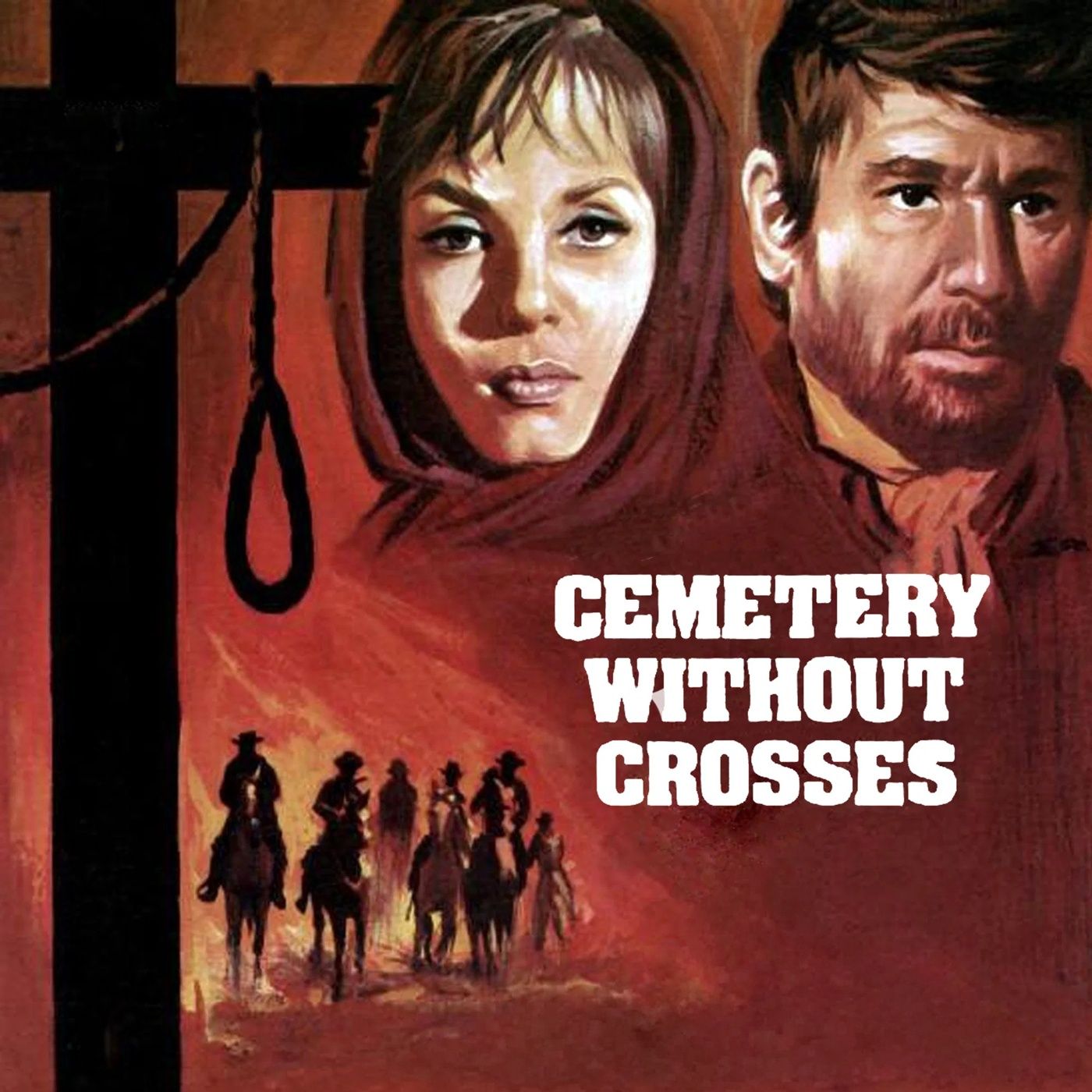
Mike talks with co-hosts Oren Shai and Professor Richard Edwards about this French-Italian-Spanish production, one of the most melancholy and formally rigorous Euro-Westerns ever made. Topics include Hossein's rejection by the Cahiers du Cinéma crowd and his debt to fatalism, the Leone connection, Michèle Mercier's turn as one of the genre's strongest female leads, Scott Walker's haunting title song, and where the film belongs in the canon alongside The Great Silence and The Wild Bunch.
Transcript
Automatically generated, so expect the odd misheard name.
Hey, this is Emily sowderback of Scarecrow Videos Viva Physical Media. All right, this is Matt Lynch, co host of Viva the Projection Booth. Podcast is sponsored by Scarecrow. Try out Scarecrow Videos rant by mail service. Choose from over one hundred and fifty five thousand films and get Blu rays, four k's and DVDs all delivered directly to your door.
Visit Scarecrow video dot Org. Today. Oh ye is boot It showtime. People say good money to see this movie. When they go out to a theater.
They want cold sodas, hot popcorn, and no monsters in the projection booths. Everyone pretend podcasting isn't boring. But I see my man who killed my friend, and when we leave my life to. Me and. My lave debils, Oh my god, I got the spells.
So the lad with the rope and the con arkay. Manuel Rasoulo solon the belad jo a bandonatos plaucinante desert Jo went to Rosso di Bandon called Aviva di recording my Calcunese open. I got a quick. Sure that you should Christia party. Manuel Sierra Moso iquando pa Sava Manuel.
Due to the west, diventava only manso, Jimmy Terro, sent sacrogyn not you Brenda leg man arabamo michuen avalta nover like la prendia, call the forts, sabeva, sapeva king willa, sparapacha Churchill appendly around jocoda study and solo warm of controverting my chair demento Maria, are you tom. Chatters por poor I started same prey to my stir. On you recommen. H per primo. Don't be a primary relator se per primo no non perseded or divendicta era will cause a dip can speak javados are acculpi one or my non cherape tempo nonchera tari chera solo tem popoi unacorda pronta tender bunabara pronta black wanna say called pronta judicari monser too pronto on grande Jimmy Terro, san.
Sacro, Welcome to the projection booth. I'm your host. Mike White joined me once again as mister orange Eye. Hi Mike, thank you so much, really glad to be here. Also back in the booth is Professor Richard I Words Thanks Mike, we continue a month looking at westerns with one that came out the same year as The Wild Bunch but has a very different feel.
It's Robert Hossain Cemetery Without Crosses, also known as Unacorde Unkult. The film stars Hossein as Manuel, a mysterious figure who gets hired by the widow of Eli Kin, who was killed by cattle rancher Will Rogers, yes Will Rogers, while his brother is Rome Free. We will be spoiling this film as we go along, so if you don't want anything we ruin, turn off the podcast and come back after you've seen the film. There's a great release of it from Arrow. So Rich, when was the first time you saw a Cemetery without Crosses and what did you think?
So, I actually saw it for the first time in preparation for this podcast, prior to you reaching out to record this episode. I actually was not familiar with this film. I was very thrilled to come across it, and I really enjoyed it very much, and I'm going to really enjoy talking about it with you and Orrin. I'm going to break rink a little bit here and say how I saw it the first time. Also similar circumstances.
What was it two years ago? At newarkhan out in Palm Springs the first Palm Springs Nwar khan Orn presented kind of a talk on Hossein and showed us a film of his and I said, hey, guys, let's get together and talk about another one of his films. And I'd always wanted to see cemetery without crosses, so this was a great opportunity. But yeah, orin, when was the first time you ran across this one? That's cool.
I'm glad to have opened it up. After I finished college. This was around five. I think I had nothing to do, and I basically watched like three spaghetti westerns a day for a long time, and I think I went through like one hundred and thirty. They all started merging at one point and you just feel like you're watching the same movie again and again.
And Cemetery of that cross has really stuck with me. I did not know anything about Hossein up and field really three or four years ago, but at that point I just knew that it was different than any spaghetti western I have watched. I'm not even sure that I realized it was a French production at that point, but it stuck with me enough to actually take some frames from it into my mood boards when I was a Frontier, and so there's actually a few shots in Frontier that I can now see in Cemetery without Crosses, which is funny. I am not sure even when I started watching Hossein's movie was recently if I at first realized it was the same person who did Cemetery without Crosses, And I think I only after watching one I realized, oh, that's him.
Yeah, Hussein is a fascinating guy. I think I was probably most familiar with him before two years ago, just with his little role in Raffifi, And don't know if I had really seen him in much else, because he was first and foremost an actor and then came into direct it. And it was what like nineteen fifty five all the way to nineteen seventy where he was just cranking out a lot of movies and then went on a hiatus for a while. He moved from movies to the theater. He started in theater and then he started making movies, and in nineteen seventy he switched to the theater.
Back to the theater, and he became one of Francis's biggest theater directors. He was doing really huge productions, like massive, almost like Broadway like productions. On stage, he was known for doing Late Miss Arab right or was that just the film. He did the movie of Lame Miss Rob. I'm not sure if he did the play.
He might have. I know he did like Battleship of Tempkin on stage for example. This is like fast forwarding a lot. But he also discovered Isabella Johnny had he had an acting school like a theater school, and he literally picked Isabella Johnny from the street. He saw her with her parents and he was like, you should come to my theater school.
I think he might have also so directed Isabelle operez first play. I'm not a hundred percent sure. I think I've read that. And then he made a few more movies later on, but he definitely spent spent He spent all this time acting as well. He was in many movies.
I'm sure you've seen him in more movies as an actor. This is an interesting film insofar as it is very offbeat. I've seen it compared to al Topo or Matalo, the acid Westerns. I don't think this is as far out as those westerns are. It doesn't feel like any of our characters are dead or prophets, or there's not a whole lot of religious aspect to this, which I think both of those other films have.
I still haven't seen things like Zachary and some of the other acid westerns, but this definitely has a different feel to it, and it's highly indebted to Sergio Leone. He dedicates the film to Leone, but I don't necessarily even see that much Leone in this film, even though he allegedly directed one of the scenes in it allegedly. Can not really be proven. And I've heard two different stories about how it happened. There's a French book where they say that what happened was that Josein needed to leave for something in France and he was terrified of flying.
I guess he was notoriously terrified of flying, so he had a drive or take a train and he took a long time, and he tapped Leoni in to come in and direct a couple of scenes. But the scenes Leoni supposedly one of the scenes he supposedly directed is a scene with Hosein in it, So that story makes no sense. So I don't really know how it happened and if it really happened. Yeah, that does cast some doubt on there. And then there's also a whole thing about Dario Argento having a writing credit.
From what I understand, he didn't necessarily write the movie, but he might have helped out with the Italian dub dialogue. Is that you're understanding as well. That would be my understanding, and I think that would be the most logical explanation, because I honestly, listen, I love Argento. He's great, but he's Argenta. It's not really a writer, he's a director.
I think this movie is better written than most of Argento's writing. Yeah, I always wonder how much he brought to the party when it came to Once Upon a Time in the West, because I think he's got a co writing credit on that one as well. That is true. I don't Yeah, I don't know. I mean, we can never really know.
I know, people talk about Hossein, Where's is the Black Glove? And people are like, oh, ur Gentle the Glove, But I'm like, this is years before ar Gentle meta movie. It's just not I just don't know that it's really I feel like it's just looking for stuff. I would not call this a proto Giallo just because Hossein puts on a black glove before he commits acts of violence. I think to what you were saying regarding how it's not exactly like the other acid westerns or kind of hard to place within that genre, I think one of the reasons is for me past after having gone through Hussein's essentially full filmography up until nineteen seventy, I think this movie is much more corresponds much more with his filmography and which is predominantly a noir filmography, than with westerns as a genre.
Even when it came to his earlier western, the taste of violence that felt much more like a noir, especially the black and white photography helps to give that feel to it as well. I was just so happy in that earlier film to see Mario Adorf, who we're going to talk a lot more about next week when we discussed Deadlock. But that was a lot of fun the taste of violence as well. And this one i've read it starts in black and white. The version I saw it does not start in black and white, but it is very muted.
It's more I would almost say like a not necessarily a CPA tone. We're not doing any sort of like colorization like a lemonade jail or something, but it just feels very drained of colors, feels very drab, like a light lighter browns, and then the color does come back into it as we move into the movie about what maybe five minutes in. I'm always fascinated by how spaghetti westerns start, and just having this one start with a horse chase very interestingly shot too, where you've got like POV shots chasing these guys. You've got the three brothers who are on the run from the Rogers Klan, and just setting up this tension right away, giving us these three guys and then taking us to the one is definitely dying Eli and he moves over and there's his ranch right there and his wife, and we get his whole lynching.
We get the hanging, very well shot hanging scene. I really like the way that they did that and just putting her on this path to revenge, and I like that she uses her husband's share of the money from the gig that the he and his brothers just pulled. What is the whole story? There was a crime but they're the criminals, right. It feels like the Rogers people had every right in the world to kill these guys.
I'm not sure that I have definitive answer on what the crime was, because I actually like the deliberate ambiguity of it. I don't feel Whossan really was trying to put his thumb on the scale, and it really is hard to tell who the heroes and the villains are in this piece, and I like that intentional blurring of the narrative. What I loved about the opening is I'm a fan of films that just drop us right into the action. You don't really have to know much about Western mythology to begin to make sense of the very kinetic cinematography that starts it. We have no idea who's chasing who.
It appears to be that there's this gang going after these two other writers who are in the lead pack, and there's one person who appears to be ailing on a third horse. But what I really like is that a lot of the cinematography is shot towards the purstsuit, not towards the destination, So you actually have no idea in the pre credit sequence where any of this is headed. And I really felt that really established that this isn't going to necessarily be a story about any particular destination, and in fact, this probably will be a film that has no final destination, because, as you were saying so correctly, it ends up just being a poetic riff on revenge and all of its different manifestations. So this is really, on one level, a melodrama about revenge that just happens to hijack an American genre, repurposed through an Italian sensibility, and then grinded through a French novelle fog stylization.
And at the end of the day, what you come up with is what I think makes Robert Whosaying special as a author of films, which is that he is a deeply, at the root of it, a humanist who likes to tell very direct stories about human nature. And that's what I took out from this film. I felt this did better than most spaghetti westerns that don't have the name Leoni attached to it with giving the characters humanity and that I could actually believe motivations in this film and they didn't feel just like the machinations of a screenwriter. Yeah, I like what you're saying about not knowing the destination, because I think there's a literal camera move to show us the Eli's house. We don't even see where he's headed.
His brothers are going one way, he starts going the other way, listing along, and just you can tell that he's been shot and he's just barely keeping onto this horse, and once he falls off in front of his own place and it's, oh, okay, I guess his place is right here. So I like that kind of reveal that Hosein does with this direction on that and that's right around the time I believe that the color starts to seep in. And I want to say that that's also a bookend, right. It happens at the end as well, which kind of speaks to, like you were saying, rich the whole cyclical nature. Of this revenge.
And that's when she goes to the Hossein character and you can tell that they have a past as well. You're not really sure on that either. I don't think that this movie is very rich with backstory or exposition, which is, like you said, absolutely fine. I kind of like this vagary that we have where we don't necessarily know all of the motivations of these characters, and we don't necessarily know the past that they've had. We are dropped into this, which I appreciate.
And when she gums to him and says, I want you to take care of Will Rogers and his gang, it's revenge is a game that never ends. He puts it right out there, but he still ends up. It's almost like he's faded to be in this role and spoilers, but this will eventually kill him just because of this cyclical nature, that whole dig two. Graves kind of thing. He is due for one of these graves at the end of the film.
I think one of the things I like about Robert Hussein in particular in this film is he's very much in a showdown, tell mode, and I find that because there's so few clues, I find myself watching more intently and reading more into the few fragments we have. So I believe all of Manuel and Eli and Maria's relationship is in a single photograph we see for about four seconds, and it implies everything that there is this rich backstory that was immortalized in a photograph, and you feel he has some sort of psychic debt and you don't know whether or not Adios the debt more to the murdered man or to the abandoned widow, and it might even in fact be both, because there could be a very deep triangulation here.
What I loved about it is it wasn't spelled out. And that's again where I'm going to keep saying. I think Hussein is at his strongest when he's in a genre picture, recognizing that the audience will go with him on very scant evidence. And I just love that that, in fact, the entire relationship that is at the core of this film might just be encapsulated in a wordless photograph we only see once. Yeah, I love that.
I think it's interesting in terms of the audiences at the time because they were walking into it knowing the relationship between these two people. Because hose and Michelle merce start together in Angelique and this was really a subversion of her role in French cinema. Hossein already started subverting his own image from Ajilique with his previous films, definitely with The Vampire of Dizeldorf, and when people went to see the film, that relationship was already there. It was like a standard. It was kind of like a convention in a way, so they might have literally not have needed it.
That is true, and I think, you know, there's always sort of a duality, I think in Hossein's films, where characters might say what their intent is and what they think, but they behave exactly the opposite of that. So that's at the beginning, Hossein basically says, I don't remember the exact quote, but he says something something like this, this never ends well, like revenge is never This is just not the way to go. And then he never even questions that. He just does it, and there is I think it's made even more tragic at the end when you kind of realize that it's maybe his own regret over not being with her, is doing it out of love or out of his own guilt essentially, which is also a very noar guilt, of very noar element, which makes this whole thing even more futile, because he's telling you right at the beginning, is telling you there's no point on any of it.
He reminds me of the Robert Vaughan character from A Battle Beyond the Stars, where it's which is of course indebted to the Magnificent seven. When she goes to find him, he's living in a literal ghost town. There's no one else there. There's the dust and the old roulette wheel and these kind of things that you're seeing. He's the only person that's there.
It's like he is all Murady has signed himself to be a ghost. That really is all the backstory you really need with Hussein's interpretation on the Man with No Name, is he really is a Borisian living in this completely fascinating ghost town. And within that you get this claustrophobic feeling that whatever he had prior to the film's official starting story, he clearly the first demonstration we see of his own agency is when he just starts to shoot up bottles in his own room. You know that he's going to be one of the fastest guns in the West, and he's a dead shot and all of that great stuff. But to what point he starts as a tragic figure?
And I do like what Orange said that what sets this apart from other European takes on the Western is they're not Guilt is not often the major driver of why people act in Westerns, And one could even almost argue that it's almost The Searchers also has an essential narrative of guilt that drives the character of Ethan in The Searchers, but here Hussein does seem when he finally gets activated, he's only activated out of guilt, not out of any sort of he's going to fix anything. There's no essential sense that anything's going to be made right. And in fact, the part that I loved about this film is even though I could follow all of the action as motivated by human nature, it really was all these people are very broken people, and it's actually in their brokenness that they start to do things that, when we might code them, is like why are they doing that?
It's why not do that? It's almost like a why not film, because they're completely broken, and that, again, I think is part of the existential dread that comes from Hussein's background in noir. For me, it is the palpable sense of malaise that just drenches this film that makes it noir. There's nothing more really into cinematography or in the genre. But it is in that malaise that he taps into so effectively, which also then for the one or two moments of levity or the one or two moments when it seems like there might be a way out of this existential trap, you just realize just how tightly constructed the script is.
To go back to one of Orne's earlier points, this very much is a Hussein film, and I can see his fingerprints everywhere, because he is a master genre melodramaist, and he knows how to manipulate these dramas. And he wasn't trying to be Godar or truth. Oh, he was trying to be Robber trusaying. And I think this film fell off my radar in film school because film schools don't really talk about the master genre craftsman. They want the more avant garde, outrageous art film stuff.
This isn't an art film. To me, that this is a great genre film. But sadly, oftentimes critics diminish the power of what great craft in a genre is just as important as great craft and an art film. But we sometimes mistake one is more artful than the other. There's no real way to discover it in the sense that nobody knows Hossein's film spirit now.
I don't think even in France. He's just now he's starting to get rediscovered. He's been erased as a filmmaker. He's been celebrated as an actor and as a theater director, but he's being a race as a filmmaker. And that started with Kaye Sinema and people like Truffau who just did not like him at all from the get go.
When his first film came out, which granted is not his best film, that we could go to Hell. It's it's decent, it's a good it's a good first film, but it's not a masterpiece. Four wrote some review about it and he said something like, no, Robert Hossein will not be the Orson Wells of our generation. And it's get over yourself. You're expecting every first time filmmaker to be the Orson Wells of their generation.
I'm like, you know what I like, We could go to Hell more than I like four hundred blows. So there you go, Trifoe. We've talked so many times on the show about the Cannon and just how precious those Kye Do Cinema writers were and just trying to don't look at that person's film, look at our films, and just I'm a huge Melville fan and they were hot and cold on Melville, but for a long time. They were cold and they're just like this old man, get him out of here kind of thing, and. Oh my god, guys, get over yourselves.
Some of the more positive quotes from character cinema that I could find about Hossein's films are stuff like not unsympathetic. Yeah, damning with faint praise, but I think he literally. Just failed, got lost between the cracks. And there have been I know, like that there's a French noir festival in San Francisco, I think called the French had a name for it, and that the guy runs it his name is Dan Malcolm and he's screened a lot of Hosain movies throughout the years. But for the most part there's just been nothing.
And even finding these movies was you know, where can you get a bootleg? Where can you find this? Where can you find that? Which I think is also true for a lot of French noirs because there's just hundreds of them. Nobody knows them outside of France.
They're gone, and I would argue that they are more true the literary form than the American wars. And partially also each are with what you were saying about Hosein and about how the character is an and this sense of doom from the beginning. I think in many ways a lot of his films remind me of David Goodis as far as the author, because when you read Goodess's characters seem to just acknowledge they're done for the beginning and then just diving deep into it. They're just saying it is what it is, going down the dark street. And that's what Josein does in almost all of his films.
It's just this is gonna lead to no good and I'm going down And I. Agree with that. I do find that frequently when I discover late in my career new filmmakers and again, or I discovered Robert you saying because of you, because when you did do the thing at Markhan that introduced me to him. I always had him pegged where he's known more popularly, either as an actor or as a theater person. I didn't realize he had this wonderful string of very so successful films that had good box office and like, even when I was researching Cemetery Without Crosses, you know, one of the reasons that got greenlit is because the two stars were going to be box office and they knew, the investors knew they were going to get their money back.
So this wasn't a minor fringe person on the margins of the French film industry. He just wasn't with the in crowd that got ballerized through a very particular mechanism, which is that both Henri Laningois with the French cinema tech and the Kayes editorship were able to steer a certain type of film into the pantheon, and everything else was dismissed with the great term, Oh, those are just in the tradition of quality, and those are just awful films traditional equality. Wait a minute, I like tradition equality, I like a good genre of film. And I think where I start to to bring this back to why I think he will be rediscovered and maybe outlive some of his earlier placement within the film historical trajectory for whatever that's worth, which basically is what films get most written about in which ones don't.
I think he will continualy be reassessed by future scholars because he was a filmmaker who had his own distinctive feel for the types of roles he could play as an actor. So the one piece I always love about him as an actor, writer, director is he wrote scripts that he could act in and that he knew how to direct, which is not easy. Very few filmmakers are able to get out of their own head because those are three radically different arts, and there are a few people who can do that, And of course the one that always gets feted the most is a person like Orson Wells. In many ways, this is an Orson Wells level of talent, but it's channeled in a very different vein that didn't have any sort of lane in the literature.
This wasn't going to be He wasn't like Leone really establishing the basic new version of a spaghetti western. He could take that innovation and then make it his own. And he wasn't necessarily taking French film noir and becoming the number one creator. That's going to be like having the breathless moment that says, this starts the whole genre. But he's doing work in these lanes in which his work is quite commendable, and I find his films all incredibly watchable.
See the part that I think sometimes gets missed by the critics that the audience don't miss is that I have a good time after ninety minutes, or didn't I. And at the end of watching Cemetery Without Crosses for this podcast, for the first time of a few months back, I actually said, oh my god, how did I not know about this film? This is ridiculously enjoyable. Now again, what's that worth? I sometimes think we forget about pleasure when we are talking about these films.
We can get into all the sidelights. I liked the Black Glove just because I thought it was so ridiculous, and I loved how ridiculous it was, and in my brain I loved what he put on the black glove because it's a signal to the audience that something cool is going to happen. And it's identical to the way that John Wick films work. It's identical to the way that Equalizer films work. It's you gotta have the cute to the audience.
In the Equalizer, it's Denzel Washington starting a stopwatch. In this he put on a black clove. It's a genre convention. We all know this, But I love how ridiculously stupid it is and how poetically profound it is at the same time. And when stupid and profound intersect that's original to me.
I want to talk a little bit about the structure of the film, and especially the structure of the characters, because I'm always fascinated. I'm always talking about like, Oh, I would love to make a chart of this, because it's so interesting to me that there are so many doubles in this film, because you've got, I guess with this, you've got the doubling of the three brothers. There's Thomas Caine, There's Eli, and I'm trying to remember the other guy's name, is it Ben? I think. So you've got the three brothers and the one gets killed, Eli gets killed, and then you've got the three brothers when it comes to the Rogers, so you've got Larry, Frank and Bud, and then you you've got the patriarch of Will over top of them.
And then so you've got. Those two sides of things, and then you've also got the female characters. You've got the wife who we've talked about, Maria played by Michelle Mercier, and then you also have the daughter of Rogers, Diana, played by Anne Marie Balin. And so each side has their kind of the three brothers. The woman involved, and then you also have even when it comes to the way that Manuel comes in and tries to infiltrate the gang, which we've seen a bunch that was like the classic thing from both Fistful of Dollars and for a Few Dollars More, where you've got the way that East would come in and kind of pit people against each other, play people off of each other, or in a four a few Dollars More where he's infiltrating so that he can help out Colonel Mortimer eventually and also get the bounties.
There is no bounty here. There's just the you know, I guess he is a I never bounty hunter, but he's basically just kill all of these people. But the way that he comes in the first time we really see him in action and murders these two Valley brothers, so two guys again, and it's like, oh, I save these two Rogers boys by killing these valley guys. That's v A L l ee. They're not like valley girls or valley boys.
That the way that they then are like, Okay, We're going to take this guy in and thank him and maybe make him part of the gang. Kind of thing. I love that kind of subterfuge that they have, and just now he's always going to be on very rough footing because he knows something that they don't why he's actually there. And then we as the audience, like you said, which we're clued in on all of this stuff. And yeah, I also love that whole thing of Okay, when the gloves comes out, you're going to hear that very familiar well it's the movie where it's like, oh, did you hear that little clicking sound, like when you're getting ready to shoot the guns.
It's basically get ready for the sound because he's putting the glove on. It is a film of doubles. I agree with that. It's also a film that when I start to like when I was listening to you, where my brain went to is something that I'd want people who maybe will watch this for the first time after hearing us discuss this is. It also alternates between very desolate frames and overpopulated frames, Like when I think about this film in my head, I love that in the saloon scenes, in the jail scenes, and in the bunk house scene, it is filled with humanity and Hussein does a brilliant job at narrating these very densely filled spaces that have other people in it, while you never lose sight of who he is within the mesan song, and you also are recognizing that he's setting up what the next act is going to be because all of those characters are going to come to fruition.
Like when you're talking about the way he murders the valley boys. What becomes interesting is those densely artistically designed, really crowded frames with lots of faces and lots of people go in the opposite direction. And the part that I love is that he does a great job with these insane interior shots where you only are getting eyes or part of a face. And again, whenever I see these alternations between very lightly frames that are either filled with full close up or with desolate landscapes compared to these crowded scenes, you really keep putting together. I keep putting together in my mind what this story's really about.
And there's always at every key point decision for who's saying. When he is in a crowded space, he is already calculating almost the bounty hunter or the gunslinger that he is, how he's going to eliminate all those threats, and so there's this threat calculus that is all implied, and then all the rumination, guilt, and remorse are in these incredibly sparse things. And so I bring that up in that this film not only has these double plots, but it's almost like it has these two different filmmaking styles. And it really is that in one level, just this very simple revenge story with very few characters, but then that those characters have to interact with this larger world and they're always in collision.
And then that's why I think it sets up the ending so effectively. So I'll just leave it there. But that's where I went to when he started to talk about doubling, as I do feel he pulled it all the way through in the visual style of the film. I really whenever I look at a Hosain film at this point, because I've looked at all of them so carefully when when writing about him, I did a piece for Noir City about him, and so I can't, really, I almost can't take his movies just at the face of the one movie. I'm seeing his whole trajectory, this whole cinematic trajectory through every film, and a lot of these things are elements that carry over from the very first film.
The duality part, for example, is something he dealt with a lot. There's blonde in a white car, Newton, a white car has doubles as basically you don't know. He's trying to figure out there's two sisters and he doesn't know which one tried to kill him. Vampire of this oldor if he plays a person with a double identity, sacred identity, sacred agents, it's him and his wife then Mari Marina Vladi, and they both play double agents and they don't know which one is which, so they're trying to figure each other out. Those are elements that come across in these films, and I think they're partially because of his own struggles with I'm not sure if his own identity, but his looking for meaning and trying to find a meaning in life, which is also why I think these type of movies end in nineteen seventy, because that's when he finds religion, and once he finds religion and he finds hope, his movies are those of young man who's searching for something, and I think throughout his filmography that search goes from maybe there is something.
I'm not sure there's anything. There's nothing, and cemetery without crosss is there's nothing period. Now. One other thing that happens throughout his movies is when you look at a lot of his earlier filmography, everything is contained within confined spaces. A house, a cabin, mainly houses in cabins, a prison, everything is very very confined.
As soon as you open the landscape and as soon as the world burns up, it becomes even bleaker, and it basically it's death that the open landscape is death. And even in Cemetery without Crosses or in his film after that, Falling Point, which I think has a lot of very very similar elements to Cemetery, and I think there are three films that are worth looking at together, which is Taste of Violin, Cemetery without Crosses, and Falling Point, because there's a lot of very similar they're all about kidnappings and there's very similar elements. People don't die when they're in the cabin. People die when they're out of a cabin. When you're in the cabin, even though bad things happen, you're staying alive.
That's very true. There's that scene where the three guys are coming to kill the two brothers, and they're on the outside. I don't even think they crossed the threshold. The door opens, and the brothers were already there, ready for them, and just one's got one gun, one's got the other gun, and they're pointing that the guys have managed to take care of all three of them right away without them ever entering into the cabin. That's a really good point.
So when you look at like Taste of Violence, Cemetery without crosss, Test of Violence is nineteen sixty one, and when you look at that, this and then Falling Point, all of them are about the kidnapping of a woman and the Taste of Violence, which is also a very bleak film that basically tells you violence revenge has no it doesn't work. There's three Mexican revolutionaries headed by Hossein, who kidnapped the daughter. Of a general. One of them, Mario Dwarf, wants to give her back for money. He's doing it for greed.
One of them is doing it. One of them wants to let her go because he falls in love with her. But Hossein's character is the idealist. He believes in the cause. He thinks they're doing it for the right reasons.
Whatever they have to do, they have to do because it's going to be for better of the people. And all the way through the end of the film, when he realizes my idealism is idealism is misguided and that this was not and they both just go on their ways and they both lost everything, he comes to that sort of like final bleak realization when you move the Cemetery Without Crosses, the purpose of the kidnapping is not there's no idealism behind it. It's just revenge. But after that, the following point, she also has a kidnapping, and by the way, also starts in black and white and ends in black and white, and it's mostly set in a cabin, has even less dialogue than Cemetery Without Crosses. It's a movie that is completely motivated by the gaze of the characters, and they're literally looking at each other through walls.
There's all these scenes of Johnny Holliday as the sort of like good looking kidnapper and the lead woman who've forgotted her name, I think her name is Catherine in the film, and they keep looking at wolves and you have these blows ups of them that just make you feel like they're looking at each other. And Hossein plays like a really horrible, like the villain, the most villainous villain in that film, and the kidnapping in that film is purely read for money. So you can really see then, like how much more nihilistic his movie's become throughout the years as you go what he does with this kind of kidnapping seguence in nineteen sixty one, nineteen sixty nine, and nineteen seventy, right before he finds religion.
He's not afraid to play villains when this one, I guess he's more of an anti hero, but he's definitely not afraid to play villain villains, and he's not afraid to play outsiders. That was what I found interesting about I Taste of Violence is that he and so many of these actors are basically playing like Mexican peasants in that movie and with this one. I found it interesting, And I hope I'm not reading too much into this, but that's what I do. Is that he and the main female character, her name is Maria, his name's Manuel. All of the other characters, as I was saying before, like Tom Harry Dick all of these like American names, whereas he and Maria seem to be coded as Mexicans or outsiders in this way where they're on the outs of this new Western society that's going on, that it's all white people coming in here.
And I don't think that his darker looks, his beard that he's got, like the scruff that he has in this one, the way that she's dressed, I think they are definitely coded as being more Latino than any of these other characters. I'm not sure if it's like an overall statement about anything more than just feeling like they are playing the outsiders just for the sake of being the outsider. I wouldn't. I don't know if it's it has like some big kind of political message behind it, I guess, But but it is true. Now I found more politics and it's violence, absolutely.
And I wanted to talk a little bit about the title too. You're talking about the planes and just the danger of the planes. I know that Cemetery without Crosses was the American title for this. I love that image that there is a cemetery, that there are people buried here, but you would never know it because there are no crosses. There is no religion.
I love that he's about to find religion here, but that this one there are no markers for these graves. But when it comes to the original title, Una corre colt that it's a rope and a gun and that's it. It's I guess the cult could be a horse, but I think it's really more the cult handgun. And I just love how that also gets worked into the lyrics of the main theme song. And that theme song and the music by Hossein's father is fricking fantastic, and I love that it's just the little theme but it gets played in all these different ways.
We've talked about this before in spaghetti westerns, especially where you have these little motifs that are just being played again and again. And I really like what he's doing with this and that great rousing opening song. Recently we talked about Massacre Time, and the main theme of Massacre Time so jaunty and just kind of like these Johnny Ringo type of arching, rollicking pop songs. This one's no different. But then the way that the music gets transformed as we go along that it's that theme that hossein Stad had come up with, but just being played in all these different much more sinister, and there's a few points in here where the music just kind of goes off the rails, and I really like that.
I loved the Scott Walker game song. I had to look deeper into Scott Walker for this podcast, and I really feel he was channeling his inner raw Hide to come up with just that rousing theme because it really fit a kind of propulsive energy that when this film needed that kind of genre moment to move things forward. I love that there is something about movies like this, just like a film like the Manu shot Liberty Balance, where you do want a quick encapsualization of some of the major themes in a actual song, not just in a score, and I think he hit a home run on this. I just found that tune instantly memorable and was great. Regarding de Andrea Hussein's score, I thought that was also incredibly well done, because you really needed something to underlie this fatalistic, nihilistic universe, and I think Andrea Hussein's score worked really well.
The one thing that I thought becomes so fascinating about these trans literations of the American Western is this might be one of the few American Westerns that has a Spanish classical guitar in it, because that has nothing to do with any of the Hollywood basis or even the Italian spaghetti western. But because of a shot in Almera in Spain, I actually think Andrea Hussain wrote, I heard it there's pieces in the score that are done by Spanish classical guitar, and I'm like, that's new, That's not typically in a spaghetti Western. And so that again shows that there really wasn't an attempt by whu'sying to be a purist. He was going for feel in so many ways I see his style as a director is he paints for different moods and he's not going to dismiss an idea by going that's outside the box, that doesn't make sense.
This is a my riff on the Western. I should stick more closely to what an Eni morricone would be doing, but he doesn't do that one of the things. And again this is where I love Orang's insights. And I did read your piece in Noir City and urged other people, if they're people who subscribed to our City, to read it, because it really is one of the ways that I learned more about Robert Hussain is he is a person who is a storyteller, and you're correct that in this film. Where I really do see the trajectory is he wasn't going to make a film like Cemetery Without Crosses until about nineteen sixty nine, because you do have this trajectory in his career where his films are getting bleaker and darker.
And the title for the American audience's Cemetery with cross is precisely for the reason that Mike White brought up, which is that it really is that this is a godless world. All these dead bodies are just carnage and there's nothing redemptive about it. The Cemetery without Crosses signals in the movie poster, this is not a film about redemption. There will be no hope because across in the cemetery is at least the hope of a potential resurrection. There will be no resurrections here.
This is all about crucifixions. But the dead steak dead. I think that's interesting, and Cemetery Without Crosses is about not being hope. But a rope and a cult is about violence, and that's also kind of what happens when he puts you know, in the sort of the other side of the camp like thing of putting the glove is that the violence is always chosen. Knows what he's doing, and he's not doing anything impulsively.
Ever, he does not pull the gun unless he puts on the glove. So he's always making the choice to dig his own grave in no way because he's dealing you at the beginning, this is not gonna end well if I do this. And then every time he takes out the glove, he's taking some more dirt from the ground basically for his grave. That's as a very conscious choice throughout the film. Regarding the song and the score, I think, first of all, I think it's really interesting that Hussein basically every single movie he made up to in nineteen seventy that his dad did the score.
So I think it's really nice. It's just kind of a cool collaboration to be like, my dad's going to do the score Andrea. Hussein was a very highly accomplished, celebrated Persian classical composer, so he comes from kind of a very lofty like he was a very very serious musician. Hussein's scores tend to do in general, what Cemetery does, where it's main score that just repeats itself again and again and again and again and again throughout the film. It's almost all of his movies are like that, and they're always infectious, just phenomenal scores, usually much much more jazzy than here.
I think he's definitely going in a different direction here. The song is really cool, and I want, I guess I wanted to note a couple of things, and one is that I don't remember the song from Massacre time. It's been a long time since I watched that. Although Lucci Fool Cheese four of the Apocalypse is one of my favorite spaghetti westerns, perhaps my favorite, and that's a whole other type of soundtrack, but that's nineteen seventy five. But for sixty nine, the song feels very very sixties to me.
And it also seems to, like Richard said, really hark back to like Rawhide and like American songs more than something like the Django soundtrack or Companero's or just their their I feel like it goes to the old American western thing a little more, even a little more than the Spanish thing in a way. Like with the song specifically not the score, which a lot of the other spaghetti western themed songs, they go a little more Spanish than American. Other than Scott Walker, we're also having Scott Walker. It just makes it sixties that you know, it's not a way it's like you it's beginning and it's like it's the sixties. Like it's not.
It doesn't even try to make it feel like this is a real Western. It's just it's sixties. The other person that I just want to flag in terms of the score, because obviously it's under who's saying it's it's Scott Walker. But I think the lyrics were written by Hal Shaper, who had a very prolific career as a lyricist, definitely a lot of theme songs. He wrote the lyrics for the theme song for First Blood, It's Along Road.
He wrote Freeze the Wind from Papion, which a lot of people covered. And he also started a publishing house called Sparta Music that signed originally signed David boy because before he left and then became famous somewhere else. He signed Ian Whitecombe, who has a great song called The Sporting Life that it did for him, and there's the Israelites was under him. John Holtz the Tidy's High that blonded It and Musical Youth Musical Youths as the Duchy. So this is also a guy who had quite a career behind the lyrics for the song.
I want to talk about two incredibly different scenes that play out within a period of maybe ten minutes, and also where editing is just so incredibly important. There are two scenes that are almost back to back. It's the scene at the dinner table where You've got Well is part of the Rogers gang, He's on shaky ground, doesn't know if they necessarily know who he is, if they're buying his story, and there is all of this tension that starts to happen during the dinner and this is the scene that allegedly Leone directed, but obviously Hossein is in here. So like you were saying, the story doesn't necessarily carry that much water, but just the quick edits that are going on around all of these different faces at this table, something is wrong.
We don't necessarily know what's happening. And then to end it with a joke, to end it that in this mustard jar, there's a jack in the box that pops up and scares a shit out of Manuel, and everybody has this amazing laugh about it. Everyone is just there's not a dry eye in the house. Everyone's going fucking crazy about this trick that they played on Manuel the new guy. And you can see the unease on Hossein's face and you can see just that he's Okay, I don't know what the hell's going on here, and eventually he starts to laugh.
Chuckle a little bit about that. But just those quick cuts of the faces around there, and then compare that to so he goes out, lets all the horses out of the stable, punches this guy to knock him out, lets the horses out, and then goes in after everyone's running away, running trying to get these horses. He goes in the house and then kidnaps the Rogers' daughter, takes her to back to the ghost town. And you've got this scene where Maria comes in. She looks at this other girl, other woman, and yanks this heart pending off of her chest, then basically sets the wolves on her, sets the two brothers on her.
Meanwhile, you've got Manuel there in front of that roulette table and the brothers come in and they very purposefully look at him like, are you going to try to stop us or anything? And he just kind of lets this happen. They take off their gun belts, they go upstairs, and there are so many again cuts in the sequence, and then you don't see the violence. But you the violence. You hear the scream from the woman as they are raping her in this upstairs room.
It's just chilling, and just that it sets up that tension of all of those cuts as these guys are going up these stairs, the way that they're looking at each other, the way they're looking at her, and you don't even see her in the frame a lot of the time, and just to get that off screen scream. It's brutal, and that you have that brutality. Five minutes after you have the biggest laugh in the entire film, where everyone on screen except Hossein really is laughing, and then this horrific thing that's going on. The juxtaposition between them so close to each other. Actually, I didn't think about that before when I watched.
Those are definitely two of the best sequences in the film. I think the violent sequences is the best part of the movie personally. I think for me that's like five star and then you have a lot of the usual spaghetti western type things where you're like, okay. But the dinner scene was interesting for me to watch right now because I'm prepping. I'm actually I'm prepping to shoot a new film in a couple of weeks and we're shot listing and I'm looking at the scene and dinner scenes.
It's just one of the hardest things to film dinner scenes because how do you make that interesting? And I looked at that scene and I'm almost with anxiety of how did they cover this? Like how are there so many shots? There's so many like how did you think about all of these? And I'm like, I really watched this with anxiety when I watch it this time because I'm just trying to figure out in my head where how did they exactly like plan this whole scene and like which frame they're gonna do were So that was kind of like how we looked at that scene right now.
But the other scene, the rape scene, is particularly interesting because it's a bad Manuel and Maria and it's about them looking at each other and how they're responding to it, and it's this acknowledgment between each other of we've become. Oh, yeah, that scene on the street right afterwards where they're just doing those pushings on him, doing the pushings on her. Oh man, I love it. Yeah, it's like this is who we are now. And by the way, the pushing thing.
He does the same thing in Taste of Violence at the end when they're looking at the horizon and they're kind of like looking at nothing. Basically in Nowhere he does the exact same thing with music. I think it does it better at saying cemetery. In that part it's a little it's more emotionally resonant, but it's also the moment for you as a viewer to realize these are none of these are good character. There are no good characters in this film.
They're all horrible. Because he's just saying, okay, fine, do it. Then he's going down and he's like, all right, I guess this is done out. I don't like it, but what can I do? You get the pushings on them, and then heart cut to the girl who's upstairs in the bed and you are on her eye like Marian Crane, basically you pull out from her.
It's like that poetry of the push versus the pullout on this poor victim. I love that, and I love the contrast too, of the two dinner scenes. You know, you're talking about how hard it is to shoot dinner scenes. You've got the wealth of all of these guys sitting around this table and having their big dinner and the women are waiting on them. And that's contrasted with the scene that we were talking about earlier, where the three guys are outside talking about the whole sanctity of the cabin kind of thing.
That whole sequence starts with one of the brothers killing a rabbit, basically hitting a rabbit on the head, and then Maria is preparing the rabbit. You see her butchering it. And the very final shot of that whole sequence, after we've got the three guys who are just killed, is her beheading this skinned rabbit. That it's disturbing. I'm never like to see animals get killed on screen, but I would say that the symbolism is very ripe in that sequence, this rabbit, in the that she's butchering it because she's about to that necessarily literally butcher the Rogers daughter, but she's about to have I think her she is so active in the revenge.
She doesn't take Manuel and just use him like a goldam and say, okay, go out and do this thing. He does the thing. He kidnaps the daughter, but she is so active. It's not him that comes back and says, listen, I kidnapped your daughter. It's her that comes back and throws that heart necklace on the table, and it's like, listen, I got her.
I'm gonna have to come to some sort of an agreement here because you killed my husband and now I have your daughter. She does, in a way, butcher the Rogers daughter in the sense that beyond the violent act, which is horrible and very disturbing. Definitely, when I just thought about it when you said about when you mentioned the cut to the Rogers daughter and the zoom out. By doing that, they've also doomed her for revenge because now she's going to try to seek revenge. And if the movie establishes anything, it's that if you seek revenge, you're done.
Yeah. Now she's got her reasoning and it just keeps going. It's just like Manuel said, it never ends, right. I agree that these are two very critical moments in the film, and the part that thing with is in the first scene the dinner scene. It's a very crowded frame again, a lot of long shots of the entire Rogers Klan at the table, and then some close ups of Hussein who's starting to feel very surveilled and he doesn't know why, which is creating a twitchiness in him.
What I found so interesting in the next scene that really does lay off of that is is it then becomes a sparse zon Sen again, but he's now wanting to look away. He's not feeling accountable, and I think what I find so forlorn about that is not only do I fully agree with Orrin that this triggers the final act of the film, because it keeps the train of revenge going, it is oddly without a certain amount of complicity on behalf of Manuel and Maria. There's some abdication of responsibility there that when I was watching, it was throwing me by why were they so willing to go with this brutalization, because it really, on one level, could have just been a straightforward kidnapping for ransom, and instead it turned into this ungodly horrific violence.
And to me, it really that's what speaks to this film is what I find so fascinating, What sticks with me. What sticks to my ribs about this film is typically the man with no Name character has more agency than Robert Hussain is willing to take on. And that's the best phrase I have for it is it's almost like you're the man with no name character. You need to either settle all the scores, or you need to be the only figure outside the law that can restore justice, or you are going to be the most ethical of the unethical bounty hunters. Whatever it is that does not seem to be operative in this godless world.
It's in that scene when the brothers are walking up the steps to perform the unspeakable violence. He is not the man with no name in that he just feels like a loser with. A Roulette wield. And that's not how that character is coded in the genre. So I applaud who's sang for Honestly, the way I would read it is giving the character a genuine human vulnerability that the other way to read the glove is a mask that when he puts the glove on, he then can adopt the persona of I am this omnipotent gunslinger.
Without the glove, he's just a broken down breast guy living in a ghost town. And so the other thing that I think is interesting is in order for the filmmaker and the screenwriter to reconcile those two halves of the Manuel persona, he went with a piece of artifice. When the glove goes on, there is the best shot in the west, and he will eliminate all the violence in fifteen seconds or less, and no one can touch him. When he doesn't have the glove, he is just a list living in a nihilistic town. I'm trying to remember how often we don't see the man with no name when it comes to at least the first film, at least fistfull of Dollars, because there's a pretty good chunk of this movie where Hossein disappears.
It's that whole sequence of Maria going to the Rogers's place and showing the dependent and all that, and then there's a funeral scene and he's not at the funeral, but the Rogers and the Canes are there. At least she's there and the Rogers family is there, and they're basically participating in the funeral of her dead husband that they killed. And then there is a cemetery and there's a burial that's taking place, and there are crosses. By the way, this whole movie's a lie. Basically, she starts the burial process and then makes them finish it up, and which is just fascinating to me, the way that she is the one with all of the power at that moment and just making them do this manual labor as opposed to Manuel labor.
And meanwhile, Manuel is at the ghost town and he's not a very good captor when it comes to keeping the girl there because he walks upstairs with some coffee for and she's gone, and then he has to chase her across the plains trying to bring her back, and of course the brothers show up, and that's when she sees them and it's like, okay, is it the fire frying pan or the fire runs back to saying, but it's yeah, he's not like you said, the omnipotent person. He's not that guy. There was always the whole thing of Blondie and Tuco when it came to the good bed the ugly where no matter what Tucco tries to pull, I would say ninety percent of the time, Blondie is already on top of things. He already knows what's going to happen.
Those two characters are very smart. The guys that are trying to tiptoe up and kill Tucco in the bathtub, and he's already got a gun and it's holding it under the bubbles. It's like he is very aware of what's going on, whereas Hossein, I don't think is that amission to at least person when it comes to this. And Yeah, I love when the brothers show up and they're like, hey, what the hell's going on and he just puts on the glove and they're like, Okay, we're out of here. And run right away.
It's like they even have the symbol now that when the glove goes on, the gun comes out. I love that scene where he goes up and he finds out that she ran away and she's running and he goes after her. There's a very similar scene, almost literally the same scene in Falling Point, and I think there's a similar scene in a reverse in Taste of Violence, and in Falling Point, something similar happens when she runs away. The girl runs away and then Johnny Holiday finds her and catches up with her. In both of these films, there's this resignation of okay, you got me, let's just walk, and then the girl just it doesn't eat it, doesn't need to grab her, he doesn't eat it.
She just turns around. She's like okay, and they just walk solemnly back to the cabin. That happens in both of those, and I think in the taste of violence, it's the resignation is almost it's the opposite, because the woman has a gun on Hossein and yet she she gives him back the gun and she's like, okay, let's just continue like you're You're like, I'm with you. Let's just continue with us, and it's those are all interesting. And I also think just in terms of a spaghetti western and that or you are a Western, because clearly it's not Italian.
What sets it apart for me in a way. And I'm saying this loving a lot of I love spaghetti westerns. I love your westerns in general. The best genre films, the best westerns, the best noir films. They're not about the West, they're not about crime.
They have something deeper. They might be about something in society now, they might be about some of the human condition and I think the majority of the Italian genre films, they are about the gunmen, they are about the crime also, and they're super fun, but they don't really go much below the surface. And I think this is much more like one of the great American Westerns, for example, where that's not it's not necessarily about the West. Henan is not about the West. The Man of Shot, Liberty, Valance, and definitely the revisionist westerns that I think came very much because of the Italian Westerns, because the Italian Westerns showed America you can make Westerns in a different style, in a different way, with a different but in America, the Americans took it and make movies that are a lot more profound than Django, which again I love Django, but Missus Miller is a much more profound movie.
But I don't think mcavan miss Miller exists without Jango. No, I think you're right, And yeah, I love that kind of reflection, that echo that you get between just even though we were talking last week about The Wild Bunch and coming out the same year, I believe as once upon a time in the West, and it's this whole idea. If Nat I can't remember I for once upon a time it was sixty eight or sixty nine, but both of them taking on this whole idea of the West is ending and what happens to these figures, whether they be mythic figures like Cheyenne and Harmonica and Frank versus the Wild Bunch gang themselves, who are basically being forced out, forced down into Mexico, forced out because of technology.
The scene with the car and they're talking about the airplane and not believing that there is a machine that can fly. It's one is more talking about the invasion of the railroad, but the railroad is very important in the Wild Bunch as well. And yeah, I love that these Westerns at this point are really so much more than just being I can't say cowboys and Indians because most of the time there are no Indians in these films, no Native Americans. It's just about for me, a lot of this is commerce. And you've got the whole thing of the rancher.
You never see the cows because we don't have cows in Alamira very much. You never see what the ranchers are doing. It's much more about the horses. They got plenty of horses, but it's like the whole commerce of we rob you, we sell these They sold the horses before we could get there kind of thing, but we stole the money. So it's just this idea of who's got the money, who's in power, who's got the political clout.
A lot of times, there's no cops in this movie. There's no there is a sheriff. The sheriff seems absolutely completely powerless. He's just a side character. He doesn't really do very much at all.
This is a post May sixty eight French film. So one of the things that I think is so important to set up in a film like this is making a film in France that goes into pre production in because in researching for this podcast, this film goes into pre production while the events of May sixty eight are going on in France. So there's a nationwide strike that shuts down society, there's the battle between conservatives and socialists. We're dealing with all the violence in America with the major assassinations that happened in nineteen sixty eight, and so the world in sixty eight does appear to be on fire for a variety of reasons, from the Vietnam War, which touches. We always think about it in a very American context.
The Vietnam War was also a French war, and so there's a lot going on in the cultural zeitgeist as Robert Hussain is putting this film together and even said it was hard to get financing pulled together in a mid nineteen sixty eight because of all the disruptions to French society and all of the chaos of nineteen sixty eight. So within this moment, and because he is doing a film that is quite Autorius and this in the sense that he's going to have a lot of control over the casting, the tone, the music, the setting, the narrative trajectory. Is writing a bleak story in a bleak time. He is authentically channeling, like when I watch a film like this, I actually find this to be better than news reports about just how bleak the French imagination was getting in nineteen sixty eight, because there was a intellectual movement that was being stunted, and this was actually going to be the pivot that actually eventually trans historically, now that we can look back sixty years, this is actually the pivot moment for all of Western culture.
But I'm not going to turn this into a sociological discussion. Bottom line delbeing is I like films like this when you start to recognize that films are of their time. I can watch this film and fully understand the intellectual crises that are going on in France in nineteen sixty eight and nineteen sixty nine, and instead of doing it in a essay in a literary journal, Robert Whuson, Thane's putting it up in the big screen as a genre story. But ultimately, if what is this the story about? This is a story about Western culture is reaching a dead end, that there is no way out of these elements, and on some lay May sixty eight and again, this is going to be a complicated analogy that I don't have time to fully unpack.
But one could argue that there was a leftist revenge plot that was trying to remake conservative society that was failing, and you really are dealing with these trans historical moments about revenge and Hussein being an artist, is channeling the emotions of the society at that time. And I think that's also why this film was a hit in France. The audience bleakness, just like film noir, matched the bleakness of the post war audience. This was a film made for the post May sixty eight audience in France, and they ate it up because they saw their own truth and pain in this film. There's a couple of other really good, sort of more political spaghetti westerns, but this is nineteen sixty seven.
A Bullet for War General was really good. And there's one that's a little more obscure. I think it's nineteen sixty nine by Tonino Voaleri, who also directed Day of Anger, The Great Day of Anger with leave On Cliff. There's a movie called The Price of Power with Joanno Jama and that inspired by j the JFK assassination. So that's kind of a also a cool like spaghetti western of that era that's very political.
And yeah, I think we mentioned that way back in the Executive Action episode because we were talking about when was the first time Kennedy's assassination was on film, and Executive Action definitely was breaking new ground on that. But yeah, Price of Power where it was what Garfield, I think they were to make a period accurate. It's like, oh, yeah, we're going to assassinate James Garfield or something. Well, it's actually really the Kennedy assassination that we're showing. I love this echo too, of so talk about pure cinema that they send.
At one point, the brothers come to the Rogers's and they basically like, we'll get the daughter back. Get the snopbeat out of them. They said, okay, we'll get the daughter back. They send off the one brother, Thomas, I think to go back to the ghost town and get the daughter. And you get this the whole thing of him coming in.
And I love, by the way, we're talking about Leone, and I love the thing that Hossein does, which is for me just such a great Leone shot, which is the empty frame and the person walks into it and then stops, and you get that nice close up of the person like they give themselves their own close up almost it's like a profile shot. And you've got Thomas coming in. He takes off his spurs so he can sneak around. He comes into this scene into the shot, this nice Leone shot, and he goes up to the saloon, the empty saloon, where's Diana, And there's the light coming from inside and it's on the planks in front of the saloon. Doors, those batling doors, and I love how he comes to the one side and looks in and he sees the daughter, and then he goes around the outside of the light.
It's almost like a Raiders of the Lost Dark kind of thing, don't put your hand in the light kind of thing. But the way he goes around and then goes to the other side and he looks in and he doesn't see Hosein, he doesn't see Manuel, I should say, and he's just kind of I'm not really sure what's going on here. Eventually he gets shot by I think Maria is the one that shoots him. And then you have this great echo of the earlier scene with Eli where he's riding and he's struggling and he's on his last legs, just about to die. And then you get this the echo that I'm talking about, which is everybody in town, the Rogers and the other brother in town waiting for Thomas to come back.
And Thomas comes riding down the street and you get this POV shot from behind the back of the horse's head. It couldn't necessarily be Thomas because it's too close to the horse's head, but seeing the way that's coming down the street. Cut back to him and he's's got his head down, the hat is down, and then eventually just the horse stops and he falls off. He's been dead the entire time. That, to me, is just one of those it's up there with the dog carrying the hand in fistful of dollars or Yo Jimbo.
It's one of those. Really iconic shots of just this dead man on a horse coming down the middle of the main road in town, and I think it's all being shot day for night, so you've got that kind of creepy effect of the too dark photography and just him falling off, and then also by his dead body falling off, you immediately cut to the other brother and you're just like, dude, you are fucked. You were the only thing that was going to help you was your brother coming back into town with his daughter. Here's your brother and he's fucking dead, and you're going to be fucking dead soon. To me, that's partially why, partially why he had a lot of trouble with the new wave people, because he's not very new wave.
Is almost like a traditionalist in terms of how he makes films. He's not trying to deconstruct the form. He's trying to work within the form. So when he was making noirs, he wasn't trying to deconstruct noirs. He was just trying to make he and honestly, he was making the type of noirs that the same French critics used to celebrate from him coming from America, like you know, like detour and stuff like that.
That's what he was doing, and they celebrated from America, but when it came from within them, if you're gonna do a noir, then it's got to be breathless, it's got to be like deconstructed, do something new with it, and it's and he he was things that were I don't actually think they're traditional, but I think maybe people saw them as like b or traditional or whatnot, the same as some other noir directors. I don't know that Juli Endovva a lot of like his noirs, they're not exactly celebrated what we kind of only look at a few. We have Melville Cluseau, amazing directors, but we're not really looking at all of these guys. To me, that's a part of why this is a cinematically superior to a lot of spaghetti westerns.
I'm not gonna say to all of them, like Leoni was obviously the master, but is it cinematically superior to Korbucci. Maybe in terms of knowing how to construct the scene, possibly because I think he is a traditionalist very much. Yea, and I would agree with that. I do think that the part like when you start to talk about iconic moments in Cemetery without crosses, the dead guy on a horse is incredibly well framed, and it is even still surprising, even when that would be the most logical outcome of how it goes. It's still when I was watching it the first time, came across as a bit of a shock, which is again a testament and a nice pacing that Hussein was able to do.
I think what I like in particular about Cemetery without Crosses is when I think about a film and I try to pull up memories of it, I'm always thinking about what are those moments that just stick to your ribs? And I think he did a couple things that were very much things that he learned from Leoni. Now where I think Leoni was slightly stronger than Hussein was on using sound cues like the beginning of how Once upon a Time in the West, Like, nothing can beat the sound design opening ten minutes, And I don't think he had as good and strong as sound record as as Sergio did. But I love the sounds of the Roulette wheel, of the spurs, of just these very recurring natural sounds. This is not a walled wall score film.
There's a lot of times where he defaults to natural sounds, and because he's also dealing with this is going to be dubbed into a lot of different languages, he makes a bunch of different conscious choices slightly different than Leoni, frequently as characters when they're talking with their backs to the camera, which is going to make dubbing so much easier. And he doesn't try to do a lot of lip syncing, so that there would be no need for a lot of very careful dubbing as it goes into different markets. But what I'm trying to get at is this is a very auditory environment. So you have the Scott Walker theme, you have the Andrea Hussein ding, but I really do remember some of these other sound effects, and I thought, while it's always a cliche, I thought the spurs were incredibly well done.
They always were a very nice sound. And I do that scene you were talking about when they took off their spurs, because you got we didn't even realize just how much that was coding the way characters were moving through this space. But I think again, part of what is really fun when we think about spaghetti westerns is Leone. While he was clearly the master of natural sounds in the Spaghetti Western, I think Hussein did a very credible job understanding the power of audio motifs along with visual motifs, and so I just wanted to give him a shout out for that. By the way, did you guys in English or in Italian?
I think I watched it in Italian actually, which yeah, which was not usual for me. I don't tend to watch these in Italian, I knowing that they were shot usually mos. I am okay with watching it English and enjoying the dub, which I don't enjoy dubs very often. Though it was rather strange when I watched the Taste of Violence. I just kept thinking how strange it was that they were speaking French even though they were dressed like Mexicans.
Which is just bizarre. Because I'm okay with Nazi speaking English. I'm okay with French resistance fighters speaking English when I watched these movies, but just to see a bunch of French people dressed up as Mexicans and hearing French coming out of their mouths, I was just like, this is really odd. I would usually just default to whatever the language of the lead characters, because I assume they will dub themselves in these movies, but this was clearly they were clearly both dubbed because Osa and speaks French. Even I have to say that it kind of looks like maybe they're speaking English him and Michelle Mercyeah, because the English dubbing really fits their lips, even though it's not them.
But it seems like maybe they were speaking English just for the camera. I'm not sure. But taste of Violence is really interesting, I think in general as a Western, because first, I'm not familiar with too many euro Westerns from nineteen sixty one. I know Germany had all the Karl May stuff, but other than that, I'm not I don't really know. I can't really name too many pure Westerns from that era.
And the other thing is that even for a Western in nineteen sixty one, it's so bleak, so bleak, I can't think of I mean, I'm sure there are but American any American Western that has that level of despair when the film ends, and which I think makes it even more unique in a way than Cemetery. I like Cemetery as a movie a little better, but I think it's it makes it so unique within just the landscape of making westerns that it's in nineteen sixty one, it's really just loved westerns and they're like, I'll make one, but I'll make one the way that I make them, which is just hopeless. It's not a. Really fun, rousing film at the end of the day, but I definitely am glad that I saw it. He telegraphs it to us, right, he tells us, revenge never ends well.
It doesn't end well for him either. Yeah, we've got such a what could be a typical ending of this, like the literal walking down the main. Street of the ghost town versus the other gunman and everything versus the Rogers brothers. But it doesn't end like a typical Western. This thing doesn't have that, Like you said, it's much more of a noir.
Like we spent so many hours and days debating at Noirk on what is the definition of noir? And my favorite still goes back to I think Kristaphaus that hole you're fucked when you start, and you're even more fucked when it's over. That is this definition. He is fucked at the. Beginning and he's even more fucked at the end, And I just think that it's such a satisfying way to go out.
At the end. The part that when I was watching it for the first time, there's he basically it ends in an act of resignation, and we've seen this. This is actually a trope in the Western that the hired gun decides to hang it up. And it really is fascinating because this would be the true full spoiler like so as he he's walking. The first time I was watching it, I was like, this can't possibly end well because what type of possible reconciliation does he think is possible here?
And it is just a fascinating moment because there are so many other choices he could have made. He doesn't have to disarm he really he pretty much has resolved all of the narrative tensions except one, which is as we've been talking about, he activated a revenge plot within a revenge plot. But it is just so fascinating to me that he wanted to end it on such a noir beat because there was nowhere for him to go there is there was no further frontier. The frontier was closed when he took this job on. This was a dead man walking film that you knew that there was never going to be any sort of resuscitation here.
Emanuel and Maria were never going to ride off on horseback into the wild blue yonder. But I also didn't think after the climactic Babel in the street that he would make the final choice he made. And I keep wondering in my own head, was he actually just was there almost like a suicidal ideation going on there, or did he, in his own mind as the character, have some sort of bizarre hope that there was over, like that he could go back and I guess just be a depressed guy in his ghost town. Well, he makes a very active again, like with the glove of the choice, because he throws it away, right. He basically said, I'm not doing this anymore.
But the cycle of revenge that he started does not end with his death, because now she's going to carry it forward, so he also has there is some recognition of you have the disease. Now, if you've been listening to the discussion, it's definitely this is a film worth seeking out. There is a really good restoration of it that's been released by Arrow, and so this film is easier to find. And the version that I did watch had the black and white bookends, which I do think are very important that this film is bookended as a cinematic story. I like the artifice of black and white to color because it really the interior story exists within this cinematic framing.
That feels very rewarding to me. And also the thing about black and white is it is the draining out of color, just like a death is the draining out of the bud and of the color of the human body. So I think it is only natural that it starts in a frame of death and ends in a frame of death where all color, just like all blood, is just washed away. And so that that works for me. So I would just urge people who have been listening this conversation to watch this film on their own and make your own conclusions.
But I am very excited that late in my career I learned about this film and am glad. I think it is a very worthy film in the euro Western canon of the nineteen sixties. This is not an imitative film. This is not even an homage film. Even though I love that ending credit, I love the ending credit for my good friend Sergio's That's just a lovely end credit.
That just speaks to the genuine cinematic ship that is at the heart of this. And I don't care about whether or not Leoni ever actually directed a scene. He was occupying some of the space within Hussein's brain, and Hussein's film was better for channeling some of the insights that Leone rightfully is credited for in the revisionist Western. So I just would want to end on the note, go find this film. You will find yourself at the end of ninety minutes happier in your depression than if you don't seek out this film.
And I will add to that, you can also find Radiance put out a really cool box set, a blory box set of do we Can Go to Hell? Blonde in a White Car, That's how I knew it, and a taste of violence, maybe beautiful restorations, great special features. It's out so I will say sick that out too, because it's definitely worth it, and the more people buying it probably the more chance that all of his movies will be restored. Once I see this, Once I see that box set, where else should they go? The Radiance box Set is a beautiful box set.
I have to say, I don't think it's the three best films. I think Blonde in a White Car is. The Taste of Violence is not up there as one of my favorites, even though it's very good. Could Go to Hell is okay, it's his first film. He's still learning what he's doing.
The Wretches is, in my opinion, is masterpiece. It's just an absolutely incredible movie. The first time I watched it and then my wife got back home and I was like, we gotta watch it because you have to see this. I'm gonna watch it again immediately. So I watched it twice in one night.
Vampire of Dizzeldorf is really powerful, and it's about Peter Curtin, the same serial killer that Fritz lying based m on, so that that would be for me like Blown in a White Card, The Wretches above Anything, and Vampire of the Dizeldorf. And also there's a movie called Marked Eyes, which is a great noir. They're honestly there a lot of them are really good. But yeah, I would definitely say if you can find the Wretches, just watch it. It's phenomenal.
It's a phenomenal film. All Right, We're going to take a break and play a preview for next week's show right after these brief messages. Matt from Viva again and Emily looking for something superior to streaming a place with more than ten times the selection available on literally all of the streaming services combined. Check out Scaracroter Videos rent by mail service, select from an unparalleled collection of over one hundred and fifty five thousand films, and get Blu rays, four k's, and DVDs delivered directly to your door. Get in on it now at Scarecrow Video dot org and rediscover the wonders of physical media.
What's the tiging Master fen Cabs? Next time? Time? Do the. Boys that scared.
When I mean Consistnei Bostarsky fucking du gabbit. I don't. That's the copse the boceps dmitting that name. You should time, God, skin of my name. Mm hmm, why it's that skate.
That's right. We'll be back next week with a look at the German Nouveau Western Deadlock. Until then, I want to thank my co hosts Orren and Richard so Orn. What is the latest with you, sir? Two weeks ago my film The Frontier was re released by the Catalog and there's a beautiful blu ray released that you can buy on Vinegar Syndrome on the Vinegarson website if you go very excited about this one.
Other than that, I have a sub stack called Pop Music and Popcorn, which I do with my wife, Nicole Morier, and it's about the intersection of music and film and in This Is Your Life fifteenth. So I'm technically right now in the middle of shooting a new film that I can't say too much about. My wife wrote it. It's gonna be great, but we'll talk about when it's done. Fantastic congratulations.
Yeah, I definitely want to have you back on the show. We talked about The Frontier a few years ago. One of the saddest episodes I think we've ever recorded, because we were getting live results of the election in twenty sixteen. Yeah, that was bad. Yeah, I remember breaking in the middle for this and Rich what's going on in your world, sir?
Yeah, So a couple things to announce, so people are out in the Palm Springs area. The Hitchcock retrospective that I host has been re upped for our fourth year, So starting in September of twenty twenty six, on the first Friday of every month, the Camelot Theater in Palm Springs will be finishing our four year retrospective of the major films of Alfred Hitchcock, and all of that stuff can be found online by just googling the Hitchcock Retrospective at the Camelot Theater, it's the first Friday. Come out and join us. It's really been a great series and I'm excited that it's been extended into a fourth year. We're going to actually, probably by the end of year four, have shown forty five of his fifty one feature film, so we're getting close to being able to show every single one.
And we're also repeating in the fourth year some of the crowd favorites from the previous three years, while still finishing up some more obscure titles like Stage under Capricorn in the paradigm case for those of you who are Hitchcock completists. And then the other one is we are going to be starting active planting for newarkon twenty twenty seven, which is going to be a centennial year for David Goodis, and there will be screenings of Goodest films in Philadelphia, New York and Palm Springs throughout twenty twenty seven as part of newarkon twenty twenty seven. So just more announcements will be forthcoming, but we're starting to planet and excited about that. It'll probably be in three cities over three different months, so hopefully you will be able to attend one of the nwarkhan events in a city near you.
Fantastic, that's great news and. I'm excited about it. Thank you so much guys for being on the show. Thanks to everybody for listening. If you want to hear more of me shooting off my mouth, check out some of the other shows that I work on.
They're all available at Wirdingwaymedia dot com. Thanks especially to our Patreon community. If you want to join the community, visit patreon dot com slash Projection booth. Every donation we get helps the projection booth take over the world. I seek the man who killed my friend, and when we meet, my life for me, My life depends upon my Then my gun smells hope.
In the land with a rope in the cold. I swore a bow on my dying brother. To ride a trail that ends in there, and death could strike with a frightening shoulder, a lightning hold in the land. With a rope in the cold arcide. Oh, my darling, If I should die, it's not a soul will ever know that I loved you.
So was the reason why these are dustin the knight, saw black old my doll and a fire get back. I'll trade my gun for what ring, and I'll turn my hand to the land with a rope and the colt okay. Want to support physical media and get great movies in the mail, Head over to Scarecrow Video dot Org and try Scarecrow Videos incredible rent by mail service, Right. Matt, that's right, Emily the largest publicly accessible collection in the world. You'll find films that are entirely unavailable elsewhere.
Get what you want when you want it directly to your door. Again. Visit Scarecrow video dot Org now and watch us on Viva Physical Media every Sunday,
More from The Projection Booth



Similar episodes across the network
Matched by shared keywords.
-
NOISE JUNKIES - Scott Walker Pt. 2
1 shared keyword: scott walker
-
NOISE JUNKIES - Scott Walker Pt. 1
1 shared keyword: scott walker
-
Suspiria (2018)
1 shared keyword: dario argento