
About this episode
JUNKIES
Father Malone: FatherMalone.com
HP: hpmusicplace.bandcamp.com
SPOTIFY PLAYLIST
https://open.spotify.com/playlist/2o7It98Ck9sBZ5xNxb2Ugn?si=002da257e4054933
Transcript
Automatically generated, so expect the odd misheard name.
If you're listening to this podcast, there's a good chance you're as obsessed with music. As I am. But what was your. First musical infatuation? What was the first artist that made you cross that line between passive music consumer to I must know everything about this artist, I must hear everything they've done.
I can trace my primary musical preoccupation to high school sophomore year. To be exactly sure, I owned and loved plenty of music up to that point, but one artist in particular became a singular obsession for me. It was a. Perfect storm of right place, right time, and I'd like to share it with you in this episode Tonight, let me introduce you again to David Bowie. Hello, listeners to another episode of Noise Junkies.
I'm hp this episode, I'll be delving into my own formative history with the music of the one and only David Bowie. This is not the first time Bowie has come up on the Noise Junkies podcast. Way back during the first iteration of this podcast, Noise Junkies Mark one, Episode eight centered around David Bowie, but I felt that time was right to dive back into this topic, putting a different spin on it with a deeper dive into my personal history with his music. This will not be a chronological history of Bowie or his career. Those roads have been well traveled and many other presenters have covered it better than I ever could.
I'll be discussing some of my own personal signposts with Booe's catalog, highlighting a few lesser known songs that have become some of my favorites over the years. I can't recall a time when I wasn't aware of Bowie in one way or another. The nineteen eighty three album Let's Dance was a monster hit and was omnipresent on the radio and MTV. And who could forget Bowie's turn as the goblin King Jareth in the nineteen eighty six cult classic Labyrinth. It's not as if I didn't enjoy all of that, but I hadn't yet reached that point where my pastimes became passions like many others.
I'm sure it wasn't until high school that my musical passions helped to define my identity. It was that wonderful, confusing time when we're all figuring out who we are, and there was something almost tribal in self identifying as a fan of this or that artist. It's a special time when everything means so much, and an artist's identity helps to define hours in a way. Right when I was smack in the middle of this period, nineteen eighty nine to be exact, a tiny record label called Reikodisc, incidentally headquartered in Salem, mass just one town away from where I grew up, accomplished the seemingly impossible and acquiring the rights to David Bowie's pre nineteen eighty three back catalog. By nineteen eighty nine, CDs were quickly becoming the standard in physical music media, yet Bowie's early catalog was not yet available in this format.
Some of those albums had been briefly issued on CD in nineteen eighty five, but they were quickly pulled due to being remastered without Bowie's consent. Reikodisc, founded in nineteen eighty three by entrepreneur Don Rose, was the world's first CD only label. Their name was derived from the Japanese word reiko, which means sound from a flash of light. They started making waves in the industy when they managed to snag Frank Zappa and Jimi Hendrix's back catalog rights and After two years of negotiation, the North American rights to Bowie's pre nineteen eighty three albums were given to Reichodisc. For abudding young music completists like me, this was a great time to be a CD collector.
Music labels were starting to put more thought and care in how artists' back catalog was treated. You started to see more and more remastering of legacy music owing to the increased fidelity of compact discs, as well as the advent of bonus tracks. For someone like me given to rapidly collecting whatever I was passionate about, this just fed that compulsion. Never mind the fact that in many cases unreleased material was unreleased for a reason. The notion of finding a diamond in the rough was so exciting to me.
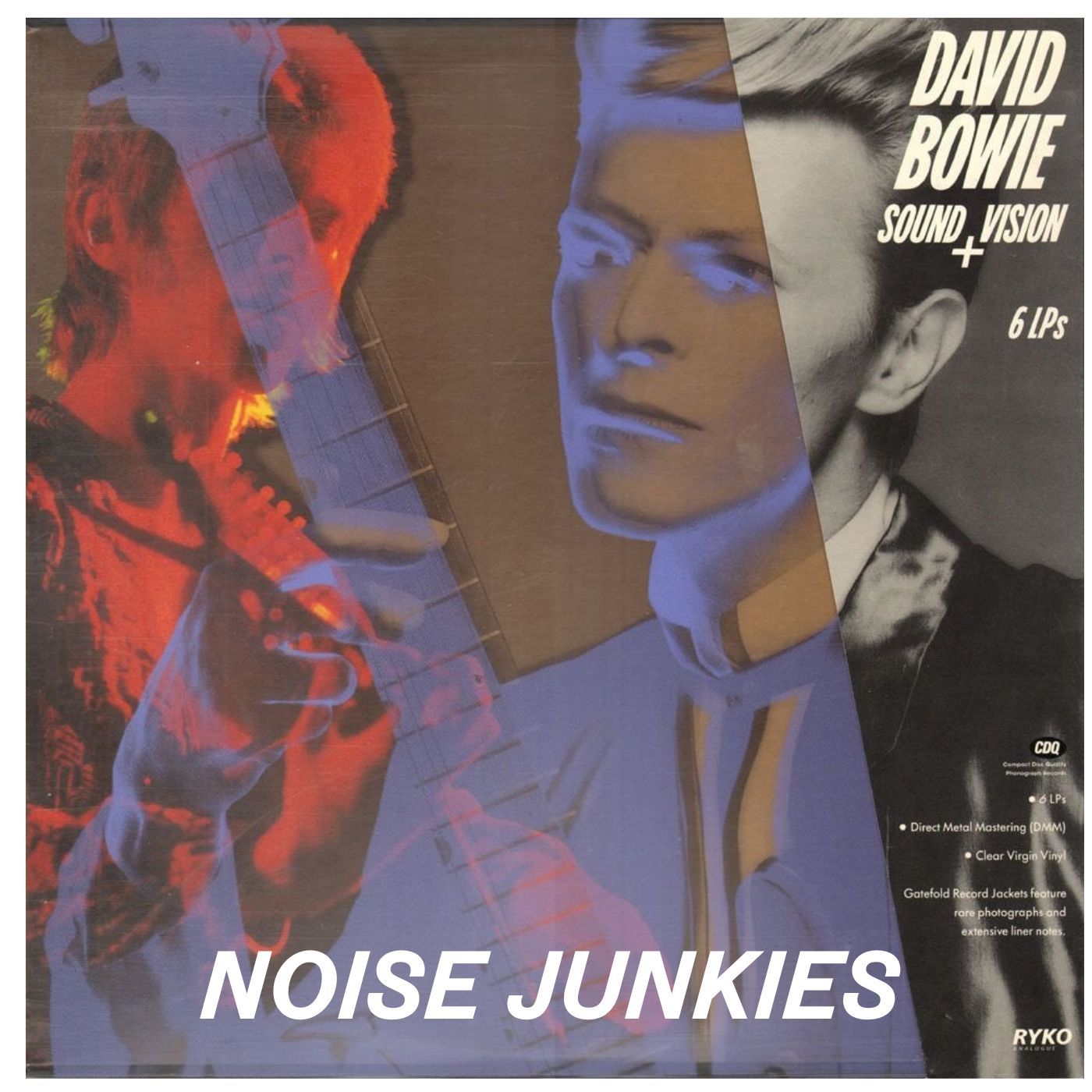
Raychodisc took this approach with Bowie's albums and ran with it. The first official Bowie release on Raikodisc was the box set Sound and Vision, released in nineteen eighty nine. I vividly recall picking up both this and Dala Soul's debut album Three Feet High in Rising at Sam Goodie at my local mall. One day. Anyone remembers Sam Goodie Goodie got It.
Good good Goody. Good got It, good To got It, Damn good I got it, Damn good I got it, Damn Goodie, Sam Goody got It. We've got It. Summer Savings at Sam Goodie, pick Up Theater of Paine from Motley Cruse, Invasion of Your Privacy New from Rat and Shaken and Stirred by Robert Plants, on sale now only six ninety nine each store White Summer Savings at Sam Goody. Goody, Goodie, Sam Goodye got It, Good Goode, Sam Goody got It, Sam Goodie got It, Sam Goodie Got It.
By now, CDs were becoming a big deal for music connoisseurs. The template for the retrospective box set repeat with greatest hits and bonus tracks was already established by Bob Dylan's Biograph box as well as Eric Clapton's Crossroads box set. Although Sound and Vision was originally conceived as a career retrospective in this vein, the final product leaned heavily on alternate versions, demos and the like. So not only was this a nice advanced look at the newly remastered music, but it also offered much for Bowie obsessives to pour Over. As I had no real conception of Bowie's music prior to Lets Dance, the non album tracks held as much weight to me as the rest.
Take this cover of Bruce Springsteen's It's Hard to Be a Saint in the City, recorded during the Diamond Dogs sessions. Bowie takes Springsteen's pseudo dilanesque cameo of tough guy tropes and makes it his own. Sure, Springsteen's leather jacket might have been somewhat ill fitting on Bowie, but the song does manage a certain cinematic feel, and it's coked up energy pushes things along nicely. The first and. Luck Bather and the Diamond far loop of a Coora.
I was born blue Wather, My bursts like a supernova, A good walk like around the door, ride. Into the sun. Bird is like as. With my black jack and jacket and my slick sweet Smer's God's just. Like a hobby.
And when I struck down the street I could hear its heartbeat. The sisters fell back and said come back. The cripple on the corner cried out the head Niggers go a bity. Now got to the boy downtown there so top good that's so part of it same. I'm gonna sit in.
Elsewhere was the song Round and Round, a cover of the Chuck Berry tune Around and Round recorded during the Ziggy Startist sessions. It's a really fun track, but it's easy to see why it was left off of that album in favor of the song Starman. Starman helped further the Ziggy Startist story along, whereas Round and Round is a stomping rock number featuring the razor sharp guitar work of Mick Ronson the band sounds like they're having a blast on this one. When John was rocking. Going round and Round.
Yeah, we stop rocking till the moment a. Sound jazz. Dance start a move. Now my Hand. From January nineteen ninety through August nineteen ninety two, Reraichodisc released all fourteen of Bowie's pre nineteen eighty three albums.
They were released in chronological order, usually one or two at a time, every couple of months or so. I would eagerly await each new release and run out to the store when it came out, and pretty much every release would feature a few bonus tracks covering that album's time period. Take for example, the oddball version of moon Age Daydream credited to Arnold Korn's that appeared on The Man Who Sold the World. Arnold Korn's was a kind of proto Ziggy Startist band featuring future Spiders from Mars, Mick Ronson on guitar, Mick Woody Woodmanse on drums, and Trevor Boulder on bass. Most curiously, it also featured Freddie Baretti, a nineteen year old designer who would go on to create a number of Bowie's striking Ziggy Startist costumes.
Bretti was credited as the singer, but that was a fabrication. It's actually Bowie on vocals anyway. This would be side project had two songs on this reissue, moon Age day Dream and hang On to Yourself. Both would feature on the forthcoming Ziggy Startist album, but here they are presented in radically different versions. Make Me, Make Me, Make Me?
Do you really cares? Make the jump it Speak, give God, Drink Hot mis job rave job Let's house, space face clost to mid. Freak out in the mood Age says. Up Hi a Moment. Diamond Dogs featured a few demos recorded during the album's original conception.
You see Bowie's original intention was to adapt George Orwell's novel nineteen eighty four as a concept album, but Orwell's widow refused to allow the use of the novel, so Bowie had to scramble to salvage what he could from the songs he had already written. Listening to Diamond Dogs, you can definitely see the seams of what was originally nineteen eighty four and what came after. I've no idea where or how candidate would have fit into the original narrative, or if it was really even inspired by nineteen eighty four, But I loved the slinky groove, which in some ways presages the pivot to soul music Bowie would take with the Young Americans album. Inside Every Teenage Girl, there's a mountains a mountain, inside every young fairy fence.
There's a mountain, a mountain inside every mother's eyes. Dummy tea grows bad inside every cancdate Wade, It's a grateful dad. And make it up there when I'm on my own, to relieve myself, make it up thing when I gazelle on stage, to believe in myselfs to believe, to make it a thing, to Glance and Window Fans, and the Please and Myself and the Please I'm. Ten the Mollme. The Lodger reissue included a nineteen eighty eight re recording of the track look Back in Anger.
The nineteen seventy nine original was a favorite of mine, especially memorable for its creepy as hell music video. The video was directed by David Mallett, a hugely prominent music video director from that time period. In addition to directing several for Bowie, he directed videos for the likes of Blondie, Peter Gabriel, Billy Idol, def Leppard, and of course, Haircut one hundred. This was a point in which music videos were moving away from straight performance clips into more creative, film like narratives. The video for look Back and Anger was inspired by the picture of Dorian Gray.
Bowie plays an artist in his studio who is painted an angelic self portrait. As he runs his hand over the painting, his face begins to scar and distort, leaving half of his face looking scarred and awful. Another fun fact, I was six years old when I saw this video. You know well, he said, you must speak of one name, Joe. He concentrate his couple of things, closed his eyes and both his fits.
This time we should be going in wait, driven by the knights till you go. Back to night eyes till you come. Don't want ses to hear him, So he speaks for a magazine and jolly brother, siway very soon He's c TVs. Tventy Ride the night do you go. The nineteen eighty eight remake of look Back in Anger was recorded as part of a collaborative performance with the Qebe Quad dance troupe La La La Human Steps.
It featured lead guitar by Reeves Gabrels, who would soon join Bowie for his Tin Machine side project. This version of the song is more menacing, with Gabrell's lead guitar quoting Carlos Alamar's original solo but giving it more bite. You know what he said, speak of what a joy. Because them shook his crumpled wings, closed its eyes and moved. Two steps, which I the super go over way.
Lay say so I've been lazy. Side lay sven father night you. Say side by. Sou soun. Sing the.
Tune cold. Whiting sound. Seemed again So we needs the magazine going up the sleeperwood very safe set. Nights. I adored all of the Reko disc reissues.
They sounded great, had lots of wonderful bonus tracks, and thanks to the staggered release schedule, I was able to consume the music without binging too fast and aiding in my Bowie musical education. I must give a shout out to my brother in arms, my partner in podcasting, most importantly, my best friend, Father Malone. I'll never forget. Just after I started gobbling up these albums one after the other, Father Malone drove up to my house bearing a gift. It was the book David Bowie an Illustrated Record by Roy Carr and Charles Sharr Murray.
Father Malone drove all the way to my place just to gift me this book that he knew I would cherish, and I did, and I still do. It's still there in my bookcase all these years later. To all you listeners, if you have a friend like Father Malone, well consider yourself a lucky motherfucker. Indeed, the book covered all of Bowie's solo albums as of its year of publication nineteen eighty one, basically starting with Space Oddity and ending with Scary Monsters and super Creeps exactly the period of these Reichodisc reissues, so it was perfect for me. It was the same dimensions as a record album, with gorgeous color photo of each album cover and plenty of other great pictures throughout.
Each album had a dedicated section in the book with personnel and song info, even the author's review of each record. I poured over this book, gleaning every bit of information that I could on my newfound musical obsession. Remember, folks, this was pre Internet, so it wasn't like I could just pull up the AllMusic Guide or discogs to learn about the albums and stories behind them. This was the resource for me, So thanks again, brother. In nineteen ninety eight, Island Records co founder Chris Blackwell bought Reiko disc for a reported thirty five million dollars.
A year later, the office in Salem, mass was closed, with much of the staff laid off. The label would relocate to New York, and by two thousand and nine, the Reigo Corporation would cease to exist, having been acquired and sold several times over the ensuing years. The global publishing rights to Bowie's music would eventually be sold to Warner Chapel Music in twenty twenty two for a reported two hundred and fifty million dollars. His albums have been reissued several times since those Reicho Disc releases, but for me, they never had the same charm, the same spark, the same care and attention that Rechodisc so clearly gave to them. I want to finish up by talking about a Bowie song that came after the Reicho disc reissue campaign and one that I discovered long after my first brush with boie Mania.
Following Bowie's death in twenty sixteen, I dove back into his music, as many people do following an artist's death, catching up with some songs that I had missed the first time through. The song that made the biggest impact on me was everyone Says Hi, off of two thousand and two's Heathen. I wasn't the biggest fan of Bowie's early two thousand's output. His shift to a more electronic sound didn't really resonate with me at the time, and I was content to stick with the parts of his catalog i'd grown up with. I first heard everyone Says Hi way back in two thousand and three when playing the PS two video game Amplitude.
Amplitude was a rhythm game produced by the game studio Harmonics, who would later go on to make the immensely popular Guitar Hero and rock band games. Remember those little plastic instruments, How omnipresent they were back then? I know I had them well. Amplitude was one of the seeds that led to that fad. Everyone Says Hi was a song that appeared on the Amplitude soundtrack, but in a more house music style remix.
I played this shit out of Amplitude, but didn't really take much note of this song, probably because I was too busy focusing on the gameplay to really listen closely to it. Cut to thirteen years later, and there I am finally listening to the original version. Bowie's death hit me pretty hard, at least as much as the death of a famous person that I've never met could affect me. I found myself listening more intently to everyone Says Hi, really listening to the lyrics, and it hit me like the proverbial ton of bricks. Everyone Says Hi may be one of the saddest songs in Bowie's catalog.
On the surface, the song's narrator is reaching out to someone, a loved one who has taken a long trip to some place far away. The narrator misses them terribly and worries that this traveler won't be happy in their new environment. Bowie entreats them to come back home if they're unhappy, and the refrain of everyone says hi keeps repeating throughout, conveying the notion that there are other people back home who share their concern. Seems simple enough, right, But Bowie himself has gone on record as saying the song is about the death of his father, Heywood Stenton Jones in nineteen sixty nine. In The Complete David Bowie by Nicholas Pegg, Bowie is quoted as saying, when my father died in nineteen sixty nine, I couldn't actually believe that he was not going to come back again.
I kind of thought that he just put his raincoat and his cap on and that he'd be back in a few weeks or something, and I felt like that for years. It really took a long time for me to be able to take in the fact that I wouldn't see him again. So this one was just a little simplistic reference to that about how it always feels like somebody has gone on a holiday of some kind. I think that sentiment is immediately relatable for anyone who has lost the cherished loved one. The sudden shock of loss is so unthinkable you almost fool yourself into believing they'll walk into the room at any moment like nothing had happened.
I lost my own father in two thousand and seven, which connected me to the lyrics in a way that I wasn't prepared for. The song made plain how I felt in the wake of my father's passing, and it was almost like I'd started mourning him all over again. It's a simple lyric, nothing grand or difficult to parse, an ordinary theme of loss and missing someone you love dearly. It's all couched in a bouncy, electronic tinged tune that doesn't quite betray the song's true sentiment, but it's not a sad, depressing track either. Bowie manages to inject some bits of humor into the song, like the duop style backing vocals during the middle eight, and the lyrics manage some darkly funny touches as well, particularly the inclusion of the big fat dog that Boie sings about in the song's closing fade out.
Still, even now, years removed from my rediscovery of the track, I can't listen to it without thinking of my father and getting emotional all over again. Said it's a a bit trip. They said, you moved away. Happened? Oh so quiet?
They say, should at a picture. Something I could keep. By your little frame, something cheap. For you. Everyone says, hi, set you sailed the picture, set your sailed away.
Didn't know the right thing to say. I'd love to get a setter, like to know. One's what. Hope the weather's good and it's not too hot. Or you.
And everyone says hide. Everyone says hide. Everyone who says, don't stay in a sad place where they don't care how you are. Everyone who says hi, if. The money is housing, you can always come home.
We can do the old things. We can do all the bad things. If the food gets you, liar, you can't always come home. We could do all of the birthplace. We could do it.
We could do it. He could do it. Don't stay of that place where they don't care how you are. Everyone says hi. Everyone says high.
Everyone says high, says and the girl next door, h guy upstairs. He says, sir, that's it for this episode of Noise Junkies. Thank you for indulging me once again. When I'm not listening to music, you can find me elsewhere on the weirding Way Network. I co host The Night Mister Walter is a taxi podcast alongside midnight viewings Father Malone, and I'm an occasional guest on The Culture Cast with Chris Dashu and I have a band campsite hpmusicplace dot bandcamp dot com.
I've just released a new album called Wired and Waiting. Please check it out. As always, please feel free to write us, rate us. Review us. We'd love to hear from you in any manner you choose.
Thanks again for listening, and we'll see you again next time. Make pasta
More from Noise Junkies
Similar episodes across the network
Matched by shared keywords.
-
Special Report: Boy George and Culture Club (2025)
1 shared keyword: david bowie
-
Episode 593: The Hunger (1983)
1 shared keyword: david bowie
-
Episode 444: The Man Who Fell to Earth (1976)
1 shared keyword: david bowie