
About this episode
Listen to Richard Hatem, Chris Stachiw, and Mike White lose their minds.
Transcript
Automatically generated, so expect the odd misheard name.
Welcome to Breaking on Bass and offhand joke that became a podcast. I'm your host, Mike Kaicho and me as a man who gives it a whack because he's got a knack. Mister Christashee Ihi Ho Fiddeloe also along for the ride as a man who keeps his wife in a pumpkin. Mister Richard had him. I have no references for this episode.
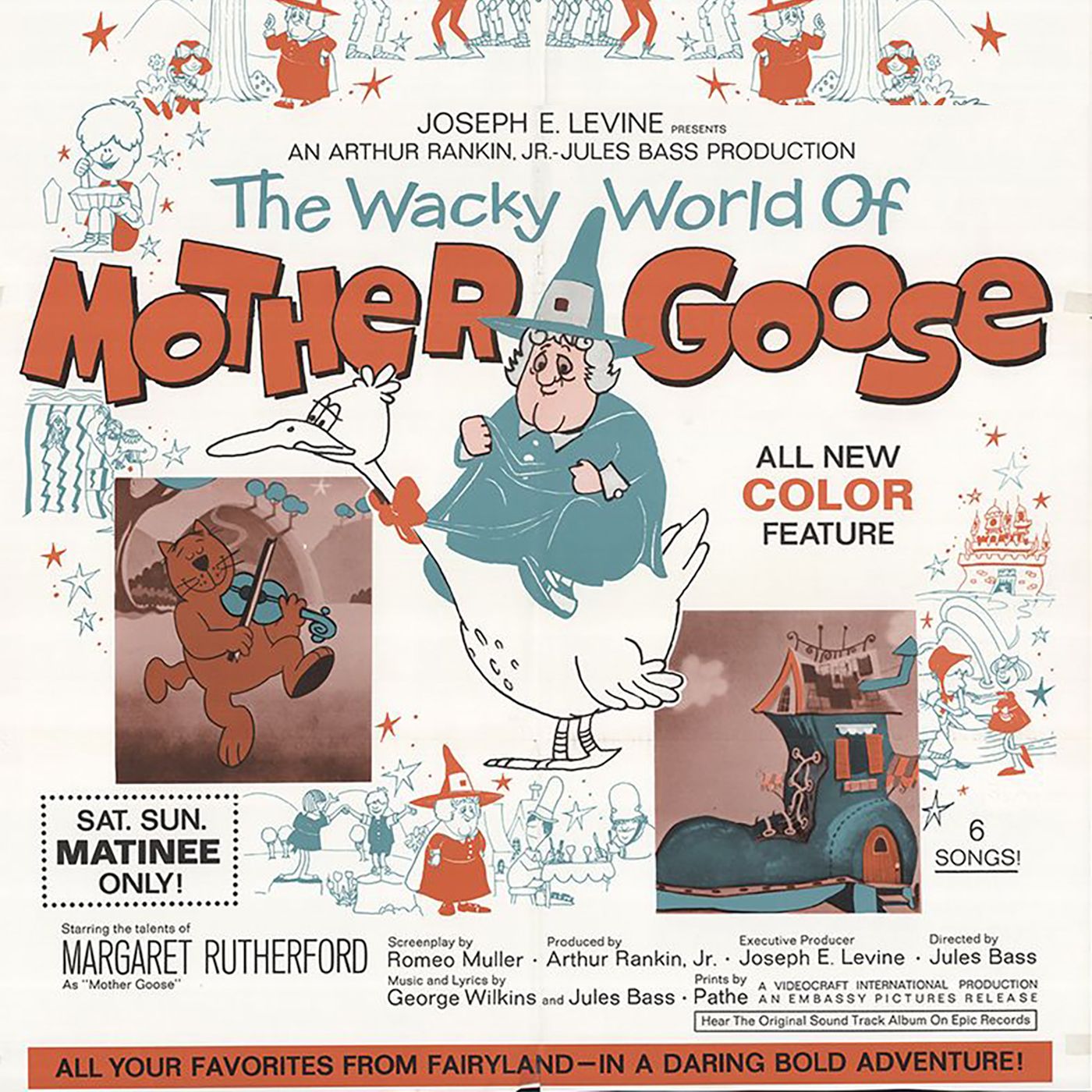
I will not dignify this episode with references to the discussed material. Ritchie, Ritchie, quite contritchy. On this podcast, we discussed the works of Arthur Rankin Junior and the Reasonly Past Jules Bass Color Me Surprise specifically specifically some of their stop motion and animated work. On this episode, we were talking about their first theatrical release, The Wacky World of Mother Goose from nineteen sixty seven. It's an animated film based upon Charles Perrot's stories and nursery rhymes.
Features such memorable characters as Humpty Dumpty, the little old woman who lives in a shoe, the Crooked Man, Old King Cole, of course, the titular Mother Goose, trying to figure out what's the low energy for my It's the low energy, Because can I speak for the three of us and say this the worst thing we've watched. I got a contact high watching this movie. It was I mean, what were they on when they were making this? It's amazing. Remember when we watched Lord of the Rings.
Yes, and I said, look, guys, I'm at a disadvantage here. This is an animation style I don't like, based on subject matter I don't care about that exists in a genre I'm not really a fan of. So you're going to have to really take my opinions with a grain of salt. Well, welcome to the wacky world of Mother Goose, an animation style that is fairly repellent based on stories that actually have almost no relevance now and and here we all are. And it actually made me think, what was it about Mother Goose when I was growing up?
Now I just turned fifty six year old, okay, But I grew up with fractured fairy tales, and I grew up with all the stuff so that I had a working knowledge of this stuff. But let me ask you, guys, the kids today have any idea who the hell Mother Goose is? You know, I don't know if they do or not. I don't think they didn't know who Mother Goose was, Like, I don't know what the story of Mother Goose is. I didn't know that there was.
I don't leive it this way. I would assume that there was not some sort of overarching narrative within the Mother Goose story. My assumption was Mother Goose was just a care I don't I do not know who Mother Goose is. That is not something I learned about. I am the youngest one here, Mike, you are the middle one here.
Did you have any frame of reference from Mother Goose going into this oh one hundred times? Yeah, okay. I had a big old book of Mother Goose stories. I knew every single one of these rhymes. Yeah, yeah, was overly familiar with all of them.
As soon as somebody would come on screen and be like, oh, that's gotta be a little Jack corner. Oh well, I know those stories, but I didn't know that they were like Mother Goose stories, Little Jack horners in the corner eating his curds away, YadA, YadA, Jack and Joe went up the hill. Like put it this way. I know those stories, but I didn't know that this was somehow a Mother Goose stories. I just you know, Humpty Dumpty went up a wall, Humpty Dumpty had a greenful like yeah, like but you just know that, like inherently you know that.
I guess, But isn't that weird, like like inherently we know it. But I promise you, I mean, I think that if you walk up to a ten year old right now and you go compte, dump these dad on a wall, they will give you a blank stare. Now, I'm not holding that against this. I'm just it was interesting to me as I was watching it going you know, I never liked these when I was a kid. It's not like these were the stories that enchanted me the most, and I just I couldn't get little Jack Horner out of my head.
They baffled and board me back. In the end, they seemed hopelessly out of date fifty years ago, and so now to watch this, I would sort of left thinking, well, clearly they were like, look this this sort of stuff in the public domain. It's not going to contest anything. The IP is free. All the kids know it.
It's welcome material. This is a way for us to do a special fulfill an obligation, make some money. And it's really you know, win win, there's no downside to any of this. That had to be the thinking, right, Yeah, Because well, I mean again, even if we talk about something that I think Rankin and Bass is more well known for, like Frosty, which they created, Rudolph, which they created, I mean, those were concoctions created by them in the vein of these stories. Yeah, Like, I don't know how else you would describe Frosty and Rudolph.
I mean, I guess they're they're holiday stories, but they're still kind of folksy tales of characters of holiday bent as opposed to whatever the fuck humpty dumpty. I don't under what is how he's a fucking egg that falls off a wall? But but why? But why is he an egg that balls off a wall? I'm sure millions of books have been written about the you know, the psychological underpinnings.
I'm sure Bruno Bettelheim has written volumes on the Mother Goose stories. But but but it is weird because it brings up a big your point. I think that I began to realize not so long ago that if you roll back to the middle of the last century, if you go back to the nineteen fifties, there were certain things that quote unquote everybody knew. One of those things was the Bible. Okay.
One of those things was Paradise Lost. One of those things were you know, maybe the Greek myths. But there were things in the Western literature cannon that every student learned and that, and then when you went to high school and college, you you you learned them almost even more. There were the bedrocks of Western literature. The Bible was studied in a weird way as Western literature, either either in church or you just you just knew it.
If someone made a remark about the Garden of get Seminy, you would go, oh, I get what you're talking. I get it. I get it. Okay, Um, well, it's cultural literacy and it doesn't exist anymore. Cultural literacy for kids now, is uh Mary Potter, bro and Marvel.
You know, that's what people do, That's what people turn to as I that It's like, you know, we can do Spider Man and and you know and Batman. You know, you're talking about things that in Superman. You look at those logos and they're known around the world. Batman is known, Superman is known, and we're in a fair or either Star Wars or Mickey Mouse. I mean again, it's it's it's the common modern mythology, you know.
That's I always say to people, you know, like, if not for the fact that the Bible is the text that people glommed onto, you could use the Silmarillion as a basis for a religious text just as easily has similar stories about characters overcoming problems in their lives or overwhelming problems in society. And like, there's nothing different. The Bible is the same thing. It's not, it's not, it's just it happens to have a religion based around it. But there are people that honestly believe in the quote Jedi religion unquote and consider themselves Jedi, as Mike rolls his eyes correctly.
But those people exist too, I mean, and again, like is it any less valid? But like to both of your points that it speaks to the it speaks to the I guess just commonplace people would be able to tell Mickey Mouse is before they said Jesus is right, and and there was this it's also about you know, American culture, turn the black back fifty years. Kids had nothing, kids got Saturday Morning and maybe they got Sunday Night Wonderful, Wonderful World of Disney. Okay, that's what you got. No one really gave a shit what a kid was interested in because you were a kid, and the world wasn't about kids.
Now that change, and that's not the truth anymore now little kids. I mean it started, it started with teenage culture, and then it worked its way down and now there's a lot of stuff served up to little kids, and you know, toddlers and the ones just above that, and the tweens and the preteens and the teens and the whole thing. This was made. I guarantee if I was six years old and my parents told me, oh, you know what, there's a special on tonight. It's it's for kids, it's animated, it would have been thrilled.
Oh yeah, like what somebody did something from me, right, But that's how it was. Last night watching this, I was thrilled, Did you actually like this? Come on, I tell me if you're true, tell me if this is not a joke. I was enthralled by this. No, especially the Crooked Man and all those weird nights.
The way the Crooked Man was moving was freaking me out. Um no, this is this is an awful movie. This is terrible and the character design is wretched. Just a Goose like the tingular character. It looks like looks like a flesh puddle, like a flesh pile like well with the definition less weird short creature.
She kind of looks like Margaret Ruther who voiced you know, like the mouth movements, the lip flap, as they say in the business, was not there. It was awful. But just looking at like Jack Horner and Mary Mary quite contrary, like those two have like these little dot eyes. And then you look at Mother Goose and the Crooked Man or Princess Harmony and they all have like the circularize and say, make a choice, would you make a choice which way these characters are going to look? And Princess Harmony I felt so bad for this girl because she had no nos whatsoever.
And she had that weird mouth too, that a strange like constant like puckered asshole mouth. Yeah, the Crooked Man is the most interesting part of this entire or special both from a design standpoint also from a what his design informs on other characters design, The voice that that Bradley Bulky is doing and on top of everything else, he is the villain that some of these specials kind of needed that they didn't get. He's an interesting villain who's just a bastard to the end, and some of these specials had these weird, redeemable villains that didn't really serve the narrative. I appreciate that this villain is just He's a bastard through and through, and he makes no bones about it. Takes everybody's parents away, and he said they're not coming back, and Mother Goose until she comes back, nobody can do anything like I kind of like that, so what so what?
But I mean, quite obviously what what? Who did he remind you of a little snidely whiplash from? Yeah? Didn't he remind you with a magician in Frosty? Oh?
Yeah? I mean this whole fan with her stopping and looking at the camera and being like, who am I? Well, I'm Mother Goose and I'm like, oh my god, here we go again. My wife literally went, since when is Mother Goose a pill? A witch?
Is what she said? Because she looks like a witch? Doesn't she go with the buckle on the half pilgrim or something? Right? Mother?
Mother Goose is a not the ruler, but she's basically the power behind the throne of old King Cole. I can't yes, so I just I was trying to figure out, like, who is Mother Goose in this story. She's like a demi god. I guess, like she's more powerful than everybody else. Romeo Muller had to invent all this because because Mother Goose was sort of an invented post all right, she's like the crypt keeper.
Yeah, yeah, exactly, She's the grip keeper. It's like, it's like, okay, I've got all of these stories that have been passed down, you know, oral tradition, and you know they're not quite brim fairy tale, dude, and a lot of them are just sort of like based on little rhymes that I think people said that their kids to sort of call them down and you know, make them go to sleep or stop crying or whatever. But they were clearly compiled into a volume and given a narrative umbrella, you know of mother Goose. Here is who is bringing this to you, and you can trust her and feel good about the product. And and so there was no story to fall back on.
I mean, I mean in the other ones, that you know, like Rudolf. Well maybe not Frosty, but there was at least a little bit of a narrative that you can fall. They created that. Again, those were like Frosty and Rudolf, weren't they created whole cloth essentially based off of songs, I guess right, But again, like, but a song is a full linked song is better than Humpty Dumpty sat on a wall, Humpty Dumpty had a great fall, like and then this more lines worth of stuff, like there is less there than in Rudolf the Red Nose Reindeer. I mean, look at in Shrek.
There they're able to use those characters. Oh yeah, that world in a much better way than they do in this world. This is like terrible Shrek. It really is, like yeah, it really is like a very crappy progenitor to Shrek. I mean again, it's crappy for a number of reasons.
The animation style toeay animation. I don't know what the hell happened here, oh man, but it's it's awful, Like I just it is so directionless and weirdly jumbled, like you, like Mike mentioned just describing all the characters and Humpty dumpty. My god, what an awful character design, and a and a weird and off putting character too, because he's not supposed to be at fillin, but he's like, I'm hump damn dump Dan. It's like it's just awful to look at and it's very unsettling. And what's up with his voice because sometimes he sounds like Buddy Hackett and other times he doesn't.
And I'm just like, what are you going for? Here? Was that Bob McFadden doing that voice? Who's a great voice arty, yeah, one of the voice artists, right, And it's just, oh god, I don't know, man. It feels like this was structured almost like a like a Bob Hope special.
You know, it was just like we just gotta keep bringing on the guest stars, right, you know, it doesn't matter. It's like, okay, yeah, you like Jack Horner, now me little bo Peep, Okay, now we got this one. Now, we got that one here one Hey diddle Diddle, the cat in the fiddle. That was like the stretch of stretches because all of a sudden there's a cat playing a fit and I was like, oh my god, really, really we're going there like all right, and where's they going? Where?
Where are they going to go? What's the problem? There is nowhere for this to go. Even when it tries to go somewhere, it goes nowhere. The story is threadbare, to say the least, because it essentially boils down to Mother Goose leaves to go see her sister.
Bad things happen the minute Mother Goose comes back, she fixes everything, like immediately, and you're just sitting and wondering, like, well, okay, so the tension was what again that Mother Goose was just gone a little longer than she said she would be well, and this was this was I mean, again trying to get into the heads of the people who made it what the whole idea was. It's like, if a little kid is sitting in front of the TV and watching this, they're the general sense of danger, which of all it takes. I mean, for a little kid, that's all it takes. You're just you're riveted, you're terrified. And then with each character that comes around, the kids are like, oh, yeah, I know that one.
Oh, I know that one. And I have to imagine there was a real feeling of Wow, this film is speaking to me. This film knows my world. You know, it's not all that weird, boring stuff that the grown ups watch at night where I have to go to bed and they're watching you know, uh, you know Hawaii five. Oh, this is for me.
You know, this isn't Bananda. So the more characters that come out that I recognize, I guess, the happier I am as a kid. And again, it costs them nothing because this is just public domain. I p so, so in a wave they I guess they did the smartest thing they could, which were just like, okay, let's just let's just create something that allow us to just just parade all the characters through as quickly as possible. Bring Mother Goose back.
She saves today, everyone works, Mother gooths get eyed. Everybody well and the other about this, if you think about it, because we've already we already talked about it. At one point on this show. I'm trying to remember the name. What was the name of the Hans Christian Anderson thing that they did, Oh right, the day Dreamer was that it?
Yes, yes, yes, they did that before this even that was better and and those stories were slightly more obscure because the kids, you know, Hans Christian Anderson is a little like one half step removed. I mean that's a little bit more toward grim. You know, that's sort of weird Northern European, you know what's going on? Why am I worried about the little match girl? Wasn't that well a little mermaid?
Right? That's one of the that's one of the Hans Christian Anderson's stories right right that they like really beat into the ground in that like they the one that they beat into the ground. And this one is Jack Horner, Like, what a memorable character. He sat in the corner. That's all he fucking did.
He was eating. He's not in the corner. What was he doing? Eating his curds and way or eating his putting creep Christmas? Yeah, sat on her toughet?
Now toughet? Where was she? Is that? Not a married? That's not a that's not a story.
Apparently mother's been married. I just want to say, I've been married for years. I've yet to located what is it? Most men have problems with that? Um little Jack seven in the corner eating is Christmas pie?
Thumb pulled out a plumb and said, what a good boy am I? Yeah? Okay, so now here's what okay, think about that present, that that there is nothing going on there that is literally something you say to hypnotize a child to go to sleep. Take it from a man who's had three kids. You'll do anything.
You will sing anything, say anything, do anything just to keep a tone rolling that will hypnotize the child. Oh my god, I'm surprised that they didn't use Pero's other films or his other stories, I should say, because he wrote Little Red Riding Hoods and Norella Put Some Boots, Sleeping Beauty, blue Beard, which is really fucking dark. Oh yeah, but it's like, hey, you know, we're just sticking with the nursery rhymes here, which appropriately enough are Yeah to your point, Richard, like four or five years old, trying to figure out all the words to these things and knowing them by heart, but not knowing why why do I know all of these things? Why do I have all of these rhymes stuck up in my head? Like what you know?
Like when they got to the Peter Peter Pumpkin Eater, I'm just like, wait, he sticks his wife in a pumpkin because he couldn't keep her what. Yeah, it's well, you gotta figure out. I mean, I'm sure there were ways to. You know, you teach kids sounds and rhymes, and it's early reading, and it's early spelling probably, and it was just it was just this sort of received volume of material that existed in a world that was not about children. It's not like it had to battle with you know, bugs Bunny right, yeah, paw Patrol.
Oh my god, I mean, you know, I mean, I couldn't even tell you what's been going on the last twenty years. It was Tubby's for that matter. Yeah, you know, Barney the Purple Dinosaur, rhyming, the rhyming purple dinosaur. I love you, you love me. We're a happy family.
I mean, yeah, I didn't even you know, I don't know why the term we Mike hadn't said nursery rhyme. Nobody it's a nursery room until you just said it. Mike. This is like, how do you make a fucking cartoon special off of nursery rhymes? It's you can't because this is what happened.
Well, but it's weird, but but it follows the same logic of let's do year without a Santa Claus. You see, Santa Claus, and you've got ninety nine point nine percent of the children in the western world's full attention. Why why burn a lot of calories trying to invent something new when you can just sort of walk up and go, okay, kids, you've all heard of this, Well, then I'm not disagreeing with you. But hey, diddle, diddle, the cat in the fiddle leaves not a lot to go off of its right, cat in the fiddle, cow over the moon, and a dog laughing a spoon, Yeah, the fork run away with the spoon. Along came a spider.
No, it's but that's and that's the and that's the problem with all of this is like some of these I expected also some of these to show up, like three blind mice didn't show up. Not that kind not that not that kind of nursery rhyme. Well, she's so lazy that her clock isn't working, so she has to go to the cupboard, let the one mouse out, so it'll run up the clock and the clock will strike one and then she's all set. And I'm like, wow, lady, could just like wake up the clock or you know, turn the hands on there. But yeah, okay, look you I know, you know, you guys don't have kids.
I had kids over the course of the past twenty five twenty six years. Never read them a single mother goose nursery rhyme. Never did it because I didn't need to if I wanted to share time with my kids, even when they were little, trying on the Simpsons, you know, as I got to the other thing is that there's not a separation any So it's not like, well, for a child, you read them these things and they and they like it and then they grow out of it. For an adult, it's like, well, but why am I wasting my time when I could just show them something I like. It's like, guys, I know you're only two, but this is Star Trek and one day you'll be glad you know what the hell it is, and you just show them whatever you like.
That isn't you know, Friday the thirteenth, and you know, if it's not too loud and scary or whatever, you enjoyed it. And that's it. I mean literally, I mean that's that's to me, that's the value of ranking And maass is that when Christmas rolls around as it is, you know, coming down the pike, this was something I could show the kids, because Santa Claus still has a little bit of cache by the way, losing more every year, but it's got a little cafe. Kids know it. It's benevolent.
They're not afraid. They're willing to listen. And so I could show my kids Rootolf the Red Nose Reindeer. They didn't fall in love with the way the way I did, but they but they, you know, they tolerate it, you know, um and Charlie Brown you know, I could throw him Charlie Brown for a few years until they, you know, flat out rejected that because it wasn't cynical enough. Meanwhile, Susan and I are weeping as you do.
Look, my god, it's kids. They're trying to be nice to each other. I mean, that's fair. You know. It's strange to me because again ranking and asked, normally, even when they miss step, they don't miss step this hard.
And and you know that Frosty cartoon, not the original one, but the second was there another Frosty cartoon that was not great? It was the one with Jack Frost and there I camera, yeah, that was that was kind yeah, that was kind of a misstep. And then there were you know, the Leprecon's Christmas Gold, which I don't even know if we've talked about yet, but I we did, Oh we did, Okay Carney and Blarney Killarney and Killa Ka Darney Bnarni or whatever. Those are the kinds of missteps that I I get from Rankin and Bass, where it's just kind of a you know, it's kind of a nothing burger. It's not much of anything.
It's just you know, it comes in, it goes thirty minutes of time, and by the end of it, you know, I've been mildly entertained, but it's over with. This is like an hour and a half. You know, this this overstays. It's welcome for me by like two X. Yeah.
I was surprised when I saw that this was a feature length film, and I think going through the list of all of their stuff, I think this is the last feature film that we have to Oh, I take it back, there's one more, The King and I from nineteen ninety nine, but this is one of the last ones that we have to talk about. And then we've done all of the live action stuff now, so we're well chugging through this. Guys, look, here's here's here's what I think. And we and for the listener, we you know, Chris and Mike and I have discussed a little bit of this offline because I sort of felt like, you know, I mean, we're recording this in early November, and we're obviously coming into the holiday season, and I think Rankin and Bass, for all of their massive output, are primarily known as sort of the keepers of the childhood, you know, uh Ani magic Christmas specials.
And I was kind of pushing forward, why don't we revisit them maybe for another angle and then and then you guys, or maybe Chris, it was you who suggested, why don't we do Night Before Christmas and Cricket on the Hearth, which are how are they ones that we haven't done yet? Which I think is a great idea, and maybe we also, um, we do that and then and then and because we're not prepared on this podcast because unfortunately his passing was just a few days ago, but um, but maybe we do just like a little salute to a Jules Bass and kind of you know, provide maybe a little bit of biographical information that we haven't really lead into, and uh and just kind of you know, tip our hat and raise a glass to to do you know half of our bad fun that led to a long running podcast.
Well, it's funny. Like Mike mentioned in the intro, I you know, it's not that it's not that we don't keep up with these things, but there's an assumption that when we're talking about stuff that took place in the sixties and these were people that were, you know, between my age and y'all's age, then that they have long left us. That No. Jules Bass like, holy shit, what Mia Colse guys stick around? I looked him up and I thought that he was gone, or else I would have tried to reach out for an interview because we've been doing this for what two years now, I think since before the pandemic.
Dude, Yeah, so it's like years, and I known I would have you reached out because any of those guys alive. Is Romeo Muller alive? Oh? I don't think so. I think Rankin is not.
I mean, obviously I am not reliable because neither one of us are apparently. Yeah, well, I mean it's so funny. I mean when you can find out in two seconds it's by googling it, but I think we all just assumed, well they could possibly be a. Rankin passed away in twenty fourteen, and Romeo Muller passed away in ninety two, so up the big three of Bass, Muller, and Rankin. Bass was the last.
But to be fair, to be fair, to be fair, he was eighty seven, and we all know, well, Mike and I know, and I'm sure you as well, Richard. The longer people are around, the less people want to do stuff like this. I interacting and dealing with people in the old days and technology and interviews, and you know, some people are into it and some people love talking. Mike and I have run into those people, but also run into people who are I'm retired and I'm not doing anything, so don't even bother looking at you, Geen Heckman, I'm doing a lot of oh yeah, yeah. You also get a lot of I'm writing my memoirs, so I'm not talking to anyone right now.
And then years passed and it's like, whatever happened to that memoir you're writing? Dude. I ran into a guy last night at a party who who you know? He also works in the entertainment industry and he's from the UK. We were talking and suddenly he's like, well, you know, I know Joan Collins.
I'm like okay, He's like yeah, i'd oh she's eighty seven. I'm like, oh, does she want to come on a podcast called Eighties TV Ladies produced by weirding Way Media. And I think he's like, yeah, price. Yeah, Well that's the other thing. I mean, if Jules Bass may have said, hey, you know, uh, you know, hey pay me, but but we'll pay you how much do you want?
You know, like, if it's more than a hundred bucks, We're gonna have to talk to some point. I think I can still say I've never paid for an interview. I believe you're the same, Mike, You've never paid for an interview? Right, Well, technically I helped out some guys who were making a documentary by paying for an interview for them to do it. But then part of that agreement was and you have to come on my podcast.
So yeah, are you the kind of guys Are you just bragging that you've never had to pay for it? I mean I've had to pay for other things. Yeah, yeah, yeah, why would you pay for an interview? This is this is publicity no, because, in the words of Charlie Sheen, what you're paying for is for them to go away more. I mean pretty much.
I think I think, yeah, bros got tiger blood. I'm not going to mess with them. Yeah, I think more than anything else, I was just, you know, I was surprised that Jules Bass is still around. But it says that he was still active, that he was still working up until twenty twenty two. I mean, I don't I don't put a lot of stock into that, but yeah, I think what's more surprising.
I think it caught a lot of us off guard. And Otto Otto Bruno, who has been on the Barney Miller Show, actually mentioned to me about a talking about you know, Juels Bass a little bit, and I think to your point, Richard, it, you know, would behoove us to probably maybe mention who Jules Bass was, because yeah, kind of we fucking dropped the ball and it was it was I mean again, you know it's it's you know, none of us knew so to a certain degree where we are. This podcast is preaching to the choir. No no one's tuning in who doesn't sort of love of the material. And there's a Facebook group that is very knowledgeable and dedicated to Rank and Ambass And so I know, I feel like in a way we've sort of just proceeded forward as if everyone sort of knows everything and understands who Rank and Advance was.
But but maybe just even for a brief portion of a of a podcast, we can sort of circle back and a sort of go, Okay, for those of you who might be somehow stuck somewhere over Christmas and you're just listening to this and you've seen Rudolf, but you don't really know who these guys are, or what their passions were, or why they devoted themselves so stringently to this art form of AnimagiC and what their relationship was with the Japanese animators and how they even got into it. There might be a little bit of a story there to enjoy over the holidays, and then at the same time also revisit a couple of their classics we haven't really talked about. Me why not we're getting into that season. Let's kind of let's curl up by the fire and you know, part ourselves a hot body if you will, and talk about the guys who kind of played an integral role in our childhoods for sure mine well.
And the other thing that's kind of crazy about all of this is, again, like Rudolph and Frosty are song but the songs become part of the special. But the special, the stories in those specials are what everybody remembers. I mean everybody, because again, you know, the totally not gay Elf is not in the song. You know, that's not part of the song. You know, Yukon Cornelius not part of the song either.
I mean, these are things that are invented for that special that end up being as memorable. Hermi the Elf is as memorable as Rudolph. And what's insane is, look at this. They didn't try here to do anything more with any of these characters. Frankly, the way you do this story is you have a kid from the real world to go into the Mother Goose world of stories.
And that's how you do this story because then it's those kids like you've been talking about, Richard, the kids who you and Mike were or you know, know of at the time, who knew these stories, going oh yeah, there's the Dumpty, Oh yeah there is Mother Goose and you already know who they are. And it's a little kid interacting with them as opposed to them interacting with themselves, and it falling very flat and not interesting. And look, by the sixties, because these stories are so old and date back so far, you could even go with the angle of the wised up kid who didn't believe in all this fairy tale. And then by the end he's like, oh my gosh, mother Goose, I love you, you know, I mean, it's not here's the thing, you know, Romeo Muller wrote, he wrote the screenplay here.
I'm I'm a big fan of Romeo's. I actually think that that he hit it right on the head. Actually with Rudolf and Frosty thematically, he goes straight to the point. He's like, Rudolf is a story of a misfit who is underestimated, feels unloved, feels totally shut out. I mean, that's what's poignant about the story.
Let's let's let's push the walls back on that. Let's bring in an out. Let's bring in an old, an old miner. Let's bring in a handful of characters who are essential to the story, who also feel or could be seen as misfits. And then let's go one step further, Let's go to the Island of misfits and let's really kids.
Guess what every kid feels like a misfit there is it's meedious. That is why this endures in the same way that Charlie Brown Christmas endures because it sort of counterintuitively plugs into kids feeling weird about Christmas. I mean, I was a depressed kid. I had no trouble identifying with Charlie Brown and going, yeah, I love Christmas too, but it's weird. There's this weird existential sadness that comes with Christmas.
And when I watched Charlie Brown, I didn't know. I didn't sit back and go, ah, yes, he's he's connecting with me in this particular way. I just knew that. I liked that that was getting voiced, and I liked that it was getting resolved. I liked that his friends were aware of it, heard him and came around and said, you know what, Charlie Brown, we hear you.
Now you're depressed, and we get it, and we're here for you. We got your back on this. We're gonna make it a great Christmas, and we're gonna stop making you feel terrible. For let me tell you, for a little Richie had him. That was That was storytelling gold, as was Rudolph, as was and even look, Frosty is not, as you know, potent a Christmas symbol and the theme of magic, though at least they exploited it.
They said, Okay, what if Frosty the snowman about it's about magic? Okay, what do we got there? Evil magician? Okay, he's the bad guy the red because he fake magic. But Frosty the real magic, let's talk about that.
That's really great. I give full kudos to that creative approach to these specials. And I think Romeo does a great job with the vast majority of these, which of course is why this one was well a little discipline well and I don't know what what the what the message is in this one, because like you just mentioned, I think you would agree Mike like and the other ones as maybe kind of simple hearted or you know, kind of hopeful. The messages, you know, be good to one another, be kind to one another. YadA, Yet, YadA, there's none of that here.
I don't know what it is. It's just without it. I'm not gonna say it's without a heart. But there is no emotional core at the center of this because Mother Goose is not present and Jack Horner is not much of a character. And I'm not willing to concede that Humpty Dumpty is the emotional core of this story because Humpty Dumpty is just off putting, right.
You know, if anybody's supposed to be there, it's Jack and Mary, I think, and I could give a shit about both of them, and sorry Moray Laws, but songs kind oh suck god, Yeah, that was That's the other thing. I mean again, when Rudolph and Frosty are created from the song that's already so good, you know that song is going to be in there, but then in those specials they augment it with all those other fucking song like where just a couple, I mean, that's the one that everybody remembers outside of Rudolph. Silver and Gold is a fantastic oh my god. Yeah, But then you come to this and it's just nothing Like I couldn't tell you any of the songs in this special, none of them. And apparently as Roun this wasn't more.
This was Jules and another gentleman whose name I'm looking at George Wilkins, thank you if the music and this is not good, the music and this is and it's not even a matter of good or bad, it's just wholly unforgettable, which is bad. I mean the fact that they're unforgetable or holly forgettable. Holly forgettable bat Man, it's I can't even tell you. One of the songs, Well, there's a weird one where it's Jack and Mary going back and forth and it's a give give the boy a break or something. But then when she's singing it, she's also singing give the boy a break, and I'm like, way this, no, this is weird.
Okay. So here's from the book The Enchanted World of Rank and Bass, a portfolio. This is actually from the first paragraph covering Mad Monster Party. Okay, so just hear me out. In reference to Mad Monster Party, it says this is one of the best love Rank and Bass AnimagiC productions.
Released in nineteen sixty seven, Mad Monster Party was a feature film distributed through Embassy Pictures Corporation, with Joseph e Levine Levine as executive producer. Quote rankin. Joseph was a very successful entrepreneur at that time and was anxious to get into the quote family market, as he called it. We made The Daydreamer though, and the Wacky World of Mother Goose and Mad Monster Party with Joe, and it was an interesting experience. He was a colorful fellow and we had a good time.
And I think we all made a few pennies. Okay, So I think this gives us a little bit of a not you know, look, it's called show business, not show charity. But it gives us a little bit of an insight into why things like Mad Monster Party and Wacky World of Mother Goose and then back to the daydream or why they got made because a producer saw Joe Levine was like, hey, wait a second, I think there may be an underserved market. Can you guys help me? And it sounds like these were not unsuccessful theatrical releases because they all made a few pennies.
So no one was like, yeah, that was a disastrous collaboration that we never should have pursued. I think this one made money. Guys. Oh, I wouldn't be surprised. I mean, how much money did they put into it?
Not very much. I'm not compared to the AnimagiC ones. I've got to assume. And what's crazy is, you know, we watched something like Willie McBean right that was you know sixty five. I would take that over this.
I would take the day Dreamer over this. I would take Mad Monster Party over this. Frankly, that's a choice. It's a it's a tough choice, but I think it's it's I think for me ultimately was something like The Wacky World of Mother Goose. It comes down to three things.
The expectations I have when we're talking of Rankin and Bass film, good music or at least some semi memorable music, which this has none of a kind of a heartwarming message, even if the message is, you know, tailored for a childhood audience or a younger audience. This doesn't have that either. And then the third is quality voice acting, which all of these tend to have even when they're not great. And this is the first time I think I can say the voice acting has been sub part. Even with Bob McFadden, even with Bradley Bulky playing the crooked Man, the more interesting of the characters.
Even with Margaret Rutherford, who fantastic actress, nobody brings anything to any of this. It's like they're sleepwalking through it. And it's a shame really, because, like we've kind of mentioned, there is a story that could be told here, it would have to be told with nineteen sixty seven sensibilities, not nineteen forty seven sensibilities, which is clearly the sensibilities the adults here, Joseph Levine and friends, and Bass and Rankin and Mueller, they were all bringing adult sensibilities to these stories by telling them in a very paired down and a boring way. And I think there was a better way of telling these stories at the core of this that they just they sailed on by because they were just doing the absolute minimum amount of work.
The minimum amount of work is what we get here, like it's so workman like it's not even funny. So to your point about the voice acting, um, here, here are the voice actors in the Daydreamer. You're ready to Lula Bankhead, Victor Borga, Margaret Hamilton, Burrow Lives, Boris Karloff, Edwyn Ray Boulger. And that's only half of them. I mean, I mean, this is a studded This has this has Margaret Rutherford and that's it.
That's pretty much it. And what's funny I'll show you here. There's a one sheet that they were put up, and I want to call your attention to this one thing right there, Saturday Sunday Mattinee only. Yeah. Yeah, and Margaret Rutherford's name is front and center on that thing.
Yeah totally. And nothing against Margaret Margaret Rutherford. But typically they sort of they try to fill out, you know, it's like, well, let's get in this guy, and let's get even Paul Freeze. It's like, well, let's you get in the guy who's really good, even if he's about a celebrity. You don't have to be Fred to Stare or you you know, whoever, you know, truly booth, Let's just get someone in there.
And this one they really didn't do that, and it shows. It feels like the first feature film that they've done. It is the first feature length that they've done. But here's the thing. They had done other things before this.
They had done Willie McBean, they had done all the other they had done a lot of them. They've done Rudolph and Frosty by now, had they not like long before this? Like it? What's weird is this feels like such a poor showing. And I would understand if this was a poor showing, if this was your actual first thing you'd ever done and you've never really done anything else.
Yeah. Now this was a couple of years later, and I really think I mean again, if you if you hear what Rankin was saying in that interview, what I'm hearing is it was the third well it was the second of these three movies that he was referring to, and it was sort of like, why spend all that money, Spend as little as we can, make as much as we can, and get the hell out of town before anyone figures it out. But it's but still crazy. Well, but it's crazy because they still have better voice actors in those other two. So this is this is the one that they just this is the this is the one where they just said men whatever.
Yeah, this was the cash crap. This was oh now it's getting little too easy. And then uh and then you know, I don't know if Mad Monster Party put an end of that, but you know, they they they look clear fortunes, you know, dipped and rose. But uh, yeah, this was two years after Routolf, you know, so I there's no excuse this. I think this has for me taken a spot as the worst non live action thing we've seen.
It's if the Lenka alone makes it really hard to find it anything other than just kind of a By the time you get to the end of it, I was more annoyed than anything else. I was like, can we just get to the end of this story, please? Because nothing is entertaining, nothing is nothing is exciting here. You're not even giving me anything to chew on as an audience member. You're just you're just it feels like you're just rushing to the end.
Even I think it has to be eighty minutes to be a feature release. It can't be any shorter. And that's fairly. I mean, that's in the modern era, right, you know. I mean there were Marks Brothers movies that clocked in it like, you know, sixty eight minutes.
But but but at a certain point, it's like now, I mean, you've seen movies that have been made in the last you know, thirty years where where the end titles are really long just to get it over the It's like we're eighty eight minutes, we got it or whatever the limit is, you know. So yeah, not great, but hey, we still love ranking and baths and we're going to come at you with some holiday content, so just you wait and see. Well, on that note, I want to thank everybody for tuning in. I want to thank Abby Stabby for our artwork as well as great Octopus forth the music. Be sure to subscribe to us your favorite podcast platform.
We will be back next month with that holiday content with a look at Towards the Night Before Christmas and the Cricket on the Hearth. Until let me be sure to rate and review the podcast wherever you get it, Tell your friends, tell your family, and stay weird.
Similar episodes across the network
Matched by shared keywords.
-
Special Report: Donkey Princess (2026)
1 shared keyword: charles perrault
-
Rollercoaster (1977)
1 shared keyword: richard hatem
-
Episode 56: Landmark
1 shared keyword: richard hatem