
About this episode
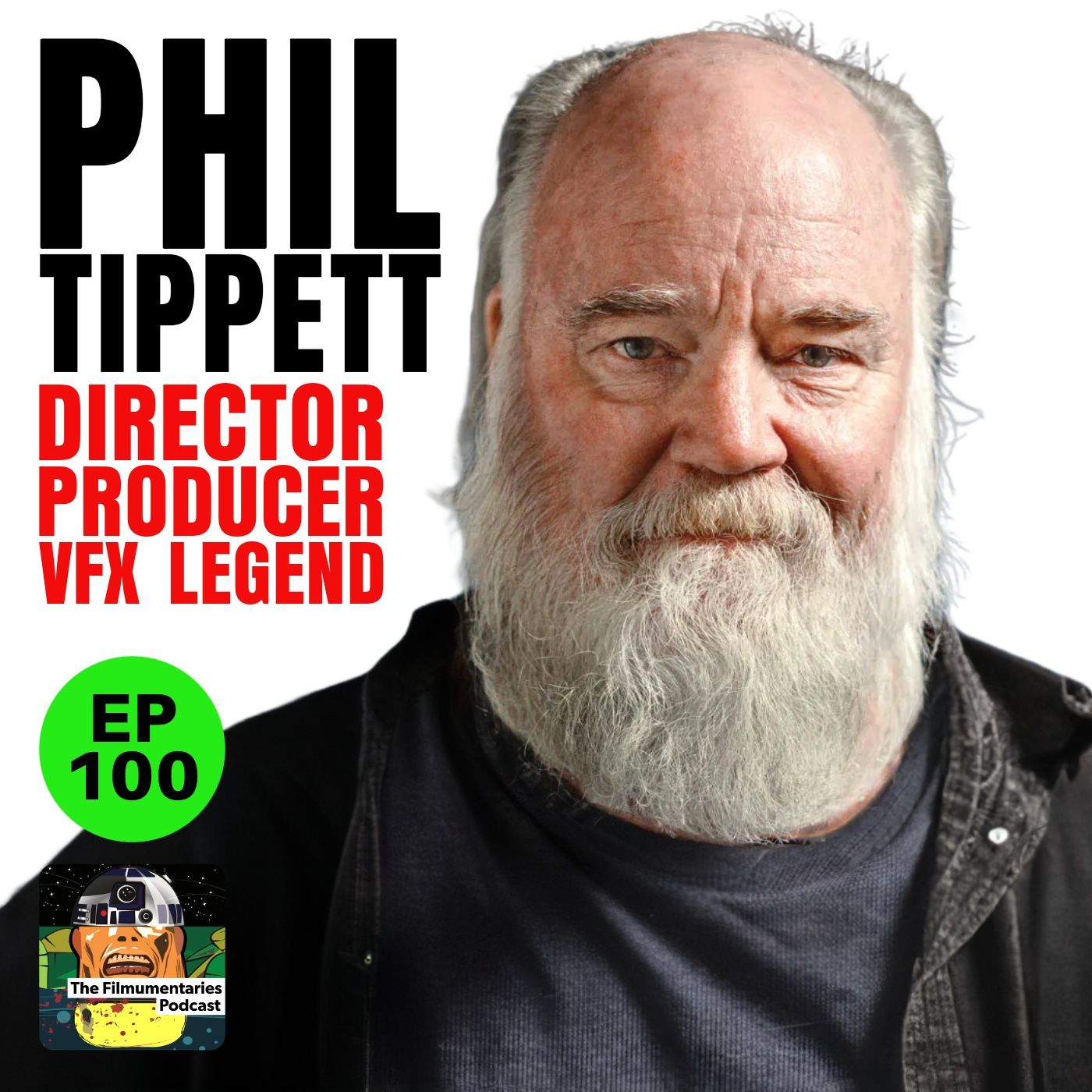
That name is of course Phil Tippett, one of those incredible artists whose work transcends the films he’s worked on. His work is always full of a singularly tactile, grunginess that I love. Whether it’s the chess pieces in Star Wars, the Tauntauns or Walkers on Empire, the Rancor in Jedi, the Dinosaurs in Jurassic Park or the bugs in Starship Troopers, Phil’s work is always imbued with such great design and character. I’ve been an admirer of his work as I said, for decades now. And I was given the opportunity to speak with him in February of this year, 2024. I knew immediately I should save that conversation for my first milestone of 100 episodes.
Thanks to everyone for their support since I've been making this podcast. It means the world to me.
Donate Button
All the links
Michael Hewitt Brown Marathon Donation Page
This podcast is completely independent and made possible by listener support. If you’d like to help me keep making these episodes, you can join my Patreon community here: https://patreon.com/jamiebenning
Watch more on YouTube:
Check out the Filmumentaries YouTube channel for behind-the-scenes clips and extra content: https://youtube.com/filmumentaries
All my links
Transcript
Automatically generated, so expect the odd misheard name.
img:is([sizes="auto" i], [sizes^="auto," i]) { contain-intrinsic-size: 3000px 1500px } 100 - Phil Tippett - VFX Legend - Filmumentaries {"@context":"https://schema.org","@graph":[{"@type":["Organization","Person"],"@id":"https://filmumentaries.com/#person","name":"Filmumentaries","url":"https://filmumentaries.com","sameAs":["https://www.facebook.com/filmumentaries/","https://twitter.com/jamieswb"],"logo":{"@type":"ImageObject","@id":"https://filmumentaries.com/#logo","url":"https://filmumentaries.com/wordpress/wp-content/uploads/2023/10/cropped-filmumentaries-podcast-tile-rounded-edges-2.png","contentUrl":"https://filmumentaries.com/wordpress/wp-content/uploads/2023/10/cropped-filmumentaries-podcast-tile-rounded-edges-2.png","caption":"Filmumentaries","inLanguage":"en-US","width":"1400","height":"1400"},"image":{"@id":"https://filmumentaries.com/#logo"}},{"@type":"WebSite","@id":"https://filmumentaries.com/#website","url":"https://filmumentaries.com","name":"Filmumentaries","publisher":{"@id":"https://filmumentaries.com/#person"},"inLanguage":"en-US"},{"@type":"ImageObject","@id":"https://filmumentaries.com/wordpress/wp-content/uploads/2024/04/100-phil-tippett-tile.png","url":"https://filmumentaries.com/wordpress/wp-content/uploads/2024/04/100-phil-tippett-tile.png","width":"1400","height":"1400","inLanguage":"en-US"},{"@type":"BreadcrumbList","@id":"https://filmumentaries.com/2024/04/100-phil-tippett-vfx-legend/#breadcrumb","itemListElement":[{"@type":"ListItem","position":"1","item":{"@id":"https://filmumentaries.com","name":"Home"}},{"@type":"ListItem","position":"2","item":{"@id":"https://filmumentaries.com/category/articles/","name":"Articles"}},{"@type":"ListItem","position":"3","item":{"@id":"https://filmumentaries.com/2024/04/100-phil-tippett-vfx-legend/","name":"100 – Phil Tippett – VFX Legend"}}]},{"@type":"WebPage","@id":"https://filmumentaries.com/2024/04/100-phil-tippett-vfx-legend/#webpage","url":"https://filmumentaries.com/2024/04/100-phil-tippett-vfx-legend/","name":"100 - Phil Tippett - VFX Legend - Filmumentaries","datePublished":"2024-04-09T12:33:34+01:00","dateModified":"2026-09-21T13:49:59+01:00","isPartOf":{"@id":"https://filmumentaries.com/#website"},"primaryImageOfPage":{"@id":"https://filmumentaries.com/wordpress/wp-content/uploads/2024/04/100-phil-tippett-tile.png"},"inLanguage":"en-US","breadcrumb":{"@id":"https://filmumentaries.com/2024/04/100-phil-tippett-vfx-legend/#breadcrumb"}},{"@type":"Person","@id":"https://filmumentaries.com/author/filmumentaries/","name":"filmumentaries","description":"Creator of the Filmumentary (TM) format.","url":"https://filmumentaries.com/author/filmumentaries/","image":{"@type":"ImageObject","@id":"https://secure.gravatar.com/avatar/258be5a305de63c4cf0a927a9dcd83d29a0259e19d8f08be768436c5ae8b05f1?s=96&d=mm&r=g","url":"https://secure.gravatar.com/avatar/258be5a305de63c4cf0a927a9dcd83d29a0259e19d8f08be768436c5ae8b05f1?s=96&d=mm&r=g","caption":"filmumentaries","inLanguage":"en-US"}},{"@type":"BlogPosting","headline":"100 - Phil Tippett - VFX Legend - Filmumentaries","datePublished":"2024-04-09T12:33:34+01:00","dateModified":"2026-09-21T13:49:59+01:00","articleSection":"Articles","author":{"@id":"https://filmumentaries.com/author/filmumentaries/","name":"filmumentaries"},"publisher":{"@id":"https://filmumentaries.com/#person"},"description":"For this the 100th episode it seems fitting that it\u2019s someone who\u2019s name I\u2019ve known since I was 4, 5 and 6 when my imagination was first sparked, looking","name":"100 - Phil Tippett - VFX Legend - Filmumentaries","@id":"https://filmumentaries.com/2024/04/100-phil-tippett-vfx-legend/#richSnippet","isPartOf":{"@id":"https://filmumentaries.com/2024/04/100-phil-tippett-vfx-legend/#webpage"},"image":{"@id":"https://filmumentaries.com/wordpress/wp-content/uploads/2024/04/100-phil-tippett-tile.png"},"inLanguage":"en-US","mainEntityOfPage":{"@id":"https://filmumentaries.com/2024/04/100-phil-tippett-vfx-legend/#webpage"}}]} .lazyload, .lazyloading { max-width: 100%; } /* */ img.wp-smiley, img.emoji { display: inline !important; border: none !important; box-shadow: none !important; height: 1em !important; width: 1em !important; margin: 0 0.07em !important; vertical-align: -0.1em !important; background: none !important; padding: 0 !important; } /*!
This file is auto-generated */ .wp-block-button__link{color:#fff;background-color:#32373c;border-radius:9999px;box-shadow:none;text-decoration:none;padding:calc(.667em + 2px) calc(1.333em + 2px);font-size:1.125em}.wp-block-file__button{background:#32373c;color:#fff;text-decoration:none} .wp-block-boldblocks-youtube-block .visually-hidden{clip:rect(0 0 0 0);-webkit-clip-path:inset(50%);clip-path:inset(50%);height:1px;overflow:hidden;position:absolute;white-space:nowrap;width:1px}.wp-block-boldblocks-youtube-block .yb-player{background-color:#000;background-position:50%;background-size:cover;contain:content;cursor:pointer;display:block;position:relative}.wp-block-boldblocks-youtube-block .yb-player:after{content:"";display:block;padding-bottom:var(--byeb--aspect-ratio,56.25%)}.wp-block-boldblocks-youtube-block .yb-player>iframe{border:0;height:100%;left:0;position:absolute;top:0;width:100%;z-index:1}.wp-block-boldblocks-youtube-block .yb-player.is-activated{cursor:unset}.wp-block-boldblocks-youtube-block .yb-player.is-activated>.yb-btn-play{display:none;opacity:0;pointer-events:none}.wp-block-boldblocks-youtube-block .yb-btn-play{all:unset;background-color:transparent;background-image:url("data:image/svg+xml;utf8,");border:none;cursor:pointer;display:block;filter:grayscale(100%);height:48px;left:50%;margin:0;position:absolute;top:50%;transform:translate3d(-50%,-50%,0);transition:filter .1s cubic-bezier(0,0,.2,1);width:68px;z-index:1}.wp-block-boldblocks-youtube-block .yb-btn-play:focus,.wp-block-boldblocks-youtube-block .yb-player:hover>.yb-btn-play{filter:none}.wp-block-boldblocks-youtube-block figcaption{margin-bottom:1em;margin-top:.5em} :root{--wp--preset--aspect-ratio--square: 1;--wp--preset--aspect-ratio--4-3: 4/3;--wp--preset--aspect-ratio--3-4: 3/4;--wp--preset--aspect-ratio--3-2: 3/2;--wp--preset--aspect-ratio--2-3: 2/3;--wp--preset--aspect-ratio--16-9: 16/9;--wp--preset--aspect-ratio--9-16: 9/16;--wp--preset--color--black: #000000;--wp--preset--color--cyan-bluish-gray: #abb8c3;--wp--preset--color--white: #ffffff;--wp--preset--color--pale-pink: #f78da7;--wp--preset--color--vivid-red: #cf2e2e;--wp--preset--color--luminous-vivid-orange: #ff6900;--wp--preset--color--luminous-vivid-amber: #fcb900;--wp--preset--color--light-green-cyan: #7bdcb5;--wp--preset--color--vivid-green-cyan: #00d084;--wp--preset--color--pale-cyan-blue: #8ed1fc;--wp--preset--color--vivid-cyan-blue: #0693e3;--wp--preset--color--vivid-purple: #9b51e0;--wp--preset--gradient--vivid-cyan-blue-to-vivid-purple: linear-gradient(135deg,rgba(6,147,227,1) 0%,rgb(155,81,224) 100%);--wp--preset--gradient--light-green-cyan-to-vivid-green-cyan: linear-gradient(135deg,rgb(122,220,180) 0%,rgb(0,208,130) 100%);--wp--preset--gradient--luminous-vivid-amber-to-luminous-vivid-orange: linear-gradient(135deg,rgba(252,185,0,1) 0%,rgba(255,105,0,1) 100%);--wp--preset--gradient--luminous-vivid-orange-to-vivid-red: linear-gradient(135deg,rgba(255,105,0,1) 0%,rgb(207,46,46) 100%);--wp--preset--gradient--very-light-gray-to-cyan-bluish-gray: linear-gradient(135deg,rgb(238,238,238) 0%,rgb(169,184,195) 100%);--wp--preset--gradient--cool-to-warm-spectrum: linear-gradient(135deg,rgb(74,234,220) 0%,rgb(151,120,209) 20%,rgb(207,42,186) 40%,rgb(238,44,130) 60%,rgb(251,105,98) 80%,rgb(254,248,76) 100%);--wp--preset--gradient--blush-light-purple: linear-gradient(135deg,rgb(255,206,236) 0%,rgb(152,150,240) 100%);--wp--preset--gradient--blush-bordeaux: linear-gradient(135deg,rgb(254,205,165) 0%,rgb(254,45,45) 50%,rgb(107,0,62) 100%);--wp--preset--gradient--luminous-dusk: linear-gradient(135deg,rgb(255,203,112) 0%,rgb(199,81,192) 50%,rgb(65,88,208) 100%);--wp--preset--gradient--pale-ocean: linear-gradient(135deg,rgb(255,245,203) 0%,rgb(182,227,212) 50%,rgb(51,167,181) 100%);--wp--preset--gradient--electric-grass: linear-gradient(135deg,rgb(202,248,128) 0%,rgb(113,206,126) 100%);--wp--preset--gradient--midnight: linear-gradient(135deg,rgb(2,3,129) 0%,rgb(40,116,252) 100%);--wp--preset--font-size--small: 13px;--wp--preset--font-size--medium: 20px;--wp--preset--font-size--large: 36px;--wp--preset--font-size--x-large: 42px;--wp--preset--spacing--20: 0.44rem;--wp--preset--spacing--30: 0.67rem;--wp--preset--spacing--40: 1rem;--wp--preset--spacing--50: 1.5rem;--wp--preset--spacing--60: 2.25rem;--wp--preset--spacing--70: 3.38rem;--wp--preset--spacing--80: 5.06rem;--wp--preset--shadow--natural: 6px 6px 9px rgba(0, 0, 0, 0.2);--wp--preset--shadow--deep: 12px 12px 50px rgba(0, 0, 0, 0.4);--wp--preset--shadow--sharp: 6px 6px 0px rgba(0, 0, 0, 0.2);--wp--preset--shadow--outlined: 6px 6px 0px -3px rgba(255, 255, 255, 1), 6px 6px rgba(0, 0, 0, 1);--wp--preset--shadow--crisp: 6px 6px 0px rgba(0, 0, 0, 1);}:where(.is-layout-flex){gap: 0.5em;}:where(.is-layout-grid){gap: 0.5em;}body .is-layout-flex{display: flex;}.is-layout-flex{flex-wrap: wrap;align-items: center;}.is-layout-flex > :is(*, div){margin: 0;}body .is-layout-grid{display: grid;}.is-layout-grid > :is(*, div){margin: 0;}:where(.wp-block-columns.is-layout-flex){gap: 2em;}:where(.wp-block-columns.is-layout-grid){gap: 2em;}:where(.wp-block-post-template.is-layout-flex){gap: 1.25em;}:where(.wp-block-post-template.is-layout-grid){gap: 1.25em;}.has-black-color{color: var(--wp--preset--color--black) !important;}.has-cyan-bluish-gray-color{color: var(--wp--preset--color--cyan-bluish-gray) !important;}.has-white-color{color: var(--wp--preset--color--white) !important;}.has-pale-pink-color{color: var(--wp--preset--color--pale-pink) !important;}.has-vivid-red-color{color: var(--wp--preset--color--vivid-red) !important;}.has-luminous-vivid-orange-color{color: var(--wp--preset--color--luminous-vivid-orange) !important;}.has-luminous-vivid-amber-color{color: var(--wp--preset--color--luminous-vivid-amber) !important;}.has-light-green-cyan-color{color: var(--wp--preset--color--light-green-cyan) !important;}.has-vivid-green-cyan-color{color: var(--wp--preset--color--vivid-green-cyan) !important;}.has-pale-cyan-blue-color{color: var(--wp--preset--color--pale-cyan-blue) !important;}.has-vivid-cyan-blue-color{color: var(--wp--preset--color--vivid-cyan-blue) !important;}.has-vivid-purple-color{color: var(--wp--preset--color--vivid-purple) !important;}.has-black-background-color{background-color: var(--wp--preset--color--black) !important;}.has-cyan-bluish-gray-background-color{background-color: var(--wp--preset--color--cyan-bluish-gray) !important;}.has-white-background-color{background-color: var(--wp--preset--color--white) !important;}.has-pale-pink-background-color{background-color: var(--wp--preset--color--pale-pink) !important;}.has-vivid-red-background-color{background-color: var(--wp--preset--color--vivid-red) !important;}.has-luminous-vivid-orange-background-color{background-color: var(--wp--preset--color--luminous-vivid-orange) !important;}.has-luminous-vivid-amber-background-color{background-color: var(--wp--preset--color--luminous-vivid-amber) !important;}.has-light-green-cyan-background-color{background-color: var(--wp--preset--color--light-green-cyan) !important;}.has-vivid-green-cyan-background-color{background-color: var(--wp--preset--color--vivid-green-cyan) !important;}.has-pale-cyan-blue-background-color{background-color: var(--wp--preset--color--pale-cyan-blue) !important;}.has-vivid-cyan-blue-background-color{background-color: var(--wp--preset--color--vivid-cyan-blue) !important;}.has-vivid-purple-background-color{background-color: var(--wp--preset--color--vivid-purple) !important;}.has-black-border-color{border-color: var(--wp--preset--color--black) !important;}.has-cyan-bluish-gray-border-color{border-color: var(--wp--preset--color--cyan-bluish-gray) !important;}.has-white-border-color{border-color: var(--wp--preset--color--white) !important;}.has-pale-pink-border-color{border-color: var(--wp--preset--color--pale-pink) !important;}.has-vivid-red-border-color{border-color: var(--wp--preset--color--vivid-red) !important;}.has-luminous-vivid-orange-border-color{border-color: var(--wp--preset--color--luminous-vivid-orange) !important;}.has-luminous-vivid-amber-border-color{border-color: var(--wp--preset--color--luminous-vivid-amber) !important;}.has-light-green-cyan-border-color{border-color: var(--wp--preset--color--light-green-cyan) !important;}.has-vivid-green-cyan-border-color{border-color: var(--wp--preset--color--vivid-green-cyan) !important;}.has-pale-cyan-blue-border-color{border-color: var(--wp--preset--color--pale-cyan-blue) !important;}.has-vivid-cyan-blue-border-color{border-color: var(--wp--preset--color--vivid-cyan-blue) !important;}.has-vivid-purple-border-color{border-color: var(--wp--preset--color--vivid-purple) !important;}.has-vivid-cyan-blue-to-vivid-purple-gradient-background{background: var(--wp--preset--gradient--vivid-cyan-blue-to-vivid-purple) !important;}.has-light-green-cyan-to-vivid-green-cyan-gradient-background{background: var(--wp--preset--gradient--light-green-cyan-to-vivid-green-cyan) !important;}.has-luminous-vivid-amber-to-luminous-vivid-orange-gradient-background{background: var(--wp--preset--gradient--luminous-vivid-amber-to-luminous-vivid-orange) !important;}.has-luminous-vivid-orange-to-vivid-red-gradient-background{background: var(--wp--preset--gradient--luminous-vivid-orange-to-vivid-red) !important;}.has-very-light-gray-to-cyan-bluish-gray-gradient-background{background: var(--wp--preset--gradient--very-light-gray-to-cyan-bluish-gray) !important;}.has-cool-to-warm-spectrum-gradient-background{background: var(--wp--preset--gradient--cool-to-warm-spectrum) !important;}.has-blush-light-purple-gradient-background{background: var(--wp--preset--gradient--blush-light-purple) !important;}.has-blush-bordeaux-gradient-background{background: var(--wp--preset--gradient--blush-bordeaux) !important;}.has-luminous-dusk-gradient-background{background: var(--wp--preset--gradient--luminous-dusk) !important;}.has-pale-ocean-gradient-background{background: var(--wp--preset--gradient--pale-ocean) !important;}.has-electric-grass-gradient-background{background: var(--wp--preset--gradient--electric-grass) !important;}.has-midnight-gradient-background{background: var(--wp--preset--gradient--midnight) !important;}.has-small-font-size{font-size: var(--wp--preset--font-size--small) !important;}.has-medium-font-size{font-size: var(--wp--preset--font-size--medium) !important;}.has-large-font-size{font-size: var(--wp--preset--font-size--large) !important;}.has-x-large-font-size{font-size: var(--wp--preset--font-size--x-large) !important;} :where(.wp-block-post-template.is-layout-flex){gap: 1.25em;}:where(.wp-block-post-template.is-layout-grid){gap: 1.25em;} :where(.wp-block-columns.is-layout-flex){gap: 2em;}:where(.wp-block-columns.is-layout-grid){gap: 2em;} :root :where(.wp-block-pullquote){font-size: 1.5em;line-height: 1.6;} .lpe-card { max-width:100%; width:100%; font-family:inherit; } .lpe-label { font-size:.72rem; font-weight:700; letter-spacing:.08em; text-transform:uppercase; color:#888; margin:0 0 10px; } .lpe-inner { display:flex; flex-direction:column; gap:10px; border-radius:12px; box-shadow:0 2px 12px rgba(0,0,0,.10); background:#fff; padding:20px 24px 24px; } .lpe-title-link { text-decoration:none !important; color:inherit !important; } .lpe-episode-title { display:block; font-size:1.2rem; font-weight:600; line-height:1.35; color:#111; } .lpe-title-link:hover .lpe-episode-title { text-decoration:underline; } .lpe-details { font-size:.78rem; color:#888; margin:0; } .lpe-embed-wrap { width:100%; border-radius:10px; overflow:hidden; line-height:0; } .lpe-embed-wrap iframe { display:block; width:100%; border:none; } .lpe-notes { font-size:.85rem; line-height:1.6; color:#444; margin:4px 0 0; } .lpe-notes p { margin:.5em 0; } .lpe-notes p:first-child { margin-top:0; } .lpe-notes ul, .lpe-notes ol { margin:.5em 0; padding-left:1.4em; } .lpe-platforms { display:flex; flex-wrap:wrap; gap:8px; } .lpe-platform-btn { display:inline-flex; align-items:center; gap:6px; padding:7px 14px; border-radius:20px; font-size:.78rem; font-weight:600; text-decoration:none !important; transition:opacity .15s ease; line-height:1; } .lpe-platform-btn:hover { opacity:.82; } .lpe-platform-btn svg { width:14px; height:14px; flex-shrink:0; } .lpe-spotify { background:#1DB954; color:#fff !important; } .lpe-spotify svg { fill:#fff; } .lpe-apple { background:#fc3c44; color:#fff !important; } .lpe-apple svg { fill:#fff; } .lpe-youtube { background:#FF0000; color:#fff !important; } .lpe-youtube svg { fill:#fff; } .lpe-error { color:#c00; font-size:.9rem; } @media(prefers-color-scheme:dark){ .lpe-inner{background:#1e1e1e;} .lpe-episode-title{color:#f0f0f0;} .lpe-notes{color:#aaa;} } /* { var key = JSON.stringify( { name, data } ); if ( !! window._googlesitekit.throttledEvents[ key ] ) { return; } window._googlesitekit.throttledEvents[ key ] = true; setTimeout( () => { delete window._googlesitekit.throttledEvents[ key ]; }, 5 ); gtag( "event", name, { ...data, event_source: "site-kit" } ); }; /* ]]> */ @font-face { font-family: 'Libre Franklin Extra Bold'; src: url('https://filmumentaries.com/wordpress/wp-content/plugins/patreon-connect/assets/fonts/librefranklin-extrabold-webfont.woff2') format('woff2'), url('https://filmumentaries.com/wordpress/wp-content/plugins/patreon-connect/assets/fonts/librefranklin-extrabold-webfont.woff') format('woff'); font-weight: bold; } document.documentElement.className = document.documentElement.className.replace('no-js', 'js'); .no-js img.lazyload { display: none; } figure.wp-block-image img.lazyloading { min-width: 150px; } .lazyload, .lazyloading { --smush-placeholder-width: 100px; --smush-placeholder-bg-max-width: 120px; --smush-placeholder-aspect-ratio: 1/1; width: var(--smush-image-width, var(--smush-placeholder-width)) !important; aspect-ratio: var(--smush-image-aspect-ratio, var(--smush-placeholder-aspect-ratio)) !important; } .lazyload, .lazyloading { opacity: 0; } .lazyloaded { opacity: 1; transition: opacity 400ms; transition-delay: 0ms; } .mh-widget-layout4 .mh-widget-title { background: #ad3939; background: rgba(173, 57, 57, 0.6); } .mh-preheader, .mh-wide-layout .mh-subheader, .mh-ticker-title, .mh-main-nav li:hover, .mh-footer-nav, .slicknav_menu, .slicknav_btn, .slicknav_nav .slicknav_item:hover, .slicknav_nav a:hover, .mh-back-to-top, .mh-subheading, .entry-tags .fa, .entry-tags li:hover, .mh-widget-layout2 .mh-widget-title, .mh-widget-layout4 .mh-widget-title-inner, .mh-widget-layout4 .mh-footer-widget-title, .mh-widget-layout5 .mh-widget-title-inner, .mh-widget-layout6 .mh-widget-title, #mh-mobile .flex-control-paging li a.flex-active, .mh-image-caption, .mh-carousel-layout1 .mh-carousel-caption, .mh-tab-button.active, .mh-tab-button.active:hover, .mh-footer-widget .mh-tab-button.active, .mh-social-widget li:hover a, .mh-footer-widget .mh-social-widget li a, .mh-footer-widget .mh-author-bio-widget, .tagcloud a:hover, .mh-widget .tagcloud a:hover, .mh-footer-widget .tagcloud a:hover, .mh-posts-stacked-item .mh-meta, .page-numbers:hover, .mh-loop-pagination .current, .mh-comments-pagination .current, .pagelink, a:hover .pagelink, input[type=submit], #infinite-handle span { background: #ad3939; } .mh-main-nav-wrap .slicknav_nav ul, blockquote, .mh-widget-layout1 .mh-widget-title, .mh-widget-layout3 .mh-widget-title, .mh-widget-layout5 .mh-widget-title, .mh-widget-layout8 .mh-widget-title:after, #mh-mobile .mh-slider-caption, .mh-carousel-layout1, .mh-spotlight-widget, .mh-author-bio-widget, .mh-author-bio-title, .mh-author-bio-image-frame, .mh-video-widget, .mh-tab-buttons, textarea:hover, input[type=text]:hover, input[type=email]:hover, input[type=tel]:hover, input[type=url]:hover { border-color: #ad3939; } .mh-header-tagline, .mh-dropcap, .mh-carousel-layout1 .flex-direction-nav a, .mh-carousel-layout2 .mh-carousel-caption, .mh-posts-digest-small-category, .mh-posts-lineup-more, .bypostauthor .fn:after, .mh-comment-list .comment-reply-link:before, #respond #cancel-comment-reply-link:before { color: #ad3939; } body.custom-background { background-color: #1b6e7d; } /* */ details > summary { cursor: pointer; padding: 12px 0; font-size: 1.1em; border-top: 1px solid #ddd; border-bottom: 1px solid #ddd; margin: 24px 0 16px; list-style: none; } details > summary::-webkit-details-marker { display: none; } details[open] > summary { border-bottom: none; } details p { line-height: 1.7; } .fm-films { border: 1px solid #ddd; border-radius: 8px; padding: 18px 22px; margin: 32px 0; background: #fafafa; } .fm-films-heading { font-weight: 700; font-size: 1.1em; margin: 0 0 10px; } .fm-films ul { list-style: none; margin: 0; padding: 0; } .fm-films li { padding: 7px 0; border-bottom: 1px solid #eee; } .fm-films li:last-child { border-bottom: none; } .fm-films li a { font-weight: 600; text-decoration: none; } .fm-films li a:hover { text-decoration: underline; } .fm-films-type { color: #888; font-size: 0.85em; margin-left: 6px; } .fm-films-disclosure { color: #888; font-size: 0.8em; margin: 12px 0 0; } Home Podcast Patreon Videos Books Merch Reviews and Coverage About me News Ticker [ 29/09/2026 ] Ep 156 – Christopher Jacobsen: Daragh and Brando Documentary Articles [ 27/09/2026 ] Star Wars Begins: Four Years Inside a Film I Thought I Knew Articles [ 21/09/2026 ] Ep 155 – Skywalker Sound’s Sean England on cattle gates, Brillo pads and Birkenstocks Articles [ 28/08/2026 ] 154 – Wolf Kahler – Colonel Dietrich from Raiders – Rerelease Articles [ 27/08/2026 ] Ep 153 – Brad Fiedel – Film Composer – Terminator, T2 and more Articles Search for: HomeArticles100 – Phil Tippett – VFX Legend 100 – Phil Tippett – VFX Legend 09/04/2024 filmumentaries Articles 2 For this the 100th episode it seems fitting that it’s someone who’s name I’ve known since I was 4, 5 and 6 when my imagination was first sparked, looking through my Empire Strikes Back and Return of the Jedi comics and magazines.
That name is of course Phil Tippett, one of those incredible artists whose work transcends the films he’s worked on. His work is always full of a singularly tactile, grunginess that I love. Whether it’s the chess pieces in Star Wars, the Tauntauns or Walkers on Empire, the Rancor in Jedi, the Dinosaurs in Jurassic Park or the bugs in Starship Troopers, Phil’s work is always imbued with such great design and character. I’ve been an admirer of his work as I said, for decades now. And I was given the opportunity to speak with him in February of this year, 2024.
I knew immediately I should save that conversation for my first milestone of 100 episodes. Thanks to everyone for their support since I’ve been making this podcast. It means the world to me. Donate Button All the links Michael Hewitt Brown Marathon Donation Page Full Transcript – Expand Full Transcript — Episode 100: Phil Tippett JAMIE [00:58] Welcome — episode 100. 100.
Incredible. This is your host, Jamie Benning, talking to you from London here in the UK. Wow, I still can’t believe that I got this far. And I just wanted to take a few minutes here at the top of the podcast to thank several people who’ve been instrumental in helping me find guests for the podcast and getting me to this point. Firstly, my friend Mark Berman, radio producer.
In those early months, Mark took me under his wing and helped me get guests like Nilo Rodis, Peter MacDonald, Madeline Most, and a few others. Another shout out goes to Jonathan Banter, who from the very beginning has been helping steer me towards guests like ILM tech Marty Brenneis, model maker Pat McClung, and others I’m sure that I’ve forgotten about. Also to Jim Maxwell, another friend I’ve made through the creation of this podcast. Jim helped me get in touch with director John Patrick Shanley, and of course was a guest himself. He then joined me co-hosting after putting me in touch with writer-collector David Mandel.
Thanks also to George Woods Baker, who’s offered some great advice with a couple of my guests. I met George when I used to travel working for F1 and he’s been another very encouraging voice throughout my projects. Thanks to Giles Terrera, twice a guest, but also he’s always got my back and is genuinely one of the best friends you can have. Also, thanks to my wife Becca and my kids, Amelia, Olivia, and Eve, for their support and putting up with me interviewing people at odd hours of the day, and this occupying sometimes what should be family time. So yeah, thank you guys.
Thanks to former guest Ryan Condal, writer-showrunner on House of the Dragon, who always sends me kind, supportive messages about episodes he particularly likes. Apparently he was listening to the podcast quite a few mornings on the way to set, which is just a very cool thought. He’s also an integral part in making contact with a couple of guests. I’m sure I’ve missed several people who’ve helped me steer the Filmumentaries podcast ship with their encouragement and suggestions. So you know who you are.
Thank you. I should say a big thanks to Mike and Chris at Weirding Way Media as well for letting me be part of their collective and also hosting the podcast via Spreaker, Spreaker.com. Thanks too, of course, to Paddy Tyndall, Patrick Tyndall, a friend of mine who I’ve known for — well, it’s got to be over… JAMIE [03:21] …ten, twelve, fifteen years now. Paddy and I work together on Formula One. He is a talented camera operator.
He also used to be an editor, producer before that. And we’ve been trying to make our Joe Alves project. He shot some amazing footage with me as I interviewed many subjects over the last couple of years. We’re chipping away very slowly at that because it’s difficult to find time to do it. But Paddy, I’ve always appreciated your feedback on the podcast.
Particularly in that first year, you were always giving me great feedback and encouraging me and pushing me on and enjoying the stories that I was digging up with these amazing artists. And lastly, I want to give a big thanks to Ian at ILM for helping me get some amazing guests like Ken Ralston and Dennis Muren, and the guest that you’re about to hear in this episode too — more on that in a moment. Thank you to all of you that have taken the time to contact me, subscribe, or leave a review, or post on social media and interact with me. It really does mean a lot because I’m putting this stuff out there and without your feedback I don’t know if it’s working. And of course a huge thank you to those lovely people who help support the podcast via Patreon, patreon.com/JamieBenning.
Over the years I think there have been nearly two hundred of you. Currently there’s about 120 heroes of mine who donate each month to keep this podcast afloat, and I genuinely couldn’t do it without you. It just isn’t viable. I don’t really make money on this podcast, but at least my costs are covered and I can reinvest some of the money that you send for research purposes — making sure I’ve got the right mic and the subscription services running and I can use Adobe Premiere to cut it. But this isn’t about making profit.
This is about making those relationships. And it’s led to so many great interviews and connections and friends. I mean I wouldn’t have made the Return of the Jedi Timeline book without meeting Justin Berger. And even though our book probably will never pay for itself in terms of the work we’ve put in, Justin in particular, we’ve made and released a book which we’re very proud of. Also, I guess I wouldn’t have been given the opportunity to host the Andor panel at Star Wars Celebration without creating this podcast and being noticed by ILM.
So thanks to Ian and Greg at ILM and Skywalker Sound for making me feel very welcome during that event. JAMIE [05:46] This podcast really was just an off-the-cuff idea when I lost all of my paid work during COVID lockdown. I honestly didn’t think I’d get past ten episodes, and it’s of course grown into something much bigger than I could have imagined. And that’s because of the community around it. I didn’t even know if I could actually interview anyone when I started, but I think now we’re at a hundred episodes, I’ve kind of honed my skills into something that I feel almost comfortable about doing.
So big thank you to all of you that have supported the whole Filmumentaries thing, even going back to 2006 when I first embarked on those feature length projects, which are still available on Vimeo. So the Filmumentaries channel on Vimeo — Star Wars Begins, Building Empire, Returning to Jedi, Raiding the Lost Ark, and Inside Jaws, as well as those other shorter videos I made about Evyl Powell and Dave Barclay and Robert Watts. So thank you, thank you, thank you, thank you, thank you. Okay. So for this the hundredth episode, it seems quite fitting that it’s somebody whose name I’ve known since I was four or five or six, when my imagination was first sparked looking through my Empire Strikes Back and Return of the Jedi comics and magazines.
That name is, of course, Phil Tippett — one of those incredible artists whose work transcends the films that he’s worked on. His work is always full of this sort of singularly tactile grunginess that I love. Whether it’s the chess pieces in Star Wars, the Tauntauns and Walkers in Empire, the Rancor in Jedi, the dinosaurs in Jurassic Park, the bugs in Starship Troopers — Phil’s work is always imbued with great design and great character, and I’ve been an admirer of his work for decades now. And I was given the opportunity to speak with him in February of this year, 2024, and I knew immediately that I should save that conversation for my first milestone of a hundred episodes. Just a quick caveat before we hear the conversation.
Phil used his phone for the interview, and while I’ve done my best to clean it up, there are some scratchy noises as Phil moves around, as well as some noises as he fiddles with his eyeglasses — he’s kind of opening them and closing them, fidgeting with them. So I’m sure it won’t be too distracting, but I thought I’d just give you a quick heads up. Okay, so here it is, episode 100, my conversation with VFX legend Phil Tippett, and I’ll be back at the end… JAMIE [08:07] …for a bit more jabbering on. JAMIE [08:27] Phil, when you became like this amateur palaeontologist, you know, you became obsessed with dinosaurs — and having seen, I think it was Rudolf Zallinger’s… PHIL [08:40] You’re old. Well, I saw him in Life magazine — it did a… yeah.
And I didn’t see him at the museum until much later. JAMIE [08:49] Right. But when you became sort of obsessed with that — I was actually obsessed with that same image myself. We had a book, like a zoology book or something, and there was a page on the age of the reptiles and I became obsessed with dinosaurs for a little while, trying to draw them from that picture. And did your parents show any concern that you become very focused on this one thing?
PHIL [09:10] Well, they encouraged it, and once it bloomed more into monsters, that gave them pause. My mom wanted me to see a therapist. My dad, yeah, who was an artist — ain’t gonna happen. JAMIE [09:25] Was it the monster movies then, and the Monsters of Movie Land magazines and stuff like that? PHIL [09:30] Yeah.
The Famous Monsters of Filmland was forbidden. So I had to hide them and even bury them in my backyard and go dig them up once it was — you know, a very oppressive regime. JAMIE [09:46] Really? That bad — you were forbidden to look at them? PHIL [09:50] Well, why aren’t you going out and playing football like all the other kids?
Yeah. I don’t do that. JAMIE [10:00] And when you were into those movies — like you mentioned the Sinbad movie, and King Kong was the kind of spark that lit this amazing career you’ve had — did you have any sense that the people around you didn’t understand that interest and that obsession? Was anybody at school with you interested in that kind of stuff? PHIL [10:23] Absolutely none.
No, it was just — the only person I was growing up in San Diego at the time, the only other person that I met in San Diego County was Greg Bear, the science fiction author. And we were the only two guys that were into that stuff. And I would have to get my parents to drive me over to his house or vice versa. Yeah, so that was the state of things. We went to the very first Comic-Con as well, in San Diego.
Yeah, ’67, ’68, ’69 — at the El Cortez Hotel. And as I recall, there were just — it was like one ballroom full of a bunch of boxes with comic books in cardboard boxes. And that was about it. JAMIE [11:22] Pretty sparse then. Were there guests there?
Like people that you recognised from the magazines you’d been looking at? PHIL [11:29] I don’t remember. I don’t think so. Yeah, but they had other books and paraphernalia you could pick up. I picked up a couple of really good rare Zdeněk Burian books on dinosaurs.
JAMIE [11:46] Have you still got them? PHIL [11:49] Yeah, I do. They’re great paintings. They’re some of the best illustrations of prehistoric life. JAMIE [11:56] You’ve mentioned before you’re a bit of a hoarder as well — like, you think maybe I’ll need this later, whether it’s a creature you found in a thrift store or a piece of something you might need for, you know, maybe Mad God in forty years’ time.
You never know. And you’ve still got a lot of that stuff, you still keep a lot of your collection, your archive. PHIL [12:16] Yeah, yeah, definitely. I mean, I’m starting on another movie, a stop motion thing. And I’ve got a lot of Mad God props that I’ll recycle a number of them.
JAMIE [12:30] As well as those movies you’ve talked about before, like the 7th Voyage of Sinbad and stuff — were you kind of aware of any other animation? I mean, here in the UK, I’m forty-seven. When I was about six, seven, eight, at that sort of age where this stuff sticks — there were shows on BBC Two here that would just showcase Polish or Czechoslovakian animation. It could be charcoal, it could be pencil, it could be cel, it could be stop motion, and there wasn’t generally a narrative thing, it was a kind of experimental thing. Were you subject to some of that when you were a kid?
PHIL [13:12] No, I couldn’t even — I mean, even if you wanted to see Frankenstein, forget it. We had three channels and one of them didn’t come in well and didn’t have access to Los Angeles. So it was very few and far between. It was like ten years from the time I saw the 7th Voyage of Sinbad theatrically to the time it came on television. And that’s something I’ve talked to Dennis Muren about quite a bit — using that distance and the lack of immediacy in being able to access things like you can today.
I think that distance really kind of shaped us and formed us in that we had to use our imaginations to recreate these things in our own minds. And that went a long way to helping us not just be satiated on things that are immediately available, but to use our own minds to imagine other things. JAMIE [14:32] Yeah, that’s so important, isn’t it? I mean, I’ve got three girls and I resisted getting any device in front of them for as long as I could. I still to this day do not let them have them in the car.
You know, if we’re on a five-hour journey, you’re looking out the window and you’re listening to the music we’re listening to, and we choose the music between us. I’m not going to have you locked into this world with your headphones on. And that really is important, because I’ve spoken to Dennis and I’ve spoken to Ken and they both said that same thing — that their imagination was sparked and then there was this waiting game. Ken was talking about some of the films he made and he’d have to send them off to the pharmacy or whatever to be developed, and it might be two or three weeks before you got it back. I think that kind of stuff is all missing now.
With your work, I always imagine there’s a meditative aspect to it. Maybe that would have started off by having that disconnect — you weren’t able to see it every day or every month, so you’re sitting there ruminating on it and developing your own ideas. Do you still find the work you do meditative in that way? PHIL [15:48] Well, definitely. I mean, you talk to a lot of artists and that’s the milieu that they live in — yeah, I tend to be obsessive and into themselves.
And when you’re focused on doing something, you shut the world out. In that respect it’s therapy, meditation, whatever you want to call it. JAMIE [16:17] A lot of sports people I’ve spoken to over the years talk about that flow state you get into — whether it’s like a Formula One driver who’s going around a circuit and is sort of elevated from the mechanics of it and just feeling their way through it. I’ve felt that state myself in my work as a live editor and director. You come off a show and think, how did I even do that?
But for me there’s a leap to what you do. How do you plan out motion using twenty-four frames a second? Do you practice? Is it something you develop as a muscle over years, or was there something always in you that you were able to understand movement? PHIL [17:16] Well, we call the place you were talking about the zone.
My learning curve was like Dennis’s and Ken’s — we didn’t have access to the kind of playback the material you had, and you had weeks to see your stuff, which is the equivalent of like playing the piano and not hearing any sound and then hearing it two weeks later and trying to reconstruct. PHIL [17:45] So that was just precipitous. And it was just practice and practice and practice, graduating from eight millimeter to sixteen to thirty-five. And even as far as when we started working on Empire Strikes Back, I didn’t feel that my skill level was where it needed to be. I felt like I was talented, but my talent had not grown into the level of skill that I needed to do for that project.
At least I felt that way. And so fortunately, production time then was slower than it is today. While I was building the Tauntaun, I would sneak away — John Berg and Tom St. Amand built a prototype walker and I built a prototype Tauntaun. And so I would practice with those things.
I’d go in for eight hours a day, or six hours a day, or two hours, whenever I could grab time, and just practice. It took a while for us to figure out what the footfall patterns were for the walkers. JAMIE [19:01] ‘Cause you looked at things like elephants initially, but that didn’t work out? PHIL [19:07] Yeah, no. Because of the scale of things, ultimately we determined that they had to have three feet planted on the ground all the time.
Otherwise they didn’t have any sense of weight. And with the Tauntaun, it was the same thing — crossing that line where the thing has life. It’s like riding a bicycle, you know. You do it, you do it, you do it, and then one day — bang — it’s like, wow, that worked. How did I do that?
Back in the day I would make tons of notes, almost like a phone book full of notes about what I wanted to do. And as you were mentioning regarding sports — even as a kid, I would pre-visualise myself doing this stuff in some kind of distant future, which at that time was really improbable. But I did see it and aspired to do it. I think all that’s what’s required when you’re living and breathing that stuff. JAMIE [20:38] That shot you did on Empire — the POV of the snow speeder going through the legs of the walker and then over the top of the other walker — it’s like two and a half, three seconds.
And I think from watching Light and Magic, I saw that you did both walkers yourself because John Berg had the flu. Was that a one-chance go, or did you have multiple attempts, or did you build up using hand-drawn animation to plan it out first? PHIL [21:13] Well, the thing that motivated me doing it alone was that we had to move off the stage immediately. God, he was sick and we didn’t know how long he’d be out. I just had to do it.
But by that time we’d pretty much figured out how the walkers were going to walk, so it was just a matter of doing it. And as I’ve gotten older, I don’t plan at all. I pretty much improvise as I’m going along. If I get an idea in the middle of a shot, I’ll change direction. Animation is like acting — if you feel something else, you can tweak it another direction.
So it’s really intuitive for me. I actually don’t think that much, I just kind of get into it. I want to move a lot faster than a lot of stop motion guys, and it’s technically not as clean, but I find that just attacking the thing gives it a different character and an immediacy that I like better — even though it may not be as super smooth as some people can do. JAMIE [22:47] And I guess, like you said, if you feel a sudden route you want to go down, you’re the director as well, so you can move the camera. As opposed to an actor who’s stuck with the operator in their face and the director calling the shots.
How much freedom did you feel you had on those early movies with the directors? Empire Strikes Back is beautiful to look at — Peter Suschitzky’s photography is amazing. How much freedom did you find within those boundaries, or were they quite tight? PHIL [23:24] No, it was just complete freedom. I mean, George would come by for the various stages of the stop motion work and we’d ask him questions and he’d say, “I don’t know, I’m the director, I don’t know.” Here’s a storyboard, here’s the shot.
I’d work with him quite a bit in laying out the shot in Jedi where the logs roll down the hill and the walker slips on them — just to make sure, because I knew that shot was going to take a long time to execute. I wanted to make sure. So we’d planned it out. I’d sit there and act like a clown going, it does this and it does that and it does that. But you know, you’re locked into a background, so there’s not a lot of options.
You just play with what’s available. JAMIE [24:30] I always get the sense that George gave you as a group that kind of freedom — like he trusted your skills, even though they might have been an unknown quantity in the early days. I mean you joined on Star Wars quite late, didn’t you, with the chess pieces and everything. But when I’ve spoken to Ken and Nilo Rodis, they’ve all suggested that George trusted people he employed almost on a personality type as much as anything. Obviously they came with skills — like Nilo was an industrial designer from the motor industry — but he allowed you to find the boundaries in your creative space.
Was that something that was really evident and important to you at the time? PHIL [25:13] Well, we weren’t that far off in age, really. Whatever it is, somewhere between seven and ten years. And so we grew up on all the same movies and shared the same language. And you do with most directors — they’re very film historically educated.
So that’s always essential. But you know, George — even Nilo told a story of them working on some shot, and George came in looking at it and asked Nilo if he could look through the camera. And Nilo was kind of taken aback. It’s like, wait a minute, you’re the boss, you’re running all this, and you’re asking me? So he was very polite — he didn’t want to bump anything or get in the way.
Very respectful. JAMIE [26:16] It also feels like — and I think Joe Johnston and yourself have talked about ILM as being this kind of film school almost — that for Jedi, he was bumping you up. You were reaching this point of graduation. Now you’ve got to take even more responsibility. For Jedi, you were heading up the creature shop.
Nilo was suddenly going from industrial designer to costume designer, which freaked him out at the time. Did you ever feel the pressure of moving up and overseeing everything, or was it just a natural progression? PHIL [26:51] Well, I didn’t have a choice. I tried to talk him into hiring Rick Baker and Rob Bottin. But again, I think George did cast for personality types.
Both of those guys were kind of monolithic in how they approach things. I was a stop motion animator, but we’d worked on the Cantina scene so I understood the processes — how to build and design and fabricate and all that. And so I was just appointed. It was going to be a co-venture with Chris Walas, who had built the fly. And I think it worked out that way because we didn’t really need two voices.
But it was a challenge for me in that instead of having this one thing I could just orbit around, now it was a big crew of people, figuring out flow charts. Pretty involved. JAMIE [28:03] Yeah, and being out on set as well. I remember seeing shots of you in Yuma, Arizona, just blowing cold air down the mouth of an alien mask or something. So you were there supervising all of that stuff as well, as opposed to being in your dark studio animating away.
That must have felt quite different. PHIL [28:25] Yeah, going on location is just what it is. I’d been on Piranha and Crater Lake Monster, some lower-budget things where I’d been on location. And did a lot of TV commercials. So I was pretty well versed in how everything worked in location shooting, or production in general.
JAMIE [28:58] But maybe surprised at the size of that set at the time? I mean, that was huge — they built out there in Yuma, the sail barge. PHIL [29:06] Yeah, it was crazy. When we first got there, George — or was it Norman Meads? — had all of the shrubbery picked off all the sandy dunes to make it look like a planet, which took away all the shade for all the vermin that lived around there. PHIL [29:35] Shade was the area beneath the barge.
So when we were working there, we had to be really careful and use brooms to turn over boxes to make sure there weren’t tarantulas or scorpions and rattlesnakes there. And there were. JAMIE [29:50] Jeez. That’s like when they picked all the aerials off of the rooftops in Tunisia for that shot in Raiders as well. You just think — the lengths these productions had to go to pre-CG to make sure the extremities of the shot were free of any unwanted things.
I saw a photo some years ago of that set. A guy who turned up on a quad bike and took a bunch of snaps, and one of them shows all the speeder bikes lined up next to the sail barge. I assume that’s because that production was due to go up to the Redwoods in California for the Ewok stuff. Did you end up going up to the Redwoods as well? PHIL [30:41] I never saw the speeder bikes there.
It doesn’t make any sense that they would send them to Yuma, but yeah — then I went up to shoot the Ewoks up in the Pacific Northwest. JAMIE [31:23] Was there much articulation in those faces back then? I think there were a few experiments with Stuart Freeborn’s work — blinks and some articulation in the mouth? PHIL [31:37] Yeah, Stuart and I both tried blinks but they weren’t that successful. And there wasn’t a whole lot you could do with those faces.
Most of us were kind of like… really? Ewoks. JAMIE [31:57] Yeah. That’s where Star Wars changed for a lot of people. But you talk about the experimentation there as well.
I always think of that original documentary about Return of the Jedi — Star Wars to Jedi — and the footage of you in the Rancor, doing the Godzilla suit kind of thing, experimenting to see if it would work and going, actually that doesn’t work, and then Dennis saying let’s go and do a rod puppet. It still seems that even on a massive budget movie, with all that expectation and George piling in tons of money, you still had that flexibility. Did you feel like you had the space to do that kind of stuff? PHIL [32:41] Well, it just didn’t work. We were dubious about it to begin with, because the thing I designed was for a stop motion puppet.
So fitting a guy in it was — yeah, and the action it had — it could have been figured out, I suppose, but not in the time we had. PHIL [33:10] We were going to act pre-emptively — Dennis and I had Tom St. Amand build an armature. We were going to do it as go-motion, but we just ran out of time. So Dennis proposed we do it as a high-speed puppet, and that’s what we did.
JAMIE [33:29] Yeah. I love that story you told my friend Alexandre Poncet when he did the documentary about you — about how you had your hand stuck up the backside of this thing because it had swollen up so much. So you had to eat your lunch with your hand up a Rancor. He’s a good guy, Alex. I saw him this year, or just last year actually.
Those primitive video playback systems — I think you said Dennis had found them. How did that change your work? What did that bring? PHIL [34:14] Well, that was essential when I was going in and doing a bunch of exercises — kind of like playing the scales on the piano, just to get the feel — so getting immediate feedback was really helpful. In production we didn’t use it that much because we were always racing the lab run, trying to see what you were going to get.
And unless you put a beam splitter up and were shooting through and seeing exactly what the camera was seeing, there’s no point in it, because even if the camera’s off a few axes, what you’re looking at — you can’t accurately judge what you’re doing. JAMIE [35:01] What I’ve often wondered about, particularly on Star Wars and Empire — when you were doing the animation of the chess pieces, or the Tauntaun, or the Walkers — were you getting to see the shots it was going to be cut with? Did you get dailies from Fincher to show you, this is the master shot and your stuff’s going to be matted in here? Or were you in your own bubble? PHIL [35:29] No, I mean there were animatics that the animation department would put together, and they were really sketchy and pretty loose.
There would be the background plates that were shot and George would explain what they were. We’d watch the sequence over and over and over. I remember one where the walkers are supposed to be walking in — very simple cell animations, but he had them leaping like deer. Everybody laughed, and George didn’t say get serious, and just left them in the whole time until we finally did the shot. And for what we would do — I think Joe and Dennis choreographed the entire speeder bike chase with little figures on coat hangers going through scenarios.
The rehearsal too. JAMIE [36:41] Yeah, absolutely. But that’s how you learn and discover, isn’t it, as a kid. Until you get to proper school, learning is done purely by play, and then that’s kind of knocked out of us as we go through the education system. And doubly so now for kids who have iPhones in their faces.
PHIL [37:00] When I was a kid you could get these — they were made by a toy company called Marx. You could get these things really cheaply, for like five bucks — dinosaurs and cavemen one year for Christmas. Then the next year you’d get the Germans and the Americans. The next year Cowboys and Indians, blah blah blah. And you know, I would just close my world off and create scenarios.
That was really the beginning of coming up with scenarios — how this happens and that happens, and that’s what these guys are doing. Ray Harryhausen was accused of having the God complex, and yeah, because of the nature of this kind of work, you’re controlling everything. Even when you’re working with a big team of people, there’s a narrow margin by which it all has to fit together just this way. And you can’t really explain it to anybody. JAMIE [38:24] Yeah, but that’s what you’re doing as a kid, isn’t it?
You’re being God with those toys. You’re the puppet master at that point. PHIL [38:32] Yeah, and as these things blend, you’re making up stories with the Nazis and dinosaurs, at the end of the day. And maybe some Indians as well. JAMIE [38:44] Yeah.
Or for me, it was the Rancor monster biting Admiral Ackbar’s head off instead of the Gamorrean guard’s head. So it’s interesting how you came from that world and then you inspired my generation to do the same stuff. We were all out there in the sandpit and the dirt and the grass — and the snow when we could — making up expanded stories in the world that George and you guys had put on screen. It’s a cyclical thing, isn’t it? JAMIE [39:15] I’ve seen George in clips over the years where he’s looking at a bunch of maquettes that you and the team have put together and goes, okay, this one could be Admiral Ackbar.
And I want Jabba to look like Sydney Greenstreet. But George always seems like he hands it over to you to come up with ideas and then picks his favourite out of those. Did you find that with other directors — that it was similar, or did those directors want you to come fully armed with a final decision? PHIL [39:51] George just kind of wanted to see stuff. For the chess set, he had a specific scene in mind but didn’t really have the action worked out.
That was a last-minute thing. He was like, can you do this thing in two weeks before the deadline? And then you’re just rushing to get stuff done. JAMIE [40:30] It was just about George clearly wanting a big range of options he can pluck his favourites from. But do other directors expect you — as Phil Tippett, as Tippett Studios — to come with answers immediately rather than giving that big range?
PHIL [40:44] Two things about George. One, he was footing the bill for this stuff. And that made a huge difference compared to every other production I’ve been on, because he would expedite things. There’s a shot — it happened on a few shots — but when the Tauntaun comes up to the crest of the hill, the first take I did was terrible, and George said, no, it’s okay, we’ll cut it in the film. And I had to plead with him to let me do a retake.
He was reticent to do it, he just wanted to move on. That never happens, particularly now in the digital age. You can find yourself doing like five hundred takes on something, and people actually forget what they’re doing. And the other thing George would do — with the chess set, we built ten creatures and he chose eight. And then with Jedi, I cast a wide net with sculptors and people I had available, and every week we’d meet up, George would look at what we’d done and cast from there.
He’s more like a documentary filmmaker — show me the forest and I’ll decide what to shoot. And then he would name them — Admiral Ackbar, you know. PHIL [42:23] I think the name Ackbar came from — I don’t know what it was. There was like a Miwok gas station, there was an Ackbar something else, some Iranian restaurant somewhere. JAMIE [42:44] I also wondered — when you were working on Jedi, you’re over in California, you’ve got Stuart Freeborn’s shop building a bunch of stuff in London, including the biggest puppet ever put on film at that point, Jabba the Hutt.
Were you flying to and fro, or did you just pack up shop one day, ship everything over, and then arrive in London for the shoot? PHIL [43:05] Yeah, we worked independently — pretty much completely. So… JAMIE [43:11] What did you think when you arrived and saw the final Jabba? PHIL [43:16] It was a tremendous feat of engineering. I mean, it always looked like a puppet to me.
But you know, it totally worked. A lot of what George did was like — my thinking, and some of us were like, really? This is never gonna work. Like Yoda — we’d only seen production stills of Yoda while we were working on it, and then maybe a clip. And it wasn’t until we went into editorial to look at these scenes, and you see the first shot of Yoda walking in, and you’re like, God, it looks exactly like what it is.
And then a couple of shots later, you’ve completely forgotten it because you’re into the character and what’s going on. So there is a magic there. JAMIE [44:19] I was always amazed as a kid when I’d watch something like Movie Magic or one of those behind-the-scenes documentaries, and you see the onset footage — all you can hear is the noise of smoke being created or the noise of the camera, you haven’t got the score, you haven’t got the voice, you haven’t got the effects, and you’ve got some crappy TV camera shooting — and then they cut to the finished shot. And there’s this magic that happens when all of that stuff comes together. Such a collaborative art form.
But yeah, you’ve gone down the route of making your own film that’s purely stop motion with Mad God, which I watched recently. And it was everything I wanted it to be, by the way. It was crazy and freaky and scary and disgusting in all the best ways I expected and wanted. Do you find that kind of work more fulfilling than doing, you know, ten three-second shots in a Star Wars movie? PHIL [45:23] Yeah, yeah, definitely.
I mean, I went to art school and college. I was really influenced by — yeah, it’s very similar to like Brian Eno and David Byrne, or whoever. There’s those of us that went to art school and came out with a different kind of tape than our peers, the other guys that had grown up wanting to work in movies. But I wanted to work from that perspective. JAMIE [46:11] Do you like being your own boss as it were, doing your own project rather than doing these short snippets that fit into somebody else’s work?
Is it more satisfying? PHIL [46:21] Yeah. When I was doing all the work for those movies, I was a craftsman. And there’s — I forget who the artist was who was asked what the difference between art and craft is, and his answer was, a craftsman knows what they’re doing and an artist does not. So I was like a really skilled craftsman, but what I always aspired to do was get into that other zone where you have a very rough feeling or idea for what you want to do.
Picasso was asked at some point what he was looking for when formulating a painting, and his answer was, “I do not seek, I find.” So you’re always looking and judging: is this right? Is that right? Do I like that? Is this feeling right? Do I need to — this thing I’ve worked on for four weeks, it’s just not coming out the way I wanted it to — and starting over from scratch.
That’s not the kind of thing you allow yourself the time to do in normal production. It just takes time. And you just have to give it the time it takes to get it where you want it. JAMIE [47:56] Yeah, I guess there’s no ceiling in that situation. You’re on this constant journey of discovery and experimentation.
And until you find that thing — you don’t know what it is. That’s why things like Mad God can take decades to make, because you’re trying to find the time to do it, but also find the space physically and mentally to do it. PHIL [48:19] That was also the result of the kind of thing that it was, and me having to work a day job, and a number of issues that accumulated. I certainly couldn’t do it without volunteers. But after Mad God I was just like, enough of this.
I mean, I really was — my brain was impaired. And so I took about three years off and just wrote, until relatively recently. And then I’ve decided to go back and I’m starting another stop motion film that I’m working on right now. I’ve got some volunteers at the studio. It’s called Sentinel, and it’s about a forward observer to a nuclear cannon.
It begins kind of as a war movie, but different Egyptian gods show up in it. So it’s a lot of oblique, stop-motion Mad God type stuff. JAMIE [49:37] You were talking about doing a sequel to Mad God at one time, weren’t you? PHIL [49:43] No, people wanted me to. JAMIE [49:45] Did they?
Well, that’s the thing, isn’t it? Because you’re not in the Hollywood system when you’re making a film like that. But then when it gets bought — I read somewhere that it doubled its budget on theatrical release and then Shudder bought it, so it’s been successful in the terms of how executives measure success. So of course a sequel is probably going to be asked for. But I’m imagining that’s not your drive — you’re an artist, you want to make the next project, find the next thing.
PHIL [50:18] Yeah, well. Mad God is an independent movie. It’s got the best it’s ever gonna get, which is cult status. Its demographic is somewhat marginal — males primarily between their twenties and mid-thirties. That’s the audience.
It’s not for everybody. So yeah, it’s a relatively small audience. And of course I’ll never be able to pitch something like that to a studio. You can explain the basic idea, but then the rest of it is like — I don’t know, I don’t know, I don’t know. JAMIE [51:03] There are very few artists like yourself who’ve had the kind of career that has involved that open creativity and the kind of commercial success in the big Star Wars, Jurassic Park, RoboCop, Starship Troopers worlds, and then has come back to that fully openly creative realm.
Do those awards mean anything to you? When you pick up an Oscar, does that mean something? I mean at the time I’m sure it does, but does it develop you as an artist, or is it purely a recognition thing? PHIL [51:40] It’s like icing on the cake. I think the most meaningful thing to me about the first Oscar of the two that I got was on Return of the Jedi.
Howard Koch — I met him on Dragonslayer, he was the head of production at Paramount and would come to the stages in England. And Howard and I kind of hit it off. And then it came to the time when we were up for Academy Awards and they have three nominees. It was going to be Richard, Ken, and Dennis. And George said, it’s time for Phil to get an Academy Award.
So George and Howard politicked with the Academy to bump it up to four. And that started this thing where, well, there should be more artists involved than just three if the contribution was as big. Yeah, that was something that meant a lot to me. JAMIE [52:54] And that would have been — what, February or March 1984? And at that point Tippett Studios was kind of on the horizon?
PHIL [53:05] Well, my intention ever since I can remember was to somehow figure out a way where I could have my own studio — with the intention of accumulating enough equipment so that I could make my own stuff. And that just took time. I am very patient in that regard. I just kind of get on something and I’ll grind away at it. And here I am, seventy now, and it took me all that time to pull all this together.
JAMIE [53:44] With Tippett Studios — however many decades you’ve been running it now — have there been difficult moments where you’ve felt like we’re not getting enough work, we’re going to have to fight to keep the studio open? Or has there always been enough? I know you’ve touched on other technologies and kept up with certain advances, but you’ve always — I don’t want to say defaulted, but you defaulted back to your traditional animation. Tippett Studios are known for that kind of visceral, tangible work. Did you ever have moments where that wasn’t in vogue and you felt maybe this isn’t the right direction?
PHIL [54:26] Not really. I always focused on the creature and character stuff because that was more interesting and it actually created more of a niche. Practically everybody could do environments. And then there’s a technological breakthrough — all of a sudden you see all these movies with CG oceans. Okay, great.
And then one year Troy comes out and a million other thousand-charging-men movies. So it just drives things in cycles. JAMIE [55:13] I always hated those shots — like in Troy or The Two Towers, the Peter Jackson movie — where you see ten thousand people storming a castle from a virtual camera swooping over it. I never buy those shots. I never buy them.
It doesn’t work for me. And that’s why, when I recently spoke to the guys who did the Andor TV show, they always kind of start each scene with like a moment where you see a foot on the ground, or a hand on a rail, or something tangible within the frame. And I think that’s why your work — I’ve always enjoyed your work. It always feels like there’s something there I can reach out and touch. PHIL [56:13] All right.
Very good. JAMIE [56:16] There are certain actors whose films I’ll watch because I like the actor and I know their work is always going to be great, regardless of the movie they’re in. I regard you as one of those, in a way. I’ve watched some movies where the movie isn’t great, but your work always is. I always see character in your stuff and I’m always drawn to it.
Howard the Duck, for instance — it’s not a great movie, but I love your work on it. That monster is fantastic, full of character, maybe more so than some of the actors in the movie. Is that something you always strive for? PHIL [57:04] Well, you kind of have to find the angle. What is the thing?
I’d work from a concept. Like I said before, the Rancor was a cross between a potato and a bear. So I always come up with some kind of idea in my mind what these things were like. JAMIE [57:27] Well, thanks, Phil. I appreciate you giving your time today, and I appreciate your work.
Like I said, I’ve known your name since I was like four or five, and this has been a real pleasure. PHIL [57:37] Hey, thanks, Jamie. Take care. JAMIE [57:40] Cheers, Phil. Take care.
JAMIE [58:00] Well, I hope you enjoyed my chat with Phil Tippett there. Such a pleasure to speak with him. And wow — so there we go. Episode one hundred, done and dusted. As ever, I will push on with your support via patreon.com/JamieBenning, and hopefully reach — I don’t know, two hundred episodes.
Let’s aim for that. Keep the support coming. Please tell your friends, leave a review, mention the podcast on social media, anything you can do. This is a very small podcast — it’s just me and my laptop and a guest and you. Alright, I do get help from other people, but it’s all down to me at the end.
I have to do the research, I have to do the interview, the editing, the social media, the promotion, everything else. So all of your help is gratefully received. Coming up on the podcast, in no particular order, I’ve got hopefully model maker Michael Lynch, makeup artist Craig Reardon, production designer Nathan Crowley — he worked with Chris Nolan a lot, so that’s going to be very interesting. I’m also continuing chasing up some other big names, which I’ll announce when I manage to actually book them. But I’m hoping that each time I get a big guest on here, somebody that is respected in the industry, it’s a catalyst to drive it forward and hopefully encourage more people to come on.
A quick last thank you to Michael Hewitt Brown, who kindly made the music for the podcast when I first started — I think the first five or six episodes or something. Didn’t really have music, then Giles Terrera did a little thing on the guitar for me. And then Mike just came forward and said, I’ve made this for you, what do you think? Now I know Mike is currently training for the London Marathon. I’ll put the link to his donation page in the show notes in the hope that somebody will donate to his chosen charity, Macmillan Cancer Support.
He’s a fit guy, but he’s going from ground zero here up to running the London Marathon. So yeah, if you can support him, that link is in the show notes. Thanks for joining me for episode 100, and I hope you can do so for the next episode of the Filmumentaries podcast. joe johnston Jurassic Park lucas nilo rodis jamero phil tippett star wars vfx About filmumentaries 213 Articles Creator of the Filmumentary (TM) format. Previous99 – David Whiteley – Presenter, Filmmaker (The Galaxy that Britain Built & Toy Empire) NextVisit to Skywalker Ranch, Lucasfilm and Rancho Obi Wan – April 2024 Related Articles Articles 82 – Andor VFX Special – Emmy Nominees Mohen Leo, TJ Falls and Scott Pritchard 17/08/2023 filmumentaries Articles 0 Well what a delight to chat to these wonderful artists again.
I first met them when I hosted a VFX/SFX panel at Star Wars Celebration in May 2023, which also included SFX Supervisor Richard Van […] Articles 70 – Patrick Read Johnson – Director of 5-25-77 21/03/2023 filmumentaries Articles 0 For this episode, number 70, I finally spoke with director Patrick Read Johnson. He recently released his many years in the making, labour of love 5-25-77. A film that semi fictionalises and chronicles the early […] Articles 96 – Gareth Edwards and The Creator Effects Team 19/02/2024 filmumentaries Articles 0 I hope you enjoyed my archival interview episodes in December 2023, one with Producer Robert Watts, the other with actor Garrick Hagon. Well now we are back to some recent interviews, I can tell you […] 2 Comments Adrian Lane says: 11/04/2024 at 1:35 pm Wow, Great scoop.
Just found this podcast. Life-long Starwars ILM SFX fan. Thought I would make it to ILM (From Bristol UK) Never did. Great to hear from these guys Thank you! Reply filmumentaries says: 11/04/2024 at 2:11 pm Hi Adrian.Thanks.
I’m so glad you found the podcast. Reply Leave a Reply Cancel reply Your email address will not be published. Comment Name * Email * Website Save my name, email, and website in this browser for the next time I comment. Δ /* */ This site uses Akismet to reduce spam. Learn how your comment data is processed. Instagram Feed filmumentaries Fortnightly in-depth chats with the people that helped make our favourite movies.
Jamie Benning - Contributing writer for @ILMVFX & @skywalkersound. Foley is not “just footsteps.” It’s a full perform Last week we visited Umit and Son and rented out t "If you see a flash, there's a five second delay b The Terminator score...The most famous rhythm in e My latest guest, David Dozoretz talks about gettin Did you know that some of the Jurassic Park raptor So great to be at @cineworldlsq for a special fan Crazy to be here in Leicester Square for the Manda Genius effects legend Peter Kuran talks about his I had the pleasure of chatting with creature effec In my latest episode I chat with former Lucasfilm What an incredible week in LA with some even more “Authenticity can take you out of a movie.” Skywa Jim Bloom, a producer on The Empire Strikes Back a Ex ILMer, Jett Green talks about how she learned m Michael Pangrazio explains why convincing matte pa Phil Tippett reflects on animating for The Empire They made a graphic novel about the making of Star If you’re currently stuck on what to buy the film Dom Masters told me an incredible story about bein Load More Follow on Instagram If you'd like to support the podcast, you can either visit patreon.com/jamiebenning, or hit the PayPal donate button above.
Thank you! Recent Posts Ep 156 – Christopher Jacobsen: Daragh and Brando Documentary Star Wars Begins: Four Years Inside a Film I Thought I Knew Ep 155 – Skywalker Sound’s Sean England on cattle gates, Brillo pads and Birkenstocks 154 – Wolf Kahler – Colonel Dietrich from Raiders – Rerelease Ep 153 – Brad Fiedel – Film Composer – Terminator, T2 and more Search for: Copyright © 2026 | MH Magazine WordPress Theme by MH Themes {"prefetch":[{"source":"document","where":{"and":[{"href_matches":"\/*"},{"not":{"href_matches":["\/wordpress\/wp-*.php","\/wordpress\/wp-admin\/*","\/wordpress\/wp-content\/uploads\/*","\/wordpress\/wp-content\/*","\/wordpress\/wp-content\/plugins\/*","\/wordpress\/wp-content\/themes\/mh-magazine\/*","\/*\\?(.+)"]}},{"not":{"selector_matches":"a[rel~=\"nofollow\"]"}},{"not":{"selector_matches":".no-prefetch, .no-prefetch a"}}]},"eagerness":"conservative"}]} var _paq = _paq || []; _paq.push(['setCustomDimension', 1, "{\u0022ID\u0022:1,\u0022name\u0022:\u0022filmumentaries\u0022,\u0022avatar\u0022:\u0022930b90e0a926adf6e85afd7701b05077\u0022}"]); _paq.push(['trackPageView']); (function () { var u = "https://analytics2.wpmudev.com/"; _paq.push(['setTrackerUrl', u + 'track/']); _paq.push(['setSiteId', '33802']); var d = document, g = d.createElement('script'), s = d.getElementsByTagName('script')[0]; g.type = 'text/javascript'; g.async = true; g.defer = true; g.src = 'https://analytics.wpmucdn.com/matomo.js'; s.parentNode.insertBefore(g, s); })(); var sbiajaxurl = "https://filmumentaries.com/wordpress/wp-admin/admin-ajax.php"; /* */ /* */ /* */ /* */



Similar episodes across the network
Matched by shared keywords.
-
Special Report: Beware Boiúna (2026)
1 shared keyword: vfx
-
Special Report: Solo - A Star Wars Story (2018)
1 shared keyword: vfx