
Season 1 · Episode 99
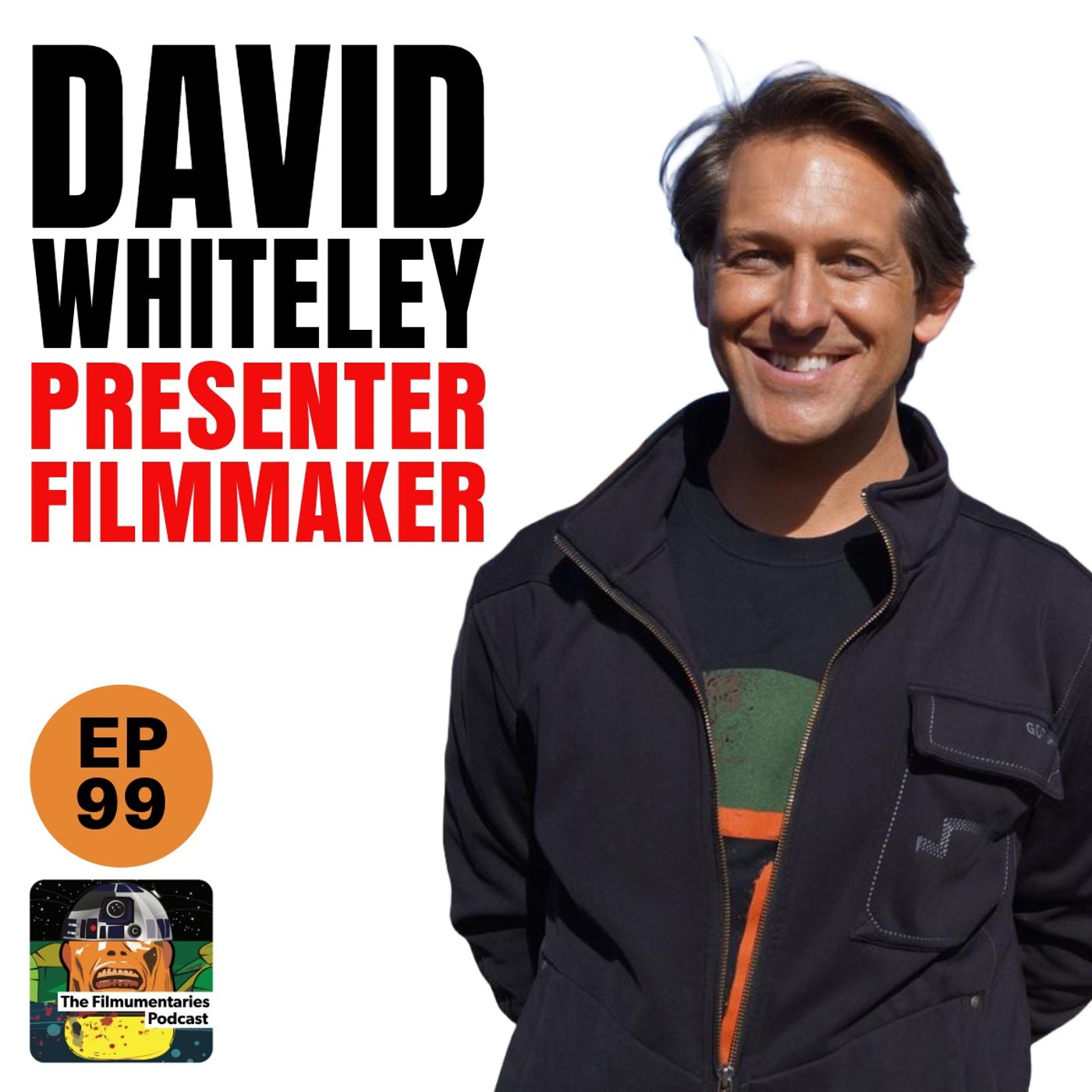
99 - David Whiteley - Presenter, Filmmaker (The Galaxy that Britain Built & Toy Empire)
About this episode
David also produced a book which gathers together the interviews his conducted for "The Galaxy that Britain Built". It's available on Amazon here. Check it out! And then BUY IT!
Talking of books, don't forget that Justin Berger and I have now pre-released our Return of the Jedi - Unauthorized Timeline book as an ebook on Amazon.
Donate Button
All the links
This podcast is completely independent and made possible by listener support. If you’d like to help me keep making these episodes, you can join my Patreon community here: https://patreon.com/jamiebenning
Watch more on YouTube:
Check out the Filmumentaries YouTube channel for behind-the-scenes clips and extra content: https://youtube.com/filmumentaries
All my links
Transcript
Automatically generated, so expect the odd misheard name.
Weirding Way Media. Welcome to episode ninety nine of the Film Youmentaries podcast. This is Jamie Benning as usual talking to you. Episode ninety nine. Amazing to have got this far.
Genuinely thought I'd get ten done and give it up in pandemic, but it's taken me on this crazy journey for how long has it been now? Three years? Something like that. I hope you enjoyed my last episode in which my friend, actor, director, writer Giles Terrera and I decided to record a commentary of The Empire Strikes Back, one of our favorite movies. In fact, I've had a bunch of really nice feedback about that episode.
A bit of a different episode, of course, but yeah, it seems to have worked for people. Actually, I got a message just yesterday off of former podcast guest and showrunner and writer on House of the Dragon, Ryan Condall, saying that just that it's a nice episode and he enjoyed it and stay in touch. So thanks for listening and thanks for sharing that one. So for this episode number ninety nine, where are we March? This is March.
This is the second episode of March twenty twenty four. I speak to friend and fellow star Wars a nerd and filmmaker and TV presenter David Whiteley. David best known I Guess in the UK here as being a presenter and a journalist on TV. He's currently presenting on ITV News in Norfolk, where he lives. I've known David for a number of years online, and in fact we met for the first time last year at Star Wars celebration where I did my and Or panel.
Had to mention that I had to get that in there. As always, I met up with him and Colin Gowdi, editor of Stars Rogue one or Robe one, a Star Wars story. We had a good catch up and a few drinks and even a bit of a dance at one of the parties there. I've been wanting to get David on the podcast for quite a long time now. There have been times what I've had to cancel.
There have been times where the dates just didn't work out, but we persisted, and this is that episode. David and I talk about his two Star Wars related documentaries, The Galaxy That Britain Built and Toy Empire The Pallatoy Story, which both aired here in the UK on BBC, but haven't really been widely seen. I don't think, well maybe on BBC World. I don't know. I happened to think they're both important documentaries, and in fact that's where I start our conversation.
And then we just talked like to film loving nerd friends catching up over a coffee. So here's my conversation with David Whiteley, TV presenter, writer and director and author. I should mention I do mention his book in the conversation that is also still around and available on Amazon, The Galaxy, The Britain Built the book by David Whiteley. And as usual, I'll be back at the end for a bit more jabbering on. I think your documentary is important because they speak to me about the fact that it was made in Britain.
A lot of it was made in Britain. And you know, the toys you did the documentary at the toys you did the documentary, the Galaxy, the Britain bill and the book and everything. Because when I was how old was I? I think I was about five and I was going through the making of Empire Strikes Back kind of booklet thing, and I remember it saying like outside London, so I'm outside London, you know, And there was this instant connection. Yeah, yeah, and I was this instant connection.
And like my dad would take me in the car and we'd drive past Elstree, you know, because it was only around the m twenty five and those days, the twenty five wasn't a busy place. And I always felt it was they were British movies and I was connected to them in some way. You know, they were made on the soil that I was on kind of thing. So that's what I loved about your documentaries is that story is kind of untold, isn't it. I Mean, we know we've seen Robert wattson the documentaries.
I don't think we've ever seen John mollow really interviewed to any extent, and Leslie Dilley and all those and Skinner and it's just I think it's really important that that's pointed out because they're just seen as these giant Hollywood movies. I mean, that's how you open the documentary. But really they are British, aren't they. Yeah, I mean you were probably you were well ahead of me then, because I never really kind of cottoned on the fact that they were. They were kind of shot here.
Maybe I kind of did in the kind of you know, dark recesses of my memory. But I never really kind of cotton do on that they were British until I sort of looking into the dock and I suppose over the years I thought, yes, some of these guys are British, and and you're right. I mean, It's Empire of Dreams is a fantastic document amazing two hours of just you know, for a for a Star Wars fan, you know, kind of grown up with it. You you get totally immersed in that, in that in those two hours. But there are two or three tiny stippets of Robert Watts and Norman Reynolds in the whole the whole of the documentary, and there's very little is mentioned of of of London and Elstree and and also the British talent who who kind of rallied round George.
You know you're Roger Christians, John Barry, Les Dilly, Norman Reynolds, John Mollow, Robert Watts. There's this kind of this band of this group that were kind of pulled together from from various other elements of of of the filmmaking world kind of thrust together to kind of create this this galaxy this make doing Men Galaxy, which is what we now know is that part of well, it is popular culture, isn't it. Yeah? What what was the spark then for you to make the documentary? Initially?
I always wanted the Vaka Stars documentary to be fair ja. Yeah, I I remember, I remember, I think what it was. It was it was kind of that my lover style was my lover star was reignited when when the Force Awakens came up, when when Disney bought Lucas and and seeing those old characters again and new characters. And I was on a train I'd been filming in London. I was coming back home back to Norfolk, and I saw that Mark Hamill was doing a talk to the student union at Cambridge University.
Yeah. That from me, that's not far I could. So I got in touch with the student I thought, wudn't be great to interview about you know, working, you know, having worked in Britain. I was. I was working at the BBC at the time.
I was doing a documentary program. I thought this is a great just going to get into it. So so through the student union they agreed, and Mark Hammler agreed, and then and then other forces came in and then the plug was pulsed, so unfortunately we couldn't We couldn't do it, and I thought, well, I'm not going to give up this easily. So I then started to get excited about the fact that that hey was it was made in Britain and who could I track down who'd been here? So I hi contacted Disney and we and they let us come and film at Style Celebration in London twenty sixteen.
And the very first person we interviewed was Nick Maylee, who was instrumental in helping to build Yoda. He built The Love of the helped build a lot of the characters in the canteena Moss Eisley, and then when it came to Empire was he was working with Stute Freeborn in the makeup department and helping to create one of the most iconic characters. Yeah, and then and then we interviewed him, and then he got very emotional and I said, I said, there's our ending. There's our ending to this, to this film. I didn't know what was going to be in the middle or the beginning, but I said, there's an end of your potential ending for for for the documentary and the and the title came to me straight away.
I think the Galaxy film, Yeah, great title. Galaxy is a start is a Star Wars word Empire is Galaxy. And then the Britain Galaxy Britain built, you know, it was just it just kind of it kind of evolved from there really, and then I kind of said about trying to find the people, and a colleague of mine had interviewed Robert Watts, so I got him through through another colleague and we got him up to Elstree, which is a very special moment because six movies. There probably more than that, but he just six iconic movies and he made, you know, the first three Star Wars, first three Indiana Jones. He became producer on Indiana Jones as well, worked with Harrison Ford for all those years.
And it just kind of went from there really. And then tracking John mollow Down that was pure luck because I wrote to him and I thought he was a certain address and he moved on because it said BBC on the envelope. They fowarded it on right in the office. One day and I got a call from his wife. Wow, and it just and she said, well, come and see him so we went to his house in Oxfordshire and she said, well have you have you seen have you seen it yet?
I said no, And then she got the books out. Incredible, those books opened, These books, the development sketches, yeah, from you know John Mollow's mind and the conversations he had with George Lucas and he just was, you know, obviously developing things and expanding things. Look in there and you think he was working with this in nineteen seventy five. Wow, And there are these sketches that are just well priceless. You can see Star Wars being born in those sketches, can't you.
You can see those kind of Samurai influences on the Imperials. You can see the early Chewbacca stuff and just you know things he's drawn and then kind of crossed out and started again and amazing. I think they sold for auction, didn't They surely passed away. Yeah, it was. It was bond on as they asked you to go and sort of introduce the kind of the launch party, which was which was very real honored to do really because the family were all there and lots of people obviously very interested in those books and a lot of his stuff as well, because he designed He also won an Academy Award for Gandhi as well, not just winning the Acadey Award for Star Wars, but he did Aliens and Empire Strikes Back, and he did the TV series Sharp.
Yeah, so yeah, he had this kind of military background and then it evolved from there. Really, I had a magazine from the nineteen eighties, so it must have been just the release of Empire Strikes Back. I think I got it in my teenage years later when I started collecting stuff and there was a double color page spread of John Marlow's early designs, including like Grido and you know, the Imperials for the attack dry and stuff like that. And I just remember staring at that thing forrages because these drawings have a sort of childish quality to them as well. I find there's a sort of purity to them.
He doesn't quite go for the the details initially, you see just like little lines to show shade and things like that. Very much like reminded me of very much like Ridley Scott's kind of illustrations that he does. He just uses like stuff textures. Yeah, oh god, I mean, did you sit there and just go through that book and think, hang on, I've got to interview this guy here. You know.
So I made I made the documentary one of my best friends, Matt and he so basically I produced and presented it and he directed it and and we both just looked at each other and disbelief that every page returned was gold. And we were saying to the caravan, let's just get this, every single page, every single thing, because it just was so special to see this. I don't know how many people have seen it up that way, like it had been kind of tucked away, you know, hidden in this in this uh is in his office, in his drawing room, and then sort of brought out. Yeah, it was like you know, the Jedi text or something. It was something very special.
It felt like they felt like there should have been some kind of crescendo of John Williams music at that point was placed on the desk and opened up and seemed like such a sweet guy as well. He was really humble, Yeah he was, and and he didn't he was very modest about you know, his achievements and what he did and how he worked on it. And and I remember his wife Louise saying, you know how much he had the most fantastic day. I've got I've got a I've got a signature on a tube backup sketch that he did, and it's just you know, to have that from him. Yeah, Sadly he never he never saw the documentary.
We did the documentary, there was a there was a sixty minute version, and then we did a ninety minute kind of special edition if you like. George Lucastahle expanded it, and he never saw the final document true, So at the end it dedicated to him, and of course to Gary kurtzh Yeah, who passed away after we spoke with him. Yeah, I was lucky enough to meet Gary a couple of times. A friend of mine used to do these evenings up in London where he'd invite an actor or a producer or a musician, and yeah, Wayne Imm's with I'm going to one this week with with Toby Jones and Peter Sushitsky is there as well well, the dop for Empire Trucks. He's doing them in Brighton and at one point he said that Peter was going to have trouble getting down to Brighton, so could anybody give him a lift if they're coming from London.
I said I could give Peter a lift, you know, microphone on chat away, But it turns out he lives in Northwest London, which is probably a two hour drive for me away. So at one point I was going to be driving down to Brighton with the DP of Empire, which would have been interesting. It's not bad. That's pretty good. I'll tell you what though, you say about the getting the autograph from John, I'm terrible at stuff like that.
I forget to take a picture with the person. I forget to ask him for the autograph. And Robert, what's bless him. He looked at me and my buddy Paddy, who was shooting when I did my interview with Robert, and he said, do you guys want to signed picture? And we sort of looked each other and he said, well, you don't fucking have to, he said.
I said, I said no, no, I just hadn't thought about it. Robert, that'd be great, And he signed that lovely photograph of him on the back of the Taunton you know in the Empire set. Yeah, that's great. We use that in the documentary, that picture. Yeah, yeah, I love it.
Yeah, because he yeah, you're right, because you meet so many people. So you've got that fantastic picture of you and George Lucas. Yeah one, yeah, and did you get did you get? No? I just said to him, you know, I really admire what you've done and you've inspired me to do stuff.
For the reason I'm here today is because, you know, I wanted to be in the TV or film industry. And and he was like, okay, okay. And then as soon as I said to who are you here with? What team you're here with? He wanted to talk about racing that, you know, And then I just said, we have a great day.
I don't want to keep you, you know, but yeah, and I walked away, and I thought probably should have got his autograph, But then I thought the photo that was taken was taken sort of at a distance as well by a friend of mine, so I wasn't going up with a selfie kind of style thing. You know. I just feel I just feel very awkward about all that sort of stuff because I want to I want to talk to these bills. That's why I do my podcast. I want to talk to these people and make a connection.
You know. I think that's it, isn't it? If you if you if you're doing it and as part of the podcast and you're going to get the pictures and stuff and the interviews. I must admit I did. I did get everyone's autograph and that good.
I'm glad. I wish I had now at the time, I was thinking I shouldn't do that, you know, but I wish I had. Well, you know, I got. I got Gareth to sign. Gareth signed my robe one post is so did col Gowdi Nice as well as the Blu Ray.
So I got the Blue rayn't we had. We had quite a few hours with Gareth in l A and I remember thinking I really admire this guy. He's fantastic, you know. And then and there he was just sitting in the parking lot waiting for us at Sunset Media Tower. So I'm downstairs a text and downstairs they go down and there is this you know, fantastic filmmaker who continues to to you know, break boundaries with the fabulous creator.
Yeah. Well, I was lucky enough to talk to him the other night. As we were just saying before we hit record, and I was, you know, just flicking through your book again this morning. Is that lovely picture of him and Cole and one of their friends at stars Ce. No, the Secret Cinema wasn't stick, which I was at as well on one of the nights that they did it.
Great event, But I love the fact that Gareth is is still as much a fan as the rest of us. You know, he went to in the book, there's a picture of him by the by the Hutson in Tunisia. I know he said, Tatooine there, like it's a real place. Yeah, it's really in our heads, it's a real place. Jack and he remember those old there is thirty five.
Yeah, those old thirty five mil film caasters. You know we're old enough to remember, you know, when you hate put a film in the camera. When he went there for his thirtieth birthday, when he came back to see Cole, he brought back sand from outside Luke Skywker's homestead. If the call is a gift, excellent. It was just everyone else would think why on earth that the star Wars're like, yes, that's what you have to do that it's the sand from outside the homestead.
I've seen the equivalent on Formula one and kind of rolled my eyes of people scrape using a wallpaper scraper to get rubber off of the tarmac of the track and put it in a little part. Yeah. Yeah, I'd take some sand about something and then you would, wouldn't you. Yeah, you know that's that's what that's what we all get excited about. Definitely.
It was great seeing Anne Skinner having the chance to I saw her. I'm trying to remember what year it was. Toby Philpott, who was you know, Jabber's left arm. He invited me to a trilogy screening at the BF five some years ago and I went in the green room and I met, you know, Garrick Hagan and a few of the other guys that were there, and she was there as well, and I asked her if she would do an interview because I got one with Garrick and I had the interview Toby already, and she said, I've kind of said everything. I think today's my sort of final go at this kind of thing.
But her story is great because she was so directly involved with you know, she was what they called the continuity girl back then, continuity person these days, a script supervisor. And her script is amazing donated to the BFI, isn't it, And it's got all of those annotations on it. She's got those wonderful polaroids. I think almost every Stars fan has now seen online over the years, but maybe not knowing that they were ans. But she also got to rewrite dialogue, didn't she.
Yeah, she did, You're right. I mean she very modest again, very much like like John Mullein, modest about her contribution to Star Wars. But she was there every single frame. So she was there for you know, Tunisia, for Elstree. So she saw it all unfold.
She says to the documentary, I see myself as the editor's agent on set. Yes, I'm trying to make sure that everything is there, and they, she said, tells this great story which I'm folds in the dock. Is the fact that she she said, Sir Alec Guinness was having trouble with that famous speech about what the forces and explaining it to Luke, and they kind of rewrote it together when you see it heard, you know, in pencil on the side of the script, and I think they then showed it back to George and he was happy with it, and then Alec got on with it, and it's become you know, everyone knows that speech now. It's great, isn't it. I must get up to the BFI at some point, and because I think you can go there and observe some of their artifacts, can't you.
And I might just want to get that out and just have a pore over it because I'm sure there's shorthand and stuff, and I'll struggle to read some of the annotations. But I think she says in your documentary, doesn't she that she wasn't even looking down at the script. She had to be looking up to see what was going on and making notes about any changes that might have happened. And yeah, she was. She was constantly having to look and see what was going on.
And I remember, I remember because Anne was a late addition to the documentary because we've done the sixty minute version, and then I wanted to kind of round it off forty as a Star Wars, the last film was coming out of the trilogy, Rise the Skywalker. I thought, wouldn't it be great to kind of do a ninety minute version. I don't know what if he really, because because you know, you're as like as a filmmaker, you we had a sixty minute version which told which told the story, but we were never kind of we were never really happy with it. It really felt like it was complete because we had to cut so much back because of time time constraints. So what we're able to do was we're probably kind of pulled it apart and and and then we thought, well that section this we can we can make a gap in this section, the gap in this section, but we're going to have to re do the whole kind of narrative because I'm going to put Anne in there, and they've got two of them.
We got We've got more of Roger Christian talking about the weapons. We had a lot more of Gareth and more of Coal. We just expanded all those bits and then we also had we found loads more archive and then London Sympathy Orchestra to get there archive. We spoke to two of the principals who were who played on who played for John Willie, so it kind of started to expand. And I always thought then because because the time it was in history, you know, in the nineteen seventies, there are very few women that were working on the on the picture.
And then I was going through the making of Star Wars Brook, I went who's she ah hang on with her? Son. Yeah, literally just did a Google search, and as you know, she donated everything to the BFI. I contacted the BFI, who contacted Lucasfilm and gave his permission to film the amnotated scripts and the polaroids for the dot and and and came along and we we filmed in the basement and there was no air conditioning. It was a really hot summer.
I'll never forget this, so hot, stifling. We had keep stopping, kind of what mopping our brows because it was just so hot in this and you wanted to wrap it up quickly, but I didn't want to wrap it up quickly. Everything she said just like the original Star Wars and when they were filming in seventy six, the summer I was born, the hottest summer on record. Yeah, and there I'm an idiot, Yeah, because I'm a year older than you, because you were born on May the fourth, which is I mean, is there anybody born on May the fourth, nineteen seventy seven that has decided it means nothing to me Star Wars. I've never even seen it.
There must be loads of people like that, I guarantee. I mean when I met Gareth and I said I was born made the fourth nineteen seventy seventy said that is the most Star Wars birthday anyone could possibly have. Course, is it is? And then yeah, style, I had to be a fan, really, but but yeah, that reckon. There's loads of people that don't give two hoots about I know a ton of people my issue and I've never seen.
It's not my thing. I like people. I like real movies. So what's your favorite movie? Die Hard?
Right? Okay, I mean a good movie, but it's not real. It's as unreal as Star Wars. Yeah, exactly. My wife's only seen the first one because I made her.
I think, yeah right, she grew up never seeing it, and I always find that so odd if you grew up around the era and you never saw Star Wars. Yeah, it's funny, isn't it. You mentioned about the archive of a minute ago. There as Star Wars fans, particularly people like us who are into the behind the scenes of it all. Seeing a new photo or seeing a new bit of footage you haven't seen before is something that's super tantalizing.
It is just the thought of seeing it. So when you dug that stuff out, there's that arena program wasn't there stuff that I had only seen snippets of what was what was going through your mind when you came across that stuff. I'd seen it on YouTube, like you know, low quality of or bits of it snippet. It was actually from a prone called risk Business, So it was I thought it should be called risky business for an over there ago risk business. And you know that it's there.
They are filming at Elstree and you've got the full you know, Millennium falcon that was built in Membrickshire and in the on the sound stage and he's walking on it and they're all and the access they had was incredible. It was about you know, how you finance, you know, Hollywood pictured we were movies. But of course they got interviews without bet. There was so much more they didn't use. And you know, they checked after Harrison Ford to carry Fish and to Mark Hamill you know it's it's it's Anthony Daniels and and then they talked to Irvin Kirsher as well.
See all the all these amazing interviews they're arounding tiny snippets and I thought, somewhere, someone somewhere may well have those rushes. But yeah, we got the whole thing because because I was at the BBC, we we were able to it was a BBC program. We we plundered everything. Yeah, we just got everything we could. And that John Barry interview, and that was from the Arena Program, wasn't that?
That was? That was the same? Was that the Arena Program? I think? So?
Yeah, And and and John as we know, sadly he passed away during production on it. I think he had meligitis. Yeah, it's it was very sad because he started work on that. And and there's some great shot there's a great shot that that Robert gave me of of of the two of them on a com where they are now that this is the Equator. And that was scouting for a location for Empire.
So what could that that never happened? Well that Robert said to me, you know, with Norman Reynolds, he said, I went around the world scouting for locations, you know, and just you just think as well, just of that kind of post war generation that sort of just get on with it, just crack on and traveling the world in an analog world, you know, sending telex is back and having to take photographs and get them developed. And just the pace at which things when you know, we're so used to this accelerated pace of life now where we can send miss you know, do this talk over riverside as we are now. I'm sure we were just still made a connection at some point, David, but it was guaranteed. I mean, we've we've known of each other and kept in touch for many years now.
We have our work on through our love of Star Wars, and I think that's and that for me, you know, I mean there are times when I was making it, and I'll be honest now that I actually hated it. I hated Star Wars, you know, for about three or four months because it was such a It was a very I mean, when you get the final thing and it's all done and you can and you know, the critics are very kind and the reviews are very good. And the thing that I was most worried about was what was what fans would think, because I thought, I don't want to get this wrong because it's something that so many people care about, as we know, passionately deeply about. Yeah, So that was always my concern that I had to get it right, and hopefully I think we did.
Yeah, And I worked hard to kind of make that happen, but but there were times I just I just didn't want to, you know, I didn't want to do. It just became, you know, so difficult to kind of to kind of put together. But as a result of that and the book and everything else, I've made so many friends like yourself, you know, through through Star Wars and it, and that I think is what's special as well. Yeah, there's definitely that community aspect. And I've fallen out of love with Star Wars so many times in my life.
You know. The first time was in nineteen eighty four when I got the Yak Village and the Rebel Troop Transport and my sister got a Commodore sixty four, and I was like, what's that I want to play on that? These toys are for kids, you know, And that was the first time I sort of fell out of love. And then I got back into it in my teens at some point mid teens, and then you know, fell out of love again after the prequels I think it probably was or during maybe I'm not sure. And then you know, five years old, now, Yeah, I know that's insane, isn't it.
I saw that Empire cover. Yeah, I mean I've never really the films I like aspects of you know, then they don't mean as much to me as the original movies. There's something about those originals that initially sparked my imagination and all of that stuff. Whereas there was all that expectation, wasn't there in ninety nine. We all went in with so much loaded in our minds that what was going to happen and what could happen?
Having thought about it, yeah, that trailer and we didn't quite know what was coming out of the mist, and yeah, well here we go. This is Star Wars. Yeah, this is Star Wars again. You know. Yeah, I think that.
But also I think it's very special is that we had the original trilogy to grab on and then there's this at the next generation, absolutely the prequels, and had this and this amazing affinity with with with with Hayden as as as Anakin, and and then bringing him back in the Okeobi series. Yeah, yeah, you know you can see that. We were at celebration for that and it was just in the premiere of that, and you had the guys on stage and then they're putting it on. Of course, everyone's going mad because you got this generation that grew up with their own OBI one. Absolutely, yeah, you know, I take no, I will never take that away from people.
I remember when I took my kids to see The Force Awakens and they suddenly it clicked for them as well. And they were dancing down the high street, you know, and pretending to be Ray and they were begging me, can we go to the Disney store and buy a toy each? And they loved it, you know, and I saw it through their eyes then. And talking of Hayden as well, I saw him at Celebration this year doing that interview on the on sort of the main stage, and you could see how much it means to him to have the outpouring of emotion from the fans and for you and as well. You know, I think it's great, isn't it.
I mean, And they're so aptive, aren't they. It's you see that? And and talking with which I very briefly met Carl Weathers stage of course, sadly, yeah, way very recent. He was so grateful as well. And that's what's so lovely.
You see you see that, how how you know what it means to the actors people that play these these characters when they meet the fans and they and they have that connection. Yeah, definitely talking of connection to the films, we've not talked about the toys now. The toys for me were a massive part of my life. I mean I can reach in several directions here and grab a Star Wars and right behind you for people listening at the moment and not looking behind David, there's the original Darfader figure case. There's a Bob Effette helmet.
There's a grogu There's I can see I can see some celebration passes hanging up, Yeah, celebration. There's there's the original Super Trooper as well. Yeah, you see, I'll just this is for radio, but it works with television. Oh yeah, yeah, the white Bob effect kind of yeah, and yeah, just you know, us nerds are like you surround yourself with stuff that you liked, that you and then it helped me. And I actually have a fantastic book here, Return of the Jeddah Unauthorized Timeline called Jamie Benning.
Yeah, sitting here in my and I've got your book next to me, isn't it great? But what There's something about those designs though, in those movies and particularly for us, the original films, and just have being able to have those figures in your hand as a kid. I mean I would just pour over them, I draw them, I would place them in certain situations. I'd go over the road to my friend Daryl's house and we'd play in the mud and the sand and the snow when we could. I've lost far more.
I think I've quite a few in a pond we had in the front garden, yes, you know, because it was like it was like degob to me. Of course, Yeah, probably Joli a swamp and this is where Yoda lives. But yeah, I think I lost a few ewoks there. But yeah, you do, and you and when you got them. I remember getting the Millennium Falcon, which I still have my original folk.
Yeah, and both my parents are no longer around, so that so that connection to to Star Wars for me is very much entangled with my you know, my dad and my mom and my mum actually phoned up come of what story it was now, but it was about because I lived near South End and and she drove to Chelmstead to get the last Millennium falcon, like she phoned up in the time when you have to just phone up and they said we'll hold it for you for an hour. Yep. My mum had to do the same for my job at the Heart. She couldn't find it anywhere. I was living in Dartford, so just across the river from you, and she couldn't get it in Bexy and Crayford and Dartford and she had to drive to Croyd.
And I think to get the last job of the hat is a long way. Yeah, that is a long way. Yeah. I remember beginning it in a box and just thinking oh wow, and just totally blown away. And I remember I remember coming after seeing Return of the Jedi, which is the only one I saw at the cinema on Ran six and and my dad bought me an ewok you know, a little figure e what.
Afterwards, I was being so grateful. I was two pound fifty. Yeah. I was so grateful to this this ew because it just just come out of seeing a third row of the cinema and it was just fantastic to see that, you know, on the big screen. And then I got a toy stot off the back of it like your kids.
Yeah, yeah, where did you see it? It was in South End. Yeah, it was either the ABC or the ODIO. Like I can't. I still don't know the data, so it might have been my birthday.
It was for my birthday that we went up to London. We saw it at the Dominion and I went to Hamley's and got very spoilt. I got the at Haan Snowspeeder and the bunch of figures. I remember looking excited about when ewok, you got the attack. I know my parents didn't have money, so I don't know how the hell they managed to, but I think my mum would and dad were put in extra shift to doing, you know, for our birthdays and Christmas and things like that, because we certainly we certainly weren't a well off family.
But somehow Christmas they always managed to to put it off. I remember getting the Falcon, so it must have been nineteen eighty one or two. I think was in the It was in the Empire box. And my dad doesn't drink, right, he just he's not a drinker. But this particular Christmas Eve we went to the local community center and he had a bit of a skinful.
So there's me with my millennium falkl in the all going, Dad, can you put the stickers on for me? Because I wanted to get them perfectly and he was just in bed groaning. The poor guy. I think he'd be poisoned by the booze. I think it's just really that he got everything.
Yeah, it's my reward now that I've bought my son everything you're possibly was for Christmas. Yeah, he went my head out, And like you, is connected to my parents as well, because me and my dad when I was in my teens and I started finding out that they were worth a few quid and we used to go around collecting them at boot fairs and things. He would come with me. He drive me to boot fairs in Croydon and Bexley and all around Kent and he got really good at spotting them, to the point he was an antique fair in Norwich the other day and he spotted a jab of the hut and he called me up and he's like, you know this this jab of the hut's here? Is it any good?
And there were bits missing and there was a rebel commando as well, but the price they wanted for them was ridiculous as well. But you know he's still got that Eager Eye, which which we sort of trained together during those months and years collecting bits and bobs. But they are worth so much money, aren't they something? I suppose it's only worth what people are prepared to pay for. Yes, I totally get why people collect the ones in the in the packs and everything, but I'd slight them loose because because my ones is I've still a lot of my originals and and yeah, batter and you know, loved hairs going a bit on.
Yes, the hair's going on, the big head size, you know, am Solo and all these different characters. But to me, they're you know, they're they were mine. They were the ones I played with. So so I'm going to display anything. It's going to be.
Yeah, at some point, as my midlife crisis continues, I'm going to you know that I can't leave his name now, but he does. The most amazing collective display cases. Have you seen them? Are the ones that look like the surround of the card back, Yeah, with the lights in. Yeah.
Yeah, And I have to probably I probably would have to dig a bit deep to find some of my missing you know, some of the missing characters, just to fill it. But that would look good. It will go down with my wife. Yeah, I've got a bit of space downstairs what would have been the dining room in this little Victorian terrace of ours. I've installed a cinema screen and a projector some years ago, so we don't eat.
And there were in the kitchen, so got sofa there, and I've got little cabinet with my figures and a few of my posters and storyboards and things up on the wall. But yeah, that it would. I mean the rest of them are sat under my bed. All the figures that I had. Oh yeah, my falcon's tucked away, and yeah, really you it'd be nice just had them up.
Needs a little den of some sort, yeah maybe, yeah, they've got a summer house. Maybe I should deck that out. Well, I got this. I had this office here, but it is full, is full of stuff, and it's loads of loads of posters and pictures and everything. It's very knowledge with the barn door kind of look behind.
Yeah, yeah, yeah, it's very knowledge, isn't it. It is an old house. It is four hundred years old, is there really Well a new bit on the end, but it's it's a very old, very old building. So you made the documentary about the British side of the figures as well. Yeah, Palatoy is a logo that just again kind of speaks to me.
It takes me back to my childhood because I used to I remember back then when I was buying those figures. I remember going to Brighton one day with my parents and I wanted a Jahuar and we found this giant toy store. I don't know what it was, I'm not sure toys. It was pre Toys r us here in the UK, and I remember asking this guy who worked there, do you have any jars and he said, oh, you'd be lucky to get them their collector's items. And this was about nineteen eighty three, so maybe he was talking about the famous vinyl caped maybe, but there was something about those Palatoi ones because the card backs were nicer.
I always liked the Palatoi car backs because they would sort of show more stuff on them, and that logo kind of spoke to me. I've still got a few of my card backs knocking around somewhere. Yeah. No, wait, I did have a ton of them. I'd like maybe five hundred of them.
At one point when I collected bits and bobs in my teens and twenties. But yeah, what what was it that drove you to sort of start again and start a new project and talk about the figures pubidly? Did it at the same time? Oh did you like that? We did?
We did the first first version of the Galaxy brim Block then so we decided to make the extended version and now I pitched it to BBC four, the BBC World and Arts and said, look, I can also do a thirty minute film on the toys. A great friend of mine who ended up working the production Rick, He said to me, look, lesbian, are are keen on these these toys? I said, really? Does is it? Is it really going to be that interesting?
I wasn't sure whether people would. I mean, he was right, I was wrong. As you say, it's a paletoy is so well loved in Action Man and Tiny Tears and then taking on Star Wars. What a story and their story kind of is always a parallel to kind of George Hawking and that script around Hollywood trying to get that made. Is it's no one no one thought there was going to be that successful, So why would you want a toy line coming out well after the film?
So far I mean months after the film. And so we managed to find all these amazing people who who actually worked at Palatoy in Colville unless this tiny this this tiny coal mining town that the mine had shut and a lot of people worked at Paleltoy and it's now on Fern Center. So the same building is there and it's and we interviewed, uh, the the the guy that ran the place, Savvly, he's he passed away a couple of years ago. And they they they had this amazing that they didn't want Star. No one wanted Star Wars within this group, but I will have it, will have Star.
And obviously Kenna had they designed them, they designed them and and but there was they had to be manufacturing in the UK. A one of the most famous toys built by Palatoy but by by Bob Breaking was was the cardboard Death Star, Yes, oh my God, which is worth a lot of money because in America it was a big plastic mold tower. But then in the UK they designed like a half semicircle or a semicircle dome if you like, slotted together, and because he was cardboard, they perished. So if you've got one now that's in good condition, that's but they're worth goodness and they haven't got any of these guys. These guys, so they wish they'd kept something.
They any good stuff, and they wish they had So you go to an auction. We filmed in an auction for the documentary for Toy Empire, and all this stuff is selling for so much money. Crazy. I remember seeing that death Star probably about nineteen eighty five, because I think at this point, like I said, I'd got into computers and things, and I was at a boot fair with my parents and I saw this big, long, sort of landscape box of the Paletoi death Star and I sort of lifted it open. There's all the cardboard bits in there, even the dome bit on top of the gun.
And I said to my mum, Oh, could I have that? And she's like, oh, you've grown out of all that stuff. You know, you don't need that time machine Jamie. Yeah, that's fair. I know, it's such a cool it's such a simple thing, like you say, they And that's what I love about the Palladtoy versus Kennedy.
There was this kind of you know, not a rivalry as such, but there was a bit of competition going on, like what can we produce from this factory? And you know, still attract the fans. And I'll tell you what, Colville, just that word makes me instantly think of Star Wars because that's where you had to send your proofs of purchase to to win, to get your Emperor and your Admiral Lacbar and your Denga and all those guys. Do you know what this this? This is?
This is going to make you any Star Wars fan feel sick. Because they had a Seconds outlet store that if you work there, you get you can get a bag the biggest for five pounds, like sack, you know, actually on site. And so people people in the town would say, oh, can you get my son this? So can you get you know, like you know whoever this and and they would do it, you know, because of course it was it was it was. It was the other day.
We had we had a commode. It was we had to I had to read it out on on the on the news. Colville and Coalville, what's that significant? When it doesn't matter, it doesn't about it. You would if you don't, if you don't know, you don't know.
I had no point in trying to explain it, but as soon as i's all cold. The Leicestershire. Yeah, I remember though, back in around that sort of period, maybe eighty six eighty seven, you used to see bits and bobs knocking around still, and toy shops and Woolworth's here in the UK they would sell a big bag, like the size of a big bag of I don't know Dorito's kind of size, just packed with figures ninety nine p sticker on. I remember that I used to go to the one in the Broadway leon c in this ouring where I lived, and go to wars and yeah, get packs of figures for ninety nine pence. I still dream of finding stashes of figures and stuff from my collecting days.
I had to stop because, like like you said, it just gets too expensive, and I think I think it does and unless and for me, now this is something original. I don't I don't tend to buy anything anymore. Where'd you put it all? Well? Exactly?
Yeah, I mean, I've got some shells next to me that stacked up with stuff. My sister occasionally sends me stuff from the States that she's found in target, you know, So she sent me a thing recently was a big box of those retro figures. But they've made a mon Mothma figure as well, which they've put in the Okay, And she knows me well enough to know that I would love that I did buy those retro figures, but I desperately want to sort of finish my collection because I'm missing a few. Yeah, well, let me know, I might have some doubles. We could do some in the playground just like the old days.
Do you have you found yourself kind of falling in and out of love with the films over the years, And does a does an occasion like celebration kind of respark it for you a bit? Yes, I think so. I think I think celebration. So the first celebration I did, I just didn't really enjoy because I was filming and I went into this kind of well, I think Matt, who made the documentary with would say I went to like panic mode that I had to basically get everything in the can to think could I make it just from the stuff we've done here, And there's a lot of stuff that we didn't use. In fact, there's there's hours and hours and hours of stuff we didn't use from it in fact, the only thing.
Oh okay, I'm going to tell you what I did now. I wasn't going to tell you this, but I'm going to. I'll be honest. I passed up on an interview because I was so hell bent on getting everything I thought we needed for this documentary about the Brits. And if I tell you if I passed up on, you will go You're joking.
I passed. So the publicity guys there were very helpful, and they said, do you want to interview Dave Forloni? Never heard of him? I had, but I I thought, it's not going to fit with what I want. And I thought, and looking back now, I thought, why did I?
Because I was so desperate to get any I needed for the kind of the narrative. I should have just done it. I mean, but I was so busy thinking, you know, we need this, this, this, and this to construct sequences and get the film done. It's an amount of time to do it or so I thought, yeah, that's a big MISSA. Well, you know, it sounds like you had the complete opposite ethos to what I've got, which is let's just shoot it because we might be able to use it somehow like, but we still haven't crafted a story with our documentary, you know about Joe Al's the one we're doing.
You know, we drove out to Tucson, Arizona, nine hours there, nine hours back over two days and interviewed Roy. Sadly, he's got really bad back injury, so he was taking these pretty heavy drugs, so he was quite quiet and a bit mumbley, and they got a bit emotional, and but we came out of that experience of spending like a day with him and his wife just going, this is why we're doing this. It's to make these connections with people and to spend time with people. Yeah, exactly, it's not. The documentary in a way is sort of secondary to that kind of stuff.
But I wish I had more sort of idea about what the story is going to be. And you know, you've been a journalist for many, many years and a presenter for many years. You understand the sort of structural elements of putting something together. People might disagree with you on that one, but yeah, I think, I think. I mean, I was very lucky that when I when I started in television, I went from being sort of news to documentaries.
Very quickly. And then I worked with people who who I mean, I I kind of cite them as very influential on me on as as kind of, you know, really great filmmakers and documentary makers, and I learned a lot from them. We would film a lot of reenactment, we'd film a lot of you know, the way interviews are shot the way and then and then I'd see how they'd structure on paper, and I and and I. So when I sort of made the transition not just presenting with producing as well making films, I would kind of structure everything. I wouldn't leave the office until I had a I was basically ticking off sequences.
And once I had did three or four pages of all tick boxes, I knew that had the film. And they were sort of ten minute films, half hour films. And then obviously the biggest one was Galaxy, but that was ninety minutes, and we shot that that that's interest, We shot that in a different way. We shot that, and we were going to tell it in chapters of each person having a chapter. And then when we were kind of storyboarding it after we kind of storyboard a lot of it.
Afterwards, we looked at it and then got a flip chart in the garden and so Matt came around here and I said, I've been thinking. He said, I've been thinking that maybe we should tell it chronologically. I said, I've been thinking that too, but that's going to take a hell of a lot more work. So it was actually the right thing to do, and so we then kind of we did do a bit of a restructure, but filmmaking is done it so different ways. Yeah, well that's what Paddy and I did.
You know, he lives in Belfast and he's got a little studio out the back of his house, like with ping pong table in there, and we played a bit of ping pong, had a bit of a chat, and then we just got post it notes and we were gluing them to the wall in the order that we thought things had happened and rerealized Actually it's a fairly linear story, and of course these days with the documentary, quite often they're not told in a linear fashion. But actually we think it probably will end up in a linear fashion. This because it's about the steps that Joe made to get to where he got to you know, actually, you know, and all those steps, you know, Jaws and everything along the way. And I think that you're right.
It's you take people on a journey and you think, right, they might be a conclusion at the end of it. You're going to take someone from A to B and on the way, we're going to have these stops. Yeah, And that's the way I've always kind of tried to tell things is to take take the audience, take the viewer from from A to B and on the way, or make some stops and I'll try and help you along the way with a bit of rage them and whatever along the way. And but most it's about the people you'll see absolutely. Do you do you find a frustration in the fact that your documentaries were released, they were broadcasts and then they're kind of they're done.
They're done really bit Yeah the bid. Yes, I'm very frustrated. I think that what's a shame is that is that they they were broadcast, They went on on on iPlayer in the UK, they're on the BBC. There was a shorter version that went out on BBC World. In fact, Mark Hamill tweeted about it a couple of times, which was like, oh my word.
And I've sent copies to Harrison Ford and to Mark Hamilvay, different people and the books and everything. But yeah, I was very frustrated. I mean they they they have they have shown Galaxy Britain built again. I think it last went out in twenty twenty one, twenty seventeen, was it originally the originally and then the ninety the featureless, the complete version, the version that I don't want anyone say any other versions of Directors twenty nineteen, So that was around when when the writer Skywalker came out, I think came out the same week as did Toy Empire. Toy Empire was broadcast a lot on BBC World because they partly commissioned it.
So that when I think something like I think the twenty five Times, which was amazing, it was channel the World less, which was a bit weird, and then and then Galaxy was shown, say last time was twenty one Christmas twenty one. I just wish, I wish that someone would scoop it up. I wouldn't make anything out of it because the copyrighted my mind. But the you know, if they say, if somebody were to, you know, may if Disney Plus wanted to, somebody could buy it and then to get the stories out further. Yeah, yeah, you know the stories of these guys that just you know, they were so and also you know, Robert what said it was it was it was an American British co production.
You know, you had the amazing count of il Air had incredible you know ground bright. I mean that that Disney Plus series is just fantastic. And you see what they did stand Raphael and they and they were creating just you know, this amazing new kind of technology that sen before and yet after that you see some of these sci fi films and they're appalling, shocking hang on the style Wars they did this and this is several years later, and and it's dreadful, you know how cold you not learn anything from from what I have done it and they continuing to do so. So you know, I do find it sad that that, especially when you know these let's space at these they're not getting any younger, these people, and it would be so nice to to kind of wave the flag and show the rest of the world the full version and yeah, get it off these shores to other shores.
Yeah for people. You know, I say, there's nothing in it for me, but I'd be very happy to see it kind of you know, and also I look Alex so young in it now confess you look no different shirt you're so kind uh flattery or gear everywhere you know, I look at it. And so the first stuff we filmed was else you know of me on can that that style was celebration and that was eight years ago. And then we did a load of the pieces to camera at Elstree and Elstree is closed. Now you know Elstree, you know the studios are closed there.
They found us. I think they've had a spestos or something and they right, they closed. Yeah, I read. I tried to because when a friend of mine, Clayton Sandel, was coming over from from the States, well you know you both did amazing hosting it stares yeah yeah, and he said do you think we can go and have a look around Elstree? I said, I'd love to, asot I'll take a day off work and before we do celebration because he was in the in the UK for a while with his family as well.
So I contacted them and so were really sorry. But at the moment's closed, I said, oh no, And I don't know if it will be hopeful it will reopen but I had the opportunity to walk around there maybe twenty something years ago, and it was kind of weird just being in all those corridors of the offices and things and the workshops where land Speeder was built and our same I feel there a few years ago, sort of in between when I left the BBC and joined ITV, when I was trying to get some other things off the ground, and they were brilliant, really helpful. You know, we were filming. We could only sort of film outside. We couldn't go in because studios are being used.
But yeah, just to be outside those and see that it says, you know, stage, stage, and knowing that great movies are filmed there. Yeah, even when in the cafeteria a bit there where you know, I've seen photos of Harrison and Mark and everyone sat down. And one of the things I was going to mention actually is about the Britishness angle. I didn't know that story about from Peter Bill about you know, it was kind of sold with Alec Guinness and Peter Cushing as the stars and that's how the film kind of got through, got pushed through. I don't think that's really mentioned.
I don't think it's in Jonathan Rinseler's book or any of the other documentaries. I think Peter gave us a another person who I was trying to get hold of and found him through LinkedIn and and we got chatting, and then he now lives in Spain. But I was just going to say that, yeah, he lives very close to twentieth century Fox, to Nagatully Blasa, going back to back to Diehard, your Diehard reference. And so we film outside the Fox studios, did a piece and then we went to see to see him, and he just told us that most amazing story because there you know that there weren't he said, there wasn't much business. There wasn't much work for British for British actors and equity, he said, weren't too keen on giving lots of parts to American actors when a lot of British guide work.
So they changed the cast list and they put Alec Guinness Bitter Cushing. They've browsed at the top and made out that the other roles were going to be a bit more Harrison forward Fisher Mark Hamill's the smaller roles in the film. And I said to him he must have found out he's a way stand by, then they've forgiven me. He said, that's great. But yeah, I think I mean, from his perspective, he was kind of the middle guy.
You know, he was between the production and Alan Ladd juniors. We know is very supportive of Star Wars, so he was kind of liaising with Alan Ladd Jr. In the States, and he was executive due in charge in the UK. And also you know, suddenly we're being told you've got to wrap up on production, and they had loads more to do, and he suggested different units filming, and then Gary Kurtz was directing some second unit and so was Robert Watts to kind of get the pickup shots and get all the last scenes filmed, and they managed to do it. But it's i mean, obviously it's well documented that George wasn't very well dreamed.
I mean, you must have it just when you hear and you also you know it from George's perspective and some of the other but then we hear from the other filmmakers as well how they had this pressure all the time to kind of get that done. I mean, nearly did that happen? Yeah, you think one of those contributors that you've interviewed or I've spoken to, or we've read about. If they didn't do their job, that was it wasn't it. The rose was pulled from under them pretty much.
And it was and it was luck and it was and it was it was dedication, you know, Roger. And they flew around the country, Roger Chris. They flew in the country, getting aeroplane scraped from from airfields and bringing it back to Elstree and just dismantling everything and anything that looked interesting. It was John Barret's idea. Anything that looked interesting would form part of the canteena or would be part of the the inside of the falcon or whatever.
They would just get anything that they could to kind of and John Barry says, the part of R two is a caravel, you know. And of course he said, because they look at they didn't have time to make things from scratch. They had to make doing ment And so when you see the look of the of the galaxy and how it is now, I think all that, well, that's a you know, flash gun from a from a nineteen thirties press camera is the lightsaber. It's what they could find it all, Yeah, and far better than they would have come up with given them Bradgic. You know, That's what I've always said about those physical props is I think we connect, we subconsciously connect to them because they feel like they're already pre engineered, they've already been thought through.
Maybe they don't belong on that particular animal. We've never seen a thing like R two D two before, but we we kind of buy it because we go, Okay, there are some little vents there at the front, and it's not even a conscious thought. Yeah, it's you're right, and you're kind of looking at it and you don't realize why you have that connection. Like Hansello's blaster and it's all those little things and chew his crossbow and the alls of the end and stuff like all these because he was supposed to have a rifle. And in fact, the sketch that John Mollow signed to me he's got a rifle goes too.
And then and then Roger Christian found this this crossbow and he said mentoring, and then you put these boards and showed George and yeah, that's that's chew Backer's blaster that hanns Seller uses in the other Force awakened. Yeah, yeah, no, it's amazing those little choices that were made. Now, we just they've always existed, haven't they for us? You know, because we grew up with it, but exactly and we kind of know and love them. But you say, but there is that connection.
Yeah, talking about our books, I mean your book here are have in front of me, and I have a few bits marked in the pages. I've been reading it. Again. People can still buy this right, is still available along, I believe so. Yes, it is the Galaxy of the Britain, built by David Whiteley, honestly by it.
It's the thing is, this is like, this is like a little backdoor into that world. Like people have read Jonathan Rincel's book, They've read you know, the Star Wars vaults and the archives and all of that stuff. But this is like a little back door into another world of Star Wars. I think, well, it's like yours is. You know, yours is very comprehensive, your timeline of return of the Jedi.
The thing was with with the Galaxy of Britain built, everything was based on their testimony, so kind of it's all how they remember it, you know, and and how so it's from their perspective and everything there's their perspect and I when I wrote the book, I read it in about three months because it didn't take long because I'd already done all the you know, the logging, the transcribing of all the ins and the transcriptions of everything in all the shot listing was one hundred and twenty thousand words or for all of the for the Galaxy Britain built, so I had it, had it all there anyway. And then I was given this amazing access to Robert Wats's personal photograph collection and Les Dilliz, Yeah, that's great, you know, and all that stuff behind in stuff in in Tunisia, and Robert's personally, I just I went down to his and he just I was just scanning everything.
So oh, yes, go for it, David, you know. And then Robert wrote the four as well for the book, which is which is very special. You probably never get to hear this directly, but when I went down see Robert and Sue down there that day to shoot my little film about Robert, he I mentioned you, and they both said at the same time, such a lovely man, David, such a lovely man. So the right worked well, I bribed him as well. I took I took him as signed Sebastian Vettel cap and a little piece of paper that said like Robert, thanks for your work or something.
And I think you told me that he liked Formula one and yeah, I managed to get that for him. My dad was like, you haven't got me anything, you know, give it this rest and you've never gone anything. Now, that's very nice here, thank you. Yeah, they are. They are loving people, I think.
I think as well. It's you know, for me, he's so modest as well, another one modest. You know, they've kind of come across as very humble and modest. Garrett says this as well. It's in the documentary, talks about the British kind of perspective.
Everyone's so willing to make things happen. Yeah, there's too much trouble and he says it, he said, okay, guble's see what I can do. Yeah, And Cole says the same thing as well. And it's that kind of I can hear him saying. Now, it's that kind of eccentricity that we have in Britain that we kind of go, oh yeah, we can do that.
Yeah, yeah, he seem. I mean, look how crazy Star Wars must have seen at the time. MM. Completely absolutely. We've got a guy walking around in the gorilla suit.
You've got you know, a dustbin for a robot. You've got a gold robot. You've got you know, a woman with kind of Danish pastries for for hairdoo. You know, you've got dying a cloak. You've got salic Guinness and a cloak rolling around in the dirt to make it himself look more.
It's just Ja Wars. I mean, the whole thing, if you break it down, is very naugh I mean, the surnamed Skywalker and even Star Wars, I mean it sounds naff. If you didn't if it didn't already exist, you kind of go, huh, what is that that? You know? And then and then you have you have st that Star crash.
I saw Ali popped up on my timeline and see to it, you know, and everything just came together and and I think and once they had the special effects and John William's stunning score, it just this kind of recipe, yeah, and all helmed expertly by George from his own mind and what he did and bringing those people around him just created this well where we are now. Yeah, I think, you know, Star Wars sometimes gets a bit of a bad rap from you know, academics, along with Jaws for being like these films that started off the blockbuster revolution of films that are just kind of popcorn and trash. But I think that, well, that firstly, what's wrong with that? But secondly, I think it's bloody hard to make films that are that good, and people have been trying for fifty years to kind of replicate those movies and still haven't managed to do it.
I mean, I watched Jaws on the big screen at the BOFI the other month in mono from an original print from seventy five, and it was fantastic. It was so good and I'm still noticing bits in that movie and Jaws, I mean Jaws is I mean after Star Wars. I mean, it was my brother's favorite movie growing up. We would watch Jaws a lot, and we still quote, you know, we will go into you know, our impressions of Quinn or whoever do the whole Indianapolis speech, but you you know, it's still holds up to this day. And and and my eldest daughter, she's she's nearly fourteen.
I was putting off letting her watch it. It's I think, if she loves the sea and you really want to see this, yeah, ruined me. I mean, I love to see usself, and I think that even now, I'm okay at times that I get it's spook. But she watched it and I said, okay, we've watched Jaws and I and I and she jumped so many times, and I thought, that's the that's the time in all the modern films you've seen now, And and the bit when the head was out of the boat, say, which was a pickup show, wasn't it? Wasn't it?
And and that's because I know it's coming. Yeah, I anticipated the jump by self, and she jumped out of her skin. And I think, you know, what a what a fabulous movie that it's still to this day. Yeah, so watchable. Well that's I mean.
I saw Empire on the big screen just before Christmas had got re released in picture houses and we went to a local one here in Bromley, and there was so I forgot how jumpy that movie is. Actually, there's quite a few jumps in that movie. And I was watching the audience because there was clearly a bunch of people that hadn't seen it, you know, on the big screen. And even when I saw that Jaws print, they asked them, how many people have you here have not seen the film before? About fifty people put their hands up, So not ever seen the film ever in any format like so, and as you say, it's still both those films still work.
Hey, listen, we're probably gonna have to wrap up in a second, so we could waffle on forever. I'm sure an hour and five minutes. Two friends. Absolutely, are you going to go to celebration in Japan? Oh?
This is a kind of a Japanese Oh yeah, I didn't see the bottom of that. That's called Jedi T shirt. Nice if funds allowed, Yeah, yeah, I think I think i'd like to. I think, well, when obviously we were at celebration in London and catching up there, and I think we all were so buzzed from We're all so excited to be there and and meeting up with our friends from the States and all that kind of stuff, and you, oh, yeah, I was seeing in Japan, and then you think how much is the flight to Japan? And then the reality kicks in.
I think if I can. I will. It would be crazy, wouldn't that. I would love to be able to do it. I have to say as well, your support for me doing my panel the and or panel of celebration totally out of my comfort zone for me, but you were so supportive.
You were sending me messages saying, you've got this, you know you're going to be great. Just treat it like a podcast and all. And you're in the you're in the front row as well. When I got in the room, well, you were so good and this is the thing, you know, you you know your stuff, and and you were so You're so natural and you just it was just really love it. And what was what it's about is is it's about making it you're very good at, not about you know, it's about the guests, very good at kind of you know, moderating that and presenting it in a way that there was really entertaining.
And it was the highlight, one of the highlights of my week. Good unlike I've done today where I've just talked about my book, my documentary, my my toys. No, no, hear about your stuff as it so so yeah, I mean it's I kind of worked on something else, and I really hope it finishes. I've got something else in the pipeline that there has been kind of there for a while and I'm hoping and it's kind of styles related. Yeah, fingers firmly crossed.
Yeah, and I'm hoping that maybe I can finish those and get those done. But but yeah, it's and and I just so I was so grateful to everyone who who watched it, who was involved in it, and yeah, we and actually what it's done is it's connected me to so many lovely people like yourself and other people around the world who who love starts. I hope you enjoyed my conversation there with David Whiteley. Thank you, David for your time. Glad we managed to finally do that.
Hope to see you next time. I'm up in Norwich. It's where my parents live these days, so hopefully we can arrange to meet up there. And I was going to mention actually about Norwedge if you're ever in the UK. There's a great newest shop there called Cosmic.
Joe's just full of Star Wars collectibles, pop culture collectibles, he man et, just everything, and there's a little cafe down there and there's a wall of just vintage Star Wars stuff, vintage collection style stuff, I should say. And for those of you listening outside of the UK, Norwige is a town in the east of England, sort of that kind of lump on the eastern side of England, known for many things like it's cathedrals, it's a it's a market city as well, and of course for Alan Partridge. As we mentioned in the podcast, I've been wondering about japan celebration. I don't think, well, I know, I can't afford it. So unless something amazing happens, like I'm invited by Lucasfilm to do a panel and they pay for my flights at my hotel, then I doubt I'll be going and I'll be watching it just like I've done before in the past online.
But who knows what might happen. There's a year to go. Next up on the podcast, episode one hundred is the Master of Animation, director, producer and well, let's face it, legend, Phil tip It. I'm super grateful to a certain publicist at ILM and Skywalker Sound who managed to get me in touch with Phil. That will be the first episode of April twenty twenty four next month, so do keep an eye out for that.
Please share, retweet, subscribe, follow, review, all of those things when you can. This is still a tiny podcast and I do need your support to keep it going. And if you'd like to support the podcast, you can do that on patreon dot com forward slash Jamie Benning that's jam I e be double nig. There are several tiers to choose from, and there's different things like you get an ad free version of the podcast now that could be an attractive idea, and then in the top tier you get some merch and in the middle tier you get some other perks, like a video version of the podcast if it's available. That is, if the interviewee lets me record the video.
You know, it's up to them to decide, but your support would be very gratefully received. One other thing I wanted to mention before I go. Justin Berger and I released that book last year, Return of the Jedi The Unauthorized Timeline in paperback and hardback sales haven't been as big as we'd hoped, despite being an awesome book, so we've decided to reluctantly release it as an ebook. I say reluctantly because we assumed it would lead to piracy, and then once that happens, it's gone. But the book, you know, isn't selling great because we haven't got a big marketing campaign.
You know, we can't afford to throw hundreds of pounds at this. We think it's worthy of that. It's a great book, and we want to get it out to people because we spent a year making it in our spare time. We think it's pretty special. I think the unauthorized bit of the title puts people off, but as I say, we did put a lot of effort in and we really want to share it with people.
So yeah, on Amazon in your region it's available. Is an ebook. It's less than fifteen pounds here in the UK, and I think it's about twelve dollars in the US, maybe even less. I should check, shouldn't I? Why don't you check?
Go to Amazon search for a Jedi Timeline or Jedi Benning or Burger and it will come up as in our surnames, So Amazon in your region, or visit Jedi Timeline dot com were you'll see the details. Or you can go to filmumentaries dot com and if you look at my latest post there you'll see some details about it, you know, exclusive introduction by producer Jim Bloom, Exclusive diaries from Jabba the Jabber, the Hut Team, Dave Barkley and John Coppinger, not released anywhere else. And I tell you there'll be a ton of stuff in there you don't know about. Return of the Jedi recreated call sheets for you to pour over. There's so much information in that great reference book, so check it out.
Thanks for joining me, and I hope you can do so again. For the one hundredth episode of the Film We Mentories Podcast m Buay Media MHM



Similar episodes across the network
Matched by shared keywords.
-
Primetime - Kulture Meltdown
1 shared keyword: robert
-
Remington Steele: Making it Happen with Jerram Swartz
1 shared keyword: robert