
Season 1 · Episode 131
131 - Phil Hawkins - From Fan Films to Features.
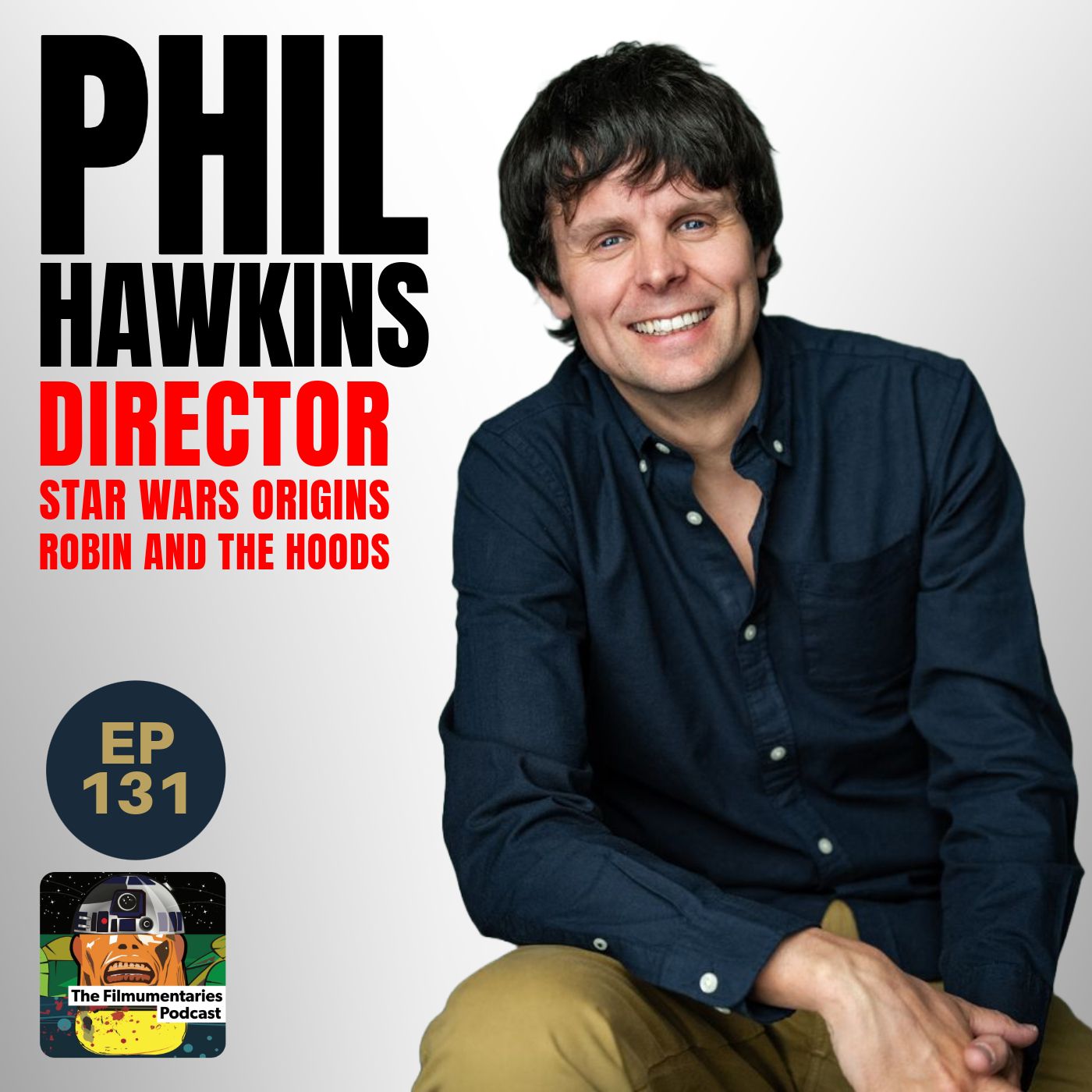
About this episode
Phil shares how he taught himself filmmaking as a teenager, cutting together VHS tapes and roping in friends to create homemade sci-fi adventures. We discuss how this DIY approach evolved into making shorts and, later, a career in commercials – where he honed his craft in visual storytelling, working with big crews, and balancing creative ambition with tight schedules. We also talk about his fan-favourite short film Star Wars: Origins, which went viral for its bold concept and cinematic scale, and how it helped open doors to bigger opportunities, including his recent family feature Robin in the Hoods.
Along the way, Phil reflects on the importance of collaboration, and the lessons learned from juggling creativity with industry realities. If you’re interested in how a director moves from self-taught beginnings to studio-backed projects while staying true to his passion, this is a conversation worth hearing.
Listen now to hear:
- How VHS edits and fan films became Phil’s film school.
- The leap from shorts to commercials – and what commercials teach about storytelling.
- Making Star Wars: Origins and the risks and rewards of fan filmmaking.
- Crafting Robin in the Hoods and wrangling a cast of young actors for an adventure film.
- Phil’s thoughts on building a creative, respectful set environment.
All the links
This podcast is completely independent and made possible by listener support. If you’d like to help me keep making these episodes, you can join my Patreon community here: https://patreon.com/jamiebenning
Watch more on YouTube:
Check out the Filmumentaries YouTube channel for behind-the-scenes clips and extra content: https://youtube.com/filmumentaries
All my links
Transcript
Automatically generated, so expect the odd misheard name.
Weirding Way Media. Welcome to episode one hundred and thirty one of the Filming Memories podcast. I'm Jamie Benning, your host, and on this episode, I'm talking with director Phil Hawkins, who's path into filmmaking started the old fashioned way. He borried of VHS, camcorder, built cardboard sets and costumes, and he has a determination to recreate the magic of movies like Jurassic Park and Star Wars, two movies that have inspired him his entire life. Phil talks about how those early experiments, essentially his own version of film score, led to making short films, which in turn opened the door to commercial directing.
From there, he built up the skills and connections to move back into narrative storytelling, making both indie features and larger scale projects including you might have heard this one, Star Wars Origins, the viral fan film that blended Lucas and Spielberg influences in a way that only a fan could, and more recently Robin and the Hoods, which channels the heart of eighties of venture films like The Goonies and Explorers. As I say in our conversation, you're about here. We also dive in to have Phil works with actors, what he's learned from commercials about visual storytelling and managing big sets, and how he's carving a past towards studio level films while keeping that DIY filmmaker spirit alive.
So here's my conversation with director Phil Hawkins, and as always, I'll be back at the end for a bit more jabbering on. Phil. Thanks for joining me. I know that you I've been doing some research, of course, and I know that you didn't go to film school. I know that you go to university.
You didn't have a family member in the industry, so all those things that they yeah, yeah, those are the things that you expect people to have to get into the industry, particularly the sort of nepotism one. So how did you go about finding. Your way in? What was your route in? You know, were you a kid that had a camcorders as a birthday present one time?
What sparked it all off you? I wish I even had that get the tiny violin out for the working class kid from a council Stateum, I just no. Firsty, thanks for having on, because I'm a I'm a fan of the podcast and obviously the film hementaries you've done. I've poured over them, and you've had such legends on this podcast podcast, so I'm trying to be intimidated by the conversations i've heard pres but no, yeah, mine came from well, it just came from I love an obsession with trying to recreate the things I loved watching. So very vividly remember watching Jurassic Park for the first time, sat in the cinema which is no longer there, but I remember leaping on my Auntie's knee when the tu Rex appeared and being absolutely terrified the dinosaurs were back and real.
But then logic setting in, going but it's a movie, like, how have they done this? I was I was way tim age and that so it's probably like eight, yeah, it or nine, so like the sort of perfect age, the age that a lot of people on this podcast say they watched Star Wars. So I'm of the you know, of the Jurassic Park and Spielberg generation, and yeah, and I just became you know, And it's directed by Steven Spielberg. At the end, I'm like, who is this Stephen bloke? And why is his name on things that I love?
And what is this directing thing? And you know this is obviously pre YouTube, pre internet, pre everything, and which I've still got up in my on my shelf. There is the I had the official annual of Jurassic Park for nineteen ninety three, and yeah, and in that were all these behind the scenes photos that I used to just pore over and obsess about, like oh wait, no, that shots just the feet, and that's bit's just the head, and this is how they've done this, and what's this CGI thing and yea it and it just it blew my mind. It absolutely blew my mind. So in you know, pure naivety, I thought, well I can do that.
Let's let's go make some films. So I this is where the tiny viel incomes out. We couldn't afford a video camera or anything like that, so I used to clean a neighbor's friend's house and kind of run errands so I could use her very old like VHS camera so I could start messing around with filmmaking. And then eventually my school at the time saw this kind of bubbling obsession of mine and they managed to get I think it was a high eight camera at the time or mini dv keek with the formats high eight. Yeah, not Mini DV yet because I remember digital blowing my mind.
But yeah, I used to just try and copy the things I'd seen. I was a big, big X Files fan, fascinated with that week by week, and obviously Star Wars, you know, which I came to of the kind of VHS, the originals VHS generation, and then I finally owned that squeaky covered special edition, you know, the silver one, yea, And yeah, I just it was very much by doing. I just kind of watched things obsessively and then tried to make my own version of them. So, for example, very early I tried to make my own Star Wars film, but we didn't have visual effects, we didn't have anything. It was just sort and it was a bit of a spoof, so I kind of lent into the comedy of it.
So yeah, we dressed people in cardboard boxes and used the high school corridors as like parts of a spaceship. And yeah, willing slash, Yeah, I would say they must have been willing some of the things I made them do. And one of the actors who's in that, guy called Alvin Adaquay, is an actor now, and yeah, we we still work together and still laugh at our geeky early fan films. But that was that was essentially my film score. Really, Like I went into uh sixth form college, which is kind of the first sort of formal time I could learn media and film, and then thinking that I'm going to be surrounded all these like minded, you know, obsessive filmmakers.
I've been making films since there were nine and then realizing that quite wasn't the case. And and although it was great and the death still then I now had the tools and the non linear editing, you know, going from I used to scark cable. My two VHS players edit stuff. Yeah, play play play absolutely, but my but doesn't that it makes you a great editor, Like it gives. You an appreciation for it, doesn't it.
Yeah, because like if you made a mistake, it was sort of back to square one, oh dear. Absolutely absolutely, And yeah, it makes you understand the discipline of where to put a cut, and to this day that I do that when I'm editing, I'm kind of I'll put the cut where it needs to be instead of throwing stuff down a timeline and you know, trying things out and very much didn't quite do the splice film side of it, but through the the kind of dangers of linear vhs or these kind of editing definitely made you really think about where the edit went. And yeah, and so I just made tons of shorts and tried to get involved in as much as I could. I you know, started. Working on UNI Students films, which for me at the time I was probably you know, fifteen fourteen, fifteen sixteen.
These guys were like really old and mature and wise, you know to me. And we was just trying to be a sponge. It's just. As my mom said. It kept me out of trouble and and it was just an obsession and but a joy like that, that's all.
That's the main stuff I remember from childhood and to this day, like I now do this as a living and it's still play. You know, it's still joyous to play and do these kind of things, but just with you know, a bit more budget and a few more toys these days. Well, the thing is, though, like you said, you know, a kid from a counselor state the expectations of what you might end up doing, all the possibilities of what you might end up doing as a kid from a counselor state, I'm the same. Actually, you know, I did that. I filled it in the little survey we had to color in the little boxes to say what you like to do.
And at the end they said to me, You're going to be a telecommunications engineer. And I was like, what's that? This all? You're going to climb up pylons and fix telephone lines. I was like, yeah, I don't want but I don't.
Want to do that. You know, well, you know, yeah, that is a bit of a high expectation, isn't it. You know, so putting a lot of pressure on you, and I'm like, no, I want to do something beyond that. You know, did you have that same situation as well, where people were sort of ready to stamp on your dreams kind of thing? Absolutely?
But I think it was just a sheer kind of passion and you know, as I say, kind of naive optimism that this is my this is what I'm going to do the rest of my life, this is all I can think about what I want to do. And and probably in hysight now I felt I feel really lucky that I had I discovered that bit of drive that set me on a good course to doing what I do now and I don't know, Well, I guess it's just watching Stars and Jurassic Park and these things that you know, the inspiration struck. But because it really pains me when people, young people are given that you know, are sort of saying, oh, you can only amount to this or well, you know, especially like in Manchester. It's like London was like going to another country, like so far away.
So the idea to go and make films and stuff was sort of a really strange alien thing to people. But I loved it. I was obsessed with it, and I you know, and and thank you know, thanks to a few teachers who I'm still in touch with who really gave me the time and and and the kind of inspiration and the the the platform I supposed to grow and and experiment. I think without that I definitely wouldn't have been doing it as I am now. So it does take those key people in your life, I think, to go, actually, you know what, if you care about this and you're and you're good at it, then go for it.
It feels like anything as possible. Yeah, And it feels like there needs to be a real combination of all of those things, like you having the drive and the passion for it, having the right people to say yes, you can do it. You know, there's so many people that get to a certain stage in their life with a certain skill, particularly in the arts, where somebody goes, oh, you're not as good as this person, or or you should give whatever it is. You know. Yes, I always remember.
Just being told I was the second best artist draw it in my class when I was ten, and I was like, well, I need to stop then, you know, because he's Darren's much better than me. And I regret it to this day if I'd have pursued that. Yeah, but you know, it's I think it's something to sort of a recognize that that films are made initially when you're young, and then there's another leap you make. Isn't there to go? Maybe I could be involved in some way.
So you went into sixth form, he had these supportive teachers. Did you have a was there a camera that you could use in the school or was it the one that you were saying that you cleaned this house? Yeah? Yeah, by that point there is there was equipment, and there was final cut pro and there was all these kind of things that that was fairly new at the time, and I know sort of both of us, the teachers and I like, were kind of figuring this out. And I'd figure something out and be like, hey, you can do this.
They go, oh, great, discussion. Absolutely, And and so I just made as many films as I could because and now longer I had to clean houses or wait until after school on a Thursday to use a camera, and and and got into submitting into festivals and that side of thing, which is the other bit of advice I give to young filmmakers is you know, even if you're not even if because you sometimes make stuff, you know it's not quite right, it was not quite turned out the way it can be, I'll just put it in a put it in a draw and it's like that. That does nobody any favors, you know, Just get out there, get up scene and grow and and so that's what I started doing kind of college, was sort of try and get out there a bit and submit these films and and attend events and on all this kind of stuff to just sort of figure out what a path was going to be because I think I sensed well, I knew it was going to take a year out god, but going very much in the granule of my my life.
This is good. I knew it was going to take a year out, and I again naively applied to the National Film Television School, not really understanding that a lot of people go there after university, but obviously didn't get in, And and then I got on kind of a BBC mentor project, which eventually led to them giving me I think it was one thousand pounds to make a short film, which to me was massive. Yeah, absolutely massive cardboard for this one, yeah yeah, yeah, yeah. And and that's the thing that kind of led to I suppose a bit of sondibity of that film was showing on a film festival night at the same time as a short film that I was an assistant on for some of these student film these UNI student filmmakers, and they were already in the industry kind of doing commercials, and they were like, hey, Phil was shooting tomorrow.
Do you want to come be a runner? As like absolutely one percent, you know, tell me where and when and I'll be there and and then yeah and then and not to end the podcast right now, but the rest is history. So they say, like I walked onto that set thinking I knew absolutely knew everything I needed to know about filmmaking and realized how little I actually knew about the way things worked, and was just again the kind of obsession passion of seeing how a commercial shoot is run, the politics of it. Just just trying to do the best I could be in on to get onto the next job, and then the next job and the next job, and try and learn that way. And that's the way I grew up, essentially in the industry, and never quite I keep saying I'm still in my year out because because I always said I would, But I started working up the commercials industry.
Basically that was my entry in. But it's only after they'd seen a lot of these are the short films and realized they'd already made tons of shorts that they were like, you know, we like this guy, Let's bring him into our wings. Let's train this guy up. And that was a great opportunity for me to understand how that whole world works. Yeah, it's such a great film score going into commercial because each one is its own little movie, isn't it.
I remember I worked in London when I first started working, just in a boring government admin job, and I would see commercials being shot around the place, and always I've always like lingered to see what was going on because it, you know, it was a lot of people involved in shooting a commercial like outside down a little side road in London or something. And yeah, I was just always amazed at the amount of resources that got thrown at these things. But and the fact that it's is you have to create a story visually very very very very quickly. You sort of learn all of those key tools that a director needs being on set, I'm sure. And and as being a runner, I always think there's sort of two types of runners.
There's those runners who just think they're above it straight away and those other ones who just do what they need to do to do the running bit so that they can observe all of the other roles that are going on in the in the industry. Because you know, we have runners in my bit of the industry, and I've seen some come and go. I've seen others become executive producers, directors, all sorts. Were you was that something you enjoyed about working on commercials, being able to sort of really dial in and see what each person's role was, because it is a microcosm of a of a film set in a way because you've got you know, first a d and you've got director and producers there. Yeah.
Absolutely, that's a really great way of explaining it. I mean before kind of falling into commercials, you know, even a week earlier, if you said, oh, you're going to end up being a commercial director, be like who wants to direct adverts? Like what? But then you realize for everything you said, it's such a wonderful way of learning and training and it's such high turnover, so you know, you might be shooting one commercial, you might have shared a few commercials a week with some busy production companies, and they're all really different, different and different types of personalities in terms of directors and dps, different logistics involved, different kind of clients and agency, different budgets.
So it is a really kind of back to the fire to you know, use a cliche, and but I can see now why some of the you know, greatest directors have come from commercials, and that what it does train you is that, as you said, that visual storytelling and what are the most engaging images to kind of hook an audience in from the get go, And there's a real skill in that and and and obviously there's a whole psychologia player as well about what images mean to people, and and seeing how different directors got the use to assist a bunch of very different directors with different styles and seeing what was important to them and how they kind of got sometimes got their way or you know, or held back in the in the political game of commercials was a fascinating thing to understand and to try and wrangle with that to this day, even on you know, feature film narrative stuff.
All that skill set is so important in dealing with studios, dealing with bigger personalities, dealing with cast, dealing with you know, the kind of politics of creating negotiation. I find quite interesting and everyone has very different ways of doing it, but commercials has definitely helped. That thing. I'd say it's probably definitely helped get my way a bit more than maybe someone else that might just kick the toys out the prom I very much attack it from a point of passion, enthusiasm and story rather than you know, being a toddler, which is, yeah, some directors can be. Yeah.
Just as much as you're learning how to do things, you're also learning how not to do things. Aren't you looking at people love you in this situation? So it was directing always on the horizon. Fel did you ever consider like director of photography or editing or I mean, you've got you've got some of those skills there in your tool set. Aren't as a director because you're sort of editing mentally, You're you know, you are a DP in a way because you're deciding on the frame to certain extent, you know, in those But was it always directing the thing that was you were reaching for?
Yeah, it was always directing. You know. I realized early on that there are people out there that are as passionate about directing, you know as I am out directing as they are about sound or about camera or about grips and you know, and whatever. Clever, very personal, clever person for me said like always to surround yourself with more clever, clever and talented people than yourself. And but for me, director, being a director is about understanding the role of everybody and being able to know the right language to communicate the thing you want to communicate.
And so by trying all this stuff out, because I've worked in camera department, I've worked as in art, I've worked as an ad like you know, and they were all because I've acted like I really wanted to put myself in the shoes of these people to understand the perspective of the job and the set from there, you know, from the different departments. And I hope that's made me a better director. Like I could talk to a focus pillar about minimum focus and you know, and staff and all the kind of stuff. Or I can talk to a dolly grip about the limitations of this, that and the other. I'm no expert, but I've probably got enough noise to be dangerous, as as they say.
Uh, it just helps me understand in prep, you know, how we can maximize budgets time, because sometimes you're making these decisions way before you even got that crew or you surrounded by these people. You're making some key decisions about you know, for example, all the way on a feature films like Phil we can only afford X amount of days with the cranes. You're like, okay, well, I know what the crane can do, and I know, actually maybe I could do this in a dolly and you know, and you get into the kind of the granular parts of filmmaking that if I didn't understand how those things worked, then I might not a get the the be able to serve the story in the right way, or be be frustraighted on set, not be able to get the right shot because they don't have the right bit of gear and all that kind of practical side of filmmaking that makes the creative flow, you know.
Yeah, so which I love too. I'm just yeah, well, it sounds like you know, you've got it all cover, but I always also think, you know, you've got to be You've got all that planning, of course, and you've got you surrounding yourself by this crew that you've got this hopefully the shorthand with, and this respect for what they do. But you've also got to be as a director willing to react if things don't go to plan because it still has to be done right. The schedule isn't going to stop for anything. So yeah, I mean, that's that's entirely different skill set.
Some people have one or the other. You have to have both. You have to have all. I mean, you have to be technical, you have to be artistic, you have to be an actor's director, a technical director. I mean, it's it's a it's a big skill set to have.
It's a lot. And this is what I actually get quite frustrated when people say, oh, I'm I'm an actor's director, or I'm a technical director or you know, and it's like, well, if you're only interested performance, then go and do theater. Like if you're only interested in camera, going to be a cinematographer, Like, yeah, a film director, whether comercial or whatever. Need you need to understand that all of these assets, tools, resources are all there to help you create a vision, to tell a story. And if you don't, and you know, they're obviously parts of every job and every shoot and stuff which you might find more difficult than others.
And then I make sure I hopefully surround myself with people that can fill that gap and help me and guide me in that way and be open to those changes, be open to a those ideas. And as you say, when crap hits the fan and you've got twelve minutes left and I've done a lot of stuff with kids, and you know, and you've run out of time with them very quickly, and you're always trying to react. But through doing all the short films and all the kind of low budget low budget filmmaking and stuff. It's amazing that you might have all these resources and all these people and this very expensive you know, OSCAR nominated actorn set and stuff, and you're still pulling tricks out that you might have done when you were fifteen in a corridor of a high school.
You know, you're just trying to get the shot. So so I certainly see that, and I used to love doing these, you know, like the forty hour film challenges. Yeah, I was going to ask you if any of those because that, again, that's another amazing film score, And like that thing you said you have to release this thing. You know, it's the momentum is there, which is as a sort of a good primer for the industry yourself, isn't it. Yes?
Absolutely, But all those things are made by kind of instinct, like there's no time to obsess or think. So they are a really good attack on the senses and on the on the skills to make decisions in the moment, usually when you're exhausted because you're not slept, especially in the edit, and you come out with a short film that hopefully you're proud of, and you go, wow, we did that sort of on instinct, so that all that skill set helps you when you get into the kind of bigger productions I suppose, because you know, a director really earns their money in those hours, whether the light is you're losing the light, or those times when the generator is broken and you have to come up with a way of doing you know, all the stuff that the audiences never see.
That's really when then let's say you kind of show your tops as I suppose. Yeah, absolutely, you're at the tip of the spear at that point. I always think, like in my side of things Live TV. I've said this before in the podcast, but I'm amazed all of the pieces come together to make the broadcast happen. Sometimes you just think, sometimes, wow, if they don't pull themselves together.
This is not going to happen. All of a sudden, you're on air and everything starts to fall into place because of that experience and that instinctive kind of thing you have. You mentioned about working with actors. Obviously, casting is a massive part of a film. You know, getting the right cast is hugely important.
But with actors, I know a couple and I've spoken to them at length over dinner about their work. Some theater, some TV and. Film, but it always feels to me like as a director, you have to really meet them in the middle somewhere. You have to sort of create this space that is open and freeing but safe for them because you know directors, there are some directors you just hide behind a monitor stack, which I can never understand. And you know, you've got all of those things together, all of that time and all those resources have gone to this moment, and this is the moment you're going to shoot that scene.
Your focus has to be on the actors. I'm guessing Phil that you're this kind of guy that's that's down there talking to the actors, you know, really doing what a director should be doing and being at the front line. Absolutely. I mean, at the end of the day, I like I say that, you know, people watch people. That's what we're there too.
You know, in a movie essentially, if you don't get the performances or you don't get the emotional beats that tell the story, then you don't have a film. And whether regards of whether it's on a crane shot or a dolly or you're you know, you're burning time trying to lights thing beautifully. Yeah, Essentially the performance should win all and I very much approach because a director, I'm hopefully not putting people off being a director, Like all the stuff we said about being a director, like one of the most important things is to set the tone on set, is to is people look to you to understand how this thing is going to be made. And if you do be high behind the monitor and you're scared of cast, or you don't giving notes, or or you don't feel very inclusive, or you kind of shut off, then that's the kind of show it will be.
And that will feed into, I believe, feed into the performances and the actors, and you'll lose them very quickly, especially experienced actors. They're all more experienced than you are. And actually most crew are more experience than you are because grips and sparks and stuff. They're doing this day in day out, working with numerous directors, and you might have been trying to spending a year trying to get to this point of being on set. So so I'm very aware of that like too.
And you know, experienced actors they'll just they'll switch off, they'll just go they'll sel go into kind of self direct mode. Like self preservation mode, and that's and it's very hard to pull them back from that. And so I'm very much all about making sure that the acts are happy and comfortable and we're all there for them. So and that can be really small things. I mean there's obvious things about like cruse sizes and and and you know, and keep.
Things small and something's intimate or you know, or. You know, making sure that you don't schedule things of like big emotional scenes first, or you know, like you're building up to staff. There's like an art scheduling that leans into performance that you need to think about. But just having a working relationship going in, like I new actors, young actors, experienced actors alike. I always ask the question when when I start, It's like, how do you like to be directed?
Like how do you what? What is the language or not I can use to aid this performance. Now, I'll you know, make sure early on in discussions that were on the same page in terms of tone and style and those kind of things. But if you're casting the right person, you're wanting them to bring themselves to that role. I'm not here to teach people how to act.
That's not my job. Even young people. I'm not here to teach them how to act, because I'm there teaching them or line reading them something seriously gone wrong in that casting process. I'm looking to embody the character with an actor that brings them to life and then nudge it, guide it along the road tonally, comedically, emotionally. You know, I'm there to help them to aid that performance and it so I'm very so yeah.
So I'll have conversations saying, you know, do you like me she's active verbs? Do you like conversation? Do you like like? Do you like me to whisper notes in your ear? Do you like no?
Not? Like everyone has a different way, and I felt it's my job to kind of, you know, be malleable in how certain actors like to be. It's how certain actors like to work and that, and then that goes a long way for when you know, the moments when crap does hit the fan and you're like, I just need to stand there, look this way and look at that. Okay, great cut, brilliant, got it, And and there'll be more accommodating to that because there you're being a team player. Yes, especially down to like crew behavior, like you know, making sure, no one's on their phone or someone's kind of performance eye lines.
They're all really small things, but they but they they really mean a lot, especially when you've stood in front of that lens and looked back at all these faces and you're trying to create a moment of truth that you're trying to really access something in yourself and give that to the camera. And if there's someone over there smoking or chatting or scrolling Instagram, it's just totally disrespectful. And I get quite cross, if you can imagine, I get quite cross that kind of thing. And that's that's the stuff when I get when when I would probably get a bit grumpy with people if they're not respecting the actors. The job is not done.
Just because the track is laid or the scene is lip right. It's done when we've wrapped the scene, and until that time, we're all here to make that moment the best. For the film. But creating that environment engenders a collaborative kind of environment. Anyway, the more the more you say to people, I need you to be with me on this, it's sort of you know, it's a self perpetuating thing.
Eventually, you know, hopefully you'll be in a situation where you look back and everybody is keen on what has just happened, and then want to see it back and you know, everyone feels involved and invested. I think that's often the problem with some of the jobs that I've worked on over the years. Yes, you might be a small cog in that production, but unless you feel like your work is valued, you don't feel like you should invest any more of your time. The track is laid, I've done my job. It's so important to make people in the team feel like they're necessary and they're vital and valued.
Yeah, absolutely, and they genuinely are, like, Okay, I'm not going to lay a track by myself in the forest in twenty minutes where because we need it for the schedule, I lose the light. You know. It's in those moments, like you know, no film set is easy. But like, if you've got all the time in the world, all the money in the world, and all the resources in the world, then anyone can pretty much do the job. But like it's in being selective and guided and having I suppose the vision inverted commas to know where to put those resources and understand the and to create a team that.
You know, people use the term the trenches. I don't know whether that's appropriate, but like you know that that that you are against the clock trying to achieve what feels impossible at the start of the day together, and I'd rather do that, you know, with a sense of collaboration than scream and shout at people. In order to make that happen. Like I just it's just, you know, I wouldn't work hard over scream now, so why would why would somebody else? Absolutely so, you first came on my radar on twenty nineteen.
I guess it was with Star Wars Origins. I mean you mentioned at the start of a conversation you watch my film he Mentors, and I felt, you know, kind of proud of myself. That I knocked these things together. Then I see Star Wars Origins, and I just think, what what? How?
Like how who does this guy know? Like how many favors has he pulled in to do this? Who is he? Is he a director? Is he?
You know? I couldn't believe what he managed to pull off with that, and I became very interested intrigue in diving, and of course we met years later at Star Wars celebration David Rachel Finch and Colin Gowdie and all those folks and had a fun evening. But and I sort of wanted to pick your brains there, But now's my chance. I guess, how the hell did that come together that? I mean, you'd made chort films by this time, You've been doing a lot of commercials by this time.
How were you afforded the time and the resources to make that project? Because it looks so epic? Thank you? Yeah, And I was not not to to big myself up, but it's kind of part of the journey is as actually already five feature films in as well as a director. So you know a lot of people make fan films or short films, you know, to get that first feature.
And I sort of went backwards a little bit, almost too. How I got into filmmaking the first vice I'm making, you know, Matrix rip offs and Star Wars boots and all this kind of stuff as a kid. It was it was born out of frustration. Really. It was.
I'd done five feature films. I'd raised money and made some films. They'd been released and they've sold fairly well. But I was still the kind of indie British filmmaker that was making low budget movies, and and I was thinking, how do I get to Star Wars? How do I get to you know, big tent pole actually adventure sci fi?
How do I how do I get to studio level filmmaking? And the indie films, you know, were fine and worked, and it was great to make them and everything, and but they there was always sense of frustration because they're always done on regular budgets and not necessarily speaking to the kind of films that I wanted to make. For example, you know, I made a psychological thriller. It started out as a horror, but it's very psychological thriller with Robert England, Freddy Krueger and and uh and something. I wrote it, and it was really about the state of cinema.
And he was kind of the last projectionist in a world where everything is getting digital and losing and he's being left behind. Decides to crazily take control and trap a couple inside of cinema and make its own horror film. Kind of very meta and so so uh and you know, and still to this day, on Halloween, I always get loads of messages. There's always the Odd podcast, Like, you know, people love that in terms of Robert's monography. But I'm not the horror guy.
I'm not. I'm not the kind of psychological thriller guy. I was like, how do I get to these things? So but I had some success and and you know, and the US started calling a little bit, and I started getting involved in kind of bigger productions, and I'd always get really close, even to the point of being on set on in prep and then money falling out and this up and down. It takes its toll, right because you've, as I said earlier, like a lot of my career and the way I work is about passion, and I have to really love and fall in love with the story.
So when you fall in love with the story enough to get to that point and then it gets pulled away from yourself, then it breaks your heart. And then and then you'll, you know, try and roll your sleeves and get to the next one. When that happens time after time after time, it just got to a point my own mental health, I suppose, I was like, I just need I need to stop tasting this for a minute, and maybe I'm just gonna do commercials and that's my lot in life, and I'll have a very nice career doing that, and that's all lovely, But then you know, I so I sort of quit in a vert commas like the Narrative Dream essentially, And it was really my wife that probably noticed over a period of time that said, like, you're you're kind of a horrible whiny person right now.
Can you just go and write something. I'd probably had all this creative energy that I wasn't really putting in to my own writing and development and stuff. So that's when Origins came about. Because I wrote it for me. I write it for fun.
I'd always been obsessed with this whole what there's a long time ago in the galaxy far far away mean, in my head it was always like, oh, based on a true story, or like because it's happened and it just happened a long time there's kind of mythic quality of it. Always been fascinated by so and I've always loved fan films and i'd always i'd always try and watch as many as I can. And when you go back to the early ones of like George Luke said, Love or Troopers for example, Yeah, where they took Star Wars, but but but subverted it in a way. They brought on a new angle that only a fan film could or would do. So that's when Origins came about.
I was like, oh, hang on, what if what if Star Wars has a connecting to Earth? And what if you know, there is this kind of Indiana Jones meets Star Wars world where these things do these come together? Now? Of course from your fromlementaries, documentary and things, It's like there's all these easter eggs in other films of like R two and C three PO and Indiana Jones and obviously Yoda and Et and obviously Yoda in Star Wars. Sorry in the Ets and Star Wars, and there's like some great comics of Indiana Jones discovering hand solo ye, And so it was like, there's a world here that's a lot of fun.
I mean, you go back to the spirit of the original Star Wars, the spirit of Indiana Jones, that kind of censored venture and fun and sort of slightly connected to history. That's where that story came from. And then I just started showing a few people and people were like, this is this is great, It's a lot of fun. What you're going to do with it. I'm like, well, nothing, it's just it's fun.
It's just something for fun. And then really I think it was a cover of people, especially in my management at the time said not the time, he's still my manager. But at the time he said, just to clarify, he said, well, I mean, if you could make a bit of this, or shoot this, or do something of it, then maybe it could be a good calling card. Maybe it could be the thing we're looking for. Maybe.
And you know, when you there's a lot of things rising on YouTube, for example, like and he saw like Pixels, you know that the yeah, that became a movie, and there was a few other things of breaking out of YouTube. So I thought, oh, maybe there's some legs in this, maybe it's enough of a gimmick that people might take notice. And then never thought it would take three and a half years and sort of every penny I had to make this film and it just snowboard. It went from trying, you know, thinking about on a shoot in a quarry in whales or on a beach and extend it to being in the Sahara Desert shooting this film with a base camp. That was just crazy for a short film just to keep people alive, essentially, And I just found all these like minded, slash crazy individuals that just jumped on this train and we're like, this is so fun.
I want to be part of it. And yeah, and then and if it wasn't for again the commercials connections and the commercial company called Velvet that really helped me pull it together. And also visual effects come called Flipbook, who are huge stars fans and knew were desperate to dabble in that world but maybe not necessarily had the opportunity that they fully embraced it and did some beautiful visual effects in the movie. And it was It was. The hardest thing ever done, but also kind of the easiest in a way.
It kind of yes, time, stress, money, all that stuff, But I was being driven by making a film that I knew as a fan that I hope, well hopefully fans would love and embrace. And that's what I was thinking about. I was making this film for the fans and hopefully trying to deliver on a scale and a quality and ambition that that kind of smoke to people. I suppose go big, I go home, right, That sort of was the motto of it. Put it on the T shirts.
At any point did your wife say no, I say go and write something, not go to this. Yeah, don't make well. No, there was. There was many conversations about much money was being spent on this thing. But still, you know, it was again just focusing the resources of making sure I only shot exactly what I needed and and and having a very clear sense of what the story should be because that's all we could afford to shoot essentially, or do the post on or the visual effects, and really focus all the efforts on the screen rather than wasting anything.
And yeah, it was. It was. I never really I think when I got nervous was when obviously really proud of the film. We launched it for the love of Sci Fi of convention in Manchester, and people went a bit nuts, like it was. It was nerve wracking and and great.
And when the trailer came out, I thought I was gonna shut down, like any day because people started thinking it was a real film, like it's a real lucasfilm thing. And we had certain bloggers and people comment and going, how dare Disney the Evil Disney and all that nonsense that the internet loves, you know, Mash up these franchises and the flip side of there's people going I'm totally here for the match of these franchises. You know. So I was nervous. I was nervous that it was obviously personally and obviously for the crew of the filmmakers, we were delighted that people thought it was Inverticon was real, because that's why we sat out to the make.
So it was a it was a it was a real compliment. But then I suddenly thought, oh, at what point does a fan film not become a fan film in the kind of zeitgeist of the Internet and things like what you'd already seen it with Joseph Kahan and the whole Power Rangers ip, you know, fascinating story of that. But that was different because that was R rated and there was you know, Power Rangers and Saban and it was a very interesting thing about freedom of speech and fan film of fair use. And but yeah. So we come out going, well, I'm honoring the sort of original rules that George Lucas set out when he did the Star Wars Fan Film Awards, right, that was a real thing.
So I just hope that we weren't going to get shut down in three and a half years of work and money would just disappear in a way that no one could see it. I think the film have been pretty good though, haven't they in recent years, just having this understanding that actually things that aren't damaging the fan franchise are. Actually doing a good thing. Because if you can create this fan base, and you know, Steve Sandsweet was a big part of creating that fan base and the conventions and the fan films all that. Stuff, then it begins to sort of feed itself.
And you know, obviously the press people still like to manage things to a certain extent. But if you've got this thing that's getting big press and its styles and it's a fan who's been inspired by these movies, and it's a great calling card for you, I mean it's ticking. It was ticking pretty pretty much all the boxes for you by this stage. I'm sure when it was on the front page of every film film website, I remember it was. It was insane.
It was insane. There was there was a real big and the thing about the trailer as well is we gave nothing away, like like none of the Star sorry spoilers, None of the Star Destroyer stuff was in it. None of the big twist stuff wasn't it was. It was really a teaser of some Indiana Jones style stuff with a lightsaber and a bit of a lightsaber fire at the end, like all the juice was still in the film, and I was thinking, wow, like they don't know what's coming in this film, and yeah, it was. It was amazing and and and you know, I get comments on it pretty much every day, which is always fun to read and look at.
And uh, I suppose it speaks to that thing about I suppose with previous feature films and stuff, I was maybe making films that I thought I sort of had to make in terms of like the rights of passage of being a filmmaker, and not necessarily leaning into the films that I'd say I love because I love this, like it's like choosing between my children. I obviously I love them all in different ways. But this was the first time I felt I was flexing all the muscles that. That I had. Because you know, people have said, how do you make it look like Indiana Jones?
I'm like, I don't know, that's the easy bit. That's just how my brain works. From watching in a Jones a million times when it was twelve, you know. And so it's the stuff that sort of came easy to me really based on my film education of I suppose Spielberg and Amblin and Lucas and Zamacus and all these filmmakers that I adore and still to this day adore and speak to me as a filmmaker essentially. And that was always your intention, wasn't it to do these big, tempole blockbuster movies.
I mean, you know, there are some directors who like to do these small indie movies here in the UK. It feels like there are very few directors in the UK that are sort of striving to do these big I mean they are Hollywood, I guess in invert commerce movies. You're one of the few people that I know is striving to do that. And I think it's great because you know, we're talking earlier about those expectations. You know, what's this British guy doing, expecting absolutely to be a film director for But is great.
You know when I when I met you at the after party at the convention, I think at that point i'd found out that you were working on a feature, another feature, and it was that which one was that Actually. That would have been that had I just finished Prancer or. Finished and was coming up. Yeah, I mean I'm still trying to get to those big tech movies like it's it's touched one heading in the right direction, but like I've still got a lot to learn and I've still got a lot of growth to grow and and but like the ambition is is there and is real and almost awakened by by doing I got my mojo back. I think doing Origins the Pandemic didn't help, but which came mere months after that film coming out, which is which was insane.
But but yeah, it definitely definitely caught attensive studios. Definitely. I definitely met some you know, going to me ambling for example, and sitting down talking about films like I was just like I'm home, this is like this is this is insane. And then obviously the pandemic being a bit of a flying the ointment for everybody of course, but uh, but yeah, that but that definitely led onto doing Prancer with the Universal because they I never they would never have heard of me if I hadn't been so brazen and kind of made that short film, which again kind of lighting a bottle like they there was a meeting they were talking about directors and then I think four different people around that table all seen Origins and we're like, have you have you seen this British guy that's made this fan film?
And then they got talking about it, and then it was them going, well, I don't know whether he wants to make a Christmas movie about a girl and a reindeer, but we certainly can ask him. And obviously loving Spielberg and trying to make my own like very tiny tiny bit. Of like et inspired. You know, storytelling, Prant was kind of perfect for that, and for me it's enough she needed to make something at studio level with a studio. If I'd learned so much from commercials about working with agencies and clients and the kind of directing by committee, it put me in good stead for you know, working with studios and being able to articulate a vision clearly enough that once she got the shooting and post, there weren't any surprises.
There weren't any like, oh, that's the that's the film you're making, uh, you know, so I thank commercials for that, for those kind of tools of communication, I suppose in order to make that a smooth ride. And it was a smooth ride, really, it really was. They really loved the film and kind of left me to it really and and and we're just happy with the rushes they were seeing every day. And and obviously had a super experienced producer, which if she did more podcasts, I said, try and get her on this, do you but Eldi. She did June David Lynch's June.
God Rest in Peace and and you know, Backdraft and like all these kind of movies that I'm sure have got many many stories behind them. But yeah, she was amazing, amazing support experience hand and uh, you know, we're looking to do another the movie together as well. So that was a you know, a great experience. And you and I guess in both your films because that was with James Cromwell, wasn't it Prance? Yes, yeah, you know, high profile actor.
You work with Christopher Walken as well on a commercial. Does that Does that do you think sort of hold some weight in how people perceive you as a director as well when you've dealt with talent that is, you know, high profile and recognizable as well. Do you think that that helps? Yeah, it does help me. It doesn't hurt.
I mean, I suppose. I think the thing is about because I'm always trying to push the level of talent in the films because. It's kind of my. Ammo's probably the wrong word, or it makes agents and actors feel comfortable because look, I'm not Spielberg, but before I know, man name that's kicking on your podcast and going like who is this guy? Right, and so they're probably many agents of these various people, so like who is this guy?
Like, oh, he's worked with X, Y and Z Okay, he must he must. They must be in safe hands, you know. So it has to help that process because we're still in a world where cast what finance movies and cast a very much in demand and everyone's trying to get them and stuff. So I think it definitely helps hate the expression, but move the needle slightly in the favor of that. And you know, really and and pretty well all of them, I should say, unless time my back comes happened, I've had great experiences and I'm still in touch with them, and you know, of all the acts I worked with and uh, and we all had a great time.
And I think it's because, as we said earlier about the way I approach that performance and style that they feel very safe and comfortable, and so hope, well, yeah, it works to help further casting process as I kind of grow as a filmmaker in order to grow into bigger budgets, bigger stories, you know, and that I'll need, you know, even bigger talent and the crazy world the way this industry works. And I suppose. It's it's something that on the indie films we always tried to you know, aim high and try and get as you knows, as bigger cast as we could to make those commercials. So I feel like that's always been there in terms of kind of an ambition to try and make the audiences, make the film reach the biggest audience possible.
There's a real power to those in verticonas names in a film that make people press play or go to the cinema. It's still still a metric people use. So yeah, I heard a horrible phrase the other day. I was putting I'm putting together a trailer for a documentary and working on and one of my friends, who's a Bafter Award winning editor, said, it's great. It's a great real guys, but you need a thumb stopper within the first ten seconds, It's like, what's the thud?
Oh God, you have to stop somebody scrolling? He said, I know, I hate it, but it is the reality of where we are now, isn't it. I guess absolutely. That's why every trailer has a trailer for the trailer before the trailer on YouTube, the pre roll trailer for the trailer you're about to see it's going to happen in four seconds. But this is some shots that I hope we make you watch.
After four seconds. Yeah, it's a crazy world that we live in and working. But I suppose commercials that helps. Yeah, I helps. Design those things and have the kind of visual tools try and keep people engaged in that way.
But yeah, it's of course, yeah, fighting the scrollings isn't interesting. Yeah, we've no longer got people darkened theater and turning off the devices. Well usually they turned them off, not always. How did how did Robin and the Hoods come about? Was that?
Was that because it was shown on sky over here? Yep? Was did that go? World? Why was there ever?
Was there ever a theater release in mind for that? What was the situation that got you working? I mean, you always you always aim for theatrical. I mean, it doesn't change the way that I make a film. I guess it's all about.
The you know, the economics of it really. I mean in the UK it was always going to be for sky On on the Sky original for the platform, and and then wider. I mean, we're just in the process of releases coming out in the rest of the world. So we're still selling the movie. We just sold us and we you know, sold lots of country in Europe, and we're in that process of like it's a film that's kind of made.
It's like a hybrid of like a studio system in terms of skyping our studio, but that's in the UK, and then elsewhere we're sort of selling it more like independent film to reach kind of other markets. So not like Pranca, where I made it for Universal. You get that Universal globelog at the beginning and then they press a bottle and it's everywhere. It's it's a bit different for Robin. But the way it came about was again because because of origins.
I mean Stuart Benson and Paul Davidson. They wrote this script and they were I think talking about directors with the production company who was Selver Real And there's a wonderful script of Alper exec called Carol Griffis, and she's God, she's work the com Brothers, she worked with Spielberg, She's like, you know, worked on so many things. So she helped develop that script to a point that then they were like going out to look at directors and and Stuart and Paul found Origins. I think they found me being interviewed about Origins actually, and thought, who is this British guy that a wants to make commercial movies and b seems to have a lot to say about the state of British film. And then they found Origins and we're like, wow, this is the kind of sort of Spielbergi and esque kind of spirit their words, I'd never put that describe my own work as Spielbergen, that kind of sense of spirit and joy and wonder that they wanted for Robin.
So I'm further indebted to those guys too for showing my work to Carol and the producers saying what about this guy? And you know, they said the script and honestly, from page one, I was like, I want to I have to do this movie. Like the idea of a movie that Stralo's two worlds, you know, of both the reality and the fantasy of these kids imaginations and hoping with like an epic battle of kids that is kind of subverting Gladiator and Lord of the Rings and Game of Thrones and all these kind of things that I love. I was in by like page one, and then the script just got better and better. And know, I'm like waxing lyrical about the script, but and I'm was forever trying not to ruin the script, although interesting to get because the script was so good, and they and then I pitched, and I think, I don't know how many of the directors are pitching or anything like that, but I I think or I know now, like the reason why you know, I got the job was because sort of my vision of how the fancy world was executed was very clear, this idea that we were going to fully commit to their imagination and not in a kind of kind of Monty Python like kind of low budget esque horseshoe a clog kind of version of thing.
It's like, no, no, we need real armor, we need them on real horses. We need to like give this the Ridley Scott treatment. As much as we can, which is obviously a challenge and to the budget, but like and time, but do that for kids the same way you would do for adults. So fully commit to it. And then the way that you transition between those worlds is very simple.
You know, it's wipes, it's jump cups. It's kind of almost like a very in camera approach to the way these things work. So it felt very real and grounded and surprising when it happened. So I came up with all these references and transitions and very inspired by Oh God, is he is? He just affects guy on YouTube, you know, the guy that filmed.
His kid around the house and they're putting like lava around, jumping between sofas and stuff, just joyous stuff. And I was showing that like how watchable, you know, committing to the imagination of children is, and how that kind of accesses something inside ourselves as as you know, as grown ups, to hopefully make something for the whole family to enjoy. There's the there's there's the nostalgia piece of us remember what it's like to play in the woods. And also for the kids, the making a film that's very much from their point of view. It doesn't talk down to them.
It's about committing to their fantasy, their imagination, you know, and and trying to and trying to deliver that on screen. So I think that's the angle, is what you know. It got me the. Job, essentially, I think, yeah, and uh yeah, and then the challenge came about how the hell you do that? Yeah, but there was certainly a good pitch.
I really think you hit all of those beats you just talked about. I mean, you start off with the film, and you you know, with any film, you have to buy into the reality of the film. But there are kind of two realities quite early on, and you kind of go oh, right, oh, and then and then that is subverted again later on and you just but then you sort of relax into it. And it really reminded me. Of like I kept thinking of like Explorers and Goonies and Time Bandits and all of those films that I loved watching on usually on a crappy recording off the TV at the time.
But it just had the real It had that real sort of heart to it that those films had that I think is sort of lacking a little bit in films today. That are just that are just for kids. Like like you say, you don't you don't talk down to them, and you don't have to have jokes in there that are just for the adults to keep them in interested. You just pitch it to who you want to picture it too, and it works really well and it's a nice I mean I watched it with my nineteen year old, my sixteen year old, my then nine year old she's now ten, and my wife and had a great time watching it, you know, and it hit because because it's you know, everyone is either a kid or was a kid, so you kind of you buy into that, and I think you did a great job.
What I did think though, rewatching it again today, was it must have been very very difficult wrangling those kids. Yeah, I mean, and thank you for saying that. I mean, that's an ultimate test of the film, right, If you can work for your nineteen year old, that's that's that's high praise. Difficult age to hear. But the.
That was the aim going in and the films that you talked about, you know, Explorers and Goonies and these again, these films that I grew up watching on vhs, being film school, like I I was trying to capture just a tiny dose of those kind of movies, and that all the secrets that Raymy is coming down to casting, like making sure those kids, those young actors are perfect for those roles and don't give you a very superficial, very kind of very directed approach. They feel very believable, They feel very rounded, They feel like they have the agency to move and talk and be the way they want to be. You know, like that messy when you go back and look at the Goonies, it's so messy, it's so messy, but it's wonderful.
So it's trying to capture some of that unpredictability. And so when it comes to. Wrangling the kids, it's like, yes, I mean it's it's a machine. Like we had to have a school on set. We had to have teachers, we had to have you know, we don't have much time in too of working hours, especially with the lead cast.
So a lot of it is trickery. You know, a lot of it is how can I get the most from you know, the maxi amount of people kids that on Saturday times, So you think about the battle sequences that they'd sort of being two waves. You have your morning wave and your afternoon wave, and they may only overlap, you know, half an hour before lunch, when that's when you've got the most people on set you'll ever have before they all start dropping off. So you're engineering everything to shoot closer than to kind of get wider and wider and wider. So those drone shots feel bigger because it's not only the kids out.
It's like they've all got you know, handmade costumes, they've all got armory, they've all got weapons, they've all got layers. Like just getting a bustload of kids to the middle of a field, you can imagine they all need a Wii Like you know, it's it's it's a I'm talking myself out the film now and I've already made it, but like but you know, as long as you know that going in and for me as a director, this is like my second I've done a lot of commercial with kids, but this is like my second movie you know with kids, especially as the leads. Is that this this idea of don't work with kids and animals, of which I've worked with both at the same time. It is. I think comes from people that want too much control, and it probably goes back to what you're saying earlier about being prepared and having the plan, but then being open to the unpredictability because that's what you want from kids, that's what you want from those performances.
And also again setting the stage like I say to them, like I want to hear your ideas. I want to know whether this feels right to you. I'm not I'm not just an adult right now telling you. What to do. I'm a director.
You're an actor, you know, what do you think? And as soon as you give as soon as you talk to them at that level as actors, soon as you give the agency to stand up and comment, you know, and be part of the process, so they're not just weird underst as some kids that are told what to do and where to stand and then cut it off again. If they're part of that process, then they give you so much. Firstly, it's joyous, and secondly, they give you so much stuff you would never have thought of, you know, as a as an adult trying to figure out what the viewpoint of a twelve year old girl is, you know. And then the same thing, there's a risk, there's there's there's a risk.
They're always they rise to the occasion if you give them that because in the same way that they know that if I shoot their ideas down, even sometimes in the moment that you would with any other person, that they can't take offense Like I don't want, you know, a kid to go off and cry to their mom because I've not liked their ideas. Like it's a two way street, you know, And it's developing that working relationship. So when it comes to fifty kids in a field hitting each other with swords, like if you don't patronize them and say, look, we won't do this a safe way and we'll you know, and we obviously have stunt people and stunt people hidden among the crowd and doing all the more you know, contact stuff, and it's and it's all a bit a camera trick, but they will respect it.
When that whistle blows or you shout cut our stuff, no one carries on fighting or you know. Oh I've got a bone, arrow, let's fire, and arrow won only be fun. Like they stop and they respect the process because you're you're treating them with respect. And it's amazing how much you can get done approaching it in that way again, but with a solid foundation team of ads and chaperones and costume and makeup and the whole machinery to get them to set is hopefully sometimes it wasn't well order machine, but sometimes it was and work very well. And other times you wanted fifty, you've got ten and you just have to roll with it.
Yeah, yeah, oh yeah. No, it's great. If people were here in the UK have got Sky, then yeah, go and watch Robin in the Hoods. It's great. It's a great er and what is it an Aaron thirty and forty Aaron forty?
Yeah, yeah, yeah, I mean, each each. Of these experiences you go through, whether it's working with animals, you know, children, action scenes, emotionals, is whatever it is. We all learn from our from our experiences, obviously, but you know, we also learn from mistakes that we make. But as a director striving for bigger and better projects, you have to sort of not. Let those.
Let's say they're let's say they're lessons and and maybe mistakes you don't you can't let them linger. You have to sort of acknowledge them and move on. I mean, you're you're a person that strikes me as always very motivated, in always very passionate. Do you find yourself kind of having to mentally shut the door on a project once it's done again, acknowledging those lessons, but also knowing that you have to move on. Yeah, I think.
I mean, look, everyone, everyone has the voice in their head telling you that you're a pretender, that you shouldn't be here, like someone's way better, Like like I I'd like to find a creative that doesn't think I think that. So that's an ongoing battle. But like. The best work I've done both either you know, thinking about origins and I'm talking personally what I think your best work is done. Whether you agree, that's up to you.
That's the beat of filmmaking. But like. I've always been based on an instinct for the right thing to do. And that can be either you know, the overriding idea of say Robin and committing to the imagination and that kind of thing, which you know, the then skyrockets into the thing that people really love about the film and the reason why kids really love about the film. Two, making decision in the moment that you just have to live by, and you can get in your you can get in your head about these things.
But usually there isn't a time. And I suppose with experience you make enough things to realize, you know what I've got what I need to tell the story at this moment, in this time the best way possible. And every filmmaker will tell you like, oh that scene. Yeah, I mean I had a total other plan, but I only had forty minutes left. So I came up with and there's some stuff in Robin where in the throne room stuff we was the last thing where.
And when you get to the end of a schedule with kids, sometimes then the reality sets in of actually, now we need to do a lot more schooling and stuff to catch up the hours, and you might only have an actor on set the kids on set for like twenty minutes. So like, how do I how do I cover this scene twenty minutes in a really interesting way? And I came up with some really interest like the argument scene that's like a wanner that goes round and follows Robin. That is not how I was going to do that scene. It was just came from the necessity of having to do it.
So so, yes, there are mistakes, Yes there are challenges, Yes there are problems, but I think it's how you deal with them. To the point that I can't tell you how I was going to shoot that scene originally, and I probably would have obsessed about that shot list for a month before I I filmed it, and now I can't tell you what it is without looking at it. So they grow and they become as long as long as you're keeping an eye on the story and what is needed in that moment, then everything else kind of melts away from me. It's like, as long as I'm getting the giving the audience what they need in that moment, then that that's my job as like the first audience member. I always say that, like that's my boss.
That's who I'm trying to deliver to. Yeah, the studio execs and producers and investors stuff, but like in the moment on a monitor and it's just me watching the thing live. The when I move on is when I feel like I've I've found something or we've made something that delivers on the promise to the audience, and that's what I'm striving to achieve. Essentially. Yeah, answer your.
Question, I just you do, and you've got the job. I'm glad to say thank you. I mean, given that it's just the two of us, here, Phil, what's your next project? Then? What I mean, I'm sure you've got fingers in pies, many pies, and I know you probably can't talk about them, but are you working on something at the Yeah.
There's there's there's a there's a few things I'm attached it and working on, which probably won't surprise you that a bunch of them are starring young actors, because I seem to be the guy that people send things to know over that, which is absolutely fine. But yeah, there's Uh, there's a sort of fancy y a novel adaptation series that my co write and I are working on based some books, which is very cool. Uh. And then there's a period film that is a beautiful story based on a true story that follows like a epic c voyage from Scotland to Hong Kong and these kids that are on this ship and uh. And I'm learning a lot from watching Jaws and going all the stuff that Spielberg did.
I'm trying to do the opposite, so it's virtual production rather than on the ocean, and you know, trying to learn from the mistakes. Of the masters. But that's that's quite a very technical but a very beautiful story that we're working on. There's a sci fi thrill I've written about time travel in an interesting way that we're casting at the moment. So like, I don't know what the next film like is.
Yea, Well, it's fun and exciting to be It's sort of at a stage now where all the stories and all the projects are kind of bigger and for bigger audiences and and need a certain budget level to exist to be made, you know, and to do them justice. So yeah, but then at the mercy of the markets and casting. And all the fun stuff that the producers go through. So I don't know what's next, but hopefully one of those or maybe something else. I'm not even that's not hit my desk yet.
So so yeah, that's that's where we're a wear them at the moment. So lots of prep, lots of pictures, lots of meetings to try and see which kind of sort of horse wins the race first, I suppose hopefully. And then the really hard bit comes when you actually have to make the thing. And well, yeah, although like it always seems harder to get the thing going than it is to make the ones. Once you're moving, it's it's brilliant.
It's a momentum to it. Yeah. Yeah, it's the it's the jigsaw puzzle of it's the chicken and egg of casting and finance, and that side of it is a struggle for many filmmakers out there, I would imagine unless they've got Tom Hanks on speed dial or something which I don't. I don't have yet. You need to see yet.
Yes, we'll keep doing what you're doing. Man. I really enjoy your work and I appreciate your time today. Thank you. That was my chat with director Phil Hawkins.
I love how his journey just circles back to the same passions he had as a kid, telling those stories with a sense of wonder and adventure, from those early fan films to Star Wars origins, his amazing fan film, and now Robin and the Hoods. You can see that. Through line in his filmmaking DNA. You know, he's got that creative problem solving mind, he's got that big hearted storytelling ability, and he also loves, you know, the cinematic spectacle and the kind of magic of cinema. If you're in the UK, Robin and the Hoods is available on now TV and Sky.
It will also be released on digital platforms in the US from August to twenty seventh from Shout Studios. Prancer The Christmas Tale, the Christmas movie that we were talking about as also available on now TV and Sky, as well as on all digital platforms and even on DVD and Star Wars origins is available for free on YouTube. Check them out if you can. Thanks for listening. If you've enjoyed this conversation, please consider leaving a rating or a review.
Wherever you get your podcasts. You can find me on x at JMISWB and as Filmumentaries on threads, Instagram, and Facebook, or just head to filmumentaries dot com for more of those behind the scenes stories. Of course, there's also. The Patreon Patreon dot com forward slash Jamie Benning. Just twelve dollars for an entire year, We'll get you twenty four episodes.
You'll get them without ads. I also sometimes upload video versions for my patrons if the interviewee is willing. So yes, there are a number of different perks you can get on there, but if you just want to support the podcast, if you just enjoy it, just twelve dollars. It's kind of the amount of money you throw away on a coffee and a muffin. But it would make the world to me because it means that I can actually start to make a profit out of this thing after five years.
Thanks for joining me, and I hope you can do so again. For the next episode of the film Youmentaries podcast Weirding Way Media



Similar episodes across the network
Matched by shared keywords.
-
Bonus Interview: Charles Evans Jr.
2 shared keywords: directing, filmmaking
-
Special Report: Lexi Alexander on Absolute Dominion (2025)
2 shared keywords: directing, filmmaking
-
Seasonal Differences, Shifting Fandom
1 shared keyword: the