
Season 1 · Episode 84
84 - Mandalorian / Obi Wan Kenobi Emmy Sound Special - Matthew Wood, David W Collins and Danielle Dupre

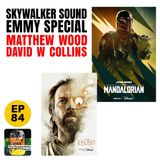
About this episode
I spoke with Matthew and David together and then separately with Danielle.
Matthew and David are Emmy nominated for Mandalorian Chapter 24, Matthew his also nominated for his work on Obi Wan Kenobi Part VI (6)
Danielle has also been nominated for her work on Obi Wan Kenobo part 6.
So first of all you'll hear my conversation with Matthew Wood and David W Collins then after the ads you’ll hear my conversation with Danielle.
I hope you enjoy it.
Links
Return of the Jedi Timeline Book
Etsy Shop - Buy your Jabba print here
Filmumentaries Merch
Support the Podcast on Patreon
Linktree
This podcast is completely independent and made possible by listener support. If you’d like to help me keep making these episodes, you can join my Patreon community here: https://patreon.com/jamiebenning
Watch more on YouTube:
Check out the Filmumentaries YouTube channel for behind-the-scenes clips and extra content: https://youtube.com/filmumentaries
All my links
Transcript
Automatically generated, so expect the odd misheard name.
Welcome to this third special episode of the month, August twenty twenty three, Episode eighty four. In fact, this is Jammie Benning here talking to you from Budapest. I'm still here working on the World Athletics coverage, but as promised, here is the third Emmy nominee episode of this month. Firstly, though, I just wanted to remind you that you can support the podcast for as little as twelve dollars for one year. That helps me make twenty four more episodes in that year.
You could spend that on a coffee and a croissant, the least at home in London, you could, and you could donate by visiting Patreon dot com forward slash Jamie Benning. There are several tiers to choose from with certain perps like video versions and even some merch. You can also buy some film Mementary's merch at film Mementaries dot creator, dash spring dot com. I'll include that link in the show notes. Okay, so this time I have the pleasure of sharing my conversations with Skywalker Sounds co supervising sound editor Matthew Wood, sound designer David W.
Collins, and rerecording mixer Danielle Dupree. I spoke with Matthew and David together and then separately with Danielle, so you're here Matthew and David first, and then my chat with Danielle after that. So this really is a bumper extra episode. Matthew and David are nominated for Mandalorian Chapter twenty four in season three of the show. Matthew has also been nominated for his work on Obi Wan Kenobie Part six.
Danielle has been nominated for her work or that same obi Wan Canobie episode as well. So, first of all, here is my conversation with Matthew Wood and David W. Collins, and after the Angel hear my conversation with Danielle, And as usual, I'll be back at the end for a bit more jabbering on. Thanks for joining me today, guys. It's exciting to be able to talk to you.
I always enjoy talking to people whose work I admire. Talk to me in turn about give in a Nutshell? Can you describe your roles on this show and these shows and you know how you interact with each other as well. Yeah, sure, so I'm Matthew would and I'm supervising sound editor on these projects that we're working on here at Star Wars Streaming for Disney Player. So uh yeah, So I we have the I'm in charge of the whole editorial department, the sound editorial department, which consists you know, dialogue and fully and sound effects and ADR and integrating that into the mix and working with the legacies material we have from Star Wars from the library and integrating new sound design elements and just sort of interfacing with the director and picture department and making sure all that goes as planned when we build the soundtrack.
Great, and you David, Yeah, So my name is David Collins, and I worked for Matt No, I mean that he brought me a few years ago and and uh you know to start started in animation a few years ago and still working animation, but it was the sound designer on Mandalorian season three and work for Matt and whatever capacity he has. We joined the crew and it's certainly a pleasure. But yeah, in particular doing sound design and sound effects for a lot of these shows, sometimes mixing, but mostly sound editing and sound a sign. Both of you gents strike me as people that kind of have like me, Star Wars running through your veins. I mean you to a greater extent, Matthew.
You of course started off at Lucas Arts game testing and then went on to work in a sound capacity on the prequels voice of Dath Grievous and performed as bibfore Tuna and David you were also at LucasArts providing many voice roles, and I mean what you've hosted Celebration. Of course, you've voiced characters in Rogue One, Force Awakens, the Book of Boba Fette. I mean, how does how do you keep ticking off these bucket list things? I mean working on a show and shows like these must feel like, you know, more dreams coming true. Yeah, I mean it does.
David and I are both huge Star Wars fans, and that was That's not a prerequisite to work here, I'll say that, but but it is certainly helpful. Coming in early on my teen years to Lucas film was a dream. And then just being able to work with George Lucas on those prequels, and he I'll say that he never really had us wearing one hat. George never was the kind of person like you're doing this job and just stay in your lane. He was very open to a lot of you know, learning new technologies all the acting we did, uh, you know, just input on various levels of the production.
And he was always very integrating of sound as a major component of the of the track, starting with Ben Burt back on the original movies, which has been a fantastic mentor and and sort of godfather of the Star Wars sound at Skywalker still has an office there. We still consult with him and talk to him. He was the most easy going guy ever, and I'm amazing film historian to have at our as a resource. But certainly George sort of left that open for us, and so and I never felt pigeonholed in what we were doing, and so that was why a lot of things opened up like this. And just to speak to for David's part for one second, like I always saw him working in the games division, where I also started, and just sort of we had a parallel career path there, and I was always very much wanting to get him over to our side here on for the for the television and film work.
And so it's been a it's been a dream because he's got the same sort of ethos that works great at Skywalker Sound. Yeah, it seems to me that that sort of ethos you talked about about getting involved, you know, different aspects, has been there from the very start. You know, I think of like Phil Tippett putting put in the Max Rebo costume you created, or you know, Jim Bloom doubling as Luke Skywalker for some scenes. Must be great, David, for you as a fan, to to have your feet on the ground there as well. Yeah, And I think everyone that works on this stuff is is is passionate about their job, even if they're not necessarily a huge Star Wars fan.
I mean they're they're they're passionate about film or TV or whether they're working in games. And I think you have to be in order to have a successful point of view that you can get across as as an artist in any capacity. And that is one of the nice things, as Matt, that I love about Skywalker Sound and working for Lucasfilm and everything that George Lucas created in terms of these companies for artists to thrive in, is that you do get this opportunity to kind of approach things at different angles. And I mean I look at when Mark Hamill speaks about about science fiction. It was very clear that he was a fan coming in to play Luke Skywalker for the first time in the mid seventies, and I think, I think having passion is ultimately the most important thing and one of the nice things, you know.
Just to go back to what Matt said about about being able to play different roles within a creative effort like one of these shows, is there really is this kind of openness to opportunity, you know, whether or not I get to design or or you know, hey, can you mix this one episode and I'm sure let me jump in here, or even in one case of Star Wars Visions, you know, we started consulting on some of the music for the opening logo, you know, and Matt were saying, why don't we have David write it, you know that sort of thing, and so I did, and there's just, uh, it's these dream projects. You know, We're very lucky being at Skywalker Sound because Skywalker Sound has this history of just amazing work from these incredible sound artists that I grew up wanting to, you know, wanting to to have a career like that, and so you know, we take it very seriously when we get these opportunities and we just give it everything.
We have that passion that I mentioned, and the bar has been raised by so much by these Lucasfilm and Disney shows, you know, and you're we're talking about Mandalora in season three, you know, the the episode twenty four that's been nominated here so highly anticipated for this now beloved show, Expectations are ramped up. You know. The pressure presumably is on the creative teams to you know, come up with something new, but at the same time honoring the legacy that's that's been there for so many years. How how do you go about doing that? Well?
Yeah, I mean I think the first thing is to to to try and chase what it is that I want to hear as a fan. I mean, the first time that that Matt and I sit down with John Fabreau and we watched the episode, your your imagination immediately starts going about, Oh, it could sound like this, and oh we can maybe grab these elements over here. Oh we don't have anything for these things over there. We're going to definitely have to design something new for that, that that, that and that, and you just kind of go through in what we call a spotting session and the entire time, your your your creative flow is just is just really strong. And we're very lucky with Fabreau and Rick because they they're so committed to excellent sound but also giving opportunities for great storytelling and being very communicative about what they want, and we were able to just kind of bring our aesthetic to it, our Star Wars passion and knowledge, but also try and do things to support all of the different characters, the emotions, and that's that's that can be really really tricky.
There are some you know, obviously with Star Wars, some legacy, legacy sounds that we're always trying to honor, but a lot of times you have to expand on those. I think about R five D four, for example, is classic to right all the way back from the very first movie, but if you think about what he did in that movie, it's very small, and so our reference for that is very small, and what we have to do is extrapolate and try and create new material that sits right alongside with whatever fans are used to or accustomed to hearing in the original movie, but now in the Mandalorian and particularly in the episode that we're talking about for the Emmy nomination. You know, they're doing all He's doing all kinds of stuff, as are the mouse spots, you know, as are you know, these armies of Mandalorians coming at each other and Stormtroopers with with jet packs, you know, all that jet pack material, the sort of dark trooper material.
What are those those dual pistols going to sound like? That was one of the first sounds I made for the season, was, you know, those explosive almost hand cannons, very very much inspired by Ben Burt's work, and Raiders have lost arc with Indie's pistol, and but they should be so big that the limiters can't handle it, Like it just sounds like it's just clipping almost, you know, that's kind of heavy metal distortion every time he fires it. These are the kind of things that we we we go back and talk about, and Matt and I'll usually have a call afterwards and just kind of sync up on everything that we discussed with the editorial department as well as Favreau and and and then we just set about going to work, you know, and and we try and just give it everything that we can in terms of what we want to hear and what we think is right for the story and for the episode.
I would imagine that these kind of call of them boundaries, that there's probably a bad word for it, that already in place in terms of the Star Wars universe is a comfort in some way because you know the sort of limits within which you're working. You're you're able to cross those lines, but not too much, you know. I think that I think those restrictions are helpful in a creative medium monthly very much so. I mean, it's funny because obviously these shows, we want the quality to be really high because we want to have it, you know, on Disney. Plus we want somebody to be able to put in a movie or the animation series or one of our streaming shows or something and have it all be in the same sort of parody for quality.
But our schedules are obviously quite quick, so we have to We're always running on instinct and some of that even in the picture editorial department. So we get a guide track from them that has something that they've laid out sort of thematically, where they want to hit things and what story points put points are to be the key moments of the show, and they'll put in you know, whatever track they have, because they're working just as fast as we are and their picture side, so they're hoping that we're going to come in and obviously replace it all. But it is interesting to have that moment where you hear something attached to Star Wars, you're like, that doesn't quite sound like Star Wars, and there's this undefined kind of moment where we we guide it back because Star Wars sound just like John Williams music and uh and all that is so synonymous with the Star Wars like the sound of a tie fighter and the lightsaber and a Java and all those things are going to have a sort of signature that we want to have to be sort of the subconscious glue that's going to hold this together.
And it's a really easy, i mean comparative to visual effects easy, Like, you know, we can make things really feel like Star Wars quite quickly with that sort of backdoor into your subconscious with something you've never heard before or you haven't heard since you saw the original movies or something like that. So that's a that's a great you know, resource that we have and we and we try to keep everything in that same zone that the original you know that Ben Burt and David A. Cord and and folks along the line have created uh, and that that's that's that's sort of that where we want to you know, where we want to live. I mean, years ago, sound as a process was always very much at the end of the film's post production.
And I know in talking to other professionals in your industry like Gary Rydstrom and Mark Mangini that you know, these days you get brought on a lot earlier. What stage are you guys brought on in the process, because I understand in some movies that I've talked to sound designers about, for instance, David has said that their sound has informed the visuals in some ways. It's more of a two way street, now, isn't it. Yeah, there are times when we're brought in very early for something, you know, in the case of The Mandalorian, you know, to echo what Matt said, this is television, you know, and what we're trying to do is give a film treatment to you know, on a on a television show, which a season of television like The Mandalorian is, you know, in terms of runtime, is like doing three movies in a way.
You know, it's it's a lot of material, and so you are moving quickly. That being said, there are absolutely still times where we're brought in very e for something to consult on a creature or a droid or some kind of some kind of effect that needs that needs to be in pre production so that it can go to the picture department, or it can go to animation, and then sometimes they animate to our sounds for example. That that does still happen, you know. In the case of Mandalorian Season three, I think we were brought in as they were they were just starting to put together their first rough cuts of some of these episodes, and so we look at them very early on, and in fact, we look at them before a lot of the visual effects are are completed, you know, and as we start to do work and I'm doing design work, I'm getting updates from the picture department with new visual effects from ILM, and that really helps, you know, that really helps kind of to be in that early because you start to see some of the creative decisions that are being made artistically, and that can help you figure out, for example, you know what your limitations are.
I mean to speak a little bit about the limitations that Matt mentioned with Star Wars. You know, I think there can be a misconception that we just pull from this huge library of sounds, and you know, I wish the Star Wars button as it were, but it's it's much more about curating those sounds because all of those sounds contain strong emotional memory, at least I know they do for me, and so I operate on the assumption that that I think any artist sound artist makes, which is that you know people are going to hear it the same way if I use a very specific sound from a very specific scene in Star Wars, that's going to trigger some sort of emotional memory for me, which then I need to consider using those sounds with great intention, or not using those sounds and creating something new, and that that really is the trick, and we do have those conversations quite a bit.
That being said, back to the visual effects, when those come in and you start to see that a lot of those decisions have kind of been made for you artistically, you know that you get to decide how much do I lean into classic Star Wars versus create something totally new. The Mandalorian itself is a show where visually they're tackling those same issues. You know, how many pill lights do we put up in this imperial base? And depending on what I see, I get to go, okay, well this needs to have that classic imperial clacks in alarm and the hangar or not. You know, these are the kind of clues that we get when working close with a picture department.
And I have to say that the editors on The Mandalorian and on all of these shows really are are really important, wonderful collaborators in this process in figuring out a lot of these issues and getting us to the final mix. Yeah, that trust in the post production department, which we've created over the last you know, acting how many years it's been now since we've started. But but you know, Favreau and Feloni have a really great sense of the type of folks to work with us, and so we've had great episodic directors on these shows, plus the post production editorial department, who are our first advocates. You know, they they a lot of them love sound and they know they're coming to Skywalker sound, which you know, we're we're we're not We're not kind of just coming at the end and slam bang something into there for you.
We're going to craft something with you together. And and so we're brought in early and sometimes you know, we're brought in sometimes to come and look at the sets and to hold the props and to look at rough cuts and read scripts early as John's working on them. And and so it's a really you know, Kathy Kennedy has definitely invited us into the process early, just like George Lucas did. So that's that's you really feel included. You feel like you're building something.
It's a very unique experience, and it's all yeah, it's all the way through from you know, the script all the way to when we're doing our final mixes and and color you know, d I. You know, it's were it's a great, great team, and so we're happy for the aesthetic that that has that John and Dave have come before and put in place with the staffing that we're working with. Great to be in a position where you can let those ideas percolate. You know, actually having held that prop and being on that set, it allows it to kind of you know, you to absorb it rather than to do it with a blank slate so to speak. Yeah, I mean you're both trying to accomblish the soundscape that fills fresh to new viewers with new expectations.
You know, it needs to have that legacy kind of twist that we talked about, and you're trying to give identity to locations, characters, ships, you know, the props that people are holding. How do you ensure that all of that remains cohesive firstly? And secondly, how do you ensure that you know it's gonna read properly to people whether they're watching it on their home cinema screen, the fifty inch TV, their iPad, or their phone. Well, we have, I mean a lot of things in place. I mean, one is, luckily they're hiring folks that did understand that and had worked on the previous things, such as David myself and Accord.
And we have Dave Falone obviously, who's a huge force in Star Wars and a storyteller and everything from the visuals of the sound of the music he's deeply involved in. So we try to keep that cohesiveness. And then we usually try to higher folks that have a familiarity with Star Wars. That's always helpful and we all kind of feel it. We all and it's a it's a very open team as far as like, you know, if I put if somebody puts in an explosion, it's just as David said, we're like, you know what, that's the explosion they used in this other scene back in this other show that I think I want.
We want to preserve that being special for that show. Let's do something slightly different here, or let's or actually, no, we don't. We want to use something that's exactly identifiable to that because it's going to help the story along. And we're all we're all sort of have that. It's so subconscious that it's such an emotional feeling that you get that we all share with each other.
And and it's great when we have new folks coming into they're so passionate about wanting to work on Star Wars, and then when they have access to our library and our designers, then we get to see their interpretation of what they want to cut together in the soundtrack, and we can gently guide them into something that's going to be cohesive. It's just a really you know, together team. And and speaking of the episodic direct too, because they have their vision of what they want the show to be and a lot of them are you know, they tell us what the story points are and how they want to go with it, but they kind of they do have a certain amount of trust with us to sort of make sure that we are honoring Star Wars from a sound perspective, and it's not going to sound like something totally different and they're gonna, you know, it's going to take everything off track, you know.
So it's a good it's a good open door policy that we have with each other to share how we're all feeling about the track because sound is so emotional, so under yeah, so that's that's sort of how I hope we oh and then also as far as listening to it on different systems, we do have a mastering spec that we're given from Disney Plus that we try to make sure it adheres to, so you know, things are able to hear the dialogue quite well, the action scenes will be you know, very punctuated, the music will play well, and then it's Skywalker Sound. We have some very proprietary tools to get us to hit that spec that are very specific to Skywalker that they've worked and crafted with the artists the mixers to say that this is going to represent our mix the way we balanced it, the way the director wants to hear it, and it's then going to then be nudged to hit the exact numbers it needs to hit at Disney, so we can have that balance of hitting the spec so everything sounds the scent, you know everything.
You're not going to be turning your volume up and down on your television while you're listening to something. And it's also going to have the artist's vision. That's something very unique to Skauwaker in our R and D department that we've put together to make that happen. And if I may, Matt, if it's all right, Jamie, I'd love to give up just a shout out to Matt and David A. Chord and Dave Filoni.
Going all the way back to two thousand six, two thousand and seven with George Lucas, there was this very forward thinking vision about taking Star Wars and moving it to the small screen with Clone Wars. I mean George Lucas actually built out whole wings of the tech building at Skywalker Sound specifically for television production. This kind of production. They figured out how to go from the prequels to the Clone Wars, which is no small task and really pioneered the ability to take that aesthetic and move it into television format, in the case of the Clone Wars, an animated television format. But the point is, you know, Matt and and Dave Acord, we're figuring out how to do that for TV fifteen how many years ago it was about fifteen years ago, something like that.
And then you know, when Matt brings in, say Bonnie Wild, Bonnie Wild comes in, she does rebels, you know, And when I came in, I did resistance. There was this kind of there's this kind of television almost Star Wars training that I feel like a lot of us went through in order to really understand how to give that aesthetic to these shows. And so when the Mandalorian comes around or Obi Wan Kenobi, we're ready. You know, a lot of those issues have been solved before we got there, you know, and with Matt's guidance, we're able to basically get everything done in a way that we and the directors are satisfied with in terms of how it sounds as cinematic as it as it ends up sounding. And I really do think that that is because of a lot of visionary work that took place a long time ago at Skywalker Sound, and it's just a continuation of that legacy.
It really does feel like there's still that collegiate kind of feeling to Lucas Film. When I've talked to people from you know, Nelo Rhodus, jamiro or you know Joe Johnson that existed back then, and it's great to hear that there's still that that kind of ladder within there as well, and you know, people mentoring each other, which is which is so important. One of the things I'm always interested about is people's kind of techniques to achieve certain things. You know, I've talked to editors like Walter Merch and Paul Hirsch in the last couple of years, and you know, they say sometimes they'll just turn the audio off completely, step away from it, you know, walk back in the room, hit the space bar and see if it reads correctly without the sound.
Do you do the inverse of that, Do you ever turn off the visuals to make sure that the audio reads correctly? I mean you could say no, yeah, I mean I think the only and I love that by the way of watching watching it without sound, of making sure it still communicates. I think that's a really great technique that I've seen a lot of picture editors do. But I think our equivalent would be, you really want a signature sounding thing that you're making. It could be a ship, it could be a droid, it could be a creature.
You want it to have a feeling where And this is actually JJ Abrams quote that he gave us when we were making BB eight, which was, I want to feel like if BB eight rolled up in the hallway outside this door right here when we're sitting, you would know it was him before he saw on. He just really wants to make sure like everything about it, the head motors, the any kind of chirps, any kind of servos, or any of the vocalizations he makes does not sound generic. It sounds very specific to the character. And that's something that yeah, we try to so we're not thinking about it visually. We're thinking about what the audio maintaining a signature across all of its elements.
I was just going to say, I think as a mixer, there is an equivalent to what Walter Merchant Paul Hurst said. And of course we're huge fans of their work. I mean, their legends at Skywalker sound, But there is a mixer equivalent to that, which is, you know, when you first are cutting sound into a scene, everything sounds huge and satisfying. And when you start to put it together with all the elements, the dialogue and the folly and the adr and the music, and you really start to understand what the track is going to be and how it's going to flow, and what kind of the the melodic shape of the of this dialogue, concerto, sound effects, concerto, whatever it is that you're making starts to take shape.
You start going, do I really need to hit all of these elements as heavily as I hit it when I cut it, you know? Or can you know, can the violins take over? Or you know, do we really need to tone this down? Because really this needs to be an intimate conversation between these two characters, and maybe we don't need that ship in the background taking it off to be so big or whatever it is. You know, those those conversations happen.
I think a lot, you know, with matt and mixers, and then certainly with the episodic directors, where you know you are trying to shape something that is dramatically impactful and not necessarily always you know, sound sound sound, you know, sometimes silences is a choice. You know, sometimes backing off is a choice, because then it makes your strong moments even stronger. So I think that there are there are dynamic considerations that I think make a great parallel to the point that Paul hirsch And and Walter merch Maid I often think as well that you must have to have an extraordinary amount of adaptability and flexibility, given you know, the digital tools that we now work with. Everyone can have an opinion of course, on a on a edit timeline, and I know I've heard of like producers coming in with their own timeline edit, you know, of a picture edit.
I'm not suggesting anything like that goes on, but the fact that you can change things more easily now, you know, back on film it was a destructive process, you know, and it took a lot of work to sort of go back to the start again. How does that impact your work and how at what stage do you begin to lock things down? I think mostly it affects it in a positive way because we I mean, George Lucky still used to always say when we were doing the prequels, He's like, I'd love to be able to have access to the one Foley footstep if I wanted to change that, and he just liked that idea and it and and that was I think the prequel movies were the first all protols mix that we ever did and in at all, like ever, and so we had everything in there and I was like, look, we can go all the way back to a to a unit and change it.
And he didn't really mess with that, like in a way that he wanted, you know, just for the fun of it, but I think he liked to know that he could. And it's the same way we have everything when we're playing it for the final playbacks for our directors, we can we can go back to every single thing. It's all been pre dubbed and all that, but it's all accessible, even back to if we have something that the picture editor might have cut before we even worked on it, and they're like, you know what, I'm still feeling that one thing about that that door clunk. I really liked it from the production sound. Can you grab that and g And so we want to have that option open like that, but we do start locking it down once we start mixing.
As far as our creative flow of what direction we're going into, but certainly we can get to any of it and all of it, and I think that's just comforting to know that we can. We don't really have many people that take advantage of that in a malicious way whatsoever, but certainly it's it's a positive thing, I think, to be able to have that open like that to the very last minute. This is where Matt is a wealth of historical information because he was there with George Lucas and you know it, has worked with Pixar and Paul Thomas Anderson and j. J. Abrams and has all of these stories going all the way back to you know, to the days where where yeah, you had to make these decisions and pre dubs that went to the stage that we're basically baked in, and to go back was tremendous expense.
But since I've been there, the training that I've received from Matt and everyone else is to have all of the elements at your fingertips in case a director asks for them, and generally they don't, but it is nice and feels very impressive when you can when they ask, hey, can you bring up that one sound that was in the very first cot and you go, oh, you this, you know, and you just bring it up immediately. That is a normal part of the workflow. But yeah, to Matt's point, it wasn't always and we still premix, we still pre dub, but we keep everything handy and at the ready just in case, and the paint is only dry when you or at the very very final stage. Yeah, you know you went with you bring together in dialogue and music and folly effects and you're creating the atmosphere.
How do you guys both kind of keep fresh ears on this stuff? And you know, you could easily get lost in the woods, you know, and not see the wood for the trees. Is there something that you do to kind of make sure you see or hear things in a fresh way? You know? When I guess having our editorial team come in because we you know, here, here's a guide of what we're looking for for these areas, and if we've designed something specific, if David's made something specific, we'd like to use that for these But also a lot of it's open.
We give a lot of leeway our editors, like why don't you cut what you feel works here and we will guide you and so that that that keeps it fresh, certainly with our editorial team coming in. And then always when you go to the mix, you know, it's a dark room, it's it's aesthetically like you can just sit there and enjoy it like you're watching a movie, and that is a whole different experience when it's all together. Usually the visuals are closer. By the time we've mixed, we're looking at stuff that's been they're corrected, and you can kind of look at it from an audience member perspective and not so much that you're working on the track, and so that that brings a new freshness in. And then when it's go time and you're playing it for Feloni or Favre or or Rick, you know, it's that that moment where you know everyone's working on instinct and you're just feeling the flow, and there's more people in the room too.
There's kind of another experience that happens because we're all collectively feeling at the same time, and we can look at each other and go, Wow, that really worked. That just really worked, or you know, maybe that one maybe we get rid of some music there, or maybe you know, whatever whatever it is, we we kind of can do it on a collective level, and that that part keeps it fresh, I think. And the sounds, you know, Star Wars. Ben used to talk about making sounds kind of once it's once a sound is sort of in synchronization with an action and picture, you can get away with a lot with that sound. And he certainly went I loved how weird.
Ben went like, there's a lot of sounds that are just you wouldn't expect that we're used for for certain things. And and that's what Star Wars is too. It has that feel where unexpected sounds are put in and it but it works once it's in sank and ever with everything, and it keeps it fresh and sort of an alien feel to it. So, you know, all those things sort of combined for me keep it fresh if I may too. It really does help that there is a team of people, you know, that that look at this stuff together.
So to give an example, I wasn't the sound designer on Book of Boba fed I was one of the sound editors, and so David Acord made those sounds and he might be tired of him by the time he's done. I don't know. I don't think so, But when it comes to me, I hear it with fresh ears, and I immediately cut it in and I think this is amazing. But then then it goes to the mixed stage, and our mixers are incredible. They're like the last line of defense too, and they're the first ones to really hear all of the final elements come together, and they start to tell us, hey, this is working, but I need to I need to amp up this part here or whatever.
And so there's this sort of team effort, almost an assembly line of ears or something, constantly getting a pair of ears on on something that is confirming or augmenting what it is that you're trying to pull off creatively. And that's really helpful. You know, it is a it is a team effort, and there are a lot of people around you to kind of verify if you verify what you're going for, if you start to get tired of something or your ears aren't as fresh anymore. So that's that's really helpful. Yeah, it does sound like a relay race that runs in one direction, then runs in the other direction and keeps going until you've decide where the finish line is kind of thing.
Yeah, that's exactly I don't normally ask the question about, you know, what's your favorite this, that or the other. But given that we're talking about an Emmy Award nomination, two shows for you, Matt and Mandalorian. For you, David, is there a scene that kind of you look at that you either worked on or your colleagues worked on in some way that you think that is the scene that really showcases what I do as a professional. Yeah, I think for me it would be the episode of of Obi Wan that's out that we're showcasing for for the Emmy. I really enjoyed the way that episode came together.
At the end. It was the culmination of the series and we have the final confrontation or the final for this series confrontation between Obi Wan Kenobi and Darth Vader, and it was everybody coming together on that. I mean the music, we had John Williams themes in there, we had incredible voice acting with James el Jones and Hayden Christensen, and we had, you know, the visuals were incredible and the acting from Ewan and Hayden on the set was so riveting and so coming up with like how we take these two titans that are fighting together and then also break it down to a very intimate scene after the sort of fight is concluded, and you see it in their eyes and and there's a mechanical component Invader's mask that's broken and fragmented and revealing the human element of Anakin Skywalker underneath, and that you know, Deb Chow, we put an an extra bit of time at the end of our mix that I held in the budget.
I was like, We're going to definitely want to spend it a little extra time on this last scene because it's you know, because the actors just gave it there all, we really wanted to represent that the scripted too. And so I feel like, you know, Deb and our picture editors and our and our mixed team and our and our sound editors all came together on that and it really felt good when it was when it's done, and I still feel emotional when I watch it after all this time, and I'm really happy to have that be acknowledged by by the Television Academy. It feels feels really good. So I feel I feel happy about that, and it's it's something we've done in recent history, and I'm really really pleased by how that went.
I went to that scene, that very scene this morning too. That was my favorite scene of the show as well. And yeah, so much going on in that scene, Like you say, You've got all of the sounds of the broken helmet and the sabers and the dialogue and the atmosphere and the crackling, you know, the damage to the helmet. Yeah, wonderful scene And yeah, congratulations and David, how about you, Well, I mean, I suppose I should mention the episode that is up for the Emmy, which is the last episode of Mandalorian season three, and you know, for a half hour, it is one of the most wonderfully dense, action packed, just crazy star wars reels that that I've ever had a chance to work on. And I want to give a shout out to our sound editor, Luis Caldamas as well, who was really really critical and getting that episode to the stage and having it sound the way it does, and when all the elements come together and the music, the foley, the effects, and you know, at one moment it's a melee fight, another moment it's a it's a dog space dog fight.
At another moment it's all these jet packs and then you're rescuing Mandalor and relighting the forge and all this kind of stuff. I mean, the epic nous of that was was wonderful, and I think was such a clear choice for us in terms of wanting to put it up for an Emmy Award. That being said, I wanted just quickly if I may, as a as a Star Wars fan, give a shout out to and Or, because I didn't work on Andor uh instound at all, but when I saw it, I just I remember thinking the genius of Andor and what David Acorp did with Marguee. What they pulled off was this ability to re contextualized sounds that are you know, at this point almost fifty years old, when that tie fighter flies through that valley and is terrifying even after hearing it so many times over the course of our lifetimes, and those characters are reacting to the sound in a specific way, and the sound treatment is as heavy as it was.
I was just blown away by that. I was blown away by by sort of the fresh feeling of elements that were so familiar with that we scroll through and that and that we do variations of, you know, for our entire careers, and yet here we are watching a show that just sounds so different yet yet the same, and to me, it got me excited again about what Star Wars can be, you know, between those two projects, the one you know, the Mandalorian and and Or I just it makes me excited to be a Star Wars fan all over again and certainly very honored and privileged to be able to work on this. Yeah, I totally agree with you about everything you both said, and you know, from somebody who's on this side of the fence, I just want to thank you and your teams for the work that you do because as a fan again, I've I've fallen in love with Star Wars again, you know, because of these shows.
And I'm forty seven this year. It's never going away, you know. It's always going to be a part of me and so many people people, And I wish you all the best for the awards as well. You really do deserve it. Thank you very much, thanks for joining me.
Danielle. What was your role and responsibilities as a rerecording sound mixer on Obi wan Kenobi? So, as a sound mixer in post production are rerecording sound mixer. We work really closely with the director and the editors film editors after filming is rapped and they have put together their final cut of the film or the TV show, And basically what we do is we take a stand across all categories dialogue, music, sound effects, backgrounds fully and we combine everything that was prepared for us by our sound designers and our editors, and we can sit at our mixing console and we combine everything together and mix it all basically and draw the audience's attention scene by scene to what the narrative is, what the film is, and what the feel is.
And we work really closely with the director to determine all those things moment to moment, and it's a very collaborative space among everybody in the on the dub stage. So we do it's basically a process of constant decision making and revising and decision making and feeling and stepping back and looking at it and listening and then seeing how this film is continuing to come together and making our choices based off of that, because I sort of always imagine, you know, in this sort of tradition of sound and sound mixing, it's you know, it's one of the last things that's done because you need all of the elements to have come together to get you to that point. But on a TV series like this, I guess you're, like you say, it's a constantly evolving thing, so you're having to kind of be very flexible, I would imagine, to account for things that might come in late, or edits that might arrive at different time, or new ideas that have come up during the during the post production process.
Oh yeah, absolutely, it's you definitely need to stay on your toes and remain flexible and remain unattached really to anything than the main Like I keep coming back to this idea of narrative. The whole thing needs to be attached to is the narrative and what the what the film is trying to say and what it's trying to sit to the audience at that moment. But yeah, you have visual effects that are not present at what you're looking at, you know, so you're you're trying to make sure you're trying to designs something that's you know, quite honestly, could be some types of storyboard or just an idea you're just starting, you know, and you're working parallel to all these different processes, and because it is the last the last moment you know, of any control over the film before it goes out to the audiences.
Yeah, there is. There is a lot of changes that happened, changes in lines and adr and changes to the film to changes to the kind of the film. But that's kind of the fun of it all is you know, is remaining well and kind of going with the flow of everything together. How do you sort of maintain fresh I was going to say eyes, but is I know that some editors like to you know, stand up and walk out of the room and come back in with it playing or something like that, you know, or you know, ideally you'd take a week out and you'd walk away from the project and come back with fresh eyes and ears. But how do you manage to keep that sort of freshness where there's something you might have listened to, you know, dozens hundreds of times, even over and over again.
Well, lots of tips and tricks. And it's also made a lot easier when you're working on something like Star Wars because there is, particularly with this series, there is so much to look at, and there's so much to think about, and there's so many layers that deb wove into the to the development of the character. So it's definitely a discipline to be able to look back and to take a step back. But even even simple things of moving on to another scene or moving on to another episode, for now, stepping out of the room for a cup of coffee and then coming back, or even sitting in a different part of the room the sweet spot that we're used to used to mixing it or even watching it on a different medium, which is actually really helpful now for streaming in is you know, just streaming it to a smaller screen and listening to it on headphones, so a variety of different options, which which also is a really common practice in music as well.
You'll be working on something in the studio of recording studio, and then you'll be take it to the take it to the car to see how it feels in the car, how it sounds similar ideas for us, Yeah, I think you know, with these shows, these TV shows, these Star Wars TV shows. Now we've had and or Mandalorian, We've got a Soca coming up of course your show Obi Wan. Yeah, you sort of have these kind of parameters already there from the Star Wars universe that's already existed, but then you know you're always invited and professionally you want to push the boundaries. How do you manage to sort of take that approach? How do you achieve that?
Was there an ethos in terms of the sonic landscape of the or soundscape of the show from from the beginning that enabled you to do that. One of the exciting things for me creatively is always working within the car strains or something. I'm not somebody who can look at the endless amount of options on a blank page and feel inspired, you know, but I think that those are suited for people who are sound designers, you know, who can just poor idea out of thin air, and you know that's such incredible work and hard work to do, and that's just not something that my brain and my creative process usually lends itself to. So I quite enjoy working creatively in a box that's already kind of been preset, And I find that a lot of my most creative moments happen when I'm trying to redo something or trying to do a different take on something.
With Obi Wan, I mean, we're going into the Star Wars universe we already know with so many things dound like and we have such an incredible, rich, iconic sound library to work with, which is also a thrill, and you're kind of flip. I think my co worker Bonnie set it once best. She's like, you're kind of given the keys to the candy store when you're a loutquick when you're allowed to work with the store wars sound library. The exciting thing about obi Wan working with the constraints of that world is that it was obviously you're thinking about the canon and making sure that the cannon is represented correctly, But the biggest new take in obi Wan is the new take of this character. And it's this new side of this character that we've never seen before, and that really informed a lot of what we did because there's throughout the arc of the story, throughout the arc of the character, we see him in different modes.
We see him as a little bit lost and a little bit apart and a little bit wounded at the beginning, and frail. And you can kind of or frailer than we imagine him when we loved him, you know, and you can really sonically mirror that. You know, you can make things, we can make things feel more alone and quiet and sad and towards the end of the series when he actually starts to lose to questioning maybe he's losing some of his power and some of his obi wanness. You know, you can kind of move into the chaos and into the lastness of it all and have everything feel so much bigger than it actually is, you know, from his perspective. So those are some of the ideas that we are brought to the table with making it different.
Not every single scene in this film that's going to sound like exactly as you would think of Star Wars film sounds like, because that's not always the story that's in front of you right now. Yeah, it's interesting. You know, when I've talked to people about these TV shows, they are TV shows to us, but of course to you they're they're giant film projects. They're multiple episodes, you know, six episodes in this series. How does that scale and scope kind of impact the workflow compared to working in a movie.
Is there a difference or for you guys, is it is it another long movie or two movies back to back. Well, you know it's not. There's there's definitely a difference in that we need to think a bit landing and being viewed at a different medium than only you know, a theater. There really only a few people, I think ever, though we'll see it in the theater unless they release it, which would be really cool. The approach, though, from the beginning, is nearly identical to that of a feature, and I don't think it's like that for every TV show, but for this one absolutely, and for the Star Wars TV shows absolutely, because they are created like a feature.
There's really no difference from the beginning of it, and we approach it just like we would a feature film. At the end of it, though, I mean, well, actually throughout we have to in the back of our minds no and be very comfortable and confident in the translation from a you know, a multitrack, big theatrical dub stage to a small set of stereo speakers on a headphone or on a TV step. So we always have them in the back of our mind when we're very comfortable switching back and forth and checking to make sure the translation is right and making sure everything is reading as normally would. So it's something that we carry with us and also at the end of our workflow, we do a lot of mastering to adapt it to smaller, smaller screens.
But now it's it's it's feature first, absolutely, and you're trying to in the sound apartment, you're of course trying to make this cohesive soundscape, and that's you know, the on set recording through to the sound design through to the end part of the process which which you oversee. You're you know, you're trying to add depth and emotion. You're kind of grounding us in locations. I mean, I'm in my loft at the moment, in my little office up here, and if I close my eyes, I can hear the trees swaying, and I can hear whatever few birds are remaining tweeting in the in the on the branches. If I had my eyes closed, I could tell I was in this location, each place in my house, so I could probably identify from you know, I could hear the road if I was in the room at the front.
You have to do that with the different locations that we see these characters in. How do you ensure that each location has its own identity. I know the sound design is obviously a big part of that, but in terms of your mixing, how do you how do you manage that? Well, context is everything with with those decisions at least you really need to be aware of where that scene lies within the entire sequence, but came before and what's coming after. So it's particularly with these types of films it is very important to make it kind of lean into the hyperrealism because it is at the end of the day a bit a bit fantastic.
The you know where we are and what we're looking at, and you do want to give the viewers the experience of possibly being there, you know, and so you do want to establish that early on and and really pay attention to what's going on in the background and take a moment or many moments to think about what could possibly be going on in the background, even if you don't see it. You know what type You know, in obi Wan there was this this market scene. You know, what would that sound like there on this planet and the elements of this planet? And then what would that sound like in reality here? You know who type of what type of people would be working there, what would what would their concerns be, what would their day to day be.
So it is a lot of it is a lot of living in the make belief space, and the devili is important to give beats, particularly for the first time that we've ever seen a location, to establish it, to really help immerse the viewer in it. But then once you do that, it's just kind of all about again, it's about the story, and it's not necessarily about how the viewers are seeing this new location for the first time, as it is about how the character or the story is seeing this location for the first time, which could often be a very different feel. Now, one of the other things about your job is, you know, it's also obviously the mixing that we talked about, but it's also ensuring the quality is to the highest standards as well.
And you know, I'm always amazed by people who are super creative and people who are super technical. I imagine for your job, you have to kind of sit in both of those camps. Is that true? Yeah, absolutely, And that's that's actually one of the things I love most about it. It's very much engages both sides of my brain to it, probably you know, to a varying degree of depending on the day, But yeah, I love I love I love having both having the ability to kind of switch approaches back and forth, and that's very much you know, if you don't have the technical side of things, and the tools that you need to use are not going to be second nature, and they very much need to be second nature if you're going to use them in a creative as a creative outlet, you know, and with your job being the kind of final well the final stage of the of the sound you know side of the show, there's also the beginning side, you know, the place where it starts with the sound set recording.
Sorry, do you have much of relationship with that set sound mixer or is it kind of handed off to you? Do you then go back and say, well, actually, we might need this in the future or that in the future. Is that a relationship that exists or is it kind of you know, the buck is pushed back over to you to carry on with your work. It's very much dependent and varies varies from film to film and for something that's an ongoing series that that I would be involved with for multiple series, yes, definitely there is a relationship with the on set sound recordist, and it's just it's just very much a dialogue of you know, knowledge is power, information is power. So just knowing what's going on and what to look forward to and what to watch out for is always very helpful coming down the line, but sometimes you don't have that luxury.
On this particular show, we did have. We we knew our sound record is going in and knew that he was top of the line, and that's really all we had to know. We all kind of prood the sigh of relief after we knew it was going to be him and then we saw him at the rep M. I was imagine like, because I know, for instance, you know, I work in television myself, and I know I've worked with source material that isn't you know maybe the best Maybe there were extraneous circumstances that means there's a lot of background noise for instance, or something like that. Is there are there techniques and technologies now that are really helping you to do things like reduce this, you know, the noise in the background.
The sound reduction tools. Oh yeah, absolutely. Our technology for background noise reduction has really has really taken off of it over the last you know, fat ten years, and it's only getting better. You'll talk to some of them. I'll talk to some of my mentors that I have that have been mixing for you know, thirty forty years, and I'll one day I asked, you know, why did you what did you do a while ago with this scene when we didn't have this new, brand new tool you're working on, And she said to me, we just learned to live with a lot more back then.
So, yeah, as technology gets better, our tools of the trade get better and our jobs tend to get easier. But also the expectation of the sound getting better also comes with that. Does that mean, for instance, that dialogue replacement is not as necessary anymore, that the source material of the dialogue recording can be made all that better through these new tools, or is that something that still has to be done a great deal I've am finding it's actually quite the opposite, because dialogue replacement a DR technology has also gotten better, and now it's possible to record an actor actress wherever they are in the world and have us be remote during that session. We don't always to go and fly and track them down, which used to be the case.
So now that ADR is actually easier to shoot, directors are asking for it more and more and more, and it's not always interesting. Yeah, it's not always just a replacement solely for technical reasons. There's a reasons why you would want to replace dialogue, you know, to take her performance or even rewriting a line. Many so ADR is still alive and well, absolutely, I really see your job like almost like a conductor standing in front of an orchestra and you know, making sure that you know certain certain groups of instruments are kind of rising up at the right time. And what where does your kind of what's your origins in having that skill?
Was this something you realize are you musical for instance? Is this something you realize you could do early on? Yeah, that's a great way to describe it. I like that. I may I may steal that.
So I didn't actually know that this job existed until well after college actually, but I did get into this line of work through music. I grew up playing music. I'm not I don't wouldn't consider myself a musician anymore, but that was definitely my gateway through that. I became interested in music recording and worked and worked in a recording studios as I started my career. I think what attracted me to this particular job and made me confident that I could be good at it is the storytelling aspect of of it.
That's definitely a world that I come from. I have great storytellers in my family, and that's a skill that I think I have carried on within me. So when I when I found that this job existed, I thought it really kind of perfectly took a couple of things that I loved and knew I could have a chance of being at together. You know. It took sound, which was something I always was thinking about from a young age, And it took storytelling, which kind of comes naturally to me in certain settings, probably not six am on a Sunday morning, but certain settings for sure.
And that and that was the part that that really attracted me to this. In particular, music's often given the role of, you know, doing the heavy lifting emotionally along with the performance, of course, but I know you're involved with the music and the you know, the mixing of the music along with the dialogue and fully and everything else. But is there an example in the show that you can think of where let's forget music for a moment where the sound word that you've you know, that you've mixed has sort of elevated a scene beyond where you could imagine it might have gone. Oh, absolutely, all the time every time you watch something down as a you know, in the temper cut before you start working on it.
You're just always so excited to hear what music is going to do. But I will say that there is you know, you need to use it right and the music needs to be the music needs to be right. It's not just this cure all band aid that you can slap over something and have it work. You know, oftentimes it can to tract if you're not using it right, or distract or more commonly, it could be so much more effective if you hold it back and if you keep quiet so that you do have the dynamic when you need it. And I will say, you know, if you do have a film or or a TV show that is, you know, scored heavily, then the absence of the music works just as the same as a piece of score with there, if not, sometimes sometimes better.
You've kind of earned that moment, haven't you, in a way that you're able to use the other tools in your arsenal to to bring the emotion. Yeah, I'm going to try. I'm original trilogy guy, you know, I mean that's shorthand for saying that I'm old now. But there were definitely moments in OBI one where I kind of said out loud to my wife, oh wow, the prequel fans are going to be going crazy at this point. There's that one scene I think it's probably my favorite scene in the whole series, which is when OBI one breaks over, breaks open Vader's helmet to reveal Anakin.
There's so much going on in that in terms of sound. You've got the music, You've got the sabers, the dialogue, the crackling of the cut in the helmet, the switching between Hayden and James el Jones's voice, and you know, the breathing Vaders breathing. You've got Ewan's emotional dialogue there as well. That is that one of the scenes that was the most challenging or am I just imagining that because it's one of the most impactful scenes in the series. Well, first of all, kudos go to my mixing partner Scott Lewis, who I hope you're as also speak to you.
The way we too bibe responsibilities working together is is very unique and this that scene in its entirety, was very much his baby and it is a product of him. So I want to be careful to take credit where totally do. I think that any impactful scene like that is incredibly challenging because you just really need to get not just the whole scene, but each note in the scene right, each beat in the scene right. The director has set it up for you. She is clear about what's happening and what needs to be felt and what needs to be seen, and everybody down the line has done such an incredible job, from performances to costumes, to visual effects to score, so you you're kind of left at the end being like, all right, well we've really gotta no pressure.
Yeah, so, yeah, it is. It is really balancing those those emotional moments are incredibly incredibly challenging, and particularly when there is so much going on. From a sound perspective, it's those are very busy moments, and you really need to make sure that they feel full and exciting when they need to full and exciting, and when they need to feel intimate and bear and just realise are focused on what's happening in front of you. It needs to feel that way as well. And yeah, you have this, you know, huge gorgeous score that's like all enveloping, and then you have these sound effects that are so important, and then and then the performance that you really need to make sure that you don't step on that you only support.
So it is very much balent in act, and you kind of start, as Scott said, I think in previously about the scene, you start with the kitchen sink. You just start with everything that could possibly be in there, and then you go through the painstaking task of slowly whittling it down to what really matters and focusing on that. And it takes a lot, and it's a it's a challenge, for sure. I always think that this question I'm about to ask you is a difficult one to ask people, and sometimes I avoid it. But given that we're talking about your fantastic nomination here for the for the Emmy, is there a scene in which you're particularly proud of looking back at the show as a viewer, Are you able to kind of distance yourself enough to kind of enjoy it as a fan or is there a scene that you know you on behind the scenes think technically and artistically you kind of nailed it well.
I will say the one the scene I had the most fun with and just was so rewarding because it was set up so well you know, there's only so much we could do with sound. Every it needs to be in order for things to really really really work, they need to be shot well, they need to be performed well to be cut well. But my particular favorite that I was so excited about, I believe it's the beginning of episode three. I couldn't. I couldn't.
It's been a while, I couldn't have the episodes wrong. But it's kind of more machine than man. Uh moment uh see Vader being assembled, and you have the stuff just like so dark and yell and the score is like amazing. I remember hearing the score for the first time. I just be like, yes, yes, any of the water and you have like the you know, the underground feel of it all.
You have the machinery, and you have the canon of what some of these things sound like to begin with, and you have the breathing and then it is intercut with Obie on the ship, which you know, in a lot of ways, it's like kind of this like biblical feel of you know, if anybody is familiar with the Bible. I am not religious, but there's just this not a scene in the Bible. There's that's something part of the Bible, where like Jesus is like praying in the garden before he you know, has to go do something that he just doesn't want, before he has to sacrifice himself, and it's just incredibly stressful, horrible time. It just it really reminded me of that this smooth moment of obi Wan kind of praying for a guidance of what he has to do, and he is just distressed and distraught and you just see this thing, this machine being made down the line that's about he's going to have to face off with And I just think the sound design that John Borland did for that scene was just phenomenal.
The score was amazing. I think that particular cue was Natalie Holt I had the pleasure with working for working with again on this series. And yeah, the performances were great, the sets were great. It's just it roled. It was so much fun.
Yeah, that's definitely as a fan from a fan perspective. The definitely moments in that show though, the two we've just talked about in particular, that I've been imagining since I was, you know, five years old and heard that Vader was Luke's father. You know, it's like how did this come about? You know? And I was there were certain points where I was just you know, like I said, I was kind of punching the air, going, oh wow, this this is It's kind of what I wanted to see in the prequels.
And I'm so glad the series has come along to expand on those movies as well, because it really brings more and more depth. And the awards that you're nominated for, you've you've been and you've won an award before, the Cinema Audio Society Awards. How important is it for you, both personally and professionally to get these nominations and awards? How does it feel to have been nominated for this, you know, prestigious award and how does it feel to have won one before? I don't I'm just incredibly grateful and humbling.
These are definitely kind of wildest dreams moments, you know, when you're younger and starting your career and and thinking about what you want to do and where you want to go with it. That's I think, that's just really all I can say is just how how how grateful, kind of surreal it all is to be able to work with. And that's kind of really the main the best thing about it is that you get this recognition for this really incredible projects that you were able to be a part of. And it's very much I don't think the award would being as much if the if the project itself and the filmmakers that we're working with from top to bottom weren't all incredible, and if the and if the experience were incredible, you know, the the award would be great.
But it's just this amazing cherry on top of this amazing Sunday, just being able to work on the show with filmmaker filmmakers like this and everybody firing on all cylinders at the top of their game and also so dedicated to this this show. You know, everybody was just so excited about it, and everybody wanted it to be the best could possibly be. And it's rare to work on our project where everybody is just so on fire for it, and that to me is the most rewarding thing. That's the thing I will I will remember and get excited about talking, you know, about putting a scene together because it was so great. I'm very grateful and very very humbled to be recognized for this, But but really the fun that was making it for show.
Well, thanks for your time today. I really appreciate getting more of an insight into your job. You know, as you said, you know when you first started, you well, when you were first thinking about what you might do, it wasn't a job that you knew existed. I think people understand certain jobs within the industry, and I'm always happy on my podcast to kind of highlight the jobs that don't always get the chance to be highlighted. And yeah, I wish you all the best for the award.
Thank you so much, and thank you for your time. It was great to talk. I hope you enjoyed these three special Emmy nominee episodes. Huge thanks to the folks at ILM and Skywalker Sound for the help and encouragement, particularly to Ian. Thank you so much.
Ian. Up next in September twenty twenty three, you'll hear my conversation with Pablo Hellman, VFX supervisor for Steven Spielberg and Martin Scorsese, and then you'll hear my interview with the British Film Institutes Douglas Weir. We talk about an amazing Jaws print that was found and his work as a whole at b BFI and I was given a behind the scenes tour a few weeks ago in London. After that in October, it will be Master of Sound Max Smith and VFX Wiz Charmaine Chan and plenty more or where that came from in the coming months as well. Thanks so much for listening and for your support.
Please share the podcast, please leave a review. Thanks for joining me and I hope you can do so. For the next episode of the film You Menores Podcast


