
Season 1 · Episode 86
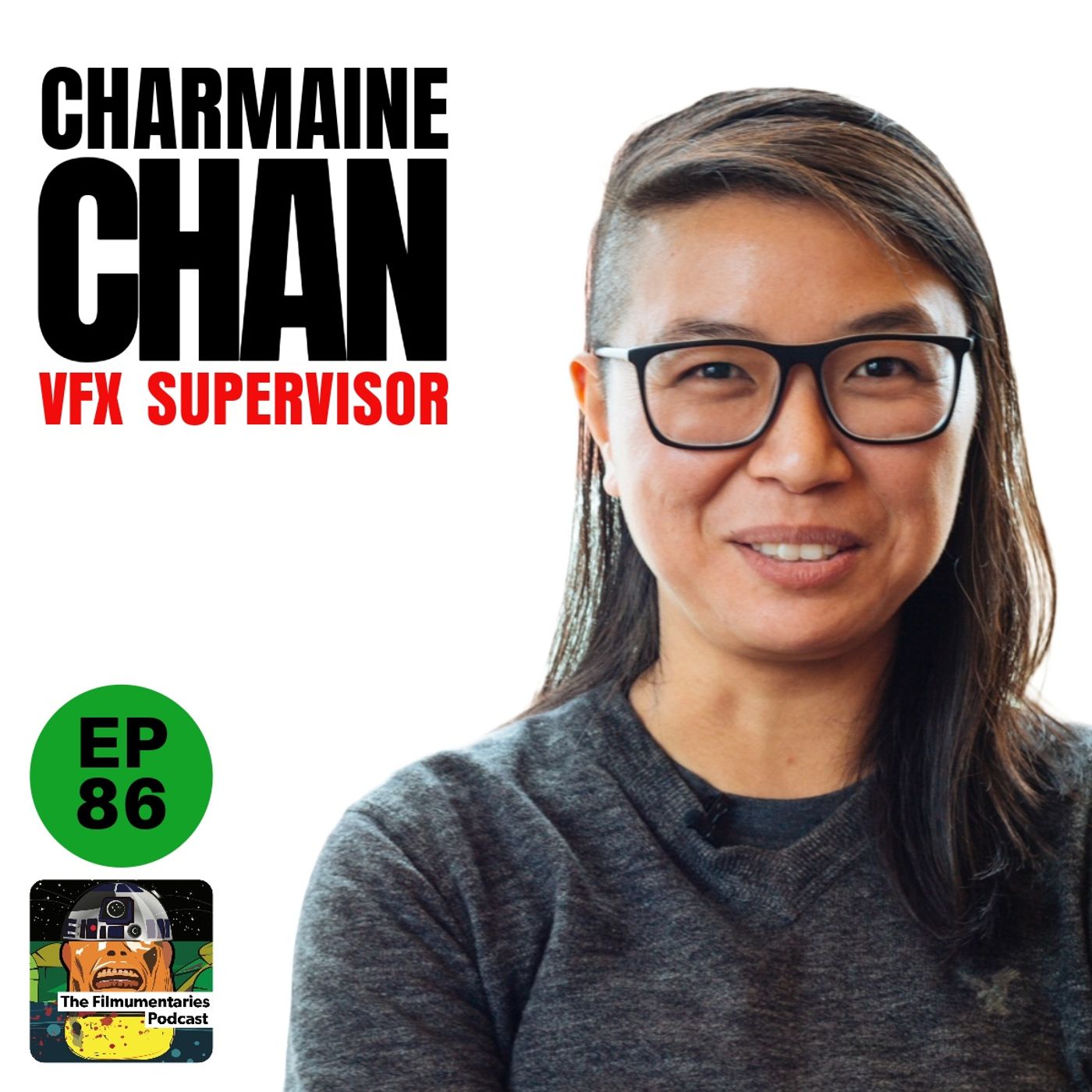
86 - Charmaine Chan - ILM Supervisor on "The Creator"
About this episode
We chatted back in mid June 2023 on a boiling hot day here in London. We talked about Charmaine's entry into the industry via running a website about a particular girl group that you might have heard of.
She then went onto to be a researcher and compositor at ILM, and most recently a VFX supervisor on Gareth Edwards' visually dazzling, “The Creator” - out on 29th September 2023.
I'm very much looking forward to seeing it.
Listen in for the rest of the conversation.
Links
- Videos on Vimeo
- Return of the Jedi Timeline Book
- Etsy Shop - Buy your Jabba print here
- Filmumentaries Merch
- Support the Podcast on Patreon
- Linktree
This podcast is completely independent and made possible by listener support. If you’d like to help me keep making these episodes, you can join my Patreon community here: https://patreon.com/jamiebenning
Watch more on YouTube:
Check out the Filmumentaries YouTube channel for behind-the-scenes clips and extra content: https://youtube.com/filmumentaries
All my links
Transcript
Automatically generated, so expect the odd misheard name.
Weird Way Media. Welcome to episode eighty six of the film Ementaries podcast. This is Jamie Benning talking to you from my home here in London. This is the first time you've listened to the podcast. The remit is really about preserving film history, and you can treat this and the eighty five episodes that came before it as an archive of film history that can be used to listen to for entertainment, for a research material for your book or podcast or even essay.
And you have about one hour a film chat ahead of you, and I hope you enjoy it, and I hope you come back for the next episode. If you're a regular listener, thanks as always for joining me again and for your support. Thanks to the lovely one hundred and ten or some of you that now support the podcast via Patreon. I really do need that support to keep this podcast going. To make it financially viable, I need at least one hundred and fifty patrons on the minimum tiers.
So if there's another fourty of you out there that enjoy the podcast and would buy me a pint or a coffee if we were to meet, please consider supporting the podcast with twelve dollars that will help support me for a whole year. That's twenty four episodes as a minimum there because I do do bonus episodes sometimes. There are several tiers to choose from on Patreon with several different perks including videos and merchandise. Find all the details at patreon dot com, forward slash, Jamie Benning, j A M I E B E double N I n G. You can also support the podcast by buying some merchandise at film Mementaries dot creator, dash Spring dot com.
I'll leave it in the show notes as well how you can buy t shirts, bags, bottles, and even socks. As I said, I'll leave the link for that and the Patreon in the show notes. And if you can't support the podcasts by Patreon or on the store, then please just share, like, subscribe, and review the podcast. This is a very small independent podcast. It's really me and my laptop and Zoom or riverside FM as I've been using recently.
Do check that out as a platform for your podcast if you have one. Yeah, please do spread the word as much as you can. Remember. You can find me on Twitter at Jamie s WB and on my profile there there's a link Tree to all my various sites, including my video channel where you'll find ours a video for you to watch for free on films like Star Wars, The Empires, Trucks, Bat Turn of the Jedi, Jaws, Raiders of the Lost Ark and Back to the Future. And of course you've got the eighty five episodes of this podcast available on all platforms.
So wherever your friends listen to podcasts, do tell them about the Filming Entry's Podcast. Okay, So for this episode number eighty six, I spoke with VFX supervisor Charmaine Chan. We spoke back in mid June twenty twenty three on a boiling hot day here in London. We chatted about Charmaine's entry into the industry via her running a website about particular girl group that you might have heard of. Then she went on to beer a researcher and compositor at ILM and most recently a VFX supervisor on Gareth Edwards, The Creator out on the twenty ninth of September this year.
I'm very much looking forward to it. So here's my conversation with VFX supervisor Charming Chan, and I'll be back at the end for a bit more jabbing on. So you entered the effects as a as a young woman. What was the inspiration behind joining the film industry. Where was your kind of moment of inspiration.
I think I've always been fascinated by the film industry, the TV industry, media in general, and you know, the digital medium. Like I have always been a huge fan of art, specifically art in technology, and you know, I studied art in university and I feel this more on photography and video production. But it was always something that was kind of in the back of my mind, but I had no idea like I could actually have a profession out of it, because to me, it was like my hobby. I felt like, ever since a young age, I always wanted to like collage things together. I always drew, I always like wanted to make things.
And I think what draws me to specifically filmmaking is that it's such a lovely visual storytelling, right. And the great thing about visual effects is it's all of that, right, It's visual storytelling, it's creativity, it's so much cool technology. And I feel like I've stumbled upon V effects. I don't think I knew what it was originally. It was just something that I felt like my progression from learning more about tech learning more about art just kind of drew me into that world.
So to me, I feel like it was quite a surprise, but an amazing surprise. Again, it's completely changed what my life has been amazing. I did listen to one interview that you did, and given that we're both in London right now, I think we have to mention that you found some inspiration from the Spice Girls around a website and going into coding and graphics that way. I mean, I'm sure people can't see it right now, but here's my Spice Girls legals maybe about them basically. Yeah, I absolutely adored the Spice Girls growing up and just found a really fun hobby of running a Spice Girls website.
But it wasn't just Seifice Girls website for me. It was like I got to do web design. I learned about web development, you know, dived into HML, JavaScript and then eventually into more you know, CSS and future tech for that as well. But it was fun because in addition to that, it was like I was doing photo manipulation to make graphics, or I was doing you know, back in the days you had flash animation. That was like one way of doing animation back in the days, and then also with all the performances that they did, I would like spice and edit together videos and do my own like fan collages.
So it was very much a great introduction into the digital realm for me. It was like, look at all these different things that you can make with your computer and like share it with people in the community who also get super excited about everything that you make and share. It was just such a fun, positive and you know, collaborative environment where people just were super excited by any new thing you created. And so I absolutely fell into, you know, the world of digital media because of the spice gills, which is a funny thing to say, but I absolutely love it. But it's great and it's and I like the fact that you know, there's there's no shame involved.
It's kind of you know, it's not even a guilty pleasure. It's just like now. And also, you know, I think there's a lot of people you think that you know, to run a website or to run a podcast or a fans side, that you have to be making money, but actually what you are doing in all of these processes, if you're creating anything, is learning throughout, isn't it. And you've been able to sort of amalgamate all those deals that you learned from doing the website and the videos and the graphics and the animation, and it's got you to where you are now in a in a big way. Yeah, it's you know, I mean it sounds very fan girl for me to say, you know, I thank my career because of the Spice Girls, but you know, I really, I actually really do, because it's it's such a It really introduced me into the World Wide Web and the world you know, communities and fan communities, and you know what can happen in those communities, and a lot of it is so much creativity that people just want to find their niche communities to create, right, and once they do, it's just like, oh, we're flowing with with just amazingness and awesomeness.
And you know, I think, you know, we see that in so many other communities fan communities, whether it be music or films or you know, video games, they're all just very much like what did you do? Oh cool? How do you do that? You know, So it's a very inquisitive but also you know, so portive in front of Yeah, yeah, definitely. And then when you arrived at ILM, straight into ILM, you know, in terms of a visual effects career, you were initially working on as a compositors at right.
Actually, my first ever job at ILAND was a digital resource assistant, which that role doesn't exist anymore today most of the time people know it as like a technical assistant role. And it was a lot of just like data management, file management, a lot of like back in the days, we used to call them film out, so you know, before everything was digital, you would actually have to convert what is digital to then be process onto film to the show in the movie theater. So we had this process film out process and it was quite fun because I was like the first and the last to see every file that came in and out of the facility. And it was such a great education on every single part of the process within visual effects.
Like I learned so much about the pipeline and the different departments and who does what and or someone who like really had no idea what visual effects was, you know, the breath of visual effects because it encompasses so much. It was such an eye opening position to go into and you know, I've learned so much from that I would have wanted any other role, but that you know, there's a lot of younger folks these ay try and get in an industry who are like, oh, I want to be an artist, very way, I already know what type of artistry I want to do. It would be an animator. I would be like, they're very like specific and keen to know about all like to do that one specific thing. But to me, I think not knowing what I wanted to specialize in and then going into this role and seeing everything just really opened my eyes to like the differences and you know, like there's so many things you can get into and that's the fun part is like they're all fun.
How do I ever pick something? So I think there was kind of a journey from my first position as a resource assistant to my position now where else, Like what am I trying to focus on? What do I think I can do that will you know, help with the short storytelling that would help you know the facility and the company and you know, but also keep that culture of collaboration and innovation going on as well. So it was it was quite a journey. I'm still going through that journey, but you know, it's to me, even though I came from a more technical side originally, it still has led me to this amazing creative role that I have now.
And you know, the technical side still doesn't disappine it, right, because again, like I mentioned, the technology constantly changes and progresses, and you know I'm there to see and jump along with it. So well, it's great. Great to have that kind of role where you were able to get some perspective on all the different roles that could exist for you. Yeah. Yeah, like you said, rather than trying to jump in at one place.
And I know people in the TV industry that jenne, you know, they they they will pick a role and then they'll get stuck in that role because they haven't had the sort of experience outside of knowing how their department interacts with another department. And I see people kind of get kind of you know, stuck in the mud almost. But then you became a compositor. Yeah, this this podcast. I've spoken to lots of visual effects artists over the last couple of years since I've been doing it, but I don't think anybody has ever really explained in layman's terms what a compositor does and where they fit in the pipeline.
I mean, a lot of my listers will know, but I'm sure it'd be good for some that don't for you to explain that if you could. Yeah, I mean, compositing is such an interesting thing because you know, the word composition is very key to a lot of art, and as a compositor, you're essentially the last person too, especially bring everything together and create that final shot that you see up on the movie screen. I definitely consider compositing as in Layman's term, maybe like advanced photoshop, where you're essentially layering things to a certain degree together, from your plate photography to the CG you know, renders to you know, maybe some particle animation that you made yourself, like it all fits in together and you as and positive decides what that final composition looks like.
And the only differences you know, with film and TV, it's moving imagery. So you're looking at you know, twenty four phrase for a second, so a shot maybe you know barely one and at half seconds, but that's something along the lines of you know, fifty to one hundred frames that you have to you know, make sure it's consistent across and so yeah, I think the thing with composition is you I think about composition in so many ways, Like I see things in the real world and I think about how it's composed. I see things on TV, and I'm like, how is that composed? Like it's a lot of just like how do we, you know, use the lighting, use the color, use the the actors, the props, the sets that we have. How do we bring that all together to convey a specific message or story about it?
And I think that's that's the fun and exciting thing about them positating. Interesting that both of your jobs, the one you start with and the one that you have as a composite to compositor. I know you're supervirs as well. Now are both jobs where you were kind of seeing the final product kind of at the at the you know, the pointy end of the pointy tip of the arrow as it were. Yeah, No, I think you actually make a good point, because that's that's one thing that I enjoy about, like even now in my current role.
It's just like being a part of the process in the beginning and being part of the process from the beginning all the way to the end, and it's like seeing that through is super exciting because it starts off as like words on a page, and suddenly it's this beautiful try right, and like being able to see how that progress is so is so exciting, it's so fine, And I'm constantly surprised because I work with some of the best artists in the world, and you're just able to always see and create something new. It's just absolutely fantastic. Yeah, I think you know, many of the people have spoken to, whether they're kind of you know, alumni people like Ken Ralston and Dennis Muren, or whether they're new people like Todd VISII or how Hickle I've spoken to, they all talk about this kind of family atmosphere at IM that's been maintained over the years.
And even though you know you might be working remotely at home or in another office in another continent, do you still feel that kind of team effort to kind of push push the shot over the line and get it done to the best of all of your abilities and support each other in doing so. Absolutely. I mean, I think the thing that defines OWN is the people. The people and the culture is what makes the company grain to work for. I mean, you know, you've already mentioned so many of my colleagues from tadd to how to You know, I've been around when Dennis was around as well, when he's still reviewing and being kind of like a you know, senior VFX supervisor providing insight here and they're dropping into dailies and you're like, Tennis came in, show the best stuff.
But no, it's been such a great environment where everyone is so willing to teach but also learn right because we all know that things constantly change and there's a new technology and new ways of doing things, and so it's it's such a fun open collaboration where like o G generations like Dennis mirroring can still ask questions people who are fresh and new, you know, out of university because you know they've done something that he's never received before, you know, vice versa. And it's such a open environment where everyone is just so supportive and just so wanting to make the best and be the best. And that's such a rarity. And you know, even though Island is such a global company a these days, you know, we have offices all around the world.
Now there's still like for me, I still very much still talks to people back in San Francisco, still talk to me in Singapore, Like we have created a community where it's very easy for us to still be able to chat with one another even if it's not related to her, right, So I feel like there's definitely been friendships created that are some of them. You know, some of my best friends are people who work in my industry and are people who have you know, very similar you know, pathways, but also different you know, end up locations as well. So it's it's been nice to see as a company expands that that culture still exists. Difficult to maintain, I would think, as it's grown so organically over the years and you know, much much much bigger than it was before.
Yeah, I mean, like you've interviewed Todd, and I used to sit right next to's Todd, and there was a group of us that used to sit kind of the same quarters for like four or five years. And even though like one of us is in Sitney now I'm in London and people are you know, throw across different states, Like we still you know, make it a point to do an annual call with each other because I just want to see how everyone's doing. We've you know, created these friendships and these you know, we know, we can talk about certain things and they'll know what we're talking about. And but at the same time, you know it, we want to you know, discuss what's going on with our industry right now. Things are changing, you know, and even the film industry, there's a lot going on and having people being able to you know, fall back on to have these conversations is absolutely vital because it's it's healthy to keep these relationships alive.
Yeah, and it is your location in London forgiven my ignorance. Is it purely based on the fact that there are lots of productions in London and you need to be there on that time zone, or could you be doing a job in London that's for a film that's being shot in California for instance. I mean it's really you know, dependent on projects, clientele, you know, relationships that get built up, you know, and overall plans. So like most of the time, because I'm based out of London, d says, I tend to get projects that are UK based, and but that doesn't stop me from also being able to, like if suddenly they need to shoot in Iceland, fly over to Iceland to you know, get some footage, or I may find myself back in LA again because you know, we need to shoot us at a stage because the actor is only available then.
So it's it's totally, you know, up to whatever the production plan or schedule is like. So for me personally, I feel like I'm a very worldly nomad and I go wherever the projects take me. Was there a particular project that brought you there in the first place though, to London? Yeah, I mean it was surprisingly. I did season one of Mandalorian.
I started off in San Francisco. That was before we even started doing the stuff for shooting because we had so much to prepare for. And then I was on set for Mandalorian doing all the real time rendering the our led volume set up for the first time what was known as the Brainbar. Like, all of that was in LA and then after LA I went back to a staff a bit. But then they're like, oh, we're actually doing some of the work in London as well.
And it was kind of a mixture of timing and also my partners from the UK originally, so there was kind of a mixture, so things that like landed correctly at the correct time, and so I was able to basically go from San Francisco to La to London all four season one of Mandalorian because everyone had their hands on it and in one way or another, and it was just really fun to be able to work with such different groups of people in every different site. You know, everyone has different ways of working and different skill levels and experiences. But at the end of the day, we were also able to come together and kind of make this you know, final product that you know, let's actually set the set the pacing for Star Wars episodics, right, absolutely, yeah, yeah, And I would imagine as well that your locations being in those different offices on a show as big as Mandalorian was and is, allows for you know, work to be going on around the clock.
Because of the time difference, you can be doing things well San Francisco sleeps and vice versa, so that you you know, that you get more hours in ultimately in the day. I mean, it was it was definitely a well old machine that you know, it was what originally eight episodes, and it was I think one of the toughest projects because you know, we we had a very high bar of the Quali that we wanted and everyone was just very passionate about making sure, you know, we could get that across even though it's you know, TV episodic, we still want that Star Wars quality, and you know, we definitely I think you know, succeeded in doing that, and it has definitely failed across all our sites that works on it.
I think, you know, quite a lot of the people I've interviewed have worked, you know, both in the optical domain and the digital domain. But actually one of the things that's really interested me as I've spoken to people more of your generation is how the effects has developed from a post production entirely post production you know job, to being a job where you're actually on set, you're interacting with actors, perhaps you know, you're there as the stuff's being shot. Initially, how have you found that kind of that switch to its location in the pipeline. Has it been something that was difficult to budge I m in the direction of initially because of all those years of having done it the other way around, or was it adopted relatively easy?
I mean, I think the one thing that virtual production has done is make it more common, But it's always you know, been there. Where we want VFX supervisors and artists with production is happening right, because if we're out there on set, we're able to advise and consult and you know, help steer making the VFX work when it needs to be done. Impulse a lot more smoother of a transition as oppulsed to you know, being complete shocks where it's like they show everything and they gave it to us and we're like, oh that we have to make it work and everything is you know, lit wrong, or like our blue screens are not even or you know, they didn't take into account that this this vehicle was going to animate through and you know, it's it's just very key to have Pulse incorporated in regular production, even pre production, right because whatever you plan earlier is gonna affect how you handle things at the end and if you don't want it to be a giant mess s been definitely included the effects from the start, but you know, for me personally, it was quite a shock going from like in the world of compositing, you're generally in a very dark room.
It's very rare. I have my window open, which is the sun shining brightly. K it's baking here in London today. Usually I would have my blinds down, lights off off, and it's like I want the most dark room because I need to have the most color accurate monitor so that I can make sure everything is properly represented as as possible. And usually it's like you and a couple of people huddled together in a small area and you're just like, you know, usually I would be headphones on, music blasting and just like in the zone right like you're making your shot, you're kind of like lose track of time.
And so I kind of went from that kind of work environment to suddenly be suddenly being thrown on set where it's like, oh wow, there's like so many different departments, so many different people who are like don't stand there, Oh can you help me of this? Oh what's that going on? Like it was just an abundance of people asking questions but also like you trying to help them, and all in a very tight amount of time, right, And so it went from being able to work on a shot for like three months to like, cool, can you finish a shot in like two minutes because we have to start shooting and then we have to move on to the mixtake. So the pace was absolutely you know, night and day in terms of difference and also the amount of people that I was interacting with, so you know, it was a shock, but it was completely thrilling.
Like it was such an adrenaline rush of just being like, all right, I have less than five minutes to like compole then set up this, you know, led to work with this practical set, can I do it? Go? And you know, it was thirling. It was a rush, and when you do get it, it's always such a it's a satisfying feeling. Yeah.
Yeah, and especially when you know the cinemas harder for your generally working right alongside with them and they're like, yeah, that's a really nicely set up shotting you're like, I did well. And a big change for them as well, for directors and dps because they have to get involved now with the technology initially that they probably didn't have an understanding of, and you were kind of teaching them, you know, you were kind of taking the reins to certain we were all learning at the same time, which was the fun thing, you know, because you know, blue screens have existed, projection screens have existed, we've used them before, but now we have the ability to manipulate live, right, and that's where it's like, oh, that's what people need to learn about.
It's like, it's not just an image that we're putting behind folks. It's an image that you can manipulate to work with whatever tone, feeling style that you want and you see the results right away. And you know, I think especially for actors, they can finally be in an environment that they can understand and see what it is as the policy, just as from a green screen. Don't get me wrong, I think you're amazing answer if you can totally imagine yourself in a location. But personally for me, I'm like, if I'm knowing where I am, it's really hard to actually, you know, I hope I'm not triggering you right now with my green screen beale, No, no, not at all.
I mean I have lived a life of green screen. Yeah, and you know that it's not like LEDs are the answer to everything. The use case scenarios where green screens aren't needed, blue screens are needed, But for the use case scenarios where lads are brillily executed, it just you know, completely like eliminates the fact that you're not a real location, but you know psychologically you're looking at I think it's here like this looks real. Yeah. I was talking to Pablo Hellman just a couple of nights ago, and I spoke to the guys t J.
Fos and Mo and Leo and Scott Prichard for the for the and Or panel. I did it at celebration for ILM, and they were talking about, you know, using the led panels for the windows in Monmothisma's apartment. And Pablo was talking about using the stagecraft for the car scene when the mother's taken off to chase the hurricane and stuff. And it seems where you wouldn't necessarily think because you know, we're I think we're used to having seen the Mandalorian with this huge wrap around screen or the Batman with this huge rap around screen. But it's interesting now how it's being used as I mean, it's always being used as a tool, but it's been now being used as a tool for the thing that works best for that particular small part of the shot.
It doesn't have to be this huge thing. It can just be something that sells the shot. And it's interesting what you said about the actors, because Pablo was saying as soon as the actors were in that car, they were in a moving car, you know, because the car was moving, the backgrounds moving, and and suddenly you've got reactions that you wouldn't get in a in a situation where you'd normally be in a blue screen or a green screen. Yeah. I mean a lot of the use case are as of blue screen green screens are exactly what a ladies are best for, which is outside windows or environment extensions.
Right. And you know, we've definitely done a lot of car footage, you know, spaceship footage, and like you're saying, actors absolutely just you know, get mentally into the location. And it's it's fun seeing that because even even when we do crazy things with like spaceships flying around, sometimes they'll be like, well, getting a little sea sick here. Yeah, And I've definitely felt that too, where I'm just like, yep, kat needs to step off, especially when it's moving around. And yeah, yeah, I mean it very much feels like you know, your immersive experiences that being parts that we have today, it's it really takes you out of this world, pun intended, and it's it's just so exciting to see what we can do with it.
You know, I feel like we're just hitting the basics of it right now, and you know we're going to safer out of like cool. We can do it for these things, what else can we do it? Yeah, And you know we're experimenting each and every project that we use stagecraft in. Well when you're initially doing this stuff, Mandalorian coming across issues where this is me just thinking off the top of my head, really where you would have built the environment, you've got it up on the LED screens and then it's interacting with the with the set in a way that you haven't expected in terms of color, temperature or lighting. So did you ever have to kind of adjust the color correction of the actual physical set in post or just the LED screens to account.
I mean it was a mixture of both. I think that was the one thing that surprised us the most when we you know, turned on the screens for the first time with an actual practical set there. And I think a great example was, you know, we had this kind of desert scene with you know, Moltless rocks and sand and they've had the sand for the longest time ever and we've seen the sand or like cool, the sand is kind of this yellowish tone we put the sand in. What we didn't realize is that because our rocks were kind of this pinkish magenta color to it, that was being emitted from the LEDs onto the sand, and suddenly our sand was more of a purple color, and we're like, what this was? We weren't expecting that.
So we actually had to reduce some of the saturation of the box so that it wasn't as saturated, wasn't as saturated on our actual practical sand. And so you're always thrown up with things like that. We're once you actually put up, like, let's say a sunset, the sunset, of course, it's clear you're going to affect the lighting on your set. Therefore, do you have reflective material? Like what is the material of your set?
And will that change your overall tone and look of the scene, because like and things like Batman, right, we're talking about grungy and dark, and if you throw up a beautiful orange sunset, suddenly you're like, oh, this is not usually the color palette of Batman. We're gonna have to tone it down in one warrior or the other. And so it's carts in surprise every time you go on set, because you have an idea and an image of what it will be, but you never really know how much that led lighting affects the set unto you get there. I think there's a perception that you know, initially that Stagecraft and the volume was like the answer to all of the problems in visual effects, when really you know, and there's that old it was it awesome, well as it was that said something about you know, what's the what's the line?
It's the enemy of art as the absence of limitation or something like that, But of course there is limitation with this technology is just another tool, and you can't always use it. Sometimes you might have to go to a location like a No. One and or there was lots of location shooting, for instance, because that's what the esthetic of that show needed to be. It's not like everything's going to be produced in front of one of these giant screens now, No, not at all. I mean, at the end of the day, it's like what is the most cost efficient and effective thing to do right and in some cases to be able to visually tell like let's say we want this to be Curissan, what looks like Curisson?
Making a brand new Curisson digitally or is it Oh, hey, we've used Canary Wharf before, can we just use it again and you know, extend and make it look like there's just so many foundations that we that already exists in the places that you know, we live and around the world. And I think that's what that's what actually grounds visual effects the most, is when we can tie it to something we can relate to. Ye if we can relate to things that we see every single day. They were like, uh, that is what lady, the possible future will look like on another planet because we are still human or we're still taking our human ideas to two different parts of the world. But you know, if we have this like brialist architecture that we're so used to of the barbicane, then why not take that and make aluxtetristic.
Yeah. I think it was Mohan who said to me and the hand or panel that even if they replaced ninety five percent of a shot, sometimes just having that initial proper grounded reality of a genuine location was was really useful to them to kind of you know, pin their perception on almost you know, and to sort of compose the shot better. Yeah. I mean I've you know, I've known and works with mill And for a while now, and I think the great thing about ILM is you can kind of hear similar things between all of us after a while, because we've all kind of learned from one another. And there's this like generational aspect of visual effect, which I think is very unique to ILM, since you know, Alan has been around since the seventies, and so there's just this really fun thing of like, you know, let's say Dennis Marrion first did something, then on the next round he then teaches someone else, and then let's say another round, another person and somewhere down Aline John All is there.
Donald's learning from dinosper And and then John Nola has been teaching all these other people like Tadd Vissouri, and then I've been learning from Tad Assoi as well. And it's just like generational, generational, generational information just being cast down, but also which you know, very much open minds of like what else can we do that ties are you know, previous past innovations with the future, because you know, things like stage craft and virtual production aren't that new. We've done, you know, rear projection screens for forever, like comedy card footage from the foot fifties have you seen. Yeah, it's the exact same concept. It's just we've now taken that and use new technology that allows us to do even more.
So it's a lot of rehashing the same thing. It's just in a new in a new perspective, essentially, talking of taking something old and making something new of it. You worked on the Star Wars sequels and you did some shot the Millennium fal Can I understand or Falcon depending on how I'm going to say, what did you do in terms of your your research for that and what did you do then to kind of bring something new to it? Oh, I'm gonna I feel like I'm gonna sound like the worst Star Wars nerd every you're talking to me, this is five. I mean, the thing is like my level of like understanding all the every little bits in details and like blueprints and plans of Star warships is very sturdiest level.
And you know, I was able to work on some Falcon shots on Last Jedi, specifically when it was like the Battle of Crate and flying through the create location. But you know, to me, it was very much as with any time I'm bringing a classic Star warship into a more present day Star Wars universe. Is how do I bring and look at the past because that is the foundation, that is what everyone is used to looking at, and it's constantly being referenced. Like to me, being able to see the actual models, you know, and how light interacts with those models is so important, right, Like it has a matt finish, which is very you know, not something common for spaceships. Right when you think of things that NASA creates, it's very reflective, it's very specular, and all these Star warships are never that and in fact, they're always like grungy mat with like so many different pieces and panels and the detail is just insane.
But you know, we we've kept that throughout every whether it be the Falcon or a Star Destroyer or bringing back you know, a calling Cantwell piece like that, right, Like we've never been able to see that before on film, but that design existed from you know, the original trilogy and being able to like bring it to life again now with all this in the technology, we're still referencing, like how did the original model look like? How did started a shorter models that fight because that's our basis for a sick cruiser, and just like you know, every little detail from every material and piece that they use is very much things that we try to replicate in you know, our three d adigital world these days.
And it's it's so much fun because it's preserving the past but at the same time giving it a whole new look. Yeah, it's so great that, you know, I LEM has managed to have that continuity of you know, staff over the years, even people that are left to go and do other things, they're still part of ILM and they still go to the reunions and things. I know, there was the return of the Jedi reunion recently that rose sorted out, and it's great to see so many faces kind of come back. But also to have that continuity of having that resource of that archive that George began to create, you know, back in seventy six. So canny to be able to you know, think to have all those photographs taken and all that behind the scenes material shot back in the day, which is still being used now.
I mean you look, you know, you have to look at Rogue one and they're using out takes of you know, expen pilots, and you know it's not it's not just the photography or the film or footage hasn't been used before. It's like everything from the trilogy to the original prequels to you know, the new trilogy that we have now, all of the props, all of the costumes, things like that someone has its storage somewhere in the archives, right and like whether it be back in California or like somewhere out here in Pinewood, Like there are still physical materials of things that we can always refer back to, and it's so rare to have, you know, that continuous history, the growing still. Oh but it's so fun to be part of it because you know, it was funny.
I was actually at a Lightyear pan all recently that sorry, this is Pixar's light Ear. We're because you know, we're all under the Disney had umbrella these days. We also gets to share a lot of our technology, which is amazing because what they've took about at Disney Animation at Pixar, it's you know a lot of similar foundations and bases as visual effects, and so I guess they were looking to make spaceships and they're like, oh no, we haven't really done spaceships to this level, but we actually have friends across the bay. We really know how to make spaceships. I wonder if we could use some of that, and they contacted us and we were able to share, you know, parts of our ship library with them, and they used parts of that in light Ear, which was really you know, slightly a hardware waks to use because I think every you know, nerdy kid has built some kind of Star Wars model kit one way or the other.
And being able to see it in digital format make something else out of it is super exciting. Yeah. One of those people that I know would have played with all those toys as a kid. He's Gareth Edwards, who you worked with recently on The Creator. I know we can't talk in depth or in detail about that project, but Garrette is somebody who's career I've watched very closely because I remember when Monsters first came out.
And also he's a friend of a friend of mine as well, so you know, I get little insights from my friend. Amazing to be working on a project that kind of just surprised everybody when that trailer dropped, you know, nobody was expecting something so epic looking did you have found working with Gareth? It was so nice to be able to, you know, still have that relationship with Garrison's World One and continue that relationship into The Creator. And you know, there are a lot of things I feel like he took from creating World One that went into The Creator. And you know, his love of visual facts, I mean heals original visual facts artists, right, so like he knows this industry.
He knows what isn't need to make a shot. But he's just such a visionary and such a like it's so incredible what his mind has created with the Creator, and you know, it's it's just really exciting to see him branch out on his own and they're like one hundred percent that man has been influenced by Star Wars without a doubt, because there were definitely times where it's all like, ah, yes, we're not doing Star Wars, but you know it's difficult, but they look kind of like something else then that would be awesome, you know, and you know, you're he was working with a lot of people who have on Star Wars, so it's no surprise that you know, things may look very similar between the films by at the same time, it's so unique.
It's it's a story that I haven't you know, heard of or seen in any way, but it's it's still got hard to it, which is really nice. Yeah, I'm really looking forward to Actually, you you worked on and Or season one? Are you working on season two as well? I am not working on season two, but the and Or world is still very much within my presence, and you know, they're they're are filming right now, which is great, and it'll be a lot of new exciting things for season two for sure. Yeah.
I had a little slippets here and there, but you know, I can't really. Yeah. Of course, as much as you watch your colleagues, you know, doing projects that you might have worked on previously light hand, or or you might be looking at a film that some colleagues have been working on, do you also kind of keep an eye on other effects houses to see how things are developing? There is that something? I mean, I'm sure it's something that's done.
You know, the head of technology at ILM, for instance, might be you know looking of course, is looking across that stuff. But you know, you as an individual when you go to the cinema, are you kind of going huh, how did they do that? Or that's cool? I'm not you know, I'd like to know how that works. All yeah, I mean every like.
I think the crazy cool thing about the London visual effects community is that there's so many visual effects houses. There's so many people in the industry, and they're all kind of in the same ish area. Like I feel like Solo is like the hub for it all, and we never had that in San Francisco. Like in the Bay Area you had ILM, you had Pixar across the Bay you have smaller companies like back in the Day's Orphanage, and there's also evio I and Whiskey Tree. But I think the fun thing about the Lotta culture is well, something that I had to learn was very much everyone likes voice at a pub at the end of the day, right, And I feel like every office kind of has their own set pub that everyone goes to.
But at the same time, it'd be like you go to let's say Frame Stores kind of the closest one next to ILM, we might end up meeting at the Free Store Club and then people a Freesto are there. I went, people are there and everyone's just like, oh, cool. You know, I've been doing this, can't really say anything, but you know, can talk about how, oh my god, I've been doing crazy. You know, like you just have once again a community of people that you can at least you know, vents out and rents and like discuss things and you know, to me, I feel like every visual effects company of these days are doing absolutely top notch quality, right, Like, especially because of COVID and lockdown and suddenly there was this burst off like streaming content and everyone just had to do work all the time.
But also the bar was so high on the quality because I was like, I want game with their owns, you know, quality the effects these days, just like every company has pushed their quality so high that I feel like I'm constantly amazed with what I see these days. And everyone's using such innovative ways of doing visual effects, right, Like, you know, there's some really impressive things that people have done from little things like oh my god, we have machine learning working for automatically roll doing people like that's exciting to me. Yeah, so you're like, oh man, we can actually do fast and efficient daging or to do stunt to main actor, you know, face replacement, Like everyone is doing really impressive news things and really pushing the bar on how we can take our technology.
And it's really inspiring to see what other companies are doing. I mean, you know, without a doubt, Wetta with Avatar has really pushed the grounds once again. And you know, you see what like working ten years out of projects, with the time, the resource and the you know, R and D to build all this tech can do, and so you know, there's always that like you feel like you've hit the top of the curve. I feel like we're still climbing that curve. Yeah, I think there has been you know, the general press seems to have this sort of generally negative connotation to it.
But like you said, if you can use AI to rotoscope somebody out of a shot and it removes that heavily manual process that you know an artist would have to do for hours and hours, days and days, I mean surely that freeze up time, that frees up budget. That means that we're going to get an improvement. And you know in effects, and I always think as well with effects that you know, we've striven for so many years for kind of photo realism. But at the same time there's the non npr as as people call it. Now, do you think there's going to be more of those kind of movies coming out?
I recently just saw the second Spider Use film, which is just I mean, it's just incredible. I mean, I'm sure I only consumed about twenty percent of what we're thrown at me on that screen. But do you think they're going to be more of those kinds of movies where they strive to be more stylistic than rather striving for photo realism. I mean, I think people have the appetite for that. Right at the end of the day, we we just to have stories that we can relate to, and if those stories have a semi different visual style, I think that's cool.
It's it's totally you know, a different way of again telling a story. And to me, I actually feel like we're in an interesting, like not quite a golden error, but it's a very impressive error. For animation, and I'm very much in the camp of animation is just as much a regular film as a live action film. There's absolutely no difference between them. Acting is amazing, writing is amazing, you know, like it all requires the same things to make an excellent film and to me, there's it's just been so impressive the animating animation films that have been coming out.
I mean, I like was Super Wild by Garrimel del Torol's latest Pinocchio. Yeah, it was just you know, again, this is some old school methods of some ocean animation, but also you know, new methods of animation all brought in together and at the same time telling a very sad, brutal and you know, eye awakening story of Pinocchio. That's not just you know, shiny, happy rainbows. Oh. So you know, we want those types of stories, we want to see those different perspectives and it's not Animation is not just a kid thing, right, Yeah, absolutely, very much for everyone.
And I think people are really starting to get that now. And you know we have more people in our industry who are fighting for animations to be a nominator for Best Film and yeah, right myself, Yeah, animation is not a genre you know now it's my mother in law thinks it is. That. As a last question, I just wanted to talk a little bit about your women in v effects projects that you you started a few years ago now, because I have to say in doing this podcast where I'm talking to people about eighties, nineties, two thousands ish movies. There are a lot of white, old guys that I'm talking to, and most of the women that I've spoken to have been in roles like production manager or location manager or administrative roles.
But of course the industry has changed a lot, and it's important to you. I'm sure looking at your some of the videos of your women in v effex project today, it's great to see that representation. You know, I have three young daughters and I want to show them and I'm sure like you do as well. You want to show people that it's not just a job for guys. I mean, you know, there's it's it's always a you know, stereotype of oh it's a it's like a textu arb that.
I mean, it was it's war map in sciences. So clearly it's for guys. But you know, it's it doesn't matter, right Like it's creative in technical ways, it's creative in esthetic ways. It's at the end of the day, like I said, it's about visual story telling. And I feel like, if you're a person who wants to be able to, you know, speak what you want to speak via visual imagery, it's it's such a great industry to be in.
There's there's just so many, you know, really creative folks who are so open minded and also just embracing of learning and growing that Like, I couldn't have asked for a good environment. Like, you know, it's a tough industry to get into, but at the same time, you know, the women who are in an industry, whether it be women, you know, people of color, LGBC folks, Like, it's such a great mixture, and having that mixture is what makes the storytelling better, right, because if you have a group of people who are all the same, a homageous environment, who all think the same, you're going to have very boring stories to tell, right. Like what makes you know the films that we see so exciting is that we're we're seeing a story, we're you know, experiencing something that we've never experienced before.
And I feel some of the best visual effects work comes because all these different people from different backgrounds have put their perspective into it and it's something new and refreshing that the audience hasn't seen. So to me, it's it's all about making a more inclusive environment and bringing in the best people from all around the world, of different backgrounds, because that's how we get those unique stories, unique moments. So absolutely, I think, you know, we should have more women industry. I think it's been getting better, you know, I've I've been an industry for fifteen plus years now, and when I first started, there were a few and now I would say there's definitely more. But you know, the main thing is are we helping them to learn and grow and get the best out of them, to you know, be in the positions such as like visual effects provisor or a creative director or art director or a production designer, you know, because those are the people who are making those creative decisions and it you know, once you get all those people together, it's spoused me an excellent project.
Well hope you enjoy my conversation there with Charmaine. Clearly another very talented and dedicated artist that's you know, fully immersed in the creative world. And what an absolute pleasure it was to chat with her, So easy to have that conversation. She's great and I hope we can do that again sometime in the future. Maybe in one of those pubs near Ilm in London.
We could catch up a reminder that Shaman's work can be seen in The Creator, which is on the big screen from the twenty ninth of September, and I'm sure if you're a fan of jenre movies you're looking forward to as well. Next up is my conversation with the BFI's Douglas Weir about his role as technical lead there, as well as Tom Spiner, Creature Creator and so much more in the coming months, including I hope a regular guest will be on to talk about some upcoming physical media releases as well. Currently booking in some other people for chats as well. I usually stay a couple of months ahead, but I've got some interesting names maybe that you've heard of in the pipeline. Finally, a quick reminder that you can buy my book, co authored with Justin Berger, on Amazon in your region.
It catalogs the entire history of Return of the Jedi from its inception right up till this year. You can find it by looking on Amazon and searching for Return of the Jedi Unauthorized timeline. In fact, it just comes up if you search for a Jedi timeline. We are hoping to do a price drop around Christmas time. Ready to buy for yourself, as a gift or for your loved one, so keep an eye out for that.
Thanks for joining me, and I hope you can do so. For the next episode of the Film Mementaries podcast,



Similar episodes across the network
Matched by shared keywords.
-
Special Report: Beware Boiúna (2026)
1 shared keyword: vfx
-
Special Report: Dread Zeppelin - A Song of Hope (2024)
1 shared keyword: spice
-
When Women Invented Television | NY Times Bestselling author Jennifer Keishin Armstrong
1 shared keyword: women