
Season 1 · Episode 153
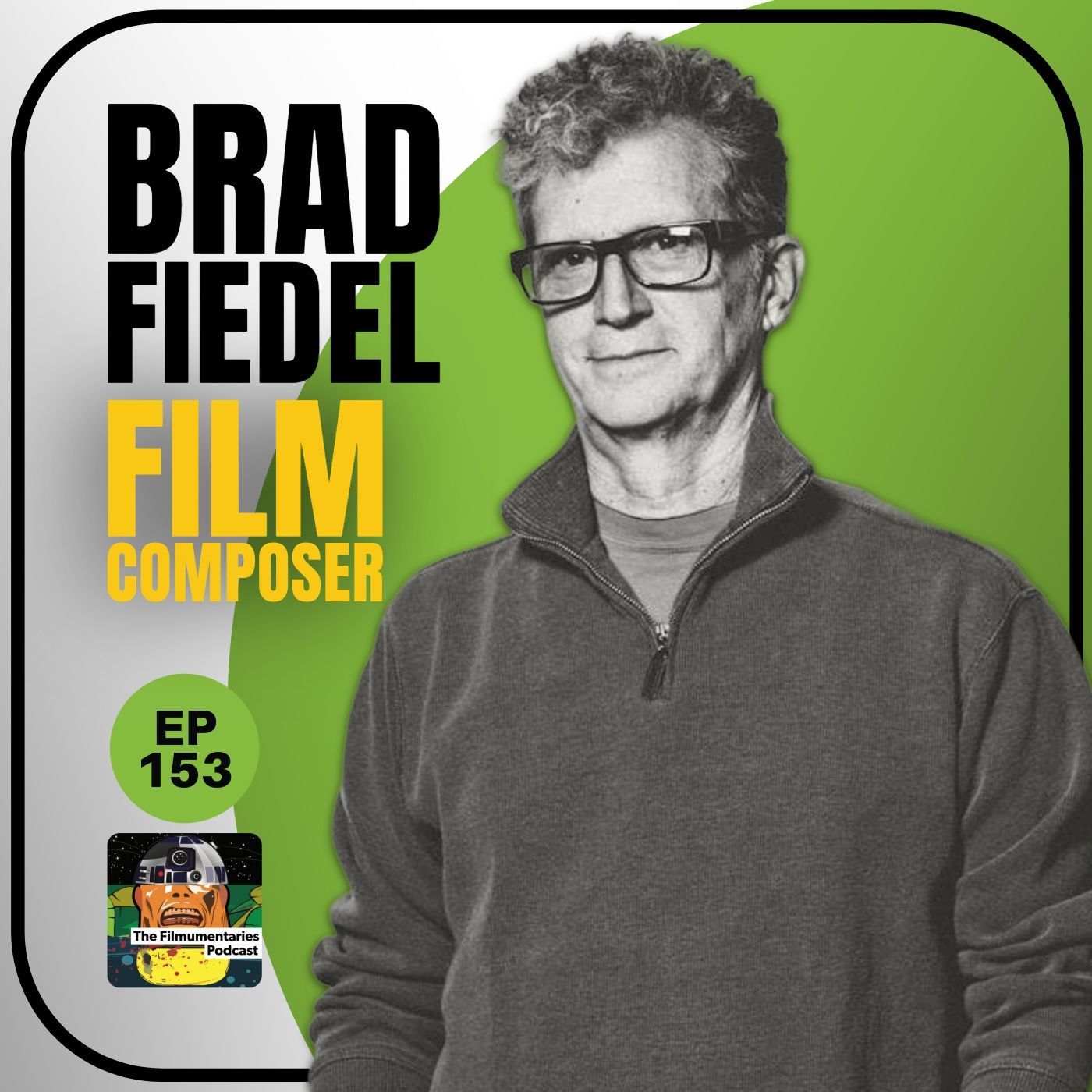
Ep 153 | Brad Fiedel - Film Composer - Terminator, T2 and more
About this episode
There is a lot more to Brad than Terminator, and that's really what this conversation is about. He grew up inside his parents' school of the arts on Long Island, his dad a jazz musician, his mum a modern dancer who studied with Martha Graham. He spent years improvising live for dance classes, which turned out to be exactly the muscle a film composer needs, though nobody told him that at the time. He nearly signed to Columbia. He played keys for Hall and Oates in 1974 and jammed with the band that became the E Street Band. He was working with Arthur Miller and Vanessa Redgrave before James Cameron ever called.We get into temp tracks and why he never did his best work against one, when a scene is better off with no music at all, the direction Cameron gave him on the canal chase in T2, and the moment after the True Lies sessions when a small voice told him he was finished. These days his regular gig is writing musicals with first graders in Santa Barbara, and he's very clear that he gets as much out of it as they do.
This podcast is completely independent and made possible by listener support. If you’d like to help me keep making these episodes, you can join my Patreon community here: https://patreon.com/jamiebenning
Watch more on YouTube:
Check out the Filmumentaries YouTube channel for behind-the-scenes clips and extra content: https://youtube.com/filmumentaries
All my links
Transcript
Automatically generated, so expect the odd misheard name.
Weird Being Way Media. Hello and welcome to the Film You Mentori's podcast. I'm Jamie Benning, your host, coming to you from my little office here in my home in London, and this is episode number one hundred and fifty three. This was recorded a couple of months ago. Before we get going, just a quick word about Patreon.
If you enjoy these conversations and you want to help me keep making them, it's patreon dot com forward slash Jamie Benning. You get ad free episodes, you sometimes get extras, and if you sign up for a year, you get a discount on top of all of that. Thank you for joining me again, if you're a regular listener, and if you're a patron on Patreon, thank you so much. It really does mean a lot to me. Trust me.
Everything else lives in one place now. If you head to the linktree link in the show notes, you'll find the lot, the podcast, feed, the films. I've made, the book, the merch all of it right. So my guest this week is Brad Feedel. I actually met him out in California when I interviewed his wife and Dousonberry, who was one of the kids in Jaws Too.
For our Joe Alms documentary and Brad, of course, if you don't already know, is the composer who composed the Terminator and T two soundtracks, as well as True Lies and a bunch of other stuff that we're going to talk about in the conversation. So I said to him at the time, listen, I'd love to interview you for the podcast, Brad, and he spent a few weeks over here in London this summer, so we had a call on riverside and we recorded this conversation. There's there's a theme that everybody knows, like I said, Terminator. You know that there's that clanging, kind of unstoppable thing that opens the Terminator. But what you might not know is that it came out of a drum machine, a sequencer and a keyboard chained together with a fat computer ribbon cable because MIDI musical instrument digital interface barely existed.
Then you might also not know that nobody can really agree on the time signature on that track because Brad was doing it all by hand. And you know that Wobble sounded better than the fix, so it has that really distinctive kind of mechanical yet organic sound and I've always loved that soundtrack. I thought it's just really kind of kinetic and for both's foreboding in there, and there's something mechanical about it. There's something futuristic about it, and there's that relentlessness as well. But there's more to brand than Terminator, and that's really what this conversation is about.
He grew up surrounded by the arts on Long Island. He spent years improvising live for modern dance classes, which turned out to be the perfect training for scoring pictures, though he. Had no idea at the time. He nearly got a record deal off Clive Davis. He played keys for Hauller Notes.
He worked with Arthur Miller and Vanessa Redgrave before Jim Cameron ever called. And these days his regular gig is writing musicals. We talk about all of it, tempt tracks, Silence, the Canal Chase in T two, and the moment after True Lies when a small voice in his head said you're done, dude. He's a really great guy to talk to. So here's my conversation with Brad Fiedel, and I'll be back at the end for a bit more jabbering on.
I always like to start these interviews by asking people if they were sort of surrounded in a surrounded by a kind of creative environment when they grew up. Most of the people that I speak to, whether they're a composer or v effects artists or sound designer, there's some sort of trigger somewhere back in their childhood. Did you have that kind of creative environment and do you remember a particular trigger that made you want to be a musician. Well, this is kind of not subtle in my story, which is my father was a musician. My mom was a creative modern dancer, studied with Martha Graham, and I grew up in the middle of their school of the Arts, So there you go.
And where was that? That was on the north shore of Long Island outside of New York City, and they were private teachers. My mom was still performing. She was about to be joined into the Martha Graham Dance Company, which was a huge, huge, in the world of modern dance as opposed to ballet. Was a huge coup.
And then I came along, so she continued. They both continued. My dad was a jazz performer and he'd done some composing, but they basically by the time I came around they were teachers, and they were teaching privately and going to people's houses or occasionally my dad had a little piano room in our little house in Queens, New York, and my mom was actually teaching dance in the finished basement, teeny teeny little place. And so I literally was born into that and it had its definite pluses. And they.
We're doing so well. I mean, people appreciated their very improvisational, creative approach to teaching that they decided they needed to expand and they were tired of going to people's houses. And they found an old defunct estate which for us as it was a mansion, I mean, the state is different, can mean something different in London. Yeah, but an old house in a little fishing village on the north shore of Long Island, kind of looking across the Long Island Sound, which is this internal body of water and at Connecticut. Just so it gives you an idea beautiful hilly tree oak tree area of Long Island, and they found this house that needed a lot of attention.
It was actually a reproduction of a cottage, which is hard to believe because it was big, an English cottage, and it was the Hudson motor company even remember that name, but it was early car company. So this was built in the early twenties. But they literally had parts of it, ceilings and fireplace fixtures imported from here because they wanted this kind of field stone, irregular stone covered with ivy, and it was just this beautiful place, but nobody wanted to wanted it in this residential area, so they got got some money. The place was three acres and a beautiful big house and at the time, in nineteen fifty four, costs like twenty five thousand dollars. So that's where I grew up.
It was kind of a bit of a haunted house for a little kid, but there was always my mom teaching a dance class downstairs, and my dad's piano going. And that's that's a long answer to a question, and that is yes. I mean, unfortunately, in a certain way, I couldn't even avoid it. They were not into sports. I didn't have a I would have liked a little bit more of a normal childhood.
All these bohemians from New York came to teach art and drama and it was a wonderful exposure. But I was a bit of a weirdo on top of this hill in this little town, and as all humans, I just wanted to belong, you know, I just wanted to be So it was kind of kind of weird in certain ways, but I have to credit it for all the creativity that has come out of me in my life. You know. Yeah, it sounds like you didn't have a chance there, Brad. I mean.
I actually what's really interesting is I was I was interested in architecture as a young person as well. I was a musician. But it was the sixties and the Beatles arrived, and since I wasn't an athlete, it's seemed like the way to get girls would be be in a band, right, get girls. It's probably un PC right. Now, that's what we said, Oh you said back then?
Yeah, yeah, yeah. Yeah. Anyway, so I formed a little band with some other guys and you know, a few electric guitars and no keyboards that you could move around easily. So I learned guitar and I completely rebelled and would not study piano with my father anymore. I had the classics with him and some jazz stuff, but he was my dad.
It's like, you know, you don't want to teach your kids, how to drive. It's a kind of like a ticking time bomb. So I just went and he was suffering because everything you play is the same three chords. You know. It bummed him out in a way.
But then he really appreciated the Beatles after a while, you know, and so that was all cool. But it wasn't like I didn't have this built in except in my ear and in my head, and know it had an impact. Though I did not study classically all the things that you would think a film composer would study, right, I ended up getting on the job training and from my first films. First time I had an orchestral period piece thing, I just went to my piano teacher in New York City and said, ah, what do I do? They love my theme demo, but I don't know how to do this, and he you know, I got one of the best orchestrators who basically gave me on the job training on how to orchestrate.
And so it was wonderful, wonderful opportunity, which is very rare so tough to get in now. But I was just kind of not only getting these little gigs, but I was literally learning on the job and getting paid for it. So, and how is that how that first happened that you just put in a demo of a theme. You paid for it. You know, I hadn't let go of my wanting to be a rock and roll star, and so was I was a singer songwriter and playing clubs and doing all this but at the same time.
And it's funny because I was at a gathering with some real creative people from California that happened to be here, and I was sitting with this woman who's real great choreographer. She's like in her fifties and she's done a lot, and we're talking about all that, and then you know, I'm recalling how while I wanted to be a rock and roll star, I made my pocket money accompanying dance classes, which means basically, in modern dance, because there's a lot of improvisational and technique, you sit at a piano. I would surround myself with a piano and electric guitar, drums, whatever, and you just kind of react to what you're seeing. So there might be an exercise where all the dancers are lined up in a corner and they're supposed to come a quote across the floor on a diagonal, being a wounded giraffe or something who knows what you know.
It's almost like silent movie composing because you're kind of adapting to what's on screen in those situations. I suppose there's more it's more scripted in that way, but you were more improvisational by the sense of it. The muscle that I feel it developed so unbeknownst to me, I was training to be a film composer. You know. It didn't really I didn't.
I didn't think of it that way. I love movies. I loved movies, you know, so you could say, wow, I saw Ben her and sound of music back then and West Side Story. Wow. The influence of that even found its way into my score for True Lies.
The dance music Bernstein's dance music from West Side Stories. I definitely tap into some of that to keep the action sequences fun in two Lives, but hitting hour after hour in a room watching things happen in front of me in the room with performers and having to literally not miss a beat, I had to just oh, don't question it, just go. So the muscle that that created came in really handy when after about Oh God, I started in the band thing when I was like sixteen, But I mean in my early twenties, I got signed to Paul Simon's publishing company as a songwriter, and I was really excited about that. Didn't really get to work with him, got some feedback, but just trying to find a way to make a living in New York and really didn't have any other skills but music.
So I ended up because of my experience as in the company. It's getting a gig through Paul Simon's office. One of the head gals in the office knew this woman who was a dance professor at the City College, and she said, they're actually having a job for a full time resident musician to support the dance department. And it was like, she said, it sounds I was made for you. I said, yeah, it kind of does.
So I spent a year on full city employee salary and benefits just going in and improvising dance classes. And while that was going on, I was auditioning for Clyde Davis at Columbia at the time, and I was, you know, I was making increments in my singer songwriter let's get off the rock star thing. But you know, something in the same era, there was James Taylor and then Elton John came in. I was playing piano and guitar, so all in that mix to picture where I was heading. And I almost got a contract from Clyde Davis.
But back in those days, it was a huge investment for them because they wouldn't take a new artist on unless they were going to do like an artist development deal, which meant a three album commitment, a big upfront payment to support you during the process. And I didn't make it, and I was running out of money, and because I, yeah, I had quit the I had done my year at the City College and realized, no, this isn't my life, you know. So I took the leap, which you can do when you're young and don't have a lot of responsible and said no, no, no, I'm gonna do this. And I ended up getting a six month gig playing keyboards for Darren Hall and John Oates on the road. And that was six months gig.
So well, you just why was there somebody missing for six months and you needed to fill in? Oh, that's a whole story. I don't know how much time end on it, because I really was a short lived but impressionable experience. They back in those days, believe it or not, when a band was when artists were putting their road show together, they would literally post on a bulletin board at studio Instrment Reynolds is where everybody rehearsed, right. And I wasn't into that whole scene at all, really, And a friend of mine was, and he was very generous because he would see these auditions and he is a better keyboard player than I was, and he ended up playing with some big artist I don't remember now, but he would say, hey, Brad, they need a keyboard player.
Bruce Springsteen is looking for a keyboard player. Now, these people were not huge back then, both he and Hall and Oates. This is like nineteen seventy four, right, Yeah, So he was putting together what became the East Street Band. He had Clarence and some other people, but they were missing a keyboard player. I don't know exactly why.
So I went and jam with them for fifteen minutes, which was loads of fun and went well, but I didn't get that gig. And then he called me again and said, Daryl Hall and John Oates, they're from Philadelphia. They want someone who can play and one of my synthesizers I was experimenting with was called an Arc twenty six hundred and back then it was pretty expensive and they didn't want to not use it, so they wanted whoever came on to do this tour with them to be able to program and play it. And I happened to know and I got the gig and they were just at the cusp. They had She's Gone, which was a big hit for another band that covered it, not for them, but they had a following, and then they did an album with Todd Rugren because they didn't Darrel especially didn't want to get stuck in the blue Eyed Soul thing.
So it's like almost like he was like imagining him self. Is David Bowie or I mean it was like a It was a It was a concept album called War Babies, and we were called war Babies then because of the generation we were born after World War Time. So the fans did not like it. They wanted the blue Eyed Soul, so they Atlantic Records was kind of pissed at them and not happy. And the average white band was coming up from Scotland, right, average white anyway, they were coming up and Atlantic Records was saying, why can't you be more like the average white band, you know, except you have such good vocals, and Daryl and John were resisting.
But then we did this tour because they wanted to get away from Atlantic Records. So the tour I was brought on was to help win back the fan base, ending at the bottom line, industry show at the bottom line, every body was there to get them a new recording contract. And once that happened, that was the end of that tour and they were back to recording new stuff for RCA And that's when they took off with Sarah Smile and all that stuff. And so all the time you were doing this was the idea of, you know, wanting to develop more into composing TV and film. Was it?
That was at the main kind of wish and hope that you had. No because that I still was biding my time to get my own recording contract, right. Yeah, So I got back. I was in the middle of that tour, but we'd come back to New York. It wasn't like we were far away.
And a guy who I knew, who was one of the students at my parents' school, went to art school film school, and he made his first little independent film and I bumped into him and he said, you know, I making this film and why don't you do the music just like that? And I said, well, I'm on tour and I can't. And literally, I mean, this is hysterical. And the film is called apple Pie. It's way out there, but it's available in places.
So I went to Daryl and John and I said, look, I have this opportunity. And one of the sequences is this big dance in the streets of New York that he pulled off on his nothing budget, which fame that later imitated that scene with different people when different walks of life come in and start dancing, and he had shot it to James Brown. Of course, he couldn't get the rights, so he said, you need to do something to the click to the tempo of this, James Brown, this is all analog. I mean, you couldn't. Things were yeah, rustic, And I said to Daryl John because I mean, you know it's r and b okay, you know, I said, hey, you guys on the play out in the session.
So I was a union guy even though I was young, and you know, my whole family, you know, I had other family members who'd been in the Musicians Union. Mm hmm. They agreed to play for Union scale. There was this long sequence of the Darryl Hall John Oates band playing this whole James Brown kind of fan on that movie Cool. I have to look for that.
Yeah, it must have been fun having to sort of adapt to that, Like you're sort of using those skills that you said you were developing, you know, with the dance studio stuff, you're sort of reacting to visuals You're that Did it Did it come kind of natural to you? Composing? Really? It really did. And I had done some little teeny educational films that just kind of felt my way in New York.
So it wasn't like I had no experience, but I didn't have a track record and wasn't really what I was looking to do at the time. And then after being on the road where you know, we play Columbus, Ohio and we're talking no laptops, no portable keyboards. You go back to your whole hotel room after whatever, coming down from from the adrenaline of performing, and I'm I said, I say to people, I'm like a farmer musician. I wake up at daybreak I just do. So I'd be walking around holiday in in Columbus, Ohio with absolutely nothing to do, and it wasn't even my bio rhythms, that wasn't my kind of schedule.
And I realized, wow, I don't know that this is the life I want, certainly not if it's not my music. Yeah, as a you know, as a background as a musician that way, and along comes apple Pie and I'm going, wait a minute, actually got paid even though it was little budget, I got paid more money. Tommy Mottola, the manager of Hall Notes at the time, was just I mean he was paying he wasn't paying us the right amount of money. Put it in that way. So going from that to being away from my girlfriend crazy schedule to getting out in the morning and writing music.
Any music I want doesn't have to be a hit, because the pressure always as a singer, songwriters, you know, the next hit. And I realized, wow, it's it's kind of more creative in a way, you know, And that was kind of tip the whole thing. And after that I did several more low ish budget budget movies in New York and one of the low budget movies I did was this, directed by a woman named Linda Yellen, who went on to be a major event TV producer, And I did some like from Nowhere. I was doing some really prestigious long form television. So weighty subjects as well, right with major stars, because it wasn't like weighty subjects and major stars in them as well.
So that yes, the one that I did that was just for a kid in his twenties. I mean, I literally was working with Arthur Miller, their great American playwright. Was that Playing for Time? That was Playing for Time with Vanessa Redgrave and whatever, and then Tony Hopkins on a few things. You know.
It just it was amazing, very cool, and it was funny because people think of me as the Terminator guy. This was before Terminator, you know. And I had this moment in my little audition meeting with Jim Cameron and Gail Anne her And I've told this story before, but I'll tell it again because I think it's kind of funny. But Jim left, I watched the movie and Gail Anne Hurd was playing bad cop. You know, she was the producer.
She wanted so prestigious even though it was this low budget action picture, you know, And Jim goes to the bathroom. All of a sudden, she's there looking at me. She said, I hear that composers do TV because they're just not up to features. And I said, well, in the last three years, I've worked with Arthur Miller, Anthony Hopkins, Vanessa Redgrave, Jimmy Dave, Jimmy Stewart and Betty Davis. You know all these people.
I said, who's in your movie? That's not me. I'm not acoustic guy like that. But she really pissed me off, you know. Yeah, And I don't think she ever liked me after that, but Jim hired me.
I wondered if you were going to say so diffuse the situation you gave her as good as you know she was dishing out. But no, you're saying she didn't like you after that. Well, I don't think so. I mean, it wasn't a problem relationship. But yeah, yeah, you know.
When you watch the film, because it was what complete and edited by this time, was there a TEMP score in there or anything like that? Wow, you're going right to the core of the matter. That's great, great question, because no, there was a TEMP score. By the way, technically, temp scores were tough because they were working on movieolas and editing tables, and they only had, if lucky, two tracks, so if they put the dialogue on one track and they wanted music, then there would be no temporary sound effects or anything. A lot of the action sequences are shot and not really recorded, I mean chases and things like that.
So I was naive enough to request to screen it without music. Many directors, it got worse and worse. But many directors even back then were too se They would not do that because they were afraid there's just sequences that feel really slow, and it wasn't exhibiting their design, you know, it was just very very you know, exposing and difficult, and they didn't always trust that the person seeing it without the teen track would really understand, you know, and really appreciate. So that was really important because I don't know how to differentiate, but there's a lot of different kinds of composers. The end result for the audience, it's a good score, it's a mediocre score, it's a bad score.
It doesn't really matter. It's kind of like if there's an actor you like, or are they really coming from method or are they coming from a more technique oriented thing. It doesn't matter if the performance works. But for me, it just happened to be that the way I came up, and the fact that, I mean, I don't even think there were films scoring university film scoring courses, so it was all, you know, just see to the pants. And there are people with a lot more musical training than I had, for sure, and that didn't change.
I mean, it's kind of funny how far I was able to get. And there are other people like that too. There's some pretty big composers that can't read music. I could read music. But anyway, where were we?
Oh so the temp track? Yeah? So I'm the kind of guy that if if you show it to me with a temp track, especially if you really like the temp track as a director, it's almost an untenable love triangle. Yeah. You know, it's like there's the film, there's the composer, and there's the temp track, all compare.
Should I imitate it? Should I could? I mean, are there copyright problems and fall? But I was more from my own expression. I gave up being the star of the Singer Songwriters Show, but I still was committed to using my own creativity.
And it's kind of like I always say, it's kind of like temp tracks are kind of like there's this up and coming clothing design or real imagination and you know, Alexander McQueen or somebody I don't know, and showing him address and saying we want something like this. Yes, yeah, yeah, it's to me, it's very difficult, and I've done it. I've done it throughout my career. I swear that it's not never my favorite scores that come from that process. Yeah, we're so hemmed in, aren't you by what is already in the mind of the director and what has been established in the temp track, because they've probably been cutting that scene.
With that track for months when it got worse, I mean, as we got to digital and they can have the in a second, the best cues from the best scores in the world, one rite after another. Of course they're going to fall in love with it. It's like, Wow, this is my movie with an Academy Award winning score playing in the background, you know, and the poor composer comes in and kind of like, where do I fit in this picture? Plus there are people that are a lot better and a lot their particular artistic soul doesn't care as much they're just happy to have the gig and do a great job, and they're capable to give them credit of hearing at temp track and still doing something really amazing. For me, it was more difficult somehow, just because of the way my brain works and whatever.
You know. So you know, when people say how did you come up with that? I'm not the person who wants to say, well, they played me Gladiators score, and I tweaked it a little bit this way and that way. You know, almost almost a religion that I sat there as a channel saw the Terminator film got up the next morning. Was what happened?
And I sat at the piano and it came out of me, you know, And. Did Jim did Jim kind of director in terms of the style he wanted the music to be mechanical or otherwise? No, he was, I mean, he's he's he's an amazing guy. I mean, he's super talented. I never had some of the kind of run in with him, like little tea couple of teens literally in three movies, like a couple of tense moments literally moments, you know, and we you know, because it was he and I in my studio basically, well, true lies.
Then it went to one hundred and ten musicians and that had a little more going on. But you know, people always question him. It's like I remember thinking I would talk to him about Titanic and he was kind of figuring out Brad or James or whatever, and he picked the right guy. I never would have written that song for that piece. So he's got some kind of antenna, you know.
And and he allowed me to do my thing as far as for like a day in other words, in the schedule, that's what you got. That's to be a successful original film score person. You often get like a day or two to present mm hmm. And it's often like a little suite of music. You gotta gotta have it.
That's that see it, don't question it, do it muscle. That worked for me, and I was one of the early guys to build my own home studios so that I could flush out my ideas and not just sit and play it at the piano if it wasn't going to be a piano. I mean, yeah, that's what I was going to ask, because how is that how you first presented it to Jim? That particular thing. On the I I presented that to Jim, it's probably eighty five percent of exactly what you hear in the main title of Terman Really.
And how did you achieve that sound? Like? What's involved there? Because obviously we're at a point where there's no MIDI sequencing, there's no I mean, has everything in time very. Clunky early ways of sinking different things up.
And I think there even I just went to an exhibit here in the VNA East kind of new version of the the Geren Albert Museum, and there's a thing. I think it's titled The Music Is Black. It's quite an exhibit from Africa and colonialism all the way up to all the current trends in music with black artists and how that how they influenced and contributed to the whole scene. So anyway, I was walking through there and I saw an Oberheim DM. They had some of the objects, and they had an Overheim DMX drum machine, which is what I did Terminator with.
It's in this box, and I'm just like, whoa god, I haven't seen that machine for forty years. I walked around and looked at the side of it and said, oh my god, there's MIDI inputs on it. So what I was using back then was this very clunky, complex computer ribbon, big computer plugs like that, why and midden that would go from the drum machine to the sequencer and on right. So there was to be accurate. Because I looked at the year on the display, it was around the same time, so some people were having tech guys do modifications.
So MIDI was just starting out, but Terminator was done without MIDI had that chain of a keyboard, a sequencer, and a drum machine and that was tight. But then there's the profit ten that I was using, and that I had to very funky. I had to like hit a go button and kind of wiggle it in to go with the other stuff, and that created a whole down the line. Who knew that this low budget action picture that I did back then, I mean before social media, I didn't even know anybody's really noticing because I didn't get I didn't get a lot of feedback off that film. I mean, the film broke through and for Jim it was amazing, and I got some appreciation from the certain people in Hollywood, But until social media happened, I had no idea how many people were listening and inspired and moved and all that.
It's been quite sweet to get some of that feedback after the fact when I'm far gone from that industry going. So there's this when when I started to see social media, there's this whole discussion about this is a terminator one? What is the time signature on that theme? Because when I started the little hand looped sequencer for the machine that was separate from the drum machine that was doing the buk gock gock gock. That part of the underneath lying of the theme.
But also occasionally when when he was just moving through the scenes, I would have that in the background as well as a bump. All that stuff that now people quote to me all the time. It's pretty funny, but it didn't come out even so I didn't jump to a completely non secuitour story, but it relates. Huh okayct I was working my studio many years later, and my ears are kind of almost blown out in the phone rings, and I hear this woman on the line saying I've got Hank Mancini for you, are you available or for Brad? Thinking maybe I was a receptionist or something, I'm going somebody's Henry Mancini's calling me somebody's mincing my chain here, you know, And I say sure, and he unmistakably because he has a certain kind of soft spoken had a certain gets on the phone.
He said, Brad, I think it was RCAA at the time. Wants me to do an album of big band versions of iconic film scores. I really love to do your Terminator's theme. And my mind is going, uh, sure, it's not written on paper. You have a lee sheet or something.
I'm going, yeah, yeah, I'll get you a lead sheet. And I sent it to a friend of mine because I was like so in the middle of some other projects, and they called me up and said, Brad, what time signature is this? And I don't know how to count it. I'm trying to do the leak sheet, but is it like thirteen eight or so? What is it?
And that discussion has gone on for years, and it started just because there is a human element in it, which was me pushing a button. However, it seemed like because there was a delay, so I kept trying it, and I thought, you know what, this is good. It's kind of off balance a little bit. I'll go with it, but it's perfect for the film. You've just described what the film is really.
You know, it's about human striving to fight technology. As you know, it's a perfect fit in that way. Yeah, it is, it is, And it's interesting there are fans of that film, the first one, who are less excited about the second one, really, and there are there are some fans of the second one that like, that's so much better than the first one. And this comes up because there's a company called Avex that does live shows of film scores. I've been I've been to a few myself.
Yeah. So the woman who started that company started it partially off the basis of a friendship she had with James Horner. So they did Titanic. I think it was one of their first projects. They go into a town and use the local a good sized town, use the local orchestra, and they'd send a technical guy and a conductor who understood how to keep it to picture.
But she said, I grew up with terminator. I want to do this. I know it's crazy, but we have to do it with a whole different business model because we need to do it with a traveling band because it's not an orchestra thing. So they figured it out and they did it and long story, but they that was several years ago. We were supposed to premiere it at Royal Albert Hall and I was going to play with Giano, which had my knees quaking, to tell you the truth, and COVID came in.
It got canceled and I never yet. But it played very successfully around Australia and the US and France and whatever. So then they came to me and said recently, we want to do T two and I would just consult and listen and help them find the right the sounds somewhat and whatever. But I wasn't like super involved, and I just met with the gentleman Pierre O'Reilly, who produces these things and on the ground he's often, you know, the lead keyboard player or he's involved in some direct way with the shows. And they just premiered a month ago.
They just premiered Terminator two at the Hammersmith hammer Smith Apollo, I believe, yeah, And we had this whole discussion he said, yeah, he said, you know, it's really interesting. People love the Terminator and their rabbit fans, but Terminator too kind of brought in a wider audience because it's it's a warmer film. It is one way to say it. You know, there's a kid involved, and Terminator is not this relentless bad guy's actually the hero, and it's just more of it's a more accessible Hollywood film. I mean, yeah, Terminator, which is you know, I've been married to Anne for whatever thirty three years now.
She had never seen it. I mean, it was way before I met her. So when we went to meet with the director of the company that wanted to do it, we screened it and she was hard. She said, I had no idea this was so intense. Oh my god.
How so her heart and personality would not was not a Terminator fan. She was definitely a Terminator two fans. So there you go. Yeah, yeah, no, it does. And I think as well, you know, like you said, the Terminator in many ways is this kind of B movie, whereas by the time we get to Terminator too, it's this phenomenon.
I mean, it drove the visual effects industry. It was a tenth huge tent pole movie. But I was going to ask you then, going back to like the time between those two Terminator movies, obviously your your working composer, and when the time comes around for the sequel, were you were shoeing at that point or do you think other people were considered for that that you know, composition. I think I was a shoe in. It's really hard to tell.
With Jim by then after doing Aliens, what else he I think that was the main thing he did in the interim. I don't know missing something, but anyway, the bottom line is he was a big director by that point and he you know, I here through the age. You know, we had our meeting, the meetings. Every meeting we've ever had has gone well, including Titanic. So I never really know what's on his mind, but I think it was pretty much as shoe in.
He was committed to the theme. And you know, however, many years went by, like six years, seven years, he'd followed my work that I've been doing, and I think, I mean he hired me, but I think at that point in his career, if my presentation of ideas, which I didn't do before, I was hired at that point, which I guess that's changed a lot where they get six composers demoing out their best shot and they pick one. It's kind of like commercials used to be. They do that with films sometimes unless there's a director with a very clear vision. But so I was hired.
But I think it would have been drop of a hat. If he didn't like what I was thinking about the approach, I might have been gone. You know. It's just there's so much pressure on these directors on very film. So but it worked out really well, and ninety nine percent of everything that I presented to him he accepted out of the box.
We had a few little adjustments to make stories about that, like the canal chase, very simple. And I love the way he talked. He talked to me like I was an actor. Basically, he didn't say I think we need this kind of music here and this he would say. I showed him my idea for the canal chase in T two, and he said, I think the problem here is you played the heaviness of the truck.
I think I really want to play the scared mouse of the kid on the mo motorbike. I want music. Yeah, you need to take note of the truck, but I really want your orientation to be the kid. That's a great bit of direction because and you clearly achieve that, because I'm just thinking I haven't seen it for a few years. Now, but I used to watch that movie a lot.
You feel that kineticism of that whole scene there, and you feel there's that kind of it's very percussive, isn't it at that point? And you feel the kind of vulnerability of that motorbike because it sounds kind of weedy as well, you know, the sound. And that's where his understanding of how do you use I had a director friend, Jonathan Kaplan, where I got the honor of scoring his film. He accused that Jodie Foster won Academy Award for and he was in the audience and I didn't even take it in when when he said this. But after screening at the Film Institute or the Director's skilled but big screening room, big industry screening for T two, and I was walking up.
Mary was on the aisle and he grabbed me. He said, Brad, you have just changed the whole thing about music and sound effects. Said, I don't know what was you? What was the sound effects? You know?
And it's true I worked in that way. I don't think I was the only one doing that, but a lot of it came from Jim and his openness. I presented the motif I would call it for the T one thousand, and I'm sure to this day, if you don't hear the score by itself, you would think that what was happening when you're not in the big set piece. But if you just the T two was on the scene in some way, you would hear this. It sounded like a cross between some kind of a machine and a bunch of monks chanting, you know, and that was music, but it was very borderline effects.
And luckily, you know, in those instances there wasn't a ego trip between me and the effects guys, you know, which can happen with composers these days, with endless possibilities both for musical sounds and sound effects and the amount of information which was not true back then, the amount of information that the digital formats can actually hold, and how loud it will be and how specific. Back then it was optical synthesized Dolby's stereo and you couldn't be louder than eighty five dB, and you had to choose in an artistic way, which I think was really healthy at this moment. Who's taking stage, Like an actor would say, who's more important? Is it the truck sound or the whiny motorbike or is it the music?
And those choices were made in Hollywood all the way back. You can hear big old films that they literally were in mono and somehow you're hearing the music and hearing the effects and it works. Now, I go to a film and often it's just too loud, just like bad, damn loud, loud loud, you know, And I don't think anybody's making a choice. Kind of like the human race right now, we're not making a lot of cool good decisions. Were just like more greedy, more and more, make that, make that louder, make that louder, Give me more of this, give me more of that, until everything's just blasting.
Yeah, yeah, it's true. I was gonna ask as well, like related to that, not necessarily in terminate or Terminal t too, but any film that you worked on, was there ever a time where you did score a sequence and then the direct said, actually, do you know what, I don't think we need music here, and therefore that your your theme or whatever was scored. For that part was not put in the film. And equally, I suppose, as a two part question, do you have to consider that as well when you're scoring the film, like you would say, presumably too a director, I don't think you need music here. I think this is an intimate moment where you know, we don't want to be taken away from what the actors are doing.
Is that something you do as a composer as well? Well? First of all, Jamie, without massaging you too much, I really appreciate your questions, because that's an excellent question. I think sometimes the most powerful thing on the soundtrack is silence or breathing or whatever. I mean.
There was an ANTONIONI film I saw early on that had no score and I was blown away. So I really thought of myself as part of a filmmaking group who happened to be able to contribute music. So I can't tell you how many times I've been the one that said, either you don't need music here, and you'd be surprised. You know, you've been on the set, you've been with this project for a year at that point whatever, and you remember the drama on the set and what went wrong, and then you have this built in insecurity about a scene that you never quite got your favorite take on the shoot, whatever it is, and music is like your last chance to put a band aid on it, you know. And it really does happen a lot.
And I can't tell you how many times I've it's been me talking a director out of either you don't need music here, or you don't want to push this scene with the music, you know. And sometimes if a film's really good, like well done, like the three films I did with mister Cameron, it's not so dependent on the music. If a film really does have weakness, notable weakness, there can be a tendency of, you know, fix it in the mix, that the music's the last thing that can come in. But as a composer, sometimes I've had to say, you know, I understand the scene isn't really what you hope for, But if I come in there all guns firing with the music, you know what, it's going to point the scene out. Let it go back, Let the scene slide by.
It's fine the audience, you know, let's not make a big deal out of it. So yeah, it's a really interesting part. And the process is called spotting. So a composer sits with a director, hopefully the director that directed the film. Sometimes they're long gone by then because they got fired or whatever.
And you're with some studio exec but you go scene by seeing kind of sometimes almost frame by frame, and decide where you think the music should go. So at that point point on paper, that's the score. Then, like carpenters who are working from an architects plan, they get in and they try to fit this beam into what the drawing looks like and it doesn't really work right. And I've been there because I've done a fair amount of building projects, and it's like, I know this looks cool, but I can't build it, you know, and I happen to be around. I can't build it the way he drew it, So I said, will you talk to him?
Because I don't know about the engineering. So it's very much like that with film scoring, where you choose where you think. But I think less is always more so, almost always more so. To qualify that, I think that if there's a scene that I have scored, even if I love the music. Okay, here's an example on Fright Night in the big seduction scene where the sweet girl is being seduced by Chris Sarend and the really slick, scary vampire guy, and eventually you know it's a shot where he bites her neck and the blood very sensuous moment, and I'm using the main theme, and I thought, wow, this is the opportunity, you know, because at that point in the eighties, songs were really popular and making people money and making films make money.
And I thought, I've got this catchy little theme down do dn and it has like a melody, and I thought, let's do a song. And I wrote the lyrics and I sang the song and I played it for Tom Holland. The director, and he listened to it. He said, man, that's a cool song. I don't want singing in words here, and he.
Was right, Who's totally right. It was a distraction. And many times when they put songs in film, I still have a problem with how it can override as an audience, your ability. It's like they don't trust you to go in and get it, get what's happening in the story. They want to like overload it.
But yeah, so I am. I'm not a minimalist by far, because I've done a lot of those Terminator scores have a lot of music, But there are times and I thought one composer who was a little younger than me when I was coming up. He was coming up Thomas Newman when he did what was the film? I had a title with Kevin Spacey and Americ American Beauty American Beauty. So he came up with this kind of improvised, somewhat improvised thing with this ensemble that he worked with, and I think it was the first time he approached this way because he had done some he had orchestrator for John Williams.
He had done some really classic kind of scores, but he introduced this thing that I thought was great because it didn't say this is what you should feel, but it did say kind of here we are pay attention, and it is kind of you know. It was a little bit he had studied with some minimalist composer, maybe Philip Glass, I think, or somebody in New York. He had this other whole side and it became of course, then they wanted him to do it on every film, but that's a composer's life story. But anyway, he came up with this way of scoring that embellished, that enhanced the film without it being editorial, and I kind of tried to do that in Terminator too, with these quote musical sound effects or just things that were there.
It's like it's like a heartbeat. It's not really saying a whole lot. It's got no tonality. And then it's not saying happ be sad or anything. You know, when you came around to doing True Lives for Cameron, I mean that was that was one of the most expensive films ever made at the point, I think now it's a very different score.
I mean it's a full orchestral score rather than that sort of electronic palette that you used for the Terminator movies. I mean, was that your call you wanted to go orchestral? Did Jim want to do that or was he looking for something more like I suppose you didn't want to do to it anything to do with Terminator because Arnold's there again, and yeah, you got it. So I'm going to back up one step, hopefully succinctly, because I tend to be long winded, as in case nobody noticed. So Terminator wasn't necessarily locked into being an electronics score.
And if you listen to it, the string section and certain things, there's certain kind of warmth to it and more orchestral approach certainly, And that's why some people like the Terminator Score aren't as blown away by it, and vice versa. So the schedule, because of his completely new experimental work with visual effects and the way computers were so slow to generate the finished the schedule just got so tight that I was we didn't have time to move to have a cues approved, move it to orchestration, go record it. It was analog, so then the film length would change because the effect looked better if it's three seconds longer, and that would really hurt the cue in the way it was hitting. So we really at a certain point.
Most first thought, you know, we're not going to have time, and then we both kind of thought about it and listened and thought, you know, this is appropriate. It's a step towards this. There is most of the sounds in the Terminator two score are generated by acoustic instruments sampled and then I mess with them. But there's hardly an electronically originated sound. It could be a bunch of brass instruments in a warm up room turned upside down and backwards, and that's the sound when he's fighting, when the two of them are fighting, and cuts teeth one thousand, almost and a half.
If you listen to it. Yeah, that was real brass that I messed with. And then exactly what you're talking about. So Jim being Jim, he can get a very just like really anybody, but I would hope not me, but it applied to me. He was skeptical, and he came to me and two things happened.
One is, I did a score for a movie called Striking Distance with Bruce willis not super successful but full orchestra and the electronics, and he screamed that and that gave him a like, oh okay, he knows how to use orchestra, so that helped, even though the film didn't help my career at all. And the other thing was he literally came to me and he said, Brad, I want you to do this, but if it isn't completely different than the term dominator films in the first three measures, we're screwed, because that's what that's a problem with this movie. You know, it's like me, it's me meaning Jim and me and Arnold, and people are gonna go, well, here we go again, right. He said, I don't want that at all. And when I came up, I did a I did a suite for him and I think again.
You know, I was hired, but it's always provisional in Hollywood. I can't tell you how many scores I've been asked to replace, and people have replaced things that I've done. But I did the suite for him, and boom, he loved it, and and it really is that it's that long drum roll, very light and and fun, and you know, there's a tango esque effect that I'm using in the composition of it, and I really did my best when he runs down the hill in the beginning and he's been doing the tango inside and he comes out and he's in his tucks and he's running down the hill and doing these crazy stunts, you know, somersaulting and doing all this stuff. And I wanted it to be like a dance. So I really that's where I go back to people say what impact was.
There's many scores I've done. I can't tell you what the impact was. But part of my solution to True Lies was impacted by my memory of the I mean, West Side Story is a very serious movie, but those dance sequences are so joyous, and even if it's even if it's a battle between the Jets and the Sharks, right, it's just so it's just vibrant, and I wanted the score to have a vibrancy to it, you know. Yeah, and it gives the movie that feel. It just adds this layer.
Like you said, there's a bit there's there's a joyousness in that film because there's its comedic as well in a way. And yeah, fact I think quite comedic. Yeah, yeah, And. We had we had one problem and uh, in all of that from the few cues the canal chase which I mentioned on the few cues, there was a little struggle in this case. Jim didn't have direction for me.
I just did something. And it's the cue where Janie Lee is in the r V motor Homie thing. Janie Lee wants to be part of Arnold's world in the spy world. I forget exactly how she gets sucked in, but he lures her to his little motor home out somewhere, you know, kind of in a forest almost or something, and he's got her in there. And Arnold gets wind of this and he brings all the weapons, you know, swat guys, and the helicopter pulls the place part and you know, there's like an attempted seduction slash rape going on, and all of a sudden, Arnold and the cavalry arrive and it was just it was a wacky scene, but it was kind of serious.
Do you remember that sequence? Yeah? Yeah. Anyway, we had trouble, both Jim and I saying he said, I don't I don't know what's going to work with this, you know what I'm saying like, yeah, I don't know either. So it wasn't like I don't think I did a queue when we threw it out, but we weren't.
I'm usually clear or he's you know, I'm usually clear. I'm usually able to give him my first take on something, and nine times out of ten it always worked. And as a composer, just to generalize, in Hollywood, if your first take on a thing or an area or a motif doesn't work, it's really bad because for any artistic freedom, you depend on the trust of the rector, and if you if you don't bat a thousand, it starts to eat into the trust and then they're like, oh, maybe this guy doesn't understand what I'm trying too, and then they start to double think in questions. So I always felt that because I'm kind of a set to the guy. I always felt that pressure that it had to be right first time out.
Luckily, most of the time that worked for me, especially with Jim. You have a batting record that way. But that that crazy scene, at some point I was just like, I don't know, it was like tearing my hair out, and I just if you go back and listen to it, I just did this totally wacky almost like really making fun of who the seducer was, but also making fun of Arnold the jealous husband and all the energy behind it. So it was really if you listen to the music, it's kind of a zany, crazy piece, but it has some weight and thread in it because there's a bunch of guys with guns and you. Know, yeah, yeah, you have to try to find that balance just to sort of tiny up here.
When I came. To visit your beautiful house and interview your lovely wife back in March for My Joe Al's documentary. You mentioned that you were working on a musical. I think and I see that in doing some research before we spoke today, that you have done a one man show, you've done a full musical. I mean, they're radically different modes of writing and performing.
But is that something you enjoy? Is that something you always wanted to do, or was it just circumstances that you know, you were sort of stepping away from the film industry that kind of led you in that direction. When I did True True Lies, one of the things I really wanted to get to was taking that kind of very creating sounds nobody had heard, using electronics, using music, concrete, you know, actual objects like smashing a frying pan for the client conterminator. You know that part of me with a more classic orchestral approach, and you know, some of the best moments in True Lies. Really I felt like I got it.
It's like the assignment I had and what I'd been wishing for many times I was working on somebody didn't have the budget for it or didn't have the palette for it, and True Lies did. And when we finished those sessions and I listened back to stuff, there was a little part in my heart that kind of went, you're done, dude, you did it. Okay, now what right? Now? That's scary.
I didn't want to listen to that because this is I was a goose laying the golden eggs for my family. I had no idea what I was going to do, and I just kind of said, yeah, yeah, go a wait, don't bother me kidding the little you know, as we say, the Child of Brad, you know, my heart's desire. But what I did do is I used that moment to start developing my own projects kind of on the side. So I wrote a script for my wonderful brother in law, who's incredible artist Doug Anderson, helped me bring my what was in my imagination the light as far as environments and characters. This was an animated feature.
I was picturing back in the you know, like classic animation, not a lot of CI and stuff, and wrote a whole score of songs. This was an animated musical. And I had enough pull that I got to show it to some people and actually got pretty far up. I mean I played it for Gary Lammel, who was head of music at Warners at that time, and he listened to the inspirational song from it and he literally said, come here, let's go. And we got in his car and drove to the animation department, which was in another location, and he said, I want you to pitch this to I think the guy was Chris Melodandre.
It was like this huge animation guy now and I was just like, like it was like walking in a dream. It didn't pan out, and many of the projects that happened that way and people get excited, but it doesn't. I won't go into the whole background story, but that was the first thing I did, and I since then did. I've done four complete scripts. Each of them has their own song score, you know, I mean has songs involved, which was important to me, the most recent one being a thing called Full Circle that was just demoed out, and I did a little did record little recordings in my home studio and was going to start doing what you do with a live musical, which is you workshop it musicals.
You'd pick any musical that you love and go back and look up how long it took them to get it to the point of how Book of Mormon looks now or how you know whatever. How west Side Story got to be west Side Story. We start out as east Side Story. It is about Jews and something else, you know. So anyway, just as I was about to workshop that COVID hit Broadway shut down and this isn't a sob story.
This is just the way it goes, you know. And I and I looked at the situation. I thought, wow, I have this all on audio. So if you go on YouTube or you just google Brad Fidel's musical Full Circle, there's a YouTube version of it, full on, no visuals. There's just like a cover shot like an album cover, and the whole thing it is there.
And I was thinking, after going on YouTube and seeing that some kid who had played my Terminator theme on his home keyboard and you just saw his hands, I think had like six million views, and I'm like, okay, I can do this, Maybe I can do this. Well, it ends up that people were not interested in what I had to say. That wasn't Terminator. That's just the way it was. It's like these people would tune in on YouTube.
They have analytics, you know, and you can see, oh wow, okay, we had a couple of thousand, and then you see after like three minutes, the amount of people who continue to listen drops off. I believe it's got value. I don't think it's about that. I think it's about I'm known in a certain way and there wasn't a lot of space for me to make the shift. So to answer your question, everything that I've done on my own or these all these musicals and stuff, and I've had people check them out, I have not been able to actually get something produced in a big scale.
My one Manchow. We traveled around with it and got some really nice reactions. Full circle exists and people listen. I do hear from people that they appreciate it, but it has nothing to do with the way that the millions of people who love the Terminator movies relate to me. But I really enjoyed it, and I really got to a point where I wasn't being the temp track to go full circle, no pun intended to where we start.
Early in our discussion, the temp track changed the job description and film composer for me. And it wasn't just that I was too like, I'm not going to do this. It's not as fulfilling. I literally wasn't as good. I wasn't as good as dealing with people who wanted a really master imitator because that wasn't me.
I didn't even have the chops to do that that well, well, people that can do that in their sleep. They have the history of film music like imprinted on their brains, you know. So yes, and I'm still like, I just had a performance of my latest musical in front of maybe three hundred people in the elementary school in Santa Barbara with the first graders that I wrote. It with, And how did they go down? It went great.
They were just I'm I really give them. And these aren't volunteer kids. These aren't like the quote theater kids. These are the whole class is involved. So I'm doing that because I think there's kids out there that aren't exposed to a certain kind of a certain kind of creativity.
I won't say there's no creativeness in their school, but they don't have the idea that they could have a creative idea and it could come to for and they could see it come to life. You know. So I'm always soliciting ideas from the kids and putting them into play in story or whatever. And you know, people say, oh, that's so sweet that you're doing that, and I'm like, this is survival. I needed an outlet you need to be, you know, in this day and age.
I needed to have a purpose and feel like I'm making you know, if a couple of those kids get turned on and it causes a little shift in their possibilities. This is a largely Hispanic school. It doesn't have as much money as some of the other kids, so I figured they don't have all the bells and whistles. I'll go in and bring something, and it really is. I think I get at least, if not more out of it than they do, because I feel like I'm a contribution and my mental health doesn't work well if I'm not.
Yeah, yeah, I know what you mean. Well, listen, I've taken up a lot of your time here and I really enjoyed your work over the year. I've really enjoyed chatting. To you today and I really appreciate you giving your time just for my listeners to learn more about you and your work. So is there anywhere that people can go to listen to the latest stuff?
I know you said that the musicals on YouTube, but do you have a cle on YouTube? The other ones? There are may be some scene clips from Borrowed Time, which was the one man show. It was never shot that well, and you know it's funny because even Full Circle is very rough. It didn't have the opportunity.
I don't want to downplay it because I think there's some cool stuff and cool story in there, but you know, I just wanted to be seen as kind of like a real rough cut, you know, or heard. Let's say it won't be seen, but it heard. So there's really nothing else unless you know, you want to come next year in the spring to the Harding Elementary School in Santa. Far Tickets are available. That's my regular gig right now.
So that was Brad Fiedel, and I could have kept talking to him for another few hours. The bit that stayed with me is that tempt track stuff. You know, he's very clear about it. He's not bitter, just honest about that. The job description kind of changed underneath him, and that the thing he was brilliant at stopped being the thing anyone was asking for.
He says he wasn't good at being a master imitator. He'd rather say that out loud than pretend otherwise. It takes a certain amount of guts, I think. But you know, he's moved on from the film industry. He's doing other things now.
As you heard at the end there. Thanks to Brad for giving me so much of his time, and to and Dosonbury his wife as well. She gave us a great interview over there in California earlier in the year. If you enjoyed this podcast, if you've got something out of it, please tell somebody about it, leave a rating wherever you're listening, and if you want to support the show properly Patreon dot com, forward slash Jamie Benning j A M I E B E double N I n G with a discount if you go annual. Everything else, including the merch shop, is at the link tree link in the show notes.
I'm on Instagram, Blue sky X, occasionally Facebook, everywhere, masters on even I don't really know what that is, but I'm there. Thank you for joining me, and I hope you can do so. For the next episode of the film Yourmentaries. Podcast music is by Michael Hewitt Brown of mb Music. Artwork is by Pete Starling of Electrographica.
We Are Getting Away Media h



Similar episodes across the network
Matched by shared keywords.
-
Terminator: Dark Fate
2 shared keywords: arnold, schwarzenegger
-
Episode 701: Alien - Romulus (2024)
1 shared keyword: cameron
-
Starstruck
1 shared keyword: musicals