
About this episode
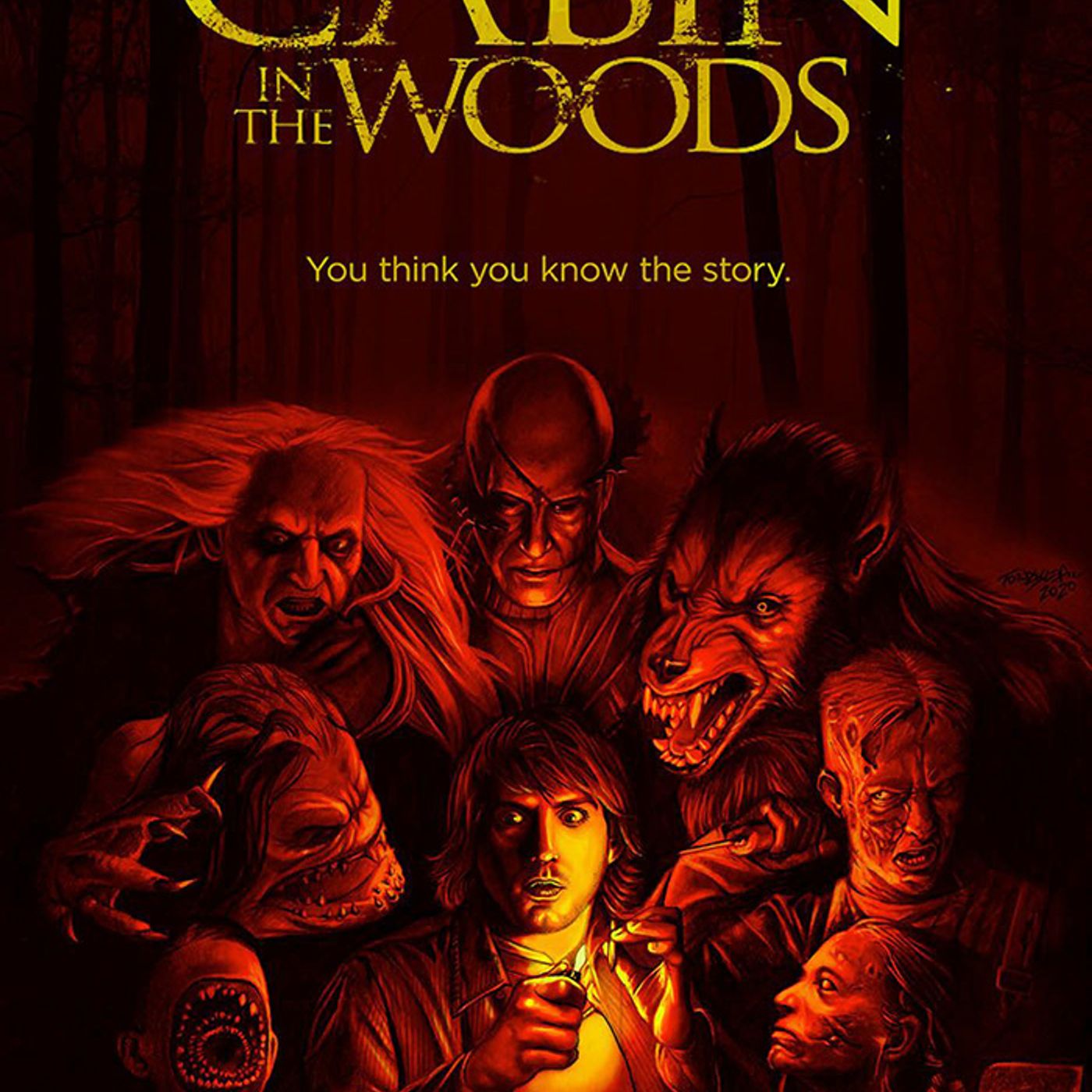
Starring Chris Hemsworth and a whole host of mid 2000s teen fodder, it follows the teens as they venture to a cabin in the woods for a vacation that they will never forget. Along the way, they find out that not all is what it seems and there may be darker forces at work then anyone realizes.
For more Kulturecast episodes and many more podcasts that are guaranteed to be your new favorite audio obsession, check out Weirding Way Media at weirdingwaymedia.com.
———
The Kulturecast is a film and culture podcast from Weirding Way Media, hosted by Chris Stachiw, the Doctor of Podcasting, alongside a rotating table of guest co-hosts. Each week digs into where film and culture meet — and how each one bends the other. Now home to sub-feeds including Required Viewing: A 360° Film Study with Dr. David D. Perlmutter.
New episodes weekly.
Subscribe on Apple Podcasts → https://podcasts.apple.com/us/podcast/the-kulturecast/id931361376
Spotify → https://open.spotify.com/show/5wjxip9XVYapYuY12yEaGY.
Back the show: https://www.patreon.com/cw/kulturecast
Transcript
Automatically generated, so expect the odd misheard name.
We're waiting. M David. It's funny. I saw this movie in the theaters and I really didn't like it, to the point where I told myself I would never watch it again. But if you're listening to this episode and you've clicked on it and you know what the title is, somehow I must have changed my long standing hatred towards the Cabin in the Woods, because on this episode of the Culture Cast, I am once again joined by my good friend all the way from the University of Texas Tech or Texas Tech University.
What is it TTU? I guess DTU the University at Texas Tech. That doesn't make any sense. He as a professor at the College of Media and Communications. You have heard him here before when we were talking about Soylent Green a month or two ago.
But he is here now pushing me to once again watch a movie that I had seen before, but talking about it now. You're a friend of mine, doctor David Pearl Mutter. Hello, Chris, thank you, thank well, well, thank you, Because again I'm not joking. When I said this movie gave me a I had a violent reaction in the theater. They were dragging me out and they were like, stop it, stop screaming.
No, I didn't do that, but I definitely walked out of the theater watching this movie having strong opinions. But on this bonus episode of the Culture Cast, we are going to be talking about twenty elevens Drew Goddard directed, Joss Whedon, and Drew Goddard written The Cabin in the Woods. This must be a systems online quarry targets what is point one? What is this place? The Cabin in the Woods in theaters April thirteenth.
So the film starts Kristin Connolly Chris Hemsworth of all People, which is still one of the funnier people in this movie, uh fron Krans And then I think the people will probably spend most of our time talking about Richard Jenkins and Bradley Whitford and the movie. If you've never seen it before, stop the podcast, now go and watch it. We will be spoiling the movie. There's a lot of stuff going on in the movie that I'm not going to say you need to know what we're talking about, but it would definitely help because there's a lot going on here subtextually and meditextually. But the movie is a send up of the traditional Cabin in the Wood setup.
But there is more going on than meets the eye. So I've already kind of given away how I felt about it the first time I saw it. But David, I'm going to kick it to you. Why were you so adamant that we watched The Cabin in the Woods in twenty thirteen. Why are we visiting a film from twelve years ago?
Well, I think you've already introduced some of the topics. You used the term spoiler and getting angry at the movie. Well, I think that this movie was designed to accomplish a couple of goals. One was possibly to actually shut down and end a genre of movies that we're very familiar with. But they attempted it, You're right, Yeah, I mean the intention.
I mean they knew that it wouldn't actually happen. Isn't like no one would ever make a teenagers go off for Lakin and our violently murdered film. Again, we have had them since then. But I think it was meant to literarily metaphorically, figuratively, narratively and the genre and then talking about spoilers when we're watching a movie. If you like it, you didn't like it.
But like if if you're you're paying your ticket, supposedly you're getting something out of it. And of course we've talked last time, and then you talk many times in your show. Is what exactly do audiences enjoy from watching a movie objectively? If you had to explain to an alien species that had no concept, maybe the octopus people from Galaxy Coobus who didn't understand historical documents, right, I think you're gonna say the Amy Adams movie, I'm glad see you're a man after my own heart. Explain as you would a child.
Yeah, yeah, if you had to explain, yes, we human will pay our currency to see other humans cut up, smashed, killed, destroyed, and the more mayhem that goes on and the more blood, the more satisfied we are. We humans will pay to see other humans suffer, and the greater the suffering, the greater that we enjoy it. Now, if you had to explain that to enable another species, they would. I think some of them might wonder about the innate morality and ethics and also our just system of what we classify as something satisfying and enjoying. And I think the film, I mean, I didn't want to make this into some sort of great work of art, you know, casting the light on the human condition or something.
But I think it is making a statement of like, wait a minute, we have just had a fifty years, sixty years of an entire genre of movies that consisted of young people just starting out in life who maybe make a few mesthetic takes, or they're not maybe they're not the best person at seventeen, but then who is? And then they are punished by being savagely murdered, and then we pay for that to happen, and then we'll watch Friday the thirteenth, or Hollywood, the Hollywood, Hollywood, I'm sorry, hollow Me the seventeenth, and we'll keep paying for it. Now, of course that these are ancient genres, we'll talk about folk tales because but this is an attempt to end all folk tales and all movies about this movie.
So it's a movie within the movie. You said, subtexts. There's just a lot to unpacked here. Some of it is is very horrisic, but it's worth talking about. I think I actually think I will go as far as to say that this movie is in a lot of ways a very literal literary film.
If this is a film that should have been a book, like it would have worked better as a book in a lot of ways, Like the ideas that they're the actual ideas if you actually want to have those conversations are not to be had in Cabin in the Woods a mainstream movie. I think that's kind of the issue here is the message that they're trying to get at and the conversation that they want to have. I don't know if this is the right medium, because I mean, this is like Stephen King sitting down and writing Dance Macabre. Like you're kind of trying to encapsulate the genre as a whole and say, here is what my issue is with it. Don't you see that as an issue as well?
And shouldn't you, because that's just like you've already mentioned, like watching teenagers being brutalized should not be something anybody is into. And yet I don't like the summer camp horror genre. But one of the first horror movies I ever saw was Evil Dead Too, which is literally the setup of this movie, the titular Cabin in the Wood. This movie could have been called Evil Dead. I mean, it's the same setup as evil dead Fork friends go to a cabin in the middle of the woods.
For all intents and purposes, that's what's going on here. But then the way the movie opens, very similar to Michael Hannike's Funny Games, it makes you realize immediately this movie is not at all what you thought it was going to be. And the way this movie is advertised, I don't know if you went and watch any of the promotional material. They should never have advertised that this was what it was. They should have advertised it as just a horror movie, because then what it ends up being there may have been an actual successful gotcha moment that would have parlayed further into reinforcing this idea of you came to watch a movie about teenagers being torn the fuck up, and instead we're going to confront you with the fact that maybe there's something strange about that that we as society kind of are okay with.
And look, I mean bread and circuses, right, I mean for the long I mean, look, in times of the Roman Coliseum, they were putting people to death for their own entertainment. At least we don't have to literally do it anymore, right, I mean, that's the minor positive that you would tell the aliens is like, well, if you think this is weird, let me tell you that at one point they were actually doing all these things and they weren't filming because they couldn't. So I mean, that's the thing, like I think, for me, other than the fact that it has to do with Joss Whedon, who at this point in twenty twenty three has been fucking canceled into the ground, deservedly so because of the way he treats the women that he works with in the industry.
Other than that it's directed by Joss Whedon, I enjoyed this movie so much. I really did, coming back at it. I enjoyed it because of everything that you mentioned, all of the subtext, because the movie itself is kind of the movie itself in a lot of ways ain't great, but what it's getting at and the conversations it wants to have. Not a lot of horror movies, not a lot of movies in general, have the conversation in a way that it's almost not done. It's not really done through dialogue.
It's just done through like off like one like offhanded remarks, and I guess just the building of the world that this kind of takes place in. Yeah, that's a really good point to maybe look backwards a couple of thousand years and forward to today. First, the question about the medium to express something. Absolutely, if this was a novel, and you know you brought up with somebody, I never looked up whether there's was a novelization or there was a short story out there. But in the novel, some of the things which are introduced, which maybe don't make sense at first work probably needs some more explanation, could have been flashed out.
But Davin, you also bring up the question of point of view, and of of course, whenever anybody writes the novel or makes the film, the question is who whose point of view do we have? Like The Office famously pioneered the idea of the doc you sitcom right where where people are breaking what used to be called the fourth wall, you know, or at turning to the camera, and it turns out it's documentary crew. Since then, there's been a lot of shows that you use that format and didn't have the narrative device. If there was a documentary, they just people turned to the camera and talk to the camera all the time. And it's never explained in this one.
This film could have been recut to have no revelations that these kids are part of some government or giant mysterious organization conspiracy until the very end. In other ways, the entire point of view could have been strow them discovering things. Right they chose, And I wonder. I'm not. I think there's a lot of good things about this film, but I wonder whether you know, sometimes you watch a movie and it's clear that the filmmakers don't have enough confidence that the audience understands something.
It's just those terrible scenes where people are talking about, say, the rocket ship, and somebody among the engineers says, wait a minute, speak in English, you know, explain it to me, really dumb, and you go like, no, no, no, no, no, these are nuclear sky. It just grinds the movie to a halt. That's right. And but so these the cutaways where you start going to this underground lab where these hilariously NASA like scientists in short sleeve white shirts and lab coats that look right out of Apollo thirteen are having these every day, meaningless conversations, but then inserting this stuff about like ancient it's you know, inserting information, there's moving the plot along and you're realizing, oh, okay, there's much more going on here.
But they could have recut the movie to have everything reveal itself through the eyes of the teenagers. I don't know whether that would be a better movie, but it would be a movie that showed a little bit more confidence that the audience was going to pick up stuff along the way that wasn't just directly in your face, like this is not a normal movie. I don't know. But the key point here is that, as you said, you go back thousands of years human beings have in every society, and you could argue and certainly in our society, we pay for either real or pretend violence to occur and we enjoy it, and people since Aristotle and Plato and Socrates has speculated on this and talked about how the Romans certainly believed that seen blood sports made you tougher for blood, right, I don't think there was really that evidence of that.
I think it does the opposition. Well, you can definitely if you if you want to train somebody to be a soldier, yeah you got a toughen them up, and you know, seen violence certainly does that. And you look in ancient societies. The Roman army was incredibly violent, and they were trained to be incredibly violent, and part of their learning to be incredibly violent was engaging incredible violence. So so I'm not sure what we can say except that the idea of pain for violence and enjoying it is as old as the human species.
I wrote a book many years ago called Visions of War, and I had a whole chane after about horrors of war, and I talked about how it's relatively recent and human history that what you and I and most people today would classify as the horrors of work was actually considered to be horrible. You go back to like the just google Zapotech, mal Monte, alban where is this buildings of the Zapotec civilization were covered with carvings of naked dead enemies. And then you go back to the Assyrians and the Egyptians and Thes and like it's a long tradition of like, we are bad, this is what we do to our enemies. Don't be our enemy, and we'll show you in visual images about how horrible we are through anyone who gets in our way.
And so they don't count that necessarily as a work crime or a bad thing. That's a really relatively modern I say it was in the last couple of hundred years notions for my money, But this film is trying to say that all this what is why Cabin of the Woods to me is attempting and I realized it's attempting tongue in cheek too, be the film that ends all still on this topic, because first of all, and spoiler alert, there's a scene where all the monster gers in the history of cinema I think online you can search and some people have gone through and cataloged every single monster that the peers. Most of them are cinema monsters like you've seen them in some horror movies before, or they're liking a generic version.
I mean, if you look at the because I went and did what you said. I went and I went and looked on YouTube, and I watched several videos on YouTube where they were just like I was essentially an audit of any time they show anything on the screen, and it's like, well, this is this, this is what this is in like you know, because again, there's a character called forn A Kiss at one point, which is literally just fucking Pinhead, And I mean, would it have would it have been to on the knows for all of the things in this movie that they're talking about to have been those things? Yes, But doing it this way, like you've mentioned, makes it. I think it makes it work because we know what you're talking about.
I know what that's supposed to be. Like. You don't have to show me that for me to go into my mind palace and retrieve that piece of information to go, Oh, the guy with saw blades in his head and a puzzle box is meant to be Pinhead and hell Raiser and the lament Confini And I don't know. I guess it's an interesting trivia question whether there were any copyright question or they had to pay anybody for that. But I was under the impression, and Chris, you're more observant than I am, but I was under the impression that there were very few Well rewinding, let's agree the only real monster in the history of the world is man, right, Yeah, correct, you're in history.
We have fought monsters. You go back in time and you can go to museum. You can you can see the ten foot European cave bear, you know, and the Smilodon tiger. So you go back in human history, we have fought other animals. I mean we wipe the most most of the mouth.
But that's a real key point here is that there's not I don't think anywhere among the monsters that come out of the box. Uh. I didn't understand how that they captured all of them, but anyway, very few of them are are real in any sets, like like this is supposed to be an actual monster that existed at some point, So there's no Torannos source Rex. You know, I know the humans and Torrannosaurus Rex did not coexist at the same time. They're all the monsters of storytelling, right, which means that all the stories are true.
This, I mean we always talk about conspiracy theories, right and like which of the merchant has some of thelity or which are completely crazy? Well, this is a movie basically saying every folk tale, every monster story, every cryptid everything's true. It's all true, and it's all part of the rand unified miss theory. This is the film that unifies every fantastic MA had to see or a movie monster movie ever made, right including Friday the Thirteenth. You know, things like that it's just everything.
It's all in all there, all in one facility for you resuing pleasure. And what I like about the idea of you have a facility that is operating in tandem with other facilities that must create a what is it? Five five people have to die and it's you know, these five tropes or character tropes, and then it's and again like they're kind of you know, they're given opportunities to leave, they're told that. They like, that's the that's the thing, right, Like what's weird is and that That's kind of the problem I think with the movie is the movie is too smart for its own good because it answers questions that feel like plot holes, because it's like, well, okay, well these people are just sacrifices, right, Well, no they're not.
They mentioned they have free will, they can leave, and they have the opportunity to leave over and over again. It would seem, I mean, the whole thing with blowing up the tunnel would seem that that only happened to be after they kind of put all the other wheels into motion. But the Harbinger, the old man who shows up in half of these horror movies to tell them to you know, leave there's you know in those woods, there's monsters or whatever. Like in my approximation of what's going on, they're given an opportunity to turn around there, right, they could leave there? Yes?
Is that your interpretation of things they say? Is they say as much? Right, one of the things that might be filled out in the novelization they make keep making reference to this ritual. Let's I guess, let's help the audience here who wants this movie spoil doesn't have to see it. Let's just talk about the plot for a moment.
You have the you said it best. You have the typical gang of teenagers who are going out alone in a area and they're going to hang out at a cabin in the woods to have fun, and they fall into very familiar types archetypes literally archetypes like from history. You know, the hero, the fool. I wouldn't say one of the words the virgin, so on, I'll say it the whore, which I think is the funny, the funniest. I think that's the funniest one out of all of them in what they're going for, because it's like in most of those movies, that's not even what that character is like that in and of itself, is reflective on the genre and the way that they treat female characters as well.
If we are talking about this as mythology, Apparently through the ancient Greek and Roman myths of the Western world, there were gods before gods, Zeus, Hera, Apollo, Athena. All of these gods were the newer gods, which were more humanistic, more sympathetic. Absolutely, they were flaw and did terrible things, but they were much better than the previous generation of God's the Titans, who really were chaos and destruction. So what's interesting among the many interesting things to me is that in the film we're told that if this ritual doesn't succeed, that this NASA like facility is enacting on these American teenagers, or it doesn't succeed in the perhaps dozens of other countries which are also doing this ritual, that the world will end, and the world will end, as expressed by Sigourney Weaver as the grand Duchess of Evil organizing this great casting by the way, that the world will end as in every single living human will die screaming horribly.
Right. So, in most like James Bond films, we're rooting for James Bond to stop the nuclear weapons from exploding and killing a million people, So we should be rooting for whatever stopped these ancient evil gods coming back and killing every single one of us, in every buddy we know, right, we should be rooting for them. But the argument the film seems to make at the end is screw it. We don't deserve to survive because we have done so many horrible things, and because of our culture of enjoying horrible things done to others. One of the characters the fool, and we always remember that in the Middle Ages, when somebody was a fool, they weren't foolish.
They were actually the most wise person around, telling the king that the truth. And there's many cases of that. So the fool is saying, well, maybe humanity doesn't deserve to survive if this is the way we keep going. Yeah, I went met textually even further, and I kind of placed us the audience as the Titans being held back. I mean again, they mentioned the appeasement many times, and again, if you look at it, like like you've mentioned several times now about the idea that you know the blood lust is coming from us and we want to see this and we want to see these things happen, and we're going and watching Hostile and Saw and Saw ten coming soon.
Fucking mind blowing, like the fact that these things keep existing and they've existed in the way that they have existed for so long in perpetuitum, it would seem that we are there for the titans of these stories, because our blood lusks can seemingly never be appeased. And again they're talking about you know, it's like, well, they only like it when it when it really gets nasties, when they're really having a good time. And again, this movie comes out a decade after nine to eleven. The whole the torture porn genre. I think if you were to ask anybody like me or you, what the moment in time that changed a lot of horror was nine to eleven, because all of a sudden, people can turn on your news and see people dying for real.
I mean, like I we talk about snuff films, and I feel like snuff films have shown up a lot this year and the things that I've worked on, But the Zapruder film is a snuff film, and all up the nine to eleven footage is a snuff film. It just is like if you boil it down, it's watching people die. And I was eleven. I saw that. I mean I saw it on the news like everybody else.
That changes you cellularly as a human being. Seeing, like we've mentioned, seeing war is one thing, but seeing people in a building jumping out to their death, that is something that is hard to process, rationalize even now to think about it, you know, twenty one, twenty two years on from it. But that genre of torture porn and I hate that term because it makes it. It does two things. It diminishes torture because torture as a genre has a place, I mean, revent torture, revenge movies have a place.
And porn, I think is I mean, thanks to someone like my friend Heather, who when we talked about night dreams and adult film not a porno. Porn is a derogatory term, So torture porn sounds like you're just calling it double shit. And it's like the Osaw and Hostel are perfectly fine movies. I mean, they may not be everybody's cup of tea, but that doesn't mean they themselves don't have value. I mean, I think the Cabin in the Woods is kind of saying they don't.
But my point being, that kind of inflection point in two thousand and one made a sub genre exist where people were wanting to push themselves further outside of the horrible things that we had already all seen. I mean, you know, to say saw and hostile are a thing is one thing. But then websites like Motherless and other websites where you could go and see people being shot in the head because it's a Mexican gang cartel slang, or countless decapitations of people. Those were all things that were real that you could see. But then the media was reflecting it because that was a I mean, and we're living in weird times now, but that was a weird time in and of itself because it like violence was everywhere all the time.
It was. I mean, violence is pervasive now, but I feel like violence in the mid two thousands, early to mid two thousands was pervasive because we as a nation were angry, and we're finding every outlet for that anger, including creating insanely violent horror films and insanely violent action films. But I mean, we're talking horror right now. And I mean the horror movies from the mid two thousands in the States are full of very cutting edge graphic violence and graphic just everything. And that is in response to nine to eleven and then this movie's coming out ten years later and saying we can maybe stop now it's been long enough, folks, we can stop.
That's a really good question, Chris, because you've dealt with this a lot in your culture analysis about you make a movie and you always feel, especially if it's in a series, whether it Fast and Furious or Mission Impossible or Marvel or whatever, you have to top what you did before, right, And this in terms of narrative, in terms of storytelling, inserts of plausibility gets you into a real bad place because you have to start possibly doing absolutely ridiculous things. I am very proud to say I have never watched the Fast and Furious movie. I'm sorry. I'm sure. I'm sure there are people who enjoy it, and God bless them, they're they're part of our specie.
But but as I understand it, the car chases there got a little bit more outlandish and implausible as time went on. You know, the person who seems to figure out how to avoid this is Tom Cruise, because Tom Cruise is as you famously know, and apparently it's going to be the case and the next mission possible movie still does practical effects, right, so so you know you can't say that him jumping off a mountain cliff on a motorcycle here behind me, you know, aunt, that's not the actual one time Cruise is going to job jump off, but he actually does it right, or he does the jump from space, but so many other movies. Dial of Destiny is up there on the list. Just say, well, heck, you know, he's got special effects, so let's make let's make human bodies do something physically impossible the top the previous chase sequence without really thinking about how stupid it looks, because everybody knows it's CGI and it just that would never happen, right, So in this Ferrell I think they were again tongue in cheek and suffer self referentially trying to make a comment on like, Okay, you want you want the ultimate horror, you want the ultimate blood.
We're going to give you everything. We're going to give you the worst possible. Nobody can possibly top this because at the end, the world ends with total violence and destructions, so like there'll never be another the Titans, apparently. I actually I want to know the motivation of the Titans, because if they destroy everybody on the earth, what are they going to do? Just wander around yelling at each other afterwards?
I mean, it's not what we're doing now. I mean, isn't that what happened? I mean, I mean again, like what happens when there's no when there's no lid and there's no ceiling, what happens? And I mean again, I don't want to say like Cabin in the Woods predicted the times we live in now, but when you are when you are unable to cope with reality and you're just like, let it all fucking burn, I mean, that's what happens at the end of Cabin in the Woods. It's like the world ends, but but but but in its place is a new world, and maybe that new world will be better.
I mean, it can't be worse, and then the worst, it can't be any worse than the worst. Right that's brought up by the fool who says, you know, maybe what I forgot his exact phrasing, but he says, you know, maybe we certainly don't deserve to go on, but maybe something else better will emerge, and you know, who knows. A million years later we'll have the cockroaches or rabbits or something. It's not clear whether all life will be completely wiped up, but I think the point is that I'm not sure. When they say the world is going to be destroyed, you can also insert there the cinematic world, it can be destroyed.
And going back to your recent Culture Cast panel on Dial of Destiny and this problem that we have in Hollywood today, where I think was you or somebody else I think was you said, why for some of the massive plot holes and implausibilities or just weird things that happen in Dial of Destiny? Why wasn't this fixed in the writer's room? And when I remember when listening to that, I was scoring like, is there still a writer's room? Do people sit still, sit around and like ask questions like, wait a minute, this is not plausible, this would never happen. Or do they just say insert twenty million dollars of special effects here and just make it look good, you know, right?
Well, I mean previous is well, it's always the joke. Now that free viz for Marvel movies is done before they even know who they've cast, because at any point, like you can just CGI anybody's face on an act on a CGI digital actor and call it good. And you know what's funny, you mentioned something that I had never thought about in such kind of like matter of fact terms. But at some point when they're making these movies like Dial of Destiny, they didn't sit and think to themselves like this is people are going to think that this is dumb because this can't this is so unrealistic. It even like the unrealism of the world can't be pushed that far, even even though the something like Aniana Jones had aliens in it, Like it's like, this is just ridiculous, and the only way you're able to do it is with CGI.
Like to just put it that way, It's like, how did nobody just take that much of a minor step back and look at something like that, because again, like you mentioned, I mean, look, is it on the nose that the character that Sigourney Weaver plays in this movie is named the director like a NI movie, Like, I mean, it is a little on the nose. It's like in Leo Carrow's Holy Motors, which is also met textual and subtextually about film and the filmmaking industry and movies and what it means to be an actor. The character that Danny Lavant plays is named mister Oscar, So it's like, sometimes the subtlety is not needed, but sometimes I appreciate when you don't just name the character the director. But either way, the Sigourney Weaver character being named the director, I think just further's the meta textual nature of this is not just the real world being destroyed, but it's the cinematic world being destroyed because the director pleads for, oh, you know, just let this continue, because it's this is the way it's been and this is the way it's going to be, and nothing like why change what works?
And that I mean that is I mean, look, Cavin in the Woods came out in twenty eleven. They're still making these kinds of movies, un tongue in cheek, un meta like they're making them serious still. So the movie knew it couldn't win its fight, but it has that moment where it's like it gives the other side the opportunity to kind of voice their case of like we've been doing this forever. Don't let us stop, you know, Lloyd Kaufman, Roger Corman, all those kinds of direct Roger Korman is a good crop because we're still making these movies. But the budgets are getting bigger and bigger and bigger.
And I'm old enough to remember, and I don't. I wish I could go back and find but I could have sworn when special effects started appearing in movies that there was a thought that two things. One is, special effects would be used very gently and selectively for situations where, for example, it was just too dangerous to use a stunt person or something like that. Or they'd be used to assist in plausibility or to create fantastic worlds. I mean, yeah, you know, of course, obviously you're going to have a death Star.
I mean, I personally think the death Star from the old Star Wars trilogy looks great and still looks great. And I don't know how much they spent on that model and having that model go along a little rail line and lighting in the studio, but it wasn't three hundred the equivalent of three hundred million dollars now, And so I am puzzled. I mean, I guess this will all has something to do with tax tax breaks or tax shelters or something like that. But if I were a studio head and I was going like, Okay, we could make a realistic, really interesting scene here about a chase on a train, and we will pay writers to come up with a new way to do the chase that'll be original and interesting. Or we could show one hundred million dollars at it and have just ludicrous, implausible CGI done badly.
I don't understand why they make the choice that's more expensive, But then I'm not making movies, so I don't know what I don't well, And what I don't get is to your point, like it's you know, the thing is And I think there's a massive misconception here. CGI is not easier. CGI is not cheaper than practical effects, like it's more expensive. Like it's more expensive, it's time consuming. It's not like oh, click click click, now you have a D.
H. Harrison Ford, Like that's not how that fucking works, even if it is that competent of technology in twenty twenty three, that's not how that works. And to your point, it's like, again, it's because we've put ourselves in the position that the director finds themselves in this movie, which is, at what point is it? At what point can we stop one upping ourselves? At what point can we stop pushing the genre to like again with snuff, with snuff, real snuff films, Nobody watches that for entertainment.
But if you're watching Hostile, where it's effectively a fake snuff film, people being murdered on screen, that's ostensibly for entertainment. The question that this movie poses is at what point is that line so blurred that we can't get off anymore to the fake entertainment and all we want to see is people actually getting murdered again. Like that's the kind of one of the questions that the movie asks. And if you watch future dystopian movies about the future dystopia, one of the things that shows up a lot is a return to violence and a return to like martial law and you know arenas and people wearing armor and fighting each other in the streets. Like that rears its ugly head in dystopian and in apocalyptic future you know fiction, and it begs the question, like, if the world were to end tomorrow, would everybody's worst intentions come out because we're all the movie positing, mind you, we're all these blood hungry monsters at heart who just can never have our blood LUs satiated short of really killing people.
I don't think that's actually the case, but the movie's taking a pretty hard stance on it. So in this movie, that's another question about metaphor. Is that at some point the teenagers sort of defeat or what what. The group that's left of the teenagers defeats a lot of the measures of this lab, and they break into the lab and they release all of these movie and fictional monsters that have been imprisoned in these I don't know what kind of material you have to use to imprison all every month the monster, but anyway, they're all released. They go on a killing spree of the guards and the technicians in the in the lab.
So the question is that are these monsters the ones that are resonant in our brain? You know these are because these are imaginary monsters. But now we find out that they're a hundred percent real. And so this is the release of the way we are dark soul. So you're saying, yeah, when civilization collapses, the typical narrative, I mean overwhelmingly post post apocalypse.
The narratives were our current civilization collapses. It usually doesn't have a narrative where people band together and cooperate and look out for each other and sing songs while growing food and rebuilding civilization. Typically there's like biker gangs and tyrants and mass slaughter, even without the zombies. So what's resonant in the human heart? Are those monsters?
What's resonant? The human noticed that nothing good is? Right? I mean, just let mean that there's no there's no there's no angels. There's no.
But by the way, if you've ever look at the description of a biblical angel, they're not They're an eye with wings. They're multi eyed being with things. Right. Yeah, but so is are the filmmakers saying that all we have in our hearts is evil? There's no, there's not.
Apparently, when you release the human heart to do anything at once, there's nothing. There's no good creatures in there. There's no there's no bunnies and kittens and and antelopes and unicorns. Well there were there. Actually there is a unicorn, but it's a murderous unicorn.
So one of the fun of your gags eggs in the movie. I mean, look, I will say, you know, to speak to the movie itself. I do think it's kind of a bummer they couldn't get the licenses on all the characters, because some of them are good, the ones that are these stand ins, and then some of them, like the Pennywise stand in, are like it's kind of ay, we know what you're getting at, but it's not great like that. Ain't that ain't a great interpretation of that? Which I mean, maybe that's the point.
But the thing that I find interesting you mentioned it's like there's nothing positive in there. But again I would take I would take somewhat of a stand that all of those things are positive because they lead to a hopeful reassessment of what they mean and how and how they come about. Right because ultimately, like we said at the end of the movie, everything ends because of because of those things. And and again like humanity's unwillingness to play along. But again I don't know if they would want to play along with getting you brutalized by all of these creatures from underneath the ground.
I mean, if they had let those things loose on the surface, would that have been enough? No, And that's the thing. It's like, no, But then again, I mean I don't see them necessarily as a negative because in a lot of ways, like you've mentioned it, they're conjured from the human psyche. I guess, like, right, well, that's I mean they never they never answered that, Like that's the thing that's never been Yeah, this this is where a book might tell us more. And by the way, I think we've talked about this for I know you've covered in culturecasts and elsewhere.
Is that I don't know how you feel about when somebody says, gee, there's a plot hole in this movie, but it's fixed in the comic book. I mean it means there's a plot hole in the movie. Means there's a plot hole in the movie. You shouldn't force me to go into level seventeen of a video game to find out what happened because they forgot to put in a movie. I shouldn't have to, you know what I mean.
Like it's like, if I want to go in further my enjoyment of the thing that I am watching, I can go and engage with it further in other mediums, But to enjoy it singularly, I shouldn't have to go and like you said, read a comic book or the example that I think we mentioned on the Dialodesiny episode, I'll mention it here. I shouldn't have to play fucking Fortnite to find out Emperor Palpatine came back in Star Wars. You complete and utter fucking clowns, like and I play Fortnite weekly with my friends and even I am not going to justify that stupid decision, but I think that ties back into all of this movie, which is where is we keep one upping ourselves here? At one point, it was just movies and you could just watch the movie and that's it.
But now it's the movie, and you know Dnevil Noove's Dune is coming out, and there's a TV show, and the TV show's going to fill in between this and this, and it's like, at what point do we stop? I mean, this is a different kind of one uping than torture porn, but it's essentially the same argument. At what point are we able to say we have plateaued and we can no longer push ourselves further in the media of the of whatever genre it is. This movie just happens to be concerned with the horror genre, so it talks about nudity and gore and all that. And and I, as an old guy, I'm not going to be one of those people like back in my day in the film industry that they did this.
But there's a I think this may be on nostalgia that actually is accurate that once upon a time, when the wonders of modern special effects didn't exist, filmmakers were limited by what you could actually film. Right now, we're only limited by budget, We're not limited by the medium itself. Right So if I say I want a thousand battle cruisers all crashing into you know, puppy, I could somebody if I paid them enough money, Well we'll do that scene in nineteen fifty seven. That would have been a little hard to pull off, right, But the question of when does something end? Like I as a Star Wars fan from youth, you know, I saw the original films probably in the theater ten or twelve times.
I was so excited. I just wonderful, wonderful experience when I was very very young. And then the second trilogy came out very disappointing, and I actually wrote an article. I had this vision of George Lucas calling me and screaming at me. But it was published on the MSN website, which was pretty popular at the time when The Phantom Menace came out, and I said, you know, maybe we need to nationalize Star Wars.
We need to take away the rights so that people don't ruin it. And and I little did I know that, you know, Lucas would sell the rights and now people would would just control. And now let's take all politics aside. When does the story end? Like when a story done to death and you want to say stop it, please, somewhere out there, I'm sure there is a plan for Indiana.
John's six and seven at eight and nine, And the only thing that's going to stop it is a true box office mom. And even then, as we've seen, even with box office moms, somebody a couple a decade later, we'll say, well, stry yet, because you've seen remakes of films that never were successful the first time. Recky but that but that for me, I feel like I have always been someone who is more interested in remaking something that didn't work, you know what I mean. I have been of the mindset that, like why I think I think it goes back to your point, it's like, why do we need Indiana Jones four and five? Are there no more original ideas?
Is nobody else coming up with something else that someone could throw three hundred million dollars at? And that is the question? And that's I mean, that's kind of the question that the Cabin in the Woods asks, right, It's like, why do you keep doing this? Why do we keep throwing money at the same idea? It's not satiating anybody's anything.
All it's doing is just retreading the same ground. What does what is that doing to people by just bombarding them with the same thing over and over again and not giving up the ghost and doing something else. And this is part of what I think is obviously the love heat despies worship relationship between creators and fans. I'm assuming that what happens is they do a marketing study and they ask a fan, would you like to see did you like Harrison Ford as Indiana Jones? And I would yeah, I did?
And would you like to see him again again in a film? Now I would answer no, I do not want to see him again and sell it. If you want to take the concept that Okay introduce us to his son or daughter or granddaughter or something like that. And then they have new adventures and at some point at the end of the film they go to the grave of Indiana Professor Indiana Jones and say, you know I did for you, grandpa, or something like that. Just start a new adventure from scratch, right, don't retro.
I don't even know what to call it. But don't force this poor eighty year old man into the cgibox to fulfill some imaginary fan demand. This this is why the Star Wars universe is so wrecked because they have to have the Stormtroopers because they think fans will get upset if if there's no Startroopers the Star Wars universe, and I've seen about play at some of the video games to go back like thousands of years or something like that. There's more, there's more stories out there. They could write more stories in the Star Wars the Star Wars universe.
I don't know if you said this, but I've heard this from a lot of people. It's so tiny. You know, there's like twelve people in the entire Star Wars universe that just again and again, and you just wonder, is this is this really servicing the fans the fan. Do the fans really say, oh my gosh, there's a CGI Princess Leia, I'm going to go see the film because I get to see thirty seconds of CGI Princess Lady. I'm not quite sure that's the way fandom works, but apparently they do, and that limits them very creative.
And what's funny. And what's funny is the director in this movie. It feels like it's it's a little bit of a jab at the out of touchness of what you're talking about, right, It's like they believe that there is someone. Look, how do you make a movie for three hundred million dollars and then it doesn't make a lot of money? Like?
Did you not like how you and I are both? I mean, I podcast and I have other side gigs that I do from time to time. You're a professor, so you understand the world in a lot of ways just like I do. How the fuck do you get to that point and then find out you're not going to make any money? That is not something you should have found out.
Then that's something you find out you should have been able to figure out long before, at least in a better way. So you're not just left shrugging at the end going always thought it was good like that. To me, it's like you don't get all the way to the cliff and then go, well, I guess I shouldn't jump off now you decide not to step all the way to the edge of the cliff to begin with, because if you're not going to make that decision, why go to the edge and look anyways? And the movie Captain in the Woods, that's the director character. They're just like, I refuse to change.
And that's why I feel like, you know, the ros Kron's character, he just goes, you know what, no, fuck this like this. If you're unwilling to let something else happen, then humanity needs to be the people to let it happen. And I think realistically the humans and the Titans as they would be called, are in tandem because if humanity is unknowing of the machinations of whatever it is, be it the facility, be it big government, be it the system if there are, if the system is so unwilling to change to the point where people are allowing people to get murdered to further the system, we have lost all hope for humanity and maybe it's time for humanity to end, and that's what the movie says. But I mean, if you look at it in terms of humanity, but if you look at in terms of the genre itself, it's if we can't get ourselves away from telling the same story over and over again and just pounding the same ground Firmer and Firmer as opposed to looking for somewhere else to plant our crops this winter, we are going to stagnate and die and that.
And again they don't to your point, I don't think they're actually expecting that Hostile and Saw are no longer going to come out after this movie was released. But it's nice to see a counterpoint to an overbearance of that kind of stuff at the time, because when this movie came out, it was an anomaly because it wasn't one of those movies. Yes, exactly. And I think the theme that all things must end for there to be a renewal is one in literature and the arts that is reasonably posited by everyone, critics and artists and audiences. And I feel that that statement is made in the movie.
It's it's a really important one, and to some extent, the decade and the couple of years since it was may have highlighted that this is a terrible artistic problem as well as a moral problem that we're facing where we're stuck in. Certainly in the film in the Street, they're stuck on these ips and they can't It's almost like it's it's a murder suicide pack. There are a hostage mutual hostage taking, Stockholm, Cynder, whatever you want to call it, where they can't escape from these monsters that they've created. Right, I mean, Christopher Nolan has this magical gift of being one of the only filmmakers on the planet that's allowed a large budget to tell an original story. This very few people who have that power.
I hope the success of Oppenheimer says that, like maybe I hope there's other directors out there who get at least the ability to try. We audiences deserve some blame because, of course there has been original movies that have not found an audience. So again we come back to humanity itself is indicted in this film, and it's interesting if we go back to the point that they were multiple nations that are enacting this ritual. Now remember the ritual part. If you go back to ancient Rome and you were standing there in the city watching the emperor enacted a ritual where for example, he killed a sacred bull by slicing his throat and its blood ran.
There were very very prescribed steps for the ritual. And if the priest, or the emperor, the or the Roman official made any mistake whatsoever, like like in the Catholic math and I'm not Catholic, but I don't know this, but but like I know, in the original Roman rituals, Greek rituals, if you made any mistake whatsoever, you had to go back and do the whole thing all over again, because the gods will not tolerate any error, right, they're not benevolent. Yeah, So because you think, like, okay, if the gods just want bodies, well, the state kills people all the time, so can't we just get I racked to kill four people and throw them in the pit right right right to The ritual is as important as the outcome, well, and the rich I mean the ritual is, I mean, at least in obviously what it's going for.
The ritual is the cinema, the process of going to the movie, sitting down and watching it I mean, that's what the ritual is. That's the literal literalism of what the movie is getting at with the ritual. But the idea that there is a level of there's a level of pomp and circumstance that even goes into murder is a is a horrifying Yet I don't think it's a it's a it's a very human thing because I mean, if you think about execution, right, you don't just go in there and go you're you're being executed and you get taken and that's it. I mean, there's all there's steps that happen, there are things that you go through. And I'm not talking about legal things.
I'm talking about you know, last rights all that stuff. Give them the opportunity to speak like that in and of itself is a ritual. And it's weird because again, the movie kind of takes takes a point and takes a stand of saying like, if we ritualize something even like murder and and the and the only way that we can kind of wash our hands of it is by ritualizing it. Like what does that mean for the society that does that if they ritualize the if the only way to make it okay is to ritualize it, as in, make it fictional or you know, give it an air and air of seriousness. Then like, have we lost our moral bearings as a society.
I don't think we have, but I mean I could completely understand and see if you look at the way we treat terminal violence, you know, ending of one's life in this country, it does it would to speak of the aliens again, it would look weird to a third party the way things are treated because people have a love of violence, but yet an aversion to violence, and they're okay with the fake violence, but they're not okay with the real violence. But some people are. But nobody can agree on what's okay. Well, that's a really interesting point because we often talk despite congressional testimony, I'm one of those people that believes that so far we're alone right in the universe. I mean, we have no evidence.
I mean, maybe there are there is intelligent life lots of other places, but I personally believe they've never contacted us. So technically our examples of comparing intelligent species is and equals one. But but that's not quite true, because of course there have been different species of humans that have lived in the past. We're just the last remaining one. We may or may not have helped kill off some of the others.
Certainly, come on, we may or may not, he said, we definitely did. It's whether or not we cause them to be extinct. Yeah, the question is whether we out competed them or out hunted them, or we killed them. I think there's evidence of both. I mean, we certainly made it with some of them, but there were other human species.
But also, you know, if you look at the other creatures on this planet, which are unarguably intelligent, the question is how do you define that intelligence? And you went back to the movie Arrival with Amy Adams about which really was amusing on what constitutes intelligence and understand right, well, we have killer whales which have these gigantic brains and a very complex culture and also very varied cultures. You know, there's northern California pods of killer whales. They're very different than southern killer right right right. And we have dolphins and we have whales.
Killer whales are really interesting. So I think you could say, and it's not an equals one for intelligence species. Killer whales and dolphins have been seen engaging in for what not. One of a better term would be playful violence, like apparently killing just to enjoy killing, and violence just to enjoy violence. We don't quite know whether they're practicing hunting by doing the murders that they do, but let's put it this way, it would not be crazy that if we ever didn't encounter species from another planet that they might not have something similar in terms of ritual violence or violence that they appreciate.
Maybe maybe they'll just say, hey, we oh man, Dial of Destiny, that's the greatest maple movie ever made. You know, we love it. Tell those aliens to fucking leave you guys can't come back to your own planet. Man. I do wonder though, And here's is, you know, kind of an interesting kind of approach to it.
Something you mentioned, you know, this idea of intelligence ultimately our perspective interpretation definition of intelligence, it's human generate. We don't know what any of these other species that we do know have a level of intelligence. We really don't actually have any fucking idea how any of that works with them. Like we can never be inside of their their mind perceiving the things the way that they perceive them. We only perceive it from our point of view, and then we're kind of putting our interpretation of their intelligence on them and saying, well, you know, they live in the water, but they're very smart, like like okay, right right?
And I wonder if we were to look at that, we are the dolphins in the situation, and the aliens are us as in a higher species. If we were to find out that that higher species that's able to travel between planets did engage in tangible physical violence for entertainment, would we as humans look at that and go, they are a lesser species of lesser intelligence, because, like you said, killer whales and dolphins interacting in a way that maybe playful violence, does that make our interpretation of them as animals seem lesser because they engage in that. I don't. Again, I don't, I don't know, but I think it's interesting because again the movie comes back to that idea of is does the embrace of violence?
Because we see Richard Jenks and Bradley Whitford and other people in the facility embrace the violence. Is does that make you lesser? If you embrace the violence? Is your intelligence lesser because you've embraced the violence? Or does embracing the violence in an intelligent way absolve you and kind of allow you to understand maybe the beneficial and utilitarian aspects of violence, because there are some they're not necessarily always talked about, but there is some utilitarian benefit to violence.
Unfortunately, well, so we need to bring in a current biologists here to this discussion. But I guess a very popular theory is that, and it's really beautifully expressed in the absolutely exquisite novel Watership Down, which is told from the point of view of rabbits, and one of the rabbits says that all animals, all regular animals, if they have to engage in violence, they do so. If they have to eat something, they kill it and they eat it. But only human beings wake up in the morning and think of ways to ruin the lives of other creatures, you know, to come up with it with new new exquisites. I mean, actually, the parallel between that line and Cabin of the Woods is pretty strong, because all the creatures in Cabin in the Woods are ones where somebody, some humans sat around thinking, oh man, let's have a pinhead with an axe and he'll torture this, and somebody created that, right, And I don't think rabbits and cats think that way.
They do what they do and just do it. Maybe killer whales and dolphin's dream of new ways to engage in violence, although the obviously technologically they're they're limited. But I think the film is really asking this question. And this goes to actually space aliens because of course one of the mysteries I guess we don't even know whether it's a mystery, but one of the mysteries which we've created is why are we alone? So allegedly, like I mean, we whatever you might say about UFOs, we really don't actually have evidence or any sign that there are technological civilizations in our neighborhood.
And the universe is old enough so that you'd think by now some sort of robots or something, even if interstellar gravel is very slow and painful, you would think they're So the great Fermi question, right, why where are they? And so one of the answers is that there's a filter system, and intelligent creatures do arise on other planets, but they kill themselves off, or they're killed off by something nature or something else. And maybe this film, again I don't want to make this film into this literary masterpiece for the ages. It's a schlock film in some ways, but it is a very deeply thoughtful film in other ways. And you could argue the schlock is in the purpose of deep thought.
But maybe this is the way that species die out long before they can spread throughout the galaxy, is that they need violence in order to arise. Means Oppenheimer sort of makes the point. I don't know if it does it completely directly, but it maybe indirectly makes the point. You know what the greatest thing to advanced technology is is warfare, right right? It's yeah, that's where most of our modern technology comes from is because of military apple or they they were created or found out through the advancement of military kind of technology.
Yeah, yeah, I mean, we didn't go from the Bronze Age to the Iron Age because we needed better sphones, right right, That's a good quarter for ourp porridge. So that is a question is whether violence. I mean again, if we ever reach a situation where we see any an equals two or an equals three, and we compare and maybe there are other species out there who have been peaceful and cooperative and loving and nurturing for their entire revolutionary existence, and they still have built a civilization. I mean, you can you can imagine a situation where you don't need violence. But then again, can see, like, wait a minute.
If there's no violence, there's no competition, there's no dominance, there's no will for creating something spectacular. I mean, it's it's hard to see how you would create pyramids and mighty empires if everybody just was sort of peaceful and loving and just got along with everybody. Right. Well, but the question then becomes the question then becomes in that society, do you need pyramids anyways? I mean again, right, I mean, that's the idea right in.
But that's a but that is to ask a question of a perfect society, right in a society where everyone where no one is out for themselves but only is interested in the common good. So you know, social socialism slash communism on paper, you know, we are all kumbayeing together and nobody lives in a bigger house than anyone else and everything and we all own the same things, and everybody's okay with that, then violence would never Yeah, and what what would that society look like? Would that be everybody living in the same house, all the same, being the same, and that's the question, Like, you know, that's why those kinds of models are imperfect on their own is because again, humans are messy. Human beings are messy.
And I'm not saying like we don't tidy up our space, but we don't. I mean when people talk about, you know, I got into a relationship with this guy, but he had a lot of baggage, That's what that means. Human beings are messy. Nobody is perfect. If nobody had baggage, you would be perfect.
And that's what and that is ultimately the Cabin in the Woods is about the fact that humans are messy and imperfect and they're enable to get out of their own way. Because Richard Jenkins and Bradley Whitford perpetuate the violence lovingly and knowing they're engaged in it, and they get off on it. It's almost I wouldn't even say almost. It is as far as they could go masturbatory. The two of them with the violence is masturbatory and the nudity is obviously reinforced.
Is that a lot? I mean just in a very matter of fact way, but it is meant those that they are meant to be the like those guys, they're they're the people that the movies are essentially being made for. Well, I've never I always say as a professor that I don't want to speak outside my area of studying, but I've never looked at the origins of a scene that has been in the number of movies where Indigenous Americans kill an animal. I think it's at the beginning of a number of movies. Last of all, he kids, they kill an animal and then they ask for its forgiveness.
They're very respectful to the animal because they believe the animal's soul, and they thank the animal for giving up its flesh so that they can have nourishment. I honestly don't know whether that's a Hollywood trope or that comes from a particular tribe or all. I mean, I just don't know. But but that is a really good comparison point, because these people are in gee in the ritual, but they're not solemn. In ancient Rome, you wouldn't I don't think you would have the priests cracking off color jokes as they're doing this ritual.
They would treat it with extreme seriousness and somberness, and you could imagine read In fact, it would be really interesting. How would our attitude change if you redid this movie and had the people in the lab feel deep reverence and respect and say, oh my gosh, this is terrible what we're doing to these teenagers. We know it's horrible, but this is the only way we can keep the world alive, and made them actually sympathetic characters, people who who have volunteered to do this horrible thing to spare the world, and they're trying to be as as don't I want to say, as gentle, but like trying to be as merciful as possible, trying to make the death less painful. That would be a completely different movie, but it would raise more issues about like, who are there any good guys here?
I mean, the people in the lab, led by the director Sigourney Weaver, are trying to save the world, right, let but just factually literally what they're doing, yeah, literally, and like they're saving my life, my family's life. But I hate them. They're awful people. They're disgusting, and when they die I cheer, right, right? But what if they were made into sympathetic characters, heroes who are saving the world, right?
I mean not a lot of a lot of movies. In a lot of movies, the hero saves like New York from a from a someone nuclear weapon, but not in very few movies unless you get into Marvel fantasy. Does somebody actually save the entire planet? Right? But these guys save the entire planet every year or every couple of years.
I forgot how often they I think it's like every year. Yeah, but we hate them well. And and the thing is, like, you know, you look at them in the facility and you say, they're the ones who are doing all of the all of the things. I actually think that the intention of Goddard and Weeden is the people in the facility, at least Jenkins and Whitford. I mean those two characters specifically, And then I would say the grand majority of those people that are there, you know, like rah rahing and fucking having a great time and doing whatever the hell they're doing in that scene.
I mean they're drinking and reveling like it's the fucking Christmas party from the beginning of die Hard, and I think they're actually meant to represent. And I don't want to talk down to these people because at one point I probably was as close to being one as some people are, And then a lot of people have continued on. I think they're meant to be the horror bros, that that part of the community that loves that, Like, they're the ones who are receiving the message the director is giving, both literally because they work under her, but also in this universe, the people that work at this facility are fucking socio pets. They're all psycho pass they're effectively serial killers, all of them. Even I mean even the guy who is kind of the you know, he's kind of standing around and he protects the room.
He's kind of not interested. Brian J. White's character, he's kind of the security officer. He's just they're doing his job. He's not reveling in it.
But they're reveling in it. But again, it feels like it's a little bit of a pointed jab at the people who these movies are made for getting off on it and enjoying it. It's like, don't you guys see how kind of fucking weird this is. If you take a step back and you were to see yourselves for a second, don't you, like you said, there's no way you could see those characters and feel any amount of empathy for them. When Richard Jenkins gets stabbed by accident, you don't feel bad for him at all because in that moment, right right when he dies, Kristin Connolly realizes that this motherfucker was one of the people doing all the stuff behind the scenes, because he goes, you're her and he's like and she's like, oh, okay, well fuck you pal.
And obviously Bradley Whitford's death I think is you know, be careful of getting what you want. It might not go the way you plan. See Halloween and the Newest Halloween sequels where they were made for the horror fans, and then the horror fans who the movies were made for turned on the film and the filmmaker because they didn't like it. It's like, be careful what you wish for. When you get it, it may be a merman crawling towards you, getting ready to eat your face.
I think that's what I think. That's probably as close to what that's I mean, And that's got to be what it is, right Like, it's dual meaning, which I think is obviously the benefit of having Drew Goddard and Josh wheedon writing the script, and you could argue that at least in one version of history, it's historically correct. We talked last time about the movie Soil and Green, and we discussed the concept from the philosopher Hannah Aren't of the banality of evil, right, that evil is not cackling and twisting, it's mustache and monologuing about how much they love evil. Evil is a bureaucrat, a puffy, you know, thin armed bureaucrat who is just doing their job, but their job is objectively horrible.
And now this gets into this whole question about to what extent the mass destruction and just killing as being something wrong is a modern concept, and I think there's a lot of disagreement, and I just put you tend to put myself in the camp that the more the common holding today that the horrors of war are horrible are relative, and that even what we call the trauma of violence, of saying that people who commit violence are traumatized by committing violence, is relatively moderate I personally, and there's a lot of disagreement. I think you could raise somebody else on the show and they violently disagree with me. I don't think the average Roman soldier had bad dreams because they kill one hundred people in some Gaulish village by hacking them to death.
I just don't think so. I think that they took their pay, they went, they you know, laughed at the camp and just didn't think about it. I don't think that they had post traumatic stress syndrome in the Roman Army. I really just can see there may have been one or two that had an issue with it, maybe after the fact, or do I mean, well, you know what, no one, you know what, I actually think you're right. I actually you know what.
I think I would I would agree with you broadly because I think to your point the Roman Army, that was the point was that it was a bunch of people that weren't going to have a problem with it. Yeah, like today, I'm assuming this is true that like if you were went to a US Marine recruiting station and they said, why do you want to join the Marines and you said, I love to kill people, that would guarantee your non admission to the modern US Marine Corps. But I do believe that if you were being recruited into the Roman Legions and you said, yeah, you know, I love hacking people up. And my father was a legionnaire and he came home with lots of treasure and talked about all the villages he burned and really enjoyed it and say, okay, Manuelists, you are You're definitely legion material signed the dotted line right here, right right.
Okay. So so the question is, then these people in the lab, we don't know anything about them, right, like, like we assume that they're Johnny Lunch pale lab technicians and that they they very well, they go through that maybe during the rest of the there's a downtime, they have summer vacation or something like the Death Star, that's right, that's right, and right speaking to the thing you mentioned, Yeah, as a lot of comedy sketches have done, the Death Star has hundreds of thousands of guys in the you know, the accounting department, the HR department, boots or whatever, cooking the fucking meals. How do you feed all those people? I mean, logistical fucking nightmare. And but they play their role in the destruction of entire planets, right right, right, Yeah, they're part of it.
So I mean a war criminal, I mean somebody had to cook the meals. At Auschwitz for the guards, right, And I don't honestly, I don't know whether it was prisoners or they brought in like takeout or something like that. But but the point was that like Evil has a long logistical trail, and this is one of the few movies that focuses really on the logistical trail of people of like you have the U. Somebody had to approve of this funding. Right, there's entire bureaucracy we don't even see.
Can't this can't be just fifty guys doing this road across dozens of nations, so there's probably thousands. I mean, this is where conspiracy theories fall apart, right, the idea that like fifty thousand NASA technicians all agreed to keep silent onto the grave, right about the moon Land needs or something like that. But here, my god, we've got every movie monster ever made, every fictional monster ever made. And this is true across By the way, is it ever answered about these other facilities like in Japan that I wanted to get Japanese movie monsters right well, or the other thing. The other thing, and it was a thing that I feel like, this is a point in the movie where the movie kind of fell apart for me is when they show Buenos Airis and it's literally King Kong, and like that would be something that people in the world would have seen, like that the thing would like the girls in the school or the Stockholm thing, which I'm assuming is supposed to be the thing like or even here with the cabin in the woods.
It's such like an insular, singular five people thing. And then they show King Kong in the middle of a city. Like it's very strange to me because like that was the one moment in the movie where I was like, you're kind of like muddying the waters of an otherwise kind of really novel, almost perfect concept by going, well, we could have Godzilla and it's like, well, what are the rules of that that? Like, because if it's if it's not five, does it have to be five thousand? Then people smushed in a building, like what are the rules then?
Because it seems like again here there, but again maybe they're maybe that is just a comment on something else that I'm just maybe too dense to understand well. In your panel shows, you often assume the guys of filmmakers like Spielberg and Lucas or something if I remade this film, and I guess this is from a professor's point of view, so it probably would make even less money. But I would do a couple of things. One is I would clarify, maybe even just in a few minutes, what's going on in these other facilities, and I would follow the train of logic for this facility, So like in the Russian facility, it should be a cabin in Siberia. You know, I, this has got to be isolated.
You can't just have this in a public space year after year and have nobody notice. You're absolutely right. Then second, I would clarify that each facility has the monsters of that culture. So like as you know, and probably you've seen some podcasts and some books about there are many monsters within the Japanese methodic. Right did the Japanese have the Japanese monsters, the Russians have the Russian monsters, and so on.
Okay, that would have made a little bit more narrative sense. The other thing I would have done, and again everybody's got to make choices, is I think it was just a little too fish in the barrel easy to make the lab technicians, the lab people wildly unsympathetic and horrible people. It's kind of on the nose. Yeah, I mean, not every Nazi stopped to kick a puppy on the way to work, you know, Like you said, humans are complex and evil. People are not evil all day long, most of them, you know.
I mean talk about something. I just watched the Brazil Michael Palin's character in Brazil, the Banality of evil. Oh, I'm just going to wash my hands in the bull with my daughter here, and I'm covered in blood from the guy I just sat and lobotomized in the room next door. And yet here he is with his daughter in the other room, talking to his friend who he will eventually do something similar to. And it's like, it's it's it's it's though.
It's that moment in the movie, and I think I talked about it in the episode. That's so fucking horrifying that when people talk about like serial killers and gil Go Beach and oh my god, they're among us, Like the real evil people are just doing like they're doing evil shit. And it's not that they're just part of the big evil machine. They're a little evil cog in a bigger evil system that exists. And I mean, Bradley Whitford and Richard Jenkins are two little evil cogs in a very big evil system.
Maybe they're bigger than little cogs. But the point being, like you said, just like the Holocaust. You know, here we go invoking the Holocaust again. The typewriters were the weapon of choice in the Holocaust. You had people just typing up people's names on sheets and sending them off to their death.
That's what was happening. It was the usage of bureaucratic technology that made it an efficient system of death. That's what I mean, if you believe Room two three seven, That's what Stanley Kubrick was getting at in The Shining Yes. And there's a really good book that encapsulates this. Alexander sultzen Neatson was the first really great documenter for the West about the Gulag system, which killed tens of millions of people of the Soviet Union, and one of his most accessible books besides giant books documenting the Gulag system was One Day in the Life of Ivan Decinovitch and it's just basically exactly what says.
It's a day in the life of somebody in the Gulag, and what's really interesting is how dull and ordinary that day. There's no mask killing, there's no torturing. There's just the blow dehumanization of people who are trapped in a horrible situation trying to make the best of it. And I think that that's an element that this film does very well, is that it talks about this, this apocalyptic horror, this ultimate horror. We've mentioned I mentioned for Lovecraft.
I mean, the gods are I get Wait at the end, you see a giant hand, and I guess you could talk about whether that's a realistic cgi or not. I never met the get God, so I don't know if it's realistic. It's two seconds and it's fine, it's fine. But the gods are apparently humanoid because that's a human hand. It's just five days.
Yeah, so it's not a tentacle. I mean, I get you imagine, see this is we're going back to the dial of destiny for a minute. We got to kick that one just one word time. I ain't gonna I ain't gonna complain. I have a feeling the people who made Having in the Woods actually sat around and had thoughtful discussions about what should go here and how this character should be done and what it meant.
Right, I'm not convinced the people who may dial of Destiny had those thoughtful conversations, but but certainly a Cavin of the Woods, for example, they decided that it wasn't going to be attemptical coming out of the ground, right, It wasn't going to be any some sort of weird black uh, scarred claw or something like that, you know, from from a reptile or something. But that was the point, right, is that that the gods are images of us. We are are the enemy, right, We've the famous cartoon in World uh and during Vietnam War, we have met the enemy and he is us. Yep. That's right, and and that and that I think again, like that's why I kind of put ourselves onto the Titans in this film as well, like that we are them and you know the humans, you know, friends Kranz and Kristin Connolly, they make the decision for the Titans ultimately, because it sounds like the Titans would just prefer to have their blood LUs satiated.
They're okay with They were clearly okay with it for the longest time, to just have five people a year killed, because that's all it would take, by the way, because that's the other thing. It would seem that it's like a cascading problem. Each of these facilities seemingly gets an attempt if the other one fails to do it right. And all these other facilities didn't do it right, so America ends up having to be the one that does it right. But Buena Siris failed and Stockholm failed, so I'm not even sure that America has to do it every year either.
You know, they do mention I do like that they mentioned the faculty offhanded. They you know, they say, oh, the chemistry department fucked up that one, and that is a reference to the faculty. Which is a much better movie than I think most people would give it credit for. But none of the main characters die in that movie. None of them die.
None of the trope five heroes in that movie die, which is why they mention it because again, like in this movie, they all die, which is atypical. The final girl in this movie dies, which is like the most atypical thing for a horror movie. Really, like, what is the most atypical thing a horror movie can do? Kill the final girl, especially a slasher, Because this is like slasher adjacent, at least the first thirty minutes of it. But like, that's the most atypical thing a horror movie of this ilk can do is kill off your final girl.
Yeah, for one thing, it makes it harder to do a sequel where you know, she's haunted by the specter of right, her friend two were killed, and Jamie Lee Curtis has certainly made a fifth of a career by being dragged back into over and over again. And I've never watched the single Halloween films, so I don't know whether in any of them she doesn't come back. Now, of course she doesn't come back from the dead. She survives every film, right, No, in the origin before they came back and rebooted and retroactively got rid of a lot of the movies. I want to say, the movie after speaking of Kevin Williamson, after the Kevin Williamson H two O, which was kind of like Scream and Halloween have a Baby, and it's actually pretty good.
The movie that came after that one, Jamie Lee Curtis's character spoilers for a movie that's like twenty plus years old. She dies at the beginning. So but but that movie, like is essentially reviled by the fans, so who cares, you know what I mean, Like, it ends up not even mattering. It's like Alien three, which anybody, well, I think anybody who loved the first two Alien movies just agree. Is nothing was made after that, which she just ignore.
I mean everything since that's come out has retroactively tried to fix it, including the video games and other ef emera that have come out that have been like no, no, no, no, no, uh Hicks, Hicks. Hicks actually wasn't in that pod. It was somebody else. And Hicks has been alive the whole time. And now that's cannon, thanks Aliens, Colonial Marines.
And if you didn't if you didn't know that, or if the audience didn't know that, Michael Bean's character of Hicks is still canonically fucking alive and alien per that video game changing the cannon. So yeah, it's it's it's it's fucking insane because ultimately that that whole thing cuts right back to this, which is why I can't we just give it up. Why do we care so much? Why do we care so much? Why are we trivializing ourselves with like why are the Titans trivializing themselves with the violence perpetrated on five people.
That's the question that the movie asks, and it never answers it because it's asking us to provide the answer. And so I'm curious, like, ultimately, why are the Titans so infatuated with the death of five people? Does the movie ever give us an answer to that question? No, I mean, of course, you have to read the seventeen comic books that came out on an obscure Philippines website in Tagalu answer that question. And I'm really shocked at your lack of cultural knowledge.
Oh, I'm sorry, I'm sorry. I listen. I did listen to the I did listen to the Tamil audio book though. So yeah, it's a stereotype of fans that they will engage in that. I love your word of Samurai that like dig deep into a lot of these It reminds me.
And maybe this is a point to finishof is that I was one of those people. Again, I'm older than you who saw The Thing, the original Thing in the theater with Kurt Russell right, and I really love the movie. That the movie failed box office box office, and critically it was not an acclaimed movie. It's one of those movies that over time has become a classic, and over time I think it's become profitable over time. But I really it's like a lot of eighties sci fi movies.
I mean Blade Runner. I mean not everything was aliens, but but things that are as influential as Alien and Aliens have been have got Like you said, they've been successful now in spite of that. And when I saw that again, as I mentioned to you about Soil and Green, at that time, there wasn't an Internet. There wasn't there were discussion boards that you could get at through your modem on your computer, but basically you discussed films with like your friends at school, right. And I remember going with my group of friends and we saw the thing, and one of the big questions was what happens to the alien?
Is one of them? Because there's two characters left alive, and the big question for extra number of years has been is one of them an alien? Right? And I think in the movie it's pretty clear you can see in the in the freezing cold there that one of them you can see his breath and the on one you can't. So to meet in the theater when we came out, I was, I argued, and I think all my friends said, yeah, yeah, definitely the alien survives.
And then we posited like, well, in the sequel, people will come and the alien will thaw out and start killing people again and maybe even destroy the earth, because in the movie there's a there's a prophecy that a scientific prediction that if this alien, this replicator of itself, can get loose in a urban population, it can eventually take over the entire population in the whole planet within a certain times. So it's a it's a movie where the apocalypse is off screen, and here the apocalypse is on screen in Kevin and the Woods. But I think, leaving with the question, I want to respect this film for making this statement about all things must end, because I think today, in twenty twenty three, that is even more important question for people who create or now unfortunately just endlessly recreate intellectual property and content to make of themselves, is that whenkolk should we just let something die and move on to something new?
Right? And I you know, I don't look, you know, having seen the trailer for Exorcist the Believer or the Exorcist Believers last week, and I you know, I don't want to sound like a cynical dickhead, and it's okay. I can. I can bear the weight of being a cynical dickhead sometime. That is the cross that I can bear, or whatever you want to call it.
I think for me, when we talk about like genre exhaustion and being exhausted with superhero movies now and like now, it's like, you know, you have to watch all these other things to appreciate this one thing, and if you don't watch all those other things, you can't really appreciate this. It's this weird thing now. Of like, well, if that's the case, why who cares enough to get involved? Are Why are we so invested? Why couldn't we just invest ourselves in one movie with no eighteen comic books and tagalog?
You know, Like, I don't know why that's not the case anymore. I don't know if there's a moment where we revert back and pivot back and turn it back in on ourselves and say, well, maybe instead of having a twenty five year connected cinematic universe, we just do one movie and that's good. Why is fifty people dying on screen much more exciting than two or three. I mean, think about something like Alien or Evil Dead even I mean those are movies that have how many people getting thrashed in them, like a handful three or four. But it's like, but we that the blood lusts can't be satiated, and like I wish there had been that moment in the movie where it's like it can't be satiated ever, even like I wish that what had happened at the end of the movie, if it's me sitting in the backseat, is that they make they end up making the sacrifice, it is successful, and then the world just fucking ends anyways, because the gods are just like, well, you guys have fucked up too many times, so screw it, And like that would be I think, just as compelling of an ending, because it's ultimately the same ending.
It's just a different tone going into it, which is this is broken, and the only way to fix it is for me to get involved in a substantive way. And I think that's the other thing the movie advocates for, is like, you know, being more of an engaged film watcher and not just allowing them to keep putting this shit in front of you and expecting that dogshit tastes like chocolate pudding. Like. That's the other thing. If they think we're that stupid and we keep going to those movies, then maybe in fact we are that stupid.
So yeah, you could argue that's one flaw in the narrative of the film and its logic is that apparently these gods are satisfied with a really small number of sacrifices five a year, ever, and they've always been like for thousands of years, it's always been the magic five. And if the point that you're making is that we have to engage in more and more exponential violence to satiate the blood lust of the audience, that we have to make movies bigger and bigger and bigger, and we're killing more people, then that's not actually answered by killing. I use the word just in quotation marks just five people every time. Well, so to three thousand years ago they killed five sheepherders, and now we kill five teenagers.
That's still we haven't told the gods about inflation, right, you know the guy there would be sort of a scene there where the gods go, wait a minute, you mean the human population is now eight billion? You know, we thought you were still like a million. If you go if you go online and you see a chart of human population. For a remarkably long time, the population of the Earth was extremely low by our standards, and it's only been really, I don't know, hoguest the last couple thousand years or a couple hundred years, we've skyrocket. Nobody told the gods like, wait a minute, you mean we might next time, we might ask for ten thousand or fifty thousand or a hundred thousand sacrifices, right, And that was the thing that I kind of to go back to the King Kong thing.
It's like that would feel like more of a justification then, where it's like they can't be appeased by just five anymore. And I think, you know, to bring this full circle, I think the way to do this in the future, and I think that this, you know, somebody's going to do something with this in the future to speak to the idea that nothing can be not done again. I would love to see a TV show just talking about the things going on in the facility, because I mean, effectively we've seen it already with other things. I mean, if you if you were to just talk about it broad's perspective, something like Westworld, something like Jurassic Park. Those are two things that you could draw similar analogs too with this movie of people in a control room controlling or losing control of things and what does that mean both in the narrative, but I mean Jurassic Park asks about it with you know, the rape of the natural world, and they didn't ask if they could, they just did, like it's involving itself with something different, but it is still talking about the machinations of people involving other people and what are people willing to do to achieve some goal.
In this movie, it's kill five people to save the world. In Jurassic Park, it's put people in cars in front of t Rex's to make money and somehow think that's a good idea, you know, And or in Westworld it's have people come interact with robots for real, and that's can't go poorly, right, There's nothing that could come poorly of having human beings murder robots that then get sentience. It's that same idea, And I think that I would like to see Cabin in the Woods where it's just like a thing focused on those people in the facility because like, yes, the narrative portion of this movie with Chris Hemsworth and everything that exists to give us kind of the in the audience analog to what's going on, so we can experience the horror of the people firsthand.
But if you were to do this again, there'd be no reason to tell that part of the story ever again, unless it was to truly do a subversion, like one of the people in the facilities family members is one of them or something. But there'd be no point in going back to that portion of the story because there's nothing to be gleaned from that, right, And I find it interesting. I completely admit that I have avoided All Star Wars everything for a decade now, so I can't speak to it. But I did get a chance to watch episodes of and Or and was surprised by its depth and subtlety and intelligence. And maybe it's because it's focused on the guys in the lab.
It's focusing on the everyday evil of the empire, the you know, looking away when bad things are done, and it's actually I've read a couple of interviews with the makers of it, who are unfortunately, as you know, it didn't get very good ratings. I think because people were so star Wared out that they just didn't believe anything good would come out of the Star Wars brand anymore. That's why I didn't watch it. I didn't watch it because of that. I know it's good and I need to watch it, But the reason I didn't watch it is that I was star Wars out.
Yeah, but but it's it's it's a good example of what we're calling for, which was wait, sit around and think, how can we tell a story that's different. How can we tell a story that's not trotting out the same familiar characters and tropes. And I think the people who made it went out of their way to have a Jedi show up and have a battle with a lightsaber with Darth Vader, and so anyway, I think that there are ways to find stories within universes whether and maybe somebody out there one day will say, you know what, let's tell a Jurassic Park story, but let's make a small one in the corner somewhere that's just a good story, and we'll spend thirty million dollars telling a really good story. Maybe there'll be only one dinosaur, you know, for something like that, like Alien, you mean, like every other I honest to god, Think a movie with five people who go on vacation and they end up being in like the jungle somewhere and a raptor shows up and it turns out at the end it's a Jurassic Park movie.
Would be so fucking cool that people would ship themselves when they realize that Engen shows up at the end to capture the velociraptor. It would be like what happened at the end of Split, when everybody went ballistic that it was oh my god, it was in the it was in the Unbreakable Universe the whole time. Like that would be for me. That's That's what That's what we're talking about. It's do something different because at this point what you've been doing hasn't worked or has stopped.
It has stopped working. It did work at one point, but it has failed to continue to work, diminishing returns. I have tremendous respect for artists of every kind. To put yourself out there as an actor, as a painter, as a writer, it's a very very difficult thing. I've written a lot of things, all nonfiction, and writing is very hard Okay, I'm not saying writing is harding is harder than being a plumber, but it being an artist, and especially the chances of success of being an artist, is very difficult.
But I think it's very interesting that, as far as I can tell, there is extremely little general public sympathy with the strike that's going on now by the writers and actors, which is fucking horse shit. Yeah, I mean, but but I think one thing to ask, and I want to be really careful here because I'm not criticizing. To me, you know that it's terrible that you were an actor in fifty episodes of Oranges New Black and you're getting a twenty dollar check for your residuals, Like, can you deserve more that that's that's clear, But I think there is a societal question that when producers or somebody says, only half jokingly, while you're all going to be replaced with AI soon anyway, there is a little societal pushback and saying, hey, you know, we've been watching your movies for the last couple of years and it looks like you're phoning it in.
You know, in terms of writing zat you can't you can't make the case that's like, oh, we should get more money because we're more creative than AI and robots. When I you look on the screen, and let's please say, they're wonderful TV shows out there, They're wonderful original movies being made out there. There's wonderful novels being written. But a lot of the very public space is taken up by these three hundred million dollar properties, which I think in AI could have done the same job. I don't necessarily think.
I'm not sure it didn't. Humans improved on some of these big movies that have spent a lot of money. It's horrifying to see something like a three hundred million dollar movie and know that one hundred million dollars of it went to one thing, you know what I mean? Like that, that is what it feels like when it's like, one hundred million dollars could have gone to all kinds of things, real tangible creation of things, and instead it's three It's one hundred million dollars shoveled into a computer somewhere. And look, I know, people are paid, jobs are had, things come out of it, but at the end of the day, the quality of what comes out of it is so difficult to stand by that.
I wonder, like you said, if at some point we don't just go the writers, if they're not given what they want, then let the fucking system burn. Because if this is what the system's going to churn out now anyways, who the fuck cares? And that isn't exactly Maybe this is a good note to end here, is that that is exactly what the fool is, right, is that if this is the system, then maybe it's better to let it burn. Yeah, I kick it to you then, Doctor David Pearl Mutter. Final thoughts on The Cabin in the Woods.
It was a film that really made some very important statements that I think we have and we will be discussing for many years to come, and should be part of our self analysis about who we are as humans. So ultimately, I think it was a very important film that deserves to be watched and rewatched and discussed. Yeah, no, I agree, you know, I think obviously, you know, it is kind of a problem that there is this interesting, fun discussion to be had at the center of this sh kind of kinky movie in terms of like everything, but the questions it asks are kind of varying degrees of successful and just fine, But I think the discussion to be had around the movie and the questions that it asks about, Like you said, us as watchers, the people who make the movies, how we interact, the how we interact with the people who make the movies and the people who release the movies, and what their expectations are and what our expectations are of them.
I think that is the more interesting conversation to be had, because the best kinds of movies in terms of starting a conversation are the ones that start the conversation and then kind of get out of the way in terms of in terms of asserting themselves. I mean, Weedon and god Are don't necessarily not make a point or make their own points, but they leave it up to the audience to kind of walk away from the movie and have that discussion, versus leading that discussion themselves, which I appreciate as much as Again it pains me to give Joss Weedon a compliment. I don't know how much of his input was that versus Drew Goddard, And again I bristled at the idea of having to rewatch this movie, but I am very glad that I did, because it similarly to the movie we watch last time, Soiling Green.
It talks about the improprieties of power between people and what people will do to get what they want, and what does that mean for the rest of us, and what does that mean if we were ever to be put in that situation on either side of it. So on that note, you can check out more episodes of What I Do over at Weirdingwaymedia dot com. That's where I do this show and all the other shows I work on. As for this show, culturecast dot com, Patreon dot com, ten, twenty, and fifty are the levels you can get in at to support the show financially, but like rate and review the show wherever you get it. That helps us find our audience.
David, thank you again so much for pushing me to rewatch this movie. I genuinely appreciate it. Thank you for spending time, and as always, will catch you on the next episode.



Similar episodes across the network
Matched by shared keywords.
-
Mahakaal
2 shared keywords: horror, horror_movie
-
KCxBCC: It Lives Inside
2 shared keywords: horror, horror_movie
-
Nell Campbell - Unsung Cinema
1 shared keyword: horror