
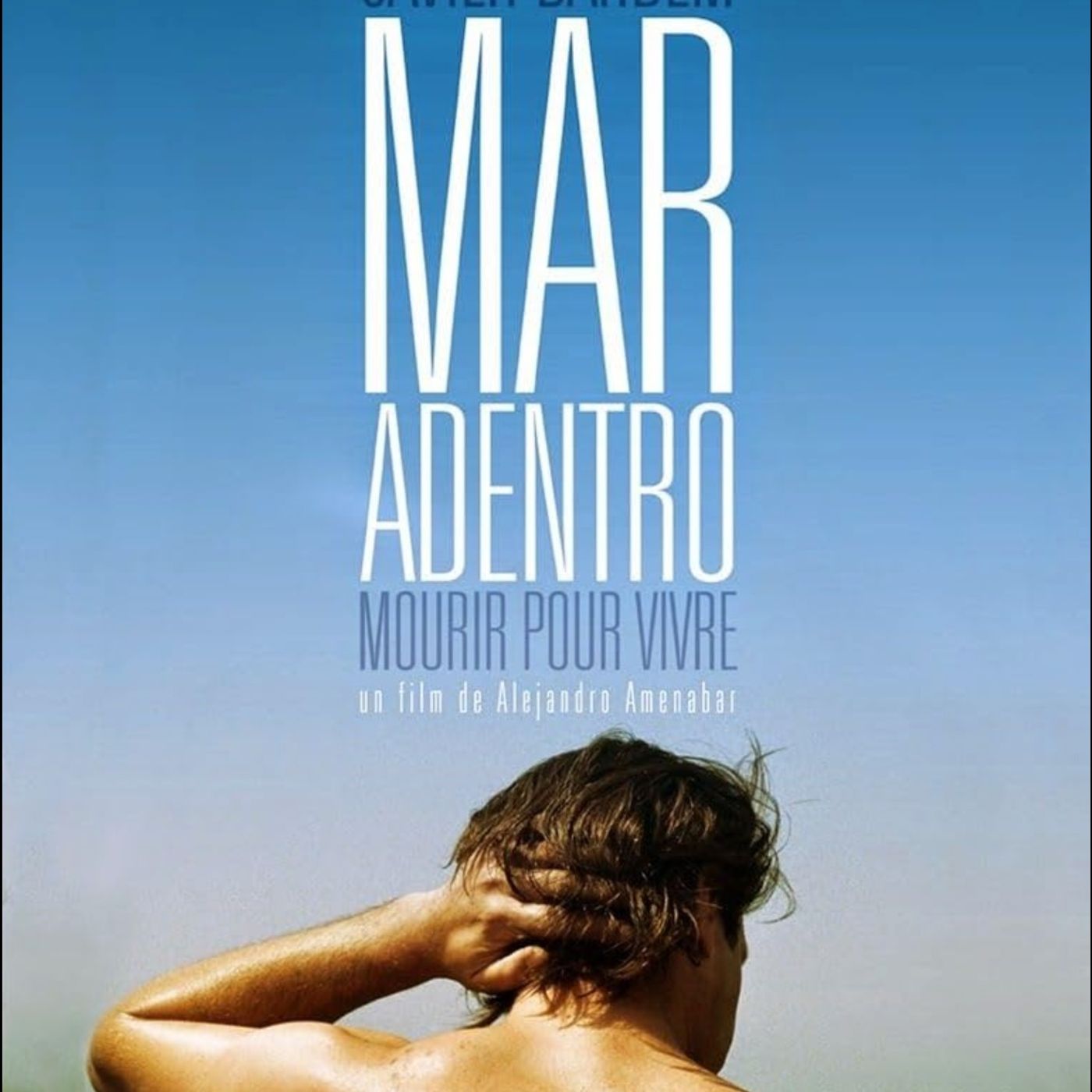

About this episode
Starring Javier Bardem as Sampedro, the film chronicles his life looking back at the accident that took his body to the fight for his right to die to his final moments. It chronicles his life in an unsentimental way that seems at times at odds with the usual way of telling a biopic story, at least in American cinema. It's a quiet film that asks questions about life, death, and what it means to be human.
For more Kulturecast episodes and podcasts guaranteed to be your new favorite audio obsession, check out Weirding Way Media at weirdingwaymedia.com.
———
The Kulturecast is a film and culture podcast from Weirding Way Media, hosted by Chris Stachiw, the Doctor of Podcasting, alongside a rotating table of guest co-hosts. Each week digs into where film and culture meet — and how each one bends the other. Now home to sub-feeds including Required Viewing: A 360° Film Study with Dr. David D. Perlmutter.
New episodes weekly.
Subscribe on Apple Podcasts → https://podcasts.apple.com/us/podcast/the-kulturecast/id931361376
Spotify → https://open.spotify.com/show/5wjxip9XVYapYuY12yEaGY.
Back the show: https://www.patreon.com/cw/kulturecast
Transcript
Automatically generated, so expect the odd misheard name.
It's like one of those on a very special episode of the Culture Cast, we talk about euthanasia. Good lord boy, we're gonna get real serious. All this has been a fun month up until this point where it's like, let's talk about unliving ourselves through the magic of cinema, folks, Jesus Christ. Uh, Richard, let's just open this episode the best way to open it. How do you feel about euthanasia in general?
Yeah, yeah, I can subject itself. How do you feel about euthanasia and the right to end your own life? Well, I think, you know, euthanasia implies you're kind of doing it to someone else, right, Um, whereas uh, you know, suicide or assisted suicide or you know, in the case of this movie, uh, somebody with a terminal degenerative illness or a or a you know, sort of consistent physically limited state choosing to end their own life. That I don't I don't want to say I don't have a problem with it, but I guess I come down on the side of that has to be someone's decision, the individual. I couldn't agree more.
I mean, it's it's a you know, I'm sure we're going to talk more about it. As we talk about the movie, because that's what the movie is. One of the many things that the movie is interested in talking about is kind of the right to end one's life with dignity as opposed to living indignantly, as a Ramon sam Pedro would probably say, as I'm sure he did say multiple times. Unfortunately, a lot not a lot of things with him in real life that were translated to English, Unfortunately, lots of YouTube videos with him just speaking Spanish. So my Spanish is a little rusty.
But on this episode of the Culture Cast, we're gonna be talking about the film based on Ramon sam Pedro's life titled mar Adentro otherwise known as The Sea Inside. Oh so you went on YouTube and looked up the real guy. Yeah, and it's a lot. It's all I mean, it's all in Spanish, That's what I'm saying. Like, if you go and look, there's not a lot of it's translated because it was the mid nineties and just the there wasn't in the international in attention, I guess.
But there's a lot of video of him speaking Spanish from his bed, just like Javier Bardem in this movie. But on YouTube they did not translate it or provide No. One jumped in and said, I'm going to put in some subtitles because YouTube is an international, you know, platform that other people might be interested in hearing what this guy no. And all the comments are in Spanish too, which also cracked me up because I was like, oh, so English speakers aren't even watching these videos. That's that's fine.
But on this episode of the Culture Cast to finish Spanish language month, I am also joined by my good friend. You'll find him on a picket line somewhere in the Greater Los Angeles area. He is one third of the host of ranking on Bass Your friend and Mine. Doctor Richard had him a pleasure to be here, a pleasure to have you and h Yeah, like I mentioned, we're gonna be talking about euthanasia, right to end life, Javier Bardem, his hair choices and whether or not he looks good bald, and U yeah, a whole lot of other things because we're gonna be getting into Alejandro Almane, bars mar Adentro. Remember that fan both well, you can push you on one are we wont m I'll be there, but I mean, and let's just tell them I'll be done.
You know, I sleeping dude's to say, said, don I'm gonna say those paths it's but I mean it's those pathros from back Possum. They're almost then you're gonna rumble m hm. So. The film is directed by Alejandra amene Bar, written by the director and Matteo Gill, and it stars the aforementioned Javier Bardem as Ramon San Pedro, a man who spent nearly thirty years trying to end his own life because he got paralyzed in an accidental diving accident that seems like about as bad of an accident as one could have when diving off of a cliff into shallow water. Along the way, he meets an attorney who has a similar degenerative disease played by Belin Rueta, who is assisting him in his fight to become un alive, and also we meet his family and a local woman in the town Oh Jesus Christ played Rosa played by Lola Duenas, who is ultimately his savior in more ways than one.
So, Richard, I'm gonna kick it to you first. Had you heard of this story before, had you seen this film before? If the answer is no, tell me what you thought watching it for this episode, Well, I thought it was great, and we'll get in Well, I'll have a more nuanced opinion at the end. Everybody, I just want to give it a quick thumbs up, so you know I'm not going to see her going he was boring. He was just lying in bed the whole time.
Yeah, I know. It's a beautiful movie. I mean, and it's you know, it's sort of I always have the same journey with movies like this starts out with I don't want to see them. I don't want to see this. I don't want to see My Left Foot.
I don't want to see the Diving Bell and the Butterfly. I don't want to see Schindler's List. I don't want to see I don't want to see it. I don't want to see it now, when you know, thirty years ago, when Schindler's List and My Left Foot came out, I saw those in the theater because my desire to see you know, popular slash expert artistic filmmaking just barely outweighed my feeling of this is not gonna be fun. You know, you and I were talking about James Bond earlier before we started recording, and I remember in my twenties, as I'd be sitting in a theater and a movie would be starting, there would always be this like this burst of sadness in my chest when I realized, oh, it's not a James Bond movie, because at least James Bond movie, I know I'm going to have fun.
I know the experience I'm going to have. And of course, so I went into this feeling knowing intuiting two things. It's about a tragic situation, but it's supposed to be really good, and that is correct. It is about a tragic situation, but I felt it was done with a decided lack of I don't know what I would call it, sentimentality or an urge toward making a tragic situation even more tragic. I think the filmmakers wisely knew where we would be emotionally coming to this, and so most of the energy was placed in other avenues.
Well, let me tell you the particulars of the story. Let me tell you the plot very quickly. We're we're given the actual real life stakes. He wants to end his life, but legally he can't do that, and he's having trouble, kind of drumming up the number of supporters he needs to get to actually successfully do it. He's enlisting a journalist, he's enlisting a lawyer.
So we kind of get swept up, I want to say, in the sort of nuts and bolts narrative of, Oh, this guy has a problem he's trying to solve, which, by the way, that's how you write a movie, folks. Protagonist has something they want but they can't get it, and for two hours, we're going to see what they do about that situation. And so I give the filmmakers a lot of credit for getting us caught up in his story and not spending a lot of time going out of their way to say, isn't his situation tragic? Wouldn't it be awful if you were lying there in that bed. We get that, We come through the door with that.
And so I was swept up in the narrative from the beginning, and I'd say that pretty much held on through the end. No, I completely agree. Obviously yourself had never seen the movie, had never heard about this case, as Americans were probably a little bit more familiar with the Terry Shivo case, which I think was our kind of right to end life thing for the longest time, at least in Florida in the late nineties early two thousands, and so this story was not foreign to me, But again I did not know the particulars other than, like you mentioned, a man trying to die with dignity and he's up against the largest body of government possible, which is the Spanish government, to be recognized as someone who can do this legally on his own terms.
And I enjoyed that story. I enjoyed that as fact of the story. Obviously, his kind of relationships with Rosa and Julia are the bigger kind of pillars that hold the movie up. And then there's kind of these smaller relationships that he has with his caretaker, who is his sister in law Manuela, and then his brother and his father are there as well, but there, I mean, his brother and his father are kind of not as present, and they represent an older way of thinking a more it's I wouldn't say a masculine way of thinking, but it's an older school style of thinking that they just cannot, for whatever fucking reason, understand why this guy would want to do this, even as he sits there as a quadriplegic and fit, and I appreciate that there are a large group of people that he interacts with directly that allows us to kind of understand where the narrative is going and the emotional stakes.
And by also having these different groups of people, you can and them kind of standing in for people or groups of people or belief systems regarding these things. It allows us to have an interesting viewpoint into the way he feels about these things and the way those things affect his life. Because, I mean, we get a quadriplegic Catholic priest at one point, we have kind of the older way of thinking, the younger way of thinking, a more kind of feminine way of looking at it, a more masculine way of looking at and I like that we kind of cover all of it because, like you said, it's not just about Ramon Sampedro. There's a lot going on here that is just kind of presented in a very naturalistic fashion.
I mean, that's the thing about I'm an a bar now, this having been the second movie of his that I've seen, it's very just a matter of fact, which I kind of appreciate. There's no bullshit here, like he feels the way that he feels, and the story is he feels this way up until the moment he literally gets to do what he wants. And it's not about co wercing him in one way or another, but kind of everybody understanding why we can get to this point as humanity. And I think that's an interesting question to ask and an interesting conversation to have. Well, the benefit of watching a movie in a language that is not one zone and I don't understand.
I don't speak Spanish, and so I was able in a way. The gift of this movie was it allowed me to stand a little bit outside of it and maybe observe a little more of what the director was doing or how I was feeling about what the director was doing. And what I noticed was there were moments of because you know, our conversation is hey, it was very straightforward, but it was not documentary like. There were moments of great visual lyricism, and there's even fantasy moments where we understand that we're now in his imagination. We see him get out of bed, we see him able to move, and we and we even are in his point of view as he flies over the landscape and an exhilarating sequence and ends up at the sea where he meets this woman, Julia, who is the lawyer who has been sent to help represent him, and it turns out that she has her own health issues that will bring her face to face with the exact same questions that Ramona is facing.
So in these moments, yeah, we're obviously taking license with realism, and yet at the same time, I guess it's done in a somewhat straightforward way. And and because we're so securely in the point of view of Raman, it feels seamless. We go right along with it, and it allows us to understand a whole range of emotions he's having. And yet Javier bardem his performance is not self pitying at all. It's also on the other end of the scale, not cynical, bitter cold.
Were never given the feeling that, oh, well, this guy's soul died decades ago, let's just finish the job. They pitch his performance, both director and actor and writers in a middle ground of a man who can love other people, but that does not sway him sentimentally to change his estimation about his own situation that he's been living with for decades. And I kind of appreciated that. There were moments when I expected the narrative to go in that direction, and I thought, oh, that would be interesting if he's very clear on what he wants to do to himself. But when he hears and in the case of this movie, he's sort of falling in love with Julia, who is this woman who is his lawyer, and when he hears that she has now made the decision also to end her life based on her medical situation.
For a moment, I thought, oh, is it going to shift. Now He's suddenly going to go Wait, but I don't want her to do that. Oh now, now I understand what everyone's saying to me, and how hypocritical is it for me to not want her to do it? But I want to do it. But you know, to the movies credit, it doesn't go there.
He understands that desire and welcomes her and says, I understand, and let's make a plan. I just don't want you to do it before me, so maybe we can figure out a way to do it together. And so they make a plan. To your point from before, this is not the kind of movie that I would watch. I have not seen Schindler's List.
I have not seen my two left feed, the Daniel de Lewis movie, which was he was making you know, That's what his you know emo was was these kind of movies. This movie is not the kind of movie I would gravitate towards for a number of reasons, namely the one you mentioned, which is like I bummed the fuck out for two hours, and again like if that's the kind of thing you're in, too far be it for me to tell you not to watch it. But it's just not something that draws me in the same way it draws other people. And that's not to say I don't understand the quality of performances in Hollywood. The quality performances, the hard hitting performances, all often come from these kinds of movies, you know.
I mean, that's that's just the way it is. So all of that aside um, Can we talk about Javier Bardem for a moment, because how where where do you come down on Javier Bardem? I'm just curious, where's where do your points of reference for him? As an actor? I don't have a ton of points of reference, but I do anything I've seen him in I have liked him and this, I think this is the most Javier Bardem movie that I have seen, and I thought he was terrific.
Yeah, it's I mean, look, I've seen No Country for Old Men, as I'm sure you have. And then Goya's Ghosts, which was the movie we watched last month. That was a Milosh Foreman movie that I had never seen, and he was he was fine in that, he was not the problem in that. But then you know, you mentioned James Bond. He always comes to mind as a Bond villain from Skyfall, which I think he's good in an otherwise kind of whatever movie.
And then Mike White brought this up the last time we talked about Javier Bardem, which was probably on that Goya's ghost episode. He's actually a lot of fun and that Pirates of the Caribbean movie that came out Dead Men Tell No Tales, he's a lot of fun. He plays the villain and he's just hamming at the fuck up the entire time, And that, for me is kind of what I think of when I think of Javier Bardem. Like the things I've seen him in, he commits like he's maybe not a oh God, method actor quote unquote I've never heard that leveled against him, or any of those kind of things that you hear about, you know, Daniel day Lewis was in character and a bit of all that. Like, I've never heard that about Bardem.
But to your point, this is the most Javier Bardem movie I've ever seen. I mean, this is him. He's the focus. I mean, yeah, in No Country for Old Men he's kind of the focus too. But this is a this is If this were made in the States, he would have been nominated for a Best Actor Oscar and he might have won.
But it was nominated for a Foreign Film Oscar, which it did when so that's neither here nor there. But that's the kind of movie that this is is it's a very serious movie. Yeah, And I wondered about that, and I didn't look it up, but I was wondering if it was Best Foreign Film or if he and I'm sure he received other accolades for it, so that's great. Yeah, I've always enjoyed him. I thought he was terrific.
He plays two ages in the film. We do get a little bit, just a little bit of him at the age he was, which is pretty like early twenties. I think he's in the accident that causes him to be paralyzed, and then you know, the vast majority of the film is thirty years later, so he's in his mid fifties. I guess looks a little older, probably because I think when you're in that physical state, your body ages a little differently, right um or you know, there's other residual physical effects besides being paralyzed that you know, as your body deals with that, other things happen. But anyway, all that having been said, um, he he is wonderful and and by the end of the film, I was crying.
I mean I you know, and I was, and I was that doesn't happen a lot. But as it was happening, as I was watching the movie, it was very clear to me that I was in the point of view of the people who were realizing, after this long, difficult stretch of time, that they were saying goodbye to him for the last time. Toward the end of the movie, he does leave the house that he's been in for the entirety of the movie and goes to another city where a person and will get to you know who and why is ultimately going to assist him in this process of ending his life. And when that happens, you're you're crying because you have come to know him as a human being, and so you can identify with his family, especially his nephew.
That was the part that really killed me, Javey, And and you understand that even as it must have been a horrible burden to take care of him, they did it because they loved him, and that that angle of the story is addressed when the Catholic priest was also a quadriplegic, comes to the house to try to talk him out of it, in a scene that is actually very very funny, the whole sequence, Yeah no, and the and the way that they frame it with Javier Bardem refuses to come out of his bedroom to come and talk to this this quadriplegic priest who they had seen on the TV, kind of in what I would consider be talking down to him and his family and kind of speaking right from his experiences but kind of projecting it onto them.
And so they have this like church boy running up and down the stairs delivering the messages back and forth in kind of a weird game of telephone, and he is the one share the argument for them and yeah, I mean it's it's an interesting scene. I mean, it's an interesting scene the way that it's done. But it also I mean it goes to further reinforce the expectations of the character and his just unwavering belief and like what he believes in, even in the face of a literal priest who is sharing the same experience, well, the same experience is the priest believes he's sharing the same experience as Javier Bardem. But it's that thing where he's like, you know, you can speak for me, but it's more you're speaking for yourself projecting onto me, right, and the and the young man who's probably you know again twenty early twenties, maybe late teens, that character who's who's you know?
I mean, it really is very funny. It's like, OK, tell him that I get to do whatever I want. He runs downstairs, and the priest is like, well, you go up and tell him, right, and the kids running up and downstairs. But the great thing is, at a certain point you see the kid as he's relaying this information, you can see that he's not just parting the words, he's actually being convinced. So when he runs down and talks to the priest.
You see him just in a small clip because it's sort of a montage at a certain point, actually sort of arguing the point as if it is his own opinion to the priest, and then running back upstairs to try to then represent what the priest is saying. It's a really lovely moment. And then ultimately Ramon just shouts downstairs, you know, so he can be heard, and then the scene twists and actually becomes very poignant because Manuela, the sister in law who you get the feeling, is primarily in charge of Ramon's physical care, bathing him, cleaning him, I mean, all of the you know, sort of indignities of being completely physically helpless, and she's in charge of all of that. And she says to the Catholic priest, you know, when you were on television, you said that that we don't love him, and that's the reason that he wants to end his life, or that we're you know, we're not stopping him.
We don't love him enough, we don't love him enough. And she basically says, you're terrible, and I, you know, fuck you because I say those words, but that certainly is the attitude. It's like, we've been here for decades taking care of this guy, and you're on TV making political hay out of a situation that actually affects real people, and you come here to argue with him, but you did not come here to really learn the situation. And that's so great because the movie was made in two thousand and five. But man, that's never been more true than now.
People who use media to pontificate about topics they know nothing about and people they've never met. And so that moment lands really really just square in the middle of what we're living now. Well, and it's interesting. I mean, you mentioned he shows up not to listen. He doesn't want to listen to what Ramone has to say.
He just he goes in there with his agenda to go and tell Ramon and how it is and what he can do to fix it. And you know, look, I mean, realistically, this movie is about several things. It is at times about someone who's quadriplegic, but it also is about mental health because again, I mean, some of the people that are dealing with right to end life and assisted suicide aren't necessarily dealing with a physical, visibly physical impairment. They may be dealing with other things. And so it's interesting because you mentioned it.
I mean, the idea that oh, you just get better, just to just to be happy and just think happy and you you need to find someone who loves you is all and ed'll fix everything. It's like that, when you say that to someone who's been dealing with this for thirty years, that feels a little childish. It feels a little like not child I guess maybe child is not the best word, but it feels a little naive and infantile. You bring up a really good point because outside of something like Alzheimer's or advanced dementia, think about a psychological state, because you know, people do have mental illnesses and they suffer with depression and anxiety and stress and and you know, trauma so deep it affects them physically.
But this is real. I think we all know this is real, and that people go to therapy. But people also take medicine, you know, and maybe they're schizophrenic, bipolar. I mean, there's things that people are struggling with that are more or less let's call them, you know, diseases of the brain. But if you look at those people while they're walking down the street.
They don't look any different. Now. Javier Bardem is in a bed, his hands are curled up like Clause. And when that person who cannot move, who clearly seems diminished physically, wants to kill themselves, wants to end their suffering, I think there's a larger percentage of our of our you know, sort of personality that says, oh, I get that. But if you see a person who can physically maneuver through life, but who tells you I am in psychological pain all the time and I want to kill myself, I think we recoil a little bit, and we do have that attitude of well, the hold on a second, you're just you're in a moment of emotional stress.
Don't don't you know, don't kill yourself. It'd be like if someone is like, oh, my girlfriend just broke up with me, I'm going to go kill myself. You'd say, oh, hang on, you're not going to feel the same way in a week, a month, a year. To just stick with us. But there are people with psychological conditions where no, they wake up every day with crippling psychological pain that keeps them from moving through their life.
And the way they want to. Yes, that feels solvable because we're like, well, maybe there's drugs, Maybe there's some sort of technique, some antidepressant, something that can work for you, some sort of pharmaceutical cure. Maybe there isn't. Maybe there isn't. But I think we would have a harder time.
It'd be tough to make that movie. Oh yeah, and for us to go what I think we would, we as an audience would have trouble with that unless we were someone who suffered with it. Right. Well, that, I mean, that is the other thing obviously, you know, Barbie, for me to tell anyone this, but you can make the decision to unalive yourself in a number of ways. The real crux of the matter here with him is he was unable to do it himself and the government is unwilling and unyielding in their belief that you can't have someone help you do something that you want to do.
That you have said, I will sign anything, I will make anything clear to you that this is my choice and I'm wanting to do this, And that's the that's the I mean, that's the legal problem here. I mean again, yeah, he's having a hard time convincing the people in his life that he wants to die, that's one thing, but he also has to legally be able to do it theoretic, right, And well that's and they and they, you know, more credit to the movie. They bring us to court and they have a character explain it just as you did. If if someone attempts suicide and it's not successful, we never prosecute. But if someone tries to have someone help them commit suicide, we consider that person a party to possible homicide.
Right now, why are we doing that? And you know what, where do we draw the ethical line, especially when you have an example here where a person you know, has been has been expressing that same desire for decades based on an actual physical condition. So it's very interesting. Even on a sort of La law kind of level, or a good wife sort of level, you're like, oh, yeah, there's an interesting legal question here. Now.
I thought it was really interesting when it was revealed because it's a reveal in the movie that Julia is struggling with a degenerative disease that's not going to get better and is in curable. We see that she has a cane, but we don't really know why and it's not until after she suffers a stroke in sort of the I don't know first half of the movie that her situation is laid out and articulated very clearly. She's having a series of strokes. It's based on a disease she has it. This last stroke affected her legs.
She's now in a wheelchair. She's gonna have more strokes. There's nothing they can do about it, and we don't know when they're going to happen, but they will continue to diminish her physically and mentally. Right, and so for her, the question is almost because it's not the exact same situation, but the question is almost, I need to make this decision ahead of time before I lose the mental capacity to make any decision for myself at all, which is what happened to Terry Shivo. That's the I mean yeah, I mean well, she was unable to make that.
She was literally unable to make the decision for herself. And at the end of the movie, it seems like the character of Julia has come to that point. She's still caused renizent of where she is, but she would not be seen as able to make decisions on her own at that point. No, at the end of the movie, we are clearly at the point where she is no longer going to be able to articulate her wishes or even or even be fully aware of them consciously herself. The Terry Shivo thing, and you know, we're going back into American you know, I would say political mass media history.
But it was so the entire argument was repellent because Terry Shivo had no voice, right, literally none. She was a person in a vegetative state, which of course made it the perfect American spectacle because it was a bunch of people with a political football screaming at each other, and the person themselves became beside the point. They were just an object over which we're going to argue our points of view that the people on the other side find repellent. And that was so that that to me, was an excruciating public event to witness on any level where we're here, this is different. Um, okay, So let's let's sort of step through that storyline.
So Julia becomes emotionally close to Ramon and also part and part of that is through his writing. Because he's done writing, he is able to write. He holds you a writing instrument in his mouth, and with the help of other people in his family, he's able to get his thoughts on paper, and she reads those and gets to know him through his writing, which we are told and which we sample a little bit, but we come to understand his writing is beautiful, right, and it means something to her, and it gives her a window into his soul, and as his lawyer, she feels she really needs to know him as a person so she can advocate for him as best she can. But what it really does is it leads to the closest we're going to come to a romance in this movie.
Right Therefore, play is sharing a cigarette. Their consummation is a kiss. That's the entirety of it, except for the obvious emotional weight behind those things, because after a while you know that he's feeling feelings for her. He says he is. He talks about how he fantasizes about her, and he's very clear that in these fantasies he is a fully capable man and is able to approach her in that way.
And maybe it's because she suffers from this condition he's able to have such evolved feelings in this way about her. Because in a way, she is the only real person to him, because she's the only one who is close to sharing his physical situation. Well, he even mentions like, I'd wouldn't want a lawyer to represent me that didn't understand this at least right more intimately than like, oh, you know, I'm going to represent you, but I don't have anyone in my family or I don't have anything. It's like, well, I want someone to represent me that is actually going through something about as bad or just as bad as what I'm dealing with. Right.
He wants somebody with flesh in the game. Right, So they come up with a plan when her situation deteriorates, and the plan is, let's get this book published. I want to put together your poems and we're going to work on a few more, and we're going to leave it as sort of a testament. This will be your final word as a living human being, and we'll get it published. And then once it's published, I will bring you the first copy, and that is the day you and I will end our lives together.
So that's the plan, now, I will say, and again spoiler alert, this is not what happens. By the time the book gets published. She does not do this. Now, we're not given a ton of explanation as to the exact moment she changed her mind or why. We're not given an incident that explains her change of heart.
All we know is that a book arrives at his house through the mail, not through her, but with a note that doesn't come right on say it, but basically implies, I've changed my mind. Here's your book. I can't do it right right and this is devastating to him. This is as as cruel a betrayal as we're going to see in this movie. I guess the character of Julia, I appreciate her introduction into the story.
I couldn't find any information about that being a real person in his life, But I feel like that I don't know how I feel about how where that relationship ultimately goes in the movie. It's such as it's not that it ends in such a bizarre way, but it ends in a way that feels almost atypical of the narrative that the movie's presenting, which is not leaning on the melancholy of things, and that feels just like the one kind of really melancholy heavy moment of the movie well, and yet it still feels anti climactic, right, you know, because it doesn't provide us I would say, and you know, I don't want to be the guy who says, oh, American movies are this way and movies from you know, choose your other culture are this other way.
But let me put it this way. If I turned my script in, I think one of the notes I would get is, Hey, we love the idea that she changes her mind. That's awesome. We have no complaint about that. We just want to know why.
So could we have the scene where we see the decision and we understand, oh, because of this, she changed her mind. Now we know why she does what she does. They don't provide that for us and so, and when it doesn't get provided, when that information doesn't come through, I just assumed, oh, well, that's probably just how it happened in real life. And maybe there maybe the audience, the original audience for this movie sees it and already knows the story and knows it well enough that they don't need a lot of explanation. But I was left a little like, oh, there's probably more to this.
We're not done with her, We're going to see more of her she'll come back. Well she doesn't, not to him at least. No. I mean that scene at the end of the movie is really heartbreaking because she goes, oh, you know, Ramon, Ramon who and it's like oh man, and it's but it's again, it's like that I'm not saying that that moment doesn't feel earned. It's just like I almost could have done without that moment, even like I don't know, like I get that we had to see the note that he wrote, and we had to get that beautiful vo that's provided at the end.
But like, was Ramone right in the end? Or was Ramone wrong? That's the question because like the character, well about any of it, because again, I mean, he spent twenty nine years of his life trying to end his own life and then became emotionally attached to a woman who he kind of went all in on and then it ends up kind of falling apart in the end. So it's like, if this movie had gone a different way, one might say, like, well, Ramone was validated, Like it was all just a constant hell that he was waking up in, even up until the end where he was promised one thing and another thing happened or was he right in the sense that he got to share those moments even if they weren't shared to the fullest of their ability because he was paralyzed.
Well, yeah, it's it reflects on a couple of subjects within the film. One is the gravity of what he is asking of other people. So he has two women in his life, if you will. The other one is Rosa, who shows up and presents she's got two little kids and she is compelled to go see him. But she is definitely on the side of don't do this.
I don't think it's a good idea, okay, but you know, but she's clearly a nice person. She's not there with a big agenda. She's just expressing an opinion and one way or another they become friends. Right. You never expect that Rosa will ever change her point of view, So we're not respecting that of her, and that's not really part of the narrative.
We think that's what Julia is for. Well, it turns out in the end Julia can't do it, okay, for whatever, for whatever reason, Okay, and that and that's kind of nice because it says, you know, all of these people live on a spectrum of their commitment to their own ideologies. What we respect and ramon at the very end is that he stayed true to it. And even that is questioned by even Janet at the end says, I support you, but don't do don't just go through with this because he said you would, and don't do it because you're afraid if you don't, you're going to disappoint people who are politically aligned with you and with this subject and this issue. And his response to her is really, you two, even you at this point are questioning me, and she's like, I'm sorry, I'm sorry.
But what it does is it reassures the viewer. I know what it is. I want every one of you was questioning it. Every one of you is getting gun shy when the moment of truth arrives. But I am not gun shy, and boy is he not.
That final moment of the film man, he's like, Okay, turn on the camera, let me explain what I'm going to do here, and then he does it, and that's it. He doesn't hesitate either, not at all. No, which I mean again, there is a video out there of this. I didn't go searching for it, but it lasted forty minutes of him struggling, and kind of he died over forty minutes. I mean it's not immediate.
You know, potassium cyanide doesn't kill you immediately, and maybe it does if it's a big enough dose. But he was also given best I can tell all the information and research, this was a series of steps that existed to make sure that everybody didn't have enough on their hands to get in trouble for what they were doing to assist him in suicide. So they assisted him. It's just you know, death by a thousand cuts essentially. Oh, that's interesting.
So it was nobody had the full let's say, two hundred milligrams. That's the that's the amount mentioned in the movie. Um, but if anyone was ever caught with that amount on them, they would then be legally liable for committing a crime for having that much of a controlled substance. I get that. So you're saying, in real life, everyone had a much smaller amount, and they sort of added it all up, hand to hand to hand to hand, and then ultimately someone added water, and then then someone else took the glass into the room, and then someone else put the straw in and then someone else pushed the table up to his mouth or whatever.
That's what it feels like. We're sort of working with on the orient Express. Right, Rosa in real life is the one who provided him the drink with the straw. Right, in real life, she is a real She is a facsimile of a real person who seven years after it had and which is the statute of limitation. Limitations.
She came out and said, like I fucking did it, so what, Like that's what he wanted. And that's the thing, Like, that's That's the thing about this movie that I do appreciate is it's the thing that you've mentioned already a couple of times, which is the lack of sentimentality. Like this guy wants to die and that's it, Like right, that's it, Like yeah, yeah, he can wax poetically about love and life and death and all these other things, but there is a unique singular focus in all of his actions leading up to the one action that he takes at the end of the movie. Right, And you know, I had a question about Rosa and her sort of character arc from I don't think you should do it. I love you, we should get married, you know, she's sort of living in that world, and you kind of feel like, well, again, she's that's the sentimental point of view, right.
So then then ultimately, though she says at the end, she's like, you know, you said that anyone who truly loved me would help me do this, and then I realized I do love you. Therefore I guess I'm going to help you do this. And once she's in that psychological frame of mind, she's not struggling. We don't see her have a moment of doubt. She's just like, Okay, I guess this is what if you want.
If you want proof that I love you, then I will give you the proof. I will make this happen for you. And then she does. And I think it's interesting that that's kind of the conceit of the character in the end, is like, if you love me, you'll respect my wishes and let me do this. And I mean, again, it's obviously such a case to case basis, but for twenty eight years you sit and say that, like, you know, like, it's just so wild to me to think like again, because put yourself.
I don't. When I was watching this, I wasn't putting myself in Javier Bardem's shoes so much because I feel like if I was in his shoes, yeah, I don't. That's harder to understand. But if I were the family member of someone, yeah, I would do whatever they asked me. If that, if I could understand, if I could begin to try and understand and have an inkling of a knowledge of what's going on and understand why they're doing what they're doing, then I wouldn't hesitate.
What's the point, right, Well, it's a different you know. Here's where I say it's a different culture, but it is a different culture. Spain is a Catholic country. It just is right. That's the predominant moral paradigm within which the people there lived.
And I'm not saying every last one is a Catholic or the same kind of Catholic or is devoted as the next person. But that's the reality, and that's the landscape upon which this argument will always be held, Which is why we didn't see a lot of politicians. We weren't watching their version of Republicans and Democrats. We got a Catholic priest, That's who the outside voice was who came in and said, no, don't do it. It's not okay.
But at the same time, other people just approached it from their own emotion. You know, how do I feel? And that's why I think the brother in a way was the most dug in philosophically against this. Ramone's father was emotionally against I think I think Ramone's dad was like, I get it. I'm not even saying he's wrong.
I'm saying to watch a child die is bad, but to watch a child die who wants to die is even worse. So for him we get his emotional stance, which is heartbreaking. Manuela, the sister in law, I think, respects him and won't help him, but won't stop him right and then Hove the nephew. I think he was presented in a really great way as as not a hugely intellectual presence, but a more physical presence. I'm the guy who will helpe you redesign your wheelchair.
I'm the guy who will help you build a little machine here so you can write beyond that. I don't really think a lot or very deeply about anything. I sort of take things at face value, and what we see from him is that he understands what is uncle is going to do. He understands how much his uncle loves him like his son. The poem that Ramone writes and dedicates to him finally clicks, and he becomes very emotional, maybe for the first time, when he says goodbye to his uncle after the ambulance.
Chases the ambulance for a while before he then very decisively stops. It's like he lets the emotion pass through him. He chases and then he stops. He doesn't collapse in the road in a heap of tears and scream at the sky. He stops and accepts, Okay, no matter how I feel, this is going to happen.
And so we get We even get his point of view. So everyone sort of checks in again along a spectrum of how they feel about it, and a lot of their feelings obviously are about themselves. I don't think anyone intellectually goes this is wrong. It's like, we get it, and God forbid we're in that situation. We might feel the same way.
And even Ramone says, I'm not speaking for all paraplegics or all quadriplegics. There might be others out there who value every second of life and we only get one moment one moment of emotion from him in the middle of the night, and I think it's after I think it's after he gets the letter from Julia, where he sort of has this brief outburst where he's like, what is wrong with me? Why can't I just appreciate what I've got? Right? And the answer to those feelings are give me some of those tranquilizers.
Yeah, I need those drugs. What I was like, and Manuel is suggesting it. She's like, let me give you your pills. You'll you'll cut you're freaking out, you'll calm down, you'll feel better. And he's like, give me a few extra An't going to kill me?
And she does and it doesn't kill him, and by the next day that storm has passed. Right. I like that scene a lot. And that's a really interesting scene because, like you mentioned, it is kind of the only I want to I mean vulnerability of the character of Ramona. I mean, he puts on a pretty good face the entire movie.
I mean again, I feel like, obviously, because we're seeing this story twenty eight years on, as opposed to year one or year two, they they haven't done the Ramone Sampedro Backstory sequel prequel movies, yet we're still waiting. But because we're so far along with his character and so far along with the narrative, entering it almost in media rests in a lot of ways. It allows us to see a more fully formed character who is dead set in his ways, no pun intended, Like he is unwavering, and it's interesting to see that in a movie because, like you mentioned, in a lot of these other kinds of movies, especially biopics or other films on this topic, there's like that moment of acquiescing where it's like, well, am I not doing this?
Like? Should I not be doing this? Like? And it's like this movie doesn't have that. This movie has the scene of why the fuck can't I stop wanting to feel this way?
Which is such a weird, weird way to tackle it, but it makes sense in the context and scope of the way the movie is presenting the narrative of Ramone. It makes perfect sense because we haven't seen him break at all at the entire movie, and it's not you know, it's not linear. You know, he has this one moment of doubt, but then it goes away and you don't We're never led to believe that in those final moments, he's having a change of heart. No, I had the one long, dark knight of the soul, but then I kind of got over it and and in the harsh light of day, I realized that, No, I still want what I want. And you know, if you were to put yourself in that position, I understand how you could get to this point.
I mean, that's scene where he's sitting there, and it's right. I think it's like the first or second time he meets Julia and he's like, you know, my hand is five inches from your hand and I cannot fucking move those those five inches seem like an impossible journey for me, right, And it's like that that puts it all in perspective. Like just I mean again, it's hard to imagine what it would be like if you could not get up out of bed every day. And like again, it's it's so much more than that. It's resigning yourself to that fact.
It's accepting that. It's knowing that this is it forever and there, and like again, like, yeah, there are ways to get out of the house and go out and do things, but ramonas accepted the way life is going to be not the experiences he's going to have, but the way his life is going to play out is you will always be someone else's ward. You will never be able to take care of yourself, and someone will always be there for you in a weird relationship of again, because I mean they say it in the movie. He's like, you know, you might be a slave to your quadriplegic nous, but we're a slave to you because somebody has to take care of you. And you know, calling it being your slave is very hyperbolic, but there is part of that in this narrative of the people around you in your life are now responsible for taking care of you.
They're responsible for changing your catheter like she does at one point. I mean that is that is where the idea of death with dignity and living a dignified life, that is where that comes in. And it's so fucking subjective. It's not objective. I mean, objectively, if you're a quadriple agic, your quality of life will be diminished from someone who can walk correct.
However, those other things are a little harder to kind of say, well, this is a quantifiable thing, like like he says, quad there are plenty of people that a quadriplegic, that live immensely engaging and fulfilling lives, but they're still quadriplegic. Well, okay, so you and I are sitting here running our mouths. Now, theoretically we could do that if we were quadriplegics. We could still be doing this, right, which brings to mind a question that I hadn't considered until this moment. There has to be that podcast out there.
There's got to be a podcast by a quadriplegic, I would think. So there's never looked for. Yeah, there would have to be, because if you're a person who you know in this movie, he writes that he does have an impulse to communicate artistically. But if you were a person who was in that situation, one of the few things you could do was put your voice out on a microphone in a podcast. Um.
You might that might be enough. That might be enough to go you know what. I can still speak my thoughts. I can still reach people, and then I can go online and read their comments and respond and um. And all of which is to say, like he acknowledged in the movie, he's not speaking for everyone.
He's just speaking for himself, which I think is the important distinction right then in all of this, I mean again, and he makes it himself because you know, his book can't el Infierno, which means letters from Hell, which he mentions that kind of idea in the movie a couple of times. He's like, I literally wake up in fucking hell every day. And I think, I think it's those moments of fantastical realism that just like for like water for chocolate, injects it in there to deal with these emotional feelings that these characters are having. Like that, those scenes of him flying out the window and flying to the beach and all that, it's like that is heaven for him. That's the only time he can experience what he believes to be a life worth living.
And you know, I wonder what his experience would have been like if he had been born quadriplegic, as opposed to you know, someone who had it taken away from them by you know, a mistake of their own. I mean, it's not like someone pushed him in but he jumped and hit his head, but he wasn't. I mean again, there's a there's a moment in the movie where Julia is looking at pictures of him and he's overseas and it all looks very poorly put together, unfortunately, But those photos and movies tend to and they always make me laugh whenever they show him. But if there's an interesting moment where it's cutting between the photos moving and Javier Bardem reliving that moment in the water, and he's like, this is what happens before you die as you see things flash before your eyes, and it does that with the pictures and it kind of mimics that that thing that he's talking about.
It's such an interesting scene in the way it's put together. But at the same time, it does make me wonder, like for this guy, if he had been born quadriplegic, would he have felt this way? Or is it like this was ripped away from me, My life, my autonomy was taken away, and I wish I had just fucking died right there, Like I wish I had died, like you know, I had a massive stroke and my brain is bleeding. I wish I had just died on the operating table. It's like that, and like, yeah, I get that, And so in a way it feels like, yes, I want to end my own life but also it feels like I want to correct the galactic mistake of the world rebringing me back into it, because I, for all intensive purposes, should have died.
And it's like he's also trying to correct a kind of a cosmic slight against himself, because there is that chip on his shoulder throughout the movie and he and he really, like Bardem, does a good job of portraying someone who's just fucking fed up with not people, but just his current place in being. Yeah, and you get the impression or I did that it was his brother who kind of pulled him out of the water, right, which might speak to their sort of intractable relationship because on some level, maybe Ramone blames him. It's like, if you had not come and rescued me, my suffering would have been over. But instead you rescued me into a life of hell right that you now say you don't want me to escape from, so right, which is fucked up.
Like that's the part of this Like, that's the interesting part of this movie. I'm not saying that this movie is an interesting altogether, but that's the interesting part for me, is there are these weird character interactions that are just so strained by situation, not by choices. Like his brother, anybody would make that the same decision. You see someone face down in the water, you'd pull them out of the water. And yeah, it's like, you don't know, he didn't know right exactly.
No, he hit his head right exactly. And so it's I like that idea of these relationships are also being dictated by like outside forces outside of their control, and they just it feels like some of the people in his life just keep making poor decisions for him, as if that will somehow change what's already happened. Right, And one of the ways that we understand his commitment to his idea and feelings. And again this is the movie's credit. He never raises his voice.
No, there are no shouting arguments, there's no you know, we never see him get red in the face, and you know, and you know, wish he could leap out of bed and punch someone. He does very he's very calm and composed about his decisions, right, And that's seen in the courthouse because we've kind of mentioned it is just I think it. I think if there's a villain in this movie that's painted the most negatively, I mean the Catholic churches, I think painted in a rather kind of stereotypical light, like that's going to be the way the church would react to this. But the government, the government of Spain, the Spanish government, is painted in such a negative light, like oh, overwhelmingly lit negative and like that's what happened, so they deserve to have it portrayed that way.
But fucking come on, well, it's like you're stuck in this deureaucracy that will not take into account the particularities of your situation. They refuse. His lawyer says, would you would you allow him to speak for three minutes? Is one thing he can still do. Let him speak three minutes, And they're like, but the law doesn't provide for that, so we literally will not hear his voice.
We will not consider his feelings in this matter. M We're just going to go by the letter of a law as if he does not exist as a human being, and so based on that, and it's usually technicalities. I mean, every time his case has a setback, it's like, well, you filed through the wrong jurisdiction. Well we've ultimately said that No, unfortunately, sorry, we can't talk to us again. In you know, five years or a like, like, there's almost no emotion, and that's what makes it so appalling.
There's no no judge says you should appreciate the sunshine and the cry of a child and the laughter of a dog, and you know, let no one, there's no it's just like, well, sorry, the law says no, so the answers no, next right, And it's a little Ragtime esque in that kind of bullshit bureaucracy, because in that movie, it's you know, he's going back and forth getting the paperwork, and it's like, no, go to this person, no talking to this person, No, no, No, that's like and this it's just this is what happens when the government is making decisions without any sort of empathy for the people that are actually having the decisions made about them. There's no the human aspect of this is gone because any one of them could have said, we can make a special arrangement for right now to let this guy speak for three fucking minutes, and nobody opens their mouth, nobody says anything.
And it's that just like there's a lack of empathy that you feel from the government. And again, it's very faceless throughout the movie. But that's the one time you get to put a name and a face to a person. And again the Amana bar does a great job of showing you like the lack of empathy that these kinds of bodies tend to have. Right and in the movie, very smartly does not have him begin to shout in the courtroom, I will be heard and again have a big, beautiful oscar bait moment.
He doesn't do that. What they do instead early in the movie is he explains his own sort of emotional demeanor, and he says, when you're in this situation, you learn to smile through the pain. When you are completely helpless and dependent upon other people, you smile through the pain. And so in that moment when he is dismissed from court and you know it hasn't gone well and he's smiling, you don't think that he's misunderstood what's gone on, or that he's gone mentally simple. You realize he's experiencing pain.
And often when we see him smiling in that moment, we realize he is experiencing emotional pain. And again those are the moments where Javier Bardem as an actor, is the perfect person for this role. Like, yeah, you know again, like having seen him in so many other things playing essentially villains for the most part. I mean, I think the three things that were mentioned Pirates, Skyfall, No Country, those are all villanous roles. This is and even Goya's ghost, he's kind of the villain of that.
He's like, this is the first time I've seen him be like a purely like that. I mean, sympathetic is an interesting word, but I think a character driven by something that is less nefarious as poisoning half of the world or killing someone or something. This is just Javier bourdem is a I mean, look, this should have had him nominated for an Oscar And I know we always talk about how bullshit all of that is, but this is the kind of role that you can nominate it for like and doing it this well, not embracing the biggest aspects of these roles that you tend to expect, which is the yelling and the screaming and the emotional outburst. It's played very quietly too, which I think benefits the movie overall.
It makes it a much more interesting movie and a less kind of I don't know, aggressive of an abrasive film, because I mean Javier Bardem can do it with the best of them, but it makes us love his character more that he's able to withhold and stick to what he's doing without letting it get in the way of being kind of intelligent and rational. The movie gets out of our way and allows us to process things each moment as it happens from every one's point of view, and that's its strength, because there are so many different ideas and points of view and ways to look at this situation, and the movie does not tell us what to think or feel. It simply presents it and we come to our own conclusions. The other thing brilliance of casting Javier Bardem is that he is so charming we're happy to be in a room with him.
And he can do more with ten percent of his body than most actors can do with their full use of every part of their body. So we're in good hands, so to speak, with him presiding over this again, what I would say to a listener who has not seen the movie and is even now considering seeing it is it's definitely worth seeing. It's not the uncomfortable, unbearable, relentlessly depressing movie you might think it's going to be. It's emotional, but but you are engaged, and Javier Bardem is engaging, and that's what makes this a trip worth taking. And Javier Bardem and Alma Nabar had never worked together before either.
That's I mean, it's just there's a level of quality to this movie that I mean, we kind of talked about it a little bit, but ultimately this is a movie where we spend about an hour and a half of a two hour movie in one room with one guy and other people talking to him and him interacting with them, and it's still imminently more compelling than a lot of the things that are coming out right now, or a lot of these kinds of movies even tend to be. And again, I think it's just like you said, the movie does a good job of letting us the audience receive what it's sending out there and giving us the opportunity to do it as an audience as opposed to telling us how to do it. And that's just quality filmmaking.
Yeah, yeah, Really. The only time I winced and looked away and was sort of like, oh, please don't show this to me, I don't want to see it was the final moments where after he had taken the science is its cyanide potassium cyanide. Yeah, and it's horrible to think that the real guy you know suffered if he did for forty minutes, I mean, it does. It brings up the notion of really, so this is now what a person in this situation is forced to do. Like there is no there is no structure in place that says, when you get to this point, here is a painless, stress free procedure to undergo this transition without pain and physical agony.
If that is indeed what happened, it's not apparent in what we see. It happens fairly quickly, and it doesn't necessarily look that like he's experiencing horrible pain, but he is experiencing I would call the sort of agony of his transition, if you can put it that way. Well, what's interesting is, you know, I just watched for the first time in a while Soiling Green, and there's a scene in that movie where the Edward g. Robinson character goes to end his own life through assisted suicide. In that world and in that universe where they're spoilers for a movie from the seventies eating people.
Even there they have assisted suicide. I mean, obviously it's for kind of a nefarious reason, but in that world, the assisted suicide is painless. It would seem you're put on a slab, you watch these kind of beautiful images and then you I guess you're maybe gassed or something. Who knows it, it's never look. I mean, I don't know about you.
I've been in the position. It's very sad, but I've had to say goodbye to pets, right yeah, And almost universally, the situation is, this is an animal that has reached the end of its life. It's in pain for one situation or another, and the veterinarian is like, okay, we can now put this animal out of their misery. And you take that option, and it's like, okay, this first shot is going to relax them, and then we're going to do this next thing and you should be here, you know. And of course a little bit of the pain is assuaged because the animal does not know what's happening, so there's no existential emotional threat to the animal.
They just know first of all that their pain goes away for a moment and they're sort of relaxed. And then and then they literally go to sleep and then they pass away, right And you watch this and it's heartbreaking because you care about the animal. But then you're like, we don't offer this to human beings, right well, I mean, so she's surprised. We never mentioned it up until this point in the episode. Jack Cavorkian kind of the the preeminent i mean assistant suicide at least in this country, other than the Terry Schibo cases.
Mister Cavorkian, who was providing this in his van to people in the Pacific Northwest. You can see that van at Zach Bagan's Haunt a museum and it is an interesting um piece of American or Americana ephemera because again, you know, he was tried and all sorts of stuff. We're essentially doing what other people asked him to do, providing a service that we provide to, like you mentioned, beings that we perceived to be less intelligent than us, and so yet we're unable to offer it to ourselves. I mean the Sarco pod. I'm sure you know about the Sarco pod, which is the thing that it's like a giant sarcophagus that they pump nitrogen into and that that is, like, you know, it's like sitting in the car with the hose in your car, but instead of cars.
Is that considered a peaceful, painless way to go? Yeah, it it prevents panic and stuff nitrogen Apparently it helps prevent people panicking and freaking out. And yeah, and that I think that's been used in Switzerland. I've seen photos of like someone who's in it using it like it's We've come a long way from nineteen ninety six when this happened, thankfully, but the conversation is still there. The people that were against it then are against it now for the same, in my opinion, less than informed reasons.
Right, I think obviously religion plays a large role, but but yeah, it does. It seems like there should be a way to at least address the issue of is a person acting, you know, on their own? Will you know? Does someone come in? Is a statement made?
Is there a procedure over the course of weeks? Do we talk to the caregivers? Are the caregivers switched out? I mean, you know, because I'm sure Look, there's always the argument, well, you know, oh, the husband helped kill his wife. Well, that dude just wanted to start dating, There'll always be an argument.
It's like, well, sure, sure that the caregiver helped kill them. You know, how many diapers do you want to change? How much of your life do you want to waste on someone? Of course, they had a motive to want him. They probably convinced him to do it.
And it's like, Okay, I get the argument, but still more I get the argument of hey, person's got a terminal disease, person's got a painful disease, person's got a degenerative disease. They will they're never gonna get better. We know that they're not just depressed today. Shouldn't there be a way a person can address that without legally implicating their loved ones who may also want what is in this moment the best for that person. Well, and I mean obviously you know there's an argument to we had about it being a quote slippery slope unquote should euthanasia?
And again, like I get it, you get it, we all get it. I just don't think involuntary euthanasias are going to be happening in mass not in the way. I mean again, like we've had genocides and other things that you could con concede our involuntary euthanasias. But that's different, like it's like it's those I don't know. Well, they are literally different situations that come about, you know, in different circumstances.
Right. That's it follows the argument of oh, well, if we legalize gay marriage, pretty soon everyone's going to be marrying their sister, or everyone's gonna we're they're going to marry a dog. Now you're going to marry a dog. Well, why couldn't you marry a dog? And my response was always, you know what if a giant percentage of our population suddenly stands up and says, I demand the right to marry a dog, my dog, and thousands of people, over a course of decades are marching in the street demanding the right to marry a dog.
Street, just the one street though, the one I like that, marching in the street. There's a group of people, the large metaphorical street. Okay, the streets. But you know what, then I will sit down and I will grapple with that. But for you to say that a human situation that we know exists where a class of people have been arguing for a part of their own humanity.
Again, for decades and it hasn't gone away, and we've seen it happen and nothing bad has happened. You know, That's when you've got to go your slippery slope doesn't exist. You're using rhetoric to ruin someone's life, right, Hey, we do that all the time. That's the fun part. I mean, you know, I think for me, ultimately, this movie opens a lot of questions.
It doesn't answer a lot of questions, but it gives you, as an audience member, an opportunity to really sit in the room with someone who had this happened to them in a way that you can then see hopefully the kinds of conversations they may have been having, the kinds of emotional turmoil that they're going through, and the other people their lives are going through. Because the likelihood that any of us get to experience this is very low, thankfully, Thankfully, there are not a bunch of people who are being paralyzed quadriplegically around the world, but there are, and to understand the human experience fuller, I think something like this is important because this is the kind of experience that hopefully none of us have to deal with firsthand.
But it asks us questions about ourselves that we would not ask otherwise. So Richard, final thoughts on the Sea Inside. Well, once again, a movie without this podcast I would have no reason or possible desire to see. But that's why we're lucky to have podcasts. Because I saw it, and I am glad I did, and I would highly recommend it to anyone who is even partially thinking they might be curious about seeing.
I'm right there with you. I enjoyed this movie immensely. It's uh, you know again, Ultimately, I think you said it best. This is not the kind of movie I would seek out. This is not the kind of movie I would watch on my own.
But in a lot of ways that makes it a little bit more rewarding, and it kind of opens my eyes to the other kinds of movies. And I just don't gravitate towards these very big, dramatic films. And I enjoyed this one immensely. Clearly you did as well. And Javier Bardem, I mean again, it's good to see him in something where he's not snarling like a villain the entire time.
My god. So on that note, we'll take a break. We'll play a preview for the first episode of Jess Buyer July night Dreams. It is mesmerizing. Night Dreams is dazzling.
Night Dreams is out great. Night Dreams is insane e itting. Night Dreams is hysterical before it is cold. Night Dreams is surreal. Night Dreams is outlandish.
Night Dreams is mysterious. Night Dreams is relentless, magnetic bleak Rotic. Night Dreams is indecent. Night Dreams is blaming. Night Dreams is steamy.
Night Dreams is disturbing. Night Dreams is monstrous. Night Dreams is mutants pain. Do you want to know what pain? Night Dreams is Panetic.
Night Dreams is sweeping. Night Dreams is a very night Dreams is mind buggling. Night Dreams is shattering night dream Erotic films will never be the same. So in July we're gonna be talking about surrealist films, and the first one we're going to be talking about is night Dreams, and we're gonna be joined by Heather Drain because it's a Stephen Sadian film, and there's the word of the grapevine that Heather Drain is a huge fan of Stephen Sadian. So we'll be addressing that and more on that episode.
Until then, Richard, where can people find you? In an answer that's not problematic, just getting just where are you? Richard? I am still on the picket line. We're coming to the end of our second month Writers Guild on strike.
Second month. Jesus, where did the time go? We're recording this in late June. By the end of this month, we'll know whether or not the Screen Actors Guild was able to secure a good deal for themselves that they are happy with, or if they're going to be joining us on the picket line. So we'll see.
We won't know for a while because we don't know about how those negotiations are going. They take place behind closed doors. So anyway, that's where I am. But I'm keeping myself busy with my family and my friends and and uh and on and on podcasts. It's true.
We do ranking on Bass Together and this and other yea, hey, yeah we do, and other projects that are currently under wraps. But we'll have more information in the future. Yeah, we will, Yeah, we will. As for me, you can find me on weird Ingway Media, where Richard's wife does a show ades TV ladies who he always forgets to plug, but I'll mention it for them. That's your job.
That's your job. Okay, fair also fair, one could make the case it's also your job, but I see why it is also my job. You know it was it was Eighties Day because we do them days on the picket line to keep things fun and interesting and to keep people, you know, spirits up. And it was eighties Day where you were your eighties fashion and blast eighties music. And so we did that.
And that's when Susan joined me on the picket line so she could pass out cards for eighties TV ladies. I love the fucking hustle. But yeah, you can find eighties TV ladies the Projection booth ranking on Bass, the show that Richard and I host with Mike Whiteall at Weirdingwaymedia dot com. Yeah, and if you head on over to Patreon, you can get into the five, twenty, or fifty dollars levels to support the show and what we do over here at the Culture Cast. Richard, thank you so much for joining me.
Thanks for having me man. I'll be back again soon, I hope, and as always, we'll catch it on the next episode.


