
About this episode
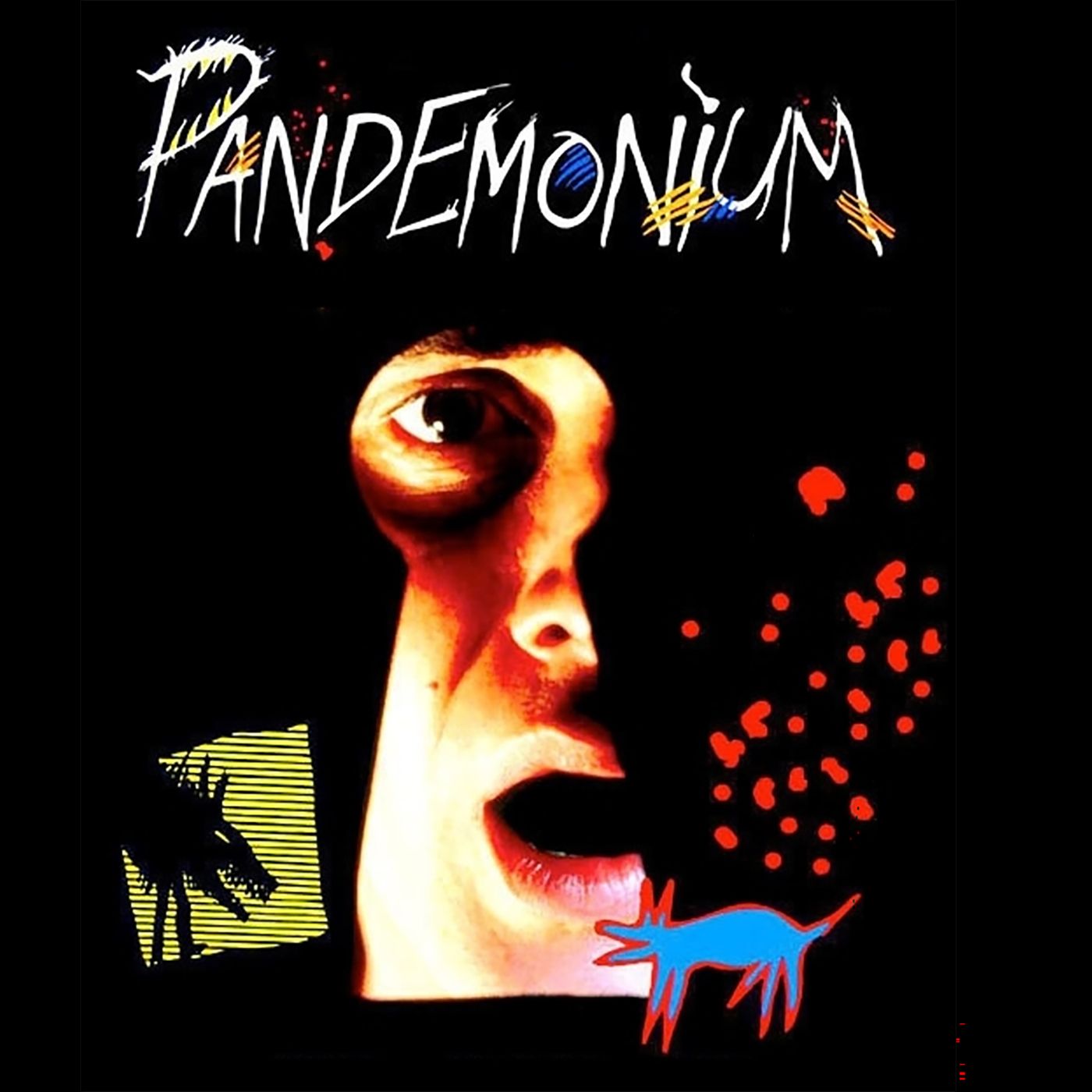
The story unfolds through the fractured testimony of Kales Leadingham, an escapee from an asylum portrayed by David Argue, who recounts his time working as a surveyor at a decaying movie studio run by the grotesque siblings (or spouses?) EB and PB De Wolf. What follows is a barrage of unstable identities, pagan imagery, religious parody, sexual panic, fascist satire, and mythic nonsense, all orbiting the enigmatic “Dingo Girl,” whose presence seems to fracture reality itself.
Mike is joined by Heather Drain and Payton McCarty-Simas to unpack Keenan’s anything-goes approach to narrative, performance, and tone. The discussion wrestles with the film’s wild accents, confrontational humor, taboo imagery, and relentless escalation—from Nazi roleplay and talking mirrors to possessed dolls, zombie parties, musical numbers, and outright apocalyptic imagery.
The episode also features an interview with Haydn Keenan, who reflects on the film’s creation, its confrontational sensibility, and its afterlife as a cult object.
Transcript
Automatically generated, so expect the odd misheard name.
The Projection Booth podcast is sponsored by Scarecrow Video. Try out Scarecrows run by mail service. Choose from over one hundred and fifty thousand films and get blu rays, four k's and DVDs delivered directly to your door. Visit scarecrow dot com today. Oh gez, folks, it's showtime.
People say good money to see this movie. When they go out to a theater. They want cloth, sodas, pop, popcorn, and no monsters in the projection Booth. Everyone pretend podcasting isn't boring. Got it off, left to die in the desert as a baby, and she's been raised by wild dogs.
She's come to find her parents. Her paths were destined to meet. She died. Tell me do you ever get strange vibrations in this place? Oh?
Yes, our time. Mister Leadingham used to be a movie studio. You know, really. The baby is a lie. Have you taken your medication today?
DearS? I am leading Ham, Chaos leading Ham. I was falling in love with a dingo. The place was cursed. We were surrounded by monsters behind each door.
The blood sucking freaks. Have a dark secretly buried beneath this place there will rise up to night and we will be forced to act them out. Join this too in unoly matrimony. It's about the girls. She's coming back if she hasn't here already.
I knew I was different from the rest of the letter. Very good, Very good. I see danger, I see sacrifice. Perhaps if you just. The girl must be brought to me immediately.
God, we will pay the child with flash. Baby name, Oh murder, though it hath no tongue, We'll speak with most miraculous organs. For the sake of humanity. You must die times. Welcome to the projection booth.
I'm your host, Mike whiteho and me once again is miss Heather Drain. That is quailed leading word. Also joining us as Ms Peyton McCartney seemus Hey. We continue a month looking at Australian films with one from Hayden Keenan Pandemonium, released in nineteen eighty seven. The film stars David Argue as Cale's leading him or.
Quailud's leading Horde. An escapee from an insane asylum who tells an innocent bus rider the tale of him being a surveyor at an old movie studio run by EB and pb de Wolf at the center of his tale is the Dingo Girl. We will be spoiling the ins and outs of Pandemonium as we go along, so if we don't want anything ruined, please turn off the podcast and come back after you've tracked down the movie. We will still be here. So Heather, I can tell from our last conversation you have seen Pandemonium before.
When was your first time and what did you think? It was? Probably, I want to say two to three years ago, and I had discovered it via a wonderful review written by Dave Jackson, who's a really really cool Australian film writer and filmmaker. If anybody out there has heard with Kat sig Blues, that's Dave Jackson, which is that's an amazing movie. Very different vibe here, but Dave had written about a movie called Pandemonium and reading it, I immediately was like, this is something I need to find to like.
It just felt like there is connective tissue. There was my DNA possibly somewhere. In this madness. And I tracked down the company Smart Street Films, which was the only way you could get it legally and can get it, I believe, and I purchased it, got a really sweet email apologizing for how for the shipping and handling, and turned out it was from Hayden Keenan, and I was like, holy shit, the director just email me about this and he's sweet, such a sweetheart, And I finally got the movie and it did not disappoint. It did not disappoint.
This movie to me. The best way for me to sum it up, it's imagine a Marx Brothers movies where all the Marx Brothers are David Argue and everybody is on acid, and even then you're barely kind of scratching the surface that Yes, I absolutely was floored by it. I've rewatched it copious time since then. I adore this movie. And Peyton, how about yourself, Well.
I was really excited when you reached out to me about this because I had just started spending a lot of time thinking about Hayden Keenan because Muscle Distribution just re released Going Down in twenty twenty five, and I watched it and absolutely fell in love with it. It's such a beautiful, like slice of life, kind of loose punk coming of age story with an amazing soundtrack. So watching this I was really struck by the wild contrast here between that film and this one. They shared DNA and that kind of beautiful queer craziness going on. But yeah, no, trying to describe this movie to a friend who was like, what did you do today?
Was like, there's a lot to unpack her, but also there it's impossible to as all good, all like true all cult films are. There's just simply no way to really some this one up. It's I think I said it was somewhere between Dogma rocky horror, and with Noel and I in aesthetic vibe with like a little bit of Vegas in space. So it's a great time. God, I love Vegas and space.
Yeah, I remember having this one described to me as being like rocky horror, and really, other than the end of the movie where the big movie studio takes off and flies away, wasn't seeing a whole lot of rocky horror. There's there's one moment of a song, I think maybe two songs in here, but yeah, not very rocky horror other than though you can't tell by the accents. That's the thing that I think I love the most about this is just how everyone seems to have an accent, and it seems to be more and more outrageous than the last one. I mean, our movie studio husband with his really flat American accent that he does, and then all of the Nazi stuff that's going on in this movie. Yeah, I think I tracked this one down, maybe on VHS.
Maybe Andrew Leovold made a copy of it for me back when he was working at Trash Video in Queensland, I think it was. And yeah, it took me forever to finally sit down and watch this one. This whole month has been you need to sit down and watch these movies. So this is my excuse to finally see this. And yeah, I am so glad that Pandemonium, this version of Pandemonium because I've always been a fan of the Pandemonium with Paul Rubins and.
Carol Kine, Alfred Soul, Yes. Alfred Soul's Pandemonium. But now when you look at our archive page, you're going to see two pandemoniums. Very different films. To me in a lot of ways.
I mean, ultimately this feels like Hayden, this is his film. He's like, he's I think, such a fascinating director, especially Peyton, like speaking like do you bring up Going Down? Like his film Mark so fascinating because you know, we have Going Down, we have this, we have several documentaries. He's done a lot of like very cool, very activist type work with some of his documentaries too. He's a fascinating guy.
But to me, there's so much like if somebody's a Ken Russell fan, particularly, I'm thinking like listless so Mania and that era like in you know, in Tommy. In fact, the the ending of this film has a parallel with a with a key scene to Tommy. It was so refreshing because I feel like if we don't really see a lot of directors put themselves out there quite like this late, like Hayden does, other than Ken Russell, Like Ken Russell's to me is a director I think who continually put himself out there no matter what the budget it was, no matter what the circumstances was. Well with the activism part, I was really struck. This movie includes an Aboriginal Holy Ghost figure and he's played by Gary Foley, who was an Aboriginal.
He started this group called the Aboriginal ten See in the seventies and established like the first Aboriginal legal services. He also like co wrote and acted in the first ever Indigenous Australian stage production. So like there's a lot going on there. Plus the origins of this movie in this very particular like Bondie scene in this housing you know, this like squatting situation that the Heather you sent a very cool article about it in terms of tenants rights there. So there's underneath about seventy five layers of glittering grime there.
The politics there are like both gesturing towards feminism, like in terms of the Rocky Horror parallel to me, the thing that really reminded me most was the Amanda dole Dingo girl character having her Janet what Janet arc you know, like her her sexual desire and exploring herself, which when I found out she was the youngest ever Australian playboy play moy playmate, that was crazy too. Like, so the cast is crazy. There's so much going on anyway. It is wild though I know she was sixteen. I got to do an essay for Midnight Spares when that was released on Blu ray, and in that movie, she does like kind of a burlesque routine that's set up like her person layout and it's very much set up like a sort of lay room, like it's very gross.
It's gross that but she's fabulous and Midnight Spaars is a fun movie and it's got David Argue. So I remember when I because I saw a Panemonium first and I was like, oh my. God, I marked out so hard because I was I was already excited about David Argue and then seeing Amanda. I love everybody in this movie, and I think she really she does bring like a nice sort of like gravitas in a way because you really do care about her character. And that's impressive given that we don't.
I mean half the movie she's. You know, mostly naked, and we only hear her like via telepathy until but you but her facial like her facial reactions to everything, and just she has this like this sort of calm serenity about her. I hate it that this was her last film. That what a way to go is if you're gonna pick a Moyvie to be your last one, I mean, Pandemonium's pretty striking. Also, Epsence storms amazing in this Like I didn't recognize them because.
He's such a like sleazy, sexy young grifter in Going Down and then you see him here as like and he's unrecognizable but such a good chameleon of a guy. Yeah, you're right about those Nazi grets. I forgot. There's very much a tell us about a Janet type of moment in this. I love our incestuous twin lesbian Nazis.
Those actresses interact with each other. They're so playful. Oh, they's so sort of feline. And I forget his name, but I know he was like originally I think like an audio guy. I think it did audio on Going Down.
But the actor that plays Little Adolf, he's great that full dialoguets with him in the vamp sort of our beautiful gothic vampress character where it's like and go balls had no balls at all? Like the wasn't that a rhyme that they staying in World War Yeah? I did not know about. My very small headlamla. That's all.
When there's that whole weird thing where so many of these people in this house are zombies and they refer to them as zombies, it's like, you know, you're talking about this whole idea of the squatters and stuff. Yeah, this whole house feels like it's just filled with people that really shouldn't be there, and it almost feels like the zombies are just kind of these hangers on that really shouldn't still be in this place. I mean that our main character, David argues playing this surveyor. I'm not really clear on what his role is. He walks around with a lot of equipment.
He's got like this almost like laser gun radar gun type thing he's taking measurements with, and he's got blueprints, but he just doesn't seem to be very interested in doing this job at all. Well, he's sort of a parapsychologist type of surveyor, and that even took me a few bearings. For whatever reason, the first time I watched this movie, I thought I thought he was a documentarian. I don't know where I got that from. But and then by I think the fourth theoring, I'm like, oh, I'm ridiculous, Now he's not a documentary.
But finding that article that I shared and to all the listeners like that. We found some articles that were written in the pre production process of this film, which was gave us some really cool insight and one of the biggest inspirations for pandemonium. It is a completely like a reaction to gentrification that was going on. Now, is it bondi beach or bondi beach? I've heard both two pronunciations.
Well, Hayden would say Bondi, then I. Will go with that one, because I do not trust my my southern patois on pronunciation anything but no. In fact, the film was originally called A Longlow Hell House, and the Alonglow was, like I said, of living spaces that a lot of the artists lived on very cheaply in the seventies and the eighties, off off a bondy and in the eighties, like gentrification, like the evil black mole that it is, started creeping in and all of a sudden you get developers, and you know, people start getting kind of kicked out or priced out. It's bad felicity sometimes to kick people out, so we'll just you know, jack up the rent. And it's like, is this how the developers and the polite society kind of viewed all these cool bohemians as they viewed them as like these are these are totally and you know, you know the kind of people they are.
There's mad scientists, there's vampires, there's zombies. There's weird Nazi sisters and they're little tiny Adolph Clone. It's out of Clone. Though he looks he actually looks like Greg Ham. It's like a boys friend boom plot because later on there's like Israeli Hitler who shows up artism.
Yeah, and then his nose grows In parts of it, he's got a very ax. Yeah. He looks like Sereno de Berger racing parts. I love when they rouge the tip of it. I put a little little dap aversion.
And that's the ride this film is because by the time that happens, you've already seen like so much insanity. You're like, sure, you know why? Of course, of course that was a long Yeah. The context that helped most for me, I think was when I was listening to that interview you did with Hayden Mike, was that every single element is pulled from The reason I said Withanol and I earlier is in reference to the opening scene of Windall and I where he's reading the tabloids, because every single plot element was pulled from tabloid headlines and tabloid stories, right, So like the kind of pastiche brickilage thing he's doing is also just like overtly pulled from the salacious, eye catching grocery store shit, but it sounds like it doesn't make sense.
It kind of doesn't. And there was another line in that interview that I wanted to bring up to where he was talking about the idea of what he called VSM or vague semblance of meaning, or he was saying he was trying to write a script rooted in reality through the press clippings as a total cheat. So there is that feeling that like everything's loose and doesn't make sense on purpose, like just to make you experience the experience more than the narrative. I think it captures that. Yeah, I mean even when it comes to like Dingo Girl, I kind of wonder if she's a based on the whole Lindsay Chamberlain Crichton thing of the Dingo ate my baby, because I think there's a thing later on where well it's the whole like, oh, well, the Dingo stole her, but yet maybe she was abandoned by I'm going to screw up their names, but the woman that runs the studio feels like that's a reference to that stuff.
So being pulled from the headlines totally make sense. Missus d Wolf, we'll call her. I think she's peeby. I don't know the eating and peebee thing. It gets very confusing.
But Missus de Wolf, that actress and I love everybody, I mean, David argued for me, is pink in this film, David argued, tends to be king and everything he was in though, just because he has that sort of like almost where he will suck the focus in if he's on camera, because you just is I mean, he's just magnetic. But number two is Missus de Wolf, that sort of Blanche Dubois patois. She's so good that on vodka through like a baby bottle. Yes, oh my gosh. When she is trying to there's like a levitating doll that I wish we could have seen more of.
I am obsessed with this doll. It's like a pink Raggedy Ann meets those little like razor teeth Barbarella dolls and she's trying to like chew choo train the vodka. Then the doll says like, yo, fuck the train, lick me, lick me. Super Exorcist. Yeah, oh my god, I said, no, you know I hate that Lanquitch.
That's her response. It's not the fact of this levitating like hell do doll that's wanting you to like it. It's a and that it's just it's Oh, there's so many great little moments you mentioned doctor doctor Hayden Keenan's makeup. I love that he is our doctor. He looks amazing.
I think I hate it is such a great face anyways, but like that little pencilton mustache, that sort of almost like if if you ever seen Humphrey Bogart and is it Doctor X A return of Doctor X. It's like the one bo yes, and he's got that silver streak. It's it's it's totally giving that. But the way he has his aids free Clone Adrian a poor. Adrian, because the second time we see him, he's like, you know, you know, I think you hate me, and he's I don't hate you, fucking idiot.
Just all these so many great moments of just insane comedy that just is like nothing else. The moosehead oh god, oh my god. Yes, yeah, when Bullwinkle showed up, that's where I kind of had to like give into the flow of the film because. He doesn't even try to take that moosehead off. It's just like a part of him for like the longest time, and then finally it's it's off at one point.
Yeah, and there's like these visual rhymes that happen because you're talking about like the levitating doll. But then like David Argue led levitates at one point, he's about to kiss Dingo girl, and next thing you know, he starts to float up in the air, and it's just like all these little things where you're like, oh, well, that's kind of similar to this thing over here, and that's kind of similar over there. And I don't know if that's on purpose or just like coincidence, because there's just so many strange things that happen in this film. This film, I think, really satisfies a sweet spot. I kind of love a story from an unreliable narrator, which realistically most human stories tend to be, but this one's really from an unreliable narrator, and David argues like I think his main influence was Terry Thomas as Kle like the Great, the Great Terry Thomas, who's just in so many just that stiff upper lip kind of sensibility and very prattiness.
He's a very pratty character kle Is and just he's constantly bungling like you want him in the dinga Girl to be together, but he every single time he has a chance to save her, he fucks it up, Like the first time she does head butt him, so that's different. But then the other times he's just you know, it's like every single person in this film though, even when they mean well or they still are just looking to kind of use her, which is an aspect of sort of having a messiah character, I think is always a real intriguing one to kind of pursue. You don't often see it, I think, especially if you're raised around a lot of religious you know, films or anything, if you're raised very religious. I mean I was raised around a lot of Southern Baptists, so those that angle tends to not really explore those kinds of questions.
So I love I love seeing that here. Yeah. I was thinking about Dudley do Right a lot with his affect. Actually I forgot his name after Quaylude. I was like, I'm gonna google this later, and in my notes, he's just Dudley dow Hi.
I'm Quaylude leading Hoon, Quail Sleezing man, excuse me, quake, leading. Horn, loose, sleezing breed, quaylude, leading hoon. Wow, don't tell me you've come about the ad. I wasn't expecting anyone quite so soon. But uh, if you just stay here, I'll be with you in the moment.
Okay, But now, why won't you marry me? Because you are too good dadly for you? Nell I would rutten up. There is totally it's some deadley do right. We get Dank the dingo boy, who's also David Argue.
David Argue makes an adorable dingo. Yeah, he's got that great voice. And I think the scenes of him and eb or PB, you know, the male half of the couple, those two going back and forth. I could just watch that all day long. The fact that that's Esben with the two pey like as well.
And it's especially because like there was in one of the articles I found, there was a great picture of him and Hayden from like the earl like around probably going down your early eighties. You can look at Hayden and be like, I can see how that's doctor doctor espen No, no, no, no no, and he fully gives in to just the sleazy quote unquote art. I love that his little, like little newspaper ad says art films, but it's a very nebulous doesn't. Say we're kind of films. Oh, there are there art films wake, which I'm sure a lot of real creepy leisure suit wearing.
So, Julie, do you like Swedish films? There are references to porn throughout this movie, Like it's not just his character trying to get Dingo Girl to strip on camera. There's also the green door that everything is behind, and the exploitation thing of the fact that Amanda Dolt is naked eighty percent of the time, right, And it's just kind of a given. It's like you oscillate between the almost Doris Wishman nudy qutie vibe of like or even like rock hell Welsh stuff all the way up. To behind the green door.
So it's it's and the nudity. I love how just kind of random. It seems to get too, like because there are times where I was during the great party scene we see the two sisters and I'm like, look at the gold top and I'm like, wait a minute, those are their boobs? Like this is a bunch of glitter. We don't get full male nudity, but we have a naked male bartender who has that great day glow kind of makeup paint.
I love him. We see mister David. That party scene was so fun. Oh my gosh, that could have gone on longer. Well this movie, God, it could be eight hours and I'd be like more more, but yeah, and mister David can't live.
I even get to mister David, our most zombie of all the zombies, because he's like a voo proper voodoo zombie. And that's Ian Nimmo, who has a great history with Hayden. And there's a really cool music video for Going Down that Hayden directed and Ian's in it. It kind of floors me because I rewatched that music video for prepping for this today and I'm like, goud, that's mister David. Yeah, mister David at one point ends up naked doing that ancient sort of yogi technique.
It seems like where you swallow like muslin cloth and you pull it out. It's supposed to cleanse your intestines. I mean, anybody listening to this don't maybe don't try that at home. But that kind of reference greg Ham for a minutet work. Really, he does look like you could be a little Adolph's like bigger brother.
Oh yeah, greg Ham is my favorite minute work member. Colin has a class second, but him is Marvel the Magnificent. We get him as a magician. I love Carnie magicians in general, but Greg Ham is right up there with William Finley from the Fun House as Marv. He's like Marco the Magician.
That's probably pure coincidence, but I love it. As we get a Colin Hay song on the soundtrack as well, which is nice. That was kind of a surprise for me. I really like Caong myself, King Smith, who I didn't realize that he I'm pretty sure he's the main, one of the three main people in the Quiet Earth, And then I know he was a featured orc in the Lord of the Rings movies, So I don't know what his lines were if he gets to talk about being back on the menu or anything, but I guess I would be featured or Chai if that were the case. But I don't know how many people were employed to be Orcs and goblins and Orcai and Lord of the Rings.
But like it feels like it feels like it was mostly Maori guys that were in that makeup, because most of the time, like there's a bad guy who's in Die Another Day and it's like, well, what else was this? And sure enough he's like one of the lead orcs. So it's like all right, yeah, like you're in New Zealand, you got a good build, let's put you in some orc makeup here. That's reminding me of the Island of Doctor Moreau. They literally just hired tons of like carnies and then a bunch of local folks, like indigenous local folks, to do stuff.
And so there's a scene in that movie where there's just a didgeridoo in the background and it's just because the guy was a professional like digeridoo player, and they were like, that's cool, we'll put that in here. There is a lot of Island of Doctor Moreau as well with his character where it's just. Like you gotta help me, Doc. I'm sick of being rejected. Doc, I'm sick of the girls laughing at me.
Make me make me appealing. I want animal magnetism, you call. I don't think that would be so difficult, got. I love everybody. All the women's response for one of those sisters is like yeah, wow, Wow, what a.
Chest he's injected with like gorilla DNA. But then it was like, oh, gorillas have really small penises or something, and he's like, what the hell are you doing to call and come on? I feel like it's inferred that the Dingo Girl and cong kind of hook up, but she's has remained her maiden head. Head. I don't know if it has heard this.
There's a line where I feel like doctor Doctor referred to her vagina as her shamehole. So I have new vernacular for my next go to college disappointment. But yeah, but yeah, so her mi made it is still attacked. So if his penis really, oh poor Kong. I do love him.
I love it when he starts staring up his apartment and mister de Wolfe is basically like, I'm gonna tell my wife that's not part of your agreement, and he goes squad squad. Right exactly back to the squatting again. Yeah, we mentioned the religious overtones and this whole idea of like the Holy ghost showing up and she's the set up. The Dingo girls set up t be this like savior type character, and then there's the whole thing of like, oh, well, the witnesses are on the way, and they just cut to this car with this guy who's got these intense, like rasputant eyes driving, and you've got this little boy in the middle who's got a cross, and you've got this woman. I don't know if she's a wife or the older sister, but she's dressed up like she's from the sixties or whatever.
And it's just like they cut to that and it's only on screen for I don't know, less than a minute, and then they forget about it for an hour, and then all of a sudden at the end, it's like, oh, the witnesses are here. It's like, what a way to set up, you know. I love that set up and pay off they have. I love this the complete cynicism. We really get about religion and God with this film, because like, the Holy Ghost has been basically defracked because yeah, he got missus DeWolf pregnant, but she had a girl, and God won't accept a female messiah, which yeah, that's bullshit, But also why do we have to keep sacrificing people here?
But yeah, he's great. I love when he comes back at the end and he's wearing that like nudy suit that's got like the anti Jesus fish in sequence on the back. Is God, Elvis? Am I mistaken? Am I remembering that?
I don't think you're mistaken. I don't think you're mistaken. I'm teaching a class on my book right now, and I was talking about Rosemary's Baby and that reminded me of that whole dinner conversation in Rosemary's Baby about like imagine how much he spends on robes alone, you know, And yeah, like God as an Elvis impersonator is really crossly excellent. Got the showmanship down, that's for sure, in those spangling out. And gray hair, Oh yeah yeah.
And then there's all the like gonzo Shakespeare stuff happening throughout. Not a lady of the Frame narrative, but you just have random references to Hamlet and Midsummer Night's Dream, and like the last line is a reference. I think it's to Midsummer Night's Dream if I'm remembering correct. It is, Yes, the whole if we have offended thee that whole. Thing, yeah, yeah, And like plays within the play kind of the that Shakespearean frame narrative thing going through.
It is a great parallel to the religious stuff because it just feels like he threw high culture and low culture into a blender and let the blender explode. Kong ends up becoming kind of King Kong, also kind of island of Doctor Morowe. Then you've got like a magic mirror at one point that's talking with Missus de Wolf and it's like, where's this coming from? And then you talked about the doll and everything. It's just all of these weirdo little references here and there, and then yeah, mixing them with the Shakespeare and then the religion, and I mean, this movie just it pays off.
It gives you so much more each time you watch it. I can't say it ever really gels one hundred percent as far as like, oh this makes complete sense to me now, but I definitely make more sense of it the more I watch it. The thing that really helped pull me into this film just from the get go, you know. And there's actually a really phenomenal trailer for this on YouTube. So anybody if you're.
Curious but you don't want to like put forth the money, yeah, you know, I did the commitment what's a trailer and see what you think, But the way that the visual language and the lighting and the composition, like Hayden has such a great eye. There's a shot of the dingo girl that's kind of. In the moonlight outside and there's like that those yellows and that sort of like dreamy sort of dark blue behind her, and just you know, everything has something very visually arresting in it, and it can be something subtle, it can be something really over the top, but that's the thing. And I was really I was so disheartened to see. I'm not surprised because I think a lot of times when an artist really does something out of the box, they're usually nine times out of ten going to be probably either misunderstood or just you know, pushed to the side for you know, something more respectable, like a like a nice drama.
And I love dramas, but you know what I mean, Like, if you go out bounds, you're usually not going to get received well. And Panemonium got some really just. Amazingly bad reviews and just everything from I saw one and these are all from Australia, you know, just writing it off as a rocky clone, which I'm like, I don't think you watched the movie all the way if that's all that was your only takeaway. But you can't make a movie like this without knowing exactly what you're doing because everything is so well connected. I mean, I love the fact Peyton the high and low art.
That's brilliant because you just nailed it. That's exactly what he's doing here, and that's why you can watch it again. I think if somebody's just making something that's for the lowest common denominator, that's not going to be very rewatchable, first of all, but also it's not going to be very memorable. There's all there's all the time like terrible shitty movies that are made to be just outrageous, but there's no skill, there's no vision, there's no subversiveness. And that's the thing you got to have, to me for something to stick, you have to have that subversive sort of spirit about it, something that is very anti status quo, because that's the food for thought.
It's giving you that sustenance. I mean, surrealism's great, but you got to have like it's like a cake, you know, Like the surrealism is the sprinkles of the frosting, but you got to have that cake to support it, and this film is all cake and sprinkles and all of that. That's a very strange bakery analogy. But that makes sense for this movie too. There was a great anecdote that I think speaks to that dynamic where it's like you have to both be a collage artist and a composer at the same time, where the sets were literally taken from the trash right like it was theater company's like random sets that they weren't using anymore, and he just kind of went and they were like, yeah, we just did.
Had a gabbler like you want the mansion, and he was like, perfect, and that's. Why it's there. It's great because you just you toss it together. But if you have enough yeah vision, then you can actually make that work. Another movie I was reminded of with this and Feel Free, how they're to tell me that I'm just full of shit.
I was reminded a little bit of Cafe Flesh while I was watching this, especially like the big party scene that they have. It just felt very much like the cabaret type atmosphere for me. Mike, first, I'd never tell you you're full of shit. That's rude and you and you are never full of shit. I wouldn't.
I wouldn't be on the show if I thought you had potential to be full, to be full of the shite. But no, I could see that, especially because both Stephen and Hayden have a very strong visual eye, and especially with the artificial with these stay you know, like the stage setup, the makeup, that sense of applying. Even when you're playing something real, there's something very artificial to sort of outline it and give you that contrast. So no, I could see that. I mean, they're two very different films, but I think I mean, I mean, I think almost everything's probably pretty different from Anemonium, but that's why we're talking about it.
It's amazing, and there's really nothing quite like Cafe Flush either. But I could see that. I could see that. I mean, I think that would actually be a fun double feature because kat Fia Flush is so brilliant, but it's ultimately very sad, you know, it's Scott that melancholy about it, So you'd kind of after that you might want to watch Pandemonium and kind of jure evening on a higher note in terms of the frame narrative, what like where he's sitting and talking to that woman on the bus. What movie did you guys think about?
Because for me, the first thing that jumped to mind was the Realm of the Ancient Mariner. But I mean, obviously, frame narratives of that kind are you know, all over the map, and it's it's like, clearly you know a classic, like you know forty's universal horror type riff. So what jumped to your guys's mind. You're gonna hate what I say, But I've brought this up recently, and I'm trying to remember which movie I was talking about. I despise frame narratives that don't come back, that are just then they're like one bookend.
I immediately thought whenever I see this, I thought of Aladdin because Aladdin, they never come back to that frickin' frame, and it drives me up a wall. It's the old man telling the story of Aladdin. We never get back to that little old man who's also voiced by Robin Williams. So I was so happy when they actually come back to the frame at the end. I was like, please please come back, make sure that you wrap this thing up and sure enough that poor girl kind of like that poor lady from Forrest Gump, sitting there listening to this mad man at a bus stop argue with that wild white hair and that kind of his face is super pale, and then wearing that straight jacket and just letting the arms flap around and stuff.
He looks amazing. I think at the time it just me it felt very like an old Hollywood thing, but I can't think. Of what specific title. I think I was probably blinded by the David Argue in that great sort of wig and his weird giggle, the heat that's this weird sort of like shrieky giggle in it got There's so many just little things that even even when like the Dingo girl is starting to come, you know, just starting to feel very sensuous, and she keeps her pawing at Kale and he's like stop that, and she goes pussy pussy wet, wet, and the way the way he reacts like I can't even do it, but he's like pussy pussy wet. What is?
It's just iconic. We're hitting all the zingers. The only only haven't really talked about yet is the giant dildo machine. Oh my god, so good. I'm actually glad that you said the thing about the strait jacket though, because that actually clicked in my head.
I realized what movie they're referencing, which is the the nineteen forty thirty four Dwayne Espermaniac. Oh my god, the hair. I'm like, yes, holy shit, yes, oh my god. Now that's a double bill. I'm surprised we didn't have a cat get its eyeball poked out here.
If that was the only thing we did get, well, Adolf got a ball. That's what this movie does to you, though. You're like, poor a little Adolf, and then you're like, wait, what am I saying? Oh? And the little like the little people that come in with which I could.
Be very wrong on this. I know that there's a musician and singer that has three roles in this film, but they're all very small roles, Ignacious Jones. And I'm a big sort of post punk fan. And he did a song called like a Ghost that I've always really loved. And I notice he's in this movie, which I'm like, Ignacious Jones.
I think he's the guy that gives the news that Adolph is gonna have to be put down because they found the other. Fear that I could be wrong on that because the other two roles because it's director, wedding attendant and something else. Anyways, that's an aside. But if there's any if all two of you out there that know the song like a ghosts that guy's in this movie? No is he He's a he's a regular.
Yeah, That's why I'm thinking, because like, I don't remember there being like a film director in this film night. I mean other than like mister de Wolf. I'm wondering if the director means the guy giving the news, the Teddy Bear picnic coming into place. And seeing those little like womp like she's only a wombat. It's adorable, adorable, Australia's amathing.
She's the whole coke snorting with little Adolph. I kind of, but I love her wanting revenge like that's a great great like character arc. I mean, the doll just pulls that off brilliantly. Kale is so square. I see the Dudley do right completely because like when he brust in, he's like, is this some kind of marijuana party?
And he refers to them earlier as dreary hippies. What a sad, little little oxymoron that is. I know, it's like, I don't know how a mad scientist one to two vampires, a voodoo zombie and some beautiful Nazi lesbian acestuous sisters are dreary hippies. I don't remember that Woodstock. I love that he has the book that he gives her, and you see the book when he's dressed up as that kind of Egyptian god type figure, and then him just walking off into that moonlight, just along the water and off he goes.
Yeah, well you've got that whole quote from Midsummer Night's stream on there. I mean, this movie is fucking wild. And there's like a little bit of money Python type DNA in there. In terms, I was thinking, this is going to be totally random, but John Landis's Schlock the kind of weird seventies comedy picuresque thing that you get with these kinds of loose meta referential narrative structures. I was thinking about Schlock.
But also Muney Python with just like a very simple series of puns like have you heard of Sirius? This is serious? No serious? The whatever that you know, the star and it's just great. Oh completely, yeah, because at at what point we get you know, yo, this is a laboratory, not a laboratory.
This film really does have something for everybody if they have an open mind. Granted, but I actually wrote this down I have. I found in researching in some of those papers, the best quote about Pandemonium I've ever read from Hayden Keenan himself describing it as it's a rat bag ride through a landscape of sacred cows. We've taken people's favorite items and put them an aspect. If I ever get a tattoo.
That is on the LISZ, that kind of nails it. But even then it only begins to cover. I've always wanted to kind of find Dave Jackson and just to say like, thank you for writing about this film. That's how I discovered it. I am.
I'm hoping that we do get more about Hayden in this country, especially which Peyton. I'm so I'm so happy and jealous. You got to see that that Muscle release, because God bless Liz Purcell for all the work she's doing with Muscle Distribution, and particularly with Hayden, because he's such a cool and I think important filmmaker and just not really that known over here, especially with Pandemonium even more so. And yeah, I would love to say that, because that's it's a very misunderstood film. I don't know why.
I was hoping for at least one really, like one reviewer that was cool enough to get this film over in Australia. And maybe they were. I mean, ug well Dave was, but I mean in the papers. But it did play cable in Australia like at midnight, which god, can you imagine like like surfing, Like you get home from a party and you're like, oh, what's on Cinemax or whate of the equivalent. You know, it never got a theatrical in Australia, right, So it's like it's not like you went to the movies and then you saw It's not like Planet of the Apes for being.
On TV all the time. It's like, what is that ghost object that is only on cable at midnight? Yeah, and it had a VHS front I think a little bit later in Australia it didn't come out. I think immediately I might be wrong on that, but that's I've found something that kind of inferred that I don't know I mean there's so many like mediocre movies. I'm always sort of like, I think flummix, I understand if this isn't for somebody, there's a lot of I mean, but nothing's really for everybody.
But I'm always like, just like, really, this is what you guys are gonna hate. On, Like with the thirty million dollar epics or whatever coming out of Hollywood that are just like eating I don't know, like a rice cake, like you forget about it as soon as you eat it. You won't forget this film. I mean, that's the thing. Even if somebody hates it, I can't imagine they're gonna forget the Bullwinkle.
I'm so glad you brought that up. That Boo said, which is in the trailer. That probably is a good litmus test. If you're down with the Bullwinkle, you're down with pandemonium. Yeah, you're not bothered by the Nazi lesbians.
I mean, everything is trying to offend you. If you like that punk vibe, you'll like this movie. If you have a problem with the AIDS and non aids clone than probably seek elsewhere. I mean, they have a burning schwastika that looks like it's going to start spinning around at any moment. I mean, it's built on that punk rock aesthetic where it's just like, oh you like this will fuck you.
We're going to just do whatever we want. We're Adrian there because the a's free clone, we only really see him as like a jan in the pan, we only get to see his head. I'm like, that's little. I love the Brain, the Brain that went and die got that. That is a wild movie.
That's the spirit this film should be taken into. But again it's like that's why, I like. Why isn't this a bigger cult film? I mean, I know it was like limited, but you kind of think because there are Australian films I've heard about way before, heard about this one, that were like shot on video, that were way more kind of underground, like Smoke Them if you Got Them, which that film I do really recommen especially if you're going for something that's like post apocalyptic, but like on Truck or Speed, that one's very punk rock. It's great.
You know, I can't think of like an American equivalent, but it's kind of like knowing about Nick Zed before you know about I don't know, like Stephen Sadian like both are great, but it's like, why is the morunderground stuff better known over here than Hayden. Well, And Hayden is just such a nice guy. I was telling how their last week Peyton is that after I interviewed him a couple weeks before the whole incident at Bondai Beach that happened with the recent shooting recent as to this recording, and I was just like, are you okay or I hear about Bondai Beach and we were just talking about it and here's this incident and he was just like, oh yeah, it was horrific, and he he opened up his house and was just like, you know, hey, come on in, Like people are running down the street and he's just like flagging people down, like you know, here's a safe space kind of thing.
And it's just like most people probably wouldn't do that. They probably just shut the door and be like, well, you know, make sure that I'm safe and fuck everybody else. But it's just like, no, come on in. And I love him. He's just like always like a disaster movie.
And then after we're all in there for a while, it felt like extreminitated Angel and I'm just like, thank you filmmaker for making a reference to an exterminity angel. I'm so glad you are telling stories in the way that I tell stories, where're just relating things back to movies. So thank you. I appreciate that. I don't and to see of artists that you are afraid if you know anything about the most people, they're going to disappoint you.
Hayden Keenan is the exception. I love that. Anytime I've told an about this film, I'm like, if you want. To support him, get it from Smart Street Films, try not to tour at it, don't do any of that like support and that thing. It's like, we've got to support our artists if we ever, if we want to continue having great art and great out of bounds art, especially art that's not going to play by the rules and you know, be safe for you know, certain festivals or whatever, you've got to support indies.
And Hayden Keenan's the real deal. He's been doing this since the early seventies of not late sixties. That's something I really appreciated about Liz Burchell's muscle distribution, right, is like what they've been doing with Custration movie in that road show is. So incredible on that score. Also what Annapurnaser did with Buck Toys this year, which hasn't gotten a distribution deal yet.
But just like sex Worker, Queer, Fantasia, Crazy, Camp, Fever, Dream Beautiful, you know, so it's like those are the best movies, you know, when I have to do for like, you know, my film criticism thing, like my top ten of the year. Most of the time, the things that I love most are the things I saw at festivals and then you have to wait two years for them to come out, right, But like Castration movie, you can just rent for five dollars directly from the filmmakers right now, and that's fantastic and everyone should, you know, support independent art from across generations and we love movie. I did not know that you could rent that. I've been looking for it, so now I'm gonna have to try that down.
So awesome. Yeah, no, everything I've seawright, I'm like, I want to see that. But I'm I've land lucked and a part of the region that doesn't really get cool screenings. So I'm somebody who has to kind of rely on either like physical media or rental and. I love that you can rint it.
That's really because so many people are stuck out in the Midwest or the South where they you know, or. Some small town where they can't access cool stuff like that. And then when it comes to Fuck Toys, I know that Rob Saint Mary has seen that. I've had a copy of it forever, but I haven't sat down and watched it. So now with your recommendation, it's like Rob a few months ago is like, we should do an episode on this, and I'm like, dude, the holidays are coming up.
There's no way that I can do anything. But it's like, okay, yeah, no, So it sounds like I'm going to have to sit down and watch that one finally. So thanks for the reco on that. And I could talk about that movie for hours, like it's really something so special. It's just a crazy, a crazy experience.
Let's go ahead and take a break and we'll be back with an interview with Hayden Keenan. Right after these brief messages looking for something superior to streaming a place with more than five times the selection available and all of the streaming services combined, I've got Scarecrow videos ran by mail service so like from an unparalleled collection of over one hundred and fifty films and get Blu rays, four k's and DVDs delivered directly to your door. Get in on it now at Scarecrow dot com, and rediscover the wonders of physical media. I'd love to get a little bit of how you got into filmmaking overall, I suppose with the number of these things, it's serendipity. Where my father died when I was quite young, about eight, and my mother for reasons beyond me, I'd never been out of Melbourne in Australia, and sold up and we moved to Vancouver in nineteen fifty nine, and from there we moved to London and I went to a little school outside London where I boarded with a very international group it was multicultural before the word was invented, and started acting in school plays.
From there, I came back to Australia and discovered the smell of chemicals and a red light and started taking still photographs and met a group of like minded people at my high school and we started making a little film together. I was acting and I was the star of the first film we made of you know sex religion, teachers, parents, you know, to get it all off your chest in your first film, which I'm a great believer in. And then myself and my partner swapped roles and he was the lead in my first film. So I applied for the National Acting School, the Institute of Dramatic Art here, and I also applied. We had a government film studio here which produced films for use in schools, embassies and various government departments.
You know, how to use an artillery piece in the field for the Defense Department, that sort of stuff. But I didn't make it into I thought, whichever one I get into, I'll do. And I didn't make it into the Acting School, but I did make it into the It was called the Commonwealth Film Unit. In that Film unit, Australia had just thrown off the shackles of nearly thirty years of conservative government where there was no support for Australian culture or artistic output. And when the left of center labor government came in, there was support for film theater, all sorts of stuff.
When I went to work at the Commonwealth Film Unit, amongst the young cohort Peter Weir, who went on to direct a million films. The camera department had Dean Semler, who won the Oscar for dancers with wolves. There was people who as a twenty year old you thought they were all incredibly old and conservative. We continued making short films after hours while being the third assistant director, driving extras home, sweeping the floor, and in fact, you know, it was funnily enough, it was a medieval guild system. There was no film schools, there was no framed tertiary certificate.
You were in a strand, whether it was editing or production or camera, and when the people above you decided you were ready to move up a level, you did. And it was an incredibly efficient and incredibly valuable process because you really learned what now meant I need it now? There are no excuses. I can remember my first week we were shooting a film with Peter Weir was directing it and I just arrived in Sydney from Melbourne, and I was the third assistant and the first assistant who runs the set, and the third assistant is that person's assistant. He came to me and he said, I need two white horses and you've got two hours to get them.
And I'd been in Sydney for ten days. I had no idea where I was, and I said, where will I get them? He said, I don't mind. I had walked off. So I learned the craft of lying and schmoozing and cajoling and your horse will be a star.
And I found a stables and I brought back three horses and the director could choose the two he wanted. That meant I got the job next week as well, because this kid's a goer. This kid knows as opposed to I've got a certificate from a film school that says, I'm Fellini, what do you mean? I have to interrupt my phone call to go and find some horses. So it was an incredibly valuable learning experience making films after hours, and we made a couple of short films which won two of the three categories at the Sydney Film Festival, Documentary and Drama.
And because both of us had the defective David O. Selznick gene where we were moguls, we immediately resigned aged twenty and twenty one and set about making a feature film which everyone said, oh, you'll never be able to do it, et cetera, et cetera, and nineteen seventy one. The world was on fire. Haskell Wexler had made me Liam Pool. The Novelle Vague was happening the front the English Tony Richardson.
The whole scene was exploding. In many ways, a more democratic, youthful the generation reaching maturity after World War II was overthrowing the old farts who were telling us how films should be made, and in the first flush of support for films in Australia, because Australia in many ways is uncertain of its place in the world where a Caucasian community at that stage, particularly in the South of Asia in the South Pacific, we were never quite sure of who or what we were. We were living in a space the size of just smaller than the USA, with a population about the size of New York. We didn't dominate the land mass. The land mass dominates you in Australia, and we weren't quite sure who we were, and consequently, much of the stuff we were turning out was nineteen fifty style studio work.
It was either Tit's in US, sex comedies, middle of the Road, Victorian era historical melodramas. While the world was on fire, people were putting cameras on their shoulders and diving into the Democratic Convention riots in nineteen sixty eight. And here we were making slow pans across the landscape with girls in you know, long dresses and you know, and we set our film inside a mental asylum. It was the story of a man who was alcoholic and locked up under a section of the Mental Health Act, section twenty seven A, which allowed the government to lock you in an asylum until you could prove your eligibility to be released. It was rough, it was fantastic.
It was social Realist on your shoulder, Hamer in your face, wonderful, wonderful actors finally given a chance after the desert of no film production. Australian film production had been taken over and all our cinemas bought by the US and England after the war, and there was no interest in screening Australian films. Our film turned out to be holded by that fucker Jack Nicholson, who came out three months before we opened with One Flew over the Cuckoo's Nest. So, as happens occasionally in these things, you'll find you just get aced and the timing's not quite right. The Australian Film Institute is our equivalent of the American Film Institute.
But it ran our equivalent of the Oscars and the Film Awards and our little tiny film one Best Film, Best Actor, Best Fiction. It cleaned up at the annual awards, much to the chagrin of the old brigade making the slow pans across the Victorian melodrama. They hated us, and we got up on stage and said to all those people who think that young people can't make films, get fucked. One of the senior producers in Australia then wrote a letter to the editor about the appalling behavior of the young people at last night's awards. These are exactly the sort of people that should not be in the film industry.
The next day we went int to the major distributor in Australia that we've done a deal with to sign our distribution agreement, and there was the press cutting letter to the editor on his table. He summarily stood up, tore up a distribution agreement and threw us out into the street. So we were standing like I was twenty two by this stage, my partner was twenty three, and we were standing out in the street in tears, just an absolute shock and it was a salutary lesson. I'm not quite sure what the lesson was. The lesson was, if he's going to speak the truth, then be prepared for a backlash you didn't expect and you become then a rebel.
One of the problems we face in Australia is that because we don't have the size of economy that is in Europe, the UK or the US, we had and still do in many ways a so style centrally planned cultural economy. So much of the film industry is supported by government grants to kick it off, and then equity or private investors come in or distributors. But what that means is that the Presidium, the Central Committee decides what's suitable. So you will very often find that bureaucrats tend to support films that are like that, they would like that are not going to risk their jobs, et cetera, et cetera. So we've had an enormous amount of Australian taxpayers money spent on films that no one went to see, and the middle of the road, middle class filmmakers, as Lenny Bruce would say, would then turn on the audience for not laughing at their fabulously literate jokes or not digging their wonderfully nuanced portrayals, et cetera.
And when you think people were hard and tickets are not cheap, and you know, if you've got a twenty dollar ticket, they want a twenty one dollar movie. And that's what I've always tried to do, is have audiences walk out of my films doing good on the deal. The problem we've faced with having cleaned up with this film that was had you know, it was all private money. The next film, Going Down, which was one of the first Australian films to go to Sundance, we couldn't get We couldn't raise a penny because when you snub your nose at the bureaucrats, they put you into a little black list that of course doesn't exist, but you then find it enormously difficult to get any money. So I've always found it a lot easier dealing with people that want to make money rather than people who give you the impression I can actually make this film better than you if I wasn't trapped behind this desk, you know what I mean, As opposed to out on the typewrope, dealing with people down at the fish market who'll cut your throat.
They're much easier to deal with. I find just maybe some money son, you know, I don't. You're the filmmaker, get on with it. So that's how our film Going Down got made. And it was a street picture.
Purchell picked it up and screened it. Has been screening it in the US now for a few months. And I was shooting a thing in London and flew over for the New York opening and was it still works. It's a film written for by and about twenty something women about the last night of a small group of women in Sydney, the night before one of them goes to New York and their youthful group is going to break up. And it's one of those nights where you say yes to everything right, you know, and by about three am things start to break up.
The film said over twenty four hours, and while we were still busy making melodramas, Going Down had punk music, neon light, short skirts and girls who knew those were I know a girl like that. I know that bitch, I know her. And the women responded incredibly to the movie, and we couldn't get distribution on it, and found little cesspit in the middle of Sydney, a one hundred and eighty seater and it ran for four months. We had the filmmaker's wet dream with a few one hundred and fifty meters down the street. On the opening night.
He was a film for them. It was Australian. It spoke to them in a language that they knew. And again the bureaucrats hated it. So we the film in Milan at a film market where screen films and do deals and Troma.
The surf Nazis must die. Lloyd Kaufman and Michael Herz, I'll never forget it like it was our first stop out of Sydney, and he said, I like your picture very much. And he put his hand in his pocket and he pulled out a ward of US currency and he said, I've got fifty thousand dollars here. Give me the film and I'll give you this. And I thought, if they're offering this much on our first stop, next stops London, then New York, then LA on the way back to Sydney, I can do better.
I couldn't. I couldn't. But at that film market, next to me, my partner and I Gay Steele. We had almost no marketing materials, and next to me there was a guy selling a movie and I thought he had a poster up on his little boothed and I said, that good title. And I'm a great believer in good titles.
And I said, what's what's the movie? He said, oh, it's not a movie. I said, oh, well, you've got a script and you're selling the script now. He said, no, I've got a script. I said, what have you got?
He said, I've got the poster. He said, I'm using the poster at a parley of script and then I'm going to go from the script. I thought, fuck, this is genius. What kind of idiot is trying to make a film? Why wanted you to start with a good title and work your way out?
Which is where Pandemonium was founded. It was founded in the abattoir of film markets as you see, you know, chainsaw numb, slasher movies and everything except the major studios, all that production, and there was just fantastic stuff everywhere, with people out and about touting their works. And we came back and thought, look this sounds It was so innovating, and we lived in a block of flats in Bondai, and there was a rock band who had become a major Australian musical force. There were actors, there were writers there. It was just insane, a block of about eight or ten apartments.
The doors are always open, the blue smoke flowed out of every window, and it was this creative well spring, and we thought, why don't we try and do something set just inside this building, filled with cinematic horrors into which an innocent comes and a man comes to survey the place and discovers that it's on an Aboriginal sacred site, and that this is going to be the change of world reality, as the galaxy is a line, et cetera, et cetera. I'm a great believe it's a school of filmmaking. I've invented or I've given a characterization to Mike called VSM and you see it. A friend of mine, Russell Multey, who did Raise her Back, and a number of other Highlander He was a big music video director before anything, and he was the fountainhead of VSM filmmaking.
VSM stands for vague semblance of meaning. It looks like it means something, but when you pull the elements to bits, it actually doesn't mean anything at all. It's just a girl with blonde hair on a white horse with Duran Duran music playing and some fog and some backlighting. But it doesn't mean anything. So we set about trying to write a script that was rooted in reality, and we ended up with a wall covered in press clippings that if you watch Pandemonium, almost every scene in it and every horror in it is from a press cutting, whether it be fetuses used for Swiss, pharmacological face youth enhancement cream, whatever it is.
We just put all this stuff together and attempted to do something that was a cheat, a complete cheat. The film costs about seven hundred thousand dollars Australian. The sets were from theater companies that were throwing out their sets, and someone would ring and say, listen, we're dumping it at the tip tomorrow, and we'd send a truck down there and grab their set. A friend of mine, who did all the art, direction and design for Mad Max and in fact the first ten series of Walking Dead, Grace Walker, rang up and said, listen, we've just finished this film, and all the sets of still in place. It's a Turkish harem Arab streakscapes, et cetera, et cetera.
Get down there, you can have it. So the film came out of this. We haven't got a film, We've just got a poster mentality and we thought we don't want it to be Australian. And we got a map of the US and all the cast had to put blindfolds on and stick a pin in the map of the US and that would be your accent. So there's Blanche Duboir and there's you know, et cetera, et cetera.
We set about trying to make something that would not be the accents, wouldn't distract you. And in fact, there's not one frame of synchronous sound in the film, not one the whole film. We just shot guide tracks and then we did what they called the old days post sinking in the nineteen fifties and forties, where the actors replaced all their dialogue. I do recall the hit of Disney called us head of production and said, look, I'd like to see your film, and I say, mate, there is no way I'm paying for a freight to LA. You are never going to touch this film in a million years and he said, no, no, no, I've heard some interesting things about it.
I'll pay for the freight blah blah blah. About two weeks later he wrang me back and said how much did that film cost? And I said how much do you think? And he said fifteen million US? Good?
I said half a million US. He said, wow, that is incredible. He said, I've been in the business thirty five years, and let me tell you something, I have never seen anything like PANDEMONI. You're right, we will never touch this film. But the Japanese loved it and we made a fantastic sale there, a million dollar sale.
Unfortunately, our agent was a scoundrel and stole it all, so we missed out on that. It went incredibly well in Germany, the UK, and it never got a release in Australia. It was so villified here and I was certified as clinically insane. So that's the you report you so, you know, especially in a small place like this. So again the Troma guys offered me a deal and THEIRDA was fantastic.
It was some shitty amount of money, but the term was eternity plus a day. I said, you really need the extra day and he said, well, you never know, so it's all the fun of the fair. You know. I know that you had worked with David Argued before, but when did you first meet him and what was that like. One of the people the Commonwealth Film Unit was also a part time actor and he was in our first film in the psych Hospital, Richard Moyer, and he then went on to have a really good career in Australian film before being struck down with Parkinson's disease.
And we had, because of the Mogul thing, we rented a huge mansion and installed theaters editing rooms in downtown Sydney and it was a little bit I wouldn't say of the factory, but it was a real creative hub. People came in, there were painters, there were filmmakers. There was stuff happening in every room. And Richard came and said, oh, look I've met this. He did get into the National Acting Group and he said, look I've got this fantastic young bloke.
You've got to meet him. He's the youngest person ever to have been admitted to the drama course. And he brought David Argue round to our studio and I think David was about seventeen and I was probably twenty four or twenty five. We clicked. I mean, David was the most wonderful person.
Sadly he died a few months ago. And David was one of those people. He was not a literate person. He responded to sounds and pictures, so particularly mel Blank, the Warner Brothers, oh mister ed Sagan Bilco, that you name it. And he had the capacity to be in a room and spot the way you sort of hold your beard, and then look at the way someone else spoke, and then the way someone stood and walked, and take bits and assemble it into a new character.
His mother was a dancer and his father was a comedy magician with Holiday Disney's Holiday on Ice, So they toured the world on ice dancing, singing, magic and David and when they retire they opened ice rinks in Melbourne. And David was incredible as my film going down on roller skates, ice skates, anything like that, and he was a great props maker. We did a play together, Samuel Beckett's Craps Last Tape, which is a one man show about compromise and failing hope as you get older and it could have been written for him, and he had trouble reading the script until we had you know, idiot boards everywhere, and then he got the But it was when he started to build the props. He was a great props maker.
He made the shoes, then he made the trousers. Oh I get it this and the character came out of this sort of tactile experience. So David was a unique character who was a look. I think one of the things in Australia, the US and the UK has headhunted our actors, cinematographers, picture and sound editors, directors, but not our producers. And in many ways I think might be getting better now.
But Australian producers didn't like reading. They came out of production management and with sort of glorified accountants, and someone like David Argue is a handful. And in the US here the producer would say, oh, I don't like him, I don't want to work with him. In the US the argument might be I've got enough friends, I don't care if I like him more. Not does he sell tickets?
And every time David Argue came on the screen, people fell out of their seats laughing. That's all I care about. So I think he would eat Jim Carey for breakfast. And Jim Carey, I hear, has problematic crates. But in the US, if you sell, they'll get you a dresser.
There'll be someone who drives you to the set. There'll be someone who puts your clothes on you. There'll be someone. And once you go in front of the lens, boom, it happens. And here there's a small town Peyton place sort of vibe.
And David got drummed out of the film industry at times. He was his own worst enemy and he knew that. And you know it's silly, but people loved him. Audiences absolutely loved him, and he was a He was a tragedy, right, It was a tragedy of a small town culture. And he should have pissed off to the US early on.
And I think he would have had a different career narrative because I saw it in New York, a forty year old picture Going Down in May, and audiences were pissing themselves laughing as David did his thing in Going Down. And it's a different culture, different accents, different era, but people laughed at David and he was an incredible pratfaller. He could do them just things we thought, oh no, he's going to break his shoulder, and he could fall and bounce up again. So it was memorable. And David and I worked together happily, chaotically badly on a couple of films, a couple of TV ads, play, etc.
And he was a dear friend and collaborator, and we'd written a script together with another chap about a failed pawn producers who end up winning pan by mistake. He loved making films, he loved theater, and he was a wonderful stand up comic. You know you sent that. He reacted to sounds and I'm curious did he do a lot of voices. He was incredible with voices.
He was absolutely incredible when he was on his He had a habit of ringing into late night talkback radio after he started not being able to get work, and he'd ring in with seven a Norwegian fisherman who is in Australia, or some little old lady or he was absolutely incredible. Mike, he was amazing again, And it's mel Blank was a huge hero of his absolute and he just loved all that stuff. You know, so his his vocal control and his thing where at times, and you see it in Pandemonium a bit too, where the face is made of stone but the eyes turned sixty degrees to the left and that's that's cartoon land or an eyebrow moves or and it's very The camera loved him, and particularly the close up. At times, acting in scenes with him could be nerve racking because you wouldn't know when he was going to drop in the que line, or he'd add lib something when you're expecting you're supposed to say your bit.
But yeah, no, he was technically really really strong, and it's that sort of stuff where everyone goes, oh, you add libert. So it's free form ad libe I've always found is rehearsed at times. Man, you know, and you know, if you can fake spontaneity, you know you've got it made. Yeah. I think the first time I really clicked with him was Hercules Returns and just the manic energy that he was bringing to that.
And then all the voices, you know, so much of that is all voice over work. And then yeah, I was curious with Pandemonium, did you have him do more than one voice? Was he voicing multiple characters. No, it was mainly just his stuff. A number.
It was interesting with the revoicing because modern actors generally don't have to do that, and it took a number of the cast members. That was really confronting for them because you know, they couldn't get the sink right, or when they got the sink right, they sounded stultified. Whereas David took to it like a duck to water, hercules, et cetera. And not only did he excel at it, he actually improved his performance. Can I just add a little bit of an inflection?
And he would then add color to his vocal delivery, or when he turned away from the camera, oh, I could slip in a line that says, you know. So he understood the film process so well. He took to it like a duck to water, whereas others found the idea of sinking your voice to a picture on a screen in a theater quite difficult. You know, can you tell me a. Little bit about espen Storm.
I know that you had worked with him for a long time, had been mates with him since you guys were super young. We were at school together and I start in his first film, and he started my first film, and then we both went to this Commonwealth Film unit in Sydney. He was again the same it was he had done acting at school. We founded this little company, his Smart Street Films, which was in a street that in Melbourne, Smart Street, and we had a It was it was a great relationship in the sense that after you after a while working together, not in a wink, will speak volumes. And it was pretty old school in the sense that whilst he was you know, on our first film he wrote and direct and I produced.
At times there would be a discussion whether the scene's working. And I don't know if you ever know that there was a There's a book called Mimo which is the memorandums of David O. Selznick, and it's like an itching for filmmakers. No matter what problem you run into in film, he will have dealt with it. And because he was so anal retentive, I mean he proposed to his wife in a memo, but he came to production whilst he wasn't a cinematographer, he understood the principles of it.
Whilst he wasn't a wardrobe mistress, he understood wardrobe and in many ways that's why I'm saying so many of these producers come out of accountancy slash production management rather than a creative input where the producer in many ways is the first member of the audience. So when that film comes out of the camera and you see it the next day in the old days film in a theater, you can say, listen, miss O'Hara's dress isn't coming up red enough. Let's talk to the camera department and wardrobe. We need that dress to really jump off the screen or per makeups not right, whatever it is, whether it be script, performance, etc. And Esben and I had that which was really creative, really exciting, rather than you're half a day behind schedule, you're going to have to drop a scene, this sort of bullshit, you know.
And I think in some ways, I don't know whether it's happening more now, but I think that the producer is the first member of the audience, and I think that the producer is needs to be a deeply creative sounding board for the whole production. So as and I got on incredibly well. We worked fabulously together and then started making films separately, and just funnily enough, just before he died, we were talking about working together again. So the wheel comes around again. You know, how was it directing a friend and partner.
I knew was actually a pretty good actor, and he hadn't done any acting since school, so we cast him as the shithead junkie in those days he used to be able to get cough mixture in Australia, I don't know about the US full of coded it was, you know, so they're out there buying six bottles of para codin. I knew he could play this sort of thing really well, so cast him in that, and he knocked people's socks off in going Down, and it started a side hustle for him. He was making films, et cetera. But it started a little side hustle acting in other people's films, you know. So he was the perfect foil to the girls, and in fact, in many ways, because the film is written by and about the lives of four women, by the four women that had happened to most of the males are greasy, grifter's gray type, you know, sleazy, and he was perfect.
It was so perfect, and directing him it was easy, just you know, just bring it back a bit or you didn't need to talk it to death. You just you just we're coming into the close up here. Don't forget this lens here just gives the look to the left. So is understood that when you're on you know, a wide angle lens and you're close to it, that if you just move your eye over this way. Like all good film actors, they want to know what lenses on the camera so they know how to work it.
And I think that was you know, one of the great things with him is that he understood the process, so you didn't have to explain that we're going to come back in then pick this up later and blah blah blah. You know. So it was great fun. It was really great fun. And because he was a committed filmmaker, would do anything, you know.
And in Pandemonium he shaved his head, he did, you know, he did his own stunts, he did, you know, it was all sorts of stuff. Who is the guy in Panemonium? He plays doctor Doctor? I think it is. Who's that charming young actor?
Said? The guy who was going to play it had to pull out a week before due to a family illness. And I'd originally written thinking I can have a go at it, and then thought look it's just too much. I'll cast it and I did as good as I could, hope. I mean, that's funnily enough.
If you can't get work as an actor, make a film and past yourself. You know, I was in our first film twenty seven A. I make a cameo in Going Down, and took this little role in Pandemonia, so you know this. It is funny walking around in makeup dressed as a sort of a mad doctor while you're directing the film. You talked about how the movie never played in Australia, but did it eventually, like do you have retro screenings of it there?
Or it might have had one or two screenings. We were assailed by Christian Group and the mainstream conservative distribution companies threw up their hands in horror, absolute horror, and in many ways, you know, I mean they loved a razorhead. And it's one of those things I was talking about before this cultural insolarity, whereas if the same thing had come from the US or the UK, it would have had a much better chance. You know, Almdova selling you know, junkie nuns selling young girls out of high rise government apartments in Madrid. Great but try and do it homegrown and the again there's that I don't like it, not whether it will sell.
And funnily enough, in the last twelve months or so, there have been a number of a younger generation there must be pirates out there somewhere, and people contacting me saying, oh, I saw Pandemonia. It was so wonderful. All my friends were killing ourselves laughing, et cetera, et cetera. And we've put on one or two little screenings which have gone down incredibly well with an under thirty age group and people say, oh, the film is ahead of its time or whatever. And by it's no perfect film by any stretch of the imagination.
But we've just done a four kay restoration on it and I'm hoping that we can pick up some certainly some screenings here and see if we can get it out internationally. It's a film that travels, it's because of its sort of everything's on a set, et cetera. It doesn't date as such. I'm hoping that we can get it out and about in the US and in Australia in twenty twenty six. Who's putting that as an umbrella?
Umbrella's going to be putting it out initially, and we're going to be handling theatrical. Yeah, well, that's really good to hear. You talked about that whole apartment block where it was all of those creative people. And as you're talking about that, I've been listening to a lot of stuff around Francis for Coppola lately and it almost feels like you made Australian Zowa Trope at that point. It was.
It was a very very dynamic time and Australian music was exploding. It was, in a funny way, a rebirth of Australian culture. And previously, you know, government a, well, what's wrong with American movies? So why shouldn't we have you know, what do you need? Who needs Australian films?
And there was always something a little bit oh you lefties, you know, there was a thing about you know, et cetera. So, and I've got to say it was quite an extraordinary experience to see our first Australian films because you had to overcome the sense that it's not a real proper film because the accents weren't right. The accent I call you yesterday and here you come today. You know, we're used to Red River and John Wayne and you know, et cetera, and it took us all a little while to get used to our own accents. It's so bizarre day that, you know, the government wet blanket over things that were risk free.
I think there's some very interesting stuff starting to happen at the moment, both in genre areas, but in other areas where there was a thing where if you don't give me government money, I won't make the film, and in some cases say, you know, do you promise, And now people are sidestepping them and just saying, I'm going to fucking make it anyway, man, and I'm going to get it together, and I don't care if it's eight mil or I don't care if it's anything. And in the end, risk taking the risk because no one knows nothing, as the man said, And we're seeing these Timothy challow May pitchures crashing and burning. Man, there's a list who are not selling tickets. There's a sea change happening. I've seen a couple of little things that are eight millimeter and they've then blown it up to you know, four K DCP or whenever it is.
They're getting it into cinemas and young kids are coming in watching the stuff. Now it's not mainstream, but it's good foot in the door stuff and it's good stepping stones and it's also where you know, it's that sort of thing where Australian films, too often and probably mainstream anywhere, they try to be everything to everyone, and consequently they are nothing to no one, you know, and some of our stuff, where the Pandemonium, Going Down twenty seven A, these films, they're not for everyone, and consequently you can afford to take risks. You can afford to focus what you're doing onto a very clear demographic, and you can afford to alienate a demographic as we did with Going Down and Pandemonium, where uncool people are not going to like this great because cool people will and they'll know what we're talking about.
You know, there's some fascinating young filmmakers coming through and they are challenging the industrial formats. You know. I know there's a guy and trapesing around La those sunburnt concrete pavements with a ninety minute horror picture and he can't get any purchase on the thing at all, and no, no, no, And then someone's come back to him and said, look, I don't I really like the story, but can you give me thirty three minute episodes instead of one night and vertical? Right? Right?
So you know, and you're seeing people watching, you know, two hundred million dollar movies on a friggin phone in the bus, So you go, why did I bother with focus? What? You know? So you know, the you're seeing things breaking down where they're episodic, they're fitting to people are determining what and how they're going to watch stuff, you know, and how long is the average bus journey or train journey or whatever. Let's make it fit inside that.
So you know, the cinema Is it the art form of the twentieth century? I hope not because that you know, and it's such a tired aphorism, but there is nothing like sitting in an audience sharing the dream scape, everyone having the same dream. And there's nothing like a full house watching it's a mad, mad, mad mad world and just screaming their tits off with laughter. It's a wonderful. And you can't get up go out to the toilet, or you can't.
I'll press pause while I go and make a cup of coffee or whatever. You agree, you sign a quiet dream contract all to when the lights go down, here we go and up comes John Barry's music for Bond, and you go, whoa, here we go, and it's that wonderful experience, almost childlike, dream like and something that's that has sucked me in from the time I was a child. And now you know, we're making a feature length documentary at the moment. And I've been in the US and Canada and all over the world shooting this damn thing. But you know, I have to be flexible to say, okay, maybe the one hundred minutes or go to film festivals, but it might have to be chopped into one, two or three television hours or into even shorter forms for social media or whatever.
You know, YouTube is making more money than cinema is. You know, the games are bigger than film and TV combined. People are reverse engineering their PlayStation games and making their own feature films, and AI is opening up things incredibly excitingly, and I think in a funny way also maybe democratizing stuff. You don't have to have gone to Egypt to shoot in front of the pyramids. Imagination is now there for the doing up until now, you know, with our stuff.
We've always don't hide the flaws, flaunt them, use them as your part, as your entry card, you know. And there's nothing worse than people trying to pretend it's something and not quite pulling it off, as opposed to some trashy movie where don't hide it, launt it. What is your documentary on? As I said, when I went to my mother moved us to England, and then I went to this little school and there are a lot of Nigerians, Ghanaians, some American, Canadian, a lot of what we call Persians, Iranians, a lot of Kenyans, a lot of Pakistanis, and a few English boys. And the head master was a descendant of Armenian genocide refugees.
And there was no racism in the school, none at all. There was no sectarianism, although there were Jews, Muslims, Christians, Zoroastrians, you know, you name it. And the head master prided himself in finding out what you were good at and then giving you the tools to excel. By crime, you'd better excel or you'll see me tomorrow. Boy, what I have done.
I went to the school and when I left the school, I came back to Australia, and I didn't see any of those boys again for fifty years until watching the World Soccer Cup in twenty fourteen. And I'd always get up to watch Garner because they were cool. Ghanaians are funny, they're laid back, they're very very cool guys. And the camera panned across the coaching group and there was my best friend, the coach of Garner. So I tracked him down in a cra and I said, Herbert, I'm coming over to see you, and he said, come over.
I'm really well known. We'll have a great time. And I put it off and he got malaria and died, and I thought, I'm never going to do that again. I'm never going to put off anything. As I get older, I start burying more and more of my friends.
So I started trying to track down the boys that I went to school with in Tehran, Los Angeles, Vancouver, New York, Madrid and ask them how growing up we all live together, how growing up in a non racial, non religious environment influence the rest of their lives. And the film is about growing up in a non racial, non religious environment and whether there are any lessons we can take from that little school and use in today in the twenty first century about how we educate children to give them confidence and responsibility at a time when xenophobia and populism and the world as we see it seems to be implying very different values. And I've been around the world. We've finished shooting about six weeks ago.
I've been shooting for seven years, and six weeks ago I talked all of them into flying in from Ghana, La, everywhere. And they all flew in for dinner at the school and hadn't seen each other for sixty years. I don't know. It was pretty amazing actually, and we had a couple of cameras there and it's going to be the last scene in the fall inspired by donnad Have you ever seen a film called A Lucky Man? Oh?
Yeah, yeah, you know the last scene in the film. It's the rap party. There's Alan Price in the band. If you have a friend on whom you think you can rely, you are a lucky man. And you can see the camera cracking on the dolly and it comes through to Malcolm McDowell and Lindsay Anderson at the very end, and I thought, that's what I want to do.
A scene where and we've got you can see the cameras and the recorders and it's a rap party and that's such a wonderful film. And again that's one that you haven't seen from you know, it doesn't get a lot of air, that film. So I'm hoping to make a film we're just editing now about memory, about how we bring up children and about how the influence of the environment on young children really affects the rest of their lives. And you know, I've got billionaire propertied of Iranian property developers in Vancouver. I got Mudjya Hadeen fighters in Tehran.
I got the president of Ghana. I've got a fifth generation circus clown who now mainly does political theater, who gave me a role of film a file got by the Loomi Air Brothers in eighteen ninety of his great great grandfather Juggle in Paris. And I've got the first out gay member of the House of Law in England. So I've got an eclectic group of people, and I'm hoping that we can come up with something that's fresh, energetic, nuanced without being too nuanced, and gives you hope, gives your hope for young people. Look, I'm hoping I can get it into a couple of film festivals.
We've made it like it's one of those ones gorilla thing where you know, we just started shooting. And I thought, man, I don't give a fuck. I bought a camera, I shot it. It's been a one man thing, you know. And I bought a little drown and I've made about four trips to Europe or I feel like I threw myself into the river and I thought, wherever it takes me, I'm just going to go there, man.
And I found myself living in a gypsy caravan outside Madrid. I found myself in a you know, boutique hotel in Vancouver, as these people said, oh listen, we own a hotel. Just book in there and you'll be right. Just tell them how long you're staying. The clown had oh, look, the caravan my father was born in is empty.
You can take that. And people were so kind and so wonderfully generous that, you know, had I had to pay for airfares and you know, the bits and pieces. But in the end, I thought, are you a filmmaker or not? You know? And if you you know, if I've got three scripts, a couple that I've been trying to get going and not having a great deal of luck.
And I've got a couple of documentary ideas but can't quite get them over the line. And this one was such a great story, and people kept saying to me, but that's a film that's you know that you saw the guy in the middle of the night, your old friend who was the coach of the Gharnaan football team, make it go start and he just thought, fuck it, man, just start, you know. And if you know how long it's going to take, you'd never start. But once you're a bit into it, you can't back out. As you know, the producers of Heaven's Gates will tell you, once you're in far enough, it'll be finished round Easter.
And anyone that can finish a film no matter what, I give a huge tick. It's so hard, and coming up with reasonable ideas is not all that hard. A few drinks and a bit of entertaining conversation, but doing it that's the bit that separates the sheep from the ghosts. If you can then get it finished, you get a huge tick. That's a single project.
There is a separate project, and that is distributing the fucking thing, and that is a different thing altogether. And if you can then take that thing, you got the tick for the finished film and get it out there right, there's another tick for you, you know. And we had a John Ohas by John Waters, very inspiring character and on going down because all the major distributors have knocked it back off. Who wants to see a film about four girls and drugs and music and that I'm going I know and the guy who I'll just quickly tell you, the guy who ran the film. We were down to our it was their last card and we'd audience tested it.
Now I'm a great believer in audience testing. You don't have to take what they say, but listen. And we knew we have a hit. They absolutely loved it, absolutely loved it. It was about them.
They knew the scene, the drugs and the drug jokes weren't. Yeah, I've had nights like that. So we knew we had a hit. And we couldn't convince the middle aged middle management, those barts. Anyway, we go to this place, I think you get hepatitis off the friggin's seats and he says, bring me the first reel and the last reel.
Don't you want to see the middle? He said, no, I just want to see how it starts and how it acts. Oh righth, So I'd bring in in those days, you know, those cans of thirty five mili film. And I came back an hour later and he said, it's appalling, it's terrible. It's atrocious, the girls with the skirts up their backsides, that loud music, the drugs.
You open in four weeks. And I said, but you said it was atrocious. He said, oh, that's what I think. But I'm not the one buying tickets, and I know who is, and there's a lot of them who are going to love this film. And it was the first time I thought this really professional approach.
I'm a middle aged old man. I'm not the audience. Who is? And are there enough of them to warrant putting this on? It is atrocious and you open in four weeks.
That was a real eye opener for me. Who are you making this film for? Heap that in mind, because so many filmmakers are, oh, well, it's sort of it's and you think, come on, who's it for? And you need to answer those simple questions and you know it's old school, but you need to be able to say it in one sentence. And I've always found that people make decisions very very brutally, especially with finance in the first twenty seconds.
The image, the name. I invented a subsidiary of Smart Streak Films called TIFTAFF, which is the Institute for titling Australian Films. There was a film called Board Olives that was made in Australia, which is just waiting for Pauline Kale to say the olives weren't the only ones board and so we just put out this press release. Do you want your film to be called two Lane, Blacktop three ten to Yuma, things like that, or bored Olives people bit it was just a complete joke, but I'm a great but you know, mad Max, it rolls off the tongue, you go, whoa, what's that? And again that central poster image, you know on a building site, you want people to double tape, not go no.
The title and that central image, and both of those Australia's never been particularly good at. And you know you'll often see, you know, a Volkswagen with enlarged cartoon heads coming out of the windows, that sort of stuff, or you'll see something that you just go, wow, what's that. Oh, I've got to find out you want to encourage the viewer to find out more. We're starting to cotton onto it now in Australia. The Europeans have always been incredibly good at it, you know, the Germans, just where they focus on something and doing elegant.
Don't crowd it, keep it simple, keep it you know. So. But you know, I've got a I've got a a script that I can't quite get it over the It's called Trouble in Blonde. My other one is called Fuck City, but that's not working quite so well. Good friend of mine just put out a movie called Fuck My Son.
So well. I think Liz Burchell put out the things she's put out after going Down was pastration movie and I said to you, Liz, what would that be about? Titling is incredibly important, people are no. I insist on this, and you're going, but but it's going to turn people off. There's no need to turn people off.
Well, mister King, this was so great. Thank you so much for your time. No, I really appreciate it. Mike. You know, someone trawling through the detritus of cinema and coming up with these things.
So keep it up, keep up the great one. I'm going that day as soon as I get to New York. Guys shoots off. Why Daddy give you some money to go away with investors? Revolution is going to start from the barking basements out of part instant.
To go to a party. Okay, okay, let's go something. Are those crutches right? I mean, where did you get your money from? Her?
I know where it came from. I just want to find out where I went. Nothing lost river kulous. I know what I want. And I'm going to get it.
Why do you Interrexual's right. We were back and we were talking about Pandemonium, and I wanted to talk real quick about the other smart Street film that is getting out there now. I'm really excited that Hayden says that Pandemonium will be coming out pretty soon, hopefully THROUGHLLA. He was very nice to send over a restored version of it, or kind of in progress. I saw a little some rough spots towards the beginning where it seemed like stuff was going out of frame a little bit, but I think that's going to be all cleaned up, But yeah, Going Down is out there now, and I'm really excited that this is out there.
What a different movie. It's so interesting to see just how different of a filmmaker he could be. And even though, like you said, we've got some same actors from the you know, from Pandemonium, some people that he worked with before totally cast different. I mean I almost didn't recognize David Argue with those great glasses, and I think he's got the great physical comedy. You get to see him like be tossed and he's there like landed on his head kind of thing.
And then yeah, Ebsen looks so completely different. It is I couldn't believe that he was the same person. But yeah, looking at those old photos of him, I was just like, oh, this guy really had it going on. And then you see him in Pandemonium with the beer belly, that horrible shirt and the gray hair with the mismatching uh to pay. I mean, yeah, what a what an amazing transformation of.
That wink Death comes for us all man, It's just part of life. Don't forget the poly blend shirt. He's got some amazing Polly Blint with like large trees like nature scenes and that little mustache, a mustache that totally if an old back issue of Jugs magazine had a scent, it would smell like that mustache. Yeah, I'm so I'm so curious because you got to see this in the theater, Hayton, Like, did you go into going down Like was that like a total blind thing where you just knew like a little bit, Like what was what was the experience with you getting to check that out? Yeah?
I knew very little about it. I was approached by the people who were, you know, like helping promote the film, and I looked at it and just a couple of stills, like there's one image of a bunch of it's because it's following these three party girls through an evening as one of them's about to move and then somebody steals. Her like starting out money and it's this nighttime. Odyssey, and then in the morning they're like trying to get to the airport and one of them's huking like projectile vomiting off the back of a car. And I saw that image and I was like, this is special and I have to go.
And so I was going in expecting just like hung Rock extravagance, and then there's so much genuine pathos in that movie, Like it's a very complicated emotional landscape that just happens to have some of the best bang and needle drops ever. Like it's the blend there. It's very easy and breezy, but also very like melancholy. And I know one of the. Lead actresses died before it came out, right, so it has that feeling to it of like this is a very real story about a very real community that's contending with like how to live as young people in a precarious environment.
It's just really elegant, and I think it hit everyone who saw it in and it was doing its little run in a similar way. It's very touching. Yeah, it looks amazing, And there are a few different trailers on. YouTube, say listening to check out the Muscle one, there is one that's two years old that's kind of a slightly longer one from Hayden's YouTube channel that looks great. One film that predates is that I'm so curious about is twenty seven A I know this is different that Esben directed and Hayden produced, and that one, I want to say it was seventy four, like more early mid seventies, but I know, dealing with somebody who's basically kind of an institution trying to dry out for alcoholism, and it sounds it sounds very understandably very heavy, but it sounds really good.
Like everything I found written about it, I'm like, I want to see this movie, Like this sounds amazing, and God, both him and Esbend just we're so young just going out and just doing this. I just love that pioneering spirit. Especially with film an error you had to like things are easier and harder. With digital. It's harder because there's everything is changed as far as trying to get your films out there.
But everybody has like easier access to equipment, which is amazing because but I mean back then, I mean, film was so much more expensive. I'm like, I look back on some of the filmmakers like that they're independent. I'm just like, gosh, like it always just sort of blows my mind just how you make these things happen totally and talk about punk rock, Like I remember reading about that particular film and wasn't that the one that kind of got them run out of the like hot shot Up and coming mainstream because they won an award for it, and then they got on stage and we're basically like, fuck you, let cool young people make art, and the institution was like, well, fuck you right back, and that was that for them.
I love that, Like I I swear to God, the more I find out about these guys, and particularly Hayden, I'm just like, oh my stop it, okay, you're already amazing. And again it's like I love seeing that kind of spirit in anything. The spirit of the the di y It to me is the absolute source of anything great creatively. And I mean and that predates what we call punk too obviously, but like anytime you see somebody do that, that is to me, it's like a sign of life. Like I'm not religious, I'm almost pretty much anti religion, to be honest, but if something makes me feel spiritual.
It's that nature and fucking unbridled art. It's those two things. All right. Let's go ahead and take another break and play a preview for next week's show right after these brief messages. Together, Name's feelings true, this is Penny.
I'm not saying why go on, people don't. Fly fly. Penals m. I'm not on a bicycle enough, what's the carry off raver. Fie.
He's even I. Don't want to talk ame out about five days at the fast. Well, come you're on the run. What went wrong? Why don't you go back to WAP no more time?
Yeah, come. Come on, come on, come on, come on. That's right. We'll be back next week when a look at Alex Proyus's Spirits of the Air Gremlins of the Clouds. Until then, I want to thank my co host Peyton and Heather.
So, Heather, what is the latest with you, ma'am? I am recently on three new releases, which you can all get through Vinegar Syndrome. If you are looking for something traumantastic, Terra Firmer, it's got my essay on it and it is probably arguably the best Troma film ever made. I love Terror Firmer. If you're looking for something.
You really want to get underground, you want to get offensive, you want to run out your roommates. I am on Saturn's Core release of the Films of Joe. Christ Volume one, and I did a video essay for that, and I love it. Joe Christ is definitely not for everybody, but you know what, anything worth checking out is going to be. But if you're you're not want to go too far.
I'm on tank Girl. I got an essay for that. That's set is insane, by the way, it's free luxurious. But for all my other sundry items, go to my link tree, leaktree dot com, Forward, Slash, Mondo, Heather, It's got my website, Patreon, social media. The whole, Schmeer and Peyton.
How about yourself? I got a ton of reviews coming up. I write for Reroom, morg a lot. I have been in letterboxed recently and will be again soon. I have a short story or two coming down the line.
They're kind of gross and smutty. I'm looking to sharing though. For all of my stuff, I'm always doing something. You can follow my Instagram at hate Place, p A Y T P L A c E. I, you know, keep everybody updated there with all of my stuff.
Thanks again, ladies for being on the show. Thanks to everybody for listening. Do you want to support physical media and get great movies in the mail, head over to scarecrow dot com a try. Scarecrow Video is incredible rent by mail service, the largest publicly accessible collection in the world. You'll find films there entirely unavailable elsewhere.
Get what you want, when you want it, without the scrolling. If you want to hear more of me shooting off my mouth, check out some of the other shows that I work on. They are all available at Waitingwaymedia dot com. Thanks especially to our Patreon community. If you want to join the community, visit patreon dot com slash Projection Booth.
Every donation we get helps the Projection Booth take over the world. Tell me, came my beggar? What's the nature of the beast? I cannot be satisfied. If I ever lead my neighborhood.
And I'm not one to goose if I'm only from mine. He's a man. God man on the long side side of the story's story man on the light side. Pockets A line will. Last to the question have you heard of Nature's all?
You have to be fit to survive, not to speak that wild deception and exceptions to the song are not fit to be a lie. You don't need me. There's no lot lot You have failed me in the past, And for how come. I can so. The love?
They don't know? Does it w when I can sit up? So? What if I. Can know my lost.
Its really good. What's a natural Harvard best? I love yet to realize child, and no more when or less than one of those when you're fall, there's no surprise. Can it sun? It's a lot.
It's the bad worse. Well the side stand so. I can't realize. No from the life. Even the less.
That's a n. I would sit down. Riding by. I couldn't my way. Un in my b spot.
No,
More from The Projection Booth



Similar episodes across the network
Matched by shared keywords.
-
Urgh! A Music War
1 shared keyword: heather drain
-
Fantastic Planet (La Planète sauvage)
1 shared keyword: heather drain
-
Three The Hard Way
1 shared keyword: heather drain