
Season 1 · Episode 785
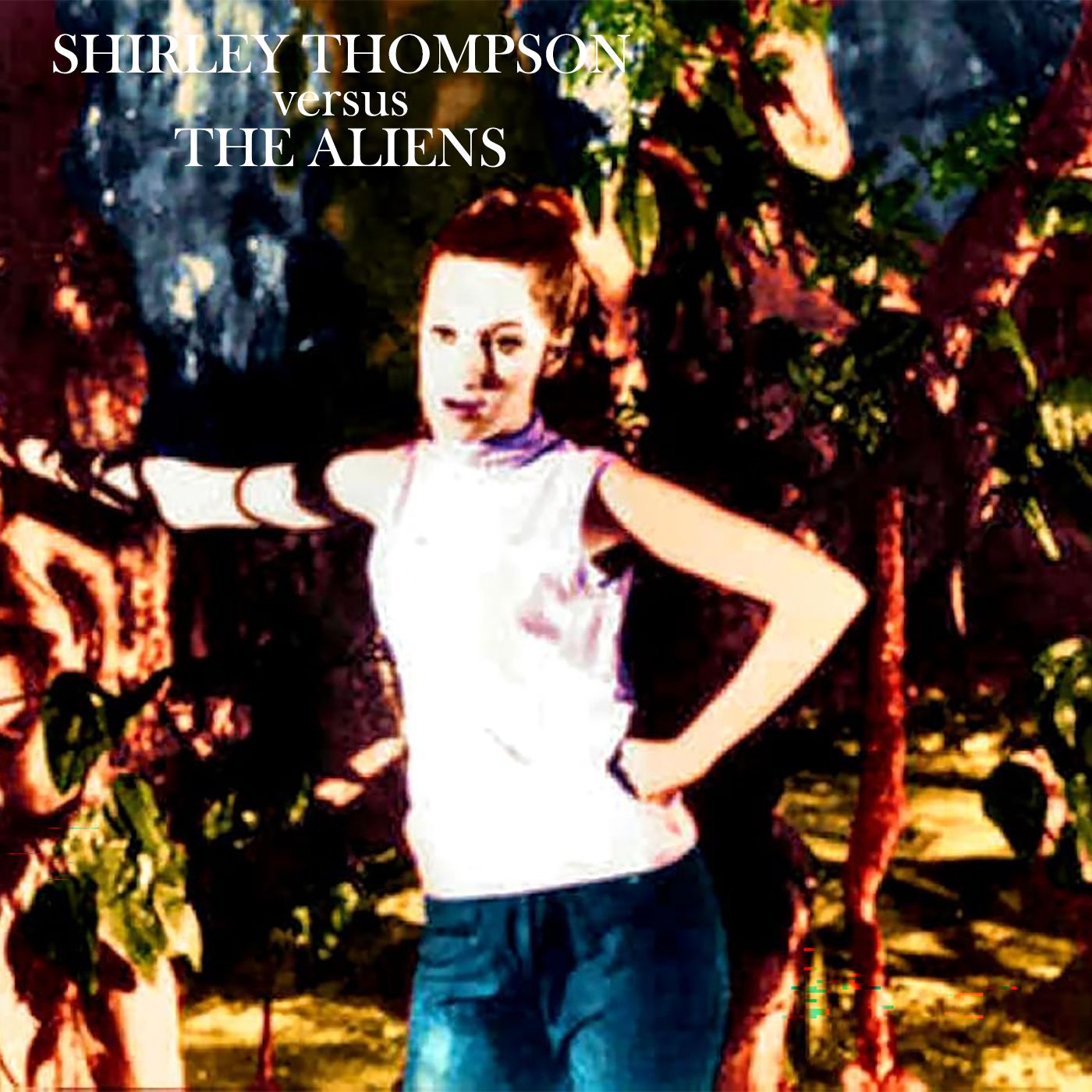
Episode 785: Shirley Thompson Versus The Aliens (1972)

About this episode
Heather Drain and Chris O’Neil join Mike to unpack the film’s radical shifts in tone and form: the oscillation between black-and-white and color, the omnipresent off-screen voices, the rock-and-roll aliens, and the way Sharman folds Cold War fears, ecological warnings, and Australian cultural touchstones into Shirley’s fractured psyche. The discussion also traces how the film anticipates Sharman’s later work, with its collision of spectacle, provocation, and musical disruption.
The episode features an interview with production designer Brian Thomson, who reflects on the film’s theatrical roots, handmade aesthetic, and the creative freedom that allowed such a strange debut to exist. Part asylum drama, part pop-art warning, Shirley Thompson Versus the Aliens stands as a message from the margins nobody was prepared to hear.
Transcript
Automatically generated, so expect the odd misheard name.
The Projection Booth podcast is sponsored by Scarecrow Video. Try out scarecrows rent by mail service. Choose from over one hundred and fifty thousand films and get Blu rays, four k's and DVDs delivered directly to your door. Visit scarecrow dot com today. Oh geez, folks, it's showtime.
People say good money to see this movie. When they go out to a theater. They want clothed sodas, pop popcorn in. No monsters in the Projection Booth. Everyone for ten podcasting isn't boring?
Got it off? I mean it is completing its destructive cycle many years ago time masment, prior to the structue process for mincing. We leave in this vehicle and come here here in order to bring a message of good will and to pass on the morning the germs of destruction can still be checked. Will see to I don't know what you're talking about. Can you repeat the information so far conveyed?
No, Oh, charly, you know they're here. We know they're here, but can you convince anyone else that they're here? You scare the pants of us. You nearly kill me with that now and then you stop playing god. I mean, what do you want the government?
Don't talk to me, sacket. Forgive our directness. It seems essential to alert ass as possible. You have people jumping off buildings if you go on this way, but you can't just wake them in the face with that lightning and hope it works. How country, just stop?
Well, surely, surely we are aliens. We do not comprehend the ways of this place. Will you help us? What should I trade? Do you want to tact me?
Want even affect my kids? I haven't. Time is not in a certain day, But be like the whole of correct combinations. Is always possible. There is a direct benefit for you.
Shall we can get distress? How pure po folk, here's a terrific Surely we're talking about how we can give you power. For de. Thankkay? Can you take me back to the game that's not my things?
Wait, you must not character in the language. Ye a. God, I might be had to find you like this talk, Sarah. There are creatures from out of space. I made a deal and if if I help them, they're gonna help me, and I'll do the same for you.
We're on it and they want us to be their mouth piece. Begay Welcome to the Projection booth. I'm your host. Mike White joined me once again as Miss Heather Draine. Hello, Hello, also back in the booth as mister Chris O'Neill.
Thank you for having me. We are kicking off a whole month discussing Australian oddities and starting it off with nineteen seventy two's Shirley Thompson Versus the Aliens, the freshman film from Jim Sharmon. It's the story of Ms Thompson, played by Jane Harders. She believes that the world was invaded by aliens in nineteen fifty six and now spends her days in the looney bin experiencing a flood of hallucinations. We will be spoiling this movie as much as we can as we go along, so I don't anything ruin.
Please turn off the podcast and come back after you've seen the film. Now be warned. This one has never gotten a proper release, but it is available in full on YouTube and archive dot org. So, Heather, was this a first time watch for you, ma'am? It was the first time watch that has been Phil say, almost decades in the making, because I first saw Rocky Horror in round fifth or sixth grade, and I'd actually saved up my allowance money and begged my mother like, will you please because it was about to come out on video and I kept seeing ads for this movie called Rocky Horror Picture Show on MTV, and I was obsessed even then.
I was very much a film obsessive the kind of person and my brother, I fate God is it still is very liberal, Like she was completely liberal with films as a kid, you know, so I know Emmanuel or anything at that age. But she got it for me, picked me from school and we watched it, and it changed my life as a kid, especially as a little weird, sort of outcast kid who loved rock and roll, who was still trying to you know, just knew that I wasn't I didn't fit what I was supposed to fit as a girl. So having like the gender issues and just all of the rampant, sort of cool, sort of fluid sexuality of it, and just the whole film just altered my brain chemistry and I will always be grateful for it. But of course, being the researcher, I immediately started just picking up everything I could find on the film and its director Jim Sharman and its cast, and there really gets the internet.
This was a title I would see people mention Rocky Horror websites. It's like, yeah, before Rocky Jim Sharmon directed Charley Thompson versus the Aliens, and I was picturing something like, you know, like the Resident, like a residence music video, yeah, or something like meets The Day of the Arts did Still and it's it's a different beat. This movie is completely not what I expected, but I love it for it and I can't wait to hear what you to say about it, Chris, about yourself. Of course, I knew Rocky Horror for a long time. I was actually trying to remember this the other day, believe it or not.
I was watching when I was like nine or ten years old, a trailer on before the UK videotape of Diehard Too, and I had the Rocky Horror Show reissue because it was coming out again in because I hadn't been available in video in the UK for like several years. And I saw it around that age because it just thought the trailer looked crazy and I didn't know what I was walking into, didn't know what to make of it at the time, to be honest, but I loved the music. It resonated with me and over the years I really liked it. But in regards to this film, about fifteen years ago, me and my wife did a trip around New Zealand. We're in Auckland, and of course, me being the film obsessive nerd et cetera, I would go to all of the video stores or DVD stores at the time that were that I was coming to from town to town and going straight to see what the Australian cinema slash New Zealand cinema sections were.
So I came back literally from this trip with about thirty forty discs. Which is not easy. I had to put them all in the carrier case DVD holders you know, and it'd get rid of the boxes and things. But that was where I first became across the night the Prowler, and I hadn't heard of it before, just thought it was Jim Sharman. I was like, I recognize that name because I knew I n him form The Rocky Horror and Ports of Shock Treatment and I picked it up and when I brought it back to Ireland and watched it.
I really really liked it. I thought it was in a wonderful film, and from that I went looking on the internet for copies of his other films, which the non Rocky Horror ones would be Summer of Secrets and of course Shirley Thompson and the low gray timecode copy that has become like the only copy available is what I saw. And I loved it because it, on one hand, you can see the sensibilities of Rocky Horror, and we can discuss this obviously as we go along, but it also reminded me of like one of those like you know, underground New York films from the late sixties early seventies, like a Paul Morrissey or George Kukore film, like I could easily imagine George Kukore's Hold Me while I'm Naked playing his support to Shirley Thompson in the Aliens.
You know, so I love it had this kind of weird low fi quality of a science fiction film, yet it wasn't really a science fiction film. It's a lot more going on. It's more of a psychological drama with music, with aliens, with rock and roll, and you know, with family melodrama, and you know, you can really see a filmmaker starting out having all these different enthusiastic impulses to towards cinema and try to put them all into one single film. And I think it's a really underrated movie. And I'm glad we're here discussing it, you know.
Yeah, I just wish that there was a better copy of this available because, like you said, it's got timecode. I've seen various I don't know incarnations of this, just basically what generation are you watching? Because it can look really rough and I know, well, at least it feels like he's playing around with color, and when it comes to something that's been transferred so many times, you really start to lose out on that color, you know, just really the reds are the first things to go with their wavelength and then you start getting more blue. And when you're watching this, I'm like, is this supposed to be black and white? Is this just really muted?
Or is it just that the color has just gone away from this particular point. But yeah, like you said, Hether, this has been a long time coming for me as well. This is one that a rare film, a film that you're not supposed to see, a film that you can't see. Okay, sign me up, I'm ready. I'm here for it.
So let's track this sucker down. And it's just been on the to watch list forever, and yeah, this was a real fire under my ass to watch this one, to watch, like you said, the Night the Prowler, to watch Summer of Secrets, finally catch up on these films of Jim Sharmon's that I was not fully vested in. And you know, after you know, we've talked about Rocky Horror, we've talked about shock treatment, and now finally being able to talk about this and yeah, like you said, seeing some of these early seeds, this is what three years before Rocky Horror comes out, but you've got basically rock and roll and fantasy and all this stuff, and it was just really nice to see. And of course for me watching that opening scene where you've got the camera kind of going around in a three sixty and looking at all of these different people and all of their activities.
One it feels very experimental theater, which is right in line with Sharmon. He was huge in the theater. He was the one that really brought Hair to Australia, staged incredible productions of Jesus Christ Superstar and then of course Rocky Horror. And so when we're going around, it feels like all of these different vignettes and all of these different people doing stuff, including a woman sitting under a tree reading a book, which of course brings to mind Alice in Wonderland. And I'm just like, Okay, I'm here for it.
Let's go down the rabbit. Hole the thing. And Chris, you nailed so much of what I love about it when you invote like the New York sort of sixties underground filmmakers, if somebody's listeners, and even if you don't know Rocky Horror, if you are familiar with like the early works of Brian to Palmer, and I'm thinking it particularly like say Woten's Way or Dionysis in sixty nine, which I adore so much, or even something like Pound by Robert Danny Sr. Like, if those works speak to you, then you absolutely watch this because it's got that same sort of fearlessness. That's the Because you guys had mentioned and shared in our dropbox a little inside baseball for the listeners for podcasts prepping this, Jim Charman kind of talking about his film.
So there wasn't a lot, unfortunately about about Shirley Thompson. But the thing he mentioned that he did mention about it that just struck me is how yeah he'sa liked, Yeah, it's crude. And we went into it kind of really not understanding a lot of how to actually make a film. But it made him fearless because if you don't know, you're just going to try everything. And I love that.
I love when I see that in cinema because I think I think sometimes when people get to locked down into what a film quote unquote is supposed to look like and what you're supposed to do, it can very much lose a vitality about it and become it's always in danger, becoming very staid and just kind of like like it just goes off in the wind because it's just it's not it doesn't have any heft, you know, or or super light. It's just just kind of like a flat effects. And this film is definitely not a flat effect. It's a very visual film. I mean, films are visual, I know, but what I mean by that is is for someone coming from say a theater background, that could go one way or the other when it comes to cinema is in is it going to be very much based on the written word or is it going to be something very visceral where the camera is doing a lot of movement.
And that's what I find really impressive about the film. There's a lot of really inventive uses of camera movement, like that opening shot we were talking about just there, Mike, and you know, there's POV shots where like they're looking directly into camera. There's some really inspired moments where the camera is just like there's a shot in a coffee shop and the camera is just going back and forth between the different tables. And I suppose the reason I'm these might not sound particularly experimental or daring or whatever, but for a low budget film from someone who had very you know, I think before this, Sharman did it is short and also did an abandoned documentary. This being like a first feature, it's very ambitious and very visual, and that's something I really appreciated.
And visual in a like what you were just saying there, Heather, that quote, it's make it fearless, like because they didn't know what they were doing, they just went out and did it and it works wonderfully with the limitations of the budget that they didn't necessarily know what they were doing. I think the. Film feels very really silent cinema at times to me, Like even just the way that this movie is set up feels very doctor Kaligari. That we find out that all of these people that we're looking at in that opening shot are basically her fellow inmates at this asylum. Like I said, it feels like we go for more of a lush color to a really either drained or black and white color as we move in on her and the nurses grab a hold of her, throw her book to the side, and then like you said, we switched this POV shot and then not only is it a POV shot, but we as she is looking at the other people that are there, we're doing an effect and going from negative to positive very quickly, like lightning or something is showing.
But just really like emphasizing the horror of this, and so much of this movie feels like it's, you know, like what is in her brain as she's there at this asylum and how is she experiencing this stuff? And Yeah, very interesting way to approach things as a first time filmmaker and it's not just Okay, I'm gonna lock down the camera and I'm gonna, you know, like my biggest movement is to pan from one to another. Instead no having like the big three sixty shot at the beginning. We're gonna get shots later on where you see almost like a scope on the screen. It's kind of focusing in on her.
Yeah, he's doing a lot of things that you wouldn't do as a just Okay, i'm gonna make a little movie, and we're gonna do this. And it's very ambitious and it runs. I think the version that we're seeing is almost twelve minutes, whereas I think he said he cut twenty minutes out of it, and I'd be very curious to know what was in that twenty minutes. It sounds like more dialogue, and I'd be willing to give it a shot. I mean, notwithstanding the opening song Gary, which can get kind of grating after a while.
But it's funny because the singer of that song Jeannie Lewis. It's Jeanie Lewis, and Gypsy Train sounded I've thought at first that it was Little Nell because it's in that register, that Little Nell register. You look up in a pigeon exploded, or because I note it was hit that should not have been hit. I find most songs that are called somebody's song in certain name song, it's almost a warning. She doesn't seem to like Gary very much though either.
Gary's a pastard. I love the solarization. I love that you mentioned that because that you know, do me that kind of visual effect, kind of especially a very low fi one. Again, I think a lot of new probably even more so now that we live in a culture where you know other people. It's like a cottage industry to make fun of quote unquote bad movies.
But I love it when people do something low fie because it's like, well, why not just try it? And it does it does work. Sharpan has this absolute fearlessness in everything I've seen of his of having camera fluidity, and it actually kind of blows my mind in a way that he has his roots and so much of his background in theater, because a lot of times when you see people move from the theater to the cinema trying to break trying to realize, hey, you can you can be subtle, you know, subtle with acting and be bigger with the camera. That's a hard line. Sometimes it's a it's a learning curve, I think for sure for a lot of people going from theater to film.
Sharman it just innately knows how to be like, hey, let's make this look interesting with the movement. We're not even just talking visuals, the camera movement. His composition just always and you see it here, which is so cool. And it's like it's more fetal in a way, obviously because it's his first thing. I mean, at times it almost kind of feels like a student film.
And I don't mean that in any sort of like negative way at all. I think that can be a very exciting thing with an artist to see just like, you know, yeah, let's see the let's see the rough the rough stuff that's you know, kind of raw, but it still has that spark to it. He's also playing a lot with editing the way that we have towards the beginning, when Shirley gets a shot and you start with the nurse out down the hallway and she's holding up this needle and it just keeps coming closer and closer and closer with these jump cuts as she's moving through space, and then you get into a montage of her face, than Shirley's face, than her eye, then Shirley's eye, and then the other eye, and then the other eye, and then the shot goes in.
I mean again, it's like, Okay, yeah, I like this kind of like no holds barred kind of thing where you are fearless and yeah, great word for this. He is fearless when it comes to like, yeah, sure, I'll try this out. Why not? And it just it works for me. I mean it works most of the time.
I won't say that I like this movie, and I don't know if I am in love with this movie. I think if I saw a better version of it, I might be able to fall in love with it. But I find a lot of this stuff very fascinating, and especially when you look at this in terms of his whole body of work. What I like about Shirley Thompson versus the Aliens as well as most of the films actually in his filmography, he's taking low art and higher art, and he's mixing things together. Because even though Shirley Thompson has elements of science fiction, you wouldn't necessarily call it a science fiction film, much like how Rocky Horror has many things going on.
It's science fiction, it's horror, it's comedy, it's musical. It's not exactly one thing. And then much like we'll discuss them later, but the Summer of Secrets, I mean that on paper could be sold as a kind of a Frankenstein horror film, when in fact, is this really quite sad, melancholy tale about like your perception of memory and just living in the past and things like that. And The Night the Prowler, which I think is an amazing film and it has a lot of thematic connections to Shirley Thompson. Actually, again, you could write a synopsis for that that could make it sound almost like a Miss forty five kind of movie or something, when it's again more about the family dynamics someone in a crushing environment, as was Shirley Thompson, because obviously Shirley Thompson said in the nineteen nineteen fifties Sydney, Australia, you know, a very suburban, white middle class area, and the pressure of her like domineering mother trying to get her like married off and trying to get her you know, settled down, and then all she wants it to be is with her kind of biker friends and all this kind of stuff, and the ambiguity whether the aliens actually exists in the film or there it's actually her having a mental breakdown.
It's never exactly clarified which, and even at the end, it's like you're left with the viewer having to decide which one is it? You know, so genre is used, but it's not necessarily a genre film, is I guess what I'm trying to say, which? And you see that throughout a lot of Sharman's films, I think, which is a really interesting angle to take with these films. He's good about taking things that we're used to seeing as far as stories, and twisting them. And I've noticed that particularly with everything I've seen of his, like a big one seems to be like the concept of marriage and sort of status quo middle class, acceptable life, and like we definitely see I mean right here from the beginning with Shirley, and in the fact that this film culturally Thompson versus the aliens, because at one point, I think in the twenty five minute mark, I remember writing down, are the aliens just the people around her?
Like, because you know, because the film takes its time a little bit on actually introducing us to the actual like the actual aliens. But but it's just because everybody, the nurses seem kind of creepy. One of them I honestly thought was Barry Humphreys. I had to double check. I was like, is that Barry and it's not.
But I think that was just wishful thinking. I'm always trying to manifest Barry Humphreys and things. But you know, the nurses seem off. There's this one patient, mister Blake I believe this is his name, whose heads wrapped in bandages, and he seems very pervy, like he's trying to lick her face and she's not having it. Ge I wonder why, and you know, and then we meete her parents through flashback and it's like you see her family and you're like, Okay, I think I know why she's in an asylum.
I don't. I think it has nothing to do with the UFOs. I love him taking like the concept of what a respectable marriage and a respectable life and yeah, and those kind of gender roles and always kind of just immediately just pulling the blanket off and be like, well, here's here's what this could actually often be in real life because he does that. He did that in Rocky a little bit. We don't actually see the marriage, but we see just okay, yeah things.
The world's a lot bigger than you guys think. Brad and Janet, Yeah, we definitely see it in Shock Treatment, where the marriage is obviously you know, they have to get surgical Brad's in the chair for surgical care or shock treatment. And we definitely see that in Summer Secrets, and I just I think that's so cool, and especially because I think a lot of Americans, like even American centopiles, are probably used to thinking of suburban type matrimony, that sort of fifties sixties stereotype we have as being only like an American thing and so very much not, which makes me sad for everybody, Like, what a horrible way to live. It actually makes me wish he would have made more movies. But with Surely too.
I really love the performance of Jane Harder. She's pretty much the one we're worth one hundred percent of the time. She is so emotive and you really feel her frustration because it's just, you know, it's like she's she's in a world where nobody's really gonna listen to her. It's a fantastic performance actually, and a motive, that's the way to put it, because the syntex of the film is almost like her emotional state. And that's why it's kind of frustrating to watch it in a low quality version because as we've been talking about that, the use of color, the use of black and white, there are times where you can absolutely see it's black and white.
You can see other times where it's absolutely supposed to be quite luscious color. But then there's other times where you are kind of going, hmm, is this supposed to be exactly black and white? Or is there supposed to be a tender here or is there supposed to be some sort of muted color. Because there's a fascinating scale of the different timelines involved in the flashbacks and the present day and the different aspects, and again. All of them are.
An emotional telling of the story from Shirley's perspective, and that performance by Jane Harder's I think nails it. It's a wonderful performance, I think. Because like you said, there are the flashbacks, and they're very pointed about this being nineteen fifty six, and I was reading David Surratton's book The Last Wave, and he calls out nineteen fifty six for being important, and he said this was the year of the Melbourne Olympic Games, which we see later on the Maitland floods, the Duke of Edinburgh's visit, which we also get to see a little bit flying saucer signings, Suez, the Soviet invasion of Hungary, and Rock around the Clock. And actually I don't remember if this was Stratton rating or if this is Sharman talking, because he says all these elements found their way into the film, with the aliens coming not to take over, but to warn of an ecological of ecological disasters ahead, which in nineteen seventy two is pretty you know.
I mean, I know that the Silent Spring had already come out, but pretty spot on as far as it's like, hey, quit fucking up the planet or else you Yeah, I mean that's been the job of sci fi a lot, especially aliens telling us like, hey, you guys are on a one way path to destruction. I mean, the day There Stood Still, I mean I could start quoting all of the movies that I referenced in Science Fiction Double Feature. I said the day there stood still in Bayam. I was immediately taken there. The newly e all human beings, your current ancestors, fought amongst themselves in an endless cycle of war, genocide, ecological destruction.
They brutalized earth, ruined her waters, ravaged her climate, poisoned themselves with drugs and technology, and even when presented with irrefutable evidence of their own self destruction, the humans continued unabated. It took me a while to figure out that her biker friends, or as they call them, boggy bo Dgie, her boggy friends, I guess those were like Australian teddy boys. I thought that they were the aliens for the longest time, just based on my rocky horror thing with all of those bikes there outside of the Frankenstein Place. I mean, life is pretty cheap for that type. Mike So's Janet.
I loved the contrast of Shirley and her gang and she and she. That's how she's constantly referred to them as like the gang, because this is the youth culture and this is what she fills like the most at home with versus like this uptight kind of like pink straight Harold who her horrible mother. Oh my god, her mom is a lot literally is you know, in addition to nagging her across to be like, oh, Harold's such a nice boy, put some engagement and add in the paper announcing their engagement. Even the dad is horrified. And the dad is that early shot we get of him.
Ree's in the front yard and he's trying to get somebody to help them because it's like covered in empty beer bottles. But even the dads just like horrified by that. It's just that you realize, like this is especially in the fifties, but I mean this was made just like not even a full twenty years after fifty six, and so that whole idea of just like this is what you do. This is, you know, you find a nice guy with the job, you know, wet up be a mother. And that's say we get kind of that talk in the movie.
You know, mister Blake's asking her about the baby early on, and you know, and there is no baby, but there is something inside her. But I feel like, and I mean there's different ways you probably take on that, I kind of feel like that something inside her just is just her spirit, but also just that she's changed like, especially once the alien's like, you can't go back to how you were when you've had that kind of experience, and nobody will kind of just listen to this woman like this. Yeah, it's just like, oh no, it's it's got to be a baby. That's what women do, right, You guys love your babies. Is Harold supposed to be the guy in the bandages at the asylum?
I'd have to rewatch it again with that in mind. Actually, that's an interesting take. I hadn't thought of that. I was wondering if she is in a state where she doesn't want to recognize him, so she pictures him with the bandages over his face. That was what I was thinking as I was watching this, And yeah, he just seems like such a a pest that I was just like, is he supposed to represent this Harold?
Because I mean, Harold's an okay guy. I mean he's no Ralph Hapschat or anything, but he's all right, you know, he's probab in line for promotion. Is it this film where Harold's saying he's got, he's got He's going to get a promotion at Woolworths, right, Yes, yes, yeah, yeah. Bertany felt a little bad for Harold because he doesn't seem inherently like terrible. But it's just it's kind of like, sir, like she you move on, you know, she's not into But uh, that's such a great question.
Now I'm not sure either. I could. Yeah, that's kind of the thing about this film that I really love it. I love it when films give you something kind of extra to chew on where you're almost like, I kind of have to rewatch this just just to get the bigger picture of it. I my initial viewing, I didn't think that was Harold because this guy, mister mister Blake, he just seemed way too way too handsy.
Harold seemed very very much like he he probably won't even like do heavy petting until like they're engaged, Like I feel like he's very buttoned up. Course, then again, one could argue maybe this is just him him on for Old now that he's in the insane asylum, and. We should probably say that Harold's played by Helmwood Bachatis. I believe it's how you say his name, and he was the co writer as well as he is probably the most familiar to audience. Well maybe not even these days because hopefully they haven't experienced the Matrix sequels.
But he's the architect. Oh my goodness. Yes, that makes the Matrix sequels more interesting now. Right when I see those? Well, luckily I haven't seen the Matrix sequels in a long time.
But whenever I think of the Architect, I also think of George Carlin because he played the Architect in one of those awful Parenty movies, and then Will Ferrell played him, and I believe he's an MTV spoof. Send up, Hello, I've been waiting for you three. Who are you? Yeah? Who are you?
I am the Architect, but please call me Larry. Hey, very Larry. I created the Matrix and several popular video games, including Cubert and Dick Duck. Remember that. Yeah, I didn't create Frogger, but I came up with the name for it.
Can you believe they wanted to call it Highway crossing Frog? That is so lame. I know, It's the. Lamest thing I've ever heard of, Highway crossing Frog. Helmut has a very good look to him.
I think he might be the best part of those sequels. Well, actually, I take it back, Anthony's Derby. Is the best. About to say, like come on to not be disparaging the serbs. I love Anthony Derby.
I'm still not sure how he got involved in those movies, but that's all right. It gave him a check listen anything that gives that man money. I'm completely in supportive. Yeah, I have to say that the I guess we can call them special effects. You know, some of these things, like you're talking about the sozation when we move into the alien invasion of Luna Park.
That is very nice. The shot of the moon. I'm not sure if they're using a model for that, but that looks good. This is a damn good looking film for something that comes out for a first time filmmaker. And I love how what was it He was trying to get some funding for this and they're going to take too long, and he's just like, yep, fuck it, I'm doing it right now.
We're just doing it right now, like we'll. Do it lit, fuck it doing live. I can go alrite it and we'll do it live. It feels like Sherman is very impulsive when it comes to just like no, I want to do this thing. I'm doing it this way, and it's like okay, great.
He seemed to be very singular of purpose, like once he got involved with the theater. From everything I've read, it feels like he is just like, Okay, yep, this is what I'm doing and just plowed forward, completely diving in with both feet. From some of the notes, you're able to truck down like there was something about from the conception of the idea to the end of filming. It took seven. Weeks, which is pretty impressive, you know, and three of those weeks were shooting, so it's almost like there was a month of creation than three weeks of shooting.
And you know, for a first feature, that just shows I think, a need to create something, a drive, a passion. Maybe it's impulsive, but yeah, I mean. And I think the budget was something like seventeen thousand Australian dollars, which which I think Sharman mostly was set by. He funded it himself because he because of his different his theater work. That that enthusiasm, that that burning need to create something, I think is very evident when you're watching the film.
I just love the stories of him growing up, Sharmon growing up with his dad and his brothers, and his dad was a boxer and he and his brothers used to go around and they would do boxing exhibitions and they would have audience plants that would come up and be like, oh, I can take the champ kind of thing, and Sharman's over to the side. It's like he's growing up in this world of theater that way, in a very different way than the you know, the personium type of thing. But it just like seems to be the inspiration for a lot of stuff. And you were talking about that abandoned documentary and that was actually supposed to be about his dad and this whole thing, and it's just that stuff sounded fascinating reading about that in Blood and Tinsel Sharman's autobiography, really really fascinating stuff.
And you know, and then it's like, no, no, you're five years old. You have to go to school. We have to have a normal life. And I imagine that this whole thing of putting a normal life onto Shirley Thompson, who doesn't want it, is probably similar to Sharman who's just like, no, no, I want the glitz, I want the glamour, I want the blood, I want the tinsel. I want to be involved with this stuff.
And he was probably very I know he was embarrassed when it came to other kids who had you know, regular dad's quote unquote, but I imagine that after a while it probably became a point of pride that he was not like everybody else. God, I didn't even think about the Sharman Shirley proxy kind of situation. That's so cool, that's and I completely see that. You know, when we see her with her gang, they're riding around at night, they're listening to rock and roll. There's one couple that I wish we would have got to see more of that are apparently just constantly making out under tables.
It was like the girl's like head just pops up. She's like, oh, Luta Park, Yeah, you know, that's great. And then to go down again. Uh, you know, and exploring like this amusement park at night that's abandoned and like, oh, we can have it all to ourselves and like that life and I love it. It goes to color because that's when we started getting the color introduced in the film, is that, Yeah, this is where things are vibrant, and you know, you can have the sense of freedom and imagination and exploration as opposed to just being like stuck in this like small house constantly.
Was it beans? It looked like they were being like her mother was snapping beans, but the quality of the print. At one point I was like, is it fit? Is she snapping fish heads? Like?
I think it's beans. But and it's just we're just constantly just repression and dreariness where the parents are always fighting. Yeah, the dad doesn't seem like a bad guy. It's not like he's like a mean drunk or anything like that. He's just it's like everybody's too young to feel like life has passed them by, but that's where they're at.
And so yeah, no, wonder if she's like, want to go hang out at Luna Park. The thing that I thought was really emotionally captivating, though, is when she's recounting that whole experience of like Luna Park and meeting the aliens, is just how she felt abandoned because the gang leaves and the guy that's kind of her boyfriend, her real boyfriend, I guess her bo of sorts, Bruce, I think it's his name. He just leaves, he comes back later, But just that feeling of just like you really scent and again, this is where Jane Harder really nails it that sense of just being abandoned where it's the only person that she was with us the aliens. And the aliens seem pretty darn nice, you know, they don't seem like they're threatening to her at all.
It feels like, if anything, it's kind of again a source of liberation. Yeah, I mean the title versus the Aliens, it'd probably be more appropriate to say, surely Thompson and the Aliens, because they seem good. They're trying to help, and they give up trying to help rather than like trying to have a full scale invasion or anything. You know. It's like, yeah, and she's like pleading with them at the end.
It's quite which is a quite a wonderful scene, a piece of acting from her. Well that's why again I kind of kept thinking, like, are the are the real aliens of this movie? The people around her, because those are the people she's versing. Yeah, and that she's having to really battle because yeah, the aliens are incredibly nice and they're just they're trying to do a good thing. They're trying to do a really great thing.
Yeah. The thing is like she gets her gang kind of on board, with trying to convince that, which I thought was nice. I don't know if that was super believed, but I can I can roll with the fantasy here and they go to the wax Museum because I was trying in my notes, I'm like, is that Prince Philip? There was a British royal figure or dignitary of sorts that they have on earthed, but I think I think I got a little confused on who it was. Yeah.
I had in my notes that it was Prince Charles, but it's the Duke of Edinburgh. Oh oh god, that's right because they mentioned yeah, yeah, and who. Is I believe Prince Philip? So I think you're right. Yeah, I think it is sweet.
Okay, yeah, yeah, oh okay. Yeah, yeah, I just looked up Duke of Edinburgh and yeah, Prince Philip, Duke of Edinburgh nineteen twenty one to twenty twenty one, hundred years old. This guy was I did not want to know what dark side in this. He got him too, but uh but yeah, okay, well that is that's good to know that my notes were correct on that. But I love the presentation.
Whether she's like training him. Yeah, because that' that's the whole thing for the folks listening at home is that they she wants some sort of sign because no one is believing her the aliens. No one believes her. Her folks don't seem to believe her. She talks with the aliens, the gang kind of maybe believes her.
I don't know, but she's like trying to bring this warning to the entire world. So yeah, that's what leads her to like, Okay, well we're going to do this big thing. We're going to have this some sort of big announcement and we're going to make sure that everybody sees it. So yeah, they break into the wax Museum, steal Prince Philip, and yeah, train him to give an announcement, and he announces at the Sydney Olympics. You know, there's going to be an alien invasion, but nobody seems to care, nobody seems to notice.
It just seem to everybody's cheering and stuff. And the guy who does that Prince Philip impersonation really well done. Oh he nailed it. It just occurs to me how much the idea or the presentation of a rehearsal seems to come through in some of Sharman's films because we have we have the rehearsal in Rocky Horror of sorts we got and we even have that's that scene in Summer of Secrets. Journal will go more to it a little bit where character is made to rehearse a dance.
Again, just seeing all that connective tissue, like, I'm so glad that we I mean, even though it's not the greatest print obviously that we have access to, because its not even really print, it's just a VHS dube, but I'm so glad we have that. That's uh. You know, the Internet has a lot of negatives, but a lot of the positives is human connection and getting to access so much art that we otherwise never would have had access to. As I said, it was when I had seen The Night the Prowler, following that trip in from New Zealand, when I really got interested in the non Rocky Horror related Charman films. And that's when I came across Shirley Thompson Versus the Aliens, the three Australian films.
I guess you would call them the Australian Trilogy if you like. Of Shearman. The connecting tissue between all of them, as well as to the elements of the Rocky horror movies as well. It's fascinating to see a development, a maturity, an experimentation, and then just redoing of some of these themes and elements you know. Well, yeah, even the final shot of Shirley Thompson versus Aliens where she has gotten drugged again.
It's interesting that we move to color at the very end because the color seems to be more of the reality, more of the because it feels like the black and white is much more oppressive. That seems to be when she's being asked by the doctors questions, or when she's with her mom and dad and little sister, that seems to be primarily the black and white stuff, whereas when she's with her gang that's in color. But this last shot is in color, and that they have the camera it looks like on her stomach and we're they're moving her around and around and around. And then when we cut to the overhead shot of her spinning and we've got the return to the music and she's screaming and all this kind of stuff. I mean, it is so that right before Superheroes, when everything is spinning around, you know, And I remember people would run up to the front of the theater when they would show Rocky Horror and like when the spinning stops, they would like grab onto the screen so it stopped it, you know.
But yeah, that that ends up being the final shot of this where it's just like her. I mean, it's a very not good thing that she is now on this merry go round ride of drugs and just it feels like she will never escape this nightmare world that she's in. I don't know unless there's a light of hope that you guys see in this, but I just don't see it at all. No, Definitely, it's a sad film. It's a tragedy.
And then that's what I appreciate. I suppose the use of be like a B movie fifties genre, not just science fiction, but even kind of rock the way Rock around the Clock is referenced to, you know, kind of teddy boys and rockers and these kind of things, using these tropes to tell quite a just sad story about a young woman's mental state. And again we see that throughout these films. Is you know, on one hand, it has tropes of such and such of a of a kind of film, but yet it's doing something else, you know. I mean, like we as you mentioned Heather about that the marriage being referenced in a lot of these films, the way Shock Treatment is ultimately about, like you know, a marriage in trouble, and then you've got the media aspect of it as well in things you know, So there's a lot of playing around with different elements and as as I mentioned already, the way you could sell some of these films, as you could write a nice synopsis to sell it as a certain thing when it's doing absolutely the opposite, I think.
And that's something again, like that's another thing I think I really love about Charmin and Cherish is that everything is his. His films always have with their endings, you know, even something like Rocky like Reckie We're you know, because you know, keep people are dead by the end of the movie at spoilering fun refra from Magenta get to go back home and so that's happy, but we get the whole like Superhero song and we're Brad Janted and doctor Scott are just left in the dirt and it's like, you know, like it kind of like the Aliens thing. Nothing's going to be the same again. Things are completely changed and very uncertain, and then we get the whole thing with the criminologists, you know, the great Charles Gray to say about like some insects called the human race lost in time and lost in space and meaning and then but you know that is what we are in Shirley Thompson.
She's surrounded it just you know, meaning is lost and it's you know, and even in a shock treatment to be that ending was always I always love that. It's got kind of a duality because I mean, our protagonist get to leave, but the fake town of Denton are literally in an insane asylum. The inmates have taken over completely and there's no hope for them. There's no freedom for them. They're just you know, drugged up on the cathode rays and being having no autonomy, which is really dark, like Ed Chirley's lost their autonomy.
It's you know, what is an asylum, especially of that era, but a prison of sorts. There's just such heavy themes for a filmmaker who's also able to kind of almost seamlessly integrate things that are very light themed like be horror and science fiction and camp. The way he intro. He's always able to integrate these things. I think is so compelling and I think is a really rare ability of his I think, but a lot of people to do throwbacks in their film, especially to anything retro, it can seem a little superficial, and I don't think Jim Sharman's a superficial director at all.
There's a movie I probably should have shared with you, guys, because as we're talking about this, I keep thinking of this other movie from two thousand and two called Daddy Cool, directed by a gentleman named Brady Lewis, and it's very much a throwback to nineteen fifties horror films, and I remember this woman with a head and a jar and a wolf man. It's been a while since I've seen it, but it just has that same like camp esthetic to it. And I want to say John Amplis's in it as well, but it's. Oh my god, I love him. Yeah, Yeah, it was really good.
And years ago, when we were still doing Cashier's the Cinemat, Scausz Sizzic and I worked on an article about like fifty modern midnight movies and that was one of them that we put on there, and Unfortunately, as I'm like looking at that list, I'm like, so many of these movies just are still not available. You cannot find so many of these things, which is terrible. You know, Like all of these movies that are on this list that I'm looking at, it's just like, oh yeah, like more people should know about these things, you know, and it's just so tough to see. I mean, thank god, like Robinson Divorce the Woman Chaser is now available. I don't know if it's got the original score to it.
You know, it's very tough to find Julian Nitsburgh's Bury me in Current County. There's so many great movies and they're just all kind of off the map. I mean, thank goodness that Freaked is finally getting what it deserves when it comes to the new Blu Ray release and the whole deluxe thing. But it's like from nineteen ninety three now to twenty twenty five when that got its release, it's just like, holy shit, guys. I know it was easier to see like in the you know, twenty twenties and twenty teens, but for a while there, like unless you had a VHS copy, good luck.
Yeah, that's an interesting aspect I suppose of Rocky Horror because Rocky Horr obviously when it opened it Bond then went out in the midnight circuit, the college circuit, and that's when it found its life. That's what the film we all know and love. But then with Shock Treatment, they said, let's do the same thing. Let's skip making it a mainstream release and go straight for the midnight crowd. And unfortunately, when you have a film manufactured with the intention was maybe it wasn't necessarily the filmmaker's intention, but the studio's intention, the distributor's intention of going for the midlight the circuit, going immediately for the cult labeling when it hasn't earned a cult following, that can be a really tricky thing.
And unfortunately, in this day and age, it's like it should be on one hand easier to make a film like that, but on the other hand growing its audience because everything's so separate now, it's really really difficult and it's such a shame. Which Shark Treatment, which I think is an incredible film. I love it film dearly. I think something I mentioned to Mike before we recorded is that if Rocky Horror kind of changed me as a kid, then in a way, Shark Treatment kind of blew my mind as an adult. And I mean I saw it as a kid too, and I initially I think a lot of people that see Rocky Horror for some love it.
Shark Treatment is so tonally different that it takes I think it takes a few viewings to really appreciate it as its own thing, because it really is its own thing. That film, just it has such a beautiful viciousness about it as far as like cultural commentary that I adore. I think it was such a ballsy movie. And but yeah, I mean a lot of people make ballsz movies and those don't become cult hits. I mean it's and you can't.
You can't even really you could. Followings are kind of have built weirdly organically anyways, like because some things will play a Midt movie and not really get any traction. But yeah, but I don't way as much as I love Rocky, I kind of almost I wouldn't say hate, but I do kind of. I wish it didn't overshadow all of Sharmon's other films because like, this is a guy I'm like, we see, we've seen box that's dedicated to filmmakers more obscure than Jim Sharmon, and thank God for that, because I love that. I'm all for that, I'm all forfilled preservation.
But I'm like, I would love to see all of Sharmon's work, like the non rocky stuff, get really get upgraded and get and get that cleaned up thing. I do. I will. I will stress today Bay listening because I do feel like because of we live in sort of a golden era right now, boutique labels and getting to see so many films and just pristine, beautiful restorations, which again love. I will never take that for granted.
But I think sometimes people get babied when it's like, well, hey there's this great film and yeah, it's not the best quality, and they're like they're like, oh, but it doesn't it looks it doesn't look good. I said, well, no, the movie looks good. It's just you have to kind of take what you can get at everything's going to be four K. Well, I kind of wonder if Shearman disowns this movie because we were talking. I know, Chris, you also read Blood and Tinsel, and there's just one mention of it when he's talking about how he was talking about Sam Shepherd, and Sam Shepherd's like, oh, I wrote this play about aliens.
He's like, well, I made a movie about aliens, and then he goes on to stage a Shepherd production. That's it. I don't think there's a There's not a whole lot in there. And even in his journals, which are available out online Beautiful Visual Journals, he's very much like an early scrapbooker. Barely and he mentioned there.
I think I found like two or three articles and I don't know if he just doesn't like it or is embarrassed, maybe because it's an early work. But I mean, it's tough when the filmmaker himself doesn't really talk about his own movie that much. In Blood and Tinsel, it's not just Shirley Thompson, but it's all of the films bar rocky horror that don't really get much of a look in. I mean, I know The Knight the Prowler has a bit more prestige in Australia because of the Patrick White is at the name of the author. Yes, he's obviously a very well regarded author in Australia as well as a bit beyond, but particularly there and so I think that film has a little bit more of a you know, a bit more of a prestige to it, shall we say, But like Shock Treatment, Summer of Secrets, and Shirley Thompson, they're all fabulous films, as well as Rocky Horror, of course, and as well as The Knight the Prowler.
And I wonder is it a particular film or is it his film work that he seems to because I suppose besides Rocky Horror Picture Show, he's known for his theater work. You know, he's a very well regarded theater director. So I tend to wonder if that's where his you know, he looks at that as what he's known for, and the filmmaking is a dalliance, is a kind of a thing he did on the side, because unfortunately, you know, in the space of he made five films in nine or ten years from the early seventies to the early eighties, and then that was it. The filmmaking stopped. And it's such a shame.
I mean, was it that he decided that he was done with film? Was it that Shock Treatment didn't go the way he wanted it to and therefore he just lost interest who knows. You know. Let's go ahead and we're going to take a break and we'll be back with an interview with the production designer of Shirley Thompson, mister Brian Thompson. That's Tomson Tompson, oh boy, and we'll be back with that right after these brief messages.
The biggest SpongeBob movie ever is now on digital SpongeBob and Patrick diving to the deepest, darkest depths of the underworld where no sponge has gone before. The SpongeBob movie Search for the Square Pants is now available on digital. Obviously, I want to talk to you about Shirley Thompson, but I would really like to find out a little bit more about you. From what I understand, you were going to be an architect at one time. That was my plan, yeah, originally, and it was what I wanted to do.
And then I started reading. In sixty six, sixty five sixty six, I started reading Tom Wolfe and Marshall McLuhan, and then I became aware of pop art just through little tiny images and it changed my outlook on everything. I was doing an architecture course, so I left the course and decided I wanted to be an artist, except I didn't quite know what that entailed, and I didn't necessarily have skill. I was going to make models. I was good at imagining things, but I didn't know like I wouldn't have said, oh, a painter, I'll be a sculptor, orb whatever.
So I started doing sort of almost happening things. I'd go out in the streets and paint things and have kind of dinner parties and stuff. I was working for an art gallery doing invitations, and I'd be paid in a little tiny bits money or a little artwork. And this journalist started writing stuff about me, and it was just in a Sunday paper, writing about things I'd seen and that kind of stuff. And then I.
Met Jim Scharman in sixty nine, basically in a Hamburger bar because he was doing hair just around the corner from where I live. And I was always a bit of a smart ass, and you know, I said, you know, what are you doing all this hippie crap, for it is already it's used by dates come and gone. And I think he was taken by my straightforwardness. We said in touch, and we realized we were interested in the same kind of thing. I was not interested in theater at all, right, not no interest.
And then he said that a producer had asked him to do Tommy. Now, at the time, I was living in an old stables, and down the road from me was a pontest pilot and he used to bring all the records back round, so I had things like Tommy and Jesus Christ Store and all those kind of things years before I mean, yeah, at least a year before the rest of Australia got them. So I thought, oh, Tommy, that'd be interesting. So I said sure, and I did. I did some kind of little three D sculptures for it, and other those sort of ideas, and then it was all called off and I didn't get anything.
And I thought, oh, well, I quite enjoin to that, and I'm onto wherever I'm going, wherever that might be. And Jim sort of said he was going to work with a theater company and who were performing an actor's company, and I sort of said, to what do you want to do that for? I mean, let me just stuck with that, stuck with a bunch of actors in that theater, and you know what about all the other things you seem to want to be able to do. So he didn't take the job, but he said he was going to do a play with the company and it was Shakespeare and I said, oh, well, no, you know, I don't. I don't think that's me at all.
So I read this thing. He said, well, just read it. So I read it and I said, well, you know, I could see a way of doing this if you did it through the eyes of a child, I at the door with toys and you know, plastic props and all that kind of thing. And he said, okay, let's good. It to go.
So we did that, and I quite enjoyed the process of doing it. You know, I made a model a workshop, built it and sort of painted it, so I didn't my schools confined, you know, to the small world. And I thought, oh that's good. Well that's that was interesting. I honestly thought that would be the end of Then the producer who wanted to do Tommy called me up and said he was going to be moving here out of Sydney down to Melbourne, which is the city what five miles to the south as something.
But the gym was no longer involved. And I thought, oh, okay, So I did this design and that the person who was going to direct it was David Tagouri, you might know as the choreographer from the Rocky movie. Right. So David came out and he wanted to do the Broadway production and the production he sort of copied in London and in Paris, and I said, well, I'm not interested in I'm not interested in doing that. So I called the producer into the room and I said, look, Harry, David has an other idea of how to do this show.
I'm not no way interested in copping someone else's design. So I'll give you the name of a really good draftsman and Dave will tell you what he wants and you can do it that way. You know. I left, and I thought, otherwise, it's part of part of this world, you know. I do want to be I don't want to be copying anything, and I'm not going to do then a few I think.
Next day I said, I got a call from Jim. He said, can you come up to his play? He was up, you know, I put sort of a hill away from where I was, so I had a little moped. So I pedaled up and walked in and there was my bottle of hair on his coffee table and he said, I'm back on the show, and so that led. David was basically told he'd never been to Japan, and he was he was half Japanese Canadian, so Harry that the producer sent him off to Tokyo and said, well, you may as well just go straight back to London.
I don't want to. I don't want to either do that, you know, rip off. I mean, I think it was probably more to do with he would have had to pay for that, you know what I mean, and a royalty and stuff, and I was extremely cheap because I didn't I just got doing it for Wow, you know, I'm being paid for doing this, which to me I never quite understood. But that's fifty years ago and I'm still on the same boat, you know. So we did that, and then then we did a Superstar and Tim and Andrew saw our product.
We'd done a kind of a concert version, and then we did a big, big stage production and they asked us to go to London to do the show there because the Broadway one had been done and they didn't like it, and I mustn't Geminize saw it on the way to London, and it was pretty awful and it was kind of tacky. It was kind of tacky in a way, disrespectful and Jesus class it was. I never works in New York, so we did them in London. It ran for eight years. I think it's the longest running production ever.
No one kind of ever talks about it, and I'm not quite sure and I don't really care. But it was there that we met O'Brien and that's where the whole Rocky Horror thing started. So it was just a series of rolling events that took us to that point. And then we did the movie. Then we did in New York, and that's kind of where we hit the brick wall, because that was where, for the first time, a place through doing the show seemed to hate it.
All the rout were totally shocking and nobody went and it was a bit like, sort of for us, a bit like hitting a brick wall. I mean, I had this astonishing ride from meeting someone in a Hamburger bar. Here we were on Broadway, you know, So, I mean, I guess a lot of people might dream about doing that, but it just happened. It just happened. There's a fantastic clip you can see of when we were in New York the first time.
I think it's Saturday Night Live and it was. The host was Madeline Kahn, and we'd done this kind of rehearsal in the afternoon, and you know, it's camp back then. It was cameras flying everywhere, and the host would walk from one thing and then go and be in a skit and then come in and Barry produced this cake. It was a round cake with a lot of banana sticking out of it, all covered in chocolate, and she said, that's not in the strip. We're not doing that, and Barry was pretty pissed off.
So then when they came to the Libra co was it a Libra coin, they record it, then they live, then they play. Later he had his girlfriend at the time sit down very close to him, so when they were doing their their thing together, he produced another version of the cake and Mac does not know what to do that You're so furious. It is amazing. When I was in London last year working on a film, I was privileged to meet one of the great actresses of the English speaking theater, as she is here tonight. She is one of the world's.
Great witty conversationalists, and I know you're going to enjoy her. Please let's give a big welcome to Dame Edna Everidge. I'm sorry, I don't mean to change the subject. I just you're an exquisite I just want you to tell the people about. The one woman show that you will be doing.
And well, it's really hard to describe. It's a mixture between one of Franklin, the Roosevelt's Far Side Checks and the Lucy Show. Can you let Australia television show over here? Dar thin? I suppose if your areels are harder.
If you do, you know you're on exquisite creatures. Did you make that tree yourself? Meddling? It's love leather? It really is.
Does something for you? Do you mind me touching him? Because I'm very drawn to my own sex. There is nothing wrong with that, is I mean, I don't want to play doctor or. Anything like that, but you know I am, and I think it's normal.
My little traveling companion, I'm always traveling with this exquisitive old woman, Madge, and you know, little Madge is almost my private secretary and quite often we share a bit together. And a lot of people think that's unhealthy busts and it is unhealthy. That one imping till my eyes. Well, well now then we that that's fine. I just didn't realize that we would be in any case.
What we'll do as the back right after this, I. Got a little I don't know, Darland, I've cut you a delicious of strael Haha. I'm here, and I don't believe I could tee it's a national dish. Darling, and you're a black girl who could do with something hot inside hot sausage. Say right back after this nextwork.
My brother was well Barrie's closest friend, so he'd known him. It's nineteen sixty. My brother left home and went to London. He left behind those first little forty fives of various stuff, and I met him when I was doing that. I told him about and in that first year seventy one, we also did Shirlie Thompson.
So there we're just like rolling onto things. It just seemed I don't know the same to me, to be just happened. Nobody was telling me what to do, and nobody was enforcing anything kind of ruled or anything on what I was doing on it. And I didn't I kind of didn't think it last for long, and I thought, this is just a the's a phase in what I'm going to be doing, working into becoming an artist. And then I just in a way i'd found my canvas.
Wow, because no one was doing what I was doing. No one was doing pop art on stage they're doing now or you know, but I mean I was doing big bear sets with big words on things like that. You look at things now and think, oh, a Vita's there. They are they're doing it. And sort of in a way, I didn't know the rules of theater.
I hadn't done anything. I didn't know what materials you used. I didn't know. I just thought, well, from architecture, I had a very good sense of structure, and I had a I think I had a pretty good sense of proportion and of course colors, and so to me, I was doing that. I was I was being a pop artist as being except a once in a gallery, I was on a stage.
There plenty of stages that wanted plenty of things. And that's what I've con and that I did that I did, you know, I did things like I did the Olympic Games closing ceremony and too I mean, I've done enormous things and I've done tiny, little weeny things. So to me, it's not it's all part of the all part of this ride that I'm on it. So what was that like? Going from theater to movies a shirly time.
So we were both loved movies, and we used to go and see. There was one little house that played the Fellenies and all the kind of art movies, and I suppose I was very intrigued by that because they were incredibly theatrical. As it turns out, anyway I've given showed the script was written by an actor friend of his from the kind of theater school, and that he was part of. See a lot of people were part of this theaters gone well, it just wasn't. I was complete outsider to all of that.
But with as it turns out, ideas that could get in there very well, we just made the movie. I mean it was very similar because I always take the lead visually in whatever we do, right, and then like the idea of being in the house and painting part of part of the house, so that was the same space, but kind of a white version of that house. We took over this house and I told them, as really, we'll give you your house a nice, good paint job. But the only thing was that we'd done in black white. I painted in grayscale because I wasn't by sure.
I remember, we didn't have color television. I wasn't able to turn down the color and see what that color was like on a gray scale. You know. That was that strange kind of thing we made. The movie didn't take long and it was kind of all put together and we had a screen.
Do you know the artist Martin Sharp. Martin had a sort of a in this kind of bohemian kind of Brackets kind of area, had this house called the Yellow House where a lot of artists were doing there were it was kind of a pretty bunch of a Greek kind of thing they were going through. He'd been always asked me to come in and do stuff, and ib we say, oh, I don't know what I do. I'm doing this old stuff and I'm quite enjoying that. So we showed it at the Yellow House.
That they all hated it. So that was and I think I think Jim showed it to some Hollywood people and they just sail to go so ugly. You know, what do you bother into you know that sort of I think you got that kind of reaction to it. And she, as it turns out, did play Janet a couple of years in the Australian Rocky Horror that we did, so a lot of people are all interconnected. Along those lines.
What was it like translating Rocky from the stage to the screen. I mean, you had such a different palette to work with. Well, to be quite on the first script that was done, I actually read it Nica to Jamada and do this because it was hedging towards Nesferrato and those kind of things, and I thought I just had this feeling it wasn't the way to go, that we should not do it like and you know, young Frankenstein came out just as in seventy four. I think when we may was just before seventy five, and they did all that, and I think if we'd done that, it would have been a complete, completely bisco. But I having said that, I didn't know what the I didn't know what the alternative was.
And Jim said, well, look, let's let's go through the script and just tell me what you don't like, which I did. Usually I have an alternative solution, well, why don't we try this, or why don't we try that? And I just didn't. I just didn't. I couldn't.
I couldn't see it. I just knew it shouldn't be like the old horror movies, and it shouldn't be you know, it just shouldn't be overly Gothy or you know, Todd Werby or it just didn't seem right. So we went to this studio where they wanted to make the film, which a bray studio which had a tank, which was fortunate for us later on, but because they'd done films like The Cruel Sea and things like that there. But it was the home of hammer Horror, and I said, oh, is there any stuff from Hamma Horror? And they said, oh, there's a there's a shed around the back, and I thought, oh, godst to me family.
We went around. It was like a lean to tiny little There was a bench with a couple of glass in a lab things and that's all. And I thought, how doesn't point it anyway? And then the man we were with said do you want to come and see the old house? And we both looked at it thought well as well, So we put on it was quite muddy.
We put on gum boots and we walked across this field and that was that. The owners wanted to pull it down, but it had a preservation order on it, so they'd taken all the lead out of the roof and all the water had come in, and the interior was indescribed and belief fumbulus. I mean, it was rotting. It was. It was just and I just said, Jim, here is is it?
And he said, oh, okay, and so then I went away. But we did. We did most of it as sets over in the studios. I mean, they obviously don't have a ballroom with a pool, they don't have a labor none of that's that's all made up. At the time, there was not a lot of films being made in the UK.
Most of them the crew that My Bump had come off Tommy and these were the best. These were the best people in the business and that and nothing was too oh you want statute, do you want them? You know, like mirrored do you want? Oh, You've got piles on this one? And it was.
It was just astonishing, and that's why I think it still has that kind of looked to it. I always felt that Peter Shuzinski. I thought it was a little bit bright, but I think it turns out to be exactly right. A lot of things that happened in that film that were kind of like I thought it was too slow when I first saw it. Once you see it with an audience, you realized and none of that was planned.
I mean, that's just the way it was because I saw it. I actually did Dame Edna's first show in New York in nineteen seventy seven or something. Sick Mamber was six, and someone said you should go down to the village and see the film. And I said, oh, okay, So went down and the same thing. I said, Oh, I'm Brian Toumsel and to someone the film, okay, sure you aren't kind of thing.
I paid the money I wanted, and I would just stager it. I mean, I just was, and I phoned I would to get back to the hatch. I phone O'Brien and I said, you've got to come and see this, and he said, oh, I'll take your word for it. Kind of thing. And when I met sal and I met all those people, and I went back a few more times.
And then when when we were prepping for shot treatment. I went over to America to find nton. So I went all through these little towns. Well, a couple of times the movie was on, I'd go down and see what you know des Moines, how des Moines, Iowa approached it, and how other towns approached and that was just extraordinary. And then the producer said, what do you think of Dallas?
And I said, I love the TV show. So we went to Dallas and we were going to make it there because it's what's called a right to work state where the unions don't dictate everything. Like you know, you've got a limo. I've got a limbo. We can't go home together if we can't have a conversation.
All that. All that's silly kind of stuff. Just the film took on a life from its own, and I was that there was a time when the Rocky Horror Picture Show was in with things like I Had Nine from out of Space and Robot Monster and Glenn or Glenda as amongst the worst films ever made. Never forget that, because I remember I remember thinking when I sort of heard all that, I remember walking down the street thinking, oh my god, I'm involved with one of the worst films ever made kind of thing. So when it sort of everything's happened to him since it's just like, oh, there's no I can't.
I could not nail why it is and I'll ever do it again, obviously, but it's just one of those things. And I'm not being nonchalant about it because we worked very hard on that movie and I thought that the I thought what I brought to it was see I I'd never been to Europe before and it was my first chip around Europe, and I just thought, I want to put all this stuff into the film. I want to put the Mona Lister in there. I want to put the Michelangelo I want to do and there we can do it. No one was going to say there was one.
There's one day when when we were doing the dining scene right and I had a man called Ian Whitchiker, who was the sort of set decorator. We had won an oscar on Howard's end and was the most superb person at that job. And he was one who took me to this prop higher place in a film proper place where the skeleton clop was and with so many things that were in the film were I was we'll take that one. Take that. And apparently the man down at the front counter said to Ian, are you sure really sure what all that stuff?
So we do this dying scene and Ian and a beautiful job, but it looked, like I said, and there's something, you know, there's something really something wrong because Magenta she knows that's how you know they have they eat off something and they use implements, but she wouldn't quite know what they were or what they drink out of. So it's almost like she cobbled it together thinking she was doing something from a smart, you know, women's magazine. And that's and that was the day that the Fox executives arrived on the set and they looked so stopped, and I kind of said, well, well you told me, you tell me, you tell me how aliens are going to leave if they you know, they land and they come to an old bandit there were no like you know, the pink lab, And that was from a I'd stayed in a little place in Amsterdam on my European trip before made the Maybe and it had a pink but had a little pink room with a shower curtain, pink tiles, and I just thought I think that'd be a really good look.
And so the pay of the guy's making it all said, well, it is how we because they'd done that film called the Devils, remember the Devils with all the white times, So they said, well, here's how we make tiles. And I was I thought, my god, So start struck the pub I did a few years later. That's all done in the same I learned how to make tiles for that set, and I learned how to do marbling, and with just extraordinary, extraordinary. I don't think I could ask for a better ride through a production because everything nothing was too hard. The only time I got knack knocked back was I wanted the diving board to be a bit springier because I fancied that Tim might do a proper dive, but they said, no, no, you can just have a plank.
And as he just walked along, it just jumped off some. But that's Owen. That of course, was going to be the Fox logo, the that with big the rays were going to be on kind of ropes pulled by Columbian and Magenta, and Fox said, no, you can do that. And in the outside the church because we built the church right next to the studio in the graveyard. We wanted to have things go better with Coke ad, but coaxed, so I literally came up with I did a scribble of then to the Home of Happiness, and that was painted up there the next day.
So it was There's a gentleman that I record with very often. He's pretty much my podcast partner, and he grew up right near Dentan, Texas. I drove with Sue Blaine from which Kansas down through what's the next state below and then over to Dallas and we went I've got I've got a photograph of I think it was for the Dent and Brick Company or something. It's really trashy signs on the side of the road. Because which now Kansas.
I thought was astonishing when I was there. They they had in the hotel I was staying in a whole day in they had a Shriner's convention and they had a couple week convention, and I went to both and it was I thought, my god, this is just America is so fantastically weird, you know. And it's because they're all so far apart, and you'd love to get together and convene, you know. And I love that I love that about America. So that was yeah, we went past.
I don't know that was a Brian came up with Denton. I mean, I mean his choice of names and his extraordbracer. I love the laboratory set and especially the ramp, and just how much use you make out of that, the way going up and coming down. I mean, I worked by models, I was my models now and strangely enough, weirdly enough, just this week just somebody has found the model. I don't know if you've seen this on TikTok or on Instagram, someone has found the model of that that nineteen seventy five production.
All goeshed up in a archive, the Schubert's Archive. I spent last night being and I've got in touch with the person who runs it, because usually I don't believe I am who I am saying. I'd say I'm Bron Thompson and I did this, then go sure, yeah, sure, and it's well, I just think I don't know what more I can say. I've had communication. I'm going to get it back, I'm going to recure it.
It just seemed amazing to me that bashed up model of the set should emerge, because that's kind of what it did to what we were all doing at the time. I, to be quite honest, wasn't a fan of having the Transylvanians at first because I thought I always thought it'd be more dangerous and more scary if Brad and Janet were alone with only those three people Frank and Magenta and Eddie who come and go. But that proved to be, you know, quite wrong, because they so added and without them, all the other outsiders on the block wouldn't have someone to be on a Friday. And I think that was the genius move without ever seeing that that's what it would result in. And my only my one regret is that you know this, when Bran Jennet go into the house and they look along the line of motorbikes, I wish they'd be in a little rocket like one of those ones from my mole, you know, someone had rocketed in.
I love to step for a shak trip too, especially the. Cell that Brand is in when they're white king around him. That's so Nate. Well, that'll happened because we we were going to it was going to be a location picture and we were going to do part in in Dallas and party in England. The the we were going to use a big swimming kind of complex as the the entertainment leisure center as we called it, which is where Farley Flavors was going to hang out, and that was going to be in a Leicester.
And then we'd found a wonderfully huge old kind of building to be Denton Vale in Dallas, because the suburbs are all so different because of all the different nationalities who set up in in Dallas. You know, you've got you kind of German areas with your kind of little biscuit kind of house and they all and I just thought, this is just foundless and we and we've got we'd found all the cars and we've found we found everything. And then we got fired because there was an actor was the actors from Riders struck and so I remember Sue Blande and I went back and went back to London in a big yellow brand of jumbogo that was completely empty and we both we sat in the middle to watch the film. One of the air hostesses came down to us and said, would you mind moving over one seat so we don't have to down that.
You know, it's sad, it's not going to happen. Jim said, had this idea of I don't know if you told you the st of doing it on stage and then videoing it and then putting it out on this brand new thing called VHS tape that and I said, because I'm the one of the group who was obsessed by game shows and soap operas. And there there was a show one in London, you think, called cross Roads, which was set in a motel and I'd always watch it and I think, imagine if you checked into that motel and you went to your room and there's only two walls, you know, that wasn't a bathroom, you know. And so I just said, why don't we just do it in a TV studio and we don't have to have any towns or locations. We just make it, you know, games or shows.
And that's why you notice I get a credit that says additional Ideas by because I, ah, can I please have I want a credit to say, you know, TV studio idea bye? And they said they would. But that's what I got, which you might have had other people claiming it, but that was my That was totally my idea, and we embraced it. It meant shuffling things around a bit, and I think that, like I think the first twenty minutes for Shop Treatment is sublime, and then it just goes right off the rails and sort of doesn't it. And I just the songs aren't kind of quite good enough and I'm not sure I'm Janet.
And that of course happened because tim wouldn't do it, because it was going to be a direct sequel, and Timmy didn't want to do it because by then, Sue and i'd been over to America and done a tour with tim his first when he had that that first album, and we he did he did a kind of a presentation night at the rock Sy, but he didn't he wasn't. He refused to sing any songs from the show. All the fans turned up with their secret lights and stuff, and it just you know, so the next night they were all put in and of course he got ins loved it, but I think it's reight good. Was not very good. Remember listening to it and said, I said to him, Timmy, there are any of these songs.
I just didn't think, you know, I didn't think it was a great album, but so but but he had he had a. He had a big deal through lou and he had a lot of you know, stage stuff coming up, so he just wasn't he wasn't interested in pursuing this character anymore. So that's that's how it all turned around. But remember it came out when I was working on Starstruck, and it was quite you know, a fascinating time because, as I might have told you, Starstruck was our friend Steve MacLean, who who went on to write Boy from Ours. He kind of wrote Starstruck for Nell, and all those songs that I'd done with now were going to be in it.
And when I went back to Australia in eighty one from London to work for on various other projects and I was asked to work on the film, I thought, oh, I don't need to work on it. I'm happy that my sons will be in it. But Jillian Armstrong, the director, just said no, not doing that. So I was a bit disappointed. But but you know, it was fun to work on.
But I wasn't totally all that involved. I did all the because I had a big boyhouse and Sydney at the time, and I had the art department down one end in my studio next to it, so I was doing stuff and i'd pop into the artume. But I but I brought a wonderful art director out from the UK, or Andrew Sanders, who did work a literally ARIGI on a lot of a lot of films, how that all that kind of stuff. He was doing that, and he'd worked on shock Treatment, so I really trust in him because shock Treatment was done in like two weeks. I'd be literally drawing up and making models and passing it on to Andrew, who would take it to the workshop and then be in the studio a few days later.
Was really, you know, extraordinary the way we're doing it. We talked a little via email about frauds and I just rewatched that the other night, Bill Collins's House, holl Ecow. What an amazing set. I worked on a film called Rebel, a really bad musical in nineteen eighty three, which I talked the director into not doing it all as a studio film, but it had had Dylan came out to be in it, and it was kind of a musical, but the songs were dreadful and the hopeless. But Stephen had worked on that as a runner and he quite liked the way that I'd refuse to is when when Matt Dillon came out with his manager was an ex R director, and he said, that's not going to work, you know.
And so I was being all the time asked to make make big, massive changes to facilitate what Matt Dillon's art director manager thought. I was saying, not not doing that. We've made it, and he quite liked that. So he came and he said, on frauds, I want you to do really what you think you should do, and he was. He had this house.
He was kind of backed by there's a wine, big wine company in Australia called Penfolds, and this was this lady called Rebel Penfold Russell, who's a zillionaire who likes to think that she's you know, also actually you know a really great movie producer and director and actor. And she's in Priscilla. She's she's the woman who's on the long distance Run and you see a couple of scenes that's a So he thought we should do it all as location in her house. She had really fence and I said, well, no, why don't we Why don't we use the exterior and then cut the interior as though Phil Kins's character has built he's fantasy work. And he said, well can you do that?
And I said, well, we're sure, but I'm going to need We're going to have to pass it by the director of photography because it's going to be really hard to light. It'll be a three story high set, and we have to know that we can do it. So I made a model of the whole thing and we showed it to the who said that'll be fine. Of course, on the first day on the said get runs. I can't like this is you know, and it was, so it was, but I think that and there was one of the producers was obsessed by a little toy soldiers.
So that's all those that's why all that. There were so many things that were and Phil Collins was it was such a prick and it's just no good. And I think that Stephen was. I think he was really struggling. The script was a really dark comedy with this really strange sort of perverted not a sexually perversion, but averted in all sorts of other ways and wanted to play games to people, you know, the whole dice thing as well, you know, we do this or we do this, and and I just don't think the film took off in that kind of way.
And then they took it over to Hollywood and they dumped all music that he had done, and so there was a lot, a lot. But during it he showed me a little that's on Wheel of Fortune by k Starr. Do you know that? There's a wonderful clip of her doing it with the author of the balloons and girls in swimming sits and things. And he said, I want to make a film like this, and I said, sure, great idea.
What is that when that was Priscilla, which he didn't offer me, but he claims he did because I would have taken it. I think he might have said something like, oh, you do want to come out out back of an old bus, you know, something like that, which I would have said, well, tell me more about it, tell me more rother. So that's that kind of world. I never quite knew what he made of the musical. I used to get phone calls from saying you can do the bus as a hologram and things like that, and I'd think, well, you could, but that idea would last for two seconds.
It's going to do a bit more than that, And there's a cut down version still traveling through the UK as there is other rocky horrors going on all the time, so you know, you you don't quite the ideas get a bit little mangled, but they continue on somewhere. Can you tell me a little bit about the video that you shout for as a vanity sex? Right? I'd made a little black and white film and a producer had seen it and he came to see me and he said, I think I had to do a feature and I'd love to. So I had.
I had a sort of reincarnation idea with with the writer, which we spent some time on and then, but the writer just didn't didn't. I think he was paid quite a bit of money, and he came up with ten pages, and, as I said to the producer, but they're really good, the ten pages aren't there. So that was kind of can And then he said, look, there's this job in Hollywood can you write a story for I've got the record and listened to all those songs, so myself and this writer who was doing the reincarnation thing wrote a little screenplay all set in the supermarket so it would be all, you know, pop art on that kind of thing. And this was back. This is before facts and stuff.
This was in the days of telexis and things, you know, like we send over by telex. I went over to Hollywood, arrived and met the producer at the at the airport and he said, they hate the script. So we've got another writer, Keith Williams. So I got together with Keith and we just came up with this idea of a character telling the girls they had to character telling the girls they had to go off and work because he died, right, And I wanted to have Annett and Frankie Evlon in it, but and it had had ms. No one was saying that at the time.
So I thought, well, let's get Eddie Williams and myself and Keith went up to her house. She came to the door and the leopard skin lead up and literally we sat around drinking out of like jam Jones. I mean, it was. It was so strange. And I was saying, well, we want you to play a lawyer.
You'll be wearing a suit. You know, there won't be any of them, there won't be any of this going on. And then Buck Henry, we got you. Just love the idea, he said, I've got to do what now, We just got to go sit in nothing on ogle and then rick Nelson. So he arrived at the studio.
They said, he'll do it, but you can't send him up. It was there were two studios and we have the set down mine end and down the other end. There was a whole row overseats and Prince was down there with it. He was there all the time, not I only talked to him once because I went through the two girls to get because the suits would say, no, no, you can't talk to him. What do you want to and then they said no, no, you won't want to do that, soone asked the girls to go and talk to him.
It was a strange thing. So Ricky Nelson arrived. Rick Nelson arrived and he was like in a complete state of shop. There's the girls in underwear that you know. So luckily i'd done a hole, We done a whole storyboard, so I was able to walk around and cool him down and get him to do it.
But all he did was it was a voice, and then then he appeared in the car at the end. So we we filmed it on the first day after we'd done that scene in the diner. The producer said it's not sexy enough, and I said, I'm not quite sure what you mean, but I'm not quite sure how much more you can get out of that particular song, which is why I then changed the beginning of it and reshot so that you shot from you saw just their legs, and to make it sort of sexy. And what was funny was Apollonius when Edie Wombs arrived. Appollonius said, Edie Williams seems so trashy, and I said, it says sweet you were in under Is that still there?
There was the stick on stage Apollonius six, and there was another scene at the end and where they're in limo and I said to Edie, now you have took me on the camera in the front and I said, you have to break clear of the girls. Just get your head and say mister Christian went out the party and okay, so we're shooting and there's this motion promotion. Where where's Edie. Well, she got down to the bottom of the floor of the car, crawled out and stripped so she was naked on the side of the car and I was but Edie, the camera's in here. We get that's not that's not what I meant by break free.
I mean just those girls and say the line. So we did a rough cut and I came back to Australia and then Ricky died and the whole thing literally got put on shelf. I didn't post it on I had I had it on Vango's tape. I didn't post someone else. And how I got posted on YouTube and then I got taken down and posted back and taken out.
And then a couple of year I got a call from Netflix on from Netflix saying they were doing a dock a line Prince and they found this box of extraordinary color film, you know, with all these girls and underwear and stuff, and my name was on the side and they said, well, what is it? And I said, well, it's on YouTube. It's not been secret as to what. And they told me it was going to be in the stock but that that doesn't seem to ever happened. But I love to finish it, but that I had nothing more from Yeah, I just I was looking forward to maybe there being a little because she sang sex shooter in in Purple Rain, so I thought we might get a little bit of that.
But we didn't have really much interference from that. I had a bit more going on in the funeral at the beginning. I might have had a bible or something which we didn't do. But yeah, I think I got a bit planned towards the I don't think the overhead with the white cars was didn't quite work out as I kind of plan. But and the other thing was what was funny was George Miller.
You know that, you know the Luma Crane. So the lou Crane was the first train to do all and there was only one in Hollywood, and I had it on that shoot, and George was standing by to do was that we don't need another hero or something like that, and he was really cranky because I kept saying no. And because there was a non unite shoot, all of the crew had names like Mickey Manus and Donald Duck and all that kind of thing. And I came here one day and they are all different people. I said, where's Mickey, and ah, they're all next door doing Rasberry pray.
So I went into the there was you know, there was all the pans and there was Donal and Mickey and doing that for about three days. So we had a different crew for that for that time. But it came from the little black and white film I'd made. I'd done a stage version of it would in fact with Mel Gibson, and for a while he was going to do the movie. But then this mad next thing, Mad next two things came along, so that didn't That didn't quite happen.
I wasn't crazy about the editing part of it, and I know that's one of the most important parts of putting the film together. I don't think I alreally wanted to be a movie director, but I enjoyed things I did. I just wished to come out obviously. I know that you went on to continue to win awards and stage other other plays and musicals and everything. Other than hopefully soon restoring your original set for Rocky, what else are you working on these days?
I've just turned eighty. We do operas on the Harbor, well, we actually do. I've done four of them, but the last two I've done West Side Story and Guys and Dolls, which are not operas, but thee and it does take a lot, you know, it's a huge amount of work. We're down, and we're down, so I don't want to do a little shows anymore. So I'm I'm only interested in doing something that might be really interesting, you know, I'm waiting for that to Like when you called up, I thought, that's my white white lad.
Just that's good. Ex scorry to disappoint you that I'm just don't know. I understood that. I mean, if something came along that was really I thought was worth the effort. To be quite honest, I'm what I'm trying to do is to make sure that my kind of legacy is in position, you know, because I've got so much stuff that I'm trying to get rid of and I've given the noodles of it to this museum in Melbourne.
So when I saw that model thing of well, that's a little project taken. I'd love to finish off the apple or anything, and those kind of things mess with Thomas. Thank you so much for your time. This was so great talking with you. Thank you.
Okay, bye, all right, we are back and we were talking about Shirley Thompson versus the Aliens. But more over, let's talk a little bit more about some of these other films. And I guess it would make sense to start with Summer of Secrets because that one is the next one chronologically after Rocky Horror, so he does Shirley Thompson. That one comes out in seventy two, played a few festivals as far as I know, and then Rocky Horror happens ends up being a worldwide phenomenon. We'll talk up a little bit more about that.
But then yeah, some are of secrets where he reunites with Little Nell as one of the actors. And I again completely unfamiliar with this, but I really enjoyed this movie. There are aspects I loved about Shirley thompsonic aliens. I would say I really like the film as a whole, and I do think people should watch it. This film I love, like I want to immediately go back and rewatch it just to kind of yo figure out more of it, because it's it's such a rich work.
And I love that we get Rufus Collins and who's one of the Transylvanians and he's also later on part of Neely's TV crew and Shark Treatment beginning to see him in an actual role because I think he has like one line of Rocky and I think that's something like or something like that. And I'm sorry to apologize with the late Rufus Collins for that terrible personation. But this one, I just loved this film so much. I'm so grateful I got to see it, because this is another one where I don't think it's ever gotten a release in the state. I don't think it's ever got a VHS release.
Even I think it might have had a VHS release, But in the US I think it might have been. I think my copy was actually from a US video release. Actually nice, it never it never got it never got to my shores. Sadly, this is such a cool film. And again you both talked about this earlier where and Chris you particular where the neat thing about Charman is that it's easy to kind of do like a little like pat synopsis about his films, and like in this case, it'll be like, oh, it's a mad scientist on an island who's trying to resurrect his dead wife with disastrous results.
That sounds like a comedy. I actually saw somebody kind of sum up that this one online with that, and that is such a I mean, that's like saying taxi drivers are rom com like. That is so not. There's elements that are technically accurate to the plot, but that's not the vibe at all, and it's really not the plot in a way either. And the cast in this one floored me.
The performances. I think this is maybe I don't know. Actually I can't say that, because all of I think all of Sherman's films have some really strong acting, but this one, and you'll get to see little now Brinny Rocky Fans in her most sort of normal role. Like it's almost at times being like that she was just Columbia like two years ago. Oh, like, it's so different, but she's great.
I adored this film. What I really liked about it was it just had this wonderful melancholy tone, this dreamy like no matter what time of day or night of because I watched it a few times before in the past, and watched it a few times in prep for this, and no matter what time or day or night I was watching it, it felt. Like it was two in the morning. It felt like I was half asleep, half awake seeing this story unfold. I just want to mention, like the mad doctor, you know that would be in the easy to do summary of this that the doctor of the story, Arthur Dignam.
Most people would know him from the film Strange Behavior aka Dead Kids as the mad scientist in that movie, Arthur Dignam. And even though he's playing in both these movies a scientist who's doing sort of weird experiments, both very different interpretations of that same mad scientist character. And like I said, this one was so. Sad and him playing old films over and over again of his dead wife and wanting to preserve wanting to preserve his ideal memory or fantasy of her rather than the reality of her just seemed really sad and a tragic story in a melancholy way, you know, and beautifully shot as well. I mean, if I might be wrong with this, but I think it's the same cinematographer who did Picnic a Hanging Rock, which was only a year earlier, So it has that same lush as even the VHS where I saw you could see, I was like, this would look gorgeous in a HD presentation of thirty five mil projection or whatever.
I'd love to see it hopefully restored someday. But yeah, it's a really intriguing film and one that should be better or known. I think it. Has elements to me. You know, you're talking about the campy sci FIUs and yeah, that couple comes to an island and there's a mad scientist.
I mean, it feels much more like in of Doctor Moreau or even like The Tempest. This whole idea of this guy who's obsessed and you know, has this aide de camp you know, who ends up getting the girl at the end and all this and and I'd love that, you know, the doctor is so obsessed with his dead wife that it keeps on ice and then that he ends up without her at the end, that it ends up being his assistant that runs away with her. It's like, okay, that seems very fitting. And it seems like this whole idea of like idealizing the past and you know, trying to recapture the elements of the past that made you happy, only to find out when they actually happen that maybe you weren't that happy to begin with.
Maybe you're just idealizing something else, you know, that kind of like rock and roll era, that sort of Shirley Thomson was just like, oh yeah, my youth was much more important. Of course, now she's in a horrible place. But some of it feels like it's all inside of her own head. Chris, I'm so so grateful you noted the actor's name that plays Beverly are our doctor and so her secrets because I was blanking. His performance in particular is the one that just is staying with me.
And because there's a there's almost like a gentility to him, Like all of the factors I think people associate with like a quoe unquote mad scientist is not really there with Beverly at all, Like he's a he's a really sort of gentle, poetic soul for being, you know, somebody who was once very like respected medical expert figure in that field. It's just it's heartbreaking. And there are some shots in there that are so there's a Towards the end of the film, there's a shot of him. We see his back and it's almost like a tracking shot with the as he's watching another, you know, the same film he'd been kind of watching, and that shot just gave me goo bumps, Like it's so heavy and it's so beautifully framed and formatted.
And I would almost be not above begging any of these any boutique label to clean this one up because it really is a treasure. This is such a treasure in so many ways. And and I love Rufus Collins is Bob like as as a sidekick, because he's has a rhinous about him and he's a very fascinating kind of character, and he has sort of this Rufus brings this kind of charisma to that role. I did not know this until researching and reading up a little bit on this film for this podcast, that he was part of the Living Theater in New York. But Julian Beck.
That floored because I love, I love anytime I say anything about Julian Back or Living Theater pop up, I'm instantly like, ooh, like you've got my attention. And that he was even you know, tied to the early Warhol films and that scene, and I'm like, why do we not know more about Rufus Call. It's like, what a fascinating man. He died too young in Amsterdam, but I'm just like, what was his journey like as a man and as an actor. I'm so glad Charmon gave him this because I don't think he ever got the chance.
I mean, I haven't seen everything Rufus Calls is dumb, but it just judging by the MDB the stuff I have seen, I don't think he had a chance to really do a lot of bigger roles. I mean, he's in The Hunger, but I barely remember him in The Hunger. Was I blinded by Peter Murphy and David boy being in the same film. Probably, But Chris, your description of it being like it constantly feels like two or three in the morning is such a wonderful way to put that, because there's that weird sort of melancholy I think we're all prone to when you wake up late at night, in the middle of the night and it's all of a sudden, like you're kind of like a haunted person for some reason, and that hour, sometimes you're haunted by like good thoughts.
Sometimes it's more like, oh God, remember that horrible thing I said like twenty years ago at a party. It could be that just sort of the sadness and danger of Nostalgea is also a really great, great kind of tie to this, because nostalgia kind of, you know, people, we're always told that the devil is the great liar. I think in some ways nostalgia is the great liar because it can candy coat stuff that shouldn't be candy coated. Well, it feels very nostalgic to this whole thing that they're doing around these It's like a travelog type of thing. You know.
You see at one point the doctor putting on all this makeup and brushing all of this dark into his hair, and you're like, what the hell's going here? And then you get to see all of these series of scenes where he's sitting in front of a screen and narrating this stuff, and you've got these slides behind him, and you've got his assistant filming all of this and like no, no, take two kind of thing, and it's just like, all right, what is this for? And they set this up as a mystery through a lot of the film, and you're like, why is he obsessed with this? And I think they showed that before he really starts to talk about is it Rachel the wife? And so you just like, all right, what is happening?
So they set up the mysteries very very well, and you were talking about like the actors and everything. I mean, I'm surprised I never came across this one before, because for a little while, Wow, I kind of still am obsessed with Little Nell. You know, I've got like the you know, the forty fives, like do the Swim and yeah, yeah, I was just something about her is She's just so freaking cute and I love that voice and everything. So I would track down you know, early days of VHS were was tough to find stuff, but like, okay, yeah, I'm watching List of Mania, I'm watching this, you know, just to see like you know, like, oh, yeah, she's in the wall for what ten seconds kind of thing. It's like, I'm watching these movies just to see Little Nell.
But isn't she in the Ethan Hulk version of Great Expectation? Yes, yes she is? Yes, yes, I remember that as well. Yeah. Sorry, I didn't mean to go for but just something that just popped into my mind.
She worked with oh what is the name of the gentleman Derek Jarman? I think she worked with him. Maybe she's in Sebastian you Billie, isn't Yes again? What a nice way of being introduced to a filmmaker, coming in sideways through Little Now to be like, oh, now I get to experience Derek Jarman films. Wasn't there like a documentary kind of type sort of begin of Travelog's called Miss Alternative World that she hosts.
I've always wanted to see that. And John Maybury, the director who made the film, well, sorry, I mean He's made a few, but that the one that always really stuck out to me. The Jacket with Adrian Brody and Kieran Knightley, which I'm a huge fan of. And Love is the Devil about Oh my goodness, moments I'm blanking the great painter. Oh sorry, it will.
Come to me, but he's he's actually in that as well as one as one of the cast. I really want to see that documentary as well. I've found a issue of Film and Filming which has different stills and different descriptions and things of the scene, so yeah, I'm real going to see that as well. It's Francis Bacon. Bacon like had such a major name and I couldn't blank sorry who was in about Love is.
Dame named after one of my favorite food groups too. Don't be aiding the Francis. There are good people, Mike, Oh good, I love Francis Bacon. Actually brilliant god, one of my favorite painters. That Yeah, that's the kind of the neat thing is like with artists like Little Nell.
It's just the I call people like that, they're like lightning rods or something, because they're they attract and are attached to so many different artists and creatives and it just kind of can go everywhere. Like I like, David Boy is a really famous example of somebody like that, uh in this film, like because we get to we get to see her kind of do a more dramatic role than I think we associate with her, and she's and she's good, and she looks like a million bucks. She her in that red dress. You understand why her her boyfriend just goes wild because she looks like a forties just bombshell in it. Well, I did want to talk a little bit about The Night the Prowler, and I agree with you, Chris that this would probably make the best of a double feature with Shirley Thompson, just because of the way that our main character is treated again the family dynamics.
Holy cow, this family again is just horrific. Another revelation for me because another one I had not experienced before. So I was so glad that we were able to look at the rest of these Sharwin films. It's great when a filmmaker has a body of work that's like five films, so it makes it a little bit easier six films ish something like that. So it's very nice rather than like, oh, I'm going to look at everything that I don't know Fellini did, Yeah, good luck or a Fastbender you know, Okay, Yeah, I'll talk to you in a couple of years.
Yeah, I know. The Night the Prowler, as I was mentioned already, that was the one I discovered all my travels when I was in New Zeland. And well, first of all, I've always been really intrigued by Australian cinema because I tend to think of Australian cinema being like Canadian cinema or Irish cinema actually in terms of being in the shadow of either British or American cinema. So in the seventies you have this really interesting in terms of Canadian cinema and Australian not not so much with Ireland actually unfortunately, but with Canadian Australian cinema, this really fascinating period where you have the exploitation movies, but you also have the wonderful like more highbrow maybe the term our house could be used here.
Our house films, Like I said, you've got Picnic a Hanging Rock, Peter Weird films coming from Australia, but you also have Mad Max. I mean, obviously a very extremely crude analogy whatever, just two films. And I think The Night the Prowler is a wonderful example of that art house version of Australian cinema, you know, I mean it kind of What I really like about it is it has the sort of flip side of Shirley Thompson versus the Aliens, which is that by the end of it, you actually feel that the young woman with that horrible family, the you know, suburban lifestyle and everything, domineering mother, the tempted force, engagement, et cetera, by the end of it, she's liberated. You actually feel a positivity that doesn't have the sadness or the pessimism at the end of Hurney Thompson.
This one actually ends on a high note. I think of positivity, that the experience she goes through liberates her and brings her out through the other side in one piece. And this is what I've actually I felt like I saw a trailer for years ago, and unless I'm having like a false memory which I don't know, which could be passed. Now it looks it looks incredible, and Chris, you are one of those people worth like if you tell me something's incredible, I'm like, okay, dooly noted like you're a reliable film as is Mike. This is a good lesson for you by listening befriend people with great taste.
It will not lead you astray visually because thankfully, even though there's not an HD copy on Blu Ray or whatever, but there is a nice, very nicely restored DVD of it at least is apparently when they were shooting it, they couldn't for budgetary reason shoot on thirty five millimeter dead shoot on sixteen millimeter and blow it up to thirty five. And the set design in this movie is really impressive. It's very lush, but yet it has this nice grainy texture to it as well, So it's almost like a contrast of wouldn't this I say beauty maybe goldiness of lush gaudiness that you could imagine it looking Christine in thirty five, but the grain of the sixteen themeter gives it an extra edge as well, that something's not quite right here.
It's almost like the quality of the image is already kind of giving you an idea that things aren't right below the surface of this situation in this household, in this family, in this setting, in this neighborhood. You know, I don't know if it's just that I just rewatched a season of The Witch, but I was thinking of Season of the Witch a few times while I was watching this. The whole idea of the demonic presence that is chasing or attacking our main character in that film, versus this whole idea of was she was our main character in the Night the Prowler, was she attacked? Was there a rape that happened? You know, just this whole idea of like what's in her head versus what isn't And again like she's in this suburban healthscape.
I mean, the first time we see her mom, the way that she opens up this door and comes through and just has this dead look on her face. I mean I was also reminded of like Bob Clark's Dead of Night or something where it just feels like there's horror behind this suburban facade, and it's very subtle. The way that they will play it at times, but it is very effective and I just, yeah, I really liked what they were doing. And for me, this whole month of Australian films has been a real treat for me because I keep seeing Terry Calmier cam Milliery showing up in different things. Most people will know him as Napoleon Bonaparte from Bill and Ted's Excellent Adventure, but we are going to be talking about spirits of the air, Gremlins of the clouds in a few weeks here and maybe next week, I think it is.
And he shows up in another Proiz film in Knowing, so he shows up here prominently. I was very glad when he shows up in this because I was just like, all right, whenever he is on screen, I'm very happy, and I'd like that he's this Yeah, he kind of is this attacker, but really she's more in charge at that point, I mean, in the moment in the film. And I know it was very jarring for some people in the audiences that this transformation of our main character when she puts on all this leather and basically becomes the prowler, you know, the second part of the title. I really like that and I like the way that she is so aggressive with Terry. And that's central performance.
I'm blank on the actress's name, I'm afraid, but she's incredible in it. Again, like Shirley Thompson, and with these films, there's wonderful performances from everyone and the mother as well, Like I love the way there's so many situations such as on the surface of things, it looks like her daughter has been sexually assaulted by a prowler, and yet the mother seems to make it. All about her. It's such a cringey I'm a fantastic character and it's but such a cringy one as well. It's like it's like when she's talking about the fiance, maybe I should talk to him.
I have a good connection with him. Maybe I should tell him what's happened, you know, to smooth things over, because she seems she's going to take over the situation. She's going to take charge. There's a part where she puts the notice of their engagement in the pay Oh wait, no, that's the other movie. But I mean she's that same person, right, She's that same type of mother.
These two do feel it's funny that this is based on this Patrick White book, and to your point, like that is what gave it it's cachet at the time because of his popularity. He wrote the script for it, so he almost I don't want to say he overshadows Sharman in this, but it was a nice pairing of those two talents. And yeah, I think that's why this one is easier to find than Summer of Secrets, which is unfortunate and definitely easier to find than Shirley Thompson. But yeah, I and that main performance is Marry Walker, and she is wonderful. She reminded me so much of oh, what's the actress's last name, Melanie something from Heavenly Creatures.
She has that same like the middle part and the kind of dowdy look. The black hair just so reminded me of that same character and just that unassuming until she's pushed too far kind of feel to her. Thank you. It's always amazing to me when I see Melanie Lynsky show up these days, you know, these days, as in the two thousands and things like two and a half Men, and I'm just like that, that's one of my favorite actresses from Heavenly Creatures and she was always so overshadowed, unfortunately by Kate Winslet, but I'm like, no, she is so good. She is just as good, if not better than Kate Winslet and Heavenly Creatures.
I fully agree, Yeah, she's great. And I know, Heather, you didn't get a chance to see the documentary about Rocky Horror that's out now, but I think Chris, you got to see that as well as Strange Journey, and that might be one of the best documentaries I've seen in a long damn time, just the structure of it. I was so impressed by that movie, and I'm curious to know your thoughts on it. I really enjoyed it. The first of all, before I even knew what Rocky Horror was.
I loved Richard O'Brien because he used to host a show here. Well I say here, I'm in Ireland, but when I lived in the UK as a child, it was a show called The Crystal Mays. Either of you ever come across it. I've seen clips of it and I would see like screenshots of it when the early days of the web. Because of course, I'm like anything Richard o brian I want to look up.
Yeah, it looks so much fun. Oh, and he was like the host of it, and they go through and each they'd have four different levels and sorry, somethn't going off on a tangent, but it's an important one because he's so good in it. But they'd have these different teams going into different rooms and they have to work out either a physical thing to get through or a mental thing and they'd have to gain these crystals and et cetera. But it's Richard. O'Brien is the host bringing them to these different places.
You know, one's like futuristic world and ones like a like a like a medieval dungeon, these kind of things, ones like as Tich as Tich kind of setting. But but he was amazing because he it would just be him being Richard O'Brien, presumably improving or as he's going along, and he's so magnetic. And that's why when I mentioned earlier about when I saw the trader for Rocky Harden, that's Richard O'Brien, And that's why I wanted to see Rocky Hart because of him on this show. And the reason I'm going into all that sorry with Strange Journey is any time he's on the screen in Strange Journey, no matter what he's saying, he's mesmerizing, and it really crystallizes I think why he was such a fascinating figure and why Rocky Horror is so interesting, because he was so talented, but so charismatic and so amusing and so.
Like no wonder. In his hometown, New Zealand, there is now a statue of him, you know, in his get up from Rocky Horror, because he's such a fascinating character. But my point being is is because obviously his son is the director of Strange Journey, he has a lot of access to Richard O brien and everyone, and that inside track, I think really lends it something special. So you, I mean, everybody who's available is talking to it. Sharman's interviewed obviously Barry Bostwick, Susan Sarand and everyone, and it really goes from the theater origin, the movie itself, the aftermath, but also what those the filmmakers, where they were in their lives and what their experience is meant to them, and how the Rocky Horror experience then made other people feel about themselves, about their sexuality, about their gender, about how they feel about the about everything, and yeah, I really enjoyed it.
It was a very good documentary, nice length, not too long, not too short, just. Really well done. And yeah, Mike Goes probably one of the highlights of documentary, like film related documentaries I've seen in recent years. I was telling Heather before we started recording, just the way that they use the music in this documentary obviously rocky horror first and foremost and musical. And.
That they will have things like Richard O'Brien playing a song and the guitar, and then you might start to hear the music from the soundtrack come up, and then you'll kind of see a little bit of the scenes, and then you'll move through some of the interviews with people, and then and you keep hearing that same song coming in, and it's just like it might come up for a little bit, and I might go back down, and you might carry on a little bit more, and then you might come back up again, and just almost every single one ends triumphantly with like, listen to how amazing this song is and how well it plays, and you've just heard more of the background to all of these things. And it's not just about the songs, but the songs play so well with this, and yeah, it just the It could have been a great Talking Heads documentary because you've got Riffraff's son, O'Brien's son as the filmmaker and has all that access.
That's great. But to take the care and the craft to make this into what it was, what it ends up being, Oh my god, it just goes above and beyond anything that you would want from a documentary. Because I'm sure that all three of us have seen you know, oh it's the twenty fifth anniversary. Oh, it's this little thing on you know, like when you're younger and you're trying to get into film. It's like, for me, it was like such a treat whenever I would see like, you know, oh, here's this Tom Bosly hosted movie show that shows up on an occasional Saturday.
Oh cool, I get to see some behind the screen, you know, behind the scenes stuff. And you would always get like, oh, yeah, these Rocky horror people, they're crazy, and we're going to show like a little clip on the news or whatever. Great, but it goes so much farther. I've never seen a documentary about Rocky go so far into the actual story of it and the creation and also the importance and you know we're talking too as far as like when you're seeing clips on MTV back in the eighties nineties, it's like, Okay, great, yeah, this is a like what a weird phenomenon this is? But now here in Strange Journey the story of Rocky Horror, you finally get like what you were saying, Chris, the sexuality and just like, oh, I went to see this when I was nine years old and it blew my mind.
And I've never seen anything like this before to hear Richard O'Brien talk about his sexuality and his feelings and gender and stuff. Never have gotten that type of insight into him before, and it just there are moments that are heartbreaking in this. No, I absolutely agree, and Mocky Horror is and do you know what I like about the documentary as well? And I think this is really important. Is it gives you a good idea of where these films, where this film excuse me started in terms of first it goes you see the theater setting of it, the humble beginnings, but it kind of captures nicely the ambiance of where the film began, because what tends to happen with Cole Films is we're here, we are fifty years later watching him in a gorgeous HD presentation on Blu Ray or whatever, and we're watching him in our living room, and we're enjoying it as the piece of art or trash, whatever it is that it is.
But to actually capture the setting of where these films began, where these films developed their cult following, is something that's really important. That's something else I think the documentary captures nicely. Yeah, it's great And I didn't even know it was available until I started to see it show up on people's letterbox of viewing. So I was just like, oh shit, okay, if this is out there, if people can see this, now I have to see this. Because I was a little trepidacious where I was just like, oh, great, another documentary, you know, And like, you know, years ago, we did an episode on Rocky Horror and I spoke with a gentleman who was doing a documentary about the fan experience of Rocky Horror.
And I don't think that that movie's yet to come out. I don't even know if it's screened. It might have screened at a few Rocky horror conventions. But it's like, okay, buddy, you know I backed on Kickstarter. Where's that fricking movie at you know, I hope it's not going to be another cop story where it's like, Okay, you know, we talked to the guy who's putting together the RoboCop statue projects back on our RoboCop episode, got first year of doing this show.
Fifteen years later, finally shows up in Eastern Market. It's like, okay, thank you, but I hope it's not going to be a fifteen year process before we get to see that other doc. But I don't know. I mean, this isn't talking about the fan experience that much, but you do get that through this. You do get those interviews.
I love Trixie Mattel being one of our main interviewees where you get to see through her and her story and how that affected her drag and everything. And then even like when Jack Black showed up on screen, I was like, oh fuck, this is gonna be just like I don't need to see Jack Black talking about it. But then he brings in the personal and talks about how when he saw it, and I was like okay, and it really made me. I love Jack Black, but like I was just afraid there was going to be like, Okay, now we're going to interview the celebrities and how it affected them. But like he had an actual personal story and it really fit well with the dock.
I don't think there's a really sour note with this thing, other than that they end before they talk about shock treatment. But that's a whole other documentary. I hope you hear me, Lina O'Brien, I hope there's a. Serious shock there, please, especially while we still have like people like Cliff Deong out there. He is so underrated and that movie is so underrated that I want to see this so badly, And I love like Christy you talk about how charismatic Richard O'Brien is.
I always felt like riff Raff was the most underrated in a way speaking of underrated of because I'm like, Riffraff is kind of Richard Brian is so striking and he has sort of like a what I call like a fascinating beauty about him where where he's just you look at him and he's pulling the focus. He's one of those guys and I remember actually watching he's one of those I've watched films I normally wouldn't have watched because I'm like Richard Brian was in it, Like I watched that Drew Barrymore movie ever After because I knew he was in it, and he plays he's so good at it. He plays the bad guy. And at one point there's almost like this implication of bondage, like it's an implication because the movie is like PG or PG thirteen.
But I was like, Oh, there's my that's my boy right there. That's sort of O'Brien looking beautiful and looking all sinister and of course, but then he doesn't win, and the movie's laying again. But what can't you do? There's a British comedy from the nineties called The Detectives with Jasper Carrat and Robert Powell, and it was like a spoof of police detective dramas and it was like a half an hour kind of comedy. But there's one episode in it with Richard O'Brien where he plays a doctor or more Titian actually, and he just has this brilliant line in it where he just goes, oh, Briggs and Louis, how can is it you can take a routine door to door investigation and turn it into a scene from Deaf Wish to and it's I'm doing about impression, but it's just.
And you're just ripping with that venom that he can put on his lines. Yeah. Also, one of my favorite commentary tracks ever was and I think it was for the first like deep special edition DVD of it. I'm sure it's the they surely, I mean I have the blue ray of it. I just haven't.
I just assumed it was the same commentary. But there's one with him and uh Patricia Quinn that is a delight. And what part that cracked me up is, uh, you know the part in touch like touch me, like like where it's like Creature of the Night. It's like cutting tow different and it's like where they're each character is like looking over like down you, like down on you, like they're on top of you. And Richard just goes something like, yeah, that's a spook like something like I'm gonna paraphrase out here, but like that's a spooky thought.
Think about that the next time you're having sex, if you're the person on top, this is what you look like. He just is such a he's a delight in everything. And and to me that the that's I mean, gosh, the music that man has made, like that's something Mike and I were talking about a little bit off air is like God. The soundtracks for Shock Treatment is absolutely That whole movie is brilliant, but the soundtrack is so crucial. I love the music he did for Return to Captain Invincible.
He didn't do all of it, but the stuff he didn't it's so strong and so great. And he just has has such a flare. I think about everything he touches and graces, whether it's music or acting or writing, just what a treasure like I just adore. I wish there was even more stuff out there with Richard O'Brien in it. Yeah, I know when we covered Flash Gordon years ago, I was just like so tickled whenever he would show up as one of Baron's men, you know, on that planet the remember what the planet is where it's all forest and everything.
But yeah, whenever he shows up, even in didn't he show up in that shitty Dungeons and Dragons movie, the one with Jerry. I'll take anything. I'll take anything with i Uh O'Brien in at he's in Dark City, Yes, Yes, which we're covering later this year. I'm super excited. Oh, well, that'll be fun.
That'll be fun. That'll definitely be better than the D and D. I almost forgot about that bike. And you want to talk about sexy. I mean some of these images of Tim Curry too, Holy shit, Ah, my guy.
I can imagine so many people being so confused watching Rocky Horror because he is just in drag or out. He is one of the most handsome men I've ever seen. That was an early crush of mine, like and made We're pretty rocky because the first the first two things I remember seeing with Tim Curry immediately was like, ooh, I like him was Clue the Butler he buttles still one of my favorite lines. Yeah uh and The Worst Witch, which The Worst Witch was very very key for me as a small child because it was everything. I was like, Oh, you get to learn witchcraft and Tim Curry's this wizard who sings about Halloween like it was just so me was I felt, I felt seen.
It's very disappointed to learn that was not a real thing. Tim Curry's just charisma on wheels and just in life, in everything, it's just in him as Frankenverter. I mean, it's iconic. I think that's why anytime I've seen people try to, like whether it's like videos, other stage productions, the it's like it's like when people try to do like a classic Dracula and if it's not if they have a much harder time. If it's not leg See or Lee like it's it's a hard thing to pull off.
And Frankenfverter, I think the only one I've seen come close is Anthony Head. But I think it's also because he kind of did his own take of it, which you have to do. If you're trying to do Frank and Furter like Curry, you're probably going to fail just because you can't be that guy. Well, that's an interesting point when we go back to the original casting of Rocky Horror that Charmon did, is he went for interesting characters and people rather than the best singers, you know, and I think that's something that like I once in my Cinema did a live broadcast from London of like the satellite broadcasts into the cinema from Rocky Horror from London, and it was very well executed. Couldn't fault it very well performed, but they were all really good professional singers and dancers as opposed to the just wonderful quirkiness of the characters in the actors and performers in Rocky Horror Picture Show.
Like, not to say they're bad or anything, but they're more interesting performers and unique performers rather than absolutely perfect singer or singer dancers. You know, the thing that makes Rocky work so well is the rock and rock and roll. Rock and Roll works best when it's a little got a little jagged edges to it, when it's got a little grit, a little layer to it. I mean think some of the best rock and roll singers are technically even great singers as far as polish, but they have that that personality, they have that verb, they have that passion, and that's everything that's in the og Rocky Horror. Like that's a guy.
I love that and everybody. I mean, gosh, I think that's where we a lot of people first saw meat Loaf Me too, yeah, wash well. And taking it back to Sharman as well, I mean he's been interviewed obviously about Rocky Horror, but he doesn't show up in all of the specials, and this was the first time I got to hear him really talk about making this movie and the stage play as well, because it's almost always focuses on the actors and no fault to Barry Boswick or Susan Sarandon. And I love that, even after all these years, they know where their bread is buttered and they're just like, yeah, we'll talk about this stuff and yeah, yeah, like Barry Bosswick especially just like yeah, sign me up. You know, I'm here for it.
And I love that. But I really like hearing from Charman, and I really like hearing from O'Brien about the creative process that brought this stuff to the screen, rather than just being about isn't it wild that we're wearing fish nets and dancing around, Like, yeah, that's one way that you can approach rocky horror. But I like the way that this approaches it so much more. The technical crew. That movie wouldn't behalf of what it is without that crew, which I mean you could probably say that about any movie, but I mean right down to the makeup, like Sue Blaine, her design for the makeup and the look of the characters, particularly like Franken Furter and Columbia is like yeah, and it's yeah to me.
It's kind of like when you talk about John Waters and Pink Flamingos, you have to mention, you know, the behind the scenes people too, to create the visuals and the design of it. That's what sticks out. Yeah, I cannot wait to see the documentary. I was already excited. Now you guys, have you on the edge of my seat?
Well, let's not make Heather wait much longer, so let's go ahead and take another break and play a preview for next week's show right after these brief messages, A heartfelt caper with a twist of romance, Roofman, starring Channing Tatum and Kirsten Dunst, is now available at participating retailers from Paramount Pictures. Left to Die in the desert as a baby. She's been raised by wild dogs. She's come to find her parents. Her paths were destined to meet, she died.
Tell me, do you ever get strange vibrations in this place? Oh? Yes, our time, mister Leadingham used to be a movie studio. You know, really, the baby is a lie. Have you taken your medication today?
Dear? I am leading Ham, chaos leading Ham. I was falling in love with a dingo. The place was cursed. We were surrounded by monsters behind each door.
The blood sucking freaks. Have a dark sequence. My veried beneath this place. They will rise up to night and we will be forced to act them out. We are here to join this tool in unholy matrimony.
It's about the girls. She's coming back, if she hasn't here already. I knew I was different from the rest of the litter. Very good, very good. I see danger, I see sacrifice.
Perhaps if you just. The girl must be brought to me immediately, got shiny. We will face the town with flash. I though we'd have no tongue, we'll speak with most miraculous organ. For the sake of humanity, you must die times.
That's right. We'll be back next week with a look at Hayden Keenan's Pandemonium, a film that ironically starts in an asylum. Until then, I want to thank my co hosts, Chris and Heather. So Heather, what is happening? I was recently on another podcast, Caliber nine from Outer Space, where we got to discuss one of my favorite movies ever, which is Tape Heads, and we did a double feature of that with Jackie Kong's early film Night Patrol, which is not one of my favorite movies ever, but it's interesting.
We have a really great discussion and that was a lot of fun. Recently on my website at Mondoheather dot com, I have done a tribute to the great late Videocare and so if you love it Ocare, which for your soul I hope you do because he's amazing, please read that and over my patreon, I did a article on Hollywood Cowboy in early gay adult feature with a lot of charm and panache. So for any other of my sundry activities go to linktreat dot com, forward slash, Mondo Heather and Chris. What has been keeping you busy? Video essays are obviously something I'm heavily involved in, and just recently my fifty second video essay has been announced, which was on the upcoming Blu Ray four K release of Married to the Mob.
So it was great to do a Jonathan Demifilm so yeah, so I'm delighted to be involved in that. And also I recently had a video essay on the four K release of that close range. So those are my two most recent ones I'm really delighted to have been involved in. I have a few more in the pipeline which I can't reveal right now, but still busy. Just two weeks ago I shot my most recent short film called Your Horizontal Hold Is Gone And Heather, you be delighted to hear that I make another appearance in my Abe snake outfit.
Yes, oh my gosh, I can't wait to see that. Yeah, honestly, And I would say this if I didn't know Chris. Chris is a phenomenal visual director and creator. Like the video essays as well as your short films are always just so beautifully and I casually put together. Oh thank you.
That's very nice to hear. But so yeah, So those are the two things I have, and I'm going to be trying to develop some of my own projects this year. Might even attempt a feature, but I don't know about Yeah, I mean, I've been threatening to do one for a long time. But we'll see. We'll see.
But something might be in the pipeline, if not to be done this year, then to be set up to be done maybe for next year. But we'll see. But yeah, so that's with me. In terms of websites, if anybody wants to check out my Vimeo page, I think I'm down as Chris Onio ninety nine. Various trailers and short films are on there, and yeah, if anybody, and like I said, I on my own social media pages, I announced when I'm doing various video essays and audio commentaries and such.
So yeah, I definitely need to pick up that Married to the Mob. That movie is fascinating to me especially, and I hope that the disc gets into this the end credits where it feels like they're showing an entirely other movie that was shot that we didn't get to see. Am I remembering that correctly? Apparently all of the enc it's our outtakes, as in the whole scenes that just never made it into the final cuts. So you're right because Joe Spinell, Joe Spinel's in those Oh my god.
Yeah, yeah, it's wold. I remember watching that just going this wasn't in the movie. This wasn't in the movie. This wasn't in the movie, and it felt like a whole other thing that was going on. And I know he had problems with swing shift so I was like, was this a thing that he would just shoot all this stuff and they would make a whole other movie out of what he was doing.
The Spanell worked quite a lot with with Demi. They were friends, and he turns up in I don't even he must be credited. I'm sure he is, but even turns up to Lake in the beginning of Last Embrace, the Roy Scheider Jonathan Demi film, and yeah, he's a like, you know, we could go on to a whole you know, another three hours just talking about Joe Spinell, but yeah, even just to see him in those yeah, but just seeing him pop up in those outtakes, it's like, what so yeah, so's it's a it's a great film to like, I got to work on it. Well, thanks again, folks for being on the show. Thanks to everybody for listening.
You want to support physical media and get great movies in the mail, head over to scarecrow dot com and try. Scarecrow Video is incredible by mail service, the largest publicly accessible collection in the world. You'll find films they are entirely unavailable elsewhere. Get what you want, when you want it, without the scrolling. If you want to hear more of me shooting off my Mouth.
Check out some of the other shows that I work on. They are all available at weirdingwaymedia dot com. Thanks especially to our Patreon community. If you want to join the community, visit patreon dot com. Slash Projection Booth.
Every donation we get helps the Projection Booth take over the world. Cool Gaddy every Day Book. God Stupid. See married. Bok screamed, come in you little.
Boston Gary, the God say come inside. Say the top it stop and stay pez come up Scarry. She dropped some bo into the. Book that carried dry that god. An.
It's all. She's got to pay. You. Shap haute when Nash shap scream shot shy came. That's sound the trick by the ugly light hopt.
Mam se Gary
More from The Projection Booth



Similar episodes across the network
Matched by shared keywords.
-
Urgh! A Music War
1 shared keyword: heather drain
-
Fantastic Planet (La Planète sauvage)
1 shared keyword: heather drain
-
Three The Hard Way
1 shared keyword: heather drain