
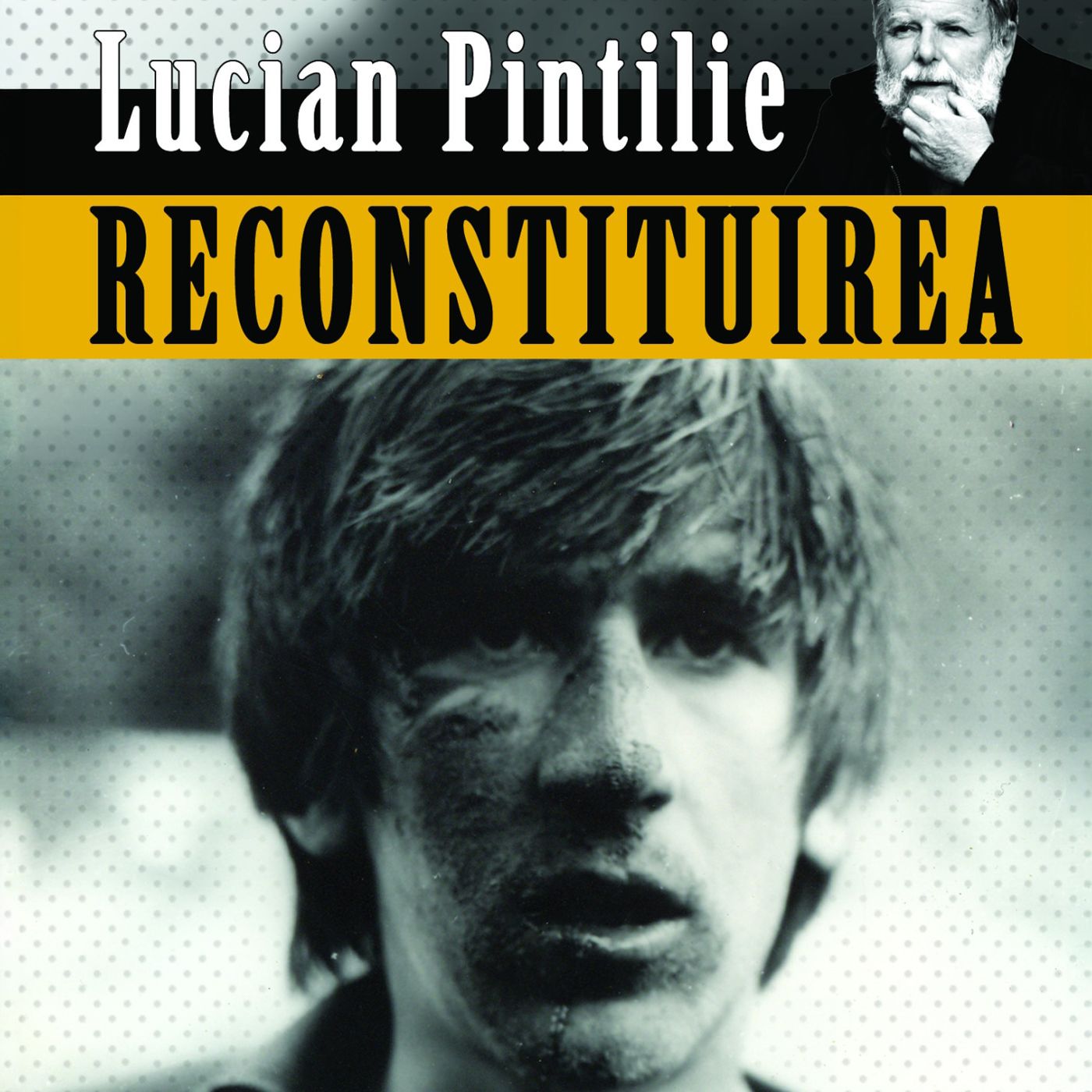
About this episode
The premise is deceptively simple: two young men, Vuică and Ripu, get drunk at their graduation party, brawl with a bartender, and are offered a deal — reenact the fight for an educational film about the dangers of alcohol and walk free. What follows is a sustained, darkly comic, and finally devastating examination of what happens when institutional power turns a camera on the people it controls.
Mike talks with Spencer Parsons and Andrei Idu about Pintilie's deliberate subversion and why this film became the foundation for the entire Romanian New Wave. Guest interview Radu Toderici -- whose essay about the film will be featured as part of the upcoming book ReFocus: The Films of Lucian Pintilie.
Transcript
Automatically generated, so expect the odd misheard name.
The Projection Booth podcast is sponsored by Scarecrow Video. Try out Scarecrows run by mail service. Choose from over one hundred and fifty thousand films and get Blu rays, four k's and DVDs delivered directly to your door. Visit scarecrow dot com today. Oh gez, folks, it's showtime.
People say good money to see this movie. When they go out to a theater. They want cold sodas, hot popcorn, and no monsters in the Projection Booth. Everyone for ten podcasting isn't boring? Put it off?
M h. Hey boy, I still touch you at my collar? Vacumere Hi man, which can. Muh m hm rep jay I was my brother Monte the German the lea so sure that served comea. Muka bay carry starts in the last page cast come my first part.
Yes a lot of time so he yesaba first Macha had ten thous as any meat on sports of perfect vanessa h h godmafice me as yet my folk can jasp s five sacs pulling away? What are? What are? What are? And what more?
Hi ten part. Welcome to the Projection Booth. I'm your host, Mike White jenty once again as mister Spencer Parsons Hello. Also back in the booth is mister Andre you dou Hello. This week we are looking at a Patreon request from our very own Andre with Lucian Pentil's reconstiora Sure, which is also known in English as reenactment or reconstruction.
I think reconstruction is the title I'm going to go for with this episode. It's from the glorious year of nineteen sixty eight and what's a major part of the Romanian New Wave. It's about two men who get drunk at a graduation party and get into a fight with a bartender. As punishment, they have to cooperate in the filming of a moralistic educational documentary about the dangers of alcohol, adapted by the author of the novel on which it's based. The film is itself a bit of an answer to a nineteen sixty film of the same name.
We will be spoiling both. That sixty film and the sixty eight film as we go through, so if you don't want anything ruined, please turn off this podcast and track down the movie. Though it's hard to find, which is not good. I think there's one site out there where you can see it pretty easily, and I don't think it's YouTube, so good luck with all that. I'll be sure to have links in the show notes for this one.
Andre, When was the first time you saw this film and what did you think? Sir? Yeah, so I'm originally from Romania and it must have been right after the Romanian Revolution in the early nineties that I saw this. It was before I turned ten. And what was very striking about the movies of it.
It was probably a big deal. We didn't have lot on TV back then, and then this coming back after being buried during the communist time, it was a big deal. But what was really striking to me was Jeor Jimi Haitsa, one of the actors, the one that's playing Weeka, and Elena Popovich were quite involved in Saturday morning children's TV shows, so to me, it was very striking to see them all of a sudden. I would see them they were already thirty years older or something twenty and then see them, Oh, that's how they were when they were young, And I was very intrigued just by that fact with the movie. And then yeah, the whole absurdity about how total literism or power makes people do things that they don't want to do.
That was also very very striking. And yeah, it was something that even though I was young, I could still feel was in the air still after the nineties as well. And Spencer, was this the first time watched for you? Yeah, first time watch. Knew nothing about it.
Very very excited about this film. I really love it. Yeah, this was also first time watch for me. I had never heard of this one, Andrea, until you brought it to my attention. So I really appreciate you doing that for me.
Yeah, thank you so much. Yeah, Okay, I'm happy to be able to promote some Romanian cinema and hopefully, yeah, that'll make more people aware of it. I have to say, it is a complete blind spot for me. I know, I've seen what is a twelve oh eight to Boochrist at a film festival years ago, but that was about it. I don't think I've seen that much Romanian cinema.
And of course, when you are adrift in a new world of a whole different countries movies, you tend to latch onto things and you go, okay, this reminds me of this, that and the other thing. I was reminded at times of Hungarian cinema. I was reminded of the movie that you and I did last year. I think it was Spencer. Was it the Fifth the Fifth Seal?
Yeah? Yeah. And then I was reminded a lot of Czechoslovakian cinema, which mirrors a little bit as far as this Eastern European things name with Hungarian cinema. But I was reminded a lot of closely watched trains. I think it was because the trains station, also these younger people, the very pomposity of the older military type of folks, and just the absurdism of so much.
But this is absurdism, like a lot of Czech films. With a razor's edge. Just be careful with this film. This is amazing to watch this and I love how right at the beginning of this movie we start with before we even see the title of the film properly as a title, we see the title of the film as a clapper board, and we know that we're watching a movie. We are seeing a repeated scene over and over during the credits, and you're just like, what the hell is this?
So I was just I didn't read anything about this movie before I watched the first time. I just came in completely cold, not knowing what this was, and I was really delighted by this. Your comment about the razor's edge of absurdity here is really apt, because this is a movie that has, for sure along the lines, it has moments of foreboding among them that opening that you mentioned, but it really is. For my experience was that it was very, very funny until suddenly it's very much not even the performance of the actor as he's staggering away from the crowd and then he falls down. Even in his performance, there's a kind of comical punch drunk quality until he falls and you realize, oh, oh shit, he's really injured and there's nobody is going to hell, and then everything from there being really really stark.
So that could sound like a bad turn in tone, but everything about how it's funny is then a perfect kind of preparation for this moment of not being funny anymore, and the stakes obviously now are deadly. So I saw it as a kid, and it was that impression back then, and since then I think I've seen it a couple of times, but maybe not beginning to end, because I have some missed memories or misremembering some things. And the thing that was very striking now is the role of the school director who's an alcoholic himself, while the whole thing is an educational film about the bad effects of alcohol. So that really struck struck me now paying attention from a different perspective to the movie, and that's where it started for me to get a bit stark.
And yeah, you could see the dark beneath the surface. Yeah, that long take of him just downing one drink after another really remarkable. And the performance there is great because he's feeling it more and more with each one of those drinks. Yeah, then his participation from then on out quite inebriated. Is a comedy situation that is not comedy exactly.
Somehow that was absurd to the point where it was so out of place. It felt a bit like product placement because the guy was saying that the name of the brand of cheap liquor that he was drinking, and it was very, yeah, very not of that time, of that kind of cinema that we knew we had in Romania. So I'm going to assume that most of the people that are listening to this podcast probably haven't seen the movie yet. We should probably be very very descriptive when we talked about this, And first I want to talk about a little bit of the setting. It feels like it's out in the middle of nowhere, but it also has some industrial tinges to it because it feels like it's very close to the railway yard.
There's a rural aspect to it. There's this old lady who is raising either ducks or geese out there. There's also some place I think a soccer stadium. Am I picking up on that correctly? This is what I'm getting more from the reading, because towards the end of this movie there's all of this crowd noise that's going on, and I think it's a soccer game that somebody's watching.
But I don't think you see any of that stuff right. I was also a bit confused, even though I should probably understand it better than others it being in my native tongue. But there was the t the football match on TV, the soccer match. Yeah, that was clear, But then I don't understand where the crowd comes from. At the end I reading some of the material, Yeah, it was mentioned that that is the crowd for the football match, but yeah, it doesn't make sense.
All right, And they don't look like they're dressed for a football mactually look like they're lined up for being fed bread or soup or something. All these very dour, middle aged to older men, no women whatsoever. I think we get like maybe two women in this whole movie together. There's all around the girl that we see hanging around. She's almost like this sprightly figure that is just in the background.
Sometimes the camera is just there to oggle her and the men are there to aggle her quite a bit. And then there's the old woman who's raising these geese or ducks. And again what I was. Reminded of with Closely Watched Trains is when she's there like petting that goose the long neck, and it's so reminded me of there's a very similar scene in Closely Watched Trains, which just always seems very very phallic to me, the way that the woman is stroking this goose's neck, at least in that movie. Here maybe not so much, but man, when those ducks are geese get it later on in the film, I just really felt for.
But going back to the setting of this, we also, like I said, we start in media res, we start with the scene that is really chronologically much farther into the film, and then we go back and we start the film proper after the credits, with this shot of a man's head and this long cut on his head, and we have no idea what's going on with this. I thought for sure that this man was dead. And there's another guy, an official, who's talking with him, and he just keeps talking at this guy, just, hey, you should really cover up. The sun's really bad out here. You're just like laying out in the sun.
You really need to protect yourself. And it just goes on and on and on, and then finally realize no, he's not dead. And then it's interesting because they I don't think they really ever hand it to us. So like what I read as far as the description of this, as far as these two guys who get into a broken drunken at a high school thing and then they cut this bartender's head with the glass or whatever, I don't think we ever see that, And there's very little definition of that whole incident. It's very odd because we have to piece this together as we go along, and their punishment for doing this is, like I said, reenacting this crime on film, and that sets up this whole thing for this movie.
And it's so interesting to read more about this as far as this being a reaction to that nineteen sixty movie also called Reconstruction, where it was I think what six former I think they were secret police or something that performed a robbery and they were forced to reenact that robbery on film as punishment and also as a moralistic thing, and they were told like, if you do this, you're all set, you'll go free at the end, and then apparently they were murdered after. Sorry to laugh, but it was just like those horrible things. I think that's where I got like the whole the Fifth Seal type of thing from this, where I was just like, this is so fucking dark and like that this movie is basically almost like a comic reinterpretation of this horrible thing that happened and this horrible punishment that happened for these guys.
I was aware of the earlier movie. Yeah, somehow the connection is not there in Romanian culture directly. So we when we talk about Reconstituira is the Romanian way of saying it. Thank you, you say much better than I do. The thing is this movie outshines any any other film from that era to the point that we I think maybe it's even a reaction to the nineteen sixties moving being such a propaganda movie that they don't even want to compare it to Intilie's movie.
So it was an interesting thing to seek. I was aware of both, but it was I never really made the connection myself until preparing for this podcast. Yeah, it's such a communist thing to do from this time, and by communists, I'm not talking about the economic system. I'm talking more of like those governments that were in charge, and the government of Romania was apparently not very well liked and becomes very bad after this film. We'll talk about some of the censorship that happens.
It seems like this, for. Lack of a better term, Romanian Spring was very short lived and when it came to filmmaking, and not nearly as robust as some of the other new waves of different countries, just because they were put down pretty quickly and suddenly and harshly. But this whole idea of oh, comrade, we're going to have you re enact this crime for a film in order to moralize about it. It's just such a weird flex to do. But also it just fits in so well with this.
We are, for lack of a better trim, this big brother mentality of we know what's best for you, and we will teach you little children not to do these bad things, and we will use this power of cinema in order to propagandize and tell you what you're doing wrong. It's not good to steal, it's not good to drink, and we'll provide a good lesson to everyone by making these little movies about them. And it's over such a common and I wouldn't want to say minor situation. People get really hurt. But a bar fight is not precisely the thing that you can prevent through an educational film.
Human nature is going to deliver bar fights on the regular regardless, because these really come out of fundamentally irrational and momentary kinds of moods. Yeah, obviously drink contributes. It's such an absurd choice of a crime to make an educational film out of, especially to reenact it in the way that they do. One of the elements of critique here is that in shooting the violence, the reconstruction of the violence in a way is fun again, fun until it's not, as in the case where he takes a number of tumbles down the hill and he pops up with his hands to show he's okay, and he just did it like a gymnast. And then of course we arrive at a really gnarly beat, which is a repeat of the opening of the movie where we're seeing the clapboard for this particular movie, not just the movie within the movie, but at any rate.
There's a sort of interesting central problem in that if you could educate about anything in this event, it would be just don't drink. It would be a pretty straightforward here's here's why drinking is bad. But instead they're going to all this trouble to recreate these moments of fighting. And then the one case that I just described, it's fun until it's not. In another case, it's the young guy and the old guy grappling, and they're having this kind of comically polite conversation while they're doing the grappling for the camera.
So there's something beautifully absurd in the premise of this movie that's going to be shot for and they keep saying for educational purposes, to a degree that begins by the end to start to sound a bit desperate, like that there's something behind it that is not really educational, but that they're going to keep saying so in order to justify what they're up to. There's a check film that we discussed and I can't remember if I did an episode about it or just the commentary about it, but it was basically it all takes place at a prison camp, at concentration camp, and it's speaking to the propaganda film. Hitler gives a town to the Jews, and it's this whole thing of, oh, look at how great the Jews are being treated here in the ghetto and in this prison camp and things, and how wonderful this is.
It so reminds me of that because you get to see both the while the cameras are running and while the cameras aren't running. And that's what I like about this film so much, is that it really brings cinema into question as far as what is shown what is not shown. You have to as an audience put your mind into the this is what the people who see this film are going to be seeing kind of thing. And just again with the absurdism from the get when these guys show up, the film crew and our two main quote unquote actors, it's just a comedy of errors. The whole thing of this jeep just almost careening off the road, and that jeep is going to have a major thing at the end, Oh my god.
And it takes forever for them to dislodge this jeep from the river at the end of this film. But at the beginning, the thing that is sticking forever is the way that the jeep parks and everything. Something happens and the horn starts going off and that horn will not shut up, and there's this whole thing of the driver tries to let the director out of the vehicle. He keeps trying the handle. The handle eventually comes off in his hand, so he has to scooch out on the other side.
Everyone has to come out on the wrong side of. The jeep and everything. And it's just like I said, from the get go, we are just in this weird, absurdist type of thing. The whole thing with the camera where it doesn't feel right that he's loading it out in the sunlight. I keep wondering how this footage is going to look.
It's going to look like that shot where you see the white just streaks down the screen. The camera has I think the shortest role I've ever seen of any sort of camera, because this guy is constantly loading this film and it is always running out at the worst times, which I'm sure is very similar to independent filmmaking. These different layers of absurdism and trying to exert power or even yeah, the abuse of power to the point where it becomes trying to fit the mold of educational cinema around this very simple bar fight. That is how society was in that era, where it was through the different templates that people had to behave in the society, and then somehow if you weren't doing that, yeah, you were considered an outsider, maybe a hippie, or yeah, punished for it.
Taking everything to these absurdist points. It's funny, but it goes just a little bit too long to the point where it gets alarmed, making you uncomfortable. Even that those first few scenes with the horn after a point is just a bit too much and foreboding, like you were saying earlier, Yeah. My favorite line in the movie is this joke that comes along right about in the middle. You know, what's the difference between a man and a monkey.
The monkey has no ID card, and on one level, that's a kind of critique of the state with the idea of an ID card. But then man is still a monkey. So there's the underlying, you know, kind of irrationality and absurdity within it. You know, the state compounds one absurdity with another, I think one element of the critique going on, and it seems to play out in these moments. And yeah, as you say, Andre, when it goes on and on, this is the true monkey nature that is not simply funny but alarming.
Well, and Andre, you mentioned hippies too, and this is interesting in nineteen sixty eight, and you've got the more modern music that the girl is playing on her radio. Occasionally you mentioned seeing the soccer game on or football game on the TV, and we get little montages of TV and what's happening in the world throughout this whole thing, which I found interesting. And somebody tells these guys to cut their hair at one point too. Yeah, and there's that key scene where it's kind of kind of a sexual assault, and that's another situation that really goes on for so long. You know, there's the moment of no, you're hurting me, and then it just it just keeps going.
And then in a cut things seem to be sort of resolved between the two of them, but the length of that really really sticks with me. And it's sort of, you know, a picture of a moment and a culture where the resolution that seems like okay, it turned out alright, still is not. That's a really unsettling moment within the film, and just sort of, you know, the movie does ogle her quite a bit throughout, and there's the reflexiveness that's set up in the kind of opening and you know, the clapboard and everything, just another element of you know, less overt kind of reflexiveness of we're ogling this girl in her swimsuit throughout, and then we get this really really uncomfortable, you know, pretty nasty moment of sexual assault and a thing.
Even after that resolution, she's covered in grass in a way that in black and white looks like she's got cuts on her body, and that continues throughout that next scene, even as things are resolved and she's nice to him. I really appreciate this kind of recognition of what's going on here without at the same time stopping to explain or deliver a lesson or something like that. The way that the education here in this moment works is a lot more on the audience to remember and take take this forward, rather than super direct commentary. Even as it does feel like that there's commentary going on, it's very subtle and very well calibrated. I think in one of the interviews I watched where the actress was talking about her experience, she mentioned that she got the part by auditioning with that scene, and she thinks it is because she fought back in the end and making it be a sexual assault scene rather than just a oh, I'm going to give up, which is what she said other actresses were doing in their auditions.
It is a powerful scene that was also one that may be uncomfortable, and it's very funny how it results. I think there are a couple of moments in their conversation there also where the goes from one topic to another, so jumping about those beads or what are you thinking to me? It also showed how even though they don't really look it on the screen, they are high school or they just finish high school, they're still kids. So they're reacting a bit in a childish way or teenager eway. The moment of assault begins very much like the other male violence in the movie, which there's a lot of, and then it shifts gears, but there's the kind of weird wrestling that could You got these two friends that have to recreate a fight, and where's the where is the limit between them of coursing around and being funny with each other and then where they really are hurting one another.
That's also a running thing throughout. So the movie is very, very interesting in how it's shooting and presenting and extrapolating a violence. The shooting is fantastic. And one thing that's good for this movie, I'll say it in a weird way, is that it was sense. So the print that we see now in twenty twenty six looks fantastic because the elements that it was never shown it looks so wonderful.
And all of these scenes, all of these long shots, and by long, I'm not talking about the length of time, I'm talking about the distance. And the director up there in his white outfit with his white hat and just lording over everything, looking at everything. The camera takes a long time before it ever starts to roll for this for their little documentary that they're doing, and meanwhile he's just up there, leaning back in his chair, looking down seeing all of these people. He like, the has these long, kind of like godlike views of all of the happenings that are going on during this and he just is taking it all in. But then those the long shots as in length of time, and you're talking about how long the assault goes on, how long the horn is going for.
At one point, one of the characters goes missing in the film and they're just shouting for him. That goes on forever, And I think it's that absurdism. As far as you let the joke go on, it becomes not funny, and then it comes back and comes becomes funny again. This is very much that same uncomfortability as that when something plays out for that long and you're just like, okay, this has to end, and then it starts to come back and you're like, okay, I see why he's doing this for so long. Well, there's such beautiful blocking in a lot of you scene, creating a kind of sense of constant movement and the camera moving with people.
But that is extremely organized and yet also it always possesses chaos. There's a there's a chaotic sense of emotion and how things can go wrong in so much of. This didn't pay attention to how long some of the shots were, but that one in the beginning where he's watching everybody in the distance. There's a lot going on, but very different things from different people, and it's that's a tone that was watching it now felt very fresh somehow, because I haven't seen that in Romanian cinema that much, even in the newer films. And what was also very interesting now was the sound design.
I think there was a lot of playfulness with yeah, okay, the horn scene, but also with other quiet moments than the train sounds, then maybe the geese or the TV with with the soccer match. For like, moments of cheering during during the stage violence. Yeah oh, and during the death at the end. It's like one of the worst contradictions as far as the cheering while the guy's holding his dying friend. There was one more.
Scene that I wanted to mention, which is the ambulance that's on TV, but you actually hear the real life ambulance that in that scene. Real life, I mean the one in the scene, not the one on the TV, And that was also something that I did not expect. It felt very modern, it felt very interesting. And another point was going back to what we discussed in the episode of Weekend, there was at least one scene where the noise, the background noise maybe was a train, was louder than what the characters were speaking, so for a little bit you didn't hear what they were talking to each other. So that was an interesting thing, making me think of a Weekend having a scene like that or Boonel movies and wondering, Yeah, now maybe I need to watch those movies in a different type of satire critique of our authority then I did.
Before you mentioned was Aflika, who ended up being a kid's TV and being more familiar for you. Yeah, he's got a great face. His face is fantastic. I really like looking at him. His little cut on his lip helps draw attention a little bit too, but just something up his face.
And I can't remember. I read this and I put in the notes, it's like he's the you know, the honorable fool, you know, the innocent fool when it comes to this type of thing, and you just you don't know how bad things are going to get for him, but him the very first time you see him in this movie, like I said, that opening where he's basically getting the snot kicked out of him in the opening of this movie, and we think, Okay, this is for the film, but then later on you find out no, no, this violence is real. His the blood coming out of his mouth, the snot, the saliva, everything that's very real. This is this is not being shot with stun people whatsoever. This is, like we said, a reenactment of what happened.
So yeah, you're talking about the staging of the fight and all that, and like, I mean, the one guy's talking Voiga's friend through stuff, and I'm like, if you were to hit him and punch him and kick him, like you're showing this guy's going to die like any second now. But yeah, this whole thing, like that stage of him falling down the hill, and I'm just like, is this really what happened? Like we don't know what the real quote unquote real because this is a movie based on a book. We don't know what the real incident is. But did they really have this knockdown, drag out fight and have this guy fall down a freaking hill like this is wild.
And again, I think it's so smart that we don't see the original incident, that we're just being told or not told about these things and then having it reenact. And these guys, they just seem to be so lackadaisical when it comes to shooting this documentary. I don't even know when they take the first shot. It's got to be well after the first act of the film goes, you know, it's got to be thirty thirty five minutes into this. There's some stuff too, where the camera just all but disappears that they seem to be staging something and they got the lights and I'm going, wait, where would the camera be in relationship to these lights?
And I'm not seeing it and they're doing all this stuff. I mean, it really it goes beyond the absurd into the surreal of you know, a kind of you know, missing camera within this reenactment set up. Is it reenactment or is it enactment that's going on? That's why I mentioned Budella. Indeed, it does feel very surreal to me as well in some scenes.
And one of the points that I read related to this is that it is actually trying to make you aware of the fakeness of propaganda film, so it's critiquing that, but I think it's yeah, it's it's just turning it up to eleven to really make that point across very harshly in essense. And what was that I read about the director's earlier film where he was basically using the style of New Wave but the substance of more of a like a socialist realist type of film of this very you know, proper movie Sunday at six, it was the name of it. I'm sorry I didn't mention that it was like such a strange mix of government propaganda type storytelling with being shot in a new wave way that people are just like, what the hell is this guy doing?
And that was what just two years before this that I think became a pretty good success at the time and then led to this, and then this was basically the end of his career or for years of memory serves as far as like being able to pick up a camera and shoot in Romania, Yeah. In Romania. It's like gets to make a movie in eighty two and then in ninety four. These are the kinds of gaps in his career. This is one of the great tragedies of anytime a great filmmaker comes up in a repressive society and then gets repressed.
We see careers cut off or maimed because there are situations where the filmmaker clearly is so keyed in to their home that the films made in exile afterwards are never quite as pungent and powerful as the work that got them kicked out. Yeah, this is very much an American perspective, but I will say I'm often on the one level, I see the critiques, but on another, I'm so often baffled by the work that gets so repressed or gets a filmmaker kicked out of a country, because on one level, yes, there's there's this critique, but on another, it's the powerful work is just humane. This is a tremendously humane film. And really, what does this government have to worry about from a movie or you know, from the critique of this movie.
Yes, it's there, there there are things to worry about, but this is not This is not to the barricades and let's destroy the state kind of a film. This is actually, you know, quite humane and very gentle or feels so I see it and I don't see it at the same time, I'm overtaken by the movie itself. I guess it reminds me a little bit of a thing that bertel Brex said about Stanislavsky, that you get so involved in the characters that you can't see the politics. And I guess, uh, you know, I'm very I love I love Breck, but a movie like this is very Stanislavsky in delivering a critique but just involving me in the lives of the characters in the world to a degree where there's a lot that I take away, but you know, it's it is not a kind of direct threat to There's a critique of authority, but it does not feel like a threat to authority.
And it hurts me to think about how artists working this way get cut off. Just to counter that with maybe a ro Median perspective, even though I did not live in that era, but I think, apart from the artistic elements, what happens in this movie actually happened in real life in Romania, and to a larger degree than we can imagine. The absurdism of day to day was there, and I think they just didn't want this to be a catalyst for that where people realize, wait a minute, this is happening to me every day, and people also end up being dead just by authority exerting power or not caring to about what their actions are really doing to people. The prosecutor and the team they were there, they need to get this movie done, and once they finished the scene, then they're out.
They don't even look back. So a lot of what was happening given with yeah, the policeman and just any I don't know, bureaucracy having to deal with that. What I was saying about being everybody having to conform to the template, to the mold, otherwise you would just not get the same chances that well, everybody was getting exactly the same chance then, but then you wouldn't get a chance. So I think there was this in the air, And yeah, I don't know if in sixty eight if that was the worst part of communistm in Romania. From my understanding, the eighties were worse, but that was because, yeah, we couldn't find things in the stores, and that's also why it led to the revolution.
It would have been one more drop in a glass that I think people were having filled every day. And that's why I was saying, Now, I noticed the drunken director and him being to me, him being, yeah, he was the he's the rational guy, he's trying to save the kids. Yeah, talking what everybody with the logic would would be talking, but then ends up being drunk because he's powerless, and then ends up just staring at the screen from the car, being powerless. And that to me that was also, wait a minute, this is how I'm watching this movie right now with the same face. To me, that was kind of the yeah, the mirror to myself in a certain way.
There are these subtle but quite powerful pieces in this movie that that would have shaken up some some parts. So yeah, and I think Romania also in that era, they were if you were to ask, what were the movies that we saw from that era where the historical ones about our great kings fighting the Ottoman Empire and winning, even though in history we maybe won a battle but not the war. But I think it was a time when Romania was very nationalistic, trying to get this momentum of getting the people together. So this kind of movies might have also again made some cracks for that. Well, this is also the madness of totalitarianism that it has to come down to even extremely small things to control.
Yeah, really really wild. This is something that's fascinating to watch right now as a lot of authoritarian movement across the world, not only speaking of our immediate context in the United States, but you know, throughout the world, authoritarian movements are becoming more attractive, and the step from authoritarian to totalitarian historically is you know, can be frighteningly swift. So it's it's sort of it's very interesting the smallness of the drama in a way, just the idea that this is we're reshooting a bar fight as like an educational film. The way that that can become very large is also a kind of you know, fascinating thing to watch. The way that these relationships, you know, play out, like the relationships of the authority figures to these two kids and then you know, the girl who becomes involved even to the you know, the older woman with the geese because this film shoot ends up disrupting you know, her clock repeatedly.
The web of just everyday kinds of connections. You know, there's very direct. There's a lot of the absurd, but there's enough of this realistic interconnection and small drama between people to then allow for some of the more surrealistic kinds of moments. Andre you mentioned our Weekend episode earlier, and we touched a lot in there as far as the commercialism and those moments where people were being shot in front of different logos and signs and things for different products. And in this one, I'm gonna ask for your help because there's a moment where it's a scene where it's a Voika's friend and the bar owner and they're going back and forth and fake wrestling as they're trying to set up the shot.
And meanwhile You're brought up the director in the car and then how he's looking at things, and I brought up the film director and how he's looking at things. What good is a movie without an audience? Right? And here in this scene, the girl is in the back and she's on these I think they're advertisements. Do you know what I'm talking about?
There's three big signs. I think it's a super super or soupc on them, and it looks like fruit or something. Do you know what those things are? In the background. It's an iconic scene of her on that billboard, but I don't remember what's on the actual billboard, maybe because I was looking at her, but.
It is a billboard. It is trying to sell something. But okay, I know the scene that you're talking about. It's such an unusual addition to the Mison scen to have those billboards in the back and her just hanging out on them, and you see like the shadow of her leg just kind of, you know, moving as she's watching. And again this whole idea, everything is being observed, and this whole idea too of you know, you would think, oh, this poor guy who got this big gash on his head from these two quote unquote hooligans, and then you see just what a shitbird he is, the way that he is talking with the girl, and how he's constantly touching her and has his hand on her bare shoulder because she's bikini clad throughout pretty much this entire movie unless you're topless and swimming, but just him just kind of groping at her and said this guy probably deserved everything he got.
Going back to your your comment about the audience here, there's a repeating image that is just remarkable in this film of the prosecutor with the wet towel over his face that creates that bizarre shape and also renders him blind. And he's deliberately checked out of a lot of a lot of this action, just sitting off to the way, off to the side. When people yelled to him, he can't understand, and he's got this towel over his face, which is which is just a remarkable repeated image here and also comes up into even some some kind of more I don't want to say casual moments, but moments of just capturing landscape. It'll drop one of the shots of him sitting with the towel over his face into the into the middle of here's some geese, and here's a the forest, and there's a train going by, and there's the prosecutor just sitting and enjoying his day and checked out from this shoot that he's allegedly overseeing.
I love the moment in here where there are shooting that fight. Finally, because it takes a long time to set up these shots. I'm sure it's very much like independent filmmaking, but a long time for them before they finally roll the camera. And while they're doing that, these three just bystanders show up and they managed to get in the way of the shot, and yeah, blow the shot. And then they go, oh, you know these people.
One of the guys has blueberries. We're going to eat these blueberries, it looks like, and so they just all of these people have a handful of blueberries, you know, with the cameraman, the director, the producer, all of these folks except for our two main people. And then finally they're like, oh, yeah, you can partake in this stuff, even though you're punished, and that really seems to change some hearts, like after that, and we're only forty five minutes into the movie at that point. I can't remember if it's the older soldier guy, but he basically is you can go. It's all right.
They basically cuts them free, and it's one of those here was the moment. This was the moment where things could have changed, but they didn't. The filming has to continue, and then things just start to get really bad after that point. You were talking about the setting in the beginning of our discussion, and this is filmed in an area in the mountains which is quite close by to Buchrest there it's about two hour ride and yeah, I don't know if I ever vacationed in this specific area itself, but it feels very familiar. And even the scene with random people looking at what others are doing, if it's interesting, that's familiar.
And also definitely about this having blueberries in the mountains or because you it wasn't, yeah, as convenient as it is today to find all the type of fruit and the supermarkets, So to me that was, Yeah, that was a moment of maybe nostalgia, I don't know, but the whole scenery is very familiar, and even the one with the train tracks, some of those older engines were still in use when when I was a kid, So yeah, that felt I think in the beginning, it's this the way I see it. Yeah, it's it's familiar. It's the way Romania was, and to a certain extent, maybe it stood still in time until early nineties, so that's why I also experienced it that way throughout common Yeah, I don't think a lot changed throughout Communism, so yeah, it was an interesting perspective.
And then as the film goes towards the main scene, it also changes in. It's sunny in the beginning and it starts getting cloudy or at least the lighting of the movie kind of changes, it becomes more dramatic. Yeah, the gray, oppressive sky really starts to roll in, because at first, yeah, it's very pastoral, those nice shots of here comes the train coming through and the director's got his little handkerchief out and he's just like hello everybody, and like everybody on the train seems to be very happy. I guess this is where all the women in the movie are on that train. Yeah, it's very very idyllic, and even to the one guy who's getting a little obsessed about that tree, and I guess it's that tree emitting like syrup or something, because that seems to be going on for a while, him just messing with this tree, and it's like the whole movie kind of just there's a moment where it falls apart, like I think it is when one of our main characters disappears, and just here's the director doing this stuff with the train, here's this guy with the tree.
You know, here's a voika just kind of wandering through the forest and everything. It makes its time. Definitely, this is not just like, oh yeah, let's hurry up and get through this and make this movie. We are spending a day in the country. And just to finish my thought from earlier, the name of the movie I was trying to think of the check film was Transport from Paradise.
That's the one that kind of has that Hitler gives the town to the Jews commentary inside of that one great great movie. If folks haven't seen it, I highly recommend it. Apparently we didn't do an episode, We just did the commentary track for it all. Your discussion of the train reminds me of a key moment in the movie where they get into this great fight, you know, going after the cameraman on the train tracks, and then we start to hear a train of approaching and I'm like, oh, no, the train is going to hit them. And it goes by, you know, on the other sort of parallel track.
And then what's kind of remarkable is that nobody seems to register or feel that they nearly could have been run over, or that it's even dangerous to have trained that close while they are continuing their fight, and they they go on from there, and uh, it's yeah, kind of along with the clouds rolling in and the change in the tone of light in the movie, is is kind of a key moment of darkening. And again I think Andrea, you were talking about the the sound design and the film and how that how that's used. You know that we hear that train first, we don't see that it's on the parallel track until we do, and then that that sort of lets them off the hook. Really really beautiful attention to the location and uh, and how how that works both dramatically and then also in these you know, great sequences of of just uh, kind of hanging out and seeing, you know, aspects of this area, the forest and whatnot.
It's kind to be close to civilization too, because Voika at one point is sitting around and he's sees like these firemen and they I think they're firemen putting up ladders against the side of a wall and going up the side and it's just just kind of hanging out for a little while. I think it because it's him that goes missing. I forgot about that. And yeah, you're talking about the sound, the sound of those geese. I have to say that the geese getting hit by the ambulance was the most upsetting thing for me in this movie, even worse than the end.
I just because I was like, these geese didn't do anything to anybody. No, they certainly didn't. Yeah, so maybe a warning to two people that are sensitive to that. May not have been intended. And then they had to improvise it into the film, the.
Geese just flying around in the forest and everything. You're just like, okay, Yeah, it's such a comedy of errors, but a sinister one physical. Performance, you know, particularly in that moment, but in a lot of others, has a kind of quality of silent comedy to it, just like walking across the screen is like a little bit funny. And when they have that conversation about him, you know, the friend and the girl have the conversation about him later and says, oh, everybody says he's crazy. He hasn't ever quite acted out in some really intense way, but it tracks because he appears to be, you know, goofy, but could go off at any moment.
I don't know why, but sometimes things just end up on my to watch list that I don't remember when I put them on there. But apparently he was in a movie called Rock and Roll Wolf from nineteen seventy six, and there's some images from it on his IMDb page, And when I looked at it, sure, and I've had the little check mark on it on IMDb you want to watch this? And I was like, yeah, yeah, I do want to watch this. Especially looking at these photos, I'm like, yeah, whatever this movie is with him wearing this kind of crazy makeup on his face, wearing this big wolf costume, with these huge ears that are sticking out like a foot and a half on either side of his head, I'm like, yeah, I do want to see this.
It's probably a kid's film from Amini. I don't know if you've ever heard of this one on dream, but sure looks like a lot of fun. I don't remember it. Yeah, I'm looking at the pictures right now, I don't remember it. He almost looks like one of the kangaroos from Tank Girl.
Yeah, I'm looking at this and I definitely have to see this movie. I know. I got to track it down. Now. Wow, let's plan an episode.
Put that on the books for next year. I think he's playing a donkey is what not a wolf? But he's got because his character's name is Donkey. So maybe I was looking at donkey skin references. I don't know what it was, but at some point I ran across that movie and said, oh, I want to see this, So now I want to see it even more now knowing this actor.
Literally every image that pops up for this on the internet is gold. It looks amazing. Oh my god. Even the fan art is good. Oh nice, nice.
I imagine it's one of those things. I see a lot of release dates for it, like in Australia and other parts of the world. I'm just like, this probably was like a lot of kids' favorite films back in the mid seventies. Yeah, even this whole area that I'm talking about. You said how pastoral it is, and yes, at times it is, but then other times it looks like it's very industrial.
You could see the real yard. It's a fascinating place that they set this in. And especially as the movie goes on where you get the scene on the hill and you're just like, well, what the hell where is this part at, and just how muddy it is, And then especially near the end of the film, when it just becomes this muddy wasteland that they're in and you're talking about the gray skies at that point. Everything just looks so gray in this movie, and you've got your characters, especially your main character who just is now covered with blood and mud and into black and white. It was tough for maybe to even tell which was which.
And then you could see blood seeping out of his ear towards the end of it, and you're just like, oh my god, this guy is fucking wrecked. Man Like, when he has an accident and they what was it the photo the bulb and the camera explodes, the lightning rig explodes, and they screw up the timing of this punch and his friend just knocks him right the hell down and he just hits his head so hard on what looks like a rock, and you're just like Jesus Christ. Man, he's not getting up for a while, and then when he does get up, it's amazing. I was just like, Oh, this guy's dead for sure. And then there's that later moment mentioning how the black and white works for the film where he starts feeling at his head because we can't see blood yet, or we can't distinguish blood from mud, and the shot it keeps it in his point of view in a way magically.
The discovery that he's much more badly hurt, that he has a really bad head injury. Late in the after he's yeah, he's popped back up and gotten really angry that he was hit too hard and all this that he seems seems to ultimately be okay after taking what looks like a really bad fall. So yeah, it has that wonderful sick kind of feeling. Yeah, real real violence where somebody doesn't seem or that they've bounced back, but no, they can't bounce back. They actually have really been injured, and it's just taking longer to register to everybody involved.
Yeah, and watching that moment, you're just like, Okay, this is right around the time that we joined this film in action, and he's got the same like by this time, his hair is just matted and looks really string in everything. You get to see the blood and the snot running out of his mouth and everything, and you're just like, it's easier to see when you watch this this second time. It's just Okay, now we're we've joined up with the film where we started that old jj Abrams saying of we're going to start in the third act and then we'll come back to it at some point kind of here we are hour and twenty five minutes or so, into this movie and you're just like, oh, now it has such a different context than it did at the beginning of this thing, and especially just to see how quickly this devolves and can see it doesn't have that much longer to live.
Once he takes that header right into that rock, he's doomed pretty much. It's just a matter of time. And then that football fan that sort of pushes him out toward the water and ultimately is the place where he's going to fall and die. It's just another one of those things of going can't you see that this guy is really hurt? And again in the way that that plays, it's got a kind of absurdity where it's all I did still take it as funny, even though I know that we're in a bad place.
That oh, on top of it all, here's another insult. The farther he walks, the less funny it gets until he falls. Uh, he's drunk. I think that's why they were active this way. Yeah, yeah, yeah, they're calling him drunk.
Yeah, the irony of it. At the end of the movie, they're calling him a drunk. They're making fun of him for being a drunk, and instead he's actually just a few minutes from dying. It's so awful. And then when his friend has that altercation with that old man and pushes him down, and then the guy's son starts coming after him, it's just like, oh my god.
You know, you don't understand anything that's going on, but you have to stick your nose in this business and now you have to defend your father and all this and oh man, and that was nice too, because there's some like whisper actually not a whisper, because he's like kind of yells this football hooligain like yells. At one point he almost yells right into his old man's ear, and I'm just like, oh god, that looks painful to see that. But yeah, it's like everything seems to be wrapping up in this movie and just all of a sudden, all of these men in suit appear out of nowhere and they just are walking along these wooden bridges that are going over this muddy field with the and going over this the little river and everything.
And again it's like there's another moment, and it's about an hour and a half into the movie where the film crew is saying they're goodbyes, and that's when that jeep gets stuck again. And when you see that our director who's just been wearing white the entire time and now he's got mud on his legs, and you're just like, oh, what a horrible thing for this guy, Like he's so into his looks and everything, and just again that absurdist scene of all of those guys chanting and trying to push that jeep out, and meanwhile the director's just sitting there with his hand on his chin, just looking out at everything going on, back to that observer mode, and he keeps doing that little handwave. He reminds me of like Don Finucci or the guy that young Don Cordeone kills and Godfather too, because he's all dressed in white and he keeps it in that little like wave with the hand kind of thing.
And meanwhile, our two main characters are on the other side of the bridge and they're just like safely away from everything, but not for long, because again it's like, here comes the fickle a finger of fate. We're going to pull them back into this stuff, and that's when we find our main characters dying. His friend starts that altercation. It's just, yeah, it's such a sad frickin movie Man and that final freeze frame of the friend after Voika has died, and it just stays on screen again for an inordinately long time, but just gives me, as an audience member, that opportunity to just either project my emotions onto this guy or try to read his emotions and just think about all the shit that he just went through in this one day.
The emotion for me is frustration, So it yeah, builds up, builds up to a point where it's unbearing frustration. And it comes also from the alcoholic director. I think, yeah, he's powerless, frustrated but rational. I think Weika to sorry, his name is Nico. He's also quite quite a rational kind of guy, so it's easier to see yourself in that character.
But towards the end, yeah, everything is just getting outrageously frustrating, and he's not even able to be there with his friend when he's dying because of the fight that breaks out again. Yeah, and that was also a very so the scene of pushing the car and this kind of a fight where you're defending your father has some sort of classic Romanian feel to it from that era, defending your family regardless without any questions, just just going into the throwing the punches. It felt yeah, again very familiar, but on the wrong side of familiarity. Yeah, and apparently so this film wasn't actually banned, but it was just buried. It was like, okay again, Sorry that I keep going back to Czeck cinema because there were so many check films that were again not necessarily banned.
They would keep them on the books. They wouldn't like get rid of the elements for them, they wouldn't get rid of the prints they were in the catalogs kind of thing, but they just disappeared them. To use a term very familiar for communist countries, these people would just be disappeared and films would be disappeared. And this movie just at least when I was a kid, if the movie came out and then it went away, there was no video. There wasn't no chance of seeing it again unless it happened to be sold to television.
But there were just thousands of films that you just couldn't see. It's not like today where it's like, oh, yeah, I'll push button and find it. It was Nope, this movie is not going to be shown. I think it got shown in Khan in seventy but the director couldn't attend. I'm curious if he was kept from attending or just couldn't attend.
Seems weird to miss your Khan screening. And then yeah, it was like what twenty years later before it finally had a theatrical release in a few countries like France, Britain, US, Yugoslavia for whatever reason, finally people started to see this movie in nineteen ninety and really started to show the contrast of the world or the non contrast, because I know that one critic was saying that, oh, yeah, looks pretty much like contemporary life here in Romania right now in nineteen ninety. So yeah that I knew that stuff was bad in ROMI didn't really necessarily know until I started to dig in a lot more and see some of these other films, like what was that the death of mister Laza Rescue right, Yeah, So I was just like, oh, yeah, shit was really really bad back in Romania and the eighties and seventies.
Romanian directors were able to touch on some of these subjects that are quite absurd and disturbing, but they're drawing from real life. The death of mister Lazarresku is actually something that I think the movie is from the two thousands and it is something that happens today in Romania still. It's the yeah, the neglect of the healthcare system and how people are asking that neglect by doing their job in certain ways but making it easier for them. So yeah, there's the Romanian were able to take that, let's say that, this negative experience and make something powerful. I think though there are yeah, some some other subjects, so it's not only gray clouds in Romania.
There there are some some other movies and other topics that are worth exploring. There is quite a nice nore the Whistlers from a few years back, for example, even though that also is dark pay in the end, but it's a it's a different kind of vibe. I wanted to mention a bit about the time when this was made, because yeah, it was filmed in sixty eight, and then I think it was not shown for two years and then shown in Romania for a little bit, and at con from the interviews with the actors I saw, the actual first day of filming was when Czechoslovakia was in sixty eight, I think twenty first of August when it was invaded by Russia. That tension was in the air, and it's the Rominaz position was critiquing Russia at that time.
The tension of possible war was there. So I think things may not be okay soon. Well, I've said that there's not a lot of writing about this film, but there is a new article that's going to be coming out and it is going to be part of a new book called Refocus the Cinema of Lucian Pintide. That volume will be. Edited by Laura Sava and Andre Gorzo, and the article itself will be by Radu Totovic, and we will hear from him right after these brief messages.
Looking for something superior to streaming, a place with more than five times the selection available on all of the streaming services combined, check out Scarecrow Videos right by mail service, select from an unparalleled collection of over one hundred and fifty thousand films to get blu rays, four k's and DVDs delivered direct to your door. Get in on it now at scarecrow dot com and rediscover the wonders of physical media. Bell Before we start, I want to know a little bit about you. Can you tell me a little bit of your background and how you got into writing about film. I'm a film critic.
I started as a film critic and then I started to write about the history of Romanian cinema. I guess we'll go to that. My theory is that there's a lot of film critics in Romania because of the New Romanian cinema. We basically need experts to explain to some extent the phenomenon. But it's not exactly experts, cinephiles mostly right.
So that's how I got into it. And it was a hobby for most of the time. But then at some point I had this I wonder, probably you have the same experience when you wonder should I make a profession out of my hobby? Will it ruin it for me? And I was very afraid of it, and at some point I just let it go and I was thinking, what can go wrong, Let's check it out.
Okay. So that's what happened. So I wrote a couple of essays. I don't have a book to my name so far, but I have a couple of studies on New Romanian cinema, on the Romanian cinemas of the nineties, which I'm most proud of. And now, as you very well saw, I'm working on this article on the Citizen King of Romanian Cinema if you want, because it's like it's chosen to be like the number one film in Romanian cinema, and it was just a matter of accident, but also of my previous work, because I'm very into the history of Romanian cinema during socialism.
Can you talk to me a little bit about Lucian Pentidier. He's sort of a largender life character. He's known as the theater director first as a film director only towards the mid sixties. Let me tell you at first how I got to him, because I was in my twenties when I was reading. I was, of course I saw a couple of these movies, and then I was reading his autobiography, which is called Bricabrac and I was trucked by his insistence on on collecting every review of his stage plays, of his films.
It was amazing to some extent to see a director who was internationally you know, he was probably the best known directors at the time, Romanian director at the time, but also he seemed somewhat insecured, and that's one of the things that pretty much struck me about him is probably this mixture that you find in every important artist. At the same time, you have a level of self doubt and of self importance, right and I think you can find a mixture of both in his personal way of speaking, in his relations to other professionals in the film industry. He is one of the most important film directors, not only for his films, for his contribution to what is called as the Romanian New Wave, because he supported this director Christie most importantly when he was at the beginning of his film career.
To be honest, there's two or three, two or three ways of assessing his importance in this regard. I think his is one of the first what we would call modernist directors in Romanian cinema. Now that is something peculiar to Romanian cinema because in the sixties, all throughout until the late eighties, we are under a socialist regime, and modernists, it's not the most welcome term, right, is highly associated with Western culture, with Western capitalism, So nobody calls themselves, at least at first a modernist in the early sixties. At some point a lot of theater directors, film directors actually, But I think this is a phenomena we see all across the arts start to adopt a sort of compromise esthetics.
So in name is they call it at time socialist humanism. But there's a research in Cibiu Andretrian who calls it socialist modernism. What does this socialist modernism mean. Of course, there's socialist content, it's films about the working classes. There are films about everyday life under socialist regime, and there's historical films about the history of socialist Rumania.
But on the other hand, you have all these devices, all these themes that they import from what back then it's called Western modernism, like French nouvelle vague or all the films, all the modernist films that are being released in Italy after New Realism. So the context, I think it's important because in order for that to happen, you need to have relaxed ideological climate, and that happens somewhere in the mid sixties. It's the final years and then the installment of the new party secretary, which is Nikolai Josheskum right, and for a couple of years from the mid sixties to the late sixties, you have this more relaxed ideological climate in which you can see movies from the west, you can discuss them openly that would have been impossible in the fifties.
And at the same time you tend to see directors eventually trying some of these formulas, which are I don't know, a narration which is not chronological. I think for me, like one of the most telling signs you watch a Romanian Modernist film, it's the way its sound is designed. You hear a reverb in most of the film. It's not the case in the reenactment, but most of the modernist films have this sort of reverb sound which is supposed to installing you sort of mood, right you're watching the film, and at the same year resort to watch with a certain distance. Right.
So basically, if he's like Tarantino, his first film makes him famous, the second film is it's so highly anticipated, I guess this is it. I'm just going to say like that, Pintilia is a director who he has this extraordinary career in terms of having his first feature film Someday at six pretty much appreciated. Almost everyone in the cultural press at the time. He is very known at the time as a theater director, but he tries his hand up cinema and he succeeds. And it's one of the first films which you can see Western influences that everybody realizes that at the moment, right and then there's this high anticipation what is Luchampintilia is going to do for his second film?
And then that's from the moment when he stumbles upon the screenplay for the short story at first, and then the screenplay for what would become the real enactment. We talk a little bit more about this period of what was a sixty five to sixty eight, this kind of new wave or mainly a new wave, or would you prefer to call it the modernist wave. I was thinking about this while I was writing my paper on the reenactment. I would call it the new wave that never happened. Because there's a lot of films which are modernists, which share modernist esthetics, but two or three of them are banned, and one of them to be one of my favorite is The Last Night of Childhood by a director called Save steopul Is, a film which looks like a neu Velvag film to some extent is influenced by the French lou Velvag, but the cultural officials pretty much make him edit and reshoot and add and at some point the original intentions of the film are lost, so you have it's still a modernist film, and he still has a lot of impressive sequences, but it's no longer the film that Stiopool intended.
On the other hand, Sunday at six Pintilie's first film is received as as an achievement in terms of modernist cinema. So what happens is that the fifties are a good period for Romanian cinema. There are a couple of remarkable films, most of them are made by a director called Vitulee, which is Untelli as mentor. But at the time directors are struggling to make films which are realistic. In as you probably know, there's this esthetic doctrineroom, which is called socialist realism.
You're supposed to meet to make films a certain way, and the tricky part is that there are no definitive rules. You find out that your film is not following the rules when it's being discussed, usually by the cultural officials, and you're being reprimanded, and this is how it works in the fifties, and very few films are being made. And in this regard the sixties, it's a much more optimistic period, and you can see that in the films itself. At some point everything that's being made. A lot of films that are being made after nineteen sixty five have this sort of optimism and I guess a bit of despair, in a bit of absurdity.
So there's a very intriguing combination there which pretty much reflects everything that's happening at the same time, everything that's happening in Romanian society. One of the questions that I've been thinking a lot about while writing my text is how can these films even be made in the socialist regime? And there's a lot of theories about that, because there are films that, to some extent refer to alienation, refer to social conformity. These are not themes you would usually associate with socialist cinema. And I think probably one factor that could explain all that is the fact that you have this sort of like decentralization and reorganization of the film industry So what cultural officials are proposing at the time is the formation of creative units.
What does that mean is that you need to group by creative affinities certain directors and make them work on their particular type of cinema. They like be popular cinema, heritage cinema, literate adaptation. And one of these groups, which is managed by one of the most important directors in Romanian cinema, which is Victori Ilu, pretty much attracts the modernists, the directors that need and try to find this sort of modernist solution for their films. Mitchastokan is probably one of the best known examples. Lucia Pintillier is one of them, and there's Sabastopul which I read already mentioned.
Their films to some extent, look like versions of what happens in Western modern cinema. You can see all over the place, influenced from the likes of Alan Lesne, from somebody like Antonioni. Right, So all these sort of directors which you see the influences, but somehow adapted to the Romanian context, to Romanian themes. Right, Can you tell me a. Little bit more about Sunday at six and the impact it made.
It was such an unexpected film to be made at that time. First of all, this was a theater to director and this was his first feature film. I don't know how many people expected to be this sort of film. And it's important to note that it's a film about the underground resistance of the Communist Party during the forties. It's a mixture of fiction and facts.
There's these films made during that time which are about the struggles of the Communist Party. They're pretty much thrillers with communists during the thirties or the forties, and they're very formulaic. Until makes his Sunday at sixth you have this film which are formulating in pretty much. They're a mixture of propaganda and some interesting scenes in terms of dialogue or direction. Of course, when Pintillier, which is a non conformist, is very outspoken about his political and aesthetical views, even if that costs him at times.
When he tries to make this movie, he thinks from the beginning that you will not made this sort of conventional film, so he tries. First of all, he tries to break the narration. I think Pintillier already thinks that this is not going to be the traditional film about the underground resistance of the Communist party. He probably already saw a couple of modernist films, and he probably shot it in a linear fashion and then try to arrange it as a modernist film. But you would have this sort of narration which connects the present with all sorts of flashbacks, all sorts of rhythmical images which pretty much look like a Romanian version for instance of Hiroshima Mona Morbisne.
This at the time is overall recognized as an innovation. Now there's voices which pretty much accused Viintillie of being that kind of director who puts an emphasis on style over substance, and a lot of those voices are probably from the old guard, who pretty much make the more conventional kind of film. So he is, to some extent right at the battle of this battle between a new modern style being adopted and the sort of old style of cinema being abandoned. And I guess this is why his film is so important. At the time.
There's a lot of sequences which feel so free now that you look at them, so inventive that you don't really see them in any other films. Of that period. They're even at the time in Romania kind of discreetly by You see the use of the term of cinema drite, which is very important in the West and in Romania, uses it almost as a way of signaling his improvisation on set, his manner of working with actors, his manner of filming something that would feel authentic and real, And at that time this seems to be his aim to film something which is authentic and real in esthetic terms. He's very preoccupied with camera movement, with sound, with a certain form of authentic acting, and all of this put together make Sunday at six a film which is still a film that it's artificially probably that's the better word.
So it still feels artificial to some extent, but at the same time you can see inventivity, creativity all over it. You mentioned this in your essay, you talked about the author of the short story. I would love to know a little bit more about him and where the story came from. Before the film, there was the short story pan by Horia Patrashku. Actually the whole story is based on true events, or so Patrashku tells it.
He was in high school he was working in a film club. There's a lot of at the time, there's a lot of amateur film clubs all over the place, and at some point in nineteen sixty two he worked at this amateur educational film or didactic film, which was made somewhere in Transylvania, in his town of residence. What happened is that at the night of the prom, a couple of youngsters who didn't have money to go to the prom, went to a local terrorist, got drunk, got in a fight, and what happened afterwards a bit of public property, nothing too serious, but you know, not to prosecute them. The bosses of the enterprise in which they work proposed to them to make this educational film and there was ten around nine ten of them in the film, there's only two characters.
They were supposed to reenact exactly everything they did, exactly how they did it, and Patrashku subsequently wrote an essay about it, like his feeling he was still young and watching these young guys having to reenact their transgressions. There was a crowd gather around. They were ashamed of it. Everything seemed ridiculous, and that memory of that particular moment stuck with him, and when he later in nineteen sixty seven, he pens he writes a short story about it, which is also called the reenactment, which is pretty much distilled, minimal mersion of the events, with several characters and two main protagonists. Now, the story that was well received.
This is probably one of the most important things about it. It wasn't criticized. He was well received in the literary press, and by the time he was supposed to be adapted for cinema, nobody saw or at least initially nobody saw a problem with that. Only when Petroshka writes a screenplay based on the story the first objections start to show up. And then when Pintillier starts to write what is called the technical screenplay, which in socialists remaining industry is a term for an annotated screenplay with everything from notes about acting, notes about your directorial vision and everything.
By the time Pintillier writes this technical screenplay, he starts to hear all these objections from cultural officials. Very stubborn sticks to at least until you changed some of the lines. But all in all, he is very stubborn, and he wants the film to be made the way he saw it. At first, I had read and this is one reason why I wanted to talk to you today too. I had read that the film was based on an earlier film called Reconstruction.
Is there any truth to that? There's a certain connection. I think it emphasizes something about the Romanian film industry and Romanian film culture at the time, because the earlier film, which is a documentary made by Vigi Canotesque in nineteen sixty is it's about a bank heist. Alexandro Solomon, the Romaan director that made a documentary about it, which is called The Great Romanian Bank Robbery. It's a film which is supposed to be a didactic film.
You have the bank robbery and all those who participate in it and got caught. Five men and one woman are being forced to say after being tortured by the police, are being forced to reenact the way they did the robbery. And after that, what happens is five of them get hung and I think the woman is sentenced to life in prison, and the colonel who does the investigation at some point states in Solomon's documentary that he wrote the script. And I think this is really important because this sort of educational film is a film scripted by the police. If you want a definition of socialist cinema in terms of propaganda, this is it is a documentary made literally scripted by the police and shown in order to have an impact.
It's not a film, as far as I know, being shown in cinemas, so as a film made only for the use of internal affairs. But the practice of having it's sort of educational cinema in which those who misbehaved acting their own transgressions is a practice that Patrashku realies on when he writes his script. In the case of the reenactment, of course, there's a different emphasis. In this case. It's a greater emphasis on the fact that what happens during the reenactment is absurd, the power in itself, all the authorities that supervise the shooting are ridiculous to some extent, and they are transgressing their powers.
Or there's a different emphasis. In comparison with the nineteen sixty documentary made by Virgil Kalodescu, was. This, I'm in practice to reenact things and have them play out this way. As far as I know, it wasn't because the film that Patrushu made at some point ward spread around about it, and the police came and took the film. It's a sixteen millimeter film made by this amateur film club.
Supposedly at some point it would have been showed in cinemas, but the fact that it was eventually confiscated tells me that it's not exactly it's more of an isolated incident. I mean, as far as I know, it's not a common practice. How much is known about the actual making of the reenactment. There's a lot of books written after the fact. So there's Pintelia's version I was mentioning earlier his autobiography brickap Racks version is that he had a lot of problems doing the film, doing not the actual making of the film, but during the editing and of course all the requirements to change certain scenes to reshoot, and he was very stubborn and as far as I know, he stuck to his guns and wanted the film to be exactly has he conceived it.
On the other hand, there art testimonies by various cultural officials, by the actors. I myself interviewed Lena Popovich, which is the wonderful actress in the film, So there are interviews, books written about it. The fascinating fact about it is that at some point they contradict themselves specific details. Who gets the blame for the pressure exerted on Pintillier. You have Joan brad which is a very important official in a book, in a written dialogue form, which is what memoir, He insists that he helped pin Tillier in his dealings with the operationals of the authorities.
So it depends on who you believe. Usually there's a lot of testimony about different aspects of the making of the film. For me, as an English speaker, I was not able to find that many things written about it, and so that's why I was so thrilled when I found that you're writing about this movie, because even just simple things like the location of the film is so interesting for me, because you've got I guess there's a soccer stadium. Is that what I'm supposed to imply that you hear, but you don't see what is this area that the film is actually being portrayed in. The film was shot in ninety sixty eight near Sinaia, which is a mountain resort in Romania.
It's a very popular destination at the time for Romanians for their holidays. And I think I mean the original short story by Petroshku had a couple of elements. It's supposed to be near a mountain, because the mountain it's sort of like an atmospheric presence in the film. It's a symbol. So you need to find the location which is nearby, which has a mountain nearby.
And then you have this railway which Pintilie use this to emphasize sound. This is a film that you pretty much hear at the same time, and you were supposed to be that wave. So near this popular resort, you have the railway station, which is used terrifically for the purpose of sound in film. And then I guess what Pintilia what it had in mind is a sort of place which is almost which is supposed were supposed to look like any other place in Romania. Okay, it's spectacul you have mountains nearby and everything, but at the same time it's supposed to be a generic small town.
And I saw photos from his perspections when he was looking for a location, and I think at some point he visited several locations and he chose this particular place, because I think that's what he had in mind. You need to have this sort of I think he was in this regard. I think he was pretty much thinking as a as a theater director. So you need to have a stage, and you need to have all these elements that connect together, the mountain and the railway station, the terrace, a river nearby, so they all fit together for the overall story. You've got a movie about the making of a movie.
But then at the same time, it takes so long for the movie to be made. Within the movie, it just feels like nothing is happening for so long. But meanwhile there's so much to do with observation and looking and just the seeing people in the distance, people seeing it's seeing people close by, just this whole idea of everyone seems to be in each other's business this entire movie. I think you're right. It's a film about people looking at people.
It's about the gaze of strangers, about the curiosity of strangers. That sense of shame that the two main characters feel is pretty much amplified by everyone staring at them while they do this reenactment. At the same time, you know, I think one way to describe this film is that it looks like a documentary, but it feels like a mockumentary because it feels real, but at the same time does a great job in subverting his own realism. He does that by giving specific notes to his actors to act in a certain way, by inserting into the narration all sorts of meta referential scenes, and by reading his technical screenplay. I think this was his final aim, to make a film that feels real and authentic, but at the same time you feel there's something strange going on.
If this is the feeling you had by watching it, I think he succeeded in making you question what you see. We can get back to the documentary he made in nineteen sixty that was supposed to be a documentary in which you would see the truth. Cinema was supposed to show the truth, and at the same time he was supposed to establish the rules how do you behave in a socialist society? What you don't do. This is a film which kind of does the opposite, because it shows you all the stages of making a film, but at the same time it shows you that the whole production is absurd.
It just reflects the absurdity of the whole operation. To some extent, I think that's what's fascinating about it. You watch a film about cinema, and at the same time, probably that's the effect that it had on people watching it in nineteen seventy you question what is socialist cinema supposed to be like? What is socialist cinema supposed to be about? And what are the moral stakes when you're making that sort of film.
How was it for you, as a film critic and cinephile to try and tackle and write about what you described as the citizen Kane of Romanian films. I got very anxious at first, to be honest, you know, because the film to some extent created its own Methay, there's so much things being written about it that I guess the first thing you need to do is separate truth from fiction, or in exactities from truth more it's or more, or truth from fiction, or perpetuated in exactities to some extent from truth. And there's of course a lot of versions of what happened to compare at first and then the most important experience for me in this regard was going to the archives and seeing Pintillier's technical script, and I was so struck by his references.
He's a very ironical director to some extent. There's no tragic scenes in Pintillier which hasn't which has not a bit of irony in it. I think that's how he worked. He was. I think he was the kind of director who was not having such a good tolerance for your regular everyday drama.
You needed to have a twist, an ironic twist to it. But at the same time, in his technical notes, the references the reference are to some extent extraordinary. So his notes that he delivers are all over the place in terms of history of cinema. There's a scene in which the old lady in the film is supposed to move like the old lady in Seven White and the Seven Dwarfs. I mean, I was just thinking such serious to some extent and ironical director was having this Perhpshould I call them sentimental?
I was having this sort of sentimental relation to cinema, to popular cinema and what he does. It's obvious that he loves popular cinema. He wasn't really making popular cinema, but he loves classic, popular cinema, and you can see it throughout his films. The enactment is, to some extent in a lot of scenes, a sort of ironical commentary on popular cinema. There's things about popular cinema which he probably despises.
He was analitist. At some point he comments that one of the characters should fall like in a western, like in the best of Westerns. So he had this ironical distance towards some of the popular cinema, probably American popular cinema, but at the same time that he loves so much about so many films. And I think this is to some extent, this is a film made by a director who wants to put in the film everything he knows about cinema, to comment to some extent on the state of popular culture as you see it at that moment in nineteen sixty eight. When do troubles start for antiliate with this film.
I guess it would be more cautious to say that trouble followed Pintillier throughout his life. I think he was a very interesting artist. He was outspoken, he was a nonconformist, and that's why in his early career is being fired in two of his first jobs and the nineteen sixties are probably very conformist in Romania. In the nineteen sixties, Romanian so to some extent cautious, is afraid of the authorities. What is the cure about Pintillier is that it seems not to be afraid to be a nonconformist, and that's why he gets in trouble all up.
During the early stages of his career. He has the luck to have this mentor liviutula, which pretty much supports him in the early sixties. And then when he makes Sunday at Six, he's being supported by Victory Leo, a director which is not himself a modernist, but can recognize in Pintillier a very a talent and supports him all over the supports him throughout the production of Sunday at Six in Romanian socialist cinema, and I think that goes for a lot of a lot of Eastern European cinemas as well. The trouble starts by the time you already filmed your film. There are these There are these stages.
The first time you submit a synopsis, and then if it's approved, you submit the script, and then you work on the technical script and all these points you receive feedback and probably correct one one or two things depends on the reactions of the cultural officials. And most of these films get in trouble after they're being filmed, and I think, what where the trouble starts in the case of the reenactment, and I think it's pretty similar with what happened to Miller's format with The Fireman's Ball. At some point of high officials from the ministry, from the Serior ministry, from the police here about this film. They are being notified that there is a film that puts them in such a great light. Try to intervene, so as pin Tillier will alter some of the scenes in the film.
Pintil is a very stubborn individual. He doesn't want to do that, and at some point there's this public support for him. I think this is one of the most interesting things about the film. It's like all the intellectuals of the time coalesce around him. There's this survey which is pretty interesting for the history of the film.
The film was seen, not even in his final version. There are just a couple of people that got the occasion to see it, but in a survey, which was pretty much made in support of pin Tillier. Thirty three artists and writers are being asked what is the most important film of the last two decades, and thirty two of them mentioned Pintillier, and I think twenty four of them mentioned the reenactment, which again he wasn't even ready. It would be shown in nineteen seventy, so in six months. On one hand, there is this pressure on Pintillier to alter his film, and on the other hand there's this public support, which is very important at the time.
In this context, word about the film gets to Nicola a Chaosesku and this is where the trouble really starts, because he wants to see it. A copy of the film is being sent to him at his seaside villain. He doesn't like it, but it's too late because at the time there was such massive support for Pintilliers. So for film, it's like, let's have this film being released for a brief period. It's already made.
I don't like it, but let's give it at least a couple of weeks. Let's send him to Cahn, which is peculiar when you think about it. He dislikes the film, but at the same time he sends it to the most prestigious film festival. The reason for this is that to some extent, social film film industries are interested in cutting back their costs to some extent in being efficient. What I mean by that is, even if a film it's not deemed suitable for being released in Romania, probably the thinking is that maybe somebody would buy it at an international film festival and will make some money.
Nevertheless, and that's why he sends the film to con but they're just a limited release. I think it plays for eight weeks in Bucharest and sporadically throughout the country. It still gathers. Around four hundred. Thousand viewers, which is not a lot like a blockbuster in socialist Romania would gather five million viewers, so not nearly the amount the usual amount for that, but a lot of people still see it in its a limited initial release.
When or how does the film go away because it was unavailable to see for a lot of years. That's true. After being screened for around eight weeks, the film pretty much vanishes for a while. At least those who see it get to tell about it. But it becomes this sort of myth.
This is when the myth of the film pretty much starts to develop. Students know about it, about the audacity of a director to make a film which is to some extent subversive, which is political. They know of its existence, but for a while you can't actually see it in Romania. But on the other hand, it is screened in particular occasion. For instance, there are screening organized by the Romanian Cinematic and they usually they put up this program with several films and they put the reenactment in the program, and at some point, I think in the early eighties, I think there's one or two instances which is shown even at the Romainian television.
So it's not exactly a banned and never to be seen again until nineteen ninety. It is going to be released after nineteen ninety, and that's this second official release. There's already so much rumor about it. But despite this fact, there's not a lot of spectators going to see it for the second time when it's released after nineteen nineties, but it becomes fast a canonical film. It's been seen by directors and cinephiles.
Was interested in cinema. When did you get the chance to see it for the first time, and how did it strike you. I think I saw it for the first time on one of the Romainian televisions, and of course it came with all the rumors. This was a band film, so when you watch a bad film, you have certain expectations, right, So I was in my twenties and for the first time, I think I was looking for all the subversive lines, and I guess that was my primary expectation. And what I remember from it was probably the acting.
Jeor Jimmy haits So as Voika does a terrific job, Ileana Popovic as well Emil Bota as the old professor. You have all these actors, there's a couple of lines which are pretty much untranslatable, and they're better if you understand the context. It's a great film to see if you understand the original language. So I guess that's that adds a little bit to the overall effect. But to be honest, the first time I saw it, I didn't get to understand it the complexity of the film.
I was still young. And what happened when I got to read the technical screenplay and got to see the emphasis put by Pinti leon sound and the way he thought in Minucius details every last scene. I honestly started to see it with different eyes, and I started to see how controlled it is to some extent, HOWTIVI it is. How as I was saying earlier, I think you can see how much Pintellia wants to experiment, to try a lot of things in terms of cinema. And that's when I guess I pretty much got to understand it in an intended way.
Right. What's the status of the film today? Is it so regarded as that Citizen Kane of Romania? Depends on who you ask. Probably in two thousand and eight, forty film critics were being surveyed about the best films and they made that top ten list, and it's number one.
On that list. Frankly, I'm not very sure. There's so much into it, like the courage of making that sort of film, But there's a lot to see in the film from so many different aspects that it would be pretty difficult to find a comparable film who would take its place. If it's going to happen in the future. I think it is one of the most know known films.
I'm not very sure how many people watch it on a regular basis, so it has this canonical status. And on the other hand, I think some of other Romanians, for instance, in Romania, I think the most popular films are very different films. We were mentioning earlier Namari Miliardad, right, So that's supposedly one of the most popular films, and there are all these historical epical films. Those are the most popular films. So for the general what we would call the general public, there are other films are more popular or are more characteristic of the socialist era.
On the other hand, for film critics, for film scholars in training as myself, I would add probably this would still be one of the most important films. You could argue there are one or two other films which are equally as important. Some of them are made in the early eighties, that's another very good period. That's not a very good era for Romanian cinema. And there's, of course there's the Romanian New Wave.
And frankly, if you would have to choose between a canonical film from the sixties and new Romanian cinema from the two thousand and something, it's a very tough choice to be honest. I'm not going to ask about when the book's going to come out, because I know that it's probably still going to be a long way away. There are too many times where it takes so long for everything to get put together and all that, and I'm sure you're not in the mix when it comes to those things, but I'm curious, what are you working on these days. One of the things that struck me, and one of the feedback from Laura sav Andre Ordo, which are the editors of the volume, is that I need to think it more for audiences that are not Romanian, and I think that's a very good idea.
On the other hand, what I would like to do, and I think that's one of the projects that I'm way more interested, is a book about the institutional aspects of Romanian cinema under socialism, the everyday workings of cinema, how a film is being made throughout all the stages of productions. Unfortunately, there is a bit of research on that, but so far there isn't one book who pretty much goes through all the specific details of how the industry really worked. And I think this why is this important? Because there's in terms of history of Romanian cinema. There's a lot of emphasis on what one researcher would call the myth of the heroic artist, right, which means that usually you see directors as Pin Tillier as being the exception to the rule, right, which they are.
These are very important films, and they're very important in their context. But on the other hand, there is no book, there is no project so far about the rule about the way Romanian cinema was working all throughout was more from institutional point of view throughout the four decades of socialist rule. I think that would be the next project. When going a little bit of the archives, you can see not only the films that were being made, but also the films that were not being made. There's all sorts of decisions, for instance, and this is this is somewhat important for our discussion.
Bintlie, after the enactment, was banned from making movies. He was going to make another film only in nineteen eighty two, or it's called Carnival Tales in English, and in his autobiography he emphasized the fact that he was pretty much banned from making movies. In the archives, I found synopsis of films which he was supposed to make that didn't happen. So he's right to some extent. But when you go into the archives, you see a different story regarding the way, regarding the way the industry really what was permitted, what was accepted, what was the exception from the rule and so forth.
Is there a good place for people to keep up with you in your work? The Lifeblokle researcher is usually large periods of isolation with the documents and brief periods of very brief periods of coming out. When a volume such as the one who was supposed to be released is available to the public in Romania, I guess it would be through my film criticism. I occasionally write for Romanian publications, not so much in English. Some of my film reviews to be found on the Internet and publications such as Films in Frame for instance.
On the other hand, on Instagram, maybe because I had this project which I abandoned for a while, but I want to I want to get at it again, which is to publish a brief review of films I like every week, So that would be brad rich on Instagram's could find me there. Radhu, thank you so much for your time and especially taking time on your holiday weekend. Thank you very much for inviting me. And I don't know, I I was a bit nervous. Thank you for your patience.
All Right, we're back and we were talking about reconstruction or the reenactment. And yeah, I had read that whole thing about this being considered the citizen king of Romanian films, the whole thing of it being voted by so many critics as their favorite film. I was curious Andre, if that's something that you were also aware of too. Yes, it was a survey of film critics a few years back, if not more than ten years back. I forgot what the proper year was, but it was after the death of mister Lazarre school and another remark Romanian movies.
But yes, this was filmed. This was voted as the best Romanian movie. I think it comes with the legacy that it was buried and when it came back it is the So maybe there were other movies that were buried, but I don't remember others making such a splash. I don't remember any other to be honest, I just read about a few while preparing. This was really something with a big impact.
Also when it came back. I think Pintilia himself was a good director or somewhat unique in Romania. Maybe that legacy also helped push it when it came back. You were mentioning his first movie, which and so now I'm I haven't seen that one, but now I kind of want to go chronologically and try to see his movies. But I have seen his comeback in the nineties, which I would recommend it is a fever dream of obsurd the end maybe yeah, taking there's a rape scene, there's other deaths, and the healthcare system as well, going rural, being rational in a crazy world.
But yeah, maybe not even just taking it up a notch, but rather off the charts. So it's a fever dream of all the same themes. But yeah, done in ninety ninety two, ninety three, some sometime around that time, and it was I've seen it recently and it was, yeah, quite a different movie than what I would have expected from Romanian directors. So now I'm very curious if to watch all of Cantilia's work, because I think it's quite unique, and therefore that's why I think he has this great legacy that pushed this movie to be the number one in the survey. I mentioned before how hard it is to find this movie and the two places that come up consistently when you look for it online in our classic k L A S.
S I KI and then also Eastern Europeanmovies dot Com. I think I've dealt with both of those companies over the years, so I can say that they are legit, so if you do sign up with them, your money's not going to be wasted, and they do have some really good titles out there. So Unfortunately, like again, we've talked about that Hungarian film and how hard it was to find that a few years ago Spencer, and that's now it's either getting a restoration or has gotten one. I think it has because it's been while since I've read about it, but I know that it was getting coming back out. Hopefully this one has the same kind of a deal, because it's like, what the hell, why is this missing?
This one seems like it's a no brainer to have out there. Yeah, Yeah, I called def Crocodile. I'll get them on the case. It seems like something that they would. Release right now.
I know they're in d doing the East German films, so but hopefully, Yeah, they'll make their way down to Romania pretty soon and pick this one up, because yeah, it's like, why was it so hard for me to find out material about this? Though? I did find that there is a new book being written about Pintude and his work, so that will be hopefully coming out in twenty twenty seven. Of course we're a year early, but Andre, you're on the cutting edge, so I appreciate that. I also saw that on Romania National Television there was a last year there was a documentary about this, but it looked yeah, not big budget, but rather yeah, something made for TV.
I couldn't find it though, even on the archive of the TV channel. I mean, I don't know why they didn't publish it, and I've seen some other more recent videos about it, so maybe there is some sort of resurrection of for Stephen in Romania. I'm not sure if it's something about the director or the movie itself, but yeah, this was. A real I can say it was a delight It's not a delightful subject, but it was a delightful watch insofar as I've never seen this, and I really think that this added so much to the conversation. It was really wonderful just reading about this filmmaker and about this movie and trying to dig up stuff, because like I said, there's not a whole lot out there, at least in English, I'm sure, and there's probably a ton because it is such a highly rated and talked about film.
I would hope it wasn't easy for me to find anything extra. I think the Wikipedia page in English was very informative. Oh yeah, the Wikipedia page is wild. It is so well written. I'm happy you were able to find it because I wasn't.
And somehow I thought it's on YouTube, but maybe it's the other old one. I don't know. I haven't really went to seek back that link. Were you using this just as a way to get a copy of this movie? Yes?
Oh wow, Yeah, that's got the burned in English subtitles and everything. So wow, Andre, I can't believe this subterfuge is amazing. I've only ever caught it on TV and never From beginning to end, I think, thank you. Thank you, thanks for bringing it to our attention. This is wonderful.
This is exactly why I want to do this show, is to be exposed to stuff I've never heard of or seen before. So yeah, this was a real treat. Thank you so much. Thank you for giving me the opportunity and taking part in this discussion. Was really great for me, and I'm happy I can promote some bits of Romania as well.
Thank you, Thank you very much for that. All Right, we're going to take a break and play a preview for next week's show right after these brief messages. These men are heroes or higher. Violence is their specialty. They are paid to be brave and brutal.
Is it juwi? Mercenaries will do anything for money? What are you talkings? We're going to pick up fifty million dollars worth of diamonds. We said anything about giving you hand, I may go.
I mistake you want to go, I'll be there right. These men are mercenaries, brave, brutals, the best in the business. Or is their profession? Danger is their specialty. Fifty million dollars in diamonds is their mission?
A deal captain three days to keep the congo alive. Danger is there? Nine to five jobs. And there's nothing more dangerous than diamonds. The diamond's ready wading.
We don't kill him him cut my head. We need willy. He's kind of dangers. I came down out of trees by invitation, and I'll kill anybody who tries to send me back up again. Violence in the tempting beauty of a woman.
Why were you we wait? What are you we waited? A violence in guns and bare hands of hired heroes, a strike force of cracked mercenaries, flights, the hottest battles, and all the blazing hell of today's strife, Torn Congo, and Dark of the Sun. That's right. We'll be back next week with another look at a nineteen sixty eight film, very different subject though, Dark of the Sun.
Until then, I want to thank my co hosts Andre and Spencer. So, Andre, what's the latest with you, sir? Nothing crazy, going on, having fun with the kids, and yeah, taking a live day by day and enjoying it, especially in these times. Yeah, thank you for giving me the opportunity to talk about movies too, to enjoy that part. And Spencer, speaking of movies, how's the movie coming?
That's the worst question right now, but thanks for asking. It'll get done. It's going to get done. Teaching has me pretty tied up these days, but getting closer inch by inch, just like Niagara Falls, more like Zeno's paradox, you know. But we'll get there and I'll be much more chipper when that movie's done, so we'll see how my life changes.
Thank you again, guys for being on the show. Thanks to everybody for listening. Do you want to support physical media and get great movies in the mail, head over to scarecrow dot com and try. Scarecrow Video is incredible rent by mail service, the largest publicly accessible collection in the world. You'll find films there entirely unavailable elsewhere.
Get what you want, when you want it, without the scrolling. If you want to hear more of me shooting off my mouth, check out some of the other shows that I work on. They are all available at weirdingwaymedia dot com. Thanks especially to our Patreon community. If you want to join the community, visit patreon dot com.
Slash projection booth every donation get help some projection booths take over the world. St stop stop stopping to sip. Stop stop. Stop stop stop stop stop stop stop stop stop stop. Stop stop stop stop stop stop stop stop SI
More from The Projection Booth



Similar episodes across the network
Matched by shared keywords.
-
Uncle Marin, The Billionaire (1979)
1 shared keyword: romanian cinema
-
This Film is Not Yet Rated
1 shared keyword: censorship