
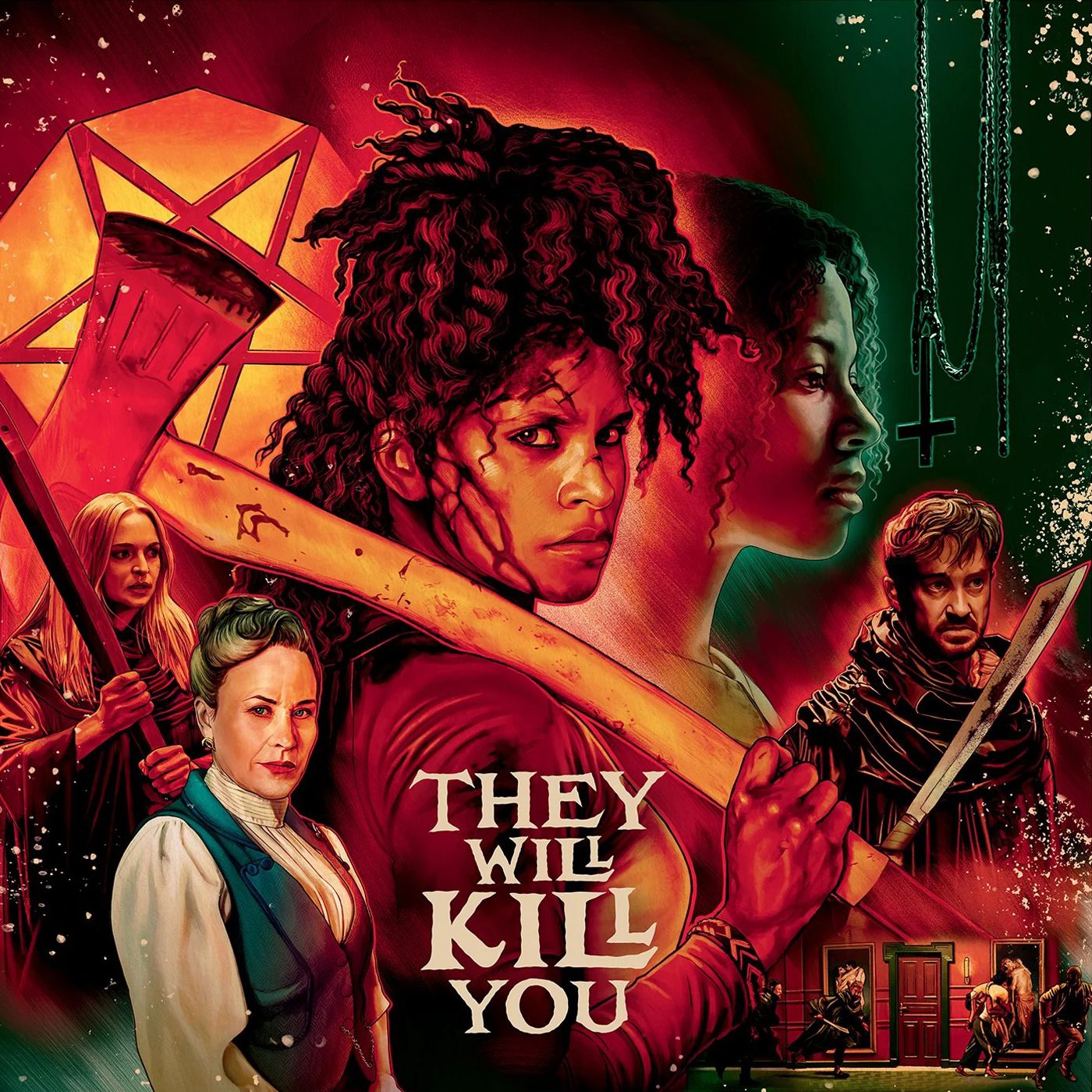
About this episode
Transcript
Automatically generated, so expect the odd misheard name.
Old ye is boot. It's show Died. People say good money to see this movie. When they go out to a theater. They want cold sodas, hot popcorn, and no monsters.
In the Protection Booth. Everyone pretend podcasting isn't boring. Burn it off. The Virgil was built in nineteen twenty three. Today it's one of the most exclusive buildings in Manhattan.
Hi, I'm a new maid. With such wealth comes the expectation of the highest quality of service. It's a lot of lucks. This building is a temple to sayan each month, we must pay with a human sacrifice. Tonight you are the offering.
Humm, gotcha? You have a little set. There has to be a way out of here. The building was designed to be a death trapper. Our offering is on the loose, on the lookout.
I just dropped her picture in the group chair. Fuck you, no, fuck you, no bitch, fuck you, fuck you. I don't know what is going on in here, but Ray I am forgiving. The buck? Are you?
Where did you learn how to fight like that? Prison? Hey, folks, welcome to a special episode of The Projection Booth. I'm your host, Mike White. On this episode, I'm talking with Jeffrey Pitts and Duncan McCrae.
They were two people behind the sound of They Will Kill You. It is a new movie starring as Zazie Beats, and it is kind of phasing out from theaters right now. Should be on demand pretty darn soon. Had a great time watching this in the theater. Wonderful sound mix, and I'm really excited for you guys to hear more of how that was put together.
Got to say, there's a little bit of spoilery things in this, so if you don't want to twist or turns ruin, please go ahead, turn off the show, go watch the movie, come on back. You know how this works. Thanks so much for listening, and I hope you enjoyed this interview. Jeff I want to start with you. Can you tell me a little bit about your journey and how you got into working with sound.
I think all of us generally have a bug for audio at some point and then we just follow the bread crumbs. And while everybody's story is different, but I'm pretty much self taught and moved out here in two thousand and six and got a job and doing some like technical thing the build computers and did all that kind of stuff as well, And so I got a job at a studio because I could fix a computer problem that they were having. So in the interview he was. Like, ah, we have this problem with the thing, and I was like, oh, I can fix that. So I fixed that.
I got into the studio, and then it turned into me editing some stuff on the side, and I remember this really crazy movie like something wasn't cut for the movie, like a whole the whole movie. There's like a whole pass of a prop or something that wasn't cut. So I was like, oh, I'll cut it. So I just went into the ADR studio and just cut this thing that was missing and just send it over to the stage. And then from then it was like, oh, okay, keep going.
Good initiative, You got there, mister Pitts. Yeah. I would say that the best thing to do is to focus on the foundations of your craft and make sure that you're not faking it and then you know why you're doing a thing. If you have all those foundations, then you're going to be doing well. Might not be successful, I think that's a lot of that's luck, but you will be doing well and keep practicing That's the thing is like, when I wasn't working, I was constantly lifting scenes off of DVDs and just cutting.
Them and doing that. I am very scrappy in that way, and it just kind of came up and did everything myself. Duncan, what's your journey? How'd you get into audio? I was born raised in the East Coast of Australia and was mostly heavy into music or growing up and playing in bands and chasing the rock star dream, I suppose, and ended up going to college for audio production, university as we would call it back home.
And while I was there, I had a call from my mother actually, who said that one of her great lifelong friends has been working at a film studio in Sydney and they had a sound room, as she called it, and she went ahead and signed me up for two weeks work experience, which is like an internship over here in the States without my knowing, and then I had to pack my stuff for a couple of weeks and went down to Sydney, and when I showed up, I realized it was well, it actually was the premiere film mixing facility in the country. I walked into a ninety six faded net DFC console in front of me, and hearing about the catalog of films the guys had recently worked on completed, I was pretty blown away. I spent a couple of weeks there learning a lot from the guys in a new perspective, to use a lot of the same fundamentals that we have in the music realm, and it really just took me away.
So I went all in on that, packed up my stuff, moved down to Sydney, and yeah, just continued at it. Wow, what year was that? That was the end of twenty ten. So by that time Sydney was already kind of a hotbed of production and post production work, I imagine. Oh absolutely, and for a lot longer before that as well.
The film that they had more recently completed before I got there was Basloman's Australia, for which they put a lot of investment into the facility, and Peter Weir was recently there also for The Way Back at the time of which it turns out flash forward to now and one of the mixes on that project is another mixing partner of mine in Town. He is. It's an interesting roundabout kind of way into it. It's cool have. You guys ever worked on a project together before this one?
Or oh yeah, yeah, yeah, Duncan, how many projects? Like when you first moved here? What project was that when you first moved here that you were you were teching on something? Yeah, it was Mad Max's Fury Road. Yeah, but I wasn't on that.
I wish I was been fun as hell, But I think we did. Do we do Death Note together? Or was it. Maybe we've done a couple of projects together. Duncan's always has the best behavior on the stage.
He knows exactly how to have the room feel. It's brilliant. He's like the matre d. He's a great mixer, but he's also a great guy. I try to work with dunk In as much as I can, and yeah, with a shorthand at this point, I'd say he's mixed a couple of projects for me, and yeah, and I've cut sound effects on some shows that I wasn't even supervising that then mixed.
So there's been a lot of going back and forth. Yeah, when did they bring you guys into a project? Are you right there at the inception kind of planning things out or. It depends, like on this specific on they will kill you. I was brought in at the script phase before they even shot the movie.
Basically they wanted to figure out who was going to do the sound at the end and during production and stuff like that. I could help with some of the some of the stuff they needed to do, or I had my own notes about the script, so I shared those with Carol and yeah, so that was cool coming in that early. I've been on movies where it's like, you come on, hey, we need you to fix this thing, right, so you're coming in towards the end, and I've had stuff where it's everything's in the can, we're starting picture editorial right now, and now we're going to start to look for somebody to work sound. So it depends on the different productions. What are some of those notes that you had or the early parts of the production.
When I read a script, I'll read a script with a note pad up and I'll just type down things as I read, just things that occur to me as I read them. A good lesson I learned from Jeff when he's working through this phase initially on is be honest. Describe your emotion, how you're feeling, and how you could either enhance that and take it further in that direction. If that is the intent of the filmmakers, or even just describing that, that how you reacted. If that isn't the intent, how you able to steer things in a way that the audience can feel what is really intended.
And that's a strong strength of Jeff. So one of the big notes I had on this movie, these characters reincarnate or they resurrect, right, So as I was reading the script, I was like, it'd be cool if they did this agonal breathing, Like when people die, they do this agonal breathing in their death phase, right, So I thought, oh, that wouldn't it be cool if they did the agonal breathing in reverse back out? And that was one of the notes. And not to toot my own horn, but they shot them gasping for air when they resurrected. It became like a sequence, a beat for the character, for the characters as they now they're gasping for air they when they come back, which kind of adds a little bit of realism to this thing that's just totally not real.
Like these notes, I'd literally write at the top, I'm writing this off to finish the script, very interesting. I took these notes as I read the script. They'll be miss spellings, and because I'm just like reading and writing and reading and writing as I go through, and I find it to be really important. It's almost like the first time you watch a movie is so important. I try to zen out as sometimes where I like release everything to try to watch a movie again for the first time, which is hard to do, but I think it's really important to be open, to be receptive to changes and things like that.
Sometimes I think about editing and just how they call it the invisible art. Is it more? I want people to know that there are good sounds going on here, but I also don't want to bring attention to it. It depends. Sometimes you want sounds that are going to be feel so realistic and so perfect that when people watch they don't think about it.
And then other times you want to have something that can happen abruptly or change or shift where it shocks them in a certain way that might be good or maybe make them just question, what's that When the first knife in the first fight scene, when your heavy breathing guy like throws that knife and we do that this like anime sound on the knife flying through, it's like that's just going to stick out, like you're either going to that or not, but you're gonna be in the moment and you're gonna be like. What's going on. That's not something that's just going to land in there, Like things like I feel like that first fight scene does feel very natural, Like it feels like it would be like that's how it would be if you're in that space and witnessing that happen.
So yeah, you just really it depends. There's a lot of choices that we make as we're mixing, is where how much do you want to lead the audience into either feeling a certain thing or catching any case story points where sometimes the idea behind it is that upon a second viewing, you're going to catch these things earlier on the character sound of something specific. But for example, in our film, they will kill You. An early example of that is as Asia is led into her room for the first time and she's wheeling her suitcase in and bounces across the rug on the floor, and we have a different textural hollowness at a certain point as the wheel bounces, which is obvious when you have seen the film and you're watching it a second time through, but not necessarily too much that at the beginning you're completely thrown.
It's enough taste in there and texture to say this is a story point, but more to come later. There are so many scenes where the sound just amplifies everything so well, especially when it comes to like the sounds of the knives and just the clanging of those that first big battle that they have in the hotel room. The way that the camera's moving all around Jeff, you mentioned anime, and it just feels like we're we've moved almost into a different world, and everything is just so heightened with that scene. One of the things I wanted to do with the film was like pay homage to some of the whole styles of kung fu movies or anime. This is all like being fed with Carill right, It's like he loves that too, he wants that too.
And then I thought about things like, Okay, what if every scene has its own feel, for like how the fights actually feel like that first fight feels so realistic, and then the fire acccene is a bit surreal, and and then like the in the final fight, like I wanted to like shift gears, like in the middle of the fight. Wanted to keep things dynamic in a way that had these like really sudden jarring shifts in the sequences, which I think I think we were able to achieve that. Jeff, you mentioned coming in pretty early and giving these thoughts very early on. They're obviously they're not recording a lot of these sounds on the stage, right. You just have to build this up completely on your own.
So I did record all the swords here at my studio, and I also have a I have a four track task on deck that I ran a ton of sounds through and I made. I did a lot of like synthetic wooshes. I built, made synthesized a lot of synthetic wooshes and stuff like that. Then I just ran them through tape like crappy tape too, not the good not the good stuff, like this is all the bad stuff, and it gives it a flavor. It's really interesting to work with that kind of stuff.
But anyways, Carell gave me a Samurai sword that he had, and he gave me the machete, the main machete in the movie. He said, be careful with this because it's actually really sharp. This is not the They're not swinging this around at anybody. This is like when we're doing a close up of the miss this is what we're looking at. It's like really sharp razor sharp machete and the final scene is a butcher knife and or cleaver and then the machete.
So I had the cleaver and the machete in my studio and I'm just beating the machete with my cleaver, and by the time I was done with this, the cleaver was just like warped and bent and chipped, and just I was like, oh my god, we're going to throw this away and look at the sword and it's like, not, there's no damage at all to this thing. It's like some special steal. Like I'm like, this is like a legitimate sword. This is like something you'd actually want to have in a zombie. Invasion or something.
Was it a hand? Great, he makes a machete the only one that'd be a good movie, right, everybody else is fighting with the katanas, and then you got somebody with the machete. And duncan when do you get brought onto the project? Also at the beginning. Typically my role is historically at the end of the filmmaking process as a re recording mixer, but the best possible results always come from early collaboration where bringing somebody on at the end in a position like nine, we have the ability to completely destroy any of the ideas that have been laid before us, or enhance them and add flavor and add to the storytelling process.
It's always better if even during or around the time of the first spotting sessions, understanding the direction of the filmmakers, adding in any of the ideas that we might have because we are all collaborators in this and just being an ear to bounce ideas off of from Jeff and his team and being as involved earlier on as possible has always proven to be the best results. We do temp mixes for as the process the filmmaking process, as the sausage is being made, there's these tempts and then testing in tents and then testing and there are places there to try out ideas, and I think it's important to I don't think you were on every TEMP, but I definitely was trying to make an effort to have Duncan beyond as many tempts as possible to make sure that his imprint is on all of it.
Scheduling conflicts sometimes catch us out there at those times. But those those idea of building milestones or tentp mixes that we have are so important to try something, see if it worked, resonate with that for a while, and then come back later and say, ah, that wasn't the right idea or yes, and we can do more with it. Let's expand on it and go beyond what we thought we could of which we were able to do a bit of that in this film. What's going to be a little freeing to be in this more supernatural milieu and not have to be a slave to realism all the time, because I'm sure you guys have had to be like, oh no, this wouldn't sound like this in real life. I have to turn this back or whatever it is, and just really try to go for that even if it's not real, to give that illusion of realism.
But with this, I'm sure you can go little nuts. It was it was like go nuts in this direction. And that's that is. I always see creativity as like a forest and like you, let's go back to the machete. You literally are hacked.
You literally hack your way a mile in in one direction, and that is where you're at on that project, and like another project might be totally in another direction, but on this one, it was really cool to record all these swords have all these cool fight sounds, like like I know how anime sounds are made, but actually sitting down and going okay, so we do frequency modulation and we're gonna ramp things in this direction like this and actually have a whole chain set up so I can like throw any sound in there, like me make these anime sounds out of it. Yeah, that's super. Fun, right, recording stuff onto the tape deck, and then the tape deck's got this weird pitch thing, so there's like a like towards the end of the sword fight with the pig, like the clashes, I just was like whipping them up and down in pitch and stuff.
And when I layered these all together, so liquid chings. That's all the way I can describe it. It's just crazy. It's just fun to find those things you know that you were not like I'm actively going to go for this one thing. You know what you're doing, but you're not like, Okay, I'm gonna find this weird all these different shings that are the same recording then pitched in weird ways and then played on top.
Of each other. Oh, that kind of evolved from doing it. What's notice that you even have the room to experiment. It's not just I want this, Just give me that screw off. I don't need any brilliant ideas.
Nobody ever does that. Everybody I've worked with is let me do whatever I want. Jeff has an amazing contagious trait of pushing ourselves to get the most creative and unique ideas executed as possible as well. And that's a brilliant trait to having the room with you at all times. So it encourages a lot of fun and a lot of laughs when we do things, and when we execute something for the first time and we stop and we look around the room and everyone's cracking up laughing.
That may be the right thing for that moment. Sometimes that kind of reaction is the wrong direction. But we have a really good time. We are just pushing these boundaries of hyperrealism at times. You have to be bold with some of this stuff.
In the pig fight, when the pig charges Asia, it happened on this main on the stage of the final It wasn't even something that was before that. But I was like, what if, like we rate when we go into what should be the biggest sound moment, right because he charges in its huge and then he's king all this. I said, what if we take it on and make it mono and then make it really thin sounding and like for just it's three or four hits before and then three or four hits where it just felt like old school kung fu, like just very old school mono, and then he kicks her and then it goes back out and then his tentacles fly around the room and it's it's like the contrasting is like one of the things that I really loved about this project is like going from that mono all the way back out to at most right.
This might be a really silly question, but when it comes to all these fights and everything, we're talking about the sounds of the swords and everything, where are all of the human sounds coming from? Because obviously there's a lot of grunting and a lot of screams and these things. I again all post I reckon. You'd be surprised. I think a lot of that was production sound.
We did do adr passes for everybody for efforts and things like that, But I think that was probably the one that mattered the most in because the fire acccene had these huge music but even there, like when the guys oh no, no, no, no, no, like, all that stuff is all part of that's all part of it. Shout out to the actors for jumping into character like that. If you've stood in front of a microphone in a dead, silent room and tried to create or recreate efforts from a fight is challenging to do, especially in a believable way. So getting really physical with that sort of stuff has huge benefit and pays off. And at least kinds do that.
Are they like throwing themselves around? Jeff can talk more about what they were doing in the room, but I know the result was just it felt really authentic to it. We had an idea for the pig, went through the most variation of anything in this in the process, and it was really notice It was kind of like, what do we want it to be? Do we want to be a funny pig? We want it to be mean pig?
Like, how what's the best way to do this thing? It was an exploration for everybody on the film. One of the things that we did was is we mixed in, gave it this Okay, there's souls inside of it, so like it it will just scream at you and it'll just be like the screams of just agonizing souls just yelling at you. And we brought somebody in for group and we had her scream like it's it's like that kind of screaming isn't something you can just do without damaging your stuff. You have to like, really, you're gonna damage your stuff, So bring her in.
She says she can do it, okay, and we have her do it and it's just like blood curdling screams and it turned into I think she did it for fifteen twenty minutes. So it was like the rest of our day must have been like two or three days must have been gone after that. But I appreciate the work. Jeff, you're talking about working with the music too. What's your relationship when it comes to the music and how that changes.
You're talking about temp tracks. I'm sure it's not the final bed as you're working on this thing. Yeah, the music does change. We had a music editor, an exceptional music editor, Louis who was on this, and he was doing stuff like taking tracks and then mixed, like adding like more music into those tracks and stuff, which was really cool. I haven't seen that from a music editor before.
But like for the fire Act scene, for instance, we switched through key songs there like three times, and then the little fight before the pig was on what's her name's head that also went through much like different music, and the UK defines how like the frequencies that it takes is going to change how your stuff sounds, so you might make different decisions based on what the music is, which definitely happened. Yeah, you can't say necessarily I will just swap out this piece of music to something else and move on. It results in a million other changes that we make on the fly as we go, particularly when we initially build a scene and we're listening to each other's material, where we're choosing the most impactful way to play a certain sound, whether that's get out of the way because the music's doing its thing and in the higher end so we can occupy the lower end and pack a big punch there, or vice versa as well.
There could be an opening in different areas and the higher frequency range that we try to target, even if the sound isn't necessarily a sword chine or something like that. And then when you swap that out from let's say a dance track to a rock and roll track, they occupy completely different ranges of frequencies. So we got to look at every moment and step through it to make sure that, yeah, it's still providing that same impact that we needed in the beginning. The apartment building itself is a character in this film because it's not all action all the time, but how do you kind of like bring the actual space to life because there's some bad things going on at this place. The different floors had different sounds based on where you were in the building.
One of the things that we really wanted was like when you first came into the building and you first walked through the servant area, that it felt international. So we wanted like different languages accumulating. I don't know how noticeable that is in the final mix, but it was like we wanted it to feel like all of this is going together because people say, oh, Patricia's our cuts Irish just sounds weird, and I'm like, yeah, but she's been in this building with these people for hundred years. Wouldn't your accent get weird after one hundred years of sitting with all these different people, Like you probably can speak Portuguese, Italian, French, like you probably can do everything at this point.
Yeah, and then like obviously, like on the top floor, it's like Dante's infer This was the direction from the director was like it's like Dante's Inferno but cold, so like we did everything, but that was actually hard because it was like we had to, like, like, you can't just have all these static backgrounds to just play constantly, so you have to kind of like modulate those things and make them feel like they're constantly changing. Put the ear not to be static. Basically, I find that I have a completely different experience if I just listened to a movie rather than listen and watch. Do you guys just close your eyes a lot of times and just listen to what's going on rather than even pay attention to the visual?
Are you always have to be locked into that in editorial? I don't because I'm like working down here and then the picture will be up there. Right, The picture is always running, but I'm not like I'm focused on the editorial screens. And the other stuff. So there's a lot of me not actually paying attention to what's actually on the screen.
But if I'm going to sit out and watch the movie and listen for any kind of stuff, I'm doing that staring at the screen because it's really that's what's important. Yeah, by the time it comes to us at the mix, we're more really focused on the screen on the visuals as well. But there's interesting times where it's the opposite of the chicken in the egg scenario where we may be working with something that is very early on in visual effects or very early animatics, if we're working in an animated film, and we're able to use our imagination of what something might eventually look like or feel like and then direct things in that kind of way. Where this could track back to our temp mixes that we were talking about earlier, where early on in the project where we do a temp mix where we are exploring some creative ideas for things that we can't see yet, nobody has seen yet because that's still in development.
So as we are putting ideas to the screen and to our ears, that pass of the film is often then provided to the visual department. So visual effects team or animation team, and they're hearing what we've been doing and are reacting to that. At times as well, where something may not have sparkle or shimmer, and we create an aesthetic that has a layer of that that may trigger another response of a visually creative idea and following that, or if it is a really busy action scene, we may have vehicles of different kinds moving in different ways off screen and behind us, or even across the screen, where we may have a single storyboard hand drawn image describing for six seconds the main characters move.
We need to we need to tell a story with that, so we add in things that then inspire what we eventually do see. We need to sit back in the mix and watch the film as an audience would, so our eyes are up on the screen and feeling things for as much of the first time as we can convince ourselves and trick our brains to see and feel things for the first time. Where an audience is going to come in, they're not looking at the mixing console with us, and they aren't looking at pro tools and everything. At that point, we trust that we have all of the elements that we need to then look up and rap focus with everything at our fingertips to tell that story. I was going to ask you mentioned pro Tools.
Is that your tool de jour or is that like where you live most of your life. When it comes to mixing. Typically, yes, we're pretty much all in pro tools, using different other tools in our toolkit at the same time, different plug ins for processing things in different ways depending on the need of the film at the time. But when it comes to Jeff's world, he has a whole playground. In his room that I do have a whole playground, but it all feeds into pro Tools.
There's a lot of great DAWs out there, and there's a lot of debate about what's the best daw. I'm not going to. Debate computers or religion, but I will say that if you need to transfer work between multiple people, it's nice to have a stable language that you can use and you can interchange that with virtually anybody. And that is pro tools. If that's I don't know what the solution is to what that would or what that would look like if it wasn't pro Tools, but yeah, that's what it is now.
So duncan you never get to actually hack around things with machetes and butcher knives or anything. Are you jealous of Jeff here? Yes, Duncan, are you jealous of me? I'm grateful that I wasn't in the room with Jeff when he was swinging a blight around with great force. I did have to think about it because these walls are fabric so there was some calculation to exactly how much I could swing before I destroy my walls.
When do you actually get to sit down and watch us with an audience, or do you ever get that opportunity? The TEME screenings are great to go to. I definitely go to as many of those as I can. Sometimes there's no room to go like that, they're like packed in a certain way. But if I can go to every TEMP screening, I will do that because you will get ideas based off the reaction of the audience.
Like even just sitting there in a space we have no control anything, you will also have ideas come to watching in that space. So I will absolutely watch it like that, going into the wild and watching it just in the Metroplex or whatever. I haven't done that. I thought about doing that, but I did not do that. That's I don't know what about you doncan.
In the visual realm. There's an aspect of when you're working on the picture with a perfectly calibrated monitor, you'll throw it onto another device consumer thing, an iPad or a laptop, and you get a look at what things are going to translate to the public in That's another aspect of the preview screenings that we enjoy as well, is how is our work translating out in the real world into an environment that we hope is as perfect as possible. Sometimes, as we know, the theaters aren't necessarily as well looked after as filmmakers we would like them to be, so we sometimes need to think about how that's going to play. The experience of a film like this with a packed audience is a whole other level and a good reminder of why we want to go to the cinema and why we all like to go to the cinema.
That shared reaction of experiencing a the modern day campfire story like that is irreplaceable. We're watching different content at home. It can be the exact right thing for the intended audience if you're making an episodic or something for the home viewing experience, but a film like this plays amazing at home, but outstanding in a theater. So we love that. I'm not the one to think of this that's been said, but when you go to a theater and you sit down in a theater, you distractions are gone, your phone is put away, you're you are there, and you're focused on the screen.
And I think we we rob ourselves of that if we just at constantly watching things on a streaming service and constantly hitting pause on it and checking our phones all the time, and we don't get the full experience of what the filmmakers intended us to have if we do it that way. And so I think it is important to go to the theater and just what witness these things in the theater. You guys have both been working in this industry for a while, and I'm curious, do you have any particular favorite films or even television shows where you're just like, this is this is premo, this is kind of like what I wish I could have done. Work like this. Well.
I appreciate lots of different film even films that people are like, oh that's not even that good. There's ideas in that that could be good, or oh, spark an idea in me from watching that movie, and so I think there's a I have a lot of films in my head that are like that, that are like like death Proof is like one of the best car chases in a movie ever, right, And somebody go, what on death Proof? Isn't that that's and then maybe they'll go watch it, and maybe they won't. But for me, I think the editorial of that car chase is exceptional. Again four versus Ferrari, great cars, great everything.
Some movies that maybe did really well that our car movies. Maybe I don't even think that they sounded that good, but that asked me personally, So it's just really I think we all have that. No, I'm always pretty blown away by coming from a coastal country town in Australia to now living here in Los Angeles. Like a lot of my dear friends are people whom I have looked up to for my entire career, and that's really cool to be able to say, oh, we're going to go and have a beer and then next week we're mixing a film together. Now and I think flashback to myself fifteen to twenty years ago, and I wouldn't believe the experiences that I've been able to have, but it's it's been awesome to sit next to people and think, Wow, I grew up loving the films and stories that they've been telling, and now we're sitting here telling storage together.
Is pretty awesome. What's next for you, Duncan? Next up? I have another World War two film for Apple TV coming out later in the year, and a couple of episodic series as well, which are always great too. It's a different muscle to flex than in the future film business, but it's it's always a good challenge.
How about you, Jeff, I will be helping out on one of these World War two movies, and then after that, I think there's some ghost story we're going to be going into. So how are you going to fit the Japanese zero inside of your recording studio to record those gunshots? That's a really good question, Like we'd take we'd have to take it apart and bring it in as bits. We bring the bits in and then record them. Yeah, and my wife's what's this Japanese zero doing here?
Honey? It's for work? How much did this cost? It's a write off? What do you want?
Guys? Thank you? So much for your time. This was so great talking with you. I really appreciate it.
Of course it was fun. Yeah, this has been awesome Mike, thank you very much. NOI
More from The Projection Booth



Similar episodes across the network
Matched by shared keywords.
-
Episode 16: Caddyshack II (1988)
1 shared keyword: warner bros
-
Episode 12: Spies Like Us (1985)
1 shared keyword: warner bros
-
The Making of Moonlighting | Glenn Gordon Caron, Part 2
1 shared keyword: patricia arquette