
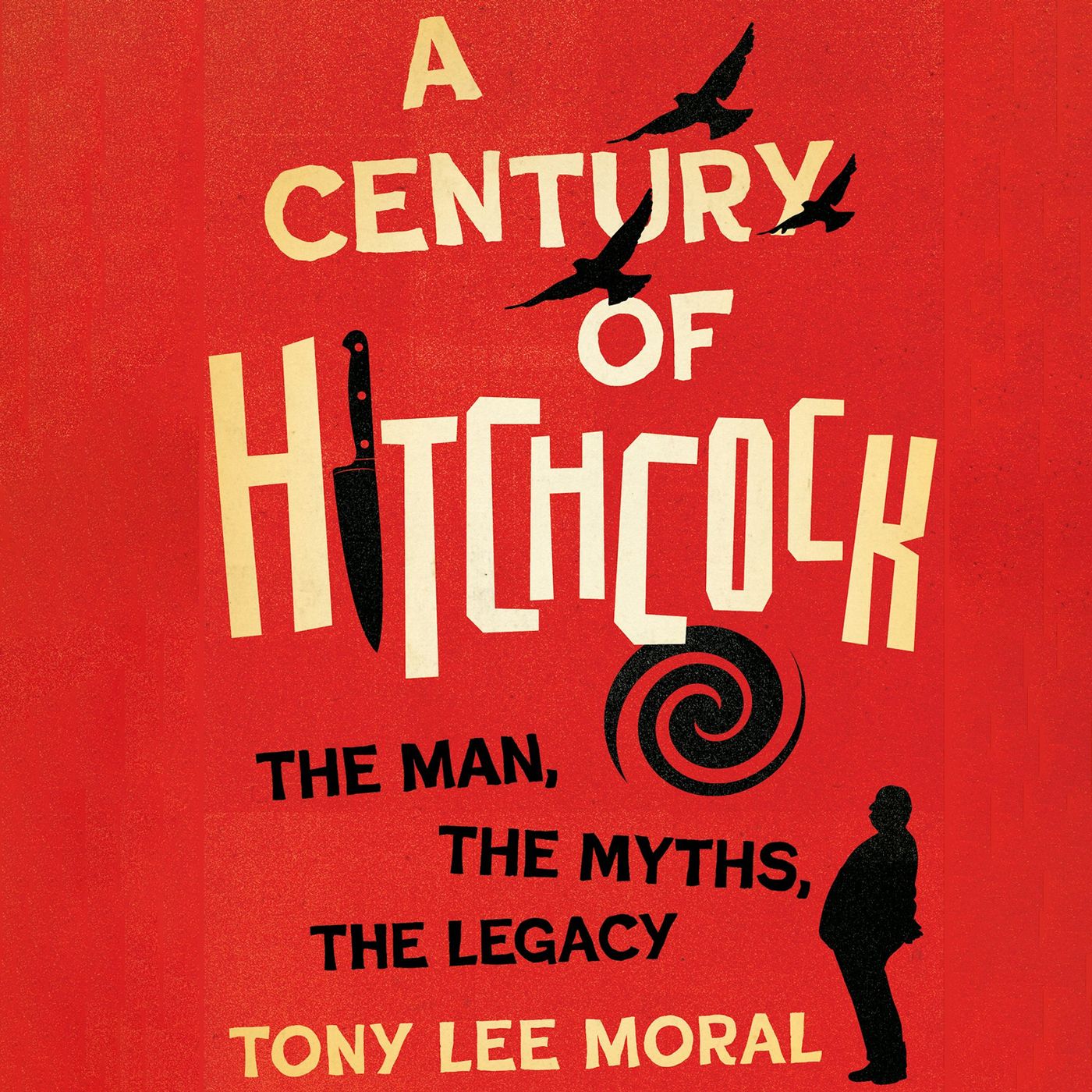
About this episode
Moral traces how Spoto's personal grievances against Hitchcock — including being routinely ignored by name and bitten by the director's West Highland terrier — colored The Darkside of Genius and shaped decades of tabloid narrative. Drawing on new interviews with secretaries, screenwriters, and script supervisors who worked alongside Hitchcock, Moral makes the case for reexamining the record on Hitchcock's treatment of women, from Tippi Hedren's shifting accounts to the making of The Birds and Marnie.
The conversation also revisits The Pleasure Garden on its hundredth anniversary, Hitchcock's collaboration with Salvador Dalí on Spellbound, and what a possible sixth Hitchcock book might hold. Find Tony Lee Moral's book and more of his work at tonyleemoralbooks.com.
Buy the book at: https://amzn.to/4fvEBKG
Transcript
Automatically generated, so expect the odd misheard name.
Oh he is, folks, it's show die. People say good money to see this movie. When they go out to a theater, they want clothed, sodas, hot popcorn, and no monsters. In the Projection Booth. Everyone pretend podcasting isn't boring.
Got it off? Hey, folks, we. Can do a special episode of the Projection Booth. I'm your host Mike White. On this episode, it is the return of Tony Lee Morale, who is speaking about his new book, A Century of Hitchcock, the Man, the Myths, the Legacy.
It is a pretty fantastic eye opening book. Really kind of takes the piss out of Donald Spoto and his very unflattering biography of mister Hitchcock is I was a treat having Tony on the show and had a great time talking with him, and I hope you have a great time listening to this interview. Thanks so much, Tony. It has been a while since we spoke. Are you reminded me that it was for the morning episode, and I'm curious what you've been up to since that.
Since the Marni podcast, I have been writing more about Hitchcock. I think I wrote three books since then. Three Hitchcock books as Storyboards, The Masterclass, and now the newly published A Century of Hitchcock, which is in time for the centenary of his first film, The Pleasure Garden. So yeah, it's been very hitchcock in and very eventful. So tell me about the new book.
It's really something which has been in genesis for a while, certainly since twenty twelve twenty thirteen. If you remember, those two biopics on Hitchcock came out, The Girl and Hitchcock with Anthony Hopkins, and those two movies dramatizations, they generated say much publicity in the press, not just film media, but mainstream media, and that really influenced how people thought about Hitchcock. Those who hadn't known about him or just heard his name came to know him through those movies, and those movies had a lot of myths attached. So I really wanted to set a record straight with this book and tell some of the interviews I had accumulated for the other books, and including a lot of unpublished material too.
And I'm so glad that you're doing this because I was just speaking with one of my co workers recently and they're like, yeah, I don't really want to watch these Hitchcock movies I've heard he was such a creep and like, but they're great. They're great movies. So I'm hoping that this book helps temper the whole creep thing too, which I would say the way that Pauline and Cale was carrying an ax for Orson Wells, it was like Donald Spotrow with his Hitchcock book for this one or is a more to that? There definitely is. So Century of Hitchcock really digs deep into Spoto's motivations.
And for those who don't know about Spoto, he passed away three years ago, but he was the second biographer of Alfred Hitchcock. The first one was John Russell Taylor, who wrote hitch in nineteen seventy eight, and then after Hitchcock died in nineteen eighty, Spoto saw the chance to write his own biography, which he published in nineteen eighty three, The Dark Side of Genius. But I found out through a lot of extensive research, archival research and talking to people that Spoto had a lot of personal grievances and vendettas against Hitchcock, which I go into in the book. So I just thought it was really important for readers who are interested in Hitchcock to see the different side to the story about that whole saying there's two sides to every story, and that certainly is with the Hitchcock case.
Well, how did you even get on this? Were you just saying when those two movies came out, this isn't right. I really need to correct the record or what really motivated you to dive into this. It's a combination of the movies. And I made a concerted effort in twenty twelve twenty thirteen to interview the remaining cast and crew of the Hitchcock films, who most of them sadly passed away now, but I had the foresight to get all their memories down on tape on cassette recorder.
But also I found a key what I call a game changer or the smoking gun. It was really the transcript which unlocked the whole key to the mystery for me. So when Donald Spoto left the USA in early two thousands because he went to live in Denmark, he left his files at UCLA. So I went to look at those primary files in UCLA. They're in a special collection and anyone can go and make an appointment with special collections and read through them.
But I found it Ford. It was very important to look at that, and he he used those for the basis of the Dark Side of Genius. And in that is a transcript from nineteen eighty with Tippy Heedron. They met six months after Hitchcock's death in nineteen eighteen an La restaurant. It's thirty six pages long, and in it Spoto actually reveals his personal grievances with Hitchcock.
Basically, Hitchcock didn't like him. Hitchcock was a very good judge of character, and he just preferred John Russell Taylor as his biography. He didn't like Spoto. He didn't like Spota as a writer, and Donald felt very slighted because he was looking for a father figure. Spoto had a very troubled childhood.
He had a lot of problems with his both his mother and his father. And when he saw a Hitchcock movie at the age of ten, it was Strangers on the Train kind of blew him away. And then he saw Vertigo and the Tourists and all the great hits that we all love, and they made a deep impression on him. But he was saying in a transcript he was really looking for a father figure. But then ultimately Hitchcock didn't like him, and that was just really shattering for Spoto.
If you meet if you imagine meeting your idol, whether it's a film director, a producer, or a sports star or an actor, you've worshiped them your entire adult life, and then you find out they actually don't like you. So that's a really crushing blow. And on top of that, Hitchcock's dog bit Spoto. Hitchcock had a very pugnacious terrier called Sarah, she's a West Highland terrier, and she put bits Donald on the hand and created a nasty bruise, and Hitchcock pretended to fall asleep in his presence during an interview, and so. That was also very crushing.
But the most crushing thing probably he never called Spoto by his name, not once in four to five years association. Can you imagine going to meet someone for interviews and you've written a book about them. He wrote The Art of Alfred Hitchcock, which wasn't very well received, and not to be even called by your first name, Spoto only realize that when Sarah vit terrier bit him, Hitchcock said, oh, Donald don't come away from Donald. Don't do that. And that was the only time he called him by his name.
He had a lot of personal grievances, as you can imagine. Ah tears. Yeah, it always feels like the Tippy Headron is. That's the biggest argument against Hitchcock. And I'm curious what you took away from that and if you had a chance to talk with Tippy Heedron and get her side of the story apart from this photo stuff.
I did with my Marnie book. As you know from a podcast, I went to interview Tippy back in nineteen ninety nine in her Shambala cat preserve and she never told me about harassment charges. She said that Hitchcock was very controlling and that he didn't want her to marry his her agent, Noel Marshall. But Hitchcock was very protective over his leading ladies. If you listen to Julie Andrews even on YouTube, she says the same about when Blake Edwards come on the set of Torn Curtain.
Hitchcock was very protective of her, and he was very protective of Vera Miles. He just felt that he owned his actresses if they were under contract at that particular time. But the game changer for me was again a nineteen to eighty transcript. Donald's asked Tippy if there were any kind of propositions, and she says, Oh, it was never ever that kind of thing. It was always, oh, who are you dating?
What are you doing this evening? But he would do that with a lot of his associates. Was very Hitchcock was very controlling, and he was also very clingy with people that he worked with. I was into being the Hunter's Evan and his wife, Anita Hunter. Evan obviously wrote The Birds, but I went to meet Anita in New York and she wasn't even an actress.
She was just a screenwriter's wife. And she said that Hitchcock would bring her every single day to ask how she was, what was she going to do that day, whether it's have lunch or have a tennis lesson. And so it was just the kind of father figure he. Was, really, And I think Tipp Miscrin strewed a lot of According to a lot of cast and crew that I interviewed. You mentioned the Pleasure Garden.
I have to say I'm not familiar with that other than what I've read in your book. But can you tell the audience a little bit about that film and the significance of it in his filmography. Sure, it was the first time that Hitchcock was allowed to direct a big feature. So it's extremely important in its cannon, and it's a centenary. That's why we call it the Century of Hitchcock.
So it was produced in nineteen twenty five, directed in Germany, and it was released in the UK and twenty six, and it will be released in the US in twenty seven, one hundred years. And so I actually went to Bavaria to the studios outside Munich for research in the book, and I took the train out to Malchus studios where Hitchcock is a twenty five year old was directing his first movie with an all German crew. He had Alma with him as a kind of right hand woman and a scriptwriter supervisor. But it was just a very important movie. And it's just quite striking watching the first two minutes of A Pleasure Garden because you can see the Hitchcock motifs stamped rights opening two minutes for laky blondes, men looking at women and voyeurism, the trademark Hitchcocky in sense of humor, the spiral staircase motif, all crammed in two minutes.
It's quite extraordinary. So Hitchcock, right from his first movie, really had sketched his signature style or through the movie. I didn't start with The Lodger, but I go back all the way to the Lodger. I haven't gone to twenty six, just twenty seven. But yeah, I agree with you as far as the Lodger and the whole wrong man accused type of thing, and just so many of those things.
I really saw a lot in The Lodger when I was watching Shuto of Doubt, and just to see those themes play out throughout his whole career was amazing. Yeah, Hitchcock always said that The Lodger was the first true Hitchcock film for those themes that you identified, such as wrongfully accused man played by Ivan Novella, the psychopath. He goes around killing blonds on the Tuesday night. There's some fantastic expressionistic shots, especially the walking on the glass ceiling. So Missus Bunting, the landlady and her daughter look up and they can see Ivan Novella's footprints pacing up and down, and so the idea that fear is actually more powerful, suggestion is more powerful with actually showing the menace, and so obviously Hitchcock used that a lot of these films, and other directors, notablee.
Stephen Spielberg has taken that and just showing about the power of suggestion, what's inside the human mind and fear and imagination is very powerful. That was the thing with Blackmail that I loved so much is here. It is his first sound film, and he's already playing with sound. The whole conversation where the girl only hears the word knife being said. All the other stuff is commuted, but then every time it's knife, it's basically stabbing her to hear that.
It's really clever. Can you imagine? He was responsible for the first talk key in Britain, and he's not just going to use sound, As he said, he was never interested in photographs of people talking, and so right from the get go he's thinking of inventive ways to use sound expressionistically, like the knife. Mate. If you mentioned I love that you're talking about the ceiling shot because that always felt very surreal to me.
And then of course he had a friendship or at least a working relationship with sell It or Dolly for a little bit. He did, and I talk about that in my Storyboards book. I have a whole chapter on Spellbound, so I really did a deep dive into the use of those Spellbound storyboards. Darley was hired as a big name. Hitchcock was always thinking of marketing, but the original sketches that Darly wanted turned out to be just unfilmable.
For example, he wanted ingrid Bergman to turn into a statue, and then a statue disintegrate into ants, and so what was almost a ten minute sequence was really just truncated to a couple of minutes in a final film. Well, he plays with psychology so much throughout all of this films that I just love the opening of Vertigo with the concentric circles and the spirographs is just it hits you from the beginning what we're in for. Absolutely, it was sol Bass inspired. I think it was John Ferron with a title designer who did that. But it's so hypnotic.
Coming out of a woman's eye immediately shows what the film is about. It's going to be about hypnoptism and the kind of the mask of a woman and men looking at women and voyeurism and point of view, and so it's all indumbrated in that very opening image. So to take on a book with the title of a Century of Hitchcock, that sounds like a really big task. How do you even start to parse out this is what I'm going to talk about, and this is what I'm not going to talk about. Well, I really wanted to spell a lot of the myths, and so there's a big emphasis obviously on dispelling all the myths, because every time I pick up a newspaper it really used to make my blood boil.
And all of those myths have perpetuated from Spoto's book, and so I want I took it. Okay, This is a stretch of his career from nineteen twenty five to nineteen seventy five in his last film, Family Plot, But one of the major misconceptions about Hitchcock. And obviously the me too movement has had a tremendous impact because as you mentioned earlier about your friend not wanting to watch a Hitchcock film, but actually has unfortunately reached several voters. For example, in the Site and Sound recent poll in twenty twenty two, some people didn't want to vote for Hitchcock because he misjudged him as a predator based on all the kind of press speculation. But I've never found real evidence of that in my research, especially from a woman.
I've spoken to secretary, screenwriters, actresses, script supervisors. They all said he was a gentleman. I've got several keen new witnesses, such as a von Hessler, who was his secretary during the time of Psychope. She's never spoken out before I went to visit her in LA and so that was really important looking at Hitchcock post Me Too. And I think it's interesting reading reviews.
I think people are more receptive now to a debate because there was a lot of sensitivity obviously the last couple of years after Me Too, but now some of the temperatures of card and I think it's very important to look at things with due process, innocent until proven guilty, and just have really examined me at evidence and see what's right and what's wrong. I can really see people, though, wanting to come at you and just be like, what are you doing apologizing for this predator. There isn't any real evidence that he's a presator except from Tippy Hedron's allegations, and I don't blame Tipp. I do blame. Donald exaggerating a lot of those, and there's archival evidence from exaggeration, and I create many examples in the book during the making of the Birds and Marny.
But Tippy's story has evolved very much, especially in the last ten years, and so as I mentioned that nineteen eighty Key transcript when she says nothing happened untoward, and then she said different things in different interviews to different people, and so it has been a growing and shifting story. And so it does beg the question, if you're making accusations as serious as she has been making to Hitchcock, then we like to see the evidence, please, and the allegations really interrogate. So, for example, I noticed in Tippy her memoir from twenty sixteen, she makes a awful lot of mistakes in that about people's names and dates and things like that. For example, just give you one example. She claims she met Lou Wasserman, who was the head of Universal during the first time that she was hired, but she didn't it was Hermann Citron.
Lou Wassuman was far too high up. But again she was eighty six when she wrote it with the help of his ghostwriter writer. So it's factual inaccuracies like that. So she's getting things wrong. From that level, you just wonder what else is.
She getting wrong? Speaking of what else is going wrong? What other things from the photo book or just other misconceptions where you're trying to correct with this. It has it all got to do with hedron. So, for example, Spoto writes about the nineteen thirties and the thirty nine Steps.
Another key source of transcript I found, again no one had really tapped into it was British Entertainment History Project. Now this was a series of oral histories done in the eighties and nineties of the British crew that Hitchcock worked with for the Thirty nine Steps. The Lady vanishes all his polished thrillers from the nineteen thirties, and I went anyone can go online, you can just look look through the transcripts. So it's just hours and hours of it, and it's all on audiotape. And one of it is the practical joke about the handcuffs and laxatives.
Have you heard of this one? I don't know if I have. During the thirty nine Steps, there was a prop man and according to Spoto, Hitchcock dared him to stay handcuffed overnight in the warehouse after he was laced with a beer of laxatives, and a crew arrived next morning to find him embarrassingly soiled. But actually didn't happen the way Spoto described it. According to Dudley Lovell, who was a camera assistant on the thirty nine Steps, they all went to a pub after after work, as they tended to do, and they had a point of beer and the prop man was quite a loud mouth, and Hitchcock asked to see the handcuffs because he wanted to expect the props before filming, and then he dared with a prop man to go home with the handcuffs on all night, not after the bartender had laced his laxative his beer with a drink.
So that's actually a different kind of version of a story which Dudley says, and Dudley was laughing when he was saying the story. He said it was part of a wicked pranks that went on amongst the crew as a kind of camaraderie to relieve the boredom. That's very different from Spoto's account, who said it was a very sdistic and mean thing for Hitchcock to do. So there are subtle differences. Hitchcock had a great sense of humor, and in my research, Donald Boto and his assistant on Dark Side of Genius said this.
He thought he was lacking in a sense of humor, which was very detrimental for him writing a book on Hitchcock because you couldn't appreciate the jokes and the irony. It almost sounds like you just re researched everything that Spoto did all those years ago. Anyone who's read The Dark Side of the Genius and it has become a seminole tomb for the tabloid journalist. Anyone wants to quote, you know, a handcuff story or Tippy Hedron being traumatized by birds in the attic for five days, Spote said, actually needed ten days recovery. It was actually three days of rest.
Again, it's just little increments like that of exaggeration, and so he just wanted to sensalize the story and he did eat that even further with his last book, Spelled By and By a Beauty, which was a basis for the TV movie the Girl in twenty twelve, and again that just accentuated the whole drama to an nth degree. What was the most surprising thing you found while you were doing your research? The transfer for me was the game changer, As I said, that really unlocked the key to the mystery about why Spoto behaved as he did. It also gave me a good insight into Tippy's character and her changing story. She actually started to adopt Donald's story in her own narrative because a couple of years later she was interviewed by Ronald Davis, who was a famous oral historian, and she started to incorporate Donald's story in her story, and so he had a tremendous influence on her.
So I found that very surprising. But the kind of motive and it's interesting reading reviews. It's not just about Hitchcock. It's about how biographies are formed and framed, and who gets to tell the story, and how personal grievances can become easily public narrative. As one critic said, a lie can spread across the world very quickly while the truth is just putting on its shoes.
People are very. Willing to believe the lies and the exaggeration, but no one really wants to listen or interrogate the truth because it's often not as glamorous or as exciting. And almost I was like, this could be a new season of Facts as feud. Yes. Another review, I said that during the writing of a Spoto chapters, he was intrigued because he could see it being turned into a movie about the spurn biographer, the love lorn loser who gets his own vengeance when the idol turns his back on him.
Yeah, and then breaks out that poison pen and goes at it. Yeah. I know, like you said, you've written several books since the last time we spoke. How long does it take you to put together a book? And how long did it take to put together this one?
As I said, this one has been particularly long genesis, I would say since twenty twelve. Wow, really fourteen years. I couldn't really publish while Donald was still alive because he was very litigious. He actually threatened to sue Patrick McGilligan back in two thousand and three member Patrick's book, which was a third biography on Hitchcock, eight hundred page team called Darkness and Light, and that he balanced it as the title said, but it wasn't all dark. There was a lot of light, and so he actually threatened to see Patrick because of bemirching his dark Side thesis.
When Donald passed, people obviously were very willing to talk about him, especially his colleagues and assistants. I interviewed the editor of Little Brown, who was a wonderful guy. He worked with him on the Dark Side of Genius. I interviewed his research assistance, and it's all in the chapter about the writing of a Dark Side of Genius, and a lot of them said, unfortunately foot Donald had his own dark side and he was battling his own demons. I have to say the book it hit me with one word that just kept coming through my mind, which was bombshell.
And it just felt like bombshell after bombshell, and just I love this kind of thing where you are correcting the record. So just kudos to you on all of that. Thank you a lot of information, a lot of trust, especially the chapters on the birds. Obviously, I do a deep dive into what happened with Rod Taylor and Hitchcock, which was very interesting in how that's been misconstrued and Hitchcock's controlled but Basically, Rod Taylor was arrested for drink driving during the making of The Birds when they were filming in Santa Rosa. So Hitchcock was obviously very protective of Tippy at the time, but Rod had a real axe to grind of Hitchcock after.
That, What are you working on now? And had thing to do? Maybe a sixth book on Hitchcock, probably my final one. Six seems like a nice number to stop. But I just returned recently from Scott's Valley where Hitchcock had his weekend home, because every year they have their annual Hitchcock Festival, and I was a guest speaker this year, and there's some wonderful photographs and archives associated with Hitchcock's weekend home with the stars Ingrid Bergman and Carry Grant come down.
So it's another side of Hitchcock. I think the public would love to see. How was the reaction to the book and to you at the celebration. It was very interesting their receptive. It was the first time I told him the story, just a couple of months before publication, so they loved the story about Sarah the West Highland Terrier, and many people identified it because as we all know dogs have a great sense of character.
We often know if a person is good or bad before Sarah sense out in Donald, So we love that story. But I think, as you said, there are quite a few bombshells which surprise people. Where's the best place for people to follow you and keep up with you online? Tony Leemarle books dot com is my website and the book's available through University Press of Kentucky or probably easier on Amazon, and I now Amazon's doing there. It's discounts at the moment too.
It is worth whatever amount because I had such a great time reading this book. Can I really thank you so much for reaching out and making sure that I got my hands on it great. It's a pleasure to be back on again. Thank you very much for the invite. I look forward to our next time.
Thank you, s


