
About this episode
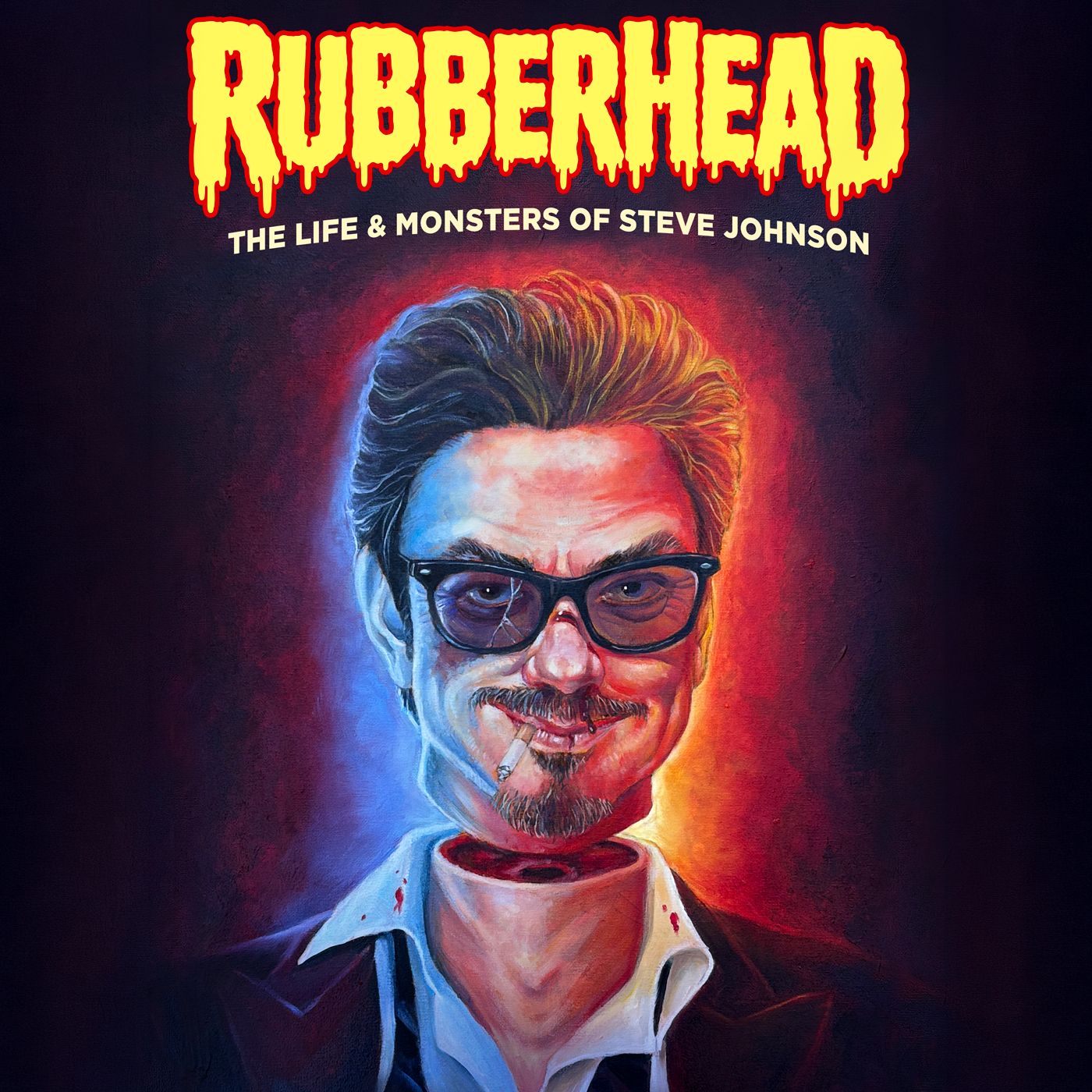
Taylor traces the six-year odyssey of Rubberhead: The Life & Monsters of Steve Johnson, from meeting Johnson at Monsterpalooza through the funding struggles of an unapologetically niche passion project. He discusses narrowing the film's circle of interview subjects to people who truly knew Johnson — including John Landis and Linnea Quigley — over chasing bigger names, and how editor Joe Krings kept the project's fan enthusiasm in check.
The conversation closes with Rubberhead's Fantasia Festival world premiere and where to catch it. Follow Taylor on Instagram at @iamnicktaylor or visit americannightmare.co for updates.
Transcript
Automatically generated, so expect the odd misheard name.
Oh get it's show tied. People say, good money to see this movie. When they go out to a theater, they want clothed sodas, popcorn, and no monsters in the protection booth. Everyone pretend podcasting isn't boring. Cut it off.
My goal is an effects artist to show you something that there's no way you could have followed yourself. Suddenly we had unleashed the writer's minds. They couldn't show any story they wanted to. The whole business exploded and we did indeed become lock stars. I watched this.
It's more than just a makeup artist. They do practical effects. You like to be scared of the movies, well apparently you're not alone. Eighties four was a big thing. It was so black, it's so hot.
In fact, it's even gained a certain glamor. You ever been watching a movie or promercio, You found yourself wondering how they do that. DEEE. Johnson creates the monsters. So like I had to prove myself because I wasn't good at sports.
I had this one thing that I could do. That making the best monster I could made me kind of belong. Rick Baker my hero, he had just done the Cantena sequence for Star Wars. He gave me his phone number and. He said, listen, you ever make out to Hollywood, gimme a pop.
I loaded up my car. We're just a bunch of kids. We don't know how to do this because it's probably not possible in the first place. They come out of the woodwork. They're so strange.
If they didn't have this thing to do, they'd probably be working at a gas station where. We provided a lot of worker. The especial effects guy. Went home and bought ten pounds of coocaine. I would not have to see.
James Cameron is the only director that made me cry. But I did love it, but because he made my work. Without it, you have the work and then you partying, which is phenomenal. Steve's favorite word must have been like, this really can't be done. We gotta figure out how to do it.
I just wanted to create fun stuff. Our stars are fading, and now technology wipes it out. Now where the dinosaurs they put so much love energy, The audience thinks it's done digitally anyway. He's the architect of his own misfortune. Steve was kind of in this other realm.
These drugs do thank you better tell they take you down and I snapped. Really is extraordinary. All these kids had. Such a bit fair. I don't think Steve ever got the credit that he really deserved for a lot of things he did.
I'm gonna make some of the greatest movies over and then I'm just gonna slam it in a great frange a brick wall. Don't jump from the smoking wreck, kids, this movie's gonna ruin what's left of my ragged career. Hey, folks, welcome to a special episode of the Projection Booth. I'm your host Mike. On this episode, I'm talking with Nick Taylor.
He is the director of the new documentary Rubberhead, The Life and Monsters of Steve Johnson. If you are into effects, especially those from the eighties and nineties, you are definitely going to be interested in this film. Even if you're not, you're going to be interested in this film. It's a lot of fun. Film is getting its premiere over at the Fantasia Film Festival in Montreal, Quebec.
If you are within the son of my voice and able to see this movie, definitely check it out. Thanks so much for listening, and I hope you enjoyed this interview. Can you tell me how you got involved in show business? Yeah, absolutely so. I've been a writer for dread Central for about six seven years now.
I've had a podcast on horror filmmaking. Spent a lot of time just trying to figure out how to get into the industry. But I've been involved in horror journalism for a while, and there was a movie I was working on from like for a really long time. I was working on making an interactive VR zombie movie, and I spent a lot of time doing that. Didn't end up becoming anything because it was basically trying to do something that would just like millions of dollars for a lot lot less, and so spun my wheels on that for many years.
But it taught me how to write. It taught me how to do a lot of things. But yeah, from there, just wanted to somehow be peripherally involved in the industry and became a journalist. I was writing for Dread and started my podcast in the Nick Taylor Horror Show, where I talked to horror filmmakers and directors and basically asked them how they got their movies made, which was essentially my film school because I never went to film school. Wanted to learn how you got movies made from people who did it.
And I have a lot of friends who went to film school, and I hear a lot of the same thing, which is, it's great, you learn a lot. It's fun to just go to college for movies. You meet a lot of great people. But there's so many practical aspects of filmmaking that they don't cover. So I wanted my podcast to basically beat the answer that, but specifically for horror filmmaking.
So I just spent years interviewing horror directors and learning how they got their movies made, and then eventually got around and making my own. Yeah, basically it. Well, and how did you choose Steve Johnson as your subject for this? I met Steve at Monster Palooza, and I've been a fan of his since I was literally a child, and I was a kind of a lonely horror fan. I didn't have many other friends who were into the genre, and I was into all this weird monster stuff and was always drawing monsters and sculpting them.
And I had teachers at the time who discouraged it because it was scaring other kids and things like that. So I think I was led to feel like sort of an outcast and a misfit. And when you're like six or seven, I can make you insecure, and I think a lot of us horror fans went through that as a kid. You're not sure what to make of you being drawn to all sorts of weird stuff and blood and gore and monsters and things like that. So I felt like a little bit like an outcast.
But then I see Scare Tactics, and I see Steve and Lena, and there's this really cool, strapping, handsome guy who's at the top of the industry doing these amazing movies, making a living, doing all this stuff that I love making monsters and blood and gore effects. And I was just like, oh my god, this is first of all, this is a living, But second of all, there's this really cool guy who's doing it. And I really immediately looked up to him because he kind of validated me, you know, it didn't make me feel so alone. So I just it gave me sort of a permission to pursue this as a real career, that you can take this passion for something that's so obscure and you can actually make a living out of it, because he was at the top of the industry around that time.
So I felt sort of a spiritual connection to him at a young age. And then later many years later, met him at Monster Palooza and we started talking and got to know each other, and I learned all of these different stories from his life was helping him promote a project he was working on, where he would tell me a story from his overall life and I would pitch it to the media the next day. And it was like storytime with Steve for about a week, and every story was just one was more insane and amazing than the next, and they all involved drugs and alcohol. They all took place on these major, enormous movies like Ghostbusters, and he would tell them and he would be so hilarious, and I just wanted to recreate that feeling of just kind of being at a bar with this fascinating guy who lived this incredible life and just, you know, drink after drink, he's telling you his life story, but in any case, I'm jumping all over the timeline.
He would tell me these wonderful stories, I'd pitched them. One of them went viral. There was a whole story about Steve doing just insane amounts of cocaine to create slanmer for Ghostbusters that bloody disgusting. Put that story out and it went fairly viral, and it was in different languages, which was really funny. After a while, I was like, my god, your life story is amazing.
Somebody should tell it, and I think it should be me. And yeah, it took years because we were as indie as a get, but yeah, that was the origin of it. Well, yeah, I mean every film is a struggle, right, It's like a battle. Some people describe it as So what was your battles? What were the things that really kind of hurt you or were stopping you, and how'd you overcome them?
Well, it took a long time because we would just shoot what we could when we could, and then when we ran out of money, we would stop and we'd kind of pick it up and put it down, which luckily you can do very easily with documentaries because it's you don't need you know, we shot this movie over the course of many years. Steve's appearance fluctuates a little bit, but it doesn't matter really, So luckily you can do that. So I think just the eddy nature of it was a bit of a challenge. We pitched it for years and we kept hearing the same thing from major players, like we love this, we love Steve, but it's too niche for us, And I mean that was good feedback. But from day one, I did want to make something that was at niche, that didn't feel like a fan documentary, that felt more like an actual, dimensionalized ortrait of an artist, albeit a troubled one in this case, but also an exploration of this history of practical effects.
I wanted the movie to stand on its own two feet as a compelling character study, but also be something that was fun and really amusing for horror and effects fans as well. But yeah, I think so those are the challenges. Documentaries are incredibly complicated. I had no idea they were as complicated. I mean, usually when you're shooting a narrative feature, you shoot it and you edit.
There's always more to it. Of course, there's reshoots and there's complexities and difficulties. But with a doc you shoot all of the stuff, and you keep shooting. You don't know when to stop shooting. You keep discovering new material, there's all this arc, endless amounts of archival that you can get, rabbit holes you can go down.
So you have just all of this material and you have to somehow be a puzzle together. And there's always something you don't have, There's always something you don't know that you don't have, and it's definitely complex. So I think navigating that was certainly a challenge. Well, how was Steve to work with as a documentary subject and was he open to being a documentary subject? I mean, we had a lot of fun.
He was a lot of fun. I think I kept saying, like one of my jokes was the reason was taking so long is because I don't want it to end, because it's just so much fun to work on. And Luckily, he's very self effacing. He doesn't shy away from talking about anything. Really.
He would just very easily talk about the drugs and debauchery and absolute insanity, but also be really honest about bridges that he's burned and things he's done wrong and stuff like that. And I think he's just had a lot of time to reflect and he's very honest, which I think is one of the things that I was very refreshed by it, but it was a lot of fun. It was definitely a lot of fun. Well, you talked about your podcast and how that was kind of like your film school by talking with all these people, what lessons from that were able to apply to this dock. With every episode I would do with a director, I would summarize like the key learnings that I got at the end of every episode, like here's what we learned today.
And I think over time these lessons just especially me going through the exercise of listening to them again and then coming up with internalizing and then externalizing what were the key lessons learned here? Really helped ingrain directorial sensibilities into my head and instinct, which was really good. But I think one of the big things was trusting your intuition. But there's a counterbalance to them, like you do have to trust your intuition, but you don't want to fall in love with your own voice too much either. Where I did have it's like you're turning into a frequency, like the movie had a frequency that I was tuned into.
But I know myself and I know my sensibility, and I know I'm a huge fan. I'm a horror fan. I'm a huge fan of practical effects, So there was all this cool stuff that I wanted in the movie that Luckily, I had a wonderful editor, Joe Krings, who is not a horror fan and he's sinophile and an incredible editor, and he was able to keep things very objective. So then having the counterbalance of the right collaborator is critical. I mean, I learned it is your job as a director to not necessarily have all of the vision and all of the answers, but to surround yourself with people who will help you find it, who can counterbalance and basically, you know, save you from yourself in certain cases.
Just working with people who can counterbalance you men regard was a really big lesson. Obviously you've got Steve as your primary source, but what were some of those other rich veins that you were able to uncover while you're going through this? Well, we in choosing who else to interview. We originally were going down the path of trying to get some major names and bigger, big filmmakers talking, but it's very time consuming. It is we really difficult to do that.
You have to chase them down, and even if you do get them, it's like Okay, they're between scenes, maybe you can get something, but their energy is not going to be great and they're not going to be focused on you, and it would have been amazing. It definitely helps the prestige of a movie to have big names in it. But we started going down that road and we were chasing a few names, and then we got to the point where we're like, you know what, this would be way more intimate if we got people who really knew Steve really well, and we made this more of an intricate portrait, so that we just decided to focus on that, one of which was John Landis, who's a major director, and Linea quickly was a just legendary stream queen.
So we were able to get some some pretty great names, but they knew Steve really well, and they knew him personally, they knew him professionally, So we did want this to be a very personal story, which dictated who were some of the people we talked to. But I think Linea was a real game changer in terms of the dimension. She was able to bring the Steve because she knew him personally and she knew him professionally. She lived with him, they were married, but She also knew the horror industry incredibly well. They were on multiple movies together, so she saw every side of him during one of his big pinnacle, you know, seasons of life, so she was able to see a lot of that.
She was able to see the destructive aspects of his addictions, but also his work ethic also is genius, and she genuinely loved them. They genuinely loved each other. I mean there was a real tragedy in their ultimate you know, splitting. So she was wonderful to talk to you. There's very rich conversations with her.
Frankly, I can't think of a better audience for you with the Dock than Fantasia. It's kind of feeling pretty great to have your first movie being able to premiere there. I'm very honored. Yeah, yeah, it does feel great and I can't wait. It's really wonderful.
But it was very humbled in touched that they chose us. Nick. Where can people go to find out more about the movie and where it's playing near them. You can follow me on Instagram and I am Nick Taylor, or on our production company's website, American Nightmare dot co. It's not dot com but dot co will definitely be posting updates there and if you're gonna be in Fantasia, come check us out July twenty third and twenty sixth.
Fantastic, Nick Taylor, thank you so much for your time, sir. Good luck at your premiere. Thank you, Mike. Goodbye rubber head, so long, boob going blower in right cube, it's a good bye rubber head, so long boobe. I told my baby nice, please don't blurt around and don't give us the other guys that makes my poor heart pound.
And as I told her, nice, please don't make me dread, she winked her eye at another guy, and when I left, hears, but she said goodbye rubber head, so long, boob going blower, and I got a brand news sugar cube. It's a good bye rubber head, so long boobe. I phone my baby twice to say she heard me bed and ask her when she's for you again? To make my poor heart glad. Oh yes, I pound her twice, and as with her eye bled, she left me alone on the puzzle phone with a memory of what she said.
Good Bye rubber head, so long boob going lower in her too. A plang on a Ramdow sugar cube, it's a good bye rubber head, so long boob. Well, I was feeling kind of bad around that time, and well I took some good advice, and I met me another girl and just the lock with her one belongas that's my heart the world. And when we met my ex, well did her face get red? She must have burned that the way I turned my nose up in the air and said, good bye, rubber head, so long boob going lower and doo a plang of a ram sugar cube.
It's a good bye rubber head, so long boob, good bye rubber head, so long boob, so long boob, so long. Boom bu ba boo boo boo boom
More from The Projection Booth



Similar episodes across the network
Matched by shared keywords.
-
137 - The Long Road to "Cleanin’ Up the Town" with Claire and Anthony Bueno
1 shared keyword: ghostbusters
-
Episode 12: Spies Like Us (1985)
1 shared keyword: john landis
-
WUH: SCMODS
1 shared keyword: john landis