
Season 1 · Episode 137
137 - The Long Road to "Cleanin’ Up the Town" with Claire and Anthony Bueno
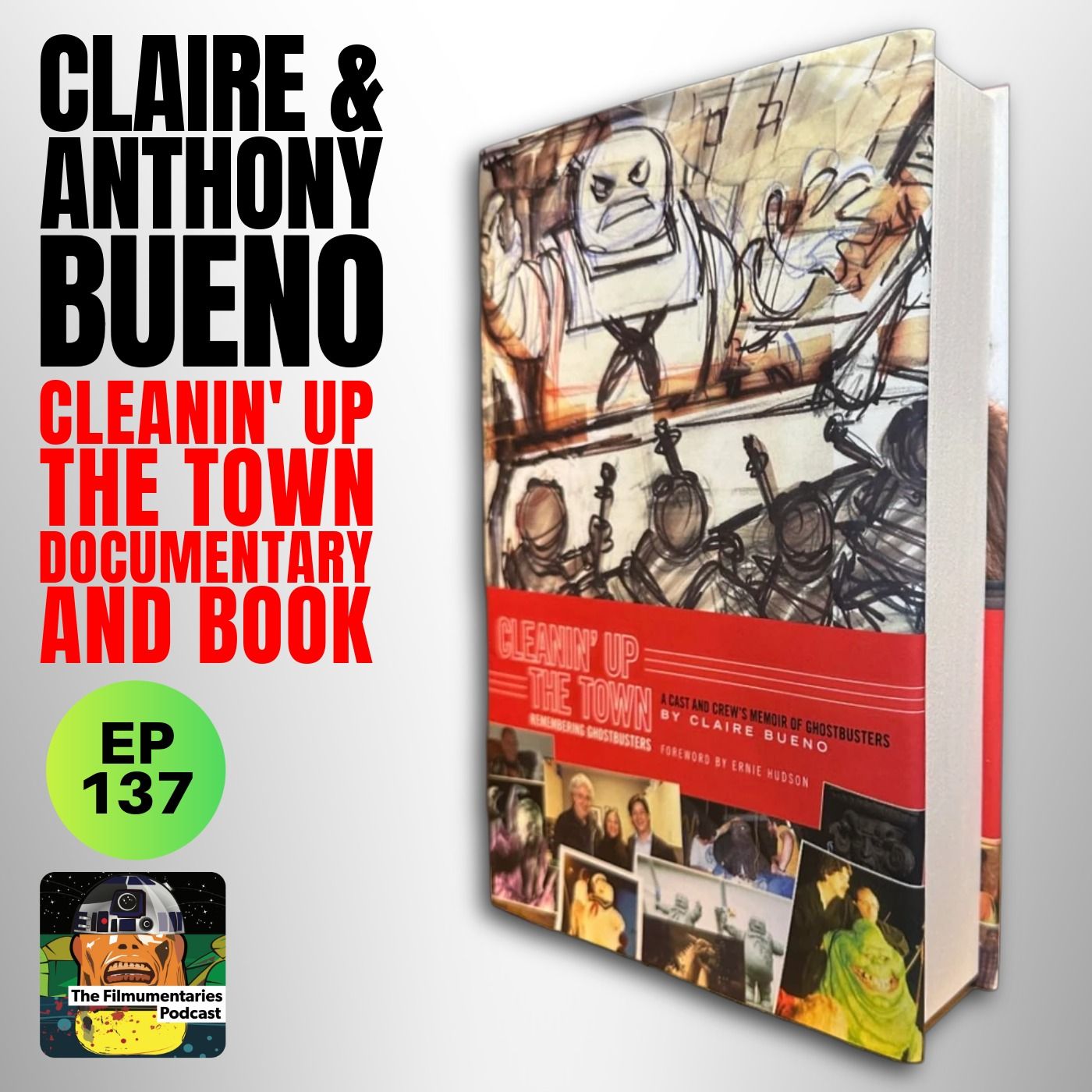
About this episode
The Buenos spent years interviewing dozens of cast and crew members from the original Ghostbusters, including Dan Aykroyd, Ernie Hudson, Sigourney Weaver, and the late Harold Ramis. The result is an extraordinary behind-the-scenes portrait that captures both the technical wizardry and the creative spirit that defined the 1984 classic.
Claire’s new companion book, also titled Cleanin’ Up the Town, builds upon the documentary by presenting full-length interviews, previously unseen material, and new reflections from the filmmakers and craftspeople who brought Ghostbusters to life. In our conversation, Claire and Anthony share what it took to get the project made -the years of persistence, the challenges of rights and access, and the rewards of telling such a beloved story from a fan’s perspective.
Whether you’re a lifelong Ghostbusters enthusiast or simply interested in independent documentary filmmaking, this is a fascinating glimpse into the dedication required to bring such a massive project to life.
This podcast is completely independent and made possible by listener support. If you’d like to help me keep making these episodes, you can join my Patreon community here: https://patreon.com/jamiebenning
Watch more on YouTube:
Check out the Filmumentaries YouTube channel for behind-the-scenes clips and extra content: https://youtube.com/filmumentaries
All my links
Transcript
Automatically generated, so expect the odd misheard name.
Weirding Way Media. Welcome to episode one hundred and thirty seven of the Film We Mentories podcast. This is Jamie Benning, your host and sole creator of this podcast. This week, I'm joined by sibling filmmakers Claire and Anthony Bueno, the creative team behind the documentary Cleaning Up the Town, Remembering Ghostbusters and the brand new companion book of the same name written by Claire. If you're a Ghostbusters fan, you've probably come across their work already.
It's pretty extraordinary, their. Decade long labour of love that captures the making of the nineteen eighty four classic in amazing detail. Through interviews with Dan Akroyd, Sigourney Weaver, Ernie Hudson, Harold Ramis, Ivan Reitman, and literally dozens more, the Buenos have created what's become the definitive record of how Ghostbusters came to life. In our chat, we talk about how the project began, the naivete and passion that carried them through more than ten years of work, the challenges of fair use, distribution, nightmares, and finally the thrill of premiering their film at the BFI Imax here in London. We also discuss Claire's Companion book, which expands on the documentary with full transcripts, unseen stories, and a look behind the curtain of how.
They pulled it all together. Before we get into it, quick reminder this podcast is completely independent and only possible thanks to listener support. If you'd like to support the podcast, if you'd like to help me keep making these episodes, please consider joining my Patreon that's patreon dot com forward slash Jamie Benning. You'll get early access to episodes now and again. You'll get a few bits and bobs extras, and the pleasure of knowing that you're supporting me in making this podcast for future episodes, and don't forget to check out the film your mentor's YouTube channel, where I'm sharing more clips, some stuff from my archive that hasn't been out there for a while as well.
So here's my conversation with Claire and Anthony Bueno and I'll be back at the end for a bit more jabbering on. Claire and Anthony. It's great to talk to you today, Thanks for your time. I just want to sort of go back to the very genesis of this project, of these projects, the book and the film, when did you first see Ghostbusters and did you fall in love immediately? I suppose I should answer it first, because I was the first person in the family to see Ghostbusters.
I was thirteen or fourteen, went to the local odeon cinema in Talkie and Devon where we grew up. And remember it was the first time I could, I was allowed to go without to the cinema that parental route, you know and supervision, and sat in the cinema and literally leaped out of me sat with the library ghost and then just I just remember looking, you know, my friends furtively to just think, if you know, did they see me? Because I was genuinely scared, and then just sort of laughing at myself for being so scared. So, you know, from so from that, you know, from such a young age, it really did have an impact on me. And then I went home and kind of spread the words and then but you took it to a whole other levels, didn't.
Your brother, Because yeah I did. I absolutely loved it. It was you know, once I knew it wasn't like really scary or so. I mean, I was only I was ten. I would get freaked out by horror films and like Claire would bring back like she would the video shop was kind of like on her way back from school, so she would video mechs was long long since the spit and bring back you know, various freaky films.
Was one American welf in London oddly so so I I, yeah, horrors freaked me out, and I think I remember seeing it's probably Top of the Pops part of the video where it was either the cab driver cab driver and so oh and then I, oh, no, no, no, it's got moments, but it's fine. And then kids would talk about it at school. Stephen Boston, I remember the first kid in my class that saw it as I. So we went to see it. I'm trying to think who took me.
It might have been my dad. I would have thought it was more mom's thing. But even remember the drive home. It's the weirdest things. You remember, the car crashings, the car it was quite icic.
So we didn't get it till the winter, and I you know, it was just that, you know, I was ten, so Star Wars and Ghostbusters, He Man, Night Rider, all of those things, just like when you're that age, just become it. And so I just for years you know, and you know, it's always been there though. With me, I've always loved it. It's always the go to film that you know, if it's on Teley, even now after making the talk and the book, if it's on like Ghostbusters. Yeah, right, don't you just so much it because it's just such a gem.
So yeah, it just never thought we'd been making anything to do with what we're doing now, but it's like just the fact that we have done is amazing. Yeah, it's the same for me. I saw it around the same age. I'm a little little bit younger than you, but I I remember also it was the first DVD I ever bought, Ghostbusters. Even before I had a DVD player.
Hey, that's very. Because I heard that the you know, the commentary was particularly good, and I heard all this. I was like, what this, what's this commentary thing? You know, extras? What's what's this?
You know? Because I was a VHS kid like you two and yeah, and it's been with us our generation throughout our lives, doesn't it. But what then was that moment where you just decided we need to make a project on this, we need to make a film. Well, I was doing the Red carpet, you know, interviews on the red carpet. So my kind of skills were in front of camera.
Anthony's was behind camera. He'd been to film school and he had really enjoyed documentary and it was literally a case of, you know, we why not tie at two skills together and see if we could make a documentary film. And because of a previous project about an American werewolf in London, we'd kind of established a relationship with or Anthony had with John Landis. Anthony chose an appropriate moment to ask John Landis whether dan Ackroyd would be interested in a in a documentary about Ghostbusters, because because danak Royd is he was the genesis of ghost you can't really not have a film or a documentary without him. So John was like, oh, I can get you Denny, and and sure enough he did come through for us like that.
So so it literally came from me. It was me interviewing Anthony with his gills behind the camera. Let's marry those two together and let's go and put ourselves on the mappers filmmakers. Yeah, amazing twenty fifth verses coming round. Weird, Like you said about the DVD, was like the fitting Conniverse really release, which seemed like such a I was like, oh my god, I believes it's amazing and now where like it's forty years to make The Dark And it was just like, that is just insane that, you know, I suppose just an adult thing.
You know, you perceive time very differently, like when you're older to when you're younger. But it was just yeah, it was you know, it was just one of those naives, to be honest, but it was. It was a very knives. It's like with the American wealth. And he was able to do much quicker because it was a it was just a well it was made in the UK for a yes, so it's easier for me.
Yeah, whereas it just yeah, the scope of it grew. Yeah, but I was going to ask you about it, because the scope of it is massive. There's always that difficulty in trying to balance or find a balance between the sort of completest project and something that tells a compelling story. And of course you go into these projects and you go, okay, right, we've got this person and this person, and now we're going to have to speak to this person. And every time you interview somebody they mentioned somebody else and it leads to another person.
Did you feel at any time that this project getting too big? I don't think we found that it was going too big. I think what we found was we didn't think we would get access to the people that we did, Harold Ramus's and Sigourney Weavers. We were hopeful, but I think that changed the landscape for us with regards too. But like exactly as you say, Jamie, it's almost like breadcrumbs.
You would interview somebody and they would say, oh, have you spoken to so and so, and we're like, oh, we've been trying to get them, And then they'd say and that we'd go right, okay, so, And because they were recommending us, it literally was it was word of mouth. Really, you know, good will in many ways, I guess because they see that your fans see your enthusiasm and the love for the film, and you know, I had a similar situation last year. I'm trying to make a documentary and I had this particular person, our contact, and he said, oh, you know, could you book a room at the A suite at the Beverly Hills head And I was like no, Like I've literally flown over here on my own money. We've got two days left.
We'd love to speak to and he's like, okay, come to my house in Hollywood and would do it in the garden, you know. And once once I had a sort of nudge from the person that the documentary is about as well, it's like, oh okay, if they've said it's fine, you know, then then come on over. Because also that you get to that situation, I'm sure that you did as well. Where okay, you've you've got Harold Rainis, You've got dan Aykroyd. Sigourney has to be in it, you know, Ivan Ryman has to be in it, because without it would they would be missing out in many ways?
Absolutely, is that not being invited to the party, isn't it? Yeah? Exactly, there was a few of the obviously, like you know, Bill Murray, Rick moranis So the are the two main ones that are missing out, but mainly for that reason, you think, you know, once they know, but you know, you know, Bill Murray does sing to his own tune, which is fair enough. And he does, and Rick's kind of left the business, didn't he, And yeah, no. Exactly, so I don't you know it just it was just I think there was only one time we just couldn't do it purely because I think we'd finished the film pretty much and then then we've got contact with someone else is like doing that now, it's like we would have done, We would love to.
I think the only way that I trimmed it down was that the original doc was going to be like the whole franchise, the game games, and because we remember interviewing them for about the computer game which had just come out of the time, yeah, and the toys and this and that, and like it was going to be a whole shebang. And then as the interviews kind of grew from people within the film and their stories and all compellings like that, and it was that I don't want to cut it down. And that was the decision really to make two docs about one of our ghostbusses too and one of our ghosts, because it's like, I don't want to sacrifice time yeah on film just to kind of you know, we got to squeeze in thirty minutes for Dohsbusses too, which I didn't want to limit what we talk about Ghostbusters because the results so compelling and I didn't want Olympics and treat Ghostbusters, who was like, yeah, this is that other one.
Do you remember the second one? Yeah? Yeah, yeah. I didn't want that. I wanted to give them both the amount of time and as it grew as like it's going to be four or five hours long, which is a problem with but it's like I also want to It's that thing like making it a bit more palatable for an audience that aren't hardcore fans.
Like trying to get that balance was always kind of tricky, which is the best thing about the book because because like all the really granulous stuff that I removed from the dock just to bring the time down and make it easier, that could put into the book so everyone gets that kind of information. Yeah, it's great to be able to use those sort of unused, untapped resources that you know, you couldn't get in the film for duration issues and now get it in the book. But I just wanted also, we'll get onto the book as well, But I want to talk about this was like a more than ten year journey right to get this project done. How did you sort of stay motivated? How did you sort of you're fitting this in and around your regular jobs?
I assume as well, and we. Were talking just before we hit record that you know, it does take fans like us to make these projects because nobody else is going to do The studios aren't necessarily interesting. They want to move on to the new project, and and and the and the next project. But did you did you find it difficult at times? Were there many hurdles along the way, unexpected ones?
Well, there's lots of hurdles. Yeah, most of them came at the end. Yeah, And when it came to distribution and all of that, that was that was a minefield. Which was that? I mean, that's the business I try not to use the term business end because it has a different kind of although similar kind.
Yeah. Yeah, we can draw draw parallels exactly. I guess, going back to what you said, thought that some of that naivety probably helped in a way because you're sort of just plowing forward and trying to get all these interviews, and it's only when you sort of hit the stumbling box of the sort of business end of things that it becomes difficult. Yeah, and potentially off put in. I think, yeah, you know, it's it was also the other day, what would if we were to go back and see our younger selves and what would we say and all the rest of it.
And it's always and I'm always very kind of like what I always remember Michael J. Fox and a decent Star Trek episode where it's like you go back, you kind of you're playing around with like the tapestry I think it was in Starguark, where you can unravel something and then you've donened up at the point where you are now where it's where we are enjoying, But there is that element and I have seen other people also just kind of like when they realize that most of the time it's fun and games, to be fair, but you need the financial resources. If you're the same as yourself, you're going over to the station and stuff like that. The way we justify it is like, well, if we were going on holiday, we would have spent much more.
If we're going to Disneyland or something, Yeah, well and much less time and probably a lot less fun, to be fair. Whereas you're doing something you love, even though it's still work, you've got the stresses of like cameras and this that and the other and lugg in this and what if it gets lost because that's happened before. So there's a lot of things that kind of come with it, but are also part of the weirdly in a statistic way, it's kind of part of the fun. Yeah, you feel as though, you like, if it was all just fun and games, when everybody would do it, and there is something about the struggle that make. Sure like, yeah, yeah right, Robert Stamps.
Yeah yeah. I feel like, you know, we are documentary filmmakers, you know, a bunch of fanboy types that are going out doing a bit of having a bit of fun and yeah, we've done this is great. It's like, no, we've we really had to go through the mill, especially at the end. I mean everything leading up to it, within the. The making of it, with the interviews and things like that.
But of going back to Jamie's point as well, is that I don't think we ever felt that we were never going to pursue this. I mean, once we committed to it, you committed to it. Mainly, I feel because all of these people, you know, Harold Sigourney, Richard Devlin, John Bruno, Dan Akle, all these people that had given us their time, they had their time. You can't let them down, you know, and that was for us. It was really important that if they were good enough to give us their time, then we at least owe it to them to finish this film A hook called by Crook.
And it is my belief that these guys know how hard it is to get anything made. And I'd like to feel that we've earned people's respect because no matter the odds, we did always continue and we never did give up. We had we had support, you know, it was We're not a huge team of people, but it's like Anthony and Derek, Anthony was born, Yeah, there the two easy as we call him. Anthony did all of our kind of posters and stuff and did all the motion graphics, and you know it's again it's just another layer of like if they're because I couldn't do it, I couldn't do it Now I can, I know to do a lot of that stuff now. In terms of the motion graphics having a clue then I did a few.
There were like I think two or three in the dock that were all me and YouTube. There was the great education, but it's you know, it's I know, we wanted to take it up that level and just having them there, there's a bit of a sounding board and just being that kind of support you are. You're a team, so it might be all spread across the world, but we're all trying to get to an endpoint of something that the people enjoyed. So yeah, I mean there was I mean, certainly when we did the Kickstarter, there was the financial issue because it's like we've just run out of money completely, yeah, and we had no way other way of tapping into any other resources. So that's why we did the Kickstarter.
Yeah, it was it was that year that was like, yeah, there's a lot of people saw like an it was a Kickstarter project, but it wasn't a Kickstarter project. It was a project that was helped by Kickstarter in the end, but it was there were eight years of lost you know, getting money working, going abroad for like a couple of weeks or a couple of months sometimes to to get all those intro traveling literally from one side of the country to the other, which is all good fun, you know, driving and doing the whole sort of like east to west coast or whatever. But it's like you are just that there is an element that you personally, for me, you get quite caught up in that kind of. Like, this is amazing, we're doing it, yeah, because nobody's going to come knocking at your door and say, excuse me, would you do this for me?
You know, oh I was saying earlier, you know. And there's so many lessons to be learned along the way, aren't they. Like each time you do an interview, like, oh, maybe next time we'll do it this way or put the light here or the mic there or whatever it is. And that's part of the fun, though, isn't it that learning process? I hate the word journey in a way because it's used so much, but going on that journey from starting with nothing and ending up with all of this material and then trying to craft it into something, there's nothing more fun than that for me.
I mean, I can see on your face now and it's the same for you. Yeah, it's exactly the same thing. I mean. When people, you know, like yourself, are talking to us saying, you know, you've interviewed X Y and said and you know what was that like or and you're just like, my god, yeah we did. And weird to look back now in retrospect and think that we did that, and we did that with with you know, we were two people that grew up in the southwest of England and we've got no connections to Hollywood.
You had a dream and we had an integrity to our work and to our craft. And you know when you've got people like John Bruno who's got the oscar for Titanic, who works with James Cameron on like everything around and saying to you, you've transported me back to when I worked at Boston Film and you know, reading your book, thank you for committing our story to history. And you know these icons are coming and thanking you and your and they think that where worthy. I mean, what great reward is that? And it is at the end of the day worth all of that, the ups and downs.
Yeah, that was an almost finished version. He was in the UK and this is when we were living in London, So could you want to see it? And he's like, yes, I do. So we came around and he's just like, yeah, just just taking me right back and like all the memories are coming back to like that, and he has got one of those minds where he just remembers everything, but he's just sort of like all the emotions kind of like of it all, and you know, that's very rewarding. One thing about I've found we're doing all these kind of doctors when you reconnect people as well, it's like this, yeah, I haven't heard from infant yeah, years and then they get back in touch and then he's thinking, oh, that's nice.
We've been able to do that kind of reconnection thing. And people that haven't met each other, like Mark Brian Wilson who was the puppeteer the actor inside Slimer, and Robin Shelby who was Slimer Busters too, they had never met and we were a to connect those two. Yeah, that was a treasured friends. Yea, they are. Yeah.
I recently wrote an article on Ghostbusters too about slim and I got Robin and Mark chatting again as well, which is nice. And yeah, it's lovely making those connections and also giving those people an opportunity to sort of look back at their legacy, because those sorts of people that work in the industry are very sort of like shark like in their drive. They want to go to the next project and the next project, like we said before, but it's nice, I think for them to take a pause and just kind of go, oh, yeah, what I did did have an impact on people and did did change the culture as well, because they don't really get that opportunity. I'm sure. Yeah, and I think a lot of these guys as well as particularly in visual effects, they are kind of you know, in a black.
Room the. Completely But I remember an elder we went to a Ghostbusters convention in and an Eldo Ray, the excitable redheaded It's extra, and it was it was telling a story about meeting some kid and it was either from he's now a makeup no effects but like proper makeup but you know, like you know, physical makeup, bit of glosses, that kind of thing he was saying, getting really because there was some kids and it was just there was something some kind of connection through Ghostbusters and how this kid was just like ecstatic and he goes, I just did not realize. You know, it's one thing you do, little thing and there's little these little fang groups. But when you see how the impact that film has, and that is I mean, it's it's you know, film does, it's it's a it's such an important medium.
And this is a kind of a cause I'm always kind of championing and not just like you know, I mean indie film is obviously done very well in the Oscars this year, but cinema itself as as a medium and it's importance in culture, and people who don't get it, that's fine. Was obviously go on about it. It's fed a baviaan if. I was involved in the project recently, the Bag trying to get an old indie cinema up working, and a majority of the people that was on the board that I was with just didn't didn't go to the cinema. They didn't really watch films.
It's like, how am I supposed to convince people I'm going up to London to watch Batman on thirty five mil And most of the people I'm talking to really couldn't care less, and they probably don't even know what I'm talking about when I'm talking about Batman. So it's a hard cell. But those that get in, and even if some we we were talking with the other day when people said I don't like films, it's like it's not really true because that means you say you don't watch films. Ever, just probably just what you're talking about is there's certain genres that you don't like, but you will sit and watch them even if it's an old Western. So you know, films are important, and what we wanted to try and do was just capture a window of time like during the nineteen eighties.
This is how they did it, and the arguments can be whether it was a better way of doing things or not in comparison to how they do things these days. It's still really really important. And because it's pretty much everyone always at Star Wars as that, which is fair enough. It was the kind of almost re event cinema in some ways. But yeah, it's still like it's certainly with Ghostbusters and other film like Terminator and Back to the Future that era, they're really important films to kind of and and capture.
And while those people are still around that you can talk to, and because what you can learn, you know, from even from a photochemical era just still works its way into the disciplines that you can learn from doing things like that. It's just it's it's concerning the way things have kind of gone. But that's it's a whole of that. Well, for a start, you should be listening to my podcast because that's exactly what my podcast is about. I've spoken to lots of visual effects people, sound designers all sorts, and yeah, I want to talk about some of the interviews that you did for the documentary as well, because you said the sort of start point was Dan at Kroyd.
Was that the first interview? Did or had you done other interviews leading. Up to the No, he took us four years from agreeing to be interview to actually sitting down, because you know, he travels the world ed vodka, so you know, we'd find that he'd be on the East coast when we were on the West coast, and when we were on the west coast, he was on the East coast, and we could ever align with his his busy schedule. But the first person was Onnie Hudson was really to say yes, and we he was over at a convention, was it? It wasn't Coventry, was it?
It was Coventry? Yeah, And. And we he'd already said yes, and we thought, well, let's try and get him, and we queued up and a poor man. Communicated, but there wasn't any kind of anything firm was what if he's here? And then he was just like, well, it's just because I'd.
Take the chances. Yeah, I was, well, let's go, and so we wicked it and. And we took him. We did We just introduced ourselves and then long stories shore. He kindly said yes, and we interviewed him that the end of the convention, which, in retrospect, I mean, you've probably been to conventions yourself, you don't realize just how tiring those trips are without you know, being jet lagged.
And then to actually offer, you know, to do the interview after a whole day of meeting and greeting and signing, I mean, really, Ernie is a legend, and you're very grateful that, you know, we wrote the forward for the book, and you know, it's become a very firm friend and and a great sort of ally for us, hasn't he that he's really championed us. So it was Ernie that was the first, wasn't it? And then we went to New York and it was John Rothman, David Marghles, Touthy Carhart. That was that trip, and then we came back. Was there a particular kind of pinch me moment with a particular interview?
I mean, obviously amazing to get all of those people, but was there one where you've really got the tingles? You know, it's Harold, isn't it. Yeah, I mean it was. They're all they're all special in their own the story the goal, which obviously is in the book, but it's. Like, yeah, I mean yeah, Harold, Harold, and yeah, all of them.
I mean it's just like I said, I think it's very I mean, Harold was lovely I know with like for me when it when I get that moment which is a bit odd. This is going back when we shut on tape. Yeah, camera just there was writing the names down on the tape like that, you know, you put the camera kind of infro date it's about writing it, and all of a sudden there is it's like it's Harold, it's Ernie, it's Sanitarian, and you're like just all of us that that's all of a sudden it's sunk in because you've been rushing around. But that the thing with Harold, we had like we rocked up at his door and we're knocked on the door and he opened the door and went, hey, it's the Ghostbusters were like just sort of completely taken aback and where we were really nervous, he just completely at that instant at ease and we went in there, we and he was putting off appointments and apologizing to us for talking too much.
Can you imagine, you know, we were like lapping it all up, and he was. We spent the whole afternoon with him, didn't we? And I think we are you know, I don't. I don't think I'm wrong in saying that we were the last people that he spoke to at length about his time working on Ghostbusters, which you know are going to be the custodian of that story. Is an honor.
But I think what I learned a lot from him? Is it? You know? Could you think about the films that he's made, ez This analyzed that Groundhog Day? Just a couple off the top of my head, obviously Ghostbusters.
You know, when you meet somebody who's so grounded and down to earth. His offices were just above a shop, playing in a street, very you know, in a little suburb in Chicago, very unassuming, candid, honest. But you know, we just with great warmth, and I just I don't know, I just felt I learned a lot from him about what it is to have that stark quality that you know, no matter your success, just by being a grounded human being. I don't know, I learned a lot. Remember when we went in and we was just talking about stuffing, he was like, he took us to the computer and goes on, well, this is where the idea of Egon and Egon Sheila and Leon and shout this is this is kind I was just like, you know, to get that kind of like, oh, well you know this, this is where it all kind of like started ideas and and remember the conversations with them, I can't be quite repeat because it's all anyway.
I remember, I believe it in that but it was just you know, anyway. But no, but they were just it was it was just one of the exactly what Claire says, that occasion of someone who's had you know, and then he says to us within the industry, it's in the it's in the second film. You know, he knows they've had successes and failures and so he knows how both of them feel. And you know, successes don't solve all your personal problems and faith the ind of the world either. It's like one of the messive philosophy.
It's like it's exact exactly, so everyone's like got to be this and got to be that and all you know, we live in an area where that you know, people more really want to see you fail more than one to see you succeed. I mean, yeah, saying in a lot of ways for people, but it's just you know, you mean people like that, and it's like, yeah, but it doesn't matter because as long as you're happy with what you've done, you know, you've worked hard and to try and create the things you what you want to set out and create, then yeah, you want people to sit there and enjoy it. But there's you know, that's such his life. Really, that's that's kind of the way it is. And all you can do is do your best what he was, you know, but there were a lot of remember we're talking with them, but you go in there and there's you know, they've got a terror dog kind of and the cupboard and it's just that this the old you borrow to shoot for the film.
That what's the internal workings of the the the amateur. Yeah, sure, it's like a slight staber of cabinets. It's just like, oh my god, oh my god. Because because because Richard and Terry had come out of industrial light and magic, so you know, so oh god, I mean Terry had some amazing stories about him with the. Jedi, with the emperors, the lightning, yeah, the force lightning, yeah yeah.
And he was just saying about how they were saying, no, you need to do more. And he goes, this was the point nobody knew that Vader was going to be dinery. And he goes, yeah, but if I do more lightning, this is going to kill him. And he said, and then there was just this fillness. Okay, I just did more lightning.
He thought he was going to lose his job. He kind of guess what was going to happen. Yeah. So they've got all of these sorts of stories and they were just so warm and but just learning their craft as well was phenomenal. Yeah, I mean it is that.
It's the I think it's said that you know learn. Yeah, learning, you know, Yeah, you get an education along the way, don't you. And when you meet people that are that humble as well, like Harold was it, it sort of galvanizes in your mind, doesn't it. The project that you're doing is worth doing because it gives you a newfound confidence, doesn't it for the next guest? Because you know, once you get once you sort of breach that barrier and you're in.
Things start to happen, don't they. Like I said, like you know, with my podcast, one one interview usually leads to another and another. Did you I mean, obviously you had maybe hundreds of hours of footage right at some point with interviews. B roll and all of that. Did you did you find it difficult to finally kind of go Okay, we're locked, we need to release this.
Like how did that come about? When was that moment? That's definitely a you question. Yeah, that is That's a good question. So it was I think it was.
I think it was when we got it to the two hour mark. It was always in my head about right keeping it two eight eleven. I was trying to get it to ninety minutes. Then you are, you know, which there is one hundred minute version of the Dog which we used for screenings and things, which is which is finding Actually I was quite happy with it, but you know, you know, you're losing a lot in one hundred minutes. And I think one of the actually may have been the original Finnish version was about three and I was just very concerning it's three hours, and we really got to bring that down but for me, it's always just that kind of like that that feeling that you get.
It's like, okay that now it doesn't feel like that bit's overstaying, it's welcome. I originally dumped all the footage together and you know, okay, that's everybody talking about that bit and that bit and that bit. It was five hours, I think it was. That quickly came down to four once you kind of read out the repetition a little bit and then got it down to three, and then it kind of came down to two, and they came down to by taking out certain sequences of like the second montage sequence, because we haven't got nobody knew and it was always in I it's like, it doesn't matter who we interview. Everybody that we interview appears in the dock.
It's not going to be one of those well we'll interview you, but you know you may make the final cut. And that's not what that wasn't going to happen. And it's weirdly people would say to us a little bit of it, it's like, but yeah, of course, what would we have come and ands We've done a few of these, but rarely make the actual fund lead it. It's like, how weird, I know, because you've just everything you've just said to us. The one that we interviewed for two ords to handle FI we like finally because reached out to him years ago and he and he was just like, I really don't think I've got anything interesting to say.
To be honest, that we've all been covered. It's like I could just whatever because I'm not fond of some of these things. So I get it done, worry about it at all, it's fine. And then as time's passed and we were over there the last time, we were just like, yeah, actually, yeah, no, let's let's talk about it. It was just like it was just like beginning to end entertainment and stories and this.
It's like, but if you said to you, you have you've got notes to say it's fascinating. So but there was that kind of I think when you you just were and we sit there and we like showing to friends, and I'd show people like a long version of people, and they must have been thinking, what on earth is because it's just no, it's there's nothing over the top of it. There's no emotion, graphics, there's no nothing. And I was just like, yeah, but kind of the first past that's there, but yeah, it was once we've got that two hours and it's just really that sitting down, we sit there and watch it in a couple of friends, you thinking, I think it's there because it's got a nice flow to it. It doesn't bit overstayed, it's welcome, it doesn't feel like it's too short.
You know, there's bits I wish we're there, but I know every time they've been there, you just start to get that kind of like and it's been too long now. So I think originally Slima was like I think it's ten minutes. I think I've tried to relocate ten minutes like Stay Puffed and Terror Dogs and Slimer, and if I can get it within that kind of ballpark, it just kind of helps me when I'm approaching anything that there's like I'm not going to be it's going to be this and that's it. But it's a nice kind of you know that when you're watching things, it's a nice kind of window of time. And so I was able to get like the original forty five minutes of Slimer right the way down to ten minutes.
It's amazing once you get motion graphics, it's amazing what you can do. But yeah, there is always we're doing it right now. With the second one, it's like where we literally just finished like the first version of it. Now we take it to legals and you know, help you it'll fly through. But otherwise you might have to change it, because the same with clean Uptown.
It had to change a few times before we could it's finally done because we were happy with it, and then it goes off to a fair use lawyer yea, and they used to add like one hundred and thirty odd things. It was like no, no, no, this has got to be changed, and this needs to be done, this, this needs to be re edited, and it was that was a bit of that took a couple of months to change it. So there's kind of done and there's done, I suppose, yeah. Because that all that fair youse stuff. It has to be very precise, doesn't It's like a frame here and a frame there, and you have to justify the use of things.
I think people tend to think that fair use is just not approaching the studio and just putting short snippets in, but it still has to go through legal doesn't it, And it still can be administratively difficult and kind of have an impact on your edit and your storytelling. So it's a it's a two way street, isn't it. You have to I mean I do, I'll talk about I'll talk about it in the book and again because I'm hoping that people might learn, you know, the in and out. Because the thing is, every time something goes to a lawyer, it's costing you money. So the more that you know before it gets to your lawyer, and the more that you've covered and justified why you know.
I don't know if you know much about sources of fair use, all your listeners do. But ultimately, it has to be in the public domain, in a book, in the cinema, gosh, on the internet, obvious, on VHS, there anything that where it's been out there you can use. But it also has to illustrate the point that your subject is talking about. So yeah, exactly, it can't be a filler and it can't drive the narrative. It has to illustrate the point in which your your subject and what they're talking about the kind of payoffs in its kind of basic terms of what you need to do with FairUse so and you have to be able to justify I mean ultimately, And it goes down to the kind of detail you have to go into.
I remember the Sigourney Weaver, Well she talks about you'll sit you know, in the dock where she dioks a comedy. Yeah, we put a picture of Sigourney Weaver and I don't know what year that was that the original picture was taken, but it was a bit further on further Yeah, it nice been in that kind of Yeah, and they're like, no, if if she's talking about hadn't performed comedy before or only marginally on screen, you need to use an image of that time. So we were lucky to get an image of Chevy Chase that she did a film with and we're able to use act ass that was nineteen eighty three or eighty two, so it was in the same time so relevant. Yeah, it has to be relevant. It has to be set to the same time frame as they're talking about.
So, yeah, you can't use it arbitrarily. It's you have to have a reason and be able to justify why you are using that image. Music as well, Yeah, because it's a lot more stricter because of the nature of it. But it's the same thing. You can use the music as long as it's illustrating whatever point.
And that's what we got ghostbusters in using in the film, because we did try and get the rights to use it and we weren't allowed to and once denied that, right. Yeah, that's it, that's the end of story. Yeah. Yeah, So it was just like, yeah, no, that's so we won't we won't do that again. Yeah.
I was talking about those pinch me moments earlier, but I'm sure the premiere at the BFI Imax was was a big one of those. Tell me about that that particular day. Oh, I'd say that that was the biggest part of my life. So I just I mean, I don't think I'm understating that. I think when as we worked on we did the Red Carpet, we had got a company called Premier Scene.
So we've interviewed you know, everybody, and you would you would go to the Imax, and this is where Steven Spielberg would have his premiers, where Tom Cruise would have his premiers. They don't do premiers at the Imax for documentaries. I believe in the kind of what ten to fifteen years we did it. There was I think one documentary, so for us to get our European premier there, that was a dream come true. And to have all our friends that you know that we would be had chums on the red carpet come and interview us.
It was quite a surreal moment of what yet when you stood on the stage and their game where Steven Spielberg and Tom Cruise have done their introductions and you're there and I'm certainly not trying to compare what we've done kind of work they do. I certainly wouldn't even attempt that, But just to be stood on that stage is it really was a dream come true. But again, like Antony said earlier on, when you've worked so hard and we hadn't there wasn't even the milestones that were still to face us. We didn't know it at the time, but you know, when you're stood there, knowing that you've worked really hard to get there, you feel like you look like you've earned it, doesn't it is it? But yeah, the pain you go through, all these trials and the good times, it is just that kind of you've burned the right because we have put ourselves out there and put everything on the line to create this thing.
And I mean I remember for me it was weird. It took a while for it to be sinking. Just I was just like, this is weird. It was like being on a cart being on the other side. I remember when with the first I can remember what the next one was that we did after that as a as premier scene, and it did feel like it was Picado.
It was Picardi. I just you know, I just feels like we've tied a corner. We are now filmmakers ourselves. And then to go back and near the gripes of the red carpet and all the rest of it, it's like, but we've done I don't know. I don't know.
I don't know if this is really going to be for us any water. We only did a few more I thinks that make a pandemic. Yeah, the last trying yeah, which I kind of vended at high Yeah, which anyway. Yeah, it was really it was even now when I think about it, to be quite honest, it's just it's just you know, and people are it's like the odd people that. I mean, some people just say, oh, you've got to say the BFI.
I'm max in London, like so you don't even know where and I Max Is, I'm talking to you about it. So there's those people and there's one phase like at your book somewhere like that. It's like, well, we know, we did we we you asked we we we just like we've had a bit of a relationship with the BFI. But you know, the tund out to be really supportive. It's just like, well these are the dates that you know you can It's like, yeah, it was.
It was great. They were originally going to show ghostbuses. It was going to be part of the thing and they're going to so it just became which I was quite happy about it because it was just I don't I don't want to detract from what we're where you Yeah, still, and we've got some Imax posters up in the in the in the loft, which I still need to put to a display to illuminate and awesome. The smell of an Imax poster is really specific company. Yeah, but in a nice way.
I suppose getting it on the very grounding you can't get it. It's like, oh yeah, we've got the chauffeur to go to go and get it. Sort of like, yeah, there was the number fourteen. Book park, very grounding. Yeah, friends come and we but we would just come to the end of the evening were shattering and say, yeah, where we're going to go?
Now it's like bed and there's someone with a party pooper? Should we go? Should we do that? Or we should be going to be because I'm tired. So it's been a really long day.
And a great but it was amazing to share it with with, you know, with all the people that wanted to be there, our friends that had supported us, you know along the way, they were all there as well. And you know, you can't be sitting in a cinema and sharing that experience and do you know what that That what I always remember when all the titles had finished, the end titles and the credits had run, people just sat there and it was silence. There was this like a few seconds of like silence, and then all of a sudden there was this rapturous and it was you're like, oh my god, phenomenal. It was very humbling when we were screening in Canada first, because the Canadian distributed kind of just jumped the gun and they were filming After life.
Was kind of Calgary. Yeah, and so that's what they wanted to do. It was with this film festivals. That great, but we had to we found out through social media. We weren't told, so we had to contact them and so, oh yeah, it'd be great to have you.
We had to fly over and and they was able to put us up in a room for a couple of nights, which was nice. It was a sweet actually it was. It was all very like and it was you actually you have to have a lot of like moisturizers, it turned out, because it's it's so cold and you're there, you're scratching. It's like this place got nits or something. I get that as Vegas in the night, like when I go to Vegas every year, everyone just dries out completely, like bring.
Tubs of like yeah, youtubes are amazing. Oh yeah, it's like if they've got the air conditioning wrong or something. But you sit there and the place was packed. It was it was a great event and it was easy for some people to get like Derek who did our motion graphics and stuff. So but you are sat there waiting to spot something that's gone wrong.
So it was very and then but there's the moments where people are laughing and and maybe in the right place is Yeah, sometimes you're expecting the laugh and it doesn't quite happen. It's like, huh. All the bits of the mainly was Alice Drummond, Yeah, and telling her stories and everyone's laughing about like you know, you know, strain of scam and all that kind of stuff, and it was just that it will always make us look like that, and it's just such a people are reacting and they all really reacted very well to it. So it was that was a great trip. That was actually I always wanted to go to Canada anyway.
So yeah, great, I mean, yeah, multiple boxes, that's a good thing. So what were the hurdles after the. Premiers for you? Was there then sort of deals to do with physical distribution and digital distribution after that? Yeah?
How long have you got? Ultimately we were picked up by the biggest sales agent in the country and they offered us a large advance and to sell. This is the same sales agent that would represented Line of Duty, so I mean it in a big league for the UK. Yeah, they did the Michael Jackson. And they did the Michael Jackson and so so a very long story short, they went bankrupt, leaving us not paying us a meaning that we're then owed other people money because they've done work for us on the back of us getting this advance that never happened.
And so that was incredibly stressful. And again cutting an incredibly long story short resulted in us having to buy the rights to our film back. So it was really very unpleasant. It was heartbreaking, and you know, and all you know, if there's any lesson to be learned there to the people that we did owe money to was just to continue to communicate with them, just never disappear and keep them in the loop. I would call them every week.
And I'm quite a proud person, but that was beyond humiliating. Is yeah they were, Yes, they were, and they did and they did get plaid. Yeah, and they did. And the. Industry is what it is, you know, it's and it was because and that is the hardest thing.
You just want to be you know, you do these deals and. You just want thingle to see your film. Yeah, exactly, all of it. It's like and it's actually like the book, It's like do you go with the YAM distributor or as you go via you know self publication and all the rest of it, and even kicked around the idea of the second Actually I would do it that way because you know, you you're relying on other people, and you just realized, like again that business side of it, there's there's some decent people out there, and there's some sharks, and as it turns out that they were not decent with yeah, with sharks, and then it would all look at it. I mean, I was.
It was very impressive. You know, the offices were on Shasksy and you and and to be fair like that, the catalog of films that they were representing, it didn't matter what page you turned, so you could go to that one and then knew all of them. And the times we met with others and they just hadn't seen it, they just knew the product and what they did do with it, whereas these so it all looks like very promising. And but it's just I mean, we would really would be a all day on going on about it. And that's not just the only thing.
It was others, but that was the biggest and the worst life and it is the worst thing. Just when you say, yeah, don't worry about it, you're going to get paid it. Yeah, they're fine, and then all of a sudden, yeah, you're not going to get paid now. It's just like, how are we going to do that? And the only good thing was at least we had a product that we still needed to sell, even though we didn't technically have it anymore.
Just a waiting game to find out who bought the catalog from Q. You know, was she going to redo a resurgence and have the dog with them? It was. It was a long waiting game. So it took a long time, and I think it was mainly kind of because of the pandemic.
Was we could do something about that a bit more immediately there was like loans appeared, Yeah, the pandemic, so we were able to apply for one of those and then pay people until because it still took come a arout on it. So it took her a long time to finally find out who had the film, but of the deal to buy the film back and then make a new does it deal to finally get it distributed. I mean, the UK stuff was all fine because the UK distribut is fantastic and lines of communication was always open. It was always ideal, and then the deal we did that within the States. Didn't do it personally.
I wasn't happy with the release that they did. It was very kind of vanilla. They didn't communicate with us, so we couldn't go, well, look here's all the stat fifteen years that looks great, and they just did their own thing, which I like, and it just made it look it looked like a Monday Market knockoff the box we used to get, like Dodgy, which was a little part of me that was like, I remember those days, and that was not the wrong version of it. But then they went bankruot so, which isn't such a big deal now because well, again we've got to buy the film back just for us distribution. Yeah, and we'll think of something to do with it.
But it was. It was a very difficult. Yeah, Worri, we're still sit in air. Yeah, and still smiling about it. I mean, now that must that sounds really really difficult.
I'm sorry you had to go through that, because when you're like I am, I'm green to this whole idea, I want to make this film right and I'm making it. But you hear from a producer who's going to do this for you, and a producer who can do that for you, and you kind of take it on good faith, don't you that it's going to all work out? And you know, I've not got to the point at the moment where I've signed any contracts. But I just don't. I'm just so into it.
I'm just scared to do anything. So I'm just going to keep making it until it's done. Yeah, then I'm going to go down that route, because you know, once you get into advances and all that kind of stuff, it just starts to scare me because I have to do this in my spare time, you know, I still have to earn a living. And as I'm sure you did. Yeah, well no, but well done for getting it out there and getting it to fans, because you are the fans that want to see this kind of thing, and you made it.
You had to be the p that made that. Yeah, to thank you, I want to ask you about your documentary. I don't know whether you're able or you're a yeah. I mean, I've baffled on about it enough probably, but I'm making a documentary about Joe Alves, the production designer who worked on Jaws built the Shark. He worked with Spielbolne Close Encounters.
But it turns out I interviewed him for my podcast. It turns out he also worked for Disney on Sleeping Beauty, He worked on a Forbidden Planet. He worked for Rod Serling on Night Gallery, and you know, he was second unit director on Jaws too, and directed Jaws three D, and worked for John Carpenter on Escape from New York. Went to his house and it we were hoping that would just make a little half an hour thing like I've done before with other producers and puppeteers and people, and we were hoping that he had some stuff, And my god, did he have some stuff. He's got this pretty much unseen archive of all of his drawings, blueprints, sketches, Like I opened a filing cabinet one day and I was like, what's this, Joe, And he said, Ah, that's the bit of paper that I've s drew.
How the shark might work for Jaws. And I'm like, you know, putting it back in the valance, having it, terrified that I'm going to tear it. But we've been out there a couple of times now, in twenty two and twenty three, and we're going out this year. To Martha's Vinyard because it's the fiftieth anniversary and Joe's going down and we have to get that. I mean, I've got no money at the moment, but I'm going to have to make this happen because to see Joe crossing that ferry, probably for the last time in his life, you know, having done it in nineteen seventy three for the first time, it's going to be great to see, you know, his legacy sort of remembered and spoken about by him.
So, yeah, we've got some great stuff. We've got some good interviews of his collaborators, and yeah, it's it's fun. It's such fun. Like me and my friend Patty, who's co directing it with me. Sometimes we'll finish an interview, we'll drive down the road and we'll just pull up and just get out and harg and just go that was brilliant, you know, like how did we pull that off?
But and people kind of look at you, don't They like you're crazy. And also they don't have an understanding of what it really takes to make a project like this as a fan, because there's a lot you have to sacrifice. There's a you're going out. On a limb. You're sort of putting your reputation on the line as well.
So when you mentioned about, you know, being at the BFI and having all your friends there, I'm sort of thinking ahead myself to maybe we're not going to make it that far, but just just being able to sort of say, see, we did it, you know, and if you try, you can do these things. Thank you. That's right, and good luck with that, Michael Chapman, didn't. They Yeah, So yeaham Shower is right next to there's the best, we're told by Michael Chapman, best in the world. So it's right by where Quint shag.
Yeah, it's not because it was there to do that. It's still not there. Yeah, because they had to return it back to its original state, which was nothing there. Yeah, it's still the same. Right by right next there, this great little restaurant loves Roll.
Clam Shower is out. It's the best, and it really was. It was subly so yeah. Marthas Vinians, Yeah, yeah, plays a fuck part and a lot of films. As it turns out.
It's just he's no longer with us because he would have I think because he did he was like maybe he was say, they didn't have a fucking clue what they were doing when he was working on Jaws. So it puts exactly what he said to us. I was like really, and it's like and then you look at why didn't I realize this before we came, and like he was like second camera on Jaws and stuff. So yeah, yeah, we've got it in the second doc like this great pictures like him and I think it's a dop in Spielberg like around the camera and stuff. And yeah, Jaws is Jaws.
Jaws. Yeah, I'll send you my trailer when we're done. It's not out yet because we're just sort of trying to send it around to see if we can get funding. Initially that was why we did it, but we also did it to remind ourselves we've we've actually got a cool project here, you know, because sometimes you need that, don't you need that sort of you need to sort of put some scaffolding up and kind of go, yeah, we are reaching a high a certain height with these things. Back to you guys, I want to just obviously talk about the book as well, because when did that idea first come.
Was it during the production of the film, or was it afterwards, when you thought we've got all this material and we could do something here. I remember at one point wanting to write a book. Then that kind of I started something, and then you know, just forgot about it. We were in America and you were up editing or something, and I remember writing stuff when I was at the hotel, and then just shelving that and then yeah, yeah, and then and then Richard Latto, who edited the book, approached me about three years ago, three or four years ago, now actually it had been might be about four years ago thinking about it and instead of you thought of using all those on used interviews and making it into a book.
And I was like, I'd absolutely love to do that, and so off I went and transcribed everything by hand because I wanted to reconnect those reviews because I conduct the interviews, Anthony filmed them, and then so once I transcribed them, all I wanted to sort of follow the narrative of what we did. I wanted it to be an extension of Clean Up the Town, you know, the documentary, So the stuff that Anthony had to edit out just be a kind of the larger version of that, the companion to it. So it's told in it exactly the same way. It's edited, curated in the same way as Cleaning Up the Town is. So each scene that we travel through, everybody that collaborated or spoke about that particular scene is there, and it's all curated in that way and then woven through each of the chapters is our story of how we made a documentary and hopefully people can learn because we've always wanted to kind of educate people.
We're always asked, you know, like the questions that you're asking out, So by putting them in the book, I hopefully answer some of those questions. And if anybody wants to go off and make a documentary of their own, they can read and learn by some of the things that we did right and some of the things that we did wrong, the kind of equipment that we were using and again illegals and so it's become you know, it took me three years to write, and then it was an awesome an opportunity to go, well, what about other people that we couldn't get the first time round? So like Reginald vel Johnson, the guard and the police sergeant Joe Sorillo, he's in it, which is he's got some great you know, stories of working because he was a New York police cop as well.
So yeah, so it was very much. It was it was I didn't I didn't think about writing a book necessarily, but then once you know, Richard came to me and said, do you want to do it? Was like yeah, and it's yeah, the best thing. I've ever done. Excellent, excellent.
You have you got a copy of there with you that you could hold up just so people at home can see. Makes sense? Oh, look at that. That's cool. I'm going to have to buy this.
Yeah. At the moment, I'm only reading stuff when I'm researching for my own stuff, but I also need something to divert me from that and to enjoy it. And that looks great. Oh I wish I still looked like that. Look at the profile pick very cool.
Nice, Yeah, excellent. So where is the book available? Can people get it in any bookstore or yeah? You can order it online really via you can get it at Waterstones Aberson via our website as well, or the great British book shop at the moment trying to conquer America. But Amazon is obviously the kind of the place where most people go to.
And yeah, and I'm working to sort of get it into the shops at present, so but we did, you know, I have distributed it independently. I think a little bit of touching on what Anthony had talked about when the distribution process of the film has been so difficult, And it was a very difficult process to go to because once somebody else has got your products, it's theirs to do what they want with And I didn't want to dilute the story that I wanted to tell by somebody else coming along and you know, telling me what to do with my story effectively. But you know, the book is five hundred and seventy seven pages and the whole you know reason, I mean, some have said, you know, it should be edited down, and I kind of get where they're coming from.
But the whole point of the book is that this is everything. What Anthony and I haven't wanted to do was leave the interviews that we couldn't fit into a documentary on the cutting room floor. What I've done with this book is commit everything to history, so you know, you know, we have corroborating stories, so you know, maybe one person says it and then somebody else will also pick up and add a little bit more of context to it. So it's a big book because it's everything. Everything they said to us is there.
And like I say, I just wanted to commit their story to history, and there is nothing now on the cutting room floor. And if you love Ghostbusters or you're interested in filmmaking at all from that period, because we talk about cinematography, we talk in depth about visual effects. I mean we're talking to matt painters, and so it is a really granular look into filmmaking of the period. And and you know when John Bruno again who you know, who worked with who works with I should say James Cameron, and that when Haying turns around and says thank you for committing our story to history, then you go, I feel like I've done a good job if I've got there at proving for because otherwise their stories would disappear.
Yeah. Yeah, Hollywood is not great recording its own history. I know, the Academy Museum is there now, and I mean when I was there a few years ago, it's still quite sparse. Obviously, they have exhibitions that move around. They've got Jaws one coming up this autumn as well, which looks very cool.
But yeah, unless, like I said before, unless we do these things, those stories are gone. And isn't it amazing to think that in the future people are going to use your book as a reference source for their projects. I mean, I made a little book about Returning Jedi a couple of years ago, put it out for the fourtieth anniversary, and the best feedback I've had on the most rewarding feedback is, oh, it was absolutely essential to me in this project I was doing, or this interview I was doing, because and it was just a way for them to find that information in one place, you know, the particular piece they needed. So I'm really looking forward to to reading it. One last question, I think I know the answer to this from both of you.
Has doing these projects deepened your love of Ghostbusters or you kind of when you're done with the second film you're going to kind of shelve Ghostbusters and move on to something else. It definitely deepened the look any year, we'll go on and we'll do something else. It hasn't wanted to do any more. Still don't quite figure out which one what that next thing is going to be. We have different ideas about different things at different times, Like, yeah, we gonna do this, and then we're gonna do that.
Somebody answer has already done it. But now it's like I said, well, if Ghost was done, or Ghost was for that matter, was on Sky or whatever, it's like, oh, so then we've just put it on because it's just it's not just because it's an easy watch. It's just it is a gem and you watch it with a new appreciation. I'm sure, like fresh eyes. Yeah, yeah, I definitely, because you're the one that you know, I went to see it and enjoyed it, you know, went off to do you know, other things, but you great love of the you know, inspired you to enjoy the paranormal and explore that kind of thing.
Dan Ak Floyd had quite an effect on you. Yeah, you know, whereas for me, you know that wasn't the case. But when you sit in a room with these guys, you'll know yourself. You know, when you sit in a room with these guys and you understand the work and the craft, the camaraderie and just how gifted like everybody was that worked on this film, and what just this kind of lightning in a bottle that they created. For me, it's ignited this whole new kind of love and passion and respect for the movie that I enjoyed, but now see it with completely different eyes.
But not there hasn't stripped away the mistique. It's just actually given me a greater appreciation for it. But most especially when the you know, because it's not just ghost us as most of these have worked and they've worked on other films and they're telling you about those and you start finding out all these granular bits of information. Sometimes they're a bit random, But then really, are we even talking about ghosts weirdly about ghosts of talking about the day, Yeah, when they were doing this, they had to do this, they had to do that. It's like really, and it's just you know, and again back to that time, at that time in history of when it was much more I'm saying, it's not collaborative now, but it's different now.
You know. Now it's predominantly CG so it's cubicles and people meet around the coffee machine or probably around the table teddy table or something like that. It's not like everyone X y Z's working on that machine to create this effect. And it's changed and not having that personal connection that some of the humanity of it, you can kind of see. And there's a lot of films really, you know, especially the more mainstream stuff, so much of that is gone.
And we were very fortunate when we were over last when to meet Arian who did the practical stuff within ghostals Is Afterlife and Frozen Empire. It showed as around is like a studio and things, and it's just like hundreds was just like walking into like nineteen eighty three and practical this, and they got the you know, because he did Slimer and Library ghost in the in Frozen Empire and there they are recreated looking identical. At least the Libry ghosts slim is actually smaller in size and what it was originally this is but like you hear, the struggle that they have trying to get you know, practical stuff on screen was the VFX. You know, CG companies want to do all of it, and it's just like you've got enough on so let us think they it's like and so CG takes over and I just.
Don't know how to work in the physical environment. It's the interesting thing as well. Yeah, all they you know, people of a certain age now no, have not worked at all within that practical environment that though I only have worked within CG. I'm not opposed to CG. I think it has its place in the world, like anything has any new tech, even AI and things like that.
But it's what when it becomes so heavily reliant, and with the new film, there's like shots at the library and but you and even though they look fine, but there's just something missing. Is because it wasn't shot at the library. It was shot on the green screen somewhere in Ready and and as good as CG and sets can be and giving, and they're putting a bit more there so that at least it's not like, you know, like any of the Star Wars prequels, where it's a little a lot more removed, where it's more blue and green screen. But there is still something about being in a physical environment that exists, and there's people than walking. There's an energy that comes with that that you can't replicate in a computer.
So it's like going back to watching Ghostbusters and enjoying it for still even even now, and appreciating it for what it was, and you just kind of sit there and wishing, why don what I really love to see a film like it's made right now? I just you know, cg's used at an absolute minimum. We're going to shoot a film like they used to and see the kind of difference that would make and the texture and the feel of what that film actually is. And yeah, yeah, as we go in the future, I'm sure there'll be new technologies that will be to do battle against I. I.
Yeah, it's I do miss that and that's kind of part of that. I'm wealthy. It's nostalgic, so I've been able to go and not be part of by Ghostbusters having knowing it. Know it's so well inside and out, but I can still sit him enjoy it like I'm a ten year old kid again. So yeah, it's just it's just the TXT.
Listen, I'm with three p's in the pod, so we could talk until the sun goes down here. So but I just want to say thank you for your time, thank you for the dark, thank you for the book. I really look forward to reading it. And yeah, appreciate your time today. Thank you you actually, thanks for having us and chatting on a great interview.
Thanks for thanks for your time. Yeah, thank you very much. That was Claire and Anthony Bueno, the duo behind Cleaning Up the Town remembering Ghostbusters and Claire's companion book of the same name, and I do love hearing about that journey of two young Ghostbusters fans. I'm here in the UK interviewing the likes of Harold Ramis It's call it Weaver, Dan Akroyd and their persistence and sheered determination to finish the film even after all those you know, setbacks with distribution of funding. It's pretty inspiring.
It really is inspiring. And you know the way they've documented the work of those crass people and visual effects artists, people who rarely get their due. It really does align with what this podcast is all about. If you haven't seen Cleaning Up the Town, It's available on streaming platforms Now and Claire's five hundred plus page companion book is available from Waterstay and Amazon, but don't buy on Amazon, go to an independent bookshop. Amazon have enough money.
I've just canceled my account with them. It's a brilliant read and a perfect extension of the film. As always, if you enjoy these conversations and want to help me keep making them, please do head over to patreon dot com forward slash Jamie Benning. Every bit of support really does make a difference. It could be like twelve dollars for the year.
I'm not talking per month, I'm talking for the whole year. That gives you twenty four episodes minimum. So your support would be really appreciated. And don't forget to check out the Film Youmentary's YouTube channel where I'm adding more stuff, a few bits from the archive as well some bits that I've had hanging around for years on other platforms that just haven't got the views. I think you might enjoy them, so check out the YouTube channel.
Thanks so much for listening, and I hope you can join me for the next episode of the Film Yourmentaries podcast. M h we are geting Way Media



Similar episodes across the network
Matched by shared keywords.
-
Linus O'Brien - Unsung Cinema
2 shared keywords: of, the
-
Justine Nelson - Unsung Cinema
2 shared keywords: the, up
-
Special Report: Mye Hoang on 25 Cats from Qatar (2025)
2 shared keywords: documentary, filmmaking