
Season 1 · Episode 643
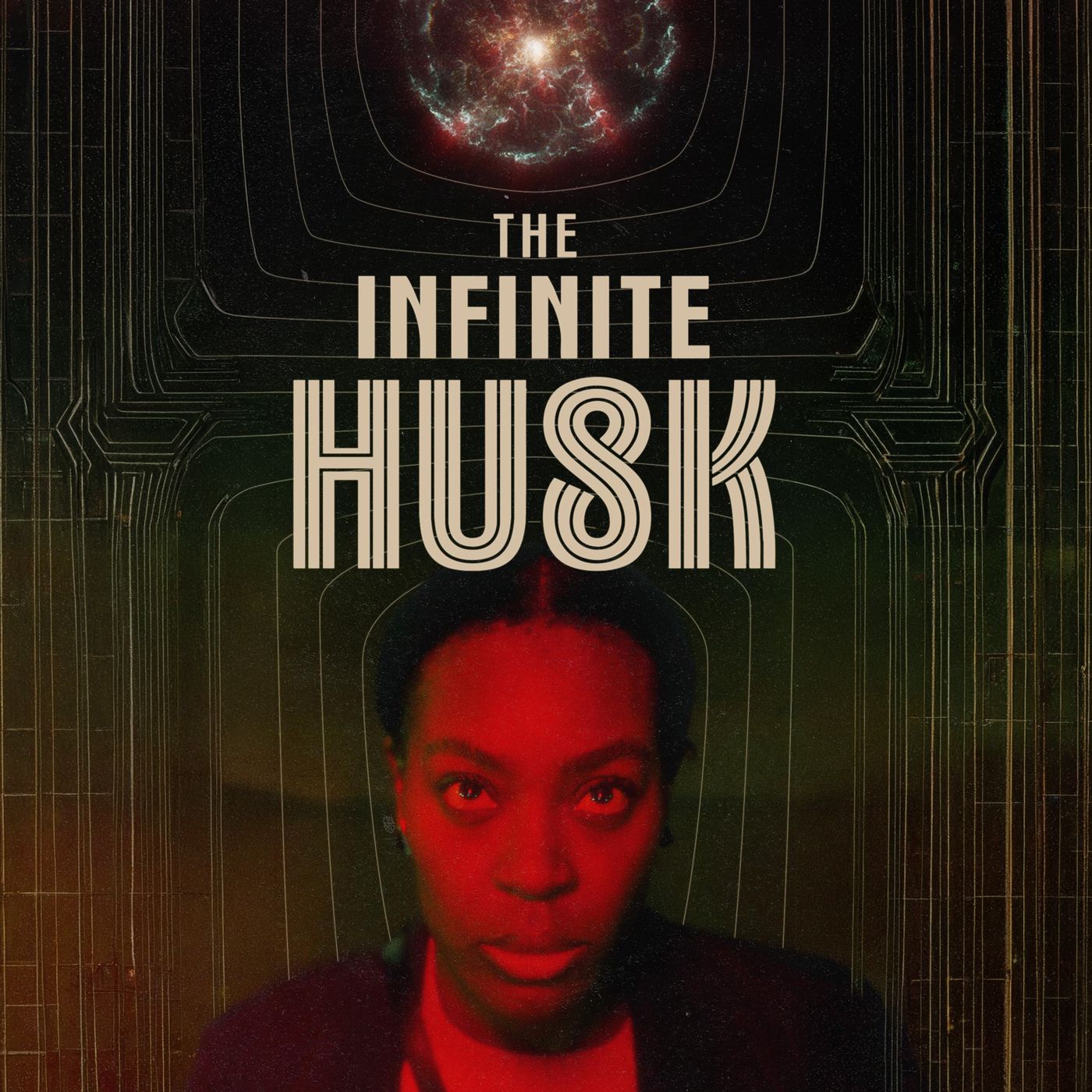
Special Report: Aaron Silverstein on The Infinite Husk (2025)
About this episode
Find out more at https://www.theinfinitehuskmovie.com/
Transcript
Automatically generated, so expect the odd misheard name.
Oh is bolt it show die? People say good money to see this movie. When they go out to a theater, they want clothed sodas, popcorn, and no monsters. In the protection Booth, everyone pretend podcasting isn't boring. Cut it off.
One three, you can believe it in as deep as you can one two. First husk. Technically this is my second husky. First few always go quickly training wheels. This one have a name, her as fell so Belle.
Out of the trillions and trillions a habitable planets spread across this quickly antagonistic universe. Why are you here, find, observe, and cover his research age? You're a scientist, same as you. What were you researching? I was so upsetting they exiled you here.
What's the nature of his research? I don't know. Tell me what you see. If you fail this mission, you will never come home. True.
Here's the burden of the job. Hey, folks, welcome to a special episode of The Projection Booth. I'm your host, Mike White. On this episode, I am talking with Aaron Silverstein all about his technically second feature film, The Infinite Husk. It had its premiere at south By Southwest back in twenty twenty five and is now currently streaming on all major platforms.
It is a science fiction film. I'm not going to go too much into the plot of it. I don't want to ruin anything for anybody, but I had a really good time watching this, and I hope you have a great time watching it and listening to this interview. Before we start talking about Infinite Husk, I want to know a little bit more about you and how you got into filmmaking. What's your journey.
I'm a typical eighties kid, so running around with friends, literal, actual camcorder situation. First short film involved the kind where you have to press pause to edit it, so not super like the real classic filmmakers for an eighties kid, that's about as read intro as it gets. Fell in love with it almost instantly. I remember thinking it was the only thing that I could see myself doing long term. So I really started that simply roping all my friends into terrible, silly little ideas and filming it.
I got better and better, hopefully every time, until the Infinite Esk. What were some of your early films like as far as the subjects, they were just silly, Your little ninjas and superheroes. This funny one of our first field projects. It was technically a good future film. I think it was my definition.
I think it was like fifty four minutes, which we had no business doing. Started my junior in high school and there's literally a lightsaber fight. It was terrible. It's cheesy. We were wearing awful costumes from well Halloween store down the street.
We didn't even have a scrip. We made it up as we went, and then stitches all together. They all were silly. But once I got to college, they started getting more existential, because that's what college kids do, getting philosophical, and you read a couple of books, you think you know everything. Yeah, and they morphed from there.
Looking back now, I can see how it all pieced together to be the sort of work I do now. The seeds were there all the way back then. I know you've done a lot of short films, but what other filmmaking have you done. I think I read that you have done a lot of advertising. That's mostly how I make a living.
I've been involved in video we should call it. Video filmmaking is a catch all turn. But for again, most at this point, technically, most of my life for longer than I've been alive than not. But yes, professionally, I've been lucky enough to shoot it, to shoot and make the commercials and ad They was usually for like brands, so they're not what most folks not typically done in a couple of commercials when all the folks usually consider commercials like on the TV. But I've been able to do some higher scale ads for brands and things like that.
When I say higher scale, I just mean you get the budget to have some actors and a locations, and it's invaluable. That was directly impacted being able to shoot the future film because you learn it's you learn how to work with the crew and how to set up a camera tripods. I do a ton of post work and I was did a lot of posts of the film along with a couple other folks. And the advertising stuff, the brand stuff, the corporate videos, that's all useful. I mean videographers, now I'm not I want to get into filmmaking, but I just shoot talking head videos and I'm like that's part of it, Like, well, you can light the hell out of a talking head video.
You can learn how to EQ and compress audio from a microphone and someone are just talking about their software or their sales video. It's all very similar. It all works together. So I've been lucky enough to be involved in video now for seventeen issh years pretty consistently. It really is the bulk of the word.
They do well. I'm sure that has also taught you how to solve problems, and I'm sure filmmaking is a lot about solving problems. I'm pretty sure it's only what filmmakes you can keep put making any sense, just starting your own problems and then trying to solve them. I think that's what filmmaking is. Walk into bear traps and you have intentionally and then you got to whiggle your way out.
You see another one for your feet away, you intentionally step into it. Do you win a lot of that one? Yeah? Shooting is especially for work, is problem solving and it's a tremendous help and it's lots of wonderful experience. Where did the idea for the infinitet has come from?
The film is the three different roads coming together, like the intersection of three different paths. So the first one is like a lot of indie filmmakers, I assume at least a portion of your listenership. For example, is you stockpile indie ideas. Cheap ideas is not other way to put it. All of us through every film a grife mat It's like you have these ideas where you're like, oh, I could do that for thirty dollars, one hundred dollars, one thousand dollars to stockpile these ideas and I have a lunch.
I hope to explore some more soon. But one of them I had was this idea of resurrection. And if you're a filmmaker, immediately if you haven't had this idea yourself. Resurrection is easy to depict on camera because you can shoot someone and cut stop the recording, and then move locations in Prench play again, and if you have them in the same spot, it's, oh, they're back to life again. So it's a cheap idea.
Had this, but I didn't have a story the next perseus One Road, another Road was Like a lot of folks these days, it's easy to access it through papers, online and podcasts. Is we all have a lot of information these days to do with about quantum mechanics, science, astronomy, physics, talks about dimensions and corporeal beings. All these sorts of things are much more accessible than they were they years ago, so you start stop, start stockpiling these sciencey things. And the last little bit is a little bit of a saturd reason. But I actually had a really close relative passaway right before the film of cancer, and I was with him throughout the duration of the end because life.
He was there cognitively, but his body was deteriorating. And that sort of became a topic of conversation for us, this idea of he's still here, but the hust the body is fading away, and is he his body? Is he his mind? He was still sharp and still himself until the very end. And that's a beautiful and sad thing.
And once I had all three of those things, they they all come together in this magical moment. The next thing I know, I had the script. I had the idea, at least I went to writing right away. I actually it all came together in the car I was driving back from visiting and I had it, and it broke all the speeding while I was as I brushed back to write this idea down. And when was that?
This was in July twenty twenty three by independent film standards. That was pretty quick. Yes, I've never written anything as quickly as The Infinite Husk, and I never will. Intentionally I never will. But it took me almost exactly thirty days to write the script.
And it's coming from a divine place. If you believe in that stuff, you are just running with that sort of inspiration, if you will buy emotion, personal experience, luck. But also in the future. Again, I don't think I will ever trust an idea that comes in thirty days. I'll definitely be like, we should probably do another edit at this But I was riding a different cosmic wave, a different I was a different psychological place, contemplating mortality, all these sorts of things.
So I was not about to slow up once the inspiration arrives. And then how does the project actually come together? Again? Always problems, always adventures, always challenges. Sure, sure, I'm proud of a son being self funded, especially with his successful as it's been on it Again, just props to the entire cast and crew.
But being in that position means that you can start, you can bring light your own project, and so it was. It really started with the core crew and so that's producers Christine Sojo, producer Mitchell McKenzie, the three of us beside. We had the resources and we had the skill set to get this started with threeish folks. But prior to that, I actually spent a month. So I finished writing the script again in August.
August twenty twenty three, I took about one month exactly on my own to begin doing the pre production again, shooting videos and things all the time. I knew what sort of things I had to begin putting in place. I began thinking about lovcations, checking their availability, doing what alarm producer does. Thinking of a loose schedule, building the budget begins. I'm used to shooting things on my own, so thinking about cameras I want to use, just beginning to build what it actually would look like make the film.
Once I had again a pretty convincing package for myself at least, then again I spoke to Christine so Iile, Mitchell Kenny, and I decided, Hey, we're going to make this film. Then quickly and involved another childhood friend, John Perjocci, who was up on the project, and then we went right into casting. Essentially, it's a very very small film, so that's all I needed. But that's really is how it goes. Had an idea, kick the tires on it a little bit and was like, I'm doing it, especially since I had the money.
How do you know, Christine and Mitchell. I've worked with both of them for years on various projects, and really that's it. It's just two very high power, very intelligent, very skilled professionals that really know what indie filmmaking is. Again, those folks, those are your listeners who know what I mean. They know what I mean.
Everyone it's like buzzwords now everyone wants to make low budget films. The industry has like slashed budgets over and over and over and over again. Indie filmmaking is a different thing. It doesn't just me making a lot with a little That's what everyone thinks of it, as it's also creative solutions even when you have the budget to do something. Sometime you know this, Indie filmmaking is its own brand now, it's its own flavor, it's its own style, and so the two of them are very skilled at making that a reality in every frame.
Too, very lucky to have worked with them and everyone else. I was very interested because your name shows up for casting. How did you put the cast together? I'm Los Angeles born and raised from Los Angeles, brothers on. Every place has its charm and benefits and gifts to the world, and Los Angeles is the is tinseltown man is everyone here is wonder You removed at most from filmmaking, So it is not hard if you're diligent, hopefully decent person to find and talented cast.
So I am a genuine firm believer of the casting call. All of my projects ones again that I've been lucky enough to have folks say are pretty getting the pretty decent hust is the casting calls. So I posted a casting call, and that's how I found the lead piece of Kiduba. She was one of a handful of folks who sent in a self tape and called her in for an in personal audition, and the role was first to lose. I saw her cast her a self tape and I knew that that was Devell from the film.
I just had to meet her and hope that she was a decent person and showered regularly and was like And so that's how I met almost everyone. The only one that I wasn't that way, and it's One of my favorite stories is Circus Saluski. He's the main Lorrow opposite of Peace, and I've worked with him. He's the only actor I've worked with before, I think, period, the only I have to I've worked with the multiple projects. I worked with him on a proof of concept that I wrote in twenty nineteen, and he was so staggeringly talented that I just I dreamed of working with again him again.
I actually he hates when I say this, but I did a really poor job of working with him in twenty nineteen. This is a compliment to him, but he's like a Ferrari, and I didn't know how to drive a Ferrari. Not that they need to feed, not that it's a good analogy, but he's just way more skilled than I was at communicating and understanding the essence of a scene and things like that. And I had written the damn thing, but he was patient with me and all that of this stuff, and it always haunted me. So I posted a casting call for his role in the film.
And the funny thing is, and I'm very thankful to the causes for this is I don't know. A couple of days up, I get a self tape from circus, I press play. I'm getting all these other self tapes really great actors, and it's circus like looking into the camera and he literally the first thing he says, you couldn't call me. Then he does the reading. I immediately and I literally immediately log in to the backstage, pull the casting call, and I call him and I offer him the role.
And he played hard to get for a couple of days, but ultimately he said yes. And it was, aside from casting Piece is Well, the smartest decision I ever made was offering him that part. He's easily one of the two highlights of the film is his performance, his ability to hear the music and the language, and between that and the staggering performance from Peace and I got really lucky. It's funny if one can be proud of it. I'm really proud of the casting, but that's really just a funny way of saying that they're all very talented.
It's just giving them the room to perform. Every single member of the cast and crew, Weldeam Thomas Jones puts the thin he has this like Shakespearean king lear quality to him, and Joe Kennashiros, the actress at the very end is just phenomenal, And I think I feel very lucky that for film our size, we usually don't have performers of this quality, of this st and gravitas. And if you cast right, if you write something okay, you get the pleasure of sitting back and letting the professionals do their thing. And so I can't take credit for their performances. They're just amazing.
Did help direct them, I imagine on my best days, On my best days, how was the shoot? And how long was it? The executive producer on the film, and my manager, Christopher Soccatti doesn't like when I say this was the truth. The shoot was really hard, simply because of resources and scale, lack of resources. But it's like parents and childrens.
You hope that the children don't know that maybe funds are tight. They're just like Chris was wonderful. You don't know the panther sweating, and that they put all the gifts on credit, and it's just like a terrifying thing. So I think I've heard, because we've talked since the film was most of the cast and crew didn't know how stressful it really was. Because I really do take pride in making the sets as I'm comfortable.
I don't do any of the and he's obviously a legend, but I don't do the cubic thing where I'm going to the antagonistic on set, everyone's a professional, So the sets I think were calm, but they didn't know that behind the scenes it was just on fire. And really it was because funds sometimes are running out. By the second. Being your own producer and a director, you sort of like, I want to do ten more takes, but also we need to wrap this up because I only rented the location for an hour. Cops pulled up and they were like, do you have your permits?
And I was like fumbling in my pockets looking for permits. We shot the intro of the film the list of honor on Incredible Incredible shout out thank stratitude to Mitchell mackenzie, who's the DP of the film. He's also not a small man. He's very tall, very sturdy, and so we all often had him in these like tiny little corners and boxes with his tripod and camera trying to get the perfect angle and staying in that position for hours. John Prigdoci's or upm same thing.
It's just lugging things that we shot until four in the morning, five in the morning. Almost the whole films that night, literally the entire film. But I think like one scene two. Production was tough, and we all worked during the entire production as well, So would shoot until four or five in the morning and then go to work and then two three hours later get off work and then go back to set. But the original production was fifteen days long, over the course of three weeks, and then a few months later we did the four days of pickups and that's that's the film.
I see. Mitchell did special effects. You and he are doing editing, You're doing music. It's just it continues to be this little power trio just powering through the rest of this too. Oh yeah.
This is where I really English as a flawed language, because I can't find enough words to thank show gratitude and appreciation, to shout out Mitchell enough. He and I have overlapping skill sets which make us, I think, a special dangerous duo. We both are in like the creative fields. But he really took the VFX by the horns, and we did post work for almost exactly one year, one year straight of editing, and I did a quick assembly of the film at about three months, and then at about the three month mark, I started working on the score. While I worked on the score, Mitchell who just dove into the VFX so all the scenes with the sphere.
Don't want to spoil anything at the end, but there's lots of the effects at the end, and he just took that by the horns and right. And there's also lots of invisible view effects in the film, just like little shots that are extended, walls that are painted in. Everyone who does film those these sorts of things. But it helps to make the film feel as claustrophobic as it does. It's just like you're stuck in this little world.
Once we had the score, I queued up a lot of the SAT up but a lot of the sound designed. But I'm not really skilled enough to have done it where to the level where it's at. Plus I don't know anything about surround sound mixing. So then executive producer connected me with Darren Hiness, who did a phenomenal job on the sound design, added so much depth and life to it. One of my favorite favorite stories as well is the premiere at south By and one of the first teo that comes up to you is just like, this film sounds so much better than it should.
I was like, thank you, and I think they meant for the size and scale. It sounds like a real lass movie because it is a real lass movie. I don't want to get too nerdy, but what did you actually cut on? Talk about pain? We started in Premiere Pro.
I think it was just comfort. Mitchell and I work in Adobe every day every day. They do be sweet every day pretty much every single platform they have. We're doing animation stuff, sound stuff, the list of on character stuff of course, photoshop, illustrator blah blah blah blah. So we hopped into Premiere.
I don't want to disparage anyone. But after we submitted to South by US we're talking September twenty twenty four, we made the slow, painful migration to Da Vinci, and once we moved to Da Vinci, the whole film was finished. In Da Vinci. That met a pretty massive continuation of the edit, trimming down, changing things, reshoots, things like that, and that's also where the film was graded as well. Huge shoutout to Mitchell as well for that work.
And then yeah, the film was finished in that in Da Vinci, but most of the effects were done in after effects and other platforms and brought into Da Vinci as flattened files and things like that. There was agony. It was agony. It just got to the point where our premiere file was basically unresponses. I will say it was maybe user error and so that way it dob.
It doesn't come after me, although I use it. I'm pretty experienced, so I don't know. But we moved to Da Vinci and it was an infinitely smoother process. But the move over was just very painful as files where and a lot of places were a small film and hard drives, enough ports, fast enough hard drives to cut the footage, you name it, you know it. At least you didn't have to worry about Kodex, hopefully too much.
That used to be the big struggle, especially if you were putting together a project that for many years too. So you're right, we are very lucky because I again, I'm oldernist started on DV tapes, and I agree Codex is a thing that our younger films don't know the pain of. We didn't have to do with codec. Thank god, everything's in the same frame rate, so I didn't have to do any frame rate conversions, so we didn't have any drop frames and the greening screens of death flashing all over the place, none of that stuff, but it was still a nightmare. Really was an imare what you do you're composing it.
I composed the entire score in Logic pro X with a handful of analog instruments, in about two or three dozen synthesizers, so a lot of the textures analog instruments and saxophone. There's a couple of songs guitar in its bass. Two songs have drums, all real analog, and then I learned to tremblo decently well on a violin to get some of the like violin tones in the film. I'm a terrible violinist, but I can tremble my ass off. So that's the the ten textual feel of the film, because I wanted the film to It's common for films like this to have an all synthes fular, but this film's a little bit grittier than the average sci fi film or the shots of La so I needed to make sure that there was analog beds which ache and creaking yon with the film and the time is not always on the grid and stuff intentionally and synthesizers added a lot of the texture on top and things like that.
I'm very proud of a score if i'd been face to myself, Aaron, I'm not telling you anything. You don't know, but it's like in indie filmmaking, you have to wear so many hats, but you wore a lot of hats. It's all like you and Mitchell were just like, okay, let me swap it up, all right, now I'm gonna edit, now I'm gonna compose. It's just it's nuts. Thank you, thank you, thank you, thank you.
You don't want to be self congratulatory too much, but it was. And when everyone finds out that for to shoot we had four crew members and for two nights we had five, and that post was done essentially by three people, Mitchell, myself, and Darren night Is. With the sound mix. They they were just like, how I'm very proud of and this doesn't spoil anything. But at the end, there's lots of like really striking visuals.
Those are all that's all analog, that's all chemical reactions. And before we shot a single thing, I knew That's what I wanted in the film, because I wanted to stand the test of time. The effects aged quickly, and I did a bunch of research, did the deep dive into two thousand and one and how Kubrick did all of that, bought a book that was not very helpful, but it was really cool to read about chemical reactions, and I thought it would be the thing. And we set up a Petri Dish Macarlin's adapter in Mitchell's bedroom essentially and shot for hours and hours these like slow motion chemical reactions and it was like together, just like doublding this whole experience, and it was I'm proud of that because it was like filmmaking, not that any other kind isn't, but it's it was very tangible, very real.
It's my favorite part of filmmaking is that it's not always on a computer. It was like in life, doing things, trying to manipulate and creating images. This is a long way to respond to you say we were a lot of hats is that? Yeah, we did all the things. Like Mitchell busted his ass on the production design.
He was driving around Los Angeles buying little chochkeys and little things and Marrow has this like vintage triangular ash tray that is a close up shot of and it's just it's a little bit of personality. It's a little thing. He could have had any ash tray, but that adds to the character of the film. Again, it max of this like hermetic experience and everything is fussed over. Everything I felt it was just absolutely fussed over.
Ultimately, did you make the film you wanted to make? Definitively, I have to be careful how I say this exactly. Thing can be taken a certain way. But one of the lessons of filmmaking I think for most directors ride of directors, I don't think it's the lesson other folks are forced to live through. I think it's specifically right a director is early on though you have to like let go and let things unfold a certain way for the bigger picture.
No pun intended, because when you write it, you assume an actor is going to make a really specific expression, really specific choice us a specific inflection. When we're running and gunning and shooting really quickly, you were thinking, Okay, we're gonna especially meet because I'm ordering I know a lot of stuff. I'll be like Okay, this is how we're gonna frame it. We're gonna do and it doesn't happen that way. My knew reaction is to step in and be like, no, not that, and it just kills the mood, It kills the energy.
It deflates everyone on set who is trying to put a little bit of the self into the project. And I am proud of myself for learning to shut up really early. My job was to make sure we were all headed in the right direction, and then by the end we got the film that we got. But day one, I think it's the only day that there's nearly no footage used is from the first day because the first day I was being shocked by how many things went differently. I had a small panic attack at three forty five in the morning in my car on my own because I was like, oh my god, we're not going to get it and that and I've decided be the bumpers on the lane, but let the bowling ball roll down the alley, just make sure we don't cut our ball.
And so when I did that, there are things in the phone that people love or I've complimented it, and I can't take credit for because I'm like, that is because I trusted the mastery of Circus, the key us of Mitchell, the just otherworldly talent and understanding of peace. And the list goes on and on and on. Letting forest swivel in their chair the way that they wanted to and that look I pictured it differently, forced it a way better job, though that's exactly what it should have been. And especially doing posts with Mitchell, who was very opinionated and powerful creative, you learn to let things go a certain way as long as we get close to the thing that is going to make the phone come together?
Did you have a group that you would show the work in progress to, like a test screaming? I want to give a lot of credit to Chris Soccati again my manager, but I can make a produce from the phone. He's one of the few folks who's got the courage and the stomach for dealing with me, because you think I try to hide my stubbornness behind being relatively even keeled. So everyone's going and I get it a lot. Everyone's you're really just and I'm like, but you don't realize I will not budge on things.
But Chris was very adamant about showing the people the film, commenting on giving good notes on just structuring the film a certain way, and I think he and other folks still wanted to be a little shorter than it is. So ultimately I still was like nope, Like every filmmaker, you're like, no, that's the whole movie. But everyone saw the film though, as in Christine Mitchell was working on it, we got that kind of feedback. But again, I really want to give props to Chris who early on was like really giving the film time, sitting with scenes and sending that sort of feedback back to me, and that helped me sculpt really fine tune certain things, and usually it was to the tune of shorter. Just things don't have to fit as long.
I think it's like the the indie film purse is do you want these like long slow? And often the don't. People don't realize this because you're like, you're trying to fill time if you don't have a budget. But yeah, I again, I all feedback. I really want to funnel through the gratitude I have to him or having again in the courage and the stomach to deal with me mentioned south By was that your premiere it was south By twenty twenty five.
I'd be familiar to the film and Austin, which is you have to dream big to do something like this, right, And so I'm not being one of those folks that I knew we'd get in and I'm just saying the unreasonable belief in the project is how we how we got it done. You have to think ridiculous things, right, so we're gonna win an oscar If you actually asked me, did I think we would win? When I'd say no, But I have to brainwatch myself in order to shoot until four in the morning, sleep for a couple of hours, and then go to work the next day. Otherwise I'd be like, why are we doing this? And getting in the south By?
I just infinite thanks to Claude Dead and the team for believing in this film, giving us their stamp, letting us, I mean here in front of a wonderful crowd of accepting, interested, patient, open minded people. It was such a beautiful crowd and introduced the film and me, the cast and the crew to the world in a lot of ways. I'll be honest, I didn't even know south By was that big and influential. I was like, oh cool, we gott in a south By like shoulder shrug, that's cool, and that's really not me partend. I just didn't know, Like I'm naive.
I like live in these little bubbles of try to make pretty pictures. And things definitely changed after that for a little bit. Yeah, after that, we actually played it Citrus in Spain. I had a chance to go to Spain, which I'd never been, so again like a little kid from La where I was like, that was a huge experience and same thing to get introduced to that kind of crowd. At least it's such as don't know all in Spain.
But the crowd they interact with the film differently the American audiences, right, they've grown. When someone says something that they don't like or it's a villain, they cheer when a character dies and they wanted them to die, and it's it was like an interactive experience and you're there with folks watching your film and it's got Spanish subtitles and you know, I don't know how we made it over an ocean, but we did. There was a beautiful experience after it just we right before. So it's just we got luck. We're lucky we were acquired.
The film was acquired by Chroma. They've been great part of this with all and then from there we actually had a small but mighty theatrical run. And I still think I'm in the phase where it doesn't hasn't really hit me that these things happened, because again, we were just kids running around with DV tapes and dressing up. And then to have the film play at AMCs across the US, to have it play it regal in Oregon, to have it sell out a Limley theater, You're just like, I still think I'm the one who is just huh, this is crazy, and other folks are just like, what the hell do you? Guys used to just dress up with fifteen dollars Halloween costumes and run around in town and now we're one hundred and twenty feet on the screen.
It's been humbling more than anything. Though we and I could talk for hours about this for another time. But you're also quickly introduced to the business of filmmaking, and that's a very different thing, and that that's a whole other workshop. But at least with the film, you stayed true to yourself. I did I did, I think it.
I think I did right by the cast crew. It mattered to me more than anything. They believed in the project, they believed in the writing, they believed in not just me, but the rest of the crew rather Mitchell, John Christine. They were willing to commit their time and energy, and so I made the film I wanted, But also I think respected the performance performances and didn't right by working my ass off to get it out there in a way that like honors, they got a chance to see themselves right in theaters. They get a chance now to stream their work on Amazon Prime and Apple TV.
Not does a name dropping. It's we really are small adie filmmaking kids through and through and through and to have a deed to have a turn into this, which is it's really eager, to be honest, but it's still like more than we ever really really thought possible. Aside from the Oscar Dreams. It is spectacular. It means everything not everybody's well for your second feature film is streaming on all of these platforms.
You right, technically my second test right, the one we shot when we were sixteen years old and a lot is the first one in document Yeah, I could tell them that because we shot only are like sixteen years old. So what's next for you? I have a couple of scripts now making the rounds. I really hope to get another feature off the ground, and the other the series. Actually both of those are doing the industry dance now that I'm hopefully past the point where I will be personally funding these things.
But never never, never passed the point where you have to work your ass off and push them to the finish line, I think. And the other thing is I am literally crossing the final ties and dotting the final eyes on my first novel. I'm very proud of it. Is. Now that The Infant Husk is out of the world, I can say this is like my my current new master work.
The goal is eventually to adapt it, but right now it's it's a book through and through, like it's a true devotion to the form of a book. It's not really a stop gap for a film. It's a book, and I'm looking for an opportunity to publish it. Is there a good place where people keep up with you in your work. Folks can follow me on Instagram.
I'm at a Shade Ultraink and I'm I'm a little bit allergic to social media. I think most folks who make things like really make things are and it's no shady or it'll ul twist for other folks. It's just there's not time to do both. But that's where you can usually follow the things up to I'll try to update it every few months. It's something rather but really that's it.
And again I hope, I hope in the future to put more things out in the world and see if see if it's too folks like me, and if not, I apologize, but I'll make another thing and maybe the next thing you like, and here the next next thing you'll like. You sound like Edwood from Edwood. Yeah you hate it, you hate my gut? Try again tomorrow. Yeah, thank you, Edward Edward about Edward there Erin.
Thank you so much. This is so nice talking with you, Mike. It's been an absolute pleasure. Thank you so much for taking the time to engage with the phone and ask these questions. I really, really, really appreciate it.
I think that's what any filmmaker, any artist wants is you can hate it and that's okay, but if you give it a chance, and it seems like you gave it a chance, and I think you did Mike, so thank you. The Sunni side. Decided sorry I. Sat side or ask for time. More friend something through us that the Stars White Chris Daughter, Shide Side Doors, Grass and the Girl.
The Stars, Your choice S. S not nice. T size Si
More from The Projection Booth



Similar episodes across the network
Matched by shared keywords.
-
Required Viewing 03: Barry Lyndon
1 shared keyword: cinematography
-
Episode 16: Caddyshack II (1988)
1 shared keyword: film analysis
-
120 - The Only Female VFX Camera Operator - With Maryan Infield
1 shared keyword: cinematography