

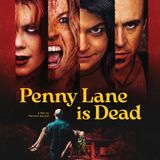
About this episode
She talks about landing at Fantasia and getting matched with producers at Umbrella Entertainment and Shudder, shooting in a wintry Adelaide with a cast and crew she'd mostly never met — including Bailey Spalding as Penny and Alexandra Jensen as Amy — cutting six pages from the third act mid-shoot after a scheduling error, and how filming in continuity meant her editor could hand back a rough cut every single morning. She also gets into the soundtrack, built around Aussie rock touchstones like AC/DC and The Angels' "Am I Ever Gonna See Your Face Again," an in-joke for anyone who grew up in an Australian pub.
Then there's Fantasia itself, where a scene involving a kitchen appliance made an audience member pass out mid-screening. Penny Lane Is Dead is streaming now, exclusively on Shudder.
Transcript
Automatically generated, so expect the odd misheard name.
Hold your ears, folks. It's showtime. People pay good money to see this movie. When they go out to a theater, they want cold sodas, hot popcorn and no monsters in the projection booth. Everyone pretend podcasting isn't boring.
Turn it off. You're all so grown up. School's out. Be good. We're always good.
Your cousin, Katrina. Why is Kat here? Your dog? Fat. Slut.
It goes in for a good name? You've always been awful, Kat. No one knows why. Oh my fucking god. Can't drug the cupcakes.
Penny! Alright, let's have some fun. Shit. Hello, sweetheart. That's Angus, my boyfriend.
If you don't open this fucking door, we are gonna have a fucking problem. Settling moles might be a big one. Who is that? Hello, sweetheart. Sorry about that, lady.
This is really bad. Come on. Gotta get him out. You're a tough cookie, aren't you? Relax.
Everything is fine. Hmm. This fucking city is so fucked. Penny Lane is dead! Penny Lane is dead!
So I guess you're gonna die now. Hey folks, welcome to a special episode of The Projection Booth. I'm your host Mike White. On this episode, I am talking with writer-director Mia Kate Russell about her feature film debut, Penny Lane is Dead, which is now available on Shudder. Thanks so much for listening, and I hope you enjoy this interview.
I am so curious about you and how you got into showbiz, especially going in through hair and makeup. You know, well, I started as an actor, and I wasn't very good, obviously. And I became a makeup artist because I love the idea of building characters and I love stories. So, yeah, 20 years as a makeup artist in film, very much working with the actors on creating their journey and their look for the film. And I think that appreciation and also just being on film sets, I wanted to tell my own stories.
That's where the five shorts came up. And it's funny because when you're writing and even making a film, you don't realise how I don't think you're aware of your own style or even your own personality. And that's probably a good thing. And it's not until you look back at a body of work and you go, oh, maybe I have an issue with my mother or maybe I've got an issue with this. I'm like, wow, there's some themes going on there.
But I don't think you can go into a project knowing that. It came from wanting to create characters and tell stories. You have, like you said, you've been making short films for a while now, and I'm curious how you made that kind of transition while still working with the makeup department. Not easy. I've made my first film in my fifties.
It's always money. That face of money is, if we had money, what would we do if there was no boundaries? So my first five shorts were all self-funded. Absolutely. Like a hundred percent.
Most of my cast and crew worked for nothing. I had the same cast and crew, I think almost on all of them. So it's like a community of filmmakers. We all work for free on each other's short films. We all help each other out.
And that's how I managed to get those ones done. And with Penny Lane, it was just a matter of finding a producer who I literally met on somebody else's short film that liked my script. And then when he sent it to Umbrella and they liked it, that really fit the ball rolling. Where did the idea for Penny Lane come from? It comes from my childhood at my grandparents' holiday house in the 80s and the fact that we were so badly behaved and we were just dickheads.
We were absolute teenage Aussie dickheads. We tried to smoke banana leaves once to see if we could get high. The dumb things that we did and we got away with it because nobody knew because there was no mobile phones, no one texted or took photos of anything. We literally would go out and have adventures and... home and they would stay with us. So it started trying to recreate that adventure.
I always wanted to create a really bad female character, a villain, a female villain, which I think I did with Kat. I think there's been a lot of female villains in people's lives that aren't seen on screen. I think there's a lot of great male villains out there, but there's some awful women, awful girls out They're demons. Talk to any guy about his teenage daughter and he'll tell you. I just want to just capture one and put her on screen and stick her in the 80s, which was such a fantastic time period.
Have you ever known a cat in real life? Are you kidding? Yes. Haven't you? I have.
Yes. Yes. See, everyone has known a cat and they're terrifying. So, yeah, let's talk about these women. Of the girls that we see in the film, who are you closest to?
I have my special relationship with all of them, I have to admit. I think Sophia, who played Kat, was the youngest and also the same age as one of my kids. And I think because she was the baby on set, I definitely found myself hugging her the most and because she had to go the furthest emotionally as well. I'm close with all of them. I went to Fantasia recently with Sophia and Alexander Jensen, who plays Amy.
I was doing interviews yesterday with Bailey, who plays Penny Lane. And the boys, a couple of the guys I've known for over 10 and 20 years. So we're actually all really good mates. What about horror attracts you? I don't know.
I'm wondering if it was my grandpa's gory stories as a child. I think kids are more protected now. And I can remember being so little and my grandfather's feet with my chin on his knee while he told me the most disgusting stories of heads falling off corpses and like mold growing on vomit like it was so visceral and disgusting and I was fascinated it could have started with grandpa's police stories I've always been attracted I love a murder scene I I go to bed now watching true crime I sleep if true crime plays while I sleep I don't know what it's doing to my brain I think you get to an age where you stop fighting it and I'm not going to pretend I watch rom-coms or I've seen the latest film. I don't.
I pretty much only watch horror. So you're talking about if you had money, all of the problems would be over. How did you get funding for Penny Lane? We took the script to Fantasia. The girls, the women who run Fantasia love the script.
And there we were introduced to Upgrade and a guy called Sam Zimmerman, who was then working at Shudder. And those two meetings with those people just set the ball rolling. Once people got to know us and got talking, it happened really quickly. Obviously, there were things going on behind the scenes that I didn't know about. So no one told me we're doing it until all the money people and all those legal things had been done.
But for me, once my producer, Andre, said to me, we're going ahead, everything moved so fast. And it was wild. And I just want to do it again and again. It was great. What was the actual shoot like for you?
I live in Melbourne. I'm really filled in Adelaide. So I'm so used to Melbourne cast and crews. And I was working with actors besides the two of the guys I've never met before. And I was meeting them for the first time on the shoot.
Besides you and I talking now on Zoom. And the crew, I didn't know. So one of the producers in Adelaide, we had the same crew that did Talk To Me and then Bring Her Back. So they loved this producer who was one of our producers. She got this crew on.
And it was like being the first day at school, hoping the new school likes you. And I literally walked in to all these strangers and I was like, hi. And they were like, hi. And I'm like, oh, my God, I hope this works well. I hope you like me.
I hope we get along. And, of course, it was just the coolest fucking people. Yeah. I don't know, Aussie film crews you would just want to hang out with every day. We worked hard, we played hard. no one complained and it was fucking freezing the girls didn't complain bailey was in his baby blue jumpsuit under a under a tree and we're trying to heat her up and we're like darling you're going in thermia and she's like i'm fine i'm fine so everyone just really got down there and we had a laugh which is so important We just laughed and made jokes and played music for most of the shoot.
It was awesome. How was that different for you to be going into a feature rather than a short? It was different because with the shorts, I used a lot of the same cast and crew with my shorts. So there was a lot of shorthand talking in Maggie Mae. Like I said to the actress, okay, lie on the floor.
I'm going to put a maggot in your eye. And she was like, cool. And then when you're on a feature and you're with professional actors that you don't know and suddenly you've got an intimacy coordinator and there's legalities and you can't just have someone lying on the floor and putting a maggot in your eye. There's a whole process you need to go through. So it was different, but I was so protected.
It was weird. I felt like a baby bird and my producers were protective of me. And it was so weird because someone was making me cups of coffee and every time I'd move room, they'd bring me a chair and they'd put the monitor in front of me. And I'm like, this is weird. You don't get this as a makeup artist.
You get your own coffee, you get your own seat. So, yeah, it's different in that way. You're treated really well as a director and I could really get used to it, seriously. It's a bit of a shock to the system coming home after that. So, yeah, it was completely different.
But it was a very enjoyable and welcomed difference as well. Did anything need to change from the script to the final film as you were making it? Yeah. The second week of pre-production in Adelaide, they said to me, look, we're really sorry, but the first person that did the script breakdown and the schedule, who was no longer working on the film before I got there, they've made a mistake and you need to take out six pages from your script. And I was like, what?
And they're like, yeah. we don't have time to film it you need to lose six pages and I was like what the fuck and I literally said to the producer drive me to the bottle shop and she did and I got my black Russian ingredients and I went back to the house I was staying in and I poured a drink and I put my headphones on and I said just don't fucking talk to me for just give me 30 minutes and within 30 minutes I took out six pages and I literally took out six pages from the third act And then I said, okay, this is the script back again. I don't want to talk about it again. Because once you're in that process, you've got the foot ahead. And when they say to remove something, you're like, oh, shit. If I take out six minutes from this bit, all the beats change.
My midpoint is gone. And so that was something I had to really adjust to. But if you've got no choice, you've got to adjust to it without complaining or being an asshole about it. Because nobody wants that to happen. You just have to adapt and think on your feet.
And then how did the film either stay the same or change during the post-process? It stayed the same. And we were lucky because we were shooting over the night, we would send the rushes of that night to our editor in Melbourne. And by the end of that day in Melbourne, he would send us back a rough cut of what we shot the night before. And we shot in order of the film, which was amazing.
So I would turn up to set, say, at 6 p.m., and we'd have dinner, and the actors would all go around me and I'd show them what we shot the night before. And they'd be so excited. And because we were looking at that, we'd go, okay, now we're going to shoot what happens next. And that really helps. Like doing it in order really helped.
Editor in Melbourne working throughout the day to bring that to us. Yeah, that was a luxury. And then that must have made your whole post-process go so much smoother that you had the rough cut already in place. 100%. And we basically shot the script.
And a couple of producers said to me, we've shot the script. And I'm like, yeah, because I think, isn't that what happens? Because it's my first feature. They're like, no, you don't understand. We don't always shoot the script.
But yeah, the film is literally the script, besides those last six pages. Tell me about the music. I really like the music in the film. It is the music from my childhood. It's also the music I play in the car now. one thing I am proud of in Australia, besides our horror film, is our Aussie rock.
And I love ACDC. In my mind, the film opened with ACDC. I didn't realise then that they're the most expensive band in the world, which is wild. And it was literally half a million dollars to get one song. And they're like, we can't do that.
And then The music budget had to get halved. And they're like, okay, you can have 40 seconds of this song and 20 seconds of this song. And I was just like, ah. So, yeah, look, I love the music in the film. I would have had so much more if we could have.
Opening up with the angels. In the 80s, the angels would sing this song, Am I Ever Going to See Your Face Again? And the pub bogans would scream back, no way, get fucked, fuck off. So everyone in Australia hears that song. knows that chant. And it's such an Aussie-bogan thing that we probably don't know.
So it's kind of an in-joke for Aussies when we watch it. So when you start the film, Aussies are going to know, oh my God, this film isn't to be taken that seriously. We're starting with that joke. And I hope some Americans, you know, people out of Australia know that. I don't know.
It's a real Aussie culture thing. It's a big nod. I know it now, and everybody listening to this now knows it. So your message is getting across, which is fantastic. I'm glad.
Get it out there. How did the film go over at Fantasia? It was fantastic because someone passed out and that was the highest compliment that I can get. It happened near the end of the film in a certain scene. I was there with the actors.
Somebody stood up and I thought, fuck, someone's walking out of the film. And then I realized, no, they're not standing up. There's actually a guy on the ground and people around him. And then the staff were there and then the paramedics were there. And then I'm like, fuck, people are watching this and they're not watching the film.
So we started like trying to get people to watch the film again by going woo-hoo at the screen. And I went over to make sure the guy was okay because, you know, the mother inside me was like, hang on, maybe somebody's had a fucking heart attack, you know. And I ran over and I'm like, is he okay? Does he need food? And they're like, he's fine, he's fine.
And I made up like, oh, he said he didn't have his dinner. And I thought, bullshit, because I know when that happened. So I saw him get walked out by the paramedics, so he was fine. And then I went back to, this is going to be a high point of my life. I've had kids.
I've made a guy pass out at my horror film. Goals are done. It's only downhill from now on. Ms. Russell, thank you so much for your time.
This was such a pleasure talking with you. Thank you. That went so fast. You have a good day. Went down to Santa Fe where Renoir paints the walls Disgrudged it clearly but the sky began to fall Am I ever gonna see your face again?
Am I ever gonna see your face again? Tram cars and taxis like a waxworks on the move Carry on girls past me But none of them are you Am I ever gonna see your face again? Am I ever gonna see your face again? Without you near me, I got no place to go. Wait at the bar, maybe you might show.
Am I ever gonna see your face again? Am I ever gonna see your face again? I got to stop these tears that's falling from my eyes. Go walk out in the rain so no one sees me cry Am I ever gonna see your face again Am I ever gonna see your face again Can't stop the memory that goes climbing through my brain I get no answer so the question still remains Am I ever gonna see your face again? Am I ever gonna see your face again?
Am I ever gonna see your face again Am I ever gonna see your face again your face again Am I ever gonna see your face again Am I ever gonna see your face again Am I ever gonna see your face again Am I ever gonna see your face again? Am I ever gonna see your face again?
More from The Projection Booth



Similar episodes across the network
Matched by shared keywords.
-
Halloween II (2009) — "Man was meant to eat meat. We, all of us, have a little bit caveman in us."
1 shared keyword: slasher
-
Halloween (2007) — "Behind these eyes one finds only blackness, the absence of light. These are the eyes of a psychopath."
1 shared keyword: slasher
-
Halloween Ends (2022) — "I've said goodbye to my boogeyman, but the truth is, evil doesn't die. It changes shape."
1 shared keyword: slasher