
Season 2 · Episode 36
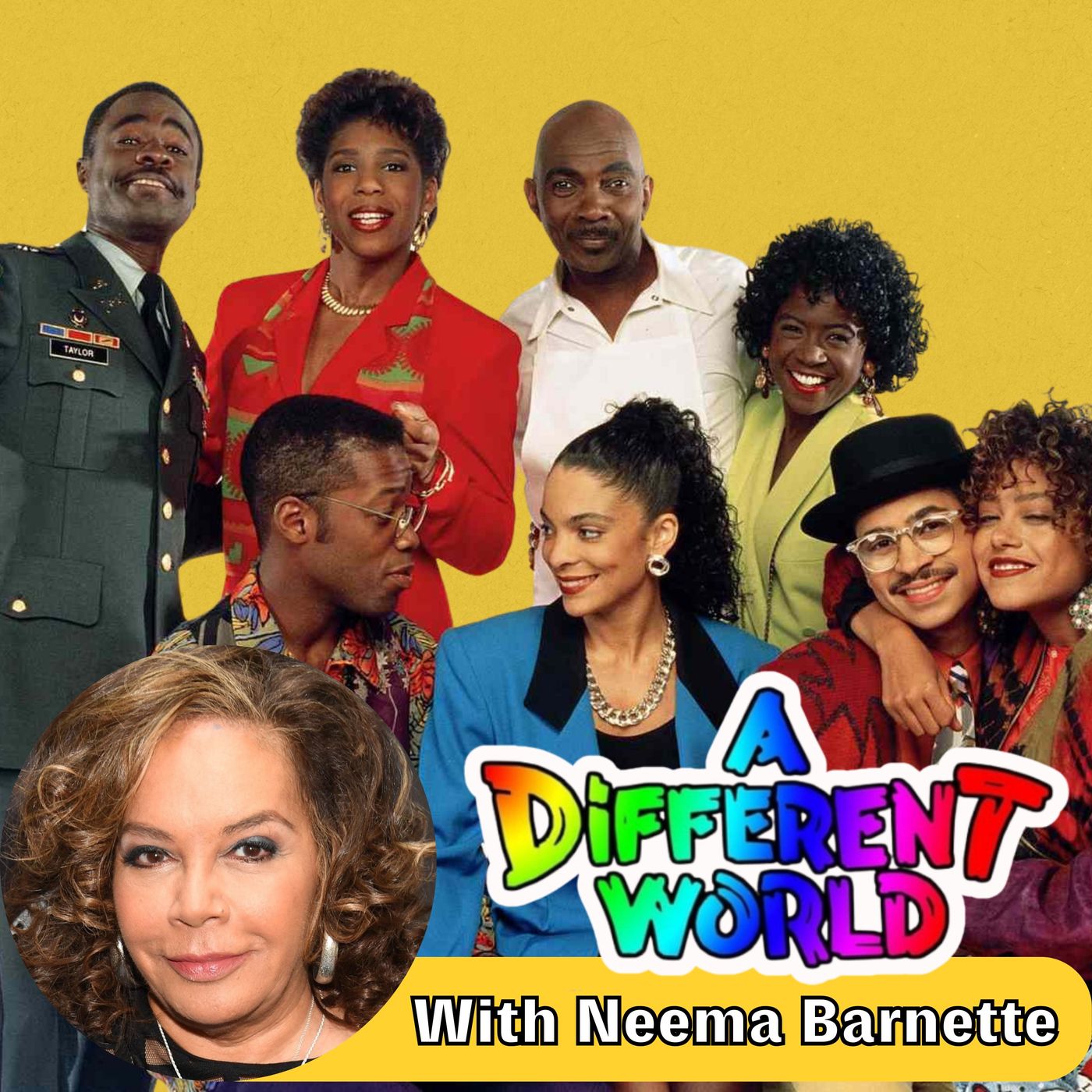
A Different World and Hollywood Strategies For Revolution | Director Neema Barnette
About this episode
Susan and Sharon welcome legendary producer-director Neema Barnette to talk about her journey from Harlem to Hollywood. Ms. Barnette made history in 1986 when she became the first African-American woman to direct a prime-time sitcom (What’s Happening Now?). She followed this up with episodes of Frank’s Place, It’s A Living and The Cosby Show before directing seven episodes of A Different World. She has directed over 50 movies and television shows and was also the first African-American woman to get a three-picture deal with Sony Pictures.
Neema was also the producer-director of Season One of Ava DuVernay and Oprah Winfrey’s Queen Sugar. She shares stories of making the transition from New York theater to Hollywood films and television, fighting the good fight for herself and others, and inspiring a new generation -- with the truth.
THE CONVERSATION
- Head of Columbia Pictures Barbara Corday took one look at Neema’s reel and said “Get this woman a job!”
- “I’ve had two jobs in my life. Directing and teaching. And they have a lot of similarities. ‘Sit down. Shut up. Move over.’
- Supportive words from the great Shirley Hemphill on the ground-breaking episode of What’s Happening Now?: “We’ve got your back.”
- IN THE 60s: Getting Sherman’s BBQ and going to the Apollo from noon to midnight to see everyone -- especially Aretha Franklin.
- The troubles and battles with Ron Howard, Brian Grazer and National Geographic during the making of Genius: Aretha.
- “When I was in college, I took a course called ‘Strategies For Revolution’. I took that course and I applied it when I came to Hollywood.”
- Directing The Cosby Show -- in the episode where Bill gets pregnant!
- Working with Tyra Ferrell, Mare Winningham, Rosilyn Heller and Gloria Steinem on Better Off Dead.
- Getting pulled away from teaching to do Queen Sugar. “The ratings came out and I started getting calls.”
- How Ava DuVernay changed the landscape of television by hiring only women directors on Queen Sugar -- and supporting their careers ongoing.
AUDIOGRAPHY
Watch A Different World -- streaming on MAX.
Find Neema Barnette at instagram.com/neemafilms. On Twitter https://x.com/neemrick
Watch Neema’s mini-docs on BlackHistoryMiniDocs.com.
Check out Tammy at the true-crime podcast: Grits with a Side of Murder.
Get & read Susan’s new play Confidence (and the Speech) at Broadway Licensing.
Abortion access in America is severely limited – Help or Get Help at AbortionFinder.org.
CONNECT
Visit 80sTVLadies.com for more.
Sign up for the 80s TV Ladies mailing list.
Check out Instagram/80sTVLadies.
Support us and get ad-free episodes on PATREON.
Find more cool podcasts at our host sight, Weirding Way Media.
Visit 80sTVLadies.com for more info.
Listen to 80s TV Ladies at YouTube. Subscribe and help us grow.
Don’t miss out. Sign up for the 80s TV Ladies mailing list!
Help us make more episodes and get ad-free episodes, video interviews, and exclusive content on PATREON.
Transcript
Automatically generated, so expect the odd misheard name.
Weirdy weird medio. I learned another lesson Julia Frank's place, that so many black actors are so broken and damaged that when you give them a little attention, they don't even know how to take it. So pretty to the city world, Welcome to eighties TV Ladies with your fabulous hosts Sharon Johnson and Susan Lambert had him. Hello, I'm Sharon and I'm Susan. We are super thrilled for today's guest.
She is an Emmy winning artist who has one of the most incredible television directing resumes in Hollywood. Prominent and prolific director, writer, and producer Nima Barnett has engaged audiences with a body of compelling, socially and politically charged work that defies the narrow stereotypes of African Americans usually depicted in entertainment for over thirty years. She was the first black woman to ever direct a sitcom and the first black woman ever to get a three picture deal. Miss Barnett grew up in Harlem and started working in theater in New York. She went on to direct over fifty television shows and movies and was the producing director for the first season of Ava Duvernet and Oprah Winfrey's Queen Sugar.
And she started in eighties television working on such amazing ladies shows like It's a Living and a Different World. Nima Barnett, Welcome to Eighties TV Ladies. We're so happy to talk with you today. Well, thank you, Sharon. I'm excited to be on Eighties TV Ladies podcast.
You know I'm excited. I died to be here. My whole career started in the eighties when I got accepted to AFFI Women's Directing Workshop and went from Harlem to Hollywood and changed my life. So eighties was an interesting time for me. So I'm happy to be on board.
Thank you so much. You were one of the first amazing eighties ladies that were on our list. Wow, almost from the beginning. Well, thank you. I'm honored because you were groundbreaking and we're on so many great eighties Ladies shows.
So yes, a very powerful CV, miss Bydette. Yes, well, thank you, thank you. Don't ask me how I did it, but I know it's interesting because you know, I started off the theater and when I got accepted to AFI, the first thing I did was called Gene Furstenberg and said, well, can't you affiliate the program with someone from New York, because you know, I went to the original high school performing Arts. So the only people I knew in Hollywood were out of work actors who didn't go to college like me. All flew to Hollywood to you know, start their their acting career, so they couldn't be any help.
And she said to me, Nima, the whole thing is, you have to come to Hollywood. So I packed my bag and I went from halland to Hollywood and did my thing. But the interesting thing is after I got my first job on my a fi film, which took me a year to finish, was after school special about Donna Cheek, the first black equestrian writer, her struggle to get into the Olympics. She played herself, so maybe that's why nobody else wanted to do it. But anyway, I got the gig after that.
That was a daytime emmy. I don't know how, but it was. It was an interesting journey, you know, coming from theater, you think you're the boss, you know, And so when I did the Donna Cheek story, I had a DP of male DP who was very chauvinistic and I didn't know very much because back then the Women's Directing Workshop, they didn't give you any lessons on film. You put your hand in a hat, you took a number, and then your turn came. So he would ask me where do you want the camera, and being a little bit I was from New York, I kept telling him to move.
Oh, I don't like it there. I don't like it there. I didn't know much, but I knew I was his boss. So after about seven times, I said, okay, leave it there, and then I'll tell you if I want to change my mind again, you know. And it was after that that I knew I had to learn lenses and everything else because being a woman, particularly a woman of color, they were going to question me around every corner.
So I had to, you know, know my stuff. But when I started my AFI film, like I would shoot Laurence Hilkrom Jacobs and then I told the DP, okay, let's go, and he said, no, Niama, Now you shot him, you have to turn the camera around and you have to shoot the person that he's talking to. I said, oh, okay. And that's how That's how little I knew. But then there was a woman Barbara Corday, who was the president of Columbia Television at the time, and I thought, well, since I did theater, maybe I should start off trying to observe on sick Up because sitcoms are kind of like, you know, theater.
And so I got to observe under Tony Singletary, who's directing What's Happening Now? And I gave him my little reel which consisted of my AFI film and that after school special. And the executive producer said, all her stuff is too much like David Lynch or John Cassavetti's. You know, she could never do TV. Blah blah blah.
So there was a black woman who was the assistant to the executive producers, and she took my reel and she went into Barbara court Day's office and showed it to her. Barbara court Day called up those executive producers and said, give that girl a job. So they had to give me a job. And the first day on the set, they all came running out and said, Nima, you know, we did our research and we found out that there's never been a black woman who ever directed a sitcom before. And I said, oh my god, this is terrible.
I don't know what they expected me. You know what kind of response they expected, But you know, so that's I made history because I was the first black woman to ever direct a sitcom. I'll never forget it. Of course, the stage manager was a white guy, very chauvinistick, and I remember going in the bathroom and shedding a tier or two in the bathroom and Shirley came on. I don't know if you guys know remember Shirley from What's Happening Now?
Your episode was called Shirley's Little Sister. Oh my gosh, did homework? Yes, And you know that episode did get nominated for NAACP Award. It was their first nomination in all the years they ever because I put my two cents in now, I didn't know. I wasn't supposed to put my two cents in in television, but I did because Shirley's Little Sister, right, she was a big sister to a woman who had a lot of children.
And my complaint was just because she has a lot of children, that doesn't mean she's a bad mother. You know, she volunteered her kids to be in the Big Sister program on on on. They looked at me like I was on crack, but I got things changed, you know. And Shirley came in and she said which, And I said, well, you know nothing, I'm okay. You know that that that stage manager, he's a little tough.
She said, don't you worry, Nima, We got you. Yeah, So you know, the cast had my back, yes, And we did the show, and I learned a lesson in that show that you know, my people have my back, and a lot of women, no matter what color they wore, had my back and we're happy to see that I was there. So I went on and that gave me strength to fight a lot of the battles that I fought after that. And then they decided not to publicize that. They took all these photographs of me and Columbia pictures.
They were going to publicize it, but then I guess they decided not to because I think I heard that they were embarrassed that no black women had ever directed a sitcom up to that point. Debbie Allen had directed Fame, but that was film. That was my first experience that really taught me to fight the battle for image control and fight the battle for balanced images because people were hungry for it, you know, and that a lot of people were happy that I was there and they had never had that experience before working with a woman director or a black women director. There were a few, but very few black women or women of color at that time, very few women period. You know, we've certainly been seeing that as we're looking back at the shows that we've covered so far, and yeah it things have changed, but not nearly enough, but it's happening.
Oh yeah, it's big change. You know. I'm sitting here being interviewed by you wonderful, beautiful, smart ladies. I'll tell you, I didn't think I lived to see it. I was born in fifty nine.
I didn't think I lived to sit in front of you ladies, to take meetings with female executives, you know, to read scripts that are female driven where the woman is not the victim. You know, it's I thank god day that I lived to see it, and the battle was worth it was worth it, you know, just to see it. Smiley faces. Well, first, I want to admit that I was born in fifty eight. Oh okay, so you're aware.
Well you look fantastic, as do you, as do you? But going back a little bit, was it always your intent or desire to direct as opposed to be a performer or you know, be in any other part of film or television or theater. I've always been a director, you know. When I was in high school performing arts, there was an African American teacher. Her name was Vanette Carroll, and she was a Broadway director.
She directed Don't Bother Me, I Can't Cope. She came from the Islands, and I had never seen a woman director, never mind a black woman director, never mind a black woman director with such a presence not to talk like this, you know, and wore a silver a piece of silver jewelry and her natural organic hair. Vanette Carroll was a force to be reckoned with. And Glenn Turman was a senior when I got accepted, I was like fourteen and she was a senior. And so Vanette Carroll had a group called Urban Arts Court.
In that group, she picked some of us from high school performing Arts, which included Chip Fields, Kim Field's mother who was raised in the building next to me and who I coached for her audition for performing Arts, Glenn Turman, Melvin you know, several of us, Cynthia Jones, and we would go around to the prisons and to different you know, schools and stuff when we would perform these plays. And I got a job at the Harlem Wy as dram and dance director back then, and I started doing the plays. You know who else was working there, Vane Watson remember her, Yes the eighties, Yes, yes, Vine was at the Harlem Line with me, and I was the drama dance director. And I started directing the kids in the same place that we were doing with Vanett Carl and I said, ooh, this directing thing is kind of nice.
It came easy to me. Of course I was copying her, but you know, I really liked it. And so that was my first introduction into directing and I enjoyed it. It came easily. And so while I was in college, they had a workshop in Harlem called the Frank Silvia's Writer's Workshop, and that's where in Tasaki Shange workshopped for Colored Girls, Richard Wesley workshopped The Mighty Gents and a couple of his plays that were on Broadway.
Morgan Freeman was there, a lot of people were there, and so I went down there and I volunteered in the director's group. And so that's how I learned. I directed my first play, The Girl Beneath the Tulu Tree, which was written by a professor at NYU, and I called on my friends from performing arts and we did the play and Vanette Carroll came and she said, Darling, I think you have a taste for this directing thing. But I think you've been living in the art world too long. You know, truck drivers don't dress like that.
You've got to get in the real world, so, you know. But I was happy that she thought I could do it, and I just it was. It came easily for me. So I've always been a director. I've had two jobs all my life, directing and teaching, and they have a lot of similarities.
Sit down, shut up, move over, okay, stand there, so yep. And so I've always been a director, you know. And then I joined Third World cinema New York or organization started by the late and wonderful Cliff Fraser and Ossi Davis, where they place you with people in the film business, give you a stiping, you know, to get you started. So they placed me in editing with two Italian commercial editors, Paul Ramono and Alan Roseack. They did all the Coca Cola commercials Wrigley Scott was doing commercials back then.
It must have been four weeks into me rolling that film been I got a pain in my chest. I got off the bus and went to Harlem Hospital. I thought I was having a heart attack. I was strained from you know, winding those film binds. I went in next I said, Okay, I'm done.
I'm done with the editing. I'm a director. I can't sit in this dark space anymore, you know. But I learned a lot in that editing room. That really helped me a lot when I got out to California and started directing film, because especially in television, it's interesting to learn to shoot the cut.
And when you know how to edit, you know how to cut corners, you know, and you also know what you need to tell the story. So that was a very good experience for me. I love theater too. I just love directing. I love what I do.
I love telling stories that are meaningful, and you know, working in television it was it was exciting. You know, it was exciting back then for me. Like I said, a lot of people looked at me like I was on crack, Like who is this young girl? I was a kid, and I've never been an ad or never been a script supervisor. I was always a director, and I think to this day, I haven't learned that I'm not the boss.
So I'm always putting my two cents in and fighting for, you know, a decent cut of something. You know, because we the actors, the crew, and the writers, we make the movie, we make the show. You do your cut, and then you have to hand it over to the executive producers and it's like, Okay, you did your job, now give it to me and I can make it better. But a lot of times that doesn't happen, you know. So my union has made allowances for that.
Now we have what we call director's creative rights, which I have used twice. I used it on Raising Dianna and I used it on Genius Aretha, where you get the guild involved and you're allowed to go through every facet of your show, not just your cut. You could fight for your cut. They have to respond. You're in the all the post product, and it really I like Genius Taretha.
I'm so proud of my two episodes, and people say, how did it come out like that? It came out like that because I made a lot of enemies, and I was in every every facet. So to answer your question, Sharon, yes, I've always been a director, never wanted to do anything else, and a little bit of a fighter. So what what were you fighting for in Aretha? Ooh girl, that's another show?
Oh boy? Well, briefly, you know, I was excited I took took the job because I didn't know Susan Laura Farks. I knew of Anthony Hemingway nothing, but heard nothing about great things about Anthony. I loved the cast, and I love Aretha. You know, every Saturday growing up all I did.
My girlfriend Peggy Anne and I we'd go get Sherman's barbecue and go to the Apollo at twelve noon, pay five dollars and stay there till midnight. And we saw everybody. I would do that from Asia fourteen to twenty, even when I was in college, we still did. I saw every artist that you could ever imagine, wow wow, yeah, including Aretha Franklin. So when I got down there, the script was leaning toward making Areta's father the father of her first child, which had been proven that he was not.
You know, he was a ladies man, etc. But He also was one of the first strongest civil rights leaders in the country. In fact, doctor Martin Luther King was his mentee at one time. They begged me to do the two episodes because it was about young Aretha, Lil Aretha, and since I was known to be a actress director, you know, I'm sure you know, they wanted a woman, so they could probably blame me for any inaccuracies that go wrong, you know. But I was not in for that.
I didn't come down there to make a movie about her father perhaps impregnating her. I came down there to make a movie about Areta. The battle started. Cynthia wasn't happy with the script. Neither were any of us, you know.
Paultta Washington, who's now a good friend of mine, played beautifully Aretha's grandmother, And for example, there was a scene where grandmother was sitting in the living room. I changed the whole thing. I don't know if you guys saw, but now she was in the kitchen. I changed it original scene when she was in the living room and Litlareita came in and said, oh granny, you know, Aunt so and so said I may have a baby inside me. And so the grandmother said, oh really.
And then Courtney came in, who played the father at Courtney Vance, and was supposed to say what's wrong, and so grandmother said, well, Aunt, so and so said Aretha may have a baby insider, and so his line was, well, maybe is God's will. Well, I called up Paul Letter. I said, Paul Letter, I'm a fan. I'm directing these two episodes, but we have to talk about this scene. I don't think any grandmother, I don't care what color they are, who raised their grandchild for twelve years, sent her on the road with her son for two months and she came back pregnant would take it like that.
No grandmother would do that. So we rewrote the scene and it wind up being Paul that had taken Courtney in the room, slapping the hell out of him, saying you were supposed to watch her, you know, on and on and on, and we rewrote the entire scene, and Paul that had got an NACP nomination for that scene. And that was just one of many situations during those two episodes that we had to go through. You know. That was Ron Howard and Brian Glazer.
Imagine. It was also National Geographic and I wasn't very impressed with eidam of them. I can say that publicly. They would say things to me like, you know, we did Einstein and we did Picasso. You know in Einstein he had sex with his secretary, and I was like, well, what the hell has happened to do we read the Franklin Einstein's not to read the frank And like I said, I didn't come down here to make this kind of movie, and I refuse.
The producers didn't. I guess they were scared of me. They didn't. They would never want to set. One of them was on the set, and I know she hated being on the set.
She was trying. I overheard her say I'm trying to control Nema and she didn't know I was behind her, and I said, I tacked her and said you're wasting your time. But there was another scene if you look at the episode, where they want a childing circuit, and it was written as if he was in one bed, she was in another bed. He had his underwear on. She gets up and sayd my stomach Hurtsay looked very sketchy.
So I spoke to Courtney. I said, we have to change that, and I have to say the cast have my back one hundred percent. And Cynthia was fantastic to work with, and so they were all work and so I rewrote it, and I told him that I'm going to have you shining your shoes because I remember my father used to hand shine his shoes. Then that's why I'm gonna do it in two shots, one with you shining your shoes along with you in the bathroom. He's fully dressed, he has the suspenders of pants on, he's shaving, and through the mirror you see Littlaretha get up out of the bed and walk toward him.
Become a two shot with him in the foreground, her in the background, and she says, Daddy, my stomach curts, and he hands her the Alca cells and say, here, drink that I told you by hanging out last night. Now go get dressed, because God doesn't wait for anybody. So that was the scene cut to. I get a call from the producer, the one that tried to control me, Neiva, where's the footage? Where's the footage?
I said, call it editor, So she calls the editors, where's the footage? The editor said, that's it, So I thought to myself, check maper okay, done and done, one shot, one shot, not going out like that, good luck, and we got We had the great look of getting Ron Howard's editor for the second set of editing, who is an African American editor who's excellent, who want to osk her for cutting a beautiful mind? And I worked with him on raising Dion and he came in. He had he had little time. He was on his way to England to cut n Howard's new film.
And he came in and he recut both of my episodes back to the original way, and they couldn't say anything to him because he's Ron Howard's editor. So wound up being a good situation, you know. I mean they hated me to the point is when it was ready to come out, they called my agent and said, well make sure Nima usn't. We don't want her to do any publicity for her two episodes, because which I let go. I didn't care as long as my cut was locked and I was happy with it.
I just wanted my shows to be good, and they were. So it was a battle that once again showed me that unfortunately a lot of production companies and particularly white production companies who decide to do stories about people of color are not really used to the people of color that they hire coming in with an opinion, coming in contradicting them with certain things. Because it's like on Raising Dion, you know, I had issues with the star and her image as a young black woman, and the showrunner was like, well, you know my husband is Cuban. Well, okay, okay, so what does that got to do with a black woman. I don't get it.
You know, they get insulted. Well, you know, but it doesn't matter to me. I go, I battle on and as long as I get the job done and I get my point across. Everything is not worth fighting for, but some things are. RITA Franklin story was worth fighting for, and we all fought for it, and I think it came out you know, well, I mean he was a womanizer.
Well, even in my two episodes, I made them put in a scene that he was also a strong civil rights leader. He was not only a womanizer, you know, he was a civil rights leader and he did a lot more than just run after women. And I'm very proud that in my two episodes we got that in. Yeah, and it wasn't easy, but it's okay. How do you decide when to fight?
It depends on the subject, you know, it depends on how strongly I feel, you know, like in Raising Dionne Season one, which I'm very proud of my two episodes too, I had to fight very hard for those. But you know, the showrunner had no idea how black woman lives about black culture. You know, she was a single mother whose husband just died. There was no nothing about her parents or her aunt or any extended family that came to put food refrigerator or help her before she got a job. We don't work like that, you know what I mean.
And she said to me, well, her mother is mad at her. Yeah, okay, but she's got a little baby and her husband just died. And I'm a mother and I don't care how mad a mother is. If her daughter's husband just died and she's in trouble, it needs a job. The family is going to be there, you see what I'm saying.
So it was just that battle or like, she's a dancer, there was no black artwork on the walls. Listen. I went to the original high school performing arts. I have a lot of dancing friends, you know, it was just a lot going on and she was trying to make She said, I'm trying to make a show that everyone can relate to. I said, everyone will relate to it if it's good.
Everyone related to Boys in the Hood, which was an all black movie, but it was good. It was about human beings. And you're telling a story about a black mother who has a black kid who is a superhero. Who do you think the first people are going to watch? Yeah, you know, it has to reflect reality, which if you look at the original short that Dennis lou who was the Asian American, very talented young director who did the original short.
If you look at his short versus Howard wound Up's and who was in the lead, it was a big difference, you know. But Michael Jordan was involved and he played the deceased father. He was wonderful. Unfortunately I didn't get to work. We didn't work on my episode, you know, but he was very supportive and Macro with Charles King's company was involved.
They were very supportive, and Netflix was very supportive. Season one, we had seth Mann, who was fabulous director and a fabulous person, and you know, he kind of did the whole book that got the show sold in the first place, and so he had my back one hundred percent. You know, it's important when you do these shows that you're working with showrunners that trust you and have your back and fight for what you're doing is right. What are some of the other challenges about coming into an established show and doing an episode or trying to, you know, bring it the authenticity or whatever it may need to tell the story properly. I think that I'll give you.
I'll just give you another example. I did The Equalizer because they were doing a special episode about a Latino mother who was crossing the border with her son because her life was threatened, and when she got across the border, they took her son away. I suggested, we get an indigenous looking Latina, not a white looking Latina. So we get casting tapes and everybody's blonde and blue eye. So I called the casting director.
I said, this is in New York now, okay, this was last year. It's not like ten years ago. And I said, I thought we were looking for a more indigenous looking Latina. Well, it's hard, I said, it's hard in New York City. It's hard to get an indigenous looking Latina, brown skinned latina, so wow, whoa you know, but we wound up, you know, Queen was on our side, and we wound up getting someone very talented young woman.
She was Puerto Rican, but she we changed the script because every Latina doesn't speak the same way, yes, you know, so we had to fix that. And you know, the show came out very good. I knew I wouldn't be back because of the battles that I had to fight to get it done. But it's okay. You know.
I was proud of that episode and proud of what I could bring to it when I did reasonable doubt. You know, I didn't have any battles at all. You know, the script was working, the showrunner was fantastic, the cast was fantastic. You know, I just did my thing. But it sounds like they come to you when they have something that they know needs to be done well and be done sincerely and be done right.
Yeah, well I hope so yeah. I usually get a little problem areas. You know, they're specific about it. You know, well, you have to know that the first young lady they cast for Retha Franklin was lighter than me. And when I got down there and you know how you have.
Anthony had all the cast photographs up on the wall. I said, who's that? He said, Nina, sit down, You're not going to believe it. That's little Loretha. I said, oh no, Anthony, she can't be little Retha.
She's lighter than I am. Who would believe it? They cast it without him, and so we, in fact, we went. I was nervous because my two episodes centered on her. And finally, after shooting a week, they let Anthony recast him.
He had to recast and he had to shoot that entire week over. But this is just an example, and the reason why I'm highlighting it is because you know, I was Ron Howard fan. I didn't know Brian Glazer. None of them came down on the set to meet me while I was working. I didn't really get any respect except from the people who hired me, who never came down.
They were very, very very nice. And now they're doing Martin Luther King and Malcolm X. Gonna be interesting to see how that comes out. And Gina is executive producer. She's not a pushover, so you know Gina Brythwood.
So I can't wait to see how that comes out. Because they had thought they had a problem with me. You know, I'm sure it's gonna be good because Gina's not gonna you know, go for any okie dok you know. But I was very disappointed at the tree and the attitude, you know. And I think that when we did it with Anthony and myself and the cast, they met their grandmama drunk, you know, they realized this got a slap in the face that you know.
I don't care how big time they think they are. You know, there's there are people, there are talented people of color in Hollywood who work who are going to fight them back. And it doesn't matter whether you call us back again. What matters is the image control of our people, you know, and also the image control of women in general, you know, always playing the victim, this, that and the other. It's just a constant.
It's changing now, but it was constant, you know, so I don't think they're used to it, you know. Still, Unfortunately, I guess there's only a few of us who do speak up. You know. I don't expect anybody to speak up on my behalf. I could do it on my own, and you know, the directors come and go in television, so we have Bess to lose.
We're in and out anyway, you know. But the actors and other people, they're there for the duration, and so it's not as easy for them to speak up. I don't think they have any people of color executives, you know, in their organization to send down to help susan Oy Parks, who had never show run the television show before she was a playwright, you know. So it was a difficult journey, you know. So I think, yeah, it's just one of those things where you you just have to fight when you feel it, when it's necessary, when it's just like, oh no, this cannot happen.
You know. I don't even use lines like oh, black Twitter is going to kill you if you do this, but they understand that. Oh yes, you think so, Nima, you think so. I said, ooh girl, you better fix that. Nobody wants that.
Nobody was black Twitter to get those So yeah, and it's Aretha. I'm like, I don't understand. I think this was twenty twenty one, right, yeah, yep, yep, yeah. I was down here maybe about five months. It was a long journey.
I did episode two and three, and I'm very proud of those. It was just a battle, battle, battle, battle with everything with the Martin Luther King character. She cut that out and my man put it back in. It was just that's that journey. Well, let's take you back to the easier times of eighties television.
Okay, yeah, yeah, okay, this is probably a good time to take a break. We'll be back, Susan. We got to tell our listeners about our new sponsor for eighties TV ladies, a podcast called Grits with a Side of Murder. It's about amazing true crime stories with a dash of humor and a splash of alcohol. I am a secret fan of true crime.
Can't listen all the time because they freak me out, but I always get drawn in and such a sucker for a good story. The title alone on this one makes me happy. Grits with the Side of Murder. So take a listen to their trailer and check them out. The link is in our description.
Are you a true crime fan, a true crime lover and you're searching for a new podcast to binge, then you need to check out Grits with a Side of Murder. The host is Tammy and she has a plethora of crazy co hosts that join in with a dash of humor, this splash alcohol. This is the kind of stuff you can only get from South Louisiana. And just because we're from South Louisiana, that doesn't mean that those are the only crimes we talk about. We cover crimes worldwide.
So check Grits out on any of the platforms where you listen to your podcast, or go to the website Grits with a Side of Murder dot com. Now tell you a moment then we said, hey and go listen to Grits with a Side of Murder, and we're back and better than ever. I'm curious about that moment where you saw your name on television directed by Nina Barnett. Did you have that moment I did? What did that feel like?
I cried? I was shocked. I was more happy to get that thirty five hundred dollars check because we had been so broke. I mean, at that time, that was the most money that I ever gotten in a week, you know, directing theater. You look if you get that in six months, you know.
Yeah, I felt a sense of accomplishment and I felt a sense that I did it. You know, I got through it, and I learned a lot, you know, and I enjoyed it. You know, there were ups and downs. They were ups and downs through all of it, but they prepared me for when I did Frank's Place and wind up getting signed by CIA, and then, you know, did all of those eighty shows like China Beach and It's a Living Seventh Heaven. Okay, that was another time that they hired me because it was a special episode with Jessica del Yes, just Skapil.
Her high school coach was harassing her sexually, so that's what the episode was about. And I remember that Aaron Spelling people sitting me down and saying, Nino, we like your work with actors. We heard that you like to change the lines. You know, let me give you the rules in Aaron Spelling. No one wears hats, no one wears glasses, and no one changes the line.
I said, Okay, there wasn't even a woman empty and garbage on Seventh Heaven. There was not even it wasn't a purple face or a green face, just all white faces. And you know, it wasn't easy. It wasn't easy, but I found that what I didn't know I asked because I would feel more stupid trying to pretend that I knew things around people who've been doing it for twenty years that I didn't know. And I think people opened up to me more because I admitted what I didn't know and that I wanted to learn.
And then I was really good at what I did know, which is I had a sense of literature. I learned the lenses. I knew how to block because I had blocked in theater those things, and you know, I learned as I went. But it was I think it was a time where I didn't look back. I just kept doing it.
I didn't realize what I was doing. You know, when I did better off? There was it in the eighties, ninety three, early ninety ninety three. Okay, girl, you got it. You know, I did a little bit of homework.
It's a Living that was my first one. So I'm very curious because you did like three episodes if It's a Living, and we covered We've covered It's a Living, So we've we've we've we talked to Paul Krepple. I'm sure I was the only black director that I had a great time. I had a great time. They were very open and receptive and was a receptive Shirley Ralph.
You know, that was easy for me because that was almost like a play, you know, and I really enjoyed it. You know, when I signed I did that. After I signed with CIA, it was Ron from CIA who was in charge of television. He said, you're a black girl. You got to learn to do every format.
I said, I want to do movies. He said, no, you got to do everything. I said, okay, So I did, you know every format? I did one camera film for camera tape, I did after school special. Then I wound up doing ten two hour TV movies.
You know, I just did it all. My afi film was at the Whitney Museum at the New American Filmmaker series Skycaptain, and David Putnam was there and he saw it, and so he called me and put me in his new director's program at Columbia Pictures. And at that same time they called me for Frank's Place because a lot of the black actors in Frank's Place I knew from Black Theater in New York. And Sam maut Williams, who is a very excellent playwright out of New York, was one of the co executive producer writers on the show, and he had written this episode called Frank Joins the Club and he recommended me. Sam wrote the script and he was so funny.
He said, Nowmnima, I want you to act like you don't know me on the set because I don't want you to get me in any trouble. I said, okay, and so one of the roles was for I suggested Max Juliet and Hugh Wilson, who was wonderful. He didn't know Max Juliet. And then I said, what about Ron O'Neill. He never heard of Ron O'Neill.
So I brought him Superfly and I showed him Superfly because my husband is a black movie maniac. He has every He had every movie, and I said you should get him. So he got. We got ron O'Neill, and I real, maybe ever forget. The first day, I was so excited and I went on, you know, to meet him.
I said, Hi, I'm miss o'nil my name is Nema Barnett. He was chain smoking. He had his head down chain smoking. I said, I'm so happy to meet you. He didn't say anything.
I said, so I thought maybe I should say one of his lines from the movie. So I said, I said, your mine is still ready. You could get it if you want. He looked up. He said, what'd you say.
I said, your mind is still ready. You could get it if you want. He said, wait, that's my shoe. I said yeah. He said, who are you?
I said, I'm the director. I'm Nima Barnett. I'm the director, and I'm a big fan. I learned another lesson that the black actors who I thought was so brilliant, I saw him do a Fellow at the London Theater, so I knew he could do more than Superfly. And I learned a lesson doing Frank's place, that so many black actors are so broken and damaged that when you give them a little attention, they don't even know how to take it.
And I was in New York theater snob looking at these movies, going why are they doing this? Why are you doing that? Why aren't they doing something better? Then I got out to Hollywood and I learned through Osmo. I learned the answer.
People have tried before us, and people will try after us. It's a hard tough rolee, it's a hard battle to fight. And I treated all those actors with such dignity and glory, you know, like Francis. I would make sure she was the older actress, make sure she always had a seat. And Ron O'Neil was such a gentleman, so fantastic.
That episode one an Emmy, you know, and he was the guest star of it. It's called Frank Joins the Club where You're not lighter than a brown paper bag, you know. And Hugh Wilson was wonderful, and I did another episode, and then there was another episode where he had Pam Breer on because I introduced him to black sploitation film, so he had watched Pam Grill and named Pam grian Nima. So I got my name in you know episodes. Yeah, it was nice, and one of the executives at Columbia said you should sign with CIA.
I didn't know who c AA was. So when I for the interview with Mike Ovis, I said, will you have anybody black? He looked at me, he said, well, we happen to have a black girl just got out the mail room, and I'm going to put you with her. And Michael Rosen felt sonya, they're going to be your agents. I said, okay, as long as you have somebody black because I don't want to be in a slave camp.
And he said, okay, I'm sure no one ever said anything like that to him. No, no, And he and I were born on the same day. He said, be fourteen. He said, oh my god. So anyway, that's how that happened.
And then that's how I got It's a Living. It was shortly after that doing China Beach Rumor Piece, which also won the Peabody War where they thought my episode where they thought the war was going to be over but it wasn't. I told my agents, I want to do something else I can't keep doing on these TV shows. So they got me an after school special called Different Worlds that was in the eighties m HM that had won a Junior Pulitzer Prize about a young black guy and a white girl in high school together a witness a murder in a bodega, and I shot it on Super sixteen and four and a half Days and it won a couple of Daytime Emmys and a Peabody Award, And it was that piece that got me better off dead got that it was that taking that step back to do that little after school special to move forward into two hour movies.
Walking into a room as a black woman in the eighties onto a said into room to basically try to get a job or do a job, and what that feels like and how how you go from Harlem to Hollywood. Yeah it was painful. Yeah, well some of it just kind of you didn't pleasure, you said with other things you didn't know what you didn't know, and you just basically just were yourself and said, hey, you know, this is it. So that's right, Sharon, That's exactly what I did. You know, I came up at a time where we had leaders, you know, where we were fighting for black courses in college, where I had poets like Sonya Sanchez and Nikki Giovanni.
You know, we had Malcolm X, and we had ah Trap Brown, and we had leaders. You know, we had the Young Lords in Harlem, Latin Group fighting, We had the Panthers still around. So when I got out to Hollywood, I think my politics were kind of set and so I just was used to confrontations. And I learned when we took over City College, the Young Lords gave us a course in strategy for revolution, and I took that course. What I learned strategy of revolution, and I applied it when I came to Hollywood.
So that's how I was able to pick and choose my battles and just kind of, you know, maneuver myself through it. Because when I began to walk in the rooms, it hit me that I was the only one. Then it hit me that it was important that I need to be there and I only need to be present. It's just like you're sitting, Like Malcolm said, you sit at the table, but that's not enough. You have to have something on your plate.
And you have to be a diner. If you're not a diner, you're just sitting there, it doesn't make any difference. You have to have something on your plate. So I kept thinking about that and you know, just maneuvering myself in. And I think that I came at a time when actors were tired of the furniture pushers directing.
You know, a lot of the ads and dps and people who didn't have as much storytelling experience, you know, as theater directors had. So when I was coming in, they wanted more. They wanted directors who could help them with the story. And that I knew I had a sense of literature from theater, and I knew how to break a script down, and I knew how to tell a story. I knew going in the room that there was a ninety percent chance that I wouldn't get the job.
A lot of times I did get the job when I did Sare is My Name? Her Peace with Ruby d and then Whitfield and Paula Kelly and Oscar Brown Junior and a lot of good people. Yeah. When I was doing Zora, when it came time to do the part about Zora losing her benefactor, you know, and going downhill, the producers were like, we don't have time for that. We don't have time for that.
I said, oh, no, no, no, no no. I called up the Director's Gil. I said, Hi, my name is Ema Barnett. I'm a new member of the GIL. I have a racial situation here.
So he came and he made them move their monitors away from me. I said, oh, the Director's Gil has my back. And that's how I became a fan of the DGA. Describe a little bit more, what made you call the DGA, and then how they salt it. I'm going to have Ruby just strip as she's doing a monologue, just take her pearls off, you take all the not strip naked, but stripped down as an image of her life going downhill, and they said, oh, we don't have time after that.
And I think mainly it was they were behind me one which was getting on my nerves, and two when they didn't want me to do that single shot, which wind up being very powerful of Ruby, who was you know, phenomenal doing that monologue, taking her pearls off and everything. It was a bit much for me, and so I think that's what motivated me to call up the Directors Guild and say this is an issue. And they said, well, what do you mean. I said, what do I mean? I said, you know, as long as she's singing and dancing, everything is fine.
But when it comes to the part of her life, you know, where she was in trouble and she was going downhill. You want to cut that out, and that's an important part of her life. And I'm not going to stand for you know, being young and crazy, you know, just go going off. Good for you though I'm nothing that I mean, that's clearly you know, it may, as you said, have cost you jobs, but it also got you jobs. Yeah, that's true.
Actors remember that. Yeah. Producers when they see it finally done, they're like, okay, fine, oh listen, it was such a big hit. They got such great reviews. And you know what makes me the most happiest, I'll tell you it was.
Must have been two weeks ago. I was going through Instagram and this organization African American Women in Film had written I was on YouTube and I ran into this piece that Nima Bardnet directed quotes Zora is my name, and she was so impressed with that she put a piece of it on Instagram. And I thought, hmm, that's why I thought, how many years later? I mean, my god, thirty years later and it's in every library. People still quote it, you know, and in television my work doesn't last that long a lot of times.
And to see it on Instagram of all things, firing a whole new generation with the truth. Yeah, that's the thing. It's like. I went for interview once in the studio. God wanted to do a story in the Panthers, and he was going on and on and on, and so I said, but it didn't happen like that, and he said, no, I know, it didn't happen like that, but that's why I want to tell it.
So I got up. I said, well, I guess this meeting is over because I'm not a distorter of history. You know that I cannot do. I mean, you know, there's a lot of people in our business that have a lot of nerves, a lot of egos, a lot of overseers of other cultures, and you run into them mainly when you're dealing with stories about other cultures. So as long as people feel they could be an overseer, I think they feel comfortable.
We have so much talent. We don't need overseers now. You know, we need collaborators. If you're going to collaborate, that's fine, But if you're going to oversee, I think you just need to plantation and gets some slaves because nobody wants to deal with the overseer at this point. Yeah, you know, I think that things are changing for the better, my god, a lot better.
But there's still issues. Certain shows go on television because of the content and what they're saying. You know, there's still a controlling force around, you know, but it's getting better and better. Sorry I went off the beaten track. Let's talk about a different world.
Okay, great experience. I was Bainly doing cos Peace and Dad Munford was one of the executive producers. I was under the contract with CARSI runner, and when Debbie didn't want to direct the episode, they would fly me out to do it. I did several episodes I was very proud of that came out very well. One with Glenn Turnaman and Denise Nichols got to work with her and the kids were great.
But Different World was a great experience, you know, it was. I had a couple of episodes, like once they wanted to put a mop on one of the young actress's head and she was crying and I had to go in and deal with I can't remember the line producer's name. It was not very happy with me, but you know, I thought we got the mop off of her head. I bet she appreciated that she did. She did, but that was a battle, you know.
And then they went into Debbie and well, Nina's not doing what we want to do. Debbie said, we why are you coming into me? I can't help you, you know. So Debbie had my back. And oh and I did Yvette Bowser's first I think it was one of her first TV writing show Who's Now.
She's a very famous writer and showrunner. I think I directed one of her first episodes that she wrote. She was happy and I enjoyed it. You know, it was fun. And was that your first time working with Debbie Allen or had you worked with yes before?
No? I did not. I worked with her sister on The Cosby Show, but I had never worked with Debbie Allen before. I didn't work with her then because she wasn't around. I love Debbie and how she's been able to use her fame to do good.
I really enjoyed The Cosby Show. It's very creative because you know, Bill did not like to rehearse, so you come in on Monday, you read the script. And how I got my first episode was my friend had a mother's group and I was directing Frank's place and Tom Werner's brother was at COVID Studios and saw me. Durey. Peter Werner told Tom Werner about me, and then Jay Sandridge called me during my lunch period into the room and said, uh, you know, I'm Jay Sandridge.
I'm you work at the Cosby Show and I was looking at your episode of What's Happening now, I don't know if you could direct Bill Cosby because he never says the same thing twice. He never moved the same way. And you have all these strange film shots in your sitcom. And I didn't say anything. I said, uh huh.
So cut to I'm in New York directing the play. They called me. They say they want me to come to the set to meet the executive producers and meet Bill Cosby and Queen. So I go up there and I said, they said, well, can you observe? I said no, I said, I can't observe.
I'm directing a play off Broadway. If you want to hire me, and just hire me. And I said, by the way, mister Cosby, my friend has a mother's group and I was wondering if I could get tickets, you know, for them. And he said, you know, every time a woman is pregnant, they always want special treatment. And I said, well, if you were pregnant, you would know how women feel.
And he looked at me. He said, what's your name again? I said, Nima, I just met you. He said, oh yeah, okay, well that's the show you're going to do and he called the writers in. They hired me and he had them write an episode where all the men get pregnant, and I directed it, and I remember Jay seeing me on the set stop at me and say, oh my god, Nima, I heard the episode that Bill is going to have you do.
And aren't you directing a play? Didn't your play Golf Broadway? I said, yeah, oh well, I'll talk to Terry Goremary who's one of the producers, and I think, you know, I let them give you another episode. I'll take that episode. So then I did my black Women thing, put my hand on my hip.
I said, that's okay. See heard, I gotta come it. I said to myself, you like getting that. When the funny thing was that episode got nominated for International Monitor Award and they gave the ceremony at City Center. Jay was nominated.
All these old guys were nominated and I won. I won the International Monitor Ward for Best Directing for the Days of sports Land. So after I did that, they signed me to a two year pay of play. And it was great because, like I said, Bill didn't rehearse come in Monday like the script or not like the script. Tuesday, we do a rehearsal for reading.
Wednesday. We would do rehearsal without him, and Thursday we would shoot with a live audience and that was it. So there was really basically no rehearsal, just a little bit because mainly the scripts weren't ready, and it was almost like live theater. I think that's why I had such a good time and I enjoyed it so much, because it was spurred the moment, you know, and I was able. They let me do whatever I want.
I was able to shoot. I shot film style because that's what I knew, you know. It was exciting in front of a live audience. Said Bill had an isolated camera because he never said, he said whatever you wanted, you know. Everybody else had to stick to the script and it took forever to cut an episode.
But it was very creative, you know, very creative time. If you come in with creative ideas, it's good. If you don't come in with anything, it's not good. So I guess by my husband having done stand up, I knew how to handle mister c It's like, you laugh at the jokes that even aren't funny, and then he wears himself out. He goes in the office, takes a nap, and then we rehearse everything while he's sleeping, and then he gets back up with a bunch of energy and then we go again.
So that's just like my husband, he did the same thing. So I just so, yeah, mister c maybe you should booh, you know, go into opens, take a nap, and we'll just go with hers. Okay, yeah, a good idea. So that's how we got it done. But I learned a lot, learned a lot about comedy.
Viacom became a fan of mine, and they gave me a lot of work in the eighties, and I did Diagnosis Murder with Dick Van Dyke, which was a joy. What a wonderful person. Funny, I was too green to know what not to do. So, you know, some of the dialogue was just so bad and so worthy. I broke out laughing, and Dick would saying, what's wrong.
I said, I'm sorry, Dick, but I don't understand the word you said. He said, I don't understand it, you know, coming from theaters like some bad writing, it's just hard hard to digest, you know. But yeah, so I was very fortunate. I learned a lot about comedy from these people. Then I got to work with John Ritter on Hooperman in the eighties.
Then I got to work with Jason Ritter, his son, on Raising Dionce. He slay the villain, that's right, he played the villain. So I told her I brought a picture and I said, look, that's a picture of your father and I you know, I directed him. So yeah, and it was fun. I enjoyed it because every show was different and I got to fulfill creative juices in a different way.
It was challenging, you know back then. Difficult, yes, and the fact that you feel the stairs, you feel the doubts until you do what you do and then they feel a little more comfortable. I got more comfortable with my ability as I went on. But what I knew from the beginning I was very comfortable with. And that's my sense of actress and story.
You know, you fell alone a lot. I don't know why. I mean, I guess because I didn't see anybody who looked like me, and you know, there weren't very many women who were friendly, you know, to me. Then I when I met with Boslyn Heller, and of course you know who the Queen of Women's Live, Gloria Steinhem, thank you, Yes, she was. She was one of the executive producers of Better Off Debt.
I got a meeting with Gloria and Boslyn and they said, what do you think of the script, And I said, well, it's typical. You know, you have the black girl who's in jail and the white woman who's her attorney. I think it was the first white woman black woman movie that Lifetime I had ever done. And so she said, well, what would you do? I said, I switch it around.
I make the black woman the attorney who thinks she could do what her boss does and she reaches the glass ceiling, and the white girl would be the bad girl. And they looked at me and they said hmm. So I got my car, and then one of my agents called me. He said, pull over, you got the job. I said what, Because when he called me first and she said how to go, I said, open my big mouth.
I told him what I I told her, reverse the whole thing. Well, obviously, at work, they hired me and I got to do Better Off there to work with Mayor Whittingham and Tyra Farrell, and that movie got rave reviews and they said, why can't all Lifetime movies be like that? Of course it had every political issue but the kitchen sink because you had Roslin Heller and Gloria Steinem you know, but great experience, got to work with Uli Starger, great DP. It was a racial issue there with Lifetime. You know, they were calling me telling me I was giving the black woman more's close ups than Mayor, which wasn't true.
I knew it was a racial issue, but I was directing. I didn't really have time to deal with it, you know, but I just didn't pay him any mind. I just went on and did what I did. I got to hire my editor, David Baty. We cut my AFI film and we cut the hell out of it, and we did a great job.
We worked hard and it was exciting. You know. I had my friend Julie Dash you know, who's fabulous, who did doing something. She came out to Seattle with me just for a couple of days to visit, and it was exciting, you know, doing the movie. I shot it in eighteen days, and then they gave me a view finder that the whole crew pitched in, which was nice.
You know, that's a lovely gift. Yes, it was, it was, and I was very happy. We had a great time. I mean, you know, if I don't feel comfortable in an environment, I can't do my best. You know, I don't do well creatively with a bunch of people on my back and too many restrictions.
And I don't restrict my department heads. I hire them for their specialty and I let them do it. I have, of course, as you know from talking to me this long, I have opinions. What good director doesn't have opinions, you know. But I'm a team player.
You know. You can't make a movie by yourself. It's a team. And so we had a great team and we made it work. And then Gloria, of course, being famous, you took it all the way, all this publicity and everything.
It was fun. Oh my gosh. Yeah, I was proud of it. It came out to be a good movie. It's a classic.
You know. Mayor was fabulous. And when I met her the first day, she hugged me. She I'm so glad you flipped that around. Gloria told me you the one to flipping around.
And she played the hell out of that bad girl. You know, I'm sure she loved it. She's always playing the good girl, if you will, the sort of on the earth, salt of the earth kind of character. That's correct, Sharon, No, she loved it. She worked it too.
It was a joy and Tyler worked it. A lot happened, you know, Mayor got pregnant in jail. It was a mess. It's a lot going on in that movie. People like Roslin and Gloria and Jean Furstenberg at Afi who became like a second mother to me.
These are women that really championed me and helped me and during my down times, they were there along with my team of friends like iol Katchen Zara and Julie Dash and Michelle Mattier and who's on Paul's and all these early women of color filmmakers that we were all friends and we would get on the phone and you know, console each other and talk about our experiences. I mean, I think it's important, particularly for women to have a tribe like you guys are a tribe. You know, you have to have your tribe. And so I mean that helped me quite a bit during the hard, difficult times of sexism, working in a man's world where everyone around you wants to be the director television and you come in as a director and you don't know they're you know, mumbling under their breath, and the dps who want to direct and this and that.
It's you know, it's it could be a hot mess sometimes, but like I said, it comes with the territory, you know, and you have to just prove that you're there to tell a story and you respect every job that everyone has and treat them with respect, and I think it'll work out. You know. I came into a lot of difficult times because I was a woman, because I was black, But it was okay. I knew, you know, sometimes you could feel when these things are happening and people don't trust you, or they don't respect you, or they think you're just there. And I mentioned Warren Adam before because when I started working a lot, I called him.
I said, Wawren, are these people just filling a slot? He said, Nima, there's no affirmative action in this business because back then there wasn't tell us a little bit about how you got involved with Queen Sugar and that story. Well, right on the height of me doing all these TV movies and stuff. Gail Divs Scattered Dreams with Todd Day and Joe McCraney, Lisa Silverstone talked the time you did we did for Cactain and Lacey. That movie got an A and People magazine that won two Emmys.
I don't know how I did it. It was a big movie and I did it in such a little time. But I did it, and I did it well. It came out grade anyway. I was at the height of TV movies and my mom got sick, so I went to New York.
I left CIA, I left everything. I left my daughter and my husband in La too, and I went back home to Harlem to take care of my mother, which lasted five years. So when I came back, I didn't have anything. I didn't have an agent, I didn't have a job. Gil Gates called me.
This was in the late nineties. They didn't have anybody black at UCLA who had a master, so they asked me to teach. So I took the job to teach once a term there. Then Barbara court Day became head of USC. That's how I was making a living.
I was teaching at UCLA and USC. Then Marl Brock called me out of the blue and she wanted me to direct a block of Being Mary Jane on BT because that special episode like you said with Jill Scott, and I didn't have an age or anything. I said, I'll do it. So I did that, and Paul Garnes, who is Ava's producing partner, was the upm on that show. Paul said, you should get nam A Bar.
I just worked with her. The crew loved her. I guess he thought the crew loved me because they all pitched in and brought me T shirts with my face on the front and my saying couldn't print that sucker on the back. So I guess they did love me. That's my saying when I like a good take.
Ava called me and she said, I'm gonna offer you this job. You don't have to jump any hoops, you don't have to get approval from many one. And I'm doing this TV show and it has all women directors. And I was like, huh. She said all women directors, So what could I say?
No? I said, look, of course, I didn't even know what the producing drey U dick quite honestly, but I said, yes, I'll take it, you know. So that's how I got Queen Sugar season one, and I was teaching it also at AFI. They put me on permanent faculty at AFI. And so I had to lead my little babies at Afi and go to do Queen Sugar.
And that was a thirteen month journey season one, you know, with Ava and I directed episode three. She did one and two. I did three, and I did episode seven with a group of very interesting filmmakers Sally Richison so Young, Kim kat Handler, Tina Mayberry, Tanya Hamilton, Victoria Mahoney. It was a group, indeed interesting group, and we went on and we made season one of Queen Sugar. You know, it was sweating tears.
I will say it wasn't easy, but you know, I had quite a bit of experience in television that I tried to give them as far as what wore work and what wouldn't, but also keep what Ava wanted, which was not to do it the regular way to a low because these women were talented. They had done movies already, but they had they were trying to get into TV to make some money for years and they couldn't do it. So, you know, instead of having a lumicrane, I told them, you know, we just put the cameraman on the ladder and having a high shot, you know, because you don't have the money and so the ratings came out and I started getting calls. But what a joy it was to work on Queen Sugar, What a joy it was to work with all women directors.
I'm thinking when Ava completed Queen Sugar was last season, she had called me back to be producing director of the final season, but I was booked. I couldn't do it. But I did do Naomi for her. But she's got about forty something women in the director's guild. She created an army.
She changed the face of television. Yes she did, Yes she did. That's the power that people in charge can do. And she used it for that, Oh, yes she did. She is a force to be reckoned with.
You know, brilliant, brilliant, brilliant, brilliant woman, and she changed the face of television. And people don't give her enough credit for that. And there has not been an all women directing shows since Queen Sugar. I doubt if there will be. I mean, Ava got calls from male directors.
Why that's not fair, They complained to the director's guild. You know, how can she have all women? I mean it was deep, but you know, Ava persevered, and Queen Sugar was a fantastic show. Queen Sugar was special. It was a unique show.
I'm honored to this day to have been a part of it, particularly season one, which I think was one of the best seasons. But you know, I say that personally, but I think that with all the tears and agony that we went through, sometimes you need to go through that creatively to get the best product. So I wasn't surprised. Like I would always tell Ava, don't worry about the budget because if it's a hit, and it was season two, she got two dps, two ads, two sets of crews. You know, bottom line is to make it good, and that's what we did.
We made it good and then it went on for us like six seasons, I think, and made all these women's careers. I mean, Sally is you know, Sally executive produced that Lakers HBO show, So So Young, Kim's name on Something, she did a five part special series for Netflix, and Tanya Hamilton was one of the producing director on a Rickley Scott show. They're all doing amazing things. That first season set it off. I mean a lot of people are working from the other seasons too.
Ava gave Julie episode one year and then gave ayokuchen Zara, my other old friend for thirty years, another episode. She loved it so much she retired from mom Spelman, where she was head of Spelman, and now she's running around directing TV and loving it. I love it, you know. And Julie did Women of the Movement as well, and a couple of other TV shows. They like it because they're independent filmmakers.
You know. Ava changed the face of television and I adore her and I always her credit for reaching out and hiring me and really re energizing my entire career. And you can't say that too many people do that now, you know, so many people don't remember who was there first and what we did. But she did remember. And I'll always love her for that, Yeah, and honor it with action, which is incredible, Always with action, you know.
And not only that, she didn't leave them hanging. You know, when the directors completed their journey on Queen Sugar, she had agents lined up for them. She made sure that they got agents. She got them jobs and agents in the beginning, so they weren't left hanging, you know, right, that's so rare because even at Afi Well, I did a masterclass several months ago with a bunch of students, and I'm helping them get jobs. They're graduating the thesis film.
They're scared to death. They don't know where to go. You know, no one's offering them anything. It's scary. It's a tough time.
Yeah, yeah, it's a tough time. I mean, you know, it's important not to leave young artists out in the cold when they leave the wound of school where it's warm and comfortable in a creative environment, and then you go out in the world and you're like, Okay, what do I do now? You know. I mean I've been told stories by students where their teachers tell them, well, why don't you buy some property and then you could use the money you make from the property to make your film. And the girl told me, she said, Nima, my parents took a third mortgage out of the house to send me the ALFI.
So I don't know what he's talking about, you know. I mean, film is an elitist business. You know. When they first mentioned to me way back in the eighties, well you have to observe, I was like, oh no, I cannot afford to observe. I have a little baby girl.
I got an actor husband who's out of work. I gotta work. When I did the Cosme show, I said, I'm I'm observing on anything. I'll observe if you hire me, guaranteed the job. And again they looked at me like I was on crack.
But they did hire me. And then I observed, you know so because you can't leave people hanging out there like that. You know, they don't know what to do. And now it's even more competitive. You know, when I was doing TV, not a lot of people filmmakers wanted to do TV.
It was looked down upon where I came from. You know, now everybody's doing TV. Yeah. Going back to Queen Sugar for just a moment. You mentioned you went there as a director producer.
Can you talk a little bit about what the producer aspect of your role was and what you were doing. I was on the set every day, and I tried to create a new paradigm and not use it like the guys used it in the past, but have my position just be an encouraging position. Take their vision, but just teach them how to do it on a television budget. And I worked a lot in the producing capacity just like that on the set, not money wise, but showing them how looking at their vision and giving them options because we didn't have the money for a Luma crane or we didn't have the money for a drone, So how else can you get that vision across? And I would give her several alternatives to that, you know, and encourage them in areas you know that they were used to.
Like So Young Kim asked me what does she do? I said, she's a script supervisor. What does a script supervisor do? Because So Young Kim did her independent movies with her DP, her actor and that was it. She didn't have a script supervisor.
She didn't know what script supervisor did. So introducing them to the tools that they have that a lot of them didn't have when they were doing their independent films so they could focus more on directing. Like so Kim saying oh, so many words and even too many words. I said, well, welcome to the world of television. You got two little baby girls, you want to get their college degree and want to make some money.
There's nothing you could do about this. Verbal diagree, it's going to be there, and you just try to put as many images in as you can and keep it moving and she you know, she's doing great now. But you know, these were some of the things I was able to contribute, long talks, going over their shot list, helping them, you know, just helping them to succeed, both as becoming a television directors working television director, yes, yes, and creating an environment that will hopefully encourage them to do the same as they move forward in their lives instead of what seemed to be in the past. Well, I had to go through the tortures of the damn so you figure it out yourself. Kind of mentality that seemed to exist before.
That's amazing, that's really really amazing. I mean, if you think making a movie is like entertainment tonight, you're wrong. It's more onlike construction work. You know, it's no joke. You know, if you if you never took vibains before, you better take them out.
That is no joke. You know, shooting a show or a movie is no joke. And TV is very fast paced. But you know, it worked out, It worked out, and the actors were wonderful. The directors came with what they had, which is talent, and did great, great episodes.
I know, once I was going through Facebook. I'm not gonna mention your name because she was in Leslie's in my class at AAR five said something about, well, they're always talking about Ava, Ava, Ava, and I got very upset and I wrote a rebuttal on Facebook. It's like, okay, yeah, because Ava Duviney changed the face of television and no one has ever since her done a show with all women directors of every color and every nationality. She deserves all the credit she gets. Yeah, let's trust me.
You know, there's a lot of people that didn't like what she did, as you can imagine, sure, you know, and what she did, but she held on, she held strong, and I was so happy that the show came out so beautifully because that gave her something to really, you know, stick her chest out with. And you know, if you know Ava, you know she worked it. Yeah, she worked it, you know, and she loves women and she fought for us, and she knew, you know, from her own experiences as a young director and all the doors that were closed and all the things that people said to her. Trouble with women is that we don't get as much experience as in men, so we can't perfect our craft as much as the men can, and we need that experience.
And like you said, Sharon, which is very important for them to open up the doors to other women. That's the key, and I think that's what Ava wanted most. The future will tell you know, since I left Queen Sugar, I think I mentored twelve women, got them all in the guild. They all, you know, shadowed me and I work with them. I still do it, and I'm sure a lot of other people do it.
Thank you. That's hugely important. Yeah, you are to be commended for that. Yeah, well, thank you, But you know, no, it's it's it's it's very important. I mean, I don't think I'm to be commended.
I do it because I know it's important and someone did it for me. And you know, guys, I'm a street girl from Harlem and I'm loyal. You know, when someone does something for me, I don't forget it. And I know it's important and you have to reach out. That's the main thing.
We have to let each other in and that's why I'm here today. But we so appreciate it because you guys called me and I said, I have to do it. I don't like to do too many, you know, shows, you don't see me too much doing these things. I get a lot some offers, but just I thought was important you accept it ours. Thank you so much.
Well, I'm an eighties girl, you are now. I just wanted to did you work with Susan fails Hill A different world. I did work with Susan and I worked with her mother. Oh, Josephine Promiss on the Robert Gillon Show. Oh all right, so I loved her mother.
Mother gave me a beautiful fit pair of earrings which I still have in my jewelry box. I'm afraid to wear because they're so gorgeous that she got from Paris. You know, her mother was friends with Josephine Baker. Oh wow, really, Susan Phail's mother was a star. You know.
I didn't go to Harvard, I didn't go to Yale. I went to City College and then I went to NYU Graduate School. So, you know, like I said, film is the eliti's business, and there's a lot of cliques and a lot of different tribes out there. So my battle was a little more difficult because I didn't have those Ivy League connections. But I got there.
You know, I got there? Where can people find you? My husband and I have all Black History mini dogs and I love them. They're so thank you fun, They're so great, they're so like, make you want to go look up everything. Yes, yes, we're going on our tenth year.
And we were featured at the Abraham Lincoln Museum last Black History Month. A scholar from Harvard did a whole month and every day showed Black History many docs and you can go to our black historymany docs dot com site and see all the mini docs we did. It's a family affair and we do it for free because we both felt what could we do? What could we do? One thing we do know, if you don't know where you come from, you will never know where you're going exactly.
And I think that there's so many. Like I said, from my experience in Hollywood, particularly working with actors of color, noticing how damaged and broken they were and how badly they were treated, I thought it was very important. My husband and I both thought it was important for them to know what royalty they come from, you know, So it's important. And so we're very proud of our Black History many docks, so they can reach me on Black historymany docks dot com, or on Instagram, Nema Films, or on facebo book. I'm there social media there.
Ava taught me that I was not on social media before Ava. But you know, Avia does not play with their social media. Got to do it. She started as a publicist, right yeah, oh yeah, she knows the power. Oh yeah.
She actually rammed my phone and put me on those social media. She's got to do it. So and I want to take a minute to thank you women for what you do. I think it's fabulous. Thank you, And I'm going to be a fan because I'm a podcast person and I'm honored that you guys called me because the eighties was an important time for me, important time for everybody in television.
You know, a lot of things change, and so continue on, sisters, Queen's continue on. Thank you, and we look forward to hearing your thoughts when you listen to some of the episodes. We always like to hear what our listeners think about the episodes, and so now you'll be one of them. So that'd be great love to hear from you. Thank you, Sharon, Take care, guys, have a great day.
Thank you. Thank you for our audioography. Today you can find out more about Nima Barnett at Instagram dot com slash Nima Films and on Twitter at Twitter dot com slash nim rick in E E M R c K. And you can watch the really cool black history mini docs you mentioned at blackhistoryminidocs dot com. The advertising you hear on this show covers very, very very little of the cost of producing this show.
The best way to support this show and not hear ads is on Patreon dot com slash eightiestv Ladies. We really appreciate your support. Our next episode will continue our look at a Different World with the adorable and insightful nineties TV Babies, and we have brought them a show that ran into the nineties, so if they were born in the early nineties, they were like six months old. If you want to prepare yourself, here is the assignment we gave to the nineties TV babies. They were asked to watch the following episodes of a Different World Season one, episode one, the Pilot, Season two episode one, Doctor War Is Hell, Season two episode two, No Means No, and season six episode nine and ten, Faith, Hope and Charity Parts one and two, And of course they were more than welcome to watch as many episodes as they wanted, and we're looking forward to hearing their thoughts about the show.
We hope Eighties TV Ladies brings you joy and laughter and lots of fabulous new and old shows to watch, all of which will lead us forward toward being amazing ladies of the twenty first century. Like Nimo Burnett, we wish it's like hand so pretty, who's debating living out into the city, who's dabul nothing, dream of getting my gord for money man any day. Latis



Similar episodes across the network
Matched by shared keywords.
-
Ep 141 | Rob Spera — The Film/TV Director's Field Manual
1 shared keyword: directing
-
Special Report: Todd Rohal on F*** My Son! (2025)
1 shared keyword: directing
-
131 - Phil Hawkins - From Fan Films to Features.
1 shared keyword: directing