
Season 1 · Episode 141
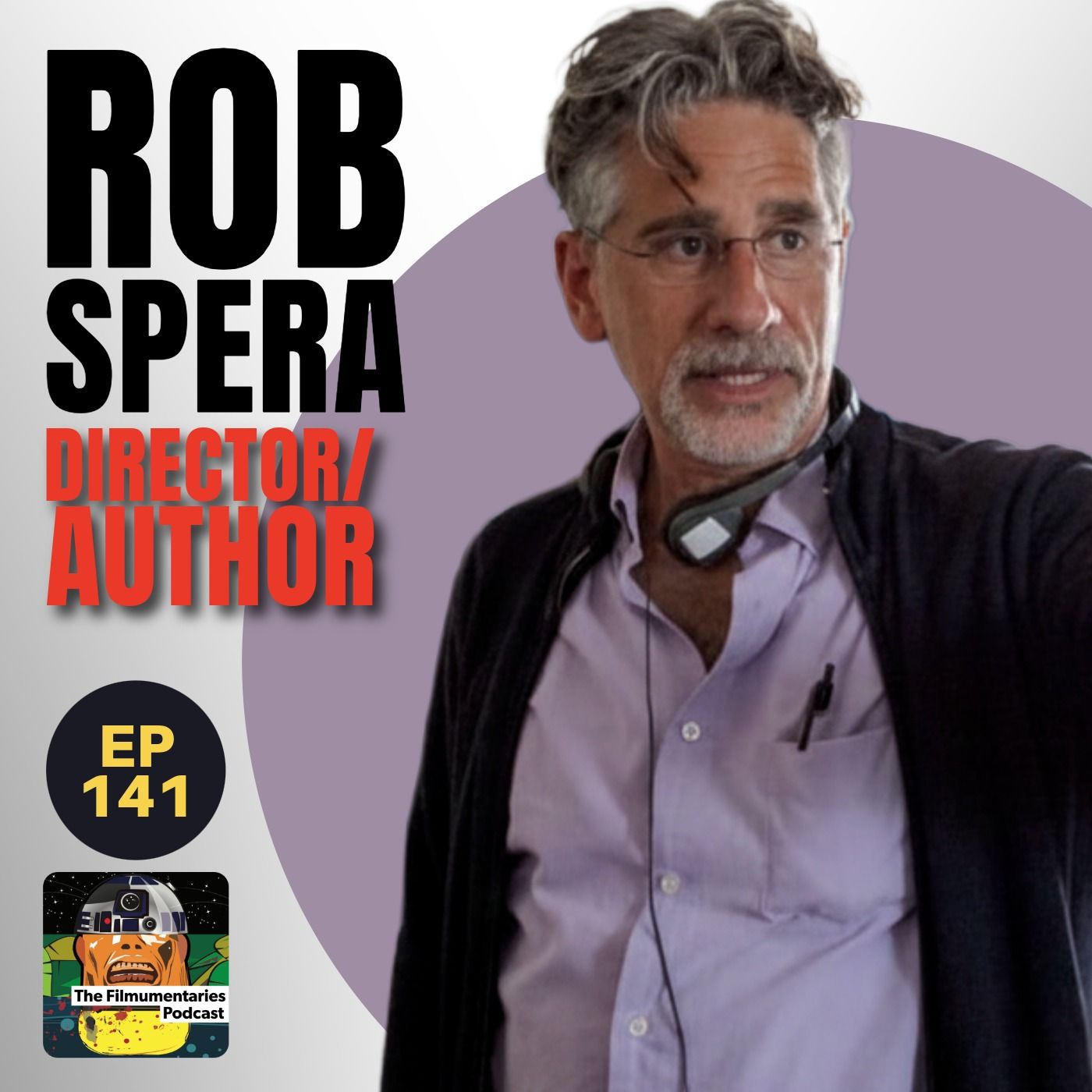
Ep 141 | Rob Spera — The Film/TV Director's Field Manual
About this episode
- Why Rob describes his book as an “anti-textbook”
- The idea that the camera’s job is to photograph subtext
- Building non-redundant frames that invite the audience to participate
- Why kindness and psychological safety are essential creative tools
- Letting go of control and empowering collaborators
- What “write what you know” really means
- How directors can practise their craft between jobs
HAPPY HOLIDAYS!
This podcast is completely independent and made possible by listener support. If you’d like to help me keep making these episodes, you can join my Patreon community here: https://patreon.com/jamiebenning
Watch more on YouTube:
Check out the Filmumentaries YouTube channel for behind-the-scenes clips and extra content: https://youtube.com/filmumentaries
All my links
Transcript
Automatically generated, so expect the odd misheard name.
Weird Being Way Media. Hello, and welcome to the Film Yourmentaries podcast. This is Jamie Benning and this is the show where I talk to people behind the scenes of the films and television we love. I also get to speak to people about books they've made on the subject as well. On My Yes Today is one of those.
His name is Rob Sperer. He's a director, longtime AFI conservatory instructor, and the author of film and TV Director's Field Manual seventy Maxims to Change Your Filmmaking Now. Rob has directed features including The Sweet Life and Leprecorn in the Hood, extensive television work on shows like Criminal Minds and Supernatural, and he's spent decades teaching directors how to think visually, how to lead cruise, and also to tell stories without beating audiences over the head. His book is Deliberately Small, deliberately practical, and deliberately unpreachy, a kind of anti textbook, as he calls it, for directors that you can actually carry on too. Set in your pocket, fits in your pocket.
And in this conversation we talk about everything from psychological safety on set, to photographing subtext, to why kindness is not just a moral choice but a creative one and a lot more. Had really nice conversation with Rob. We had arranged to do this a lot earlier, but I had to cancel. I think we had some technical issues at one point as well, and we finally got down to it and we had a really good conversation, and we've sort of stayed in touch since. We've had a couple of emails to and fro.
So I hope your preparations for the holiday season have gone well. What is it the twenty third today, A couple of days and we'll all be stuffing our faces with food. So let's get into this. Here's my conversation with Rob Sparer. Rober, I appreciate you joining me today.
Thanks for sending me the book, The Film TV Director's Field Manual, seventy Maxims to Change your Filmmaking. It's a fantastic book. It's, as somebody describes on the back here, it's deeply insightful and unnervingly concise. I mean, you've managed to compress what is clearly a long career of yours into these seventy maxims. But let's go back to the beginning.
Where did it all begin? Where did your creative life begin you talk about a moment in high school I believe where it sort of clicked. Yeah, yeah, you know, I was extremely shy and had trouble correcting with people, and then it just struck me them. I don't know what gave me the courage to do this, but to try out for the senior play and ended up getting cast in the lead. And it really never stopped there.
It was just this absolute hunger and need to express myself that found its way into interacting initially, and you know, I went to school New York and studied with Sandy Meisner. You know, being a young character actor and not being much work out there until you're in your forties, I you know, I decided to just start producing work that I could then act and so I'd be able to learn my craft at a point where I may not be getting work, but I still wanted to be tough learning. So producing led to more acting, but really led to directing, which is what was directly my first project. I knew that was where I belonged for a lot of reasons, just for the lifestyle. It wasn't a fan of the lifestyle for the actor and uh, and also I just enjoyed the director's process so much.
And was that at school when you first got the directing bug, when. You were at the A five? Actually no, I was, you know, I was. I had gone through the neighborhood playoffs. School of the theater as an actor came out and within within a year I knew I didn't I didn't like it and needed to start producing right away.
So I was really a young actor in New York looking to get the education I thought I needed, and so that's what led the producing right away. I didn't go to AFI until probably ten years later, after I had I directed in theater a good deal. What happened once I started directing, I started working almost immediately all over the country, in the regional theaters in New York, abroad and in the all just ting as much education as I could. And then once I had you know, directed probably at least seventy five or eighty plays, I decided I wanted to go into film, which was my first love. But theater was more accessible to me.
I could produce it cheaply and quickly, and I grew up fairly poor, and so the theater was I was able to rent a rehearsal space and rehearse for almost nothing and then the run a show for six weeks. So when I was comfortable with the amount of directing I had done, and while I felt I would always, you know, do a good or a bad job based on my the play the actors how I was feeling, I felt I had kind of understood the basic tools of the trade. And uh I knew that movies would would pose a whole other set of challenges. Uh and they do it. It's you know, I don't think you can you of us really master that process throughout an entire lifetime because they just moving the camera six stations to the left or to the right changes how an audience eves an event.
Uh So, uh I knew it. It would challenge me for for an entire for an entire life. Yeah, well, you know, theater and screen are very different disciplines from every person perspective, really, because there's really only one camera ultimately in the theater, the audience and the direction that you're facing. But there must be some crossover. I mean, I have a good friend who's a theater actor, and one of the things he loves about theatre as opposed to TV or film work is that time that's allowed for discovery oo.
And you know, just having long rehearsal time and working very collaboratively from scratch right. You know, you're not surrounded by the sets initially, and you don't hear the music initially, and you don't see the lighting initially. Is there are there skills that you felt were really transferable from your time in the theater that you could take into TV and film? Well, yeah, well, I think there are always equivalencies in terms we want to move an audience in a specific way, and an audience response is something you always take with you. What they get, what they don't get, how quick they get it right, How fast an audience is, how much they know in advance and kind of in a sense of the audience's sensibilities, tastes and acum.
How quickly they can put two and two together and they're not being any need to beat something to death. Also, you know, working that close with actors and your friend is right, the ability to sit in the room. I a good theater rehearsal period it's probably three and a half or four weeks, and you're never in those first few weeks it's all discovery. You know, there's no pressure. You have weeks to discover.
We're mounting the play, we're putting up blocking, but you're still examining and talking and discussing, whereas in a movie, you know, sometimes you know, I've met my lead. I picked them up from the airport, right, riven them to the set and talk to the costume designer, and then we're shooting within an hour. You know, there's what kind of speed you're working with is kind of the exact opposite, which is also a great challenge, right, You've got you. So theater gave me a foundation that allowed me to think really fast on my feet and to have a really keen understanding of drama, of comedy, of the actor. And mostly in film you learn that the actor needs very little interference from you direct right, you're really looking to where As in a play, I'll probably I'm talking to the actors constantly because I'm preparing them for a two and a half hour take that they will run by themselves every night, right, Whereas in movies, I'm preparing them for a two minute take and it's generally a very simple human transaction.
It's a scene of interrogation, a scene of conciliations, some simple human transaction that they understand. And the genius in movies is that we put together forty to sixty of those little scenes that add up to a you know, cathartic release for the for the audience, and for your main characters. So it's those little scenes that need very little interfere. What you're looking to do more of in movies is is talking to them indirectly. So I really I like to consider my work with the actors as someone who informs them right through indirect choices and allowed them and empower them to come to the work right with their own instruments.
And it's not about you know, letting him rome or or improvised by themselves. It's a really I prepare within an instry of my life, and as I point out in the book, right what I want is to and I usually go into a scene knowing three to five versions of it, three to five versions I think will work. I have my favorite, I'll give it to them, but I won't tell them where to stand, where to sit. Specifically, I may say something like I've got some great ideas for this, but I'm going to need your help. I think she comes through the door, I think she sits at some point and maybe maybe goes to the bar and makes a drink, and then maybe at some point she's at the window and opens the blinds.
I'm not sure. And you do that? Can you help me with that? And what that does with the actor is it? It doesn't give them any definites right or any strict protocols.
But they are now going to legitimately try that. And I basically have empowered them to follow that path, right. I haven't told them how to do it, what to do it, why to do it right. I'm going to allow them to fill in those blanks and those I know exactly where I want her to sit, where I wanted to stand, where I wanted to make the drink, where wanted to go to the window. But too, I want to see that on camera, because the camera is like a microscope and it seem everything.
It even put stuff there that isn't there, so it can definitely see direction. And I want the actor to be fully empowered to be in that process, in that dog process as they make their way through that scene for the first and last time. So the U but without the knowledge of the theater, right, spending hours and hours and hours with with with with actors and uh and getting the sense of what what makes them tick, how they work, the language for them, what those instruments are like. I never would have been able to come up with my approach to how I treat them and film. Yeah, I I imagine as well that that method doesn't suit every actor, because you know, I've heard famously.
I think of Ridley's Scott directing Harrison Ford on Blade Runner, where Harrison, you know, wanted more direction and Ridley was very much like, well, no, I've employed you because I know you can do the job. You know, I'm giving you all the other other elements. I'm creating this fantastical world and these costumes and everything else. But there are actors that do need more than that gentle nudge. How do you cope with actors that are perhaps on that side of the wall.
Then, you know what The thing I'm most protective of is what I what I what I would do is I tend to I never turned down a question, but I like to paraphrase the question without actually giving an answer. Mm hmm. That so I want them to I really want them to come to it themselves. There's something really magical and unique and special when I'm just not distilling my version of this event. So so for me, when I what I do if someone says to me so rob so, I think I think my character is really really angry with her, and my response won't be yes or no.
My response will be oh, oh, so, so you think you're really angry with her, right, which just prompts him to say, well, well, well, maybe not angry, but yeah, maybe let them reason their way through it. So really, what they need to they need to talk, they need to find their way to the solution. I don't want to give it to them because when I give it to them, I've distilled it to its simplicity and to it almost probably to its cliche in order to communicate it. So I've distilled it to a cliche. I spit it across the room to that person so they can then assimilate the cliche, and by the time we've kind of sucked the life out of it, we're running another take.
And I think what we want to do is allow them to stay as fresh and open and empowered as possible. So I've never had an actor say to me when I've employed that, hey, you're not answering my question. We're in a debate, right, and they don't get that. I'm simply responding and repeating what they're saying or paraphrasing it and allowing them to find their way to the truth, which were like in a situation like that, what I'd want them to eventually come to without saying it is well, maybe not angry, but I may I just I'm I'm hurt. I mean she's she cheated on me.
I'm really hurt, So I wouldn't I want to get to that place by themselves? Is essentially it now there? And and like you're suggesting, they're always right examples in which you still actually have to get very direct with people. Uh. And then I'm only going to talk to them in terms of objectives and obstacles.
What is the charactery stands in their way? What are their actions? But my idea in the blocking is to provide them, allow the blocking to vide actions that informed them right, so that instead of me having to tell them what their objectives and obstacles are, the props I give them to use the suggestions of blocking are going to inform them right to move in a certain direction, right without me ever, having to tape that, so they are calculating all that by themselves. Yeah, it's a it's just a it's a very it's a more hands off a way to But I what I noticed and when I want you know, I had opportunity when I was young to be on sets as an extra, and I watched directors I really respected, and I was shocked at how little input they had with the actors.
Well, they were up and running, you know, and uh, you know, if you were to bring someone to set who was not you know, savvy, and you ask them, well, can you point to who the director is, they they'd be wrong frequently, right, they'd probably put to the A D. Who's doing all the pointing and screaming and bossing around and yelling. Thattors tend to be a little more hands off, I think the more they understand how powerful that camera is. That we can plant ideas and feelings in puppets, in animations, in animals, we can certainly right get that from a human being, and the way we stage the scene. MM and that all sort of links straight back to the very first maxim number one of seventy, which is about creating this situation of kindness, to be kind and create this safe haven, which will then kind of help bring out the unexpected out.
Of your actors. Because because there's nothing worse than working in an environment in any career where fear is the thing that's ruling over people. I work in live TV, and often fear can take over a production and people are scared into doing their job the most effective way and then and maybe taking shortcuts. Whereas you know, if you create this safe haven for people, particularly for an environment where all of that pressure is on the actor, everybody is there for that moment everything that you're right at the tip of the spear at this point, aren't you. So how do you how do you go about fostering that feeling of kindness and create creating that safe haven what you're kind of go to maxims for that?
Yeah, you know, I put that number one because I think it is number one. And you know, we're trying to etch these and capture these human emotions and frailties, and I don't think you can do that best when you're working in an environment that is not kind. Uh. And oh so the the kindness it comes out in a number of ways. I think it's never ever judging any idea, and and every idea is welcome, and because the bad idea usually leads to a good idea.
And certainly when mistakes are made, I want to encourage people. I encourage people to come to me with mistakes right away, without without and just so I'm aware of what's what's happening, you know. And it comes down to the day to day of you know, how you treat people. I make sure that if I'm on a movie, by the time I arrived day one, if there's one hundred and fifty people on that crew, in many I haven't met yet, I know all their names. H point of greeting everyone every morning.
I also make a point of after we're done shooting, no matter how long the day is. That means so much to people on cruise, you know. I have to say I've worked on many a live production, you know, with hundreds of millions of views in some cases, and just that handsh fake at the end, and that thank you. It really does mean a lot, because otherwise people are walking away with you know, that one negative thought in their head that then gets amplified, or did I do the right job? Is he okazy?
Happy with what I've done, Am I going to get on the next gig? And all of those things. Just that handshake just solidifies something in people. Absolutely. I think you're you're so right, because you know, when you're working a movie, if you're if you're doing if you're a pa doing intermittent traffic control right half a mile from the set on a walkie talkie, you might as well be parking cars, right, and you more money doing that, and you don't feel a part of the of the organization.
You don't feel a part of the filmmaking. And I think you've got to seek everyone out at the end of the day, and you're right, thank them, handshake, thank them, And it really makes a difference, I think in the overall tone of they you build a community. What I always hated was when, and it's particularly true on movie sets where this bitching would start, people just felt like the obligation to bitch. And it's that kind of low grade bitching that there's no solution. I'm not even sure the problem is, but it's just there and it creates this uncomfortable feeling all day.
I just hate being around it because I do think it impacts the quality of the work. So the other thing I do is communicate with people even before we start and say, you know, we if something, if you have a real problem, bring it to me and let's solve it. And if you don't, then let's not talk about it out loud. Then it's just you struggling through the day and there's no there's no room for it. But legitimate problems will be addressed and solved, and making sure that there's that kind of communication with them upfront, because you're you're dealing with a little society that come fether and if you don't control it, it will control you.
Yeah. Completely. It's not enough to just try to make a good movie, right. You are responsible for one hundred and fifty souls, and you need to do your best to make sure that they feel involved and connected to the to the work and to the quality of the work. And you'll get people will start taking chances around you.
People will give those ideas that are a little bit off center but end up being brilliant. But they won't give you those if they're scared of you. Yeah, it won't, don't. They feel you might make them feel stupid or or or not experienced enough. So I think it's really about the tone that you've set.
That's and I think if you're looking to make a good movie for me, it's about wanting to I want to be around in a community that I feel good about myself and about others. The worst the second and will get better. But that's a second choice. If you're only interested in making good movies, you need to start with the people you're working with and making sure you encourage them to come to you with all ideas, bad ideas, and then work your way to a better idea. Yeah, I've seen that bitching happen on a cruise that I've worked.
I work with crews, you know that could be upwards of one hundred hundred and fifty two hundred sometimes. And as soon as that kind of attitude, there's a sort of a consensus of attitude of eye rolling at senior people, and it almost sort of gives people permission to relinquish their responsibilities. They almost kind of turn a blind eye if something bad is happening, Well, it's not my responsibility. If that's what he wants to do, that he can do that. Whereas if you involve people like you say, you engage people, they feel safe they feel like they can come out with some ideas that might seem outlandish, but if it's a safe space, and even if you turned down the idea initially, you never know when that idea might come back, which which you do bring up in the book as well, which is great that you're you've come up You've had some things that you've dismissed initially but it turned out to be the right idea for a moment later further down the line.
Yeah, yeah, yeah, And you don't those those ideas. What I over time, what I've learned is that the ideas I I find that I treasure the most are the ones that initially seem like bad ideas or they initially seem wrong or off base for this movie. And I've learned that. You know, one of the best things I've learned is I'm not the smartest person in the room. I don't want to be anymore.
And uh, and I only know a little bit of how all of this works, or I've I've done a my life, but I don't within all of that. I've only seen a small fraction of what life is right and from all of its angles. So I want to why this intelligent human being would give me an idea that it first seems so off base. So those are the ones I really dive into. So I think there's there probably will be a pearl in there or something I've missed something or may not have understood.
So those are the ones that I think can really bear gold for you down the road. Yeah, and reading through the book as well, I really get the sense that you've always tried to strike this balance between, you know, being in command of the situation as a director is expected to be, but also having that openness and almost a kind of vulnerability in a way. I think you talk about exposing your blind spots so that you know you can invite people to come in and if they know better, then you will listen. Because there's nothing worse than having somebody as a figurehead of a production who thinks they know everything and all they do is micro manage people. It can be so counter productive.
Yeah, and narrow, right, you end up with a very narrow production and it's it's really trigger So yeah, finding that balance in leadership it is one of the great things I love to study. What it's one of the side my side hobbies, and making a movie is understanding you know, leadership and what do you how do you get the most out of people? How do you open the door to them to provide good ideas. I always see the job as someone My job is to have a vision. My job is to chart the destination.
But then I want to empower the people I work with to carry me there. Right, So it's going to be the quality of their ideas and to be open with them, not feel like I need to be the smartest person in the room to have all the ideas, to simply hire people I trust and then let them take me there. And I think that is one of the things that's taken a while to learn, to let go of the need to control, because you know you're given the badge, you know you're you're the so called leader of this pack, and understanding that leadership is really about in many cases, letting go. Uh that doesn't mean you you you show up unprepared. I'm I'm I'm over prepared, usually to a fault anything, and because I want to know how everything works.
But then all of that preparation gives me the freedom to then say, Okay, this is your chance, Now show me what do you think? Uh, this is what I've come up with with my little brain, right, what are your brains add to this and open to that? Is? But it only comes out of a good deal of experience and preparation. Yeah, yeah, I'm I'm never nervous about not coming up with an answer.
I've got four or five ances already. Now I want to get someone coming at it with a whole new look and approach to it. Yeah. I like this idea that you mentioned where you will do your camera plan or your blocking plan, and your initial one you'll just throw it in the trash, and then you'll do another one, and you'll probably throw that away as well, maybe even a third, because by that time you've kind of solidified something in your head that you know where you are coming from. But you're also leaving room for other people to come in with.
Ideas as well. Yeah. Yeah, I think it's really inspiring. I must have been the first, you know. The leadership chapter applies to so much about what I do in my part of the TV industry, and I do feel like buying this.
But for quite a few people that I've worked with over the years, I have to say that the next chapter long about the camera and staging. I found really fascinating as well, this idea that the camera photographs subtext. You know, I'm somebody who has studied film, albeit you know, twenty odd years ago, but there was there's such a nice conciseness to how you communicate in the book, this idea of two plus two equaling five and and you know, striving for no redundancy. Can you just talk just I don't want to give away all the secrets of the book, but can you give us some idea of what you mean by no redundancy? No redundancy, no redundancy?
Sure? What we're what we're looking to do is you know, we understand that the My premise is that the camera's primary responsibility is to photograph the subtext. So directors your job to organize the visual elements so that they create the subtext. Right. We're not there to photograph dialogue, although that happens.
People talk, but we're not necessarily required to put that on camera. We could, it could be off camera, it could be offset, but we're primarily we're there to photograph the visual story so that we can actually move the audience visually. Uh. And the actor is to play counterpoint to what's happening in the subtextual elements. So we're really doing all of our talking to the audience indirectly.
What's most important is that we all the visual elements we set up in frames should not be redundant to each other, because that's when we the audience, audience gets distance, we feel that word that the director's demanding that they feel something or think something. We want to create a set of visual elements that are non redundant, and we're simply inviting the audience to solve the visual quest we're proposing, and in that solution, they become connected to the screen, become one, They become one with the story because now they're solving that equation on their own terms. So when we have non redundancy in the visual elements, in the music elements, in the sound elements, in the wardrobe elements, in light right, then all of those non redundant elements the audience solves very quickly come up with the solution, and then they're connected to your to your main characters.
And the tuplus Proubels five equation is you know, we're setting it up so that the audience is going to have the solution is not one that you'd expect, the one that is unexpected. Right, that the magic and the wonder of being a human being is really what we're looking to capture. So the the simple ideas love camera, photographing, subtext, the two plus threequels five equation. We're layering subtext, four ground, begun and background, and then the the solution of that moves the audience to a tuple of people's five understanding of the main characters. And that's the kind of the cornerstone of all the visual work I do as a directing teacher, Right, that's where it all comes from.
And when we can when we are talking to the audience indirectly like that, it's much more engaging because we have seen movies in which everything is redundant. Right, the light is doing what the camera angle is doing, the camera angle is doing what the actor is doing. And say, it's oh, so sad, and the actor is also said, and the music's also sad, and the light is also said, and the visuals are also sad. The audience feels like you're demanding something of them. You must feel sad this, but in fact, right, let's let this take place on a break sunny day, right, we don't need that the shadows.
We need to we need to find counterpoint that has meaning right in the visuals and in the in the actors performances that that makes sense. Yeah, yeah, completely. And you know, I was just just the other night I was talking to Randy Tom who has worked at Skywalker Sound for many, many years, and we were talking about how he loves to work on projects where they engage the sound apartment early on in the process. It might be on a big tempole movie, even you know, in the previous stage, but ideally, you know, he said it would be as far back as writing the script. Yeah, and you mentioned that very thing in this so I know that's going to be music to the years of many of the people that work in sound, because there are very few directors that will engage a sound apartment that early on.
I mean I spoke to Mark Mangini, who was a sound designer on denny Ville Nerves June from a few years ago, and how you know, the sound effects that they came up with for like the shielding device when they're having a combat scene, actually informed the visuals and then the visuals kind of amplified that and then fed back to maybe tweaking the sound in this way. And it's so important to have those elements so early on because otherwise you're not really there's not really a collaboration of departments. They're just they're just sort of additive in a way that doesn't feel like they're merging. You're so great, Yeah, they're just adding they're trying to almost like scotch taping or band aids. Right, Yeah, the movie that you move forward, they're really not part of the entire process.
So I even think, you know, I encourage when I'm working with writers. My thought is, you know, when you sit down, you're not writing a movie, right, You're not writing dialogue, which many of them sit down to do. What you're doing is you're composing a film, and the tools you're using are not words or letters or language. On the table. You have light, camera, actor, wardrobe, music that's sitting on the desk with you.
And now when you say to yourself, right, how can I write? How can I introduce this character with light, let's say, right, or with shadow? So you're not sitting there writing a dialogue that is going to hopefully create a sense of importance for this main character. You're doing it all visually, and that has much greater power ultimately than any piece of dialogue. So the dialogue has to play counterpoint, you know.
I know I mentioned in the book the Hitchcock quote, which is after he and the writer finish the screenplay, the writer goes back and add some dialogue. It's because the movie is complete, the visual story is complete, and so I think it's it's understanding right at the core, right what is what is the audience really responding to? Ed? And the writer of the screenplay from the beginning should be thinking about sound, should take all those other elements, and you ask yourself, how can I punctuate this scene with sound? How can I underscore it with sound or with music?
Or would light or with shadow? I think that's really the the key for the writer, and I think it's a it's very liberating for the rise. We're no longer relying just on dialogue like we are in the theater to communicate. Mm hmmm. Yeah.
This book has clearly been in the making for some time, Rob, I mean, was there a particular moment where you suddenly thought, actually, I do have a book in my head here, this is something that I could you know have and it's it's a it's a small book, you know, it's what is it? It's like one hundred and two hundred pages something like that, and you can hold it in your hand, you can put it in your pocket. Was that something that came to you kind of in a eureka moment? Yeah? Well, you know, over the years I've been teaching.
I've been a director for the past forty years, but I've also been teaching for the past forty years. And I taught so I could learn how to direct. And but the uh, over the years, I've had students ask me constantly, you know, can you recommend a book? And I couldn't because you know, I love to read about directing and about filmmaking. But every directing textbook I picked up, I would read a chapter or two and I would put it aside.
My my shelf is covered with, you know, unread great directing textbooks. You know where writers are, they know what they're talking about, they're really good at it, right, But that they're they're so dense and over explained that the ideas rarely, if ever, would find their way into my work. So so when I sat down to do this, it was initially for my students, and the idea was to write a book that would take these complex, uh and sometimes abstract concepts and distill them to their essence and them right down to the point in maybe half a page or page or page and a half, and make these these abstract concepts easily accessible, turn them into practical tools that can be used immediately. You can go out to borrow and use this particular tool.
Uh. It's really clearly defined, distilled to its essence, so you can begin to work with it. In so many cases, the books I'd read were didn't do that for me. So and the idea down was to, okay, I want them to. I want the student be able to have this on hand all the time so they can put it in their back pocket.
Right. Most of the books I read were just you know, hundreds and hundreds of pages, and I wanted to be a portable uh. And what I would do every day when when before I actually wrote these maxims, now I have just a list of them and my my my onset binder. I would read them every day just to remind myself, Okay, these are the basic these are the central tenets of what I'm trying to do right. Uh.
I love opening that book every morning and seeing be kind. That's a great way to day, you know. So it was really I really did it so that I could for my students, so I could make it make the work much more easily accessible and and be able to change their work immediately. But but you're right in that the concepts no have been I've been working on them for four decades, right, And so it's it's on that simplicity and uh and and the brevity of the book only comes out because of how much time I've spent with them. Yeah, yeah, that you said that.
You know, there's some abstract ideas in there, but there was never a point where I was reading the book where I thought, within moments, I thought, oh, that's so simple, that makes so much sense. I never thought, you know, I may have initially seen a title and thought, oh, where are we going here, but within seconds I was always like, Okay, I get it. And that's the thing. You've made it so so accessible. There was one thing I've written in my notes here that I wanted to bring up as well.
That you mentioned that people often say write what you know, and it's so often misunderstood. It's and you say, it's not about writing your own life, it's about writing your from your beliefs. Which is exactly what you've done in this book. Yes, yes, yes, exactly. Yeah, And you're writing as a As a writer, you're always going to being certainly write whatever you want.
Whenever you think you want to sit down to write, please write it. But always know that I think that you're always at your best when you're writing what you know, because yeahs are universal, they're boiled down to to simplicity. There are exchanges in your life that are that are rare, that are unique that we can't if you've if you've never worked in a certain world and you're trying to write in that world, if you've never lived in that world, it's really hard to capture those small details, that special knowledge that only someone who's lived that could possibly know. So I think, you know, we should write whatever we feel inspired to write. But I think that when we're writing what we know we are, we can't be beat.
It's hard to beat when you're when you're writing from that perspective. Yeah, I'm one of the things I really appreciate about this filled manuals. You call it rather than a textbook, you could even call it an anti textbook. Is that it never feels preachy, and it clearly reads like guidance from someone who's been through all of these trials and tribulations of directing. It's it's very pragmatical, tick and proactive, and it seems, you know, you've it's been forged from experience rather than heavy theory, which it could easily have descended into.
When you were writing it, did you find that that balance between offering clear guidance and slipping into sort of prescriptive rules, It was a difficult one. Or do you kind of manage to distill this down so much with you with your teaching that you do? Yeah, you know, it's I think it comes from years of standing in front of a group of people and trying to find a way to make it as accessible as possible to that always trying to take ego out of it, take any really any real kind of attitude or a loovedness out of it, or arrogance, and always honor the ideas and and to be to be ego less in the process, otherwise that could get in the way of the education. Right the idea stand on their own and they can't be coming from a place of ego at all.
So I think that over and certainly I wasn't successful at that in the beginning, right, That's something I had to learn learned that people, you know, my students, would were more successful when they when I was able to leave my ego out of the process, because you're not really challenging me. You're challenging the ideas, and the ideas we can debate all day, right without any threat of feeling a personal reaction. So that's something that I think, just out of teaching them in the years, has found its way into my approach to teaching and to directing. You know, it's it's a I've I I love the process. I feel like the luckiest person in the world to to to be a director.
Whenever I have the opportunity, I'm filled with joy. And it's uh, it's something that I want to make sure that is when I'm when I'm teaching it as well as directing it, my ego is at home and uh and touched safely away away from people. Yeah, I think that's probably a really good place to end it. But I recommend to people film, TV director's field Manual seventy Maxims to Change Your Filmmaking by Rob Spira? Are you Spira?
Spare Sparra, Rob Sparra, there you go. Well, yeah, no, it's fantastic book, and yeah, it's definitely going on a few Christmas lists this year. Your kindness today and and your support and clearly you've read this book very well. Thank you. Yeah, I've read it a couple of times, you know, because we as we before we hit recorders, we briefly discussed the We've been trying to do this for a little while, and I've had to cancel a couple of times and stuff, so it's given me a good chance to kind of go back and revisit some of it.
And I genuinely have carried some of this forward into what I do, which is I'm kind of like a live editor. I guess you could call it in live TV and sport wow. And so yeah, I think there's probably like a like another another book in this, you know, in terms of how it would apply to my industry, But there's so much crossover. It's particularly in that leadership chapter. It makes so much sense to me, and it's really brought a kind of I don't know, just a clarity to what it is I do and how I could do things better.
So I appreciate I appreciate it. Thank you so much. I'm really touched. That was my conversation with Rob Spare, and honestly, it's one of those conversations that just stays with me after we recorded. You know, I've thought about that conversation a lot, and I've thought about his book a lot.
I've delved back into it a few more times. So if you're a director or thinking about directing, or frankly, if you work in any collaborative creative field, Rob's book, Film Slash, TV Director's Field Manual is one of the most grounded, pragmatic books I've read in a long time. It's clearly written by someone who's been through the full range of experiences on set, the good days, the disasters, the compromises, and he's come out the other side still deeply invested in the people and the process. As this episode goes out, we're coming to the end of the year, so I just wanted to say huge thank you to everyone who's listened, shared the show, supported it, and especially to those of you backing the podcast on Patreon.
There are one hundred and twenty of you doing so, and your support genuinely makes it possible for me to keep doing this. It's been another great year of guests on the podcast. We've had behind the scenes legends, people quietly doing their incredible work across film. We've had authors, visual effects people, production designers, production designers, art directors. Anyway, I'm incredibly grateful to all of those people who've taken the time to sit down and talk so openly about their work.
Looking ahead, there's plenty coming up. I've got a conversation with John Campo Piano and Jim Bella about their documentary The Farmer and the Shark, which is coming out soon hopefully, and a great chat with Randy Tom, one of the true legends of Skywalker Sound. I've also got a conversation with somebody who was there documenting a very famous horror movie. He was right there as it was being made, as it was being developed. It's one that's been on the back burner for a little while now, but I'm really looking forward to getting that one out.
I think you're going to dig that. On the writing side, I've also got some new articles on the way, including pieces based on my visit to Industrial Lie Magic in Vancouver when I went out there, and also and some time with Nilo. As you will have heard in previous episodes, there's one about Ilim's work on f One the movie as well as Skywalker Sounds contributions to that same film. Plus there's another one about Wayne McGregor exhibition that's on at Somerset House currently called Infinite Bodies, and again ILM worked on a piece. It's in fact the first piece that you see.
So those articles are coming out in the new year, so look out for those, and you know, support me where you can by reading those and sharing those as well. If you enjoyed the show, as always, please consider leaving a review. It will take you two minutes on Apple Podcasts or wherever you listen could be Spotify for instance, or maybe share it with a friend, or the best option would be if you could support on Patreon. I know it's an expensive time of year, but if you've enjoyed my podcast for the last five years that I've been doing now and you're still not supporting it on Patreon, just come on board. There's plenty of different tiers to choose from.
You'll get some extra perks well, and seriously, every bit helps more than you might think. I don't really make money on this podcast. I make just enough to justify doing it, so it really does need your support. And with that, thank you once again for listening. Thank you for a brilliant year.
To all of my guests, all of my listeners, all of my supporters, and wherever you are, I wish you a very happy holiday. This podcast is written, produced and edited by me Ja Benning. Music is by Michael Hewitt Brown of MBI Music, weirding Way Media,



Similar episodes across the network
Matched by shared keywords.
-
Bonus Interview: Charles Evans Jr.
2 shared keywords: directing, filmmaking
-
Special Report: Lexi Alexander on Absolute Dominion (2025)
2 shared keywords: directing, filmmaking
-
Special Report: Gregg Allman: The Music of My Soul (2026)
1 shared keyword: subtext