
Season 1 · Episode 605
Special Report: Todd Rohal on F*** My Son! (2025)

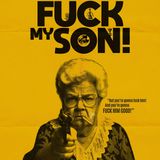
About this episode
The conversation zeroes in on F*** My Son (2025), his bold and darkly comic new feature that pushes his sensibilities into feral, confrontational territory. Rohal talks process, chaos, collaboration, and why he wants to work in a hardware store.
Transcript
Automatically generated, so expect the odd misheard name.
Oh g is, folks, it's showtime. People say, good money to see this movie. When they go out to a theater, they want cold sodas, hot popcorn, and no monsters. In the Protection Booth, everyone pretend podcasting isn't boring. Don it off.
You're gonna make a sup of hoone going just a few minutes, good chap do. Let's make sure we're on the same page here. You're gonna make my son's penis erect and heard you're going to put it inside your vagina until he ejaculates fully. This will all be done bare back. Oh Jesus.
Mm hmmm, No, rubbers, missy, he deserves the full pleasurable experience. No, mm hmmmm hmm, I'm not doing that. Well wait, what what are you doing? Wait? Their breaks me heart.
There's so much sense in the world that he gets. Not a crumb of it. Birds, fuck dog, fucking bugs, fuck fleas, fucking nobody fugs him. You're gonna fuck him and you're gonna fuck him. Good.
Hey, folks, welcome to a very special episode of The Projection Booth. I'm your host, Mike White. On this episode, I am talking with the one and only Todd Rollhal I have been a fan and a friend of Todd's for quite a few years, and I'm very excited to talk to him about his latest film, My Son. It is going around the country. Follow Todd over on Instagram to find out where it is going to be playing near.
You talk to Todd about quite a few films in his career. Kind of left the Johnny Knoxville film alone, but otherwise talked to him about quite a bit. Had a great time catching up with him and also discussing My Son. Thanks so much for listening, and I hope you enjoy this interview. I've never asked you this before, but how did you even decide to become a filmmaker?
They make you make decisions when you're in Ohio. They're like, okay, everyone, you have to make tell us what you're gonna be. No, it was in kindergarten. I remember telling my. Teacher that I was going to make movies, and honestly, I don't even know what i'd seen at that point.
Kindergarten's very early. I don't even know if I had memories before that, but I remember saying that I was going to do that. It's odd I remember watching like the never ending story over and over and over on a VHS tape that. We ran it from the library, very into it and really picking apart shots from that and trying to figure out how they did it, even as a little kid, and then finding out, Yeah, other kids were too scared to watch it because I was pretty young when I was doing. And I was like, why are you scared of this?
Just a movie? You know. It's like I think I had a clear sense of the making of things and the and then the result of things fairly early on, and really loved that idea of doing it, but never had any connection to this was a total impossibility, I think as a little kid, because I knew it was growing up in Columbus, Ohio, and it was like there was nothing remotely connected to the film world there. So everyone was like, I don't know how you would do this, So maybe come up with another idea if you can, maybe a different field of work or something to pursue. So yeah, most of my life was just spent trying to figure out what early life was spent trying to figure out what else I could do instead of making movies.
The first movie of yours I saw was Local Face, Jones back in ninety nine. What were those earlier films like, So I went to film school. I tried to go to NYU. That's the dream, because reading about everybody. Was coming out of film school at that time.
I graduated high school in ninety four, so it was like the height of when the film school brats of the generation's prior were all coming from NYU, USC UCLA. Those are the three schools, and so I, yeah, I applied to those and did not I have the grades to get in nor the money. Member NYU sending the which now it seemed very affordable, but it's twenty five thousand dollars a year and they offered me one thousand dollars in scholarship, and it was like, yeah, an impossibility. And now I guess it's probably obviously, yeah, even more expensive. So all colleges are unaffordable.
But I ended up going to Ohio University in Ohio where I was at because it was in state school. I mean, they had a film program that was in the arts department, which is where I knew I wanted to go. I wanted a film program in the art department. Either back then it was like either in the communications department or telecommunications is what it was called. That's a very nineteen fifties term, which I doubt is still around in schools.
But I knew I didn't want to go into the communications end of film. I was interested in the art department. So they did have that, and it was like that program dated back to the sixties. Ed Lachman went there and there was a big history connected to even Ann Arbor, between Ohio University and Arbor of like art experimental film, and so a lot of the experimental filmmakers would make that circuit through Ohio University, and so there was a pretty deep history there between Stan Brackage and the Kuchars, and I don't think Jonas Mikas came through there, but even Stan Vanderbeek I think came through the school, and Bruce Bailey and people like that were like in within a few years of that, Like my time there had been at the program speaking.
I ended up loving it and then making these Everyone had a bit of an experimental sense. The teachers were all fighting with each other, so it was like we were just we had a bunch of CP sixteen cameras one Airy SR two. Everything was edited on Steinbeck's Avid. They just bought a new Avid, which no one wanted to touch because we didn't like technology. Then we were cool, but.
Like all of that was just starting to bridge in and like the students there, and I think the history of that watching experimental films in our experimental film class taught by this woman and Ruth Bradley, who was wonderful at getting the stuff in front of us, just pushed pushed some buttons to make some to go some different directions, and we do everything from you. We'd have to shoot our own titles and optically print everything, cut our own negative. The only thing we didn't have. Was a place to process the film there, so we would have to send that to these labs in Pittsburgh and get get the film back. But otherwise did everything all the way to complete prints and everything of your film.
So I loved it and then made knuckle Face Jones after seeing Gummo in the theater in nineteen ninety seven, and I went to LA for the first time and happened to be like by the Lemolee Theater where Gummo was showing, and I saw the poster and I was like, what is this? And went in and saw it, and there was like eight other people in the theater. And as it was. Happening, I was like, this is going to change the world, Like this is going to get the Academy War. Everyone's going to start making movies like this.
This is incredible. And the lights came up and I remember people in the auditorium or not auditory, it was a small little theater saying like that suck, like they I'm so mad about it, and I was confused, and so I just kept talking about it and talking about it back in school and and it really that really shifted something because it was like looking at experimental movies from the sixties is one thing, but then seeing something that modern and out there and just so connected it took place in Ohio. It just had it just felt it just opened a door to like possibilities there that felt modern or felt not modern out just just current contemporary I guess the right word. But yeah, So I made this movie called knuckle Face Jones that was just written.
It just went in my mind to try and ring some stuff. It's not as far out there. It's pretty stupid and cartoony, but it was definitely felt like me and I was very excited about it, and the perhaps at the school really didn't. Like it, and that felt great. And then yeah, when I met you and Skiz and all these people in Baltimore.
Skis was running Skis Physics, was running the micro Cinifest, and he was one of the first film festivals to accept the movie. I think the Johns Hopkins Film Festival accepted it was one of the first. And then they told Skiz about it a micro Cinifest and as soon and right after graduating, moved to Baltimore. So it was like, these screenings in Baltimore were the first time I'd shown this movie and people liked it, and I was and made friends because of it, and that that was the beginning of it. So I met you, like really right at that time when it was going at the transition point from school to I'm just living in this town and I have these movies on these reels and I don't know, I don't know what the fuck I'm doing.
Met all these people through through through Skis and through you and through Yeah, those first few years being in Baltimore and meeting artists that were just making weird work, and there was not an obsession with like how do I parlay what I've made into a career. It was like, how do I just parlay this into something else interesting or something weird or it was a really wonderful feeling of there was no industry pressure, which, for better or for worse, I've not had an industry career probably because of that. But and that was very formative for me. I think of just being like, these are the. Things I truly love and am inspired by.
But it's a lot of stuff that's on the fringes. So that's a yeah, that's where that. Speaking of fringe, tell me, how did you meet I've Ben Dmitriev. Oh my god, I forgot this whole part of my life. Ivan Dimitrov is a.
Bulgarian man, a very special man, and he has been in a bunch of stuff I have done. And he was a construction worker in DC but grew up in Bulgaria during the communist run of it. His life story is really incredible that his parents had to leave the city they were in and left Yvonne alone in an apartment when he's I think nine or ten to go to school on his own because his parents were threatened with being executed and stuff. So he ended up making his way to the US or no, I'm sorry. When he was there, he was really into dance and he's a dancer, and he's like the weirdest dancer you've ever seen.
It's like he now takes what's Bulgarian traditional folk dancing and just combines it with total lunacy and he's just got the energy that's maniacal. So after Baltimore, I met not after Baltimore. While I was living in Baltimore, I met a fellow at a screening named Leo who was going to make a feature film and he had seen knuckle Face Jones and he was like, I'm going to make He was a very charming, suave British man. I'm going to make a film, a feature film about a Bulgarian pastry chef. And this sounds like Bernard Herdsong baby, but he was very British.
He's like, I'm going to make this movie that this Bulgarian pastry chef that topples capitalism, brings the end of capitalism. And I was like, I don't even know what that is or what that could dan what the fuck he was talking about, But I agreed to shoot his movie. We shot it on sixteen milimeter. It took probably two years two and a half years to shoot. He worked for the World Bank.
He financed this movie on his own. He lived on Logan's Circle in DC on this which at the time was just terrifying to live to be near. And so we all lived in his house, in his neighbor's house while making this movie. And he brought Yvonne in from meeting him at this Bulgarian dance recital, and I just latched onto him immediately and started casting hisself. Now Leo later after the movie was done and it never screened anywhere.
I have a VHS copy of it. But Leo is brothers with his brothers. Boris Johnson and Leo Johnson. Yeah, he's this filmmaker and activist for the environment and stuff. And then his brother is this man, Boris Johnson, who ended up being the doing some things in England.
I guess I should say I might have heard his name before, but they're. Like identical looking. So all the news when that started to happen was so crazy because it just was running me of Leo. And but yeah, I've not really caught up with Leo since all of that. The movie's never screened anywhere.
I do have a copy, and I always thought about maybe doing something with it, but I don't know what it would be. I don't want to shame Leo in any way, and it's not mine to put out. So I met Yvonne, this crazy bulgarian guy that I ended up writing other movies around, and maybe it was one of the first people that was like, oh, like, I really love writing for these true weirdo. True eccentrics helped me out here. So Microcentifest runs through both of our lives, very big, and I swear I was at a Microcentifest and that stopped.
I want to say two thousand and eight, but I could have sworn that I was at a MICROCINFS and there was a table there with posters on it, and I want to say, it was a movie that you made with Johnny Knoxville. Does this ring any bells? I did make a movie with Johnny Nuttill, but I don't know if it's a microcinifit. The movie wasn't at Microcinfs, but the posters were, I thought. But the timeline doesn't add up because didn't that come out in twenty thirteen or something.
I didn't get anything of him prior to that, and I don't think he was in anything that would have been the era. But yeah, like your late nineties. Yeah, I didn't meet him until we did that movie. Yeah, we were talking before we started recording about Corey Macabee, and I remember he had a small role in guatemal and Handshake, which is probably the last thing that I've seen of yours in a theater, which is very unfortunate because I love your movies, but that was the last time I actually got to see that, and I got to see it several times, which was really freaking fantastic. And that experience of yours making your first feature, that must have been quite an adventure.
We shot that movie for fifty maybe seventy five thousand dollars total, and it was shot on thirty five animorphic on these old cameras and the same lenses they used to shoot like the Mission. It's a massive anamorphic lenses. Like we were just like, give us. Your least rented camera for the lowest price possible from Joe Dutton Cameras in North Carolina. And I don't know how we did this.
Everyone worked for free. I had no idea how we made this movie. But yeah, it was like a million favors. I asked Will Oldham to be in it, he said sure, asked Corey to be in it, he said sure. It was all analog, like no effects work in it at all.
It was so nuts, But that was two thousand and four. We shot it and finished it in two thousand and six, and at the time when everything was going to digital projection, so it was like we had this beautiful thirty five print and nobody could show it, Like festivals were like, nah, we switched all our pet out. I watched the film again, like maybe five years ago. We did a screening at Austin Film Society and I hadn't seen the print. In for years, and it looked like we shot it in like nineteen thirty.
It was just like looking at something that truly felt so older than we were. It's just like the entire esthetic of film has changed so much. And I remember the movie very well, and I remember like we got the negative, did everything on it. There was no digital process in that movie. But it was like I felt so disconnected from my current self in that movie and good and bad ways, but it was truly it was just like, how did we How was I alive at the time when this technology did.
So I love that you got to see it. It was projected, I'm sure when you saw it, and it just feels like that is not even a that's a relic of a different time. But yeah, when we did micro Cinifest, everything was like projected on film. At that there was shot video things. I remember watching Huck Vodko's movies cream Pie, Banana cream Pie movies and stuff on video.
Like The Last and all that. Yeah. God, it was so fun watching audiences at Microcentifest go through these roller coasters of and Skiz would know what he was programming when no one would know what any of this was. It all felt like it was coming out of the trash when it was like anything was possible, like a dead body could show up in these movies or in Huckbodko's movies, like injecting people's blood into a birthday cake and feeding it to little kids and making it feel this. Is all pre like we all I believed it at the times.
Is that real? Is it not real? And seeing it with an audience where people are. Getting mad and I was getting mad and then cracking up and stuff. It's like this roller coaster of emotions that like wouldn't work anymore today.
All of that stuff just feels from another definitely from another era, and I guess it is. But seeing you actually seeing that projected and feeling, oh my god, nothing looks like this anymore. And it was not intentionally. It was like seeing our silent films or something, as if we made things on Yeah, I feel like Charlie Chaplin at the end of the Chaplin movie. We're standing on the side crying.
I'm sure that car doesn't help be there because that car is so out of time and out of place. Yeah, a friend of mine, so, yeah, it's a little tiny. Hey, this is pre electric car. This was a there's a guy from Balta coincidentally from Baltimore that invented these commuter car and city car things that we used in that and he had a whole grand vision. He was ed Edward.
Uh what's that actor's name from Big Junior. Wasn't electric cars, but Edward Norton, Is that right? Yeah, that his it's his uncle or something. That they started this whole. Community in Columbia, Maryland, I believe.
And these cars are all going to be part of it. Anyhow, I'm getting two into the weeds on this thing. But yeah, this guy had visions of a bigger electric car called a Tesla at the time, was like in the eighties. He was going to make it all got shut down. And I love the idea of this guy with a true dream of how to make something happen and it was shut down by the bigger corporation things that actually had worse ideas when it was just like he was just shut out of it by the industry.
The car influenced a lot of Guatemalt Hanschack because that's kind of what the movie was about, kind of people that were shut off from their possibilities in life. I think very vaguely abstractly in that movie. But yeah, a friend was up driving from like Texas to Seattle and stopped in Montana somewhere and was like at it in the middle of nowhere, and he said, there was like a gas station and an ice cream shop where he pulled over at this exit. And he was at the gas station filling up his car and he looked over and there's an ice cream shop that was closed, and in front of the ice cream shop was the orange car from guatemal Hendschack the exact same looking one, and he goes over and it's and he took pictures of it, and in the back it said, this was the car used in the movie The guatemalte in Montana.
And he sent me pictures of it. That's incredible. One that anyone knows what that is. Two, that's not the car. It's not the same one, because I could tell from parts and stuff on it.
I still had I think at the time, I still had the car. I think that's why I was like, this isn't the car. But anyhow, Yeah, I ended up selling the car back to the guy that ended up that bought it off the lot when he when it was originally for sale in Florida, I put it up on eBay and he bought it because he had it was a project he did with his father. When he was young. They were in Ohio and they drove down to Florida to buy one of these cars where you could get them, and towed it back to Ohio and he had it and then sold it.
And now he had grown up and he had a kid, and he's I want to relive those days working on this electric car with my like I did with my dad, and he looked on eBay and he found the exact car like the one that he bought with his dad, so he inherited it. That so a sweet which actually goes into kind of what ganl on Handshake is about these loops of people, yeah, reconnecting and disconnecting. So not to say that movie is an artistic has any artistic merit, But Evie and the. Universe someone microcinifest ends in two thousand and eight, I believe, and then I kind of track of you. And then next thing I know, I see a movie come out that says Catechism Cataclysm.
How do you go from Guatemala the Handshake to that one? And when? And how did you meet Stephen Little. Want them on Handshake? No one ever sent me an email being like do you want a job, or thought well, you could take a movie and then people will be like, hey, do you want to That never happened, and so I think I got into the Sundance Labs.
I wrote a movie called Sweet Cheeks that about like a little Rascals kids movie, and then started work on this movie called Scout Masters, writing that for the Sundance Lab and that eventually did. Get made in a disastrous way. But but prior to that, it was just a script that was at the sun Dance Lab and somebody a company came along and wanted to make it, and it was just so frustrating. Years just we're going by and my friend Megan Griffiths in Seattle made a movie called Off Hours and she did it for fifty thousand dollars on these little, those little DSLR cameras when they were just hitting the market and had a decent enough image that started to look good, and she was like, you should. Just shoot a movie.
And I had this vision of Steve Little And actually it was at the time Ronnie Bronstein from who's now working with the Safti Brothers, just did this Timothy Shalame movie that's coming out. It's going to be the two of them in a canoe going. Down the river. I just saw them both dressed as priests in a canoe, and I was on a long drive and just thinking about it, started brewing up the story and just decided to make that while the other movies weren't going anywhere, and so we shot it very quickly, like the. In twenty ten.
At the end of twenty ten, I think I wrote that year, ended up casting Steve Little and Robert Longstreet and put it all together very quickly and shot that for I think fifty thousand dollars as well. I knew of Steve through a mutual friend, David Gordon Green, who had just shot the Eastbound and Down started Eastbound Down, and when they shot the pilot for that, he sent me a message that was like, I met the retarded version of you, is what he said, and it. Was Steve, And basically David picked up it. And Steve was not really written into the show yet because he showed up at the pilot and if you watch the pilot, he's just like one of the teachers at the table, and his obsession with Kenny starts to come out in that scene, and it was all I think, I believe that was all improvised or if it was just hinted at in the script, and then those guys were like, oh my god, and they found the whole dynamic, like from after meeting Steve.
I had known about Steve from that moment David did, and I was obsessed, id in love with him and asked him to do this movie. Yeah, so I wrote it around him, and it was the movie. Is very Stevie Janowski because that's all I really knew him as, and that is Steve's personality expanded upon. He knows how to just like any good comedian, he's riffing on himself in a bigger way. So yeah, it's like that that came together really quick.
But Steve took a big risk on me, just being like, I don't know what this movie is. I don't understand it. I remember him being on set being like, I get why I'm here working for free, and I get why you are, but why is that sound guy here for free? And it was like, because this is like how movies get made, otherwise they can't. But it was his first experience with the low budget movie, Like he came from a comedy world just got put into the film and movie world.
But and for him, I think it did. I can't speak for him, but just from our conversations, it had a significant impact and that he sees things and sees the importance in things and can compare to being on a massive TV show where it really has you have no relationships with the people around you. It's very transactional people here for the job, they go home, and with movies like this, it's like everyone really bonds and knows each other. And Steve and I have been friends since then and talk all the time and it's a real friendship. And that doesn't what I think he's waiting this is that doesn't necessarily happen on any of these bigger projects and stuff.
So I don't know. Yeah, so it's like that movie came about very quickly, and then we got into Sundance and which was crazy because we had we were shooting it past the deadline. Sundance gave me a very extended late deadline to send it in and so we technically shot the movie after the Sundance deadline had passed, ended a very fast edit. I was going through medical stuff. I was actually in the hospital for a month between the edit and that, and then so yeah, we shot I think September October edited.
I met as fast as we could until I went into the hospital. I was in the hospital November and then got out on Thanksgiving and got a call from Sundance on Thanksgiving and still had to recuperate and finish the movie, mix it, do the color and then be it Sundance in January, and for the first day I felt back to normal. I guess was the day of the premiere, and nobody knew that any so it's like we finished movie in the same time that I went through a massive like surgery, so it was like just the craziest, most miraculous time. And then yeah, we sold the. Movie to IFC when IFC was buying movies for like one hundred and fifty thousand dollars, but that was three times our budget.
Everybody got some money. IFC was like, we're not really going to do anything with this or any of the movies we're buying. We're just gonna throw them out there, and that was fine with us. We were just like great. It was like that just the beginning of.
That style of distribution where it's we're gonna buy our movie and then throw it into a pit and we're all like, I don't know stand that, but thank you. And yeah, and that was that movie. But that movie's a miracle that it was made in What was happening behind the scenes was crazy. I still haven't seen Uncle Kent Too, because I keep looking for the first one, but I have read the novelization of Uncle Kent too. First off House, the novelization Come About, and then second off House, the movie Come About.
The novelization, which I have a copy of. I should go back and read it. It's written. It says it's written by LP eves On there, but it's actually Jack and Darvis, who is a writer, was a writer with Kent on Adventure Time, and he's a short story writer. He actually he had a I think his I think this is a microsof investor or Maryland Film Festival.
He wrote the short story of this movie the Pipe is based on that stars Nathan Zelner and Kent Osborne that they were both in. It's on the It's on the Uncle Kent to DVD if you ever want to purchase or steal that. But he wrote the novelization because Kent had him, knew him as a writer, and we were like, right, yeah, do anything you want to do it as an adaptation, like these writers would be given like batteries not included. Turn this into a novelization, and they would take some liberties with it. And add things.
And Jack came up with this idea that it would be this guy that was really bitter about his job like doing this, and so he really hated the movie, and he picked things in the movie that he really hated. So it just goes on this It's so stupid and so funny and so for nobody, but it just diminishes the audience. Who is this for? Smaller and smaller? But that is the point of the.
Movie, because Kent had made Uncle Kent with Joe Swanberg as a mumblecore movie. Beck I remember when that movie was made. I saw it once at Sundance and that was it. And then years later Kent was like, I want to make a sequel Uncle Kent too, and asked Joe to do it, and Joe was kind of like sure, but then he got busy and was making bigger movies and just kept stringing Kent along a little bit maybe, and Kent was like, Okay, you're not gonna do this. I'm going to ask somebody else.
And he asked Andrew Bajowski and Andrew said no, and. Then but in a kind way. And then he called me and I had just read an interview with Abel Ferrara where he said I've never turned a job down, and I was like, yeah, I've never been offered job and I would never turn one down. Kent calls the next day and he was like, do you want to direct Uncle Kent too? And I said yes, I agreed to it without knowing what he was talking about.
I was like, I'm just happy to do it. And Kent's so funny. He's just one of the funniest writers. And yeah, he's wrote for Adventure Time in SpongeBob, and he's made movies. With his brother.
That are always funny, and all the shorts Kent is in are incriably funny. I love Kent sincerely. And then he came up with kind of the story, and then I threw a bunch of things into it, and Kent really liked those, and we just kind of shot it off of an outline. But the idea was for it to start in let Joe Swanberg direct the first fifteen to twenty minutes of it. So it's supposed to feel like a.
Very boring mumblecore movie, like where Kent's trying to make Uncle Kent two and Joe rejects him, and then the movie switches into this other gear and the movie's based on Kent reading the first ten pages of the Singularity is near and then. Putting the book away, and then we just kind of riff off of what maybe happens in that book. This makes no sense as I'm explaining it. The movie's impossible. Who's impossible to tell.
Anyone to watch because it's you shouldn't want to watch it, But then when you do, the rewards are plentiful, I think. And so it's an unmarketable movie for so many reasons. But the movie then goes off in this totally different direction. So if you make it through the first fifteen minutes, you're rewarded with a movie that starts to turn on itself and attack itself, and like all kinds of great weird things start happening, the movie comes implodes and like weird A Yankovic shows up. It's very stupid, very fun, and we'd have screens of it that were just like through the roof, like people loved it so much laughter, so much fun.
But it was truly like a movie I can't I wouldn't be able to tell people like you have to go see Uncle Kent too, and they'd be like, I didn't see the first one, and I'd be like, yeah, I know, I saw it once, but I made the sequel based off of memories of a screening. It's impossible to pitch. But that's what I loved. About truly, like Underground, I think in its sensibilities. So this guy makes some of the most beloved cartoons that are out there, and his name is on this piece of filth that you just thret to call I can't even say the title, Fuck my son.
What the yeah? Is that gonna be like the news story, like we're gonna now have to cancel Kent Osborne and everything that he's done just because he's now. Ken supported this blindly and he doesn't approve of I should say Kent is a holy man now, he's a reformed Christian. God loves him. He's surrounded by God love and no.
So Kip invested in this movie to get this one going because it's like it's just been a lot of years. I'm doing stuff for Adult Swim for years, but none of those were taking off as a series, and had other scripts and stuff that came close to getting made and it would fall apart. I wrote a script for. Chris Columbus for The Christmas Chronicles three with a Buddy, and Netflix didn't give Chris Columbus enough money to make it, so he. Didn't make it.
It's just like a lot of things are just like I think, like it's probably more of a common La lifestyle story of just like you're writing things and they're not getting made. And I was like, I know how to make movies. I know how to do it. I'm going to go back to what I did with Guatemal Handshake and do that again and just make something for as cheap as possible. And it happens to be this comic book by Johnny Ryan called Fuck My Son.
I just wanted to do something totally uncompromised, and this movie kind of drew a line of where that compromise would start an end. So we don't change the title, we keep as much of the comic intact as humanly possible, and we go for it like an exploitation movie, just sell it on its perceived faults of being disgusting and vile and inappropriate and not available through a corporation. And that really excited me of being like, what if we make something that has no chance of selling to Netflix or any of this stuff, you know, like if you take that off the table, what do you have And what do you have to do? And then that has motivated everything since with it and that freedom with it being like, let's not put hope into somebody coming in and saving us, because all versions of a corporation getting involved with any movie are ninety percent of them are terrible.
No one has a good experience. The movies are being thrown into a pit or just put away or when that had happened enough, So this movie really set a line where it's it's up to me to get it out there and to do it and to find new means of doing it, even if those new means are the old mean like that just looking back at how movies were released prior in the seventies or eighties, like when these restraints were there as well. So that's it's exciting in that way, and it was like, oh man, it really reinvigorated me about doing it. So I love as you do not ever want to tell somebody when they say what's your movie title? Like you're the doctor and they're like, what are you working on?
And it's called fuck my son atat It's just you can't say that to a normal person without them being embarrassed for you put yourself in these set up, these parameters that you have to work within. I have to is the most creatively fulfilling thing that I've ever done. I wouldn't exchange it for anything. It's really helped me find my connection to everything that I've really truly love, like that were were talking about, even back to microsynithist stuff like, this is what I truly feel connected with, and this movie makes me feel like I'm a part of that now, horas I didn't prior. I always felt like my stuff was maybe shooting for a little more of a commercial vent or something.
And he finished something and be. Like, man, I hope John Waters likes this, or I hope the people from that kind of world like this. But I was like, I think this is the type of movie and this one really feels like, yeah, maybe this is the one that cements itself in that same world, and that feels great. That feels like an accomplishment personally for me of where I belong, even if that separating money from the equation. That's what I want more than anything.
Yeah. So yeah, it's been an interesting experience. How did you find the comic and what did Johnny Ryan say when you approach him? About this our. Mutual friend Calvin Reader, who I know you've seen his shorts, right, he did, and he did some features called like The Oregonian and The Rambler, and a new movie called The A Frame.
He he did a movie called Jerk Beast back probably when we were at microcinifest stuff, but it didn't enter that orbit back then early two thousands, but it was a public access show in Seattle. And Calvin this met Johnny Ryan at that time when he was just starting out doing his comics. And so I've known of Johnny since meeting Calvin years and years ago, and loved Johnny's comics, but never thought of it as that there was something there for me to do. And so he had posted that he had a new comic called fuck my Son, and it had this cover of an old woman with a cigarette coming out of her mouth screaming fuck my son. And so right away it was like, oh God, what is this.
He's just so intriguing. Got the comic and was halfway through reading it. I had to order it from France, i should say, because there's no US publisher that would do with it because of the title. And so I got it from France and just started reading, and it felt like getting a real dirty magazine or something. It was halfway through and I was like, oh my god, I know who'd a cast in this.
I know who can play these roles. I know how to do this. And I was really hoping that it would take a turn where I wouldn't be able to make it so that I could say, Okay, yeah, it's out of my too expensive. But by the time I got to the end of it, I was like, oh my god, I know where to shoot. I never mentioned it to anybody for like weeks, and just kept thinking about it and thinking about it, trying to talk myself out of it, and then talk to Calvin and he was like, you should do it, and then he put me in touch with Johnny, and Johnny was like, I wrote this to be a movie.
This is the first comic I've written that I really felt can be like a real movie, like a serious movie. And we talked about tone a lot on that call, and I mentioned that I wanted to that while reading it. I wanted to cast Robert Longstreet and Steve Little, who were in Catechism Cataclysm, that Robert should play the old woman, and Johnny was like, I don't know about that. I don't know if that can work. And then I said, but Steve Little is just and I was explaining Steve to him, and Johnny started.
Saying, yeah, I really love that idea. I love Steve Little because he did a shit film where he was like a bedridden guy and this mom hires a Sammy Davis junior impersonator to come to his bedside. And they have this weird relationship. And he said, the tone of that movie's perfect that Steve was in and I was like, oh, yeah, yeah, I made that movie. And Johnny was like, no, it's like a short that I saw on YouTube.
And I was like, no, I made that movie. It's called rat Pack Rat I made it. That's Steve, Like he's my That's yeah, that's the movie I made. And so that kind of blew both of our minds that we were talking, and it just cemented that we were on the same page tonally about how to make a movie like this, that it can be funny, but it's got to be played with real actors and real straight and. And so that's how that.
Yeah, so after that, Johnny was on board and I just took it and ran with it. And somehow put it all together. I don't think he thought it was gonna happen when you've got your friends. Steve little and there again a little tough to see him though. How long did it take to put all that makeup on him?
It was like three three and a half or no, I think his his got down. To two and then Robert long Streets was like three hours. And that was all done by Robert Kurtzman, who's like a legendary effects person. You like, if you look him up, he's if you don't know him, you look him up and you'll know at least fifty movies he has worked on and done from unlike the Austin Powers movies, to pulp fiction, to all of Rodriguez's movies, to Nightmare and elm Street movies, to Evil Did to UHF which is our favorite one, to mention Ian did cod in the Librarian? Oh so yeah, they built all that around it, But it was like, yeah, that was the fear.
It was like, is Steve gonna come through on this? Like all his dialogue in the comic is his murk, Like there's no d Hill hug and but Steve's eyes were just and his tongued as so much performing in The Whoopie. It's like they kept comparing him. To the best performance of a tongue since my left foot, of having your tongue carry so much weight performance wise, Daniel day Lewis in that movie, there's a lot of risk just being like will this work? But it needed his performance.
To me is every time he would you just be sitting on set in that costume and it would just look like a bag of shit just sitting there, and we'd forget there's a human inside of it a lot, and I like set my script down on his lap and think it was a chair and forget the Steve's in there. But then when we started shooting, it would just he'd come to life and have all these ideas, and it was so funny. You just riff on things and bring this character to life in a way that was not couldn't have been on a page. It was like he he invented it. Very fun to watch that come to life.
The movie itself is just so fun I love how it takes a little while to get going those That intro section is fucking fantastic. Great. Yeah, I wanted to have did the idea for that come from it. It was like, it's kind of William Castle esque. Yes, yeah, like I think, oh, that was it.
Johnny had mentioned something maybe about the opening Frankenstein, like where there's an introduction to it. Then thinking about Polyester with the scratch and sniff stuff. Oh, and that was it. The movie was originally going to be in three D too, because I wanted to say, fuck my son rated X in three D. I was like, you have to go see this movie.
If you see that and you have any inkling to go into that theater, you're gonna the payoff is going to be substantial. Yeah, that's right. We were shooting. We did all of this planning and back and figuring out how to shoot in three D and actually did figure it out, and then a month prior decided that attention was not going to go to the right things on set, Like we could have done it, but the focus would have gone to a bunch of guys standing around a camera. And I was like, this is all about their performances, This is all about really nailing that, and the gimmick level is not worth it.
I love gimmicks and stuff. Yeah, So I think that intro came from me wanting to explain the three D nature of it in a similar William Castle way. And then once that went away, I was like, oh, I came up with this purvo vision that you could watch the movie amplify. Basically, if you felt triggered. By something, you could censor the movie the way you want, because it felt like audiences are saying like, I really love that, except I don't like this thing, and if that thing didn't.
Exist, then it'd be a perfect movie. And it's yeah, Jesus Christ, so yeah, go aheadit the movie the way you want, but with the technology that doesn't work and whatever. So it was like it came about from that, which still doesn't seem to. Be translations and it's irony, where whereas people are mad that there's thirty seconds of AI in the movie there and which is part of that opening, like the corporate opening of using AI and it yeah, they're like, I want fangoria. Won't touch look at the movie or even talk about it because it's got this in it, and it's this is exactly what we're talking about.
It's because you have some you don't like the technology aspect of it, or you don't like this part of it. It's like you're gonna bam it, and that is this disturbing and it's crazy and also just fun to sit back and watch as it's. Yeah, like the world implode on itself in this where it's get it where people are coming from in terms of their loyalty towards things, but it's like this blind loyalty that's like destructive in so many other ways, like we're censorship, why we need censorship and why we need to boycott things, and it's like that lesson will never be learned by human beings. So even though this movie isn't an AI movie by any means, it's like fascinating to watch that because I love anything that's forbidden.
I hate digital effects more than anybody. I hate green screens, I hate all of that. I hate how all movies look right now. And it's fun to be thrown into a world right now where people are saying, like, but you're using a technology that we don't like, and it's like, where were you in the. Last twenty years of this shit?
And all of that Stuff's fascinating to me. I don't have to get into it too much because I know people are very touchy about it and stuff and it's not very much fun to get death with it. I read the letterbox and I know how to touch you. They are. I went online after the Toronto premiere and I shut my laptop and I will never go that site is like goats see to me or whatever it's.
I'm not falling for that again. I'm not going to the whatever, the. Swinging, the what's lemp again like I fell for this shit like back in the nineties. I'm not going to letterboxed ever again. What a horrible place, because like the reality of it is like in person, like meeting the audiences are coming out.
It's wonderful and I'm not lying about it. It's like we've had really fortunate to have our first initial screenings at IOFC Center and in LA and now in Austin beyond the festival stuff, really great turnouts for it, and everyone stays for the end and if if they didn't ask a question, I feel like I've met everyone that's in the audience, people saying stuff or writing afterwards and genuinely feeling like that was a great movie to experience with the crowd and to talk about and to be like, yeah, fuck some of these rules that are out there that make us say we can't use certain things, like we can't reappropriate things or use it have like the universal logo at the beginning of the movie, and just like I think that's crazily enough.
That's exciting to people to be like, wait, yeah, why do we care? These corporations don't even see us as something important or a threat. And I think that's good, But I think that's maybe purposeful on their part too, to kind of let things that exist outside of the studio system of the corporate system, we don't We're not even in it. We're not allowed in it, and we're never going to get into it. The in person reaction and meeting people and talking about it is so different from the Internet and just seeing the amount of hate or perceived things and all that.
It's nothing new, but for the sake of film making, it's Yeah. I think there needs to be a rededication to putting movies in theaters for that because it really has a significant effect just the size of the screen. It's an interaction with other human beings and the excitement of it and seeing people in the lobby talking to each other about the movie and what they experienced together at Like, yeah, I saw that movie Climax in the theater and afterwards the entire audience was in the lobby of the Alamo talking about it and how excited they were about it. And I'm sure you could go look at the letterbox reviews as somebody that watched that alone on their laptop and is mad about something. What a horrible waste of your time to do that, and those feelings are being misinterpreted when you're doing these things alone.
I don't know what it's a good psychological study, but it's night and day difference. Your main actress is fearless. Where did you find her? It seems like she's been floating around like I know she was in ABC's of Death, but I don't think it was your segment. She was in the original Uncle Kent.
She did voices for Adventure Time, which I really didn't hear that she could do voices until one of the endings of the film where we don't see her face. I was like, Oh, she's got a perfect cartoon voice. Yeah, she does all the Meatia Mate's voices too in this and yeah, Tipper Newton and so we've been friends for twenty years we actually met through Joe Swanberg. We were both cast in Hannah Takes the Stairs, the pre eminent a mumblecore movie like with Greta Gerwig and Mark Duplas and Andrew Jowski and Tipper and I claimed to. Be the only two that walked away from that movie with no career from it.
But we've been friends since then, and Tipper's just been somebody where we're somebody needs to cast her. She's so great, blah blah blah, and then it's just not happening on a substantial level. So when I put this together, was too shy to ask Tipper to do it. So I was asking her to help with casting because there was so much nudity and weird shit required and it's a very sexual thing, and I was just like, I'm not asking Tipper to do this, it's too embarrassing. But as the part came together and realizing, ah, you know what, this character shouldn't have as much nudity as the other characters and whatever.
We don't need to see close ups of these things that Johnny's got ridden in there just because it's gonna just for all reasons that I felt were tonally inappropriate, or for a movie versus a cartoons. It was like, oh shit, Tipper, you should do that'd be great if you did it. And she was like, yes, I want to do it. But she was there all along. But it was just this thing.
I think I was just too embarrassed and just felt protective of her as a friend to be like, I'm not going to ask you to do this. I've to ask a stranger to do this weird stuff. But then it came down to I still can't even ask a stranger to do this. So it was wonderful. But Tipper throws everything in.
She channels like Bruce Campbell, and she channels like Adrian Barbo at times, and it's like we'd be shooting it and Tipper is such a goofball fun and it's like she'd be doing this intense stuff and then called cut and then it's like we're all goofing around talking about whatever. She could just go in and out of it in such a seamless, wonderful way. She's the real deal. A lot people and saying such wonderful things about her, So it's great. And who did all the animation of the media Bates, And you have the two different styles of the media mates, the more real life quote unquote versus the cartoon that she's watching on the tablet.
Who did those? I originally wanted to do like veggietails stuff, so I learned Blender to do that in Blender, which is somebody was like, that's the program that they've been using for that. That's very once you get the characters set up very easy, and it built those and they started to feel retro in a way that was like, this feels like mold Joe. I asked my friend Cable, who's been a friend since film school, to do like a flash animation. It was more like, this is what I don't even know if they use if he uses flash anymore, but it's like the same current animation style where it just feels so cheap and the mouth is just whatever.
And I was like, once that was put into the actual scenes where the media mates are interacting, it was like, this didn't It just doesn't feel. Like it connects. They needed to be removed. In another step. I was learning AI stuff from like when Dolly two came out, or like when I was just completely unemployed and I was using it as a means to create images it was just fascinated with anything that's film technology, fascinated and interested in it and was using that and then I was a kid's show.
By the time this movie's done is going to be created through AI. So what if I tried to do that? And this is probably a year ago? What is it now? Oh yeah, definitely a year.
Ago when I started animating the media mate. So I just decided to do it because also I was out of money. I did all the post myself, but a lot of the VFX myself, not everything, but I only had so much to pay people to do the stuff that I knew I couldn't do. So since I was going to do the. Animation, originally, I was like, let me just see how to do this.
But it's four different characters, which I was like, fuck, why did I do that? If it was one it would have been a lot easier. But four characters on. Screen at the same time and their mouths are all moving, so AI can't or at the time couldn't do that. So I just created these characters moving in different movements, really basic stuff, and then cut those together, the movements together, and then would have to create the mouths and put composite the mouths on each character and the eyes so they were looking the right direction or whatever.
So just generating a lot of stuff through AI to make it, and then spending like literally three months compositing all this stuff in after effects. With the intention I wanted it to look like what an AI cartoon for kids would be. And it's not accurate now because things have changed with AI in a way that I didn't know, Like it's gotten a glossier look so people could pick that out. It was like the idea was to make it. I was like, this is me projecting that by end of twenty twenty five, we're going to have kids cartoons that look like this, And it's exactly not exactly right, but my.
Target goal was to hit what lawnmower Man did for the effects at that time. It's this feels current to this tame period in a wonderfully janky, fun way. But they were more on top of it because they knew the direction it was going, whereas AI has just been so fast and so different. But I don't even know if now I could get four characters to do what it's doing, but I had to composite each of those into picture. It was so much where I had a kidney stone while doing it.
If it tells you anything about how easy AI is, it needed to move around a lot more and drink more liquids, so Lesson learned. Yeah, I didn't realize that was the AI stuff, so I thought it was maybe like the opening credits or something. The animation to the meats forming the letters, I was like, Okay, yeah, I didn't realize that those were AI. Frankly, and yeah, I guess now that you say that is early Will Smith eating spaghetti. I wish it was more like that.
I was like, I wish there was more of a telltale with it, but it's just on. Once you start having the composite things together, it loses the The character would turn the wrong way, so I'd have to reloop it and then re send it back into the AI to keep the character just steady or their hands doing something consistent. It gave it more of an animated look. It wasn't entirely AI enough. I didn't even know at the time, though, it was like I just felt like, this is this works just I thought it was just fine for the jankiness level and for what I was capable of, but I didn't know that it was going to be something that I needed to speak for.
I thought it would just be clear, like, oh, yeah, that's what you're doing. If I did the ven details Blender version of it, which I could have done, that would have been clearer, but it just would have been like, oh, this also was done twenty years ago already, that's like the same joke. So I was just trying to get ahead of it. And for that reason, people have their heads in the sand about technology, so we can't act like that stuff exists in any way. Yeah, yeah, that's a weird hell to die on.
So I know the movie is as we speak right now, touring around at least that's what I think. I remember saying on Instagram, playing like what. Music box a few other venues Austin this weekend, but those are sold out, which is wonderful. And then oh, then I'm going to San Francisco right after that and doing a screening at the San Francisco Alamo with Mike Kuchar and showing The Stranger in Apartment nine F one of his shorts. That's a huge thing for me is to be Mike say yes, I want to come there and be there and show this is wonderful and terrifying because I have no idea what he will think of this movie.
And then yeah, the marrige Chicago and Atlanta and being at the Plaza in Atlanta. It's at the Gap Theater in wind Gap, Pennsylvania. It's like a different city every week through February and now March. So I know we're announcing more stuff soon. We're just going to keep it going like that, do an East coast tour, a Midwest thing.
All of that's still coming together. But yeah, there'll be more things that come with it. Yeah, that we have in the works, some other short films and things that get added to it, and provo vision at most of the screenings and stuff like that. So it's yeah, very much. I chip off the old William Castle block and the Roger Corman block and all of that stuff, But in a way that's rewarding it that I wasn't totally expecting of, just like in the community.
Kind of way. Something that's perfect to do when you're older and like to sleep in. I know you have a lot of like it's that you're spending at all times just trying to get something to take off do you know what's next for you? After we did this, I was like, I don't know if I need to make another movie. I don't know if movies want to be made right now.
Again in the letterbox front if in ten years, people are like, why did movies die? And it's because you guys killed them. But it's like everyone's feeling that every movie is a miracle and an impossibility right now, and they just get trashed. I'm not sure what it means. I think it's great to make great work for yourself right now, but like financially, it's not rewarding, and so when it becomes like not even a warning to take it out.
This is starting to change in the last few weeks for me personally. But it's like the film festival scene is like turning into a comic con type thing where it's really about the celebration of corporate work and talking about microcinifest and stuff that was No one talked about money. Or how this was going to lead to a making a studio movie or anything. And I know it sounds stupid, maybe really naive of me, but there's still pieces that are missing. So I'm not really sure the way things are being received now and treated even on the large scale, like seeing Paul Thomas Anderson's movie is a failure and stuff is y'all aren't Yeah, these the y'all aren't helping the situation here.
You're digging the grave deeper. I don't know. I'm just hoping. I have definitely ideas and things I want to work on, but still the kids movie I want to make. I wrote a wrestling movie that's all wrestlers, like existing based on the short we did called Suplex Duplex Complex, and.
Yeah, another like exploitationing movie. So there's plenty stuff I'm thinking about, but I think it'll come down to, like how difficult is this? Because I'm also equally as interested in just getting. A job at the hardware store here in Tacoma, because it's I like just talking and interacting with people, and I'm happy to talk about tiling and electric work and stuff that I know about as well in that capacity because it's a lot. It's just a human connection and not no.
One goes on I guess people do go on Yelp and talk about how that employee at the mclendon's Hardware was a piece of shit or whatever, but it's. That might be. I think that would be more understandable if that happens. So I don't know that's booey. Is there a soundtrack available for Fuck my Son?
Right now? Just one track by the Zigzags is out and it's called fuck my Son. And then there's other tracks in the movie called fuck my Son that we're gonna put out with the soundtrack that is done by Aaron Olsen, who's a wonderful composer. He did David Gordon Green's movie Nutcrackers, and he's got a band called La Takedown. He's an incredibly experimental musician but also was played with Dave Paho and a really wonderful and talented guy.
But we want to put that out, and I want to get other artists to record cover and not covers, just their own version of a song with the title fuck my Son, so we can have a whole soundtrack that's just like by different artists. So that's in the works probably next year, but in pieces. But right now you can hear the Zigzag song, which is beautiful, a beautiful ode to dirty movies. Thank you so much, man, this is so great connecting after all these years I'm talking about this wonderful movie of yours. Thank you for yeah talking about a good scene again, and then yeah, I'm just yeah.
I guess there's a lot more to catch up on. I'll be in better touch now that I made a dirty movie again and I feel more connected to that world. Janie, it for a freak show. The thing you didn't judge you're. Gonna play it by Les now?
Is fudge some real perversion? You want to have some fun, you alshole fit there willingly and watching fuck my sus so well ship kiss his lips, looking in the eyes. I want to see full pleasure when my family boor jumped. Inside the single, streaking. Milks, the shiittings in the fans, the buzz beas.
That choke getting jumped up. Fuck him like the Man of Frods. The PFI fust you fucking jump p FI fire for fat Fox series joke, fucking perls
More from The Projection Booth



Similar episodes across the network
Matched by shared keywords.
-
Ep 141 | Rob Spera — The Film/TV Director's Field Manual
1 shared keyword: directing
-
131 - Phil Hawkins - From Fan Films to Features.
1 shared keyword: directing
-
Naked Lunch (1991) — "Exterminate all rational thought."
1 shared keyword: surrealism