
Season 1 · Episode 110
110 - Andrew Whitehurst - VFX Supervisor - Ex Machina, Indiana Jones
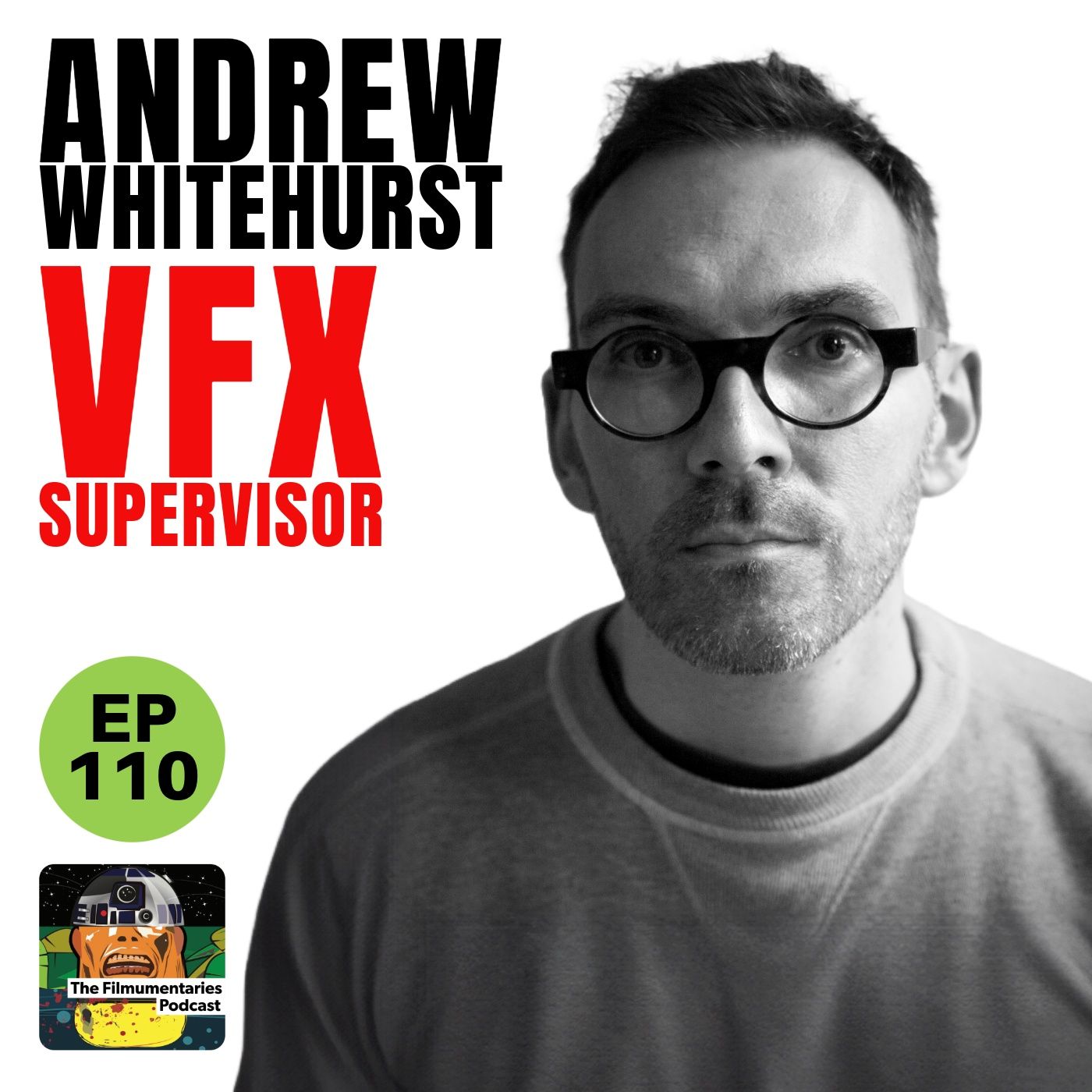
About this episode
Andrew’s journey into the visual effects industry is one that really resonates with me, especially when he talks about his childhood fascination with movie magic and a certain BBC documentary. Yes, THAT one! Like many of us, it all started with a spark of curiosity. He pursued that passion at art college and gained experience in various roles, which eventually led him to become a visual effects artist. His early work on projects like Tomb Raider 2 and Troy paved the way for his role as VFX supervisor on Ex Machina, ultimately winning him an academy award.
In our conversation, I got to dive deep into Andrew’s experience working on films like Ex Machina and Indiana Jones and the Dial of Destiny. We talked about the challenges of creating realistic CGI characters and the meticulous attention to detail that’s required for modern audiences. Andrew shares that belief in the value of using traditional tools like pencil and paper in the design process, and on the importance of looking beyond the screen to other forms of art for inspiration.
Through our discussion, Andrew provided some great insights into the decision-making process for visual effects and how to strike that delicate balance between realism and audience expectations.
Key points:
- A love for movies and a fascination with visual effects can lead to a career in the industry.
- Art college and self-learning are valuable for developing skills in animation and 3D software.
- Opportunities may arise in unexpected ways, such as working as a runner or doing graphic design for DVD menus.
- Being open to new roles and challenges can lead to career progression and working with renowned directors.
- Enjoying the process and having a good working relationship with colleagues are key to success in the industry. Ex Machina was a highly ambitious film with a tight shooting schedule and minimal pre-visualization and concept work.
- The design process for Ava focused on creating visual effects that could be executed like a regular piece of drama.
- The decision to use CG for Ava's head was made during the editing process, allowing for more creative control and a stronger visual impact.
- The design of Ava was influenced by a variety of sources, including racing car suspension, modernist sculpture, and human anatomy.
- The use of pencil and paper in the design process is a valuable tool for exploring ideas and understanding visual concepts. Taking the time to manually create something allows for thinking and feeling, which can lead to better results and creative collaboration.
- Observing the world and engaging with different forms of art can enhance creativity and provide inspiration for visual effects.
- Recreating a young version of a character like Indiana Jones requires a combination of techniques, including face swapping and machine learning.
- The use of high-resolution scans and archival material can help ensure accuracy and detail in visual effects.
- Closure on a project is important for maintaining mental health and allows for focusing on new challenges.
All the links
This podcast is completely independent and made possible by listener support. If you’d like to help me keep making these episodes, you can join my Patreon community here: https://patreon.com/jamiebenning
Watch more on YouTube:
Check out the Filmumentaries YouTube channel for behind-the-scenes clips and extra content: https://youtube.com/filmumentaries
All my links
Transcript
Automatically generated, so expect the odd misheard name.
Weird Being Away Media. Welcome to episode one hundred and ten of the Film Ementaryes podcast. This is Jamie Benning speaking to you hear from my house in Southeast London. I hope everyone's doing well and enjoying the podcast so far. If you're new here, welcome a boar.
You've got a whole treasure trove of episodes to explore, over one hundred conversations with some of the most talented folks in the film industry. And to all my regular listeners, a massive thank you for your continued support, especially those of you who support the podcast via Patreon, Patreon, dot com, forward slash Jamie Benning, you are the reason I can keep doing what I love, so thank you for that. Now. Today's conversation is one I've had in the bag for a couple of months now. I had the absolute pleasure of sitting down with Andrew Whitehurst.
Andrew's journey into the visual effects industry is one that really resonates with me, especially when he talks about his childhood fascination of all things movie magic and a certain BBC documentary, Yes that one. Again, Like many of us, it all started with a spark of curiosity He pursued that passion at Art College and gained experience in various roles, which eventually led him becoming a visual effects artist. His early work on projects like Tom Rader two and Troy paved the way for his role as VFX supervisor on X Men, ultimately winning him an Academy Award. In our conversation, we got to deep dive into Andrew's experience working on films like X Macina and Indiana Jones and The Dial of Destiny.
We talked about the challenges of creating realistic CGI characters and the meticulous attention to detail that's required for modern audiences. Andrew believes in the use of traditional tools like pencil and paper in the design process and sees the importance of looking beyond the screen to other forms of art for inspiration. Through our discussion, Andrew provided some great insights into the decision making process for visual effects and how to strike that delicate balance between realism and audience expectations. So, without further ado, here's my conversation with Andrew Whitehurst and I'll be back at the end for a bit more jabbering on. Andrew, Thanks for joining me today.
How did you end up in the industry. Was it a love of movies? Was there a particular moment you can kind of pinpoint. I can it's and given what I ended up doing in terms of a project I worked on, there's a certain symmetry to it. Was There used to be a BBCTV science series in the eighties called Horizon, and each episode was on a different topic, and one week it was on visual effects.
And I think this was about nineteen eighty four, and they'd spent time at Industrial Light and Magic, and obviously at the time they were making a documentary. The project that was being worked on was Indiana Jones and The Temple of Doom. So I watched this thing and I was, I guess nine at the time, and my nine year old mind was blown because I wasn't dumb enough that I thought that the movies were real, but I did think that people built full size sets for everything. And the idea that you could make movies with models and paintings and animation and all of that stuff, it just hadn't crossed my mind. So that was a real awakening of here is the thing.
And I liked making models, and I was interested in painting, and so I don't think I knew at that exact moment that I was going to be in visual effects, And honestly I didn't really make the final decision that that's what I wanted to get into until I was at Art College, But certainly that moment was the seed was planted, and I was very aware that there was this art and craft that maybe was something that you could do. But at that point it was only ILM doing it, and the thought of me, a kid from Stoke, ending up in San Francisco seemed so absurdly remote that I don't think I really thought that it was realistic, but the idea was certainly there. I remember that documentary how to Film How Yeah, how to Film the Impossible?
Yes, with the most amazing pronunciation of Darth Vader you will ever hear Darth Varda. Yes, yeah, which and I also had a little badge that said Darth Varda Lives on It spelled writ incorrectly. I remember that show really, really, really well because I remember taping it off the TV, and that was what kind of sparked my interest. Really. I mean, I was like, you say, so, what year were you born in?
Andrew nineteen seventy five. So I was born seventy six, so we're very close in age. June seventy six. So yeah, I remember thinking, oh, wow, you can actually have a role in these films, you know, like other people can have a role in films. It's not just the director and the actors.
I didn't ever think that I could do that myself, like yourself, you know. But it's interesting that that show sparked so many people's imaginations that I spoke to over the years, people that have ended up in v effects, people that haven't even people in my part of the TV industry, which is like live sport. So many of them I spoke to earth the years know that show is like a jumping off point. And maybe, like me, I didn't really know. I'm not particularly artistic, so I didn't know that a job would exist for me in Ireland, you know.
But you obviously had that spark at that moment. What was the next step you took? Then you went to art college? You say, whereabouts was that? And yeah?
So I went to Art College in Northampton and then up in Carlisle. I mean the main reason for picking Carlisle was it was as far away as I could get from my parents without actually having to move to a different country. But it was a good course in that they had a range of really good equipment and you were encouraged to try whatever you wanted. So some people's final major projects were a radio play, other people made short films, and my final major project was a animation, but that was a mixture of puppet animation. So I sculpted puppets out of class and then cast them in plaster, and I ordered foam latex from Alec Turant's in London that got sent up and made the entire kitchen stink for an afternoon whilst I made those, and I went and made armaches in the machine shop at college, and then that was combined with CG so I the college had got three silicon graphics machines in and an awesome lecturer called Chevron Foy as she was then fent and as she is now who I am still friends with.
And Chevron introduced me to silicon graphics machines and proper three D software. So I'd grown up with Acorn arcimedies computers and in BBC Micro whatever the magazine was, that was the kind of house mag for those sorts of computers. They would always have these yellow pages in the middle that would have software that you could type in yourself, one of which was a brain tracer. So I did that and I got obsessed and interested by that, and then I got my own machine with LightWave on it. So my final major project was a mixture of soft homage done at college, LightWave done in my student bedroom, and the puppet animation.
That was my final film, and that's what was my first show reel, and that's what I took to London and singularly failed to get an artist's job. So I ended up working as a runner, which I do not recommend. But it is a foot in the door, isn't it. It's a foot in the door, And I'm really pleased I did it, and I will always have endless respect for anyone who has done it. Yeah, I think you know.
I didn't enter as a run into my part of the industry. I went in as like a technical operator and I did camera and pete and stuff like that, also loading trucks and making tea, which ultimately is what a runner is in a lot of So I guess you know, the question really is how long does the runner job last? Like you have to go for the absolute minimum possible if you can. Well, I also my sharing, my unerring sense of timing. I graduated just as the movie Lost in Space was being wrapped up, and that was a really interesting project for British visual effects because there were a lot of small companies that were very used to making commercials and that's what their bread and butter was, and none of them were big enough on their own to sort of tackle film visual effects work.
But essentially it became kind of UKPLC for doing that project. And the company which I initially worked for was Electric Image. He was one of the companies who did the Jupiter spaceship for that movie. But the expectation was that so collectively would do a good job for sensible money and then fel work would come rolling in and it just didn't happen. So all of these companies had expanded and bought film recorders and scanners and all the rest of it with the thought that this was going to be the future, and it just it didn't happen.
So the company I worked for winbust and that meant that the whole of SOHO was really quiet for a good couple of years. Two three years, So after I'd finished being a runner, I actually ended up basically doing graphic design for DVD menus for about two years, which was interesting. And the company that company was actually an offshoot of Electric Image. Electric Image who'd gone under, so we still had the Silicon graphics machine, so I was still making things either for my own real or to make interesting animated menus. What projects did you work on with the DVD menuster?
We did all of the first lot of bonds, which were fun, and those there was they had a bit of money to spend so that we got to do some nice animated titles and menu graphics for those. We did Doctor Who. I thing, wasn't it in that period? So this is like what two thousand. Not even I mean more like ninety nine two thousand.
Yeah, it was a big thing, wasn't it. Like everyone was trying to sort of show off their best skills in the menu and the presentation of it, and then it sort of went away for a number of years. V kind of went away, so well, it did, but I think there was a period where it was just like a picture and some text and you would like scroll down it. But I remember those days because you'd have like little hidden Easter eggs and things and sub sub menus. Yeah, yeah, they put Somebody sent me a link to and I've forgotten we'd done this sort of fast forwarding.
But on I did Troy, but as a visual efects artist. Yeah, And there's a massive shot, a big helicopter shot we did for the trailer and the super Bowl and all the rest of it. That's got the whole thousand ships at sea, three of which are real. And that shot was which number for the shot id nun was WP twenty six ten, which I can still remember, however many years later, which gives you an indication of how much of a widow maker it was. And it drove us so balmy that eventually we just had to do something to kind of break the tension.
And everything was instanced so we could put any geometry we wanted it. So we quickly modeled a whole load of rubber ducks, and so we did re rendered the shot with a thousand gigantic rubber ducks bobbing along, which ended up as an estereic on the DVD menu. And somebody sent me this going is this real? I had genuinely forgotten that we had done it, and it's like, oh, yeah, we did do that, but yeah, so DVD menus was a real thing for a bit. But the whole time I was doing that, it's like I didn't.
I can do graphic design to a standard, but it's not really what I love. So I was always working on my real in my spare time, because I'd still got the computer bit lightweight on and just doing the usual thing that the aspiring visual effects artists do is, you know, update your reel, write it out onto B to SP tape, and the machinerom, take the b TSP tape down to Stanley Productions on wardle Street, pay money to have those duped onto twenty five VHS tapes, and then send them all off to the usual suspects and wait for the well, if you're lucky. The rejection letters are usually just kind of, you know, absolute silence. I used to keep a box fire with all of my rejection letters as a kind of you know, reminder, and I did that for a while, and then I got a phone call from one of the animators from Electric Image who said there is a company being set up to make a kids animated kids TV series featuring the mascots for the upcoming Japan South Korea Cup.
You should give them a belt because he says, I'll vouch for you, and you know, they desperately need people, so they you're in with a shop, which I did and I got the job, and that was brilliant. It was I think it was about a year and a half and we started small and expanding. We started small, sort of do the trailer to go to Mipcoon, which is the conference where people go and flog TV shows to people who will buy TV shows, and then it expanded out, so I sort of went from being a very junior artist to being somebody responsible for people quite quick because the company expanded very fast. But it was it was such an education in learning how to work quickly. And that's something that I think when you're a student, you don't understand you and nor should you because you've got more time and you shouldn't be worrying about that, but also you are just or at least I was blithely unaware of how fast you have to work to survive as a professional artist, particularly if you're doing something like TV.
You know, I mean I was lighting and rendering ten to fifteen shots a day, which you had to just to get through it all. And we had this big stadium that was filled with thousands of characters, and that was the one thing that we were able to use rendermount for, so everything else was just done with the default renderer in Maya. But that was my first exposure to render amount, which is the pre eminent renderer that's used in movie visual effects. So I started to learn that, which was interesting. So I did that, and then that company then started work on a animated film for a Norwegian director and that basically went wrong after a while, and that company went bust.
And then I freelanced for a bit and did some Whollmark Channel idents and other bits of commercials work. And then I heard that Double Negative were looking for people, and so I went to Double Negative and my first project there, and so my first actual gig as a visual effect artist was Toomrady Too, and that was two thousand, I think two thousand, Yes, great, Yes, somebody offered to pay me ten pounds if I because I wanted things I did was the titles for it to change it to say Cradle of Filth. But I refused to take the money. And what was what in what capacity were you involved in that film? So generalist three D artists and inasmuch as pretty much everybody then was a generalist artist, the sort of you know, I think I was employee number sixty two at Double Negative, and that's including the folks running the company and the accountants and everybody else.
I mean that literally we were on one floor in Shaftsbury Avenue with ducting running everywhere, so it looked like the set from Brazil. And yeah, so that was my first first job as a visual effects artist. And when did that sort of you've mentioned, like everyone was a generalist back then, When did the industry to kind of get divided up into those individual roles. Was it based on the complexity of the shots that were needed or was it just the industry got organized? How did that a bit of both?
And also the companies got much bigger, and so you tend to want to make departments because it's a sensible way of structuring a larger company. And the work got as you say, the work got more complicated, so people tended to want to focus on something particular. I mean most companies still have generalists. I mean ILM certainly is has generalists, which is the you know, here's three tricky shots that we can't really pipeline, make this problem go away kind of people, which is, you know, a great thing to have and it's a lot of fun. But it's even with generalists, you'll find that they'll specialize to a degree.
So you know, you do not want me doing character animation for you. I am not good at that, but you know I can model things and brig things and certainly lighten or render things, and that's kind of where I tended to devote myself with the sort of lighting rendering look there, of making stuff look nice kind of end of things. But all the other things I can do to a standard, which is a supervisor is very useful because even if I don't think that I'm good enough to actually do the work, I know enough to be able to have a sensible conversation with someone who is and to be able to understan and what their problems might be. And then you know, maybe if we're filming something, try and shoot shoot things in a way that will help.
So I think I definitely find that my background as a generalist meant that knowing how most of the sausages made was really useful, and it's still really useful. Because looking at I mean, I know IMDb is not always the most accurate filmography, but it seems you jumped to senior visual effects on Troy having been technical director on Lara croft To and then you know, you're you're sort of seemingly climbing the ladder quite quickly out was that? I think you even mentioned on that on that. That video for the was it for the World Cup you said? Or for the Yeah it was a kids TV series.
Yeah, which I have vague memories of actually, but you sort of were managing people quite quickly. Is that something that sort of came naturally to you? Did you see the sort of ladder ahead? No? I mean I have never really had a planned career progression, not because I don't have any ambition, but more because I think the key to happiness in any creative endeavor is to learn to enjoy the process and to learn to enjoy the now.
And most people I know, or who most people who I have met, who have been ultra goal focused tend to be fairly unhappy because if you get to that goal, then you get ten minutes of satisfaction. I mean it also applies to awards chases, I think, but you tend to get people you're happy for ten minutes, and it's like, well, what's the next thing, and then they're miserable until they get that, and then they get another ten minutes of satisfaction, which doesn't sound like a particularly appealing way of living a life to me. I was lucky in that when I joined the industry it was still pretty small, and I was I mean, I wasn't writing at the ground floor. There' certainly a generation of people who are five years older than me who are still working, but it was it was little, and then it grew pretty quickly, so you inevitably, if you had any aptitude in talking to people, were pushed in that general direction.
And certainly I didn't chase any of the roles that I got. People said, would you be interested in doing this? You know, would you interested in leading this? Would you be willing to see you super this? Would you would be willing to try being a visual effects supervisor?
And I'm you know, trying anything once? Why not? And if I decided I didn't like it, then you know, I'd go back to doing what I was doing before. And you know, I mean, I've got friends with the same ajor as me. Who are you know, let's say, a compositor and there, like I like comping shots.
It's like, I'm now super experienced and really senior. So just give me the crazy, crazy hard shots. I'm going to do those and that's what I want to do. And it's I totally get that, but I was just like, yeah, why not, I'll give it a go, see what happens. What's the worst going to happen?
And get fired? All right, and then try again. So yeah, I mean people just ask me to do things, and I repeatedly said yes. I think that's the thing, isn't that people often don't develop in their careers, not because the opportunity doesn't arise, but often we are our own worst enemies in that we're not sort of agile enough and not kind of willing enough to throw ourselves into things and fail. If you know, if failure occurs.
Failure will occur. Yeah, I mean you are going to I mean I say you are. I have screwed up stuff. It's it's it's inevitable, and you learn from that and provided you screw up less than you get it right, then you've probably got a career. And it seems like again looking at your sort of filmography that you've you know, you've worked with amazing direct is over the years.
You know, Wolfgang Peterson on Troy and Mike Newell and Harry Potter was a goblet for. I got a really good final out of Wolfgang. I don't do it anymore, but I used to do the Ido, which is a samurai based martial art where you'd use a sword and so on training nights, I would have all wrapped up in the appropriate you know police, okayed packaging my sword next to my desk, and Wolfgang came around visiting to come and see what we were all doing, and was looking at what we were all up to and was looking at the shot and the shot I was done was with I was working, was basically done, and he pointed at this and went, what's that? And I said a samurai sword. He went, yeah, no notes and walks off.
If you want to get a final out of a director, I find having edged weapons to hand is really quite helpful. And do you think, like I know, directors talk to each other, you know, there's a bit of a community of directors. Do you think that your name kind of got around between Wolfgang and Mike new and Edgar Wright and Sam Mendi's that you were the guy to work for in this particular show, because I know even within particular companies, you know, like I know Pablo Holman works with Fincher and Scorsese for instance, He's not going to necessarily go and do you know another Star Wars or whatever. But do you think that kind of there is that kind of word of mouth about you and your your sort of level of capability.
Genuinely, I have no clue. I mean, I've as a VISal effects supervisor. I've always worked for a company, so either be in a double negative or an industrial and magic And if you're working for a company, it's in the company's interest to pair you up with a director who you are going to get along with as a person but also creatively. So you know, my background is very arty and that's my sort of you know stick. I like the technology, but a lot of visual effects supervisors come from an engineering or a computer science background, so they see things in a slightly different way maybe than I do.
You know. I mean, I do do programming, but I would not call myself a programmer. I know enough to get myself in trouble, and then I know what to go and ask somebody who doesn't know what they're doing to get me out of trouble. So I think there's an element of the company that you're working for trying to make sure that they they're setting themselves up for success. Because if I get on well with the director and we have a good working relationship, that usually results in a happier crew because they're going to get better notes, and it's just everything is less fraud.
And then over a time, you have enough movies in your resume that a studio who's looking for someone or a director can kind of see the sorts of things that you've done and get a feeling for the kind of things that you should be good at. And I'm sure some of them talk to people that I've worked with before and hopefully they are kind. Forgive my ignorance. But as a supervisor of the effects supervisor, do you ever get to kind of pick your team as well, because you know you might need this guy's good batting, this guy's good bowling, this guy's good fielding. You know.
Yeah, yeah, I mean casting is casting is very important. It's always a negotiation because I'm never going to get literally everybody I want. But it's yeah, I definitely get to say and again because it makes sense that if it's people I know that I'll get on with, then we maybe already have a shorthand, which means that we will get results quicker. I mean that was certainly one of the things that when I was doing ex Smackina, about a third of the shots were done by the studio that Double Negative had at Singapore at that time, and Max, who was the guy who was out there, who was the CG super there, I'd worked with in London a bunch of times, and so he and I already had a shorthand, which meant that when I knew he was on the project, it's like, Okay, I'm not in any way nervous the fact that this whole working relationship is going to be over.
I don't even think we had zoom then. I think it might actually have been real phone calls. Maybe yeah, yeah, maybe. I don't even think we had to scull up. I think it was genuinely over the phone.
But I had the confidence because I knew him and we'd work together and he understood my shorthand when I was describing things, and I knew that he would get what I was trying to say. So it does help. But then on the other hand, you don't want to close yourself off to working with someone new who might end up being amazing. Yeah, of course, I mean on ex Mackinna. I mean that was quite a That was a hugely ambitious film for its time fifteen million budget or something.
I think it more than double. But that kind of came out of nowhere that film. People didn't expect that. I mean, you won the Academy Award that year with some pretty stiff competition. Yeah.
What was that like working with Alex Garland because he's a particularly visual director, isn't he did? He hears? Was there a lot of previous A lot of concept work before. No previous handful of boards, but not. Really why no previous?
What was the thinking because partly cost but also it's a movie that is a sequence of conversations between people, and what we needed to do was design the way we were going to execute the visual effect in a way that Alex and Rob Hardy the DP could just shoot it like a regular piece of drama and not worry about the visual so there's no green screen or blue screen in that movie either. Very different approach, but it's. The right approach for that. And it's also the right approach because we only had six weeks to shoot it, so we were doing between fifteen and twenty five setups a day, which is a lot for anyone who doesn't do it. I mean most movies you've maybe doing five or six.
So we had to be fast, which if you're looking at something you go, oh, well, we need to set up a blue screen for this, it's like, well that takes time, and it's like we just don't have it. So the way that we approached it was, well, look, let's get heavily into concepts and think about design to come up with a design for the Ava character that is going to help us in post but also is going to have the required qualities to make it shootable as drama example, we did things like around the wrists and the upper arms. There were sort of these o rings in the design of the costume that in story logic is where the skin that she had puts on herself at the end attaches. But what it was for us was a whole series of bands around her body that we could use as tracking markers, So there was a lot of thinking about that kind of stuff ahead of time.
I mean, the one thing that made life complicated was the head, which I'll come to in a minute, But what it meant was we were able to come up with a shooting approach that was very repeatable. So you know, we would shoot the drama for three takes. Generally everything was three takes, so you know, two takes for Alex and then one takes for the actors to try something different if they wanted to, and then we move on to the next setup. But we would always shoot a clean plate at the end of each setup and then all of the usual balls and that kind of stuff. And it meant that we got into a groove and into a rhythm, and it meant that we were getting everything that we were going to need to put it together afterwards without treading on the actors or the way that Rob and Alex wanted to stage the action.
The head was tricky because in the original design, and again it was a budget saving approach, it was everything from the shoulders up were supposed to be in camera, So Alicia was wearing quite a lot of prosthetics on their head, and it was it was hard because a really really hot summer rob likes his tongueten lighting, so you know, you could roast chickens on that sound stage if you wanted to. It was hot shot at Pinewood, four weeks at Pinewood, and then two weeks on location in Norway, and the budget saving thought was, if we make everything that's above the shoulders on the abor character practical, then everything that's close up seeing camera, yeah, happy days. And what happened was that wasn't creatively satisfying for Alex because he wanted the audience in literally every single shot to be very aware that they were looking at a robot.
And what happened was that all productions do this is that they will put a contingency fund together for any additional photography after there's been editing for a while, if you realize that, oh, it would be great to have a shot of this, or this scene doesn't quite make sense, so let's go and get some extra bits for it. Anyway, the editing was going great and it was pretty apparent that we weren't going to need any additional photography, so Alexis thought was well, let's use this money and let's do the head as CG as well, for certainly the behind the facial mask, which meant and that's the only bit that I designed on my own. Everything else about Ava is a very very collaborative effort from Jockey to the earliest concepts, before visual Effects was even on the job, to or the in house concept artists that double negative and me and other people and building her.
But the head I had to design in about a week. So I just did a whole bunch of really rough thumbnails thoughts of things that we could have, ways we could approach and showed them to Alex Hear and I hate that one, quite like that one, that's quite like this bit of that one. And then I went and did a nice piece of concept art that would be acceptable to send to the studio so to say, hey, can we use this money to do this? And they said yes. So that then suddenly became a whole bunch of extra shots because all of the close ups on our camera, but then we also have to do every other shot that she's in extra work to.
So that was the only curveball that we hadn't planned for. But because we chock clean plates for everything. It's like, okay, well it's basically more of the same. But it worked out, and it was creatively incredibly rewarding project because everybody was pulling in the same direction. You know, it was tiny production.
We all got to know each other really quickly. A lot of small crew, both for shooting it and also small crew double negative working for a long time, you know. I mean I I did all of the look dev for for Ava and I and rendered quite a few of the shots, and you know, I did a bunch of the effects sims, and it was it was just like, it was a really lovely way to work. And it's the last project where I got to do a lot of hands on work, so it was it was just it was it was an absolute joy to do and the movie ended up pretty great. So it was just all around a really really lovely experience.
Was there a particular kind of ethos on the look of Ava, because I remember at the time thinking, she doesn't look like a robot that I've seen before. Yeah, the rule derivative, Yes, So the one rule that I made for everybody, including me, who was working on the design is no one's allowed to look at robots it was just your band. So what did you look at? Well, we looked at a lot of sort of things like racing car suspension and like really high end road bikes. We looked at for the sort of internal organs because they can be kind of any shape, so it's less of a mechanical aspect of that.
We looked at a lot of modern sculpture, so constantin Brancosi. There's definitely a lot of Constantine Brancosi in there, and human anatomy because what I wanted and what we did partly for psychological reasons, but there's a practical reason for it too, is that there's no cheating in avor, so all of the joints work, there's no cheaty intersectiony stuff. And the psycho logical reason for doing that is I think that people don't maybe consciously notice it, but they kind of subconsciously get a feeling when something is off, and so if everything is totally legit and you can see it, then I think it helps getting an audience to buy into the character and the practical reason for doing it. And it's not actually in the finished film.
It's one of the few scenes that did get cut is there is a scene where the two male characters are in the lab where avers are being built, and there's a gurney with all of the skeleton of another ava laid out there, and that was fabricated, you know, three D printed and chromed and all the rest of it and fabricated for real. And that was a wonderful moment to walk onto the set that day to see something that you know, we'd only ever fiddle within a computer actually realized and lying out there, and you know, everything was articulated and you can move it all around. So that was definitely the design ethos for both practical and aesthetic slash psychological reasons. Ultimately, I do have to say that, and I think when we were doing either Annihilation or Dave's I Forget, Alex and I were talking about it and we both agreed because we're both Mobius fanatics.
There's a lot of Mobius in the design of Avor. Nothing deliberate. I mean, we weren't looking at any Mobius art. I don't think I looked at any Mobius stuff whilst I was working on that project. Of you, though, I'm sure by that exactly.
I can't help it, and and him likewise, So it was it was a It was a we banned ourselves from looking at robots. But you know, I can't ignore the ultimate influence of the French bistrength. So I think they're absolutely right. Though there's something about that movie and that character in particular, where you really buy it. I mean, you've got Ava at one end where you understand the practicality of the way she's built, and you've got maybe like Iron Man at the other end, or Transformers where things just disappear and fold into themselves and all that kind of stuff, which is fine for you know that kind of movie.
It does the job, but it can't be fantastic, is the thing? Yeah? Is you need to believe very quickly for the drama to land exactly. Yeah, yeah, definitely, which some of those other movies I just mentioned don't necessarily have big like dialogue drama moments. You know, a lot of the action is physical stuff.
Isn't it. Yeah, you talked about rigging a three D model just for I mean, this isn't a bit the sort of general film history podcast, but I've spoken a lot of the effects people. But what can you explain in kind of Layman's terms, what you have to do with rigging. Let me see if if I tell you what I think it is, if I'm right, I genuinely don't know. I've not looked this up.
So you've got the three D model of a character. Is the rigging about sort of working out the extremities to which, like a leg can lift and a knee can bend, so that when you come to animate it, you've got those parameters in place. Is that what rigging is? Yes, kind of, it's I mean. The physical analogue to think of is an animation puppet like a wallace or a grommet, where you have a metal armature and then the outer form is placed around that, and when you're bending it into position, the armature is the thing that's holding the shape.
So in CG obviously nothing has any mass inherently, so you do have bones, and you can have other things that will deform a shape, but you're basically the rigging process is to build the skeleton and the armature and the other controls that will bend the model in a way that we want it to, whether it's realistically or something else. But then also gives the animators that controls and the things to hold on so they can pose it and work intuitively and quickly. So it's a it's a mixture of building something that gives an animator a user interface that they can work with to do their job and to make something that a will be able to be rendered at the end. It's not going to mangle a load of geometry into something that the render is going to go no, thank you.
So it's a it's a it's a very technical job, really really technical job, but requires an eye for anatomy so that you know when joints are bending, the way that the musculature moves. That's something that the rigging will do. All of that stuff comes together and that's how you that's how you make a rig and then that gets passed on to an animator. Mm hmmm. Cool.
That's good to know. And so you you get the you know, all the accolades for ex. Macinner at that point, I mean that's adding you're adding to a hell of a show reel. Now at this point, is it much easier for you? I'm not suggesting any of it's easy, but is it is it simpler for you to kind of get the gigs that you want to get and work for the companies you want to work for at this point, because I mean, you're up against what you're up against, mad Max, mars Wars, Martian.
The Revenant. Maybe, yes, Yeah, I know. I mean it was, Yes, it is astonishing thing that happened. Easier to get jobs. I don't know.
I mean, I still don't get things now. It's a dumb question, Andrew. But yeah, so I don't think that's ever going to change. I mean, it's like any creative professional. It's like sometimes either the timing isn't right, or they think you are the right person for the for that particular job, or there's a whole bunch of reasons why it might not.
I I would be surprised if it hurt my prospect, But I can't honestly say that I suddenly noticed that the phone was ringing off the hook. Yeah, I guess there's always a difficulty in succeeding to that level on such a low budget that it could force things in the wrong direction as well. You know, so well, if. They can do it for cheap, then we need to do it for cheaper on the next gig. Yeah.
Maybe, I mean I think maybe, I mean for me, I with the project I did before x Mackina was Skyfall, which was obviously a lot more expensive as a project, so I had if someone was looking at my resis you made, then you know they will be seeing, oh, you know, he's just done something that was a really very expensive, big action movie as well as this little one. So I'm very I suppose the one thing that I am very consciously aware of trying to do with my career is I don't want to be typecast as being the person who does you know, tiny sci fi movies or you know whatever. There's a lot of things that I am interested in. The thing that motivates me is helping people to tell interesting stories with hopefully beautiful pictures.
And if we use the latest technology for that, yeah great, very happy about that. If I'm using a pencil and a piece of paper to do a bunch of it, then I'm equally happy with that. The tool I like tools, tools of fun and the nice things, but it's only what you can do with them that is actually of interest to me, rather than the techology per se. Does it working on a film like Paddington would have been before for X MAC or. After Paddington was well.
Paddington was at the end, I think of X Macina because that was a heady bit of overlap. Because I was finishing up working on X Macanaist, I was starting to work on Paddington, which is quite the mental gear change when you're moving between those projects. And that's actually really hard because it's so any aspect of making a movie is so all encompassing of everything you've got to give that finding the mental space to be able to shift into a completely different production, philosophy, esthetic story, all of the rest of it is really tiring. I mean, we were The work that we did on Paddington was two sort of smallest sequences that frame stores didn't have the capacity to do, so I was never doing the Bear, but we were doing things like in the Royal Geographic Society, there's all of these pipes that Paddington's stuffs of marmalade sandwich into, so we were doing, you know, designing pipes and the sequence for sending a marmalade to get through it.
And then we also did the bit at the beginning of the film where there's the home gets trashed in Peru. So frames still were doing the bears, but we were doing all of the destruction and the environment, so it was it was time limited and we were brought on pretty late, so they shot everything way before we got involved. So that was not anywhere near as a bigger production for US, as as ex Machina had been, but it was interesting and it was it was you know, it's fun to design the sequence inside the Royal Geographic Society, which came in late because they hadn't figured out quite what they wanted, so nothing had been boarded or animatics for that. So I as a matter of course, I always have little Age six notebooks in my pocket because I think on paper.
And I literally just sat with poor King I think it was one Saturday in the in the cutting rooms, and we just designed what the filing system was going to look like, what the shots would be, literally just merely doing little thumbnails in my book, and then I walked back to double negative, got everybody around me. It's like, okay, when you look at the tiny notebook, it's like, go and build that, and that's how we did it. So but it's it's on a small project where you can do that. It's actually a really lovely way to work. But that as an approach is something that often works.
I mean even on say on Indiana Jones, I have the same types of notebooks in my pocket still. I mean, I have a shelf in this office of all notebooks from projects going back on the ten to fifteen years. And the idea in the opening sequence of the train that they are on going over a viaduct that gets bombed and then the train sort of crashes into it was a late edition. I think it actually might. I think that was a Steven Spielberg suggestion actually that Jim liked.
And so Jim sort of says, Andrew, Andrew, Andrew, We've got this new thing. How are we going to do this? How we're going to do this? And we were shooting at Pinewood already at this point, so I was between takes. I was just sketching viaducts with trains and things and showing it to Jim and saying, well, it could be like this, nei ana and that's just too much destruction.
And so I go and redraw something and show them and be like, oh, yeah, maybe that could work. And it meant that at the end of that day, I could take a phone picture of the drawings that he'd liked, send them to ILM and say, hey, okay, right, can we give this to a concept artist to make something more finished that we can get studio signed off. And we made a whole bunch of good design decisions very quickly, very cheaply, just by scribbling things in a notebook. So it's often that I still find that a notebook, pencil and a couple of pens is a great way of getting conversations at the very least happening creatively with everybody who's involved, and sometimes you can actually do a bunch of the design work.
I just spoke to Nilo Rhodis Jamiro. I've interviewed him couple of years ago, and I interviewed in a legend end of May the Legend, and I'm going to show you this, right, give me two secs. He talks about in the first interview I did with him, He talks about how just what you said, just starting with a blank piece of paper and a pencil a biro. He likes to draw with biro, and he he sees it as some. Sort of filtering experience where you're getting all of the bad ideas out of yourself.
Yeah, what I want to show you here is I sent him a copy of a book I made about Return of the Jedi, and. He said, I'll do a trade with you. And wow, one, there's a couple of other bits here another and raw snow speed up. Oh that was beautiful, like a probop kind of Oh yeah, yeh, which the original one was a mobius design. Yeah, hanging on to a speed bike.
That's so gorgeous. Are you just kind of deciding what very expensive framing to go for? This is exactly what I'm doing. Andrew, like, I'm terrified that they're even in my house, like a and like a time, and he drew them for me, and he said, I loved drawing them for you. I was visiting it and he said, I was putting on the music that I used to listen to when when I was doing these drawings back during Empire tre Yeah.
Oh that's beautiful. I mean it kind of blew my mind. But I mean, you're you're going to have this in years to come with all your notebooks. You know, you're going to be able to go to prop store and just pay your retirement. You know, there is something about just that pencil and paper.
Is that is that something that you do for fun as well? Or is it. Oh yeah, I mean there's on the shelf behind me. Some of the things back there am I drawing. Some of them are by real artists.
I yeah, I mean I draw. I draw from me. I occasionally draw for other people if they ask me to, and I draw for work a lot, because, as I said, I think on paper. So the process of drawing, well, it depends what I'm drawing. So if it's a design process, then it's a way of very quickly trying a bunch of ideas out and figuring out what's done and what isn't if it's something like so when I started on Indiana Jones, I knew that we were going to be doing a serious daging job.
The first thing that I did was I just did a whole bunch of drawings, paintings, and I made a maquette which is up on the shelf out there, of Parrison's face head aged about forty And the reason I did that is that one of the main things that were beaten into us at art College, and I am grateful to this day that they did this, was we were told, if you want to visually understand something, you have to either draw it or sculpt it, because there is no substitute for starting with a blank sheet of paper and then trying to make something that looks like something else, because it forces you to look, because it's really easy to say, oh yeah, I look through all the reference images and it's like, yeah, but did you really look, and else is no, you didn't, And because you can't, I mean, you just have to spend the time, and the drawing forces you to do it, and sometimes you'll make a good likeness and other times it will be dreadful.
And I mean there's a few out online for I did an interview for Luke's film when the film came out, and they asked me, so, there's a few of my scribbles up there, and I have enough ego that I'm not going to show the absolutely god awful ones. But in truth, I probably learned more from the ones that were the lightness is bad because I can look at it and go, well, I was trying to make a good likeness and this really doesn't work. Why It's like, oh, well, you know, actually the angle of the mouth should be more like this, and the proportions of the noses and more of this, and you learn and that becomes super helpful when you're actually doing the shots, because I'm looking at something and it's like and almost anyone could look at it and go does it work or not?
Yes or no? And obviously the first fifty times you do it, the answer is no unless you're unbelievably lucky. But the hard part is why. And if you spend the time, you really learn to look at something, then you absolutely can say, actually, you're not. The eye shape is more like this and the phrase that I ended up using in my notes more than any others, and here's one for the facial anatomy FANS is the nasal labial folds, which is the creases that come down from the side of your nose.
Harrison Ford has very particular nasal and mabi or foul shapes, so getting that right was really really key. The other thing that I find, though, with drawing and doing concept art for more creative stuff is that it makes you think about the piece of design more. So. I know a lot of people who say that they quite like using mid Journey or whatever it is as an illustrator. So it's like I'll design the thing in pencil and then I'll get it to render a nicer version of it, which I understand not for me.
I like, I like the process of making things, and I am highly reluctant to give that up. But the thing that I find if I'm doing or finished piece is that you don't stop thinking about the design whilst you're doing that. So, you know, if I'm painting highlights onto a plane or whatever, and I'm looking at it and I'm feeling that, you know, I don't like the way that these highlights are falling on this the way that that means that the underlying shape isn't quite right and I should go and rework that. Or I might be thinking, you know, if I'm desired, if it's a piece of concept art for a scene and it's like, oh, well, we need to see the city burning in the background, that's interesting. I reckon on the other shots that they've done already shot for this sequence, they've back lit everything.
Well, that's not going to work for this, because if we backlight everything, then the atmosphere is going to be backlit and we're not going to see the city. I need to have a conversation with the director of photography. Those are sorts of things that happen when you spend the time to manually make something, because it's not just the doing of it, and it's not just the finished piece. In fact, the finished pieces arguably the least important bit. It's all of the thinking and feeling stuff that you're doing while you're making it.
But then you can take forward and that you can then bring that to other people and say, hey, have you thought about this? Say what about this? And then you can hopefully move together creatively with a lot more thought and understanding of where you're trying to get to it. It's interesting that, isn't it. How just that process of kind of rendering an idea on paper or even verbally, Like sometimes I'll say to my wife, I don't know whether to say this in the email or this in the email, And I might read it in my own head for twenty minutes and still can't decide.
As soon as I say it out loud, I know which one I need to go with. You know, there's something about putting something external to you, getting that kind of feedback loop. And also sometimes it's walking away from it, it's committing something to paper or whatever medium going I don't know, is this garbage I can't tell? And wandering off and then you come back and you go, yes, that is actually genuinely terrible, Andrew, you should be ashamed, or well, these bits are terrible. But maybe there's something in that bit.
And it's if you haven't committed anything, if it's if it's all abstract the whole time, you never move forward from that. Do I know? When I spoke to Dennis Muhan, he's a big proponent of going out in. The world and seeing things. Is that something that you do?
Absolutely? I love. I walk a lot, partly for health reasons and partly to stop me going bonkers. And one of the main things is just looking at the world. And it's like it is impossible to be bored anywhere.
There is always something interesting to look at, you know why. You know this building is like, ah, well, I wonder why that was done that way, and I wonder, oh is that original or was that a bit extra? And there's just a lot of visual understanding that you can get that you can store away for future use. But it's just just engaging with the world, looking at you know, natural phenomenon like oh, that's interesting. I mean I remember again, Indie, I knew that we were going to be doing planes flying at night in the storm.
And on one of the tech records, we were flying down to Sicily and it was highing down with rain and I just noticed that the rain drops made these really interesting rivulet patterns along the surface of the wings, and the way that they sort of folded around the alia ons and other bits is like, ah, and I made a quick sketch in my notebook, I mean more as an aid memoir rather than actually as a direct piece of drawing. So when we came to do those shots for real, it's like, Okay, well we should be doing these kinds of rivulets over the wings, and they should have these kinds of properties. And you get a lot of again buying because it you know, it feels right because it is right. And so yeah, I mean the going out in the world and also the going out in the world and looking at culture that is not movies.
You know, whenever I go and talk to students, and it tends to be sort of visual effects students more than art students in general, it's like, Okay, who are your five favorite painters, Who are your five favorite photographers, Who are your five favorite graphic designers? You know who are your five favorite comic book artists, And if you don't have answers for those, why aren't why not? You know, go and engage with stuff, Go and look at paintings. You know, my picture making is one of the first things that humans ever did, are one of the you know, creativity is literally the only thing that separates us from other animals. But we have since we've first figured out how to spit okra onto the wall of a cave, we've been making pictures.
And there are so many ways of doing that, and there are so many ways of humans expressing themselves throughout history. It just go and look at things, and it's good for the soul. It's it will make you into a better artist. And if somebody is still not convinced, and they are very kind of well, you know, I just want practical examples of why this is good. The other reason why you do it is because that's the language that everybody else in every other department on the movie is going to use.
So I remember I did a project that was going to be very sort of gothic horror kind of show, and the first meeting I had with the director, there was a script, but there was no concept art nothing and is a director who was very known for making pop promos, kind of a very visually driven person. And the meeting basically, you know, I said, well, I have you've got an idea for a visual style for this thing? And he said yes, He said, you know Cuspa David Friedrich And I said, yep, I'm fully aware of my German romantic painters. And he said, do you know the one of the Graveyard where there's a big sort of gate at the end of it and there's a fixator and yep. That actually said that's what I want my movie to look like.
Great, now we can have a sensible conversation about how this movie is going to look because we have a point of reference. So that's the boringly practical reason for going and immersing yourself in other art, But the main reason is just because it's good for the soul. Yeah. Yeah, I often think as well about your part of the industry, about the kind of sweet spot between having enough detail in the shot for people to believe it, but also kind of working out the level to which people perceive things and what you can also not put in the shot. How do you go about kind of making those judgment calls.
I mean, I've had situations in my life where I've thought I've seen some one thing, I've blinked to look back and there's something else. Because the way we perceive things, it's just an input, you know, from our eyes to our brain, and our brain is trying to do its best job of, you know, telling us what's in front of us. But in the movie world, you're trying to often recreate reality. Where is that where is that line? Where is that sort of sweetening?
I mean, I think that the rule of thumb that I and I think everybody else would always use is one of the main jobs that the director has is to guide the viewer to look at particular parts of the screen. And we are very sensitive to that. So the place where people are going to be looking is where we're going to focus most of our effort. It's an interesting thing because I feel that this has changed a lot. Now everything is four K and people are using sharp lenses.
I mean, if you go to watch a movie, an older movie that was shot on and is being exhibited on thirty five MIL, it's so soft, it's unbelievably soft, and you know, and look at Matte paintings for whatever Star Wars or Blade Round or anything like that, and there are huge areas of those images that are super loose. The brushwork is so loose, but it's brilliant because gives you the impression of the thing that's there. And then there'll be bits that are painted with exquisite detail, which is where the eye is going to be. And we can still kind of do that, but in a world where everything is very four K and people kind of get obsessed by resolution and detail and all of that kind of stuff, it's less true now.
So I think there is more focus across the board. Yeah, And you say, you look at say Marvel movies, where the whole esthetic is super crisp, you know, super vibrant colors, just everything is really clearly delineated because that's the style of the things, like well, there's kind of no way to hide there, and that's the you know, that's that's their stick, you know, compared with something like an ex Machina where the movie was shot using JDC Joe Duntan Camera's Crystal Express lenses, which for lens know were old spherical cook S three's. I think that he then went and put anamorphic elements on front and back, and they were used on Return of the Jedi and all of those kinds of movies. But the thing with anamorphic lenses, particularly older ones, is that they're not designed to be used wide open.
You know, generally supposed to stop them down to like T eight or something. And Rob doesn't like that. Rob at shooting at T two eight. That's his stop, which meant that we had a whole world of crazy optical business happening, particularly at the top and bottom of the frame that we had to handle. And so we were like literally warping geometry in our CG to get it to line up with what's in the camera, not because the real life geometry was twisted, but because the camera rendered it as such.
But it has a look and there's a softness to it, and it helps bed everything together, and there's this there is it has a different esthetic and certainly you kind of can then focus on, well, this is the thing that we're going to focus on in these bits will fall away. So it does depend on the job, I think, and also it depends on the technology that's being used to shoot and exhibit it. Yeah, there's such scrutiny. Now though, with like you said, with four K and everything else, people want to be able to pause every single frame and pull it apart. Yeah.
Well, and it's you know, we were lucky when we started Indy. Yeah, to see Steven Spielberg's personal thirty five mil print of Raiders. Wow, that movie is so dark. It's crazy dark. I mean it's shot with five two four seven stark, which is very contrasty anyway, so the you know, the shadows, everything just plugs up.
There's like there is nothing in those shadows. It he's black. And similarly, it blows out really quickly. But you know, that's that's the aesthetic of that time and that's why all those movies look the way that they do. But modern audiences are not up for that.
And that became one of the conversations, particularly for the opening sequence in dial of Destiny, where we're you know, sort of going back to Indian is Pomp. It's like, well, how much are we trying to make this feel like a dougie slocum shot early mid eighties indie movie and how much do we have to kind of respect modern cinema audiences expectations? You know, they expect to see detail in the shadows. They expect not to have every highlight blowing it out to white. And so there's definitely you know, not just us in visual effects, but Fadan when he's shooting it is you know, there's some bits where he's definitely go, yeah, I'm going to give a nod to Dougie here.
But then these other bits, it's like, no, this is going to be more us and it that relationship between the new and the old is something that you know, we had to work on a lot. I mean, the interesting, well nerdily interesting thing to me. And I know this because they went and counted it up. Faden and Jim Mangold are very close up centric filmmakers. That's what they like.
Seven Spielberg, Steven Spielberg and Douglas Slogan not so much that they are all more mid shots. So there are more close up, like real close ups of Indiana Jones in the opening reel of Dial of Destiny than there are in Raiders, Temple of Doom and Las Crusade combined, which is bananas, but. It's well are Yeah, yeah, there's certainly a different look about it. But you talk about trying to recreate Indie there and kind of his prime. I mean, again, another hugely bold ambition.
I mean to pull up, to pull that off, and I know that, you know, it's easy in the marketing to kind of say it was ILM face swap or whatever, which I'm sure is actually you know, a dozen tools combined and hundreds of people. But that that was a hell of the thing to pull off because in a similar way that Spielberg used to talk about Jurassic Park. You know, if you don't believe that first dinosaur you see, the movie's kind of done. You've got that moment with the bag off his head. If you're not buying that, then you're kind of don exactly.
I mean, that's the first shot we started working on. It's like, all right, well, let's just rip off the band aid. We're going to do the hardest one first. But I mean, but that's but that's again going back to the psychology of making films. It's like Gym's totally doing this deliberately.
It's like, yeah, it's like you pointing at us. I l M, I've got to sell this. But we're going to We're going to get straight in there. We're not going to hide in the shadows for a bit, and all the rest of it. It's just like first shot, bag off the head.
There he is, there's Indiana Jones, and you know, if we can get those shots to work, it buys us a lot of credit for the rest of the sequence, which is true, and he's very smart filmmaking. I remember the first I mean the first meeting after I'd done the interview with Jim, where we mostly talked about banjo's because he's a he's a keen banjo player and he had a banjo in the background, so we talked banjos and old movies, but were first like proper actual work conversation we had, you know, he said, well, how are we going to do young Indie? And I sort of went through all of the different techniques that you can use, you know for CG head or we can do some paintwork to take out creases from the plate, and obviously there's this sort of machine learning based approaches and he was going, yeah, yeah, which one.
We're going to use all of them and we did. And so the face what is is a suite of tools. Because the we were equal parts smart and dumb, so we were smart enough to know that there wasn't going to be one tool we were going to be able to use to do this whole thing. But we were dumb in that we thought, well, we're probably going to find that there's going to be a recipe where, you know, the eyes are always done this way and the cheeks always done this way, and which was absolutely not the case. I mean, it ended up being every single shot, which is its own kind of collage of techniques and all the rest of it to get it to work.
But the thing and the reason for calling it face swap and the reason no one's trying to be vague particularly, but it's like it's a bunch of different technologies. And the thing that we needed to be able to do was to give the artists all of the different ways that you can stick a face together and have them be able to kind of using their skilled judgment, and you know, they're spending their time looking at what Harrison looked like and making those calls to piece it together to make each shot. And it was enormous amount of labor, huge amount of labor, and a huge amount of labor of really really skilled artists who had put in the time looking and understanding to get that because you've got two sides that you've got the you have to have the lightness the the performance as well.
Yeah, and if you don't have the performance, we're just as dead as if it doesn't look like forty year old Harrison Ford. Yeah, So how do you kind of ensure that between the plate may be shot with the. What is Harrison's seventy late seventies. It was seventy eight when we should. Yeah, between you know Harrison now and all the technology in between and the final result, how do you sort of ensure that Harrison as the actor is still driving that performance.
We try not to do too much hand animation unless we need to, So everything, whether it's full three D CG, is driven by what he's doing on set. And say with the machine learning, is that it's analyzing the footage and then suggesting what it thinks things should look like, and all of those bits coming together us all being basically driven by what's in that scan. It's the thing that can be tricky is that an older person's face moves in a slightly different way to a younger person's face. And I know on other projects where they've started cutting with an older performance. There will be aspects of it that they fall in.
Love with it, like oh, I just love the way this creases across his forehead and this shot and and the one thing that we did and the main way that we used a lot of machine learning as an automatic semi automatic process was on the circle takes, which are the sort of selects that the director likes from. Each set up. We would run a machine learning low res pass on it so that they would get in the cutting room. They never saw the original material. They saw the material with the sort of box around Harrison's head with a low res version of the face, but kind of you help the performance, and that's what they cup with initially until we were starting to live with better versions.
And I think that was really key because it meant that Mike McCusker, the editor, was always used to looking at a younger face and so we didn't fall into that trap of falling in love with something that we really shouldn't have. Yeah, I just think, you know, our perception, Like again, I go back to that kind of Jurassic Park example, We've not seen dinosaurs move before, so we just have to kind of buy you know, now we're getting into the realms of you know, Watchmen, where there's a CG character and we're looking. At him move and maybe the animation on the mouth isn't quite up to scratch. And then we're getting to dial a destiny where you're getting to the point where at points is difficult to. Know you're not even thinking about it.
So that's what we want, I think what we want. The complexities of the human face are just infinite. I mean, I'm even on the cool now, I'm sort of kind of reading your face and your expression, and you're the nuance of all those things. It must be really difficult to kind of say that isn't quite right, But it must be so difficult to well, it's easy to say that isn't quite right, but it must be super difficult to pinpoint what isn't right about it? What is that little?
Is it? Yeah? I mean you you, you you. What you have to do is you have to look back at the previous versions of the shot. It is like, is there something that we've lost and which case you can kind of directly ab them and go, oh, that's different.
Okay. Maybe it's that you also have your institutional knowledge that you developed over the time of working on it of just looking at and going, oh, no, nasal label folds or the other thing in which we did was we we wrote a tool that would make thumbnails, like five thumbnails of scams from the original three movies of the face as close as we could get to what we had in frame, and so they were just like animating twinkle away at the bottom. And that was very very useful for me because when I'm being center shot, it's like, is this working? All this bit I think is working. I'm not sure about that is I could look at these other things and it's like they weren't an exact match, but you can see, oh, do you know what when he smiles, this corner of his mouth goes up more this way.
And actually the way his eyelids work is that his top highlids kind of disappear into his head. So we're not quite getting that. And those tools enable you to make better choices, but its iterative, you know. I mean some of those shots we went through eighty versions of before he got to the one. You're talking about, sort of referring to those original movies.
Did you also have access to like behind the scenes material or kind of outtakes or b roll of any kind. Some that there wasn't that much. What was which was incredibly useful was the publicity stills, which and the ones that were super super useful is that for Raiders, some kind genius, unaware of how helpful they were going to be to future visual effects artist did some amazing headshots of Harrison Black and White ten eight which had been scanned at some point at stupidly high resolution. So when you're building the full CG head and you literally do have to worry about where every poor is and what the quality of every poor is, you're not ever going to get that off the shots in the movie, because with the best will in the world, I don't care what resolution you scan thirty five mil anamorphic app you know you can scan it two trillion K if you want.
You're not reading the license plates in the background of the shot, and you're certainly not being able to perceive poor detail, which we needed because we live in a four K world where you can see that and people expect to see that. But because we had these publicity stills, and there were also some ones that I think we're done for Empire Strikes Back, there were color and shot on a Hasselblad and they were lovely as well, not quite as good because obviously it's just slightly smaller NEG well quite a bit smaller negative, it's still very good quality compared to thirty five mil. We were able to look at those and then apply that to the fully cGy aspects of the build that we were doing. So yeah, we had we we we were greedy, and we hoovered up everything that we could and that people would give us.
But I mean, I'm not even sure really where all the neg was. And this also was at the time of COVID, so lots of the you couldn't get access to a lot of the archives because the archivists were at home and they weren't allowed in. So even if we could have, even if the b roll they said, yes it's it's on this shelf somewhere, they wouldn't be able to get it, and there would have been now underscan it. So we were limited to what had already been scanned, and they had done rescans of all the movies very recently, I guess, for four K Blu ray release, so we had very good quality, or as good quality scans as you could hope for of the movies and then yeah, we raided the archives for everything we could get.
Raided the archive and raided as being the right word. Is there any sort of part of you that when a new tool arrives that can do something better. Is there any part of you that thinks, I'd like to have another go and you know, kind of improve on what I'd learned, or you were one of those people that's always looking forward to the next project and the next challenges. I tend to try and look forward to the next project because closure on a movie is a really important part of maintaining some kind of mental health. So you I mean, the deal that we all make with ourselves is we're going to make the best pictures we can given the resources we've got available, and then we hopefully do that, and then it ends, and then you think about the next thing.
So there's nothing that I want to go back and redo just because the post traumatic stress disorder of it is. I don't want to have to deal with that and this. I just want to do something different. You know, it's making a movie is so intense and often for quite a long time. I mean, you know, an average I'm on a movie for like a year and a half on average, and India I was on it for three years, you know, NonStop, like literally NonStop for three years, and you have to let it go otherwise you're just going to go crazy.
So yeah, it's I'm hyper focused about the thing I'm currently working on, and then when it's done, it's like, Okay, put that aside, go and play a guitar for a bit until you feel better, and then what's the next thing. Well, I hope you enjoyed my chat there with Andrew Whitehurst. Thank you Andrew for your time. Coming up, I have my chat with a very interesting ty Ruben ellingson, another VFX supervisor. He's also an educator.
My conversation with Marie Anne Enfield is coming up to She was somebody who worked at ILM as a camera assistant and some other effects houses in the nineteen eighties and nineties, often the only female member of the team. Yeah, we had an interesting chat a few weeks back. John Spier it's coming back on to the podcast to talk about his latest documentary project, all about the legendary actor Christopher Lee. And I've recently spoken with production designer Kevin Jenkins, so that's coming up soon too. As usual, there's lots going on in the background here at Filming Mentary's HQ.
Keep across the socials on Facebook, Twitter, still calling it Twitter, Instagram and threads oh on YouTube too. I'm putting some more videos up there, video shorts and also full episodes on video, which if you're a certain tier of Patreon you'll get early. Please don't forget. You can support the podcast by visiting patreon dot com forward slash Jamie Benning, or by buying a T shirt from the Tea Mill store, or perhaps by buying the return of the Jedi book that Justin Berger and I put out last year. All the links are on my link tree, which can be found either on the show notes of this episode or any other episode, and it's also on my social media profile on whatever platform you look at.
Thanks for joining me, and I hope you can do so. For the next stepisode of the film Wementaries podcast Weird Gingway Media



Similar episodes across the network
Matched by shared keywords.
-
Special Report: Beware Boiúna (2026)
1 shared keyword: vfx
-
Primetime - Kulture Meltdown
1 shared keyword: alex
-
Episode 755: Return of the Jedi (1983)
1 shared keyword: ilm