
Season 1 · Episode 111
111 - TyRuben Ellingson - VFX Art Director and Educator - Star Wars and Avatar
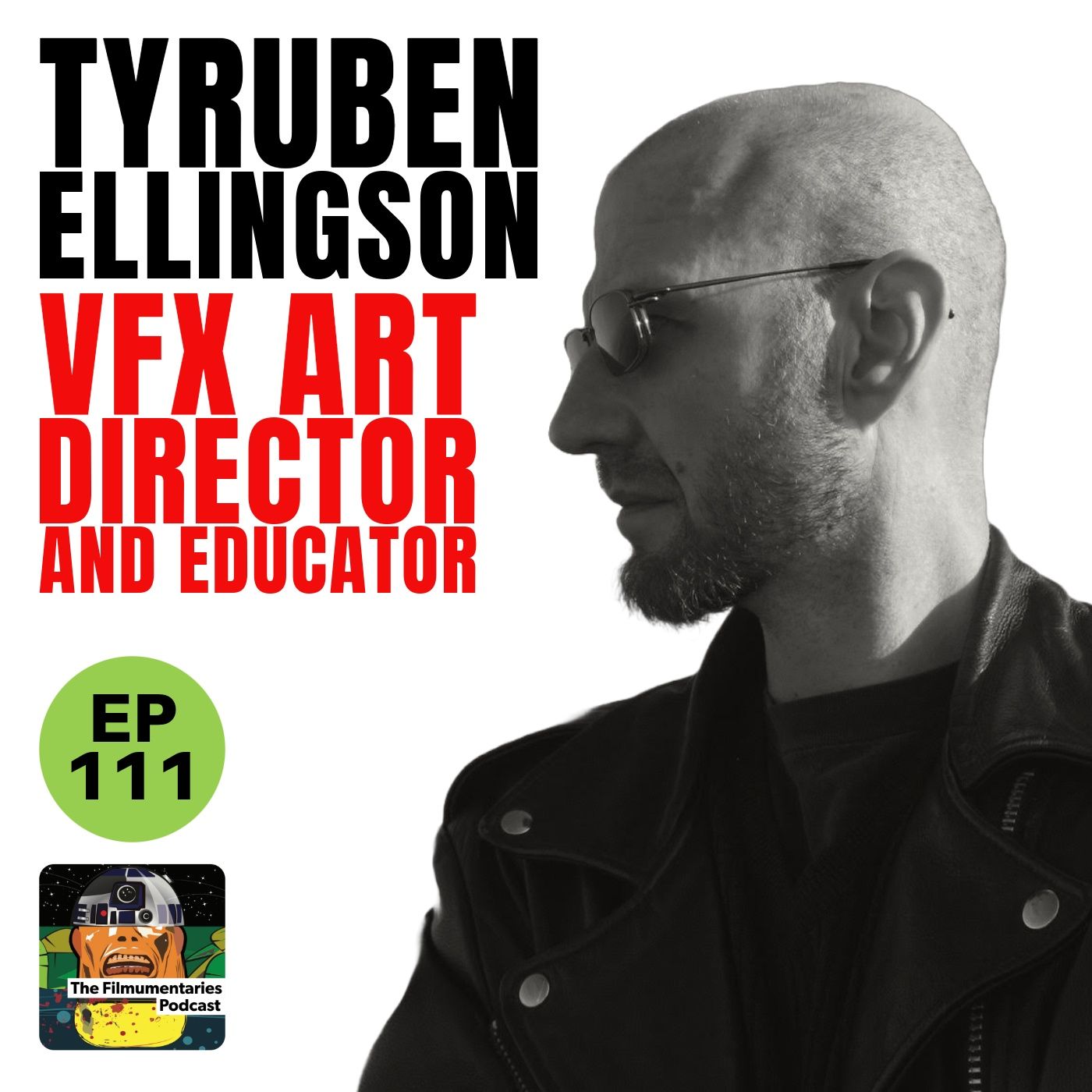
About this episode
Key moments:
- Seeing '2001: A Space Odyssey' sparked my interest in visual effects.
- Self-permission is crucial for success in any field.
- Building a diverse skill set is essential for a career in VFX.
- Collaboration is key in the creative process.
- The fast-paced environment at ILM taught me to adapt quickly.
- Pitching ideas is a vital part of the creative process.
- Working with George Lucas was a dream come true.
- The experience on 'Avatar' solidified my role in the industry.
- Teaching is a natural progression in my career.
All the links
This podcast is completely independent and made possible by listener support. If you’d like to help me keep making these episodes, you can join my Patreon community here: https://patreon.com/jamiebenning
Watch more on YouTube:
Check out the Filmumentaries YouTube channel for behind-the-scenes clips and extra content: https://youtube.com/filmumentaries
All my links
Transcript
Automatically generated, so expect the odd misheard name.
Weirding Way Media. Welcome to episode one hundred and eleven of the Film You Mentors podcast. I hope you're all doing well. This is Jamie Benning here talking to you as usual from my house in London. If this is your first time listening, you've got for a hundred episodes featuring some of the most fascinating behind the scenes artists and some unsung heroes in the film industry.
And to my regular listeners, thank you so much for your continued support, especially those of you on Patreon. You're backing just keeps this podcast going. It really does. Today I'm excited to share my conversation with ty Ruben ellingson good Name, visual effects artist, concept designer, art director, whose incredible career includes work on Jurassic Park, The Style of Special Editions, Avatar and Pacific Rim. He's collaborated with visionary directors like George Lucas, James Cameron, Gaielmo de Toro, helping to bring their imagined worlds to life.
In our chat, we discussed ty Rubin's early inspiration from two thousand and one A Space Odyssey when he was a kid, his work at ILM, and how we played a key role in the v Efex during the Jurassic Park era. He also talked about his passion for education and mentoring the next generation of artists and passing on those invaluable lessons that he's learned throughout his career. So, without further ado, here's my conversation with a brilliant ty Ruben Ellingson, and I'll be back at the end for a bit more jabbering on, Tarruben, what initially drew you to the field of visual effects and concept design and all the many things that you've done in your career. Is there a particular thing you can put your finger on.
Was there a particular influence? Absolutely, it was seeing two thousand and one Space Artisty in nineteen sixty eight with my father and I'm at the Cinema seventy theater in my hometown and at first, you know, the experience of watching the film was just profound in the sense that I was, you know, eight years old, and I couldn't make head to a tail of it narratively. Well, maybe that's not true. I knew something important was going on, but I couldn't formulate a narratives that was you know that I could say it was about this, and my father was an artist himself, taught at university as a fine artist. You could see how perplexed the movie made me.
And then he would ask me about it, and then I would I would ask him questions and he would say, well, what do you think it means? You know, like I'd say, well, what were those ape people? You know? It was like, well, what do you think they were? You know, what was that modeliss saying, you know, of course I don't know that I knew the works.
I probably said the big black tube or something, you know. But eventually those discussions led to my realization that people were involved in the design of those things, and that somebody had to sit down and figure out like what does spaceships look like? And of course, you know, the space program was in the news all the time, and I hadn't really connected the dots between spacecraft that were big, built to really use by humans and somebody drawing those, you know, like like an engineer, and then the differences between what these categories of involvement were. And so I started getting very interested in like, Okay, you have a real boat, but you're going to draw a fantasy boat. Is that thinking about it in the imagination.
Is that what happened on two thousand and one Space Odysty You know, It's like I could start to see that it was a riff on reality, but it was more visually about the story, right, it was about the ideas. And so I think, you know, I don't know what year the making the two thousand and one paper back that we all have came. Yeah, but by the time I saw that, I was like, this is this is what I'm like. I want to be involved in making up stuff in my imagination. It then becomes real on the screen.
And that was that was the connection that really shifted my enthusiasm for movies in general. But then I think made me start to think about how are these things done? How are these things made? And so when when when Star Wars came out in seventy seven, I was right, I was already you know, what were they? I was already primed for the the whole thing.
Then it was like everything was sort of like, oh, here it all is again. But in this time there's magazines and documentaries and television shows, and you could suddenly access all that information and you could start to build a picture of the pipeline right. So in the beginning, it was the aspiration with two thousand and one and the kind of inspiration to my imagination. And then by by the time Close Encounters, when the Star Wars came out, I was really seriously thinking how could I get how could I get there? So I was in the middle of the United States, up right by the Canadian border and Town, Minnesota.
It's way far away from Hollywood, so it was like another plan. So I had to do a lot of thinking and working to even geographically get there. And is this something that you've got kind of in the back of your mind that you want to achieve someday because you've got to get through school and you've got to get through college and all of those things. Or was it by this point, by the time Star Wars had come out, and you'd seen those specials and read those magazines and seen those names of all the VFX people that we will know and the designers, or you know, was it was it something that you really had your eyes on or was it something that you kind of knew you get there eventually and maybe hopefully got the eventually.
I mean, did you give yourself kind of permission to kind of accept that it could be you in that position in the years to come. I think, you know, you're using a vocabulary that's similar to what what I use of by students. And I always say to my students the most the most important permission you need to succeed is permission from yourself, you know, and you can look for external validators, but the permission to succeed ultimately that matters is the one that you did yourself. And so I think I was skeptical that I could do it, but in some deeper level, I was driven by the possibility, so I must have you know, I think there was a part of me that thought, well, why couldn't I But what would be the thing?
And I couldn't come up with a reason not to other than I figured, you know, geographically be very hard for me to get a job there, to get my way there, And then I think I over I mean not, I'm going to be careful because my admiration for Ralph mccordy, Joe Johnson it has never waned. But I think I estimated like that that that that that level of of ability and technique and practice was well way above me. So I I think I didn't overcompensate by any needs. But I really compensated by everything I was doing creatively. I took very, very serious and I think it was that serious workoutsa coupled with you know, a strategic imagination that allowed me to over time make my way there.
And I just to put it in context, I arrived at Lucassom just prior to my thirtieth birthday. So you know, I I was in school, I was very you know, because my father was at the university. I attended undergraduate school at I wasn't serious student, so I got through school in four years, then went to grad school, and then it was actually around in my mid twenties where I really redoubled my efforts on how I mean, by that time I was I was moved a couple of different places. I was living, you know, living out on my own, I tried, I lived to another state, and I moved across the country. So it all kind of culminated around, you know, believing the opportunity would be there.
If I could get myself there, because that was such a small group of people really as well, I mean, the effects industry was kind of dead before Star Wars in many ways, and know hence George having to create ILM in the first place. But also a lot of those people weren't employed because they had one particular skill. They have multiple skills, right, I mean like Joe could draw, he could paint, he could model, he could do all of those things. You know, we were talking about Neilo briefly before this. He was of course brought on for Empire as an industrial designer.
Wasn't really a movie guy, A toll. How did you go about trying to kind of work out what the skills were that you needed to take you age thirty into irelem. So there was a movement in the fine arts universe that grew out of the pop art. Of course, most everyone knows pop art from Andy Warhol and Campbell suit pans, but there was an outbrow so that that was referred to as photorealism, and it was there were a number of people that painted in a very photorealistic way. That would be Richard as Steve's and Chuck Close and I was.
I was in the fine arts end of the pool all through university, and the thing that really got my attention was a painter by the name of Jerry Art, who was a completely a fine artist, but he painted with the airbrush, which was a technological tool that was still viewed as sort of a It was viewed. It's weird because an airbrush was viewed by painters. How we then later viewed photoshop. It's like less real, right, But I had a good fortune and meeting Jerry and studying with him, and I really focused on realism. Now realism if you're good at it.
He is a very flexible skill set, right, because you can apply it to any subject. So I was already doing like kind of flying art work, but I knew I could just focus in on a robot and do a robot because it was, you know, basically the skill it's the same. And then when I first graduated to your point, I actually worked at an architectural office, learned how to read plans, and then became autobilder. So I worked as a professional mildbuilder for five years. And while that was that period of time, I was learning a ton about fabrication technique.
I was letting rund mills and letting run uh you know, panagraphs, and I was learning about photo engrading and how to use different materials. So I was always building up a kind of repertoire or kind of a portfolio of experiences that I figured could couldn't lead me towards uh working at Industrial and Magic because I knew they had model holders, and you know, I knew that they had Matt painters, and of course I'd seen all the work that done some so I knew that that technically I could get within that range, right, and so it at some point I felt like the collective skills that I've been developed for myself, it started to make more and more sense that I could if I could get in the door, I could make a play and it would be logical.
I mean, like sometimes logic you can't see it all fit together. It's behind you and then you can go out. It's structurally here. And I was just putting these pieces together, moving forwards your time. And at one point I looked back into oh, I have a pedigree now that I could say this is what I accomplished.
And then it was through a circumstance that is very complicated and long. But there was an associate of mine I was living in Dallas, Texas at the time, who was doing some consulting for Lucasfilm Proper and I got this guy to bring my portfolio out there, and then I had made this custom build portfolio that was that was only for isle M. You know. It was like red lacquered plastic in red, perfectly mil because I was working in model shops, so it was like a it was the size of a phonograph record, you know, and it and it opened and then all the pieces were like perfectly photographed and they really demonstrated your model building, your science fiction, his realism. And I included some of my fine art work, which later on speaking with Bill George, who had been at the meeting where they looked at the portfolio, he told me it was the fine art pieces that really opened the door for me, because so much of the things that that young up and coming you know, artist, designer, film people showed them was what they what what Ilem was known for.
So here's some spaceships I designed, well we do spaceships, you know, Here's here's this stuff. But then I had this other body at work that I think resonated because it was my creativity and not just me demonstrating, you know, the competency of the work. And I was really pleased to I was on the fence about including it, but because my life at that point where you know, my my degrees were at fine art and I'd been in a lot of shows, so I figured they would go, well, where's the fine art work. So I included it, not knowing how it would be received, but it actually I think made a big difference, which is to say, you know, you have to curate your body at work in a way that is not only built around what you expect people to want to see, but give them something maybe unexpected, and they think that that helped the door open a little bit.
And then you know, I basically started in the art department at a time when there was a little bit of an expansion going. Yeah, Steve Beck, who was a very successful commercial director, but he had come into ISLM under Scott Ross and was really charged with building out a larger art department that was really devoted to doing other kinds of work, be science strictly film work. So they were interested in theme park work, they were interested in more commercials, you know, ILM commercial divisions. Just kidding. So I kind of came in at that moment with Mark Moore and Doug Chang was just ahead of me.
So this is like eighteen seven eighty eight something like that. It was. I started working there in nineteen nineteen eighty nine, so eighteen nine. I really think of my time at Lucas almost that decade, starting in night. Like Last Crusade, Back to the Future twos.
On the Virtue was there. I you know, they were working on the Abyss I think was underway and Monte yeah, but mostly it was it was mostly the back to the Future stuff that I was front and center. But but then right away, you know, like I started to meet people and engage with the larger community in it, I was I was. I mean I again, you know, you don't know what aspects of yourself growing up are going to be beneficial. But I could adapt to the success I saw around me because I would think about it in a strategic way, like what's happening here, Like how are these people getting more done, getting more bringing the work to a higher level, bringing how are they ndging inroads with other individuals within the company.
And so the great thing was you could you could actually study people that were successful right on the job, you know, like like and everybody was very focused, and everyone was very serious, everybody were everybody was putting in hours. Is there anything that surprised you about it when you first arrived, you know, was it like the level of work or the level of seriousness, or the I don't know, the speed at which you had to do things was or anything like that that kind of struck you when you first write. Yeah, I mean it was the speed was was the piece that I was most fearful because my work I had the luxury of no real deadline six even with the model building company, we would have, you know, multiple weeks, like like a month and a half, ten weeks, you know, so and I would be involved on a daily basis, just chipping away.
But with when you're doing that kind of work that The Island did, it was fast turnaround. Like you had to do like if you're going to do a concept piece for a bin package that was going to go to a studio, you had to do it in a day. You had to do sketches that were showable, so you had to have different levels of finish. So you had to like idea sketches, then find sketches, and then you put marker on the marker sketches, and I could see people like most impressive to me was John Dall who did a lot back to the future work and she could sit it at dusk and just produce work all day. I mean it was just very he'd he'd been very he'd work with I think Nilo brought him in there she originally, and he had a grade marker technique.
He could lay down drawings, and these drawings had that had a real presence to them. There was like he had a kind of like they looked like work in progress. So they had a little bit of a kind of like you're looking under the behind the curtain, right, because they had a looseness to them, but they actually the ideas were really indicated. So if you look at like he did a lot of work on you know, Jurassic the first film, and if you look at it, there's a playful quality to the work, but it also looks very loose, like it's just it's just coming out of him very easily. And I wasn't like that.
So I really learned a ton from John Bell Doug Chaing. Doug was similar to how I was when I He was very meticulous and his work was very tight. Having been a photorealist and working in that way, I really gravitated towards really precise, tight work. So I kind of felt like like I resonated with Doug in a certain way, but I was really captivated by John Bell. And then I came in with Mark Moore.
We were both hired within a couple of weeks, and Mark had a kind of pretty solid foundation and you know, doing good illustrations with with markets and things like that, so I could ask him questions and that look like you know, But but I had never picked up a marker, like a design marker until I went there, and I focused almost exclusively on marker illustration for the first few months because I could see I couldn't paint as fast as you could lay out marker and now and the marker technique I really tried to get my handle on was somewhere between Doug and John and probably could you know, try to be able to be move in that looser world when and then tighten him up when I needed to so, and then I think the the other thing to your question is the importance of relationships was something that I didn't think about because I figured that people were assigned, you know, like here's this week's work, you know, but it really wasn't like that.
It was. It was how you engaged with the larger production. So like your relationship to the visual effects supervisors like Ken Ralston and Scott Squires, Dennis and you know, you had to they had to for lack of a better words, like they had to have confidence in you. There was a trustponent. You needed to deliver and oftentimes they were doing multiple things, so you had to be a self starter.
You had to be able to kind of adapt to their thinking, not always be about here here's my ideas. You know, you had to be able to go, you know, in a very quick time like well what are your thoughts on this tennis? And then you have to be a part of the team, you know, and so that collaborative aspet I was actually I sound that very exciting, you know, like I saw, well, I know what I know. This is an old somebody told me this once. If you know what you know, then you know that.
But if you know what others know, then you know more than what. It's one of those like if you have one idea and they have one idea, then you also have one idea. If you can understand then you have two ideas, then you can get more done. And it got more real estate or I'm not doing it. I'm not very good job explaining.
But I saw the power of collaboration. I really focused a lot on being a collaborator, and it could. And so the other thing is that those relationships is how you were moving from show to show. I was there in a period that was way more fluid. There was a lot of freedoms.
We didn't really have a we had it. We had it like a department head. But they didn't handhold a lot of stuff, you know, it was more they did more. They did the HR stuff and made sure that you were you know, that you had your markers and you had what you needed. It was more of a thing.
And then I was very interested in, of course, what was happening with the CGI stuff, and so I write as soon as I could. I you know, as soon as I was in the door and working there, I started to try to figure out how that universe was coming along. And uh, you know, and and you know, had build relationships with you know, Mark Depey and Steve Williams and West Akahashi and and Ellen Pune, and you know, I kind of you know, was set up to would be eligible choice for a movie that was about CG, you know, and then they ended up The Jurassic Just just. Just going back briefly to you were talking about the point where you're kind of pitching for a movie here. I think a lot of people's assumption is that a director producer will come to ILM and say, we want you to do this film with us.
But of course you had to pitch for those movies going the other way as well. A. Could you talk about that little bit and B you were talking about the collaborative aspect of it. I just wondered if there was any situations within that pitch process in the early stages where you were working in isolation so that your individual ideas could kind of thrive in that maybe those first few meetings. Was that okay?
Because I know Nilo said like him and Joe and Ralph used to work completely separately in those very early days, and then after a while they'd come together and they'd find a sort of path to go down. Was it like that then or was it collaborative from the start. If if you were in the Ilm art department, you were you were working on a major film. I mean, every art director was attached to a production, and those the time demands on those would would vacillate, you know, like you could have really binsy periods and then lighter periods. So each individual art director at that time had to kind of modulate the work for the shows they were assigned to, the works that the shows that they were you know, part of that team, and then use any extra time that they could squeeze out of their schedule to do concept work for tage packages.
And you're exactly right. The Islam Art department was sort of a incubator for what if we did this movie? What could it look like? So sometimes directors would come and they wouldn't have anybody, but they would have a studio interested in the project. They would have you know, maybe they have of course they have a script, and then they would come to ILM to get you know, a budget for the effects and then as part of that some of the things they were imagining.
You couldn't really generate a budget if you have no idea what it is, so you that kind of led to this shop approach where we would get a chance to do pre production concept artwork on various films, just as you would if you were hired in the industry to come into a film and be upfront as a board out of a store, a key framer or you know, a designer, and everybody loved to do that work like that was the fun work because it was, like you're pointing out, it was very blue sky. So, you know, I remember Chuck Russell who did the ask early in my time. He was developing Neuromancer and he had the rights to it in the script, and he had no core group, he had no designers, so he came up to ILM and Map with some of the art directors.
And I remember that I was the least busy I was. I was not on it. And I was also I was also willing to work over the holiday break, you know, the Christmas breath. So I did a bunch of work you know for Chuck that you know, kind of gave me a name with him and sort of started to build out that world. And and there was really no one but me doing that work.
I mean we I think I might have. There might have been a couple of pieces done by an art director here or there, but they were doing it when they weren't as busy. So back to your question, you know like they it was. It was a competitive environment. I mean you had to really make inroads to get with people to do the films that were coming in the door.
And once you establish those relationships, they often created like a little bit of a catch twenty two. And that you work for a supervisor, the likelihood that they would ask you to be on their next show was very high. But if you might want to be involved in a show that was still coming in the door and it was with another supervisor, you had a dilemma, you know, because you want to maintain the relationship, but you also want to try and handed this other project. And so you had to be very quick and nimble when you were involved in projects to balance out the work to get new work I'd done to And sometimes there would be a big project that was very like I think it was Men in Black, I remember, where everybody was so enthusiastic about it in the studio and studio and ILM really wanted to do it, and they kind of said, Okay, Friday and everybody in the atipartment is going to work on you know, like that happened a couple of times, but that was it was rare.
I mean it was really weird. You had to be more of a promoter. And and I think that the collaboration in the art department was timed like if I were doing something and I was doing it autonomously before I brought it to the supervisor or the to the director, I would likely have shown it to my colleagues and said, how do you like this? What do you think? You know, because we were all there was just this weird moment where everybody was about the same age, They were about the same you know, they had the similar likes and I don't remember being too like concerned about my turf, you know.
But on the other hand, I think there was a sense of I can go faster and I work longer, and I can make a bigger impact, uh you know, like I can I can go into this meeting and make it, you know, And that was a it was exciting, you know. I just remember at some point connecting the dots between the language you used in a meeting with clients or a director versus you know, just talking casually with your friends about something cool. And I really started to pick up on the importance of that presentation and how you you want to constantly affirm the value of the project and affirm the opportunities. And that really opened even more doors for me personally. I mean everybody comes at that stuff in their own way, but you know, being kind of more and more a spokesperson for Lucas frum or a spokesperson for ILM, like I got more known for that, Like I could do a good meet and not to say none of my colleagues couldn't.
I just know that for certain supervised understandment, say I'd love for ty to be there. That then gives upfront. And that's another thing I not to always now that I've been a teacher for you know, the last decade, is I talk about that to students, is that who you present yourself to be is who people will see. You know, you go to a meeting and you don't speak, they're just gonna forget you were there. Or at the best, let's say there was that guy that was what was his role?
You know, but if you're able to, you know, to chine in and say, oh, that scene was so so incredible, I think we would have such an opportunity to do this. And and you know, then you have to also be conscientious that you don't overplay anything because you can be Yeah, so I don't those I don't know if those were the questions you asked, but. Yeah, absolutely. And that kind of sense of networking is that something that you kind of incubated earlier on when you're talking about being in down you had that connection to somebody that was working for Lucasfilm. Had you become aware at that point of the importance of you know, imagining that there might be somebody you know that's already doing the job that you want kind of thing, you know.
Yeah, it was again you know, like the power of human networks is the secret sauce of success. I mean, that's that's how opportunity arrives in front of you, is that somebody knows how to contact you. So, I mean the very first thing is, you know, if you're doing the greatest work in the world in your basement and no one ever sees it, you know you're not going to get any opportunities. So getting your workout being part of networks. And you know, when I got to Lucastone, that was pre internet, you know, so I you know, you had to call people on its own and hope they pick up if you if you're calling somebody and you knew that you were going to get an answering machine.
You had to be prepared for an answering machine, you know you were You have to be prepared to say when you heard the leader message at the beep or whatever there was, or you had to say, my name was Tya Wigson and I'm calling form Dallas, Texas and a very interesting opportunity that heard might exist in your, you know, our department to you. So there was a much more dynamic environment. I think that ran on network human networks. So, and I don't remember the author or if I even have the title correct, but in the early eighties there was a national public radio had a a guest on who had written a book called something like the Power of Asking or you know some I can't even know who knows, but it really was I was probably like twenty four listening to the radio and this I remember.
It was a woman and she pretty much said, someone you know knows the thing you need to know, like if you just pursue it with everyone you can. And that's how I first did my very first andertainment related projects was by just introducing myself at parties and asking everybody at the party, Hey, do you know anybody that works in the movie business? Like literally, I would just say, did you have relatives or friends or anyone you know works in the movie business. And eventually I not somebody who said I don't, but that guy over there by the edge of the pool he works run Tonight, which was a television show, you know, And I went over it already introduced myself, and that eventually led to some work for doing set designs.
So that was in my portfolio when I went to the film. So yeah, I think waiting is not a good strategy. That's what let's seek. You have to be an aptive participant in communication systems. It's funny, isn't it that you talk about the phone there, and the fact that these days we can talk like we are now across an ocean.
I think in some ways that makes people less likely to pick up the phone and chat with somebody because we've got these all these other tools that we can hide behind, you know, we can hide behind our keyboards and everything. So fast forwarding them back to kind of ninety one ninety two ish, Jurassic Parks coming along, obviously the well known story that it was going to be go motion and Phil tip it was going to be heading up that shop and then off the back of terminator two and the abyss of course Spas and Mark to pay, putting things together to show the higher ups that this is now possible with computer graphics. Had you already dipped your toe in that pool or was that when that moment happened for you?
So I guess the answer is yes, I already I med Spas early in my time there, like within the first six months, and then Marked to pay right away also, and we I was new, you know, I it was funny. There was I remember them. I remember that there was. I wore leather coat, I wore boots, I wore jeans, I wore black T shirts. I'd go to the you know, I'm outside the d screening room.
I look over there's a guy with boots, black jacket, you know, and I think, oh, I bet that's somebody from Computer Graphics. So then I went into talk to him and it was Steve Williams. And then we you know, we started to hang out after that. And then Mark was more of an art guy, you know, like so when I met him, I was talking about art school and talking about, you know, and he knew. So I would go over to the CG department in the pit and all that the the tropes that you're wealth familiar with, and I started to find those people as the most you know, kind of unlike the company I mentioned in my mind, because I had imagined I knew about I read every starlogue, you know, like so I knew about motion control, motion control cameras, and I knew about compositing.
And I was meeting Laurence Pederson and these people and I knew who they were. It was really impressive. But here were these people I didn't know they were, and they they had only been at the company a short time. I've been in the company a short time. I mean they were doing work in a different area of the facility, so if you went over there, you didn't It was all new people, It's all.
It land a whole different vibe, you know. But I think we had a meeting about Neuromancer was like the first thing that I did as a concept designer right away, Like I think it might have been within the first you know, like six or eight months. And even though that picture never moved forward, we had meetings about CGI and how to use CGI and what things it could be used for. And right away I started to get a sense about what that pipeline looked like, what the workflow would be, what kinds of references were necessary, and what kind of tools were there, and how it related to the traditional UH photochemical effects world, because as different as they are, the principles saying you know you've got you've got compositing, you've got light, and look, you know you've got it's it's about matching one reality with another reality.
So I think I built a pretty good understanding of of how how that world was evolving. It made sense to me somehow, UH, And I wasn't you know, I was. I was freer because I didn't have like a longer history with the company. At least that's how it felt to me. And then I after then that move, then Neuromancer got you know, set aside.
But then I got involved in a ride film UH with Dennis and Scott Squires and Ned Gorman and now was show Scans Space Race and that was like a miniature. It was like a miniature you know, accelerated incubator school for me because we were doing it, everything was on the very with the budget was very lean. Everything had to be done very clever, and I was involved in all of the conversations from the get go about figuring clever ways to solve problems. And I think that it was my meetings with Dennis at that point where I was proposing, like what if we did this, what if we did that? Like and then Scott was there, and Scott I could, you know, say what would this work?
Because he was a genius, you know, also like a visual texts genius. So I'd say, is there any way we could make this floating thing, you know, go in front of the lens and that that could make a wipe for the you know, for the change of the camera. And he well, yeah, but I don't know what it would be. And I'd say, well, it could be a space billboard. It was because there was a space racetrack, and I go, we get about floating billboard.
And I think that Dennis, if I had to guess, you know, he was really appreciative of of my ingenuity and my focus. And then when he was putting the team together for Jurassic that's when he asked me to be on that team. And that was way that was like when we were still looking at like footage from you know, from old films and animal footage, and you know, they drug out the the elephant footage from the at ats, you know, the the and we restreamed, you know, and then there was like Hatari or Katar. There's another like a jungle you know, wildlife movie that we screened, and we screened all the areas and stuff. But that was all happening, you know, way before uh but you know, way before the film was in you know, it was getting ready to be in production.
And and just to put my two cents in the early narratives, I was, I knew about the bone test that Steve was working on at that point in time. You know, his his decision to build that skeleton was something that he would you know, was talking to his friends out and it in in. You know. I think that that I had seen all the stuff in development, like I would go down to the pit and he would be moodeling the skeleton. But my involvement really came as far as the workflow goes, was after the decision to U do a more sophisticated test was made, I was I was actually the one who did the texture maps or color maps for that early early test of the recks just coming out of the trees, and I were they were basically projection maps, so I was just doing the side views on see a photo show, you know, and then those were what we're being projected onto the geometry.
And that was when the decision was still will we do CG? Will we Even though the story is that you know, Kathleen Kennedy saw it that this is it, there was a there was a period of like, how how will this work? How can it work? You know? It was I mean it was I guess the match was lit, but the fuse was still like an inch away at least that's my record waction, you know.
I mean, it was a lot of things happening very quickly, you know, on a lot of differences of perspectives, differences of views. At the same time, there was there was also this feeling of it's worth the risk, but they did there was a lot of risk mitigation under what you know, how like maybe we could do the dinosaurs in the in the distance, you know. Yeah, So I. Mean I will tell you on that because everyone loves to talk about Jurassic part and you know, my most saneess story is breaking my arms a gallon then you know, yeah, I still have this thin star from Jurassic Part uh. But but it was getting out in the parking lot and just becoming dinosaurs for a moment, to kind of get in character, and you know, help the animators and help the designers.
Yeah, and the fallen galam mimos. But the sale the galamas is what and that I broke this bone in my thes my drawing, and I shattered this whole outside bone and they and they had the surgically just remove it. So I only have one bone that commence to mine from my hand. But I only bring that up because these stories there seductive. The movie was such a success, and I think that there's a large variety of views that, depending on who you are and where you were standing, you see a certain thing.
And I, for my view, like as I just thought it was the most exciting thing I'd ever been involver. I just thought it was It felt so potent and everything was so dynamic, and the success of what it was going to become was visible early, like, even when it was still in its unrealized form, it was feeling like the Zeitgeist and everything was going to make this the most kind of blown out movie of all time. And so I just worked, Like all I remember is I learned how to run view paint. I learned and you know, I learned new technologies that were being built in the next room. I I tried to participate in every way I could.
I was always at all my desk doing all the work I could, and so to me, I I just felt really fortunate to do. And then I was a huge danfl Tippet. So working with Phil was great. And then we did the mind classes and you know, it was just like gonna. It was great, It was it was Yeah.
So so I went up. I guess I think I'm trying to find a play way to say that I had no I have no discontent connected to my time Jot Sick. It was you put me on the map. It accelerated my career. Uh, it was a huge personal, you know, success to go to.
You know, that's why I started lecturing more and talking about visual effects. Yeah. It sounds to me then that you've always kind of recognized that creativity is this fluid, evolving thing and that you kind of have to go with it. Because you know, you talked early on about the airbrush, you know, as being a tool that people kind of almost frowned upon as a cheat. And now you're in the computer realm as well with Jurassic Park, which again had its detractors.
But it feels to me like you've always been willing to broaden your horizons. And you know, whether that's through your work in the effects or whether that's through your teaching. Is that something that you felt was kind of instilled in you pretty early on. Is that something you just came to develop during your time at ILM. Do you think, well, you know, it's funny you hear certain things when you're young and they don't always make sense, but then later on you can't go yes, you go, oh, that's why they're retiring that.
And I think that that My father made it sound like having an art degree going to art school. I didn't remember it. He told me, if you can draw well and you know art history, Like the reason art history is important is it gives you context. Right, So if you can know art history and draw well, you will be successful. Like that, he said it like that blown And although I think it's somewhat an understate and I mean it's a simplistic statement.
I believed it. You know, I'm seventeen years old and he told me, and so I figured I didn't. I didn't. I wasn't short on the skills. I was.
I needed to apply myself and build build my skills to a higher level. And that again is contextually that skin the future, right, You're becoming the thing you want to be. You're always moving towards an ideal. And I started to see like through that lens of the great the opportunities and the development of the self and the skills and the associations with the Neilo Rhodises, and that Joe Johnson says, that's ahead. So I've got to be really dedicated now to make sure that I'm prepared when things start to unfold.
I used to play a game I started when I was about eleven where I would imagine if the version of me from the future and I picked seven years. I don't know, if me from seven years in the future just walked in the door, would I be impressed by myself? Like if I saw myself coming, would I go, this is exactly the guy I want to be, well? Or would I go I don't know, he's you know, he just looks like an older version of me. Right.
So I kind of saw that the success happens in time, and that the future was a big piece of success. And so I think I had prided myself to that in my teens, and I think by the time I got to Lucasfilm, I could see also that success for me was larger than the work on the paper. Like I learned that dealing with professionals is an architectural model builders that you needed to go into the jungle and understand the jungle and communicate like the jungle communicates in order to get come back out do the work and be successful. I don't think being an architectural model builder that working with architects was much like a jungle, like it sounded in Hollywood. But you had to go to meetings and they were going to tell you about storefronts and different glazings and how windows were going to be laid in, and you had to go, oh, yeah, yes, or you know, you had to participate.
I mean you have to make well, what scale and how many how much of this to the the idea of engaging as a professional, I think, or you know, utilizing uh, the world's you know, you're all of your tools, right, You're not just your pencil, You're you're a person that takes meetings and that that shares idea is and that all really I think was something I had started on when I got Tyrelem and then there's you know, when I was I went through this as most people do. I am like I went through this period where I was very interested in the martial arts and karate, and I was very interested in Bruce Lee and Brucely as a quote, you know that the scoring, you know, what is it? Success is anything that scores, you know, like and so the idea that you could, you know, be successful by any means like a pirate, you know, like that was and that that I kind of uh free wheeling way to operate creatively was sort of what biolog Art Department was built for.
You know. It was a lot of putting yourself out there, building relationships, asking to go to meetings, being present, being memorable and so yeah, I mean, I think creativity is a much larger force than what we sometimes point to. I think it. I think it it's it's it's about knowing context. So like if you're going to go to a meeting with a director, it's you've got to know a lot of self history because directors almost exclusively reference other movies, you know, so if you haven't seen a lot of movies, you're not going to catch the references.
Then you're going to be finding yourself in a position where either you don't know the reference or you have to say I haven't seen the movie, which opens you up for some ridicule, you know, like what do you mean, how can you have not seen or you pretend you've seen it, and then you don't know the context in your you know, you're cutting yourself up at the nees, you know, or nodding along going oh yeah, because by the time you can know that need to remember what context it was. Well, I started thinking about like watching movies all the time was part of my success strategy and part of how my creativity better manifested, you know, trying different techniques, learning about the different systems, learning about how rotoscoping was done at that time, you know, like always building out your knowledge base so that you could be more fluent in the in the work and you could be more forceful.
Even when I left Lucasfilm and started working as a freelancer, you know, especially del Toro, you know, he knew he could ask me questions about cgr I, and I was as capable of giving him an answer as almost anybody that he could meet, because I'd literally just walked off of the you know, working on whatever the last CGI show I've been. So I think that it's easy to try to pigeon or suggest what something is. Is this we do it in the class for them to try to make teaching more manageable. But creativity is is your ability to move move from thought to action and whenever, and that takes is part of the it. Yeah, how did that situation come about where you were working directly for George?
Because I think some people might imagine you're you're working for Lucasfilm. You know, you're high fiving George every morning. But of course I know people that worked at Ireland probably saw George once or twice in a couple of years career. But then you get this gig working on the Special Edition, which again was this kind of another milestone in the company's history. Really, I remember that period where there was no Star Wars since nineteen eighty three.
Suddenly there's going to be this revamped version of the first movie. Were you involved in very early chats about that or was the green light given and then you were brought on? How did that all come about? Yeah, the easiest way to just explain it was it was Dennis Mere. I mean, I had done Jurassic.
I'd work with Dennis on some pre production packages for different shows. I got along really well with Dennis, and I think Dennis without without putting words in Dennis's mouth, but I think there were things about me he thought were interesting. So I would showing things and bring books to his office and showing like magazines from Japan, and I would show in UFO videos on VHS, and you know, I was I would share with him like a colleague, and I would put aside for a minute like that he was this multi Oscar winning effects supervisor and just say, hey, look at this thing I found, you know. And so I think that he felt I was a good communicator and he felt like I'd kind of demonstrated my ability these on multiple shows, and even on that Space Race show.
He knew how much work I done that So as I remember when George called down to set up a meeting to talk to Dennis about the New Hope special edition. Dennis called me into his office and told me that this was happening and not to tell any And so the first meeting that I'm aware of was me Dennis Jim Morris, who was running ISLANDA at the time at George. Now, not that it's particularly interesting, but I had done some work very early when they arrived at the company that put me in contact with George. That was a location based entertainment project called the Luminair And that's another whole giant story. But I had met George on multiple occasions for these meetings, and I having no idea about how do you you know, like, how do you treat him?
I tried. I treated him as a very enthusiastic person, was excited to work on his stop, you know. And then when I would go to the holiday parties and things, I would make a point to thank him and talk to him and say, Hey, this is a great party, thanks so much for having me, this is so great. And I think I had a certain kind of she didn't he knew enough about me. I think that I wasn't a stranger, and I think he also knew that I wasn't good at you know, be something I wasn't supposed to be for the meeting or whatever it was.
Yeah, So in their first meeting, which he just walked us through the shots he had in mind, and just I took notes and I went and I just didn't. Then very shortly thereafter the I know, we talked more later about like the design pieces. But the very first thing I did was they got out a copy of thirty five millimeter print of Star Wars and put it on a chem an editing bed, and I found the shots that he'd mentioned, and then I used an animation cell and a grease pencil and they drew accurately whatever that thing was. And then I did a series of storyboards based on the discussions and with with then you know, ad or or change the framing or whatever it was. And and then I just was that's who I was on that show.
And then eventually the more creative, oh we need to design a creature whatever. Then I was already I was I kind of I was already there doing it, like I was already had that there were then the word guy out that I was working on it, and then you know, there was a lot of interest from the other designers rightfully, so that they wanted to that was their dream too, you know, like it was blud Chenning stream, and it was Loy Claudia and Molalley's stream. It was more and these were all So there was some work that was done by other designers, but there was the the ongoing participation was George. But George was always I was the effects. I was assigned that as the show so then it was like I was the show effects, our drafter, and that's why I goft to credit on the film, and it was it was.
It stretched out then, like for a very long time, and a lot of the initial work, all the boards that I had done that were originally the initial series that was talked about that expanded and it kept rolling forward after I even left the company, and then Mark Moore took over and George Hall started doing storyboards and your temans I had brought in to do some most haisty stuff, and of course John Nole was running with the ball and the spacecraft and it actually I was gone for two years before it showed up in the theater. And I like to tell this just because it's a story. Instead the Grido shooting on solo, under the desk, under the table, and the CANTEENA. I never storyboardy. That wasn't part of the pinny of the conversations.
I was. That was as much later. Yeah, when I was told that that was going to be in there, I thought it was a joke. Mark Moore told me that that was happening. Yeah, I thought it was just a joke.
He would it was there. Ever since, when you're doing that early work, that this was a kind of testing bed for George to kind of make that leap to you know, creating more digital backgrounds and things for the forthcoming prequels. Or is it we're just doing this special edition. It was just its very own self contained thing. No.
I think it was always intended to dip George opportunity to see what it was like, you know, to I don't think from this from an from a director slash editorial slash thinker slash storyteller, I don't think that, you know, it would have been any different. I think that he was more interested I think in looking at the what the potentiality was, you know, like how because a lot of things that were done in the special edition were they were not really things, even though that we had done like I've done the Flintstones and I was doing the Flintstones, I had that I get the dates a little bit sneered around, but you know, somebody he was asking to do was more challenging. It was like like to do to match film grain, you know, because this is old footage and you know, to have to expand things and remove things that you know, these were not easy things.
And I do also remember, and I think this is one of the things that I think everyone knows this, but it was a It was the reason that I was brought with Dennis to meet with George and it was so small and then Ned Gordon is and that George wanted to see how lean the operation could be because we didn't want it to like balloon up into some feature film thing right like he was. I remember Dennis saying, like, you're gonna do this like you you will be you doing stuff. It's like, we're not. It's not going to turn into his whole big thing. And I think there was always a an effort to be clever and fast and really budget a conscious you know, and really you know, should try to should try to demonstrate how what the potential is if you're really coming at it from a very austere budgetary view, you know.
And I think that was always there, Like how I think you said it earlier. It was like he had he had one room with Neilo and Joe and Ralph and then he had selp tip it over there and everything were you know, like it was sort of I think he was interested in, like how could I can I do that again? You know, but it's going to be with all this technology. So and is that something you think stood do in good stead? You know, another skill that you took with you to working with directors like del Toro and Cameron.
Is that something that you know kind of elevated you again, you know, is it another kind of string to your bow being able to do something with that economy? Yeah, I mean again, like I think I think that the sum of the life experiences and the goals that you've said they kind of echo through in the future. And I know that Like so when you so, if you think about concept design, it's easy to get hard up in the beauty of the illustration, like the illustrative aspects of what it is. So if you look at the old art of Star wars or Empire strikes back. There's so much beauty to be seen in those illustrations, Like they're just marvelous.
The Ralph's studies, they have this epic quality and you know the detail and the you know the walkers and how the joints work, and you can get all caught up in all that stuff, and that's what drives you as a young designer, like I want to do that. What you learn thow when you get into the professional sphere is that design works because of a clear understanding of the shape language, and then what is the purpose of the design in the context of the narrative? So what is the what is the thing that your design is meant to uh evolk in the audience? You know. And so so when you think about shape lang, which you're really talking about the silhouette, and if you look at the X Wing Fighter, the Tie Fighter and the Mi lineum Falcon, you're never going to get those confused because they're so shapes are so strong.
And I became more and more aware of that working at guy on m Art department. But so it's really what we're talking about is economy. So when you're going to do if you're going to do something and you don't have a lot of time. You don't want to be doing a lot of rendering, and look the lens, the lens on the robot's eye. You want to be going like, there's the shape, this is the shape that we need, this is the shape that we'll read, and then you just put in some supporting detail.
And if you look at like being quick and effective, that's what you're doing. You're being more aware about what is this telegraphing to the audience, what's the primary shape that we'll do that, and then we can steal in the detail. And I think that that mindset was what probably always was already working in ILM back in the Joe Johnson days, and I think it carried through with the successful Our directors had a really good sense of form language, shape language, and that was kind of a knee incubator for developing that understanding. And so when you get out and then you're working like with del Toro, he totally is a shit, like it's totally what his bang is and a shape and then smoke and moving, so like he's got a series of things he likes, but he likes to be able to see it and go, yeah, that's basically you know, let's be real and SIVI Jim camera.
It's like he wants he will tell you exactly how the pedals on a helicopter work and how it will work in the in the Dragon attack or the Dragon vehicle, but he doesn't want to do that until the shapes, you know, like that will be later. That will be a later conversation. So that ability to think in narratives, character driven shapes, what are they revealing to the audience is kind of the that is the that is the true line is my career mhm. And I was reading I think it was it must have been on an avatar, the kind of loadlifter thing, the body suit, the mobility platform right in saying that that was even created to be put on set as well for the actors to enhance their performance as well. So it's not just about the audience his perception, it's also about the actual production in terms of the performance of the actors are giving.
Yeah, yeah, yeah, I mean he he's there, was there, There was all the amp suit that's what you're referring to, was always going to be climbed on. There was always going to be something the actors climbed on and he didn't. What's he what he What he referenced early on with was when you watch a pilot check the vehicle before they when they do their pre fright pleete, pre flight test, pleete, pre flight review, they know what things to check, and especially if you look like black Hawk pilots or jet fighter pilots and military pilots, like, they have things that they manually check so that that they're checking it for themselves. Yes, this is set right, these are the right ways, they say. Encourage does that same thing.
You know, he goes up to the amp suit and he you know, grabs a saying and pulls a thing you know or like. So it was very much like this is a real vehicle, and that is the abus, the the building, the foundation and belief that way you're seeing it's real because are something that's just just like pops in and does it. You know, you're not using the tools of storytelling to confer over and over with the audience that what they're seeing is real. You know, I don't know, you know, like the one thing that's interesting about Avatar that I don't know a lot of people at least I haven't made it a lot of discussions is that by bringing Jake from the spacecraft to Hell's Date and bringing them off the big Vulcary shuttle and then onto the tarmac and into the Hell's Gate, it that whole sequence grounds you in a place you understand.
When you did the Bandora you're you're like, okay, now we're on Bandora, but we know when it is. These are hallways, this is a this is a masshole, you know whatever. There's a meeting hole, this is These are where things get parked. This is equipment being moved in. This is the laboratory.
And so you're building this. This is all real. And so then when you finally exit, when Jake wakes in his avatar body and and exits the laboratory and goes into the you know, the training area. I guess it's her avatar training area. Then then then it opens up the world a little larger, and then you're like, oh, okay, I'm outside now, and now okay, there's a guy.
He's he's the same guy, but now he's the street blue guy, and he's running around and he's eating. He can eat, he's having an experience. He can run again he's excited about having his legs back. And then and then it goes opens and opens and opens and opens, and and then even with the vehicles, the vehicle are very grounded. The Samson, which is the the two prop vehicle, is very grounded in chewy military grounding.
But by the time he gets the Dragon, which is that massive tag deal like work lace, that's a fantasy like that thing is, but you're but you're belied it because you're brought on the journey incrementally and then you go, I believe this. I believe this, And I think the success of Avatar is that precision in narrative development and storytelling that gives the audience time to catch up and move forward. Uh yeah, And Jim understands that stuff, like like he's all about them, so having as on this SA yeah, and they built a full sized newicle up that Samson too. It like they were huh yeah. He's He's a master a kind of explaining the parameters of the situation you're in and then incrementally kind of opening them up.
It's like with the terminator. You know, you know you can do this thing, but then you can do another thing on top of that and on top of that, and your expectations are always superseded each time, until you know, you get to the finale of the movie and you think, well, what's next, you know, what could possibly happen? Now? Yeah, you obviously looking back at your credits, and I know IMDb is not always a good representation of somebody's career because there's often things missing that you worked on that maybe didn't develop into something, or you might have had a minor role in something. What was the point view where you kind of started to think I need to leave the industry behind in terms of hands on and moving into the education sector.
Well, I was, So it's thank you for asking that. That's a question that I don't offer and give to share that much about. I was. I was on an Avatar and i'd met Jim when he was at Industrial Eyed Magic working on Terminator too, and I was a huge fan of his films. I mean, I think Aliens is probably the greatest sequel, and it's actually just a fantastic film even if it wasn't a sequel.
But and I had a chance to do some commercial work with Jim, and I was still I don't think Jurassic was underway. It was early and I was starting to think to myself, Okay, like I've arrived at ILM, but boy, I would love to work for Cameron, you know, because that would be another big saying. It's look another big thing like working on Nest. And I think I got on this radar and enoughs that we think we started to bump into each other after I left Lucasfilm, like she's friends with del Toro and I would bump into you. I saw on a flight once and we would discuss, and so he knew who I was.
And that led to me working on Battle Angel Alita before or Jim was still going to be working on it, and that kind of got me in a light storm, and I got to know John Landau, and then that led to Avatar. And then when I when I arrived on Avatar and I knew what it was, I actually knew about the project like many of us all the way back to the early nineties, and so when I went there, I wanted it like sell bad, like I wanted to do that movie like I wanted to do Avatar, And so when I got there, I just went into kind of like the same mode I was in the ten years earlier, twelve fifteen years earlier. And I just redoubled my efforts and committed to anything to make that movie, like any anything I do. And and I really just lived, eat and breathed Avatar.
I was. I was living in a production of provided apartment I did. I would work all I only went to work. I didn't. And I had this imagined that more and more people were going to start showing up.
So I was trying to get it, you know, to be really honest, I was doing as much land grabbing as I could, Like I was trying to get Okay, I get this vehicle, I get this vehicle, and here's a dump truck, you know. Like I was trying to get as much going on as I could in hopes that I could, you know, keep it under you know, be the designer of choice on it. And as we moved forward, what I started realizing is that Jim was content with a very small team. It's it's the exact same story again. You got Sydney Ron Cobb and then this other gay and that's it, you know.
You got Joe, you got Nelon and Ralph, that's it, you know. And so I started to realize if I did my work, that I was gonna be the only vehicle guy. And that's really what happened. I really was the only vehicle guy until things were approved to a level conceptually where they needed to be detailed, and then that's starting to go to wedding and then they did like the detail pass, which was like where boats, nuts and bolts, you know, that kind of thing. But the reason I bring all that up is that there was a weekend, said Jim was very busy, of course, and John Landa, the producer, knew I was living, you know, in an apartment because I had my home was in northern California, and so he said, would you be willing to meet with Jim on Saturdays because he can be in the building.
That would be one last thing, you know. So I said, no problem, absolutely, So I started meeting with Jim on Saturdays. And then it occurred to me on like one Saturday, I was waiting by myself in Hightstong, like no one was there about me, and I was just waiting for Jimmy's field at the time. Yeah, how did I get here? How did I get to be here?
Because I think there was a sense on Jurassic, that that I had been in the right place at the right time, Like, you know, there was a sense like I was I was at Lucas Phone. There was just cgi stuff was happening. I had been working with Dennis. I was like that was It felt more like I was like part of a you know, a ensemble, and I was kind of brought in because the ensemble needs to play this thing. I was already part of that.
But when I worked on an Avataria was like Jim came into my office one day and showed me sid Meat original drawings on some paper and then he said, oh, and here's a sketch I did. It's a on the teriff fun of me building and it was like Jim's own sketch now. And I was like, I was just like always trying to be cool in a not go let me just look at that, you know. But a sudden we realized, unlike Jurassic, that I had been picked by Jim to be there, that that he had he could have hired anybody like he had Titanic money he was, you know, he could have I had some young designer from Japan and who he might have seen the work that he lived, or he could have he could have hired you know, Sid was still alive.
He could brought sit in. But for some reason, my body of work, my life experienced the things that I had sent up when I was asked to provide some some a portfolio of work really hit the mark and he was like, ties the guy, Let's get him up here, you know. And so then I was chosen for that role. And that kind of put his zapp on my head, like like suddenly I'm like these people I always saw and kind of admired and tried to aim my developmental you know, ship towards like I had become one of them. Like there was something about knowing like that light storm was where you know, people would come in that would be of this caliber, you know.
And it changed the way I looked at things, and I thought, my god, I've got Jurassic Parts, Star Wars and Avatar, Like how much more is is there going to be? You know? Like, and I am gone to the graduate school with the idea of becoming a university professor, and I started to think about the run I'd had and and I think I was aware that the industry was really changing. I think that I was aware that a lot of the opportunities I had were kind of evolved in a fleeting moment in time, and that that wasn't going to be the case again, like and it was being flighted with talent, and so I didn't feel at all like in competition with anybody. I didn't feel like at risk of losing my opportunities to young guns that were shooting at me.
I just thought, maybe there's something I could get back. And I always bristled when somebody says you reach a point in your life where you want to give something back, because I thought that's corny, and then that's not real. But I think that and some personal life changes, you know, that I had going on, I just really thought like, yeah, maybe I should teach, you know, if I could, if I could share some of what I learned with young designers and be the kind of role model that that Jerryott the Padres studied with was, or even how Dennis was to me, like that would be a good thing. And I started looking at schools and I continued to work in another almost five years after that, but the decision was made an avatar at light Storm Studio, and eventually the opportunity in Virginia was the first school that's Virginia Commonwealth University and the department is the Department of Communication Arts, And it was the first school that actually wanted me to teach what I was doing.
They wanted to teach concept design. They didn't want me to teach painting. They didn't want me to teach you know, like in this film department, like they wanted me to do. Could you teach what you do to yacht students that are interested? And then, as I mentioned earlier, when I was on Pacific Rim, there were game artists that were in the art department that people that can let out of games, and there was a lot of interest with students wanted to do concept design for gaming, and so I had that knowledge as well.
So I seemed really well suited for the opportunity. I did the interview, I got the job, and then I spun out. I did continue to work for Neil blumcamp. I worked for multiple projects of his that sadly have not We're not Green Lid, the Aliens five project. I did a whole summer work on that, which was really really fantastic work.
Yeah, I did a bunch of work on a couple of other projects of his also that are I don't think I could talk about him, but they were. You know, it was great because he works remotely, so I worked remotely for him on Deliciit, you know, I never was at and then I did some work for Disney, And you know, I think that it's slowly been that my networks have cooled off a lot of people that I was working with and retired, you know, I think so for me, it's it's proven to be great. And now I'm very interested in artificial intelligence. I'm very interested in those tools. I'm very interested and how that's going to reshape the landscape of creativity.
And I know a lot of people are frightened. I know a lot of people are, you know, very concerned that they're going to have a competition that will be relentless and may take their lively go to way. So I don't marginalize the reality of the threat of what artificial intelligence could do to people's ability to make a living. However, it's like many other kinds of things, is that it's its value is so high and its impact is so financially visible that you need to be you need to be engaged with Like I am, I'm very engaged with using these tools understanding them. At the university, I'm an advisor to the Provos Office on Artificial Intelligence, and I'm nervous at times with especially my circle of friends, about being too to be viewed as pro and artificial intelligence.
But much like CGI, I see it as inevitable and the impacts are going to be beyond our imagination what we're going to see happen over the next three to five years. So that's a long way around saying that. I think for me, my life story does include a chapter on education and one other things I was told when I first arrived at the school was the last step in learning is teaching, and I think that that made me feel very very in alignment with making that choice from myself. Well, I hope you enjoyed my chat there with Ty Ruben. Fascinating guy.
I think you'll agree I really enjoyed our conversation. There's always definitely more of a deep dive that I could do into these behind the scenes stories with these artists. I always come away with more questions and more interest to take that deeper dive. Hopefully I'll get to chat with Ty Rubin again someday. Up next on the podcast is ex ILM camera assistant Marie Anne Infield, who worked at the company during the return of the Jedi era and has some interesting stories.
One of those unsung heroes that I talked about in my intro. Is great to have her on the podcast. I don't think she's been interviewed much before. Then. I have my conversation with production designer Kevin Jenkins coming up as well, and plenty more in the pipeline.
A couple of episodes ago, I mentioned that I might be looking for a produce social media specialist to help me with the podcast. Thanks to those of you that sent your details over, I've now come to the conclusion that I need a freelance promoter. I need to get the podcast out to more eyes and ears. So if you know anyone that might fit the bill in being able to promote the podcast, please get in touch at info at Filmanmentaries dot com. You know, I've been doing quite well on social media.
I've been getting a lot of hits on the little video clips I put out, but ultimately it isn't leading to new listeners. If anything, my listeners have dropped a little bit recently. One of the reasons that that might have happened is because Spreaker, the company where I host my podcast, did something kind of bizarre a few weeks ago without my knowing. They brought in a new advertising policy. So when you have the episode edited, you upload it and you put a little marker where you want the advertising to go.
So usually I put one at the beginning, one at the end, and one in the middle. You know, you have the little jingle, then it goes to the advertising and then another jingle and back to the conversation. Well, at some point they've updated their policy and they've put adverts throughout all of my episodes, all one hundred and eleven episodes, just interspersed in the middle of sentences, in the middle of words. I didn't know this was happening, but the collective I'm part of, Wedding Way Media, we had a bit of a meeting about this. We got in touch with Speaker and they just said, well, just turn off the automatic advertising.
Well, up until then, the automatic advertising thing would just sort of say how many adverts you should have, you decided where they were placed, but this was just placing them and it had kind of overwritten all the settings, so I had to go through all of my episodes and turn this off and remark where I wanted the adverts, which took a couple of days ultimately of my time. So I'm rather frustrated about that. So if that's something that frustrated listeners and made them turn away from the podcast, then that is really regrettable because that would be frustrating as a listener with adverts popping in in the middle of words. So rest assured that that problem is now solved. And by the way, if you're a patron, you get an add free version of the podcast anyway, so maybe that's something to consider.
But hopefully those adverts won't be distracting as they were or could have been for you. If you have any recent episodes downloaded, delete them and re download them and you'll find that the advertising will be in the right place. Please support the podcast if you can. I really can't do this without your help. Visit patreon dot com, forward slash Jamie Benning and for just twelve dollars per year, you could help this podcast to continue.
I still need about another hundred patrons to make this financially viable, so if you've been enjoying the podcast, I'd really appreciate your help, and if you can't support the podcast in that way, please just leave her in a review, a good review, hopefully on Apple Podcasts, and tell your film loving friends about the podcast too. Thanks for joining me, and I hope you can do so. For the next episode of the Film You Menars podcast. We are Pinguay Media



Similar episodes across the network
Matched by shared keywords.
-
Episode 755: Return of the Jedi (1983)
1 shared keyword: ilm
-
Episode 701: Alien - Romulus (2024)
1 shared keyword: cameron
-
The 90s TV Babies Take On Remington Steele
1 shared keyword: james