
Season 1 · Episode 112
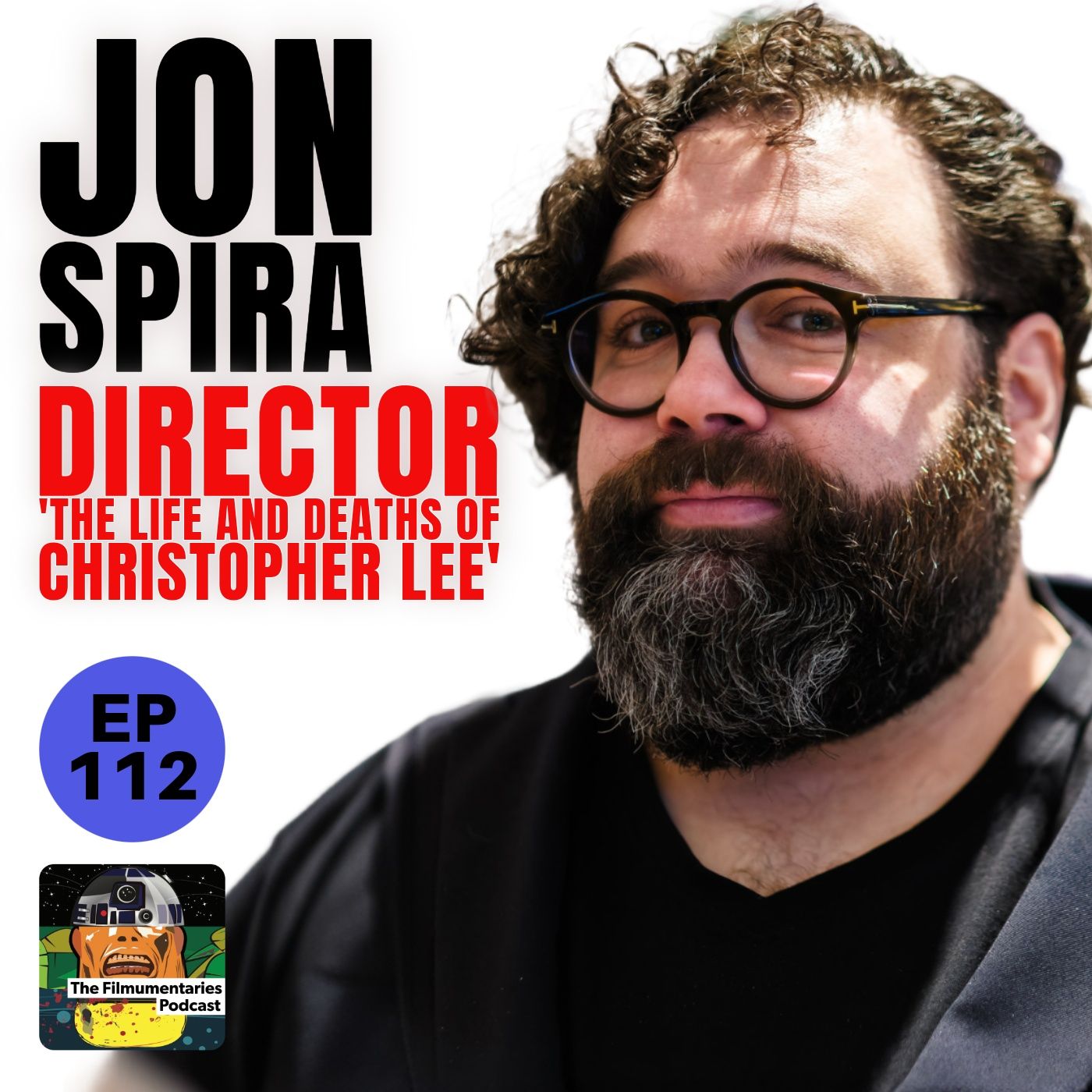
112 - Jon Spira - Director of "The Life and Deaths of Christopher Lee"
About this episode
This time around, he takes us through the journey of bringing Christopher Lee’s story to life—literally.Jon kicked things off by sharing what drew him to this project in the first place. Inspired by a mix of fascination and intrigue, he became captivated by Lee's enigmatic presence, especially after rewatching a rather unusual "This Is Your Life episode" featuring Lee. Jon’s documentary doesn't just skim over Lee’s storied career, from Hammer Horror to The Lord of the Rings, but it digs into the emotional layers of a man who, despite his towering on-screen persona, was often plagued by self-doubt and a desire to control how the world perceived him.
We spent a good amount of time talking about the challenges Jon faced in portraying someone as multifaceted as Christopher Lee. It’s no small feat to condense a career that spanned over six decades into a single film. Jon wanted to avoid the usual biographical pitfalls—just ticking off achievements and movie titles—and instead aimed for something more intimate and emotionally resonant. He wanted viewers to come away with a sense of who Christopher Lee really was, beyond just the roles he played.
One of the more fascinating parts of our conversation was Jon’s decision to use a marionette puppet to represent Lee. It was an unconventional choice, but as Jon explained, it made perfect sense for a subject who was so concerned with how his story was told. He originally toyed with the idea of CGI but felt that it lacked the emotional warmth he was looking for. So, he collaborated with Andy Gent, known for his work with Wes Anderson and Tim Burton, to create a beautifully crafted puppet of Lee. And who better to provide the voice than Peter Serafinowicz, whose deep, rich tones helped bring that puppet to life. Jon’s approach allowed Lee to narrate his own story, with other voices occasionally chiming in to add a touch of warmth and gentle contradiction. It’s this kind of creative storytelling that sets Jon’s work apart—finding new ways to tell familiar stories.Jon and I also delved into some of the broader challenges facing filmmakers today.
The industry is in a strange place right now, with budgets tightening, streamers changing their strategies, and the rise of new technologies like AI reshaping the landscape. We had a lively discussion about the role of AI in filmmaking. For one specific sequence in the film—recounting a moment when Christopher Lee witnessed the last public execution by guillotine in France—Jon’s team used AI-assisted animation to breathe life into archival photos. It’s a decision that has sparked some controversy, especially from certain corners of the American press, but Jon sees it as just another tool in the creative toolkit.
He acknowledges the fears around AI and the impact it might have on jobs, but he also believes that, when used thoughtfully, it can elevate storytelling in new and exciting ways.Throughout our conversation, a recurring theme was empathy—something that Jon clearly values in his approach to documentary storytelling. He talked about how he always aims to create a sense of connection between the audience and his subjects, to show their humanity in all its complexity.
For Jon, it’s not just about documenting facts; it’s about exploring how those facts feel, and how they shape the person behind the public image. In The Life and Deaths of Christopher Lee, this approach results in a film that isn’t just a tribute to a cinematic legend but also a portrait of a man grappling with his own insecurities, just like the rest of us.
We also touched on the state of cinema today—how trends are shifting, the uncertain future of theatrical releases, and what that means for filmmakers who, like Jon, are passionate about telling unique, challenging stories. It’s clear that Jon sees the current moment as both a challenge and an opportunity—a chance to push boundaries and keep audiences engaged in new ways, even if it means embracing some unconventional methods along the way.All in all, our chat was a rich, multi-layered conversation, touching on everything from the intricacies of puppetry to the big questions about where the film industry is headed. It’s a must-listen for anyone interested in the art of documentary filmmaking, the evolving landscape of cinema, and the enduring allure of a complex, larger-than-life figure like Christopher Lee.
This podcast is completely independent and made possible by listener support. If you’d like to help me keep making these episodes, you can join my Patreon community here: https://patreon.com/jamiebenning
Watch more on YouTube:
Check out the Filmumentaries YouTube channel for behind-the-scenes clips and extra content: https://youtube.com/filmumentaries
All my links
Transcript
Automatically generated, so expect the odd misheard name.
Weirding Wave Media. Welcome to episode one hundred and twelve of the Film You Mentories podcast. I'm Jamie Benning in the host, and as always, I'm delighted to have you along for the ride. If this is your first time tuning in, you're in for There are over one hundred episodes now featuring some of the most intriguing behind the scenes artists and unsung heroes in the film industry. If you love DVD extras, Blu ray extras, and you miss that kind of deep dive and those long form documentaries, this podcast is the antidote for that.
A huge thank you to all of you regular listeners that are joining again, especially those of you that support the podcast on Patreon. Your support truly keeps this show going. Honestly, without you, I could not do it. I need more of you doing it. That would be really nice.
But this podcast really doesn't make me much money at all. It's a lot of work. It's work I love, but I would like to make this a stream of income. Let's say you'll hear why towards the end of my interview today, well, today I'm thrilled to bring you a conversation with John Spira, a director who's become something of a regular here on the podcast. You might remember but our previous chats about his film's Hollywood Bulldogs, about the world of stunt performers, and real Britannia, his BritBox series about British cinema.
Well, now Johnny's back with his latest feature documentary, The Life and Deaths of Christopher Lee, which is due to premiere on Sky on October twenty fourth. I've been lucky enough to see a screener of it, and I also joined a few hundred people watching it and NFT one at the BFI last week, and it was very enjoyable catching up with John, producer Hank Stars afterwards as well, and a few other people including Dave McKean, one of the contributors one of the animators on the movie. Obviously Dave. If you don't know Dave McKean's work, do check it out. I mean, the man is prolific, to say the least.
I chatted to his wife more. Actually she was very nice. She saw me there, sat on my own for a while waiting for John and Hank to appear, and we had a very nice chat. So in this episode, John dives deep into the making of the film, sharing stories of the challenges of capturing such a complex and multifaceted figure as Christopher Lee, the creative choices that John made in using a marionette puppet and a voiceover to represent Christopher Lee, using Peter Sarah Finowitz to do that voice, and also some of the debates that have come up about the modern technology, including AI, to bring those kind of memories and those stories to life. So, without further ado, here's my conversation with John Spira about the Life and Deaths of Christopher Lee.
And I'll be back at the end for a bit more jabbering on. So John, you're back the third time. You're the most recurring guest of all on the Filming Retros podcast. We talked about Hollywood bull Dogs or your stunt Performer documentary, talked about Real Britannia, your series on BritBox and now, I mean when was that? That was twenty twenty one, twenty twenty two, and now we're in twenty twenty four and you've made another feature documentary, the Life and Death's plural of Christopher Lee.
Where did that all begin for you? John? What was the inspiration did you have the idea first, where you approached How did it all come about? I guess I had the idea first. It was it was right after Real Britannia.
Actually, it would have been around the time that we spoke. Yeah, I think you mentioned that you had something going on that you couldn't talk about yet, and yeah, yeah. I think it could have been. But that could have been anything, honestly, like the way the industry is right now, yeah, projects pop up and disappear so quickly. It probably was this because I was excited at the time.
Basically when when we finished Real Britannia, which was exhausting and wonderful, you know, you get that kind of kind of wonderful period off of like maybe a couple of weeks. Hank, my producer, always goes off to like the Caribbean or something, you know, because I've got children, I don't get to do that, or a child, I don't get to do that. So I just hit the sofa and I got really into watching old episodes of This Is Your Life and they were great, so good, and it's so worth like going on YouTube and what, oh, I'm going down there. I start with Chas and Dave and I was just watching loads of them and loving them. There's a beautiful Boris Karloff one lovely and lovely like Lauren Hardy, so many and it said, you know, next up Christopher Lee, and I'm all in for that.
I've read his book and I'd really enjoyed that a couple of years earlier. And it was just the weirdest thing to watch because it was it was It was unlike any other episode of This Is Your Life, because if you actually watch it on a big TV and you look at his eyes, he is terrified from beginning to end. Right, he's clearly having a horrible time. And there are so many weird moments in it, like at the very beginning, he kind of when usually people are surprised, you know, they laugh and go, oh this will be great or oh too much for me, and he kind of says, he says, sounding really weird, like, well, I guess the joke's on me. And it's kind of like a joke.
It's like they're trying to pay tribute to you. And the first person they bring out is Ollie Reid, who no one wants nineteen eighties Oliver Reidn't. I used to be terrified when he was on a show. Honestly, it's him and Rod Hull weirdly because Eman used to freak me out, but. I don't know what's going on.
Yeah, yeah, no, that's true. Well, imagine being Christopher re being Christopher Lee at that moment. Yeah, and literally Olli Reid starts telling his anecdote about Christopher Lee, and if you listen to it, CHRISTOPHERY is talking under him the whole time, contradicting him, and I kind of go, well, I'm maked for a good story or he and all of the reasons. Like Christophery, he said he always wanted to be a singer, wanted to be I was a sick So he's really defensive. There's a really weird moment later on where they bring out some of his army friends, and if you've read his autobiography, you realize that these are people who bullied him at the last people he would have wanted to actually see like that way of his wife looking furious and I just by the end of by the end of this episode of This Is Your Life, I was so intrigued in him on a kind of emotional level.
I was like, why is he so acting so weird and and you know his I remembered his book and I went and looked at his book again, and it's a very self deprecating read, and I just I was just like, God, yeah, I would love to make a film about him. I'd never made a film just about one person. Always make films about kind of groups of people, and I just I thought he would be amazing. And then an offer came in to Hank. Basically, someone was saying, look, have you got any ideas about an iconic British person?
And Hank Nwor wanted to do that, and he said, do you still want to do it? And I said absolutely, And it happened very quickly, very ahead. So yeah, that's that's the kind of genesis of it. I mean, his his career spanned it's like six decades or something, isn't it. And you know, you've got the horror movies, you've got the blockbusters, Lord of the Rings and all of that stuff.
I mean, it's a minefield to kind of have to navigate through because they're obviously die hard fans of different parts of his career. You know, whether they're Lord of the Rings fans, all there a horror fans or maybe even the music fans. Who knows. But to try and tell that story in a novel and interesting way, whilst not just making it completist must have been quite a challenge because obviously you've only got a finite amount of time to tell the story. And how did you begin kind of approaching it?
Was it just a matter of deep diving into as much material about him as you could and trying to, you know, hack through the thorns to find the gems kind of thing. I knew. I knew going into it that I wanted it to be an emotional portrait of him that was useful. I have no interest in making like I mean, a lot of the information, mostly information about him, is out there anyway. There are all those kind of lists of one hundred things you never knew about Christopher Lee, which are all genuinely quite true, and I just I didn't want to just plod through he did this, then he did this, then he did this, then he did this, then he did this.
And I think the question that I'm always asking when I'm making my films is not kind of like what happened so much as how did that feel? So I was always guided by knowing that anything that I was going to show had to somehow do with his personality and things that contributed to his personality and his insecurities, so that you know, by knowing that, you know, you could clear a path through the trees fairly well. At the same time, it is but you know, you know, he is biographical, and he made he holds a record apparently I don't know what record he holds. I can believe that he holds a record supposedly for the most film appearances of any actor. So he did pushing three hundred film appearances, which is a lot.
And he went through eight decades of cinema. And he started off, as you know, uncredited sword Fighter with Errol Flynn, and he finished off as you know as Sarah Man and Lord of the Rings or Dooku and I Wars, and he was I would say probably apart from apart from the nineteen eighties, he was significant in every period that he and that is fascinating to me, you know, so you know, it's easy to map up chronology, that's not not the hardest thing. And I don't want to give any spoilers, but there's a there's a piece of footage archive footage right at the end of the film, which everyone talks about when they see it. Watching it in the cinema recently has been really great because there's an electricity in the room when that piece of footage comes on, basically like it's it's it's a piece of I really don't want to spoil it.
It's so much fun, but it shows him in a moment of unguarded outrage, basically, And I always knew that the whole film was going to build to that point. I knew that that's where I wanted it to get to, you know, and and it did so so so it may once you've been doing this kind of thing for a while, you there you just have an internal you just know what you're doing, just kind of you know, there's instinct to everything, and and directing films, as you know, is answering questions and it's being able to make decisions. And I think that that if you if you've done a lot of work up front, and you've done a lot of thinking about it, then when you come to make the film, the decisions kind of they're pretty easy when when you get to them, because you already know the feel that you want the film to have, and you already know the story you want to tell to some degree, but there's a ton of research.
I mean, you know, we're with the BFI on this one again, so they must just stack some interviews with it from every era. So I had his voice very much in my head, and and yeah, it was, it was, it was. It was a lot of work, It was, it was. It was Probably it felt like more research and more kind of leg work than a lot of the other films I've made, which quite often and more about assembling interviews. Yeah, honestly, I felt that when I even I think twenty minutes in, I was watching it and I just thought, Wow, there's a lot that's already happened.
You know, it feels like a documentary's worth of information has already passed by in a way because he's because he was so prolific. But you know, you've got this very imposing, physically commanding guy who in many ways is quite insecure and quite protective of his image. I think for me, you know, if I'm watching a documentary, particularly one that is biographical, I want to come away from it thinking, wow, I've learnt something new. B I've got a real sense of that person, and see obviously telling that story in a novel an interesting way. And I think you did all of those things because you should say as well, straight off the bat here that despite having all of this archival footage, you still need a way, a device to tell the story, and tell me about how you came to your decision to use a particular actor and a particular form of artistry to do that.
The one thing that I felt really strongly when I went into it was that I wanted him to tell his own story. And the reason for that is, like I said, with that this is your life, it was so obvious how important it was to him that he controlled his own narrative. I thought it would be a really interesting film if you had him telling his story, but then you had the talking heads kind of warmly contradicting him. So all of the interviewees are people who knew him. Every single person who've interviewed, they all come from different areas of his life.
Their friends, family, colleagues, all of this kind of thing, but they all had a strong personal relationship with him. And I really liked the idea of him telling his story and then cutting to someone who knew him, and not like completely contradicting him, not kind of saying that's rubbish. Yeah, you're not undermining him in any way. You're just showing, you're sort of revealing his personality in a way exactly. I'm actually saying, you know, showing that he didn't have to be this concerned about it.
You know that actually he was a really decent guy. I haven't heard a bad word said against him at all. And the things that he was so concerned about, and you know, this was a constant annoyance for people in terms of how he was always saying he was always talking crap about horror and saying, oh, I didn't make horror films, I don't like horror films. And it was such a shame because so many of his fans love horror films, you know, and and he you know, he would have hated to alienate people in that way, but he just thought that that he just he was so worried that being perceived as someone who did horror films would do him a miss a disservice, that he missed the point of how wonderful he was in horror films, how important he was culturally, so I always wanted that that dual narrative kind of coming in, and originally my first idea.
I always just have these very weird cultural reference points in my head and they always prop up at the right moment. It's like they're stored away. And then when I'm when a project is in it's kind of very early phases, my brain just kind of bombards me with these things that seem random and unrelated but actually kind of makes sense. And the first thought I had when I was like, I want him to tell his own story was I don't know if you remember this. It's on YouTube.
It's great, but about twenty twenty five years ago, four years after Bob Monkhouse had died, he was on a TV edvert about prosper. Yes, I'd forgotten about that. Wow. Yeah, it's really good and it was one of the early uses of CG and it was used really well, really sparingly, really cleverly. So it opens with Bob Monkhouse stood over his own grave and he makes a like I always wanted to die in my sleep, like my father, not like all the passengers on his bus, and he does all these wonderful quips and then he moves on to the fact that he died of prostate cancer and men should get checked because it's not a very nice way to go.
And it gets quite dark as in a graveyard. It's got crows and stuff, and I was just that hit me and I was like, that's exactly what I want to do. I want Christopher Lee back from the grave, acknowledging that he's dead and telling his story. He's saying, I've been allowed back for one evening, and i will tell you my story. So initially we thought we were going to do it with CG.
And there's a great, a really great crystally box that came out a few years ago about with his kind of missing European films had been found and restored and on there. There was a TV series that he presented which was like a Alfred Hitchcock presents So he just tops and tails every episode, right, and he's always like, you know, sat in a high back chair kind of thing. And we thought, if we can get the rights to this footage, we can we can use because he's quite still. Right, you could manipulate that do the mouth. So we commissioned some tests and it was right when that whole deep fake thing was happening, and that technology was really kind of bubbling up, and it was just kind of creepy in the wrong way.
It looked too real, all kind of and also not real at the same time, because you can't I think you'd need to do something with the eyes, like you change the mouth, but it doesn't change the rest of the face and stuff, and it just it was a bit creepy. But the guy who was doing it is said, you know, this is just a test. You know, we can we can get it right. But then I made either the mistake or the clever choice of mentioning it's a John Landis, and in his character is the way he just freaked out of me and just said absolutely not. It was just like it would be so disrespectful to him.
And it was things that were in the back of my mind anyway, and it helped me make up my mind to kind of just go, okay, let's do something else, let's do something different. And at that point it was really sky's the limit, you know what, No, no idea is a bad idea. Let's talk about this. And you know those times that's when me and Hank, you know, well, we'll go to a Turkish restaurant and buy a great big pearl of grilled meat and just throw ideas at each other and just say, you know, no, no idea is a bad idea. Hank was one who came up with the idea of puppetry.
Yeah it was, and it was a great idea. And at first we looked there was this amazing guy who we were talking to who did they were almost like a kind of paper caricatures, but but they moved and to make them kind of live. It's a really interesting kind of look. I can't remember. It just didn't quite sit well.
We were it was really impress it just wasn't didn't feel right. And then Hank was like, let's just let's look into into marionettes. And I just had my daughter's you know, there's that puppet barge in London, which is amazing and we booked that out of my daughter's birthday party and it was so magical and it's just like, wow, Yeah, Marionnette string puppets, let's let's go for this. And we found this guy. Hank found this guy, Andy Gent, who does all of Wes Anderson's puppets.
He did all the Isle of Dogs. Yeah, he does Tim Burton's. He did all the Frank and Weeney stuff and he's this amazing, lovely guy who is also a ridiculous film geek, and we really clicked with him and he was so so great and so supportive, and because he loves Cristal Lee, he loves Pizza Cushing, all of that stuff, so he just wanted to do it. His team are incredible. So yeah, we ended up saying, Okay, we're gonna do We're gonna do a Marionette.
I'm going to write screenplay for this. It's going to be an authored piece. And when Hank said, who do you want to do the voice? The first person I said was Peter sarah Finovich And it just made sense because he's a great impressionist. I hadn't ever heard him doing Crystal Lee.
Yeah, I hadn't either. Why did you come to that just because you knew he was capable? Really? Just what I mean, Firstly, he's a great impressionist, and secondly, he naturally has that the sonorous voice, and that's the hardest part of a Crystal Lee impersonates. Impersonation is keeping the voice down.
So because it wasn't an affectation of Lee, his voice was naturally that low, so so you need someone who can already do that. And I kind of just assumed. I just thought, like, well, if he can't do it, he'll say no, he's not going to take the job if he can't do it. So but he said yes, And you know, I didn't hear it for the first time until until we got him into the booth, and it was great and and and the thing that's great about it, which was something we kind of worked out together, is that you actually had to move away from the idea of an impersonation because they're so by their nature impersonations are kind of satirical and funny, which is fine occasionally for some lines and stuff, but actually impersonations they then there's not the realism of it.
When a sustained impersonation is just boring and sounds stupid and outrageous, you know. So he managed to find it. He does managed to find the voice. I kind of feel like it may not one hundred percent of the time feel like an impersonation, like a kind of how you would expect us for Lee to sound if you were doing him, But what he finds is a realism and it settles down and and people who don't know when we were showing kind of people clips and stuff, they were assuming that we'd found, you know, an audiobook of his, of his autobiography or something, and it was real. So he was amazing.
I think it took about four sessions to get the whole thing down, and he was brilliant. He would do this great thing he found. He had a favorite clip which was Christophally on Wogan. I don't know why it was his favorite clip, but that was his favorite clip. And he does a great Wogan as well, so you know he can.
Do Yeah, that's true. Yeah, yeah, yeah, yeah. But he would he would take a kind of running at it and we would start the clip playing and he would just start talking along with it, and then after a while he'd be like, okay, great, turn the clip off, and then absolutely fine. Yeah it was great. He was amazing and he's such a great performance.
It's such a ballsy move John to do that with the with the puppet, because it could easily have been enough, you know, but obviously you've gone about it in such a way that it really grounds the documentary and you buy it very quickly. It always I'm always struck how quickly as a viewer you suspend your disbelief. You know. I remember at school, like a puppet troop coming to the school, and I think I was probably like ten or eleven, I'm just becoming slightly cynical of kids stuff, and I kind of rolled my eyes, and within minutes I was completely engrossed and entranced by these performers. You know, they disappeared and the puppets were hilarious.
What they did with the puppets was hilarious, and the whole school was roaring, and you know, we still talk about it now, me and my school friends. But yeah, going back to the doco, it could have been naf it could have been something that distracted from the storytelling, but it really compliments it because each time you return to the puppet, it grounds you again and you're sort of ready for the next chapter, if you like. I thought that was really a really unique way of doing it. I've not seen that done before, and yeah, well done to you for pulling that off. I mean, you know, I feel like things are only ever naugh if you don't work at them, you know.
And the thing about about this film is that we were working with really good people at every single stage of it. So I know that I'm a decent enough screenwriter to get his voice down. I know that Peter is a great enough performer to get the voice down. And then with Andy, I mean, the puppet is stunning. The puppet takes two people to operate, and I mean, you don't necessarily notice that this when you're watching the film, or you don't think about it when you're watching the film.
But not only is he a fully animated string puppet, but his face is fully mechanized as well, and that's controlled by strings. His mouth opens and closes, his eyes open, his eyelids open and close, his eyes moved left and right, and his eyelids are articulated, which was There was a great conversation I had with Hank where when we first saw the puppet, and I said to him, you're going to hate me, but we need the eye the eyebrows to work as Christophy communicated with his eyebrows. Hank made some calls and kind of came back and said, well, it's going to cost us like seven pounds. I know you're not going to back down on this. So we did it, and it was fascinating because you could for it took two people to operate it, and if you're doing a close up, you could actually take the back of his head off and plug a controller in, so one of the people could could.
But it's still you know, you're controlling all those things at the same time. Yeah, it's insane. So the thing I hadn't thought about when we had the puppet built was and this is incredible. I hadn't thought about it, but was like, who's going to operate it? I had genuinely just thought, oh, I'll get one of my actor friends or something.
And it was only kind of a certain way in the process that and he said, you know, you're going to need a master puppeteer and I said, I don't know what a master puppeteer is. And he was like, He's like, I know people, and I'll get you the best people. And he did, and he got us Olie Taylor, and I forget has she was amazing. And these are the people who have worked for the Muppets. They've done the Dark Crystal, they've done they've done everything everything with puppets.
And in fact, right afterwards, Ollie went off to America to do that that Netflix series with Benedict Cumberbatch with a great big monster that's only in the monster. He's controlling all those shots and he's doing all the puppeteering off the Sesame Street stuff as well. He was like the lead puppeteer. And it was incredible watching them work because they you know, we didn't have a big budget. We only had two or three days to shoot all of the puppet stuff, and you know we had a test period as well, and to watch them work is incredible.
You tell them what you want and you get it really quickly. And when you think about how many strings they're manipulating at the time, two separate people, it's insane that you can get a womans. I mean, it's like you're that great footage of watching them operate et on set and they're always pulling leavers. You're like, god, it's taking ten men to operate his face and it's and and you know a woman underneath doing the hands and stuff. But they're also talented.
They bring it to life. And you know, the second that any of us had to go on the puppet, it just was it's ludicrous. You know, couldn't do it. But they structlety out of the performance. So yeah, I know, I know exactly what you're saying is that when you when you take certain leaps of faith like this, you run the risk of being left.
But if you work with, if everyone who's working on the project cares about the project, no one will let it be nef And that that's from the people who design it, the people who operate it, the people who put the music on, the people who shoot it and who light it, the people who grade it, the people who edit it. If you're always working with with people who care about what they're doing and care about the project, it'll it'll come through. And the funny thing is, you know, now the reviews are coming in. It is polarizing, you know, but that's fine, Like it's. Fine rather that than it just being you know, mediocre review.
Because if someone hates it, then at least they've at least I've made a bold enough choice that they have they've had a strong reaction to it, So I'm fine with that. And it really is quite malmighty. It really is people just going that's fantastic, or people going, I have no idea why they did. This, and those comments of there's I have no idea why they did this. Are they feeling that there's some disrespect towards Christopher fu Ley or is it they just don't buy the device?
What is it about it? Do they go into that and. Explain that not really because of idiots? No, they're wrong because they watched it wrong. I mean like no, I mean like like I can, I can.
I can sound very arrogant when I talk about things like this, but I think you have to have a certain sensibility to watch certain types of film. And I think there are I all of my film because all of my films are about films and about film culture. The risk that I run is that there's always a large fan base of people who are excited to see them. They're usually not the kind of people who are coming from from a point of cultural reference that I'm coming from. They won't have watched the documentaries that I've watch, they won't have been interested in the things that where I'm taking my influences from.
And so they I mean, like you know, as you ninteen seventy six was the classic. It was Star Wars fans who were so excited about Star Wars documentary and they saw it and they were just like, this is old people talking. Yeah, it's like, well, I love old people talking about me too. I mean mostly what my podcast is you're the youngest. But yeah, so it's it's fine.
You know. So when that kind of criticism kind of comes in, you know, if you've upset people, you know you're you're doing something right to some degree. I mean, yeah, if you were. There are people who get one star reviews for things which are genuinely bad because they have thought about them. But you know, I've had so many criticisms about earlier work, about it being so reliant on talking heads anyway.
You know, one of the things that me and Hank were keen to do is to is to just bring more creativity into it and just to make it a kind of more lively thing. And you know, with this film, because because his career and his personal life was so colorful, it gave you such scope to outprit that for each section of his life. Because when you're hearing about them, they feel different, present them really differently, really boldly, and you can take some risks and you know, you know what if one of I mean, you know, we're getting all this flack in America at the moment because some of them. We use every form of animation that is in this film. You know, we hired a whole load of animators and and you know a small percentage of that is AI.
And we're getting a huge amount of flack in America for using it at all, even though it's it's not that I just type stuff in. I didn't get a piece of software and type in. Give me something to cover this. Animators who use AI as a tool, And there's a lot of flag for that. But then that's kind of fine, Like I hadn't thought of that these as even being an issue, but it upsetting people.
Then I'm really glad because it's making people think about it and it's starting a conversation about it. Yeah, and what what was it about that sequence in the movie that you felt that AI was the right route to go down and you needed something that couldn't necessarily be invented by by yourself or bio. What was the thought behind it? I firstly, I didn't even know it was AI when I first saw the sequence. I was like, that's just stunning.
Genuinely. What happened is that we We've got an amazing associate producer called Chloe Hancock, and she is really well connected. She's young and like the rest of us, and she's really what connected to a community of people who have just kind of graduated from art school. And when we said we want lots of different forms of animation, we went to some very established animators, Astra Goldsmith who did the opening, the opening kind of family tree section which is the kind of Terry Gilliam field which entirely stop motion cutouts, frame by frame. We went to Dave McKean, who you know obviously did the stunning section at about Tolkien and Lee's surgery, and then she who were the people?
Those people we knew? And then she said, look, I know loads of people. So she just gave me a ton of show reels and I would go through these show reels and either say yes or no in terms of the style, and then if I would look and see what section I thought the style suited. So Cornelia did the section that's in question, which which is that it's a great fact. But christ Phillie witnessed the last ever death by Guillerty in France.
He was reasy, had a huge effect on him. It was a very disturbing thing. It really messed with his head, and I think the only thing that stopped him, that stopped him messing with his head even more, was the fact that days later Britain went to war, so he just had other stuff to kind of worry about. But it's a great section in his autobiography. And Yeah, when I saw her animation, I was just like this, this is the style I want, because it's so dreamy and kind of almost nightmarish.
And she did this amazing job. She took a bunch of photos. We found photos from the actual execution, yeah, of the guy being led out. He was called Eugene Weidmin, and there were these great photos of him being led out, and she used AI to animate those, to bring those kind of to life. And then she also used stock footage.
The guillotine shot was a piece of stock footage that she'd found, and she went out and film stuff as well, and she combined all of these elements with this amazing AI thing. And like I said, I didn't know is AI at the time, and even if I had, I wouldn't have cared because it looks so great and what it feels like. It just feels like every single pixel is alive and it moves from from from kind of from frames. The frames are always moving and they have a life of their own. But it's the thing that it really reminded me of when I first saw it, was like when I was a kid, I used to eat rice crispies and I would look for a picture in the milk in the rice crispies form, and then I'd stir the spoon around and watch them settle into another picture.
And it felt just like that, which I loved. So yeah, so we so so kind of that's how that came in. So, you know, I think there's a lot of knee chet reaction to AI, which I understand. It's got a lot of scary implications for our industry and stuff. But I also think it's a tool.
I think if you put any tool in the hands of an artist, you could you'll end up with something really amazing. So you know, it's it's it's opening. I hadn't expected to, but I think it's opening a dialogue and that's absolutely fine. That's good. Yeah, I mean, ultimately it's press right and people.
It's going to make people probably go and see it rather than dismiss it, because I've not seen AI being used as far as I know in any other project. Yes, I think so, I mean, I think, I think, I think that it's I think in the next few months you're going to start seeing it. I was, I was telling you before, But like you know, Callida just published the thing which which said that I've elevated lazy filmmaking to a new degree by using AI and which is weird and hurtful, but you can't ignore it, and it's you know, it puts me in mind of what was happening twenty five years ago, when you know, George Lucas came out at the Gates with the prequel trilogy Psychopath and used CGI for everything, and it looked not great then and it looks horrific now.
But actually, back then, if you looked at how other people were using CG who weren't necessarily doing the drastic and the drass, Bart Dinceaus were great. You know, there were great moments of the big CG. But actually the thing that no one was thinking about then was that was that in the background, CG was replacing the whole world of map painting. And it's the CG you didn't notice, which was subtle. It was the stuff that wasn't showing that wasn't.
Oh there's something that shouldn't exist, but it does exist. It was used to incredible effect in films and elevated them in ways you couldn't even think. And there were whole films where you wouldn't even get CG in them. It changed what you could do with historical films. You know, you could get great shots of the nineteen fifty street with just cars going down.
Yeah. Well, I remember the first time that really struck me was David Fincher's Zodiac. Absolutely so many. Shots in there, the effects shots in that that I had no idea about, because they were used in the right way, right. And that's the thing about these tools, isn't It is finding a way to use them that tells the story that you want to tell without distracting the viewer.
You know, maybe this person who reviewed on Collider was distracted by it. I think the headline is ruined by AI. That's right of the whole article is is that the documentary is ruined by AI. And yeah, three minutes of AI in it, and I stand by all of it because it's beautiful. You can't get angry at the tool.
I just you can get angry at the people who use it and how they use it, and I totally get that. Right now, it's that there's a whole group of people who's careers are about to be destroyed by AI. People who design book covers, you know, people who commercial artists are going to suffer from this. It's going to come into filmmaking. I mean they're saying that it's going to come into screenwriting and things like that.
Yeah. Yeah, it's going to affect every It's going to affect every part of life. I mean, I had a weird conversation with my wife last night when this whole thing happened, and I was upset about the fact that I listened and she told me that she actually uses AI for a lot of her emails. Now, Yeah, deals with so many emails all day. Actually, it's great to have the email pop up and you just edit it and you send it if it's not important, if it's not a personal email, if it doesn't need that personal touch.
So I get it, and you it's just a tool, and yes, you should be angry at people who misuse it, and you should be angry at people who I mean, the implication of the reason I'm not upset and offended by the Clider piece is because the implication is that I have done people out of work by creating it myself and sticking it in my. Yeah, that's what I was just going to say. It's not I mean, you've gone out of your way to employ people from all the different you know, artistries that are involved in the film. And I mean there's puppeteering, there's model building, there's you know, traditional animation, there's everything. I mean everything, it's nothing And if you don't like it, that's like if you look at it stylistic.
I mean, that's what's upsetting is that, you know, is that the review called it a barbaric use of AI, and I'm just like, fuck you, it's not barbaric. It's an artistic use of AI. Like a barbaric use would be just to have a photo of Christopher Lee just and just make AI I don't know, and make him put him in a place or something. I don't know. I like, I don't know, but like you know, it's it's it's anything but lazy, and it's anything but barbaric.
Like we we we used artists who decided to use it as a tool, and we paid them fairly and they and also I gave them a lot of kind of creative attitude as well, like like, you know, I respected their work and I said, you know, this feels like your work would suit this section, so just you know, give me what they would. They would come back with an idea, sometimes with some sketches and stuff, but generally I didn't even have comments. Generally, it was just like, no, you're the right person for the job. You interpret this. I've already got the script, I've already got the dialogue running through it.
We had a great sound designer, so it was just kind of like, you know, it'll be fine because we hired great people. So it's that's what's annoying is people misunderstanding this kind of thing and having this knee jerk pathetic reaction to it. And you know, maybe they're scared that AI will replace film criticism. You know, I don't know, everyone's a bit scared, honestly. I mean, you know, it's coming into my part of the industry, you know, into live sports television.
But it's coming in in ways and I think I mentioned this on another episode, but it's coming in ways which we didn't expect. You know, it's not replacing us as lives, actually augmenting what we do. It might be writing frames in between frames to make it a super slow motion, or it might de blur or you know, one of those things, which of course has implications on the sort of hardcore analysis that you need for tennis and cricket and things like that. But for storytelling, it's actually a really good tool because it means you can have a shot that was four seconds turn into twelve seconds d blurred, and suddenly you can tell the story that you want to tell that you couldn't tell before, which you know, you know, improves things for the viewers.
What we worry of that is, I mean, in fact, one that one of the big warriors in the industry is that the first the first thing cert of place is editors because it can learn the algorithms and when you look at how modern TV is put together, I mean, you look at an episode of Master. Chef, he's a very formulaic. Yeah, they're just dropping the shots that you know, I'm sure that they have. I'm not being mean, I'm not denigrating it, but like, I'm sure they have a timeline with a bunk b b just drop those shots in and that means that that could be edited by AI in a heartbeat. You know, the issue isn't that the technology can do that.
The issue is that you would have kind of asshole companies and asshole broadcasters doing people out of work and doing the cheap you know. That issue not that the technology is there. The issue is people just just and you will see what happens with the audiences. We'll see if the audiences accept that kind of content. Yeah, and then you know they will ultimately guide where things go.
I guess yeah. And you know what I think, I think they'll just be a split. I think there is already when you when what's happened with the streaming platforms already is that to some degree, especially with what's going on in the industry right now, you have a split between very expensive, glossy, high high quality programming and you know, these terrible cheap programs. And if the people like those terrible cheap programs, fine, you know it's a different audience though, you're not going to get everyone with those. And I don't doubt for a second that within five years they'll be able to generate a fully AI soap opera.
You know, I'm sure they'll be able to do that, but the question is what kind of human being is going to want to watch that? Yeah, it is it sustainable as a business model, and if it is, great, but you're still you're not going to get everyone. You and I aren't going to watch that. You know, it's the whole point of these things. I don't even watch the real one.
So yeah, it's it's another tool. It's bound to be controversial, but you know, I think it starts a conversation, which is a positive thing. There's let's move on from that. That viper's nest there. But what I like about the film is that you focus on you know, his career, his personal life, you know, those insecurities that I mentioned, but also the friendships that you had with people like Peter Cushing, which I always find so endearing.
You know, I think they're just they're fantastic together because they've played so many roles together in these these horror movies. Yet they're the sweetest guys when it comes down to it. And Vincent Price as well, how important was it for you to kind of humanize this larger than life figure because you have a responsibility as well. I think, don't you when you're particularly when you're focusing on one person, there is a level of responsibility there. How much did that kind of impact on your decisions?
I was never going to like. I never wanted to do him over, so it's always going to be okay. I've had a guiding principle since I first started doing making documentaries, which is I wouldn't put anything about anybody in one of my films that I wouldn't be comfortable sitting next to the minisoama and watching. And actually my threshold for that is quite high, because actually the truth is that most people when they see themselves in documentaries don't like it and have issues with it. But I would still be able to sit next to them and defend my choices, you know.
So that's my kind of guiding principle is I'm never going to fit somebody up, you know, it's it's it's I've got I'm just not interested in that kind of thing. I'm not going to make that kind of film. So I wanted to show a fairly kind of rounded vision of him, you know. But there's just there's not a lot of negative stuff out there, really he's he. I think the negative stuff is much more about him being difficult to work with because he wanted to get the job done right.
And even that stuff, there's stuff that I could have put in the film, but I just didn't want to. Wasn't it wasn't a point in doing it. And also like this, the whole film is just it's about empathy, Like the whole point of the film is going because you need a point as well. You need to know that you're saying. Like every documentary, I think for me, at least, I either am asking a question or making a statement, and I vary between those those two things.
And I have to make my mind up before I start a film as to what I'm doing, what I'm saying, or what I'm asking, you know, And in this film what I am saying. My intent right from the get go was that I wanted the audience to take away was just his Christophery. He is an impressive, tall, imposing, errudite, educated, intelligent, expressive, talented, prolific man, and he's as fucked up as the rest of us. And that's a really valuable thing for people to take away, to be able to go, oh yeah, even these people who seem almost like authority figures, who seem so impressive that you know that you're you're almost you're kind of nervous around them, and that kind of thing. Even those people like you don't you might not see where they're fucked up, but they are and we all are.
And I thought it was and it's done with empathy. It's not going, oh, I'm going to lift the cloak and expose the addl the mess that was Christopher Lee at all, because he wasn't an all messed. He had very human insecurities that came from a very real place and that that informed informed the decisions he made and the way he acted. And I just think it's really lovely. I think, I think it's really nice to come away from a film about someone who has who led such an impressive, respectable life and to go, you know what, They're not that different to me.
You know, they also had these these crippling insecurities, and you know, one of the great moments for me in the interviews was when Peter I kind of felt, I'm always worried when I do interviews with people who are famous, that you're not going to get past the stories that they that they've told everywhere else, and with Peter Jackson, I just it was just lovely and he, you know, he and he talked about I mean it's been talked about before, but like he talked about christ Rely's first day on Lord of the Rings where Ian McKellen came up to Peter Jackson and basically said, you're going to have to talk to him because he thinks he's going to get fired and just kind of like, this is like my hero from childhood and I have to go and comfort him because he's worried he's going to get fired.
But the thing that was really interesting was was he told a story about taking a poster to him, an original drac Ular and he was scars of Dracular poster to be signed, to get Chrisally to sign it for him, and he said that he kind of bristled at it and he was just like, I don't really like these films, and at that time he wasn't signing Dracular stuff. He was completely hated the Dracular thing. And he said to him, you know, it's a really good film. You should be proud of it. And Chris, I've taken back and really he didn't.
He didn't get it. He didn't get how people connected in that kind of way, and I just think that's beautiful. So that was you know, yeah, that was always the guiding The guiding kind of principle was always just just to just to have empathy with him and just have people to by the end of the film feel like they can relate to him. You know, we're all complex ultimately, And the other thing I was thinking about that was that couldn't probably be complex for you and for Hank is to know where to sort of how to navigate the sort of festivals really, because because Christopher had so many different parts of his career. I mean, did it did it premiere at FrightFest?
Is that it? Yeah? Obviously there's that hardcore of horror fans that will react to the documentary, but then there's that broader focus in the film. How how has that been trying to find its kind of place to. Be really honest, We've never really done film festivals before this.
I hate film festivals, I really do. I went to a lot when I was younger, and when I was starting out, when I was just coming out of film school, I would enter film festivals and I kill me for saying it because we're in a bunch of film festivals right now. But I'll be honest, and I don't mind it going out. I don't like and I think that the way film festivals operate is they send people out all over the world to scout for films that are coming up. They feature films which would get generally get quite a big release anyway, and those studio films use the film festivals as a launching pad.
And then in the back door they're charging filmmakers, independent filmmakers and starting out filmmakers who have no money whatsoever. They're charging them fifty one hundred quid to enter. And they're not even being seen most of the time by the people who are really selecting the films. They're seen by kind of younger people who you know, volunteers, who are going, you know, if something's really good, then put it in this pile, you know, and it's not being fairly assessed. And I just think, as bunk, I just really I really hate that.
So I had a bad experience with my first documentary, which was a music documentary that I thought because it had like Radiohead and everyone in it and Supergrass and Foals and all these huge bands. I was kind of like, well, surely it will be accepted into all the festivals, and it didn't get excepted to do any festivals. And it was it got great reviews, it did kind of well. But I think the reason they didn't get accepted is because I had to go in through the process that through the back door process where you pay one hundred quid. I don't believe that the right people are watching those films, and I don't believe they've been watched in the right way.
I don't necessarily believe they've been watched the whole way through or watched at all. I just don't like these kind of figures who have that kind of power. But what's happened with this one is we just got a lot of requests for film festivals. So it gets it out there and you go, yeah, fright Fest is different. Fright Fest have always supported emerging talents, and they've always made a huge point of it.
And not only that the people who attend freight Fest, because I used to go the whole way through my kind of twenties and kind of early thirties, people who attend fright Fest are looking for that kind of thing as well. They're really open minded. You'd think it'd just be hardcore horror nuts who just want to see the latest whatever, but the truth is they love spending a whole weekend discovering new things. So when fry Fest off on us, it was just like brilliant one hundred. Everyone else I can take or leave like.
I'm happy it's being shown in places, but I don't like that kind of I don't like that kind of thing. So there's not a strategy with it in that kind of sense. It's if people want to show, if people want to show it, then then they can show it. M M. Was there any sort of craving on your part navigating your way through this and all the interviews to sort of wish you had a few moments with Christopher And were there any questions that you felt that you would have asked him or that were unanswered in the film, or were you pretty happy that you covered all the things you wanted to cover.
I think someone asked me the most interesting question I hadn't even thought of, which was what do you think Christohali would think of the film? And that hit me like a pile of bricks, and I was just like, oh, he would have hated it. I think he probably would have hated it because he's not controlling the narrative. Because I think he would have felt the puppet was you know, I don't think he thought it was demeaning. I think I think everyone finds it kind of delightful to some degree.
I think he probably would have wanted it to be more like the World of War, you know, narrated by Lawrence Olivier, with more gravitas to it and stuff. Sorry, what was the question? I just it was just, yeah, it was there anything that you felt like you would have asked him if he was there, if you had him in front of you, in front of camera. I would have asked him exactly why everyone else asked him, which is about his post war activity. I mean, that's what people want to know.
And we had We've had a slight problem with this film in that for some reason, there have been kind of viral you know, because whenever any information goes out on the Internet, these kind of viral companies cut it up and stick it into kind of things. And for some reason, there there was an expectation that we were going to reveal the secrets finally, which we never even pretended that we have. His whole post war record is completely classified. It's not going to be declassified because he was working behind enemy lines. It was basically this pre runner of like the Secret Service, which is why there is a thought that James Bond was based on him, and actually there's no No one actually knows the answer to that.
He was cousins with Ian Fleming. They were finally they knew each other, with every chance that Ian Flanning could have could have based it on him, and certainly Christopher Christopher Lee never disavowed anyone of that notion. When people said James Bond was based on you, he never said no. But he also never said yes. So I think that's the thing that anyone would have asked him, but he wouldn't answer the question.
You know, it's even with his closest friends, it's highly classified what he was doing and nobody knows. But the rest of it, I don't know. You know, part of me thinks that actually, because it's a portrait, the worst thing you can do is involve the person it's off and you just have to end up going you know, this is my impression of just for me, this is this is this is how I see him, This is how I would present him, you know, And I've always thought that. I've always thought that that documentary has an unrecognized link to portraiture that no one really talks about, which is that you are choosing how you present the person with every clip you use in the same way that every brush of a painting, how you use lights to present someone who's in the shadows or whatever in traditional portraiture.
You know, it's it's not fact, there's no you know, we can't every time. The method used can be just as polarizing, right. Completely, Yeah, to watch them, you know, you know, Yes, they Netflix put up this sixth part documentary about Vince mcmaht and I have no interest in wrestling. I really have no time, what interest for wrestling at all. But it does what the great documentaries do, which is it gives you an access point at which you do become interested in it.
The thing that's really funny about Vince McMahon as a character, as a person is that, you know, it's a six part series. I think it's slightly missle it's called mister McMahon, But the truth is it's the story of the whole of wrestling very well told, and he is definitely the fault crum, but it doesn't go into him as much as you think it would. But the whole way through it feels like it's trying to tell you who he is and what he's like, what he's really like, like like this is the kind of point of the film is to find out who is this guy? And I just think that when you when you put any human being under a microscope, they just explode. Nothing makes sense, you know.
And kind of at the end of that documentary, you've got one guy saying, well, look, he's just been arrested. You know, he's just resigned because of all these sexual assaults, like proceedings which have been brought against him, which are kind of unassailable. And then you've got another guy saying, well, you know what, my wife had cancer and she was given four years to live and that was twenty four years ago, and he's paid for all of her treatments. And I find it's so funny that people don't understand that those two things can coexist in a human being. Yeah, human beings don't have to make sense.
I always get drawn back to always I don't know if you remember this, this is probably going back around fifteen twenty years now. Do you remember the cat bin lady? Yes, yeah, yeah, I for me, all of humanity is in that story. She was this woman who had no criminal record, who was a lovely person, who cared for her for her elderly dying parents, who everyone said was the kindest woman in the world. And yet this this, this security camera in someone's house caught her stroking a cat and then opening a dustbin and putting a cat in it.
That was in that bind for two days, and even when she was caught, when when they caught her and she was arrested for it, she couldn't explain it, and we can't. Human beings don't make sense. And it's so weird that these documentaries appear in which it's kind of like, well, here is the definitive, this is who the person is. I can't do that. You can.
You can explore all of the aspects of people, or you can explore one aspect of someone. You're not going to get it. There's not all these things can coexist in a human being. We can be a bundle of just contradictions which are just flying around. Do you know that.
That's I was having this conversation with a colleague recently and he was sort of saying, oh, you know, well, I've never grown up, and I said, you know, the moment I really felt like I'd finally grown up is when I acknowledge the fact that everything is far more complicated than I realized. You know, everything is complicated, and that's that's part of the problem with the political problems that we have around the world at the moment, is people just are seeking simplicity where there is not simplicity. Isn't that just Isn't that just wisdom understanding that you'll never get to grips with everything. The older you get and the more you know, the less you understand and the less everything makes sense.
Yeah. As a parent, I mean, my daughter is five now, and it's you'll know this, like seeing the world through their eyes, being able to see it with such simplicity. I think there's a very sweet spot when you're about thirteen or you just kind of go, oh, I understand how the world works. Now, You've got just enough information be kind of like and I remember being that age, you know, to some degree, I miss I missed that because I was able to be at my parents' dinner parties and call bullshit. Who would say something and I'd be like, well, you're wrong, you know.
But and you would never do that at our age because first of you know how rude that is. You know, how you don't know what's going on in their lives that would give them that perspective. And maybe that perspective comes from a great source of wisdom, and maybe that perspective comes from not knowing enough about it and how we're protected by naivety a lot of time in our lives. Yeah, I think you're right. I think that is You're right.
The point of growing up is the point that you realize that you're never going to make sense of us. And you know, just from a filmmaking point of view as well, the complexity of what you've managed to achieve with this film I really admire because you know, I've dipped my toe into this world of filmmaking and trying things over the years, and it is always far more complex than you give it credit for. Obviously, you've had a lot of experience making the other documentaries, and each time, but each time you also push yourself to the next level and has something I admire about your work. You know, you and Hank working together as well. Have you got an idea for the next project?
You don't have to say it, obviously, but are you still swimming forward like that shark that I know. You are always? You know, right now, the industry is in a really bad state. So this is the first time that we've not been an active production of a documentary for over a decade, which is weird, you know. So we've had lots of ideas, and we've written lots of decks and lots of pitches, and we've come close.
We have one come really close recently, and then last minute it didn't get commissioned, which really kind of stuck. We're working on one right now, which I will tell you when the cameras got off, which actually kind of ties into what we're talking about before. It's actually about a person who who was very controversial person and someone who who you know a lot of people loved and thought was brilliant and a lot of people hated and thought was deplorable. Truth about him was probably that both of those things existed. Probably that you know, it was his manner that upset people.
So we're really hoping I think Hanks pitching that one next week. We've we've got the deck all kind of worked out now and stuff, and we know exactly what we kind of want to do with it, who we want to interview, and everyone's kind of in place, so we're hoping that someone will we'll go for that. But at the same time, this break has been really interesting. It's not a break because it's always working trying to get something off the ground, but you know, we've wanted to dip our toes into drama for a really long time. And I'm about three days away from finishing the first draft of my first drama script in many I started as a screenwriter in my early twenties.
I haven't in the script in ages. And this is just a really great projects which we are desperate to get made, which actually kind of links somewhat into the Christopher Lee into the Christopher Lee world, and we're hoping that when the film comes out, it's going to be on Sky. October twenty fourth, it gets released on Sky, and we're hoping that if the response to it in this country is positive, that it will actually give us a chance to do this drama which is in some way related to it and that it might kind of open that door for us. So it's been great. It's been worrying not having employment, you know, it's been really worrying, kind of not having the money kind of coming in in the way that it usually would.
But everyone in the industry is everyone is suffering right now. You know, I people who I've known all my life, who've always had very secure work. It's just drying up. The worst year that the catchphrase this year in the industry has survived twenty five everyone. And I'm lucky, you know, I'm lucky that I'm married to a very wonderful person who has a decent enough job.
You know that we're not on the bread line with this, but you know, we It's one of the interesting things that happened making this film was that one of the original the original US Backer, pulled out at the last minute, right and we'd already signed contracts for other territories. So we were committed to making the film, but we didn't have the full budget to make it. And you know, the upshot of that, basically is that we got it made, we got it finished, we've got it delivered. But me and Hank haven't been paid. You know, it's like two years of work that we've not been paid for, and if we don't get an American sale, we won't get paid, you know, which is something we've kind of had to understand and hope to move forward that this, I mean, something's going to come up that will pay.
But but it's it's anyone right now is kind of lucky to be working. And actually truth is that we all have to be working three times as hard as we were before I generate the work. So I don't know what's going to happen. I'm very kind of everyone's saying it'll be better next year, and I don't get. I don't get how you know, people are coming and saying, oh, well, the stream is overspent for so many years that they're just taking a year off, and I, you know, I'm not sure if that's true.
You know. Even my part of the industry is always, you know, being kind of protected in a way. Sports seems to always survive recessions to a certain extent. But I've noticed it this year, you know, I've I've seen some well known big companies suddenly just slicing twenty five percent off of a daily rate or not providing a hotel or not providing meals or you know, everybody is really their belts and we're all feeling it. You know, some of us are lucky to be working for big clients who seem to be you know, protected from that, but that isn't you know, the entirety of my income.
You know, it's sort of sixty percent of my income and the other stuff was made up by other clients who, some of whom have just kind of disappeared or like I say, they're just not honoring those long term agreements that we've had in terms of what we get paid and how many days we get people. And the thing that people outside you don't understand is that it's people at all levels of the industry who are getting whacked by this. And you know, one things of me and Hank there was a point right before Real Britannia where we could have done that thing. We could have said, well, we're going into this TV series, so we should get an office and we should get a staff, to get a couple of Edits sweets so that we could do all of this in house.
And to be honest, it was quite difficult to do Real Britannia in terms of having four episodes all being made at the same time by different editors in different places. It probably would have been slightly easy to have it in one place. But we're now just we're so lucky that we didn't make that kind of financial commitment, because right now, if we had, if we had to pay rent on an office, and if we have the stuff, you know, people are having to are having to let their whole staffs go, and they're going into debt because they've got they've got these these rent and rates that they have to pay because they've signed a five year lease on a property and stuff. And I'm so glad that it was a decision that really could have gone either way.
I think, I'm so glad we didn't do that. Yeah, and it's I don't know what. I don't know what the outcome of this is going to be, you know, I really, I really don't know what it's going to be. I don't know. The streamers have come in.
So it happened. It was such a change of culture. It was so fast, you know, I mean, if you think about it, you know, we went from kind of a terrestrial model into this swimming thing in no time. All of these companies appeared really quickly with a huge amount of money, and then they kind of have disappeared as quickly. And now you've got Prime putting adverts on and splitting everything up with the adverts.
Netflix have become so kind of conservative in their models, like you know, all of these As much as I enjoyed the Vincement MN thing, it was another thing which didn't need to be six parts long. It would have been a great hour and a half film or a great two part documentary. It need to be six hours long. It just didn't. It didn't.
It didn't. It doesn't warrant it, you know. And yeah, it's it's it's really tough and I don't know what's going to happen, and yeah, I really don't know what's going to happen. It's fascinating. Yeah.
Also the high end is collapsing to some degree as well, like these hero films are finally kind of hitting that point. Yeah, not delivering, they're not making the money that they used to make. Cinemas are all shutting down. My local picture house just closed down after it's been renovated five years ago. And which one was that one?
Bromley's It was that one of the every man. No, it was a Picture House which is owned by Sinney World, who you know basically have gone into receivership and stuff. And you know, as much as I liked going on a Tuesday with two other people in the audience, it isn't a mode that can be sustained, you know. I just think, you know, I've just spent four quid on a cup of tea and three quid on a chocolate bar and five quid on a ticket because it's a Tuesday or whatever, and there's three of us in the here. We're paying for maybe half an hour of air con.
You know. It's like. That as I've just kind of found this new cinema there. So it's the the Odeon in Act and it's great. It's a really new, mob well appointed cinema.
I've been taking my daughter a lot because it's so close and it's always empty. And on Saturday they were showing Star Wars like a new hope. That's just I didn't, you know, it's been I didn't how often do they show Star Wars in the cinemas? Yeah, so I said to you know, do you want to go? Because she loves Star Wars and she was like, yeah, definitely, And I was really excited and I really thought it will be a really nice atmosphere or be kind of you know, a bunch of other suburban dads with their really excited to see it.
And there were three other people and it was something which is prime cinema time, you know, and it was like, wow, if Star Wars, if a laser projected Star Wars tickets were like, they're so cheap now, I mean, tickets are like each now kind of thing. And it was empty, and it's just you know, the reason I'm taking it to the cinema so much at the moment is because I want her to have this experience and to repair it, because I honestly don't think cinemas are going to be around. Yeah. You know, one of my colleagues the other day said to me, who's in quite a high position these days. He said, I said, you know, we used to go to the movies together.
We're both movie for And I said, what's the last film you saw? And you said, I haven't been phrases. I just I haven't got the attention span anymore. And I kind of thought, oh, no, is this where we're at is that is that what it is that people just can't that's have two hours off. That's very depressing and true.
I have to discipline myself when I'm watching a film to go right, I'm turning my phone off, I'm turning the lights off. I'm going to watch this film. But the reason I mean I I stopped going to for a really long time. For me, it was the mobile phones. Yeah, you know, and I got to a point where I was actually putting myself in danger because I would every time I saw a mobile phone go on, I would walk straight over to that person say please turn that phone.
Yeah, yeah, yeah, And I couldn't deal with it. It takes you out of the experience. And also, you know all the all the cinemas now they don't mask the screens anymore. And I'm like, if I want to see gray lines at the top and bottom of the screen, I've got a decent TV. Yeah, you know, this is not what I pay for, like for a black box where I can escape through that window at the front.
You know, it feels like it's all doomed. Yeah, the worst way as well, because you know, one of my friends said, yeah, but you'll still always have places like The Prince Charles, and I was like, and the BFI. And I said, well, the thing is, you don't know who's owning these films in the future because Disney, as far as I know, Warner Brothers, they don't let second run Cinema show a lot of stuff not in their interest too. I mean, you know, we had a whole We had a whole problem on the Christopher Lee film in that there was one particular company who owned the rights to a lot of his films. The rights on this film were really difficult because even the Hammer films aren't all held in one place.
He's done three hundred films for every different company in the world, companies that no longer exist, you, studios and stuff. There was one studio who owned a good amount of his films, and we had the budget, but they just weren't interested in licensing. It wasn't worth their while dealing with us. It was like, well, you know, for the ten pounds that we'd make out of licensing clips to you, it's not worth employing somebody. So they wouldn't even answer our emails.
They wouldn't even kind of answer us. You know, you'd have to chase him down and then they'd say no, which which is not interested in doing that. That's what That's why cinemas are going to end. It's not because it's going to be people who want them and people who want to run them. It's going to be because the people who own the films won't let them be shown.
That's what scares me. Let's not end on this note. Let's end on the. Fact that you've made another fantastic film and just remind people where they can see it again. I know you said the Sky release date, but just remind.
Us over twenty fourth, it's going to be on Sky. It's coming out all over the world in different places, not in America yet. If there's anyone watching in America who wants the streaming rights for it, get in touch because we would love to sell those to you. We're putting together the Blue Ray right now ourselves. We're self release of the Blu Ray, and if you just go on to either pledge Box or Kickstarter search us you can pre order and that'll be out yeah before the end of the year.
So great. Thanks John, It's been really nice talking to you again. Thanks, it's always fun. Well, I hope you job my conversation there with John Spira. It's always a pleasure to have him on.
In fact, I was thinking John and Doug Weir have both been on the podcast three times now, so it's going to be a race between them as to who can get back on about their latest project. So just a reminder that the Christopher Lee documentary The Life and Deaths of Christopher Lee is going to be on Sky on the twenty fourth of October. John and I could have carried on talking. There's always so much to explore. I think I said this in my last episode.
I come away from these chats with people with more questions. Luckily I was able to have a bit of a conversation with John when I saw him in person at that screening, and Hank two as somebody who's been trying to get a documentary funded, my Joe Alves documentary, which I'm chipping away at still with Paddy. It's very interesting to chat to people who've succeeded in this area multiple times. In the case of these two gentlemen coming up next on the film Ementary's podcast, well I should probably stop saying who's coming up next, because sometimes things appear like this chat with John, which I hadn't necessarily planned to release as the first episode of this month, but I wanted to get it out in time for people to hear about it and look out for that screening.
But I do have Kevin Jenkins, a production design coming on. I have ILM camera assistant Marianne Infield coming on as well, and a whole bunch of other people, and hopefully some exciting news towards the end of the month for you. Something else I've been doing in the background that links to the podcast and links to my love of behind the scenes stories. Yeah, looking forward to I'm smiling away here. I'm looking forward to telling you about that.
I do consider supporting the podcast on Patreon that's patreon dot com forward slash Jamie Benning for just twelve dollars a year. You can help keep the podcast going, and if you can't support it financially, just leave a review on Apple Podcasts. It really does help. You know. This show gets a few thousand listeners every month.
I would love it if I could get beyond maybe ten thousand, because that's when things really start to happen for podcasts. I've put in a lot of work here and I want this to get to more ears. I'm trying hard on social media at the moment to get things out there. I can get some really good numbers on social media, but it doesn't always feed into people just listening to a podcast. So encourage your friends, your film nerd friends, to do so and let them know that every month, twice a month, there'll be an episode of this podcast to listen to.
I hope you enjoyed this podcast, thanks for joining me, and I hope you can do so for the next episode of the Film Yourmentaries podcast. The podcast is produced by Jamie Benning, edited by Jamie Benning. Interviews are arranged by Jamie Benning. Social media is done by Jamie Benning. Music is done by Michael Hewitt Brown from mb Music EMBE Music dot co dot uk.
Otherwise it's me Jamie Benning. Thanks for listening, weirding Way Media



Similar episodes across the network
Matched by shared keywords.
-
Special Report: Mye Hoang on 25 Cats from Qatar (2025)
2 shared keywords: documentary, filmmaking
-
Special Report: David Kittredge on Boorman and the Devil (2025)
2 shared keywords: documentary, filmmaking
-
Special Report: The Hole Story (2024)
2 shared keywords: documentary, filmmaking