
About this episode
Thanks for joining me in 2022 and I hope you can do so again for the next year of episodes of The Filmumentaries podcast in 2023! Happy New Year.
All my links
This podcast is completely independent and made possible by listener support. If you’d like to help me keep making these episodes, you can join my Patreon community here: https://patreon.com/jamiebenning
Watch more on YouTube:
Check out the Filmumentaries YouTube channel for behind-the-scenes clips and extra content: https://youtube.com/filmumentaries
All my links
Transcript
Automatically generated, so expect the odd misheard name.
Welcome to episode sixty four of the Film Ementaries podcast. This is Jamie Benning here talking to you from my little house in Great London. Thanks for joining me again or maybe for the first time. If you're a returning listener, you know the deal, and if you're new, you have about an hour of movie history conversation ahead of you. Thanks for all the nice comments about episode sixty four, in which I spoke to I l M V Effects rebel Steve Williams.
Steve and I have been chatting a little bit on WhatsApp. He's interested to hear the feedback from the podcast, and it's been fun watching the reactions to Jurassic Punk, the documentary of which Steve is the main subject. This is the last episode of twenty twenty two, so I just wanted to take a moment to thank all of you for listening and for your support. There really is a core group of you on Twitter and Facebook that always reply and share, and I'm so grateful to you. There's lots more in the pipeline for twenty twenty three, so please stay in touch and please keep sharing.
Just a quick mention of our documentary project, not your average Joe the documentary about production designer Joe Ols. It finished on Kickstart one December the twentieth, and sadly, despite our best efforts, we didn't reach our target of eighty thousand. Despite a last minute rally, we did manage to raise nearly forty five thousand, but because of the all or nothing nature of Kickstarter, we won't see a penny of it. Paddy and myself spent hours a day creating social media posts. It really was a full time job for much of those thirty days.
We learned a hell of a lot chur in the campaign and we're pretty confident that if we gave it another go at a different time, we could reach a higher level of support. And we did realize that it wasn't the best timing leading up to Christmas, but it was also the only period of time we could commit to as we're both so busy for the remainder of the year. Patrick and I Patrick being the co director, are regrouping in early twenty twenty three and are going to see what we can do next. In fact, we're already talking about another self funded trip to Los Angeles and San Francisco to carry out some more interviews for the documentary. It isn't cheap and we don't really have a budget.
We're just doing this out of our own pockets, sacrificing other things. But we also don't want to be demotivated by the Kickstarter. I'm not going to call it a failure. I think we did really well to get forty five grand, but yeah, the Kickstarter is not going to demotivate us anyway. If a campaign is unsuccessful on Kickstarter, you don't even get the contact details of the people that backed it.
Understandably, it's their platform and they make the rules. But if you did back the campaign and still want to be notified the progress of the project or about any future funding campaigns, please email us on Joe Alves Doc. That's j O. E. L A V S d OC Joe Alves Doc at gmail dot com.
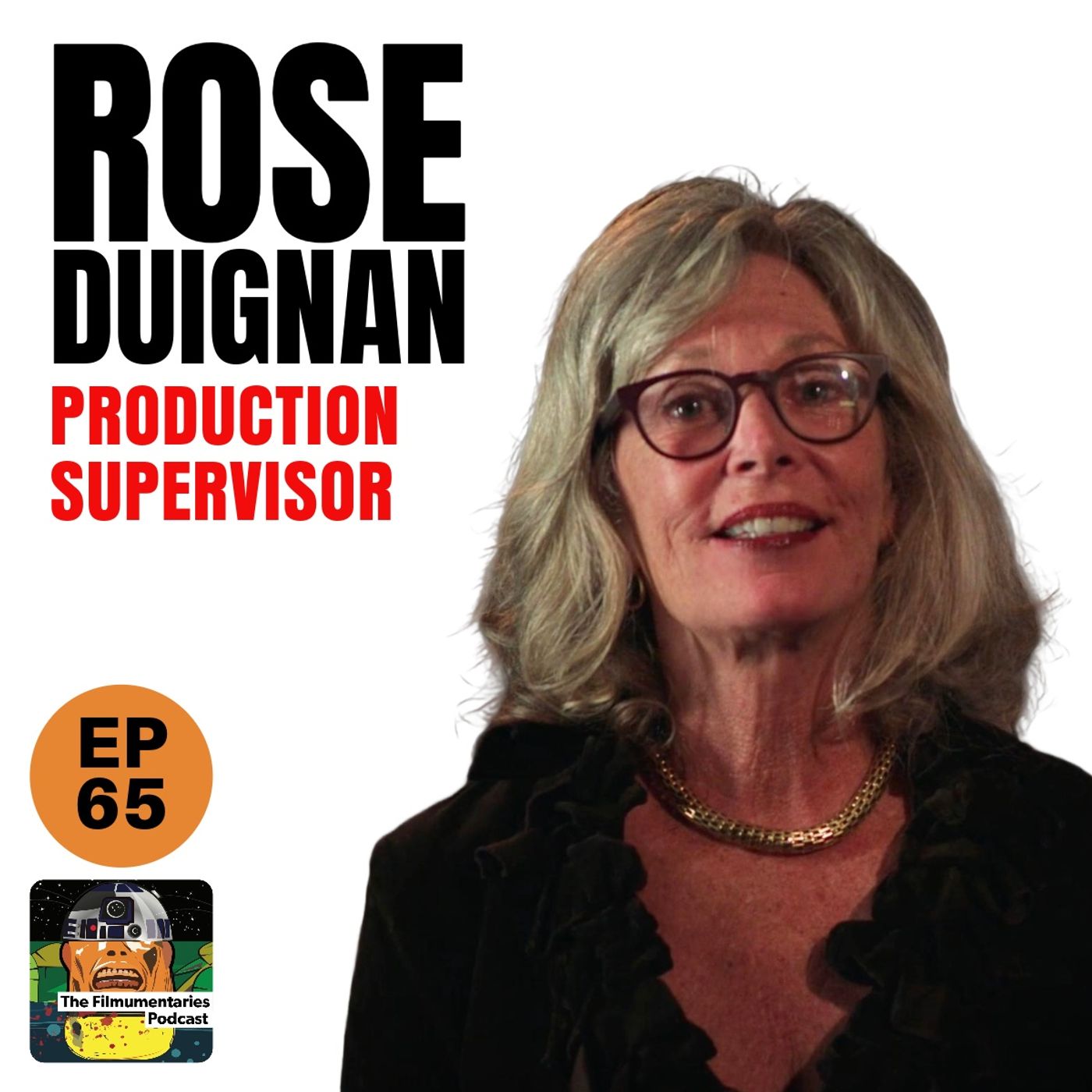
This film is definitely going to happen because we're going to make sure of it. Okay, back to the business of this week's episode. So, just before Christmas, I spoke with Rose Degnan and if you watched Light and Magic on Disney Plus, you'll have seen Rose a longtime employe at ILM. She filled several roles during her years there, including production system, production supervisor and a role in marketing. So here's my chat with Rose, and I'll be back at the end for a bit more jabbering on.
So Rose, how did you begin in the industry? What was your entry point? Was it something you were aiming for or was it a happy accident? You know, I think that I was ready to drop out of college. I went to Stanford University and it was free because my dad worked at Hoover Institute.
And I was about to drop out because I just didn't feel like I fit in. And this woman who I think my dad had a huge crush on. She's a beautiful Jamaican Africanist woman, and she said to me, the voice of women is needed in film. And I thought, oh, yeah, that's a cool idea, the voice of women. So I decided to make a film about women's subjects, like I made a documentary as a Stanford student about how to have an orgasm.
I thought that was super important. Still it is anyway, So I made this film and I really got you know, how the hour If you find something where the hours go by and editing, just the hours would go by and suddenly it would be like midnight. And so I made this film, I got distribution. I made more money than my poor dad did ever on fifty books. So I made this film and I decided to pursue a career in filmmaking documentaries.
This was nineteen seventy four. I moved to la This was before internet. So I called every single production company in the phone book. It took a week, nine to five, and I got four interviews, and I got a job. And I was working for Stan Dragotti.
His claim to fame as he went to jail for cocaine, strapping cocaine to his body and going to Coln. What an idiot. But he was married to Cheryl Tiggs, who's a supermodel, and she used to come into the office. Oh my gosh, the most beautiful woman I've ever seen, no makeup, just pure, perfect skin, perfect blonde hair. She was so pretty.
And she told her husband, I need to take her shopping because she needs to only wear black, white, and red. So I got into the business that way, being his assistant. Worked on big commercials. You know, yesterday frank O Harris died. I met Franko Harris.
I wanted to marry Franko Harris. I mean he was the most beautiful man. He wanted me to have his children that I was married at the time. So I called my husband. I said, wouldn't you be proud if I were to go to Philadelphia with Franco?
He said, no, not gonna happen. So anyway I got. I was ambitious, and I ended up hiring a lot of my friends to be the secretary so I could be on the set and finally stand Dragatti said, why don't you just be our coordinator and you'll make three times the money. You won't work every day, And so I did that, and that's how I fell into Star Wars because I was really I did an army series of army movies, and I worked really hard. I was props coordinator, runner, wardrobe, makeup.
I was everything. And so the guy that got hired on Star Wars hired me, and I came in. If you saw light and magic, you'll see. I came in with the grown ups like they had already spent all the money they had already they had delivered nothing, so quite light At this point, was it photography had finished the final Yeah, the principal photography had finished. George returns we had one year to deliver, and actually ten months to deliver.
It was a year from release, and George almost had a heart attack because nothing was done. And that's when he decided to bring in George Mather. And I was hired to be George Mather's assistant, and truthfully, I was young, fun nobody really George just sat in his office, but it was his systems that I implemented and I just made it fun, you know, and we had a good time. And I was very, very lucky, I feel, to work with such a talented group of people and deliver Star Wars. I mean a movie that has gone on to affect so many generations.
I see grandfathers and grandchildren wearing Star Wars t shirts. It's just a phenomenon that is really hard to understand. It is, and what was your kind of day to day job? Then you're keeping everybody in check and just trying to organize along with mister Mather you mentioned there, he brought in a system that meant that you could really get you know, the production in shape and know where everything was, every shot was, at, what stage it was at precisely. He created a list of every There was not even a list of every shot and every element, So he had like a bible of every shot, every element and where it was, and he would keep track of, Okay, this has now been on stage, it's moving to Roto for the mats, and here it's moving to optical.
And my job was really to work with John Dikstra when George was there. I followed George around and took notes on everything he said. When he wasn't there, which was four days a week, I've I worked with Distra and we would sit at the Moviola and put together shots and I would just take notes, you know, this shot, this X wing you know, comes in here and it goes on top of this, and then we would get that into optical. So it was very much part of the team and very much like you know what any PA does. You just are doing details all day long.
But my main job was to follow George around and take notes, and follow John Dikesterra around and take notes, and then work at the Moviola with him. And it was such a different time because there was zero sexism. I mean, you know, these were all young men, no one had kids. Everybody just made the work their life, and that I think is what light and magic captured was the youthful spirit of total dedication to the job, and that spirit has continued it. I am where, but I really do credit the young people pre children once we start.
Once I started having kids, I actually switched out of production because I wanted I did marketing. Yeah, and I just knew that with three little kids, there was just no With even the first kid, there was no way. You know, you're, yeah, I've got three kids, and it gets too complicated. But I'm just thinking though, like, you've done this documentary, but you're coming into this movie and you want to be in filmmaking, and you are. You've arrived in filmmaking.
But the language that they're using in the effects world must be very different to the language you used to making documentaries. I mean you must have been learning on your feet, thinking on your feet, asking lots of questions. Presumably really really sensitive of you to realize they used the word like pylon and I spelled it p I L O N. I had no idea what a pylon was. You know, it's what holds the ship in place.
M. Yeah. There was a lot of learning curve, but this was like a very you know, I would type up my nose at the end of the day, and then George Malley would say, no, pylon is pylad, you know. So then I learned. The only time I really got in trouble once was for Dick Kie Alexander.
He was a machinist and he told me this batch of items needs to go out for anodizing, and I thought, okay, well I'll do it tomorrow. No no, no, no no. He held him up for a whole day because that stuff should have come back that day and he could have used it in his machining. So there was a lot of terms that I didn't realize how important anodizing was or um, but yeah, it was. We were all learning.
I mean, look at that we were. We were reinventing visual effects. That's why George said there was no way to do his movie with didn't even exist any effects departments as studios anymore. So he had no choice but to take this rag tag group of rebels and create a team that almost didn't make it. But then they brought in George Mather and me and the and the sort of the grown ups and we got everything organized.
So then George loves detail. He just loves to know what percentage is in this, and what percentage is in that, and what percentage we have to go and so for years after. You know, I moved up with the Island people after Star Wars was released, and I used to tell him going into the screening room, we need ten cbbs. We need cbbs, are could be betters, but you know, gore and telling me that it's something I only found out recently. I'm learning as well.
I wonder if anyone uses cbbs anymore. No, nowadays it's iteration, iteration, iteration with the digital. But in those days, you basically, you know, unless you wanted to spend another twelve hours redoing that shot. An optical so complex, just simple shots, four elements. Shots took like sixteen times through the optical printer, you know, and a printer is basically a camera and a projector tied together and you're just frame by frame doing maps and then I mean, it was very complex.
I did a show three years ago at the Academy where we compared the all analog tools of Star Wars with the all digital tools of Rogue one. And if you saw Rogue one, you saw that that was like, in a way, a predecessor of Star Wars because it explains how Princess Leia got the death Star plans and the complexity of the old school articles was just phenomenal. But as John Deists said on stage that day, he said, um, it's the most fun I've ever had. And Chris Nicholson I are in the Islands, so we look at each other. Tears are in our eyes.
Ruth len in Acamany weren't on Empire, I believe. Yeah, that's the thing is you talk about the fun. I've seen those pictures, you know, I've interviewed Lawn Peterson. He's got a great collection of pictures of everyone in you know, Van Nuys there in the hot tub and the slip and slide and all of that stuff. I mean, it's very easy to imagine you're all having a great time, but everyone was working crazy hours as well, weren't they.
I mean, how did you as somebody who was you know, a production assistant and later as a as a coordinator and producer, how how do you kind of keep tabs and make sure that the workforce is actually being you know, looked after in a responsible manner as well, Because that's something that's crept into film work. People just give their lives over to it, don't they So true? We were called a country club way back when on Star Wars by the studio, and I'll tell you where that name originated. One day, it was a hot day. A lot of people were in the hot tub, you know, women wearing their underwear, men wearing their underwear.
And John Dykstra, our leader, was taking an old refrigerator that had busted and lifting it high on a forklift and then crashing it onto the cement of the drug over and over, and everyone was laughing. And up up pulls a limo with Gary Kurtz producer, George Lucas director and Alan lad Junior from twenty Cents and they get out of the car and they look at this scene and they get right back in the car and leaves. That is when George wanted to fire John Dykstra, because this is like but you see, we were working so hard and so long hours that taking an hour off in the afternoon to let off steam was no big deal. I mean, I'm sure Mary Lynd was in there. She ran film control.
That woman knew where every single piece of film was. We had the hardest working crowd. People would sleep in the screening room. So you know, as I said, no one had kids. Everybody just dedicated themselves.
And so even though we did slip and slide, even though you know, we were immature, there was a tremendous dedication to the workforce. And I see that to this day now you ask what I would do to encourage that. I mean, we had Dikester, who was such a charismatic leader. But once we got up north and we had like on the return of the Jedi fortieth anniversary coming up, I'm hoping to do a party. You know, I used to do things.
There wasn't never money. Like I remember some guys stayed up all night to redo a shot because we really needed it to close out that reel. And he did it, and he couldn't even put in for overtime for it, because you know, it was his mistake that he had to redo the shot. So I remember calling him into my office and I said, get your mom on the phone. So he calls his mom and I put her on speaker and I just said, what a great job you've done raising this young man.
He is such a gift to this company, and he is such a hard worker. Well we all start crying. You know, so much more meaningful than money, right, Yeah, you just want to feel valued, valued, right, that your work is valued, in your contribution is valued. Yeah, I think that is the secret, if you can make people feel appreciated, you know. Yes, you do parties, and I'm I'm famous for my parties right through right through Star Wars, right through Jedium.
I remember on Thanksgiving it was just a brutal, brutal time because on Jedi, George, like three days before Thanksgiving had cut out like fifty shots that we'd already like shot elements for they were in various places, and he just realized he didn't need them, and so but he added another twenty. So it was like Black Friday, you know. And I decided, let's have a Thanksgiving. Since we're gonna work through a Thanksgiving weekend, let's have a Thanksgiving party. And we ordered beautiful food and set up tables and had flowers and wine on the table.
And I remember Marcia and George Marshall Lucas and George came by and to look at dailies or something, and we invited them to join us, and Marsha says, well, I have work to do. So she leaves and I'm like, oh, no, George sat down. He didn't have any wine, but he didn't sit down and enjoy the meal with us. So really parties gatherings. But more than that, it's appreciation of the worker.
I think that matters, and that can happen to this day. There's no reason and that that's there is a reason that people stay at a company, and it is because they are appreciated. Yeah, there is that need to kind of have those moments. I mean that was bad timing with Gary and Alan Ladd and George turning up right. I mean it wasn't reflective of what was going on there.
But you need those moments to decompress, don't you. You need you know that that whole whole thing about you know, work hard, play hard might not necessarily convert into what you guys were doing, but you do need that little vent at the end of a week or the end of a busy day. You need that and the people. Um, you know, when when George got back from England and shooting, maybe he was in Tunisia, I don't recall, but all the live action was wrapped and he came back and there was if you see like magic, you know, Ken Ralston says, he walked through the screening room and there was a lot of screaming going on. I'm sure George wanted to get rid of Distra, but all those workers were Distro's friends, so if he had gotten rid of Distra, it wouldn't happen.
So he was forced to deal with him and accept him. And and actually John's wife said to me in Light Magic, that was the first nice thing that George had ever said about Star Wars, when he said they did the best they could. They worked really, you know, that meant a lot to Ditstra and then you saw that trembling chin and Latin Jonathan, I mean, the director um Lawrence Casten asketon, well, how did it feel to be left behind and not be invited up to return the Jedi, you know, to empire and return the Jedi? And John's quivered. You know, I'm really really hurt.
I mean, he went on to create Appage and they did lots of work and now it's won another couple Academy Awards for Spider Man, and he's a great guy. But that had to hurt a lot. And now at that point we had three effects supervisors on Jedi. We had Richard Edla, Ken Ralston and Dennis Barren, so we were okay. But I don't think it was ever as fun as it was with Dikester.
He's just a very charismatic, happy dude. Ken is fun. Ken is fun, but Ken is more like fun with his crew. He's not, you know, stepped to the front of the crowd. He's so fun, he's so dry.
Dennis is just pure artists, you know. And then Richards just get it done, but blow it up. I mean Richard's love dons And yeah, you get that sense from from Dikester watching like magic that you know, it's almost like the fifth Beatle or something. You know, he was removed from the group and then this great success happened. But like you say, he had success of his own, but you can see it still means a lot to him because Wow, what a turning point that was for movies.
I mean, I was born in seventy six, A Star Wars has existed all my conscious life. You know, did you how much of us sense did you get when you were working on it from what you were seeing? Um, you know, did you obviously got to go in dailies and things, and look at look at shots that are coming from location and effects work that was going on. How we used to be able to sort of assemble it in your mind as to what it might end up being. I mean, it was all these disparate parts coming together and George wrangled it into something amazing.
But just for somebody who was seeing there, there was no way. Even George was so shocked. I remember being in the in the mixing studio. We were doing like foreign release mixes, and we were on Hollywood Boulevard doing that at some post production facility, and I would, you know, ordinarily I would be the one to go out and pick up Hamburger, Hamlet or whatever dinner. And for some reason George said, well, I just I just need to get out, and he walks down the street and there's all this chaos and police and people around the block and costume.
It was an opening of Star Wars at Grauman's Chinese and people had already seen at once. And come back, even he was shocked. He comes back. He forgot dinner, by the way. He comes back and he starts getting calls from Alan la Junior, from Steven Spielberg, from all his friends saying, oh my god, you have a massive hit on your hands.
No one saw that coming, no one. I mean it seemed corny, like watching the dailies and the corniness of it. I went to the screening in San Francisco, which was for kids. It's the famous screening. It was voice and girl says, the famous screening where there was like a standing ovation to the very first shot of that giant Star destroyer coming over.
And I went, I brought my parents and after George was like, what are you doing here, I said, well, I live here. You know, my parents lived here and they wanted to see it. So we go out to the sherifs and palace or something. And my parents were in love with this movie, if they said, it reminded them so much of Cereals from their youth. That you see little bits and pieces and that was the tone of this film, very different tone than other movies at the time.
And that to think that that spurred this visual effects revolution, which, let's face it, I mean, it has exploded. And you know, at the time there were seventy five of us credited on Star Wars visual effects. There were three hundred and sixty five shots. That's easy to remember because days of the year now thousands and thousands of shots and thousand people get credited on these movies. I just thought Avatar too unbelievable, unbelievable visual effects and to think that are you know that we laid the groundwork and then when you look at the history, I thought, I thought Lawrence Casten didn't expert masterful job on that documentary because even if you're not that interested in ILM, it really captures the history of visual effects and how we slowly, like overnight, became a digital company.
That was that was a very painful time for us. But the first time you kind of got involved in digital stuff, there was cgi kind of creeping in at that point. That our very first digital moment was on Return of the Sorry Wrath of con Star Trek and the Genesis effect, and that's well documented in the documentary. But that was a really interesting time and of course it was on a monitor because there was no film in film out method. Yeah, and then after that it was you know it did Death become Sir and we did um Young Shirk and yeah, Oh Willow was a big turning point.
Yeah, where we were working with Pixar next door to us or started, and then when they decided George let them go and sold them to Steve Jobs. We were all like, okay, good because they gave us a ton of software. But it was really Dennis Muir and leading the effort. And then of course I had that great hire of John Noel. So it was those two that really had a burgeoning visual effects department within Ireland just to do the effects.
And that's when we tackled Terminator, and that's when we tackled you know, Jurassic Park that I remember crying watching those dinosaurs in the screening room and just crying knowing that everything was going to change. We didn't have to put those dinosaurs anymore, that everything was going to change at that moment, and I was right. I recently interviewed Steve Williams, oh yeah about his input on Jurassic Park, and I know he's very outspoken, but you know what he said, how lovely you were, and he's yeah, he was saying, she's a wonderful woman. And you know, I've always I've always been very fond of her, and yeah, yeah, I was really sad to see um all that negativity come out because we have been such a strong team, you know, and he Dennis and Phil Tipit and Dennis Mirren felt like he threw him under the bus.
I never saw the documentary where he purportedly did that. He's been nothing but you know, sweet and kind to me. I had to uninvite him to a party. Hopefully this will be water under the bridge, because Steve was a huge contributor to our success on Jurassic Park, and I hate to see that color Annie. Yeah.
I mean, Steve said himself, you know, he wasn't a player of the politics, and he wasn't trying to climb the ladder lot other people have done in the company, and he was just somebody who just wanted to be problem solving day to day. And he kind of admits to himself that that's, you know, a shortcoming really, you know, and he wasn't going to necessarily last in a business like that where you were expected to climb. So, you know, fair play to him for acknowledging that, I guess. But I think I think the thing that kind of still haunts him is he doesn't I think he doesn't feel like he's had the recognition well the movie I thought I wrote him after I said you did a great job, and you came across really well in that in that film, such a rebel.
You know, he was very different than our other affects people, all those parties they gave. I mean at that point, I already had kids, so I would go home. Yeah, I had an office just above the pit as they call it. But you know, at that point I was I was a mom, so I needed to get home and to needs to go pick up my kids from daycare. How did that kind of change?
I mean, obviously it changes your life usually when you have kids. But we talk about being in a job where not necessarily expected to work very long hours, but it's it's part and parcel of filmmaking. Like we said, you know, you hand your life over to a certain extent. How were you able to kind of manage that with having a new child and being a mum for the first time. You know, the company is very George Lucas himself very supportive of becoming a parent, And for example, I knew I couldn't be had a production anymore because you can't have a child and get home at six thirty.
You know, you can't pick up your child at six because the night crew is just arriving, and you got to review everything with them. So once I had kids, I gave up the production supervisor role and decided, you know, I I've been I've been collecting all these phone calls. In those days, you would have those little pads of paper and the receptionist would write down that so and so from you know, Wide and Kennedy called and want you to do a commercial. And the receptionist knew that we don't do commercials, so she would just tell them and they would say, well, talk to somebody. You'd give this note to somebody.
So I would collect them and I had like a hundred calls from commercial production companies. And I remember I was now pregnant with my second child, and I remember we were laying people off, and it was after Jedi and and it just seemed like, why are we laying people off when we have all this potential work. So we started a commercial division so I didn't have anything to do with that. I just continued to work in marketing. What a fun job.
I would go to La like every two weeks to be able to pitch ILM. It was kind of an easy job because until then we had only been doing George and his Friends movies, and then we ended it being on that and started accepting a lot of other work and everybody wanted to work there, so it really but yeah, the good thing about working at Lucasfilm was okay. So I was now I had two kids, I was pregnant with my third doing marketing, and I had this idea that we should have a daycare center. And I talked to Doug Norby, who was the president. He came to us from Fairchild, where they had a daycare center, so he knew the value because if you're a child, you know this.
If your child is happy at a daycare center, you're not gonna take a job for another twenty five percent increase in salary because your kid is happy. So it was a really good investment. And even though you know, I stood in front of the company meeting and I was pregnant, I had a three year old in one hand a four year old in another, and I said I to the crowd, I want to have your babies. We want to start this daycare center. And I did you all to sign up?
Nobody signed up but me that day, because what you're not going to sign up for something that you don't know, you know, you got a teachers. You got to see this facility. So the company went ahead and invested I think fifty grand in a facility. It was at a church, you know, and I hired these great people who ran Marine Day School and they started up this daycare with my three kids in it. That was the beginning and it has been now it's like forty years later and no, thirty eight years later, and it has a waitlist.
It has had a waitlist from like five months in and people are so grateful. They come up to me all the time and say, Like I was on the stage at the Star Wars celebration. We were promoting Light and Magic and Lynwyn Brennan, who's president of the Lucasfilm thanked me publicly on that stage because her child went to that daycare and she couldn't have done it. You know, we we you have to if your kid is happy and on site and you can go visit in the day. It's a riffic.
Yeah, a great legacy to have left there as well, like to be a part of that. I was wondering in your time there, you know, we kind of see somebody like you talking clearly a very A person who's very has has a huge aptitude for organization and you know, being able to bring things in on time and keeping tabs on everything. How do you manage to balance all of that with creating a space that allows people to be creative. I mean, some of these people like you feel tip it. I mean, he's an incredible artist.
I can't imagine he's great at doing his tax return for instance, you know, or something like that. You know, yes, yea. So how do you have those two environments kind of side by side without one kind of getting in the way of the other. Very good question. You know, I am extremely organized.
I hate inefficiency, and the worst thing to me is somebody working on a shot that's already been edited out in the screening room, you know, in the editing suite next door. So I would keep very up to date on the editorial and I just hated wasting time. But I am not a creative. You know, my friends at the Academy of Motion Picture they keep calling me, oh, you should be in you know, let's get you in it. And I said, you know, you're looking for creative producers, producers that really care about how it looks.
So many people cared about how it looked at im that I didn't. I didn't feel I felt that that would be a luxury. So I just focused on good enough cbbs, let's move on. And I remember one guy told me I pride him loose from the stage. You're done, You're out of here.
That's it a rap. I don't remember doing that, but that's kind of and I'm sure I would do it gracefully and with a joke, because no, I was never intimidating to people. I would really listen. I remember we had some struggles with Richard Edlin because he used to really want to have backup cameras and he would always want the best cameras, and so poor Dennis, you know, was looking for a camera and he was relegated with this old rama, and so I had to get the coordinator to loosen up and tell Richard, look, if if this camera goes down, we'll substitute. We'll pull this one from Richard, but let's let him have it for now.
And of course the camera never went down, so you just kind of have to every but Richard, you know, God bless him, he was doing that because he cared so much, right, about the quality of the shot, and he wants to use the best camera and if it jams, he wants to backup. And so it wasn't like ego that made that happen. It was caring about the outcome, and I just felt the need to balance that with let's be realistic, you know. I remember one guy was take ninety nine on something on track something Star Trek, and I remember just going out and saying, this, this set is done. You're done.
Take ninety nine, I mean, and that that's where you know, I didn't care if they had the perfect shot. I just knew out of ninety nine takes, you better be done. Let's move on to the next setup. And so that's I just kept things moving. I'm very amazing about budget ding.
I come like with one hundred dollars, but it's just an instinct that I have. You know, this is going to take this long and this many people and this is and then you just adjust. You're always adjusting, you know. Okay, so you trade me you don't need you've taken an extra day on this element, then you're not going to get the three days that we budgeted on this element. And everybody was like okay, because everybody likes to be on budget and on time.
When you arrived there in the industry, though, you know, you talk about kind of, you know, asking all the questions and what does this mean? How do you spell this? And all those things, So you didn't necessarily have anybody like a mentor that had done what you were doing in front of you. You had the people surrounding you that were supportive, by the sound of things. But did you then, ever kind of become somebody else's mentor within im?
Do you think? Yes? I have been told that a lot of people saw me as a mentor, just as a woman able to hold her own in a group of male supervisors. You know, you never felt maybe because I had a really great title production supervisor. We didn't have producers.
We had production coordinators, which were so uneven to the effect supervisors. But me, as a production supervisor, I could argue, well, wait a minute, why is that going to take five days? So unusual? Oh okay, well you need five days for that? Well, then can you do this in two?
And I just I guess I've always been kind of fearless. My dad had five girls and one boy, and he taught us how to play baseball, and he taught us. He always couldn't understand why nobody wanted to date us, and we were just like smart and we didn't laugh at jokes that weren't funny, good for you, and so um. I've just always been that way and always been like a really strong role model. The truth is George was kind of a mentor because he was very very patient with me, you know, with terminology and such.
He would take time to explain, and I remember, you know, I would always follow him around when he came to Island in the early days, and he used to say things like all that matters in this movie is the first five minutes and the last ten And I've never heard of directors say that before. And I thought, God, that is so smart, because you gotta suck people in, then they go home for the ride, and then you got to give him something to talk about at the end. And I thought that was super bright of him. And then he also said, yeah, he was disappointed in how things turned out on Star Wars. I don't think he was so disappointed on Empire that looked amazing, and by Jedi, he wasn't that disappointed because we did so much more.
We did like three times a number of shots, ten times a number of elements, So he had to be pretty pleased with that. But he was disappointed on Star Wars, and he said, I just wish that I had a black box and I could do it all myself. Must be frustrating for somebody with such a creative mind to relinquish control to so many other people to kind of make that dream. I mean, I can understand that. You know, I've worked on projects where you think you're just getting in my way.
But I need you on this, you know, because I called myself and look at the studio system. I mean, he really took that up because on American Graffiti he didn't have the power and they like recut his movie and substituted music. He ended up because Coppola stepped in and guarantee that he was able to get the movie that he wanted. And I loved that movie, which is why when I heard about Star Wars, I thought, oh, I want to work on this, because that guy did a great job on American Griffini. Actually, didn't you tell the story?
I think I read an interview might have been on Star Wars dot Com or Luke's from somewhere about when you first arrived, you thought George was like a runner or something. Oh yeah, well he's so young. He wasn't even thirty. Yeah yeah, come in. I come into this dump, I mean the receptionary, old desk, old couch, really bad.
And I sit down. I started asking the receptions to all these questions because I know I'm about to go in for an interview with Dike Struck and Lucas and George Mather. So I wanted to, you know, hey, would you you know what do you tell me more about this movie? Blah blah blah. Sheet was so weird?
And and then I hop up to go in for the interview. My name is called and he follows me in. I'm thinking cheat and kid has He just been sitting there with his feet up on the table and he only asked those two questions. He said, do you take shorthand I said no, but I write really fast. Can you start Monday?
So I did, and I think I made fifty bucks a day, which was a lot. I mean I have the yellow legal pad of who was making what, and the person making the most money was John Dykes threat five hundred dollars a week. Joe Johnston was like three fifty, Lauren Peterson was three hundred, Steve Gallie three hundred. Crazy, you're doing all right back then? I mean I started, I started in the industry in two thousand and TV and I was only getting I think one hundred pounds then.
Yeah. Yeah, So when you worked on Return the Jedi product Supervisor, right, you know, the most complex optical effect movie ever at that point, I mean, there's I was kind of woken up to this. I've mentioned this several times on the podcast. There was a show called How to Film the Impossible where Leslie I did that. Yeah, and I remember just seeing that that grid of all of the ships where they were going to pass.
This ship was going to pass this grid, and there's there's a little X there, and it kind of blew my mind that not only those could those guys kind of visualize that, but they could execute it in a way that would look convincing. I can't, I mean I can still can't even still imagine now doing that in a computer. I mean, I don't really know about visual effects myself, but just being able to understand scale and the movement of each of those elements. I mean kind of crazy. What what you would you guys were doing back then.
I know the level of complexity and the superabilities really and after Le and Rhodo as well as on the stage, shooting those elements in such a way it was breaking new ground every single every single shot, especially on Jedi, because I mean on Star Wars, I think the most complicated shot was like six elements. There were eighty ninety elements. Can you imagine what that optical lineup sheet looks like when you have ninety elements and you could you'd be standing all night and it would take you twelve hours to shoot that shot, and you make one mistake. I remember once some guy on a eighty elements shot SP eighty one where all the ships, all the tie spiders are flying to camera. He made one mistake.
It was lower left hand corner left a maten or something, and he admitted it. The optical photographer admitted it. In the screening room, majority said George Luca said, if everyone's looking at the lower left part of the brain, we have lost them. So it's a fine, it's a CBB. Yeah, yeah, going in And I remember once we had some perfectionists in optical and there was another shot that had some mistake in the lower right hand corner, and George accepted it, and the optical supervisor went and reshot it anyway, and showed it all proudly the next day in dailies and just said, no, I'm not cutting that in the movie.
I told you it was done. So it really sent a strong message, like if the boss says it's done, it's done just because you have a problem with something. Now I don't actually know did George cut the real shot the new shot in or not. I mean maybe he did, but it sent the right message. Yeah, it sent the right message, and he was very George is a very practical man.
He's got a producer hat and a director hat. He's not like you know, some of the directors of today just keep iterating. So the poor studio or effects house you can't you can't budget. You don't know how many iterations. Well, in my day, you would budget like three takes on something, or two takes on something one model, maybe two takes if you're gonna blow something up, and so it was a lot easier to budget.
Now I don't know how they can budget for these iterations and just keep going until I mean, you heard that Avatar two costs six hundred million dollars. Million dollars a minute. Was how we used to budget. So if it's sixty shots, you know one second, I don't know how people do it, and how do you schedule if you're iterate, iterate, iterate, and have a a pixel fucker there to worry about every single thing. I mean, we would take a lot for granted because it was like, you do the best you can and you get it in the camera, it's done, and now it's a different world.
Anyone makes money. I worry about this industry even though it's exploding. And so you know, now my motive, My motivation is to find the next generation of talent. And what I've discovered is that high school college kids they don't have, you know, families. They can dive in and work those long hours and you kind of need to to establish yourself in your career and move up.
But once you have a family, I would hope we do more job sharing. I hope that people are not you know, unfortunately, USC did a University of Southern California did a whole study about why women are so such a tiny part of this industry and we're half the producers, but you know, that's kind of expected. But in terms of like leading compositing, leading painting, leading modelmaking, women don't step up and take that. And the reason they said is because it's an extra ten fifteen hours a week to be the head of a department, and women are already doing ten hours a day, so that's sort of the norm in this industry. So they want to get home.
They want to get home and see their kids and make dinner and tuck them in, And so I really feel there's so few women in leadership positions. And maybe that's why I'm getting mentorship opportunities because I've run a studio and run a visual effects house and so I'm really aware of what that takes. But if you hire the right people and you're good at what you do, you don't need to be there fifteen hours a day. But nowadays I think job sharing would be so wise, Like why not have two women share the job of compositing supervisor on a show and then maybe only work four days a week each for ten hour days, But so what then you have that one crossover day. I don't know, but it's really really a problem this industry for women to rise in it, and we're doing everything we can in the VS and ILM and others, Brick Foundation and California Education.
We really want to attract more women and give them opportunities and people of color. Yeah, I mean so, yeah, you're missing out in so many potential geniuses this, you know. I speak to Paul Franklin, who ran Double Negative DNEGE here in London, and he was saying the same stuff and saying since COVID as well, that he hopes that there is a way to encourage more women to come into the industry. Now that people are kind of reassessing whether they really want to be working fifteen hour days. Our company is going to be forced into allowing job share and you know, more flexible hours and things like that.
I hope so. And working at home, the downside is you're always working. But the good side is you can go to your kids football or soccer game or volleyball game, so there's a lot of good You can make dinner, you can all have dinner together, and once the kids are in bed, you can go back to work if you want, but or if you need to. That hopefully will change and also just if talent demands it, it really wants somebody. I have a friend named Caitlin Yang who's a very successful visual effects supervisor.
She's one of five women of color. She's in a wheelchair, and she's said she's been a wheelchair or a whole life. And she calls it a mobile device. And she said that COVID was so great for her because you see how these zoom calls are, you can't see the wheelchair, so they just assumed she wasn't in a wheelchair, and so she got all these jobs. Yeah.
Interesting is we don't even know we have in a way, you know, we we kind of judge people based on what they look like, you know, even even the most open and you know, willing people. I remember I was going to hire an assistant when I was running marketing at ILM and I myself because I had three little kids. I didn't want to hire a mom. I did hire a mom, but I was able to convince upper management that I needed both both. This woman, Vicky Dobbs, who now runs ILMX Lab still to this day.
She was a graduate of the MBA program at Stanford Super Smart, super Fun, and I wanted her and I wanted Andy Merram, who had two boys, and so I convinced them that we could up the price and hire both. But if I had only had to hire one, that's how these hidden prejudices go. I wanted to leave six. I didn't want that other mom to leave it sick, so oh terrible. How did that move into marketing happen?
Then? Did you think I want to go to marketing or was it something that just kind of fit in with, you know, your your family life better or something like that. I remember I was pregnant with my first child and I was on Ewok Adventure, a TV movie. I was an associated you say TV movie, but you know here in the UK. Of course it had a cinema release.
I saw that in the cinema. Sorry, I was so disappointed. It was terrible. Sorry everybody, but I just thought it was awful. Anyway.
So I'm on that movie and George gives me a book called Self Esteem of Your Child. And I read that book and it pointed out the importance of being there and being available, and I thought I can't be because I'd taken a leave of absence to run production and I was associate producer of this movie, which, by the way, the guys, the grips, the gaffers, I never stood on the set. They always pushed a chair under my butt to sit down. Syst I was pregnant, so cute. So I decided after reading that book that I can't do production and be a good mom, you know from my own life balance.
So that's when I said, I made the suggestion, why don't we start a marketing department. And that's when I came in with all those you know, let's start a commercial division. And that's when we brought Jim Morrison to analyze whether or not we should start a commercial division. And now, of course he's president of Pixar, so um I was supposed to go to Jordan with him. Oh, I got a new right hip recently, so I couldn't go to Jordan.
It was with Jim Morris, president of Pixar, Lynn Hale, who ran you know um PR at Disney well Lucaswilman then Disney and um Brooke Breton, who's Board of Governors for Visual Effects at the Academy. I was so it was all first first class paid, fully picked up, and I couldn't go. But they were so nice and they said, because I didn't want to be the one, you know, limping and slowing everybody down. You'd be very proud of me. Now four weeks later, I'm walking fine, I feel great.
But it was it was a dramatic, uh operation anyhow, Yeah, big deal, new heif. Yeah, now I've got a little ball and socket in there. Who knows um anyhow? Yeah, So I became marketing director and I could work four days a week. I stayed home every Wednesday.
My kids would jump up and down the bed Is it Wednesday? Is it Wednesday? And we'd go do something fun. Nice. Well, it's nice that you know, you're you work for a company that enabled you to kind of move into a different role and able to this is it?
People need to live their lives a bit, don't they. I mean, yeah, we do have to give our lives over to creative pursuits. But at the same time, you know, there are lives to be lived, and I don't know that that's doable now. I mean it was a unique time, you know, And I must have done a really good job because everything I asked for. Okay, I'm going to work less, get paid more, you know, they let me do it, and that was a pretty unusual circumstance.
And then of course I was perfect for that marketing job just because I'm fun, I like people, I'm an extrovert. I would go to La every couple weeks meet with folks. I mean, oh my gosh, I met so many great directors and producers, and you know, they all wanted us to do their to do their work. And it's not nice to be sorry. I'll cut you off there, not at all.
I was going to say. Nice to be able to make that book into the digital realm as well, to kind of collect together a whole bunch of those people that you'd worked with and the work that I lem had done. I loved that book, I mean I was in love with it. There was the book beforehand as well. That was the Tom Smith wrote that book.
It was the very first book his sold out like twenty printings. I thought Valentine made a huge mistake with our book because they made it look so similar to the first book but similar cover, so people in the bookstart thought, oh, I already on that. So they only did like three three printings of that book, as opposed to Tom's which had like twenty twenty printings. But no, that was super fun. It was like sculpting something I had left dilem at that point.
I had just I've gone to UM overseas to Japan with the At that point we were expanding into theme park and attractions and there was a whole division about that and I didn't really like the idea that had been pitched internally it was for Space Race. I just I just thought it was banal and this was going into a water park. So I came up with this amazing idea called life cycle of Water and it was a real three D four D you know in theater effects of snow and ice and all the states that water goes through. I thought, oh, this is perfect. I show it to to our client, show Scan.
They love it. They think it's brilliant. So I'd convinced the jam Jam at the time, Scott Ross, that it would be the backup. We go ahead and let the guys pitch Space Race to Mitsubishi, who was the ultimate client, but that I would have this in my back pocket as an alternative life cycle of Water. And the night before we left, I get a call from the GM.
Yeah, I met with all the visual back supervisors they don't want you competing with them, so sit on it, do not share it. And I go to Japan and the head of Mitsubishi is so disappointed with the pitch, so disappointed, and I'm just sitting on something that I know he'll love, and I was unable to do it. So when I got back, I quit. I quit, and I just said, nope, I'm going to work maybe with the theme park group. Well then the theme park group got shut down, so I took the job.
I suggested the book and got approval and started doing all the interviews and it was like sculpting. It's just every day more pages. You know. Thank god for American cinematographer and Cinifax because they documented down to every I didn't you know, nobody could remember how many inches a ship was, but that was documented in the Cinifex. So um, yeah, that was a That was a good time.
So I definitely stayed involved. I still love ILM. It was like, it's just I got out of my lane, you know, I switched to the creative and that was not acceptable to the other creatives because I'd always been that efficiency producer and yeah, so it's funny. I've always been a creative. I've written a couple of books.
I wrote a book called Bikini Bonini and the children's book We Just Race. I live in a house with four women, and so I think that's the way of the future. Is So I'm blogging about group living. Yeah, so interesting. And I've got like over a hundred people that receive my blog.
And I just opened up a website called Golden boomers dot net where all my blogs can be found. And the latest one is can men and Women Live Together? So I don't published that one yet. How are you finding it living with? Is it four other women?
You say? Three others, three others and me? So the four of us we compete to see who's the most gourmet. So dinner, you know, you only cook every four or five nights, and it's always fabulous and delicious. We leave each other alone all day.
Like you notice, nobody's in this office with me. I'm just on my own all day. Everybody's just busy. One girl makes jewelry and she's off doing shows and making jewelry. Another is that she works at a flower shop.
She used to be head of production at a big company, but now she's working at a flower shop. So she's gone all day. The other's an editor, but she's just very anyway, we're we're compatible. That's the that's the big difference. One is my sister and then the other two are good friends of ours.
So it makes a difference who you pick in your tribe. And when you have a family, forget it, you don't, you don't need that. It's it's really for elders. Yeah. Um that loneliness is a killer, absolutely, And they say that loneliness is worse than smoking fifteen cigarettes a day, So that way I can smoke too a day and that way.
Well, and it sounds like you've got it kind of sorted there. What is your relationship now? Then with the filmmaking industry, you worked as a consultant for Island for a while. Yeah, I um ended up working for all the competition. I worked for um Rhythm and Hughes before they went down.
Um. I worked until I was about sixty, and at that point everything was digit everything went digital, and I didn't really want to be a part of being inside of a room working with people on computers in the dark. I just really love like real people moving real lights around real sets, which is why I'm excited about virtual production. So I got out of the business at about a decade ago, at age sixty, and I switched over to the golf industry, where I sold more memberships at a private club than anyone in California ever had. It was great, It was just great, and I'm oh, my god.
I mean, I played golf for a living, like I was making one hundred K, and I worked four days a week, eleven to five, and I would play golf. I mean, what a gig. But I didn't get along. I'm not good with authority. I don't have a good relationship with authority, especially stupid authority and racist authority.
So I ended up quitting that really great job. And now I'm still very involved in the industry. I really I have so many friends in it that I give parties once a year, like fortieth anniversary. Have Jedi's coming up, so we're going to do a party for that at the original joint we call it, where we made it, where we worked on it. We did Empire last year, we did Star Wars a few years ago, three years ago.
Oh, it was a love fest. I mean people came, three hundred, four hundred people come, and it was It was so fun to see everybody, but we are all getting kind of old. So what I do now, I'm in the Visual Effects Society and I'm gonna run for the board in the Bay Area and hopefully get elected because I want to do screenings. We you know, screenings is the reason to be in the VS. And then you set up a little you know, well, you know, people talking about the movie and such.
So I want to do that, and then parties. I think the whole ideas we are a community and we really show up for each other. Somebody died a couple of years ago, Ted Menki. He was such a dear. He was actually the first employee for George Lucas.
He was a first person hired for George Lucas on American Graffiti, and he ended up running the stage for us. And he was just a handsome, sweet guy. And when he died, his wife called and asked if I would organize a memorial. So I did, and George Lucas could not have been nicer. He covered all the expenses for security, He did it at everything.
Three hundred people showed up. It was a beautiful event. The food was covered, the wine was covered. We did a little show and his wife is so grateful to this day. So what I'm saying is we have a very strong community, and we show up for each other.
And when I send out an email saying we're doing this party, save the date I get, I do it individually so that I get back all the you know, there's three hundred people I'm in hiding, but I do. I could just send it out to everybody BCC. No. I like the fact that they respond to me and say, oh my god, this is so great, thank you. And then we have these wonderful parties where really we love each other.
I mean, it's it's different. I don't know what it's like now, but I still feel very comfortable calling up, you know, the president of Lucasfilm or whatever and making suggestions and recommendations because I think now I'm a I'm a mazing. I just want an award of the Visual Effect Society just awarded me lifetime achievement no no, sorry, lifetime membership. Very different, very sweet, very nice. And I gave a speech about how great my hair looked in the Academy in the light.
Magic and have been a big year for me with the Cover Girls story and and going to Jordan and all the way. I couldn't go, but they invited me next year. I'll go next year. Do you know what all of this stuff you're you know, all of your answer is really tonight. Tonight for me, this afternoon view.
I've been about connection ultimately, you know, connecting with people, just having these relationships with people. I think that's that's the important thing. And I think what you do is great because you're bringing all these people back together. You're reminding them that they're part of a community. I think that's what that's what's missing.
As technology is advanced, you know, like we're talking now over zoom, I think we can sometimes forget that just being in a room with other people is the thing that keeps us going. You know, it keeps it, keeps it alive, doesn't it. So I think that's a great message to it. I think I think family is ultimately the key, and we were like family on Star Wars. And when you work with people such long hours and you fingers crossed that this thing works out and the joy I mean, I kind of want to work for now.
So because I've been seeing you know, this great new telescope, the James Webb Telescope and the joy in the room. Somebody just did a documentary about good Night Opportunity. It's called highly recommend it because they keep cutting to the screening room. I mean the NASA room. That's the feeling that we had, and that's the feeling that we get when we're all together.
And when I call it a love fest, you know, that's what I mean. And I think working together makes it so special because you're working towards something and on something, and when you succeed like we did on Star Wars, I mean that was above and beyond. I get way more credit on that movie than I should, but I loved it In Light and Magic. When Richard Edling goes, yeah, I think it was Rose that turned us around, I'm like, no, I didn't. I called him to thank him.
There's a funny story. I called him, you know after I saw the series and I thanked him. I said, Wow, that was so nice for you to give me that kind of credit. And I said have you seen it? And he said no, I don't even know.
If I said you have Disney plus, he goes, I don't know. So I said, well, get your remote and there's a blue Icon and you just say Light and Magic Disney Plus and he said, oh, I'm afraid of my remote. So I called the head of pr at Disney and said make sure he has like, you know, Disney class. Yeah right, well that's nice. Well listen, I'm so grateful that we've been able to talk because I think, you know, watching you in Light and Magic, As I said before we started recording, it was great to not only see somebody I've not really seen talk before about their time working with those people and working on those films, but just to see a woman that was there at the time.
I'm struggling with this podcast to get women in the industry from the periods I'm talking about, you know, seventies, eighties, and nineties. You're a third woman now of sixty four episodes i've done. Wow. Well, I hope you enjoyed my chat with Rose there. It really was a pleasure to chat.
Thanks for your time, Rose, I really appreciate it. And thanks for this suggestion for another guest. I'm following that as we speak. Next up, I have another Oscar winning director on the podcast, yet we don't talk about his films, Lee Uncrig, director of Coco and Toy Story three is publishing, along with Tashion and the late J. W.
Rinseler, a book called Stanley Kubrick's The Shining. It's this deluxe three volume artifact and I can't wait to see it. Maybe I'm never going to get to see because it's fifteen hundred dollars or fifteen hundred pounds. Lovely conversion there, Lee and I've already recorded the conversation just after Christmas, and that will be the first episode of twenty twenty three. If you love The Shining, you're going to love the chat, and I'm sure you'll love the book as well, and hopefully there'll be a version that mortals like me can afford to buy.
Remember, you can still support the podcast on Patreon dot com forward slash Jamie Benning Let's Jamie b E n I n G. You can pick from several tiers, so check them out before you decide. It really does make a big difference to my being able to continue making these. If you can't support the podcast financially, then please just write a review on Apple Podcasts or share on social media. This podcast is very independent.
It really is just me and my laptop and a guest and sometimes two guests, and I am getting buried by these big corporate film podcasts. I started off doing well in the film history charts top ten. Now I'm in like the top seventy. And I think my guests have got better, and I think, you know, the podcast generally has got better, but I keep dropping down. So anything you can do to spread the word would be greatly appreciated.
Thanks for joining me for twenty twenty two, and I hope you can do so for the next year of episodes of the Film Hementry's podcast in twenty twenty three, Happy New Year.



Similar episodes across the network
Matched by shared keywords.
-
Special Report: Mye Hoang on 25 Cats from Qatar (2025)
2 shared keywords: documentary, filmmaking
-
Special Report: David Kittredge on Boorman and the Devil (2025)
2 shared keywords: documentary, filmmaking
-
Special Report: Lexi Alexander on Absolute Dominion (2025)
2 shared keywords: filmmaking, production